Unwrapping the Leaf: Bình Định's Dark, Glossy Little Cake
A shell that is dark and chewy from ramie leaves and glutinous rice, a sweet filling of mung bean and coconut, and a banana-leaf wrapper folded into a small tapered tower.
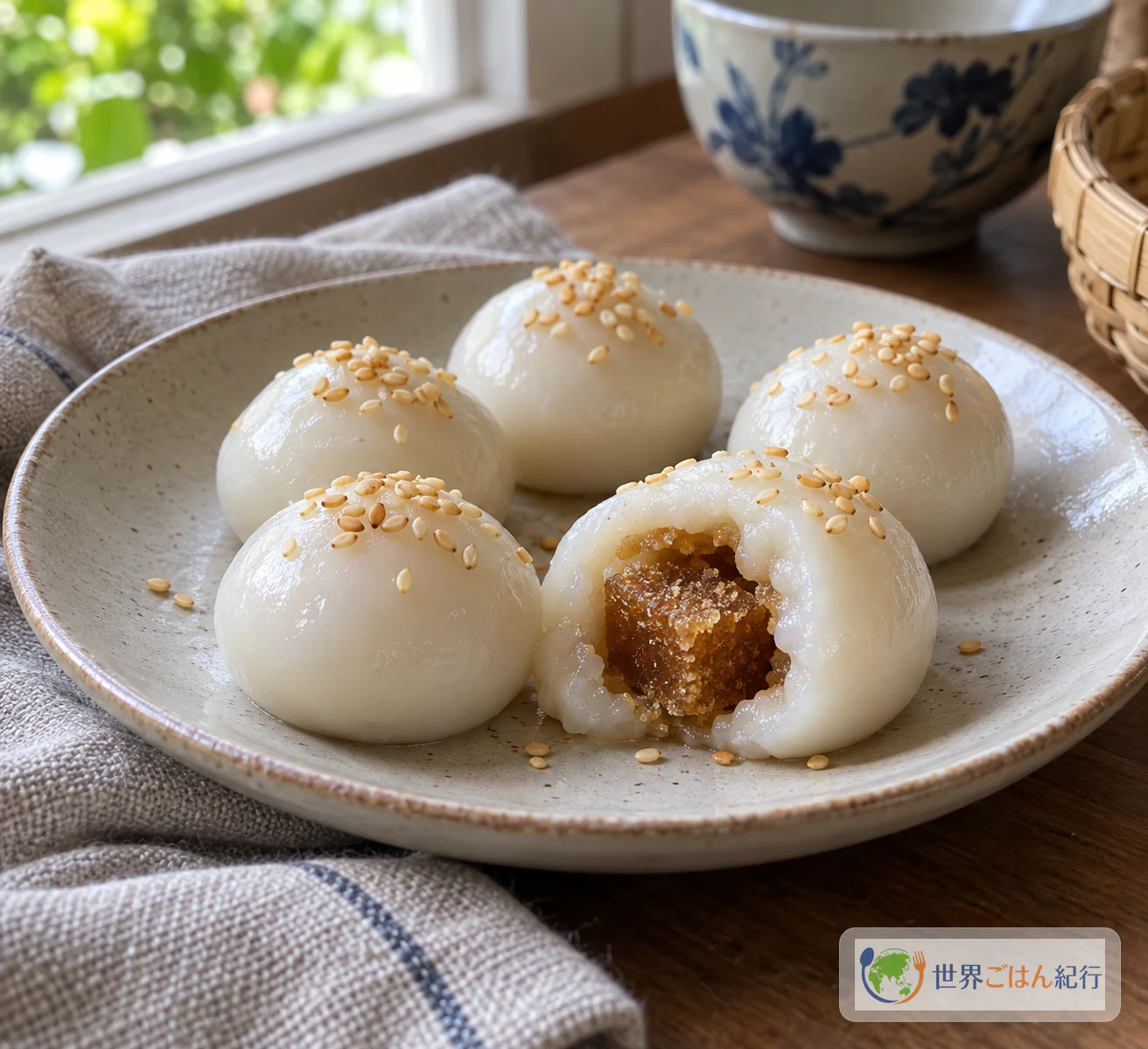
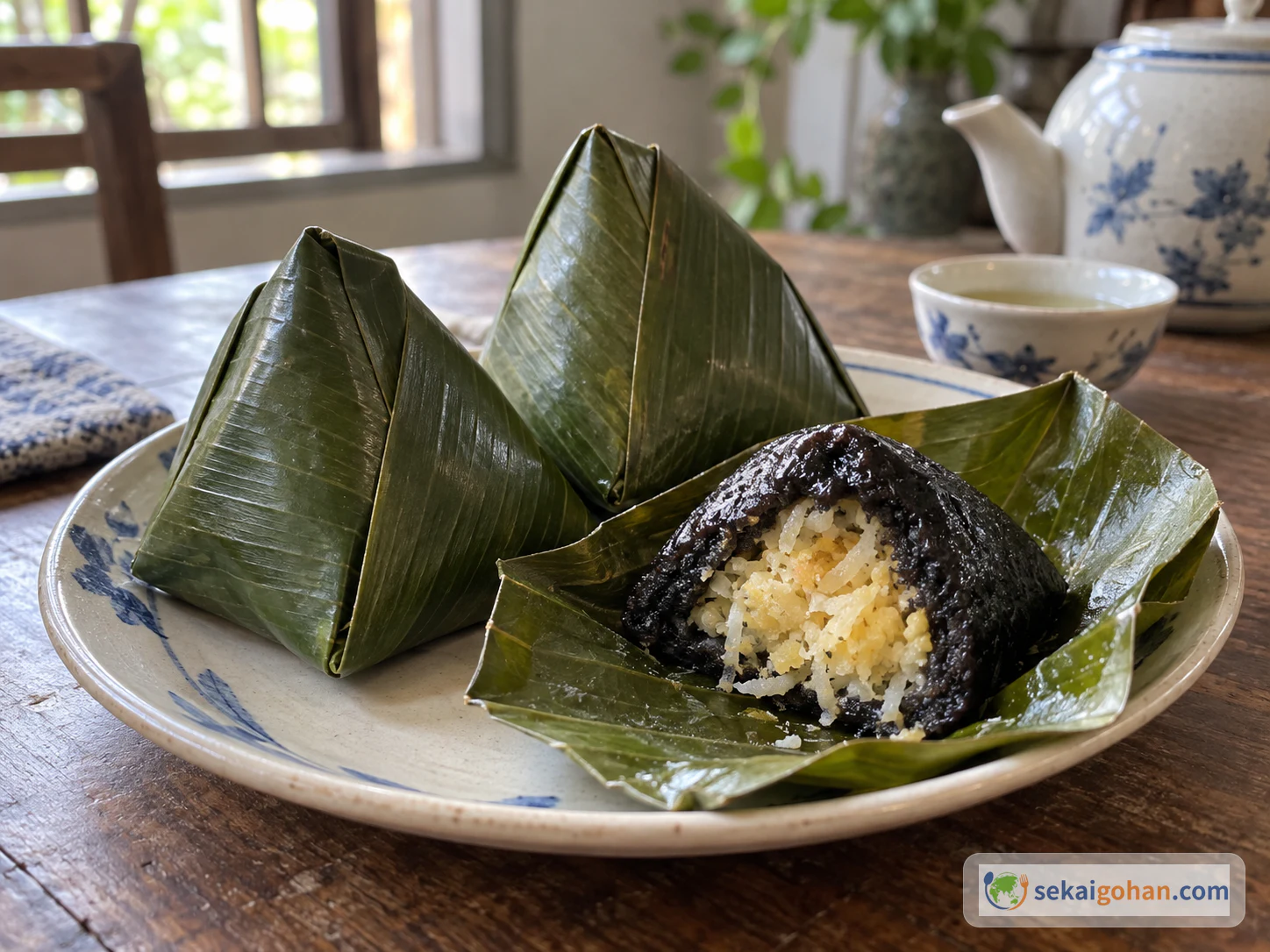
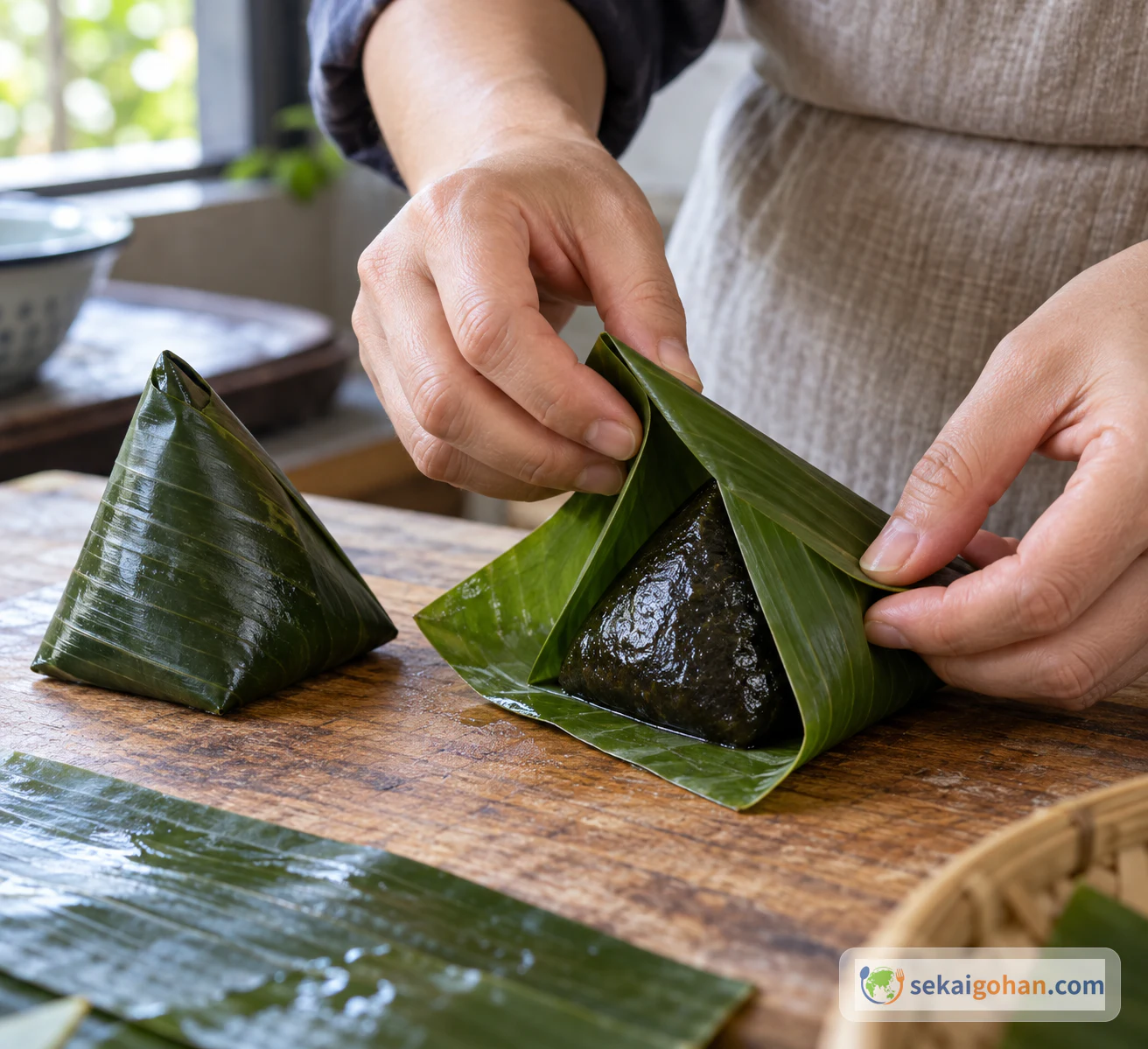
Peel back the banana leaf and the cake inside is almost black, with a soft sheen. Bite through the stretchy glutinous rice shell and you reach a filling of mung bean and shredded coconut. In Bình Định, in central Vietnam, this small sweet is served at the end of a meal, and Vietnamese cultural writing describes it being enjoyed with hot tea.
The name bánh ít covers more than one cake. There is bánh ít trần, for example, which is steamed bare without a leaf wrapper and can have a savory filling of shrimp and pork. This article is about one specific type: bánh ít lá gai, in which the dough is colored and flavored with lá gai (ramie leaves), filled with a sweet mung bean and coconut filling, wrapped in banana leaf and steamed. Savory fillings and the bare-steamed cake are not mixed in here.
The recipe follows a single published version from CET, a Ho Chi Minh City vocational school of economics and tourism, whose page credits a pastry instructor and lists the ingredient amounts and steps together. That page does not say how many cakes the batch makes, so this article gives no yield, piece count or serving number. This recipe has not yet been kitchen-tested. In particular, how much water the boiled leaves bring to the dough, the weight of each piece and the final number of cakes are still unconfirmed.
Two small departures from the CET page are worth knowing about. Its method boils the leaves with "a little" ginger, but ginger has no amount in its ingredient list, so it is left out here with no substitute. And the oil appears only as a thin coat on the inside of the banana leaf; it never goes into the dough.
For more dishes from the same country, see the Vietnam page.
Ingredients: One Batch of Shell, Filling and Leaf Wrapper
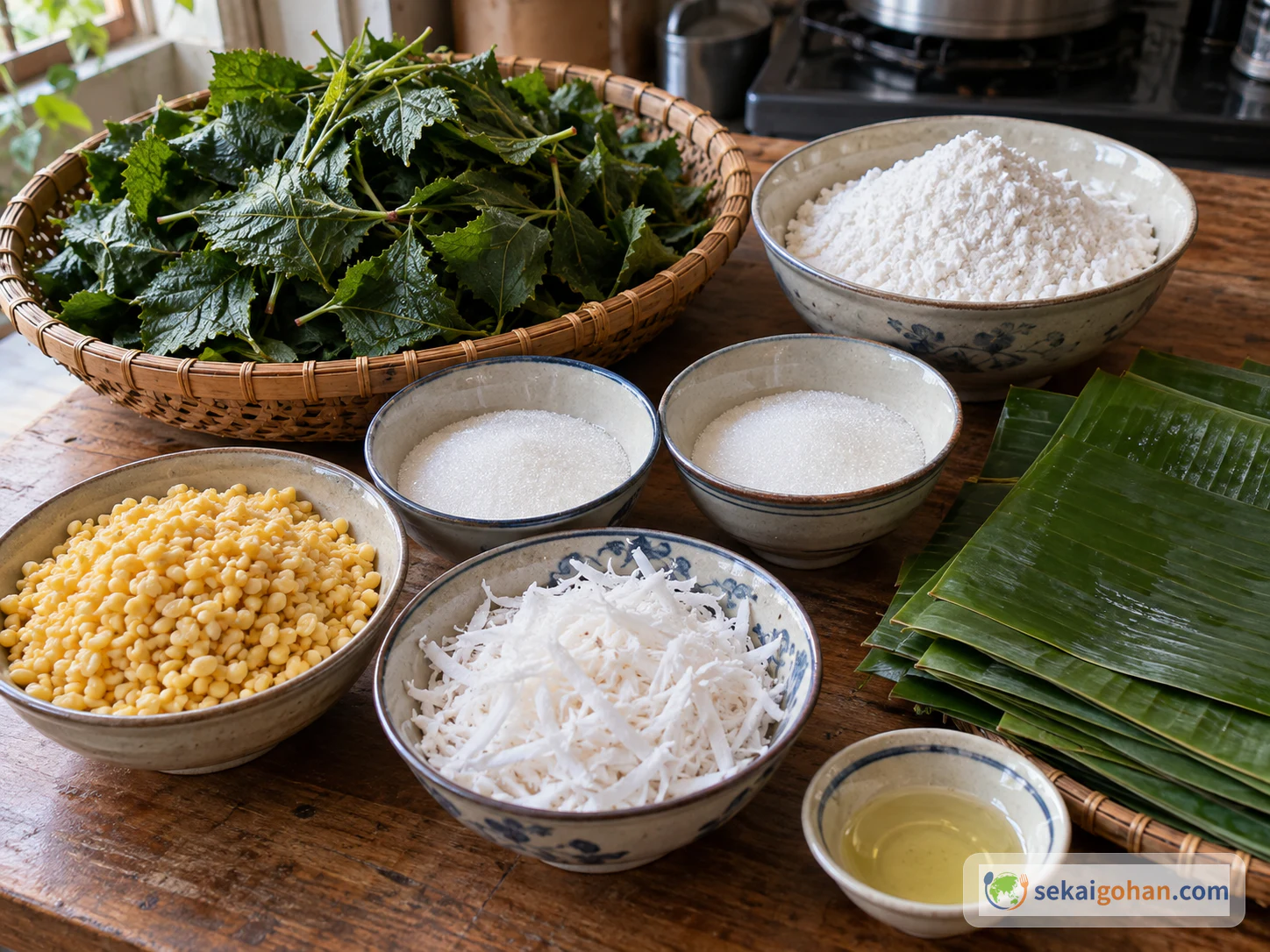
This is one batch. The sugar is divided between the shell and the filling, so keep the two portions in separate bowls from the start.
Check the labels on packaged coconut, glutinous rice flour and mung beans for allergens and any shared-facility statements.
Choosing and Substituting: What Can and Cannot Be Swapped
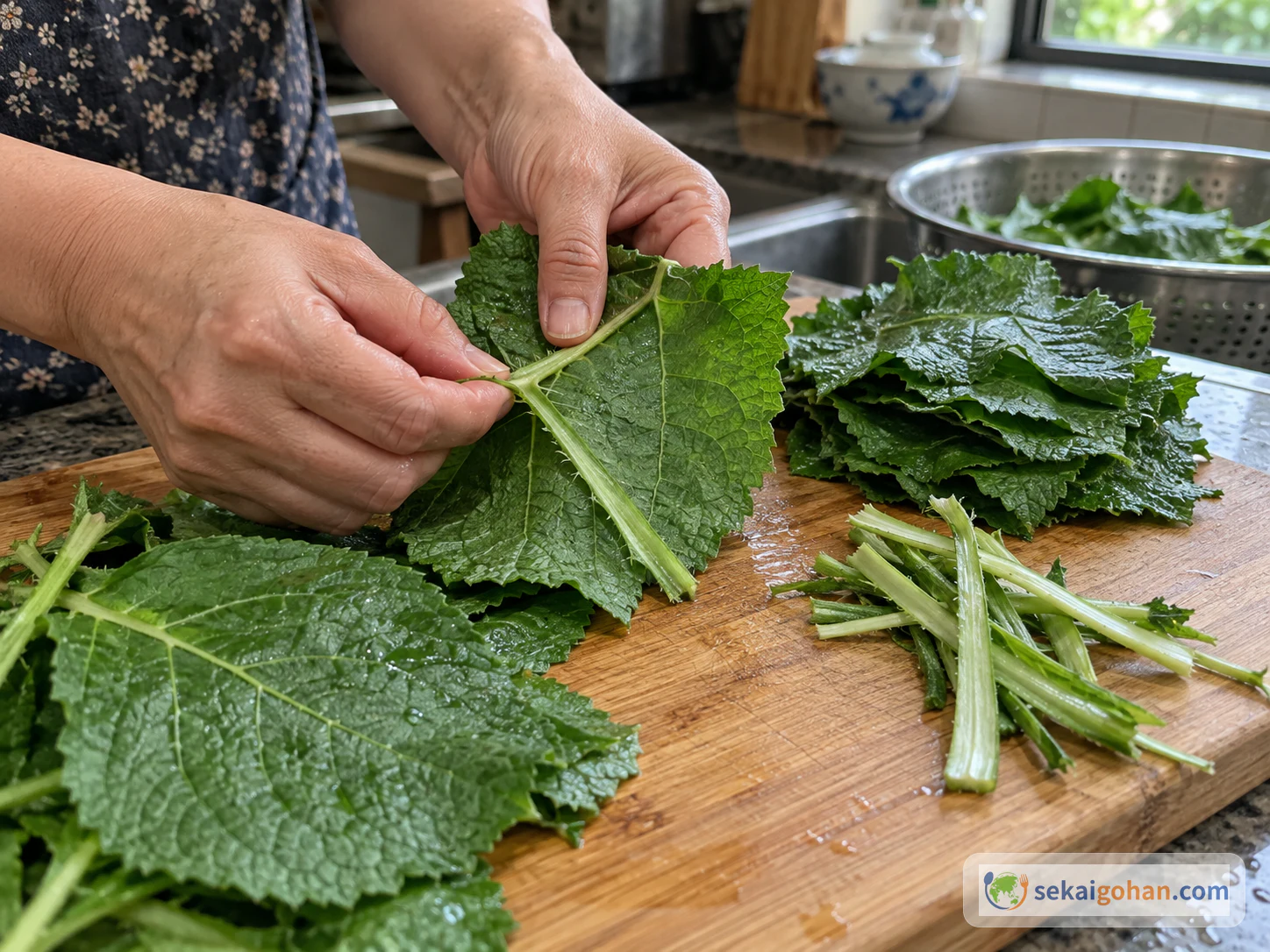
Lá gai (ramie leaves) are the heart of this cake and the hardest thing to find outside Vietnam. Ask at Vietnamese or other Southeast Asian grocers for "lá gai." Dried lá gai powder exists, but there is no confirmed ratio for replacing 500 g of fresh leaves with powder, so it cannot simply be swapped in by weight. If you try a powder, you would need the maker's own instructions for this kind of cake. Do not replace lá gai with other leaves of similar color, such as mugwort, and expect the same result. Never use unidentified wild leaves.
Glutinous rice flour. Look first for a flour labeled glutinous rice flour (bột nếp). Other glutinous rice flours, such as Japanese mochiko or shiratamako, differ in grain size and how much water they absorb, so they cannot be assumed to behave the same in this recipe.
Mung beans. Use hulled split mung beans (peeled mung beans, sometimes sold as moong dal). Whole mung beans with their green skins are not in the same state and would change the method.
Coconut. The filling uses finely shredded flesh of mature coconut. Packaged dried or desiccated coconut has a different moisture level, and it is not confirmed that it behaves the same. Sweetened coconut products also change the sweetness. Read the label before you buy.
Sugar. The 150 g + 150 g split is part of the recipe. Reducing it changes the texture of both shell and filling and turns this into a different recipe that would need its own trial.
Banana leaves. Fresh or frozen banana leaves from an Asian grocer work for wrapping. Baking paper can hold the shape if a leaf tears, but the cake loses the leaf aroma and its look, so treat it as a fallback, not an equivalent.
Equipment
- Large pot and colander, for boiling and draining the leaves
- Knife and cutting board
- Blender or food processor
- Large mixing bowl, for kneading the dough
- Pan, for drying out the filling over low heat
- Steamer, or a pot with a steaming rack and lid
- Small brush, for oiling the leaves
Method: From Leaf to Steamed Tower
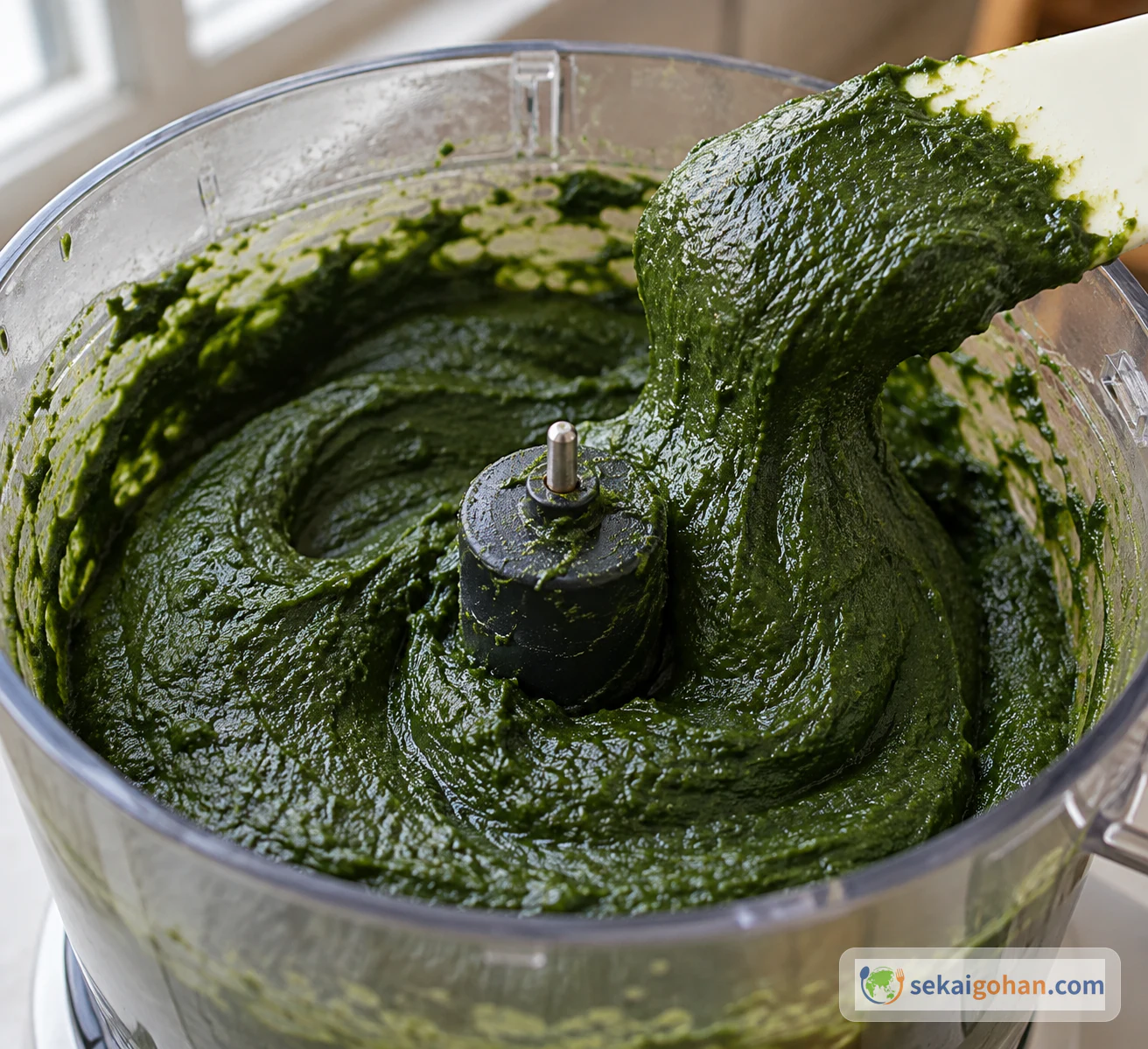
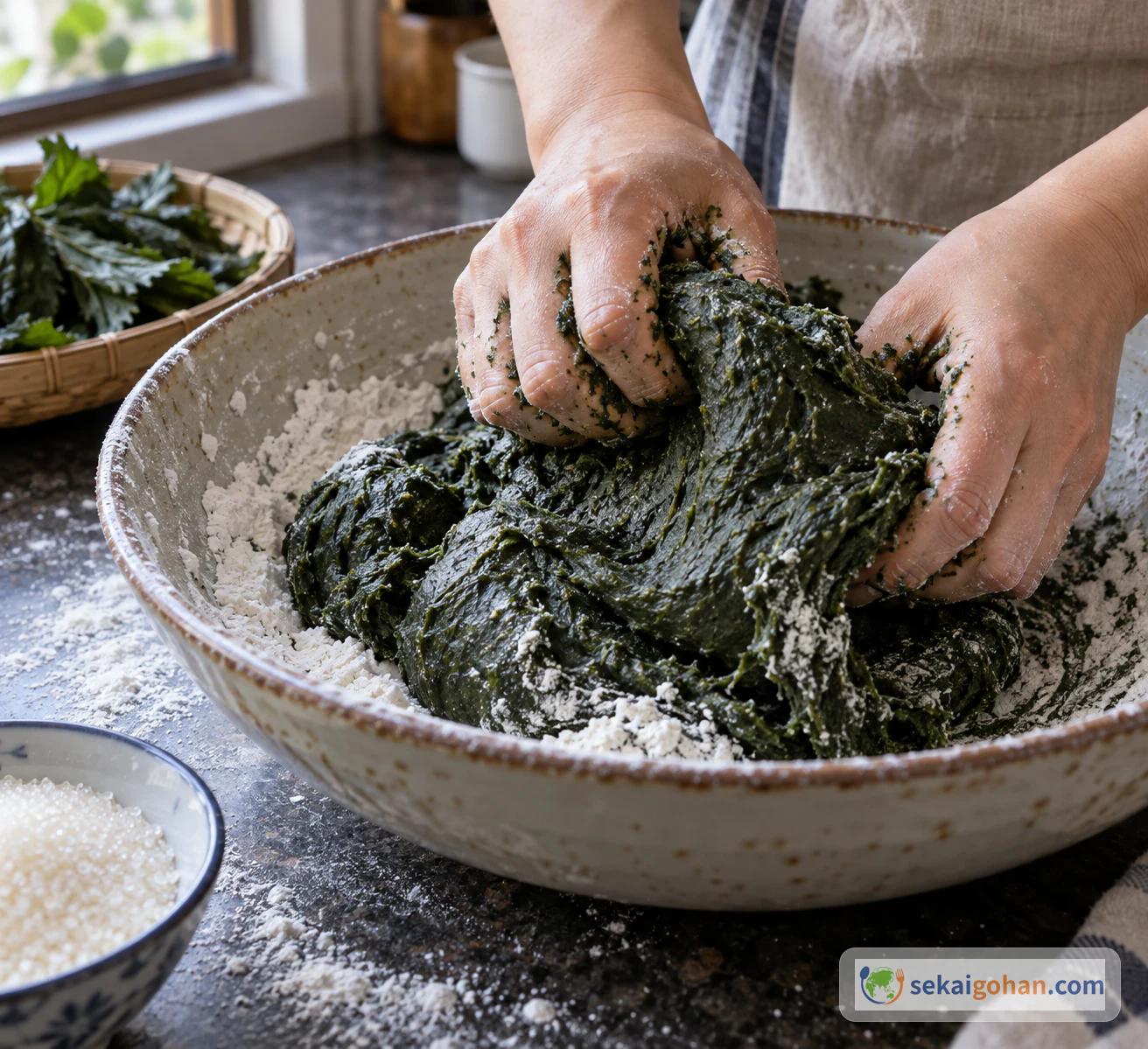
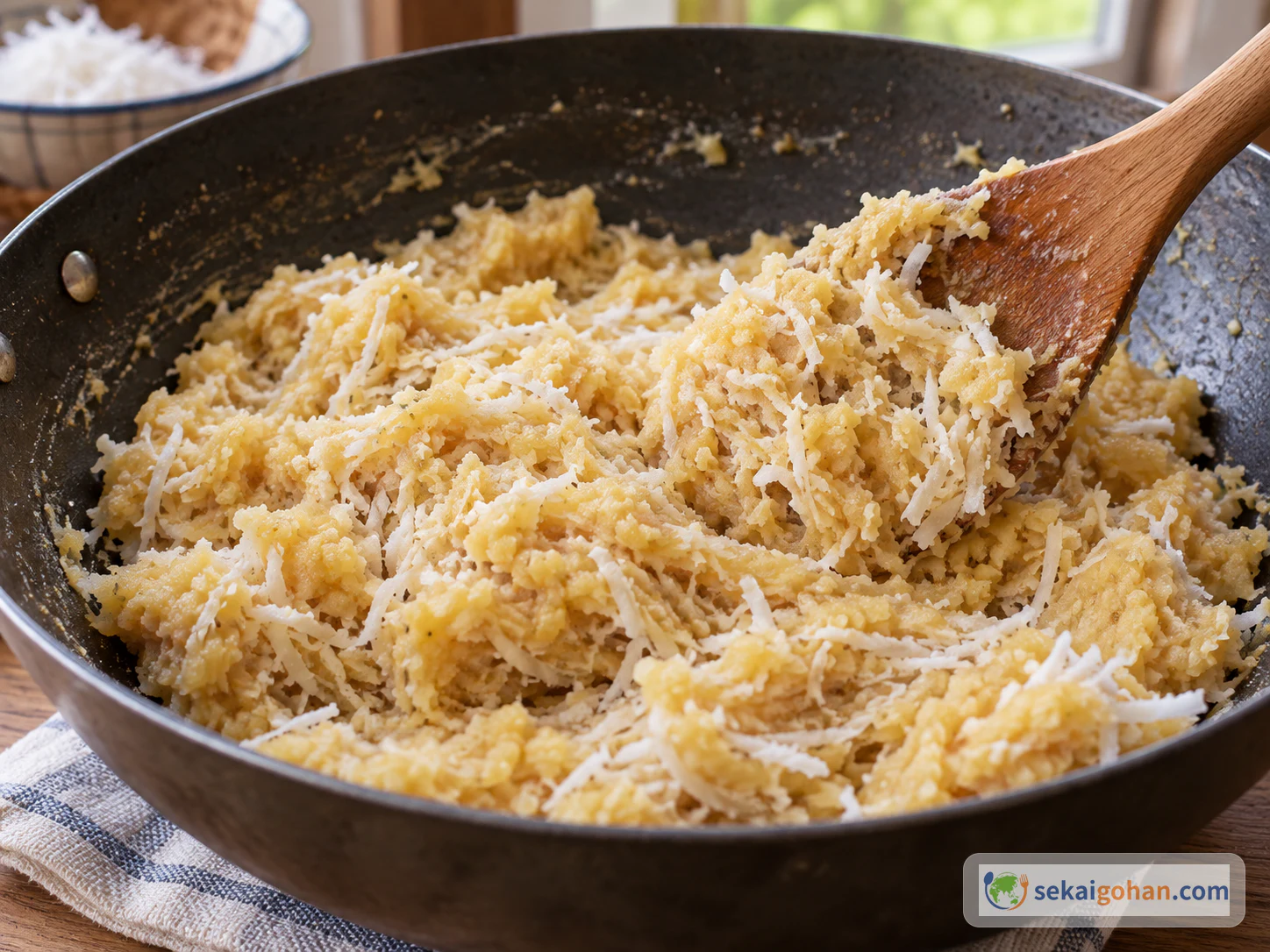
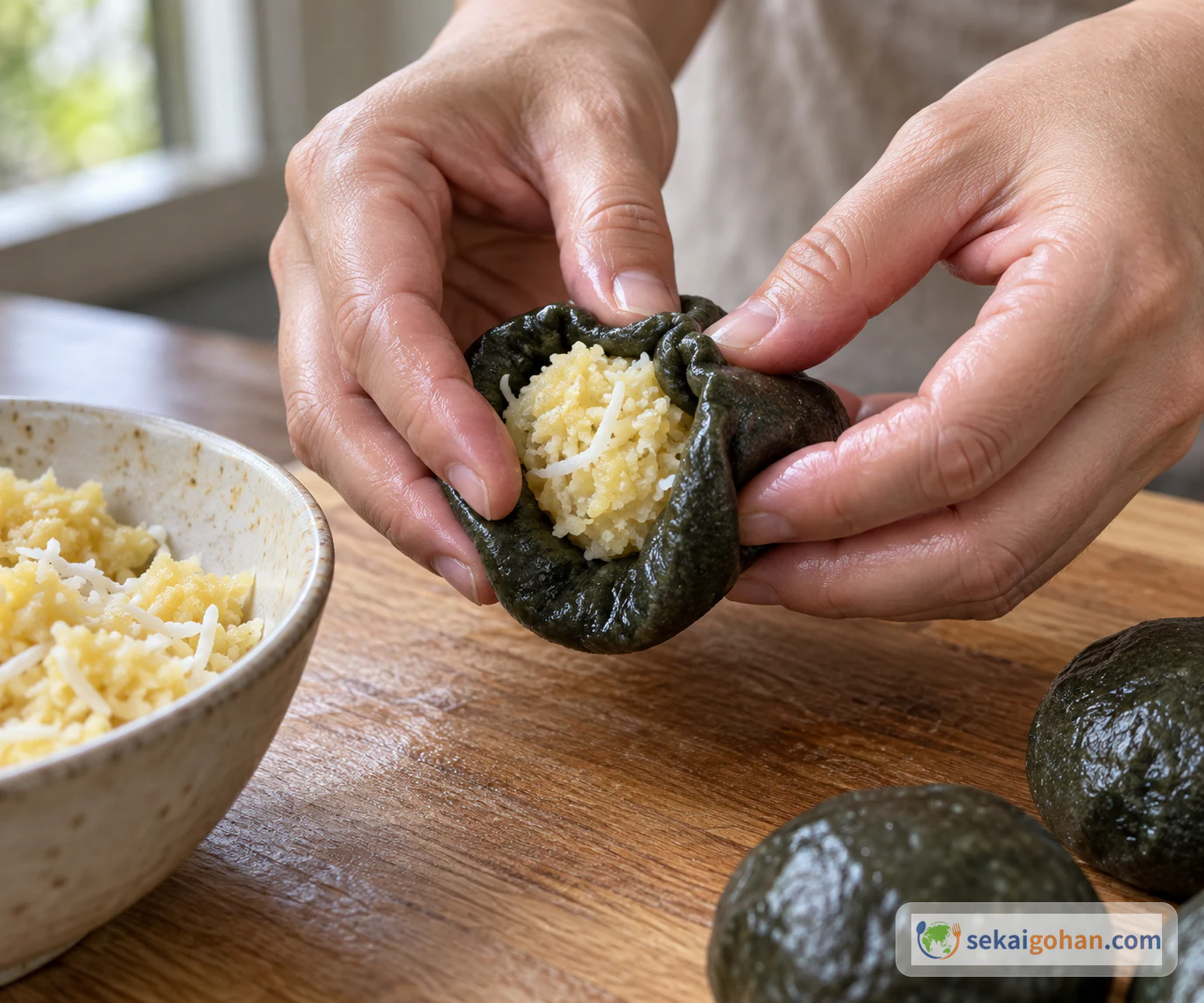
The mung beans need about 4 hours of soaking, so start them first. Judge the leaf paste, dough and filling by their state, not by the clock, except where a time is given.
Troubleshooting: Dough, Filling and Steaming
The biggest open question in this recipe is moisture. The CET page does not say how much water the boiled leaf paste carries into the dough, and since the recipe has not been kitchen-tested, there is no measured fix to offer.
| Problem | Likely cause | What to do |
|---|---|---|
| Dough is too wet to shape | The leaf paste holds more water than the flour can take | Do not guess at extra flour. Note the weight of your drained leaves and paste; that is the information that will settle the recipe. If it cannot be shaped, a different, fully specified recipe is a better choice than patching this one |
| Dough cracks when you wrap it | Not kneaded enough, or uneven thickness | Knead until smooth and even, and flatten each round to the same thickness all around |
| Filling is sticky and slumps | Not dried out enough in the pan | Return it to low heat and stir until it holds a shape once cooled, then cool before adding the coconut |
| Filling breaks through the shell | Shell too thin in one spot, or seam not closed | Keep the round evenly thick and pinch the seam firmly before rolling |
| Leaf tears while folding | Leaf not softened enough | Warm the leaf again until it bends without splitting |
| Leaf sticks to the cake | Leaf not oiled | Brush a thin layer of oil on the inside of the leaf before wrapping |
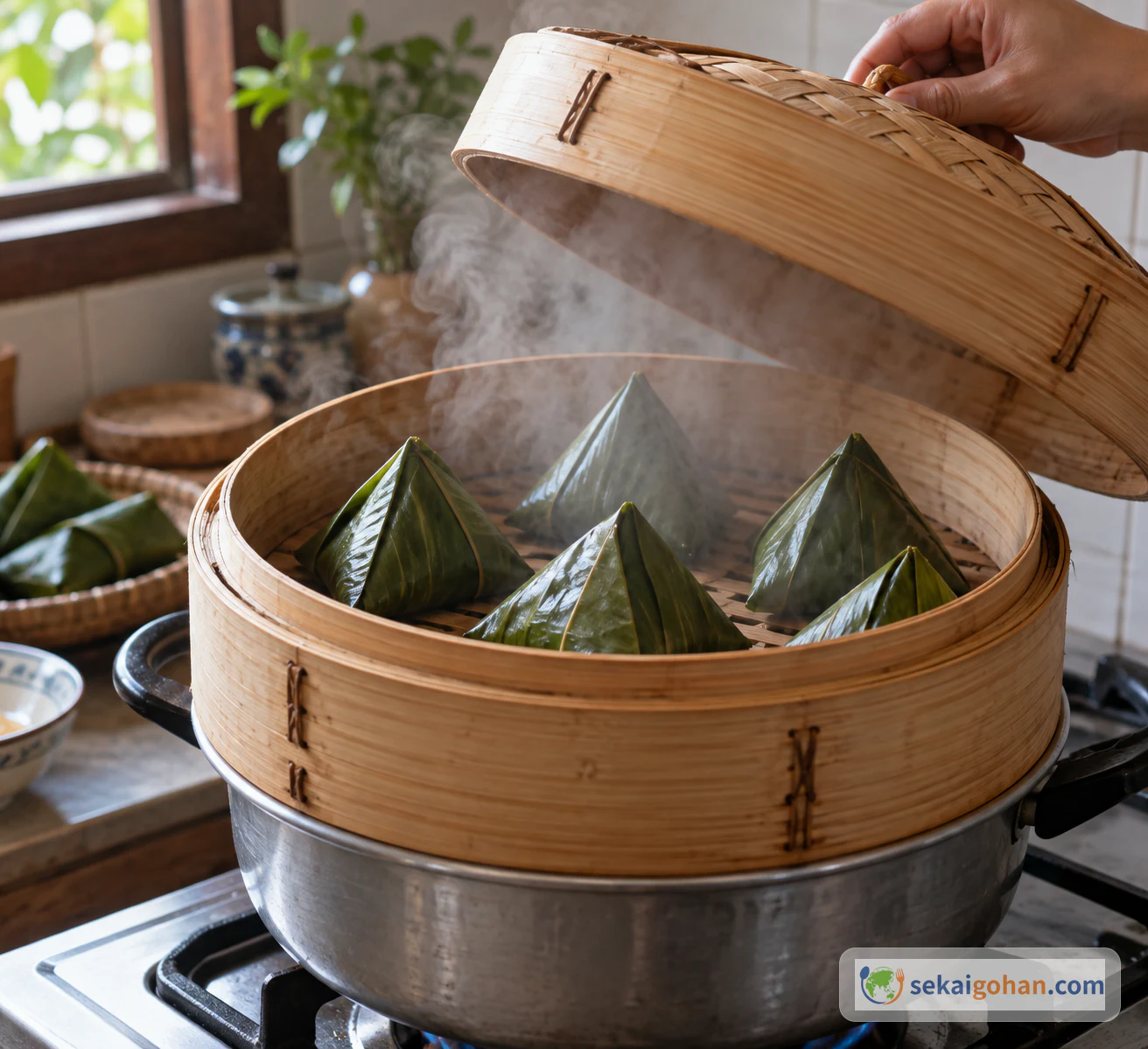
The steaming time of about 30 minutes is the time given by CET; it does not come with a core temperature. Leaf color alone is not proof that the cake is cooked, so check that the parcel is hot through and the shell has set.
Storage
Eat the cakes freshly steamed if you can. Let any you are not eating right away cool quickly, refrigerate them, and eat them soon. If anything looks, smells or feels wrong, or you have any doubt, throw them away.
The CET page suggests the cakes keep for 10 days in the refrigerator, but it does not state how they should be packed or at what temperature, so that suggestion is not used here. No storage period or reheating time has been confirmed, so none is given.
Variations and Regional Differences
Steaming bare, then wrapping. The SCOV cultural article notes that in some places the cakes are steamed without leaves and wrapped afterward, to keep the banana leaf green. The Bình Định provincial newspaper describes the workshop of Bà Dư in Tuy Phước working this way: the leaves are boiled and pounded with sugar and flour, the dough is steamed for about 30 minutes and cooled, then cut, filled with mung bean mixed with coconut, and wrapped in banana leaves softened over heat. Because the dough is cooked before filling, this is a separate method, not a step that can be swapped into the recipe above.
Pounded rather than blended. Traditional accounts describe pounding the boiled lá gai and working the glutinous rice and sugar together by pounding. The recipe here uses a blender for the leaves and kneading for the dough.
Bánh ít trần and other bánh ít. The same name covers cakes without lá gai, some steamed bare and some savory. Their fillings and methods should not be mixed with this sweet leaf-wrapped type.
Bánh gai. There is also a similarly named northern cake, bánh gai. This article does not compare the two in detail.
Adjusting sweetness. Changing the 150 g + 150 g of sugar changes the texture of both shell and filling. Treat any reduction as a new recipe to test, not a small tweak.
Bánh Ít Lá Gai in Bình Định: Tea, Celebrations and Towers
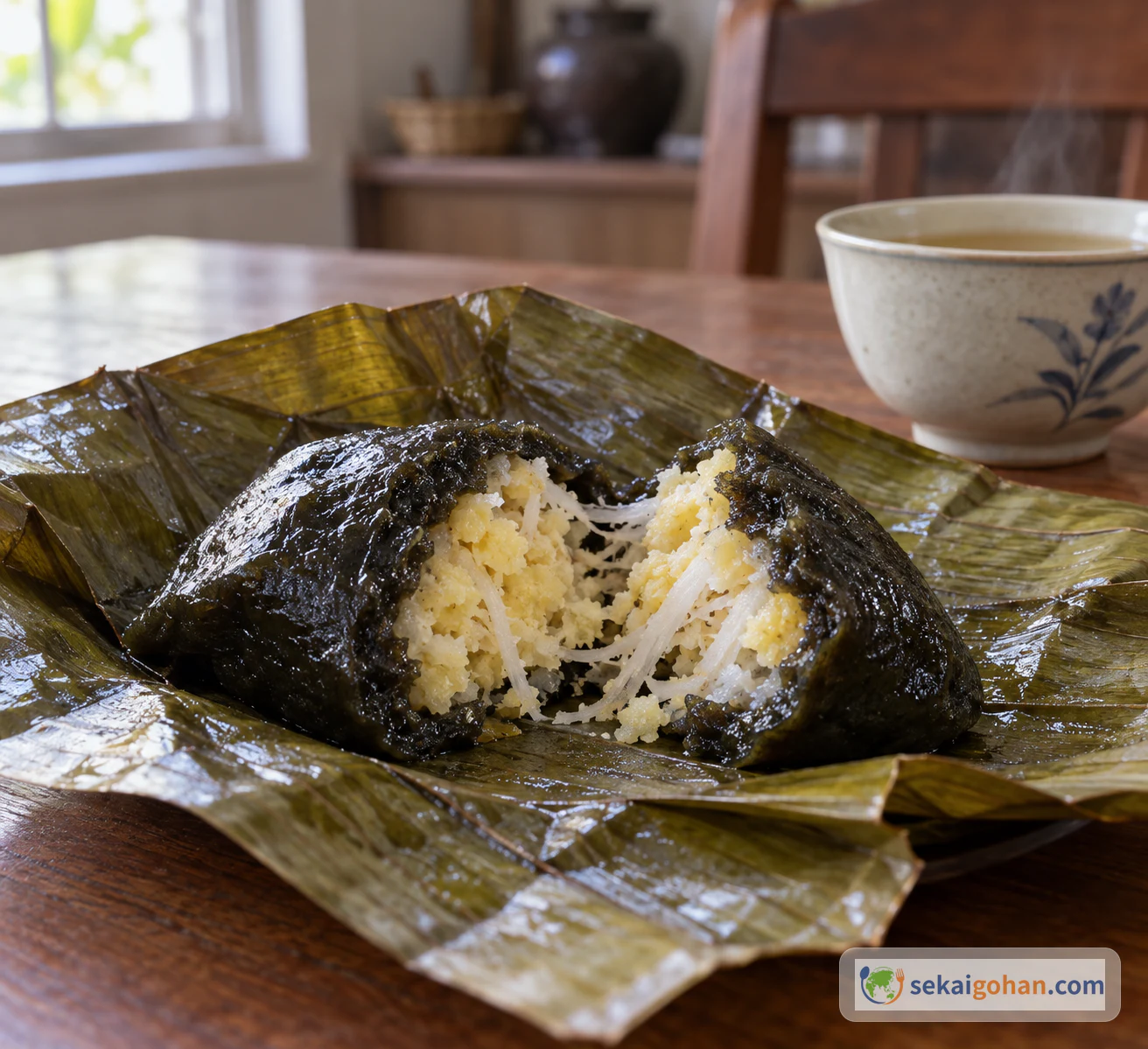
Bánh ít lá gai is described as a specialty of Bình Định. CET records it at Tết and other festive occasions, at weddings and at death-anniversary gatherings, and as a sweet served after a feast. The SCOV article describes it as a dessert eaten with hot tea. It is a sweet cake, served as it is, with no dipping sauce.
A well-known folk verse quoted by the Bình Định provincial newspaper goes roughly: "If you want to eat bánh ít lá gai, marry a husband from Bình Định, though you may fear the long road." The verse ties the cake firmly to its home province.
The tower shape carries local meaning too. The SCOV article links the pyramid-shaped parcels to the cluster of Chăm towers in Tuy Phước. This is a regional symbol and a way people talk about the cake, not a proven account of where the shape came from. The same article also tells one story about the name, involving a woman who bought just a few cakes to take home to her mother-in-law. It is presented as a legend, not as the settled origin of the name.
The Bình Định newspaper's report from Tuy Phước also shows the cake as local craft work, with skills passed on and the steps shared among a team of makers.
Frequently Asked Questions
Is bánh ít lá gai the same as bánh ít trần?
No. Bánh ít is a broad name. Bánh ít trần is steamed bare and can have a savory shrimp and pork filling. Bánh ít lá gai has a dark shell made with ramie leaves and a sweet mung bean and coconut filling, and is wrapped in banana leaf. This article covers only the lá gai type.
What can I use instead of lá gai?
No equivalent replacement has been confirmed. Dried lá gai powder is sold, but there is no confirmed ratio for using it in place of 500 g of fresh leaves, so you would need the maker's own instructions. Other leaves such as mugwort will not give the same color or aroma.
How many cakes does this make?
The CET recipe does not give a yield, and this recipe has not yet been kitchen-tested, so no number is given. Divide the dough and filling into equal portions at whatever size suits you.
Why is there no ginger?
The CET method mentions boiling the leaves with a little ginger, but its ingredient list gives no amount. Without a reliable quantity, ginger is left out of this version entirely.
Are the cakes ever steamed before wrapping?
Yes. The SCOV article says some places steam the cakes bare and wrap them afterward to keep the leaf green, and the Bình Định newspaper describes a Tuy Phước workshop steaming the dough first. This recipe wraps first and then steams, and the two methods should not be mixed.
What do I serve with it?
Hot tea. It is eaten as a sweet after a meal, without sauce.
Sources
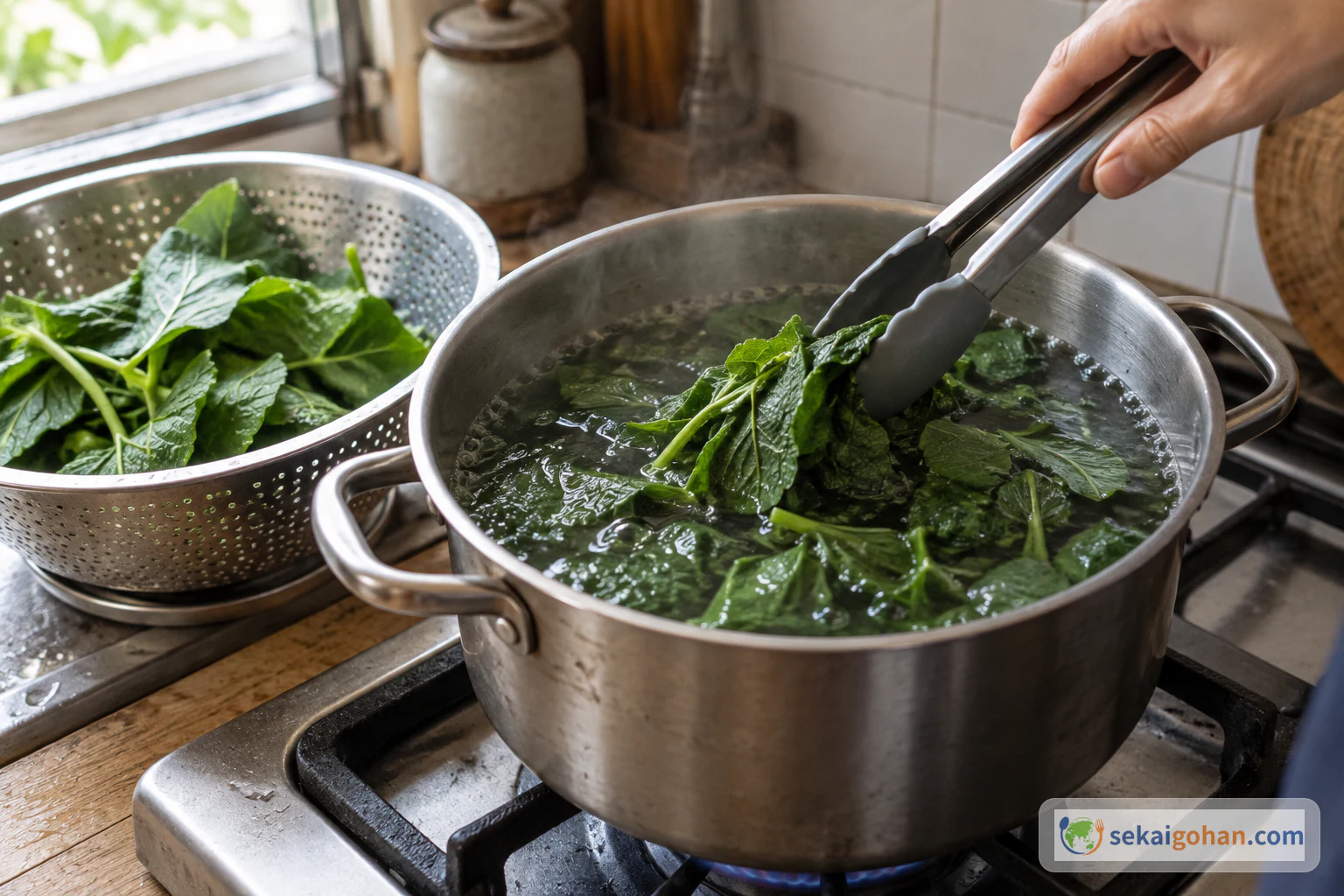
- Trường Trung cấp Kinh tế - Du lịch Thành phố Hồ Chí Minh (CET), "Bí Quyết Làm Bánh Ít Lá Gai Ngon Ngất Ngây." The recipe used here: ingredient amounts, sugar split between shell and filling, boiling the leaves for 10–15 minutes, the 30-minute dough rest, the 4-hour mung bean soak, cooking the filling dry before mixing in coconut, wrapping in softened, oiled banana leaf and steaming for about 30 minutes; also its role in Bình Định at Tết, weddings, death anniversaries and after feasts. The page gives no yield, no amount for ginger, oil or added water, and no bean cooking time. https://www.cet.edu.vn/banh-it-la-gai
- Ủy ban Nhà nước về người Việt Nam ở nước ngoài (SCOV), "Nhớ hoài bánh ít lá gai," republished from Quê hương Online / Làng Việt Online. Bình Định and the cake, the tower shape and its link to the Chăm towers of Tuy Phước as a local symbol, the legend about the name, serving with hot tea, and the practice in some places of steaming before wrapping. No ingredient amounts. https://scov.gov.vn/ban-sac-van-hoa/huong-vi-que-nha/nho-hoai-banh-it-la-gai.html
- Báo điện tử Bình Định, "“Muốn ăn bánh ít lá gai…”." The folk verse linking the cake to Bình Định, and the process at Bà Dư's workshop in Tuy Phước: boiling and pounding the leaves, steaming the dough first, filling with mung bean and coconut, and wrapping in softened banana leaves. A report on one producer, not a quantified home recipe. https://baobinhdinh.vn/viewer.aspx?mabb=55865&macm=18&macmp=18