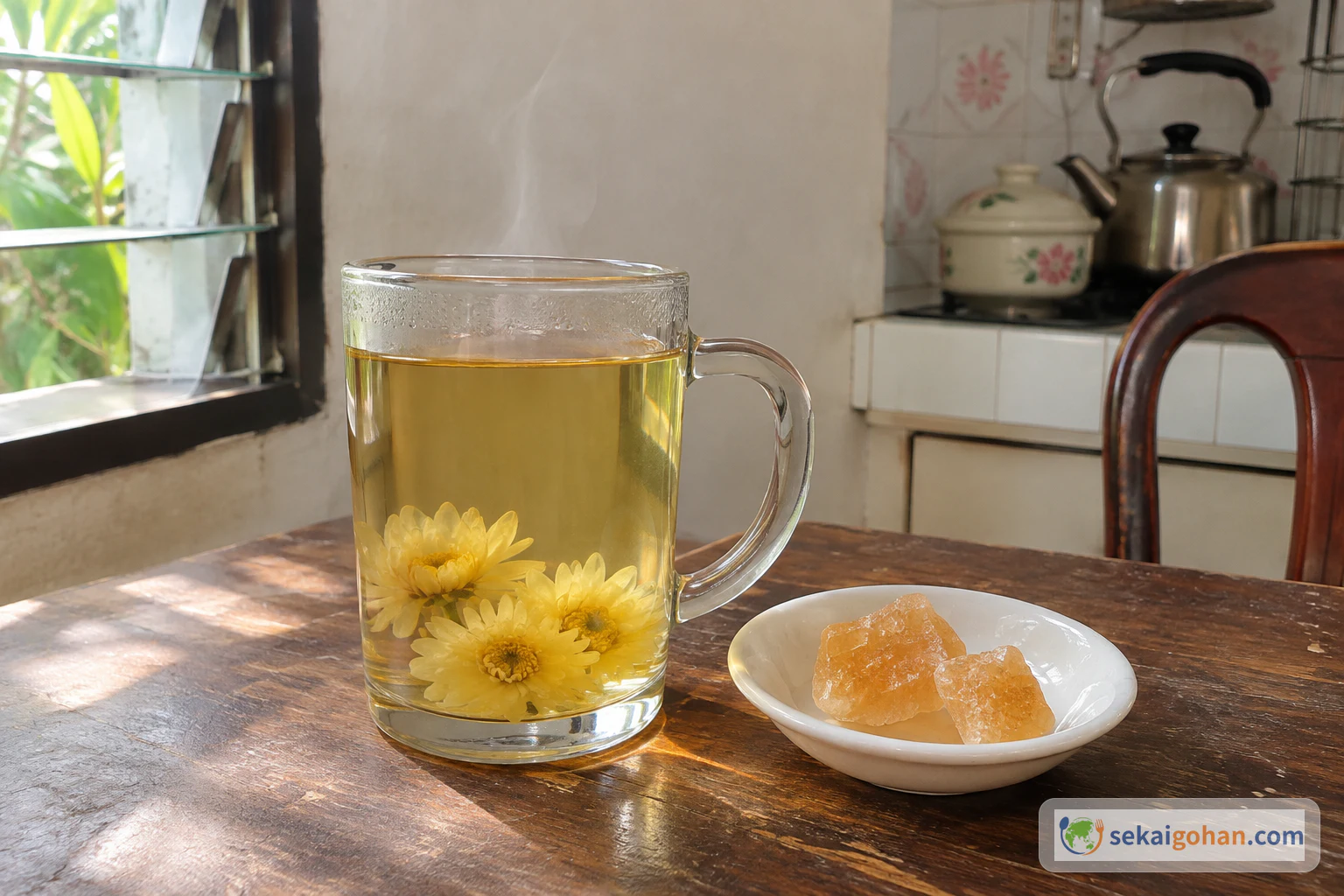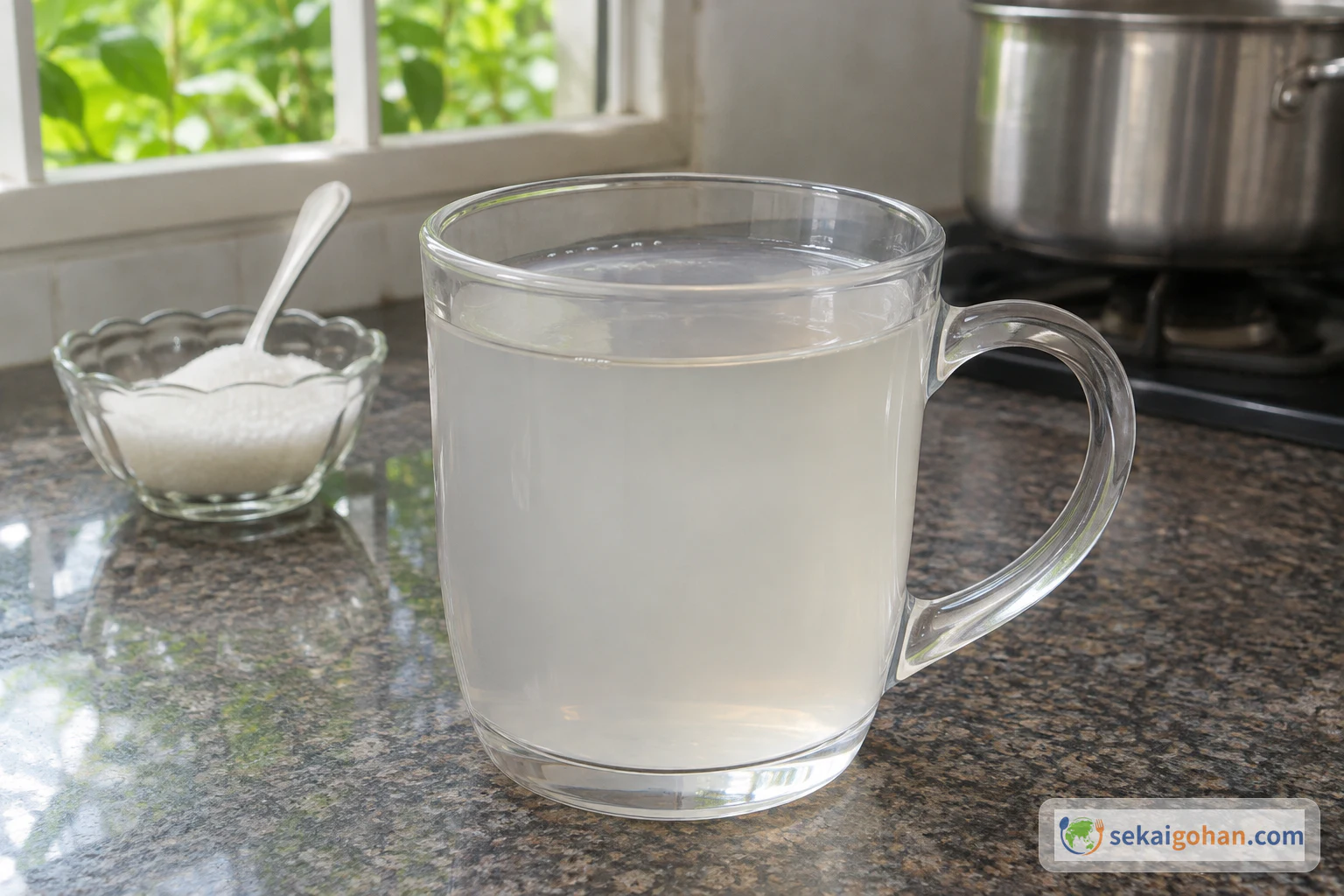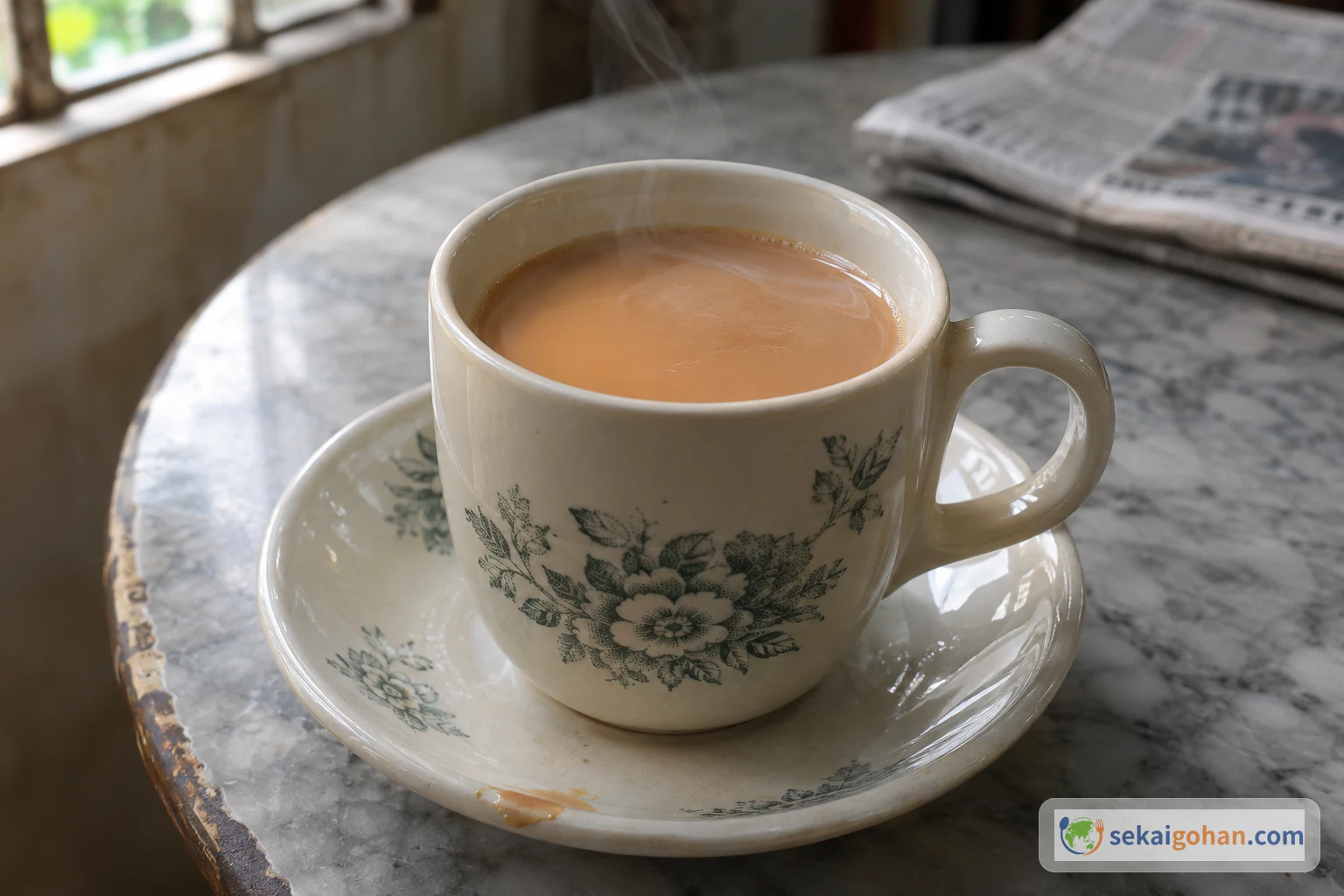
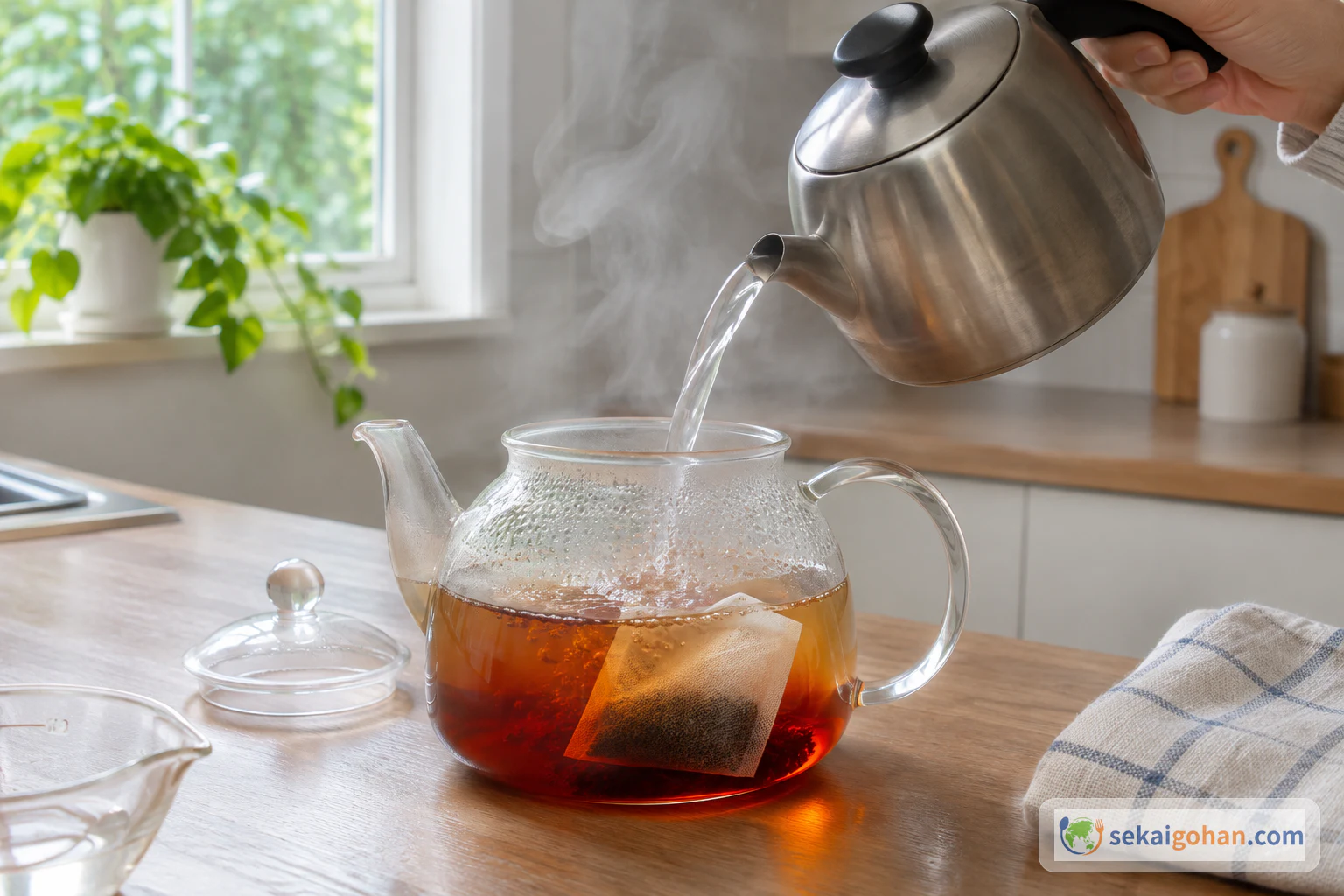

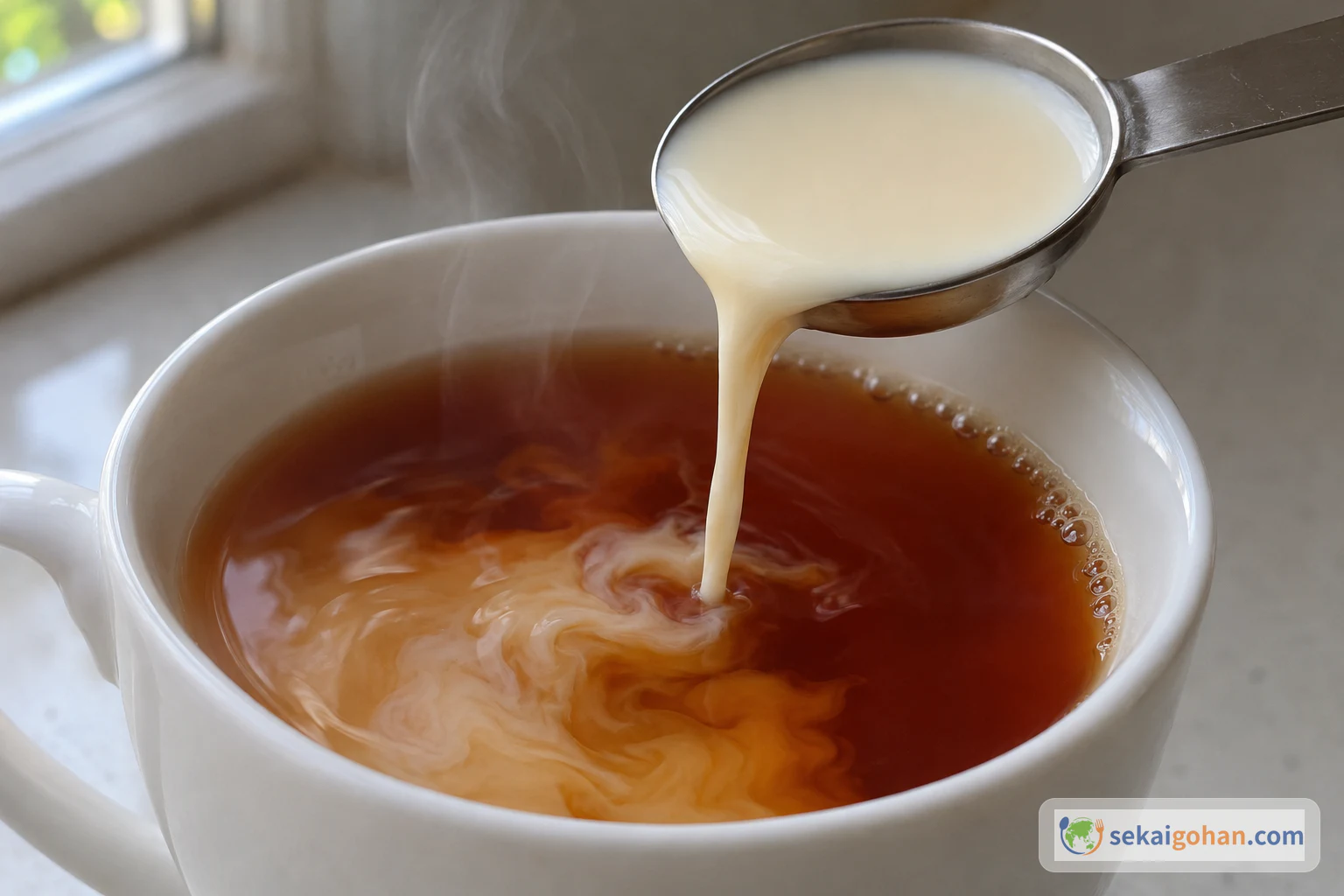
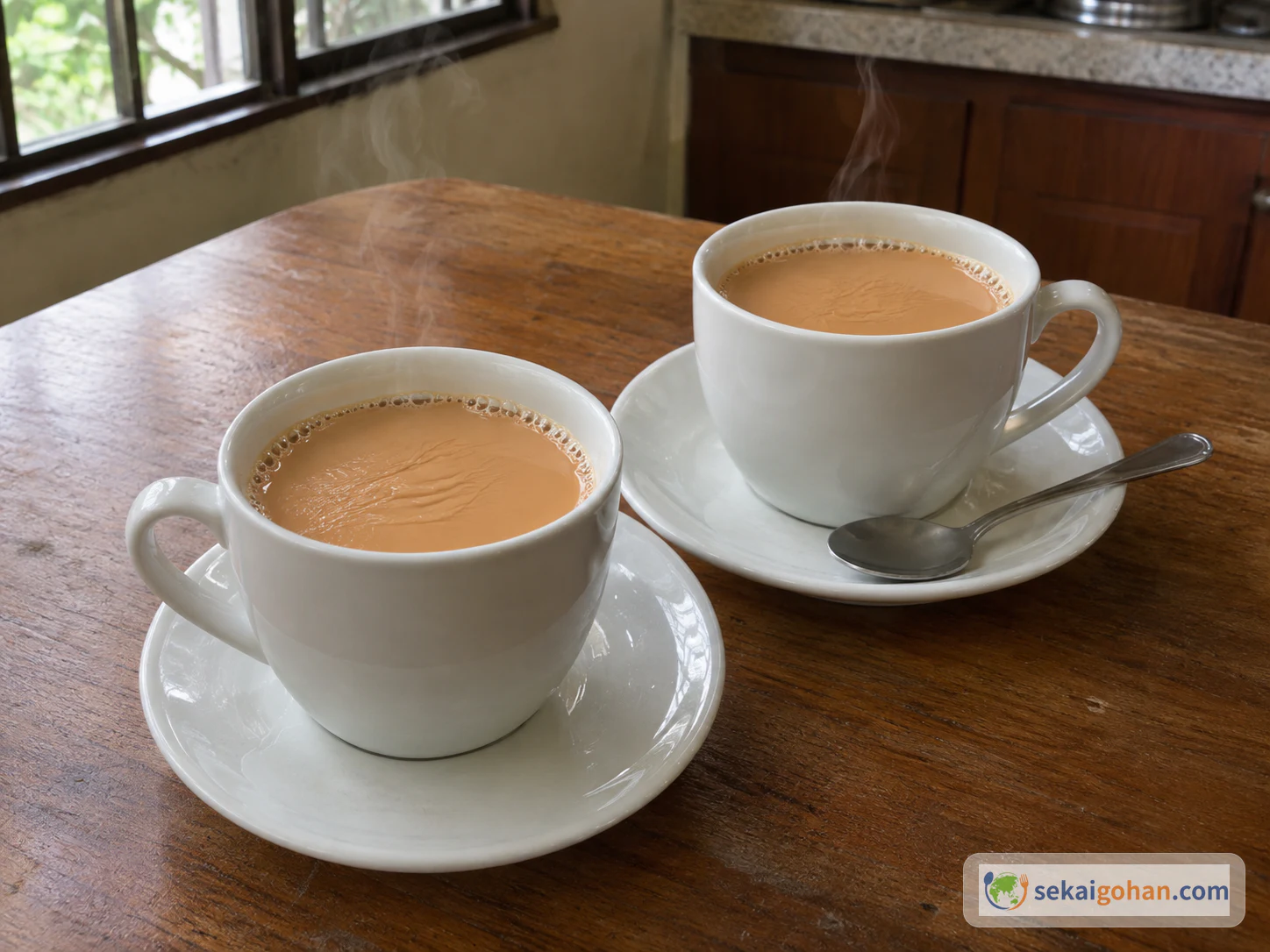
A spoonful of pale milk goes into a cup of tea so dark it is nearly red. The milk sinks, then curls back up as a thin ribbon, and the cup turns a soft tan as you stir. That is teh see, also written teh C or teh si. It is the hot tea of the kopitiam, the old coffee shops of Malaysia and Singapore, made with unsweetened evaporated milk and sugar and not the thick sweet condensed milk most people picture in a Malaysian milk tea. The tea is strong and a little astringent, and the milk rounds it off without hiding it. Sweetened with palm sugar, it has a dark, toasty sweetness that white sugar can't give.
A Coffee-Shop Order with Its Own Language
Kopitiam mornings
The word kopitiam joins two languages: kopi, Malay for coffee, and tiam, Hokkien for shop. These shops serve what is called the Nanyang breakfast, and tea is as much a part of it as coffee. Teh is simply Malay for tea. The coffee shops serving this breakfast were traditionally run by people of Hainanese descent, and over time the trade opened up to others.
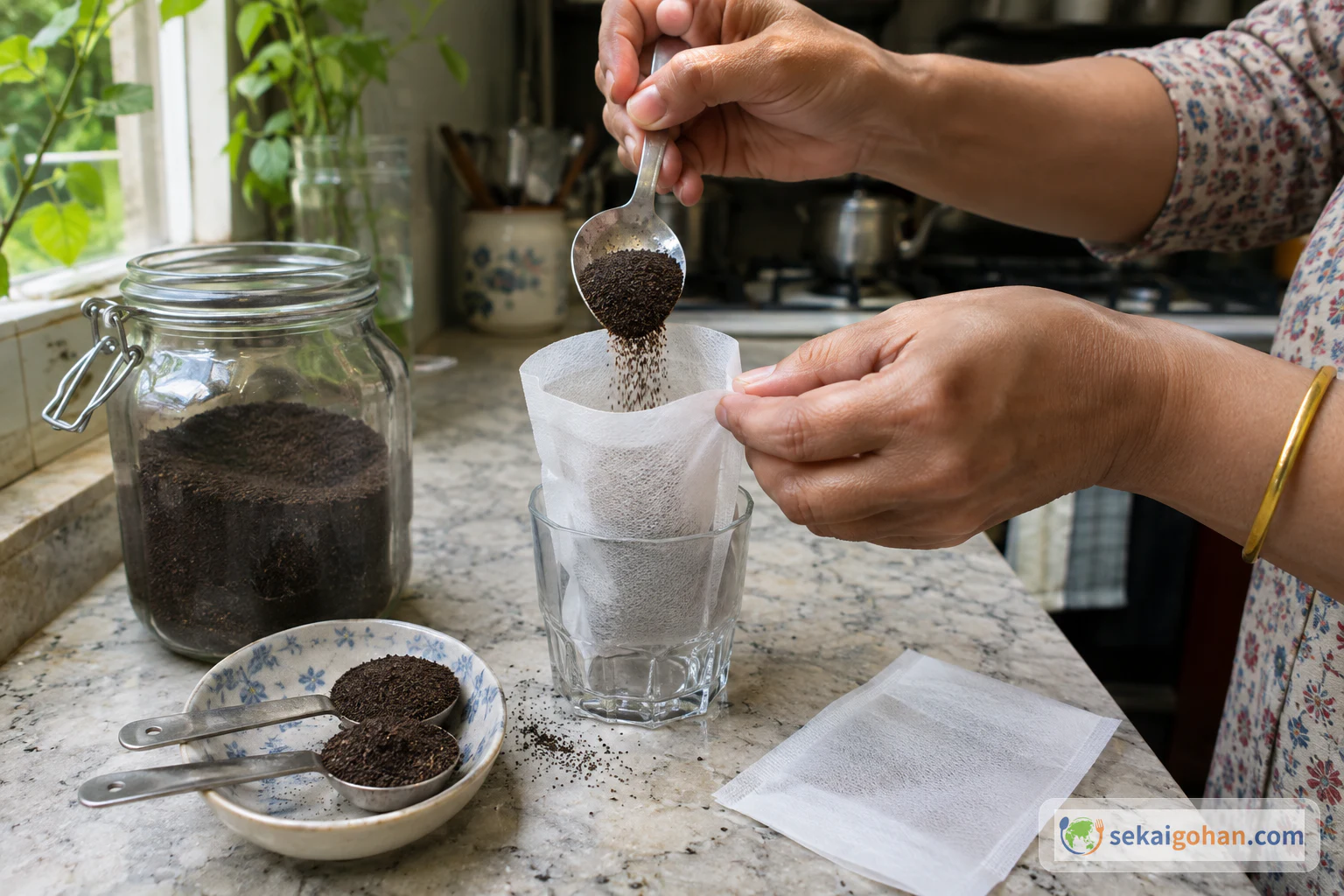
Behind the counter the tea is made differently from a home pot. Ceylon tea is the usual choice. The leaves go into a muslin bag, the brew is stirred with a stick or long chopsticks, and then it is poured back and forth between two big enamel jugs with long spouts, which adds air and cools it. In Singapore's hawker centres and coffee shops the tea brews in a large metal cylinder with a cloth "sock" holding the leaves. At home, a small teapot and a doubled tea pouch get you a similar cup with far less equipment.
Ordering is quick and mixes Malay, Hokkien and Cantonese in one breath, which says a lot about who drinks in these shops. In Johor Bahru, asking for teh-C gets you tea with evaporated milk, and it comes sweetened unless you add kosong. A full order like teh-O-kosong-peng means black tea, no sugar, with ice. You can read more about the country's food on our Malaysia page.
The most common story is that the C stands for Carnation, a brand of evaporated milk. Two other explanations are also told: one links it to the Chinese character 稀, meaning thin, and another to the Hainanese pronunciation of 鮮, meaning fresh. Which one is right is not settled.
Teh see and its neighbours
Three drinks in the same glass case are easy to mix up. Plain teh is tea with condensed milk and sugar, so it comes out sweeter and thicker. Teh tarik was brought to the region by Indian immigrants and is tied to Malaysian Indian cooking. It usually combines evaporated and condensed milk, and it is pulled from a height until it foams. Teh see skips the condensed milk and the show, so the tea stays at the front.
In Sarawak the same idea turns into Teh C Peng Special, the three-layer iced tea. Palm sugar syrup (gula melaka or Sarawak's gula apong), evaporated milk and tea are layered in the cup. The story in Kuching says it was first served at the Fresh Food Court at the 7th Mile Bazaar in Kota Sentosa. Peng is Hokkien for ice. It is its own drink with its own build, and the cup below is the plain hot one.
Ingredients (serves 2)
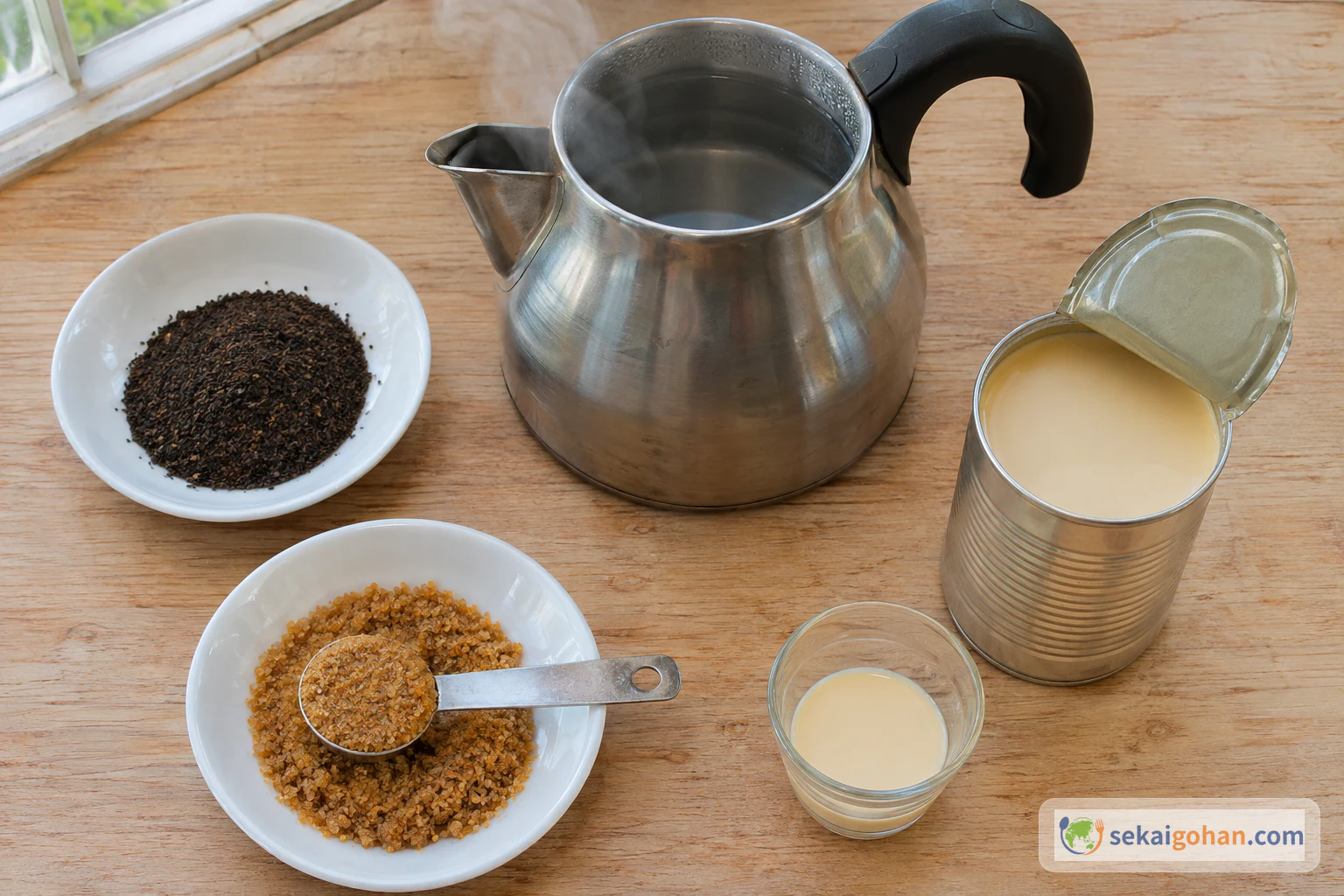
Measure the tea and the sugar level with the rim of the spoon. Do not heap either spoon.
Contains milk (evaporated milk). Tea contains caffeine, so young children and anyone who is pregnant should watch how much they drink. Read the evaporated milk label for any other allergen or shared-facility statements.
Equipment
- Paper or non-woven tea pouches (two per batch for double-bagging), or a cloth coffee filter
- Small teapot
- Kettle
- Level measuring tablespoon and teaspoon
- 2 cups (warm them first if you like)
Choosing the Milk, the Sugar and the Tea
The milk is the one thing that cannot change. Buy unsweetened full-cream evaporated milk and check the can carefully, because sweetened condensed milk sits right next to it on the shelf and the cans look alike. Condensed milk sends the sweetness and thickness way up and turns the cup into something close to teh tarik. Within evaporated milks, choose full cream and skip "filled" milk.
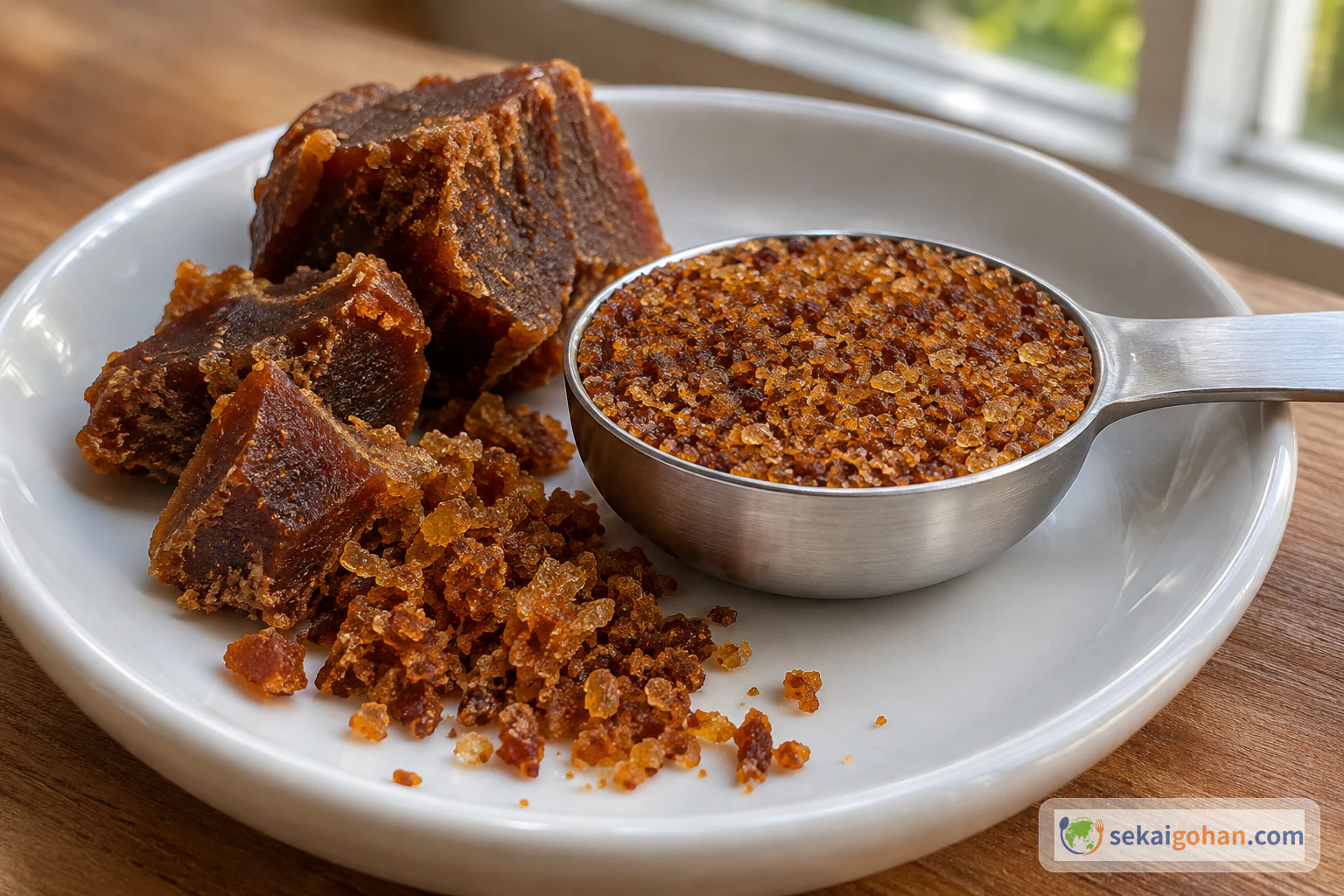
Gula melaka comes as granules or as solid blocks. Granules dissolve straight into the hot tea. A block needs chopping fine before you measure it, or the lumps sit at the bottom of the cup. White sugar works and sweetens the cup just as well, but the dark palm note disappears and only plain sweetness is left.
For the tea, look for very fine black tea, the dust-like CTC type. It gives up colour fast and stands up to the milk. Larger whole leaves make a lighter, slower brew.
| Keep | Can change |
|---|---|
| Unsweetened full-cream evaporated milk | Gula melaka → white sugar (sweet, no palm aroma) |
| Strong black tea steeped the full time | Tea dust → tea bags (quicker, shallower aroma) |
| Sugar first, tea, then milk last | Hot → iced (peng) |
Method
The tea steeps for five minutes, which is the only hands-off time. Measure the sugar into the cups and open the milk while it steeps. Once the pouch comes out, everything happens in the cup, in a fixed order: sugar, then tea, then milk.
If the cup tastes weak, the tea is too thin, and more milk will only make it taste milky. Next time steep longer or use more leaves and keep the milk at one spoon.
When It Goes Wrong
| What you see | Why | What to do |
|---|---|---|
| Grit at the bottom of the cup | Tea dust escaped a single pouch or a metal strainer | Double-bag the pouch, or strain twice through a cloth filter |
| Thin, watery taste | The steep was cut short | Give it the full 5 minutes; for a stronger cup, steep longer or add more leaves |
| Too sweet | A full spoon of palm sugar is too much for you | Use 1 tsp less sugar per cup (siu dai) |
| Sugar grains left in the bottom | Sugar went in after the milk, or the lumps were too big | Sugar first, hot tea over it, stir; chop block sugar fine |
| Milk separates into a film | The can was not shaken, or the milk was heated | Shake the can well and add the milk to the hot tea in the cup without heating it |
Serving, Variations and Storage
At the breakfast table
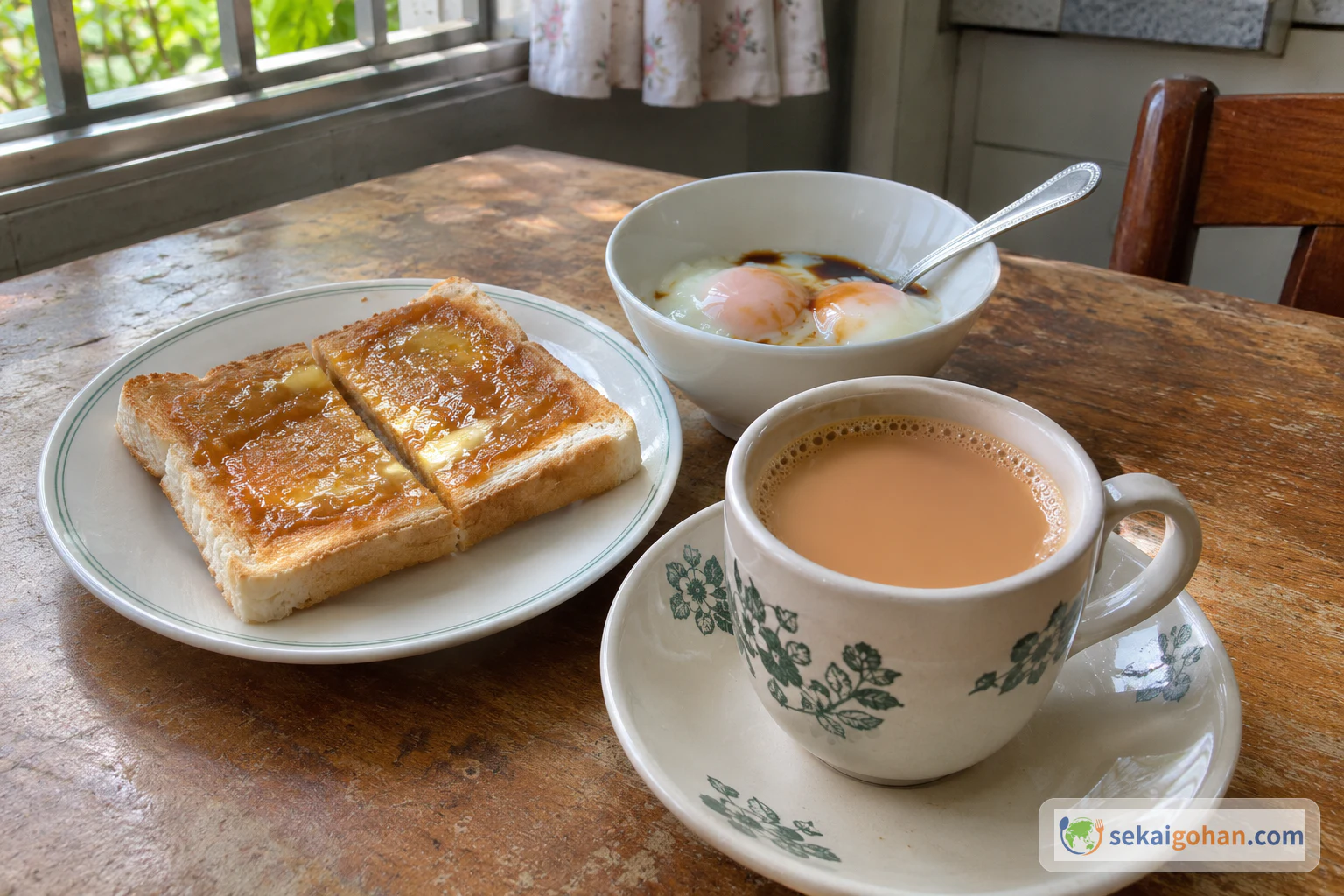
The Nanyang breakfast set is kaya on charcoal-grilled toast, two soft-boiled eggs and a cup of kopi or tea. The eggs are cracked into a small bowl and seasoned with a little dark soy sauce, and the toast gets dipped in them. Teh see suits this set because it is less sweet than condensed-milk tea, which leaves room for the rich coconut jam. In Malaysia breakfast also means nasi lemak and roti canai, and in Singapore some restaurants serve tea alongside bak kut teh, the peppery pork-rib soup.
Variations to order or make
| Say | You get | At home |
|---|---|---|
| Teh-C | Tea with evaporated milk and sugar | The recipe above |
| Teh-C kosong | No sugar (kosong is Malay for zero) | Leave out the palm sugar |
| Teh-C siu dai | Less sweet | Use 1 tsp less sugar per cup |
| Teh-C gao | Stronger | Steep a few minutes longer, or use more leaves |
| Teh-C po | Lighter | Use less tea and top up with hot water |
| Teh-C peng | Iced | Pour the finished tea over drinkable ice |
| Teh-O | Black tea with sugar, no milk | Skip the milk |
Peng gives a cold cup with the same mix stirred together, while the Sarawak three-layer special is built in separate layers.
Storage
Teh see is made by the cup and drunk hot, because its aroma fades as it sits. Don't leave a made cup out at room temperature. Once the evaporated milk is open, cover the can or move the milk to a covered container, refrigerate it promptly and use it up quickly within the date on the label.
Frequently asked questions
Can I use tea bags?
Yes. Steep 1–2 black tea bags for 3–5 minutes in place of the leaves and pouch, and keep the sugar, the pour order and the milk the same. The cup comes out lighter, with a shallower aroma than tea dust gives. It works well on a busy morning.
Will ordinary loose-leaf black tea work?
It makes a good cup, but larger leaves give up their colour more slowly than fine CTC dust. Steep the full 5 minutes until the tea is a deep reddish brown, and a little longer if you want it stronger. Fine-grade tea stays closest to the strong, astringent kopitiam taste.
If I order it kosong, is it still sweet?
No. Evaporated milk is unsweetened, so all of the sweetness comes from the sugar. A kosong cup tastes of strong tea softened by milk and nothing else, which is a good way to taste how the two balance.
Is teh see on UNESCO's heritage list?
Malaysia's breakfast culture was inscribed on UNESCO's Representative List of Intangible Cultural Heritage in 2024, as dining shared by Malays, Chinese, Indians and other groups. The foods named are nasi lemak and roti canai, and the drink named is teh tarik. Teh see belongs to the same morning tables but is not named on its own.