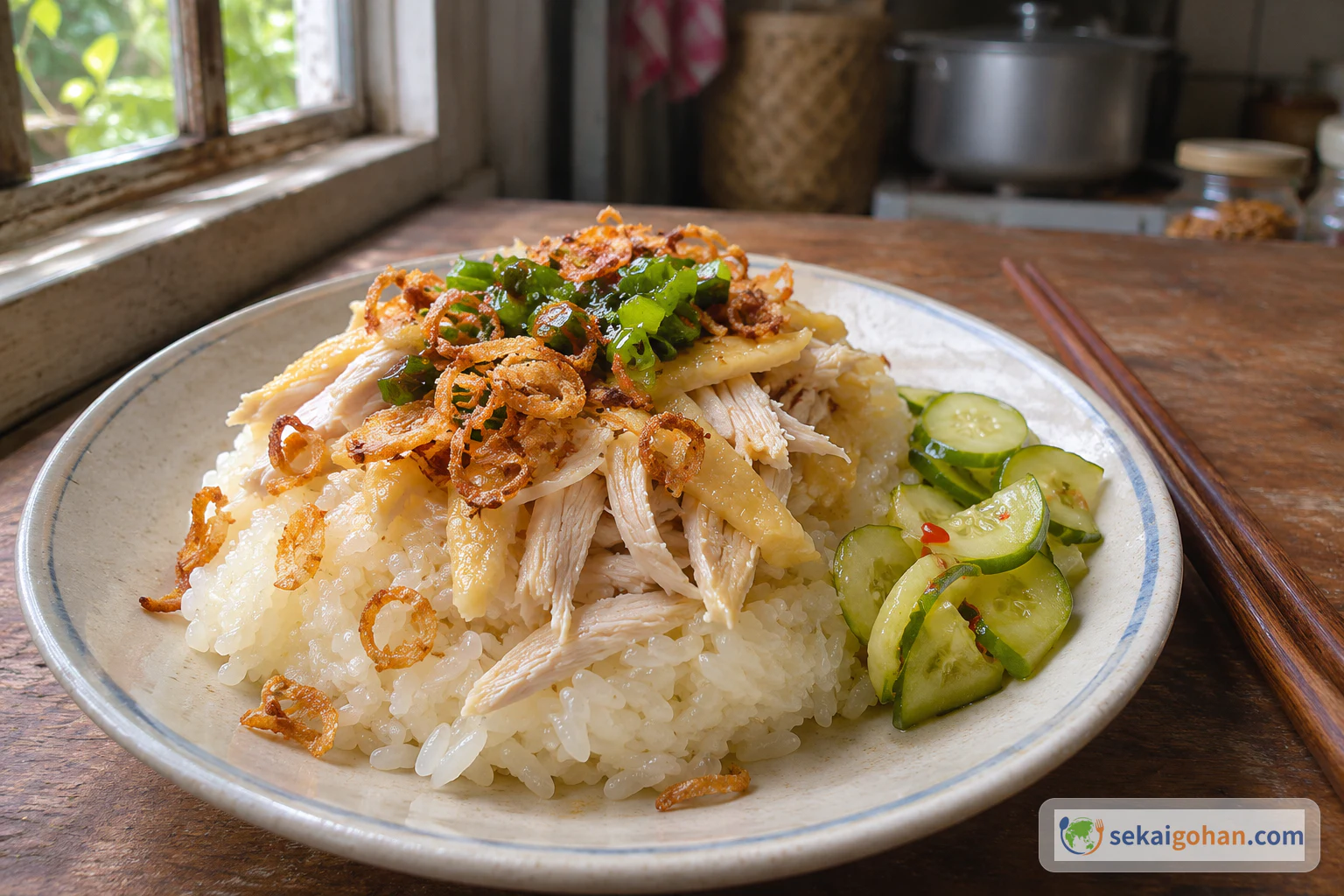
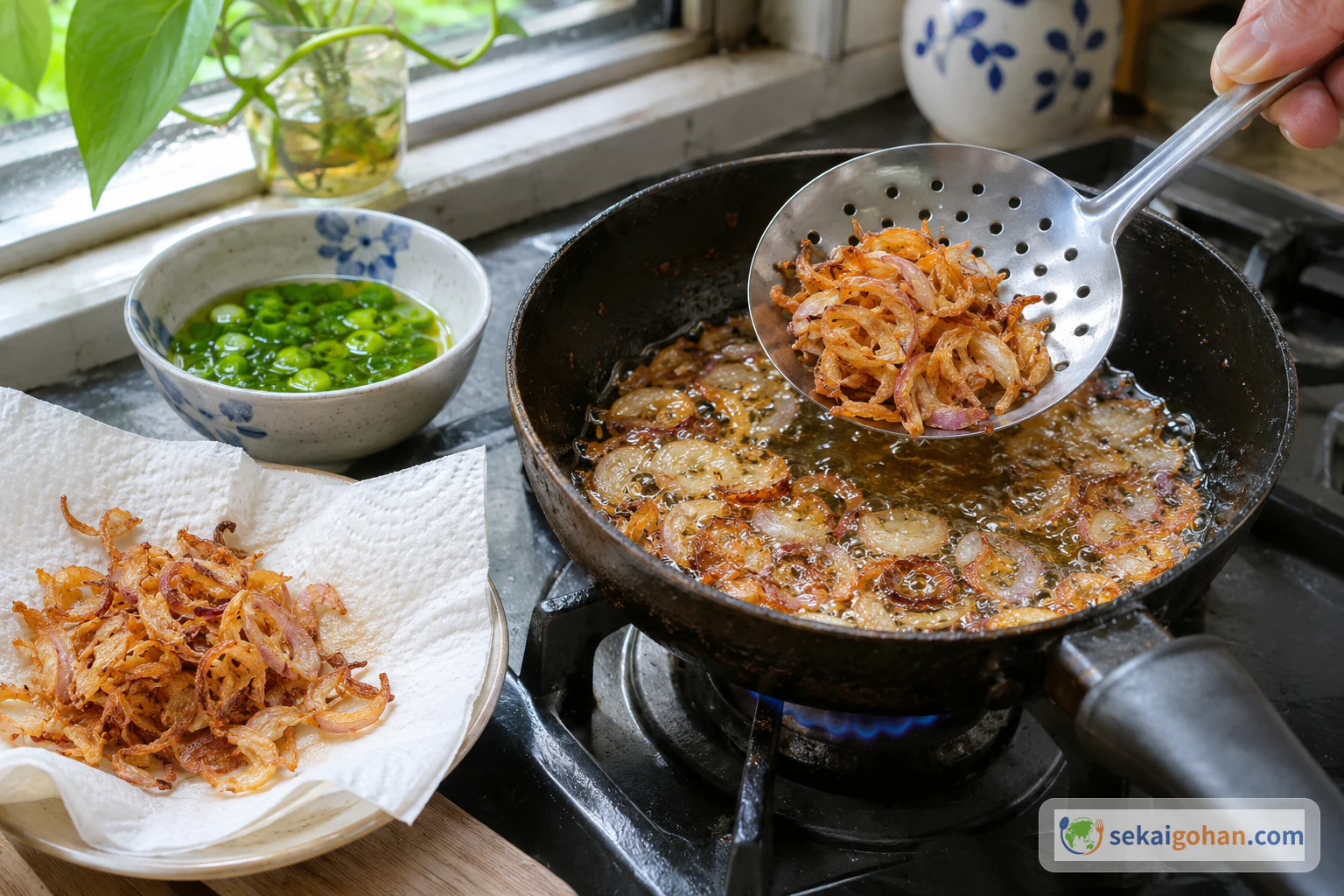
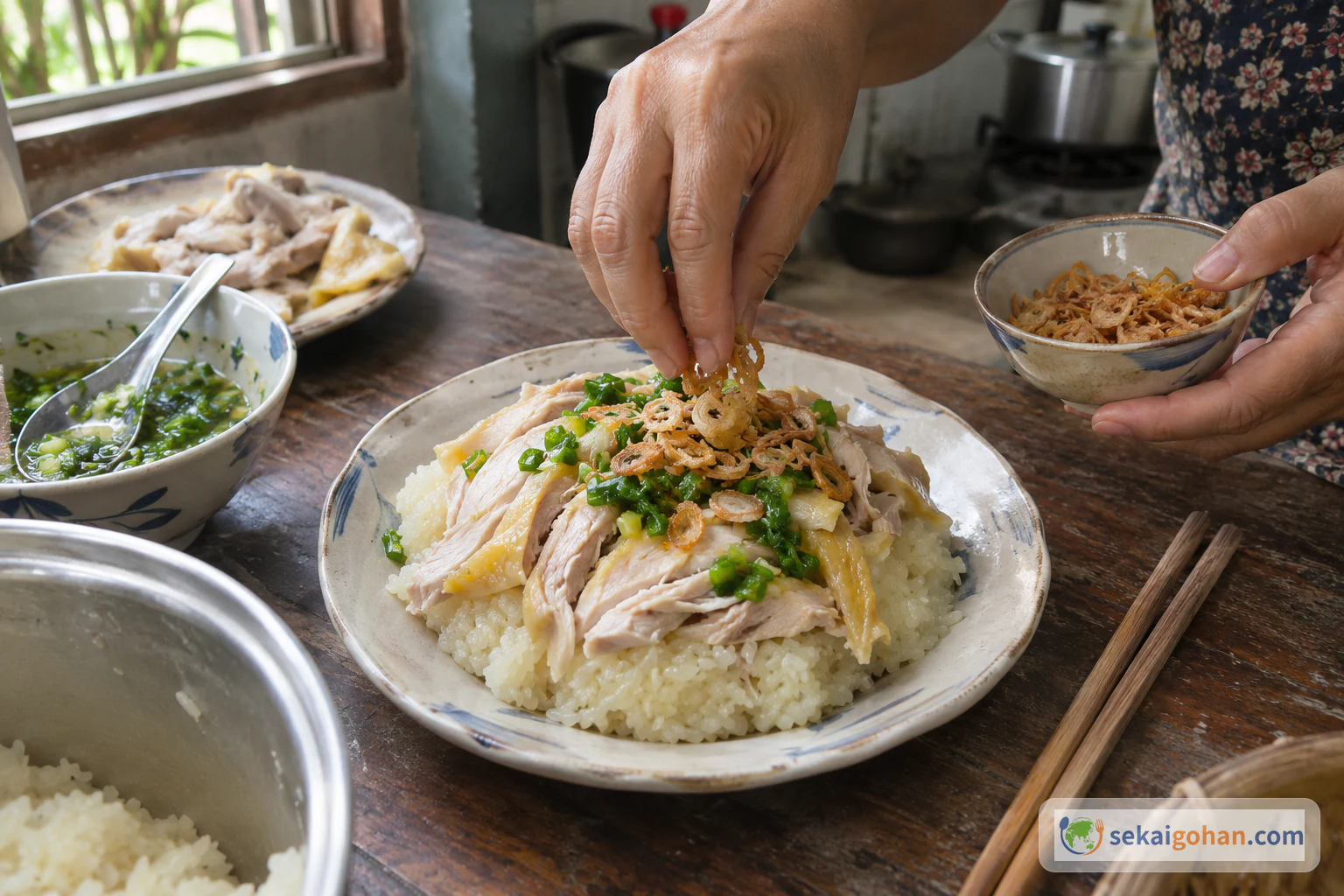
When you lift the steamer lid, a cloud rises off a bed of rice that has turned glossy and half-translucent, and the chicken resting on top has spent three quarters of an hour dripping its fat and juices down into the grains below. A few minutes later, shallots crackle gold in a small pan and a spoonful of bright green scallion oil goes over the top. That is xôi gà, sticky rice and chicken, the way Hanoi households make it: chewy, faintly sweet with coconut, savoury from the chicken, and finished with the crunch of fried shallots. It is breakfast food in Vietnam, eaten from a plate or a parcel before the day starts.
A Hanoi Breakfast of Sticky Rice and Chicken
Rice for every day, sticky rice for mornings and offerings
Vietnamese kitchens keep two kinds of rice. Everyday rice is called te; glutinous rice is nep, and nep goes into xôi, the steamed sticky rice dishes, into bánh chưng and into rice wine. Xôi has been a breakfast staple for centuries, and it appears as an offering at weddings and funerals as well. The family runs from sweet to savoury, and the toppings change with the cook: coconut, steamed beans, peanuts, taro. Xôi gà is the chicken branch of that family, and in the north the plate stays simple, with rice, chicken, scallion oil and fried shallots.
Xôi gà is the plain, savoury end of what nep can do: a plate of sticky rice with chicken, eaten for breakfast. For more of the country's cooking, see our Vietnam page.
The stall plate and the home pot
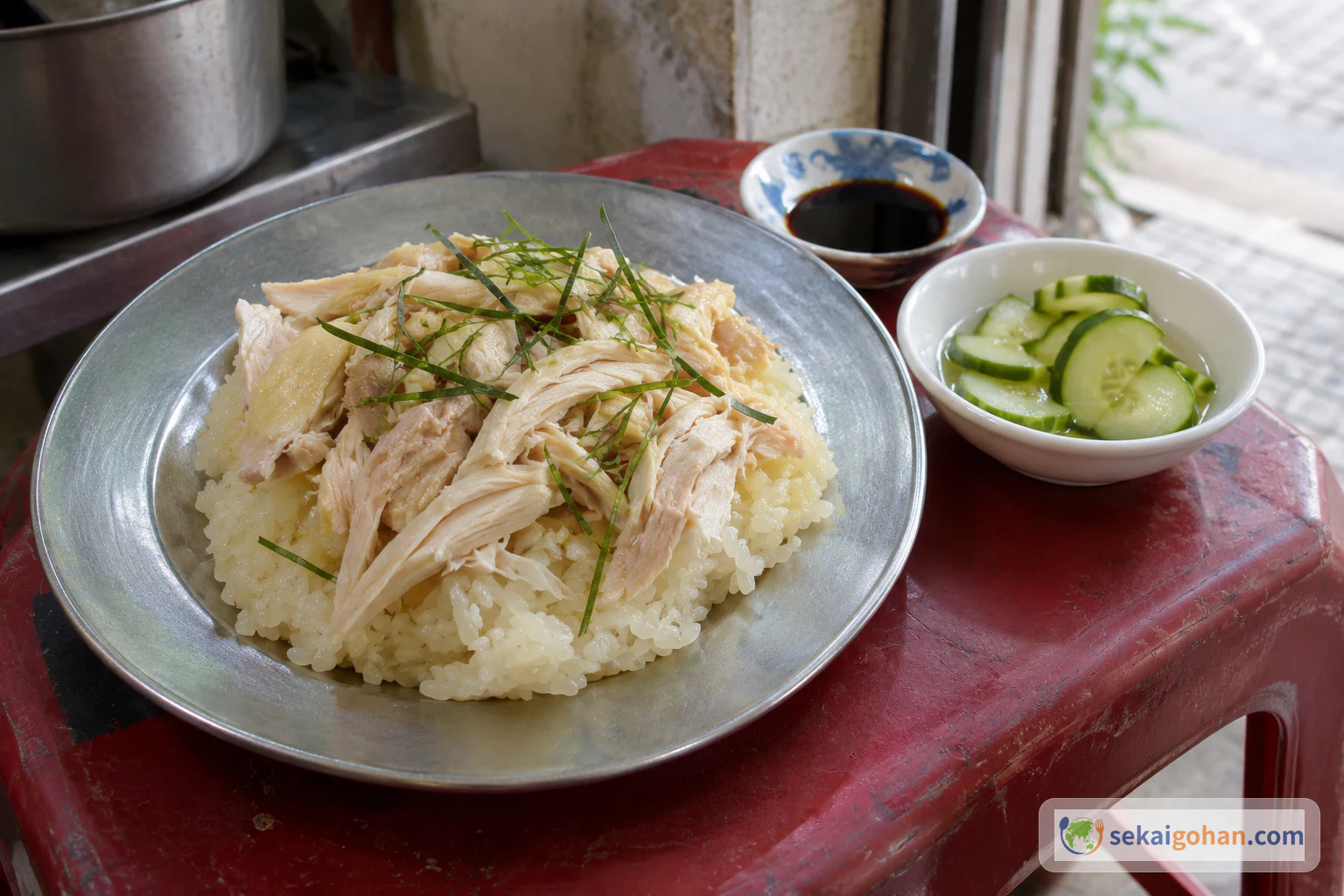
In Hanoi, a shop called Xôi Yến, at the corner where Hàng Bạc, Hàng Mắm and Nguyễn Hữu Huân meet, built its name on xôi gà. There the chicken is poached, pulled from the bone by hand and laid over the rice, scattered with finely cut lime leaves and served with pickled cucumber. Diners can also order chicken over xôi xéo, the Hanoi sticky rice made yellow with turmeric and topped with mung bean paste and fried shallots; that pairing goes by the short name "xeo gà". Breakfast xôi in Hanoi has also stretched into the night, sold to people coming off late shifts and long overtime.
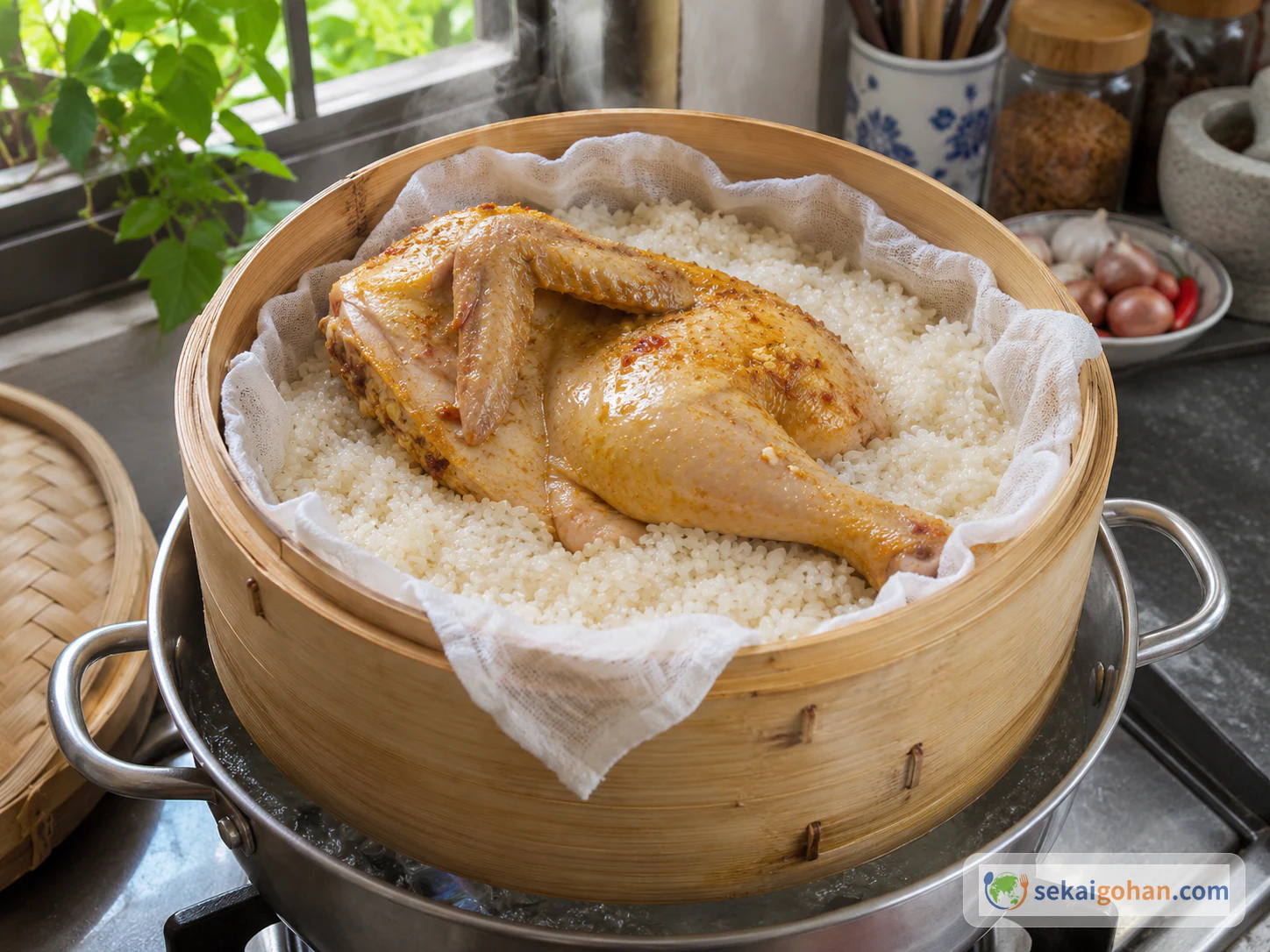
The home pot works differently. Instead of poaching the chicken separately, the cook sets it straight on top of the rice in the steamer, so the rice cooks in the chicken's drippings. That is the version below. Further south, stalls tend to pile on more toppings, and abroad the dish has picked up Chinese sausage, sweet soy and rice cookers. Those are other dishes, and the variations section shows where each one leads.
Xôi is the name for the whole family of steamed glutinous rice dishes, sweet and savoury alike. Gà is chicken. Add a word for the topping or the style and you get the name of the plate: xôi xéo, xôi mặn, xôi gà xé for shredded chicken.
Ingredients
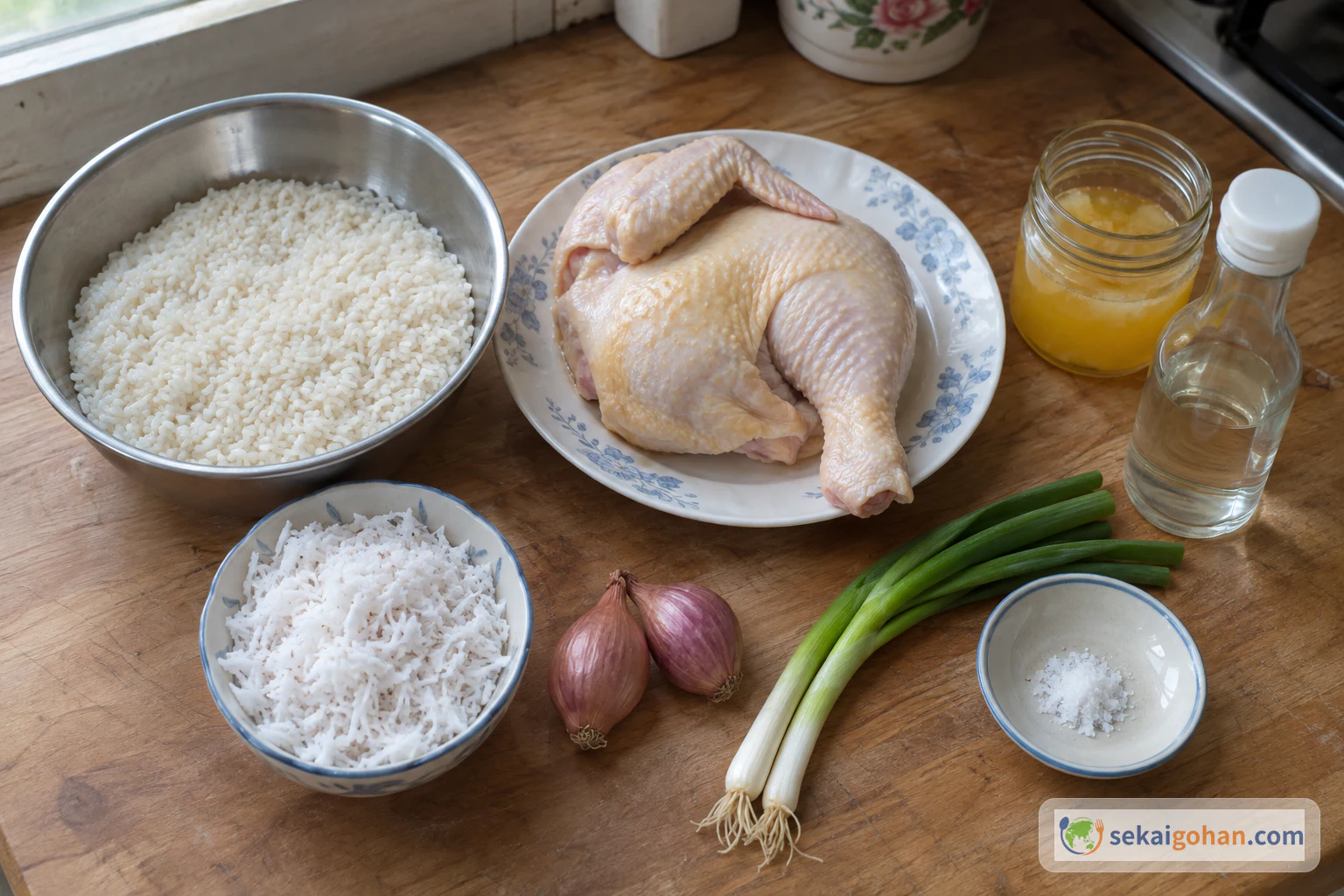
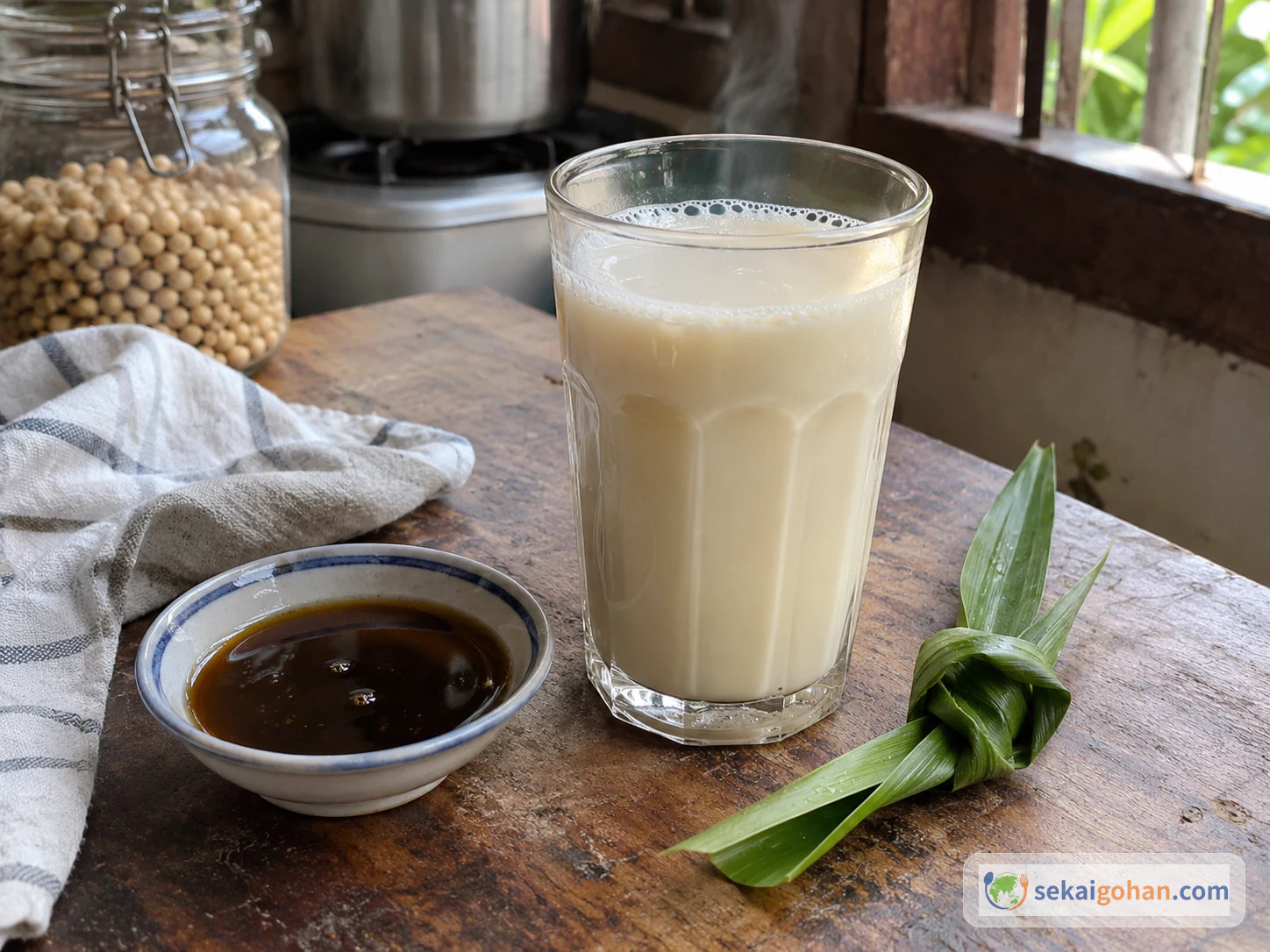
The core of the dish is glutinous rice, chicken and coconut. Seasoning powder can contain wheat, milk or seafood depending on the product, so read the label. Coconut is a different matter from a tree-nut allergy; follow the label on the product you buy. If you add soy sauce (soy, wheat) or nước chấm (fish sauce) at the table, check those labels too.
Equipment
- Steamer: a bamboo steamer over a pot, or a deep pot with a steaming rack
- Clean cotton cloth for lining the steamer, and a second cloth for wrapping the lid
- Kitchen thermometer for checking the chicken
- Large bowl and a colander
- Cutting board and sharp knife
- Small pan, slotted spoon and paper towels
- Chopsticks for fluffing the rice
Choosing and Substituting
The rice decides the dish. In Vietnam the preferred variety is nếp cái hoa vàng, "golden flower" glutinous rice, which is rarely on shelves abroad. Thai glutinous rice from an Asian grocer is an excellent stand-in, and any glutinous rice gives the right chew. Jasmine or other ordinary rice will not turn into xôi; the grains stay separate instead of clinging together.
For coconut, look for frozen grated coconut in the freezer of an Asian or Latin grocer; it is the closest to fresh. Dried desiccated coconut can be rehydrated, but it holds water differently, so do not swap it in at the same amount.
Chicken fat gives the shallots and scallion oil their savoury depth. Render it from the chicken's own skin over low heat, or use lard or a neutral oil; each step down loses a little chicken aroma. If you cannot buy half a bird, bone-in thighs with a few drumsticks steam the same way on the rice. Chicken bouillon powder can replace seasoning powder, but it is saltier, so cut back on the salt. A small red onion fried thin comes close to shallot, with a slightly different, sweeter flavour.
The Hanoi home pot uses no fish sauce, garlic, Chinese sausage, dried shrimp or pork floss. Those belong to the shop plate, the one-pot xôi mặn and overseas versions. Leave them out and the clean taste of rice, chicken and coconut comes through.
Method
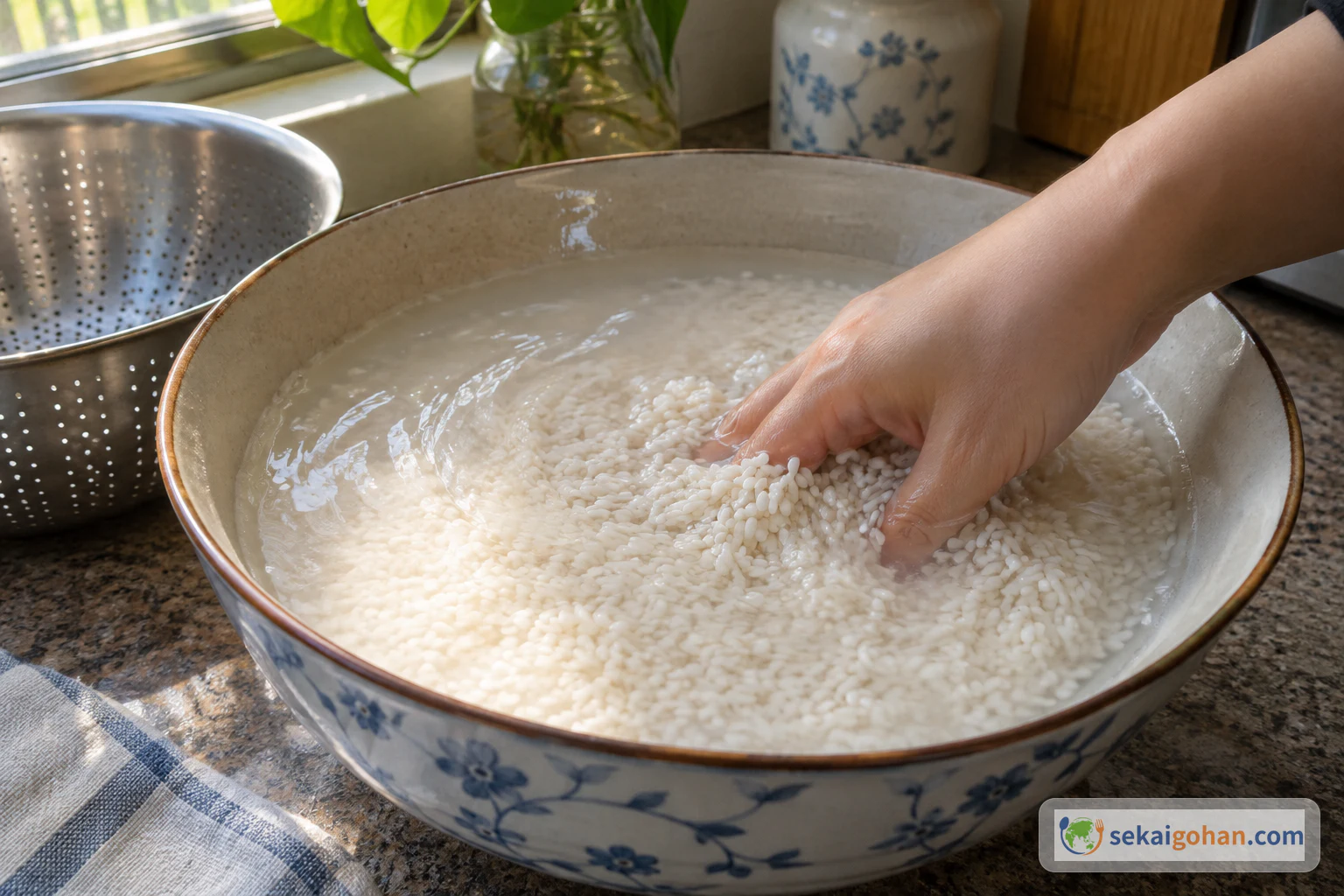
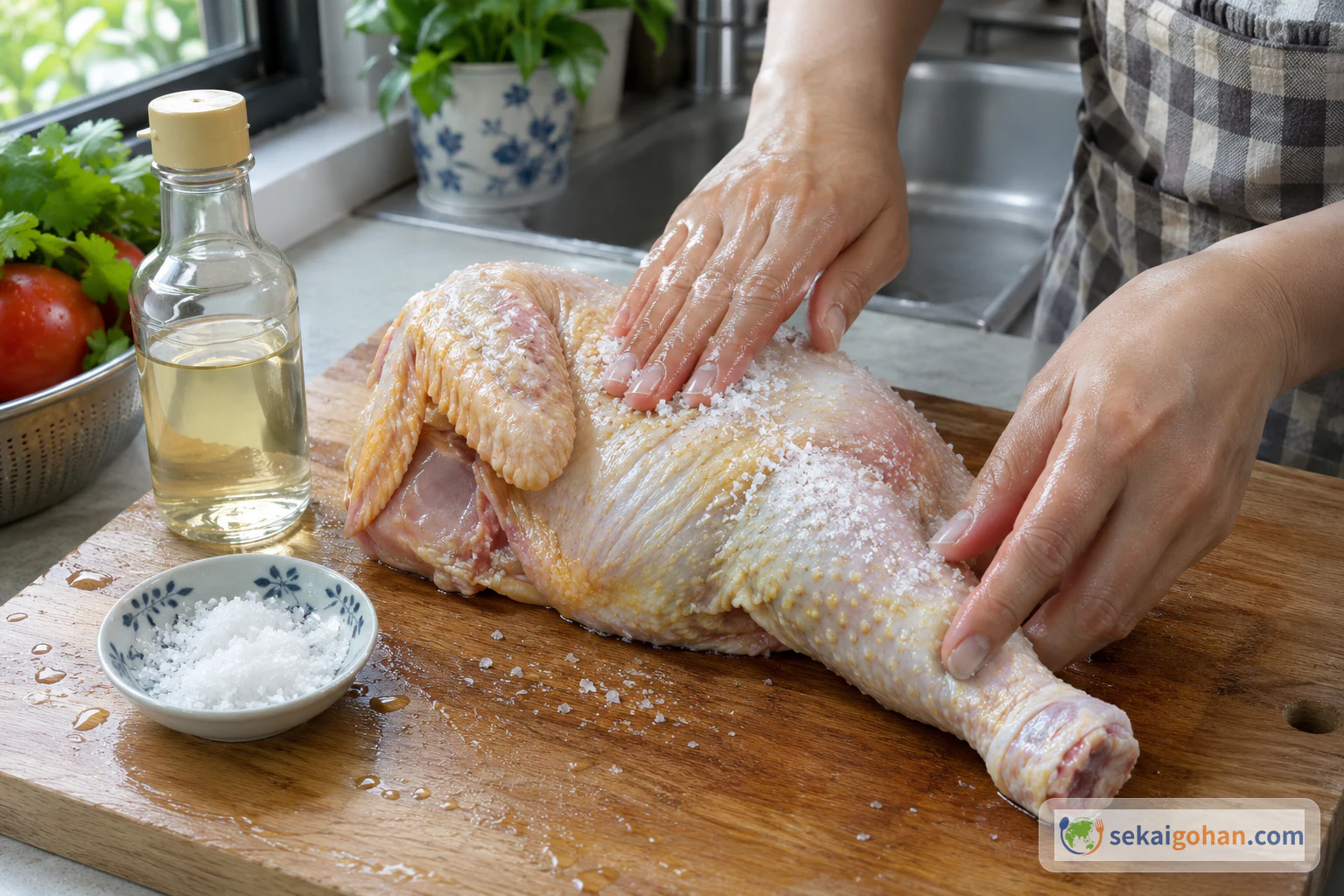
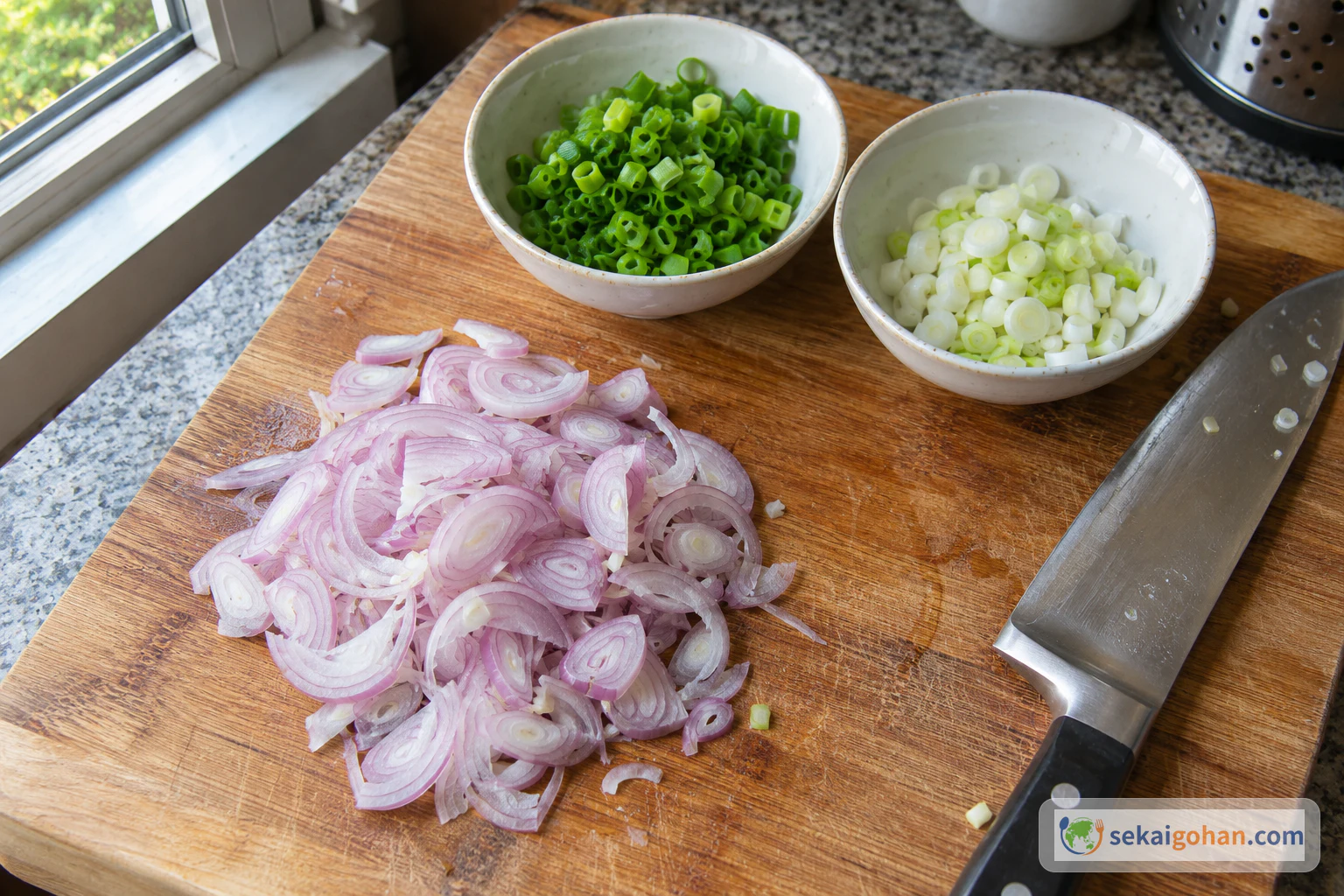
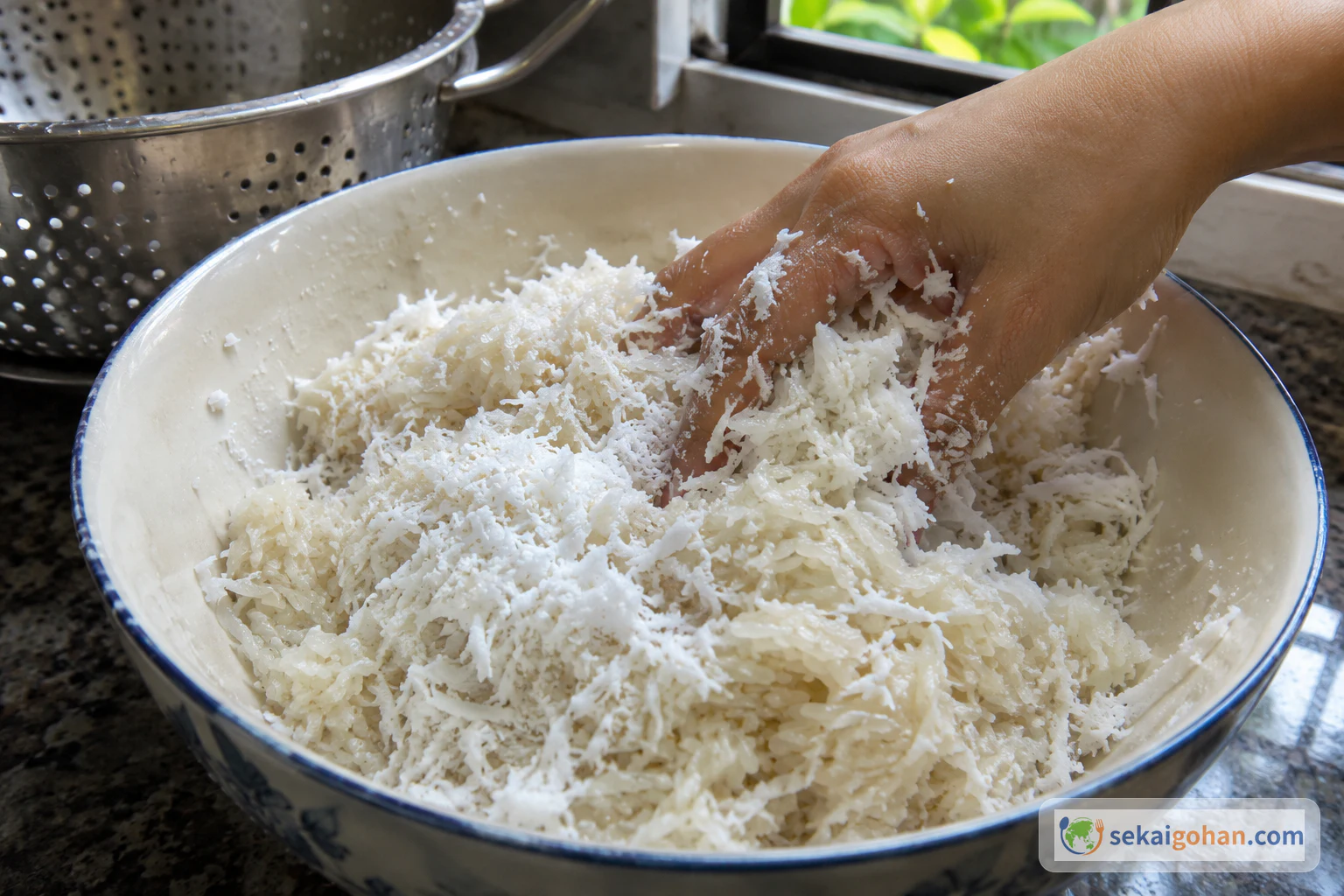
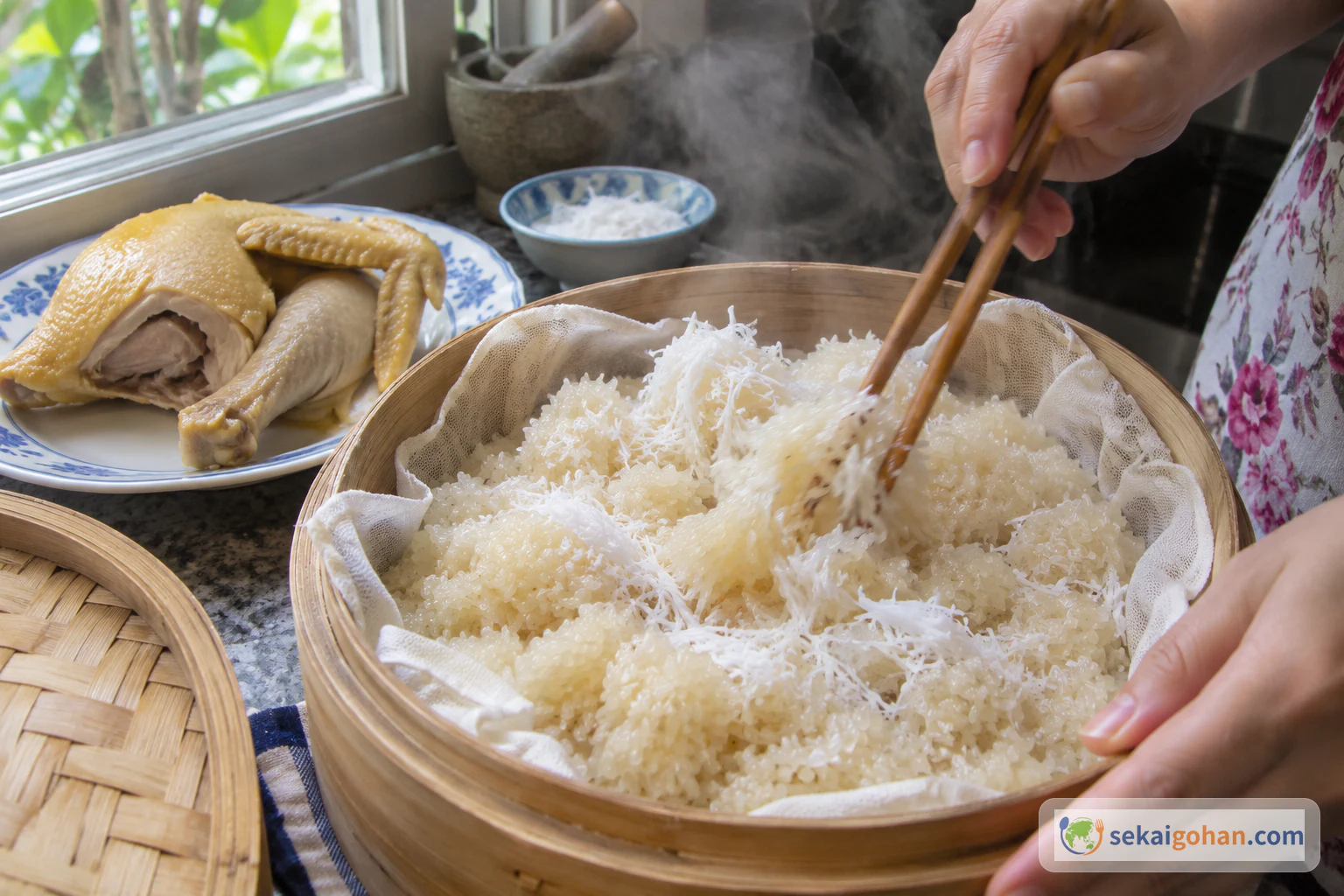
Start the rice soaking in the morning for an evening meal, or the night before for breakfast. Clean the chicken and slice the aromatics while the rice soaks, then assemble the steamer. The 45 minutes of steaming is hands-off time; the work picks up again at the end, when the chicken comes off, the rice gets its second dose of coconut, and the shallots and scallion oil go into the pan.
When It Goes Wrong
| What you see | Why | What to do |
|---|---|---|
| Rice is hard or chalky in the centre | Soak too short, or not enough steaming | Steam longer and taste a few grains until the centre is tender. Next time give the rice the full 5 to 7 hours |
| Rice is wet and pasty | Water dripped from the lid, or too much coconut | Wrap the lid in a cloth and keep the coconut to half a small bowl in total |
| Chicken is pink or bleeds red near the bone | The bird is large, or steam escapes from gaps in the steamer | Return it to the steamer until the centre reaches 167°F (75°C) for at least 1 minute |
| Shallots are dark and bitter | Fat too hot, or pulled out too late | Fry over medium-low and lift them out just before they reach the colour you want |
| Scallion oil is dull and khaki | Scallions cooked too long | Stir them through the hot fat once or twice and take the pan off the heat |
| The plate tastes flat | Too little salt in the rice | Season the rice a little more next time; soy or chili sauce belong at the table, not in the pot |
Serving, Variations and Leftovers
At the table
At home, xôi gà is a complete plate on its own: rice, chicken, scallion oil, shallots. For the Hanoi stall version, pull the chicken into shreds, scatter finely sliced lime leaves over the top and set pickled cucumber and a small dish of soy sauce alongside. The sharp pickles cut through the richness of the chicken fat and coconut, and the lime leaves bring a bright, citrus scent to the first bite.
Variations
- Boneless chicken thighs. Easier to cut and serve. They cook faster than a half bird on the bone, so steam them for a shorter time and confirm the centre temperature.
- Lighter coconut. Use less coconut for a lighter fragrance. The plate moves away from the Hanoi home pot toward a plainer sticky rice.
- Poached chicken, stall style. Poach the chicken separately, pull it from the bone and lay it over plain steamed rice. The rice tastes cleaner, since it no longer absorbs the drippings, and the chicken is softer and stringier.
- Glazed shredded chicken. Some home cooks toss shredded poached chicken with dark soy, oyster sauce and honey for a sweet, glossy topping. It makes a richer, darker plate, and pickles on the side become essential.
Leftovers
Cooked rice is a classic cause of Bacillus cereus food poisoning. Its spores survive cooking, and the toxin it produces is not destroyed by reheating. Eat xôi gà soon after it comes off the heat and do not leave it standing at room temperature. Cook only as much as you will eat. To keep leftovers, divide the rice into small portions, cover them, and refrigerate quickly; storing the rice and chicken separately makes them easier to reheat. Keep the storage time short. Reheat by steaming again, or sprinkle with a little water and microwave until hot all the way through, and treat reheating as a way to warm the food, not as a reason to keep it longer.
Frequently Asked Questions
Is xôi gà the same as cơm gà?
No. Cơm gà is chicken over ordinary rice, cooked like any everyday rice. Xôi gà is built on steamed glutinous rice, so the grains are chewy and cling together. The two share only the chicken.
Can I use jasmine rice?
Jasmine rice will not give you xôi. It cooks into separate, fluffy grains instead of the dense, chewy cling that makes the dish. Use glutinous rice; Thai glutinous rice is the easiest to find.
What if I forgot to soak the rice?
Soak it in hot water for about 30 minutes as an emergency shortcut. The long soak hydrates the grains through to the centre, so plan for it whenever you can, and taste a few grains before taking the rice off the steamer.
Should I add fish sauce?
The Hanoi home pot gets its savoury depth from the chicken drippings, the seasoning powder and the chicken fat, with no fish sauce. If you want a dipping sauce, serve soy sauce or nước chấm at the table and leave the rice itself as it is.