
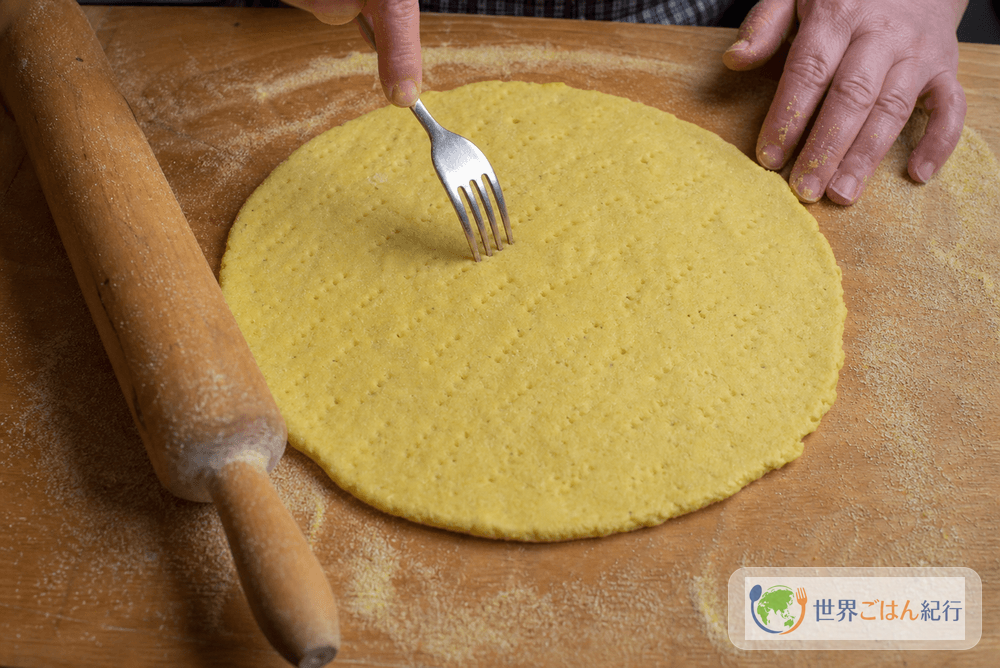
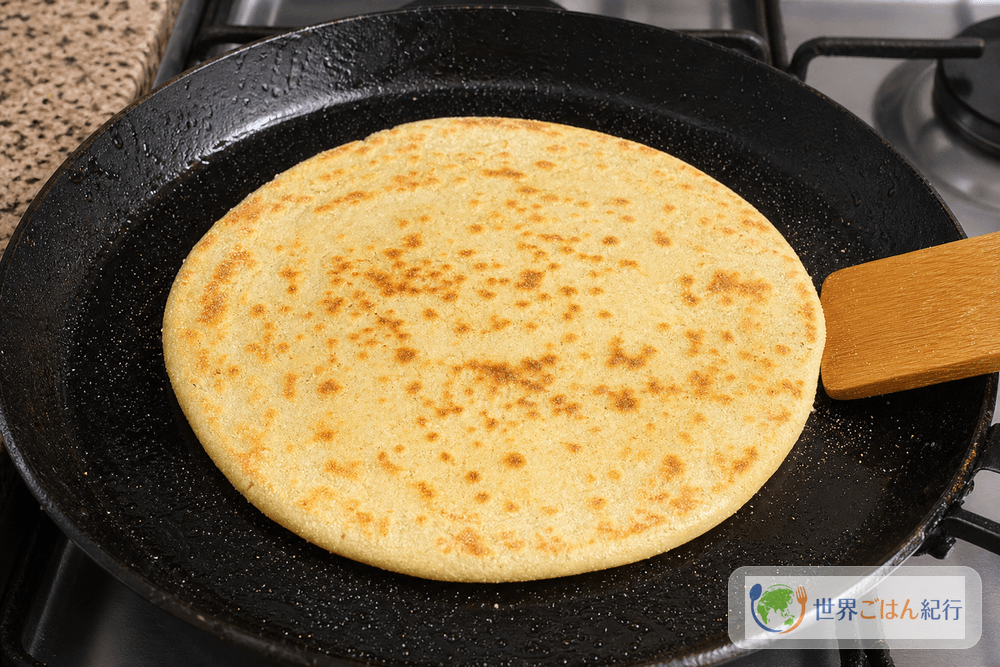
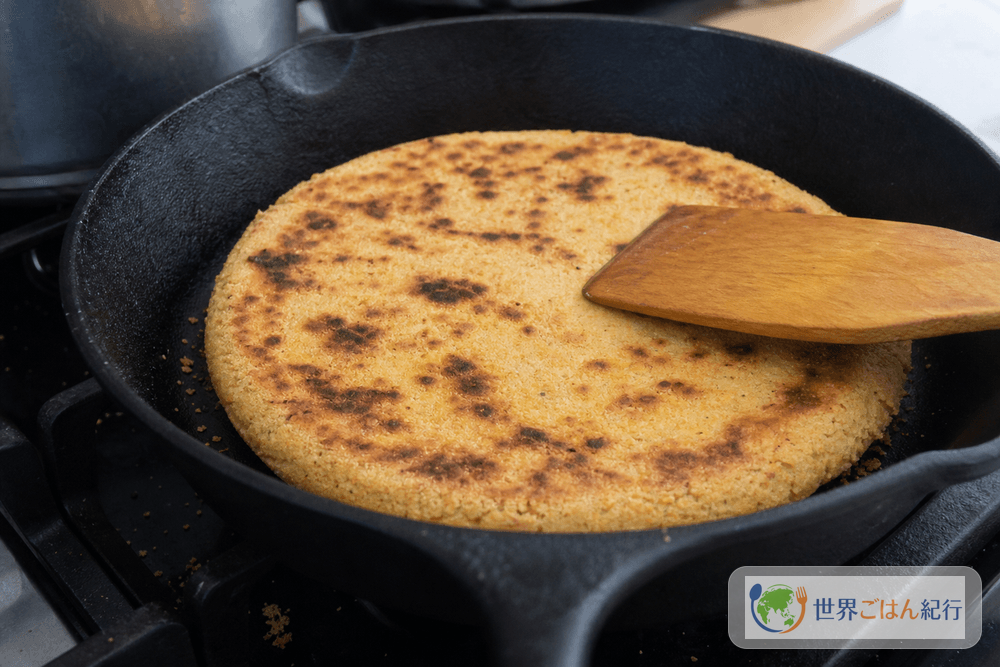
Reading kesra's doneness through the fork holes
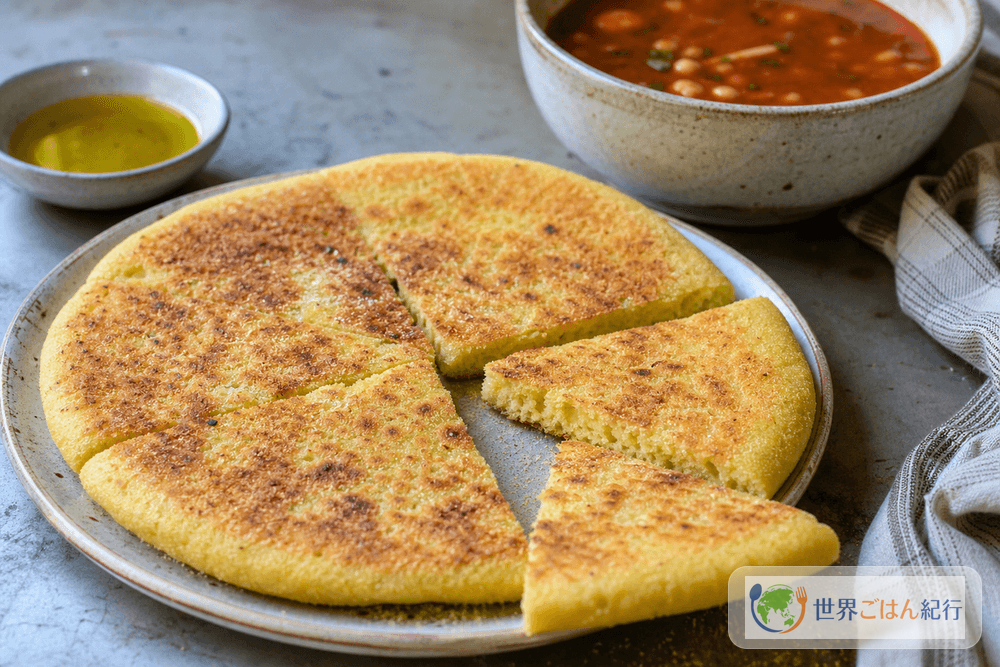
Prick a neat row of small holes across the dough with the tip of a fork, then slide it into a hot skillet. Once the surface loses its floury look and brown freckles start to spread over the pale yellow dough, check not just the color but the weight at the center. The outside crumbles gently, and the inside keeps the aroma of semolina. That texture is exactly why kesra sits next to a bowl of soup.
Kesra is an Algerian semolina flatbread. It is not a bread you leave to rise and puff up. You rub oil into the semolina, bring it together with water and salt, and cook both sides on a flat griddle. It is best known as the kesra of eastern Algeria, but in Algiers you will hear khobz ftir, and in Kabylie aghroum n’tajin; the name, and the shape of the closely related breads, shifts from region to region.
The formula here is a home version built on fine-ground semolina with a small amount of cake flour added. That isn't meant to declare one "traditional" recipe; it simply keeps the disk from cracking on a first try and makes it easier to tell whether the center is cooked through. The method from the Algerian sources stays intact — working the oil into the flour, adding water a little at a time, resting before cooking — with a heavy skillet standing in for the griddle.
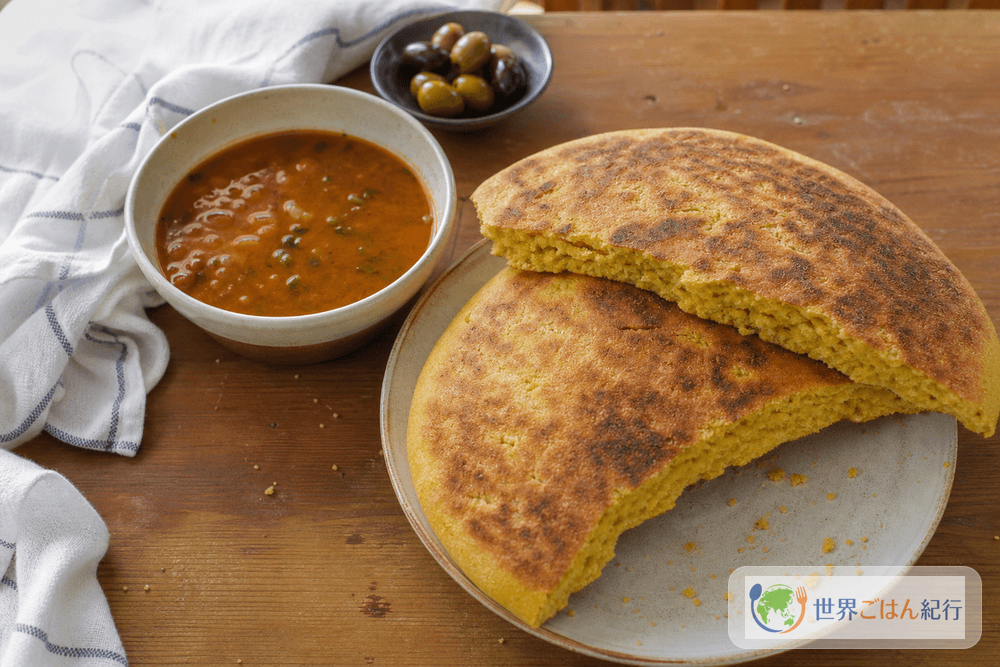
A flatbread whose name and texture change by region
If you learn "kesra" as one fixed bread, you miss the differences in local names and textures. 196 flavors describes it as a semolina flatbread from eastern Algeria and lists the names khobz ftir in Algiers, kesra in the east and aghroum n’tajin in Kabylie. A tourism office document for Khenchela province also explains that in the Chaoui areas this kind of bread is called aghroum or kesra, which shows how the words overlap within a single country.
A similar name doesn't mean the same formula or thickness, though. A 2026 study of household bread in Algeria sorts the thin, oil-enriched Rakhsis, the leavened Aghroum n’tajin of Kabylie and the oven-baked Khobz Eddar into breads with distinct characteristics. Around kesra there is a continuum: leavened or not, which grain, which cooking surface, how thick. In a home kitchen, it's easier to decide first which texture you're going for than to hunt for the "one right answer."
| Name / region | What the sources describe | How it relates to this recipe |
|---|---|---|
| Kesra / eastern Algeria | A round flatbread made with semolina; the basic version described uses oil, salt and water | The focus here. Made as a fairly thin, unleavened home version |
| Khobz ftir / Algiers | Given as a name for a flatbread close to kesra | Treated as a regional name difference; thickness not assumed |
| Aghroum n’tajin / Kabylie | A related bread, but some sources describe it as leavened and thicker | Not treated as the same thing as this unleavened dough |
| Rakhsis / across Algeria | Described as a thin flatbread made with wheat or barley and oil | Similar in texture. Ingredients and names are not swapped |
The flat cooking surface makes the flavor
The Khenchela tourism material describes the process: mix semolina and salt, work in the oil so the flour absorbs it, add water little by little, rest, prick with a fork and cook both sides. It also notes that the tajine used for kesra in the east isn't only clay; it includes flat, griddle-like iron tools too, and works over charcoal or gas. When you switch to a home skillet, what matters isn't the name of the tool but heating the bottom without spiking the temperature, and getting heat into a fairly thick dough.
You don't lose kesra's aroma without a patterned tajine. Rather than trying to reproduce the surface markings, spread the oil through all of the flour, prick the dough, and turn the heat down if the color runs ahead. Those three calls are the backbone to protect on a flat skillet.
It's a bread for soup, so don't chase color alone
Kesra isn't just about how toasty one bite of bread tastes on its own. On Algerian tables it's described alongside soups like chorba frik, grilled pepper salad, stews, butter, and milk or fermented milk. A study of iftar meals also records bread as a staple next to chorba frik and meat dishes.
Dip a big piece of kesra into soup and the browned surface catches the broth while the crumbly interior falls apart with the other ingredients. That's why browning the surface too dark backfires: it looks impressive, but the interior that should drink up the broth turns hard. For a first pairing, a grain-based soup like chorba frik (in Japanese) is a good choice. If you serve a sweet stew with lamb and dried fruit, a saucy tajine like lham lahlou (in Japanese) works well too.
For a breakfast-style meal, set out a little olive oil, butter, jam or honey. The sources mention pairing the salted bread with something sweet, but that doesn't mean adding sugar to the dough. Bake the kesra well salted first and change what goes beside it; that widens the time of day it fits without changing its role.
A formula for the home kitchen
Decide on the grind first
What shapes kesra's aroma is less the brand of flour than the grind and how the water gets absorbed. With coarse semolina alone, the grains stand out, but with a short rest the edges tend to crack and the center turns gritty. Start with a flour labeled "fine," "durum" and "semolina," and move on to medium grind once you've learned how it cooks.
When shopping, look for "durum wheat semolina" labeled fine ground (rimacinata). Fine semolina also works for other breads and fresh pasta. If you're only trying it once, a fine semolina from an import or specialty grocer, or whatever flour you already have, is plenty.
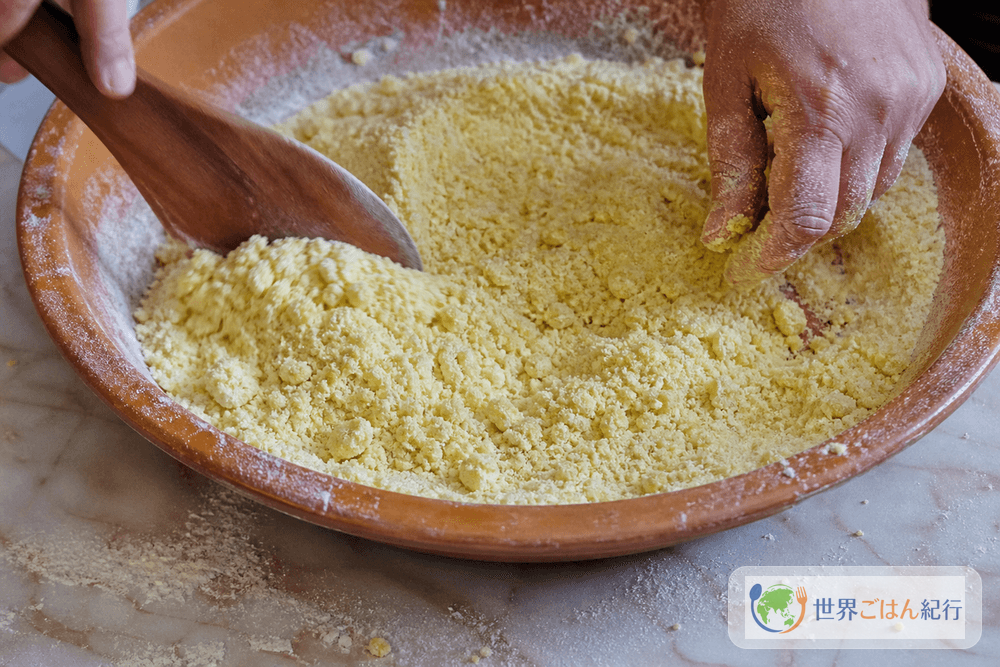
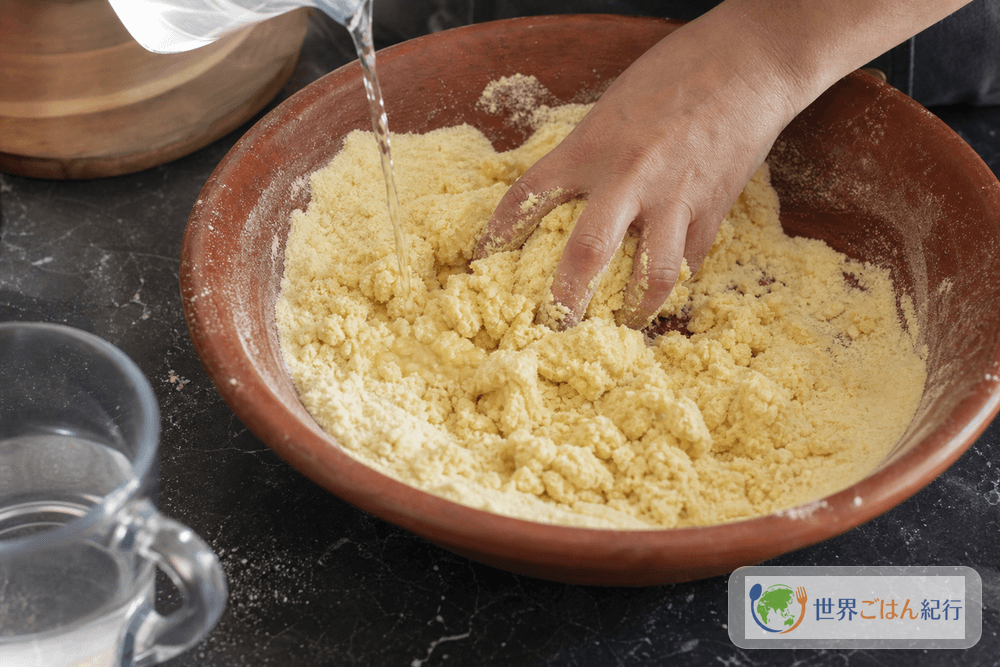
Don't rush rubbing the oil into the flour; that's the shortcut to a crumbly texture. Rub the flour and oil together between your fingertips until it looks like damp sand, and only then add the water.
Add cake flour, or put aroma first?
The basic Algerian version is semolina, oil, salt and water, but you can't match the grind of your flour or the quirks of your skillet exactly. So here, 260 g of fine semolina is combined with 40 g of cake flour. The cake flour isn't there to replace the star; it's just 13% to keep the dough from cracking while you shape it.
If you want a stronger aroma and more texture, swap the 40 g cake flour for the same amount of fine semolina. In that case, don't add extra water from the start; look at the dough after resting and add water 5 ml at a time. Only if you switch to a coarse grind, which absorbs water more slowly, extend the rest to 45 minutes. Change the flour but keep the water and time fixed, and you haven't made a substitution — you've made a different dough.
Ingredients (two 20 cm breads, serves 4)
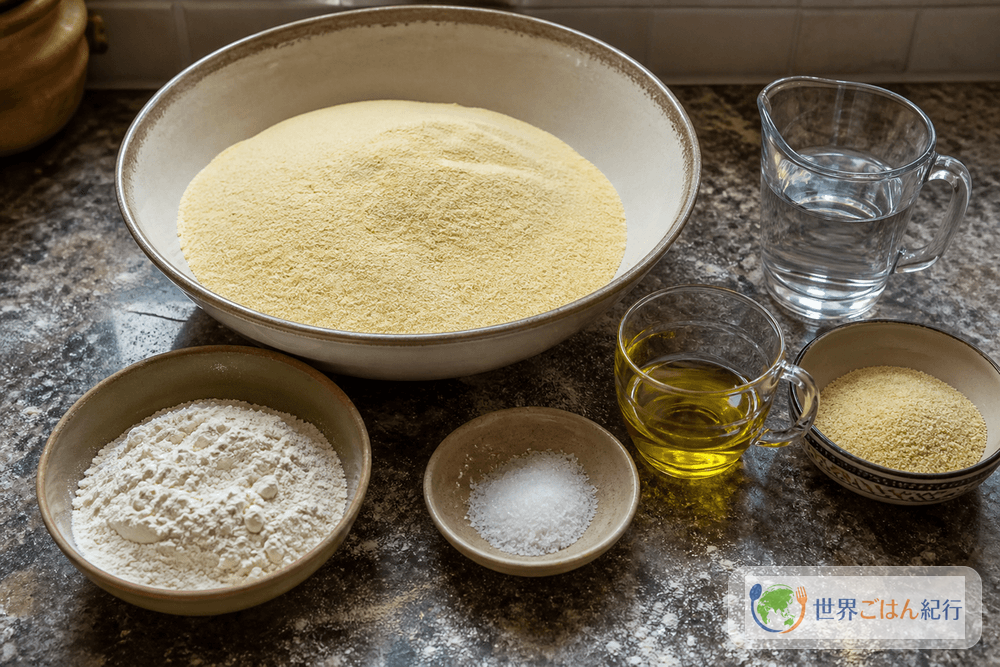
Both semolina and cake flour come from wheat and contain gluten. This is not a recipe for people with a wheat allergy. Swapping the olive oil for a neutral oil gives a lighter aroma, but leaving the oil out makes the flour hard to bring together and takes you away from kesra's crumbly texture.
Choosing a griddle or a substitute
A dedicated kesra tajine is a tool for enjoying surface patterns and charcoal heat, but you don't need one for your first batch. At home, a heavy skillet of about 26 cm (10 in), with room to spare around a 20 cm round, is easy to handle. If all you have is a thin-bottomed pan, cook one bread at a time, shorten the preheat and lower the heat. Heating an empty pan for a long time makes the bottom scorch the moment the dough goes in.
| The question | Our pick | Where it makes a difference |
|---|---|---|
| Semolina grind | Fine for a first try | Absorbs water readily, making it easier to tell edge cracks from a gritty center |
| 40 g cake flour | Include it if you want stable shaping | A bit milder in aroma and texture than 100% semolina |
| Oil | Olive oil | Affects both the rubbing-in step and the aroma of the finished bread |
| Cooking surface | Heavy skillet, carbon-steel pan, flat tajine | Choose one whose bottom heat doesn't swing suddenly |
| Thickness | 8–10 mm | Too thin dries out; too thick tends to leave the center floury |
| Oil in the pan | Generally none | The oil in the dough is enough; adding more on top tends to make it heavy |
If you already own an ordinary skillet, there's no need to buy special equipment just for kesra. If you plan to make it often and use the same pan for chapati or other flatbreads, it may be worth moving up to a heavy carbon-steel pan or a cast-iron skillet. Judge it not by how well it reproduces patterns but by a base that holds a 20 cm round steadily and how easily you can drop it to low heat.
When it goes wrong, fix the center, not the surface
The edges crack while you press it out
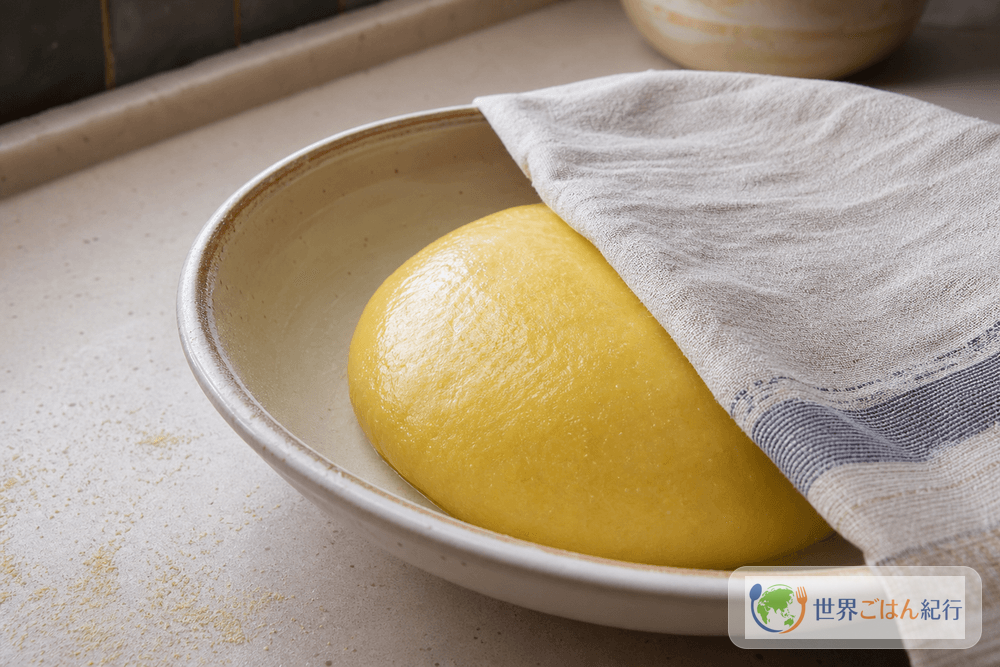
Either there's too little water or the semolina hasn't finished absorbing it. Rather than adding flour and making it stiffer, smooth the surface with wet hands, cover with a cloth and rest 10 minutes. Only if it still cracks after 10 minutes, add 5 ml of the extra water, press it all together and rest again.
The surface is cooked but the center is floury
The heat is too high, or the thickness is concentrated in the middle. For the next bread, shorten the preheat and turn the heat to low as soon as the bottom takes color. For one you've already cooked, return it to low heat with a lid for 1–2 minutes per side. Splashing water directly on it makes the surface sticky, so let the steam alone carry heat into the center.
The surface turns black and tastes bitter
The bottom of the pan is too hot. If the bitterness stays even after brushing off the black bits, you've gone past the point where browning helps. Before moving on to the next dough, take the pan off the heat and let it come back to a no-smoke temperature. To avoid damaging the pan with a sudden temperature change, don't pour cold water on it.
It's oily and heavy inside
Most likely the 45 ml in the dough and the 5 ml for finishing got mixed up, and too much oil went on before cooking. Don't oil the pan, and spread just 3–5 ml thinly at the end. Cut the oil too far, though, and the flour won't hold together and will crack, so start by measuring exactly as the ingredient list says.
It won't make a neat circle
As long as the thickness is even, a slightly lopsided edge is no problem at the table. A disk that's thin only in the middle cooks quickly, and one that's thick only at the edge leaves the center floury. Rather than the diameter, check the thickness from the center to the rim with your palm a few times.
Serving, storing and reheating
Tear the warm bread into big pieces by hand and use it to catch soup or stew juices. For Algerian pairings, try chorba frik (in Japanese) with its tomato and freekeh aroma, mtewem (in Japanese) with its garlicky meat sauce, or the sweet braise lham lahlou (in Japanese). Even if the crust has firmed up, letting it soak up a little broth brings back the crumbly interior.
You can also bake the kesra first and change what goes with it at the table. With olive oil and tomatoes it's a light lunch; with butter or jam, breakfast; with a bean or lamb stew, dinner. Rather than changing the bread's character by adding spices or sugar to the dough, keep it salted and let the dish beside it carry the regional variation.
Cooked kesra left out at room temperature for long dries out and turns hard. Once it has cooled, wrap any you won't finish and freeze it.
To store, wrap it in a cloth or an airtight container once it has cooled, and aim to eat it the same day at room temperature or by the next day in the refrigerator. For longer storage, wrap each bread individually in plastic wrap, freeze, and use within about 2 weeks. To reheat refrigerated or frozen kesra, mist one side with water 3–4 times and warm in a skillet over low heat for 1 minute per side. Heating it only in the microwave makes the surface too soft, so finish in the skillet to bring back a dry, toasty crust.
FAQ
Can I make it with cake flour only if I don't have semolina?
You can make something with that shape, but you lose semolina's yellow color and toasty grain, and it becomes closer to a different flatbread. If the point is to get to know kesra, it's more useful to get even a small amount of fine semolina than to increase the cake flour.
Can I use coarse semolina?
Yes. Stick to the initial 150 ml of water and use the extra water 5 ml at a time. If the grains are still hard after resting 30 minutes, extend the rest to 45 minutes. Using coarse semolina alone with the same time and water as fine tends to give cracked edges and a gritty center.
No yeast or baking powder?
Not in this version. Some breads related to kesra are leavened, so a recipe using yeast isn't necessarily wrong, but it makes a different bread aimed at rise and lightness. For a flat, crumbly kesra, distribute the oil and water evenly and rest the dough.
What if it burns in the skillet?
Stop the preheat at 2 minutes and start at medium-low. If you see smoke before the bottom has colored, lower the heat and wait 30 seconds. If the surface colors fast while the center is still heavy, don't flip right away; cover it over low heat and let the heat work through.
Can I make the dough the day before?
This recipe is built around the texture of freshly cooked bread, so rather than mixing the dough the day before and refrigerating it, it's easier to cook it and then freeze. If you want to prep ahead, weigh the ingredients and rub in the oil, but stop there; add the water 30–40 minutes before you cook on the day.
What should I serve it with to get close to an Algerian table?
Start with one dish: a soup like chorba or a stew with plenty of sauce. Rather than competing over the color of the kesra on its own, build a meal where torn bread catches the broth and makes it easy to finish the plate — that's closer to its role.
Sources
- Direction du tourisme et de l'artisanat de Khenchela「فن الطهي」 (regional names, working in the oil, the tajine; accessed and checked 28 September 2026)
- Direction du tourisme et de l'artisanat de la wilaya de Souk Ahras「Plats traditionnels de la wilaya de Souk Ahras」PDF (semolina dough, oil, flat clay and iron cooking surfaces; accessed and checked 28 September 2026)
- MDPI / Sustainability「Bread and Bakery Products: Cultural Importance, Consumption, Purchase Patterns, and Household Waste During Ramadan in Constantine, Algeria」 (Algerian bread culture, Ramadan meals, regional differences such as Rakhsis and Aghroum n’tajin; accessed and checked 28 September 2026)
- 196 flavors「Kesra」 (regional names, basic ingredients, rubbing oil into the flour, how it's eaten; published 4 October 2015, accessed and checked 28 September 2026)
- Food.com「Kesra - Algerian Bread」 (fine and medium semolina ratios, resting, the finish of crust and interior; accessed and checked 28 September 2026)
Bringing the flour's aroma back to the soup
Kesra isn't simple just because it has few ingredients. You rub oil into the semolina, add water without hurrying, rest the dough and shape it into a round of even thickness. If the color gets ahead, turn the heat down, and wrap it in a cloth only once the center has lost its flouriness. Keep to that order and, even without a dedicated tajine, you can bring the aroma of toasted flour and that broth-catching texture to a home skillet.
Whether you go 100% fine semolina for a stronger aroma or mix in 40 g cake flour for easier shaping, choose based on what you want from your first batch. Put a soup or stew on the table and tear the kesra by hand. More than the bread's shape, what makes this flatbread work is setting up a meal where you can enjoy the dish beside it to the last drop.



