Curry and Apricot Aromas Rising from the Oven
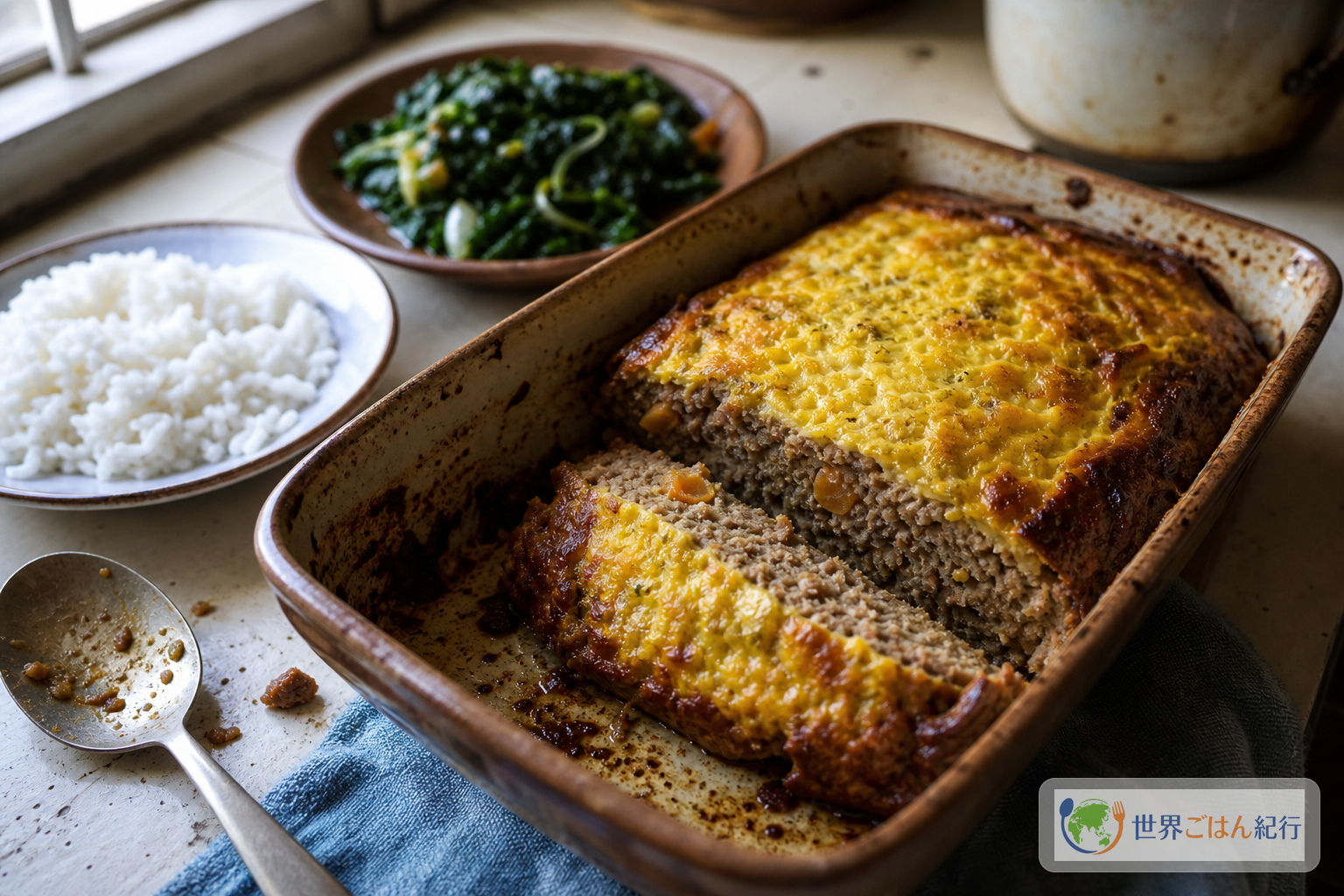
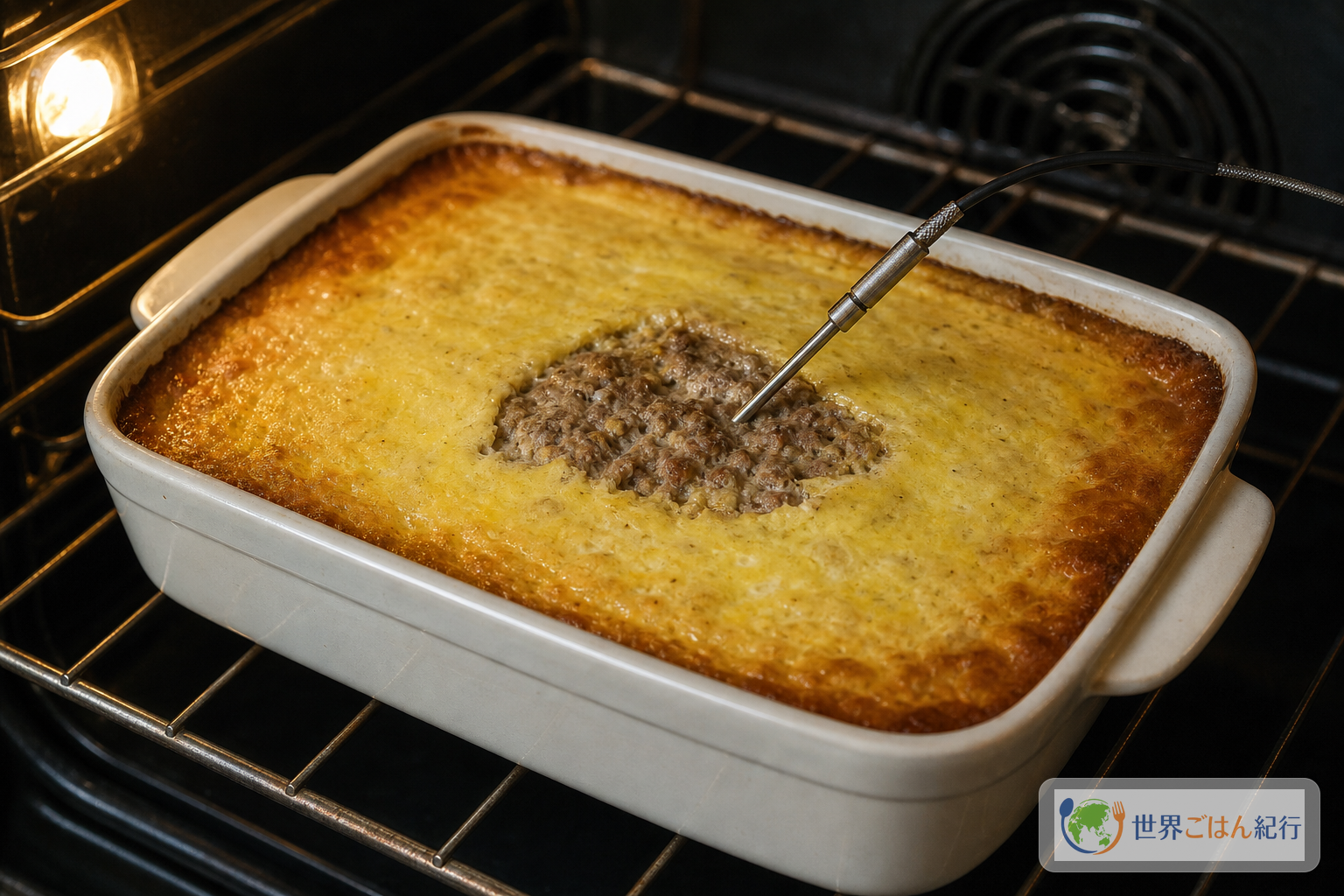
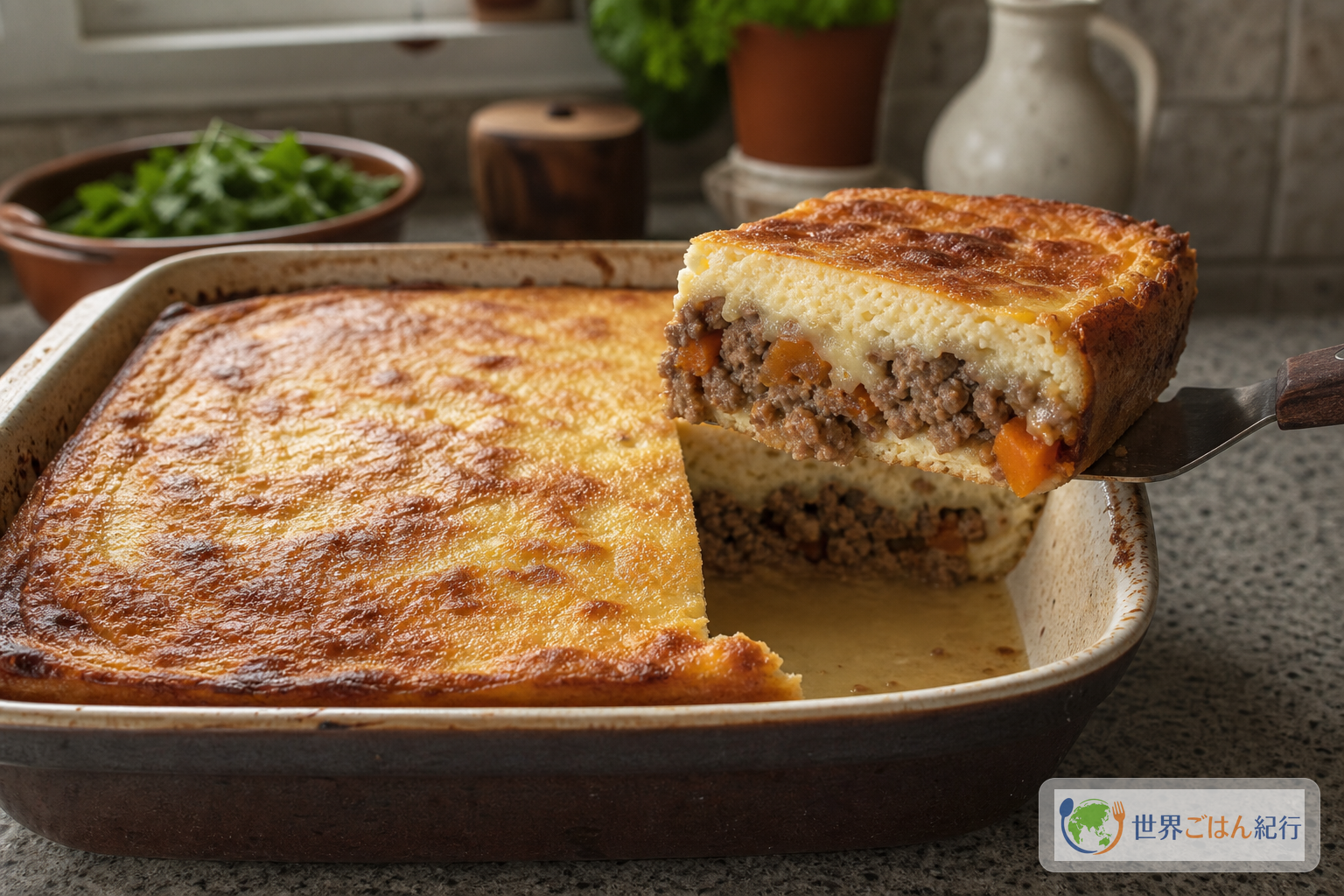
When you pull babute out of the oven, the egg on top has set into a gentle wobble and only the edges are deep golden brown. Push a spoon in and out comes ground beef sautéed with curry powder, flecked with the sweet-tart pop of dried apricots. Spoon it over white rice and it lands somewhere between a curry and a meatloaf.
Babute is a baked dish most often described as coming from the Democratic Republic of the Congo, especially the area around Kisangani. It resembles South Africa's bobotie, but it feels plainer and more homey: a layer of seasoned meat and a layer of egg custard, set together in an ordinary baking dish. Curry powder, ground beef, eggs, milk, and breadcrumbs are all you need. What matters is not overdoing the sweetness, keeping the custard layer thin, and cooking the beef safely all the way through.
This recipe builds on the combination you see in overseas versions, ground beef, curry powder, dried apricots, and custard, using ingredients that are easy to find. Make it as another side of Congolese cooking, quite different from palm-based stews like poulet moambe.
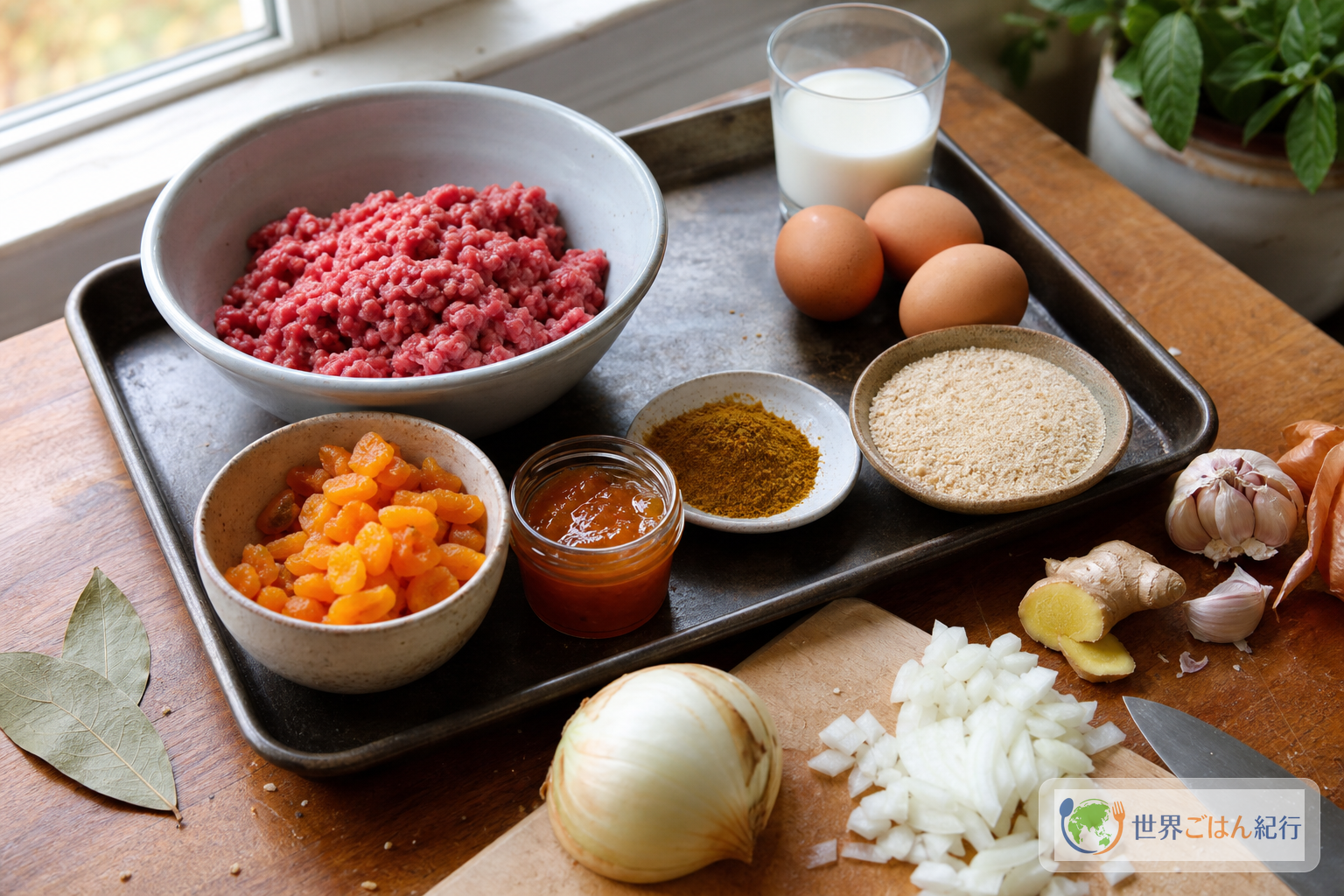
Ingredients (serves 4)
The egg on top browns first, so the dish can look done while the meat in the middle is still lukewarm. The first time, check that the center reaches at least 75°C with a thermometer. Without one, cut deep into the middle and make sure no red juices or pink lumps remain.
Equipment and Spices
Ordinary supermarket curry powder is enough. In fact, a mild blend of turmeric, coriander, and cumin clashes less with the sweet-tart apricots than a very hot one. If you are going to buy something extra, prioritize a warm spice you can reuse and a tool for judging doneness.
Just 1/4 tsp of allspice keeps the flavor of the baked meat from going flat. Any left over is also good in pepperpot and soup joumou.
For baked dishes, "the egg has set" is not a safety check. A thermometer that reaches the center of the meat lets you stop before the bake turns tough.
A dish that is too deep makes the custard thick and slow to set in the middle. A square dish around 20 cm that lets you spread the filling 2.5 to 3 cm thick is easiest to work with.
Keeping the Spirit: Thinking About Substitutions
| Element | What to preserve | Realistic swap in a home kitchen |
|---|---|---|
| Meat | Ground meat sautéed first with aromatics and spices | Ground beef binds best. For a beef-pork mix, blot off some fat |
| Sweetness | Sweetness with the tartness of fruit rather than sugar | Use small amounts of dried apricots, raisins, and apricot jam |
| Aroma | Don't stop at curry powder; add a little warm spice | Don't overdo allspice, cinnamon, or cloves |
| Custard | A thin yellow layer set over the meat | Avoid deep dishes; strain the custard and spread it thin |
| How to eat | Rice and greens to catch it | White rice, sautéed mustard greens, or sautéed cabbage are plenty |
If you are not used to sweet meat dishes, you may be tempted to halve the apricots. But leave them out entirely and it drifts toward a curry-flavored meatloaf. Stick to 60 g the first time and keep the jam to 1 tbsp. If you want it sweeter, adding 1 tsp lemon juice to give the sweetness a tart counterweight is easier to eat through than adding more jam.
Where It Goes Wrong
It turns watery
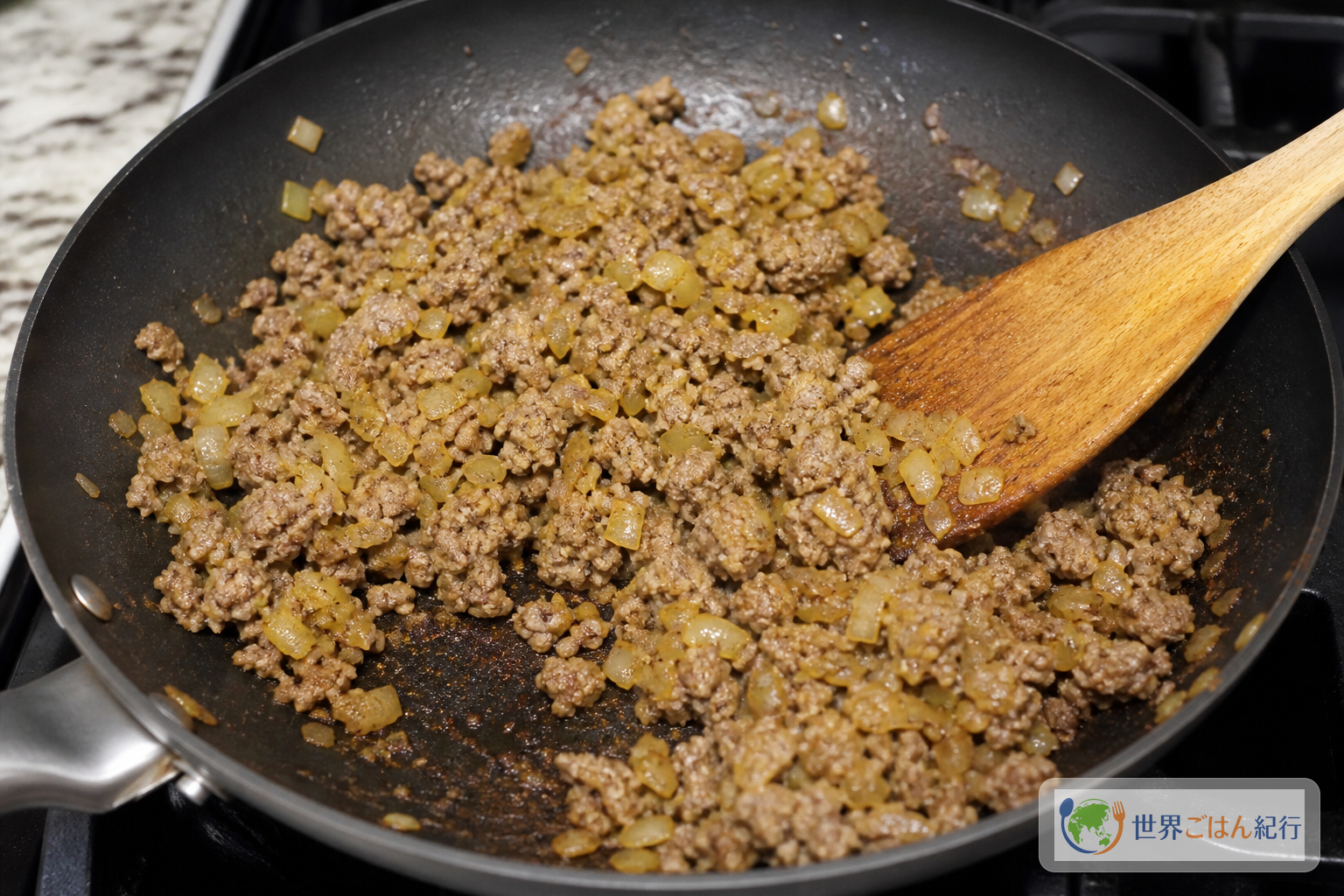
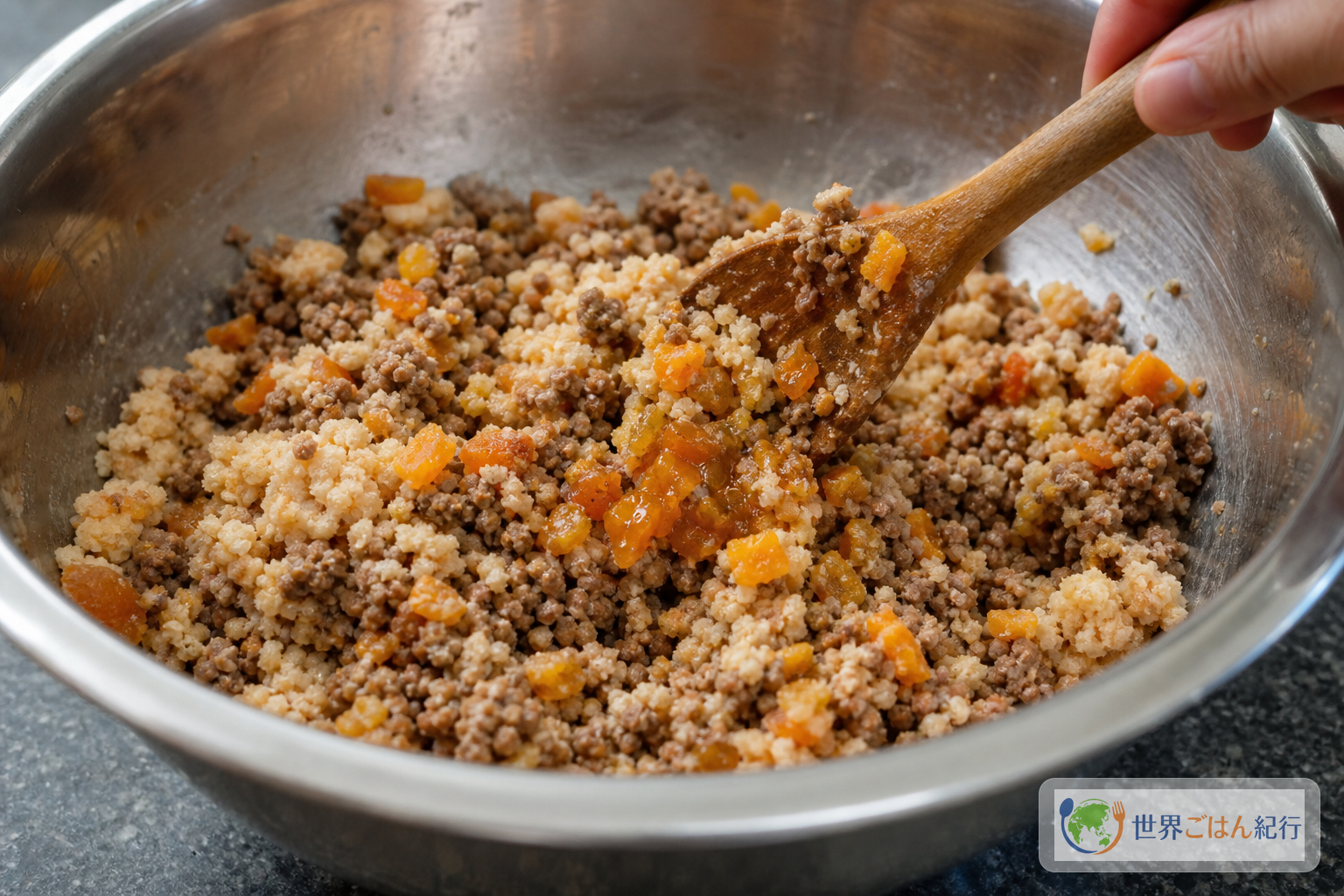
The cause is usually liquid left in the meat after browning, or breadcrumbs soaked in too much milk. Cook off the juices over medium heat and stop the crumbs at "damp sand." If white milk pools at the bottom of the bowl, add 1 tbsp more crumbs.
Only the custard sets thick
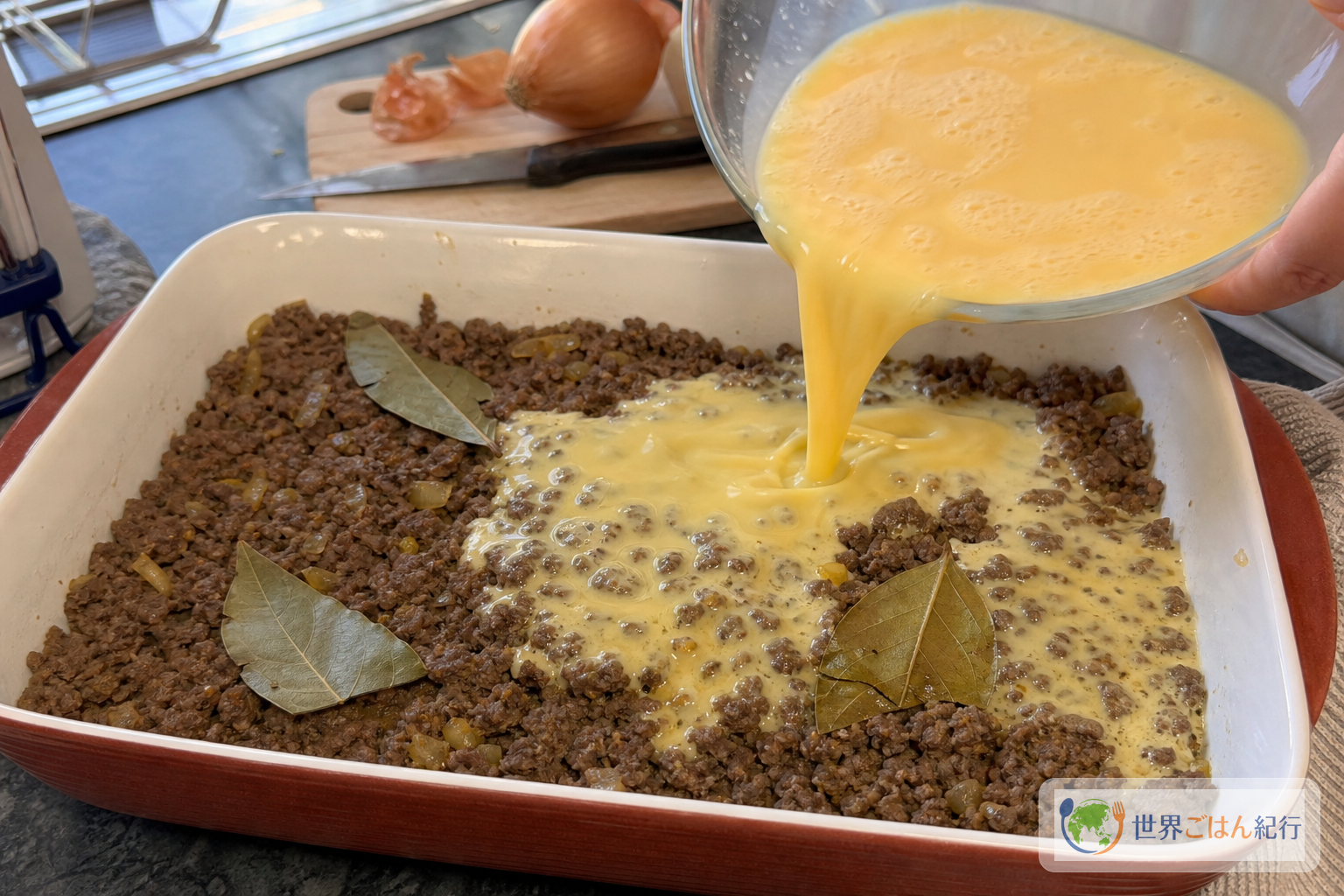
This happens when the dish is small and deep. Keep the filling to 3 cm and the custard to a thin covering. More custard looks lavish, but it weakens the meaty aroma that makes babute what it is and makes the center harder to judge.
The curry powder tastes bitter
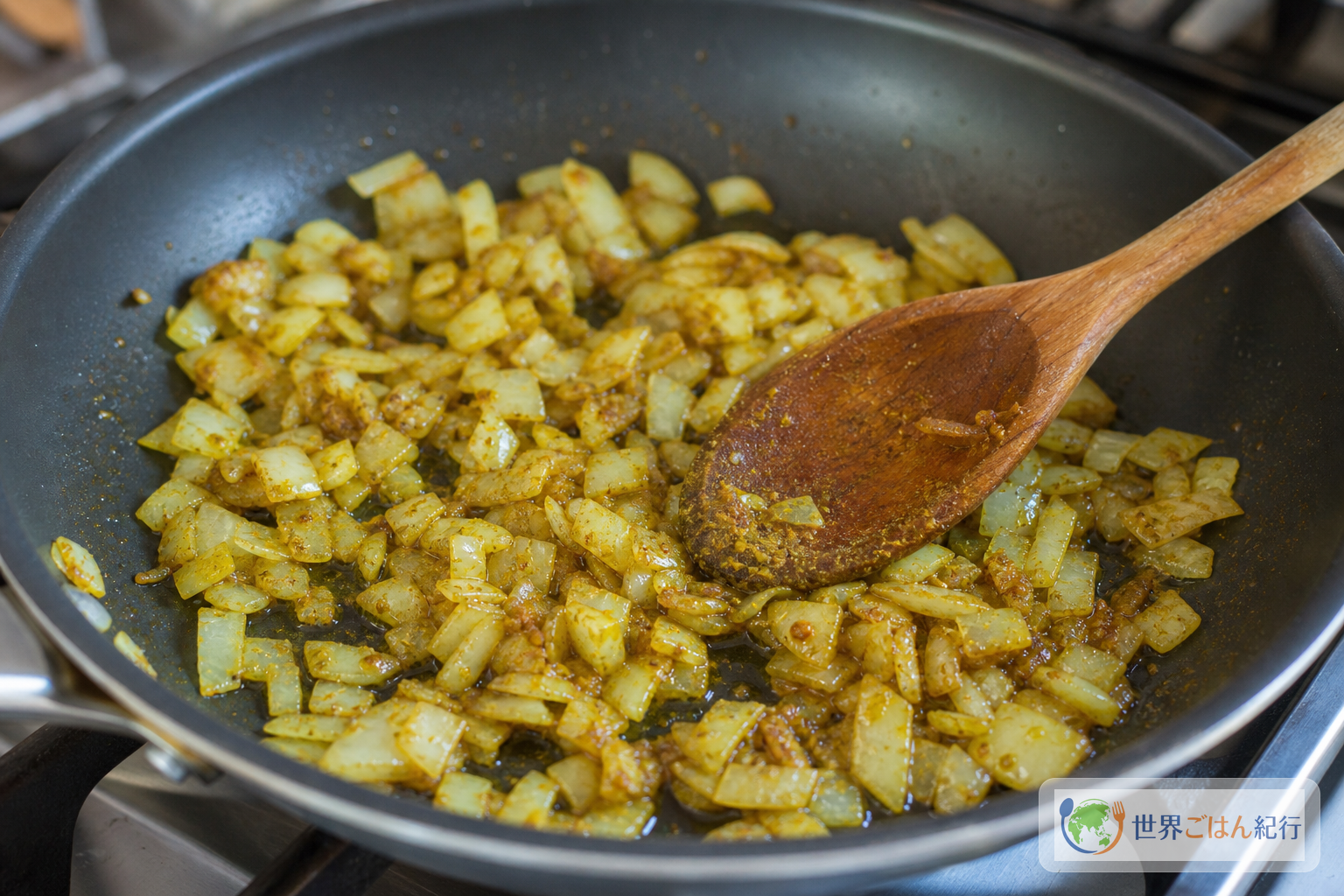
Cooking spices for a long time over high heat makes them bitter. Add the curry powder after the onion, let it bloom for 2 minutes, then add the meat right away to bring the temperature down. If the pan bottom starts to blacken, add 1 tbsp water and scrape.
It falls apart when cut
Cutting a fresh-from-the-oven bake in a hurry makes it collapse. Just 10 minutes of rest lets the crumbs, egg, and juices settle. For a lunch box, let it cool completely before cutting and the squares come out even cleaner.
Storing and Reheating
Once it has cooled slightly, move it to a shallow container within 2 hours and refrigerate. Plan on 2 days in the refrigerator. To reheat, microwave one piece at 600 W for 1 minute 30 seconds to 2 minutes, or heat the whole dish in a 160°C oven for 12 minutes. It is ready when hot through to the center and the custard layer has puffed up again.
To freeze, wrap each piece in plastic wrap, put the pieces in a freezer bag, and use within 2 weeks. Thaw overnight in the refrigerator. Microwaving from frozen tends to toughen only the custard, so avoid it.
Frequently Asked Questions
How is it different from bobotie?
Bobotie is the well-known South African meat bake with a custard topping, and many recipes use chutney, raisins, and almonds. Babute is presented as a dish from the Democratic Republic of the Congo, especially Kisangani, and is usually made with simpler ingredients; served with white rice and greens it feels like an everyday main. Think of them as close relatives.
Can I make it without an oven?
You can make something close in a skillet. Spread the filling 2 cm thick in a 24 cm skillet, pour over the custard, cover, and cook over low heat for 12 to 15 minutes. The bottom scorches easily, so keep the heat low, and once the surface sets, finish it for 3 minutes under a broiler or in a toaster oven for a toasty top. The center temperature still needs checking in the same way.
I don't like dried apricots
You can make it with 50 g raisins alone. In that case, cut the lemon juice from 1 tbsp to 2 tsp and use 1 tbsp mango chutney instead of apricot jam to restore a rounded balance of sweetness and acidity. Chopped dried persimmon in 7 mm pieces is another substitute that works well.
Can I make it milder for kids?
Use a sweeter, milder curry powder rather than a hot one, and cut the black pepper from 1/3 tsp to 1/5 tsp. Allspice adds aroma, not heat, so 1/4 tsp is fine. Letting the adults add a little hot sauce at the table makes it easy to split.
Can I make it ahead for lunch boxes?
Yes. Because it contains egg and ground meat, cool it completely before packing and use an ice pack. Watery greens packed alongside can loosen the custard layer, so low-moisture pairings like rice, babute, and sautéed cabbage work best.
What to Cook Next
- Poulet moambe - Also from Congo, but the national dish of chicken stewed in palm nut.
- Bobotie - The South African meat bake with a custard layer. Cook them side by side to compare.
- Mafe - A West African stew that wraps meat in sweetness and nutty richness.
- Sanga - A gentle Central African home dish of leafy greens and corn.
Sources
- Wikipedia. "Babute." https://en.wikipedia.org/wiki/Babute - Used to confirm the dish name, its link to the DR Congo and Kisangani, and its basic standing.
- Explurt. "10 plats incontournables du Congo." https://explurt.com/fr/blog-french/congo-french/10-plats-incontournables-du-congo/ - Used to check how babute is treated among Congolese dishes.
- BigOven. "Babute." https://www.bigoven.com/recipe/babute/25779 - Used to compare the ground beef, curry powder, apricot, and custard formulation.
- FoodSafety.gov. "Safe Minimum Internal Temperatures." https://www.foodsafety.gov/food-safety-charts/safe-minimum-internal-temperatures - Safe temperatures for ground meat dishes.
- Ministry of Health, Labour and Welfare (Japan). "Cooking to prevent food poisoning" (in Japanese). https://www.mhlw.go.jp/stf/seisakunitsuite/bunya/kenkou_iryou/shokuhin/syokuchu/01_00008.html - Used to confirm heating guidelines and the basics of preventing food poisoning at home.