From a Cape Town table to the world: an overlooked South African flavor
South Africa. The Bo-Kaap district of Cape Town, spread at the foot of Table Mountain. This is a town of pastel-colored houses and a place where the culture of the people called the Cape Malays is alive. On Friday evenings, the sweet scent of curry powder and cinnamon drifts out of one home after another.
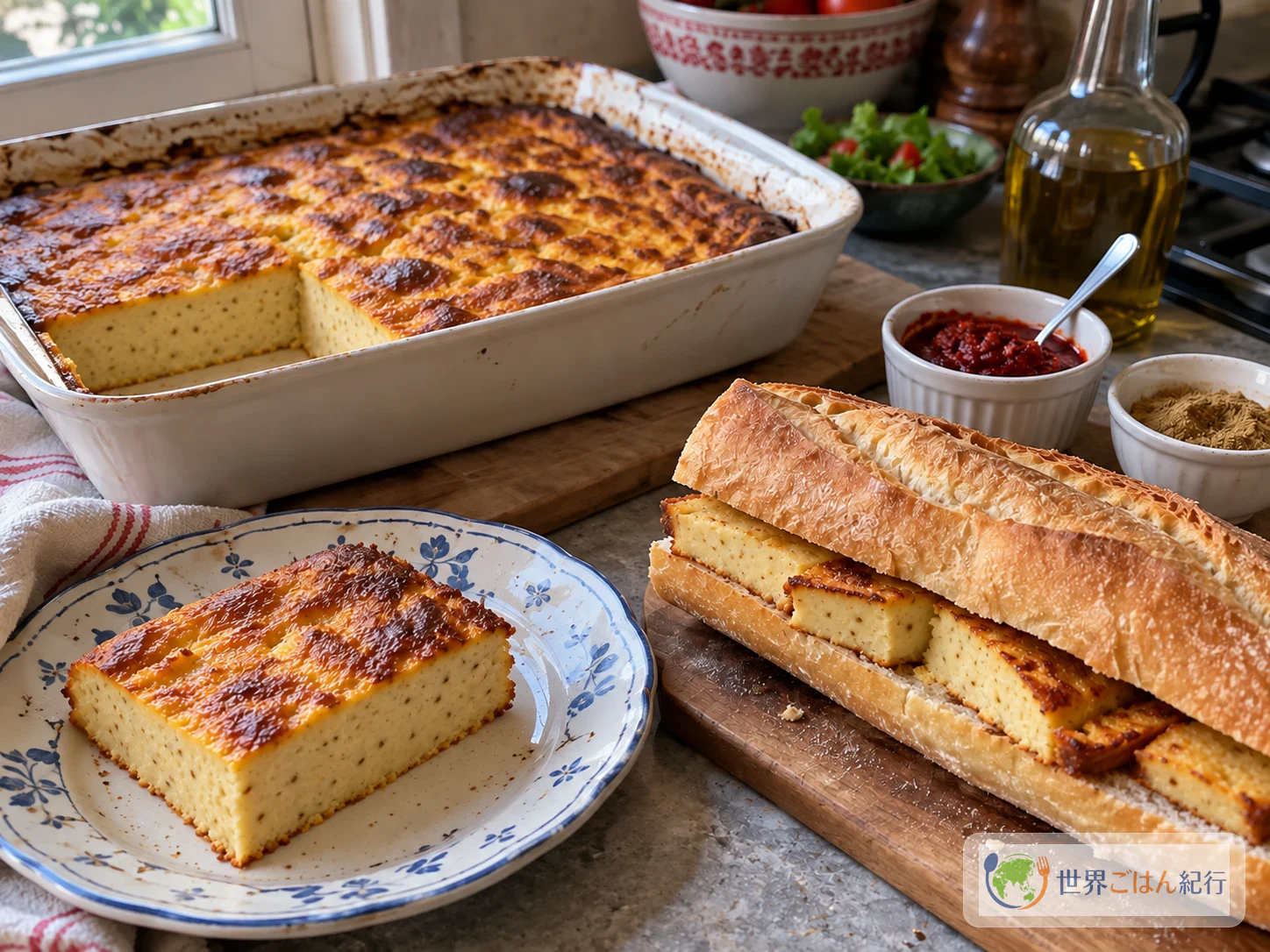
Bobotie is a national dish of South Africa. Ground meat seasoned with curry powder and turmeric is mixed with dried fruit such as raisins and apricots, and with almonds. Pack it into a baking dish and pour over a custard of eggs and milk. Then lay bay leaves on top and put it in the oven. When the custard sets golden, it is done.
It looks like lasagna or meatloaf. But with the first bite, its distinctive taste surprises you. The spiciness of the curry, the sweetness of the dried fruit and the mellowness of the custard melt together on your tongue at once. This threefold experience of sweet, spicy and gentle is something that belongs to South African cooking.
A national home dish of South Africa. Spice-seasoned ground meat is mixed with dried fruit and nuts, topped with an egg custard and baked in the oven. Its roots lie in dishes brought by the Malay people (Cape Malays) who were brought to the Cape Colony in the 17th century. It is classically served with turmeric rice (yellow rice) and chutney.
This article explains how to recreate a bobotie faithful to the Cape Malay tradition in a home kitchen. From a guide to finding the ingredients to how to cook the turmeric rice, it covers everything.
Ingredients (serves 4)

Here is how to substitute if you cannot find mango chutney or dried apricots. In place of mango chutney, 2 tbsp apricot jam gets closest. Dried apricots can be replaced with dried persimmon or dried mango. Raisins alone still make a very good bobotie.
Method (cooking time: about 70 minutes)
Step 1: Soak the bread in milk (5 min)
- Cut the crusts off 1 slice of bread and tear it into pieces about 2 cm.
- Soak in 100 ml milk and leave for 5 minutes to soften. The guide is that it has soaked up milk to the center and crumbles at once when pressed with a finger.
- Mash with a fork into a paste. Mix until no large white lumps remain.

This "milk-soaked bread" is the hidden star of bobotie. Mixed into the meat, it gives a moist texture and ties the meat to the custard.
Step 2: Fry the ground meat (15 min)
- Put 1 tbsp vegetable oil in a skillet and warm it for 1 minute over medium heat.
- Add the chopped onion and fry for 5 minutes over medium heat. When it turns translucent and the edges are lightly golden, move on.
- Add the garlic and fry for 1 minute over medium heat, until the pale look is gone and the aroma rises.
- Add 500 g ground meat and fry, breaking it up with a wooden spoon into pieces under 1 cm.
- When the meat has changed color and the juices run clear, add 2 tbsp curry powder, 1 tsp turmeric and 1/2 tsp each of cumin and coriander.
- Fry for 2 minutes over medium-low heat, and when the spices have blended into the oil and the aroma rises, turn off the heat.
- With the heat off, let it cool for about 5 minutes.

In bobotie, you do not discard the fat that comes out of the ground meat. The flavor of the spices has dissolved into this fat. Moving it into the baking dish along with the fat gives a rich finish. If you want a lighter dish, choose a leaner ground meat.
Step 3: Finish the meat base (5 min)
- Add the milk-soaked bread (as a paste) to the slightly cooled meat and mix well.
- Add 1 beaten egg and work it in until the whole mixture is moist and holds together.
- Add 2 tbsp chutney, 1 tbsp Worcestershire sauce and 1 tbsp lemon juice.
- Add 3 tbsp raisins, dried apricots chopped to about 5 mm and the almonds.
- Adjust with 1 tsp salt and black pepper.

This is where bobotie's flavor is put together. Spicy meat with the sweetness of dried fruit, the tang of chutney and the crunch of nuts. All of it comes together as one.
Step 4: Make the custard and bake (45 min)
- Preheat the oven to 180°C for 10 minutes.
- Lightly oil a baking dish (about 20 cm x 28 cm).
- Pack the meat base flat into the dish and level the surface with a spoon.
- In another bowl, whisk 2 eggs, 150 ml milk and a pinch of salt well with a whisk. It is enough when no streaks of egg white are visible.
- Pour the custard gently over the meat.
- Lay 3–4 bay leaves on the surface as decoration.
- Bake in a 180°C oven for 40–45 minutes.
- It is done when the custard has set, the surface is golden, and no liquid runs when you lightly shake the center.

Pour the custard gently and slowly. If you pour it in forcefully, it mixes with the meat and you do not get a clean two layers. Pouring it against the back of a spoon spreads it evenly over the meat.

Step 5: Serving and eating (10 min)
- Take it out of the oven, check that the custard has set and the surface is golden, then let it rest for 5 minutes until the jiggle settles.
- With a large spoon, portion it into pieces about 6–8 cm square and 4 cm thick, taking care not to break up the custard layer too much.
- Heap turmeric rice at the back of the plate, set the bobotie in front, and add about 2 tsp chutney at the right edge. Placing the golden custard face up shows the layers neatly.

Serving it with turmeric rice
Serving bobotie with yellow turmeric rice (geelrys) is the South African rule. The method is surprisingly simple.
Ingredients
| Ingredient | Amount | Notes |
|---|---|---|
| Rice | 2 rice-cooker cups (300 g) | Short-grain rice is fine; long-grain works too |
| Turmeric | 1/2 tsp | For yellow color |
| Butter | 10 g | For flavor |
| Raisins | 1 tbsp | A sweet accent. Can be omitted |
| Cinnamon stick | 1 | For aroma. Ground cinnamon also works |
| Salt | a pinch | — |
A guide to cooking
- Rinse the rice and soak it for 30 minutes as usual.
- Put the rice, water (the usual amount), turmeric, butter, cinnamon stick, raisins and salt in the rice cooker.
- Cook in the standard mode.
- When done, remove the cinnamon stick and fluff gently without crushing the grains.
No special skill is needed. Just add 1/2 tsp turmeric and 10 g butter to your usual rice. You get bright yellow rice with a sweet aroma. It goes with biryani and nasi goreng as well as bobotie.
Culture and history: a fusion dish born of a 350-year voyage
The story of the Cape Malays
To know the roots of bobotie, you have to go back to 17th-century South Africa.
In 1652, the Dutch East India Company set up a supply station at Cape Town. At that time many people from Indonesia, Malaysia and India were brought to the Cape Colony, as slaves or as political prisoners. They are collectively called the "Cape Malays."
The Cape Malay people applied the cooking techniques of their homelands on African soil. Indonesian use of spices. Malaysian coconut milk. Indian curry. These fused with Dutch cooking and African ingredients, and gave rise to a hybrid cuisine with few equals in the world.
Bobotie is its best-known example. There are several theories about the name. The leading one is that it is a change from the Indonesian "botok," a spiced dish wrapped in banana leaves and steamed. The name "bobotie" already appears in 17th-century cookbooks, and it is one of the oldest documented dishes in South Africa.
Bobotie as South African identity
In the apartheid era, bobotie was passed down quietly within the Cape Malay community. After democratization in 1994, bobotie was reappraised as a symbol of the "Rainbow Nation" (a multiethnic country).
Today bobotie is a national dish eaten by all of South Africa's peoples.

The roots of bobotie lie in the Indonesian "botok." Botok is a dish in which ground meat or fish paste is mixed with spices, wrapped in banana leaves and steamed. The Cape Malays changed this to a Dutch-style oven bake and added the custard topping, which gave it its present form. It can be called a distant relative of nasi goreng and nasi lemak.
Variations and modern twists
Classic bobotie (this article's recipe)
What this article presents is the most traditional style. The combination of ground meat with dried fruit and custard. Turmeric rice and chutney are indispensable.
Chicken bobotie
Use ground chicken breast in place of ground beef. The taste is lighter, and it is popular in summer. Keep the spices as they are, and the trick is to use more mango among the dried fruit.
Vegetarian bobotie
A version that replaces the ground meat with lentils. Boil 200 g brown lentils for 15 minutes, mash them and season them the same way as the regular meat base. Bake under the egg custard and you have a bobotie rich in plant protein.
Seafood bobotie
In the coastal areas of Cape Town, a seafood bobotie made with white fish or shrimp is also cooked. Flake the fish, and chop the shrimp coarsely. The point is to hold back the spices and emphasize the lemon flavor.
Bobotie pot-pie style
A popular variation puts the meat base in oven-safe cups and covers it with puff pastry in place of the custard. The pastry bakes crisp and the spicy meat spills out from inside. As a starter for a home party it looks good, and being bite-sized is an advantage.
As long as you keep the structure of "spiced ground meat plus custard", bobotie can be adapted freely. Made with lamb it is more authentic. Made with tofu it becomes vegan-friendly. Adjust the heat by the amount of curry powder and it works for children too.
Nutrition and healthy points
Despite its rich appearance, bobotie is a well-balanced dish.
Nutrition per serving (about 300 g)
| Nutrient | Amount | Notes |
|---|---|---|
| Energy | 480 kcal | — |
| Protein | 28 g | A double protein source: meat and egg |
| Fat | 24 g | — |
| Carbohydrate | 38 g | Includes sugars from the dried fruit |
| Fiber | 4 g | — |
| Iron | 3.8 mg | Heme iron from the meat |
| Calcium | 120 mg | From the milk and eggs |
Nutritional features
The strength of bobotie's nutrition lies in its components.
Ground meat is an excellent source of heme iron and zinc. The egg custard supplies vitamins A, D and B12. The dried fruit adds fiber and potassium. The almonds provide vitamin E and good fats.
It is a balanced meal that covers many kinds of nutrients in one dish. Like dal bhat and mujadara, it is a good example of the rule that "traditional home cooking is nutritionally well complete."
There are two points for cutting the calories of bobotie. (1) Use lean ground meat (10% fat or less). (2) Replace the milk in the custard with low-fat milk. These two cut about 80 kcal.
A guide to gathering the ingredients
Nearly all the ingredients for bobotie are available at an ordinary supermarket.
Availability map
| Ingredient | Where to buy | Notes |
|---|---|---|
| Ground meat | Anywhere | Mixed beef and pork is the easiest to get |
| Curry powder | Anywhere | A standard supermarket curry powder is the most reliable |
| Turmeric | Anywhere | The spice aisle |
| Raisins | Anywhere | The baking aisle |
| Almonds | Anywhere | Plain roasted almonds from the snack aisle |
| Dried apricots | Specialty grocers | Can be omitted |
| Mango chutney | Specialty grocers, online | Apricot jam can substitute |
| Bay leaves | Anywhere | Dried bay leaves in the spice aisle |
Here is how to substitute if you cannot find mango chutney. The easiest is to mix 2 tbsp apricot jam with 1 tsp lemon juice. Apple jam works too.
Side dishes and menus to go with bobotie
Classic combinations
| Side dish | Description |
|---|---|
| Turmeric rice | Essential. See the recipe in this article |
| Chutney | Mango chutney is the standard. The fruity sweet-sour note suits it |
| Sambal | A South African tomato and onion salsa. A spicy accent |
| Green salad | A simple salad of lettuce, cucumber and tomato |
| Banana slices | Banana dusted with coconut flakes. A distinctly South African accompaniment |
Sample menus
Weeknight dinner (easy version):
Bobotie + turmeric rice + mango chutney + salad. This alone makes a perfect meal.
Weekend entertaining (South African plate):
Butternut squash soup as a starter. Bobotie as the main. Line up turmeric rice, chutney, sambal and banana slices, and you can recreate a South African table.
A distinctly South African side. Slice 2 bananas thinly on the diagonal and dress with lemon juice. Dust with 2 tbsp coconut flakes and chill in the refrigerator for 10 minutes. It is a sweet palate rest that tempers the spiciness of the bobotie.
African food party:
Bobotie + thieboudienne + jollof rice + ugali. You can enjoy a food journey across the African continent in one evening. With the help of the introduction to Ethiopian cuisine, you might add injera and doro wot too.
Storage and reheating
Bobotie suits making ahead. Stored properly, it tastes good the next day and after.
Store the bobotie and the turmeric rice in separate containers. Together they make the rice sticky.
Refrigerator
Cool completely and put it in an airtight container. It keeps 3–4 days in the refrigerator. Reheat in the microwave at 600 W for 3 minutes. Covering the custard with aluminum foil and warming it in a toaster oven brings back the crisp texture of the surface.
Freezer
Wrap single servings in plastic wrap and put them in a zip bag. It keeps 1 month in the freezer. Thaw overnight in the refrigerator. If reheating in the microwave, sprinkle with 1 tbsp water before heating to prevent dryness.
More to cook with it
- Koesister: carries the Cape Malay spice character through to a sweet fried pastry.
- Introduction to African cuisine: reuse ingredients and aromas from the same region.
- Introduction to Ethiopian cuisine: reuse ingredients and aromas from the same region.
- Bunny chow (in Japanese): a dish from the same country's table, to cook next.
FAQ
These are questions often asked about bobotie. If South African cooking is new to you, start by reading the article on tagine as well. You can see that even among dishes from the same African continent, north and south have entirely different food cultures.
Q1. Is it not authentic unless it uses lamb?
Mixed ground meat is authentic enough. In South Africa, ground beef is the most common. Lamb adds flavor but is not essential. Mixed ground beef and pork from an ordinary supermarket makes a good bobotie.
Q2. Can I adjust the amount of curry powder?
Of course. If you do not like heat, reduce it to 1 tbsp. For children, 1/2 tbsp still gives enough flavor. Conversely, to make it spicier you can go up to 3 tbsp.
Q3. The custard will not set. Why?
The oven temperature may be too low or the baking time too short. Bake at 180°C for 40 minutes or more. Keep to the ratio of 150 ml milk to 2 eggs. Too much milk makes it harder to set.
Q4. Are the bay leaves essential?
The effect on taste is small, but they contribute a great deal to aroma and looks. Dried bay leaves are available cheaply at any supermarket. With them it takes on an authentic look at once, so please use them.
Q5. Can it be made for allergies?
Bobotie contains wheat (bread), egg and dairy (milk). For a wheat allergy, replace the bread with rice flour bread. For an egg allergy, there is a variation that omits the custard topping and bakes with cheese on top. For a dairy allergy, oat milk can substitute for the milk.
Summary: neither curry nor lasagna, a flavor like no other
Three points to check before you make bobotie. (1) Curry powder is 2 tbsp (1 tbsp for a milder dish). (2) Do not forget the dried fruit. The sweetness is the key to the flavor. (3) Pour the custard slowly. Keep these three and you will not fail.
Bobotie is a dish with few equals in the world in which the spiciness of curry, the sweetness of dried fruit and the mellowness of custard live together. It needs no special cooking equipment, and anyone with an oven can make it.
The memories of people who crossed the sea to Africa 350 years ago live on in one dish. Indonesian spices, Malay technique, the Dutch idea of baked dishes. They mixed and became a flavor that could only have been born in the land of South Africa.
Please try making it once. You will surely be surprised that such a dish exists, and want to make it again and again. On your next day off, why not warm up the oven and take on bobotie?
If you like bobotie, try other signature dishes of the African continent too. Morocco's tagine, Senegal's thieboudienne, Ethiopia's injera and doro wot. The introduction to Ethiopian cuisine gives an overview of East African food culture.
Sources
Books
- Leipoldt, C. Louis. Leipoldt's Cape Cookery. Stonewall Press, 1976. A classic of Cape cooking
- Van Wyk, Magdaleen. South African Traditional Recipes. Struik Lifestyle, 2012. Publisher's page
- Erasmus, Hilda. Rainbow Cuisine. Struik, 2002. Covers the food cultures of a multiethnic country
Online sources
- South African Tourism. "South African Cuisine." South Africa Tourism
- Goldberg, Alida Ryder. "Traditional Bobotie Recipe." Simply Delicious, 2020. Recipe
- UNESCO. "Heritage of Malay Quarter." UNESCO Heritage