Pepesup: A Clear, Peppery Fish Soup with Ginger and Tomato
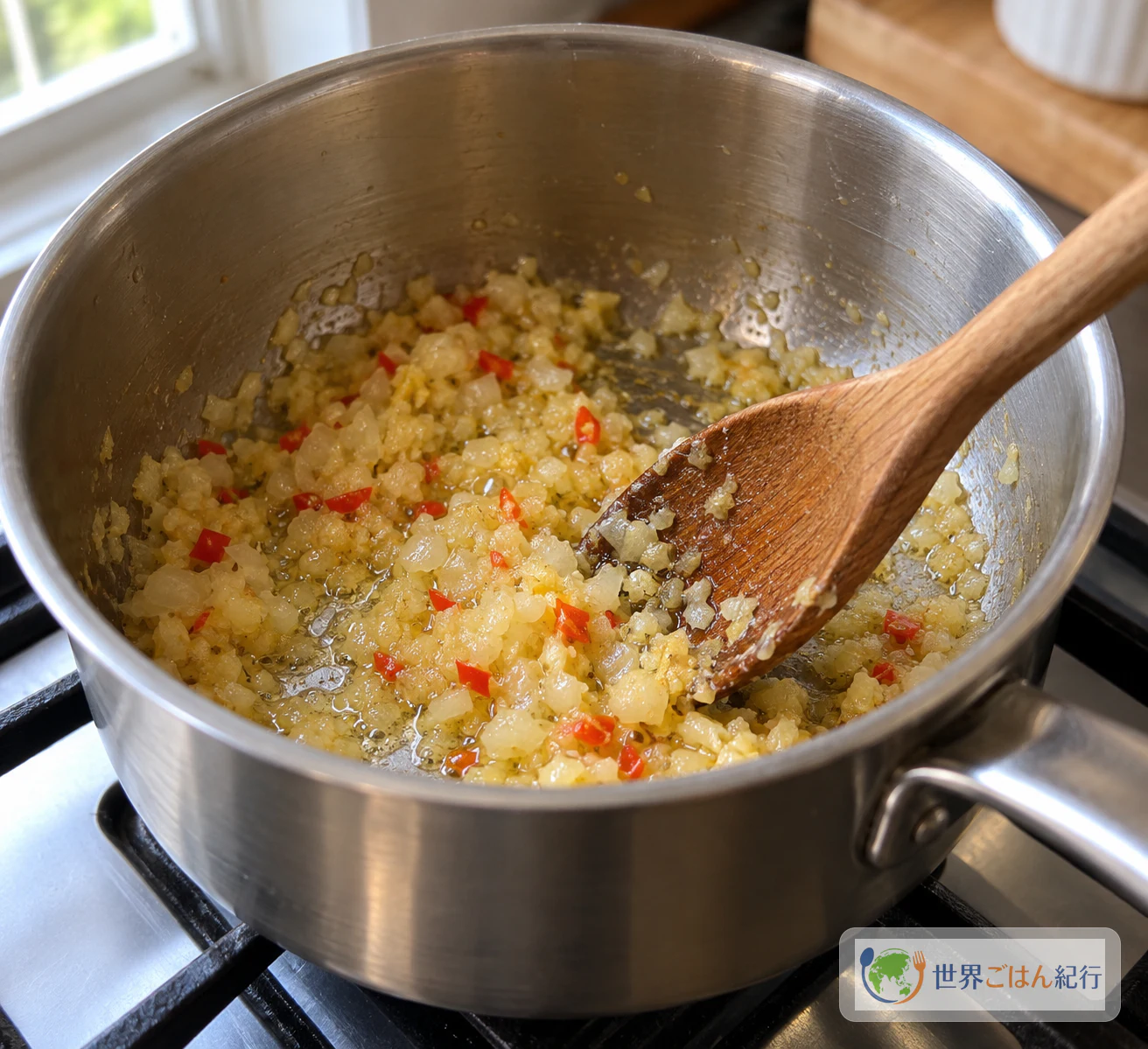
Keep the aromatic paste pale and fragrant, not browned. Let the broth simmer before the fish goes in. Cook the fish gently so the pieces stay whole.
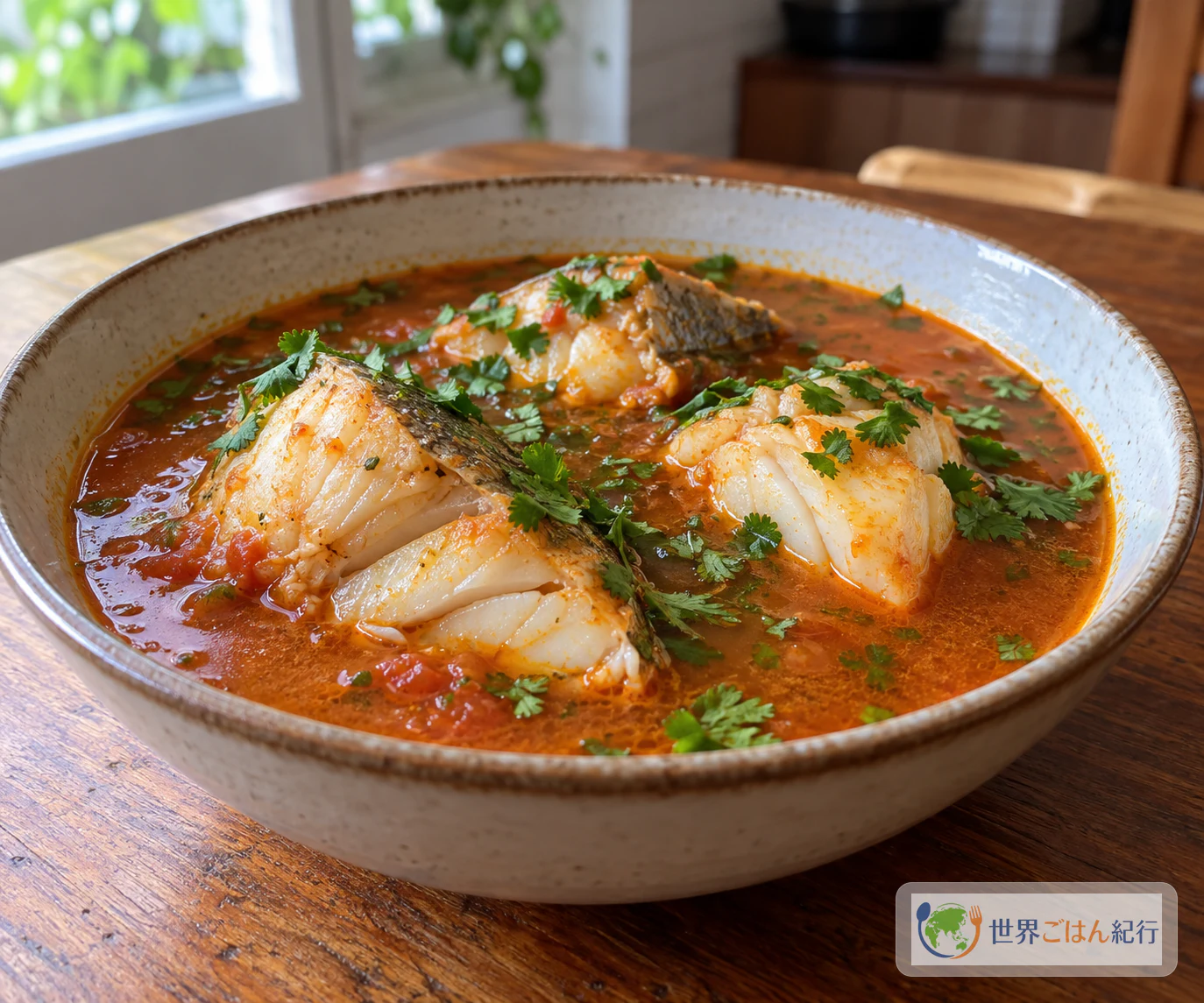
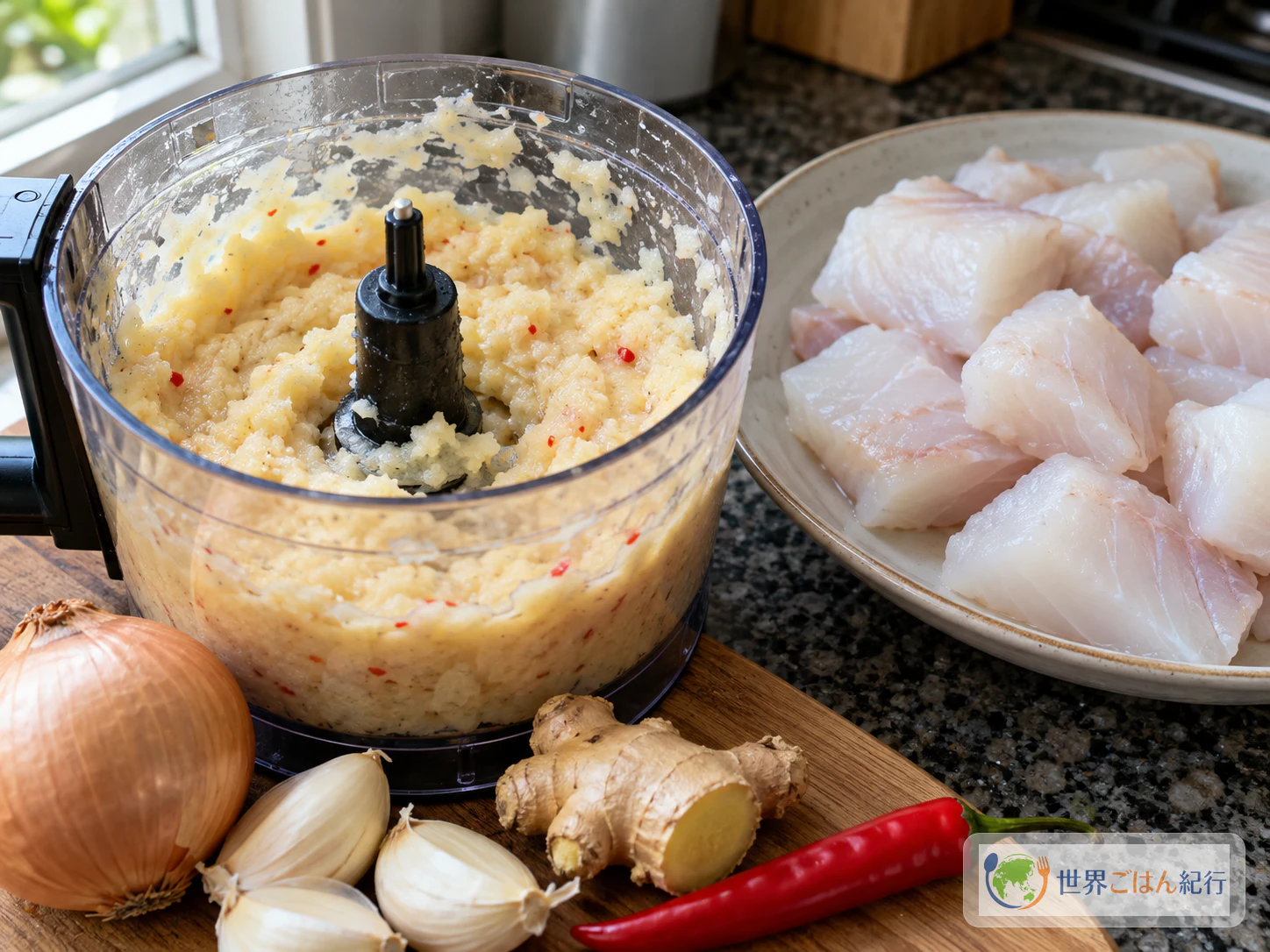
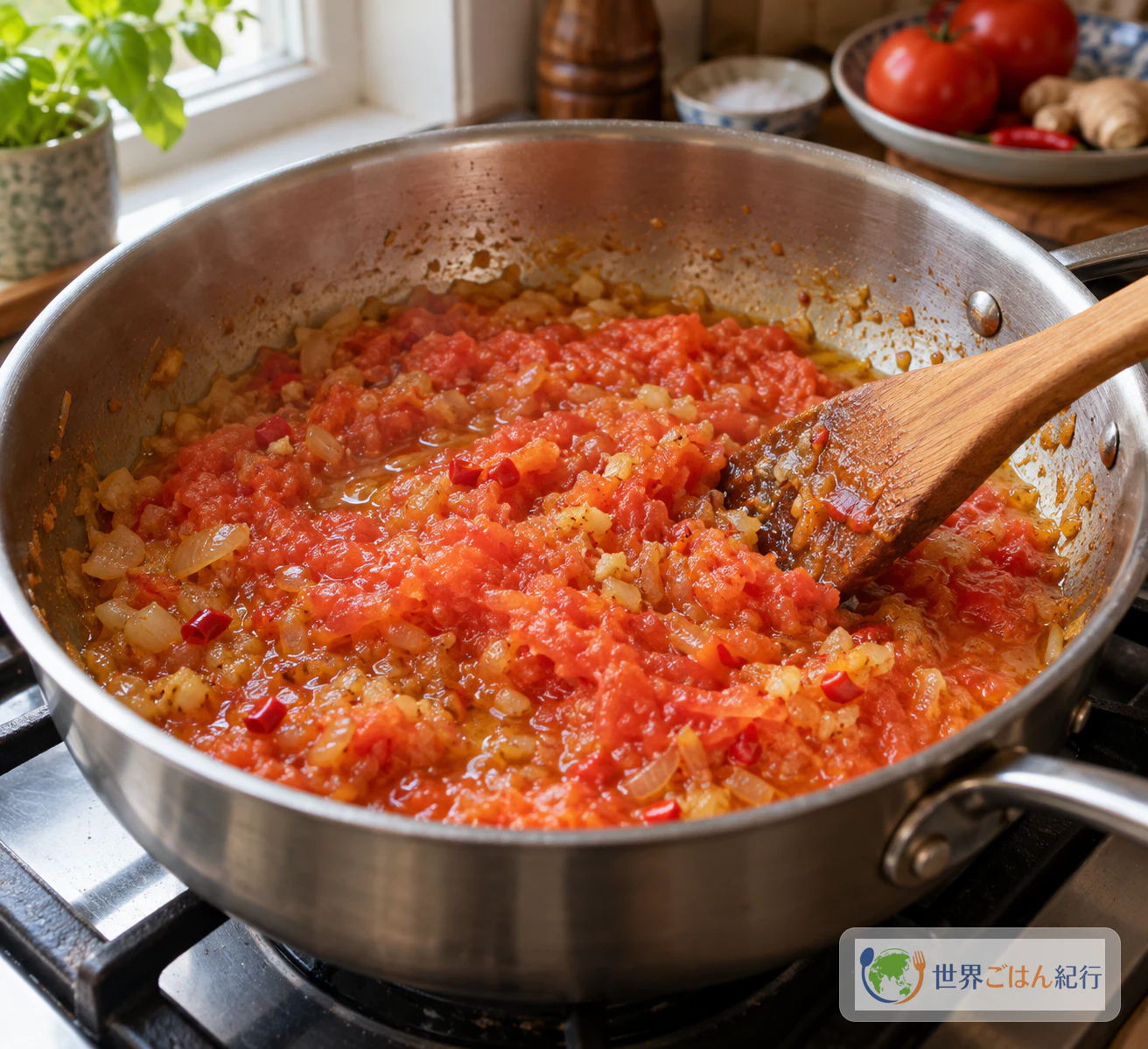
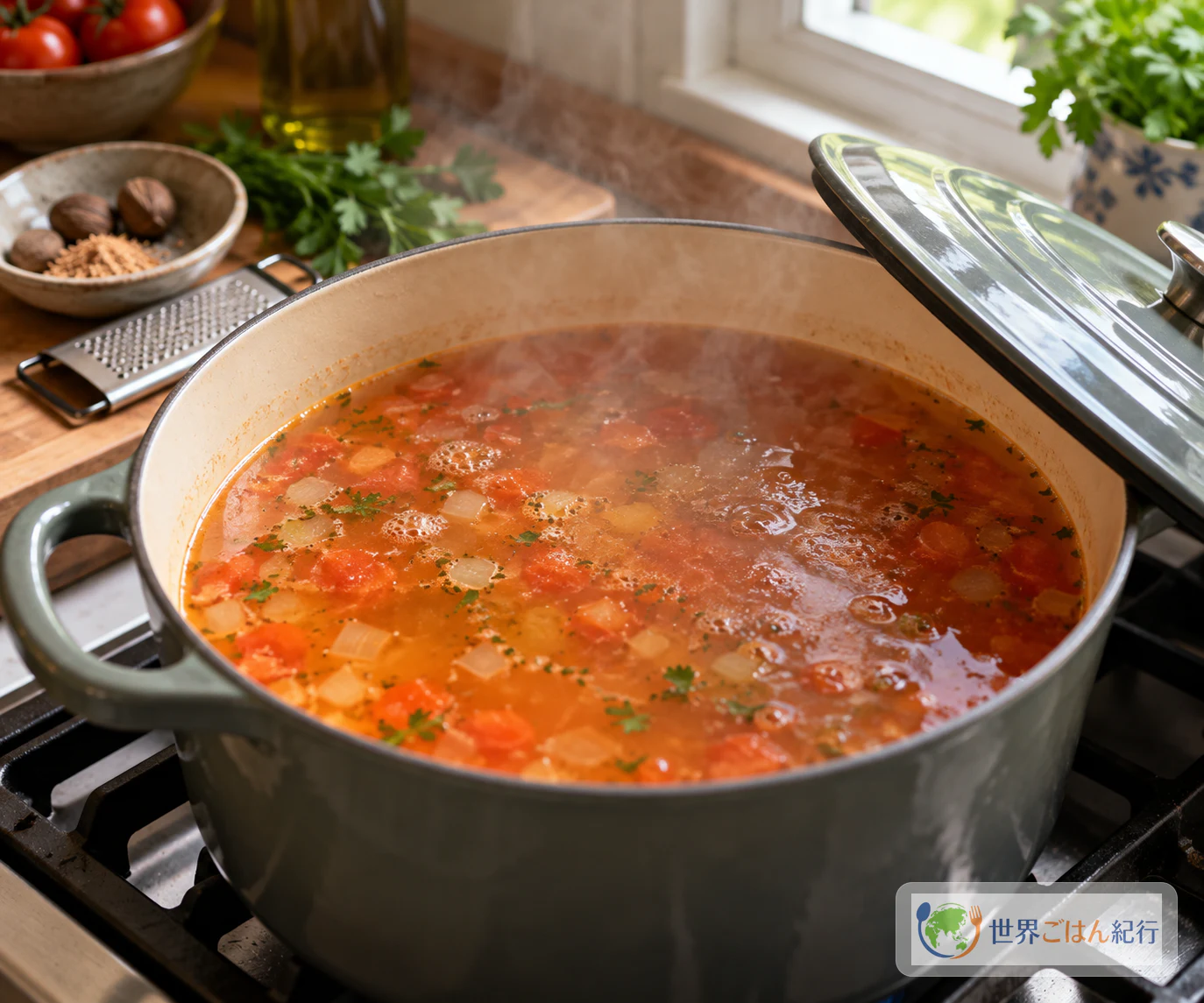
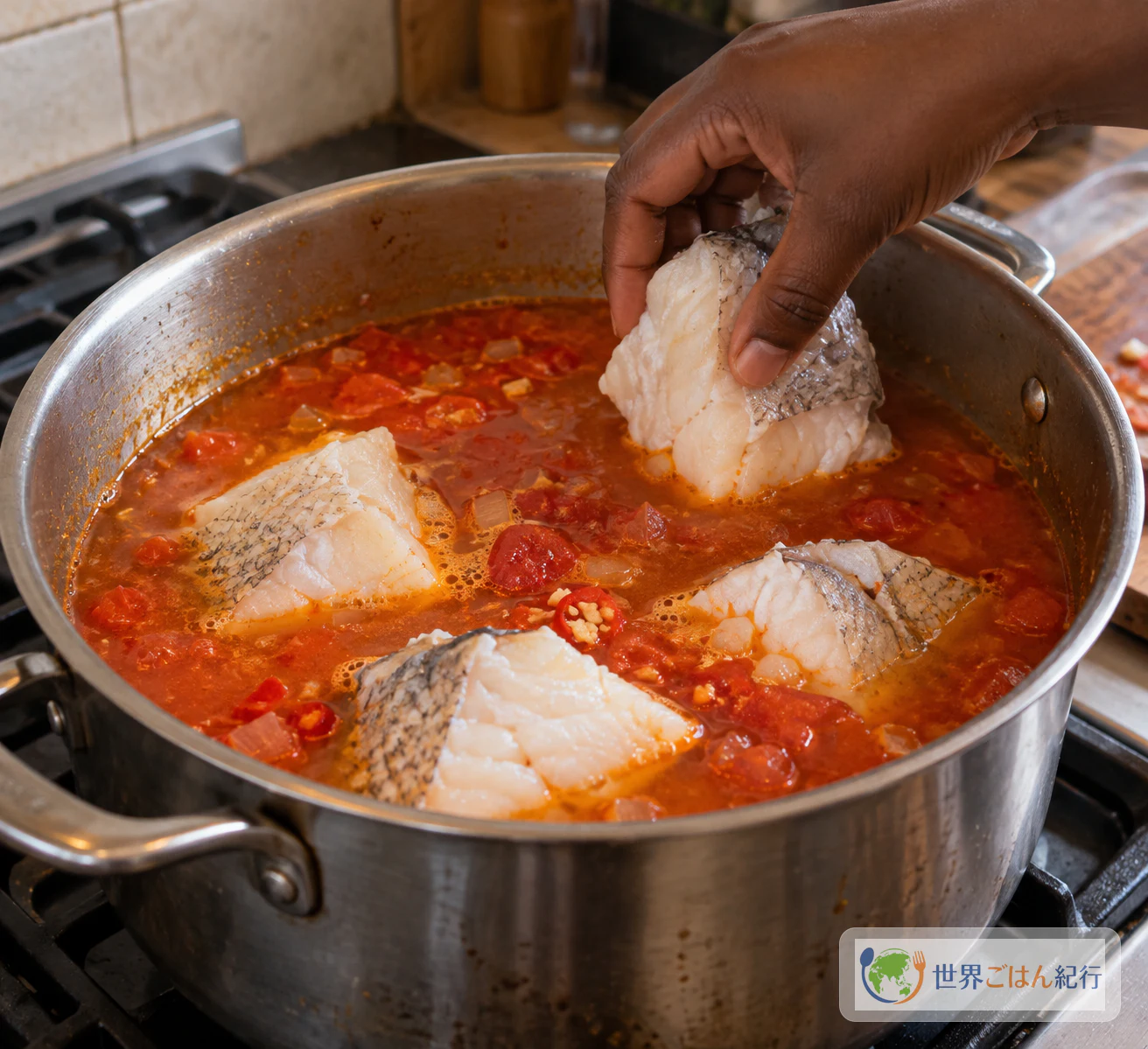
Onion, garlic, fresh ginger and chili are blended into a smooth paste and warmed in a little olive oil. Grated ripe tomato turns the paste soft and red, and then a liter of fish stock goes in with nutmeg, salt and black pepper. The broth simmers under a lid. Large pieces of firm white fish are lowered in at the end and cooked at a quiet simmer until they turn opaque. Chopped cilantro goes on top.
This is pepesup, a spicy fish soup from Equatorial Guinea. The country's official government website describes it as one of the basic dishes of Equatorial Guinean cooking and says that many dishes, pepesup among them, are eaten with rice or plantain. This article does not present one fixed national recipe. It follows a single published version for four, from the Spanish-language recipe site Comer y Beber, and adapts it for home kitchens. Sekai Gohan has not kitchen-tested this recipe.
If you want to compare other soups from the region, see Ghana's groundnut soup, Nigeria's banga soup and egusi soup. Each is built differently, on peanuts, palm nuts or melon seeds.
What Pepesup Is: A Basic Fish Soup on the Equatorial Guinean Table
Equatorial Guinea's government website describes the national cuisine as shaped by both African and European influences, and it singles out fish as important to the country's food. Within that overview, pepesup is introduced as a spicy fish soup and one of the cuisine's basic dishes, usually paired with rice or plantain. The government text is short. It gives no ingredients, amounts, method, history or regional differences, so this article does not add any.
The Comer y Beber recipe page explains the name as an adaptation of "pepper soup" (sopa de pimienta in Spanish). That explanation comes from the recipe page itself. It is not an established linguistic history.
The name covers more than one way of cooking. A Spanish-language travel blog, viajaraguinea, publishes a simpler home version written as "pepe-soup." It uses fish, whole tomatoes, onion, stock and salt, with a teaspoon of oil and optional oregano, simmered for 20–25 minutes. The author names dorada or chicharro as their preferred fish, and most amounts are not given. Equatorial Guinea Turismo, a tourism information site, describes pepesup in general terms as a spicy fish soup or stew with pepper, ginger, garlic and vegetables that vary by region and season. These descriptions do not establish one standard recipe. This article uses the Comer y Beber version because it gives full amounts and a complete method, and it does not mix in ingredients from the other versions.
The Comer y Beber page lists 20 minutes of preparation and 45 minutes of cooking, for 65 minutes in total. The timed stages in its method (about 5 minutes for the paste, about 5 for the tomato, about 15 for the broth and 8–10 for the fish) add up to roughly 33–35 minutes of cooking. The two figures do not match, and Sekai Gohan has not measured these timings in a kitchen test. Judge doneness by the state of the pot and the fish, not by the clock.
Ingredients (Serves 4)
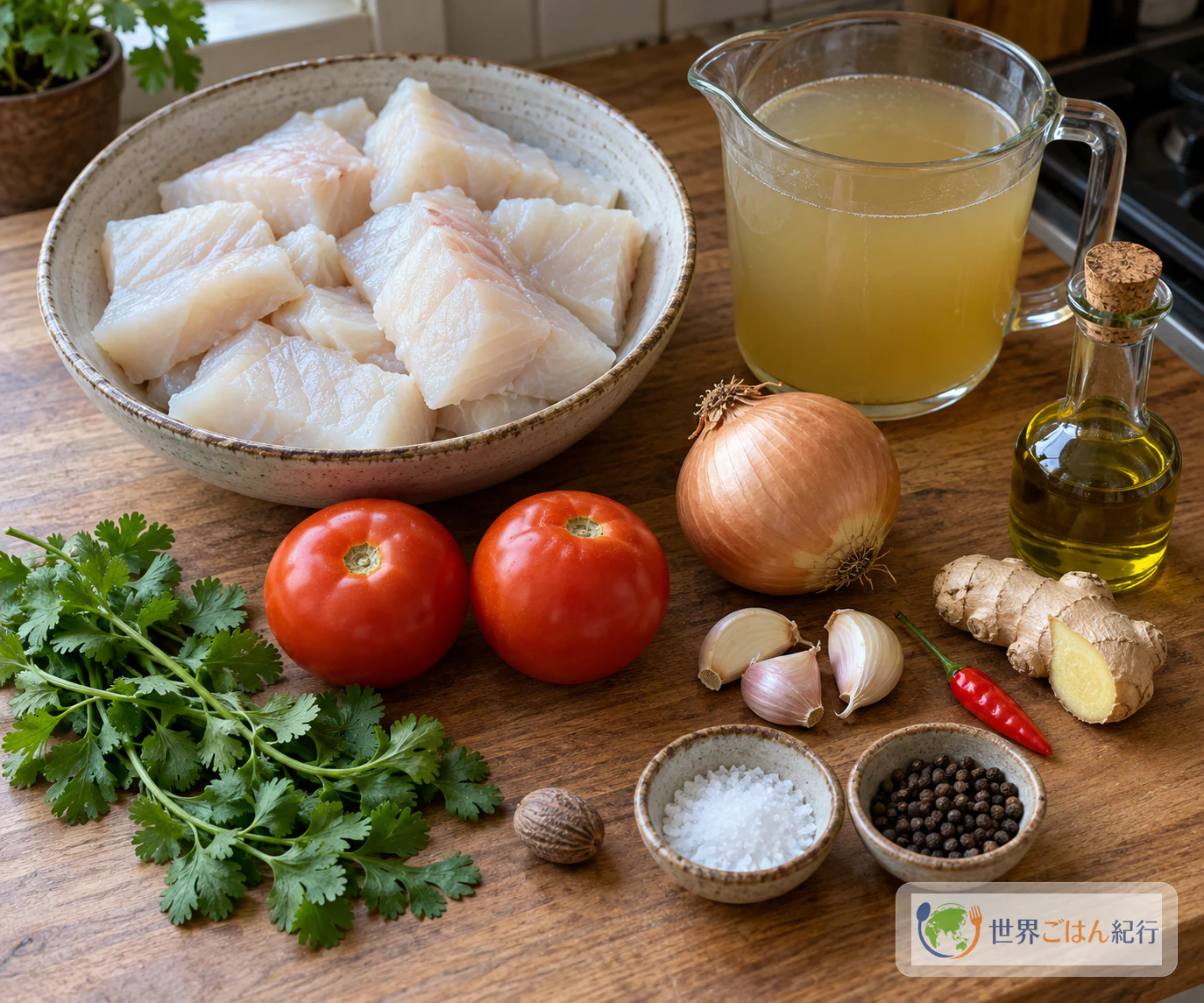
The onion, garlic, ginger and chili become one paste. The tomatoes are grated. The fish goes in last.
This soup contains fish, and fish stock is also made from fish. If you use a store-bought stock, check its ingredients and allergen labeling, and watch for cross-contact with other seafood. Keep the cutting board, knife and plates used for raw fish separate from other ingredients. Do not taste the fish raw. Thaw frozen fish in the refrigerator, not at room temperature.
Equipment
- Food processor or blender, for the aromatic paste
- Grater, for the tomatoes
- Saucepan with a lid
- Wooden spoon
- Knife and cutting board, kept for the raw fish
- Instant-read food thermometer (optional, for checking the fish)
Choosing Fish, Chili and Stock Outside Equatorial Guinea
Fish. Choose a boneless, firm white fish that does not fall apart easily, such as cod. This is a practical substitute for home kitchens. It is not a claim about the fish used in Equatorial Guinea, and different fish give different textures.
Chili. Habanero is one choice. Other chilis that are easier to find will change both the heat and the aroma. Note which chili you used and how much, so you can adjust the next pot. Start with a smaller amount if you are unsure. A pot with no chili at all is a different soup.
Stock. Fish stock can be replaced with the same amount of filtered water, though the broth will taste less savory. If you use granulated or concentrated stock, dilute it according to the product label. Salt levels differ between products, so leave the final salting until the end.
Cilantro. Fresh leaves give the finishing aroma. If you cannot find fresh cilantro you can leave it out, but the soup will be less fragrant. Dried cilantro is not an equivalent.
Method: Paste, Tomato, Broth, Then Fish
The paste is cooked first, then the tomato, then the broth. The fish goes in only after the broth has simmered. Once the fish is in, keep the heat low.
Tips and Fixes for a Home Kitchen
| Problem | Likely cause | What to do |
|---|---|---|
| The paste smells scorched | Heat too high, or not stirred enough | Keep the heat at medium and stir constantly. The paste should stay pale |
| The fish breaks apart | The broth boiled hard, or the pot was stirred hard after the fish went in | Keep only small bubbles once the fish is in, and move the pot gently instead of stirring |
| The broth tastes too salty | Salty store-bought stock | Season mostly at the end, after tasting the finished broth |
| The broth tastes thin | Water used instead of fish stock | Expect a lighter result with water. Adjust salt and pepper at the end |
| Too hot for some eaters | A strong chili, or too much of it | Next time use less chili in the pot and offer extra heat at the table |
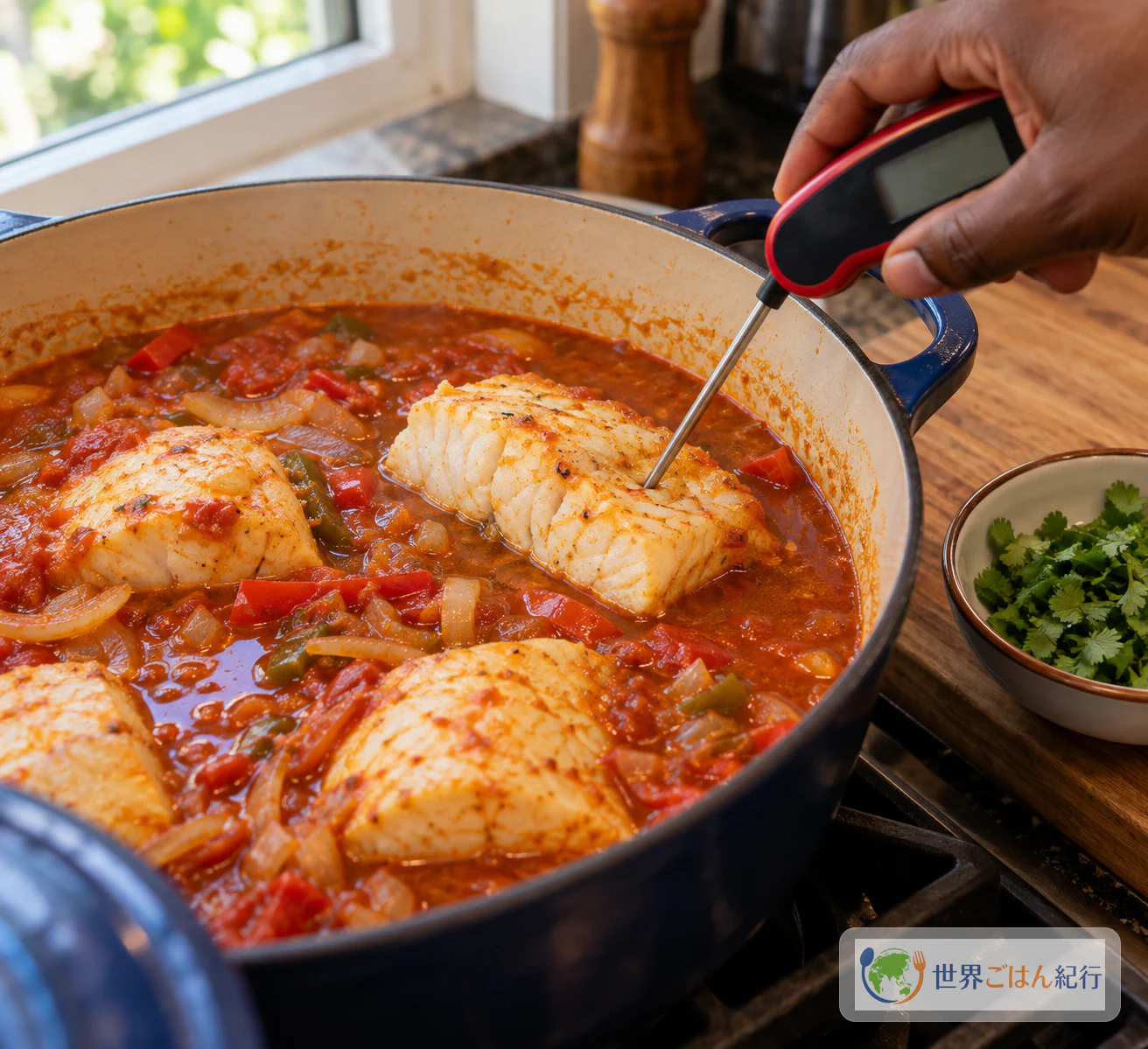
| The fish center is still translucent | The pieces are thick | Keep simmering gently and check again until the thickest part reaches 63°C or the flesh flakes easily |
Make the paste and cook the tomato before adding the broth, as in steps 1–3. This keeps the aromatics from tasting raw and gives the broth its color before the fish goes in. Reducing the heat level for a home table is an adjustment, not the dish as served in Equatorial Guinea.
How to Serve Pepesup, and Variations
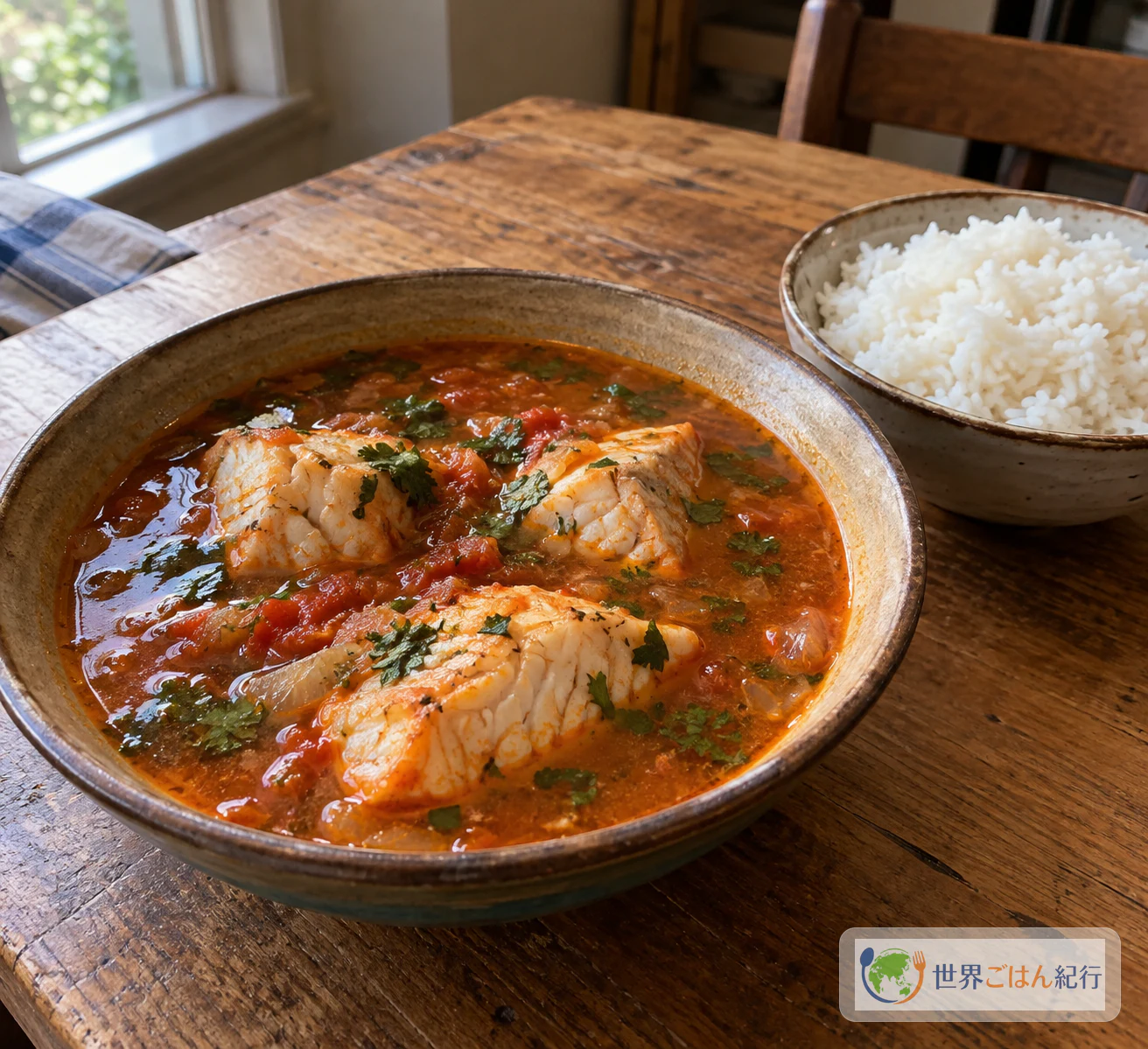
Equatorial Guinea's government website says that pepesup, like many of the country's dishes, is eaten with rice or plantain. The Comer y Beber version suggests white rice, which is one recipe's serving suggestion. The Equatorial Guinea Turismo site also lists rice, boiled cassava and fried plantain as possible accompaniments. That site is a secondary guide, so treat these as options rather than the local standard.
Variations that stay close to the dish:
- Use water instead of fish stock. The recipe allows the same amount of filtered water. The broth will be less savory.
- Use a chili you can find. Habanero is one choice, and other chilis change both heat and aroma.
- Choose a firm local white fish. A boneless white fish that holds together, such as cod, is a practical substitute.
- Lower the heat in the pot and add more at the table. This lets each person adjust the spice. It is a home adjustment, not the dish as made locally.
- Serve with white rice or plantain, as the government description and the recipe suggest.
Frequently Asked Questions
Where is pepesup from?
Equatorial Guinea. The country's official government website describes pepesup as a spicy fish soup and one of the basic dishes of Equatorial Guinean cooking. It does not give an origin story or a fixed recipe.
What kind of fish should I use?
The Comer y Beber recipe calls for firm white fish without naming a species. The viajaraguinea blog author prefers dorada or chicharro. At home, a boneless white fish that does not fall apart easily, such as cod, is a practical substitute rather than a traditional choice.
Can I use a different chili?
Yes. The Comer y Beber recipe gives one chili or an amount to taste and mentions habanero as an option. Other chilis vary a lot in heat and aroma, so start with a small amount, note what you used, and adjust next time.
How do I know the fish is cooked?
The U.S. Food and Drug Administration advises cooking fish to an internal temperature of 145°F (63°C). Without a thermometer, the flesh should be opaque and flake easily with a fork. This safety guidance comes from the FDA, not from the pepesup recipe. The recipe itself says to simmer the fish gently for 8–10 minutes until it is opaque and flakes.
What do I serve with it?
The government website says pepesup is usually eaten with rice or plantain. The Comer y Beber recipe suggests white rice. The Equatorial Guinea Turismo site also lists boiled cassava and fried plantain. These come from different kinds of sources, and only the government text describes the dish in general.
Sources
- Guinea Ecuatorial Página Web Institucional del Gobierno, "GASTRONOMÍA." Official government overview: Equatorial Guinean cuisine shows African and European influences, fish is important, pepesup is a spicy fish soup and one of the cuisine's basic dishes, and many dishes are eaten with rice or plantain. It gives no ingredients, amounts, method or history. https://www.guineaecuatorialpress.com/index.php/noticias/gastronomia
- Comer y Beber, "Pepesup." The single recipe version used here: ingredients, amounts, method and four servings. Also the source of the "pepper soup / sopa de pimienta" name explanation, the firm white fish, the heat adjustment and the listed times. It is one published recipe, not an official or traditional standard. https://comerbeber.com/receta/pepesup
- viajaraguinea (WordPress blog), "Como hacer un plato típico de Guinea Ecuatorial: Pepe-soup." A simpler home version with fish, tomato, onion, stock, salt, a teaspoon of oil and optional oregano, simmered 20–25 minutes, and the author's preferred fish. Used only for comparison. https://viajaraguinea.wordpress.com/2015/05/25/plato-tipico-de-guinea-ecuatorial-pepe-soup/
- Guinea Ecuatorial Turismo, "Comidas Típicas de Guinea Ecuatorial." Tourism information site describing pepesup as a spicy fish soup or stew with pepper, ginger, garlic and vegetables that vary by region and season, with rice, boiled cassava and fried plantain as accompaniments. Used as a supplementary reference. https://www.guineaecuatorialturismo.com/comidas-tipicas-de-guinea-ecuatorial/
- U.S. Food and Drug Administration (FDA), "Selecting and Serving Fresh and Frozen Seafood Safely." Safe cooking of fish to 145°F (63°C), the opaque-and-flakes visual check, and thawing fish in the refrigerator instead of at room temperature. It does not describe Equatorial Guinean cooking. https://www.fda.gov/food/buy-store-serve-safe-food/selecting-serving-fresh-and-frozen-seafood-safely