


When red oil floats on the pot, a West African supper is near
Spot white seeds labeled "egusi seeds" in an import grocery and you may hesitate at first. They are bigger than sesame and whiter than pumpkin seeds. Hear that you grind them and put them in a soup, and you start looking for where they belong: is it stock, a thickener, a nut?
Egusi soup (Egusi Soup / Ofe Egusi / Efo Elegusi / Miyan Gushi) is eaten in Nigeria and across West Africa, thickened with ground melon-family seeds. It is not the thin soup the word suggests, but closer to a dense stew that holds meat, fish, greens and red palm oil.

At a Nigerian table, rather than sipping egusi soup with a spoon, you tear off a staple called a "swallow," such as fufu, eba or pounded yam, roll it by hand and scoop up the soup. Cooking at home, you do not need a perfect fufu from the start. White rice, steamed potatoes or short pieces of udon can also take the part of catching the rich seed sauce.
If jollof rice is the dish that brings West Africa close through tomato and rice, egusi soup brings you closer to a Nigerian kitchen through seeds, red oil, dried fish and greens. Together with fufu or waakye (in Japanese), the West African table gains much more dimension. It is also an easy entry for anyone who likes the fish stock of thieboudienne or the nutty thickness of mafe (in Japanese).
In Nigeria the name changes with language and region. It is sometimes called Ofe Egusi among Igbo speakers, Efo Elegusi among Yoruba speakers and Miyan Gushi among Hausa speakers. In this article we use "egusi soup" as the main name.
Background: a Nigerian feast thickened with seeds

Egusi is less the name of one specific plant than the name of an ingredient: the white seeds from plants of the gourd family, dried, shelled and ground. Demand Africa describes egusi as the seeds of melons, squashes and gourds used in West Africa, and says that dried and ground they form the base of many dishes.
What is interesting about these seeds is that they do more than scent the soup: they build its body. Mix the ground seeds with water into a paste and drop it into a hot pot, and it sets into small dumplings while absorbing oil and stock. The texture is crumbly and nut-like, different from ground meat crumbles and different from tofu.
| Name / region | Common features | How to think about it when cooking it elsewhere |
|---|---|---|
| Ofe Egusi | The Igbo name. A rich mix of meat, dried fish and greens | Easy to make as a hearty stew |
| Efo Elegusi | The Yoruba egusi with greens. Efo means leafy vegetable | Easy to recreate with spinach or similar greens |
| Miyan Gushi | The Hausa name, also spread through northern food culture | Easy to adjust with slightly less heat and less meat stock |
| Lumpy Egusi | A method that drops the paste in small pieces and keeps the lumps | The trick is not to stir the pot too much |
Reading English-language Nigerian recipes, you find two broad ideas for egusi soup. One puts ground egusi into the pot and finishes the whole thing smooth. The other drops egusi mixed with water in small lumps and leaves crumbly "lumps."
Chef Lola's Kitchen explains that for the lump method it is important to cook slowly over medium-low heat. Rushing over high heat scorches the egusi on the bottom of the pot and the lumps do not form well. This "unhurried heat" tends to drop out of short recipes, yet it is an important piece of local knowledge that divides the results.
Egusi soup is not a "soup with seeds in it" but a "dish whose body and texture are built from seeds." Rather than dumping the powder in directly, turn it into a paste with water and onion, drop it in small pieces and cook it without touching, and you get closer to the grains you see in local recipes.
Regional differences show up in the greens, the stock and the staple
Egusi soup tends to get summed up as one Nigerian dish, but what counts when you make the pot at home is less the name than which leaf you use, how strong the fish aroma gets, and what you scoop it up with. Igbo Ofe Egusi is often described as a rich pot where meat, dried fish and stockfish are prominent; for Yoruba Efo Elegusi, the amount of efo, the leafy vegetable, and how the last greens stand up are important. Including northern Miyan Gushi, the heat and the use of meat stock change too.
In a home kitchen, instead of recreating the regional differences exactly, decide the character of the pot before shopping and you will not get lost. On days you want meat to star, make a strong stock with beef shank and canned mackerel; on days you want greens, add plenty of greens at the end. On days you eat it with fufu or eba, make it heavy; on days you serve it with rice, leave some liquid. Decide that way and egusi, red palm oil and dried shrimp powder stop being "unusual ingredients" and become ingredients with a role in the pot.
Egusi soup can be a feast for celebrations or a make-ahead supper. For that reason, rather than cramming meat, fish and greens in from the first time, it leads further to watch how the egusi lumps swell, how heavy the red palm oil feels, and how the aroma remains when you add the greens last. Rather than memorizing local names, remember in what order the seeds, oil, fish and greens come together in the pot. Once you see that, when you move on to draw soup or jollof rice, the construction of Nigerian cooking suddenly becomes easier to read.
Ingredients (serves 4): a realistic egusi pot

This serves 4. Locally, beef, goat, dried fish, cow skin and dried shrimp may be combined, but at home beef shank, chicken thigh, canned mackerel and dried shrimp bring you close enough. For the first time, do not add too many components, and keep a composition in which you can taste the egusi.
This recipe uses fish, shrimp and beef. If you have a shrimp allergy, do not use the dried shrimp; add savoriness with dried shiitake powder and a little fish sauce. If you avoid fish, make a richer meat stock and raise the salt a little.
Ingredients and tools worth seeking out
Egusi is hard to find in an ordinary supermarket. Search at African grocers or online for "egusi" or "melon seed" and you will find whole seeds or powder. If you buy whole seeds, grind them coarsely in a food processor or mill to keep the aroma.
Red palm oil decides the color and aroma of egusi soup. It is not an oil to use in large amounts for health, but one to choose in small amounts for the character it gives the dish. A small bottle is enough the first time.
Ground crayfish makes the deep sea aroma of Nigerian cooking. Dried shrimp ground to a powder in a mill does much the same job. If shellfish are fine for you, do not leave it out here; it settles the flavor.
If you want to go as far as fufu, look for a cassava flour or yam flour mix. The first time, rice is fine, so concentrate on the egusi soup itself.
The essentials are egusi, red palm oil, dried shrimp or another source of fish savoriness, and greens. You do not need fufu, stockfish or Igbo cooking seasonings from the first time. Egusi and red palm oil are the only two where a substitute makes a different dish.
How to make it: do not scorch the egusi, and let the greens stand up last
Egusi soup is not a dish where you put everything in the pot and simmer. First make a meat stock, bring out the aromatics in red palm oil, cook the egusi in small lumps and add the greens at the end. Keep the order and the powdery taste and the scorching decrease a great deal.
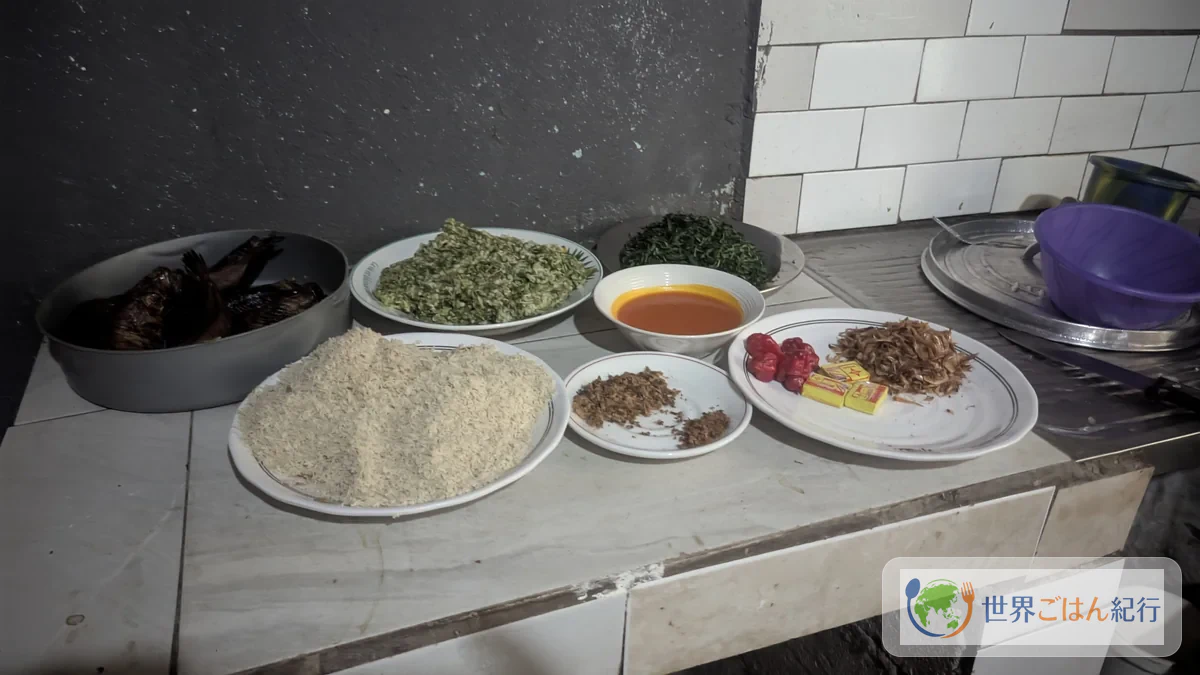
Many canned mackerel products can be eaten bones and all, but if you use dried or smoked fish, always check for small bones. When serving to children or older family members, remove the bones when you flake the fish.
Branch table for getting closer to the original at home

If you try to gather everything exactly as in the original, egusi soup suddenly becomes difficult. So we separate what you may substitute from what changes the axis of the dish if you substitute it.
| Ingredient in doubt | Closer to the original | Realistic at home | Effect of substituting |
|---|---|---|---|
| Egusi | Ground shelled melon seeds | Buy ground egusi online | Better not to substitute here |
| Red palm oil | Unrefined red palm oil | A small bottle online. If not, rice bran oil plus paprika | Color and aroma change a lot |
| Crayfish | Ground dried crayfish | Dried shrimp powder | Quite close. Mind shellfish allergies |
| Stockfish | Dried cod, smoked fish | Canned mackerel, grilled mackerel, a little dried cod | Canned mackerel is convenient but leans easily toward Japanese flavor |
| Ugu / bitter leaf | Local leafy greens | Spinach, komatsuna-type greens, water spinach | Less bitter but easier to eat |
| Fufu / eba | Yam flour, garri, cassava | White rice, potatoes, frozen udon | Less of the food-culture experience, but it works as supper |
The one thing you must not substitute is egusi itself. Made with white sesame paste or peanut flour it becomes a toasty, tasty stew, but it is a different thing from the crumbly seed texture of egusi soup. You can approximate it by grinding pumpkin seeds, but the first time you are less likely to fail by buying egusi online.
Some people dislike the aroma of red palm oil. Start with 4 tbsp the first time and cut it to 3 tbsp next time if it feels heavy. Leave it out completely, however, and the outline of the red oil that makes it feel Nigerian disappears. Even compared with dishes like poulet moambe, where the palm flavor is the star, in egusi soup the oil is the skeleton of the taste.
You do not have to hunt down local greens. Spinach alone wilts and sinks, so adding a little komatsuna-type green or water spinach keeps some texture. If you use frozen spinach, thaw it naturally and squeeze out the water well before adding at the end; that prevents wateriness. When you serve it with a staple like ugali or kisra, too, a little green left in the pot keeps you from tiring of it.
For fufu, a thicker soup suits, so the staple can scoop it. Poured over white rice, add about 100 ml stock and loosen it a little to make it easier to eat. It is a dish whose thickness can change with how you eat it.
What goes wrong: avoid scorching, powdery taste and oiliness

Egusi soup tends to go wrong when you rush over high heat. Treat it as a powder and thicken it like curry, and it scorches on the bottom, with oil on top and a powdery interior.
| Problem | Cause | How to fix it |
|---|---|---|
| Bottom scorches | Heat too high after adding the egusi, thin pot | Lower the heat and use a heavy pot. Do not scrape off the scorched part |
| Powdery | Egusi not cooked through, too little liquid | Add 50 ml stock and simmer 10 more minutes on low |
| No lumps form | Paste too loose, stirred right after dropping | Reduce the water, drop in small pieces and leave untouched for 5 minutes |
| Oily | Too much red palm oil, too few ingredients | Add greens, and next time reduce the oil by 1 tbsp |
| Fishy | Too much canned mackerel or dried fish | Add ginger, chile and greens, and halve the fish |
| Flavor is blurry | Not enough salt or acidity | Add a little salt and a few drops of lemon at the end |
When it scorches, the worst thing to do is to scrape the bottom hard. The bitterness of the scorch spreads through the whole pot. Move only the top part into another pot, add a little stock and start again. Egusi is strongly flavored, so if you act early it can be saved.
When it is powdery, spice is not what is lacking. The egusi is undercooked. Simmer another 10 minutes on low and wait until the oil returns to the surface. The Low Carb Africa recipe likewise allows time for simmering after the egusi goes in, and finishes the greens at low heat at the end. Add the greens too early and their color and texture are lost during the extra cooking.
Red palm oil is strongly scented, but heated until it smokes its flavor turns harsh and lingers in the kitchen. Warm it at medium heat or below, and add the onion and bell pepper to bring the temperature down as you use it.
Storage and serving: a rich soup that comes together the next day

Egusi soup is good the day you make it, but the aromas of meat, fish and seeds blend better the next day. As a guide, 2–3 days in the refrigerator and about 1 month in the freezer. It contains fish and greens, so do not leave it at room temperature.
To store, let it cool a little, divide it into shallow containers and refrigerate. Left in the big pot, the center is slow to cool. To reheat, add 2–4 tbsp water or stock and bring it back slowly over low heat. In a microwave, stir once partway. Even if the oil looks separated, it comes together again when warmed.
| How to eat | Staple to pair | When it suits |
|---|---|---|
| Closer to local | Fufu, eba, pounded yam | Weekends, days you want the whole food culture |
| Everyday supper | White rice, barley rice | Weekdays, using up make-ahead food |
| Lighter | Steamed potato, grilled eggplant | Days you want fewer carbohydrates |
| Using leftovers | Udon, short pasta | Quite far from the original. Loosen the consistency |
With fufu or eba, serve the soup in a deeper bowl rather than spreading it wide on a plate; it is easier to eat. If you want to try the hand-eating tradition, take a bite-size piece of the staple, make a hollow with your thumb and scoop up the soup. You need not eat with your hands; a spoon is fine. But knowing the sensation of pressing and scooping with fufu helps you understand why egusi soup has this consistency.
With white rice, reduce the salt a little and add more greens. Over rice, the aromas of red palm oil and fish come on strongly, so a little lemon on the side makes it easier to eat. Placed beside a sour West African dish such as yassa chicken (in Japanese), the richness of egusi does not get too heavy. Unlike the grilled meat of nyama choma or the sweet-spiced bobotie (in Japanese), egusi is the kind that makes satisfaction through the thickness of the pot.
If you will eat it beyond the next day, halve the canned mackerel and make the meat stock richer; the aroma is steadier. Egusi with plenty of fish tastes best on the day it is made, and in the refrigerator the fish aroma easily gets strong.
Frequently asked questions

Can pumpkin seeds substitute for egusi?
Not completely. Egusi are seeds of the gourd family, but they differ from ordinary pumpkin seeds in aroma, fat and how they hold together when ground. If you truly cannot get them, you can grind white pumpkin seeds and add a little white sesame, but then think of it as an "egusi-style seed soup."
Can I make it without red palm oil?
You can, but the impression of the dish changes. Rice bran or neutral oil with paprika powder approaches the color, but not the earthy aroma and richness unique to red palm oil. You do not need to buy a large bottle the first time, so a small bottle is a good way to try.
Isn't it inauthentic if it isn't spicy?
Heat varies from home to home. Some households add a lot of chile, but the axis of egusi soup is the savoriness of seeds, oil and seafood more than heat. If you do not like spicy food, bring out the color with red bell pepper and use only a very little chile.
Is spinach alone fine for the greens?
Yes. But spinach alone wilts and sinks, so mixing in a little komatsuna-type green, water spinach or molokhia gives texture. Frozen spinach is watery, so squeeze it well after thawing and add at the end.
What can I eat it with if I don't have fufu?
White rice is the easiest. To come closer to the local way, use a fufu mix of cassava or yam flour. Boiled and lightly mashed potatoes, barley rice or short pieces of udon can also catch the rich soup.
Can I make it without meat?
You can, but the stock gets weaker. Dried shiitake, a little kombu, dried shrimp and canned mackerel make up for it. For a fully vegan version, avoid the seafood and bouillon and increase dried shiitake, onion, tomato and greens. It will be a lighter dish, different from local egusi soup.
Branching out to other West African pots
Egusi soup can look like a bit of a hurdle in a home kitchen: egusi, red palm oil, dried fish, fufu, a lineup of unfamiliar ingredients. But what you do at the pot is not hard. Make a meat stock, drop the seed paste in small pieces, let it swell over low heat and bring back the aroma with greens. Think of it not as a dish that dissolves a powder but one that slowly cooks seeds into the main ingredient, and the meaning of each step becomes clear.
What to protect the first time are the egusi itself and the red palm oil, unscorched. Rather than gathering all the dried fish and stockfish, a little sea aroma from dried shrimp powder and canned mackerel and greens at the end is more likely to succeed in a home pot. You can eat it with white rice if you have no fufu, but once you pair it with a cassava-flour staple you understand why this soup is made thick and heavy rather than runny.
To widen the Nigerian table, put jollof rice on the same table and you get the contrast of red rice and rich soup. On a day you want okra's slipperiness to coat the staple instead of seed thickness, Nigerian draw soup is a close entry. To lean toward Ghana, fufu; to add West African acidity, yassa chicken (in Japanese) is a good partner. Once you have swelled the white egusi seeds in a pot, the way you see West African cooking changes a good deal.
On a day rice is the star, compare with koshari and the difference shows. For greens, isombe is close. For a spicy meat stew, zigni (in Japanese) is another candidate. To lean toward a fish dish, masgouf (in Japanese) makes a contrast.
To continue with rich soups, ndole (in Japanese) and poulet moambe; for beans and rice, waakye (in Japanese); to try a fermented-batter staple, injera and doro wot are next candidates. Going back to the Ethiopian cuisine overview or African cuisine overview makes it easier to follow the differences in aroma from region to region. For North African pots, tagine and chakchouka (in Japanese); for East African spicy stews, zigni (in Japanese) and tibs are enjoyable in a close context. If cassava-based staples interest you, move on to attieke; for an island's leafy-green stew, romazava, and you will see a direction different from the "richness" of egusi.
Sources
For the skeleton of the recipe we prioritized sites specializing in Nigerian cooking, and supplemented the ingredient background with West African ingredient and Nigerian pantry explanations. The text is not a translation; the amounts and substitutes have been reorganized so it can be recreated with ordinary supermarkets and online shops.
- Demand Africa, "How to Make Nigerian Egusi Soup Recipe" (accessed 2026; definition of egusi, how it is eaten with pounded yam, how to drop the paste and simmer)
- Low Carb Africa, "Egusi Soup" (accessed 2026; a practical recipe using spinach, red palm oil, smoked fish and crayfish)
- Chef Lola's Kitchen, "Best Egusi Soup" (accessed 2026; the basic composition of egusi, pepper, greens, meat and fish)
- Chef Lola's Kitchen, "Egusi Stew - How to make lumpy Egusi Stew/Soup" (accessed 2026; heat for lumpy egusi, and the caution that it scorches easily over high heat)
- Serious Eats, "Everything You Need to Know About Stocking a Nigerian Pantry" (accessed 2026; Nigerian staples such as red palm oil, crayfish, stockfish and smoked fish)



