In the night kitchen, the smell of ginger and sweet caramelization rises
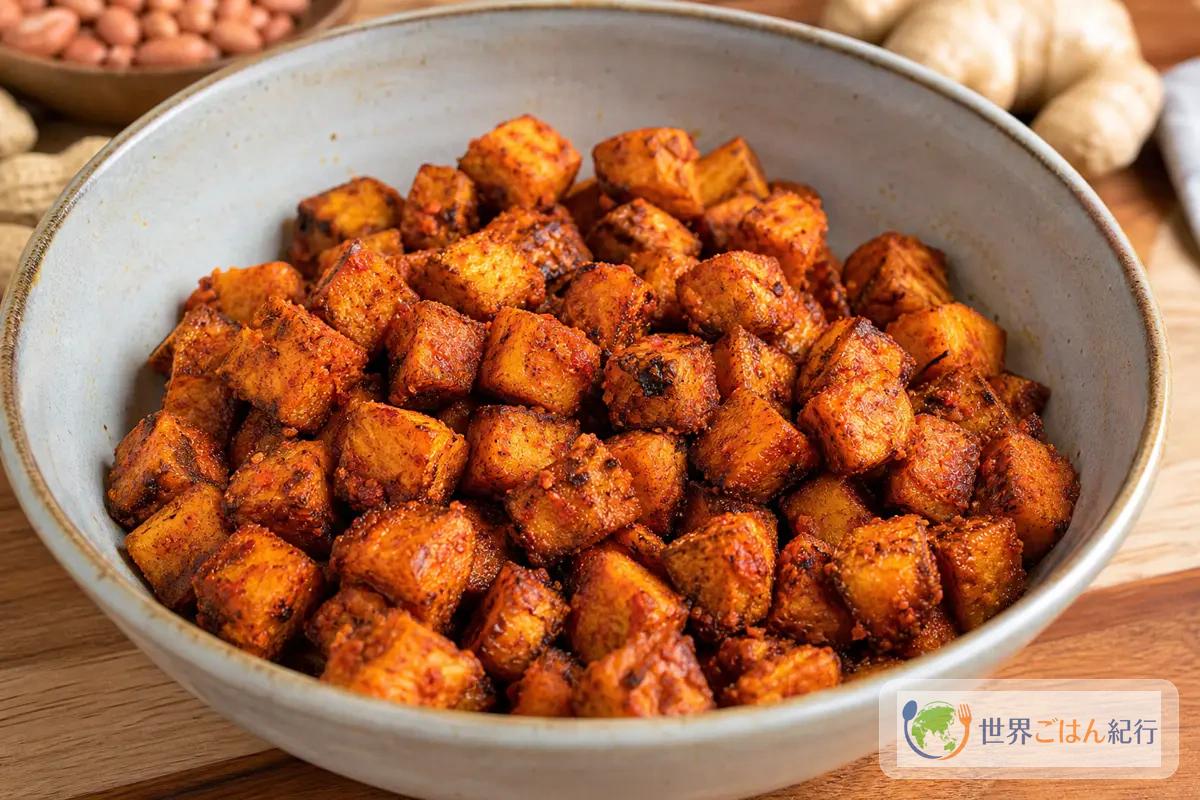
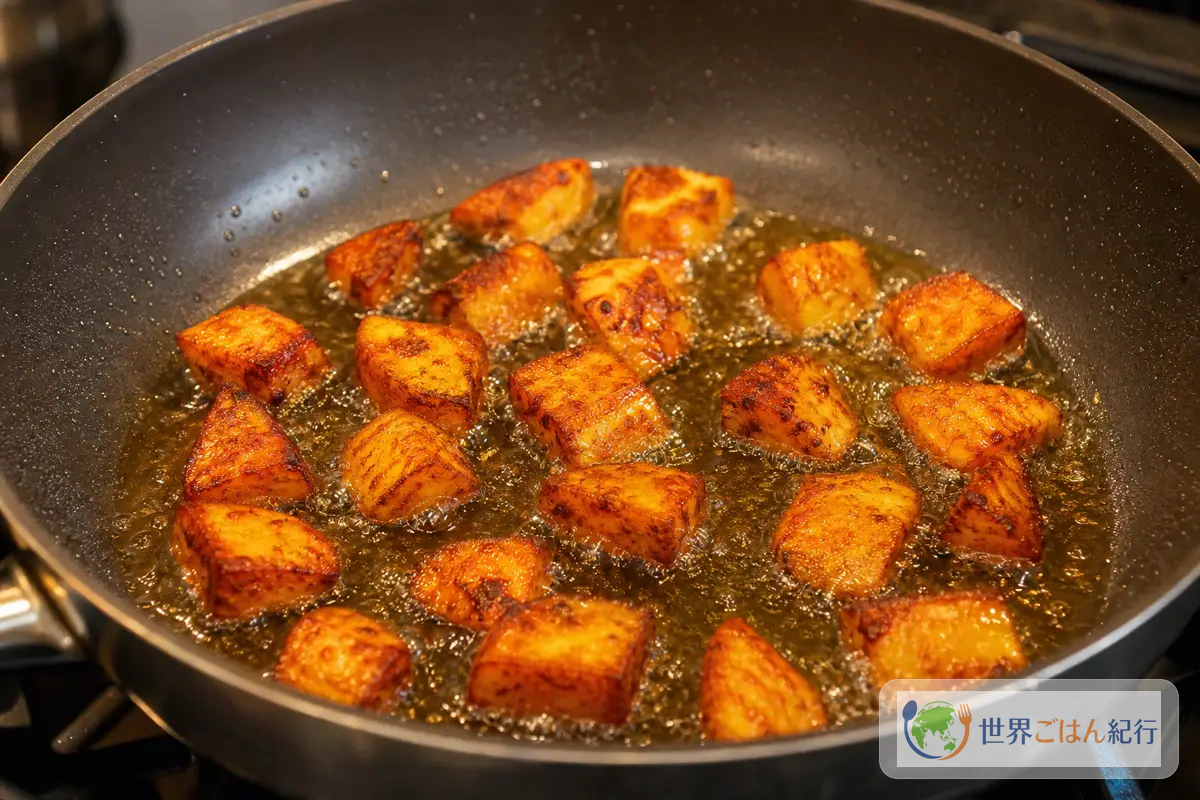
The moment plantain goes into the oil, fine bubbles rise from its surface. The aroma of ginger, chile, garlic and cloves clinging to the yellow flesh opens all at once in the heat. It is fried food, but not simply heavy. From behind the sweetness comes a heat that warms the sides of your tongue.
Kelewele is a staple Ghanaian snack: ripe plantain cut into cubes, seasoned with ginger, chile, onion, garlic, cloves and nutmeg, and fried. It is the kind of dish handed over in a paper wrap at a night stall in Accra or Kumasi, near a lorry station, or at the roadside on the way home from work.
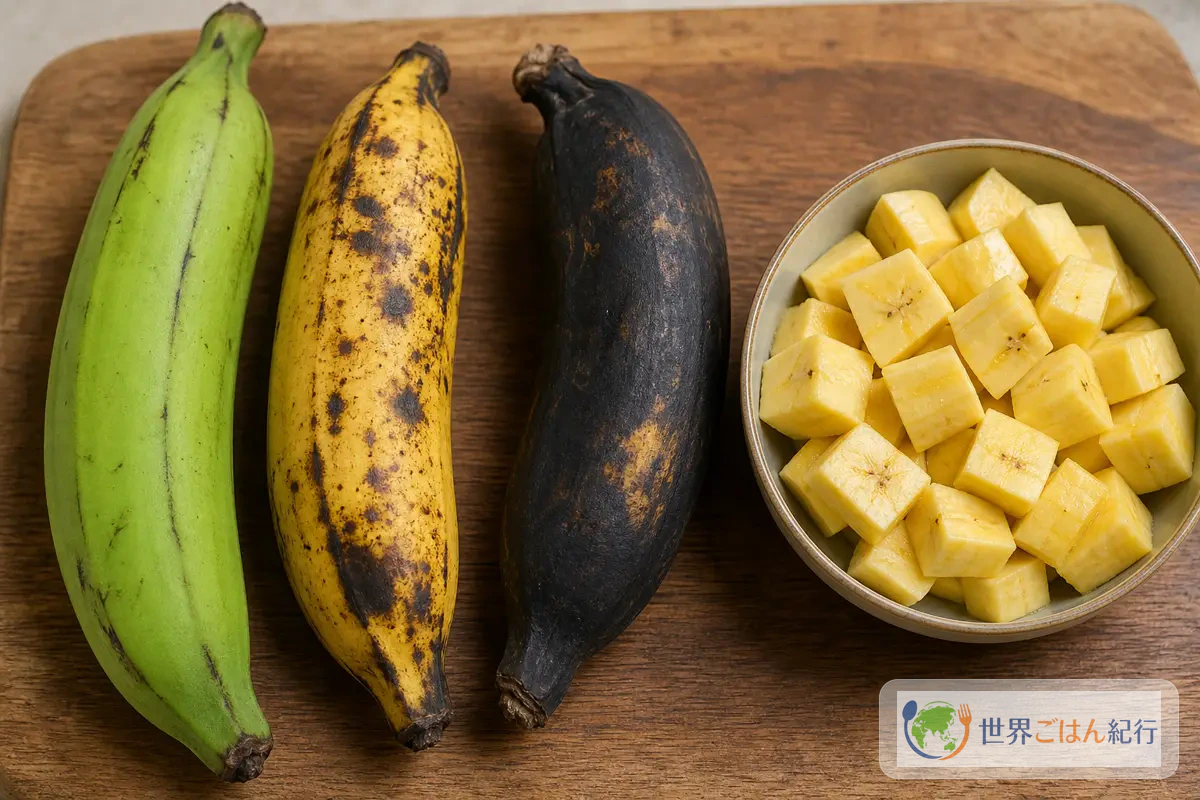
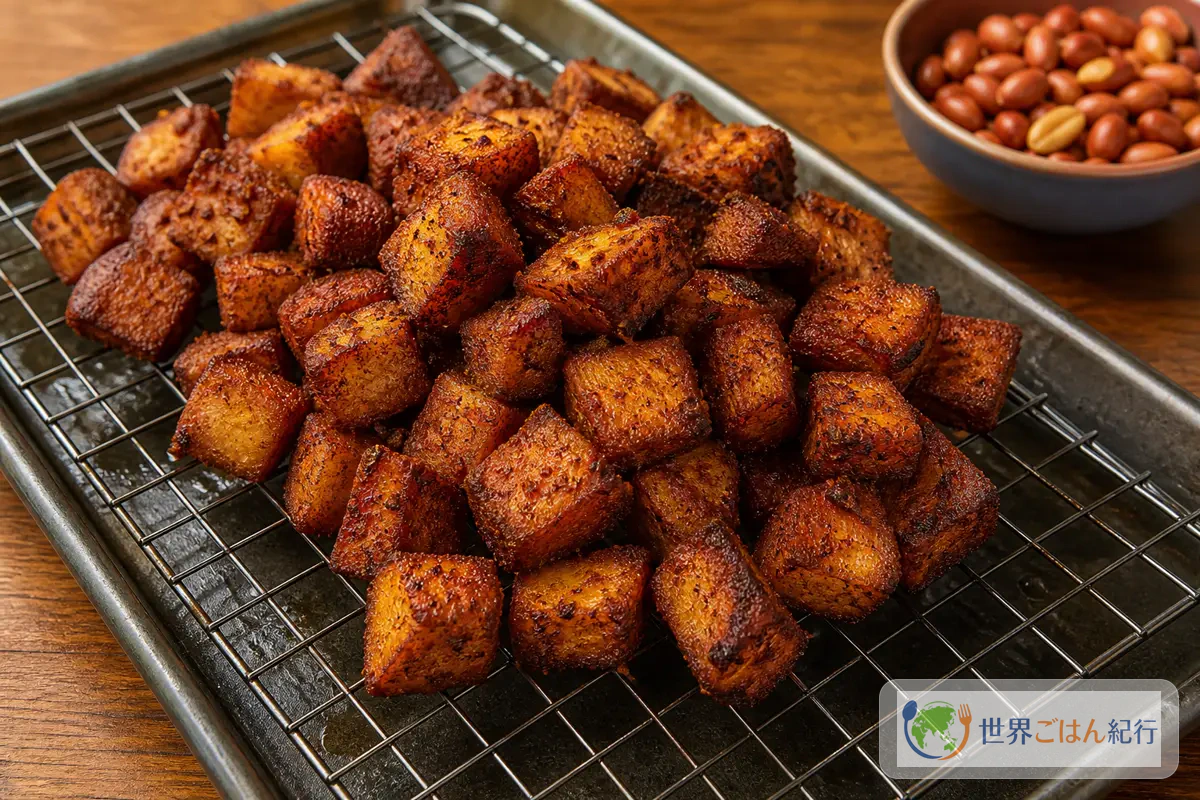
The first thing you stumble over when making it elsewhere is the plantain. You can make it with ordinary dessert bananas, but it will not be the same dish. Plantain is starchier than banana and keeps its shape better when fried, even when ripe. The character of kelewele is that toasty corners on the outside, a sticky sweetness inside and the heat of ginger all arrive at once.
This article centers on the basic form that uses plantain. It goes in order through the places where a home kitchen tends to hesitate: banana as a substitute on days when you simply cannot find it, oil temperature, how coarse the spices should be, making ahead, and menus with waakye and red red.
Kelewele is written in English as Kelewele. Ghana Business News presents the name as related to Ga words for "chop small" and "fry." The details of the etymology vary by region and by who is explaining, but remembering that it is a dish cut into cubes and fried connects the shape to the name.
Background: sweet and spicy plantain eaten at Ghana's night markets
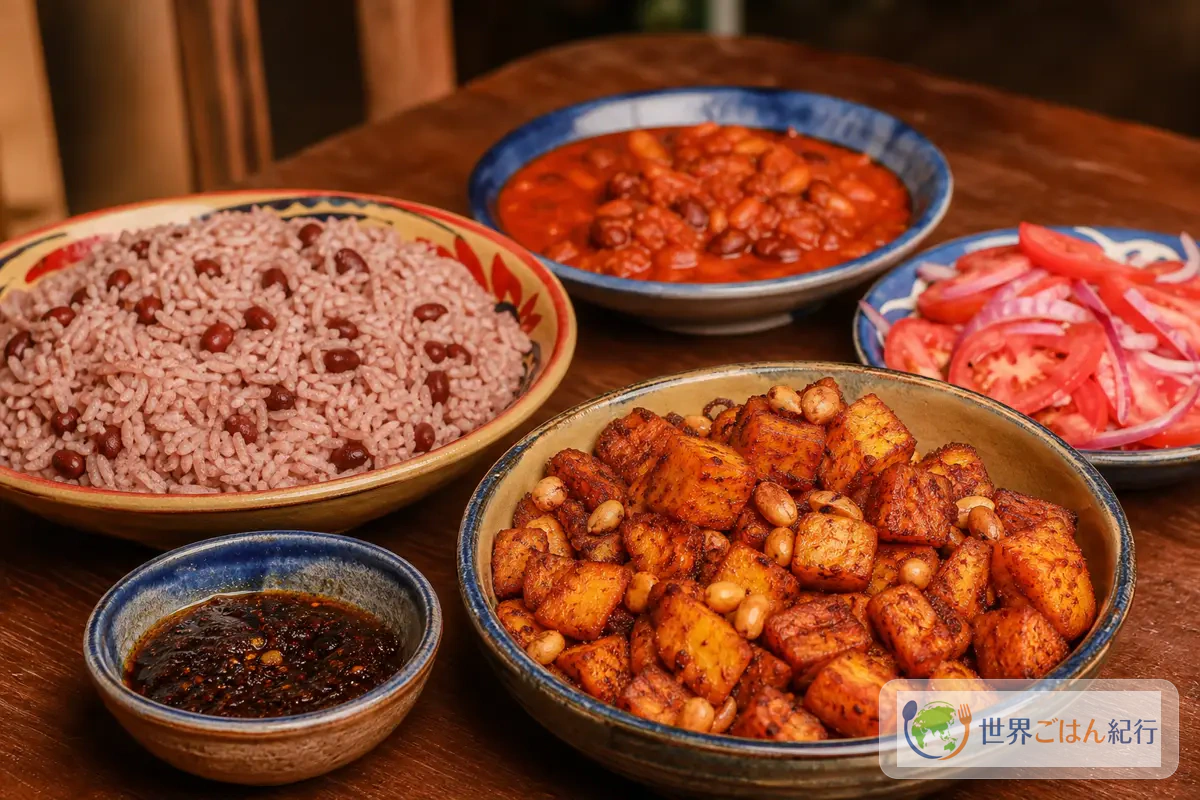
Kelewele is less a dish plated neatly and eaten with a knife and fork than something you pick at while walking. It often appears at night: you take it freshly fried in a paper wrap and eat it with a few roasted peanuts. The oil, the sweetness, the heat and the toasty flavor of the peanuts come together in the mouth.
A 2026 Ghana Business News article also presents kelewele as a night-time food whose aroma draws people in on the streets of Accra, Kumasi and Cape Coast. Within Ghanaian cooking, it is less a big celebration platter than a dish that warmly fills everyday hunger.
This is where it differs from other Ghanaian dishes such as fufu and waakye. Fufu is a staple that takes up soup, and waakye is a one-plate meal built around rice and beans with accompaniments. Kelewele can be a staple or a side, but its strongest face is "a snack to pick at freshly fried."
| What to look at | Kelewele in Ghana | Decision when making it elsewhere |
|---|---|---|
| Main ingredient | Ripe plantain | Look in import grocers, produce shops or online |
| Backbone of aroma | Ginger, chile, garlic, onion | Use plenty of ginger. Tubed alone is weak |
| Warm aromas | Cloves, nutmeg, calabash nutmeg, grains of Selim | Cloves and nutmeg are enough the first time |
| How it is eaten | Peanuts, shito, a street paper wrap | Adding roasted peanuts alone gets you close |
| Texture | Slightly crisp outside, sweet and soft inside | Decided by oil temperature and ripeness |
Looking at English-language Ghanaian recipes, there is a range in how the aroma is built. PBS Food uses red onion, ginger, garlic, cayenne and lemon juice, and Akwaaba Spice goes as far as cloves, calabash nutmeg and grains of Selim. What they share is ripe plantain, ginger, chile and seasoning just before frying.
So in a home kitchen, rather than gathering every unusual spice, first protect "ripe plantain" and "fresh ginger." Cloves and nutmeg only need to be a small amount; too much moves toward the smell of sweets or medicine. Kelewele is not a dish that hides things under spices; it is a dish that wakes up sweet plantain with ginger.
Ingredients (serves 4)
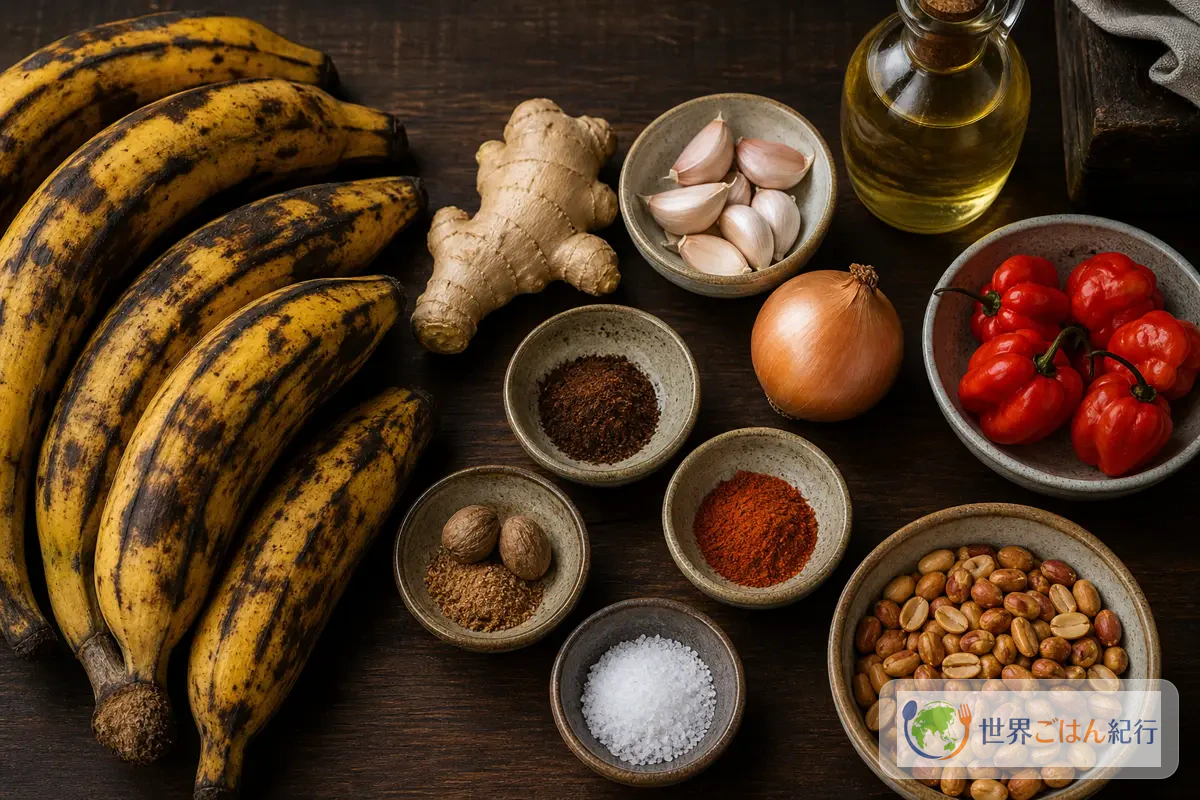
This is a snack quantity for four people to pick at. If you serve it as a side with waakye or red red, this amount is enough. If kelewele is the star on its own, add one more plantain.
This dish may be served with peanuts. If someone has a peanut allergy, do not add them, and watch for cross-contact with sesame or fried onions. Some commercial shito contains seafood, shrimp, nuts or soy.
Ingredients and tools for this dish
Plantain is an ingredient that often cannot be found at the neighborhood supermarket. Looking first at Asian or African grocers, South American grocers or online makes shopping quicker.
If you want a more Ghanaian aroma, add a little calabash nutmeg or grains of Selim. Cloves and nutmeg are enough for a first try, but they are worth finding once you like the dish.
Fried food changes with oil temperature. A thermometer makes it easier to avoid the failure of sweet plantain soaking up oil and turning heavy.
Unsalted peanuts also work with waakye and red red, so one bag is handy. For kelewele alone, a small amount is enough.
Method
The steps of kelewele are short. But miss any of the three, ripeness, the moisture of the paste and oil temperature, and it quickly becomes "just sweet fried banana" or "soggy fried food." Start by frying a small amount at a time and do not crowd the oil.
Kelewele is sweet and burns easily. Fry just one piece first: if it turns black in 2 minutes the oil is too hot. If after 5 minutes the color is pale and it is oily, the oil is too cool. Adjust with one piece before adding everything.
Plantain and banana: how far can you substitute?
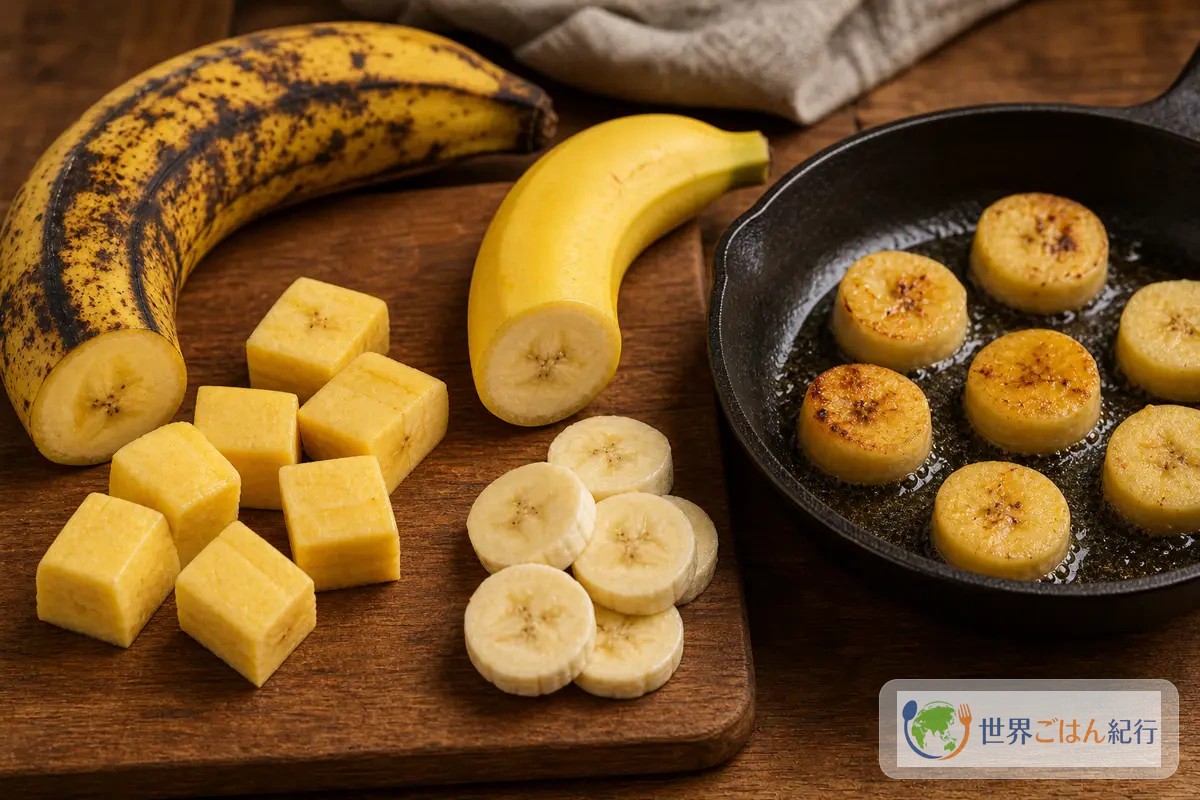
The most realistic problem when making kelewele outside West Africa is that plantain is not sold. You may find it at an import grocer, but at an ordinary supermarket it is still in the minority.
To get straight to the point, it is worth looking for plantain even on a first try. Ordinary banana holds a lot of water and sugar and softens quickly when heated. The charms of kelewele, "scorched corners" and "chewy sweetness inside," are harder to get, and it tends to fall apart in the oil.
| Substitute candidate | Suitability | Adjustment if you use it |
|---|---|---|
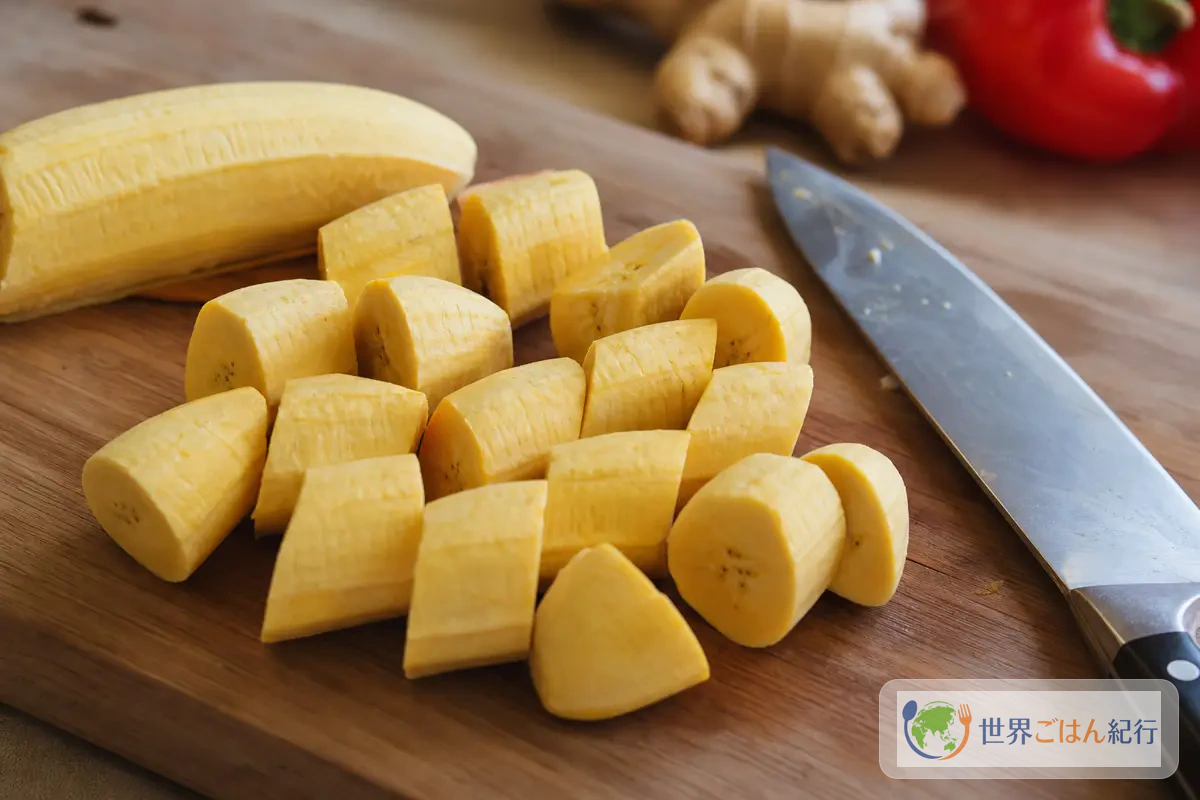
| Plantain | Best | Yellow with black spots. Fry in 2–3 cm cubes |
| Saba banana, cooking banana | Quite close | Avoid overripe ones and cut thicker |
| Firm ordinary banana | Fine as a different dish | Cut into thick rounds and use a coating or a little potato starch to prevent breaking |
| Fully ripe banana | Not recommended | Sweet and falls apart. Use it for a baked dessert rather than frying |
| Sweet potato | A different dish, not a substitute | Delicious as sweet-and-spicy fried food, but it is not kelewele |
If you try ordinary banana anyway, it is safer to think of it as "Ghanaian-style spiced pan-fried banana" than to call it kelewele. Slice a firm banana thick, coat it thinly with the paste and shallow-fry. Deep frying tends to make it fall apart, so put a little extra oil in a frying pan and color it quickly.
The thing closest to what you must not substitute is ginger. Even if the plantain is a little different, fresh ginger heat moves it in the direction of kelewele. Conversely, cutting the ginger and adding sugar makes it just sweet fried banana.
Why it goes wrong: soggy, scorched, or only heat stands out
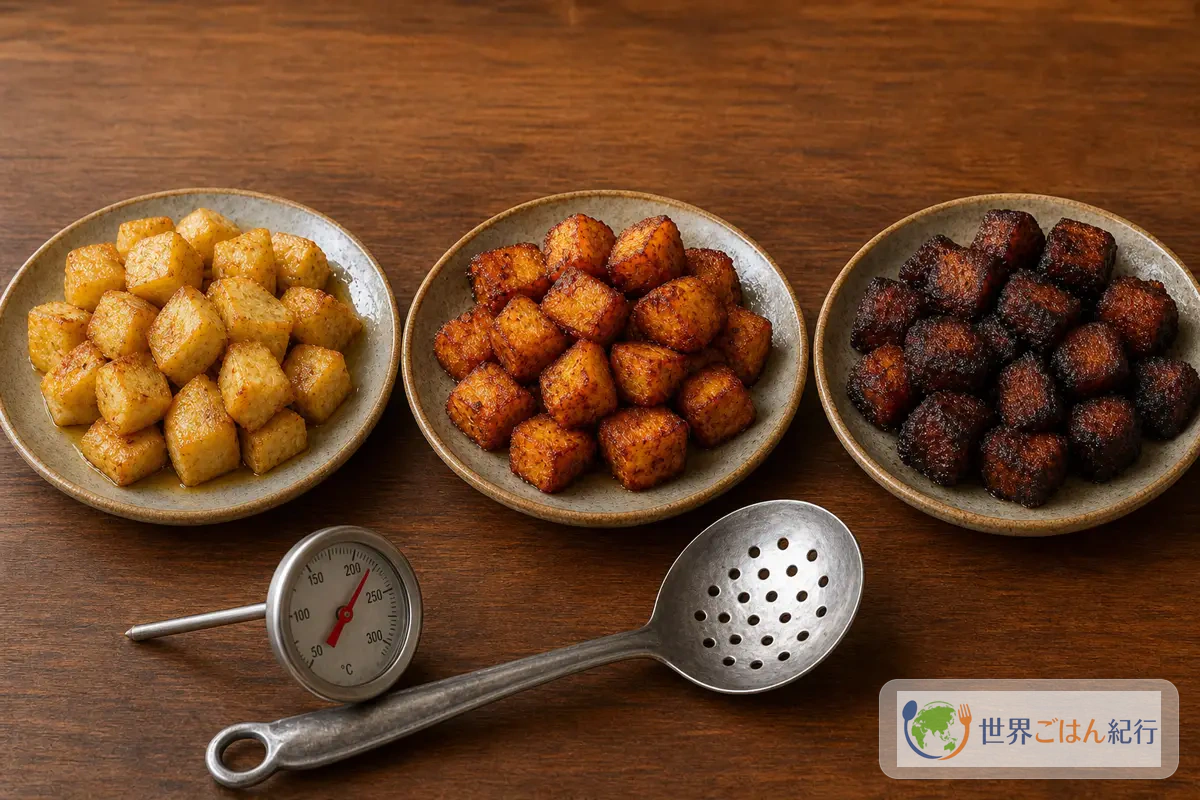
Soggy and oily
The oil is too cool or too much went in at once. Plantain is sweet and holds water, so if it stays long in cool oil the surface does not set and it ends up heavy with oil. Keep to half the bottom of the pot and wait each time for the oil temperature to recover.
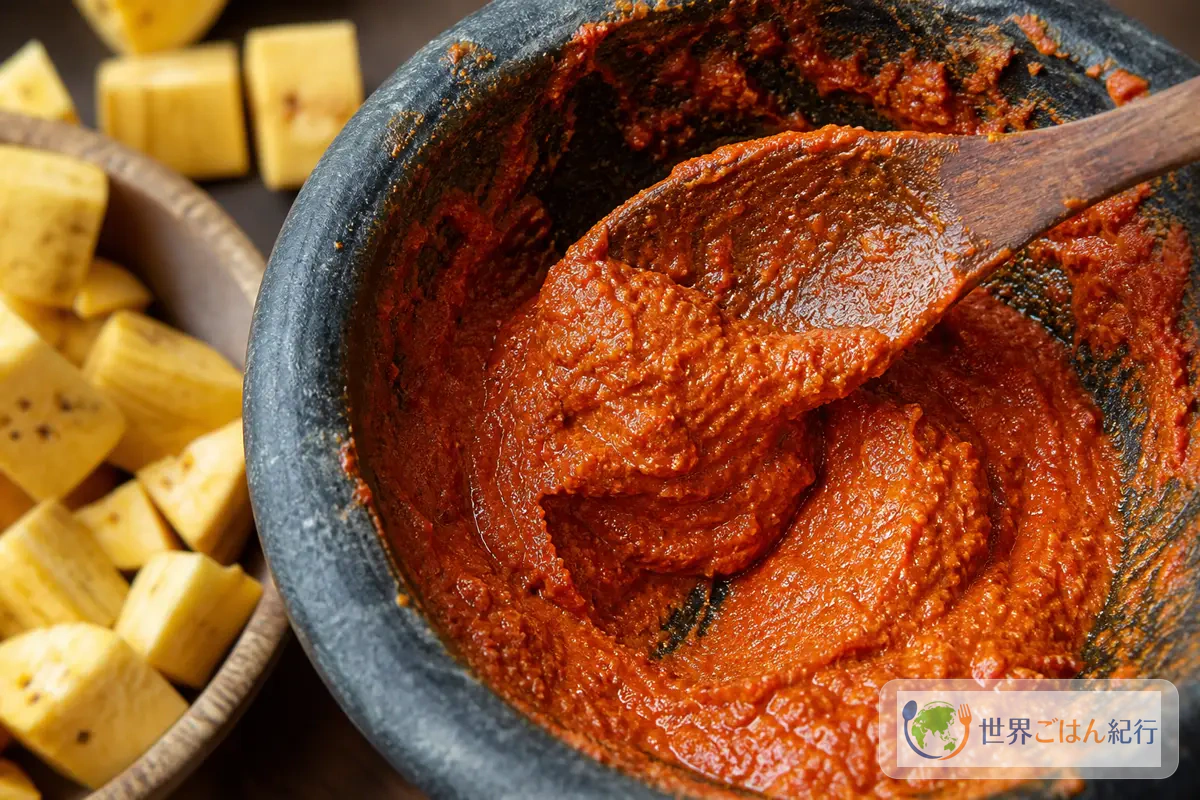
A watery paste also makes it sticky. Too much onion or 2 tbsp or more of water lets the aroma run out into the oil. Thinking of the paste as "a flavoring that sticks" rather than "a sauce to toss with" makes it easier to adjust.
Only the outside burns black
The oil is too hot or the plantain is overripe. Plantain colors easily because of its sugar, so above 180°C it turns black all at once. When using sweet plantain with many black spots, start nearer 170°C.
Too much clove or chile powder also makes the surface look scorched. 1/8 tsp of cloves is enough. If you want a stronger aroma, using freshly ground spices gives a cleaner result than increasing the amount.
Only the heat stands out
The balance of ginger and chile has broken. The heat of kelewele comes not only from chile but from the warmth of ginger. Before adding chile, use ginger properly. If someone in the family dislikes heat, keep the chile in the paste modest and serve shito on a separate plate.
The center is hard
The plantain is too young or the cut is too large. Green plantain suits other fried dishes such as tostones, but is not sweet enough for kelewele. Wait until it turns yellow with black spots and cut into 2–3 cm cubes.
Serving, menus and storage
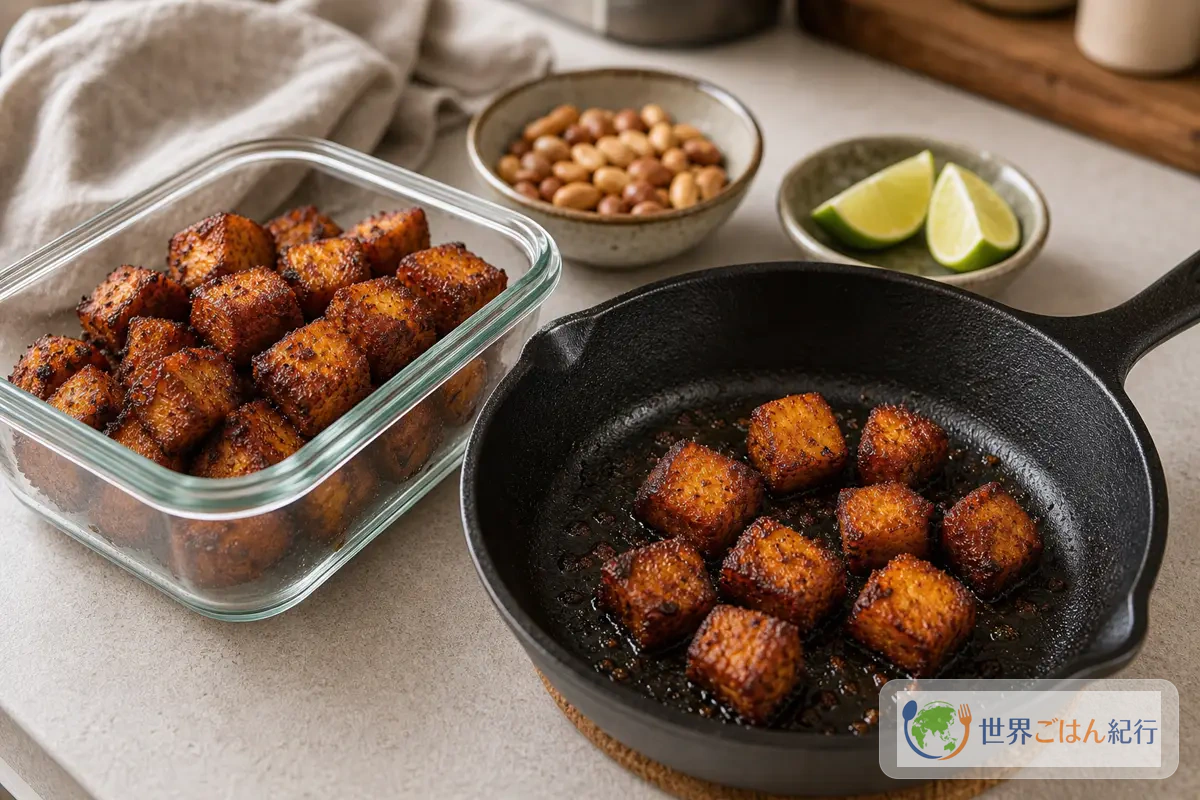
Kelewele is best freshly fried. Eaten hot with a few peanuts, it is plenty enjoyable. The sweet plantain, the heat of ginger and the toastiness of peanuts layer on each other. For drinks, beer or sparkling water goes well.
If you build it into a meal, linking it to other Ghanaian dishes feels natural. Served with waakye, a rice-and-bean dish, a sweet-and-spicy fried item enters the plain character of rice and beans. Set beside red red, the tomato stew of beans and the sweetness of plantain go together well. At home, putting it beside a rice or bean plate is easier to eat than with a soup-based staple like fufu.
On the day you serve a Ghanaian menu, it comes together better if you do not put heat into every plate. If you serve shito with waakye, keep the chile in the kelewele modest. On a day when red red is heavy with red palm oil, make kelewele a small plate and set tomato-onion or cucumber beside it. Because it is a dish that adds sweet starch, deciding the amount by looking at the oil and heat of the whole plate keeps you from tiring before the end.
| Occasion | Combination | Aim |
|---|---|---|
| Late-night snack | Kelewele, peanuts, shito | A light street-stall style nibble |
| Ghanaian menu | Waakye, kelewele, tomato-onion | Adds sweet-and-spicy fried flavor to rice and beans |
| A bean-dish day | Red red, kelewele, greens | Enjoy the match of plantain with plantain |
| A West African table | Jollof rice, kelewele, salad | A sweet-and-spicy side beside tomato rice |
| Milder heat | Kelewele, yogurt sauce, salad | Softens the heat for the family |
Think of storage as how much of the lightness of freshly fried you are willing to give up. Refrigerated, cool slightly and seal, up to the next day. It can be frozen, but it softens a little after thawing. Reheating in a microwave alone makes it sticky, so warm the surface in a toaster oven or frying pan.
Leftover kelewele can also go with eggs the next morning. Fried egg, tomato, onion and a little shito make a sweet-and-spicy breakfast. It is not, however, a dish that improves with long storage. If possible, fry only what you will eat and keep the remaining cut plantain and paste separate; that is more reliable.
FAQ
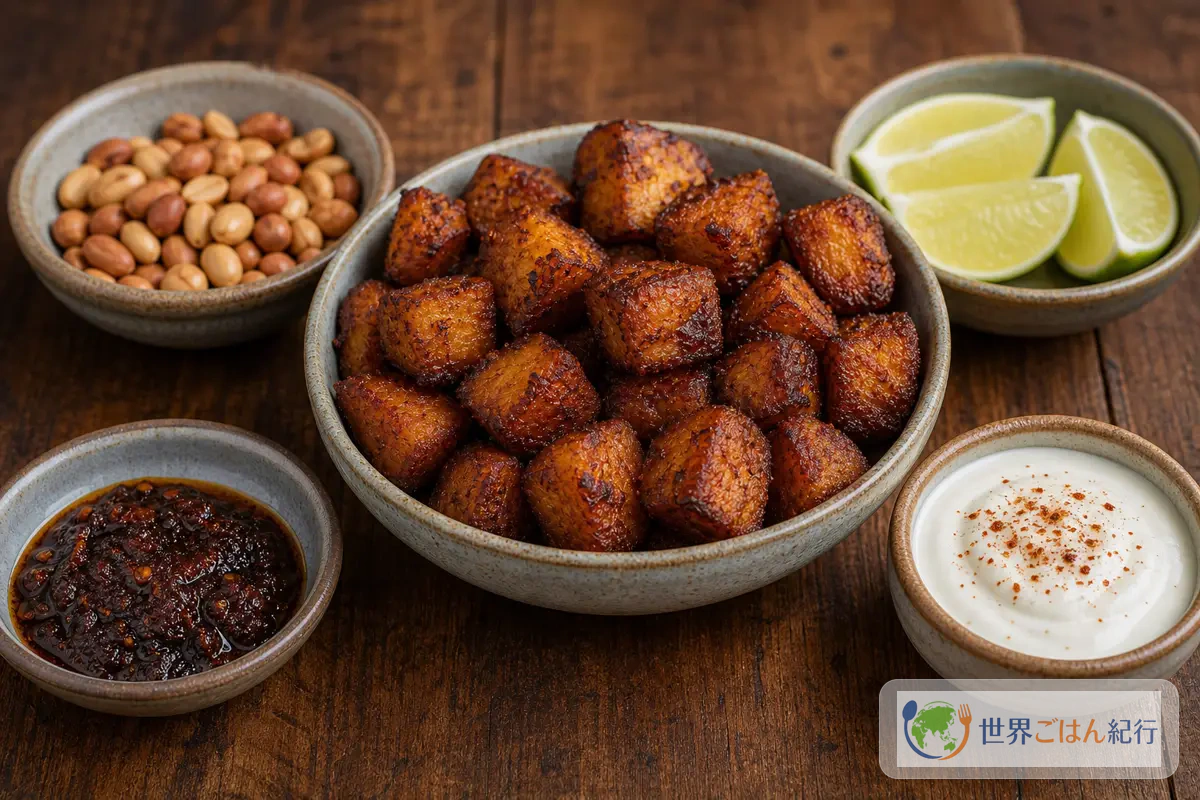
Can I make kelewele with ordinary bananas?
You can, but the texture will not be the same. Ordinary banana is soft and falls apart easily, so choose firm ones, cut thick rounds and shallow-fry. If possible, look for plantain or cooking bananas; the toasty outside and the sweet inside come through better.
Where can I buy plantain?
You may find it at Asian grocers, African grocers, South American grocers, supermarkets that carry imported produce, or online. In stores the labeling may vary among "plantain," "cooking banana" and "plantin." Choose ones that are ripe and yellow, and let green ones ripen for a few days.
Which oil suits it?
A not-too-aromatic oil such as rice bran, canola or neutral oil is easy to use. Palm oil moves toward the color and aroma of West Africa, but for a first try an easy-to-handle oil is fine. Olive oil's aroma tends to come forward and does not suit kelewele well.
Can I make it not spicy?
You can reduce the chile. But if you leave it out entirely it moves toward sweet fried plantain. For the family, reduce the chile in the paste to 1/4 tsp and put shito or chile flakes on a separate plate. Do not cut the ginger too much, to keep the character of kelewele.
Can I make it in an air fryer or oven?
You can, but the result differs from fried kelewele. In an air fryer, toss the plantain with 1–2 tbsp oil, cook at 190°C for 12–15 minutes and turn partway. The surface is lighter, but the toasty flavor of street-stall oil is weaker. In an oven, 200°C for 18–22 minutes is the guide.
Can I make it ahead?
Freshly fried is best. Refrigerate up to the next day, and freeze for about 2 weeks. Reheat in a toaster oven or frying pan so the moisture on the surface dries off. A microwave alone makes it soft.
Summary
Looking only at the ingredients, kelewele is very simple. Cut ripe plantain, coat it with ginger and chile and fry it in oil. Yet within that short process is packed the feeling of a Ghanaian night stall.
Making it elsewhere, what to protect first is the ripeness of the plantain and fresh ginger. Unusual spices can come later. Choose plantain that is yellow with black spots, make a paste that is not watery and fry without crowding the oil. With those three you get quite close to the taste.
To widen the table into Ghanaian cooking next, moving on to waakye and red red is fun. Beans, rice, spicy sauce, sweet plantain. Ghanaian food builds satisfaction not only from showy spices but from the combination of staples, beans and oil. Kelewele is a very good dish to enter through.
Sources
- PBS Food, "Kelewele Plantain", https://www.pbs.org/food/recipes/kelewele-plantain
- Akwaaba Spice, "Kelewele (Spice Fried Plantain)", https://akwaabaspice.com/recipes/kelewele/
- Ghana Business News, "Kelewele, a spicy heartbeat Ghanaian street cuisine", https://www.ghanabusinessnews.com/2026/04/26/kelewele-a-spicy-heartbeat-ghanaian-street-cuisine/
- Ghanaian Recipes, "How to Prepare and Make Kelewele", https://www.ghanaianrecipes.com/kelewele/
- TasteToronto, "Ghanaian Kelewele (Spiced Fried Plantain)", https://www.tastetoronto.com/recipes/ghanaian-kelewele-spiced-fried-plantain