Kategna: Warm Injera, a Light Crisp, and Red Spiced Butter
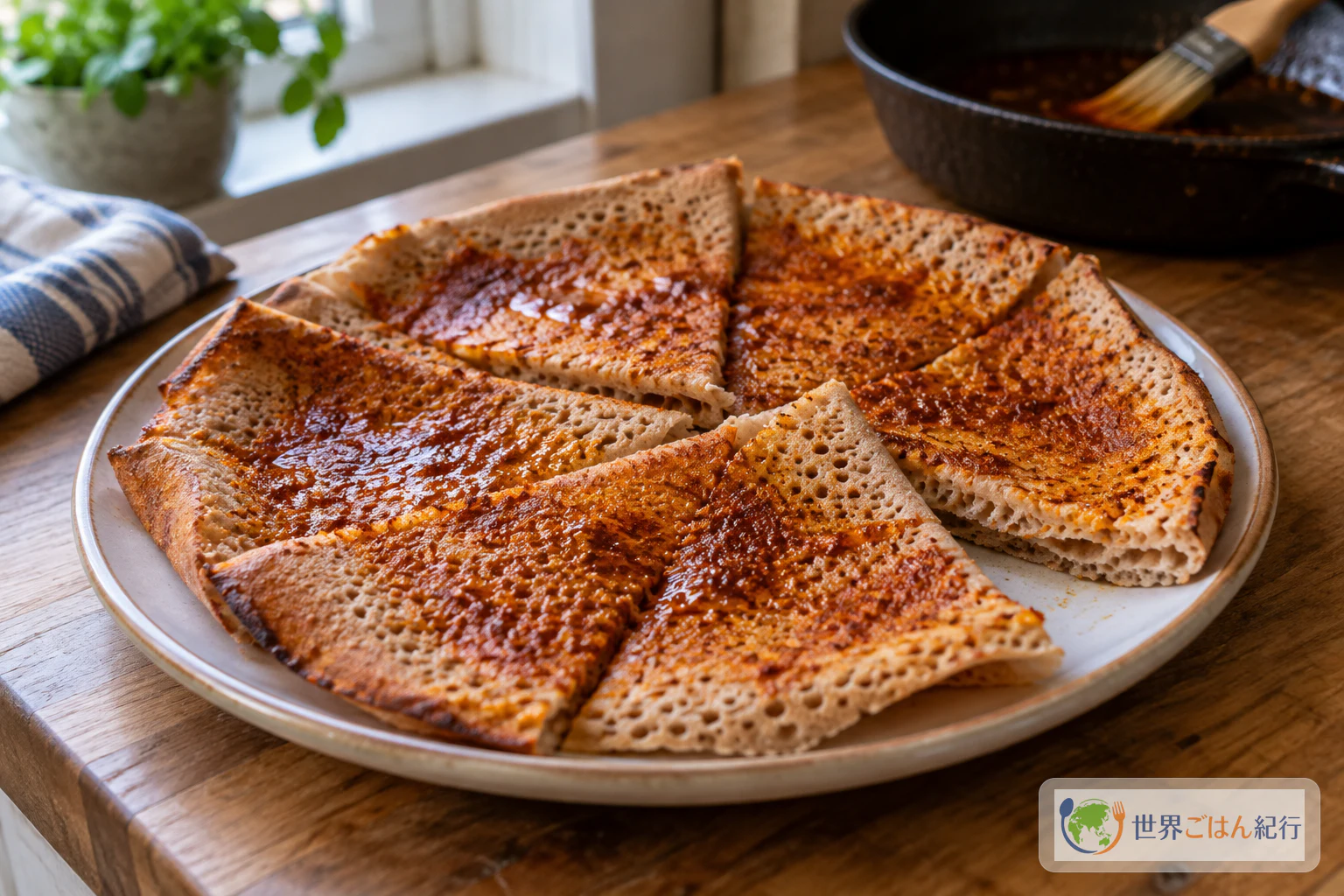
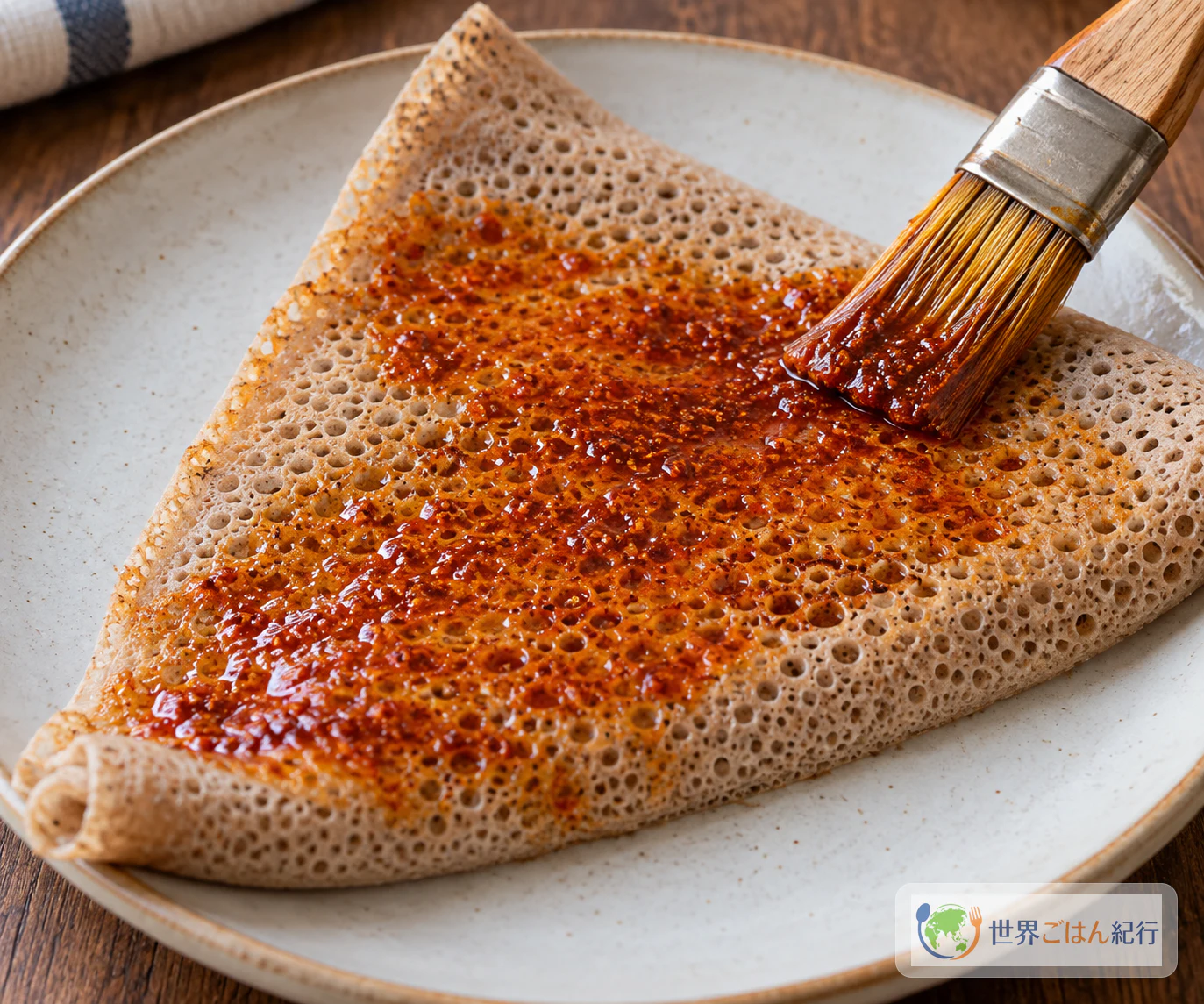
Warm the injera in a dry pan until it is lightly crisp without burning. Then brush on niter kibbeh with berbere mixed in while the bread is still warm.
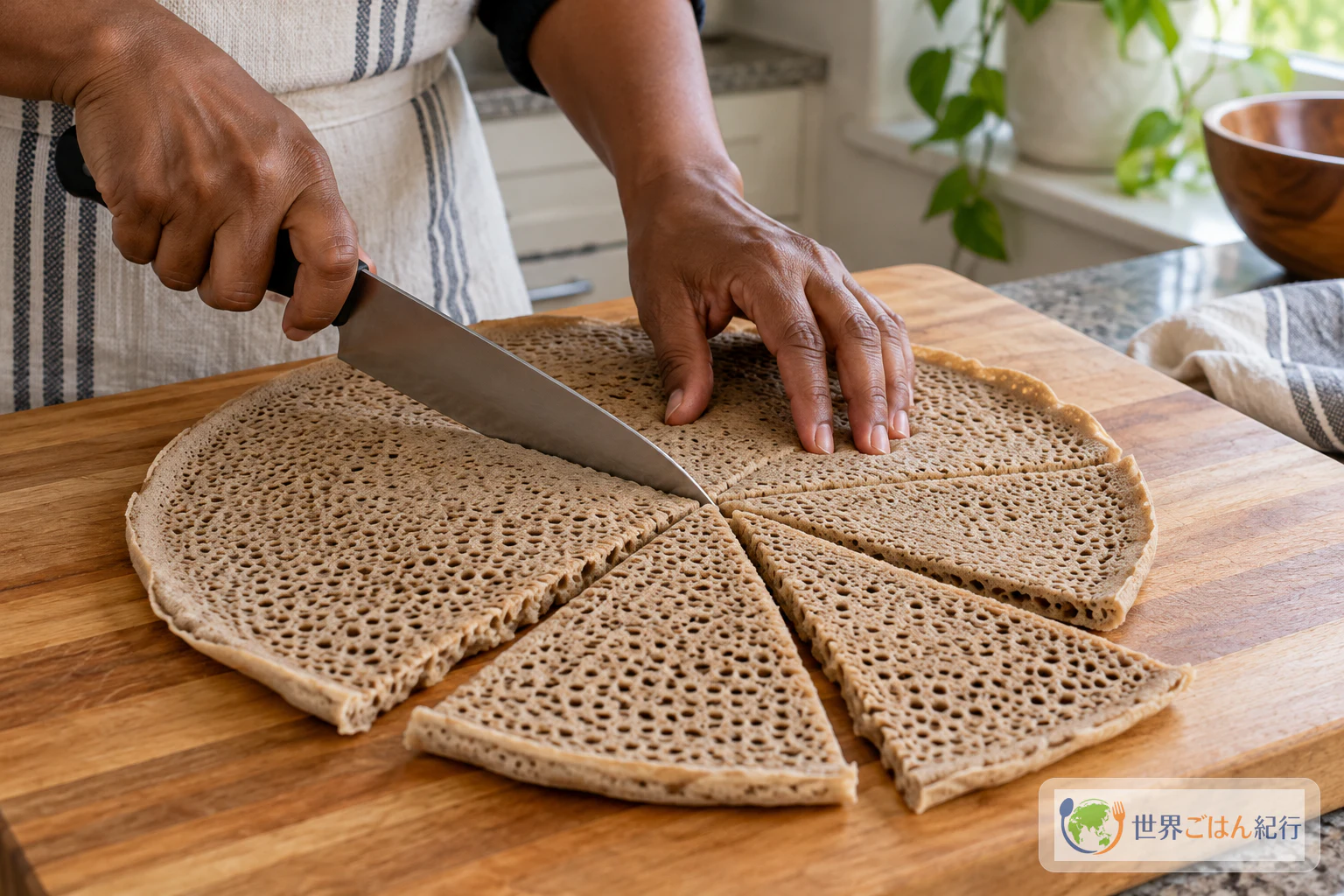
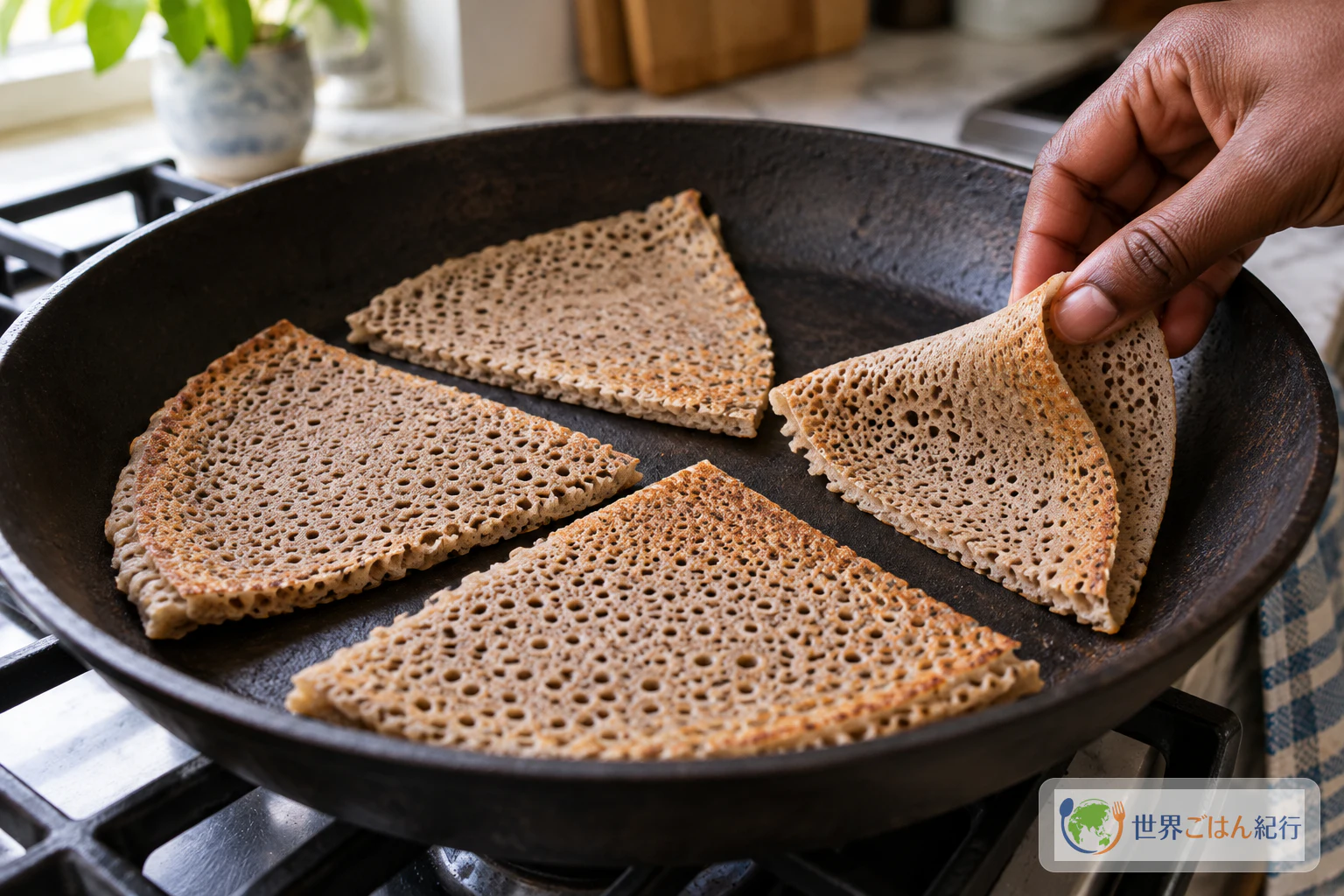
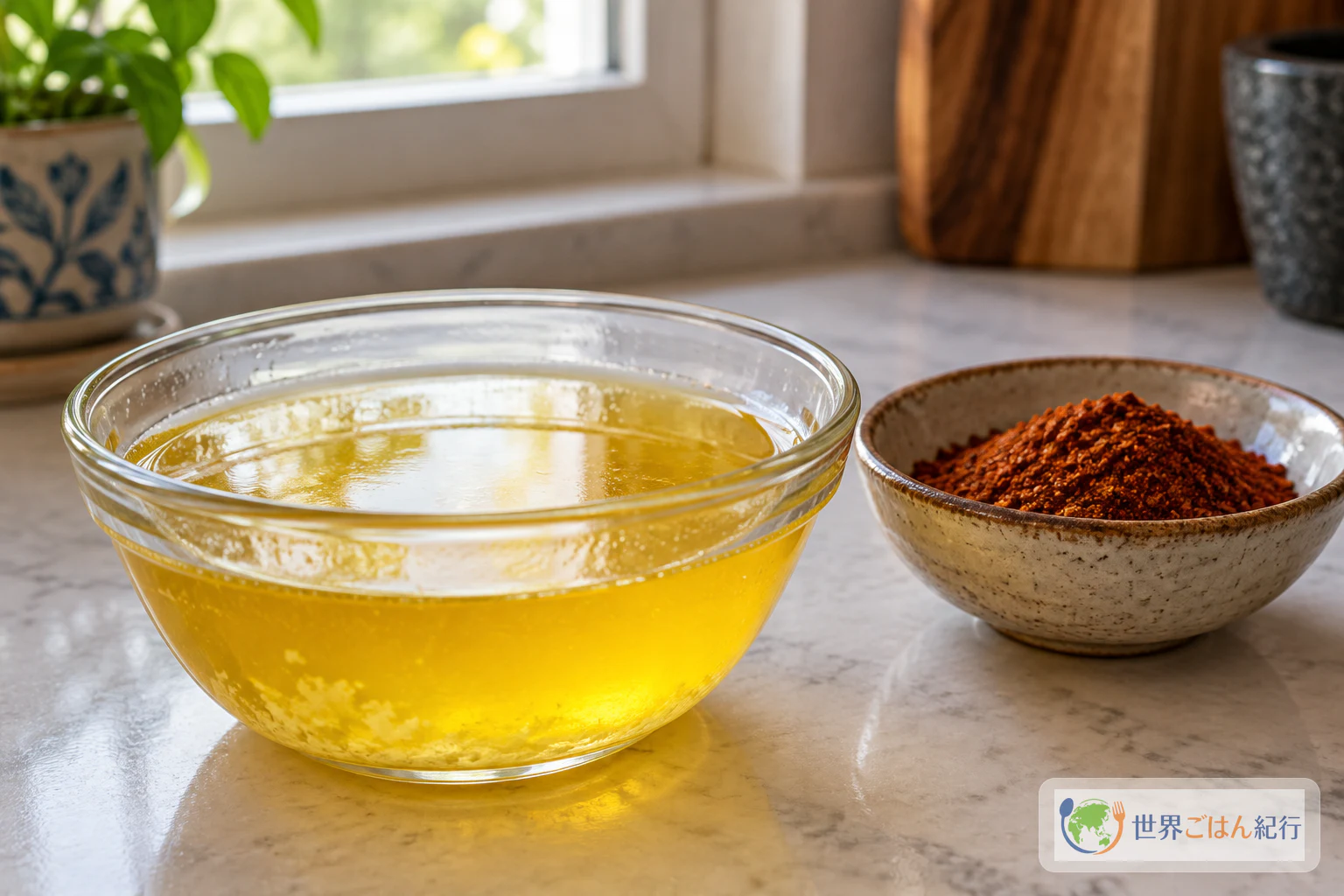
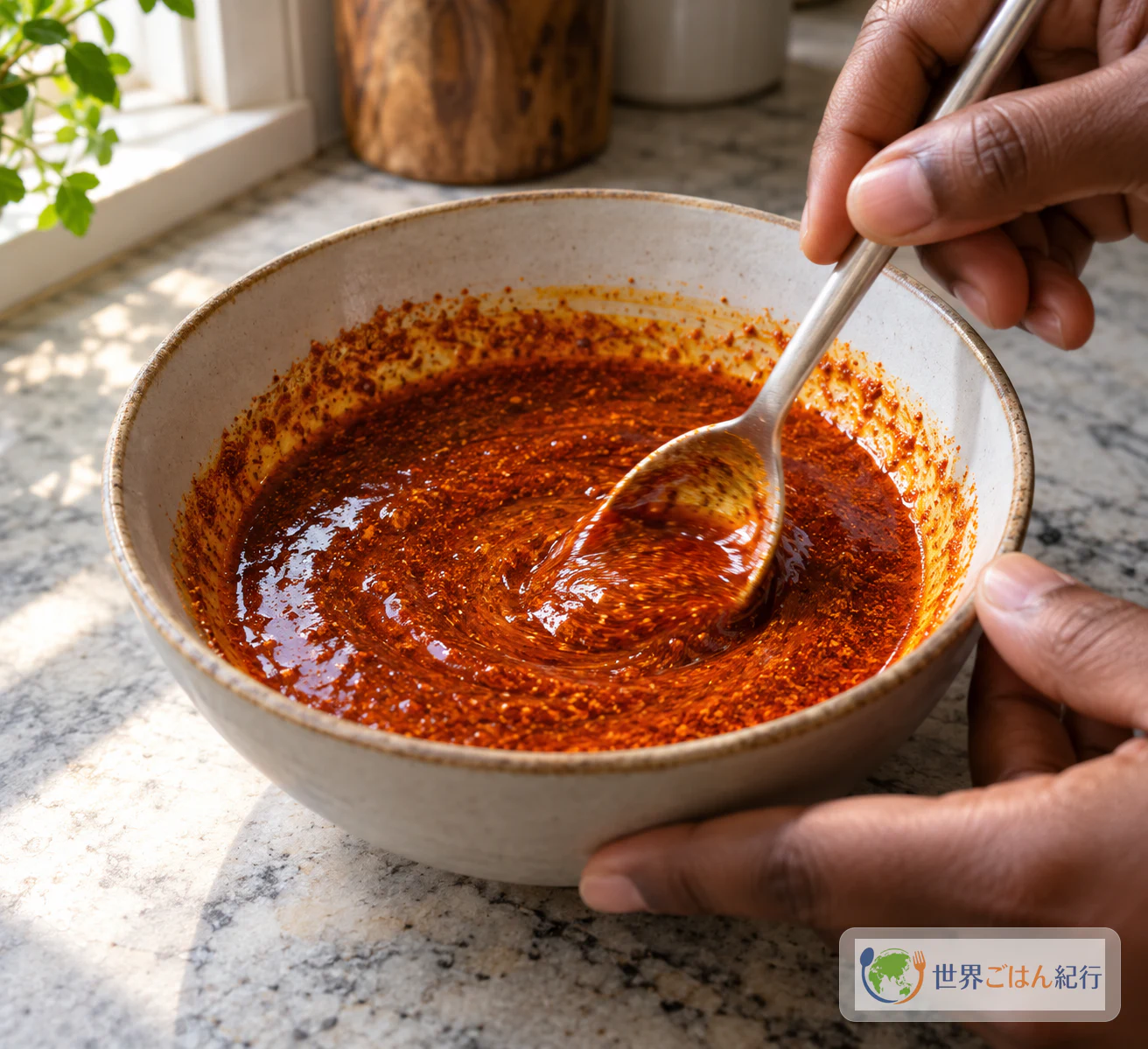
A sheet of injera, the thin, spongy fermented flatbread, is cut into pieces and laid in a dry pan. It warms on both sides until its edges turn lightly crisp, and then its bubbly surface is brushed with melted niter kibbeh, a spiced clarified butter, stirred red with berbere. That is kategna (also written Qategna): three ingredients, a pan and a brush.
The recipe sources describe it as a snack. One presents it as a way to use leftover injera, while another describes making it with fresh injera right after baking and notes that day-old injera works too. Either way, this is not a dish built on many steps. What matters is keeping the injera from burning and getting the butter onto the bread while it is warm.
This article follows a single base recipe for one injera, so the amounts and order stay consistent from shopping to serving. Kategna is listed on this site under Eritrea, but the sources that could be read in full mainly present it in an Ethiopian context. The culture section below explains what can and cannot be said about where it belongs.
You will see it spelled Kategna or Qategna. One recipe source gives the pronunciation as "ka-ten-ya." Searching both spellings helps when looking for recipes and ingredients.
Ingredients for One Serving: One Injera, Berbere and Niter Kibbeh
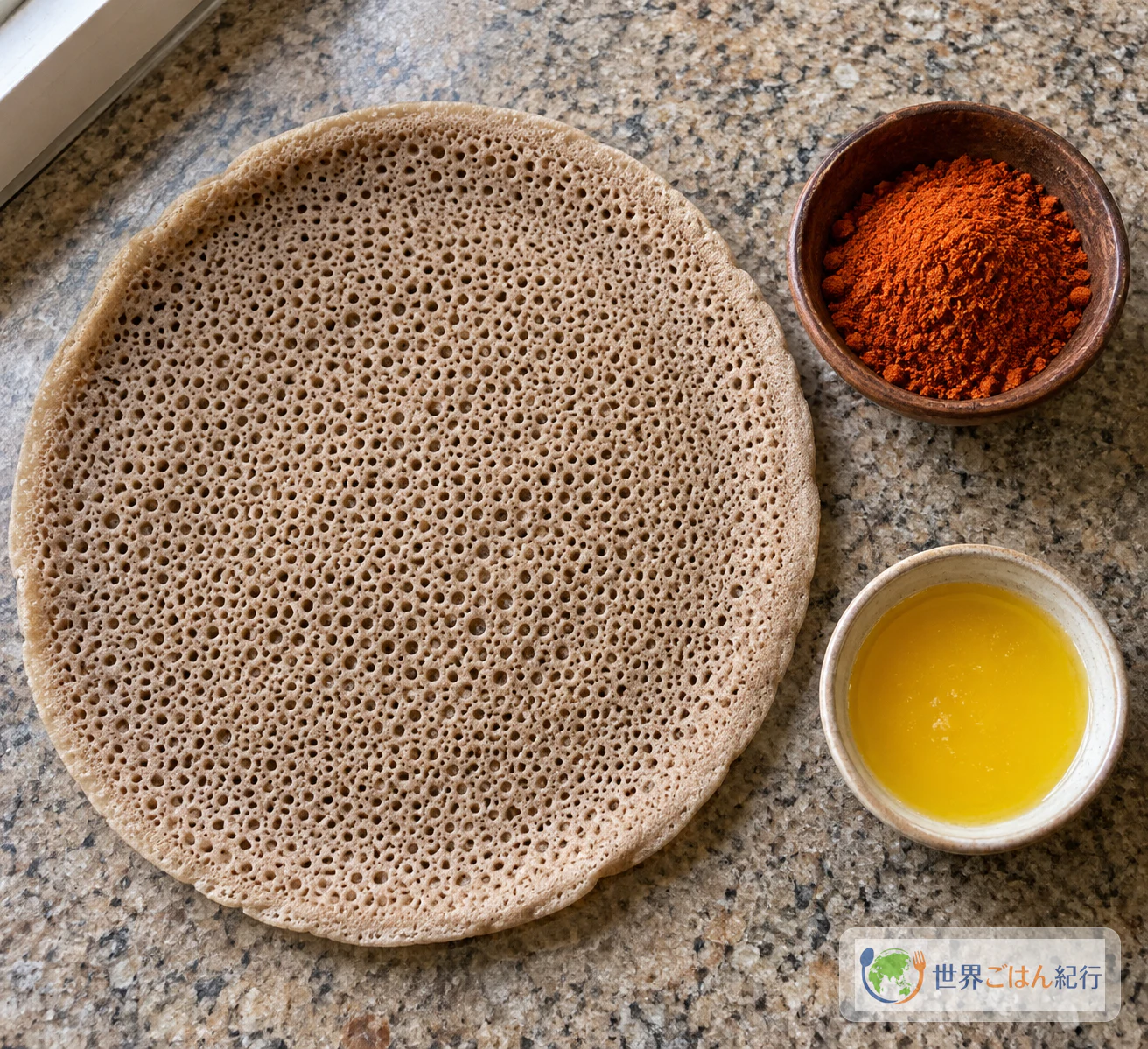
These are the amounts from the base recipe, for one serving. The weight and count of the injera are kept as the source gives them. How many pieces you end up with depends on how you cut it, so the recipe is simply treated as one serving.
The base recipe uses no salt, oil, garlic or cheese, and none are added here. Other published versions use different amounts and add salt; those are described separately under variations rather than mixed into this recipe.
Equipment
- Knife and cutting board
- Frying pan or skillet (used dry, with no oil)
- Small heat-safe bowl for melting the butter in the microwave, or a small saucepan
- Spoon for mixing
- Spoon or pastry brush for spreading
- Plate
Choosing and Substituting the Three Ingredients
Injera. Look for it at shops that carry Ethiopian or Eritrean foods. If you use another flatbread instead, treat it as a different ingredient: it will not give the same flavor or texture, and the result is a different snack, not kategna as written here.
Berbere. Imported products and home blends differ in the ratio of chili to other spices, so the heat can vary a lot. Start from the amount in the recipe. If the people eating are sensitive to heat, brush on a smaller amount first; if you change the ratio, keep in mind that the result is your own adjustment rather than the source recipe.
Niter kibbeh. This is spiced clarified butter. The base recipe does not give its full blend or method, so this article does not turn it into a separate recipe. Plain unsalted butter can stand in on a day you have nothing else, but the flavor is not the same, so treat it as a substitute rather than the standard ingredient.
Some injera products contain wheat, and injera may include grains other than teff. The base recipe gives no allergen information, so check the label of the injera you buy. Niter kibbeh is made from dairy butter and is not a substitute for people avoiding milk. Check the labels of berbere and store-bought niter kibbeh as well.
Method: Toast First, Then Brush
The base recipe's card lists 5 minutes of prep, 10 minutes of cooking and 15 minutes in total, while a separate time box at the top of the same page lists 30, 40 and 70 minutes. The two do not agree, and the card gives no exact toasting time. These are the source's figures, not times from a test cook, so judge each step by the state of the bread and butter rather than by the clock.
The order matters: the injera is toasted on its own first, and the spiced butter goes on afterward. The butter is not spread on before the bread goes into the pan.
Serving: Best While Freshly Made
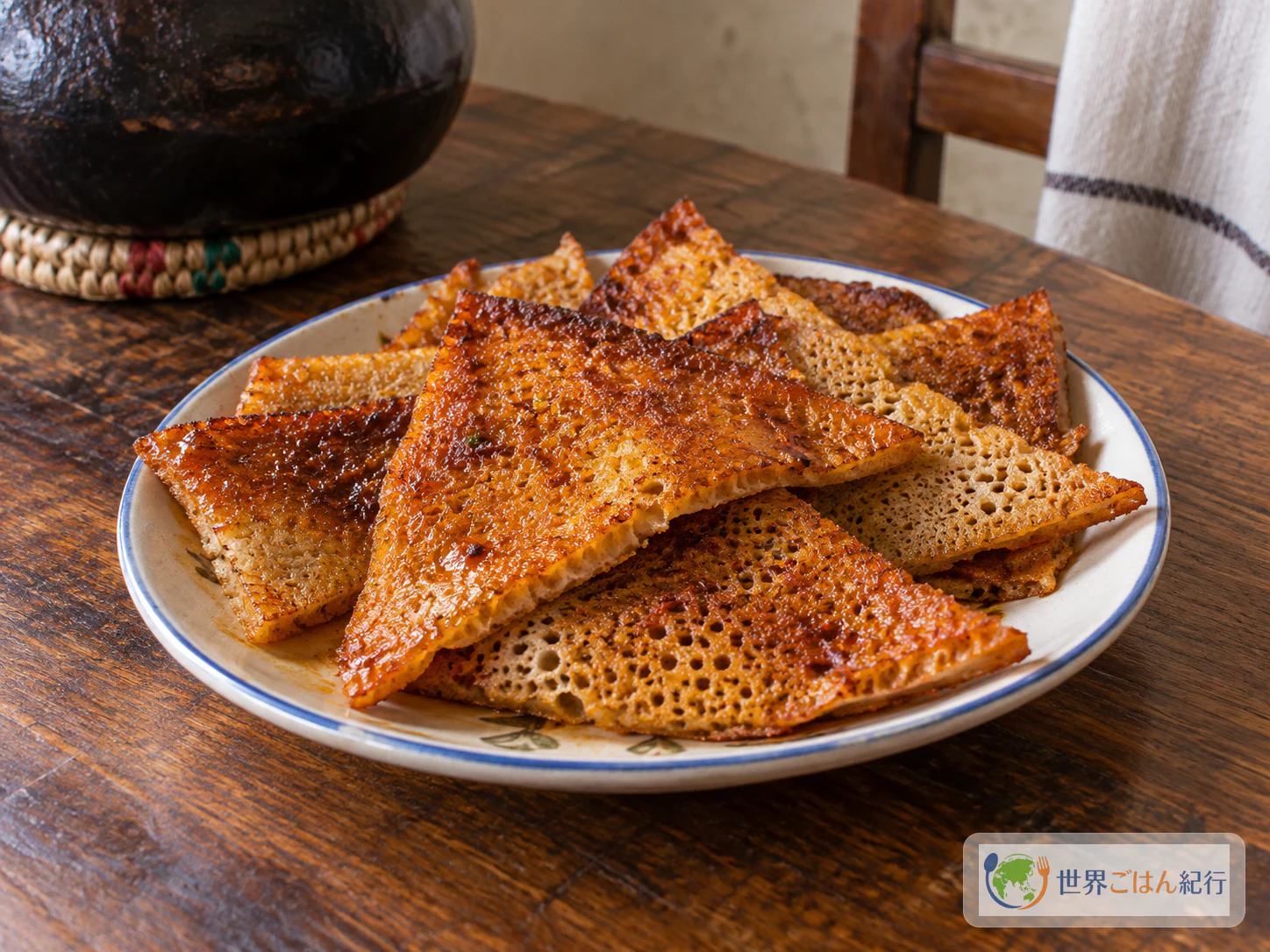
Kategna is at its best freshly made, while the bread is warm and the edges still have their light crispness. One recipe source suggests enjoying it with tej before a meal, or as a snack. This is one suggestion rather than a fixed way of serving it everywhere. The sources give no guidance on storing finished kategna, so make only what you will eat.
When It Goes Wrong: Burnt, Soft or Clumpy
| What happens | Likely cause | What to do |
|---|---|---|
| The injera burns and tastes bitter | Heat too high, or one side toasted too long | Keep to medium heat, turn the pieces, and take them out at a light crisp. There is no fixed time, so judge by how the bread looks |
| The injera stays soft | Moist bread, or not enough time in the pan | Don't crowd the pan, and warm both sides in the dry pan. A soft center with lightly crisp edges is fine; it is not meant to be a hard chip |
| The berbere clumps in places | Not mixed enough into the melted butter | Add the berbere a little at a time while the butter is fully liquid, and mix until even before brushing |
| It is too spicy | Differences between berbere products and blends | Start from the recipe amount, and for people sensitive to heat, brush on less at first |
Variations from Other Recipes
Kategna is not made in only one way. Households differ in whether they use fresh or leftover injera, and in how far they take the toasting. The versions below are separate recipes from other sources, shown for comparison rather than mixed into the base recipe above.
| Version | What it does differently |
|---|---|
| A single-sheet version | Uses 1 piece of injera with 2–3 tbsp niter kibbeh and 1/2–3/4 tsp berbere. The injera is cut in half or into quarters, turned often in a skillet until slightly crisp, and the melted butter and berbere are spread on the bubbly side |
| A layered, rolled version | Layers two sheets of injera with berbere, niter kibbeh and salt, then rolls them up and slices them |
| Fresh or day-old | One source describes making kategna with fresh injera right after it is baked, and says day-old injera also works. It notes the injera can be lightly toasted on a pan or mitad for crunch, and that preferences for spice and butter vary |
If you try one of these, follow its own amounts as a whole, rather than borrowing the salt or the second sheet into the base recipe.
Culture: What the Sources Can and Cannot Say
This site lists kategna under Eritrea, but the sources that could actually be read present it mainly in an Ethiopian context. They do not establish an Eritrean-specific origin or shared cultural attribution to both countries. The base recipe is published under Ethiopian cuisine and introduces the author's experience of home cooking in Ethiopia. Another source, from a seller of Ethiopian spices, shares the author's memories of making kategna in an Ethiopian household and describes variations. A third source treats it as a snack made from leftover injera.
Based on these materials, this article does not claim that kategna originated in Eritrea, that it belongs to Eritrea alone, or that it is made the same way in every household. When it began, who first made it and whether it is tied to particular occasions are not covered by the sources, so they are left out here.
What the sources do agree on is the shape of the dish: injera, lightly toasted, brushed with clarified butter mixed with berbere. That simplicity is the character of kategna.
Frequently Asked Questions
Do I brush on the butter before or after toasting?
After. In the base recipe, the cut injera is toasted on both sides in a dry pan and taken out first, and the niter kibbeh mixed with berbere is brushed on afterward.
How long do I toast the injera?
The base recipe gives no exact time; it says to toast over medium heat without rushing, turning so the bread does not burn. Take it out when both sides are warm and the edges are lightly crisp.
Can I use leftover injera?
Yes. Sources describe kategna as a snack made with leftover injera, and one notes that both fresh and day-old injera work.
Can I make it with ordinary butter?
You can melt unsalted butter instead, but it will not taste the same as niter kibbeh, which is a spiced clarified butter. Treat it as a substitute for days when niter kibbeh is not available.
Is kategna very spicy?
That depends on the berbere. Blends and products differ in their balance of chili and other spices. Start from 3/4 tbsp (5g) as in the recipe, and brush on less at first for anyone sensitive to heat.
Can I store leftovers?
The sources give no storage guidance for finished kategna. It is best eaten freshly made, so prepare only as much as you will eat.
Sources
- Sara Bayou, "Kategna Recipe," Ethiopian-Food.org. The base recipe in this article: its classification under Ethiopian cuisine and as a snack, the amounts of injera (1 medium, 120g), berbere (3/4 tbsp, 5g) and niter kibbeh (2 tbsp, 30ml/28g), the steps of cutting and lightly toasting the injera and brushing on melted niter kibbeh mixed with berbere, and the recipe card's 5/10/15-minute times alongside the page's differing 30/40/70-minute time box. https://ethiopian-food.org/kategna-recipe/
- Mesob Across America, "Recipes | Ethiopian Food." Kategna as a snack using leftover injera, the pronunciation "ka-ten-ya," a separate single-sheet version with different amounts and cutting into halves or quarters, and the suggestion to enjoy it with tej before a meal or as a snack. https://ethiopianfood.wordpress.com/recipes/
- Red Fox Spices, "Kategna." Making kategna with fresh injera after baking and with day-old injera, lightly toasting on a pan or mitad for crunch, a separate layered and rolled version with salt, and the author's Ethiopian household memories and notes that spice and butter preferences vary. https://redfoxspices.com/blogs/recipe-ideas/kategna