Sidvudvu: Soft Pumpkin Brought Together with Maize Meal
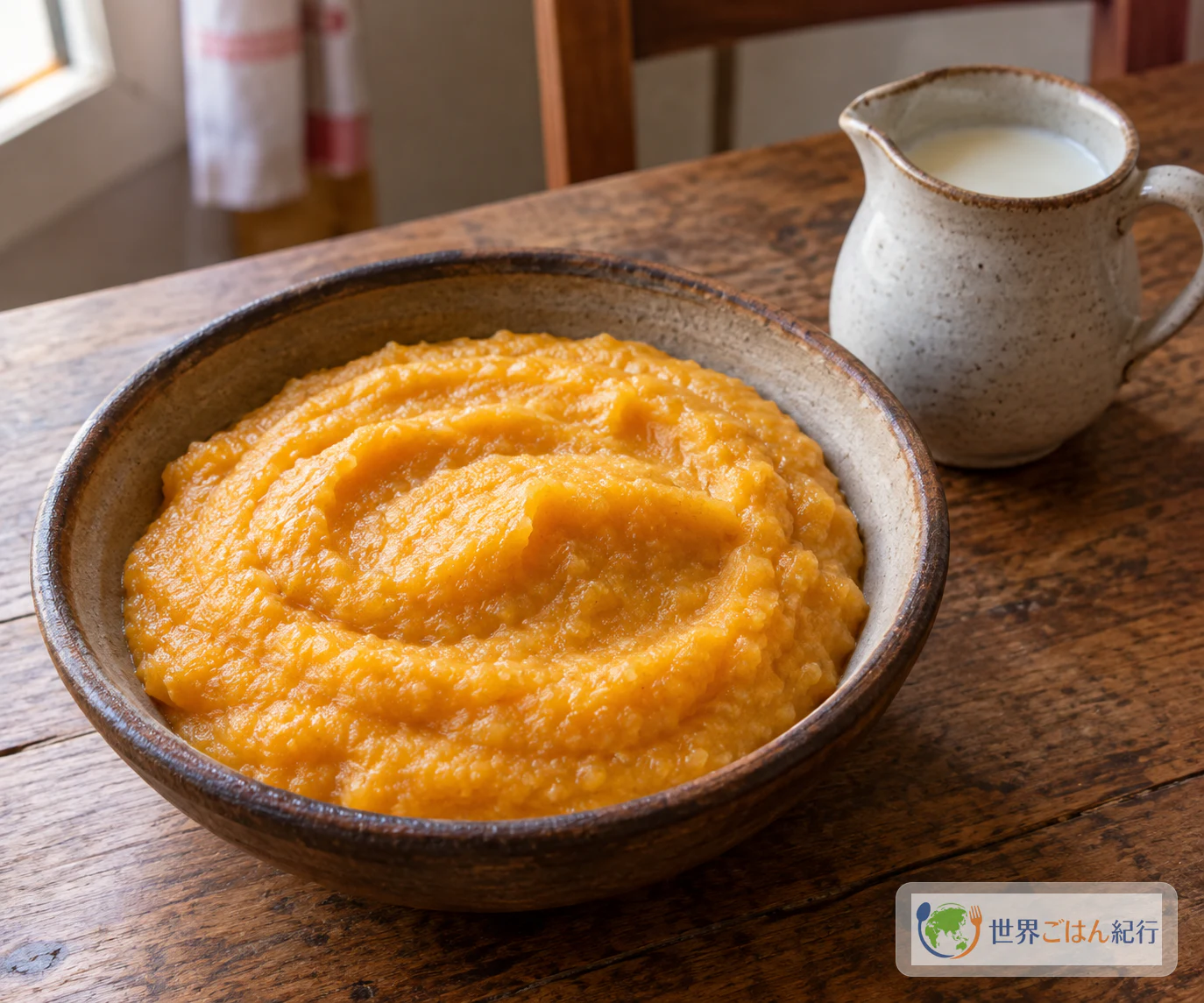
Cook the pumpkin until it is soft, mash it smooth, then work in the maize meal a little at a time until you reach the consistency you want. Sugar and milk come at the table, not as a required part of the pot.
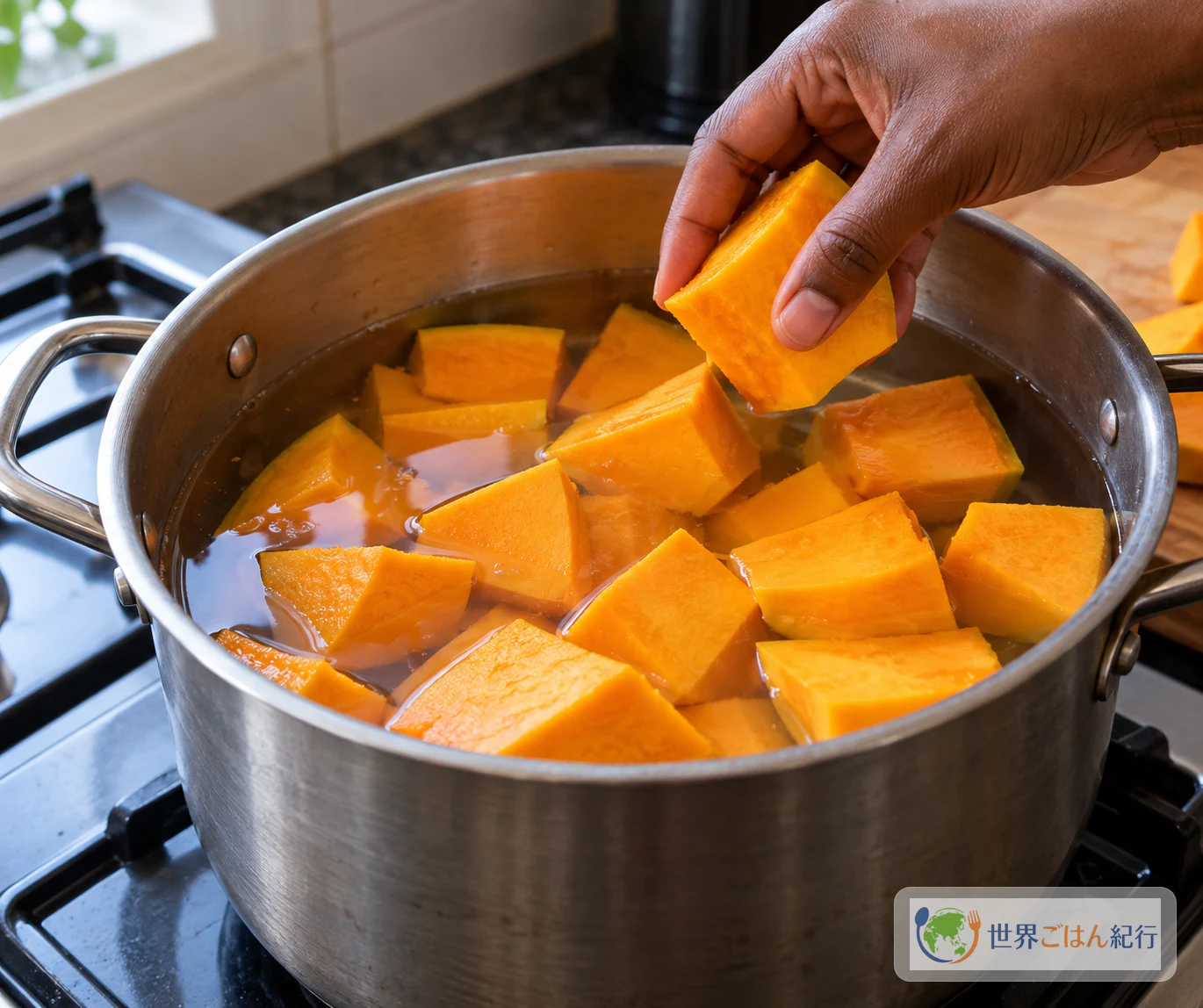
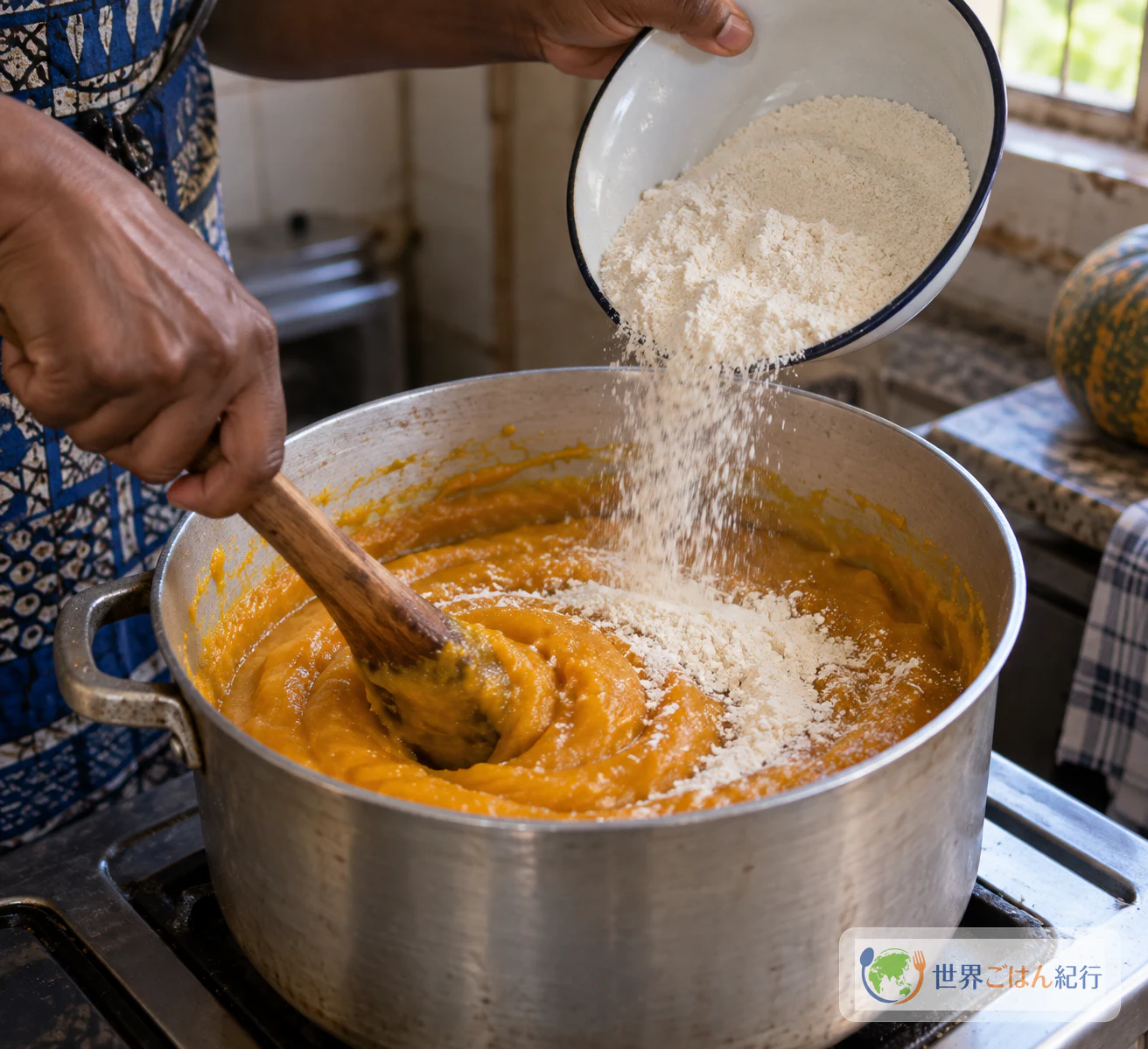
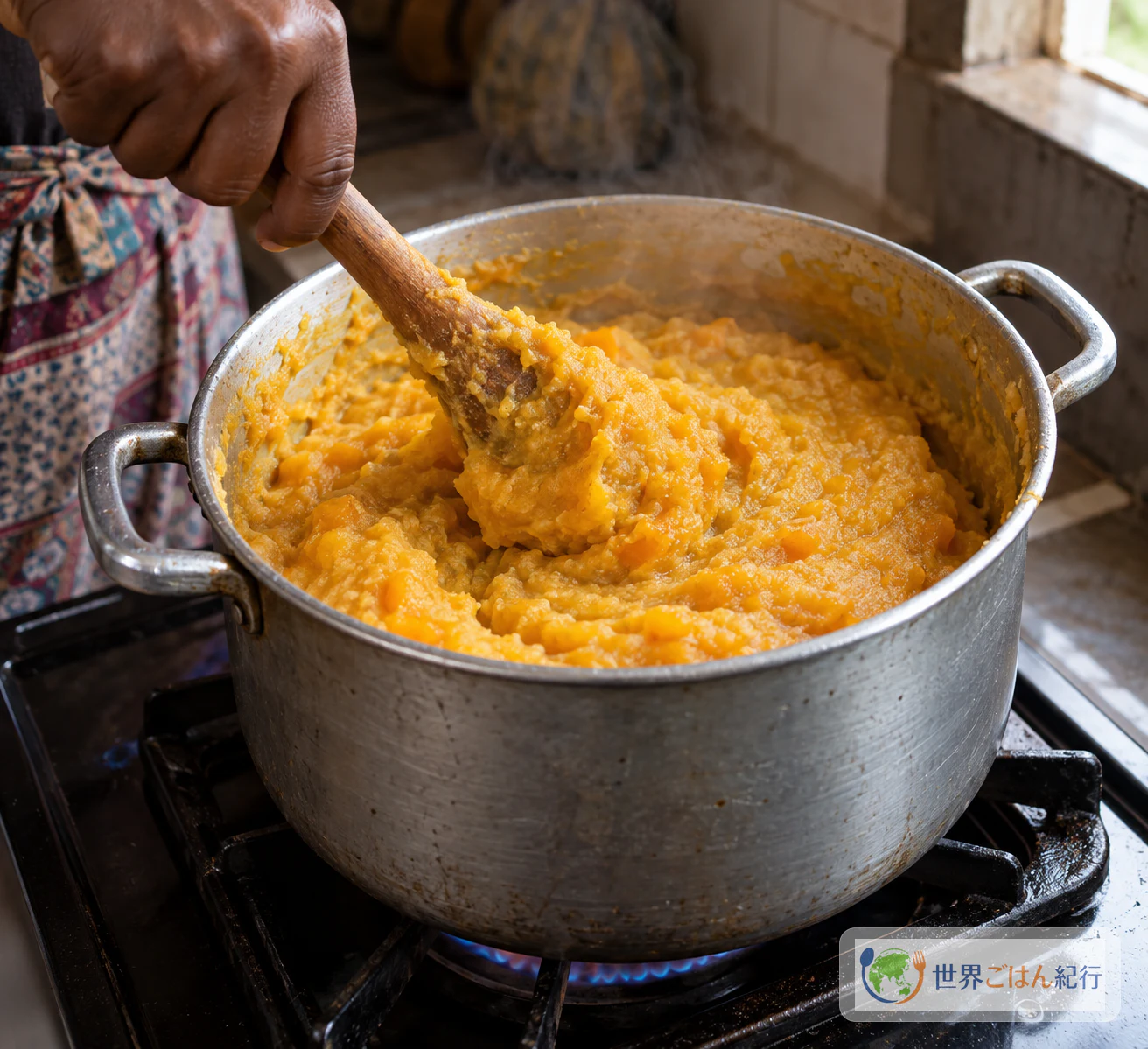
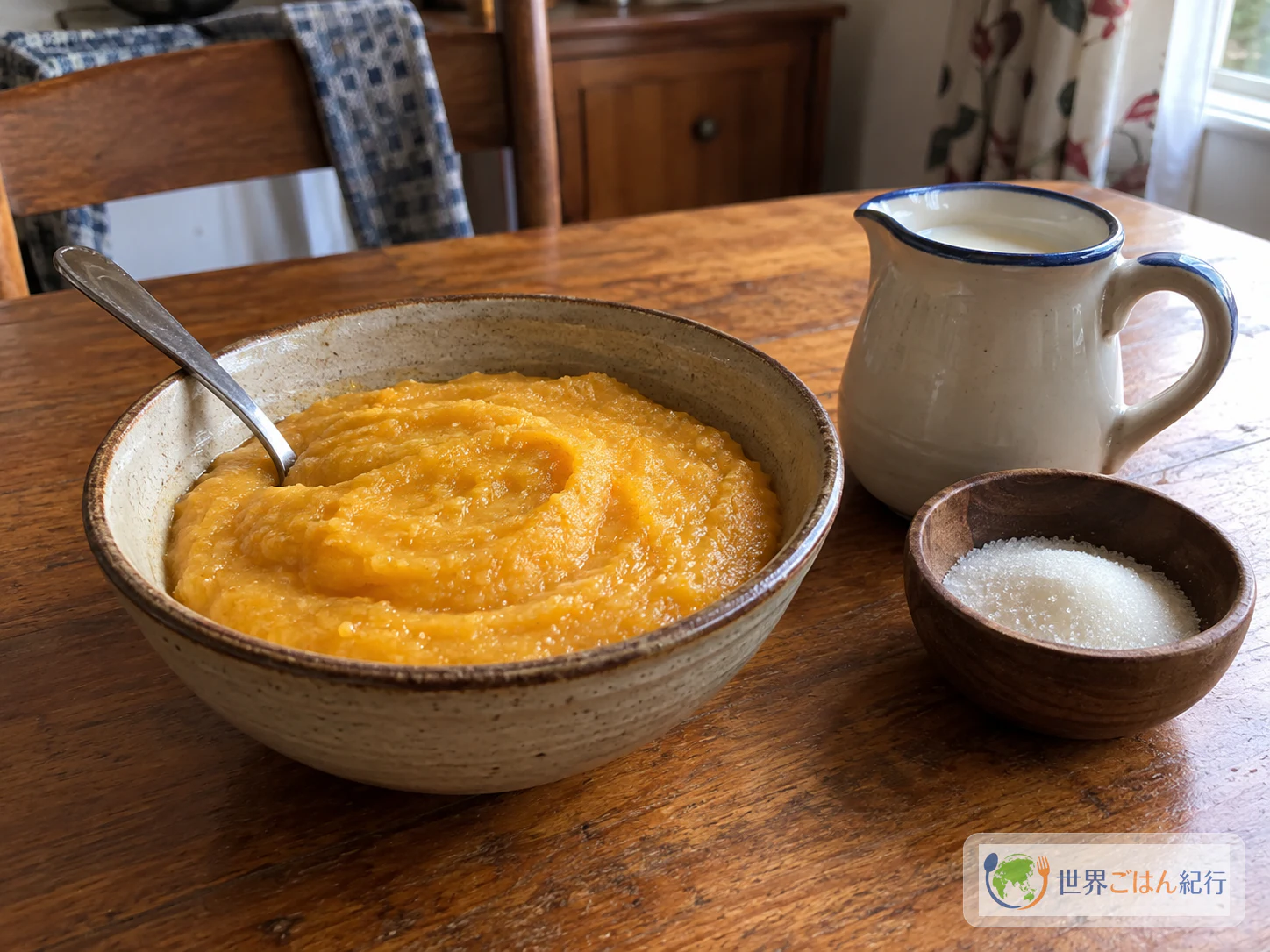
Pumpkin cooked soft in water and mashed smooth in the pot, then thickened with maize meal stirred in a little at a time: that is sidvudvu. A recipe collection published by Eswatini's Ministry of Agriculture lists it as "Sidvudvu (Pumpkin porridge)" and describes cooking the pumpkin until soft, making it smooth, adding mealie meal gradually, and simmering until the meal is cooked. It is served with sugar and milk.
"Pumpkin porridge" is a useful translation, but it is not the whole picture. The same government's food composition table describes the dish simply as pumpkin cooked and mixed with maize meal, and a record of a local cook's dishes notes it eaten with beef stew as well as with milk. So rather than deciding in advance whether this is a sweet breakfast or a savory staple, it helps to look at the two main ingredients first and at what goes alongside it second.
The amounts and steps below come from the published Eswatini recipe and have not been kitchen-tested for this article. The cooking times, heat levels and doneness cues given here are practical suggestions, not instructions from the source.
What Sidvudvu Is: Pumpkin and Maize Meal in One Pot
The spelling changes from source to source. The government recipe collection uses Sidvudvu. The government food composition table lists Sidvudvu selitsanga, described as pumpkin, cooked, mixed with maize meal. A written record of traditional dishes, based on the explanations of a local cook, spells it Sidudu selitsanga. Where the spelling differences come from is not explained in these sources, so this article does not try to settle it.
The food composition table also has a separate entry, Ludvwidvwi, described as pumpkin cooked, mixed with maize meal and eaten with milk. Because it appears as its own item, it is not treated here as another name for sidvudvu.
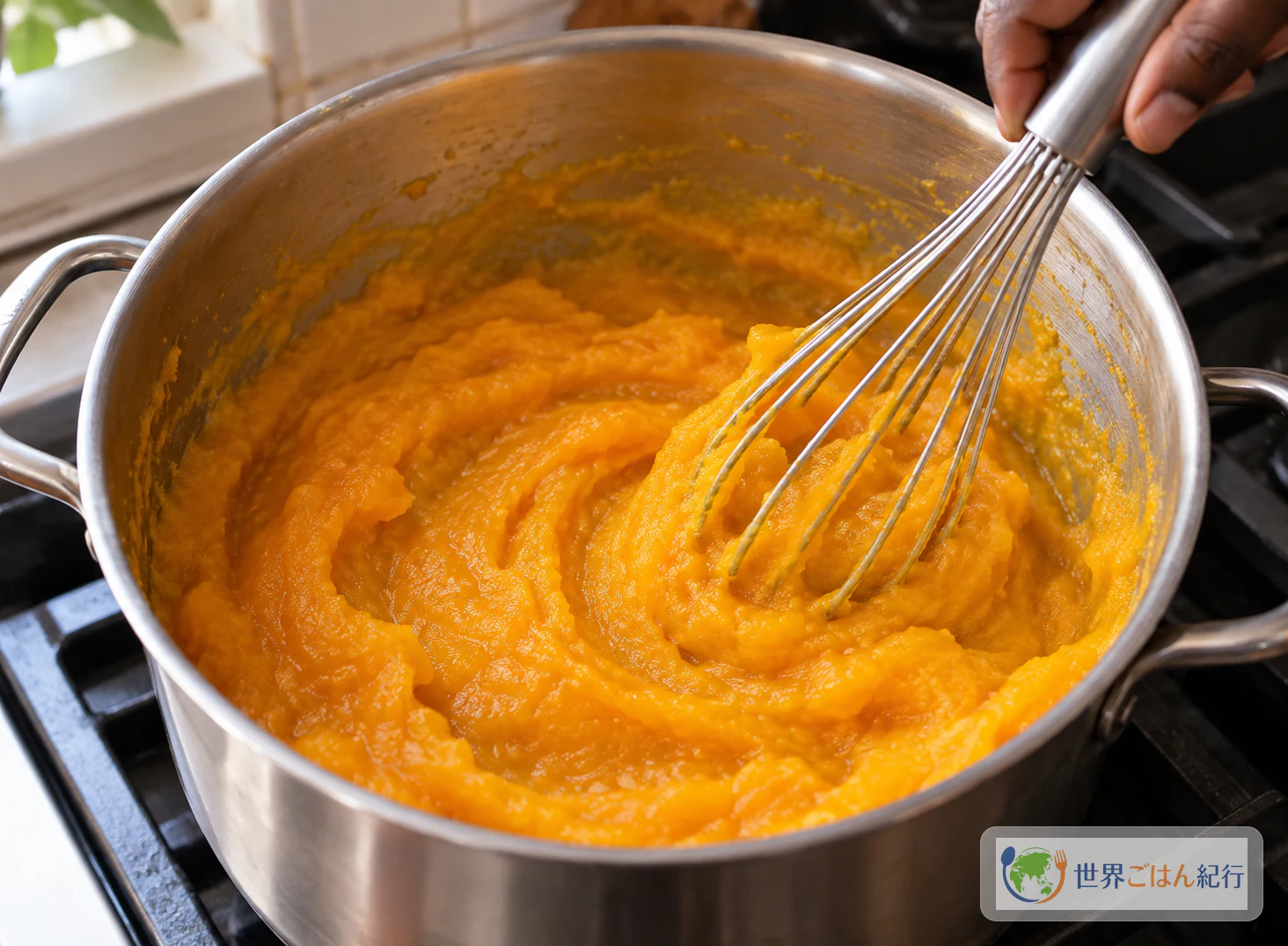
The structure of the dish is simple: soften the pumpkin in water, make it smooth, and use maize meal to bring it to a thick, spoonable body. Everything that follows, from the ingredient amounts to the troubleshooting, comes back to those two moves.
Ingredients: The Amounts from the Eswatini Recipe
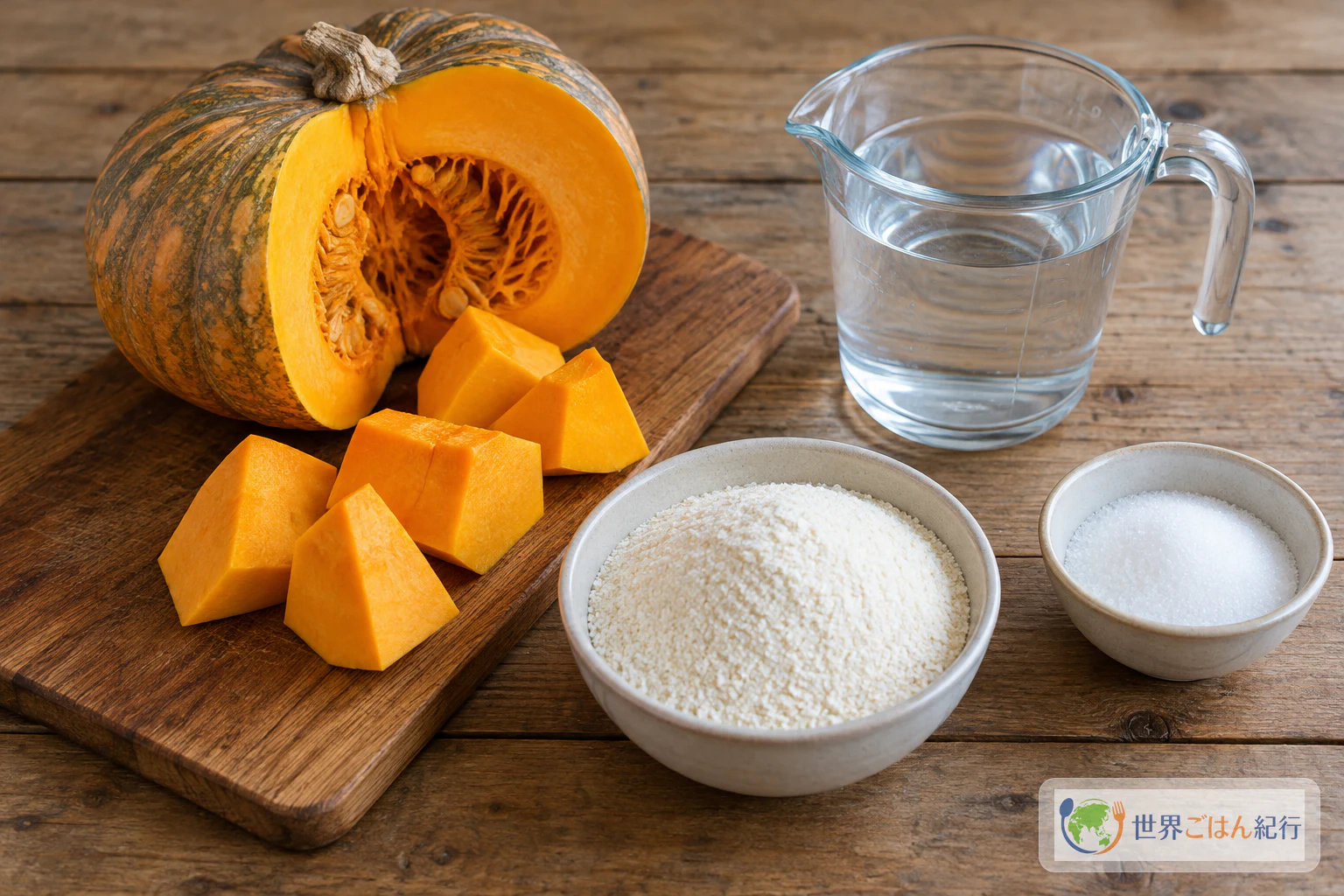
These are the amounts exactly as they appear in the published recipe, which gives a yield of 4 servings. That yield is the source's own figure and has not been checked by cooking. The recipe also does not say whether the 1,800 g of pumpkin is the weight before or after removing the rind and seeds.
If you serve sidvudvu with milk, check for milk allergies among the people you are feeding. Also check the label of your maize meal for allergen and shared-facility statements.
Equipment
- A large, heavy pot
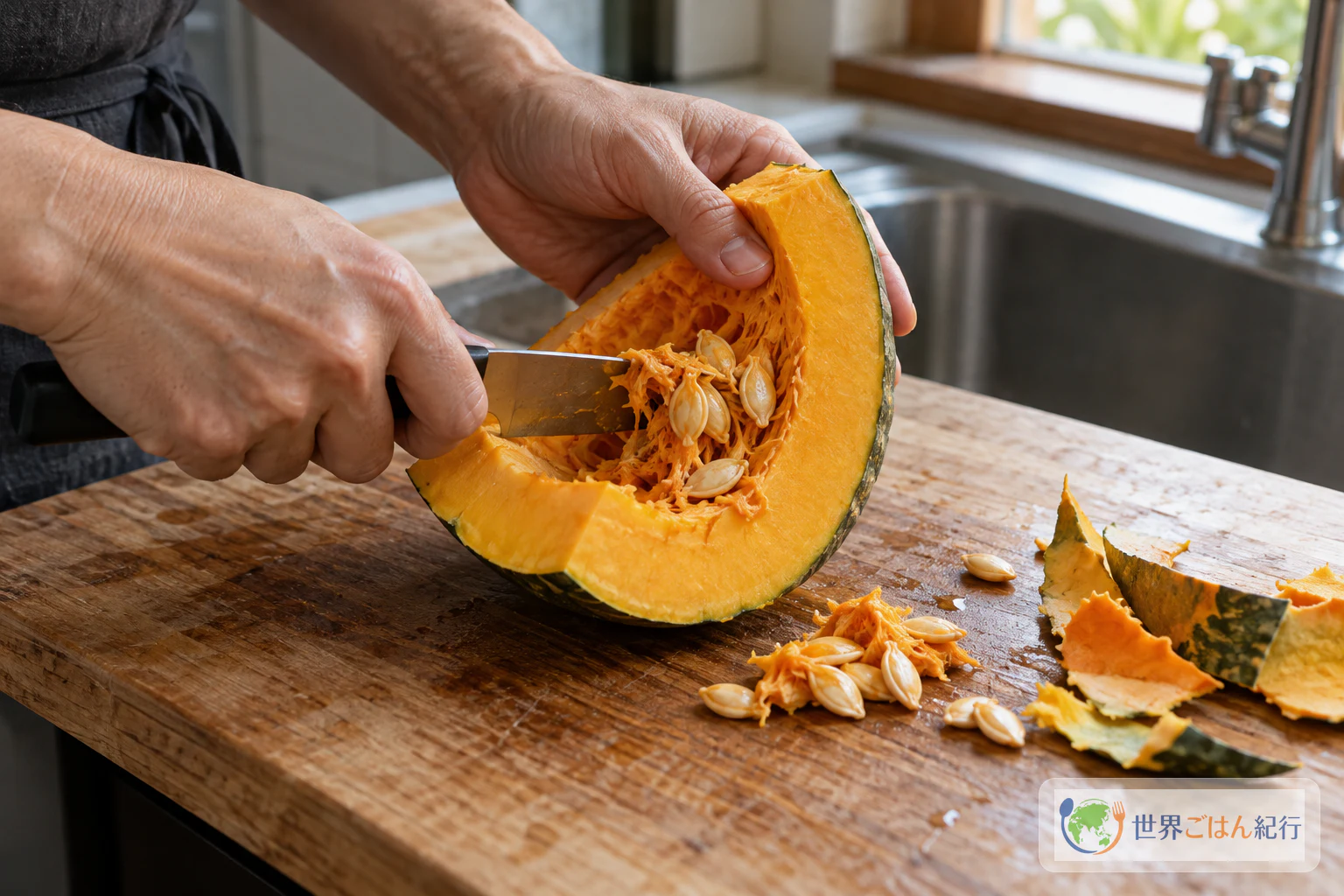
- A knife and cutting board
- A whisk or masher for making the pumpkin smooth in the pot
- A sturdy wooden spoon for stirring in the maize meal
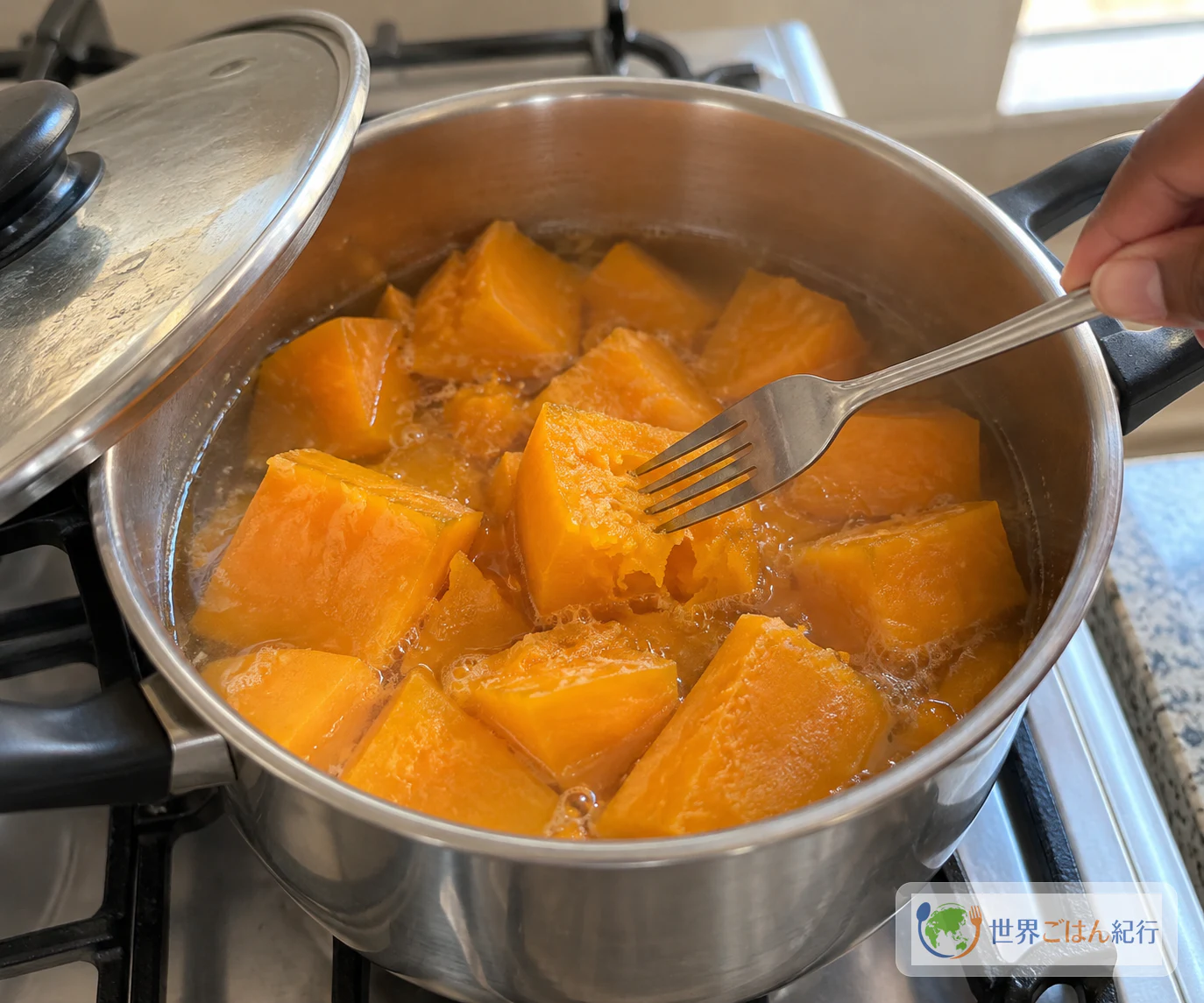
- A fork for checking whether the pumpkin is tender
Choosing Pumpkin and Maize Meal Outside Eswatini
Pumpkin. The source simply says "pumpkin" and does not name a variety. An ordinary supermarket pumpkin or winter squash is a practical choice, but it is not guaranteed to behave the same as the pumpkin used in Eswatini. Pumpkins differ in how much water they hold, and that can change how much maize meal the mash takes up. This is one reason to add the meal gradually and judge by consistency rather than emptying the whole amount in at once.
Maize meal. Mealie meal is ground maize. The source does not specify how finely it is ground. Products sold elsewhere as cornmeal, corn flour, polenta or grits can differ in grind and in how long they need to cook, so do not treat them as identical to mealie meal. If you use one of these, follow the cooking directions on its package and expect the texture to differ. Look at the ingredient list and grind description when you buy.
Sugar. The 140 g of sugar is the source's own figure, and the source marks it as optional. If that seems like a lot, the variations section below offers an adjustment, kept separate from the recipe as written.
Method: Cook, Mash, Then Work in the Meal
The published recipe gives the order of the steps but no cooking times or temperatures. Watch the pot: the pumpkin should be soft before you mash it, and the maize meal should be cooked through before you serve.
Lumpy, Stiff, Scorched: Fixing Problems in the Pot
The fixes below are practical cooking suggestions, not instructions from the published recipe.
| Problem | Likely cause | What to do |
|---|---|---|
| Lumps of dry meal | Meal added too fast | Take the pot off the heat and stir hard, working the lumps against the side of the pot. Next time, sprinkle the meal in more slowly |
| Too thick before all the meal is in | Pumpkin held less water | You don't have to use every gram. Stop adding meal once you reach the consistency you want |
| Too stiff to stir | Too much meal, or cooked down | Stir in a little hot water, a small splash at a time. The source gives no amount for extra water |
| Sticking or scorching on the bottom | Heat too high, not turned often enough | Lower the heat and scrape the bottom each time you turn the porridge. Don't scrape burnt bits up into the rest |
| Meal not yet cooked through | Cooking is incomplete | Keep simmering and turning to cook the meal through, following the product's cooking directions rather than using taste alone as a doneness test |
| Pumpkin pieces won't mash smooth | Pumpkin not soft enough | Cook a little longer before adding any meal. Mashing is much harder once the meal is in |
Storage
The published recipe gives no guidance on storing or reheating sidvudvu, so this article does not give storage times.
Variations: Kept Separate from the Recipe as Written
- Without sugar. The source marks sugar as optional. Try the porridge plain first to see how sweet your pumpkin is.
- Less sugar, added to taste. Rather than using the full 140 g, set out a small amount and let each person add more if they want. This is an adjustment and no longer the source's recipe as written.
- Milk at the table. Set milk out in a jug so each person adds as much as they like, which matches how the source serves it.
- With a stew. A record of a local cook's dishes notes sidvudvu eaten with beef stew. That stew is a separate dish and is not covered here.
- With a different maize meal. If you can't find mealie meal, use another maize meal and follow its package directions for cooking time. Expect a different texture rather than the same dish.
On the Table in Eswatini
The government recipe collection serves sidvudvu with sugar and milk. That is one clear picture, but it is not the only one in the sources.
A collection of traditional dishes, written from the explanations of a local cook, Duduzile Masuku, describes Sidudu selitsanga as pumpkin cooked and mashed, then cooked with mealie meal and sugar, and eaten with beef stew or with milk. It is one cook's account, not a rule for the whole country, but it shows the same pot leaning savory or sweet depending on what sits beside it.
International Cuisine, a privately run recipe site, also describes a pumpkin maize porridge it calls sidvudvu, eaten with stews and sauces. Its own recipe uses a different method and amounts from the government recipe, so it is mentioned here only as another example of how the dish is served, not as a source for the method above.
These sources do not establish the dish's history or its connection to particular occasions, so this article does not discuss them.
Frequently Asked Questions
Are Sidvudvu and Sidudu different dishes?
The sources spell it differently: Sidvudvu in the government recipe collection, Sidvudvu selitsanga in the government food composition table, and Sidudu selitsanga in a record of a local cook's dishes. All describe pumpkin cooked with maize meal. Where the spelling differences come from is not explained. Ludvwidvwi, listed with milk, is a separate entry in the food composition table.
Is the sugar required?
No. The published recipe lists 140 g of sugar as optional and serves it with the porridge.
Should I stir the milk into the pot?
The source serves the porridge with sugar and milk but gives no amount of milk and no step for adding it to the pot. This article suggests setting milk out separately for each person to add.
How long does it take to cook?
The published recipe gives no times or temperatures. Cook the pumpkin until it is soft, and after adding the maize meal, simmer until the meal is cooked. Judge by the pot rather than the clock.
What kind of pumpkin should I use?
The source just says "pumpkin." An ordinary supermarket pumpkin or winter squash is a practical choice, but it may hold more or less water than the pumpkin used in Eswatini, so add the maize meal gradually and stop when the consistency is right.
Can I use cornmeal or polenta instead of mealie meal?
You can use another ground maize product, but it isn't guaranteed to match. The grind and cooking time can differ, so follow the package directions and expect a somewhat different texture.
Sources
- Eswatini Ministry of Agriculture / National Agricultural Information System, "Recipes for Commonly Consumed Foods in Eswatini," recipe 33: "Sidvudvu (Pumpkin porridge)." Source of the dish identification, all ingredient amounts, the optional sugar, the yield of 4 servings, the order of the method, and serving with sugar and milk. https://agrinfosystems.gov.sz/assets/uploadsRecipes%20for%20commonly%20consumed%20foods%20in%20Eswatini.pdf
- Eswatini Ministry of Agriculture / National Agricultural Information System, "Eswatini Food Composition Table," entries 77–78. Source for Sidvudvu selitsanga as pumpkin cooked and mixed with maize meal, and for the separate entry Ludvwidvwi, eaten with milk. https://agrinfosystems.gov.sz/assets/uploadsEswatini%20food%20composition%20table.pdf
- Edward L. Powe / BLAC Foundation, "Some Traditional Dishes from Swaziland." Source for local cook Duduzile Masuku's description of Sidudu selitsanga and for eating it with beef stew or milk. https://www.blacfoundation.org/pdf/dishes_swaziland.pdf
- International Cuisine, "Pumpkin Pap (Sidvudvu)." A privately run recipe site, used only as an example of serving the dish with stews and sauces. Its method and amounts are not used in this recipe. https://www.internationalcuisine.com/pumpkin-pap/