Nsima: A Thin Porridge That Becomes a Firm, Smooth Staple
Two ingredients, maize flour and water, with nothing else added. The skill is in the change: a loose porridge first, then a gradual working-in of the remaining flour until the pot holds a thick, smooth staple.
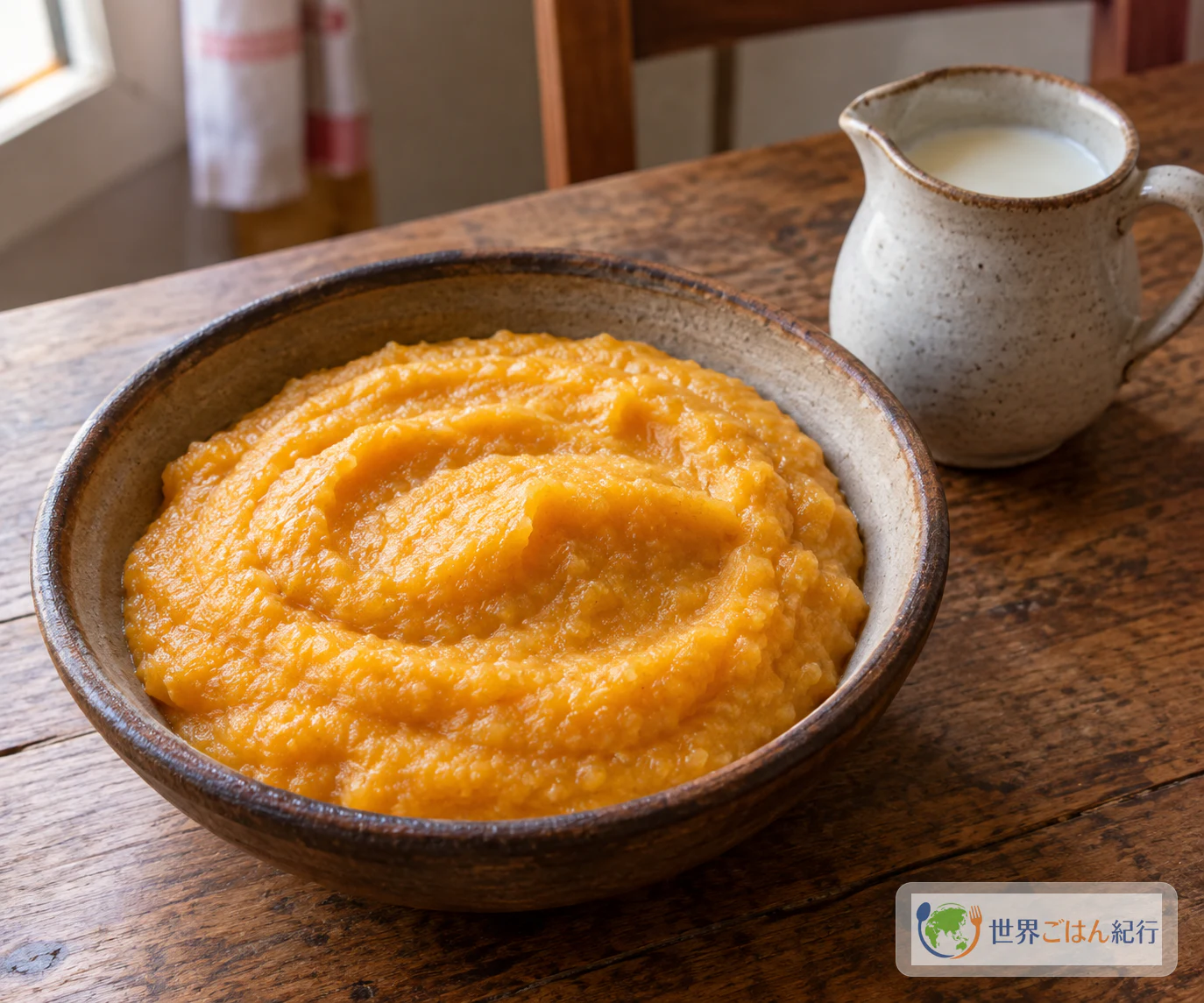
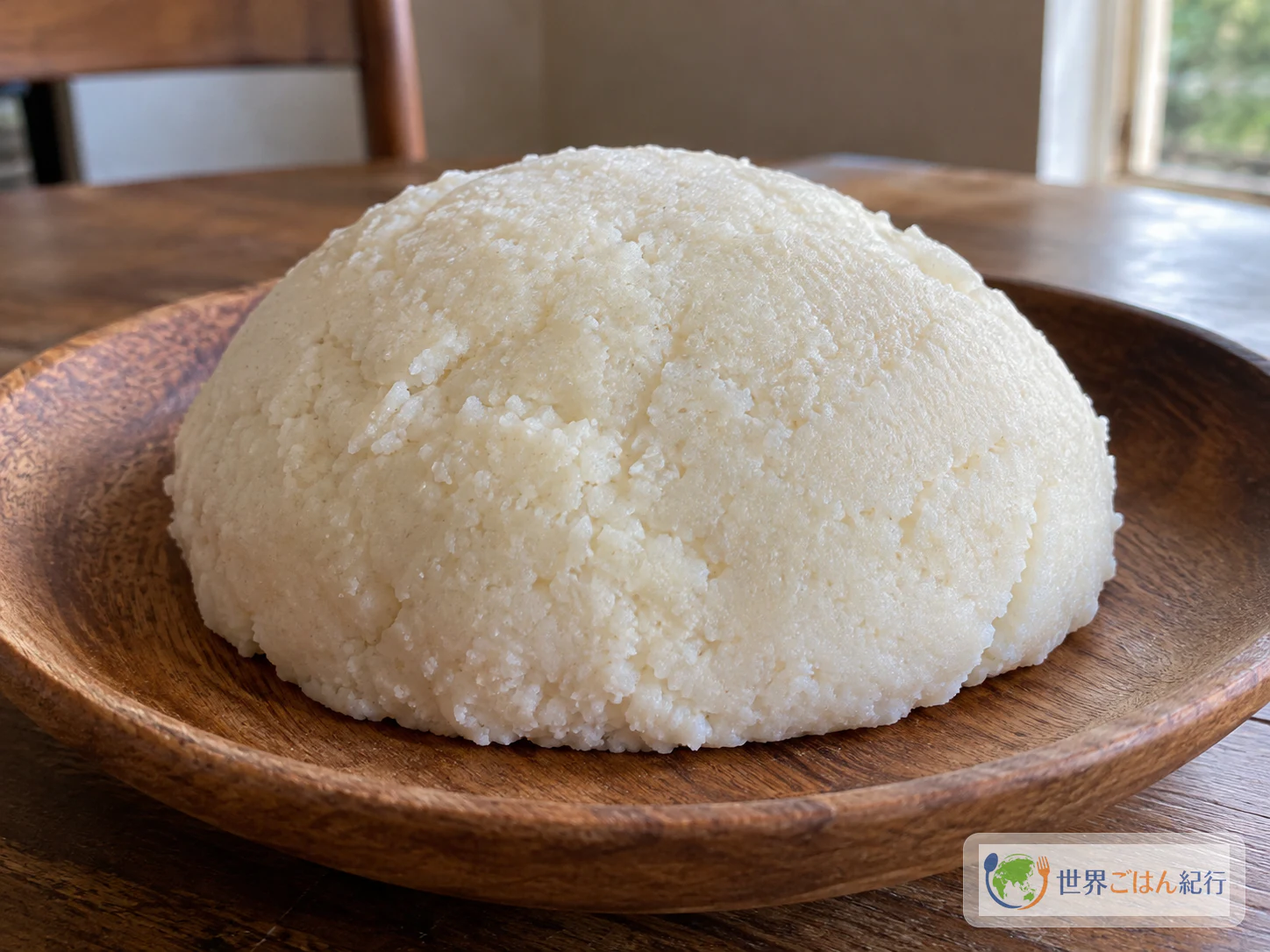
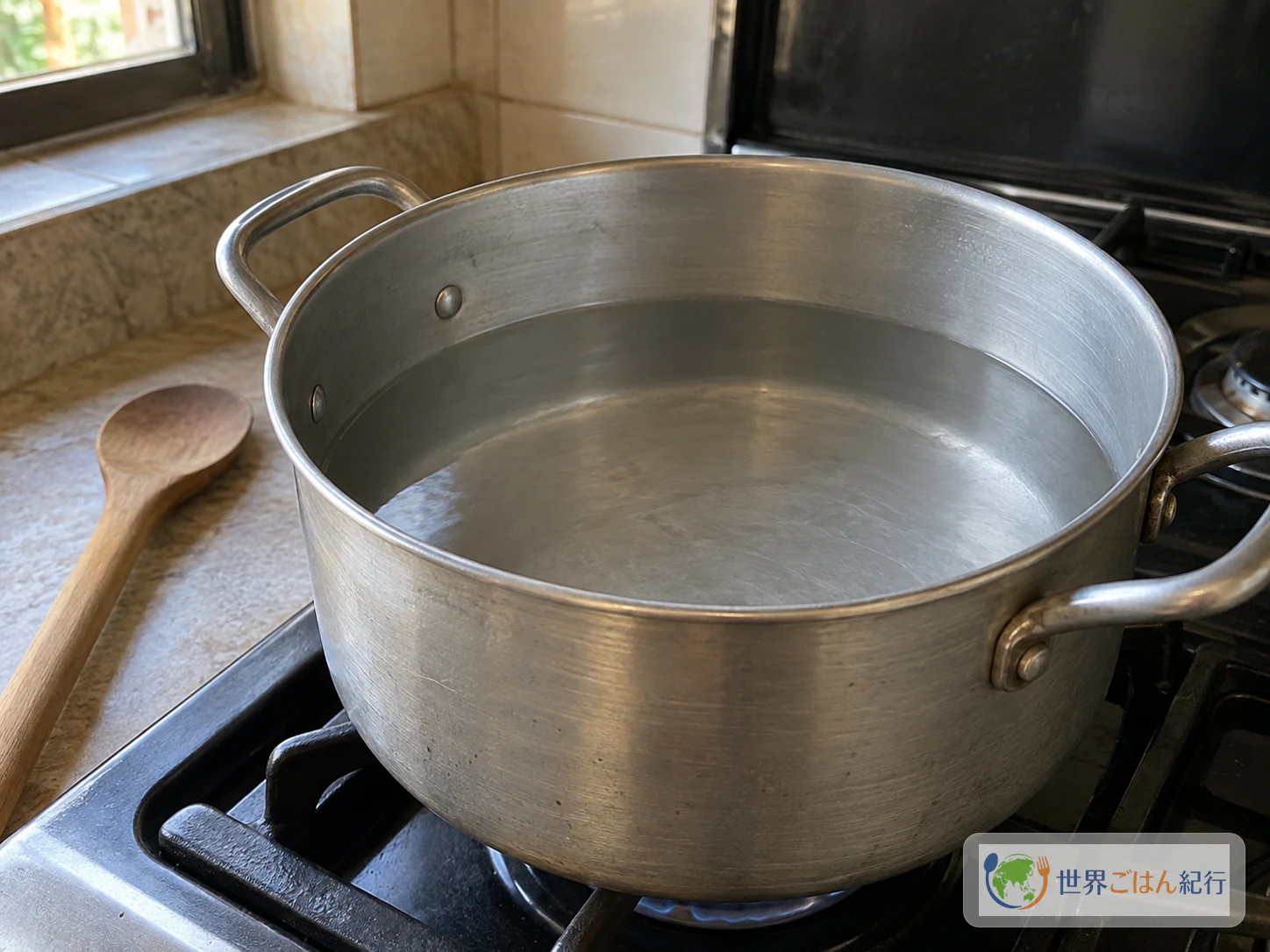
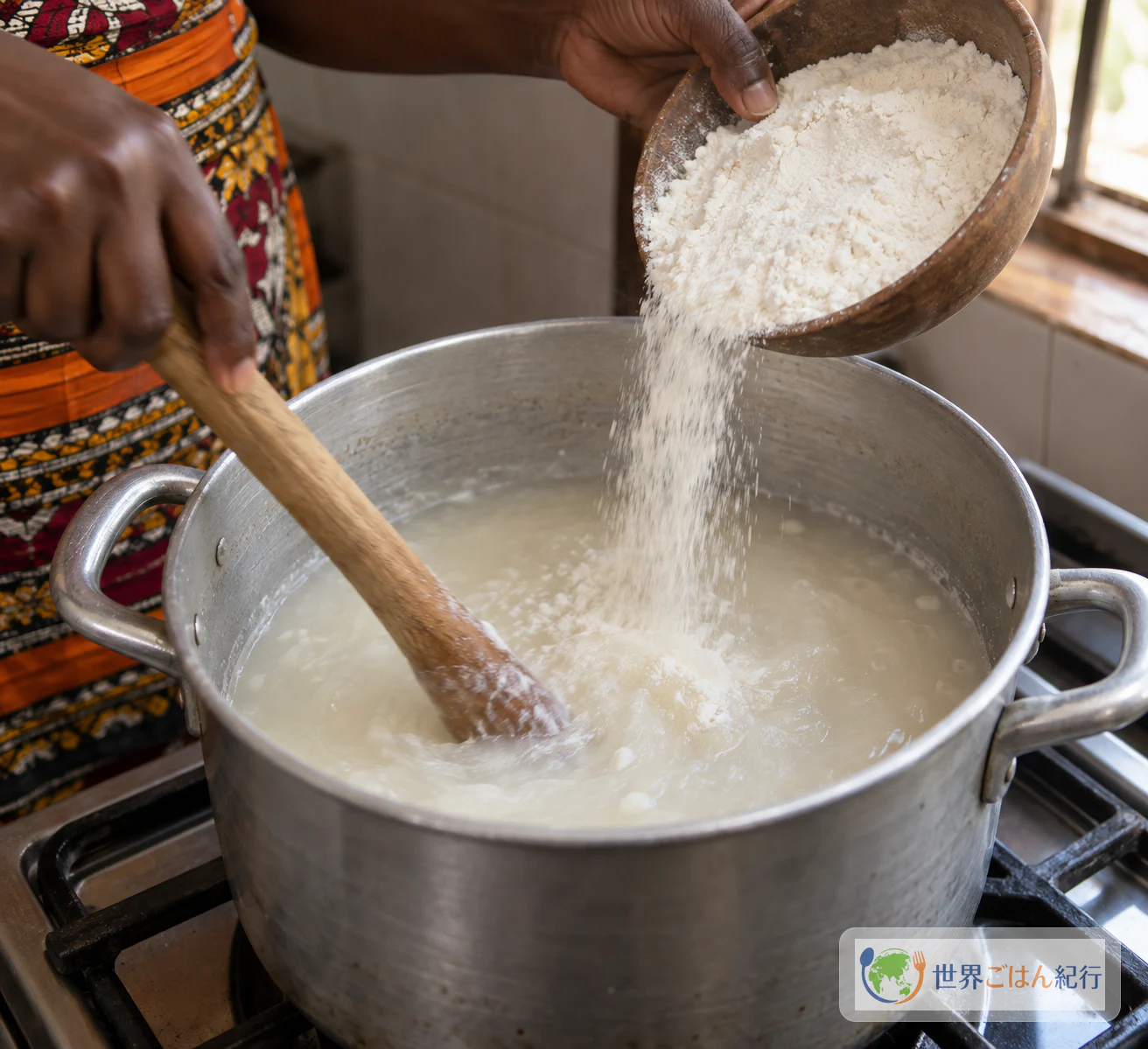
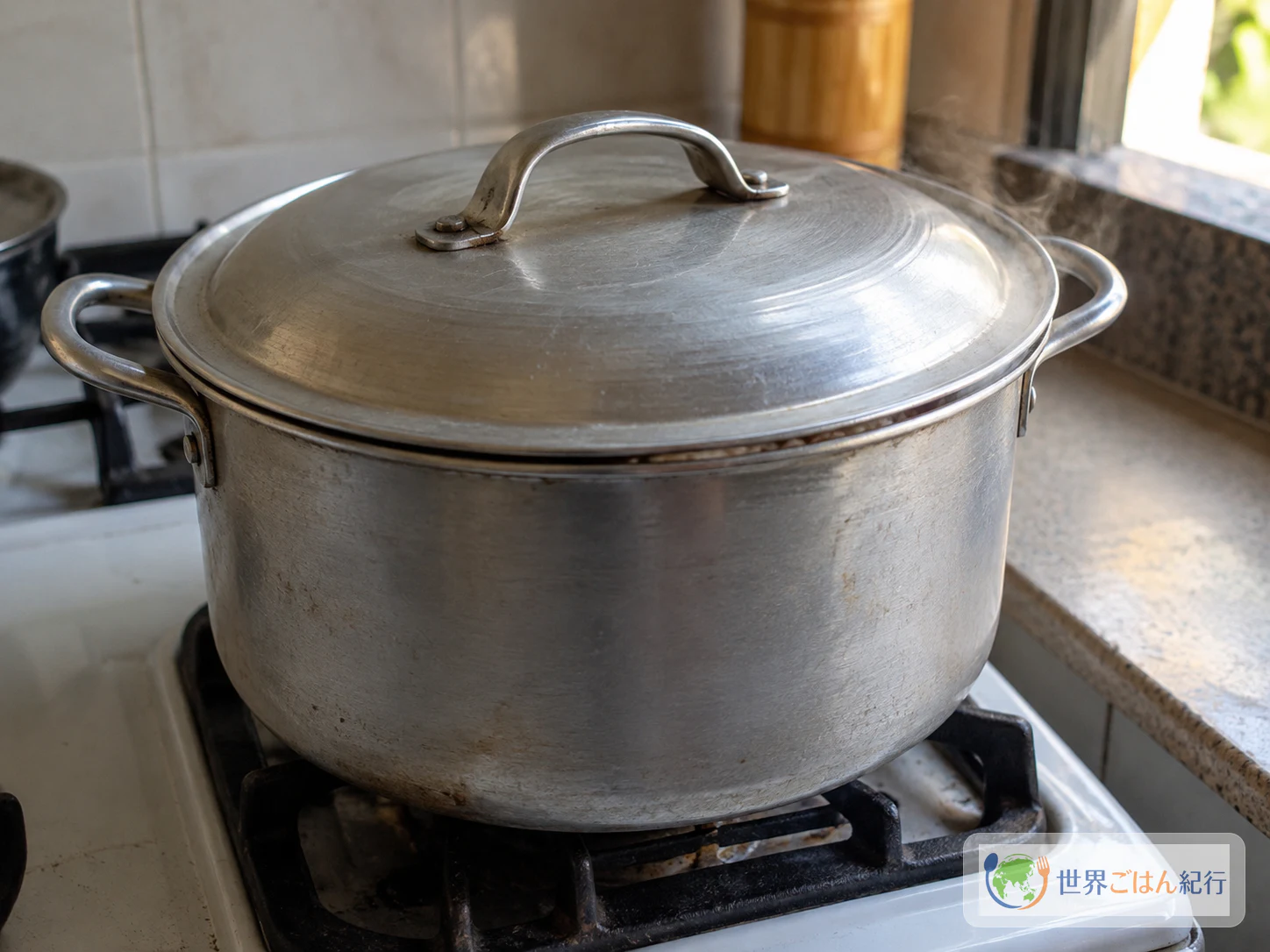
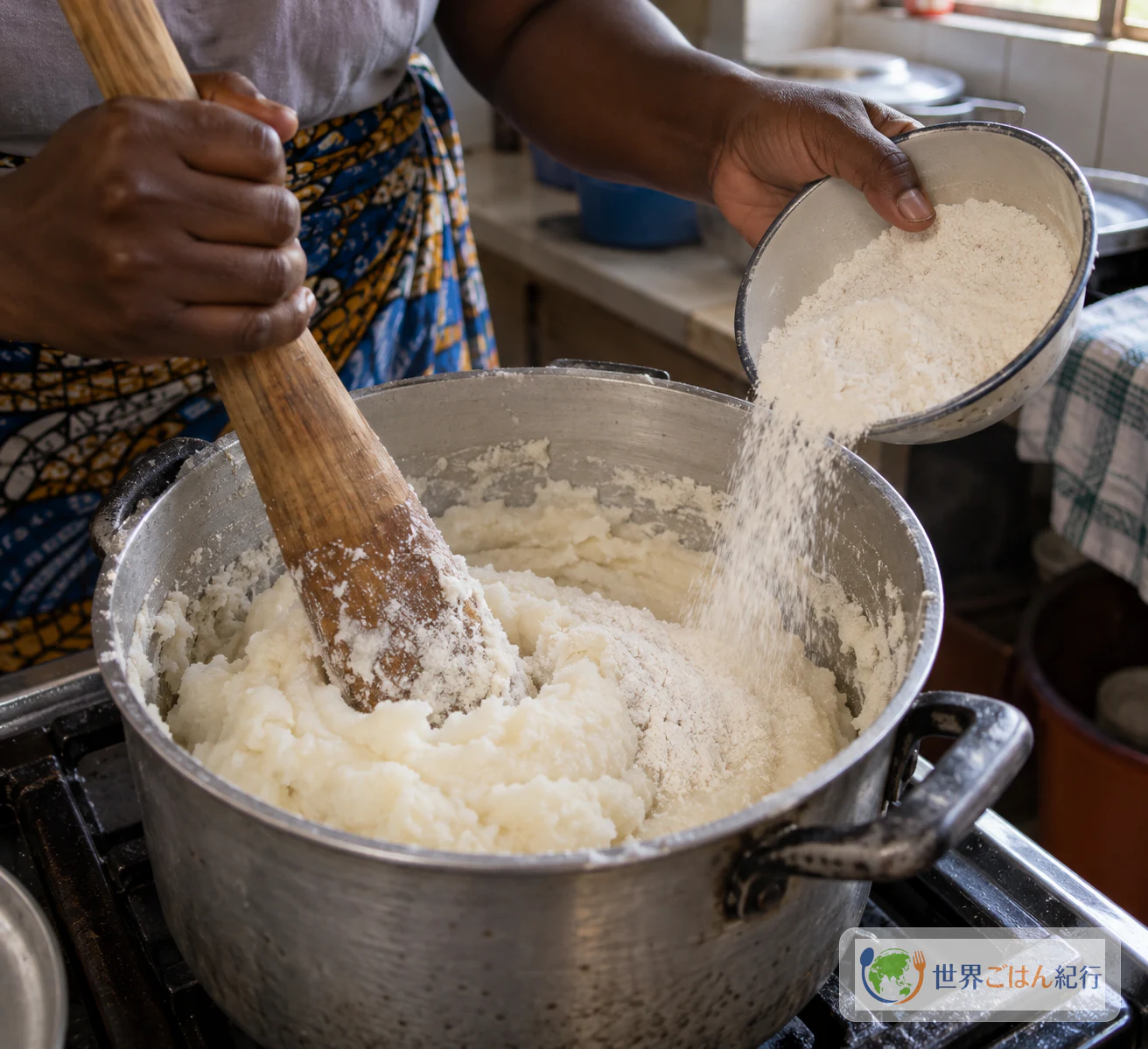
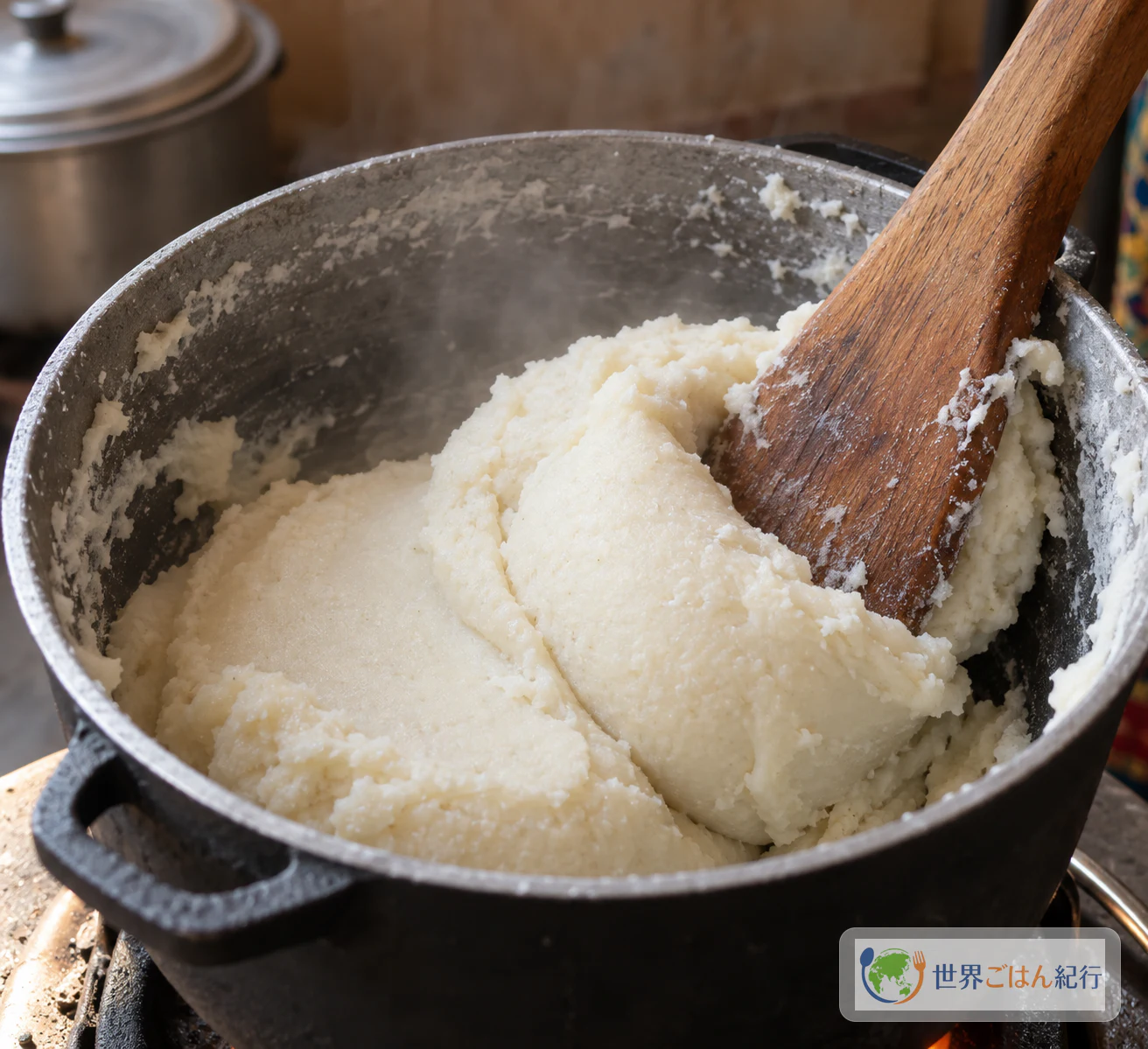
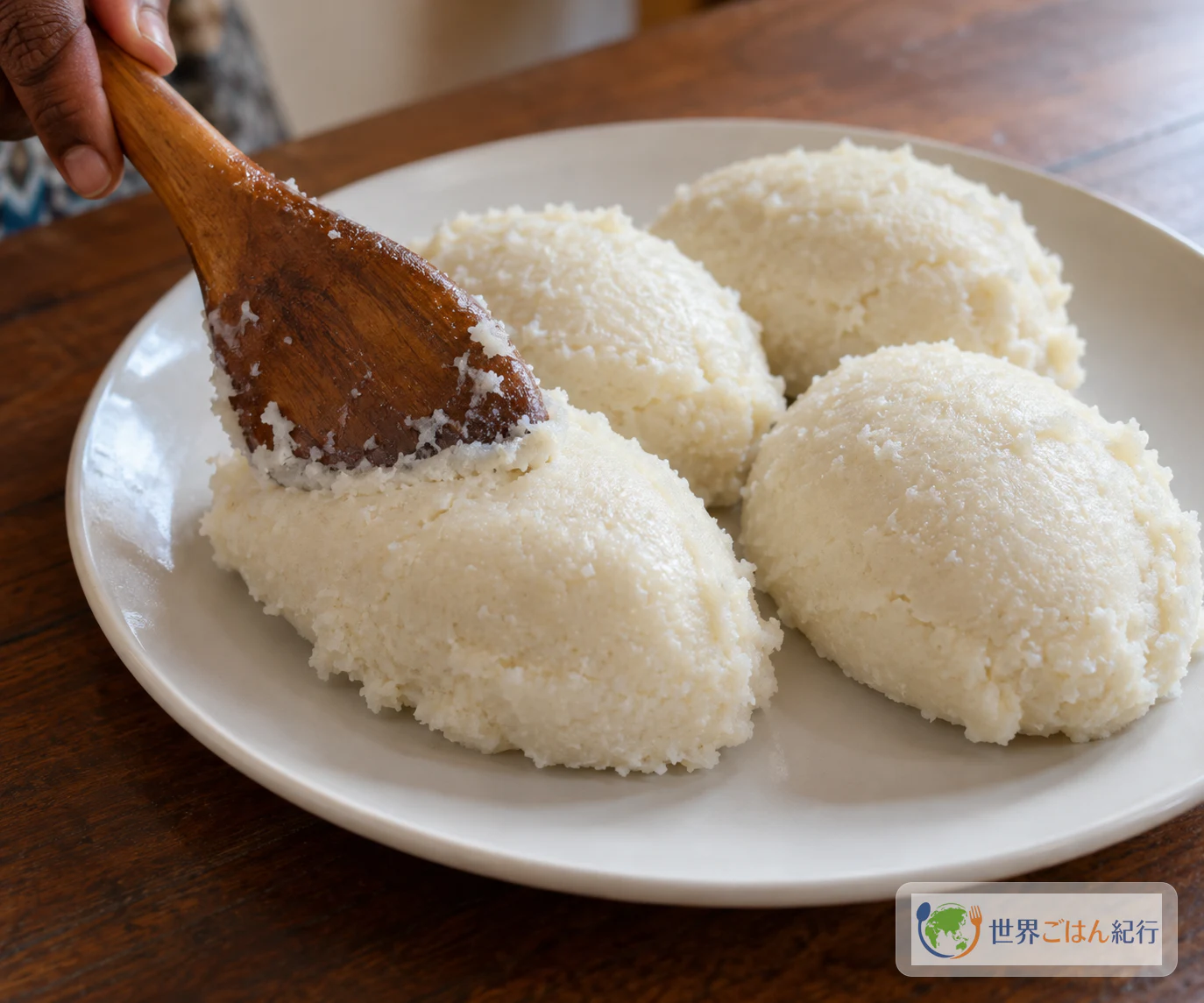
Nsima starts as something you could almost pour. Warm water goes into a pot, half the maize flour is stirred in, and it becomes a loose, pale porridge. After a covered simmer, the rest of the flour goes in a little at a time, and the wooden spoon begins to meet real resistance as the dough grows heavy and thick. What comes out is white, unseasoned and firm enough to scoop into patties.
This recipe follows one source, a recipe from Orant Charities Africa, an organization working in Malawi: 2 cups of cornmeal and 5 cups of water, nothing more. It has not been kitchen-tested by us, so the amounts, order and times below are the source's, and the visual cues are guidance for reading the pot rather than guarantees.
The heart of the article is the middle of the process, the point where porridge turns into nsima, and the question of which flour to buy when you cannot find the maize flour used in Malawi.
| Country | Malawi |
| Name | Nsima |
| Ingredients | Cornmeal (maize flour) and water only |
| Amounts used here | 2 cups cornmeal, 5 cups water |
| Yield | Not stated in the source; the dough is shaped into several patties |
| Kitchen-tested | No, this recipe has not been kitchen-tested |
What Nsima Is: A Staple and a Whole Way of Eating
In 2017, UNESCO inscribed "Nsima, culinary tradition of Malawi" on its list of intangible cultural heritage. The record describes nsima as a thick porridge made from maize flour, and treats the tradition as more than one dish: it covers how the food is prepared and how the meal is shared. The inscription ties this culinary tradition to Malawi; it does not mean that maize porridge in general began there.
A Malawian meal is built from two parts: nsima, the staple, and ndiwo, the relish served with it. Ndiwo can be greens, beans, fish or meat, and Orant describes nsima served with vegetable or protein relishes. Nsima itself is left plain because the flavor comes from what you eat it with.
Recipes also vary from source to source. A recipe credited to the Embassy of Malawi in Addis Ababa, hosted on a third-party cookbook site, uses only maize flour and water but gives no fixed flour amount: it begins by mixing flour into half a litre of cold water and adjusts the flour until the texture is medium-hard. That kind of adjustment by feel is part of the picture, even though this article keeps to Orant's fixed amounts.
Ingredients: 2 Cups Cornmeal, 5 Cups Water
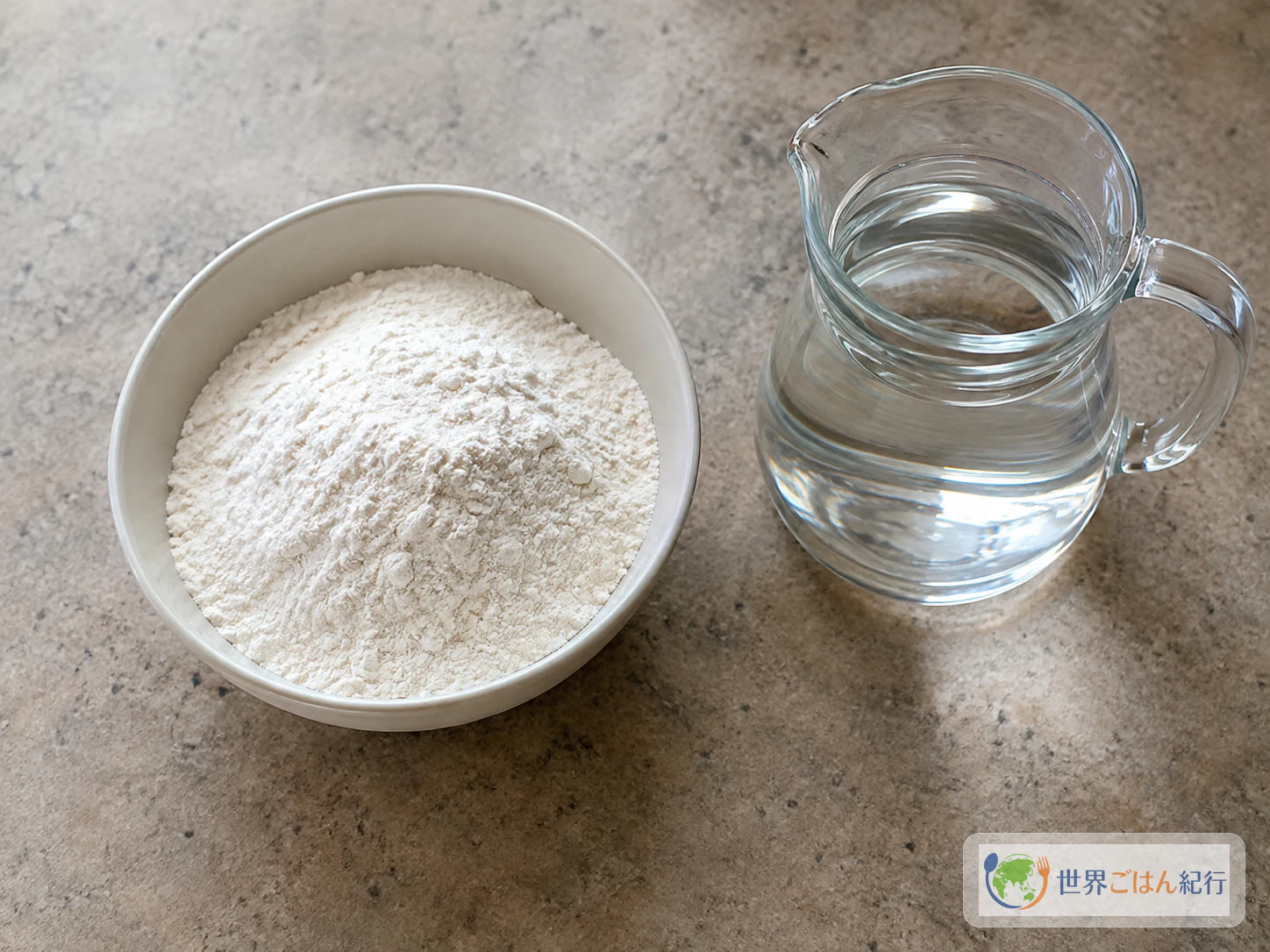
The source gives its amounts in cups without saying which cup standard it uses, so they are not converted to grams or millilitres here. Use the same cup for both the flour and the water, and the 2:5 ratio of the source stays intact. No salt or oil is added.
A separate charity source, Open Arms Malawi, uses 2.5 cups of water for each cup of maize flour, adding about half the flour first and the rest after the porridge boils. That is the same ratio as this recipe, which is reassuring, but its numbers are not mixed in here.
Choosing Flour
The sources do not specify a maize variety or how finely it is milled. The closest match you are likely to find is finely ground white maize flour; that is an editorial suggestion, not something the sources guarantee.
Ordinary supermarket cornmeal can be a different grind, and coarser meal can change how smooth the finished nsima is and how it takes up water. You can use it as an alternative, but expect a different texture. Cornstarch and wheat flour are not substitutes for nsima.
Equipment
- A heavy-bottomed pot with a lid
- A sturdy wooden spoon or paddle (a dedicated nsima paddle is helpful but not essential)
- A spoon you can moisten with water, for scooping
- Plates for serving
Method: From Porridge to Firm Nsima
The source says to bring the porridge to a boil and then simmer it covered, but gives no heat settings. Simmer means a gentle bubble, not a hard boil. The times below are the source's; watch the pot as well as the clock.
Serving: Tear Off a Piece and Scoop Up the Ndiwo
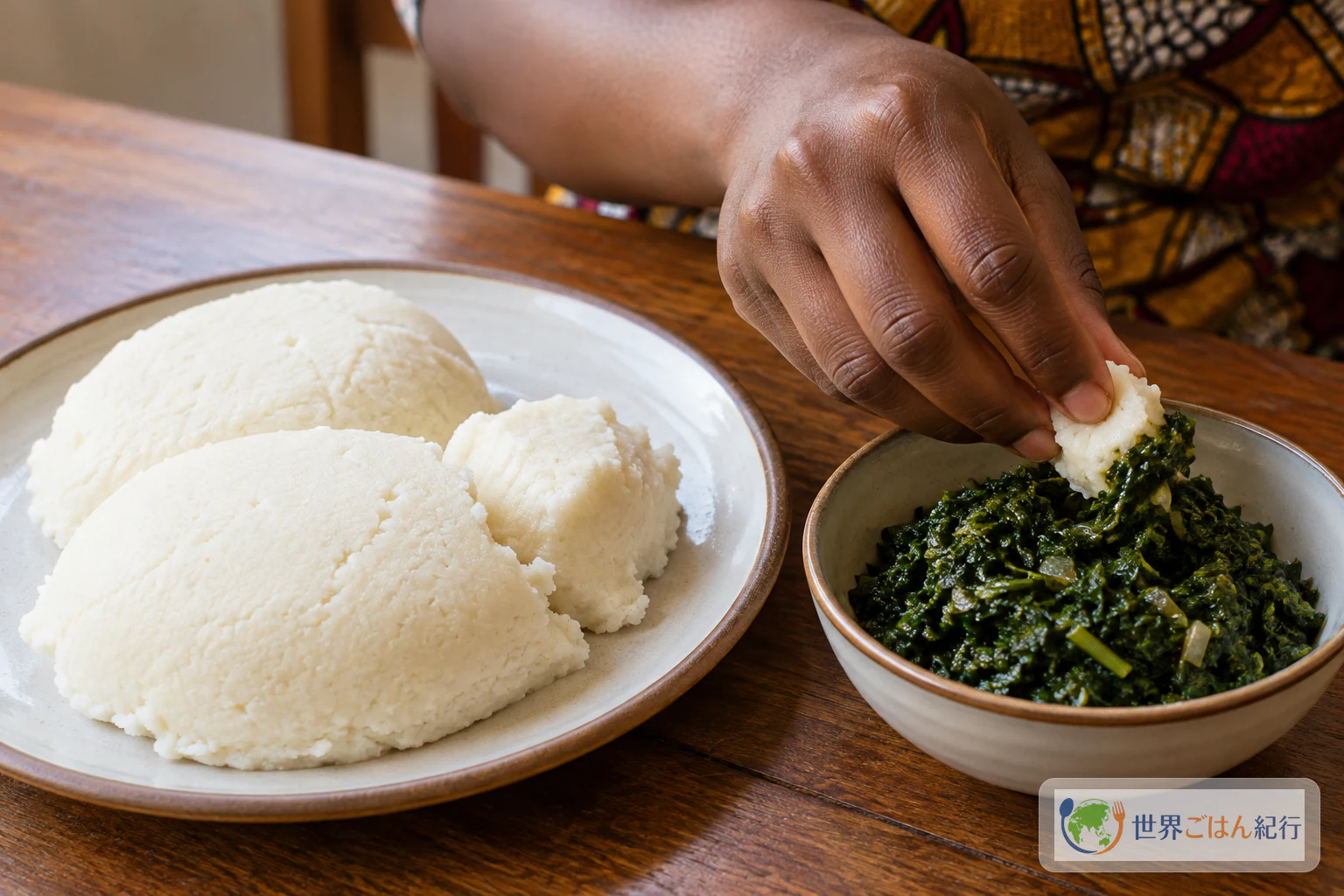
In the serving example here, nsima is served alongside ndiwo rather than mixed into it. The Open Arms Malawi author describes washing hands before the meal, then tearing off a piece of nsima by hand and using it to scoop up the relish. Customs differ between regions and households, so take this as one described way of eating, not a single rule.
Greens, beans, fish and meat are all options for ndiwo. This article does not give a recipe for a specific Malawian relish, so choose a dish you already know how to make and serve it in its own bowl.
Fixing Problems
| Problem | Likely cause | What to do |
|---|---|---|
| Lumps in the porridge | Flour added too fast in step 2 | Add it gradually while stirring constantly |
| Lumps after the second cup of flour | Too much flour added at once in step 4 | Add the remaining flour a little at a time and press lumps against the side of the pot with the spoon |
| Hard to stir at the end | The dough is heavy once all the flour is in | This is expected; keep pressing and folding rather than adding the flour faster |
| Texture different from expected | Flour grind differs from Malawian maize flour | Note the result and consider a finer white maize flour next time |
The sources give no fixed water or flour adjustment for different flours, so none is given here.
Nsima and Its Neighbors
Thick maize porridges are eaten in many places nearby, such as nshima in Zambia and ugali in East Africa. They share a family resemblance, but they carry their own names, recipes and eating customs. Treat nsima as Malawi's own culinary tradition rather than another name for the same dish.
Frequently Asked Questions
Do I add salt?
Not in this recipe. The source uses only cornmeal and water, and nsima is meant to stay plain because its flavor comes from the ndiwo.
Can I use regular cornmeal?
You can try it, but it is an alternative rather than a match. Cornmeal can be milled differently from the maize flour used for nsima, and a different grind can change the texture. Finely ground white maize flour is the closer choice.
Is nsima eaten on its own?
It is usually part of a meal with ndiwo: greens, beans, fish or meat served alongside. Nsima is the staple, and the relish brings the flavor.
Sources
- Orant Charities Africa, "Learn to Make Nsima, Malawi's Staple Food." Primary recipe for this article: 2 cups cornmeal and 5 cups water; starting with warm water; the first cup of flour stirred into a porridge; a covered simmer of 10–15 minutes; the remaining cup added gradually and stirred about 5 minutes; shaping into several patties; serving with vegetable or protein relishes. https://orantcharitiesafrica.org/learn-to-make-nsima-malawis-staple-food/
- Open Arms Malawi, "How I will make a Malawian themed meal." Cross-check recipe: 2.5 cups water per cup of maize flour, half the flour first and the rest after the porridge boils, 10 minutes before the final flour and 5 minutes after; the author's description of handwashing and eating by hand. https://www.openarmsmalawi.org/news/how-i-will-make-a-malawian-themed-meal
- Africa-Europe Cook Book, "Nsima." Supplementary only: a page credited to the Embassy of Malawi in Addis Ababa, hosted on a third-party site and not independently confirmed on an embassy domain. Maize flour and water only, an initial half litre of cold water, 10–15 minutes of boiling, flour adjusted to a medium-hard texture, served with relish, fish, vegetables or legumes. It gives no fixed flour amount. https://dev-cook-book.pomilio.it/recipes/nsima/
- UNESCO Intangible Cultural Heritage, "Nsima, culinary tradition of Malawi." Cultural record: the 2017 inscription, nsima as a Malawian culinary tradition and thick maize-flour porridge, and the context of food preparation and shared meals. Not used for recipe amounts. The research record notes that the page returned a human-verification screen; these limited cultural claims were checked against official text shown in search results, not the full page. https://ich.unesco.org/en/RL/nsima-culinary-tradition-of-malawi-01292