Foutou Banane: A Warm, Elastic Dough Made to Carry Sauce
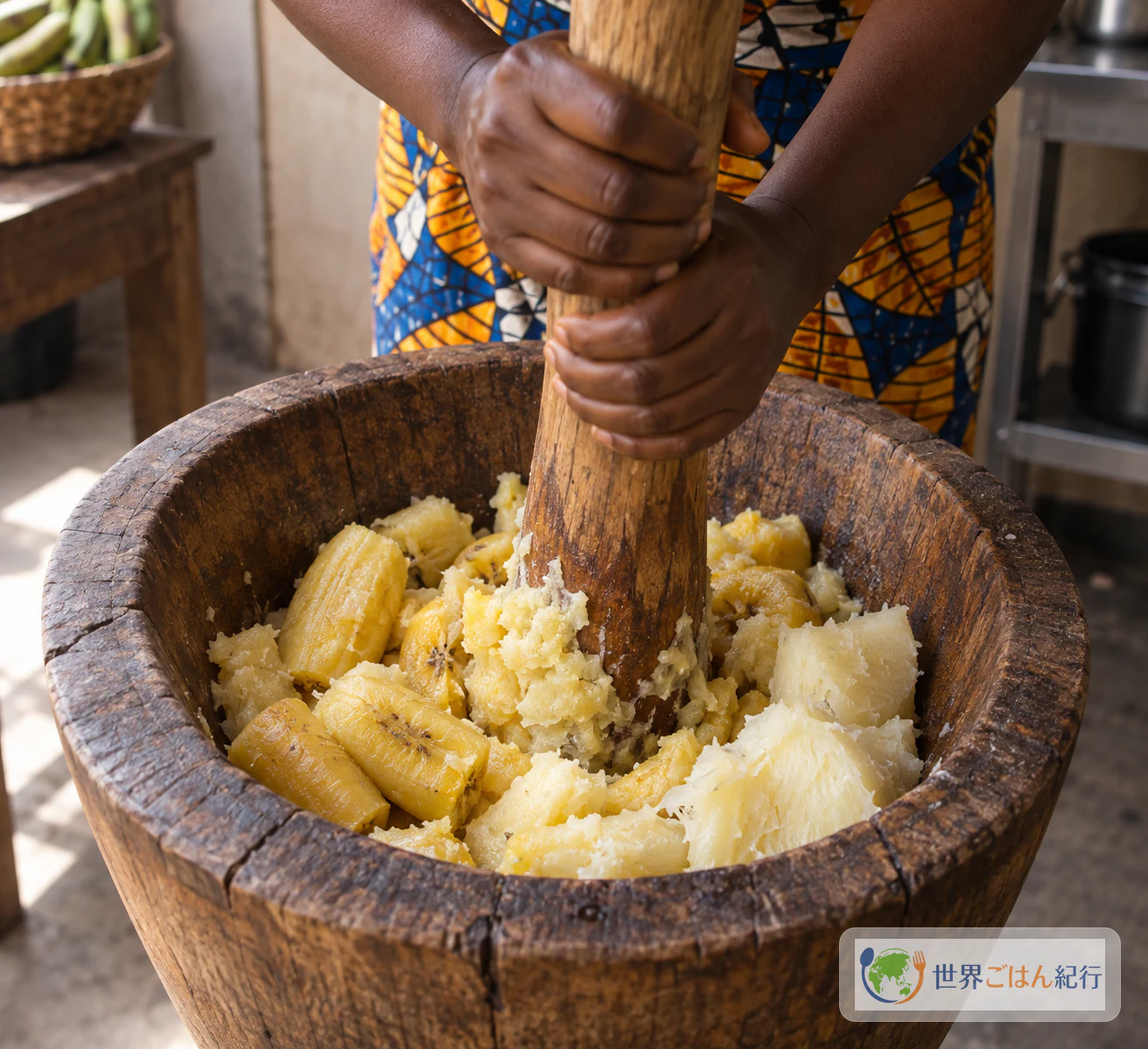
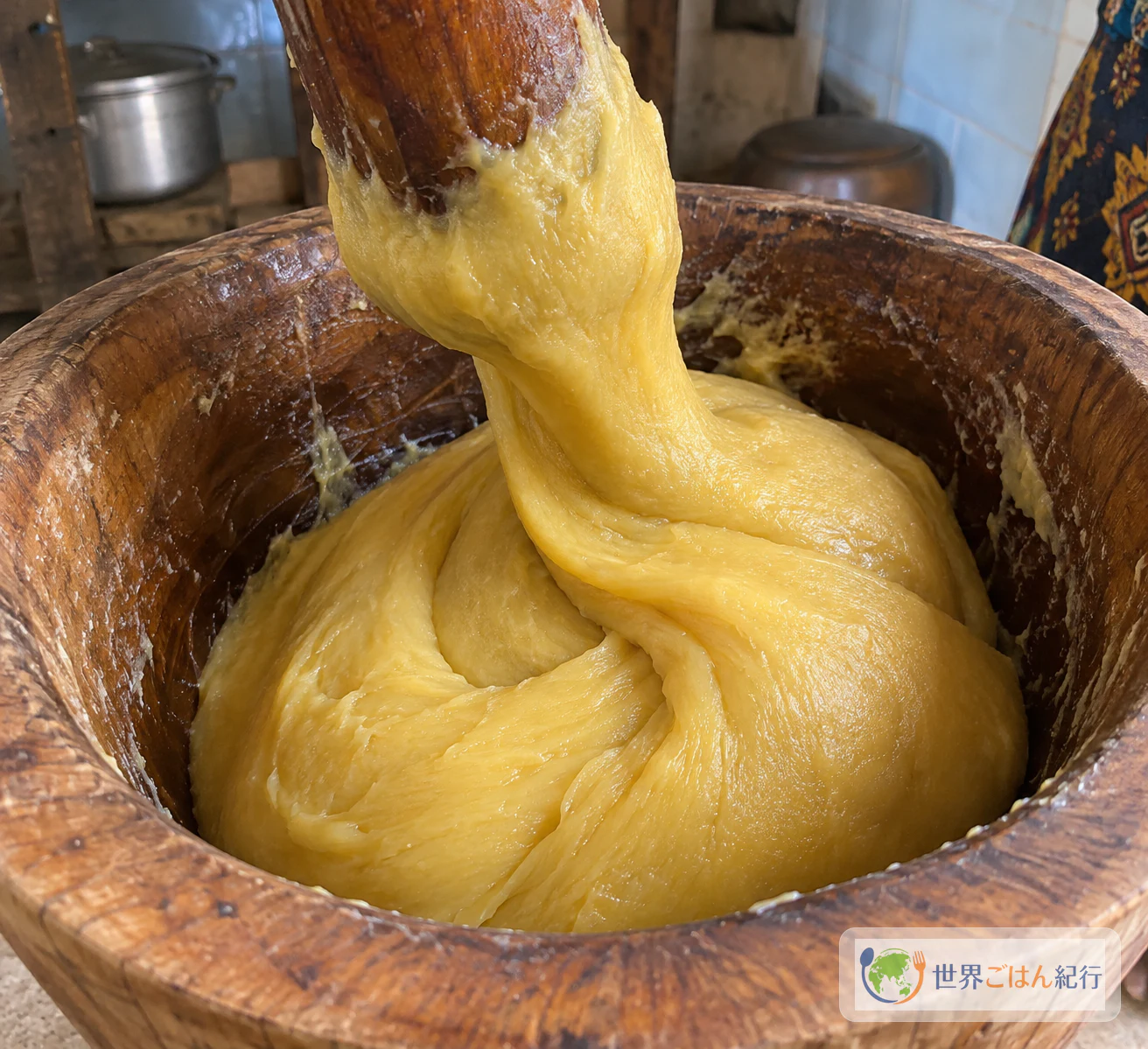
Two ingredients, boiled together and pounded together while hot. Aim for a smooth, cohesive dough with some spring, and let the sauce bring the seasoning.
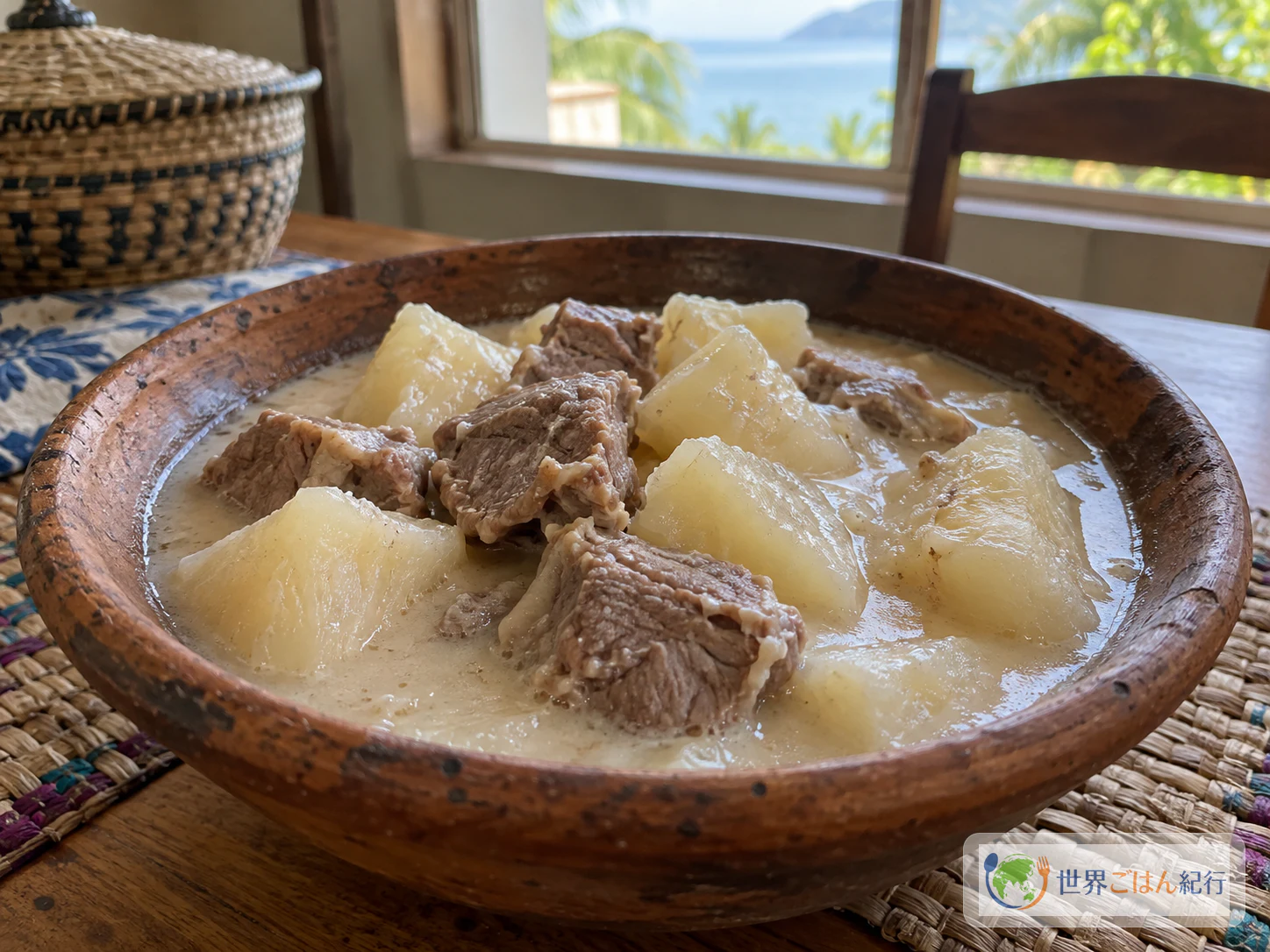
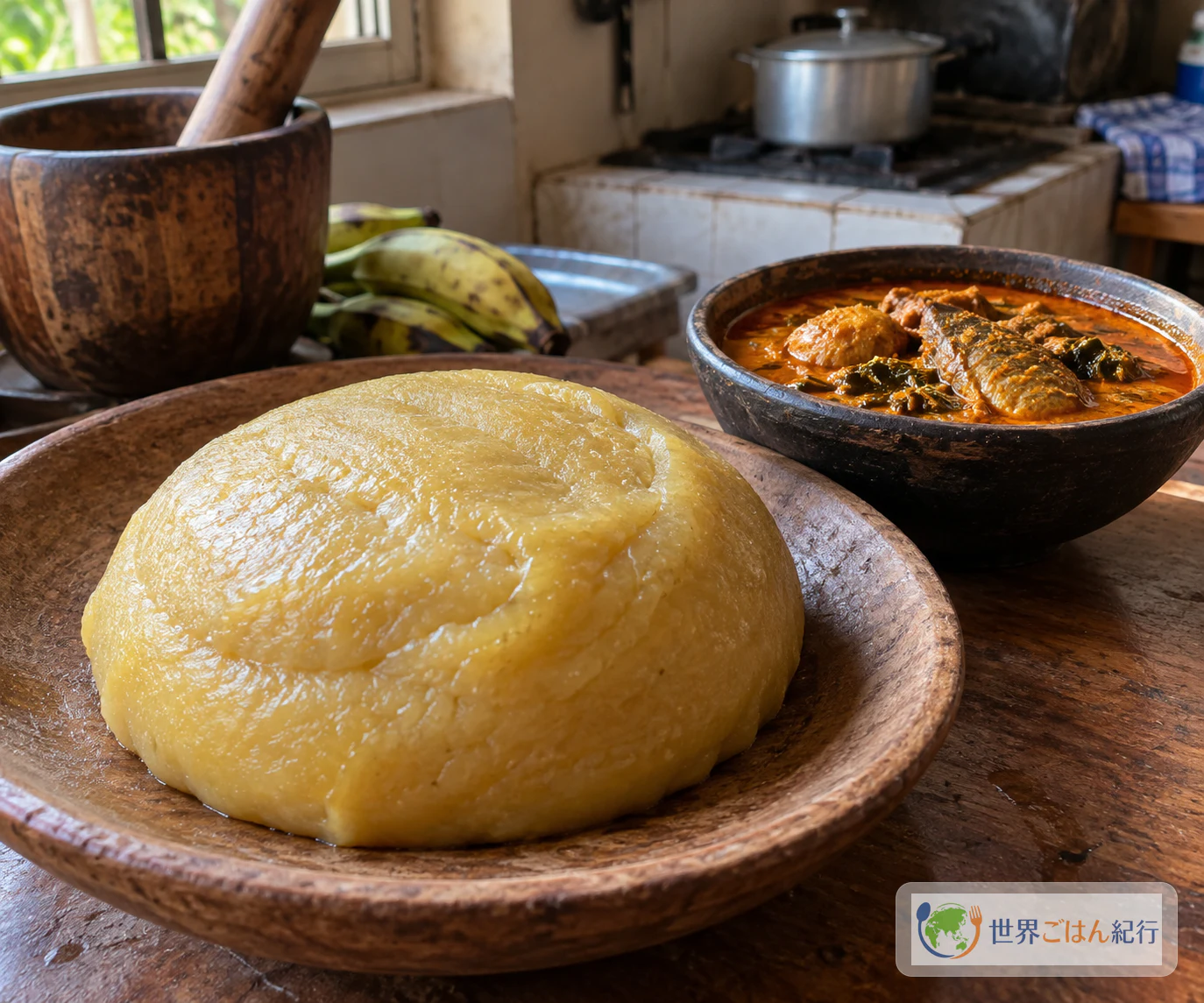
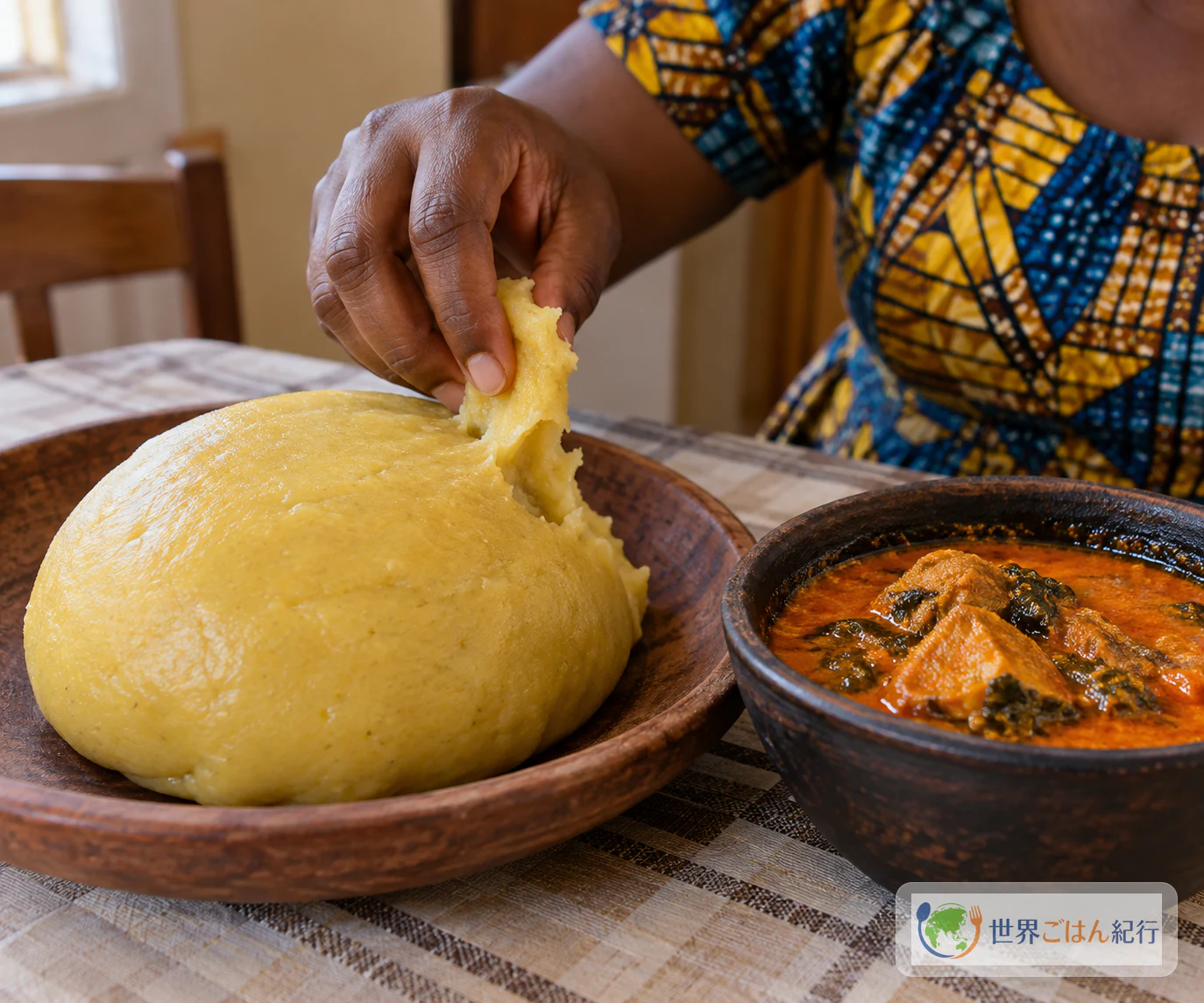
A pale golden mound sits beside a bowl of sauce. A small piece is torn from it by hand, shaped into a scoop, and dipped. That is how foutou banane is eaten: as a pounded staple made from plantain and cassava, served warm with sauce. A sector report on plantain in Côte d'Ivoire describes foutou as plantain and cassava pounded together into an elastic paste that is eaten with sauce.
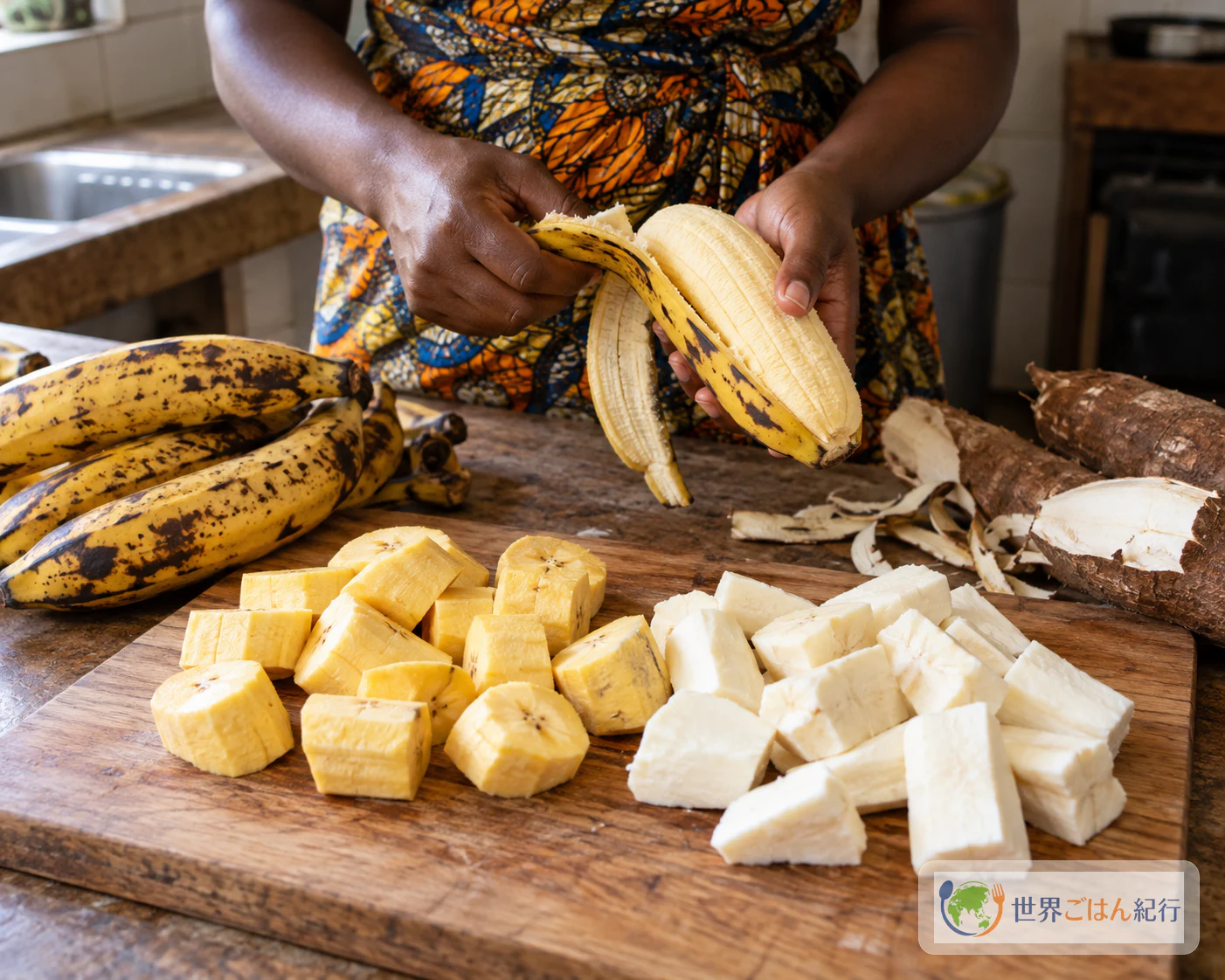
This article follows one specific version: a West African recipe guide's "Ayé tro au foutou banane," in which 6 ripe plantains and 1 kg of cassava are peeled, cooked together, and pounded together in a mortar. The guide labels it for six people but gives no finished weight or number of portions, so how far it goes depends on appetite and on the sauce you serve. It also gives no cooking time for the foutou itself; you judge doneness by feel instead. This recipe has not been kitchen-tested by Sekai Gohan.
Other cooks make foutou with green plantain, with plantain alone, with yam, or with added cassava flour. Those versions are described later, kept apart from this one. For more dishes from the same country, see Ivory Coast.
Ingredients: Ripe Plantain and Cassava, Nothing Else in the Dough
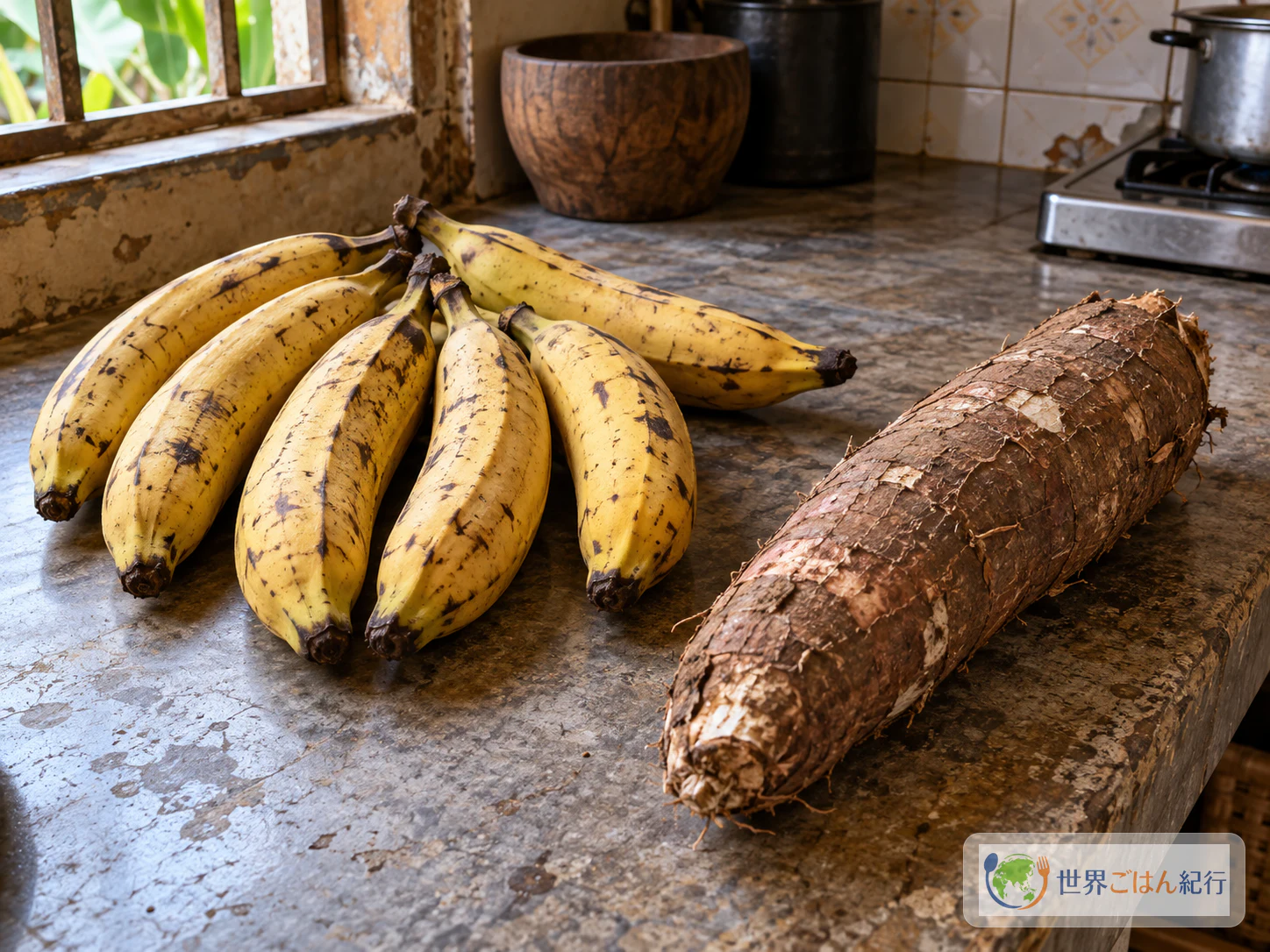
The dough has two ingredients. The water is only for boiling and does not go into the dough. No salt, flour or other liquid is added to the dough.
Equipment
- Knife and cutting board
- Large pot
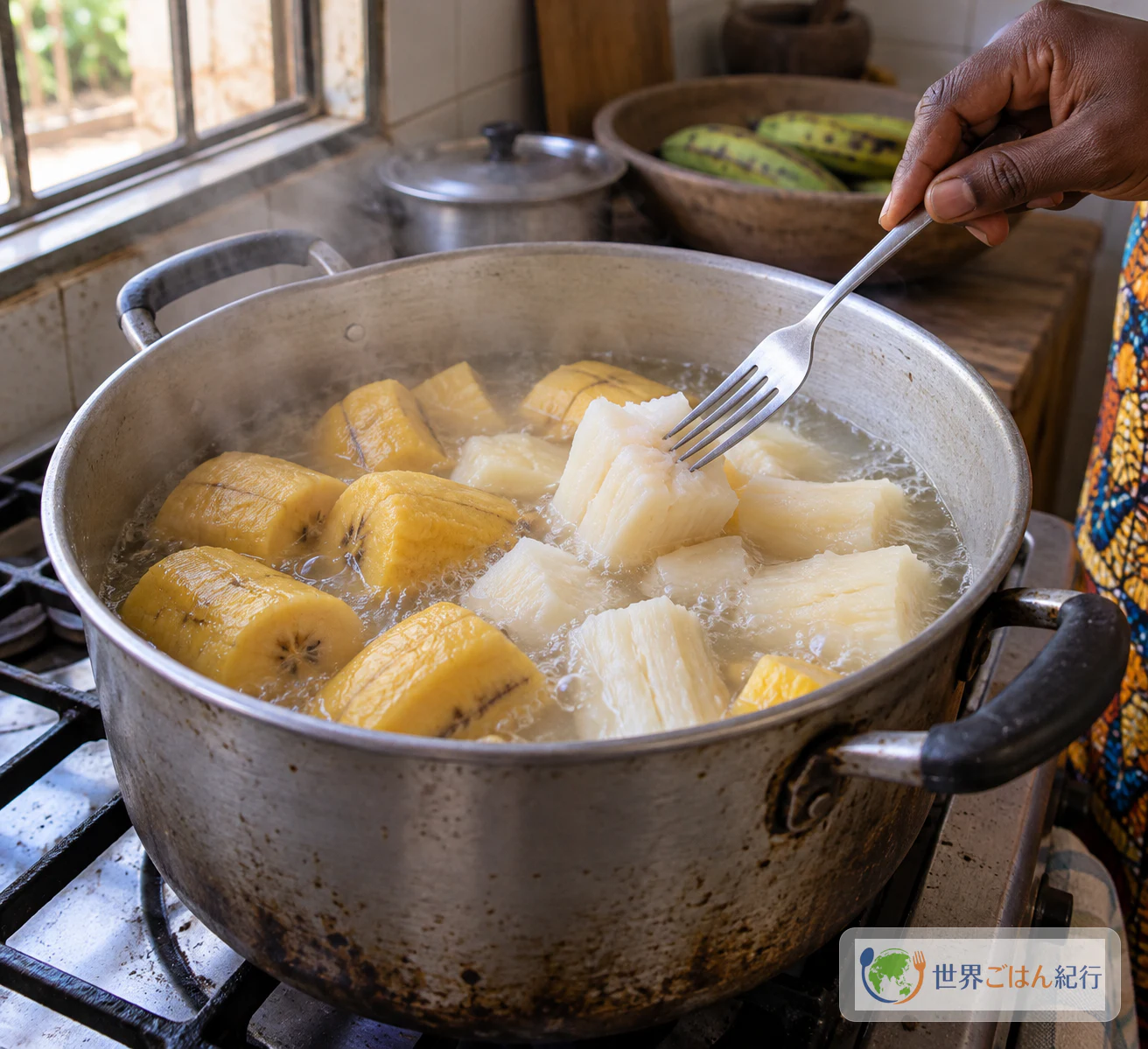
- Fork, for testing tenderness
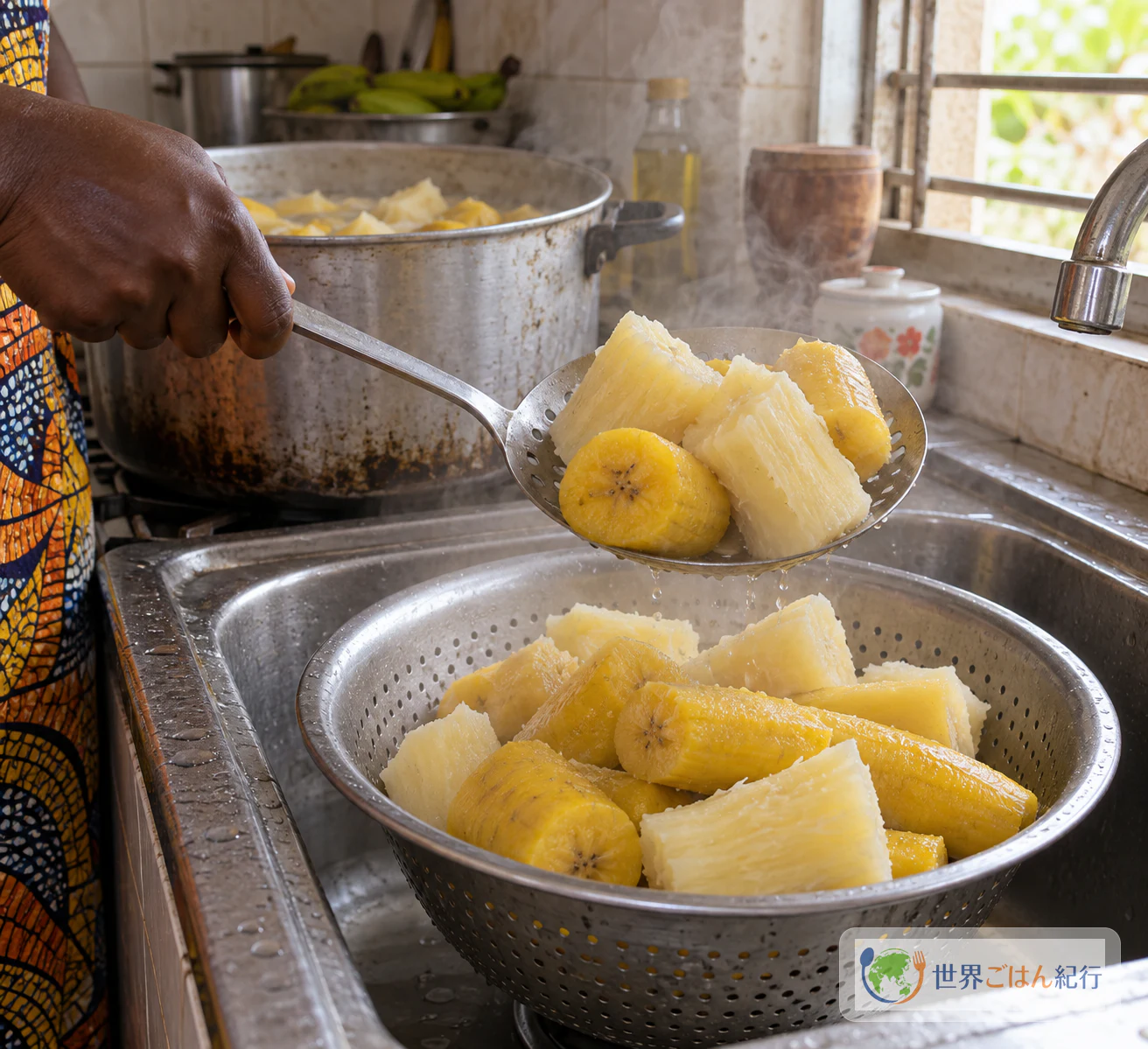
- Slotted spoon and colander
- Sturdy wooden mortar and long pestle
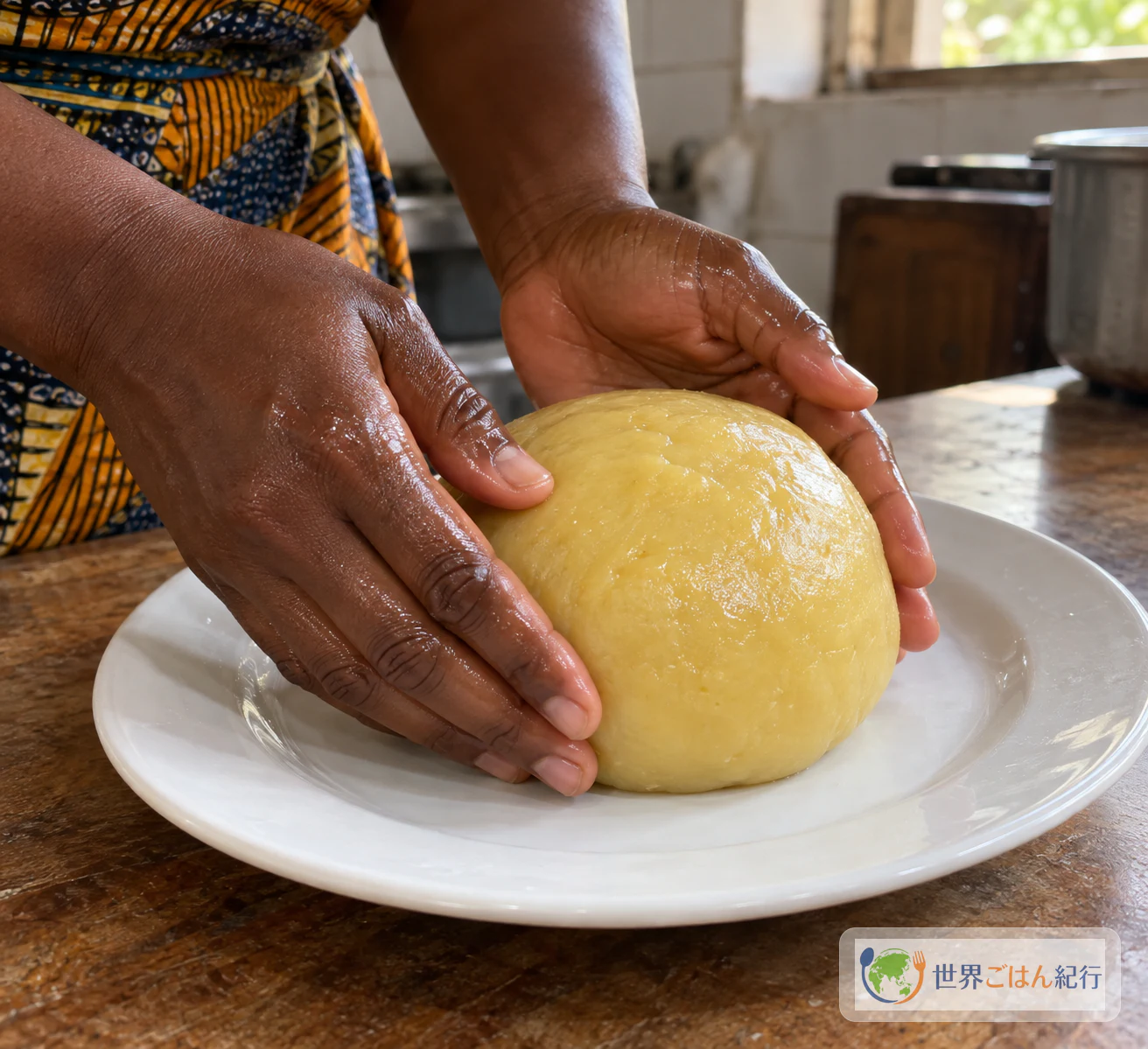
- Plates for shaping and serving
Choosing Plantains and Cassava
Plantain is not a dessert banana. Look for fruit sold specifically as plantain at greengrocers or import shops. Sweet eating bananas differ in sweetness and starch, so they are not a simple stand-in, and a dough made with them should not be taken as the same dish. For this version, choose ripe plantains: yellow skins, often with dark freckles.
The ripeness choice matters. Elasticity is an important quality for foutou, and green plantain is used for greater elasticity. This version uses ripe plantains. Both are real choices, but they are different versions; if you swap green plantain in, treat it as the green-plantain version rather than this one.
Cassava contains cyanogenic glycosides. Peel cassava and cook it fully before eating. Boiling, steaming, baking or frying whole fresh roots or pieces does not reliably ensure that cyanogenic glycosides are reduced to safe levels, because the amount reduced varies. Use only cassava that is appropriately processed and sold for food, and follow the supplier's preparation instructions. Do not use roots of unknown origin or bitter cassava on the assumption that boiling makes them safe. If you cannot confirm the seller's processing and cooking guidance, do not use that cassava. Frozen cassava sold for cooking, with clear package instructions, can be easier to judge than an unlabeled fresh root.
This version uses cassava; yam makes a different foutou (see the variations below), and adding flour belongs to a different method.
Method: Boil Together, Pound Together
Cook until a fork slides into the center of the cassava with little resistance and the plantain crushes easily. Then pound while everything is still hot.
Foutou is best eaten freshly made and warm. No storage period has been established for this dough, so make it for the meal you are serving.
Hard Centers, Sticky Dough, Lumps: Fixing Problems
| Problem | Likely cause | What to do |
|---|---|---|
| Hard core in the cassava | Pieces too large, or a harder root | Test the center of the biggest pieces with a fork and keep boiling until no hard core remains. Do not eat undercooked cassava |
| Dough sticky or loose | Not drained enough, or water added | Drain thoroughly and never add the cooking water to the dough. Don't reach for flour straight away |
| Grains remain or it won't come together | Pounded after cooling, or too much in the mortar at once | Pound while hot, in small batches, and keep going. Don't overfill the mortar |
| Not enough spring | Ripe plantain gives a softer result | That is a feature of this version. For more elasticity, try the green-plantain version as a separate recipe |
A food processor can break the pieces down, but it is not certain to give the same texture as pounding. If you try one, work in small amounts and watch the dough rather than expecting a pounded result.
Variations: Ripeness, Plantain Only, Yam, Flour
Each of these is a different version, not a fix for this one. Make the ripe-plantain version first, then change one thing at a time.
| Version | What changes | Note |
|---|---|---|
| Green plantain | More elasticity | Green plantain is used for greater elasticity |
| Plantain only | No cassava | A plantain-only version |
| Yam | Yam instead of plantain | A different dish, not a substitute for this one |
| With cassava flour | Optional 150 g cassava flour, cassava pounded first, plantain added gradually | Optional addition in a separate method; not part of this version |
| Different sauce | Same dough, different accompaniment | Palm-seed sauce, sauce graine, sauce claire or peanut sauce |
Foutou on the Ivorian Table
The recipe guide followed here sets foutou banane with Ayé tro, a palm-seed sauce, and places this meal in the west, central-west and south of Côte d'Ivoire. The guide associates it with lunch, and particularly with Sunday meals among the Ebrié, Abidji and Aladjan peoples in the south. That is the guide's account, not a description of every household.
The plantain sector report, dated 2016, describes foutou as a common daily food for some southern ethnic families. It treats elasticity as a key sensory quality, explains that green plantain is used for greater elasticity, and mentions the Afoto (Corne 1) variety. Its market and agricultural descriptions date from that report and should not be read as current statistics.
Journal des Femmes Cuisine and Africa-Cuisine both pair foutou banane with sauce graine and peanut sauce, and Journal des Femmes Cuisine also names sauce claire. The sauce is its own dish with its own recipe; the foutou stays a plain dough of plantain and cassava.
The dough itself contains only plantain and cassava. Sauces served alongside, especially peanut sauce, may contain peanuts or other allergens. Check each sauce separately and keep it in its own bowl.
Frequently Asked Questions
Should I use ripe or green plantains?
For this version, ripe. The recipe guide it follows calls for ripe plantains. The plantain sector report notes that green plantain gives greater elasticity, which is valued in foutou, so a green-plantain foutou is a real choice too. Treat it as a separate version rather than mixing the two. Journal des Femmes Cuisine gives a separate recipe for 4 people with 3 plantains and 500 g cassava, boiled about 20–25 minutes. Those amounts and that time belong to its different formula and cut size; judge this version by tenderness.
Can I add cassava flour?
Africa-Cuisine adds an optional 150 g of cassava flour as a personal preference, with cassava pounded first and plantain added gradually. This version uses no flour. If your dough is loose, check draining and pounding first.
Why won't my dough come together?
Go back through the stages in order: is the cassava soft to the center, was it drained well, and was it pounded hot in small batches? Adding water makes it looser; flour belongs to a different method.
What sauce should I serve it with?
The recipe guide pairs it with Ayé tro, a palm-seed sauce. Journal des Femmes Cuisine names sauce graine, sauce claire and peanut sauce, and Africa-Cuisine names sauce graine and peanut sauce. Check peanut sauce and others for allergens.
Is it enough to just boil cassava?
Not if you don't know where the cassava came from. Food Standards Australia New Zealand advises peeling and fully cooking cassava, and warns that boiling whole fresh roots or pieces is not by itself a reliable way to bring cyanogenic glycosides to safe levels. Use cassava sold for food, follow the supplier's preparation instructions, and skip roots of unknown origin or bitter cassava.
Can I use sweet bananas instead of plantains?
They are not a simple substitute. Sweet bananas differ in sweetness and starch, and the result should not be taken as the same dish.
Sources
- ALIMENTERRE, "De la terre à la table : L'Afrique de l'Ouest et ses trésors culinaires" (recipe guide). Source of the adopted version: Ayé tro au foutou banane for 6 people, with 6 ripe plantains and 1 kg cassava peeled, cooked together and pounded together in a mortar, served hot; consumption in the west, central-west and south of Côte d'Ivoire; association with lunch and Sunday meals among the Ebrié, Abidji and Aladjan. https://www.alimenterre.org/system/files/2024-10/RECETTES%20CUISINE%20version%20revue.pdf
- ALIMENTERRE, "Diagnostic de la filière banane plantain en Côte d'Ivoire" (sector diagnostic report, 2016). Foutou as plantain and cassava pounded into an elastic paste served with sauce; a common daily food for some southern ethnic families; elasticity as a quality criterion and green plantain for greater elasticity; the Afoto (Corne 1) variety. https://www.alimenterre.org/system/files/ressources/pdf/1067-diagnostic-de-la_filiere-banane-plantain-cotedivoire.pdf
- Journal des Femmes Cuisine, "Foutou banane et manioc : la recette traditionnelle." A separate recipe for 4 people (3 plantains, 500 g cassava, about 20–25 minutes boiling, pounded hot to a smooth, slightly elastic texture); variants with plantain only or yam; sauce graine, sauce claire and peanut sauce as accompaniments. https://cuisine.journaldesfemmes.fr/recette/3259915-foutou-banane-et-manioc-la-recette-traditionnelle
- Africa-Cuisine, "Foutou Banane : Recette Traditionnelle Ivoirienne." Foutou banane served with sauce graine or peanut sauce; a method variation pounding cassava first and adding plantain gradually, with optional cassava flour as a personal addition. https://africa-cuisine.com/fr/recipe/foutou-banane/
- Food Standards Australia New Zealand, "Cassava and bamboo shoots." General food safety guidance: cassava contains cyanogenic glycosides, must be peeled and fully cooked, ordinary cooking of whole fresh roots or pieces is not by itself reliable, and only appropriately processed cassava should be used, following supplier instructions. https://www.foodstandards.gov.au/consumer/prevention-of-foodborne-illness/cassava