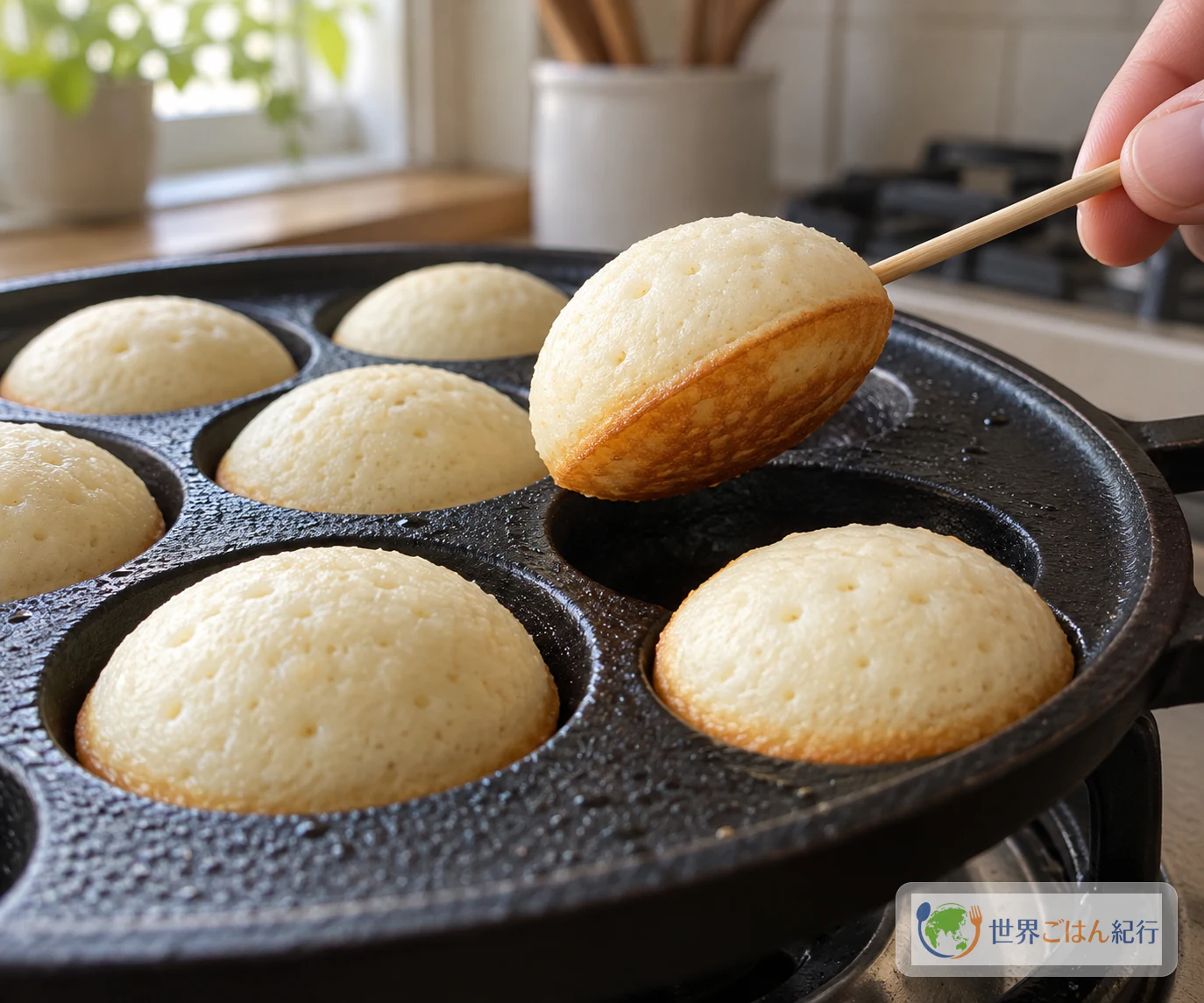
Ramanonaka: Small Rice Cakes From a Dimpled Pan
Use both coarse rice semolina and fine rice flour, rest the batter until it has risen slightly, and cook it on one side only. Aim for a toasted, set base and a soft top.
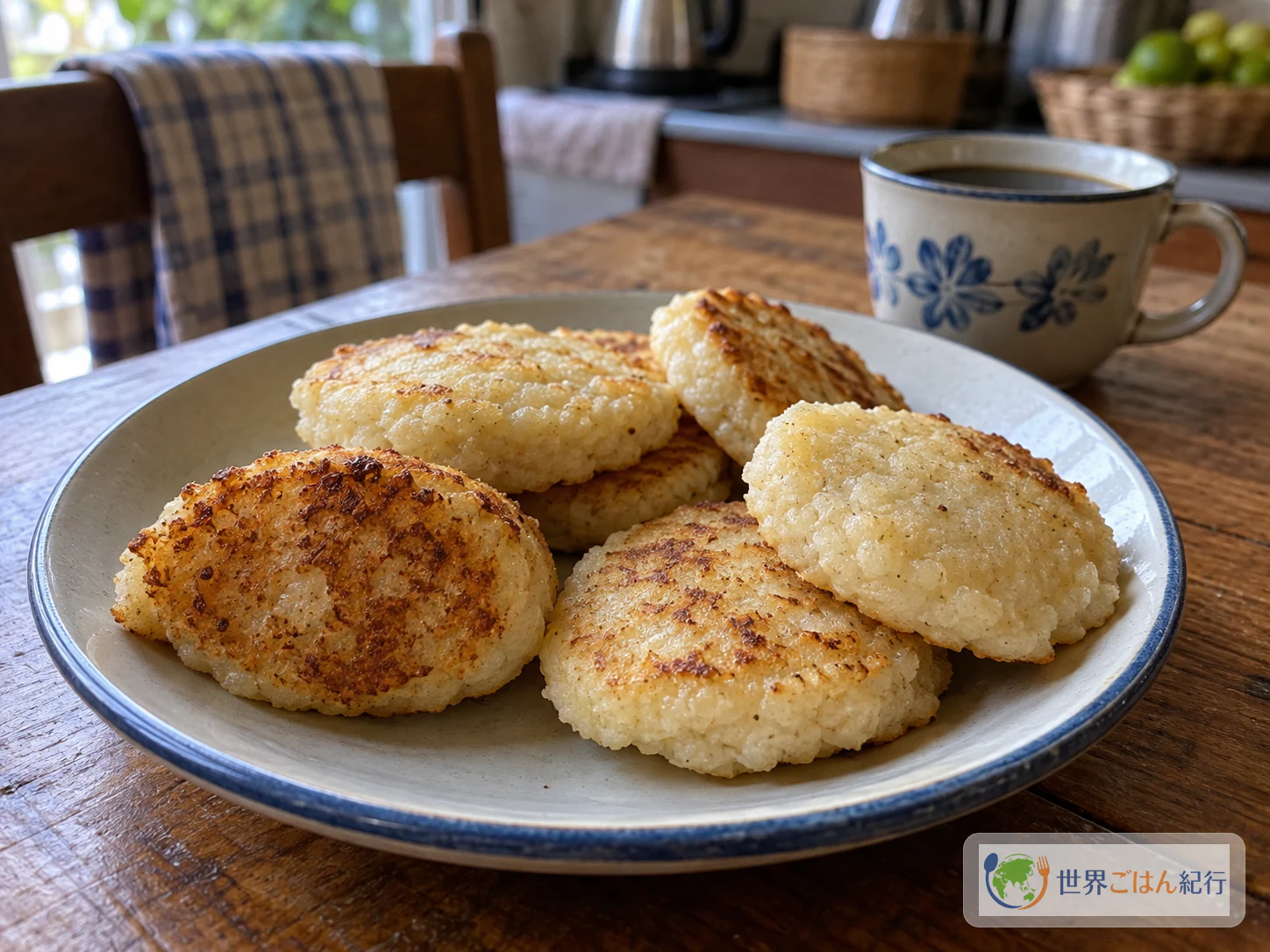
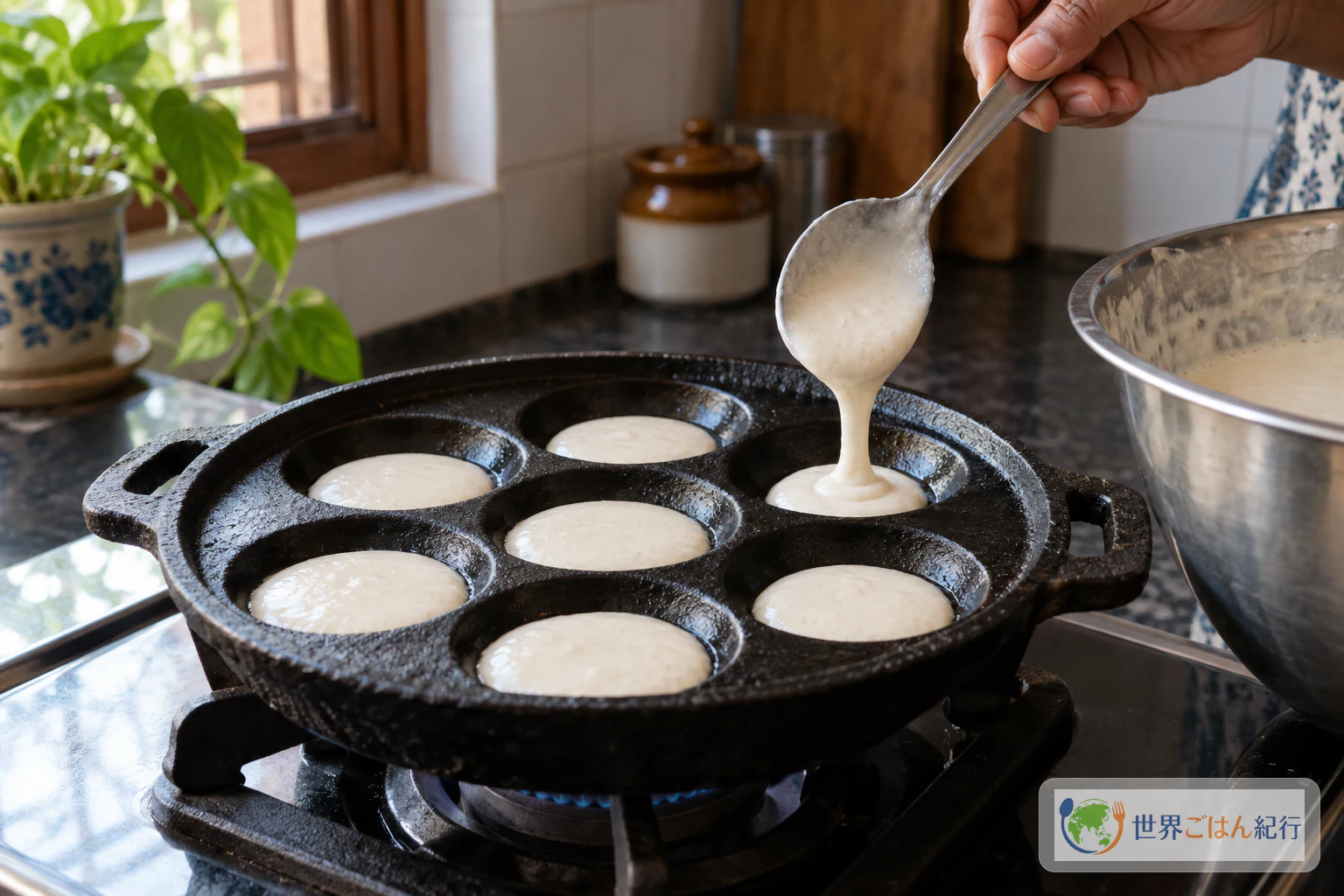
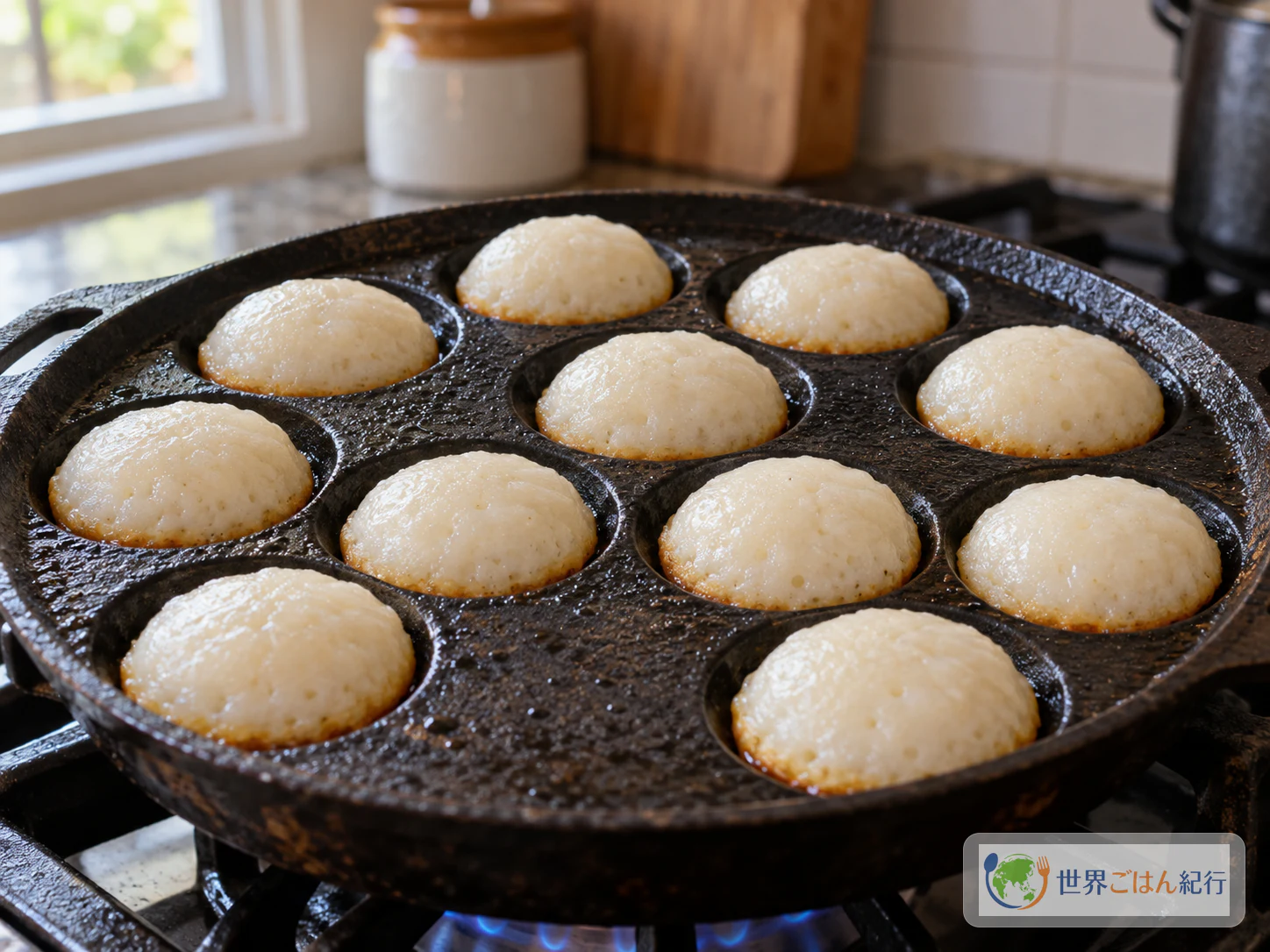
A spoonful of pale, lightly risen batter goes into each hollow of a hot, lightly oiled pan. A few minutes later, the base has set and turned golden while the top is still soft, and the cakes come out one by one. That is ramanonaka in the version given here: small, savory, and built on rice.
Madagascar Destination, the recipe followed here, describes ramanonaka as a salted batter of rice semolina and rice flour, and presents this style as coming from the Malagasy highlands. It is sometimes explained as a savory counterpart to sweet mofo gasy. Spyceez places ramanonaka at morning street stalls and among afternoon snacks. A recipe in the community newsletter MPAMAFY suggests eating it hot or warm at breakfast or snack time, with coffee or Indian-style tea. These are descriptions from individual publications, not proof of one nationwide habit.
The same name also covers noticeably different batters and cooking methods, so this article follows one recipe from start to finish and treats the others as separate versions. For more of the country's food, see our Madagascar page.
This recipe has not been kitchen-tested. The formula and method come from Madagascar Destination. Its page gives no resting time, yield or pan-cavity size, so this article gives visual cues instead of filling those gaps. The 3–4 minute cooking time is a guide and will vary with your equipment.
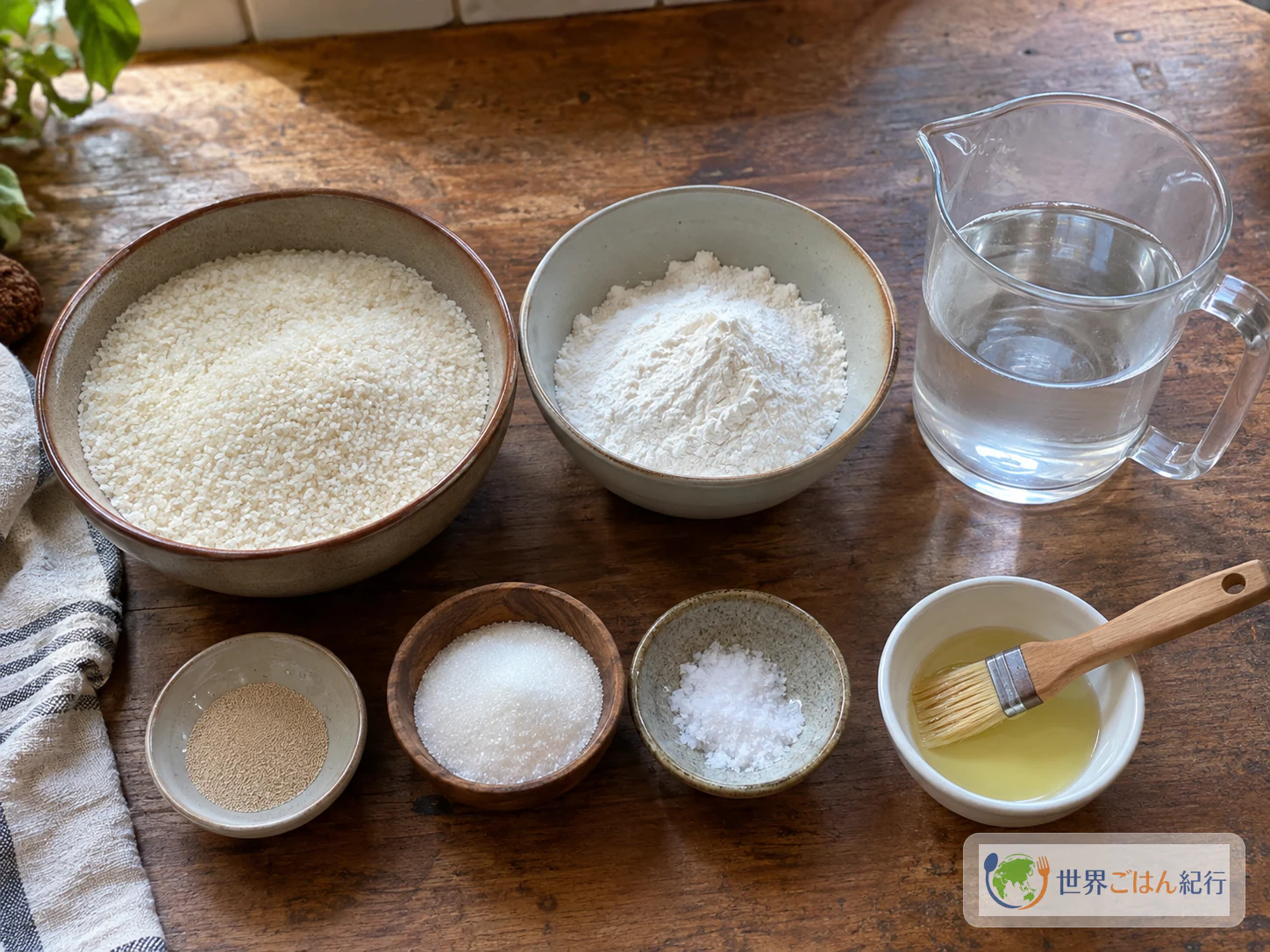
Ingredients: Rice Semolina, Rice Flour and Yeast
Choosing and Substituting: Rice Semolina Is Not Rice Flour
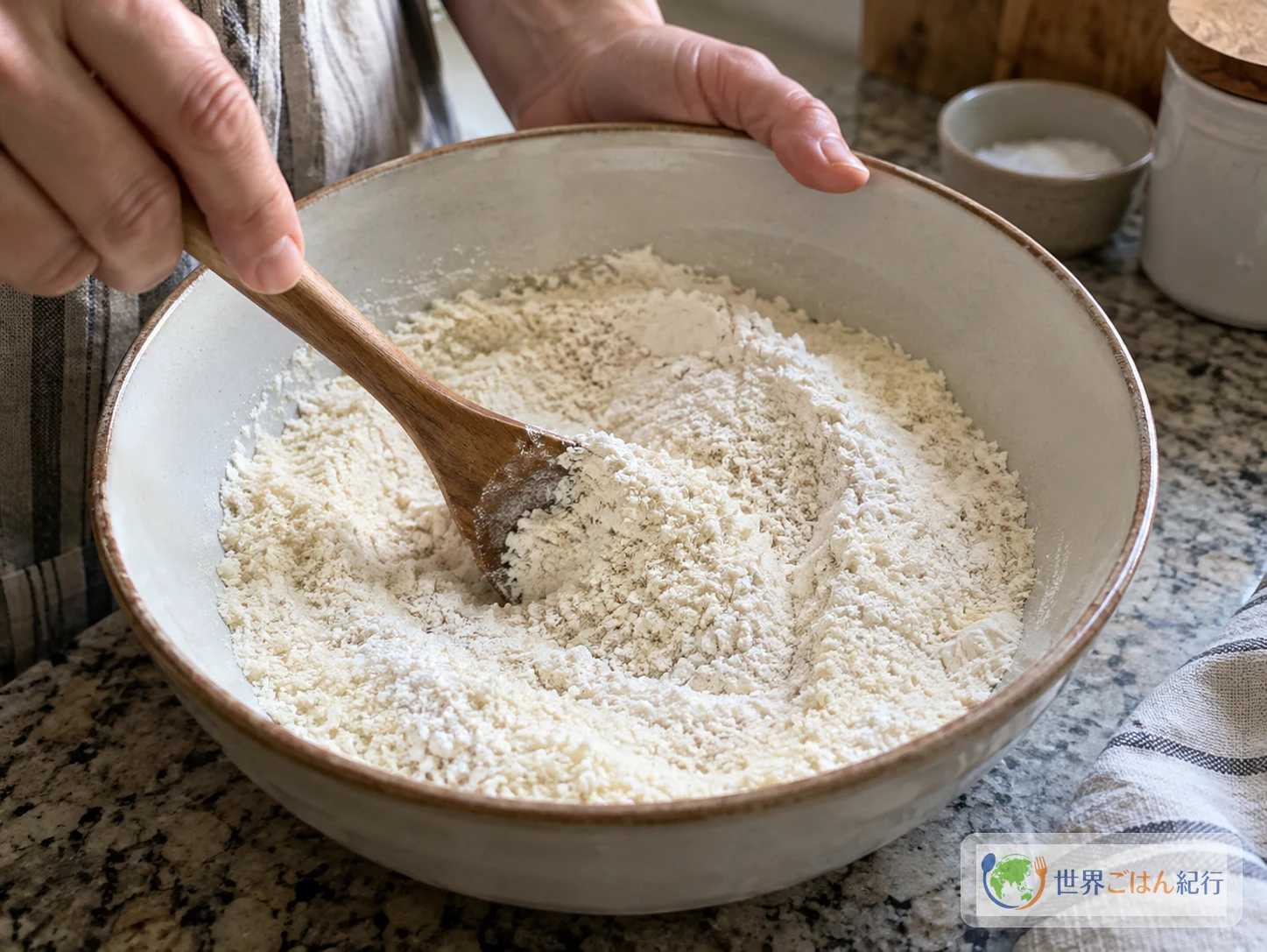
Rice semolina (semoule de riz) is coarsely ground rice, and it is not the same as fine rice flour. Look for it at import grocers or online, and try searching under the French name as well. Check the product description so that you don't pick up wheat semolina for couscous by mistake.
Rice flour should be a rice flour sold for baking or cooking. Have both rice flour and rice semolina on hand for this recipe. Replacing the semolina with the same weight of rice flour has not been tested. The grain size and water absorption differ, so a swap would be an experiment, and the cakes may turn out differently.
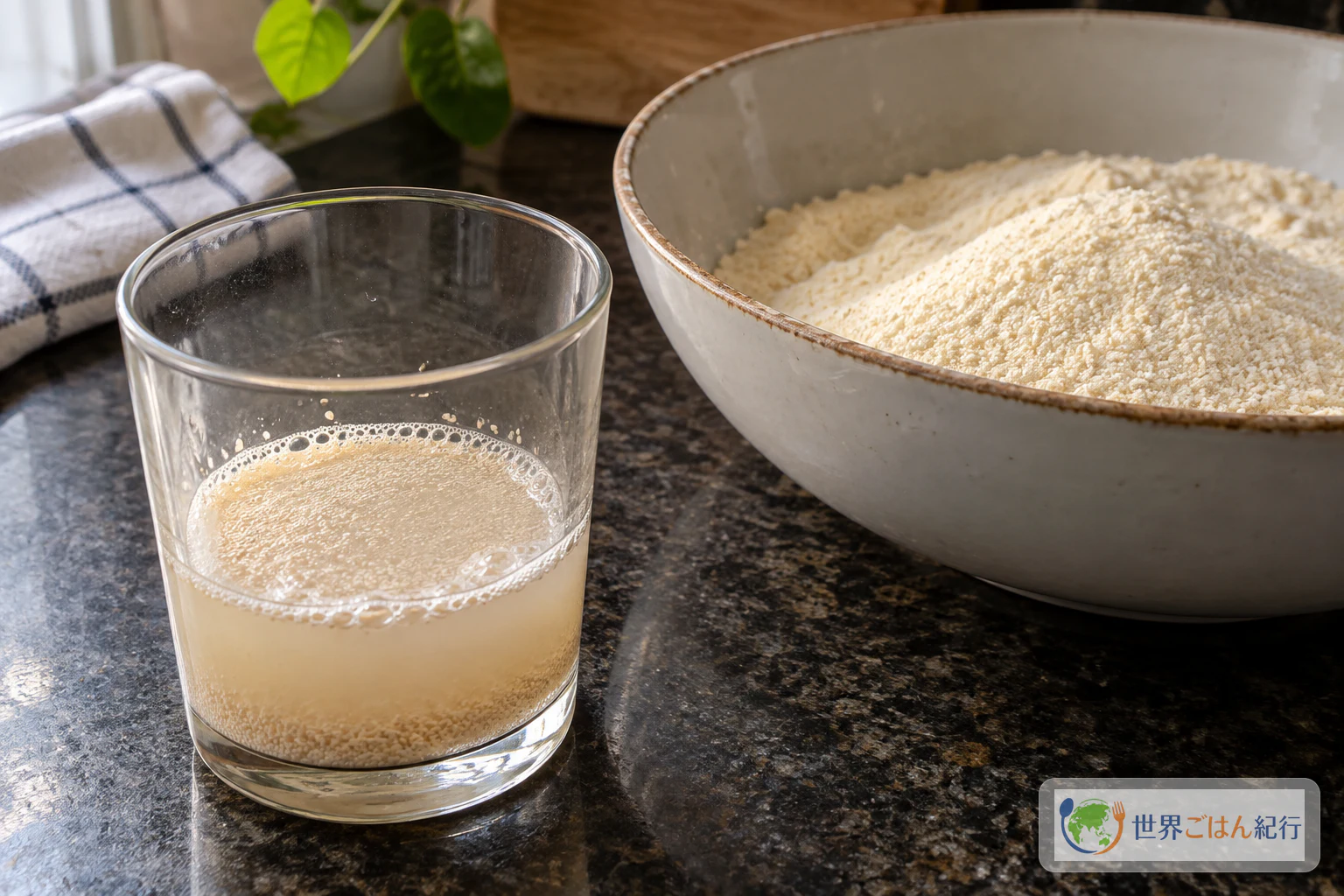
Dry baker's yeast is easy to use in small sachets of around 7g, the amount needed here.
Don't add wheat flour or cassava flour to stretch the batter. Those belong to other formulas, described under Other Versions.
This formula uses rice-based ingredients and contains no wheat flour, but check the labels on your rice semolina, rice flour and yeast for allergen and cross-contact information.
Equipment
- Mixing bowl and wooden spoon
- Small glass or other container for the yeast
- Measuring jug
- Clean cloth
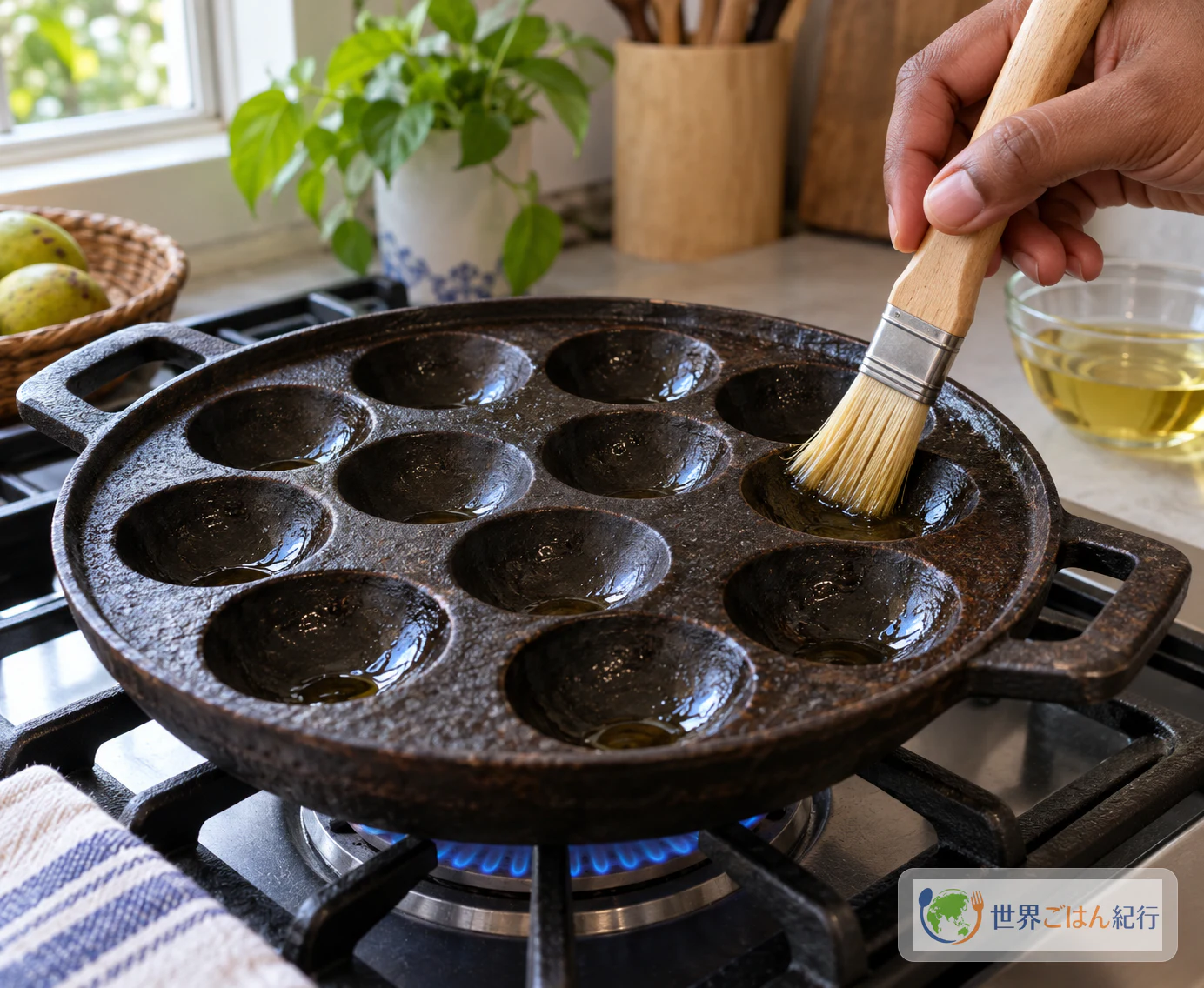
- Round dimpled pan, such as one made for mofo gasy
- Small brush for the oil
- Spoon for portioning the batter
- Thin wooden pick for lifting out the cakes
If you can't find a mofo gasy pan, a takoyaki pan is a possible stand-in. Its cavities may be a different size and shape, so judge doneness by the cakes rather than the clock.
Troubleshooting
| Problem | What to check | What to do |
|---|---|---|
| The batter doesn't rise | Whether the yeast foamed, and how warm the room is | Check the yeast's reaction and move the batter somewhere warmer before deciding on any timing |
| The cakes stick | Whether the pan was hot enough and every cavity was oiled | Preheat the pan fully and go back over any spots you missed with the oil |
| The base burns | Heat level | Lower the heat |
| The center stays uncooked | How much batter is in each cavity | Put less batter in each cavity |
The last two rows are general cooking judgment and our own editorial advice, not steps guaranteed by the recipe this article follows.
Other Versions: Same Name, Different Batter
The recipes below are separate formulas, so don't mix their ingredients or methods into the recipe above.
| Publication | Main ingredients | Cooking and rest |
|---|---|---|
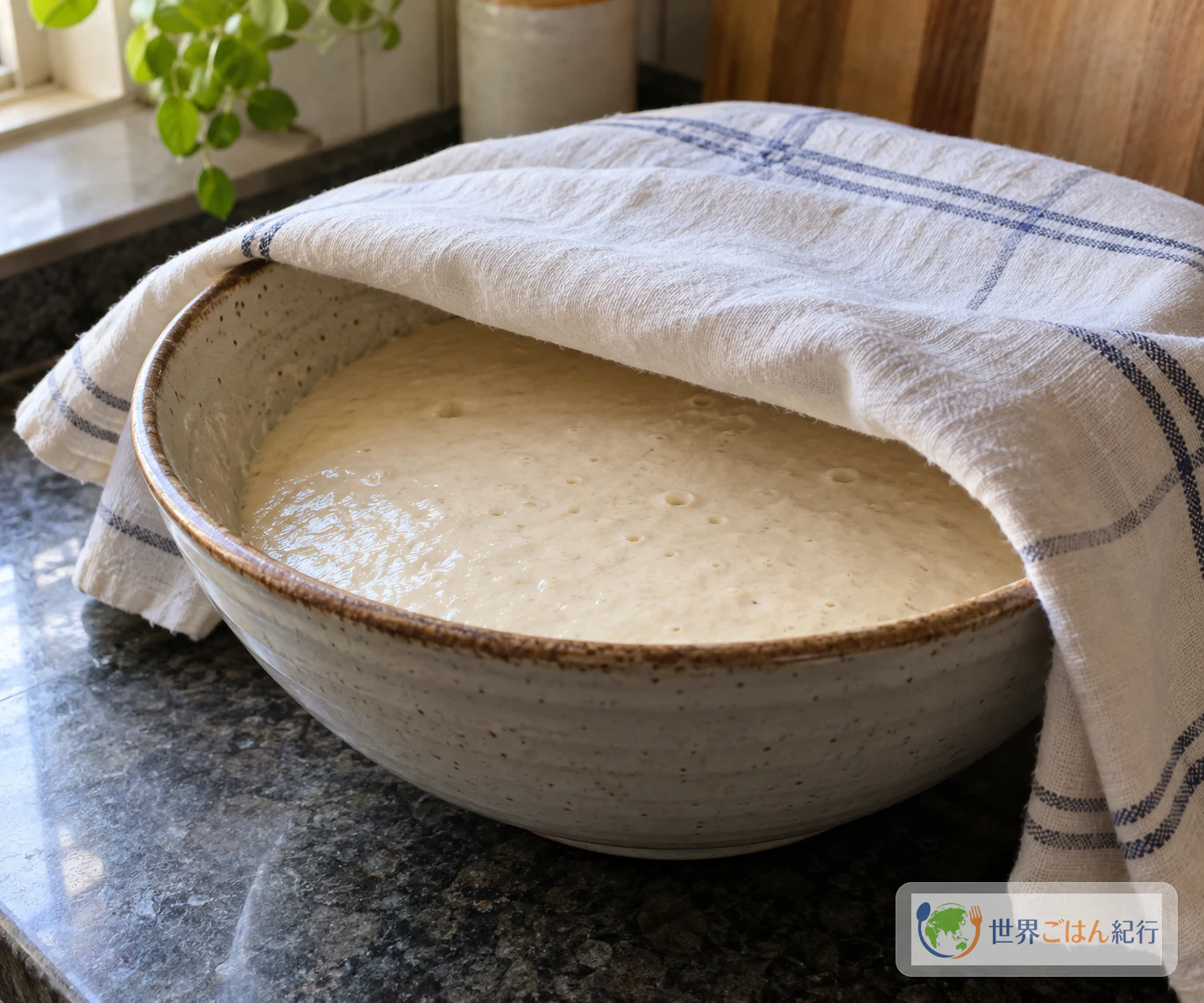
| Madagascar Destination (this recipe) | Rice semolina 300g, rice flour 100g, yeast about 7g, sugar 1 tbsp, salt 1 tsp, lukewarm water 400ml | Rest until slightly risen; one side, about 3–4 minutes over medium heat |
| Spyceez | Rice flour 125g, wheat flour 125g, water 700ml, salt 1 tsp, sugar 1 tbsp, pepper 1/2 tsp | In a mold, about 2 minutes per side |
| MPAMAFY, June 2013 (recipe credited to Lemurbaby) | Wheat flour 125g, rice semolina 150g, yeast 4g, water 415ml, sugar and salt 1/2 tsp each; listed as making 30 | Rest 4–8 hours; in a mold, cooked on both sides |
| FOFIFA activity report, 2019–2020 | Ratio only: rice semolina 80%, wheat flour 10%, high-quality cassava flour 10% | A technical record of trying cassava in a traditional fried snack, not a full home recipe |
Fillings. Madagascar Destination also mentions versions with meat, cheese or seafood as an optional extra. Cook meat and seafood thoroughly before adding them to the batter. The page gives no filling amounts, so they are not part of the ingredient table above.
Mofo grefy. The same page also covers mofo grefy, a separate mixture. It is not a modification of this recipe.
Serving and Background: Warm, With Coffee or Tea
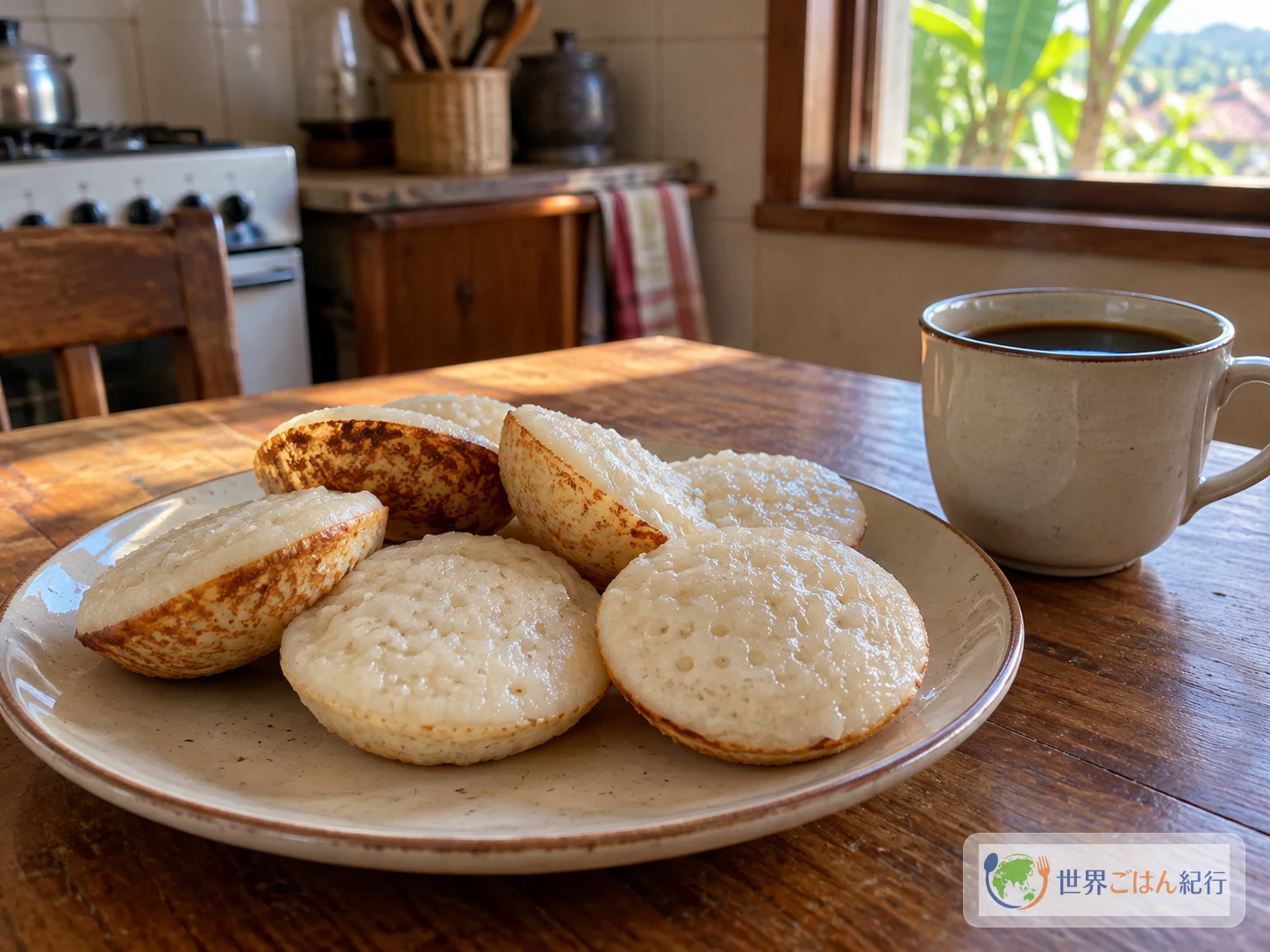
MPAMAFY suggests eating ramanonaka hot or warm, with coffee or Indian-style tea, at breakfast or as a snack. Spyceez writes of morning stalls and afternoon snacks. If you want to serve it with other foods, the fillings mentioned by Madagascar Destination offer some ideas, but pairing the plain cakes with those foods on the side would be your own variation, not an established local custom.
Origins are less clear. Some accounts offer explanations of where the dish came from, but they are speculative, and the name's etymology could not be confirmed, so this article doesn't state a history for ramanonaka.
For another side of the Malagasy table, try koba or romazava.
Frequently Asked Questions
Is rice semolina the same as rice flour?
No. Rice semolina is coarsely ground, while rice flour is fine, and this recipe uses both. Making it with rice flour alone has not been tested. For the closest result to this recipe, it is best to track down rice semolina.
Is the water for the yeast extra?
No. Madagascar Destination lists a single water amount, 400ml of lukewarm water, and its method dissolves the yeast and sugar in "a little" warm water without measuring it. No other water is listed, so we read 400ml as the total, with the yeast water coming out of it. That reading is our editorial interpretation.
How long should the batter rest?
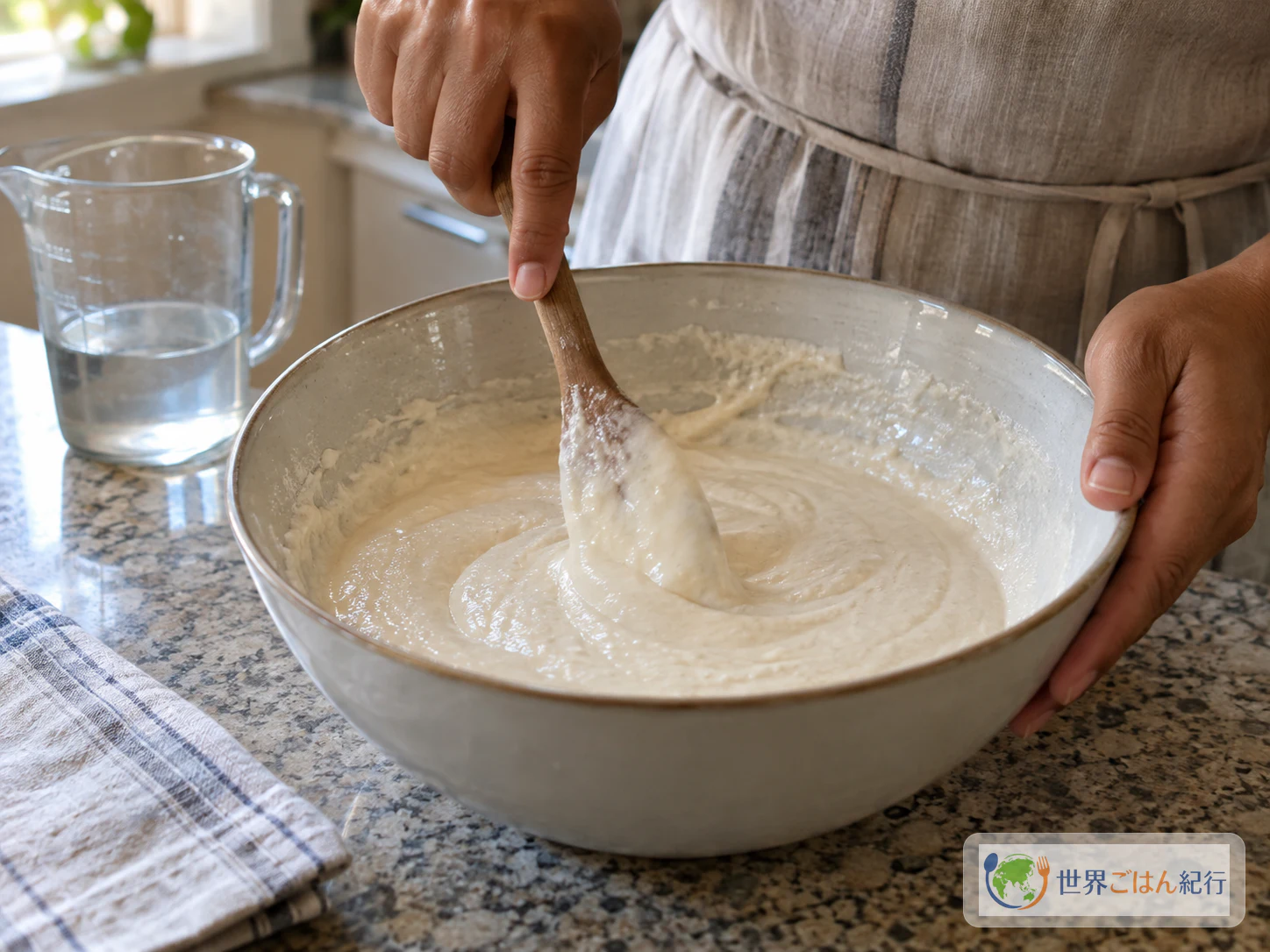
Madagascar Destination gives no fixed time or temperature, only a warm place until the batter has risen slightly. The 4–8 hours in MPAMAFY belongs to a different formula, so it doesn't carry over to this one.
How many cakes does this make?
The yield isn't given and depends on the size of your pan's cavities. The 30 cakes listed in MPAMAFY apply to that recipe's own formula.
Do I need a special pan?
A round dimpled pan, such as a mofo gasy pan, is the main option. A takoyaki pan is a possible stand-in, but the size difference means the shape and cooking time may not match.
Do I cook both sides?
Not in this recipe. Madagascar Destination cooks ramanonaka on one side, while Spyceez and MPAMAFY cook both sides. Those recipes use different batters.
Is ramanonaka the same as mofo gasy?
Ramanonaka is sometimes described as a savory counterpart to sweet mofo gasy, but definitions differ between publications. We don't treat the two as the same dish, and we don't claim one came from the other.
Can I add meat or seafood?
Madagascar Destination mentions fillings as an optional extra. Cook meat and seafood thoroughly first. No filling amounts are given, so this version has not been worked out as a tested recipe.
How should I store leftovers?
The recipe we follow gives no storage or reheating guidance, so we don't give storage times. For hygiene, eat what you make soon.
Sources
- Madagascar Destination, "Ramanonaka." The main recipe: ingredients and amounts, the single 400ml water listing, yeast method, resting until slightly risen, one-sided cooking over medium heat for about 3–4 minutes, optional fillings, mofo grefy, and the description of the style as coming from the highlands. Not used as a basis for historical claims. https://www.madagascar-destination.mg/culture-madagascar/gastronomie/ramanonaka.html
- Spyceez, "Recette du jour : Ramanonaka, le beignet salé de Madagascar." A contrasting formula with rice flour, wheat flour and pepper cooked about 2 minutes per side, and the morning stall and afternoon snack settings. https://www.spyceez.com/recette/ramanonaka-le-beignet-sale-de-madagascar/
- FOFIFA (Centre National de Recherche Appliquée au Développement Rural), "Rapport d'activités du Département de Recherches Technologiques 2019–2020." A recorded ratio of 80% rice semolina, 10% wheat flour and 10% high-quality cassava flour, in technical work on using cassava in a traditional fried snack. https://www.fofifa.mg/wp-content/uploads/2020/11/Rapport-dactivit%C3%A9s-du-DRT-2019-2020.pdf
- FPMAAM, "MPAMAFY – Juin 2013," Ramanonaka recipe credited to Lemurbaby. A separate community-newsletter formula listed as making 30, with a 4–8 hour rest, cooking on both sides, and the suggestion to serve hot or warm with coffee or Indian-style tea. https://fpmaam.org/ministere/wp-content/uploads/2013/07/MPAMAFY-JUIN-2013.pdf