Konkoé Touré Gbéli: Smoked Fish, Red Palm Oil and a Blended Vegetable Sauce
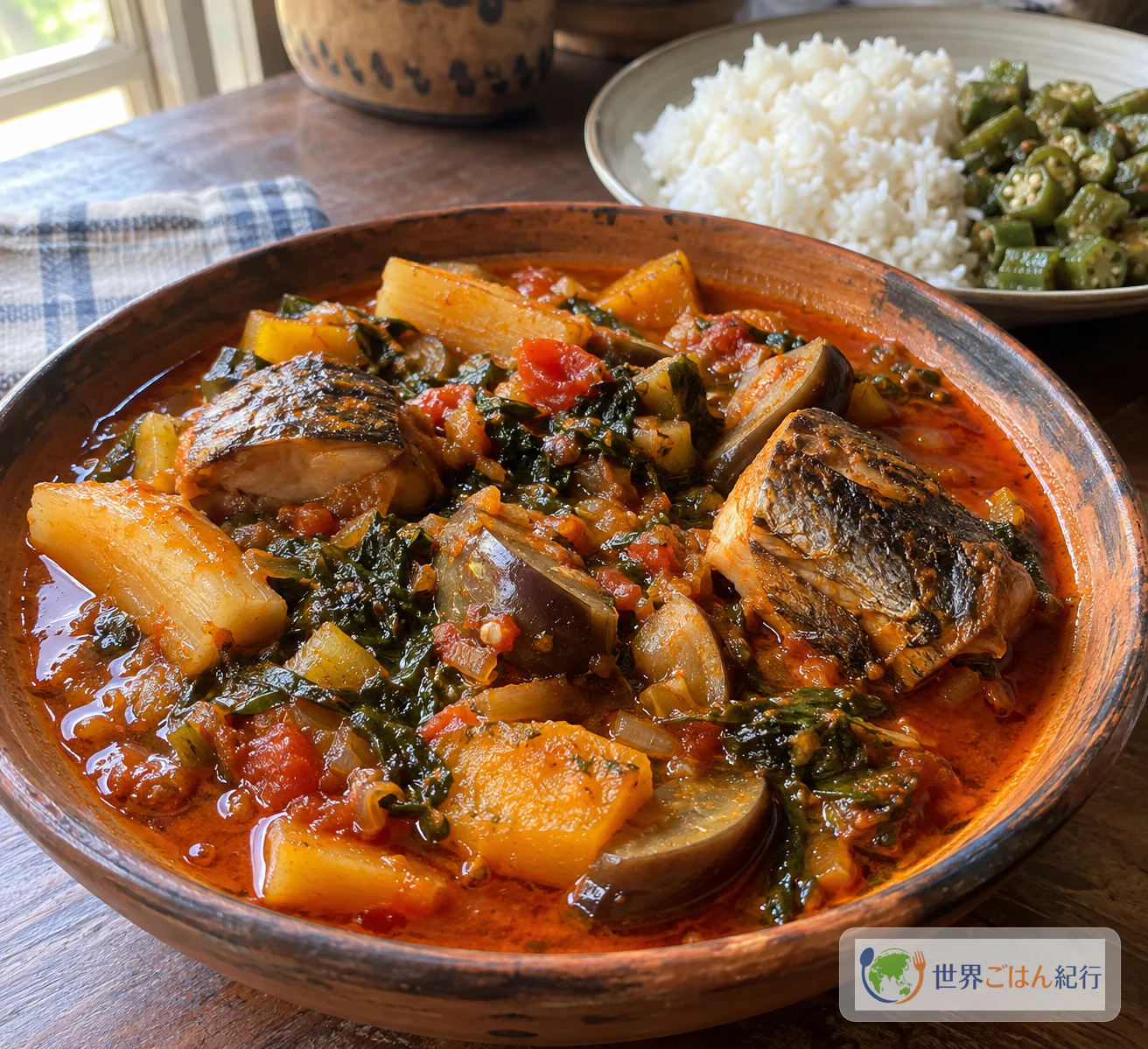
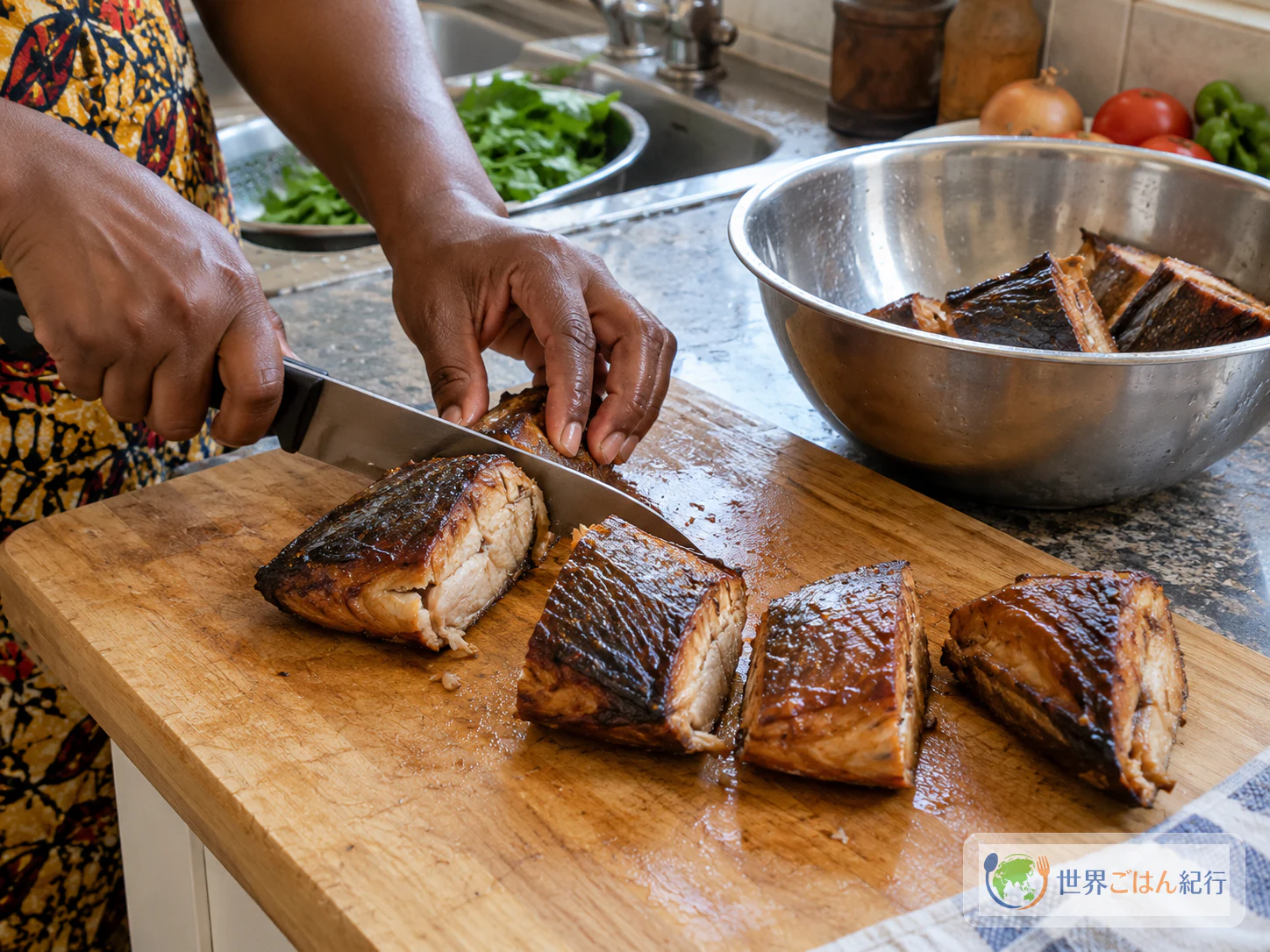
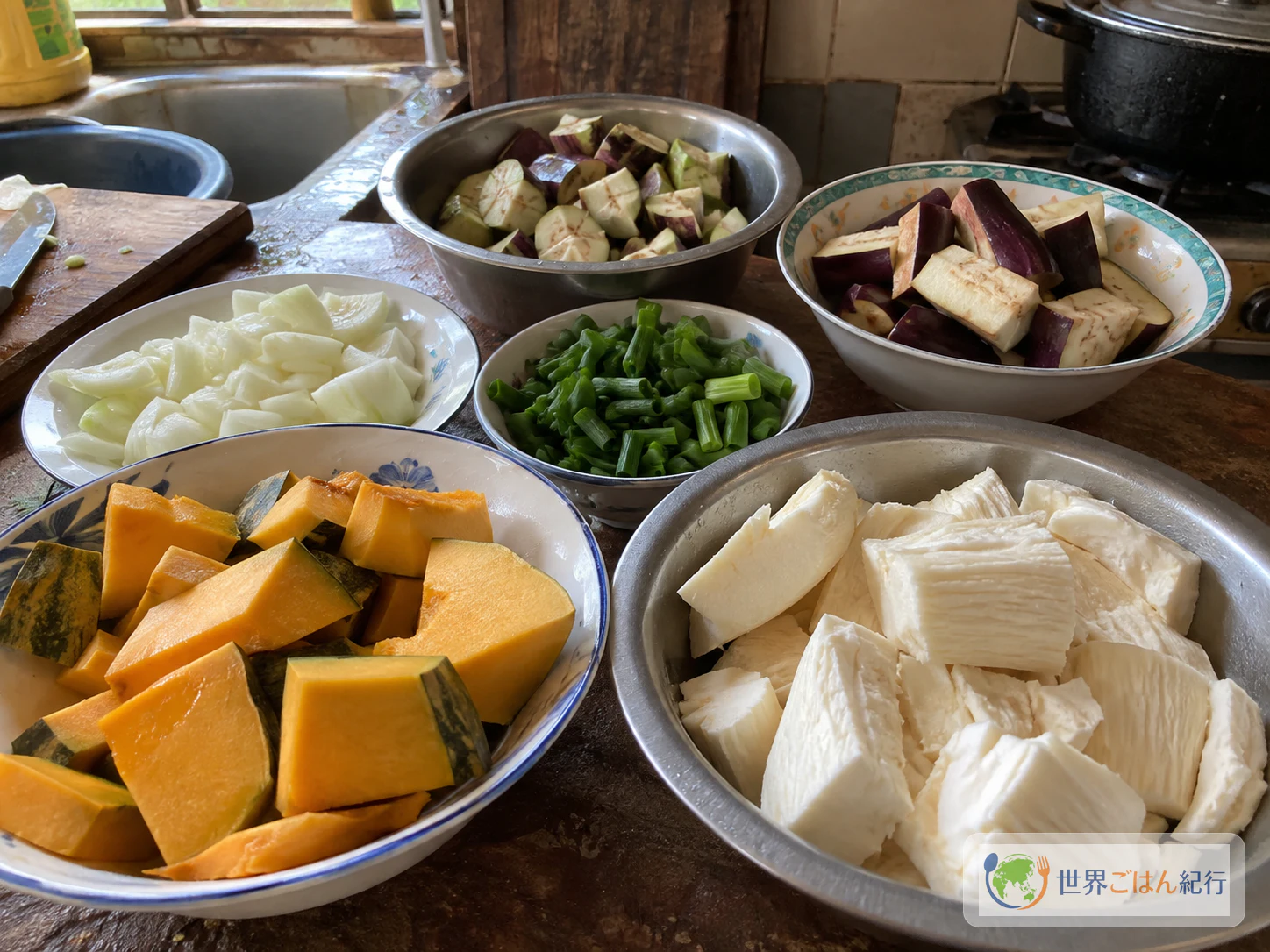
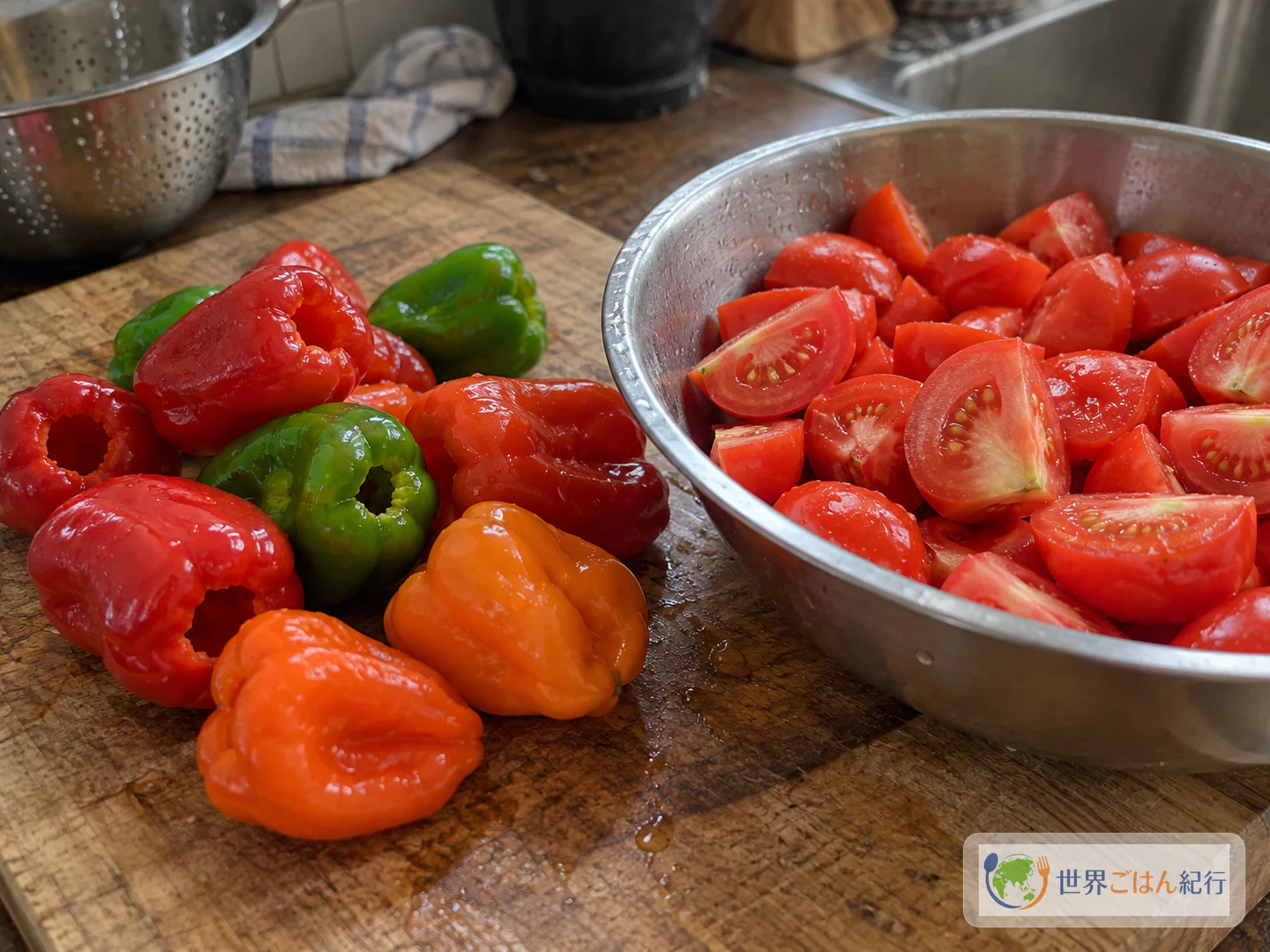
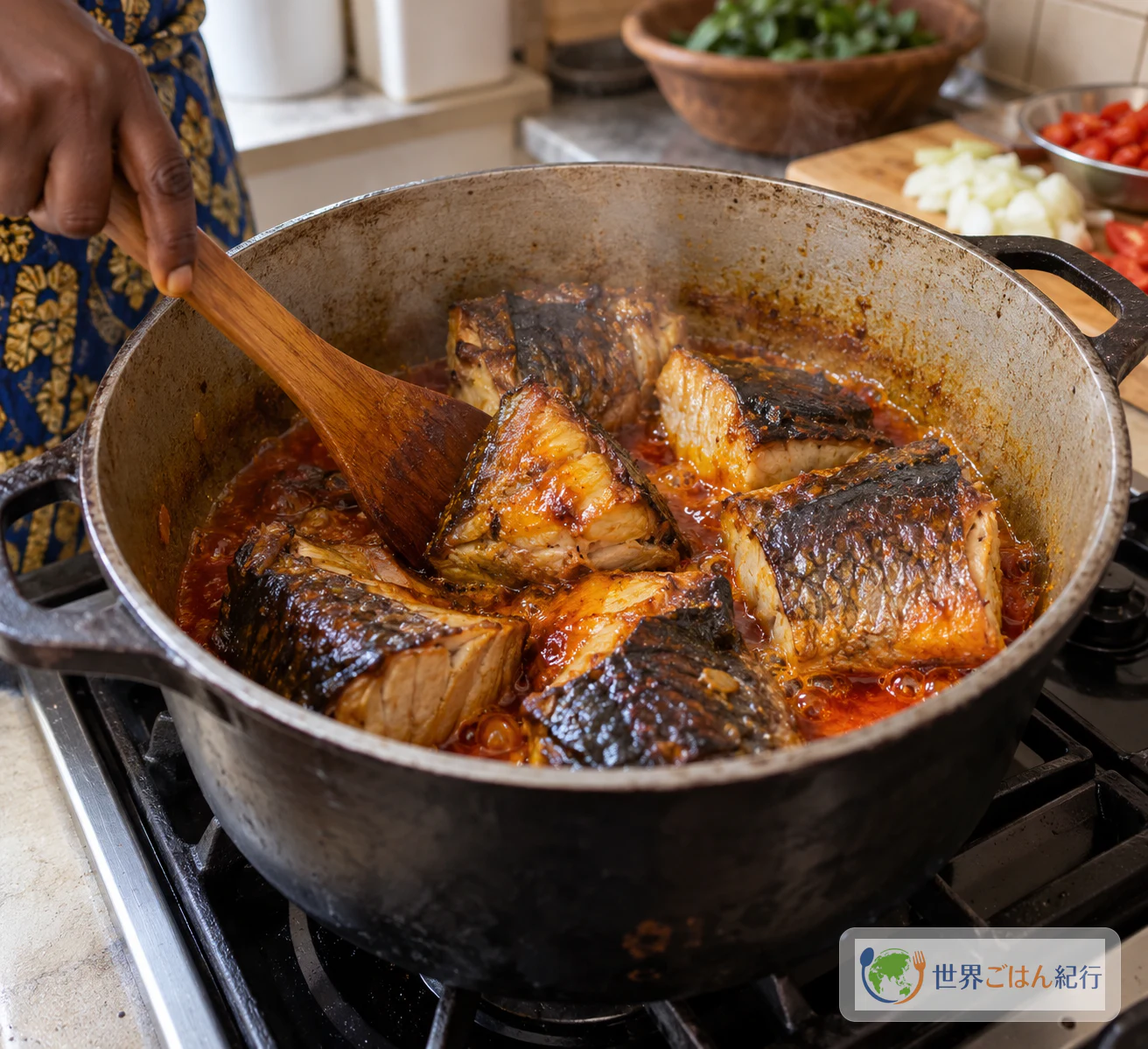
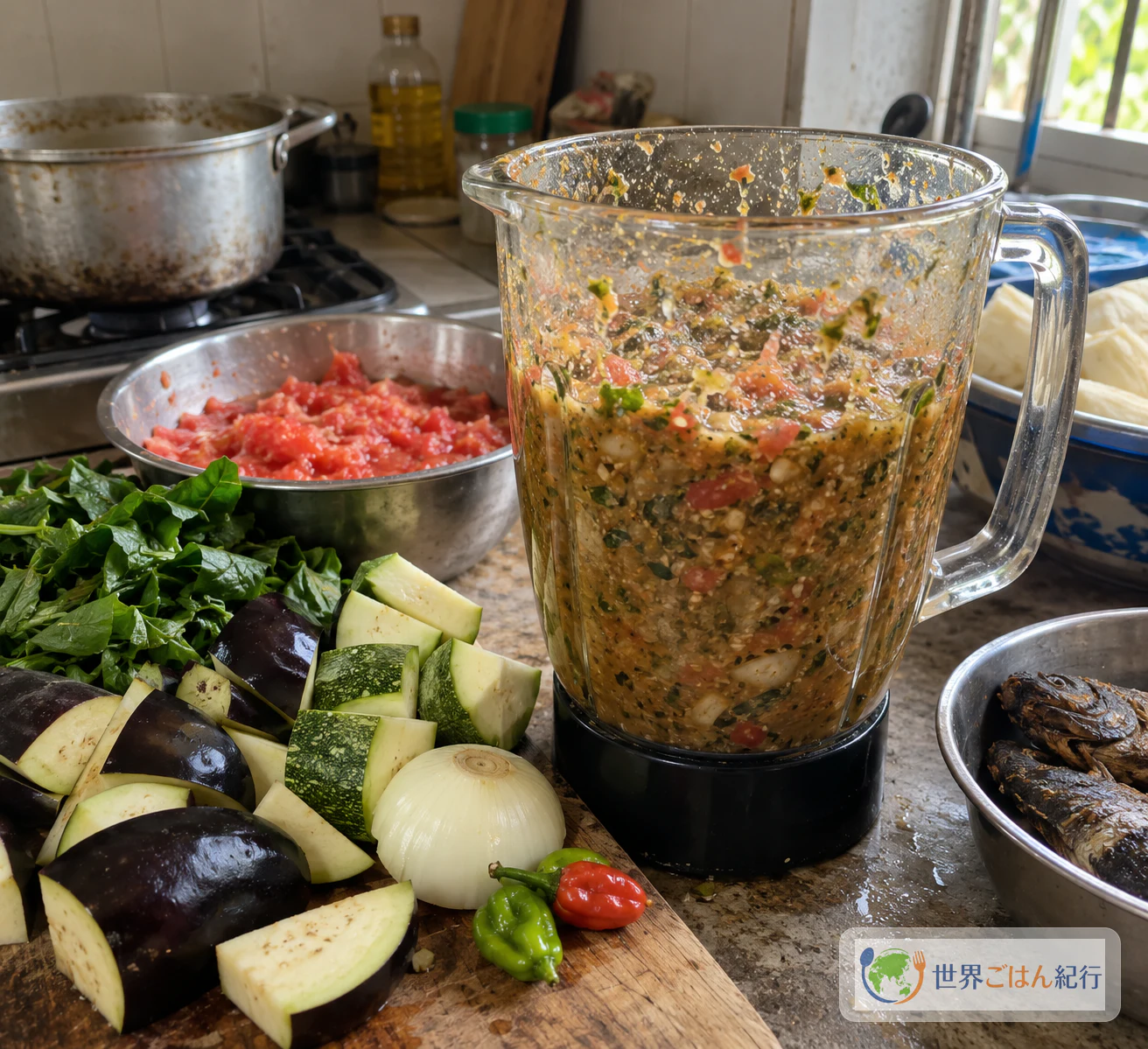
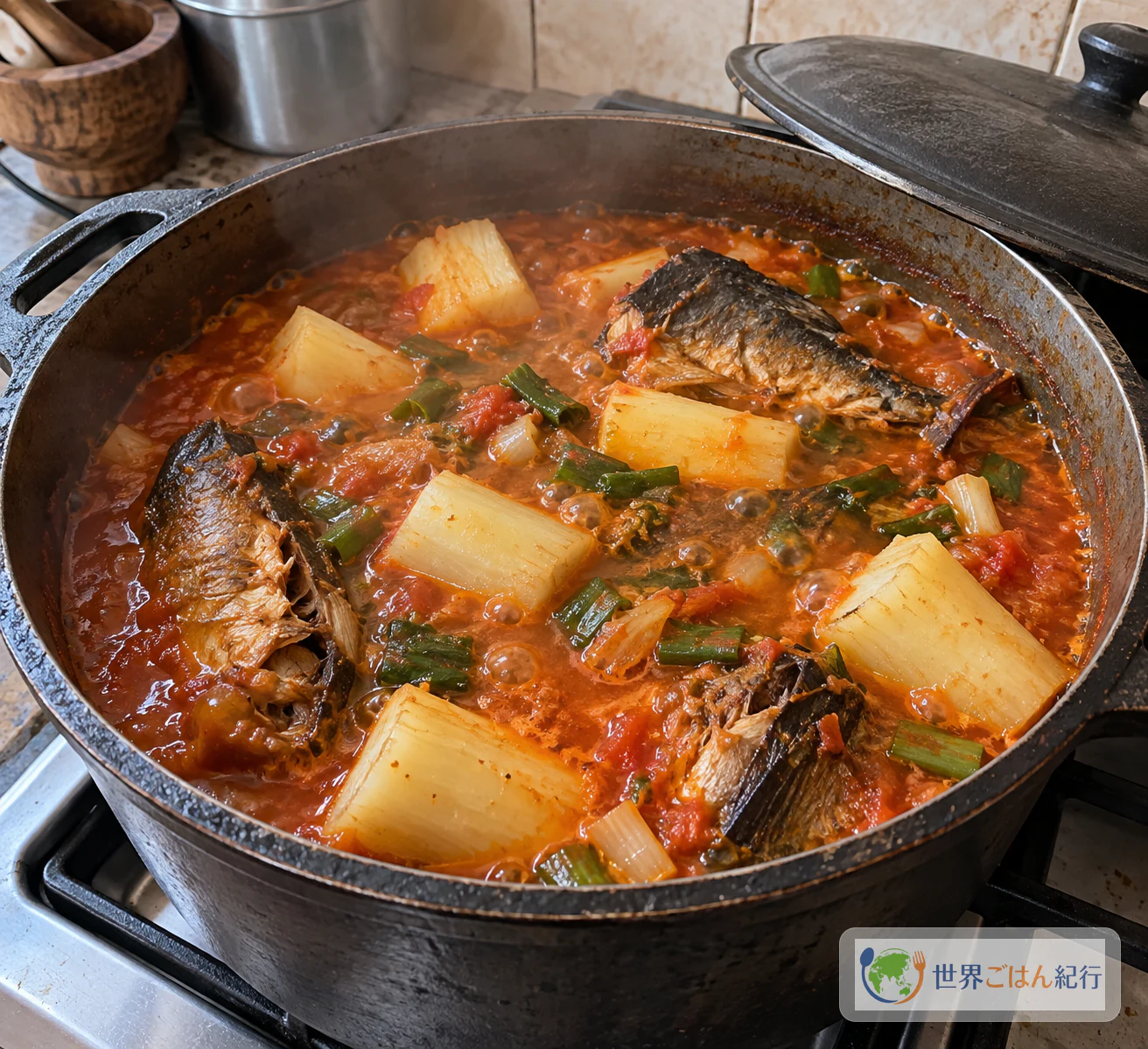
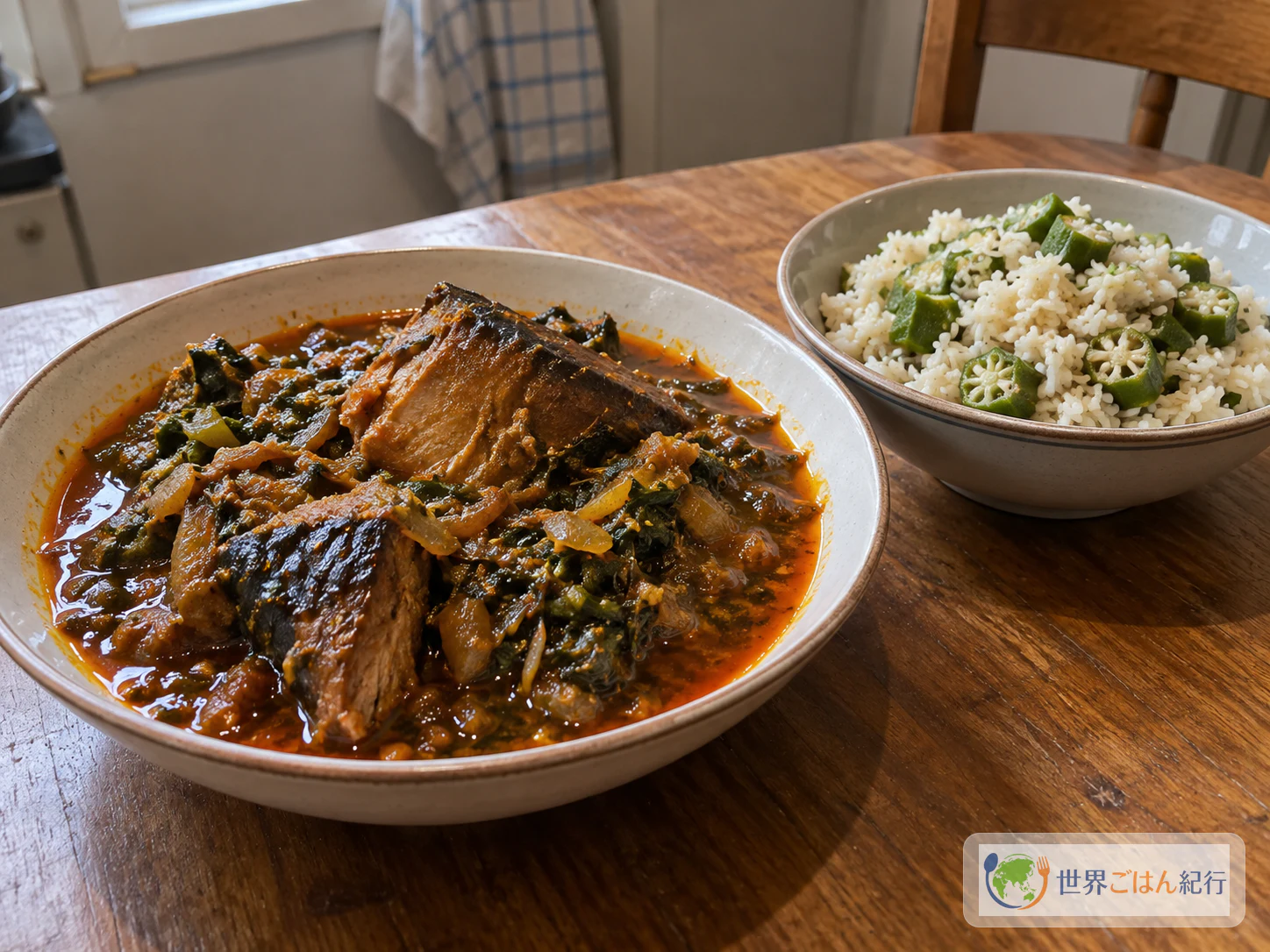
Four large pieces of smoked fish go into a pot of heated red palm oil, and the smell of smoke meets the deep color of the oil. A blended sauce of tomato, eggplant, squash, sorrel and fresh pepper follows, then water, cassava and onion leaves. At the table, the sauce is served with rice with okra.
UN Tourism presents konkoé touré gbéli as a dish of smoked fish, local rice and palm-oil sauce from fish-rich Maritime Guinea. It describes the dish as traditionally very spicy, with the heat adjusted to taste. The recipe here is the one UN Tourism attributes to Chef Barry Fatoumata Binta, with nothing blended in from other versions.
"Konkoé" is the name used for the fish itself. Reports from Guinea call it machoiran or smoked catfish, but none of the sources establishes a species, so this article simply calls it konkoé, the smoked fish known by that name in Guinea.
This recipe has not been kitchen-tested by Sekai Gohan. All amounts and times are those on the UN Tourism page. They are not confirmed home-kitchen values.
- It is a large batch with no stated yield. The page lists 1.2 kg smoked fish and 800 ml (80 cl) red palm oil, and it gives no number of servings. We don't add one here.
- The salt is very high. The page lists 60 g salt as well as a seasoning cube, which also adds salt. These figures are recorded as published, not recommended as a household amount.
- The water appears only in the method. The 2 L of water isn't in the page's ingredient list. It is included in the table below so you can plan for it.
- The timing is unclear. The page says to simmer for half an hour, then says the sauce will be ready after 15 minutes. Both times are given here, but how they relate is unclear, so we don't state a total.
- Scaling is your own change. If you make a smaller batch, reduce every ingredient by the same ratio and check the salt, oil and heat yourself. No smaller version has been tested.
Ingredients for Konkoé Touré Gbéli
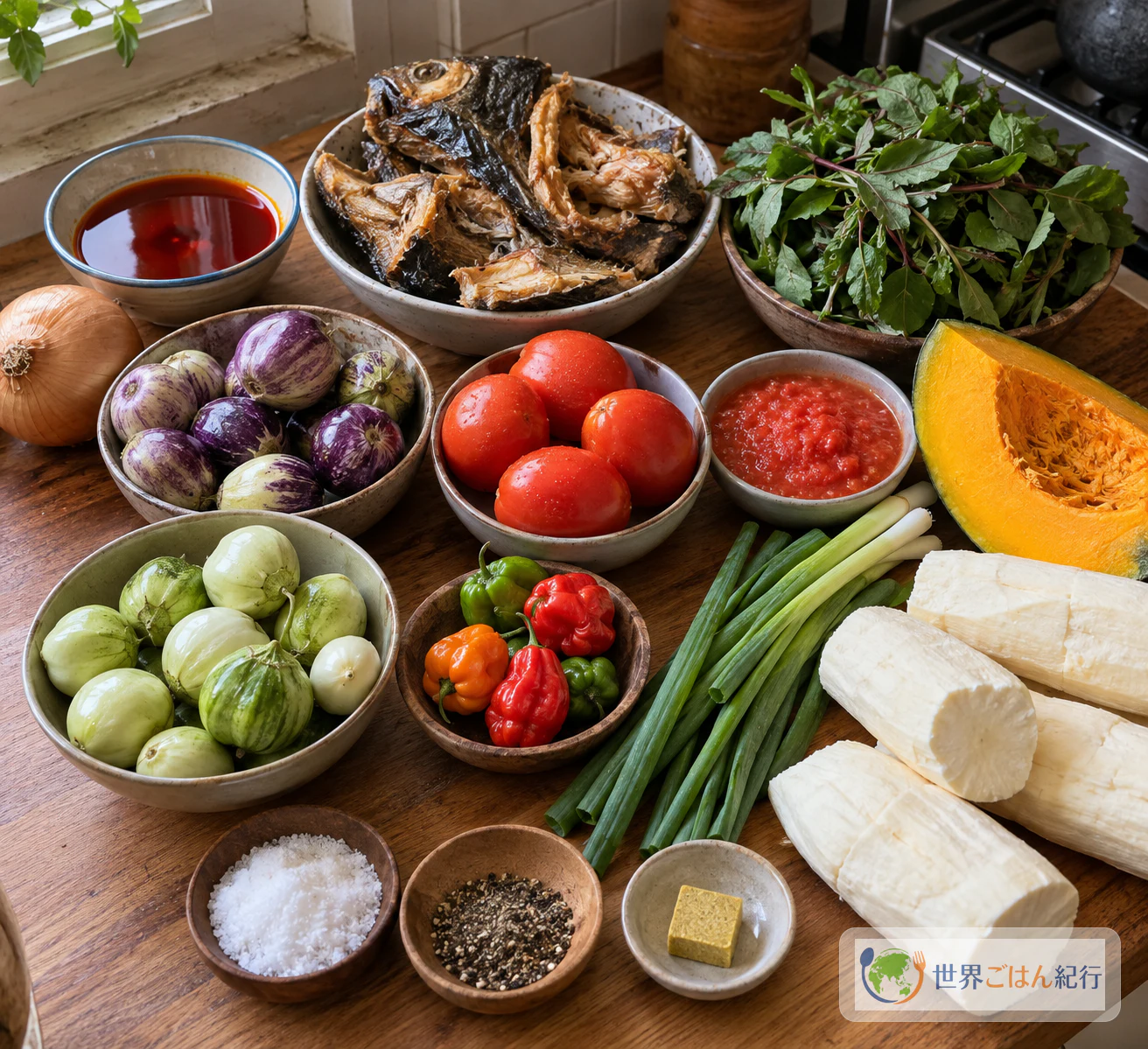
This is a large batch with no fixed number of servings.
Equipment
- Large heavy pot with a lid
- Food processor
- Sharp knife and cutting board
- Peeler or knife for the cassava
- Bowls for the prepared vegetables
- Wooden spoon
- Shallow containers for leftovers
Finding and Choosing the Ingredients
Search under the names below, including the original-language name where there is one. Every alternative here is an untested suggestion that will change the dish.
| Ingredient | What to look for | What changes if you swap |
|---|---|---|
| Smoked konkoé | Smoked konkoé from a grocer selling Guinean foods is the first choice | Other fish differ in flavor, fat and saltiness |
| Red palm oil | Unrefined red palm oil | Refined or odorless palm oil differs in aroma and color, so don't expect the same result |
| Sorrel leaves | Leafy sorrel, not hibiscus calyces | A similar leaf changes the sourness and aroma |
| Sweet and bitter eggplant | Two separate ingredients, so buy both if you can | Common long, globe or white eggplants aren't equivalent, and the balance will differ |
| Squash | No variety is fixed | A kabocha-type squash changes the moisture and sweetness |
| Onion leaves | Green scallion tops are close | The aroma differs |
| Fresh pepper | No variety is fixed | Heat varies widely, so don't treat any one chile as the exact match |
| Cassava | Food-grade cassava from a retailer, such as frozen peeled cassava | Moisture differs by product |
| Seasoning cube | A Maggi cube | Similar stock granules differ in saltiness and aroma |
Cassava: Food Standards Australia New Zealand says cassava must be peeled and thoroughly cooked. It also reports that boiling, steaming, baking and frying reduce its cyanogenic glycosides by only 10–75%, so cooking alone isn't a reliable safeguard. Peel it thickly, cook it thoroughly and never eat it raw. Use cassava sold as food, and don't use a fresh root if you don't know its variety or intended use. UN Tourism doesn't name a variety, and we can't promise that any method makes cassava fully safe.
Heating: The City of Sendai's home food-poisoning guidance calls for heating food through to the center, with 75°C for at least 1 minute as the guide. This dish uses that guide for the fish and vegetables. Smoked fish here is washed, seared and simmered, and it isn't meant to be eaten raw.
Allergens: This dish contains fish. Check the seasoning cube label for any allergens that concern you.
Leftovers and Reheating
Don't leave the cooked dish at room temperature. Divide leftovers into shallow containers so they cool quickly, then keep them in the refrigerator at 10°C or below. Reheat thoroughly before eating, to 75°C or above, and bring the stew to a boil. The food-safety guidance used here gives no number of days for keeping this dish, so we don't state one.
Troubleshooting
UN Tourism gives no visual cues for doneness or fixes for problems, and this version is untested. The table below offers cautious checks rather than guaranteed fixes.
| What you notice | What to check or do |
|---|---|
| The smoked fish has hard bones or very firm flesh | This varies by product, and the page has no boning step. Check what you bought and remove bones as needed, keeping the pieces large |
| The cassava isn't cooked through | Keep cooking until it is, however long the stated times have run. Don't serve undercooked cassava |
| The sauce tastes too salty | The salt and seasoning cube both add salt. We have no tested fix, so if you make it again, treat any reduction as your own change and taste as you go |
| The oil seems like a lot | The 800 ml is the published figure for this large batch. If you scale the recipe, scale the oil in the same ratio as everything else |
| The color and aroma seem off | Check the oil. Refined or odorless palm oil won't give the color and aroma of red palm oil |
| The heat is too strong | The page says heat can be adjusted to taste. Next time, see the first variation below |
Variations to Try at Your Own Judgment
None of these comes from UN Tourism's recipe, and none has been tested.
- Milder heat: Use less fresh pepper in the pot and offer more on the side.
- A different smoked fish: If you can't find smoked konkoé, compare other smoked fish, keeping in mind that flavor, fat and saltiness will differ.
- A different squash: A kabocha-type squash is an option, but the sauce will change in sweetness and moisture.
- A different sour leaf: If there's no sorrel, compare leaves by their sourness.
- A smaller batch: Reduce the red palm oil in proportion with everything else. We don't suggest leaving the oil out, because that makes a different dish.
Coastal Fish, Smoked Konkoé and a Table That Keeps Changing
UN Tourism places this dish in Maritime Guinea, along a coast rich in fish. It introduces Chef Barry Fatoumata Binta as coming from Middle Guinea and growing up on Guinea's lower coast among the Soussou people.
A report from the Agence Guinéenne de Presse adds a view from the market. A fish seller at Matoto says konkoé is commonly sold already smoked and links it strongly with Guinean cooking. A home cook in the same report describes using konkoé in several different sauces and for different occasions. These are individual voices rather than a rule for all of Guinea, but they suggest this recipe is one form among others, not the only one.
Le360 Afrique reported on a culinary event in Conakry that brought together cooks and restaurateurs from across Guinea. Konkoé appeared there, described by the reporter as a sauce based on smoked catfish, and a participating entrepreneur spoke of local cooks presenting familiar dishes with their own reinterpretations. This was an event showcasing food culture, so it doesn't show how the dish is eaten every day or that it is a festival dish.
The sources don't cover the dish's history or religious or seasonal associations, and they don't explain what the name means, so we leave those out.
If you'd like to explore further, these are separate dishes with some ingredients or ideas in common, and we aren't claiming they share a lineage. Thieboudienne from Senegal pairs fish and rice. Cassava leaf stew from Sierra Leone brings together cassava leaves, smoked fish and red palm oil.
Frequently Asked Questions
What kind of fish is konkoé?
It is a fish called konkoé in Guinea and sold there in smoked form. The Agence Guinéenne de Presse calls it machoiran, and a Le360 Afrique reporter describes smoked catfish. Neither gives a scientific identification, and the UN Tourism recipe says only "smoked fish," so the exact species remains unconfirmed.
How spicy is it?
UN Tourism says the dish is traditionally very spicy, with the heat adjusted to taste. Its 140 g of fresh pepper comes with no variety named, so the actual heat will depend on the peppers you use.
How many people does it serve?
We don't know. UN Tourism gives no yield, and this version hasn't been cooked and portioned, so we don't offer a serving count.
Do I have to use 60 g of salt?
That is the amount on the UN Tourism page, and it comes on top of a seasoning cube. It is very high, and we record it without endorsing it as a home amount. The page also tells you to adjust the seasoning but offers no lower figure, and we haven't tested one. If you use less, treat that as your own change.
How long does it take to cook?
The page gives two times: simmer for half an hour, then the sauce will be ready after 15 minutes. How they relate isn't clear, and the page gives no preparation time, so we don't state a total. Make sure the fish, vegetables and cassava are thoroughly cooked before you serve the dish.
Can I use a different fish or different leaves?
UN Tourism doesn't offer substitutes. You can try another smoked fish or a similar sour leaf, but they will change the flavor, saltiness and aroma, and we haven't tested them.
Is cassava safe to eat?
Food Standards Australia New Zealand says cassava must be peeled and thoroughly cooked, and that cooking only partly reduces its cyanogenic glycosides. Use cassava sold as food, peel it thickly, cook it thoroughly and never eat it raw. Avoid fresh roots of unknown variety or use.
Sources
- UN Tourism, "Guinea, Barry Fatoumata Binta, Konkoé touré gbéli." The recipe's ingredients, amounts and method; the chef's background; the dish's Maritime Guinea context and traditional heat; rice with okra as the accompaniment. https://www.untourism.int/africa/african-gastronomy/guinea
- Agence Guinéenne de Presse (AGP Guinée), "Guinée/société : Le poisson Machoiran ou « Konkoé » est-il un patrimoine de la Guinée ?" Reported testimony on konkoé sold smoked at Matoto market and used in several sauces at home. https://agpguinee.com/guinee-societe-le-poisson-machoiran-ou-konkoe-est-il-un-patrimoine-de-la-guinee/
- Le360 Afrique, "Des plats traditionnels remis au goût du jour: une semaine pour sublimer les saveurs de Guinée." A culinary event in Conakry, the reporter's description of konkoé as a smoked catfish sauce, and a participant's comments on cooks' reinterpretations. https://afrique.le360.ma/culture/des-plats-traditionnels-remis-au-gout-du-jour-une-semaine-pour-sublimer-les-saveurs-de-guinee_TJNCJJHLSFG3JNYI6SFLZWQWL4/
- City of Sendai, "家庭での食中毒予防" (Preventing food poisoning at home). Heating to the center, avoiding room-temperature storage, cooling in shallow containers, refrigerating at 10°C or below, and reheating to 75°C or above. https://www.city.sendai.jp/sekatsuese-shokuhin/kurashi/anzen/ese/shokuchudoku/yobo.html
- Food Standards Australia New Zealand (FSANZ), "Cassava." Peeling and thoroughly cooking cassava, and the limited reduction of cyanogenic glycosides by cooking alone. https://www.foodstandards.gov.au/consumer/prevention-of-foodborne-illness/cassava