
When Greens Sink into Red Oil, It Becomes Dinner's Pot
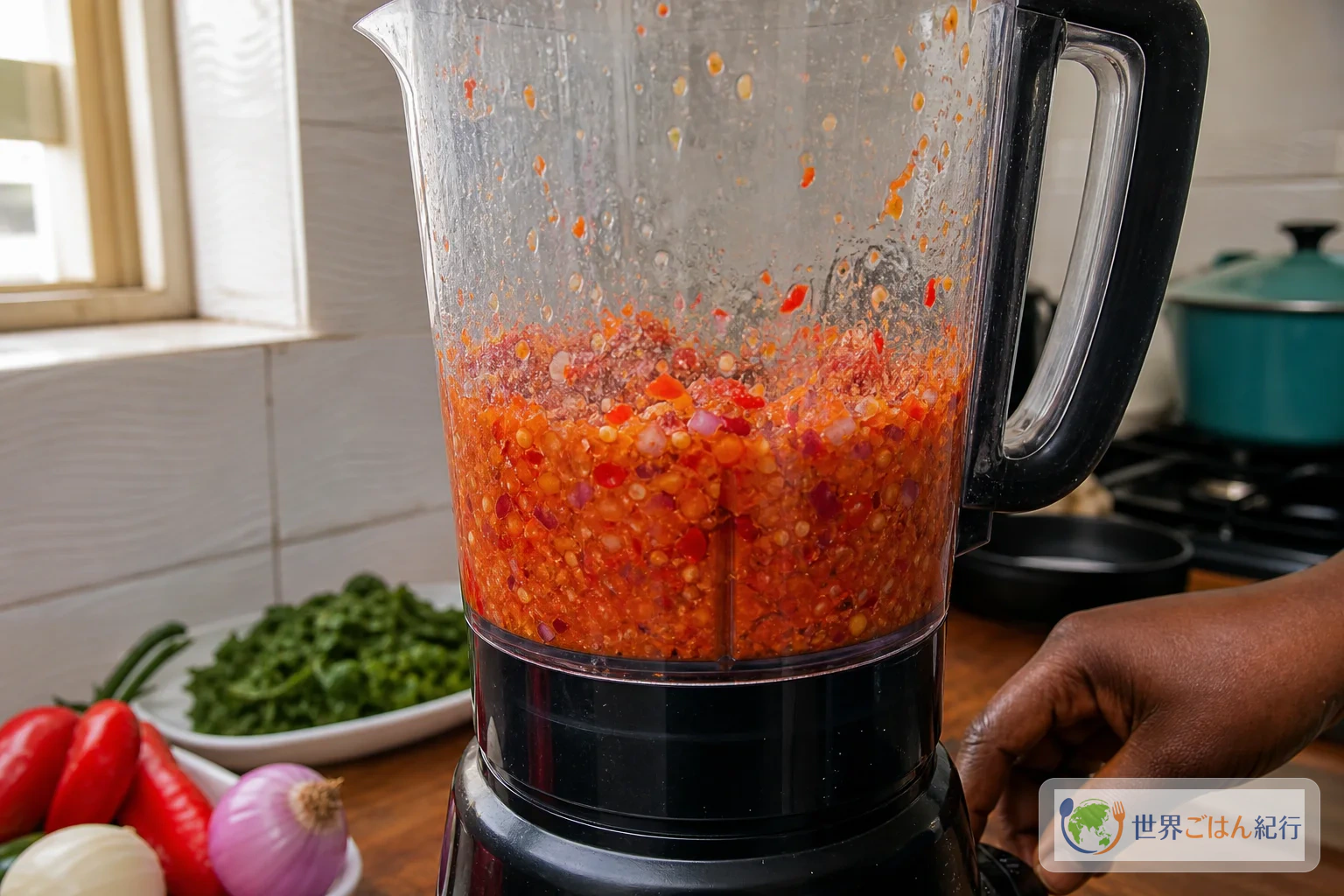
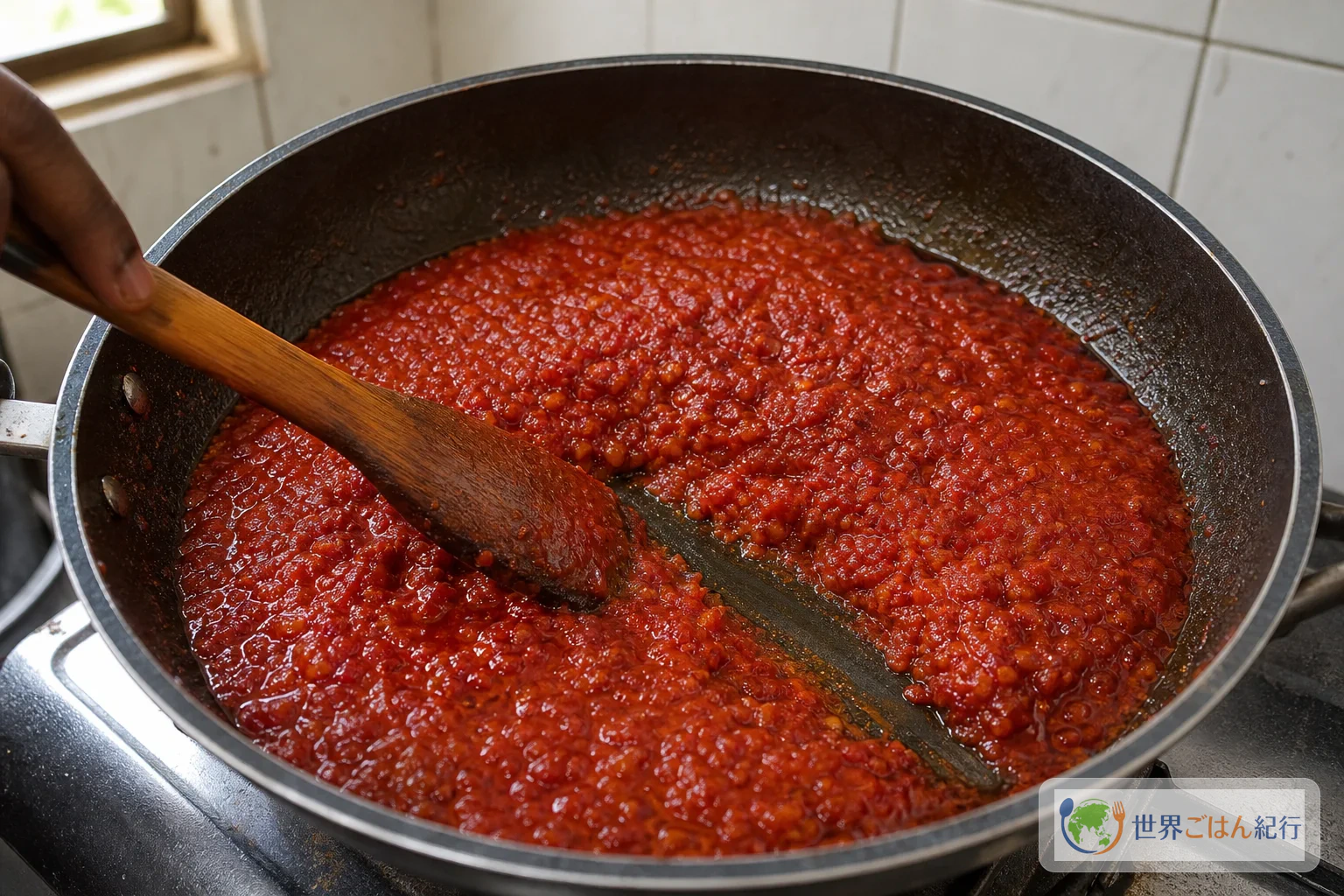
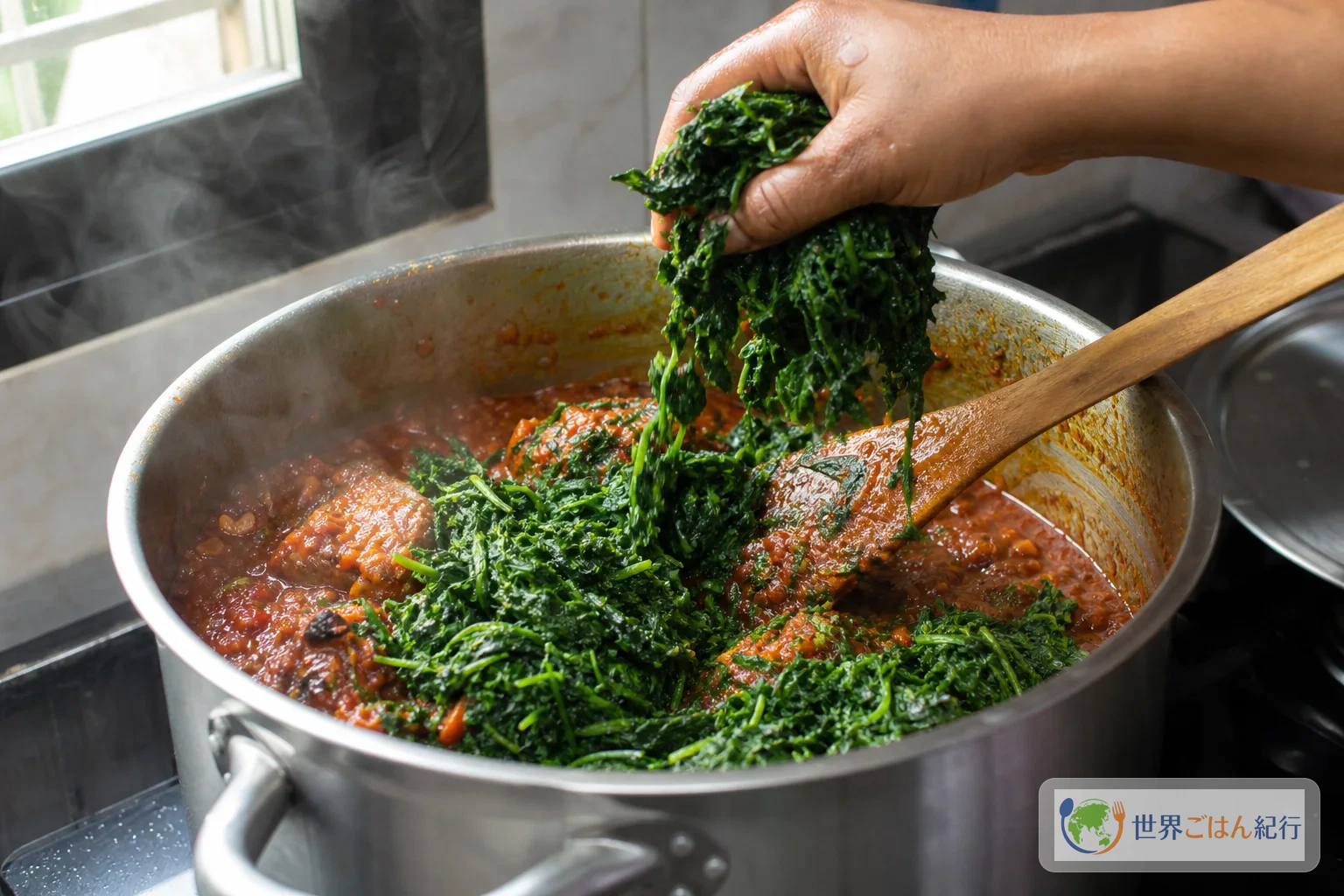
Drop red palm oil into a skillet and, even though it is only oil, the scene in the pan changes. An orange glow spreads, and the sauce of crushed onion and chili, watery at first, gradually grows heavy. Into it go the greens, squeezed firmly of water.
Reverse that order and efo riro suddenly becomes difficult. If you cook the greens first, they release water. If you add the leaves before reducing the red sauce, the color thins and the outline of the flavor blurs. What trips readers up is less the unfamiliar dish name than this timing of "leaves last."
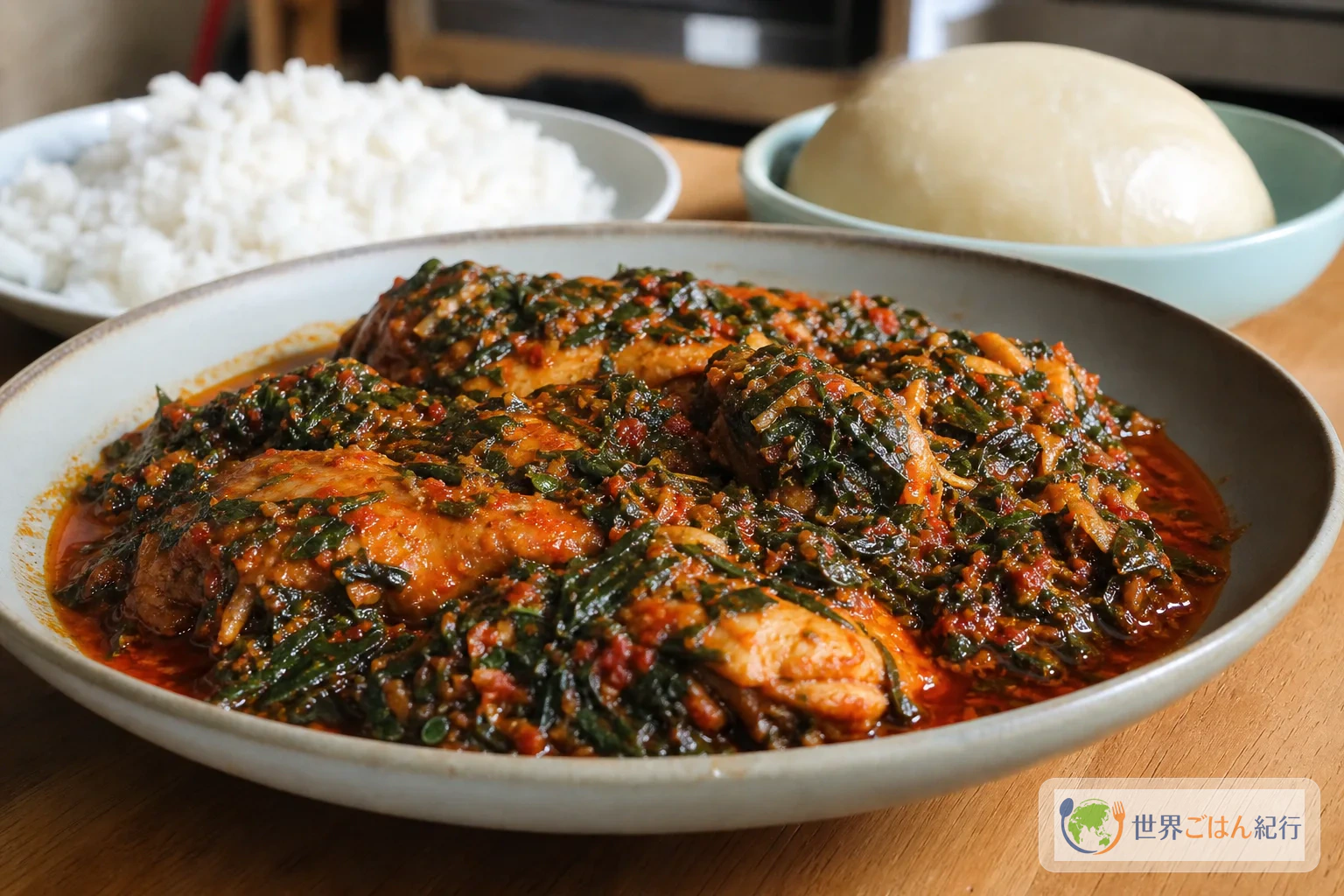
Efo riro is a leafy-green stew eaten in southwestern Nigeria. With the local leaves you get a grassy aroma with a slight bitterness; elsewhere you can come close with spinach and a little komatsuna, or with kale. Whether you use red palm oil and powdered dried shrimp decides whether the table leans toward "greens stewed in tomato" or toward the deep aroma of West Africa.
This article serves four with chicken thighs, spinach, and kale. The red palm oil is 3 tbsp. Do not put in all the dried shrimp at the start; add it while checking the aroma. For the three special ingredients and tools, decide whether to buy them based on how well they suit the dish.
If you like seed-thickened stews such as egusi soup (in Japanese) or the red rice dish jollof rice, this is an easy next West African dish to try.
"Efo" means leafy vegetable in Yoruba, and "riro" is a word meaning "to stir, to mix." From the near-literal "stirred leaf," it is introduced as a leafy-green stew. It is spelled Efo riro, Efo-riro, and other ways.
What Is Efo Riro? The Southwestern Nigerian Table and Its Origins
The Embassy of Nigeria in The Hague's food-culture materials describe efo riro as a dish originating in the southwest and explain efo as green leafy vegetable and riro as the Yoruba for "to stir." Commonly used leaves named there are efo shoko and efo tete. Since the word efo is in the dish's name, the star is on the side of the leaves rather than the meat. But the foundation of flavor is the red sauce made before the leaves go in.
Saveur's recipe calls shoko leaf "a green with a mild bitterness" and says ordinary spinach can be used when it is unavailable. Spinach alone is plenty for home cooking. Mix in a little komatsuna and the stems keep some bite; mix in kale and the leaves hold up better in the stew.
At the table in Nigeria, the staple stands in for a spoon
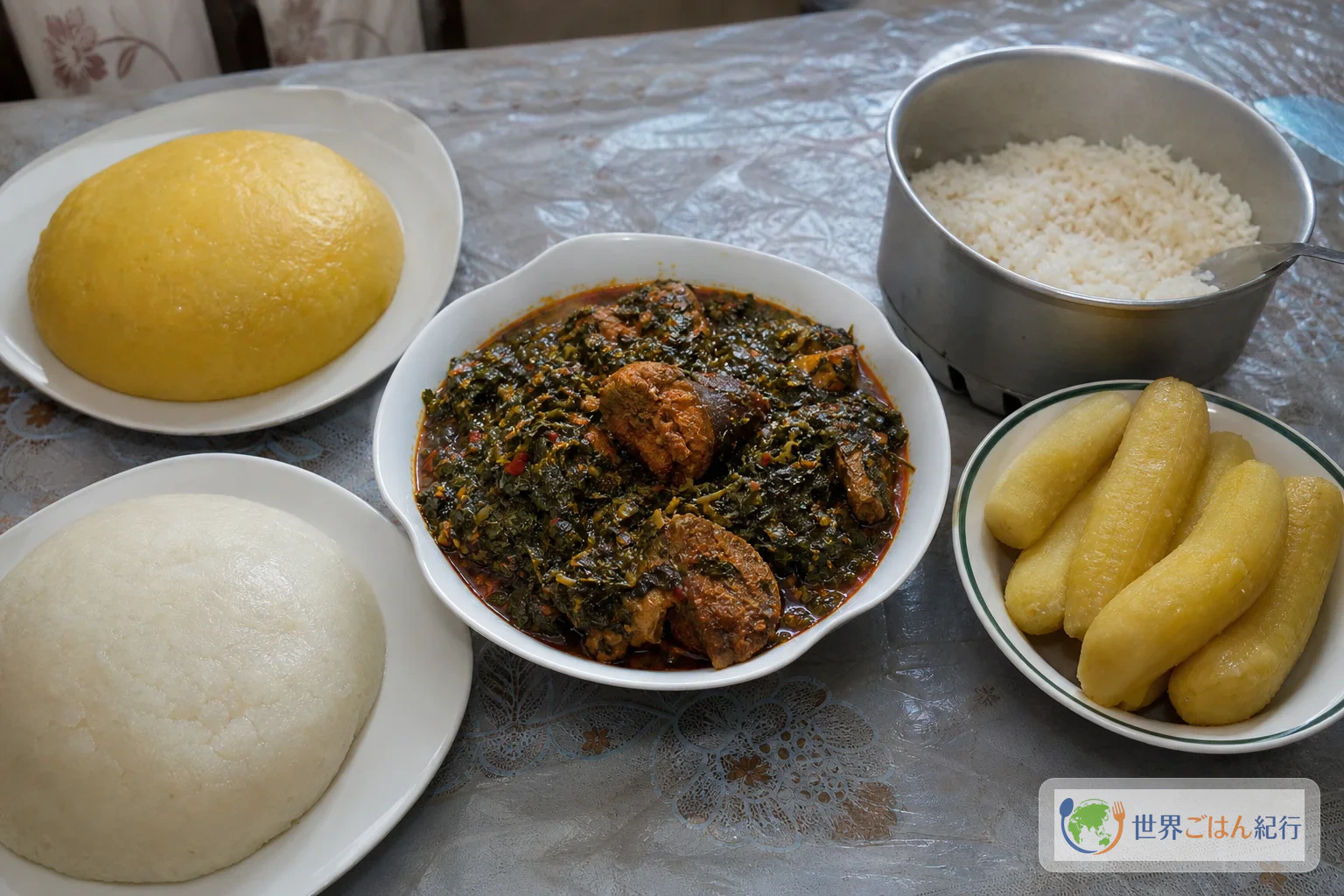
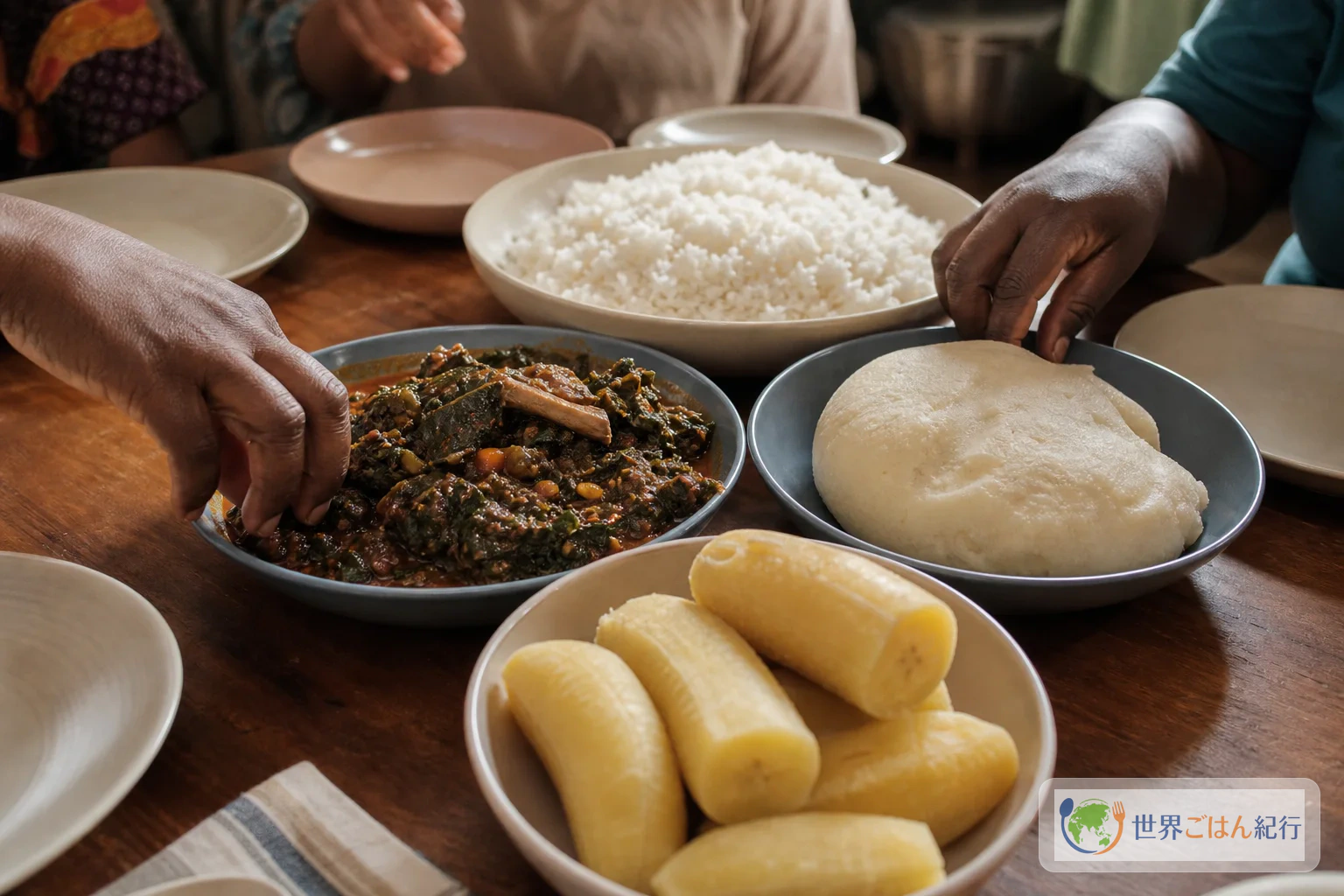
Efo riro is less a soup to drink on its own than a dish in which a rich sauce is coated onto a staple. In Nigeria it is paired with staples called "swallow," pounded from cassava or yam, such as eba, amala, fufu, and pounded yam. Saveur says that besides such staples it is also eaten with rice and other grains.
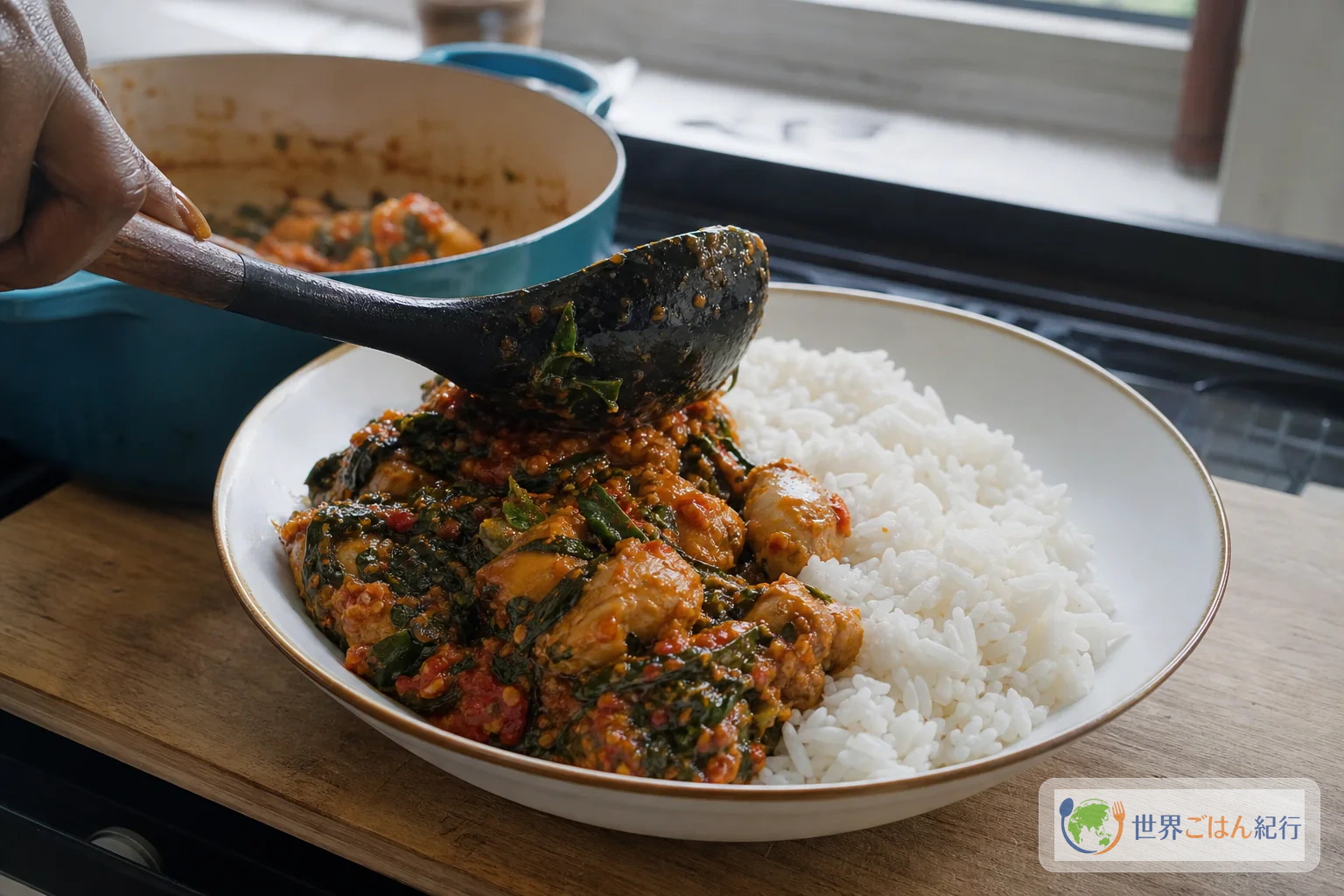
For an ordinary weeknight dinner, plain cooked white rice is fine. The red sauce clings to the rice and a little fiber of the greens remains. That alone gives the dish its skeleton. On days when you want to get closer to the Nigerian table, prepare fufu mix or eba separately and cook the efo riro a little more thickly. It is interesting how, when the staple changes, the same pot shifts from a side dish to a sauce you scoop up.
Regional differences show in where leaves, seafood, and fermented seasonings are placed
The combination of leaves, meat, dried fish, ground crayfish, ponmo (cow hide), and iru, fermented locust beans, changes by household and region. Some pots emphasize seafood, others take beef or chicken stock as their axis. So rather than memorizing one fixed recipe as "the only authentic one," keeping to the order of mixing the leaves in last and the idea of cooking the pepper sauce until its water has gone makes it easier to reproduce in your own kitchen.
In this recipe, shoko and tete are replaced with spinach and kale, and crayfish with powdered dried shrimp. The red palm oil stays for its color and earthy aroma. Even when you move toward ingredients you can get, if you do not replace the roles, the outline of the dish does not fade.
Ingredients (serves 4): First Gather "Leaves, Red Oil, and the Savor of the Sea"
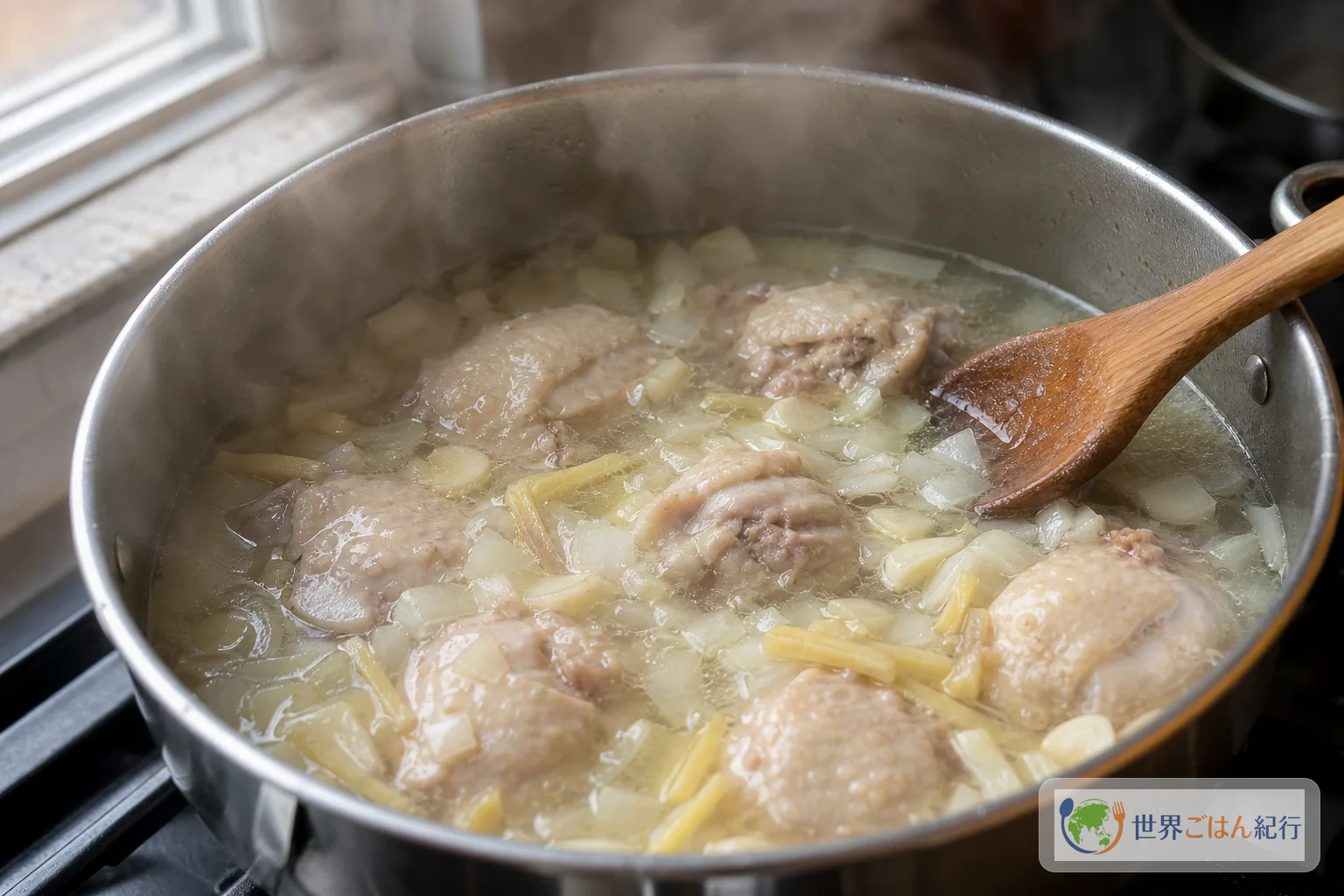
Some Nigerian recipes put in many kinds of meat and fish, but for the first time do not add too many ingredients. Take the broth from chicken, and use 400 g greens, 3 tbsp red palm oil, and 1–2 tbsp dried shrimp. Once you can see the roles of these four, it is easier to judge when you expand to beef or dried fish next time.
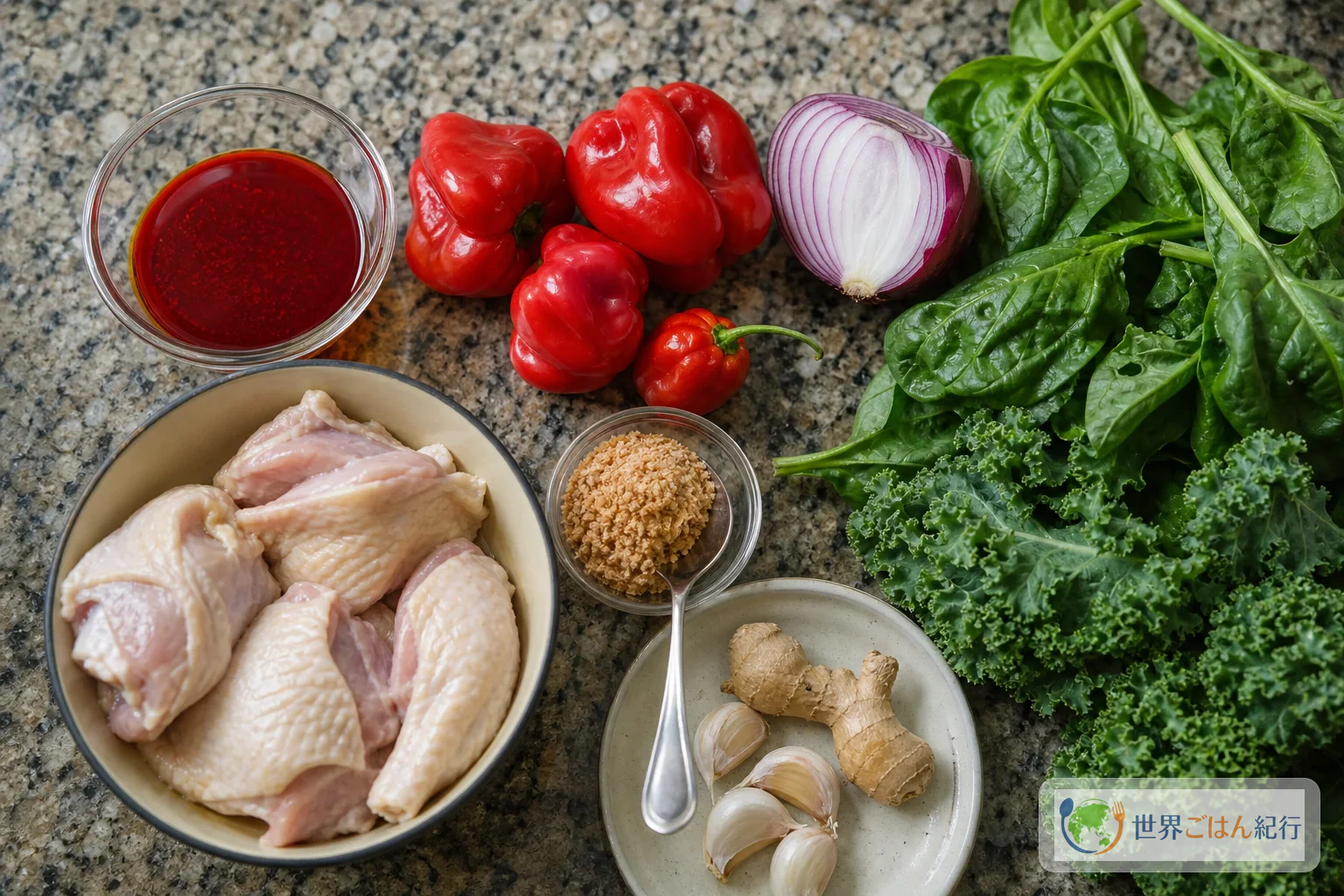
Powdered dried shrimp and iru are used, so if you have a shrimp or seafood allergy, check ingredient labels and leave out the relevant ingredients. The flavor will not be the same after substitution. Habanero is hot even in small amounts, so set aside some sauce for tasting before adding more, which makes it easier to adjust.
Buy Red Palm Oil, or Skip It This Time?
Red palm oil is not just an oil that adds red color. It gives the pepper sauce, before the greens go in, an earthy aroma and body. At 3 tbsp, the presence of the red oil comes through, but it is not an amount that drowns the whole pot in oil.
The condition for buying is that you plan to cook West African dishes such as efo riro, egusi soup, and jollof rice again. A small food-grade bottle is enough to begin with. The condition for skipping is that you want to try only one dish and cannot think of a use for the rest, or that you do not want to carry its aroma into dishes made with light oil. In that case you can mix 3 tbsp rice bran oil with 1/2 tsp paprika powder, but the aroma of red palm oil does not come back.
When you look at a product page, check not the price or stock but the food labeling, volume, and ingredients.
Method: Reduce the Pepper Sauce, Then Mix the Greens in Last
If you finish the cutting, the first simmer, draining the greens, and reducing the sauce first, you will not hesitate at the pot. There are 7 steps in all, with about 45 minutes of cooking. Heat varies by stove, so proceed by the thickness of the sauce and how the oil floats, not just the time.
Four Ways to Judge the Finish
If it is watery, go back to the thickness before adding the leaves
If water collects at the bottom of the pot after finishing, either the greens were not squeezed enough or the pepper sauce was not reduced enough. Heat for 3–5 minutes over low heat with the lid off, until the line from a wooden spatula drawn across the bottom stays for about 1 second. Thickening with potato starch makes it a different dish, so first cook off the water.
If it is bitter, separate the type of leaf from burnt oil
Shoko is introduced as a leaf with a mild bitterness, and kale and komatsuna also give a greener bitterness than spinach. A shorter blanch followed by cold water lessens the bitterness and grassiness a little. But the bitterness from heating red palm oil until it smokes is a different thing from the bitterness of greens. Burnt oil cannot be reversed, so the priority is not to overheat the oil.
If it is too hot, dilute with leaves, meat, and the staple, not water
If only the chili heat stands out, first add a little more greens or chicken and let it meld over low heat so the sauce does not thin. At the table, serving more white rice keeps the skeleton of the flavor better than pouring water into the pot. Next time start the habanero at 1/4 and reduce the seeds before it goes in the blender.
If the oil is heavy, decide its use rather than cutting the amount
Cutting the red palm oil to 1 tbsp makes it lighter, but color and aroma weaken with it. It is easier to judge if you make it with 3 tbsp the first time and then go down to 2 tbsp next time or change the ratio with rice bran oil. If you leave out the red palm oil entirely, enjoy it as an efo riro-style stewed greens and think of it separately from a dish that reproduces the Nigerian aroma.
Substitution Table: Decide What to Buy and What to Skip First
Substitution here is used not to make everything taste "close" but to decide which role in the dish to protect.
| Role in Nigeria | What to keep elsewhere | Replacement and judgment |
|---|---|---|
| Greens such as shoko / tete | Spinach, kale, komatsuna | Spinach for tenderness, komatsuna for stem texture, kale for stewing resilience |
| Red pepper base | Red bell pepper, onion, chili | Make sweetness with bell pepper and adjust the heat separately |
| Ground crayfish | Powdered dried shrimp | If you can eat crustaceans, a small amount brings savor of the sea |
| Red palm oil | Edible red palm oil | If protecting color and aroma, do not substitute. Rice bran oil plus paprika is a different taste |
| Iru | Fermented locust beans | May be omitted. Natto is strongly sticky and aromatic, so do not replace by equal amount |
| Swallow | Eba, fufu, white rice | White rice is fine the first time. Change the staple next time |
Buy powdered dried shrimp, or manage with what is nearby?
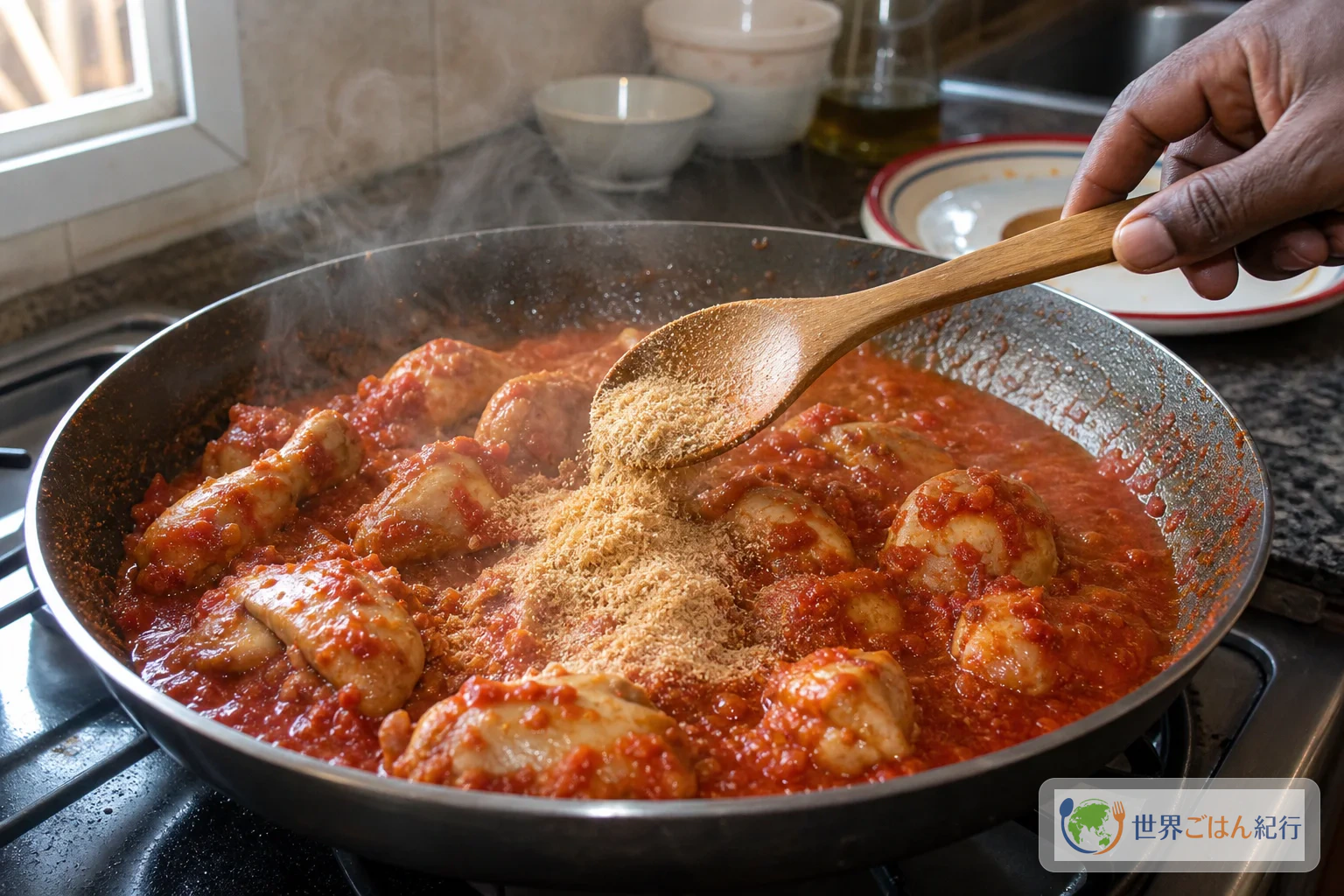
Powdered dried shrimp changes the impression the most for the smallest amount in the ingredient list. The pot works with just the chicken broth, but with 1 tsp to 1 tbsp of dried shrimp, the salt of the sea lingers deep within the red sauce. It is not the same as Nigerian ground crayfish, but as a substitute that is easy to get elsewhere it makes sense.
The condition for buying is that you like the aroma of seafood and will use it in West African dishes other than efo riro. The condition for skipping is that you cannot use shrimp or that strongly scented dried goods tend to linger in your refrigerator. When you buy, check the net weight, ingredients, and whether it says no added coloring. Prices and stock fluctuate, so the article does not assert them.
If You Add Just One Tool, a Mortar
This recipe can be made with a blender. So you do not need to buy extra tools from the start. But if you crush whole dried shrimp, chilies, and iru in small amounts, a mortar makes it easier to get a coarse paste that keeps its aroma. Running an electric blade for a long time can warm the pepper sauce and make it too fine.
The condition for buying is that you keep making dishes that crush beans, chilies, and dried goods, such as akara (in Japanese) and abacha (in Japanese), not only efo riro. The condition for skipping is that you will try it just once with powdered dried shrimp and ready-made paste, or that you have no place to store it. When you buy, check whether a granite bowl and pestle come as a set, the diameter and weight of the bowl, and whether the material is food-safe.
Storage: Separate the Moisture and Reheat Only What You Eat
When it has cooled slightly, divide it one serving at a time into shallow airtight containers and finish within 2–3 days in the refrigerator as a guide. To freeze, cool it completely and wrap one serving at a time, with 2–3 weeks as a guide. Greens soften on reheating, so if you want to keep the texture, you can also stop the greens a little firm before freezing.
To reheat, move it to a small pot, add 1–2 tbsp water, and set over low heat. When it is hot at the center and the sauce has loosened again, turn off the heat. Do not eat anything left long at room temperature or with an abnormal smell, color, or stickiness. Avoid refreezing, and take out only what you need.
Variations: The Order in Which a Pot Changes Character
Switch to beef or goat
When switching to beef shank or goat, simmer first until tender and send the broth to the pepper sauce. If the meat stays tough and keeps cooking in the sauce, the leaves break down first. Finishing the meat first is the fork.
Strengthen the seafood aroma
Increase the powdered dried shrimp to 2 tbsp and add flaked smoked fish at the finish. Saveur's recipe also has a construction using dried fish, powdered crayfish, and stockfish. When you add fish, the saltiness goes up too, so reduce the final salt.
Use only one kind of green
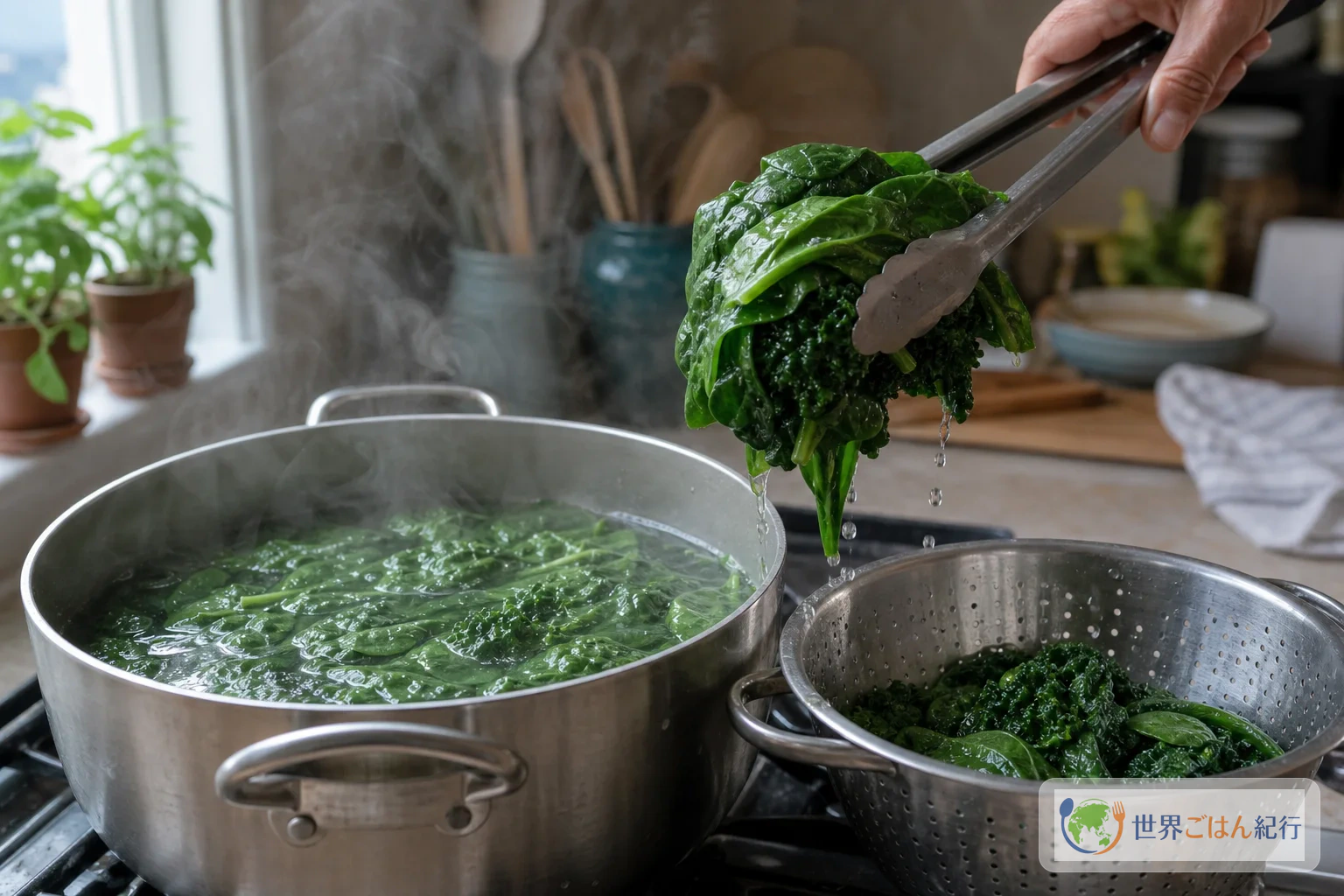
With spinach alone, shorten the boiling time and the finishing mix to about 3 minutes. With kale alone, cut the stems thin and pass them through hot water for 90 seconds first. The water content differs from bag to bag of greens, so prioritize "no water drips" over minutes.
Make it without meat
If you leave out the chicken, add savor with dried shrimp, mushrooms, and a rich vegetable stock. If you leave out the shrimp too, use dried shiitake powder and grilled onion. But this is a fork toward enjoying it as a pepper-stewed green dish, apart from the richness of the Nigerian practice of layering seafood and meat.
Change the staple
White rice receives the sauce's moisture, while eba and fufu move it toward the way of balling and scooping by hand. Adding boiled plantain brings sweetness and rounds off the edge of the heat. Deciding the staple first decides whether to cook the stew a little thicker or leave more sauce.
FAQ: Small Questions Before You Make Efo Riro
What does efo riro taste like?
The sweetness of red bell pepper, the heat of chili, the earthy aroma of red palm oil, and the savor of the sea from dried shrimp overlap. Because the greens go in last, what remains is the aroma of greens wearing the sauce, not the taste of broken-down leaves.
Can I make it with spinach alone?
Yes. Saveur says ordinary spinach can be used in place of shoko leaf, and Nigerian recipe sites also list fresh or frozen spinach as a substitute when shoko and tete are unavailable. The conditions are to squeeze out the water well and not to overcook at the finish.
Is it a failure if I don't use red palm oil?
Not a failure. But the color and aroma change. If you create the redness with rice bran oil and paprika powder, it comes together as a green stew, but it goes in a different direction from efo riro made with red palm oil. If you want to make it once and compare the difference, buying a small amount of red palm oil makes it easier to judge.
I don't like dried shrimp. What can I substitute?
Smoked fish, a little fish sauce, and dried shiitake powder are candidates, in that order. If you avoid seafood, add savor with dried shiitake powder and the chicken cooking broth. The aroma will not be the same, so do not hide that you left out the dried shrimp; make the greens and pepper sauce the stars.
Is it eaten with rice or with fufu?
It can be eaten with either. The Nigerian food-culture materials and Saveur introduce eating it with swallows like eba and fufu, with rice, and with boiled plantain. Starting with white rice the first time and moving to eba or fufu the second shows you the difference in the thickness of the sauce.
Sources and Image Credits
- Embassy of Nigeria, The Hague, "Food, Culture and Cuisine in Nigeria": Checked the southwestern origin of efo riro, the explanation of efo/riro, efo shoko and efo tete, and staple pairings.
- Saveur, "Efo Riro Recipe": Checked the spinach substitute for shoko leaf, the pepper sauce, dried fish and crayfish, and ways of eating with swallow and rice.
- All Nigerian Recipes, "Efo Riro: A Yoruba Delicacy": Checked its position as a Yoruba dish of western Nigeria, efo shoko and efo tete, and the spinach substitute.
- Chef Lola's Kitchen, "Spinach Stew (Efo Riro)": Checked the savor of crayfish and the idea of not heating red palm oil until it smokes.
- Food Plus Words, "How To Make Efo Riro": Used as comparison material for the meaning of efo/riro, how the pepper sauce is cooked, adding the greens last, and storage.
- Ministry of Health, Labour and Welfare (Japan), "Q&A on heating conditions for meat": Referred to as an official guideline for checking that chicken is cooked.



