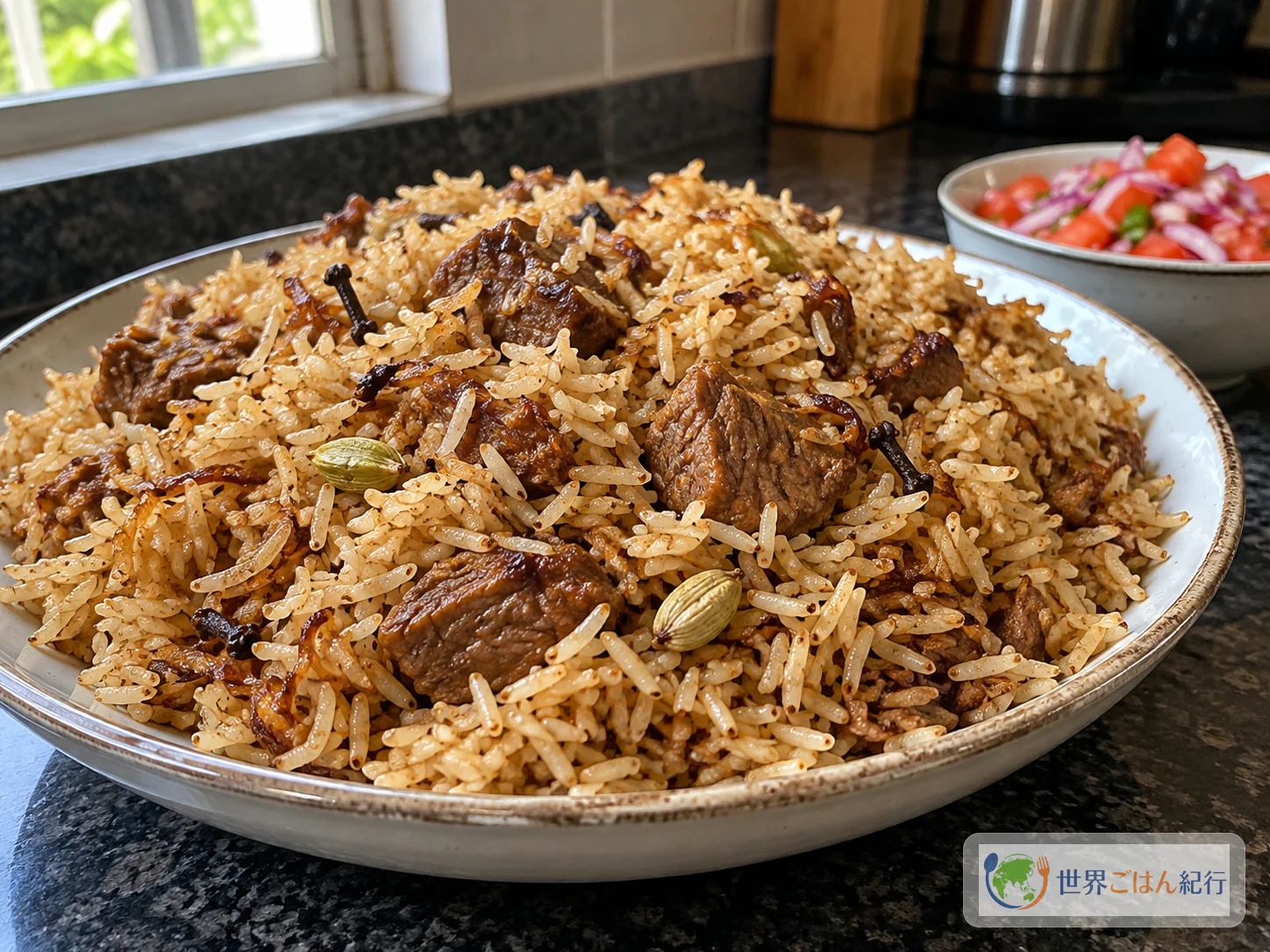
Thiebou Yapp: Rice That Drinks Up the Broth of Beef and Vegetables
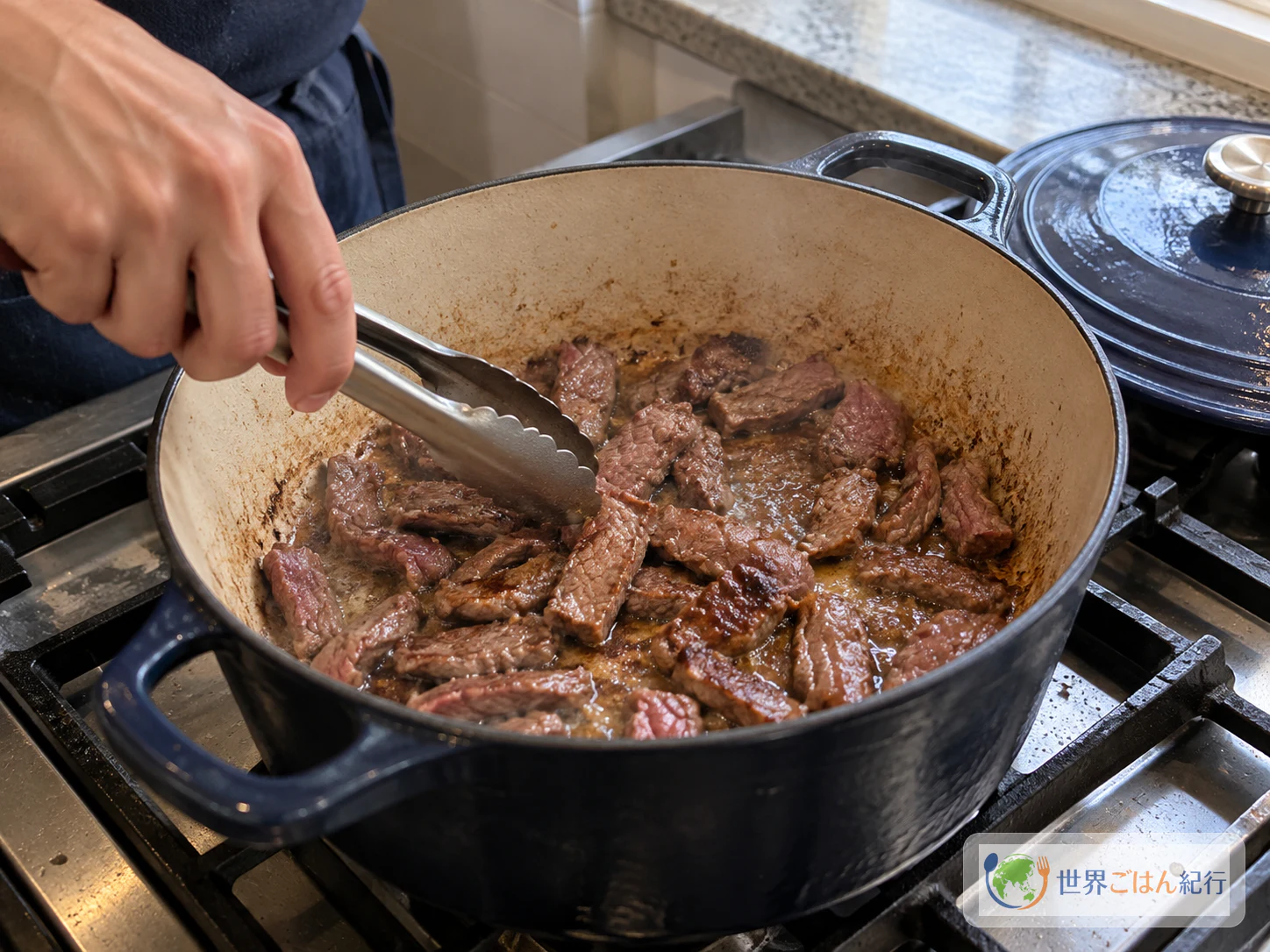
Brown the beef, simmer it with the vegetables, lift the vegetables out, then cook the rice in the broth left behind. This recipe has no tomato, fish or stock cube.
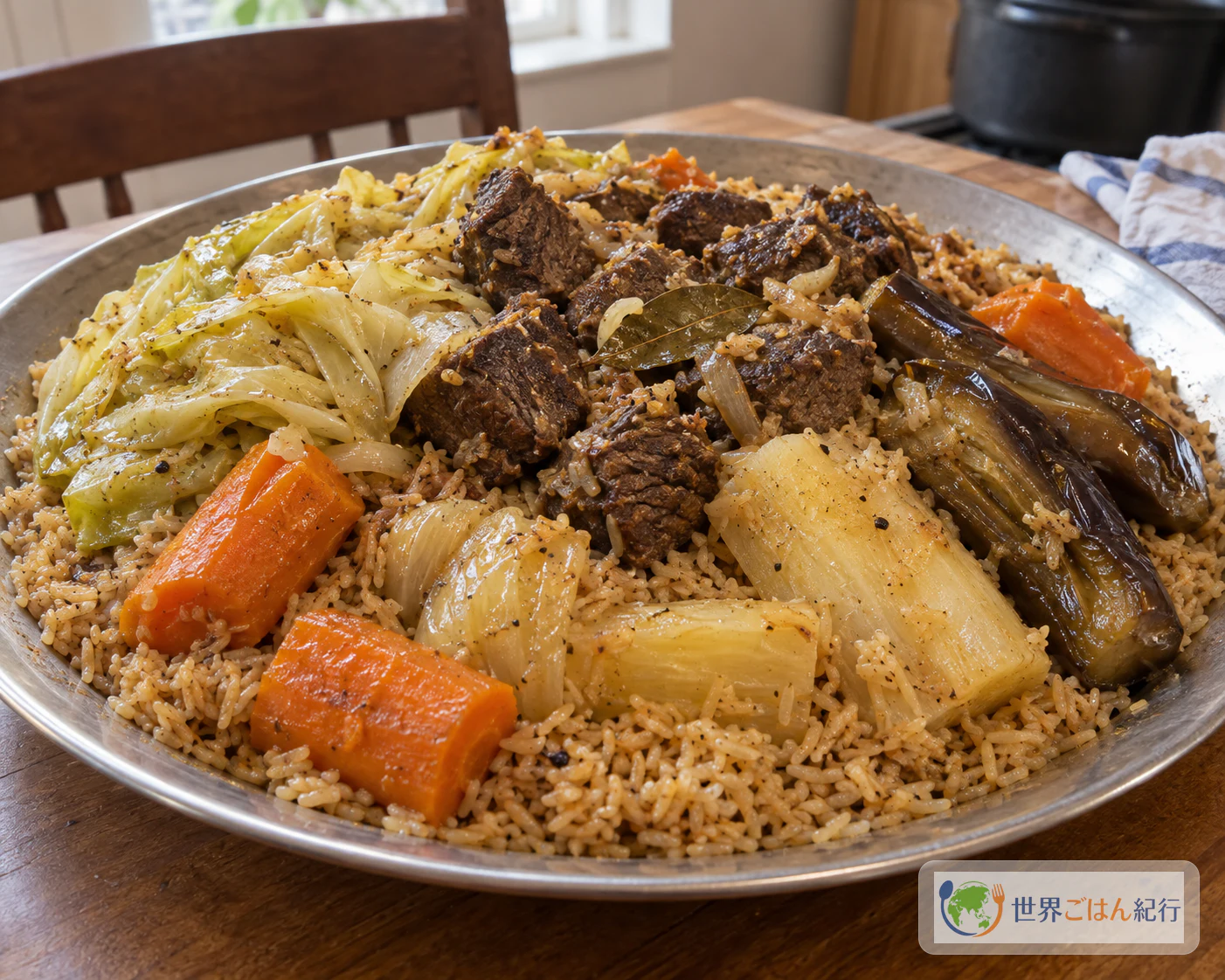
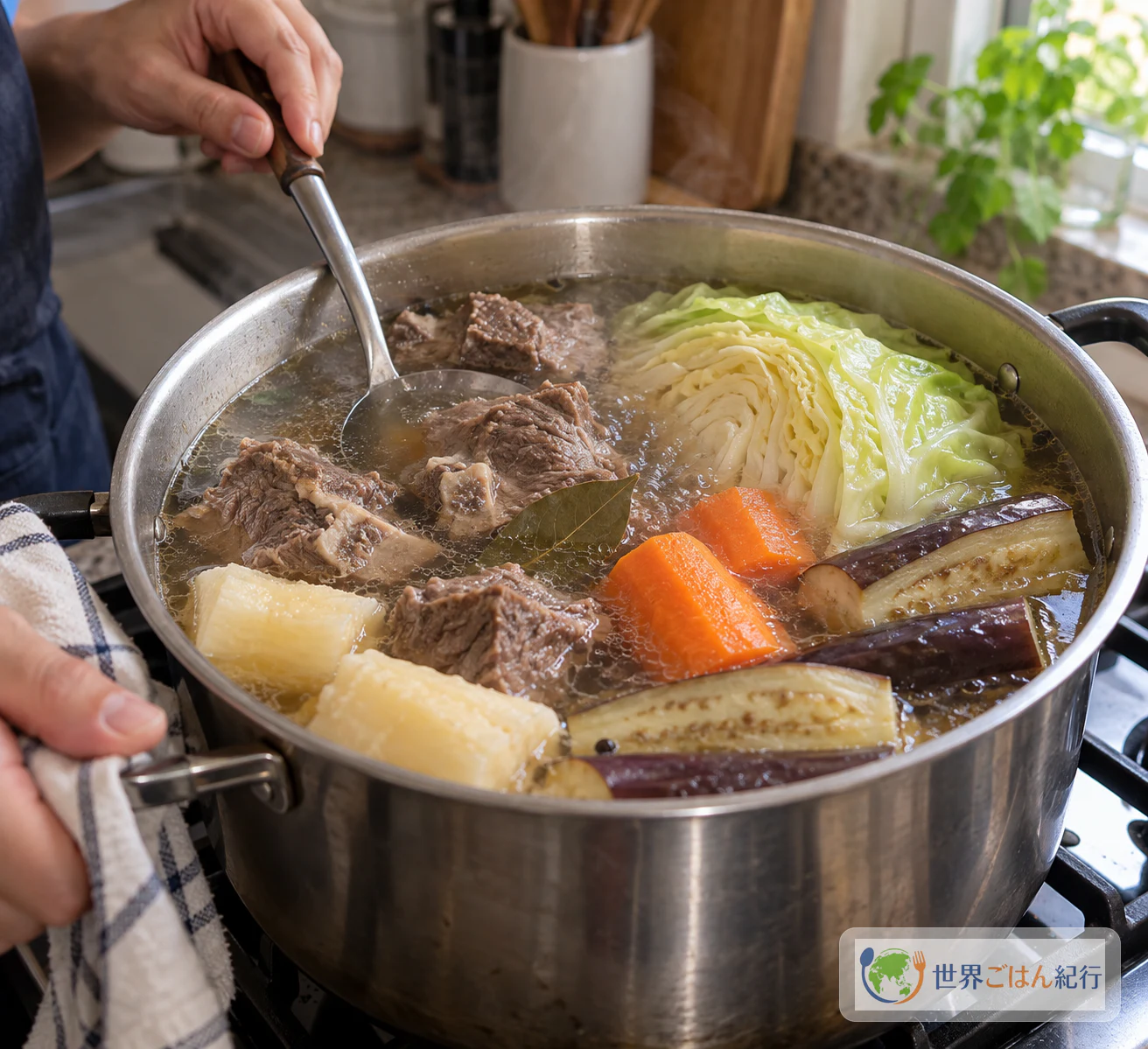
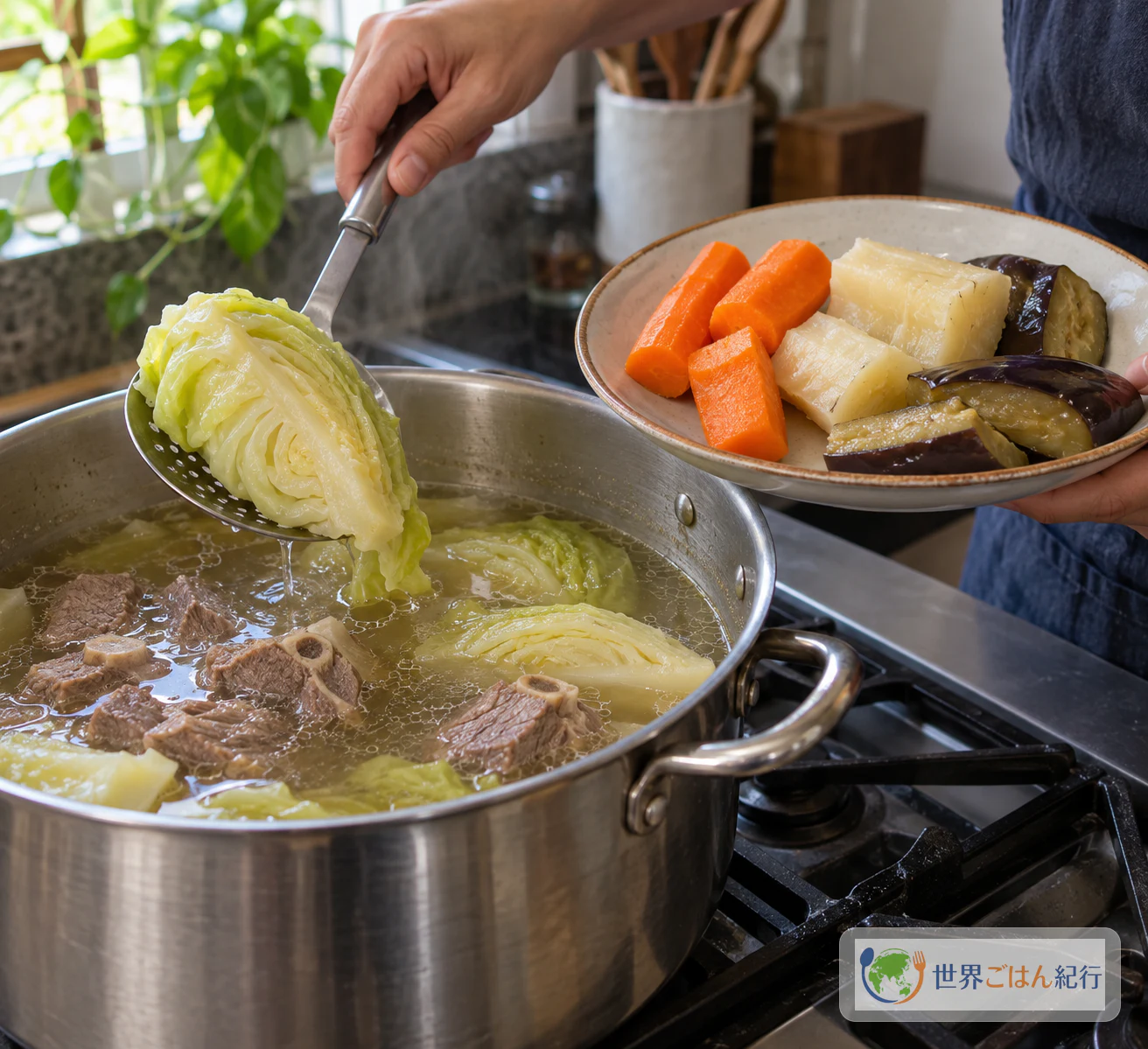
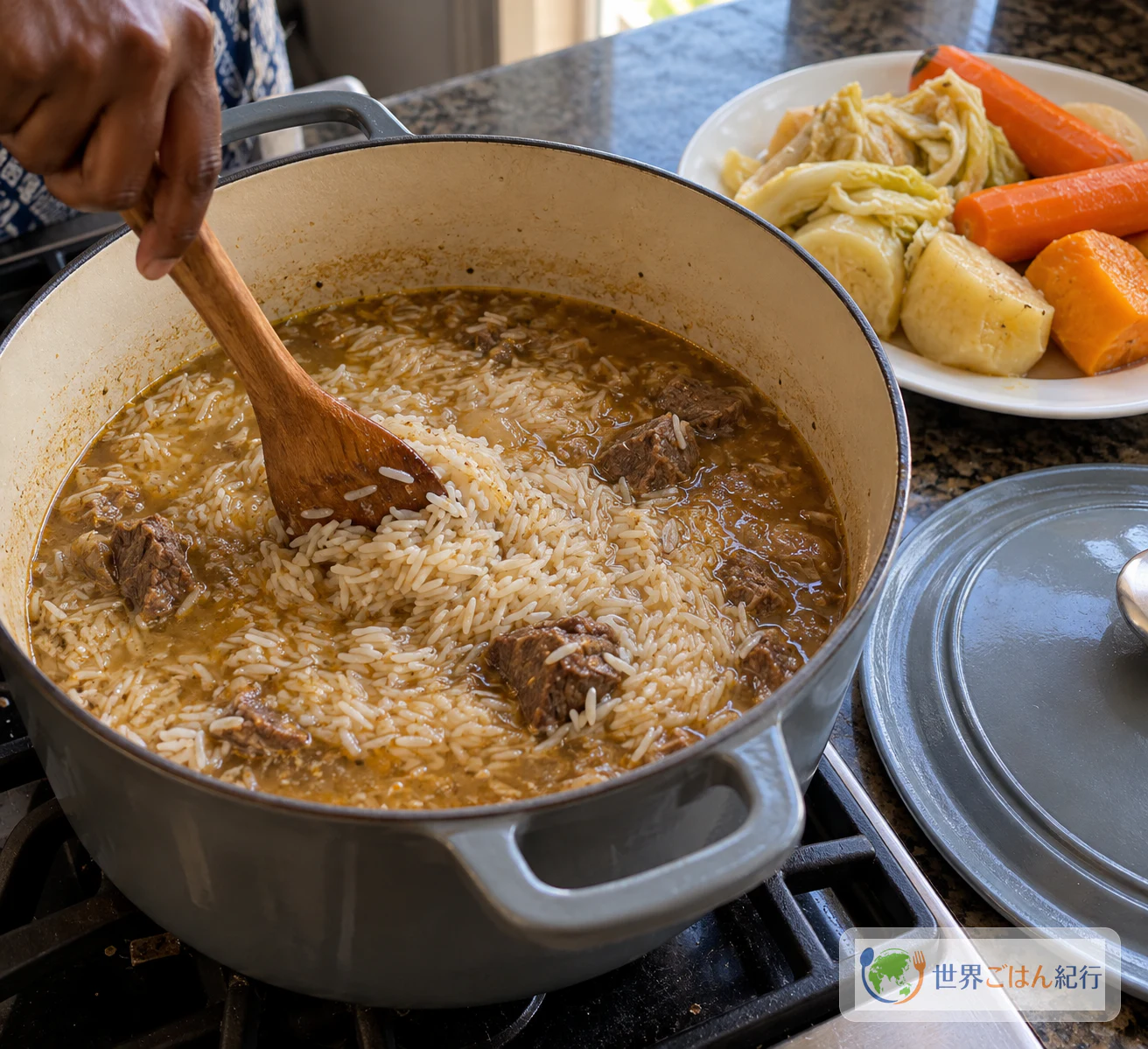
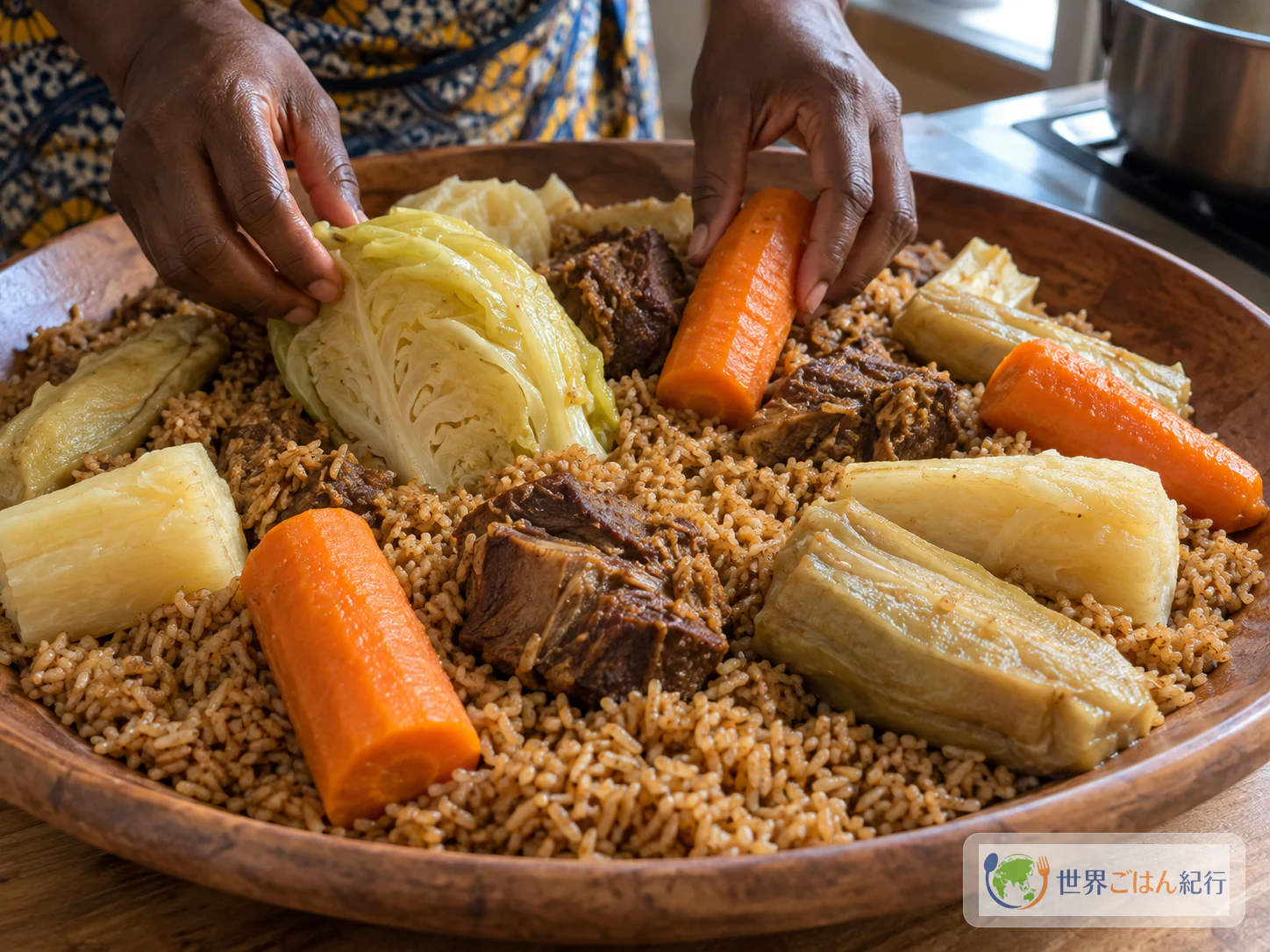
The beef and vegetables have simmered for about an hour. The cabbage, carrot, cassava and eggplant come out of the pot, the beef stays in the broth, and washed rice goes in before the lid comes down. That is the heart of thiebou yapp, also written ceebu yapp or thiébou yapp, and also known in French as riz à la viande, or rice with meat.
Senegal's embassy in Qatar describes ceebu yapp as a dish of meat cooked with onion, garlic and spices and combined with rice, and it presents the dish separately from thiéboudienne, the fish and rice dish. They are not the same recipe with one protein swapped for another. Spellings vary between sources, so no single one is treated here as the only correct form. You can find more of the country's dishes on our Senegal page.
This recipe follows one published version, "Ceebu yapp (riz à la viande)" from Au Senegal, which is listed as serving 6. It has not been kitchen-tested by Sekai Gohan, so we give no measured yield or total time. The times are that recipe's estimates and do not guarantee that the beef or rice will be done, so check the food itself.
Au Senegal measures the oil and mustard in cuillères (spoonfuls) without giving a spoon size, and it gives no amounts for salt and pepper. We have kept those measures as they are rather than converting or guessing. Its method also mentions yéte (yeet) and niébé as optional, but neither appears in its ingredient list and no amounts are given, so we have left them out of the base recipe.
Ingredients (Serves 6)
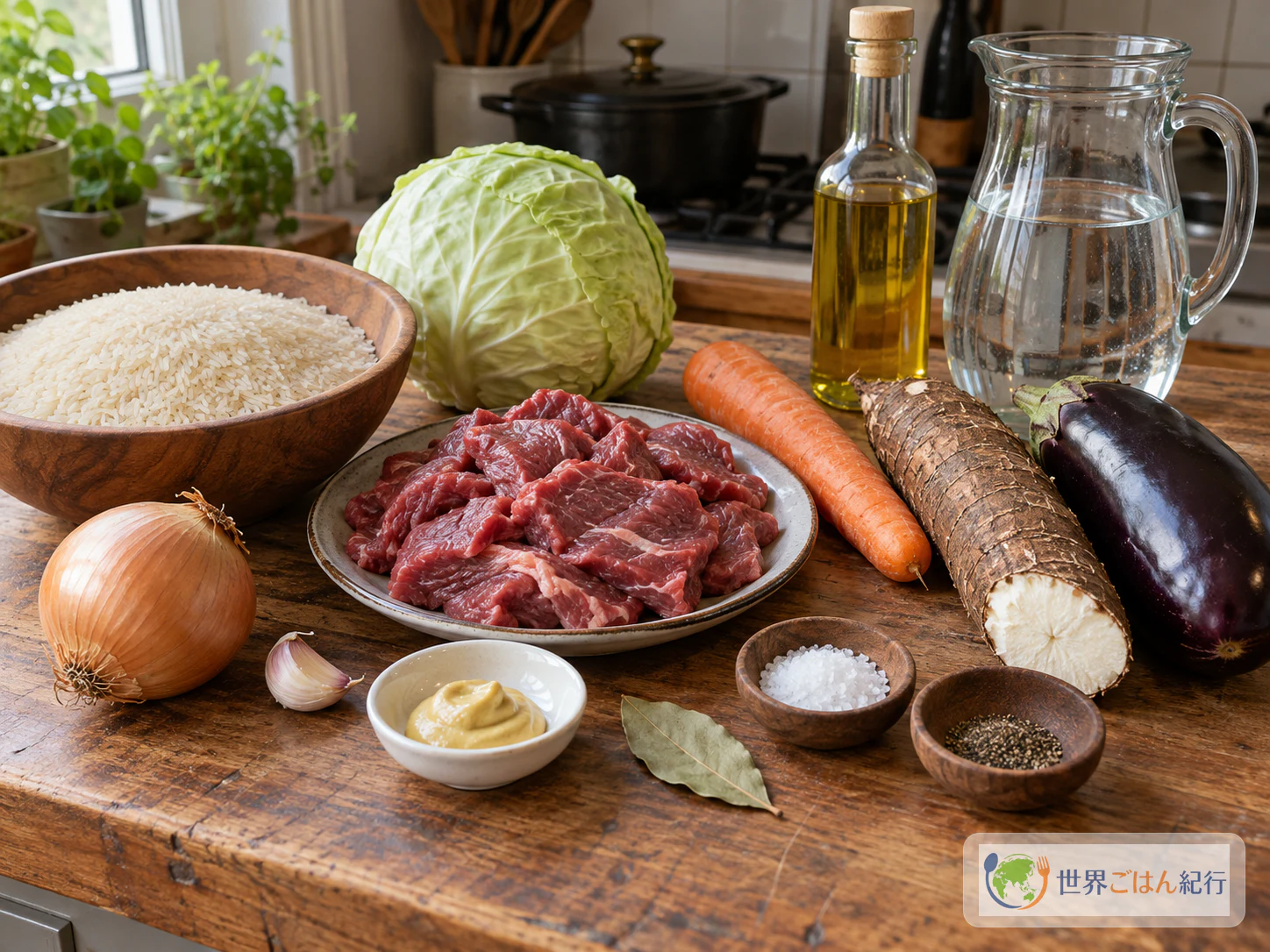
This dish contains mustard. Check the labels on any packaged ingredients you use.
Choosing the Rice, Beef, Cassava and Mustard
Rice: Broken rice is optional, not a requirement. You can use your everyday rice, but the feel of the grains will differ, and so may the liquid and time it needs.
Beef: Choose a piece suited to stewing and cut it into thin strips. No particular cut is essential.
Cassava: Look for it fresh or frozen. We have no confirmed substitute, so replacing it or leaving it out is your own adaptation. Expect the flavor and texture to change.
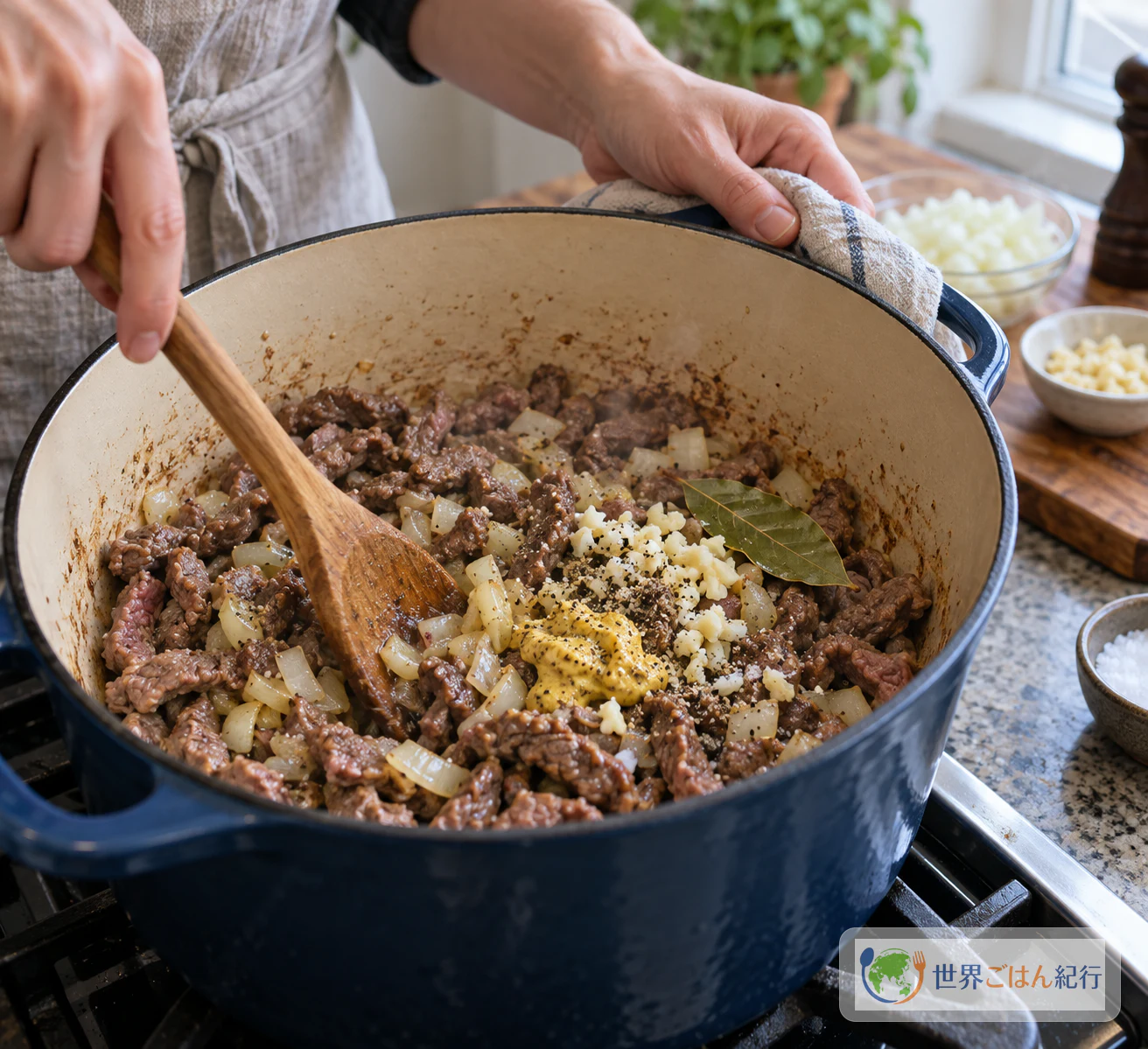
Mustard: Whole-grain or Dijon-style mustard are reasonable options to look for. Hot mustard pastes such as Japanese karashi have a different heat, so we don't treat them as an equal swap.
Spoon and oil: Use the same spoon to measure both the oil and the mustard.
Equipment
- Heavy pot with a lid, large enough for the beef, vegetables and water
- Plate or bowl to hold the cooked vegetables
- Large serving platter
Method: Build the Broth, Then Cook the Rice in It
Pot size, vegetable size and rice type can all change how this cooks. Use the times as a guide, then check that the beef is cooked through, the vegetables are tender and the rice has no hard center.
If Something Goes Wrong in the Pot
Because this recipe has not been kitchen-tested, the fixes below are starting points rather than proven corrections. We give no extra times or water amounts because we have no reliable figures for them.
| Problem | What to check | What to try |
|---|---|---|
| The beef is still tough | How the beef feels, not just how long it has cooked | Keep simmering and check again. Watch the liquid so the pot doesn't run dry |
| The rice has a hard center | Rice type, pot size and how much broth is left | Cover and keep cooking, then taste again. If the pot is dry, add a little water |
| The bottom of the pot is scorching | Heat level, lid fit and how much broth is left | Lower the heat, make sure the lid is on and check the liquid |
| The vegetables are falling apart | Whether some pieces have softened before the others | Lift out each vegetable as it becomes tender, and note the piece size for next time |
Variations: Other Pots with the Same Name
There is no single fixed version of this dish. These examples come from other recipes and sources, so their ingredients and methods are not part of the recipe above. If you want to try one, follow it as its own recipe rather than adding a single element to this one.
| Variation | Where it appears | What changes |
|---|---|---|
| Red ceebu yapp | Described in a Journal of Global Health Reports study | A red version of the dish, separate from the recipe here |
| Tomato, yeet and netetou | A recipe from Louma, a food seller with a commercial interest in yeet and netetou | Changes the aroma and saltiness, so check the saltiness of these products |
| Other meats | Household examples in the Louma article, such as lamb | Replaces the beef, though Au Senegal doesn't list this as a substitute |
| Onion sauce on the side | One serving example from Louma | Adds a separate sauce to the meal |
| Rice steamed first | CIC Group's recipe | Steams the rice before adding it to the broth, and uses paleron as the beef |
At the Table: A Shared Platter and a Dish with Many Forms
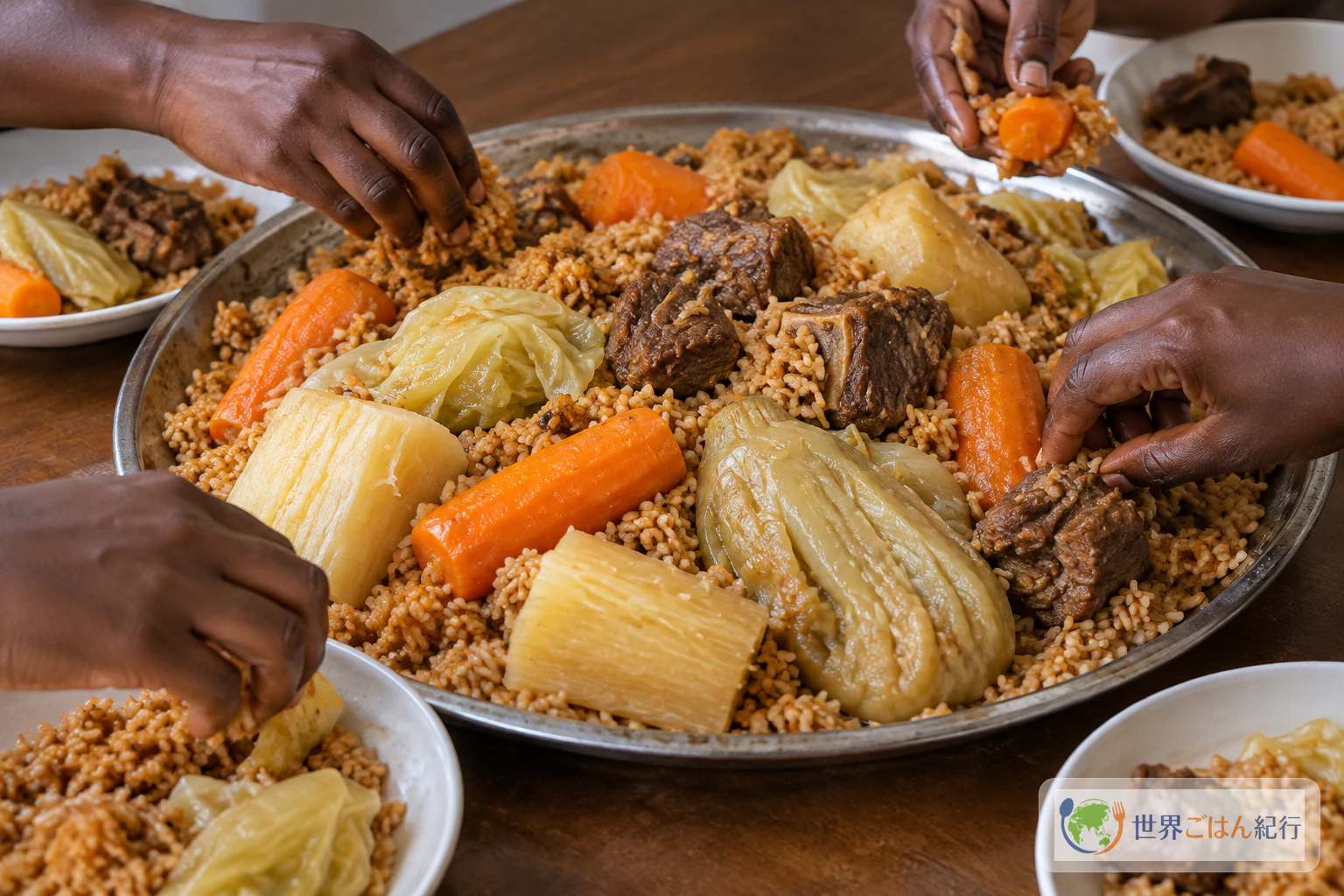
An anthropological field study of Senegal in the Journal of Global Health Reports lists ceebu yapp among the rice dishes eaten at lunch. It also discusses shared platters and the social side of meals, and notes that dishes vary with region and way of life. It is not a recipe authority, and its observations do not describe a fixed custom in every household.
A large platter suits this dish well, but individual plates are also a perfectly reasonable choice at home.
Beyond the difference between meat and fish, we make no claims here about the dish's historical origin or inventor, or about any one form being the only authentic version. The sources we reviewed did not establish these points.
Frequently Asked Questions
What is the difference between ceebu yapp and thiéboudienne?
Senegal's embassy in Qatar presents them as separate dishes: ceebu yapp is the rice dish with meat, and thiéboudienne is the one with fish. Similar vegetables or a similar way of serving don't make them the same recipe.
Do I need tomato?
Not for this recipe, since Au Senegal's ingredient list contains none. Other versions do exist: the Journal of Global Health Reports study mentions a red ceebu yapp, and Louma's recipe includes tomato.
Do I have to use broken rice?
No. Au Senegal simply says riz (rice) and doesn't name a type. You can choose broken rice, but this recipe doesn't require it.
Should I add yeet or niébé?
They aren't part of the base recipe. Au Senegal's method mentions them as optional, but its ingredient list leaves them out and gives no amounts. If you want those flavors, look for a recipe that includes them, such as Louma's for yeet.
How big is a cuillère?
Au Senegal doesn't say. It gives 6 cuillères of oil and 2 of mustard without a spoon size, an oil type or a mustard type, so we have kept the wording rather than converting it.
What if I can't find cassava?
We can't promise that any substitute will taste the same, and we haven't tested one. You can leave it out or use another vegetable as your own adaptation, but the finished dish will differ.
How should I store and reheat leftovers?
Au Senegal gives no storage or reheating guidance, and we haven't confirmed any, so this article doesn't give storage times or reheating temperatures.
Sources
- Au Senegal, "Ceebu yapp (riz à la viande)." Recipe PDF posted in 2012. Basis for the recipe for 6, its ingredients and amounts, method, stated times and serving. https://au-senegal.com/IMG/article_PDF/Ceebu-yapp-riz-la-viande_a3444.pdf
- Embassy of the Republic of Senegal to the State of Qatar, "Gastronomie sénégalaise." Overview supporting the description of ceebu yapp and its distinction from fish thiéboudienne. https://ambsenegal.qa/fr/senegal/gastronomie
- "Field anthropological research for context-effective risk analysis science in traditional cultures: the case of Senegal," Journal of Global Health Reports. Broad context on ceebu yapp as a lunch rice dish, its red version, shared platters and the variety of Senegalese dishes. https://www.joghr.org/article/12922-field-anthropological-research-for-context-effective-risk-analysis-science-in-traditional-cultures-the-case-of-senegal
- CIC Group, "Thiebou Yapp | recette | riz | Sénégal." A separate recipe, used for comparison only: paleron and rice steamed before going into the broth. https://www.cic.sn/thiebou-yapp
- Lamine Faye / Louma (Le Guedjologue), "Thiébou yapp : le riz à la viande sénégalais." A food seller's recipe and product page, used for comparison only: tomato, yeet, netetou, other meats and onion sauce. https://seggfaye.com/blog/thiebou-yapp-riz-viande-senegalais.html