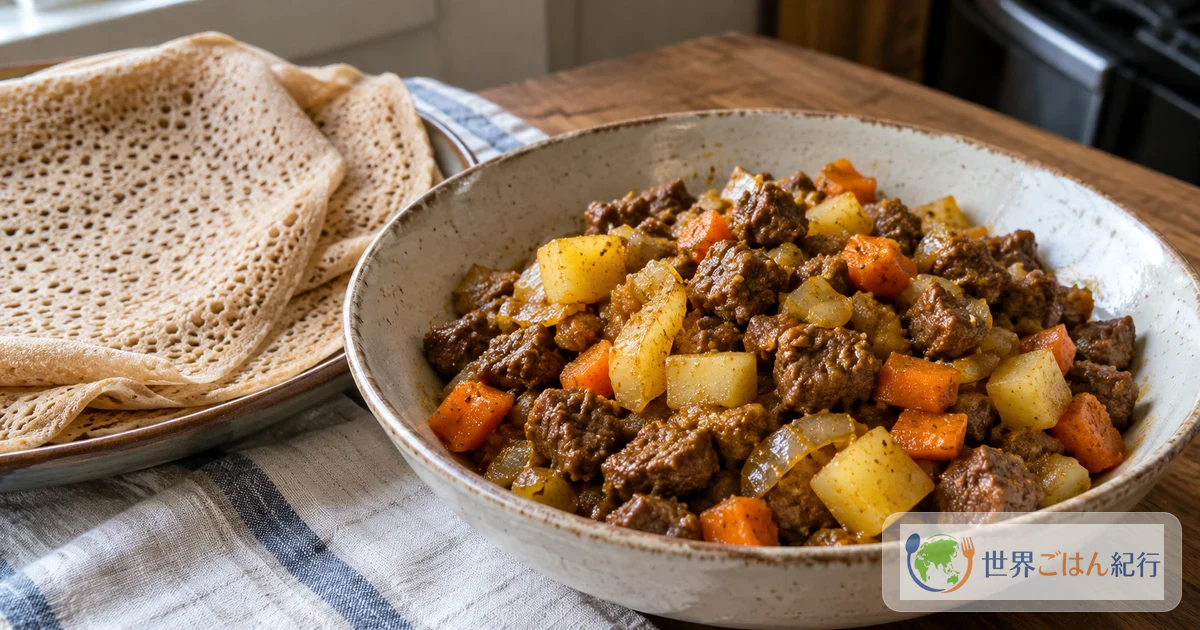
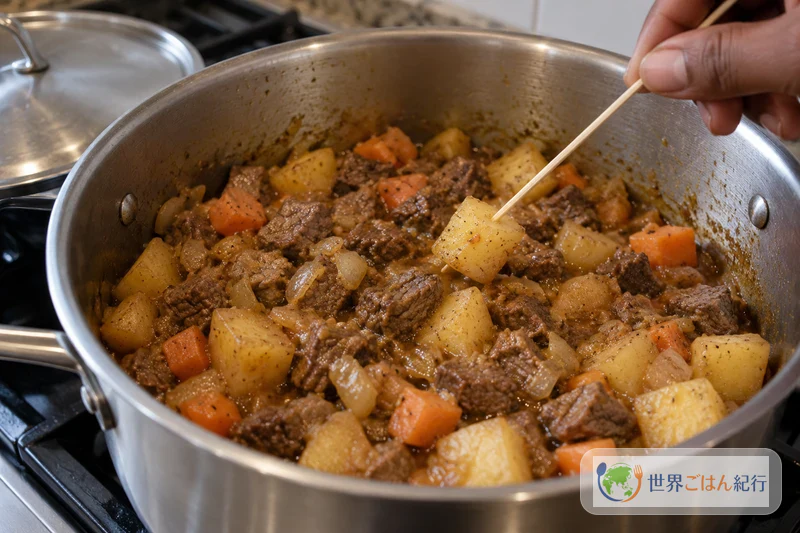
On the rooftop of a morning canteen, several round tables are set out. What is brought to them is sweet, steaming Somali tea, a pile of thin, chewy flatbread, and a plate of small cubes of meat stir-fried and simmered with onion. Tear off some bread, pick up meat with it, sip the tea. That alone gives you the strength to keep going until noon. Suqaar is an essential on the Somali table, a spiced stew of small cubes of meat.
Mornings in Hargeisa: Canjeero and Suqaar
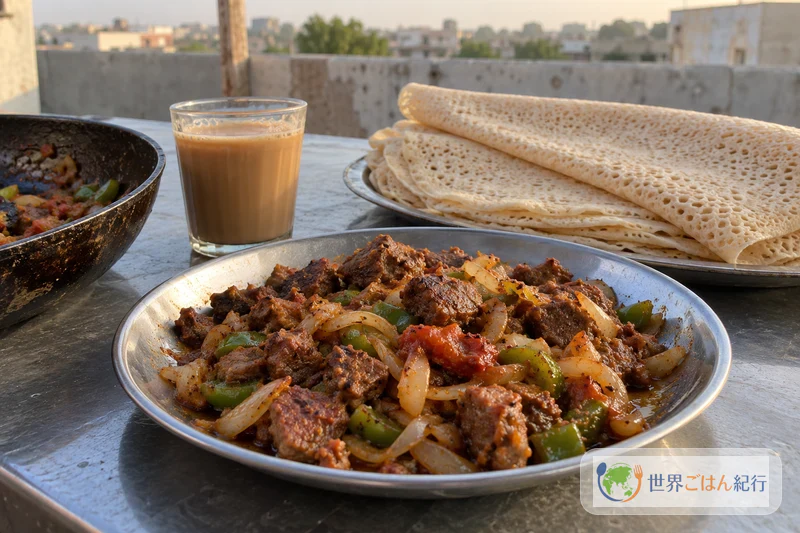
In Hargeisa, the main city of Somaliland in northern Somalia, a local friend takes you up to a canteen rooftop for breakfast. Somali tea, orange and avocado juice, and canjeero with suqaar are on the table. Canjeero is a faintly sour bread made by thinly cooking fermented batter. Canjeero and suqaar is a common breakfast pairing that supplies all the energy you need until the next meal.
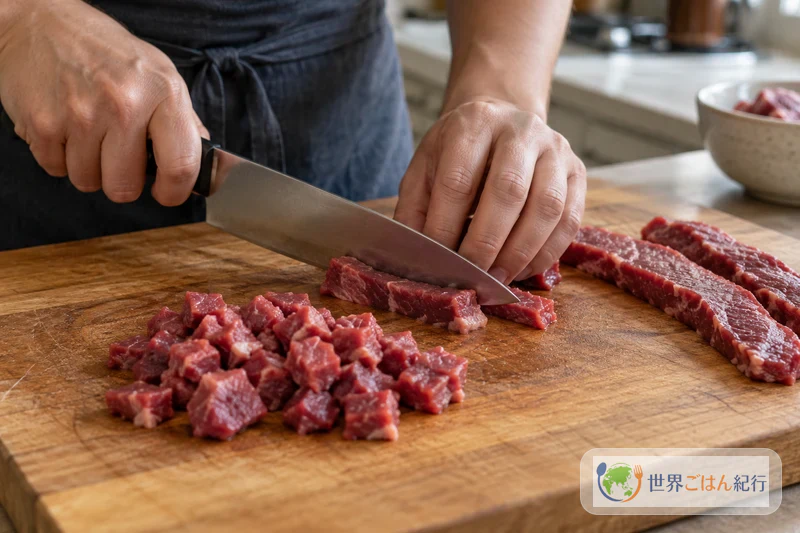
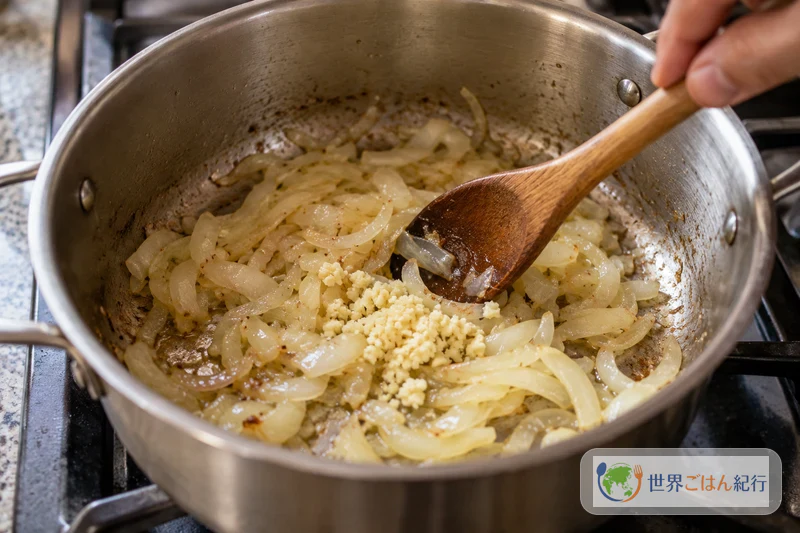
The suqaar at that breakfast was goat meat cut roughly into cubes and stir-fried with onion, bell pepper, and a little garlic and tomato paste. Suqaar is made with beef, goat, lamb, or chicken. It has taken root at everyday tables because it can be made with whatever meat you have that day, not bound to fixed ingredients.
Suqaar meat can be cut anywhere from about 6 mm to about 1.2 cm, so cut it to suit you. Some butcher shops with many Somali customers sell meat already cut small for suqaar.
The Spice That Anchors the Flavor: Xawaash
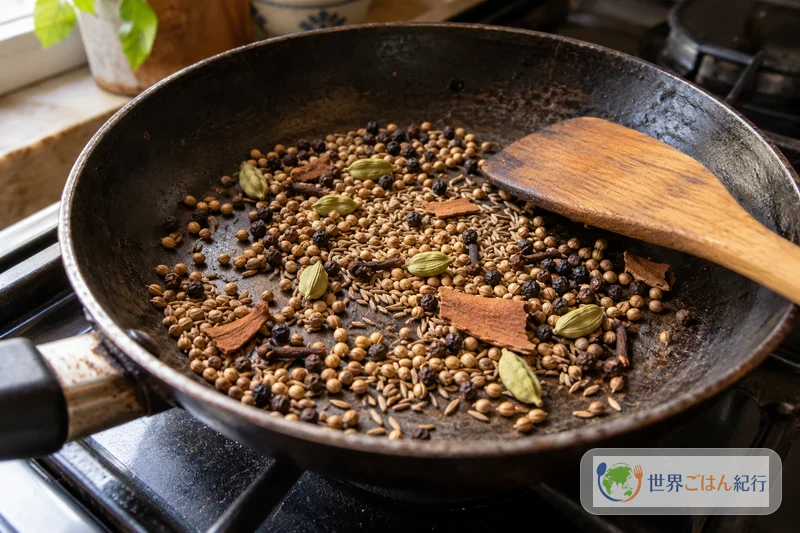
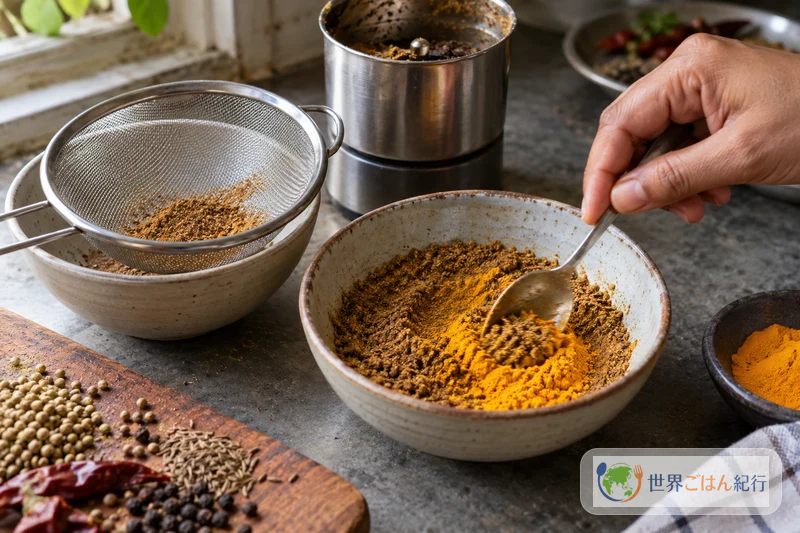
What decides the aroma of suqaar is xawaash, the spice mix no Somali household is without. The name comes from the Arabic "hawa'ij," meaning "necessities" or "essentials." It is thought to have originated in Yemen.
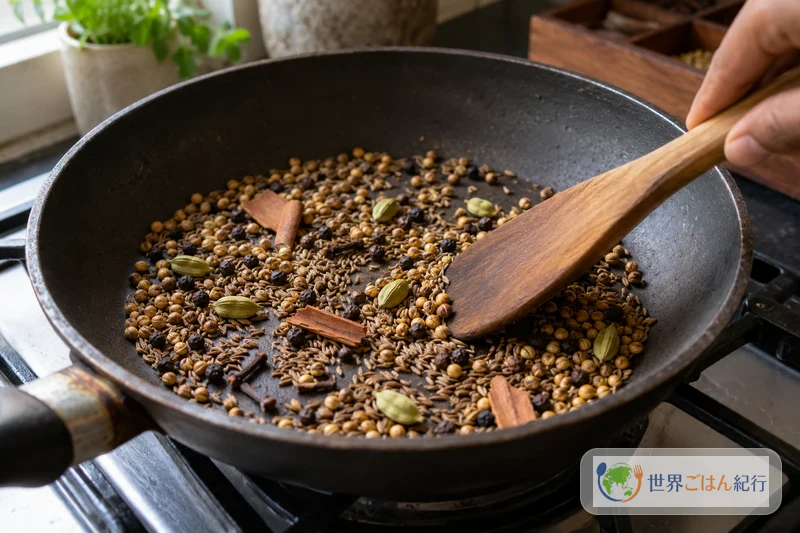
In southern Somalia, xawaash goes into savory dishes such as meat dishes, stews, and soups. In the north, spice mixes in general are called xawaash, including blends put in tea and coffee. Proportions also change with taste and the spices you have. The foundation is cumin and coriander, with black pepper, cinnamon, cardamom, clove, and turmeric added.
Xawaash made from whole spices, toasted and ground, releases its aroma in a completely different way from a mix of store-bought ground spices. Make it in a batch once, and you can reuse it not only for suqaar but also for Somali rice dishes and stews.
Ingredients (serves 4)
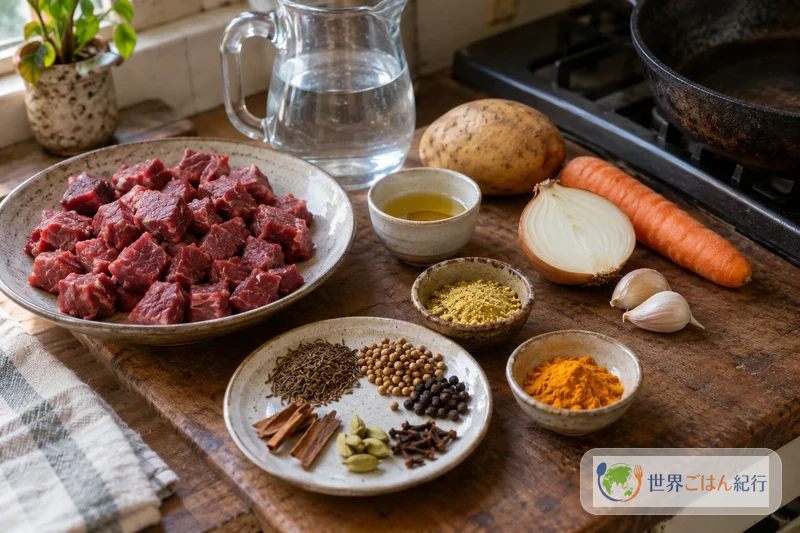
The ingredients below halve a beef suqaar recipe that serves 8–10, so it is easier to cook at home. The xawaash here is one quarter of the full blend. Even so, only a little goes into the suqaar, so keep the rest in a jar and use it in other dishes.
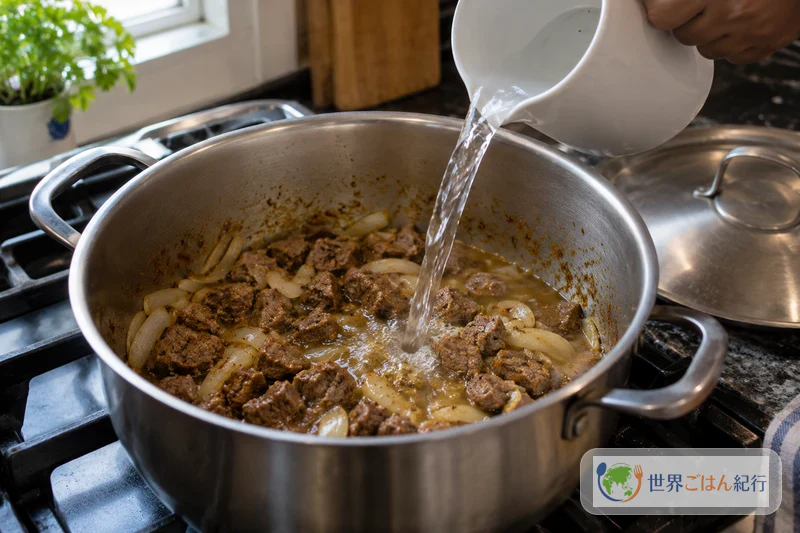
For the beef, choose a cut suited to stewing, such as shank or shoulder. Veal is more tender, but beef has a stronger flavor, so this recipe uses beef. Cut small, even beef becomes tender enough in about 30 minutes of simmering. For diced meat, the easy method is to cut meat meant for curry even smaller.
Vegetable bouillon stands in for vegetable seasoning. Salt content differs a lot between products, so make it with the amount in the table first and decide whether to add salt after it is done simmering.
When toasting spices, heating until they burn produces smoke that can irritate the eyes and throat. Run the exhaust fan and do not take your eyes off the skillet. Also, wash the knife and cutting board used for raw beef before cutting vegetables, or cut the meat last.
Xawaash smells best right after grinding, so toast and grind whole spices. When short on time, you can mix ground cumin and coriander with small amounts of ground black pepper, cinnamon, cardamom, clove, and turmeric, but the aroma is milder.
Serve with Rice or Flatbread
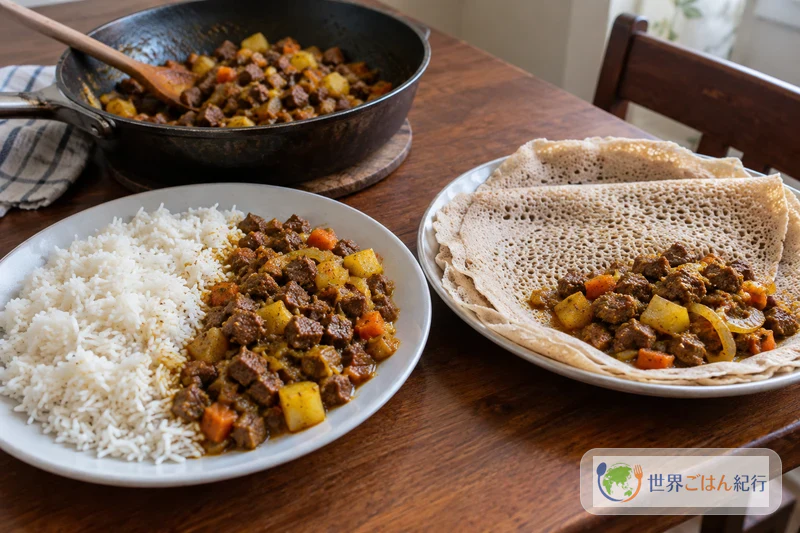
Suqaar goes with any bread or staple you like, such as rice, soor (a cornmeal porridge), canjeero, or Barawe-style muufo (bread). Scoop it up with thin flatbread as on a Hargeisa morning, or ladle it generously over rice for dinner. The potatoes that have soaked up the savor of the meat are the stars either way.
If you want to taste more of the Somali table, bake canjeero (in Japanese), the thin morning pancake-bread, and pair it with suqaar. If you have xawaash left over, you can also use it for bariis iskukaris, the Somali spiced rice.
Frequently Asked Questions
Can I make it with meat other than beef?
Yes. Goat suqaar is served at canteens in Hargeisa, and it is also made with lamb or chicken. Chicken cooks faster than beef, so shorten the simmering time and check that it is cooked through to the center.
Does xawaash keep well?
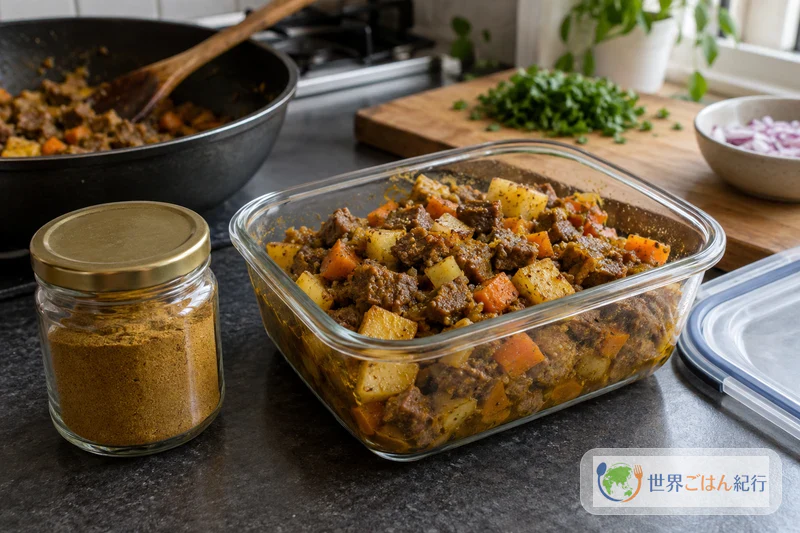
Store it in an airtight jar, away from moisture and light. Ground spices lose their aroma over time, so it is best to make small amounts and use them up quickly.
Is it a spicy dish?
Xawaash contains no chile, so the suqaar itself is not hot. It has only the mild bite of black pepper. If you want heat, serve green chiles or a hot sauce alongside when eating.
What do I do with leftover suqaar?
Let it cool slightly, put it in a storage container, refrigerate, and eat it soon. When reheating, add a little water in a pot and heat it until hot all the way through.
Sources
- Xawaash, “Beef Cubes with Vegetables (Beef Suqaar).” (accessed and checked 22 October 2026). https://xawaash.com/recipes/beef-cubes-with-vegetables/
- Xawaash, “Xawaash (Somali Spice Mix).” (accessed and checked 22 October 2026). https://xawaash.com/recipes/xawaash-somali-spice-mix/
- outerNotes, “what's to eat #49,” 18 March 2019. (accessed and checked 22 October 2026). https://outernotes.blog/2019/03/18/whats-to-eat-49/