
Wasawasa turns flour back into grains: a meal from northern Ghana
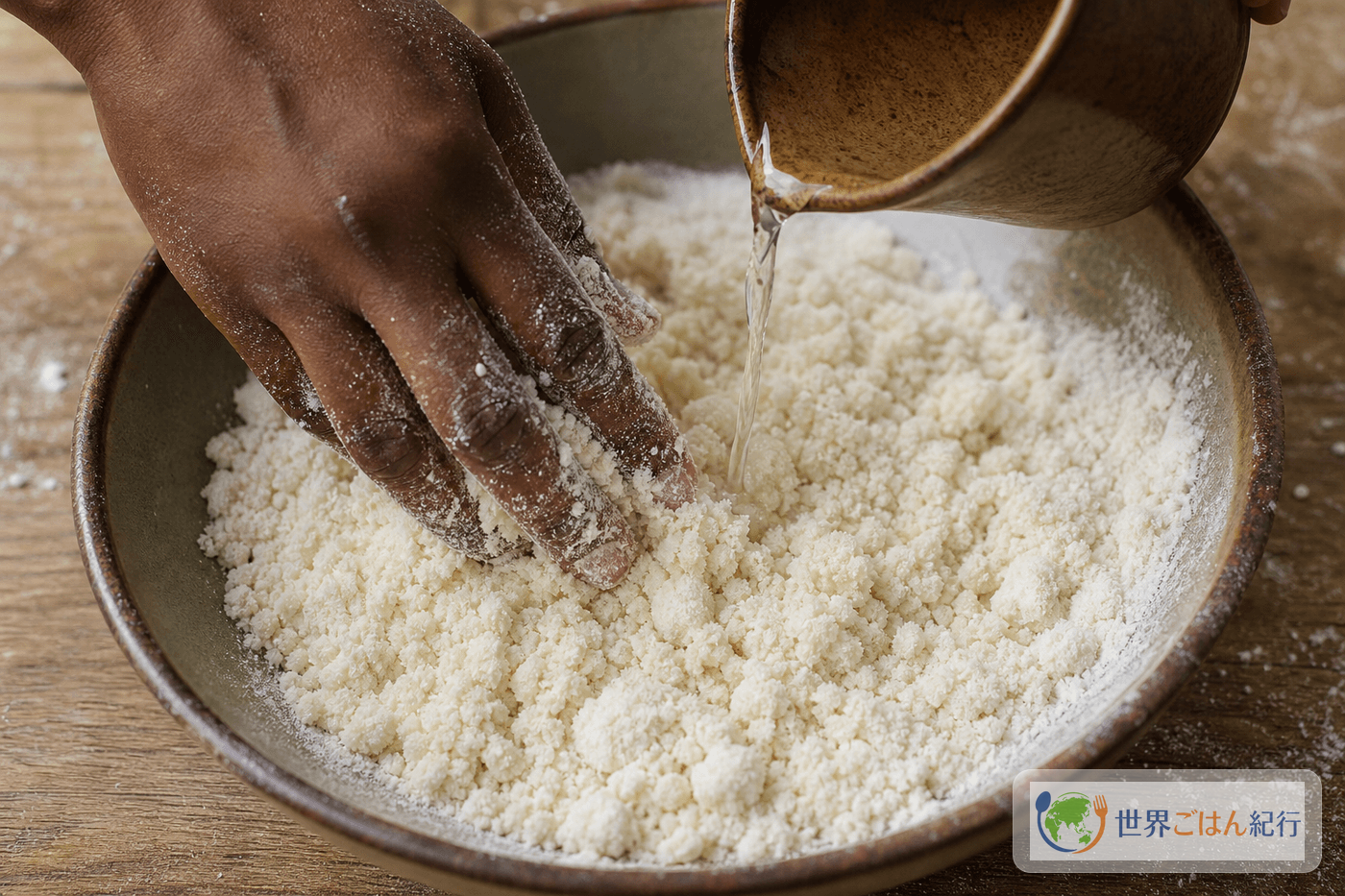
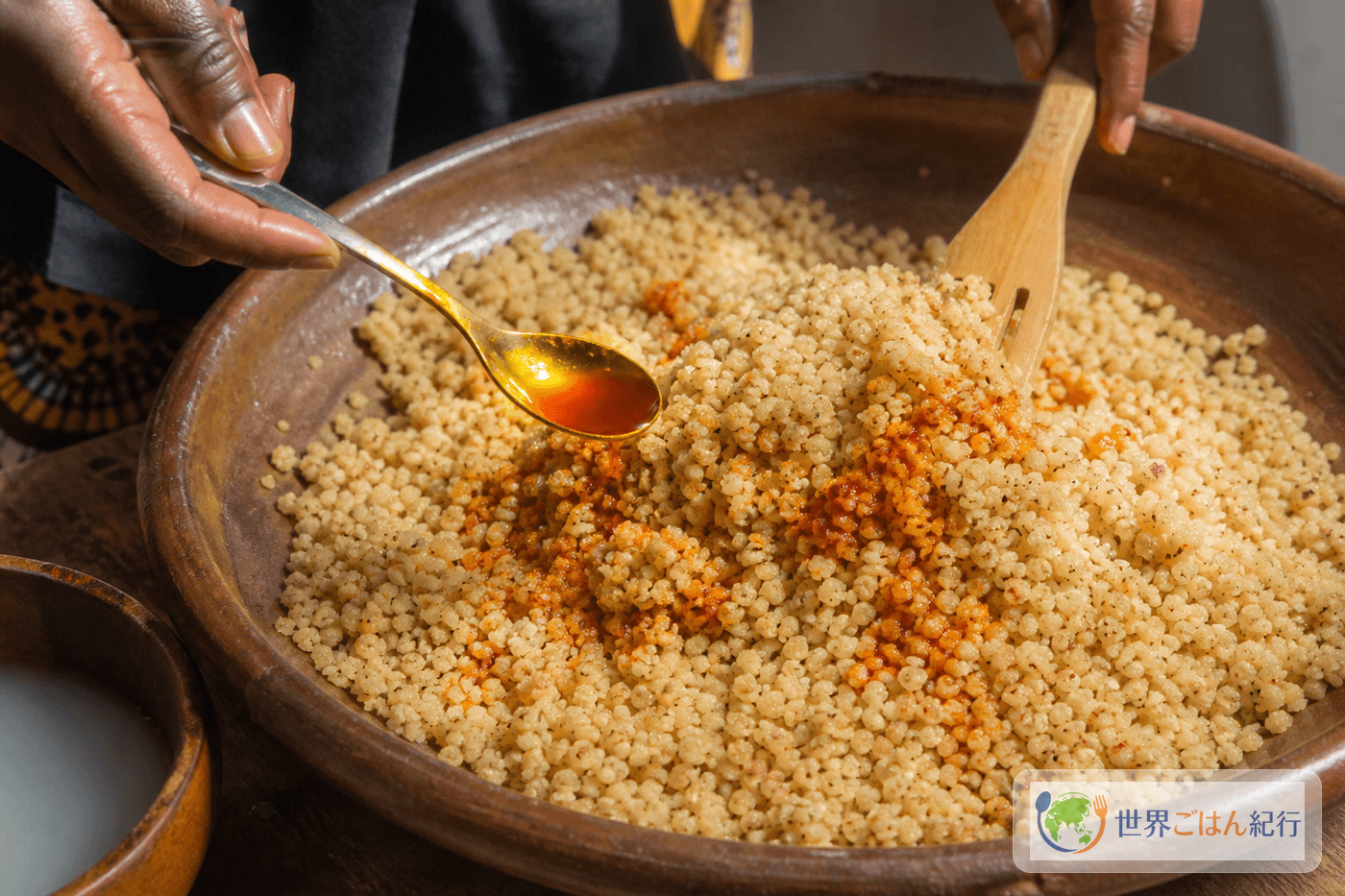
On the days you make a flour dish, the kitchen goes a little quiet. You don't pour in the water all at once; you rub the flour between your fingertips and sort the grains through a sieve. Unlike the energy of a dish simmered in a pot, wasawasa is a dish where you raise small grains.
Wasawasa (Wasa wasa) is a steamed dish tied to the food culture of northern Ghana, especially Dagbon. The Crop Trust recipe explains that dried yam peel is ground to flour and steamed to a texture like couscous. Graphic Online likewise presents it as a traditional northern Ghanaian dish in which dried yam is milled and the flour is steamed as small grains or pellets.
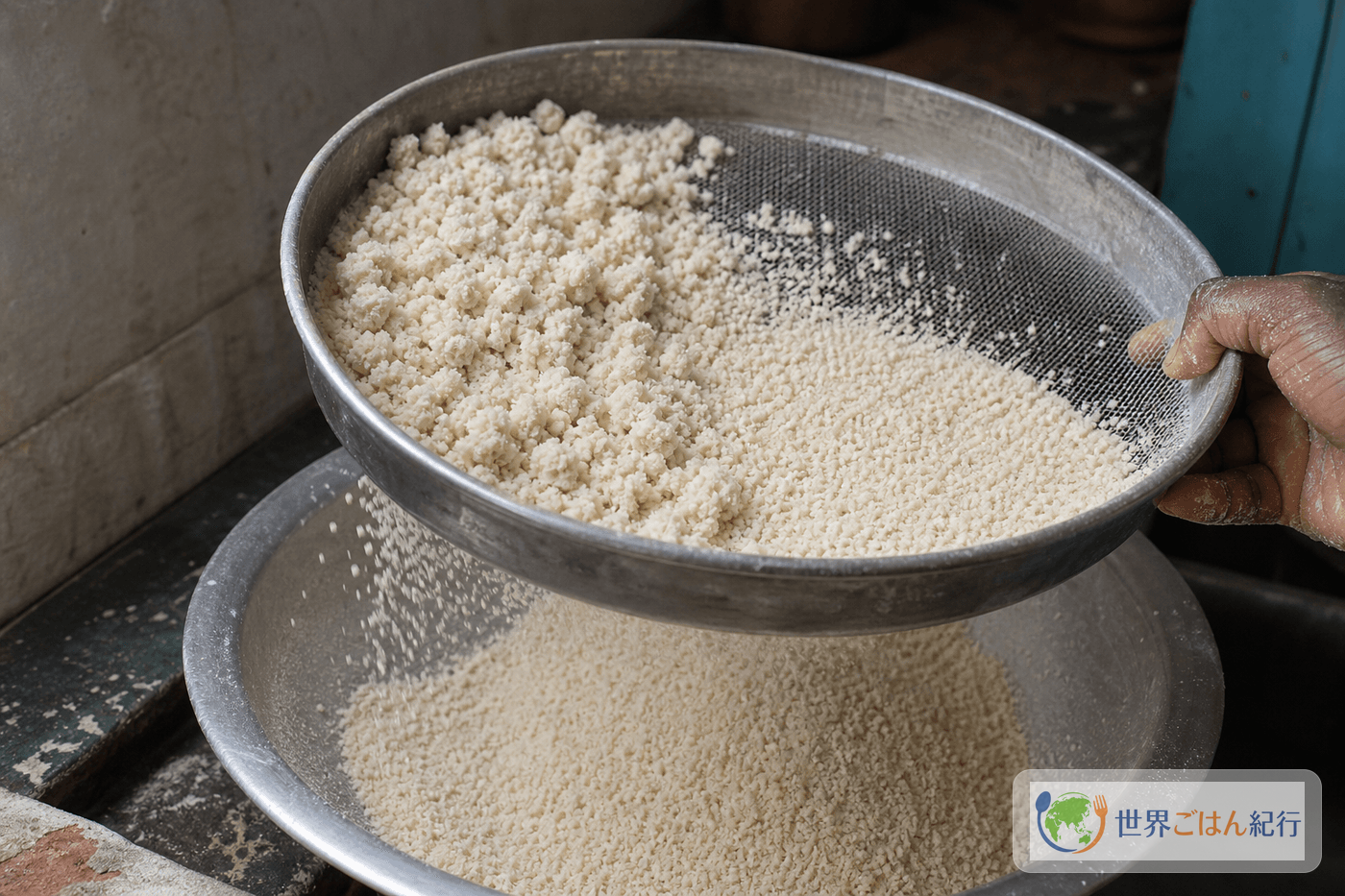
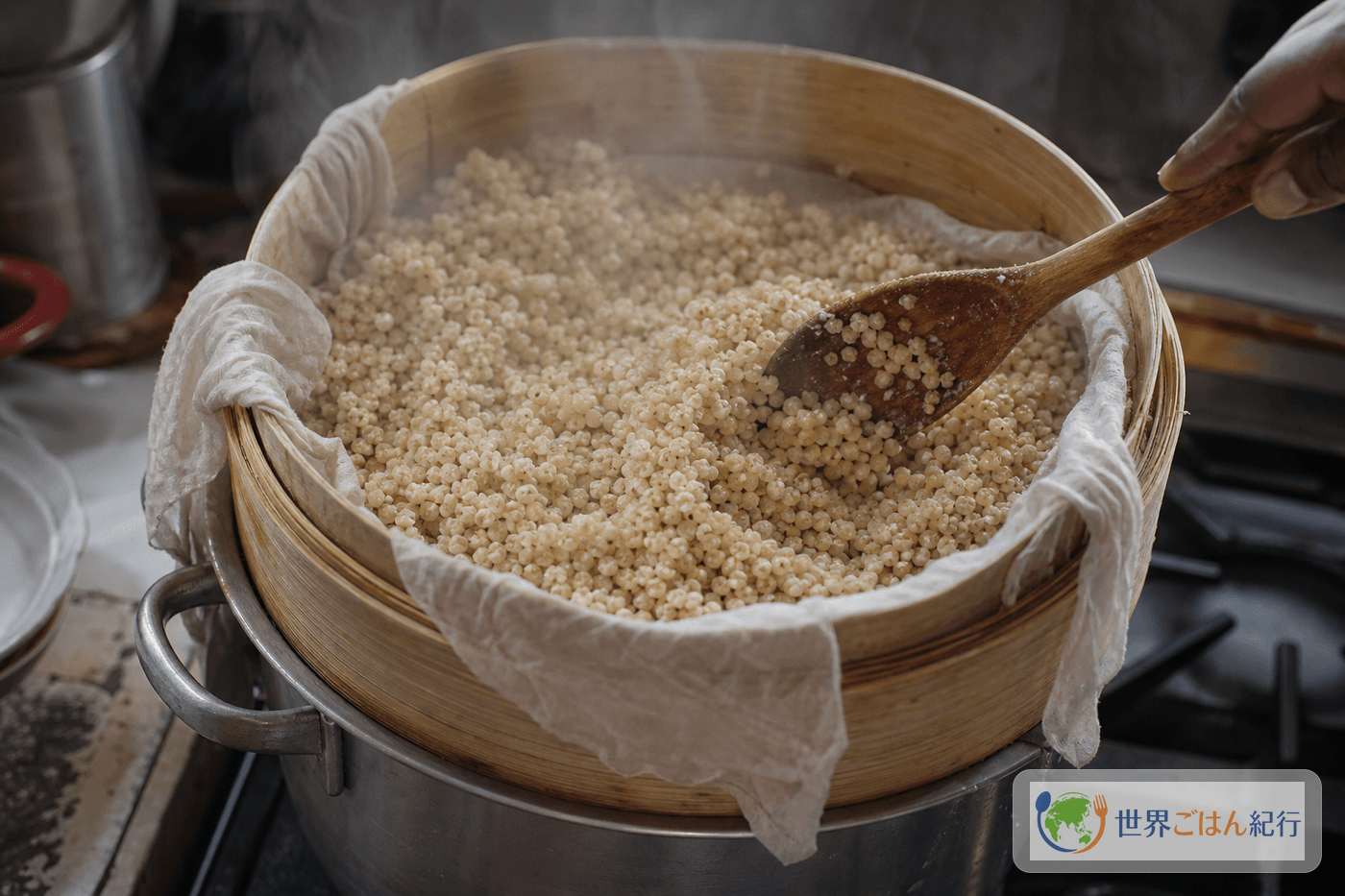
The hard part in a home kitchen is getting the yam flour itself. If you can find instant yam flour at an African grocer or online, that is the shortcut; but to get close with pantry-friendly ingredients, mixing cassava flour with cornflour is the realistic way. It is not the fully traditional version. Still, if you keep the skeleton of it (sprinkle water into the flour a little at a time, even out the grains, steam, then loosen), you get a crumbly staple unlike white rice or fufu.
Even among Ghanaian dishes, the texture is quite different from waakye (in Japanese), cooked beans and rice, from banku, which binds fermented corn, and from tuo zaafi (in Japanese), where flour is stirred into a paste. Wasawasa is less about soaking up broth than about coating the grains with sauce and oil as you eat.
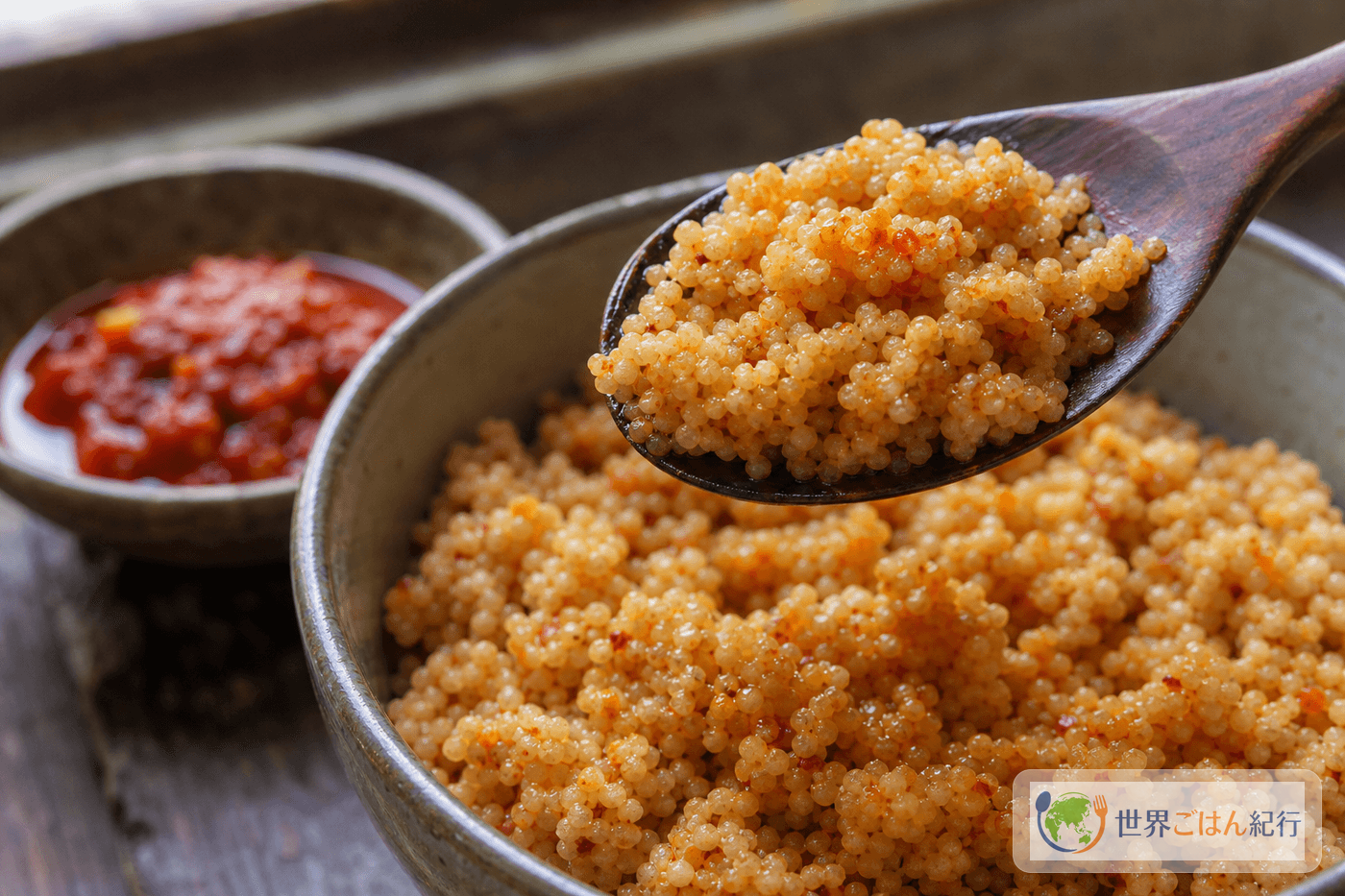
If you can get yam flour or instant pounded yam flour, replace the cassava flour and cornflour in the ingredient list with 240 g yam flour. Because each product takes up water differently, start with 100 ml of water and add 2 tsp at a time until the grains look like damp breadcrumbs.
Ingredients (serves 4) and substitutes
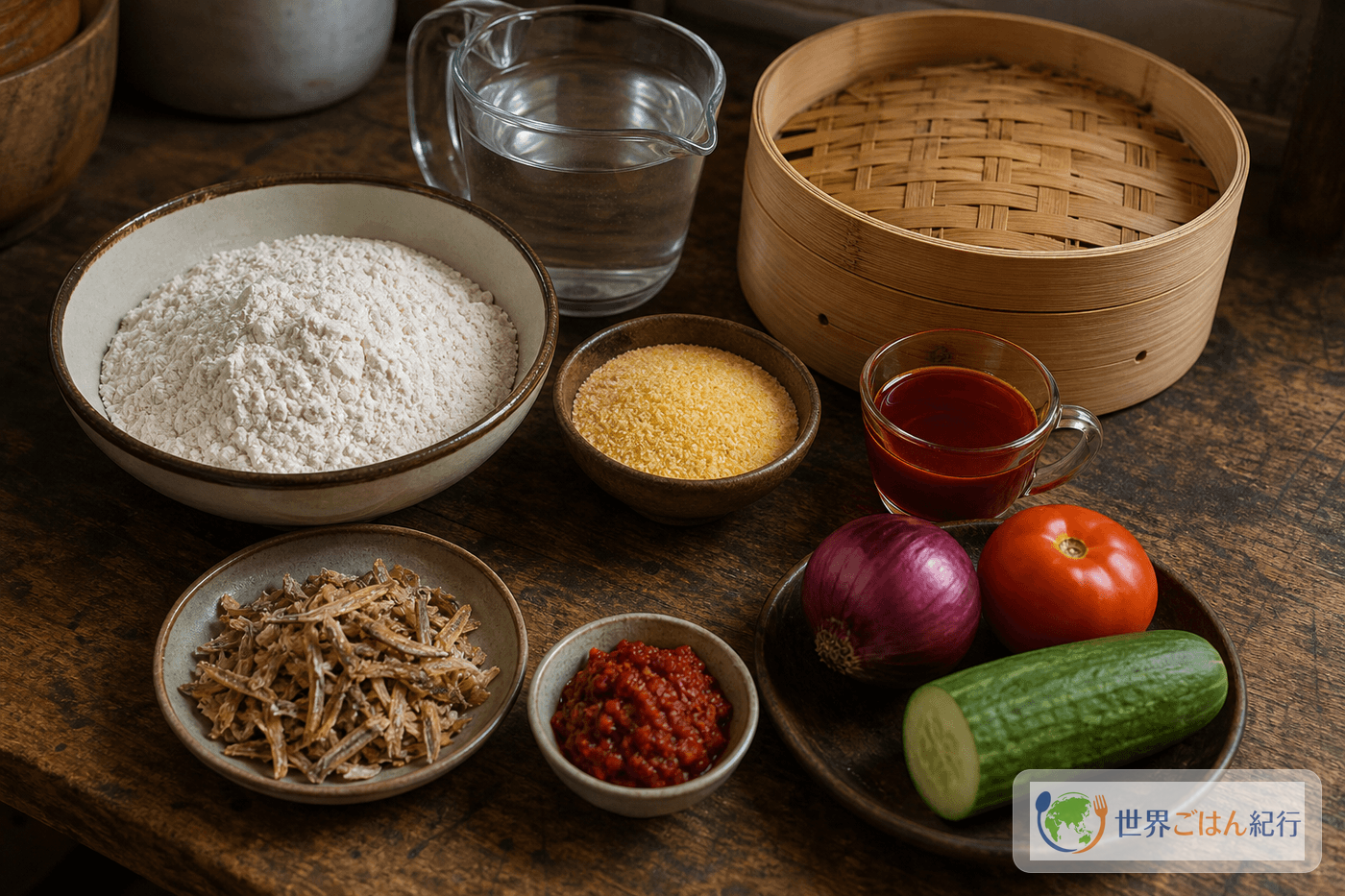
This recipe involves dried shrimp, fish, and peanuts if you use peanut oil. If you use dried shrimp, watch for shellfish allergy. If you let people add chili at the table, it is easier to share the dish with children and people who don't like heat.
What you need for this dish
What is worth hunting for is not the ordinary fish and vegetables but the flours and the West African-style oil that are hard to find nearby. When you can't get yam flour, mixing cassava flour with cornflour makes it easier to get the lightness of the grains.
Water and grain size are where it goes wrong
Because wasawasa has so few ingredients, how you add the water becomes the flavor. Flours differ in how much water they absorb from product to product, so judging by the condition of the grains is steadier than adding all the water in the recipe.
| Problem | Cause | Fix |
|---|---|---|
| Heavy like clay | Added the water all at once; didn't sift the grains | Add 1 tbsp dry cornflour and loosen by hand to 2–4 mm |
| Powdery | Too little water; weak steam | Sprinkle on 2 tsp lukewarm water and steam 5 more minutes over medium heat |
| Big clumps remain | Didn't pass through the sieve | Break with a fork while hot and steam for 3 more minutes |
| Oily | Too much finishing oil | Use less sauce and serve with extra cucumber and tomato |
| Strong bitterness | Type of flour, burnt oil, old flour | Switch to fresh flour and add ingredients before the oil smokes |
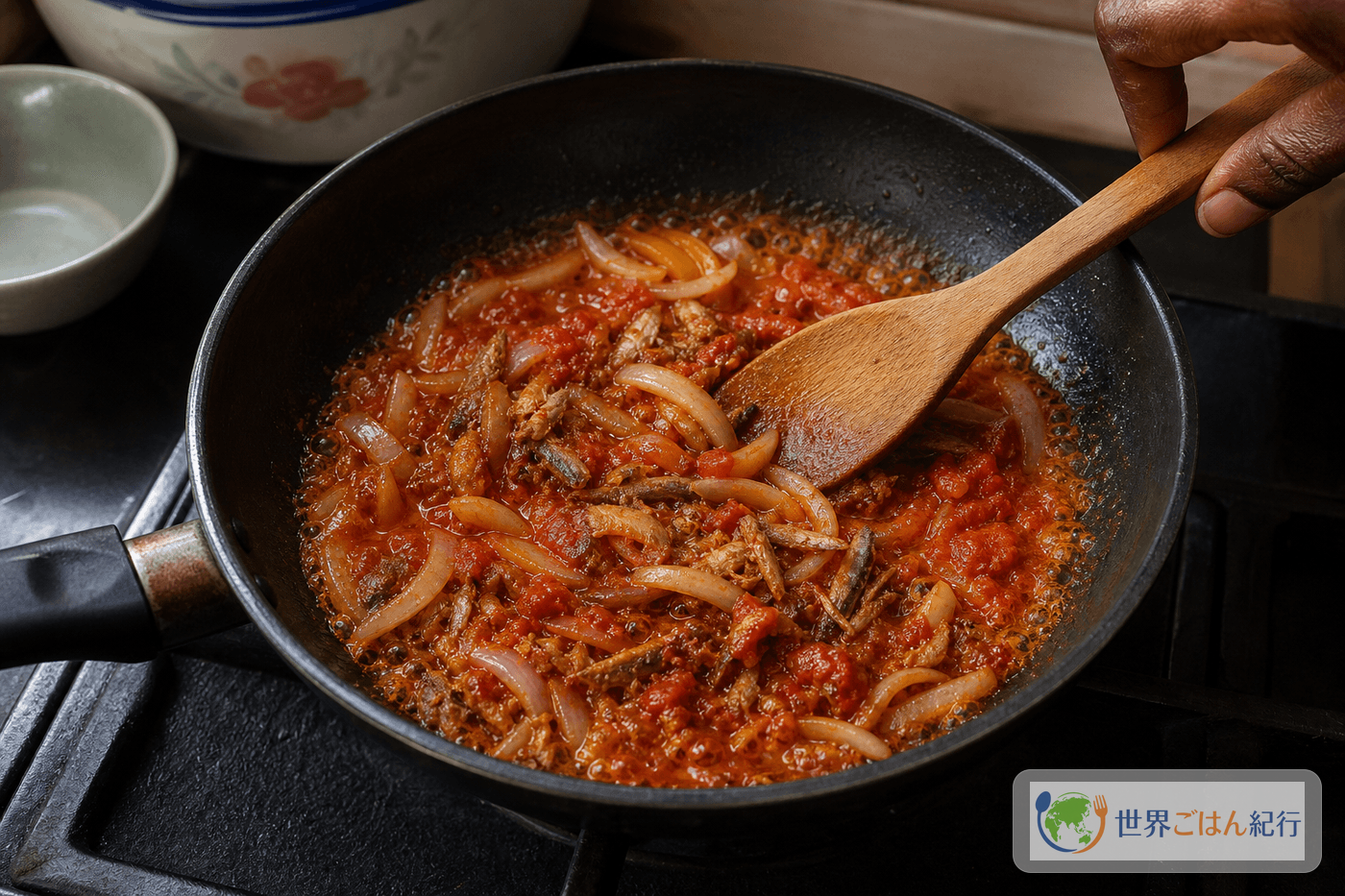
Wasawasa in Ghana has a slightly earthy aroma that comes from the yam peel and the drying process. A substitute version cannot fully reproduce that. Rather than trying to approach it by scorching, put priority on not grinding the flour too fine and adding umami with the red sauce and fish; that makes it hold together as a dish for the table.
It is not a dish eaten for its springiness like fufu, so don't knead it. Overmixing turns it from "steamed flour" into dumplings. Just repeat these three things: make the grains, steam, loosen.
Serving, storing and bringing it back the next day
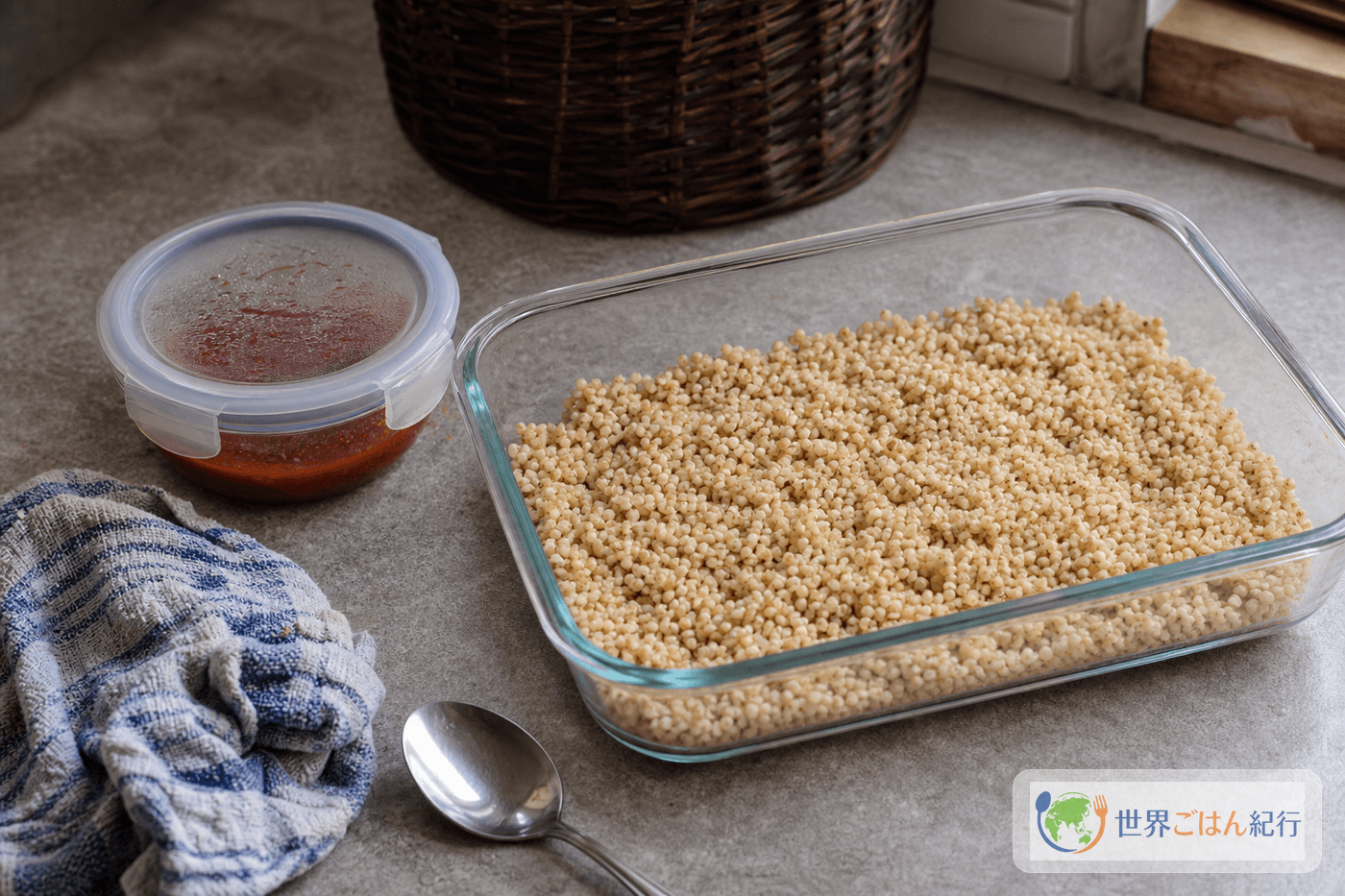
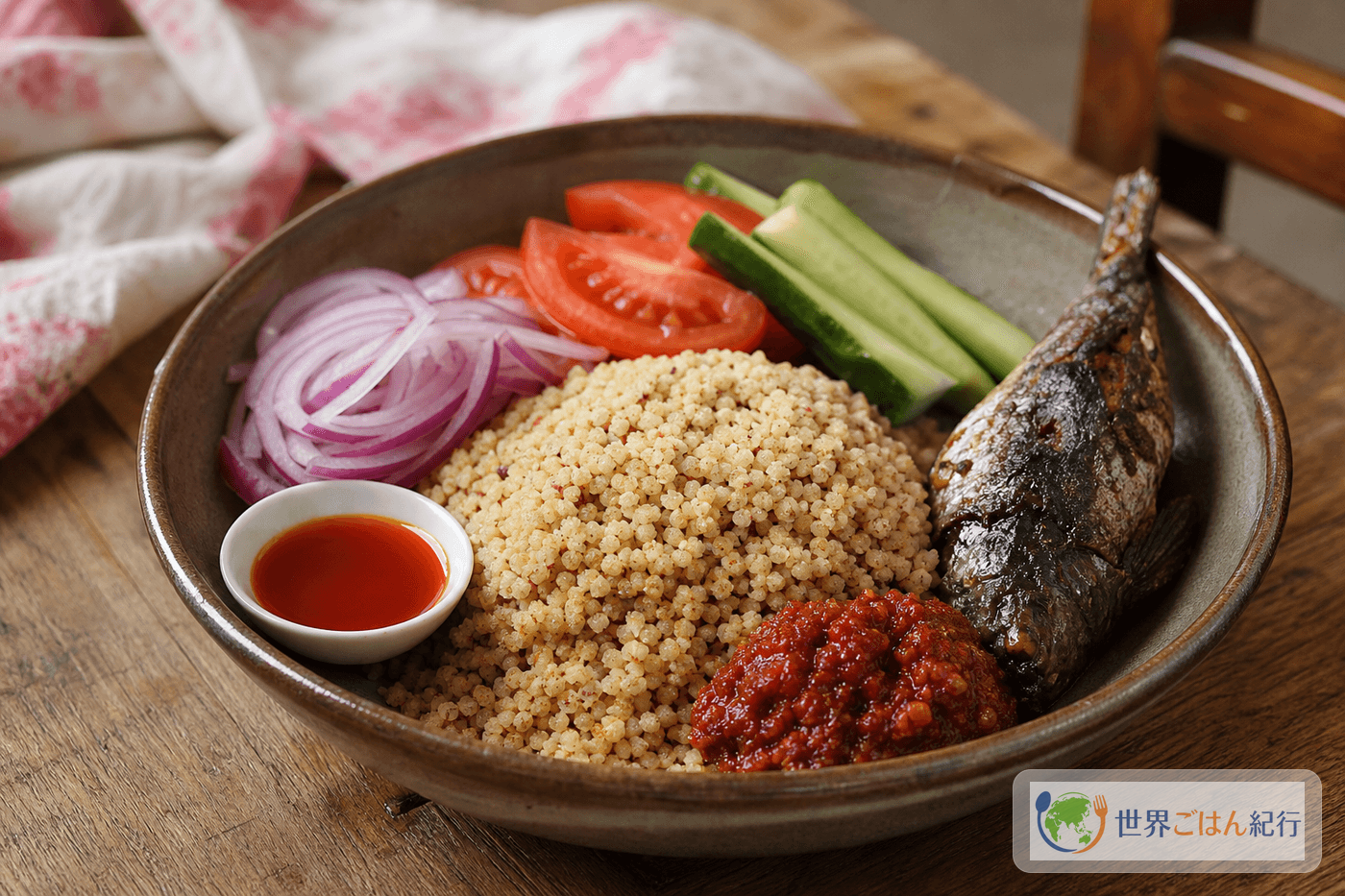
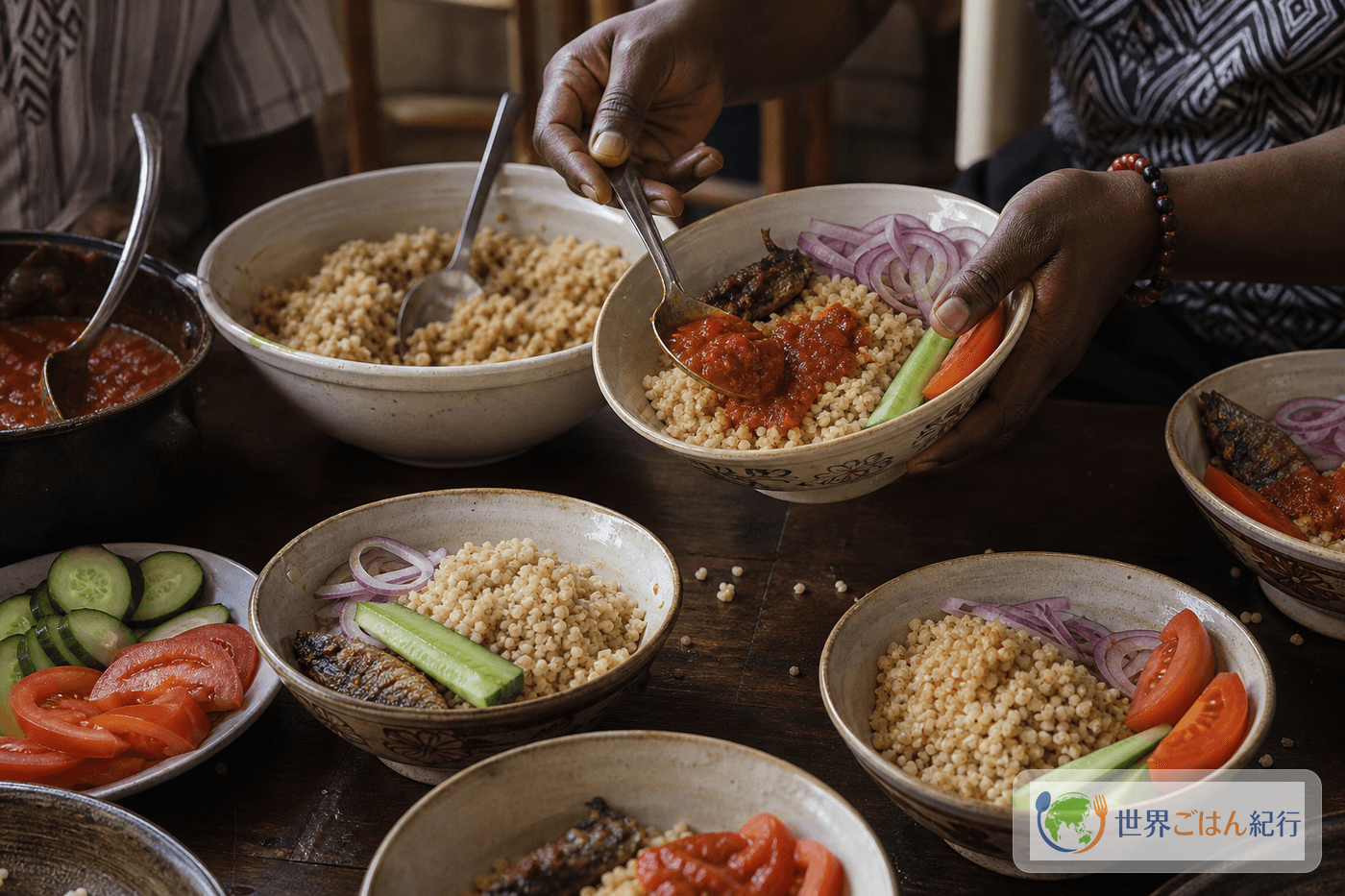
Wasawasa is eaten hot, mixing in the hot sauce, fish, vegetables and oil a little at a time. The recipes at African Food Network and Pulse Ghana also present it with fish, chili, oil and vegetables. For a home meal, flake grilled fish over the top and add cucumber and tomato for moisture to make it easier to eat.
Seen as a northern Ghanaian meal, wasawasa is not just a "steamed flour staple." As Graphic Online treats it as a cultural dish of Dagbon, one plate brings together yam grown in dry country and the way it is processed, fish and spicy oil, and sides shared at the table. Even when you make it elsewhere, putting red sauce, fish, thinly sliced onion and cucumber beside it, rather than serving only the white staple, makes the meaning of the dish much easier to see.
If you serve beans, a small portion of black-eyed pea stew such as red red beside it makes a satisfying plate of flour and beans. On days when you want a peanut aroma, make groundnut soup as the broth and scoop up small amounts of wasawasa so it doesn't feel heavy. And if you want the feel of a spicy street stall, adding a little kelewele (in Japanese), fried plantain, makes a fun combination.
When storing, keep the wasawasa and the sauce apart. Spread the grains in a shallow container, cover once the heat has gone, and keep refrigerated until the next day. Refrigerate the sauce in a separate container and finish it within 2 days. Fish mixed in and left for a long time smells, so combine the fish just before eating.
To reheat, microwave at 600 W for 1 minute, drizzle with 2 tsp lukewarm water, loosen with a fork, and heat 30 seconds more. To re-steam in a pot, 5 minutes over medium heat. Too much water makes it porridge-like, so add water only in teaspoon amounts.
Frequently asked questions
Q1. I don't have yam flour. Can I make it with cassava flour alone?
You can, but cassava flour alone tends to turn a bit chewy and the grains get heavy. For a first try, 160 g cassava flour with 80 g cornflour gives crumblier results after steaming. When you get yam flour, replace the 240 g of flour with yam flour and adjust the water starting from 100 ml.
Q2. Can I use gari instead?
Fine gari works. Coarse gari tends to leave hard grains as is, so grind it a little finer in a grinder first. Gari has a sour note from fermentation, so you get a wasawasa-like texture but a different aroma from yam flour.
Q3. Is red palm oil essential?
It isn't. In Ghana it is also eaten with shea butter oil, peanut oil or vegetable oil. Red palm oil adds a color and aroma typical of West African cooking, but too much hides the aroma of the flour, so keep it to 1 tbsp or less. If you dislike it, finish lightly with peanut oil or a neutral oil.
Q4. How spicy is authentic?
This is a dish often served with a hot sauce, but the whole pot need not be hot. The amounts here give a gentle heat. People who want it hotter can add chili powder or shito at the table. For family meals, making the base sauce mild is the safer way.
Q5. Can I make it ahead?
The wasawasa alone can be made ahead until the next day. The grains will be firmer than when freshly made. Store it spread in a shallow container, and when reheating add lukewarm water 2 tsp at a time and loosen. Avoid storing it mixed with sauce, fish and vegetables, since both texture and aroma suffer.
Sources
- Crop Trust, “Wasa Wasa with Scotch Mango Aioli & Mushrooms”
- Graphic Online, “Sacred Wasawasa - Traditional Dagbon delicacy steeped in culture and taboos”
- Access Agric, “Yam sellers, public advised not to discard yam peels”
- African Food Network, “Wasawasa”
- Pulse Ghana, “DIY Recipes: How to make Wasawasa for Eid al-Fitr”
- Wikipedia, “Wasawasa”



