A Red Streak of Heat in Freshly Fried Little Bread
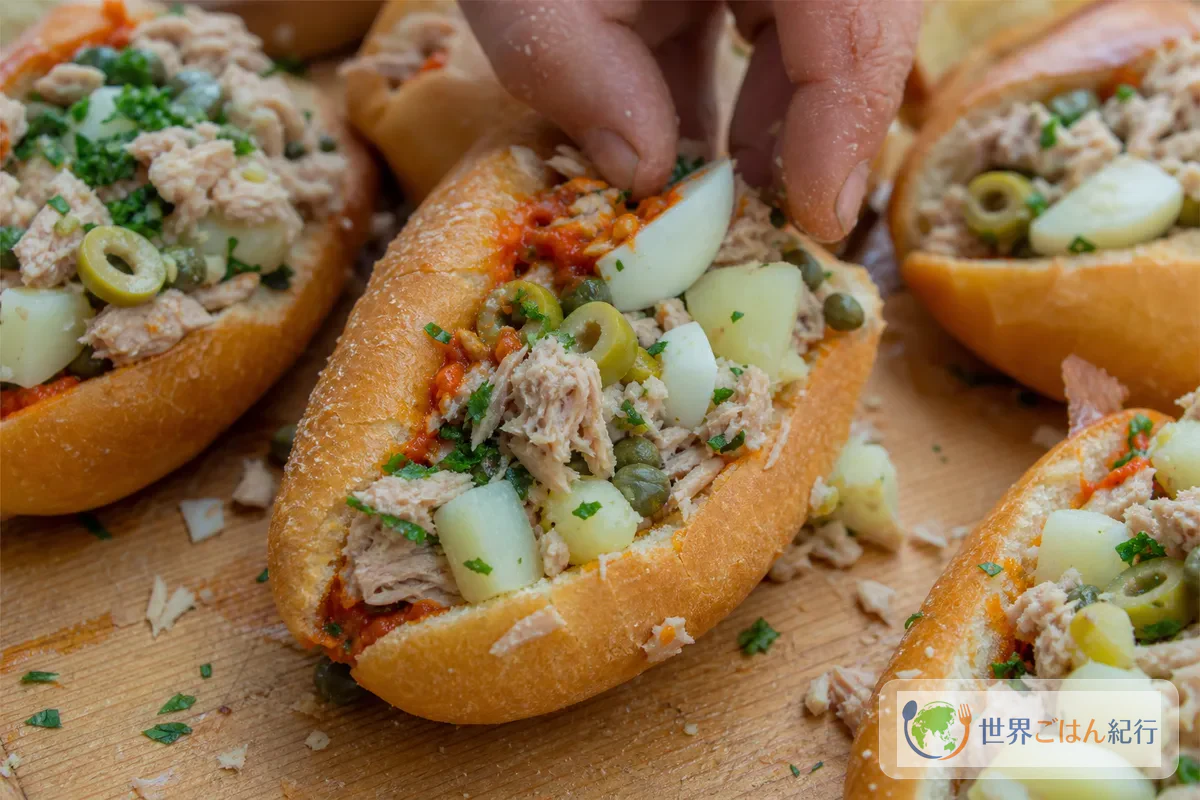
The bubbles in the frying oil turn fine, and a small oval of bread puffs up. Lift it onto a rack to settle for a moment, cut a slit in its side, and you find a thin, toasty crust outside and white dough still holding steam inside. Spread a thin layer of red harissa in it, then fill it in turn with potato, tuna, boiled egg, olives, and capers. Tunisian fricassé is a fried sandwich whose fun lies in this series of small tasks.
Hearing only the name, you might imagine the French chicken or meat stew called fricassée. Tunisian fricassé is something else: a snack in which a salted fried bread is opened like a pocket and filled with harissa and other fillings. It suits market stalls, seaside kiosks, and snacks for days when the family gathers. It is a little heavy in the hand, and on the first bite the aromas of chile, tuna, egg, and fried dough come all at once.
In this article we make it small enough to fry easily in a home pot and lean toward ingredients that are easy to buy, while keeping what needs to be kept. What matters most are the oil temperature, the thickness of the bread, the amount of harissa, and the order of filling. Get these right and you have a fricassé that, though fried bread, is not too heavy and whose fillings do not easily spill out.
Tunisian fricassé is a sandwich of small salted fried breads filled with harissa, potato, tuna, boiled egg, olives, and more. In French-speaking countries it is called "fricassé tunisien," and it is loved both as a home recipe and as street food. The fillings vary a little by household and shop, but red heat, tuna, egg, and potato are the framework of the flavor.
Ingredients (serves 4, makes 8 small ones)

If you have Tunisian harissa, it is best to use it. But it is not always on the shelf at ordinary supermarkets. Adding cumin, caraway, garlic, and lemon to sambal oelek does not make the same thing, but it brings the acidity and aroma of the chile closer to what fricassé needs.
Shopping Notes
Flour, potatoes, eggs, tuna, and lemon are fine from any nearby supermarket. What is worth adding is something for the heat, a jarred ingredient that tightens the flavor in small amounts, and a tool that keeps oil temperature steady. With fricassé, the flavor is decided less by the ingredients themselves than by the timing of filling the fried bread.
If you cannot find harissa, sambal oelek is the base for the heat. Adding cumin and caraway moves it closer to fricassé than a sweet chili sauce would. Capers in a jar cut the heaviness of tuna, egg, and potato in a small amount, and any left over can go into fish dishes and potato salad too. A thermometer for the frying oil is the tool that helps most.
Keeping the Tunisian Character
| Element | What to preserve | How to adapt it |
|---|---|---|
| Harissa | It has spices and acidity, not just chile | Without harissa, add cumin, caraway, and lemon to sambal |
| Bread | A small salted fried bread, not a sweet doughnut | A little sugar only for fermentation and frying color. Do not dust sugar on top |
| Fillings | Tuna, potato, and egg give staying power | Canned tuna and ordinary potatoes are enough. Drain the moisture |
| Saltiness | Olives and capers define the outline | Do not mix mayonnaise into the fillings. Use the saltiness of the jarred items |
| How to eat | Right after making, held in the hand | Do not fill ahead; assemble right before eating |
Fricassé is not a dish made with luxury ingredients. Rather, it takes canned fish, boiled egg, and potato and lifts them all at once to street-stall flavor with heat and fried bread. Even when cooking it elsewhere, prioritize frying the bread light and draining the fillings over hunting for expensive tuna or unusual vegetables.
Where It Easily Goes Wrong
The bread is greasy
You are frying at too low an oil temperature. The temperature drops the moment you add a piece, so do not add too many at once. In a home pot, 2–3 at a time is manageable. Start the frying over medium heat, and if the color comes too fast, lower to medium-low.
It is dense and heavy inside
The fermentation was short or the rest after shaping was too brief. Just letting the first fermentation reach 1.5 times and resting 10 minutes after shaping changes how it puffs when fried. If you make it with bread flour only, add 1–2 tsp more water so you do not finish kneading too stiff.
The filling falls out
Put in the potato first to make a base, then lay the tuna and egg on top. Drain the tuna and cut the egg larger, and it is less likely to fall apart. Cutting the bread completely apart turns the sandwich into a bowl, so stop the slit at 70% depth.
Too hot
You can add harissa later. The first time, spread 1/2 tsp per piece, and put a small dish of extra on the table so people can adjust. Even if you tone down the heat, keeping the aroma of cumin and caraway preserves the Tunisian character.
How to Eat It, Menu Ideas, and Related Dishes

Fricassé looks small, but it holds fried bread, egg, tuna, and potato, so it is satisfying. For lunch, two is enough. Put lemon, extra harissa, and olives on the table so everyone can add heat and acidity for themselves.
To pair it with another warm egg dish from Tunisia, chakchouka (in Japanese), tomatoes and eggs simmered together, has a similar aroma. On a day you want to move from fried bread to a big-pot table, go on to m'soki, which stews fava beans, greens, and meat, and you see the range of Tunisian home cooking. To widen the table with North African breads, a flatbread like Algeria's kesra also goes well and soaks up a spicy sauce. As fried snacks to compare, Vietnam's chả giò and Monaco's barbajuan feel similar to work with, and in every one the temperature management changes the result.
Sweet mint tea, sparkling water, and thin lemonade go well as drinks. Because the oil and harissa are strong, a tomato, cucumber, and onion salad with some acidity tires you less than a rich creamy side.
Storage and Reheating
It tastes best right after frying and filling. If making ahead, store the fried bread, the fillings, and the harissa separately.
| What to store | How to store | Guide |
|---|---|---|
| Fried bread | Airtight once cooled, refrigerated | Until the next day |
| Fillings | Tuna, potato, and egg in separate containers, refrigerated | Until the next day |
| Harissa | Take out with a clean spoon, refrigerate | Follow the label of the commercial product |
| Filled fricassé | Refrigeration not recommended | The bread turns damp |
Refrigerated fried bread comes back at the surface when warmed in a 160°C toaster oven for 4–5 minutes. A microwave alone makes it too soft, so if you use one, heat at 600 W for 20 seconds and then move to the toaster oven. To freeze, wrap only the fried bread before filling in plastic wrap and use within 2 weeks.
When taking it to a gathering or lunch, separating the bread and fillings fails less often than carrying it filled for long. Keep the tuna, egg, and potato cold with an ice pack, and spread the harissa and fill right before eating. If you must assemble ahead, spread a thin layer of harissa and put the potato over it, in an order that keeps the moisture of the tuna and egg from touching the bread directly.
Frequently Asked Questions
Can I make it without harissa?
You can, but the center of the flavor changes quite a bit. If you have no Tunisian harissa, a quick paste of sambal oelek, cumin, caraway, garlic, and lemon supplies not just the heat of chile but aroma and acidity.
Can I bake it in the oven?
Baking gives you a different bread. Frying in oil gives the thin crust and light puff, so for the first time we recommend frying. If you must bake, brush the surface with oil and bake at 220°C for 10–12 minutes. The street-stall feel of fricassé will be weaker, though.
Can I use something other than tuna?
Yes. Keep the egg and potato and replace the tuna with shredded chicken or white fish, which is easy to eat. However, fillings with a lot of moisture dampen the bread. If you add tomato or cucumber, remove the seeds and add only a small amount right before eating.
How hot is the local style?
Heat varies by shop and household. A guide is a little under 1 tsp harissa per bread. At a table where some people dislike spicy food, spread it thinly inside only and serve extra in a small dish, and everyone can eat comfortably.
Is it related to French fricassée?
The names are similar, but as dishes they are different. The French fricassée usually refers to a white stew of meat and similar ingredients, while Tunisian fricassé is a sandwich of salted fried bread with fillings.