A Whole Fish, a Lidded Pot and a Broth of Tomato and Onion
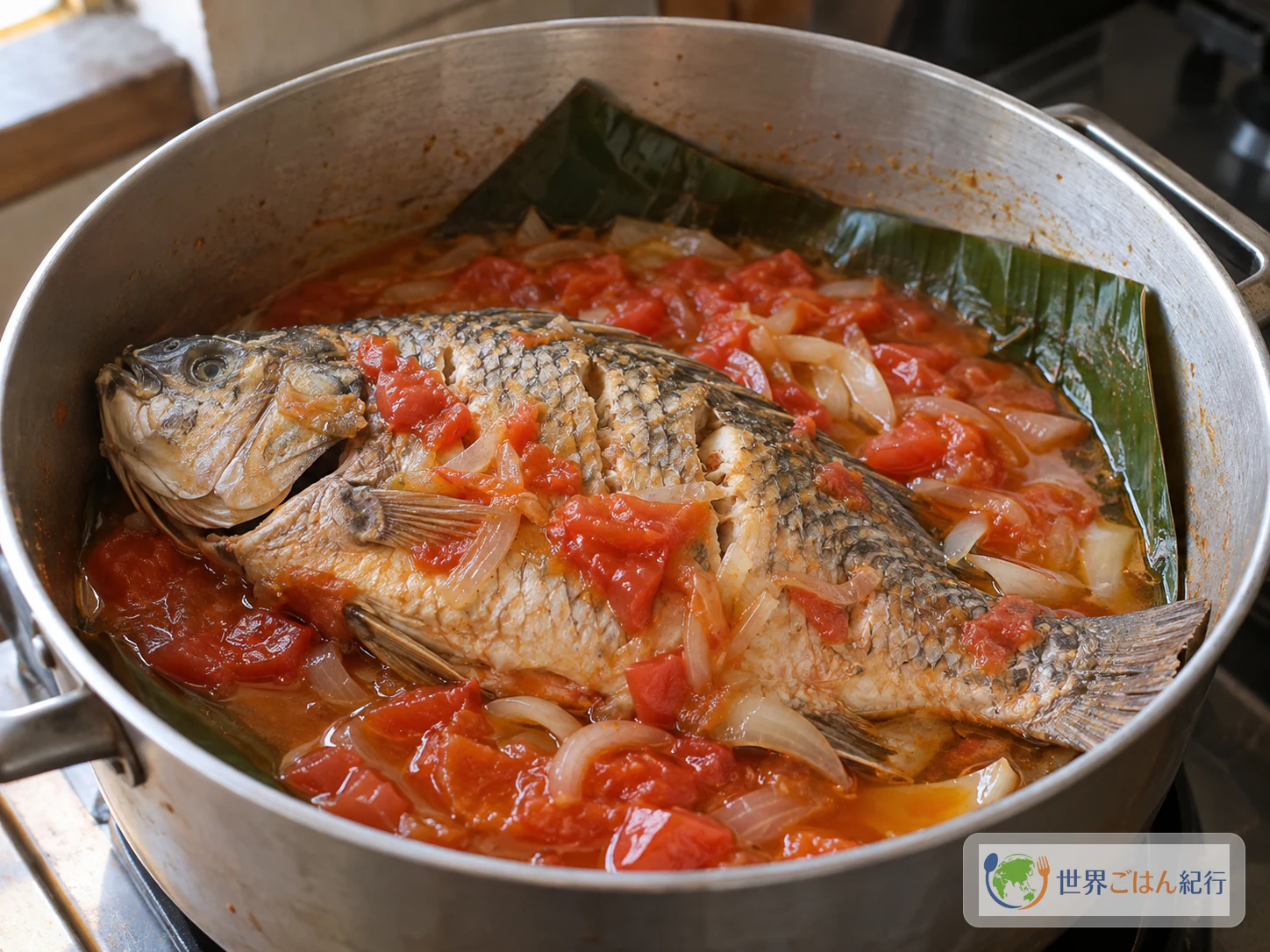
One whole fish, chopped tomato and onion, sunflower oil, water and salt, cooked together on a bed of banana leaves under a lid. Nothing else goes into the pot.
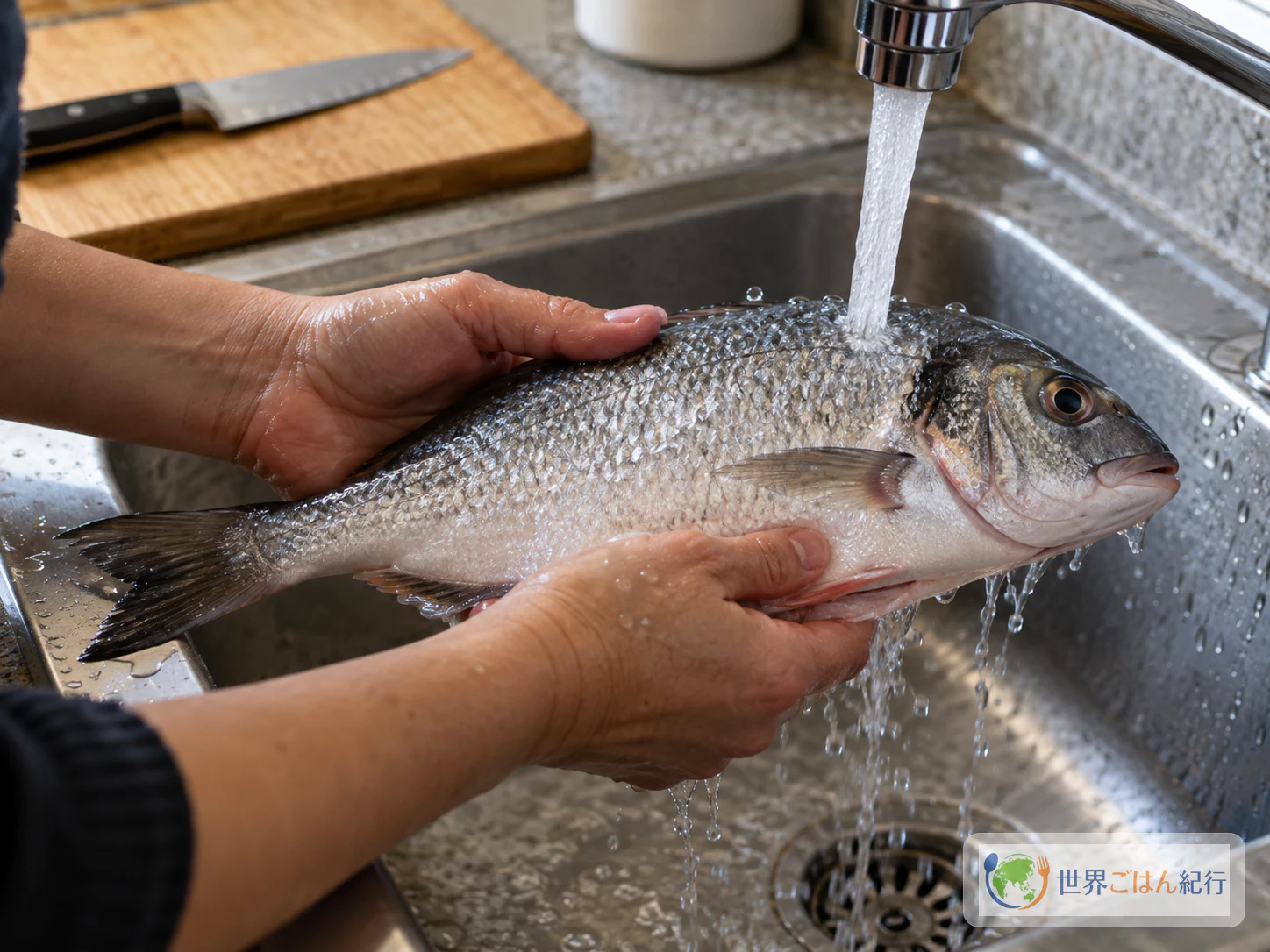
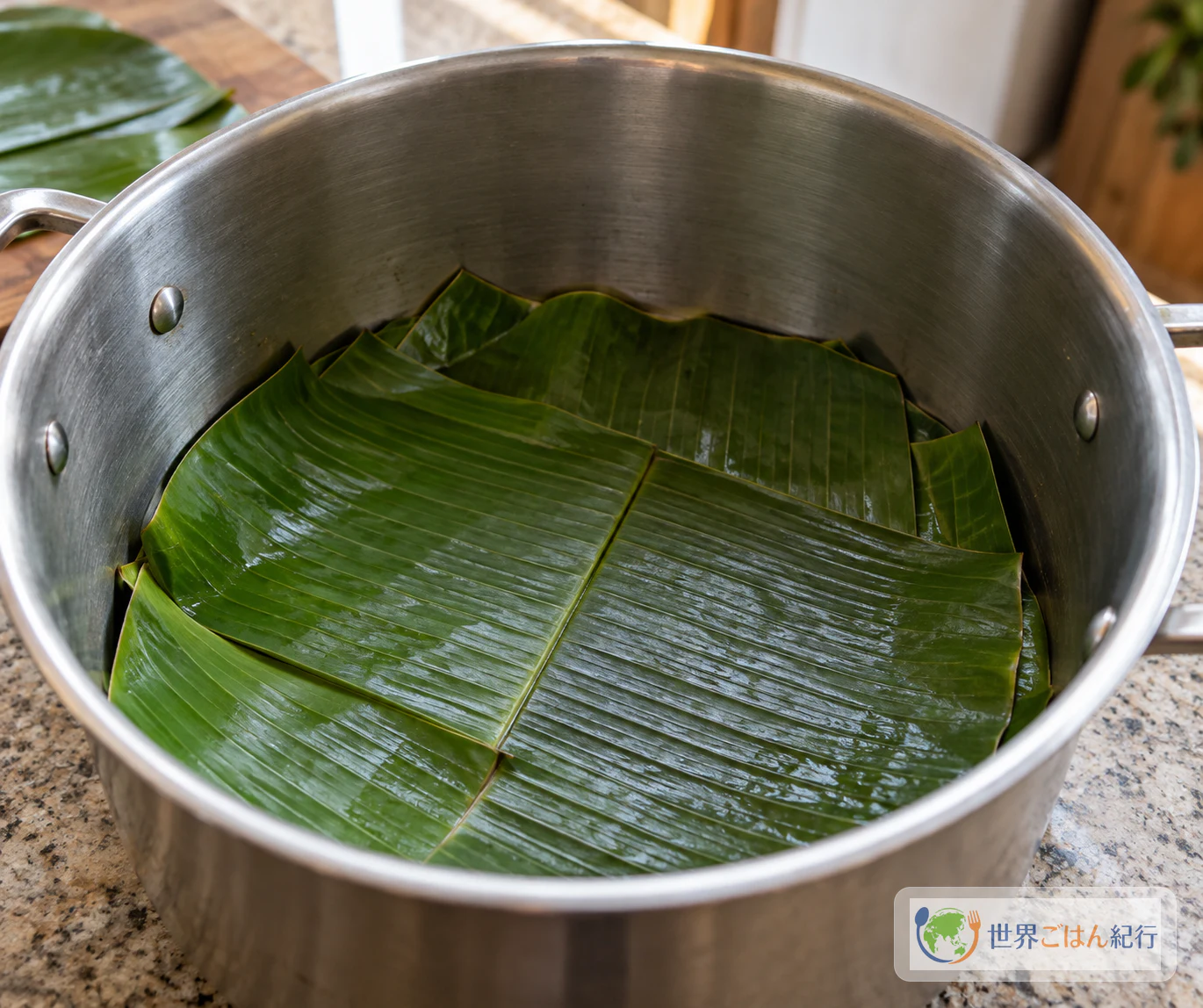
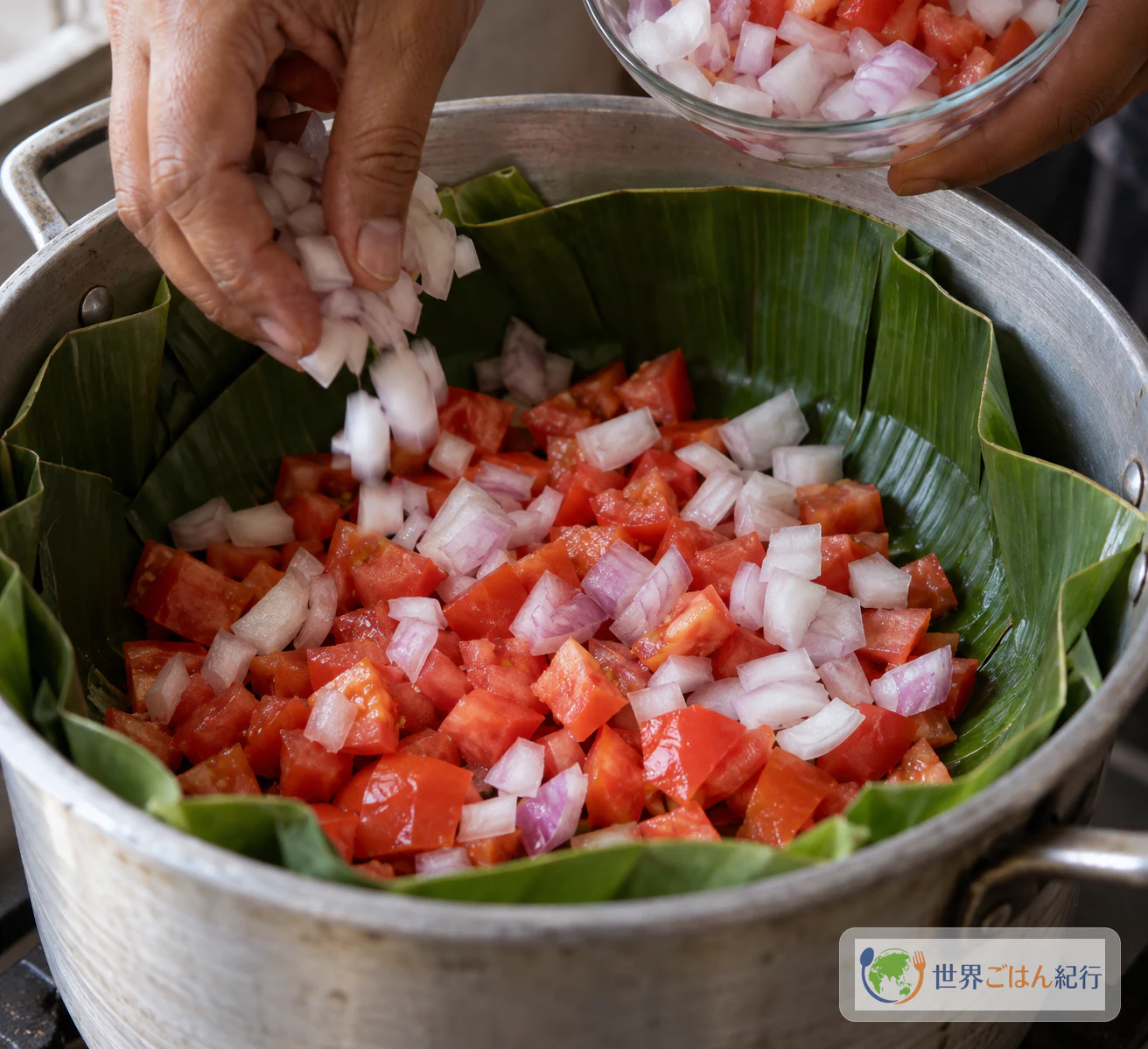
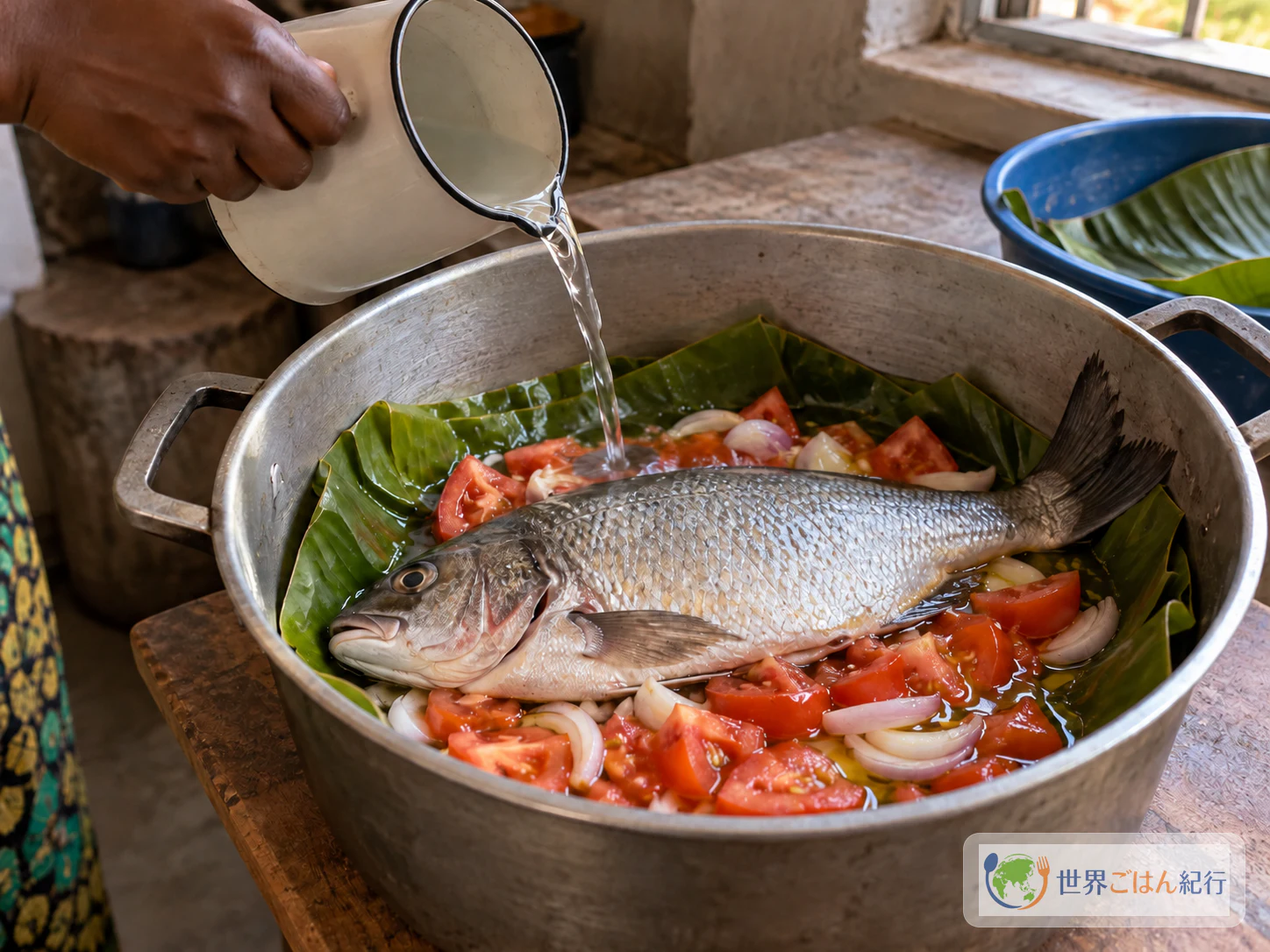
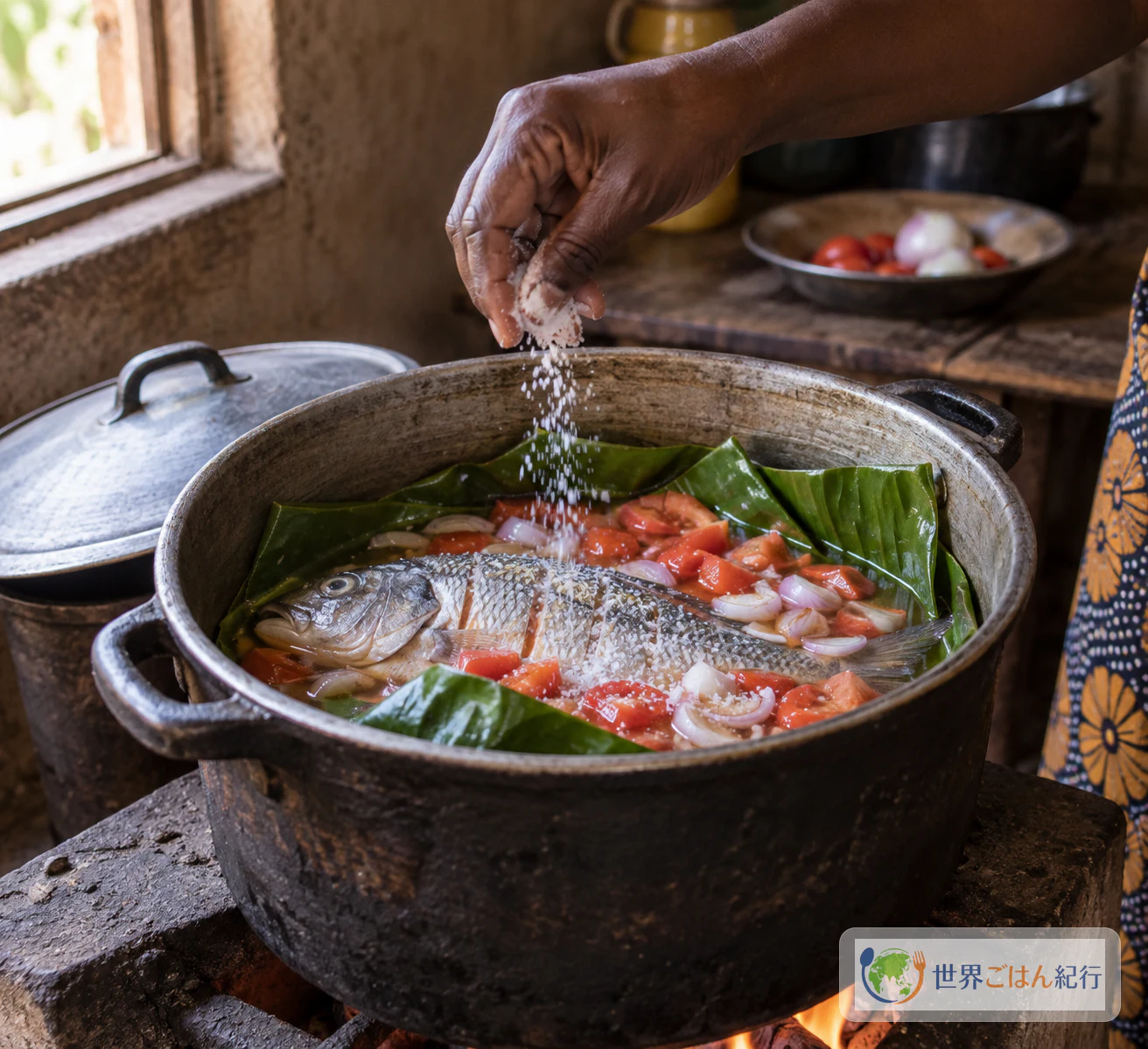
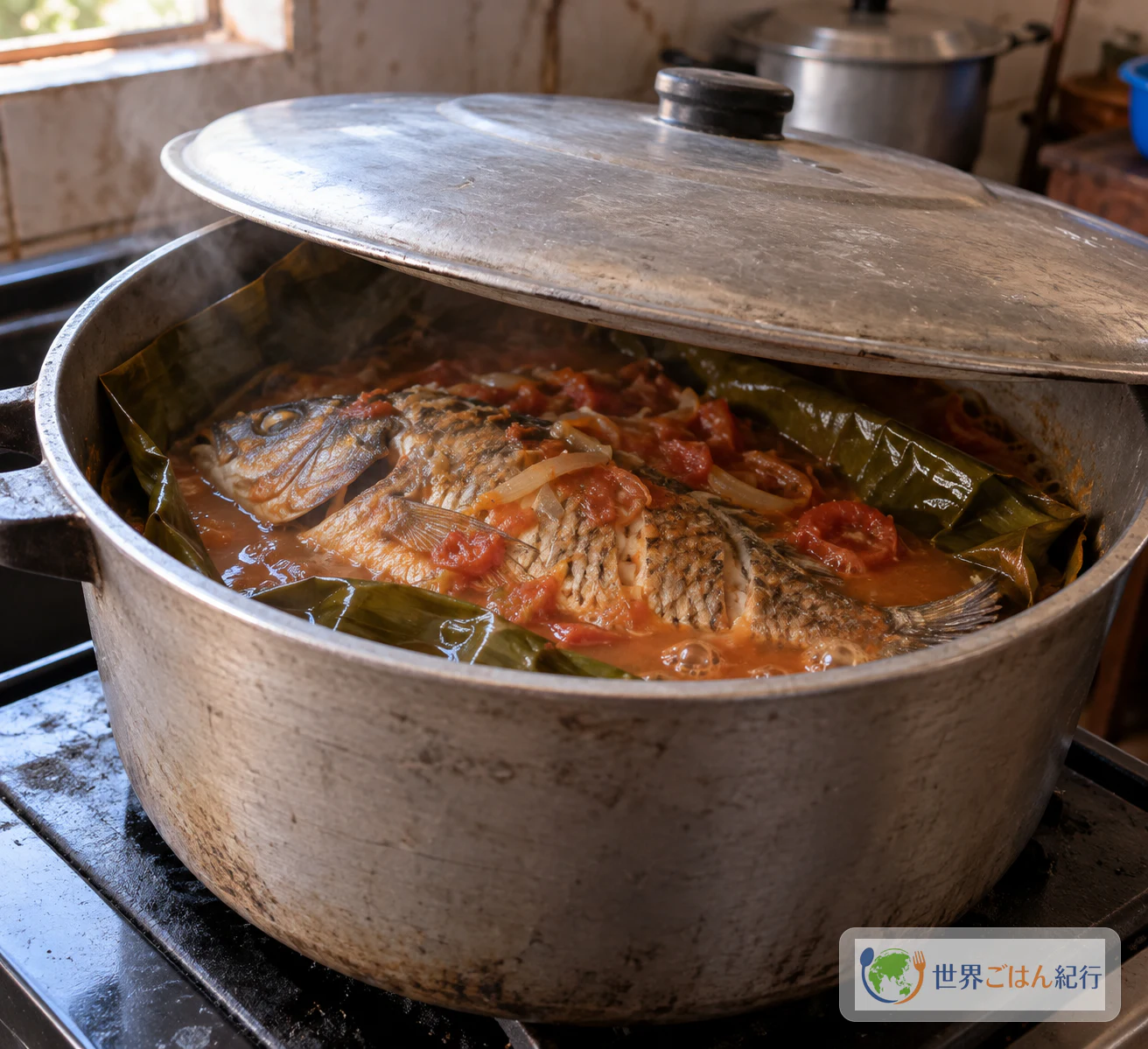
The bottom of a heavy pot is lined with washed banana leaves. Finely chopped onion and ripe tomato go on top of the leaves, and a whole cleaned bream is laid over the vegetables. Then come the sunflower oil and a litre of water, followed by the salt. The lid goes on, and the pot boils for 10 minutes before the heat is lowered for another 20.
That is the full outline of "Boiled bream fish – Zambian style," a recipe published by UN Tourism under the name of Chef Bernard Zulu, known as Chef Zee. The recipe is short: seven ingredients and five steps, with no spices, no frying and no leaf parcel. The leaves line the pot and the fish rests on the vegetables.
This article follows the published version without changing its ingredients, amounts or cooking times. Where the original is silent or unclear, we say so. Questions like which fish "bream" refers to, why one step mentions cabbage leaves, and whether the cooking time alone is enough are answered in the sections below. The recipe has not been kitchen-tested by Sekai Gohan, so the cautions about pot size and doneness come from the published recipe and general food-safety guidance, not from our own trials.
For more dishes and food culture from the same country, see our Zambia page.
The recipe gives the ingredients, amounts and five steps. It does not give a number of servings, the species of bream, a local-language name for the dish, the size of the pot or the volume of its tablespoon. We do not fill in those gaps.
Ingredients for One Whole Bream
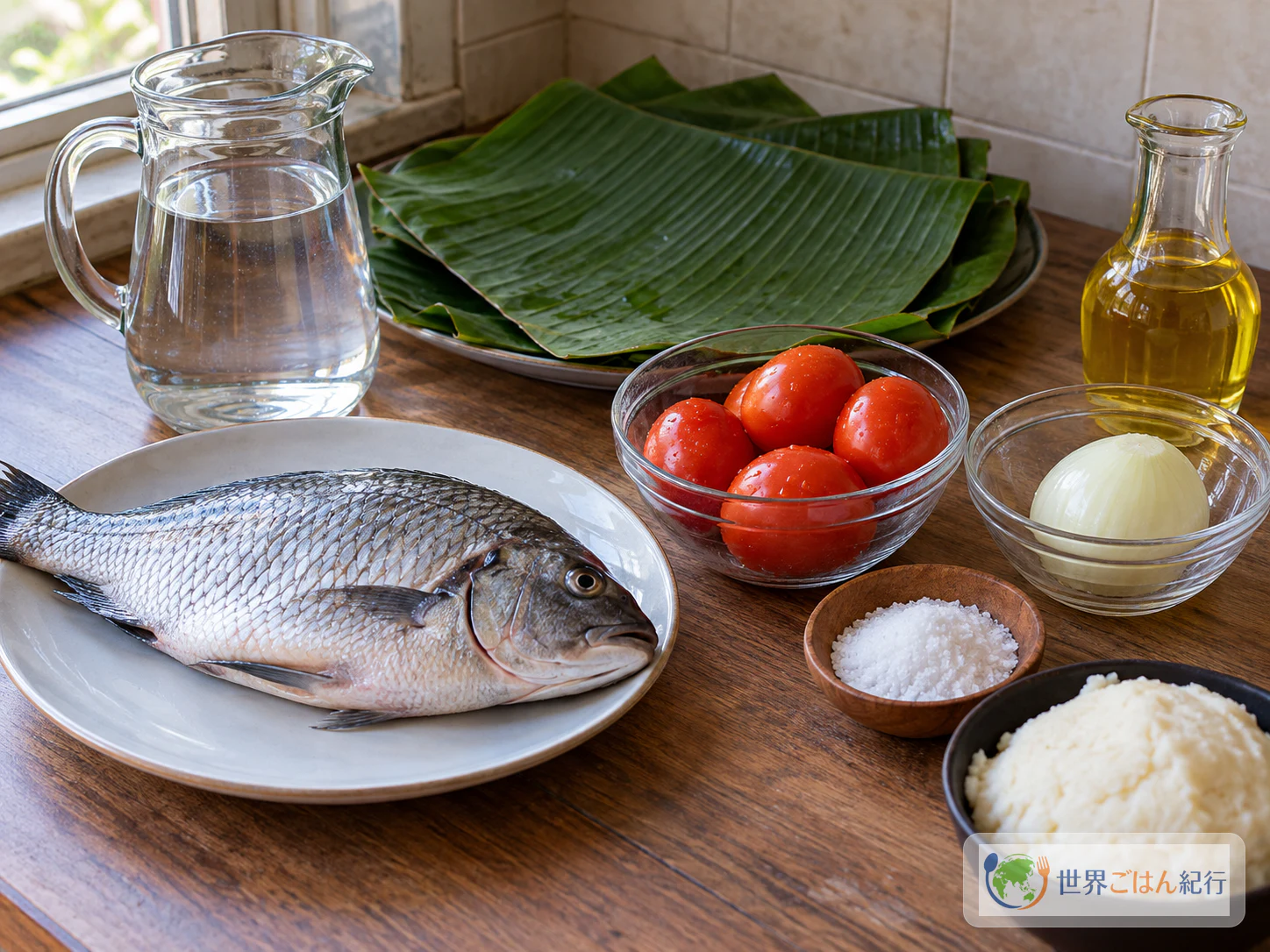
These are the amounts from the published recipe, used in full. The recipe does not state how many people they serve.
The original lists 1½ tablespoons of iodized salt and adds it in step 5. We read the tablespoon as a 15 ml spoon, but the original does not state its spoon size or the grain of the salt, so we give no gram weight. The amount may look large; we keep it as published rather than reducing it, and we make no claims about any brand of salt or its effect on health or diets.
Equipment
- A heavy-bottomed pot with a lid, large enough to hold the whole fish and all the liquid with room to spare when it boils
- A sharp knife for cleaning the fish
- A cutting board kept for raw fish, separate from the one for vegetables
- A clean instant-read food thermometer
- A wide spatula or similar for lifting the cooked fish
The recipe calls for a heavy-bottomed pot but gives no diameter. Choose one where the whole fish lies flat, the 1 L of water and 150 ml of oil fit with the vegetables, and the lid still closes with space left above the liquid.
Choosing the Fish and the Leaves
Bream is an English common name used for several different fish. The published recipe gives no scientific name and does not say whether the fish comes from fresh or salt water. Do not assume it is the same fish sold as sea bream or as Japanese tai; that identification is not supported.
If your fishmonger sells a fish labeled bream, ask what species it is and buy it whole, within the 500–600 g range. If you cannot find one, a whole tilapia or another whole white fish on the bone is a possible stand-in. That is our editorial suggestion, not the chef's specification: the flavor and texture will differ, and the cooking time in the recipe cannot be assumed to carry over. Check doneness by temperature, as in step 6. Fillets instead of a whole fish change the dish further; see the variations below.
Banana leaves are named in the ingredient list and in step 2. Buy leaves sold for food or cooking use and wash them before lining the pot. The recipe does not explain why the leaves are used, so we do not claim they prevent scorching or add a particular aroma.
Sunflower oil is the oil named in the recipe. Other neutral oils such as rapeseed (canola) or rice bran oil can stand in, with some difference in aroma.
This dish contains fish. Check for fish allergies before serving, and be aware that some people react individually to onion. Refrigerate fresh fish quickly after buying it; the two-hour limit in general food-safety guidance is a maximum, not a waiting period. Use separate cutting boards and utensils for raw fish and for vegetables or cooked food, and do not return cooked fish to a plate that held it raw.
Method: Building the Pot in Layers
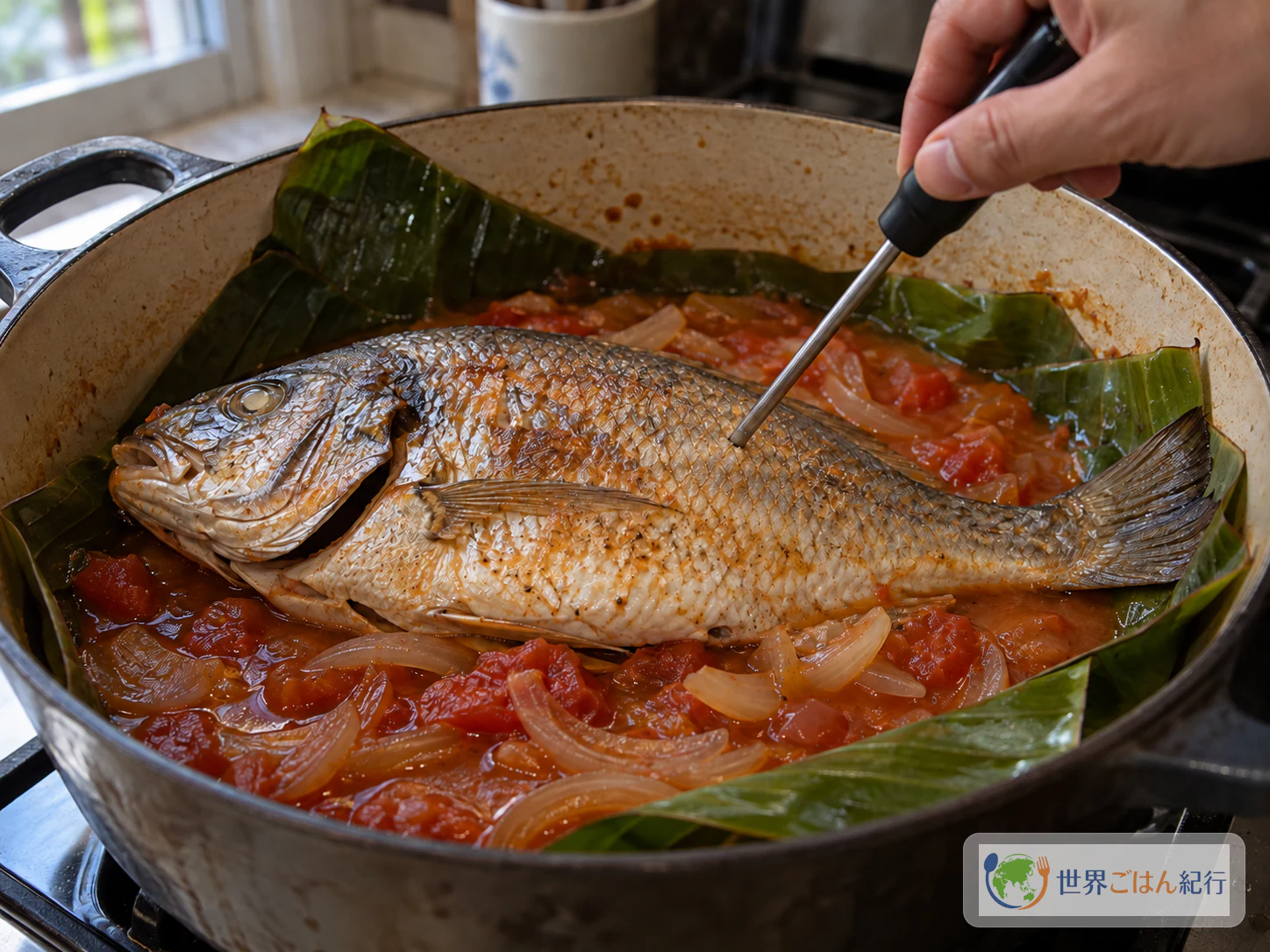
The published recipe has five steps. Step 6 here is an added safety check using a thermometer, based on general U.S. FDA guidance. It is not part of the chef's recipe.
Troubleshooting
Because this recipe has not been kitchen-tested by us, the points below are cautions based on the published method and general safety guidance, not fixes we have tried.
| Situation | Likely reason | What to do |
|---|---|---|
| The thickest part is below 63°C after the 10 + 20 minutes | A thicker fish, a different pot or a weaker burner | Cover again, keep simmering and recheck with the thermometer |
| The fish and liquid barely fit in the pot | Pot too small for a whole fish plus 1 L of water and 150 ml oil | Next time choose a wider, deeper pot with room above the liquid for boiling |
| The fish breaks apart when moved | Cooked fish is fragile | Lift it with a wide spatula, supporting the whole body |
| You used fillets or a different fish | The recipe is written for one whole bream | Treat it as a separate version and rely on the thermometer rather than the times |
| You find a recipe version with cabbage leaves | Step 3 of the published recipe says "cabbage leaves" | Follow the ingredient list and step 2: banana leaves only |
Leftovers and Food Safety
Refrigerate cooked fish quickly, within 2 hours of cooking, or within 1 hour if the surrounding temperature is above 32°C (90°F). Treat these as limits, not as time you may wait. Keep the refrigerator at 4°C or below, and reheat leftovers until they are hot throughout.
The published recipe gives no storage guidance, and we do not state how many days leftovers keep or give reheating times. Keep using separate utensils for raw and cooked fish throughout.
Variations
These are editorial options for cooks who cannot follow the published version exactly. None has been kitchen-tested, and none is the chef's recipe.
- Ask the fishmonger to clean the fish. Having the fish gutted at the counter keeps within the original method and saves work at home.
- Whole tilapia or another whole white fish. Stay within 500–600 g whole weight. The taste and texture will differ, and doneness should be judged by thermometer.
- Fillets. Fillets tend to fall apart more easily in the pot, and the broth will differ from one made with a whole fish on the bone. Do not assume the same cooking times apply.
- A different oil. Rapeseed (canola) or rice bran oil instead of sunflower oil changes the aroma.
- No banana leaves. The recipe specifies banana leaves and gives no method without them. Cooking without them is outside the original, and the dish loses whatever the leaves contribute.
We do not suggest adding spices, chili or extra acidity, since they would move the dish away from the published recipe.
Eating with Nshima: Fish as Ndiwo
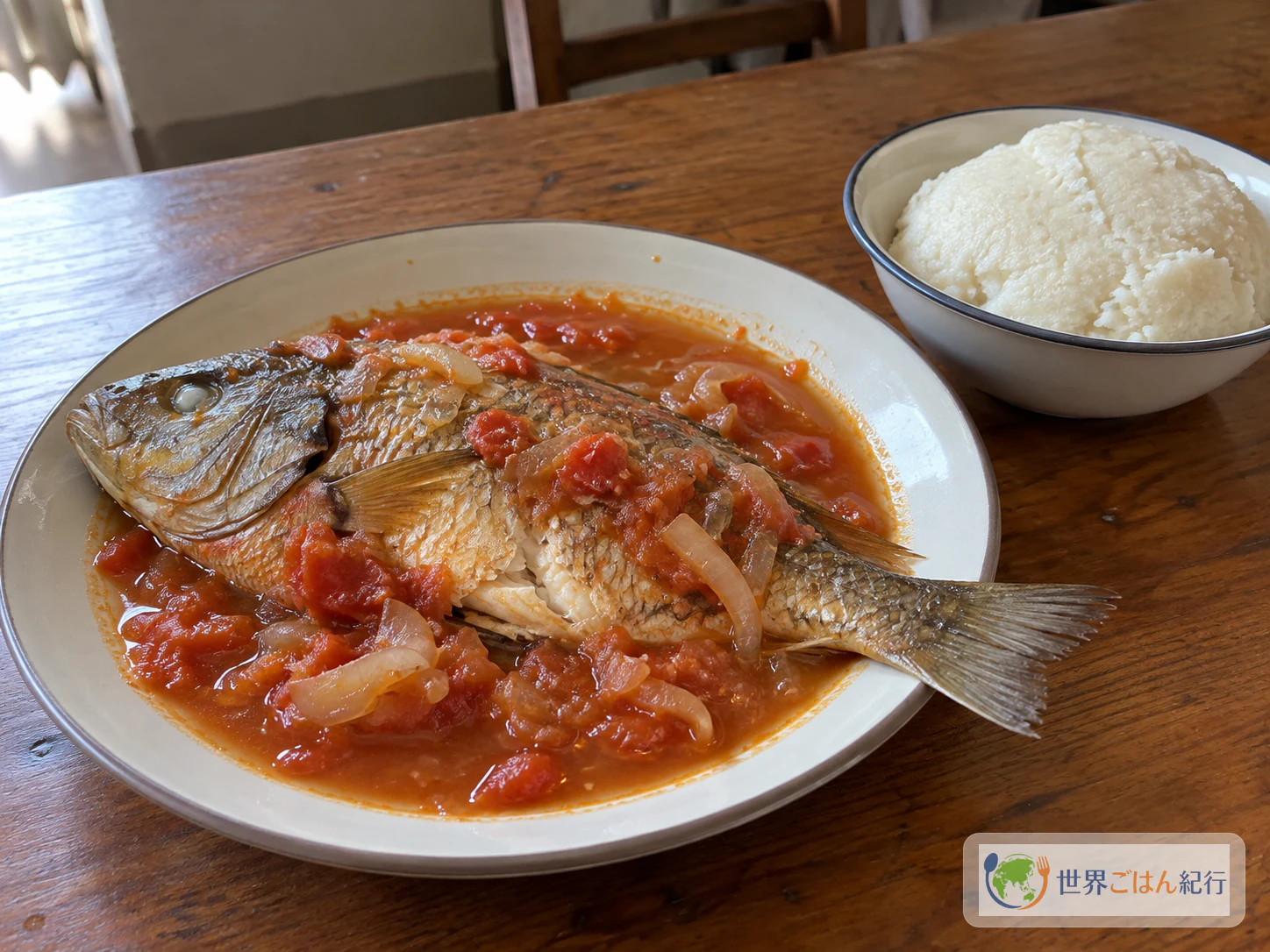
Mwizenge S. Tembo of Bridgewater College describes Zambian meals as built around nshima (also written nsima), a stiff staple, eaten with ndiwo, a relish of fish, meat or vegetables. In Tembo's account, fresh fish or meat is boiled in water until tender and salted, with onion, tomato and oil added when available.
The bream recipe fits that description, but the published recipe itself does not name a side dish, and Tembo's writing is the author's own account of Zambian foodways, including the Tumbuka foodways of eastern Zambia. It does not establish the origin of this particular recipe, where it is cooked, or a rule that holds everywhere in Zambia. We serve plain cooked nshima alongside as an editorial choice; it is not part of the fish pot, and making it is not included in this recipe.
What the published recipe does establish is narrower: a chef's version of fish, tomato, onion, oil, water and salt cooked together on leaves in one covered pot. We have not found reliable sources on a local-language name for the dish, its history or regional differences, so we do not describe them.
Frequently Asked Questions
What fish should I buy if I can't find bream?
There is no substitute we can call the same fish, because the recipe does not identify which bream it means. First ask what species is sold as bream where you shop. If none is available, a whole tilapia or another whole white fish on the bone is a reasonable editorial stand-in, with differences in taste and texture.
Do I need to scale the fish or remove the gills?
The recipe says only to remove the intestines and wash the fish. Check how the fish was prepared when you bought it, and ask the fishmonger if you want it cleaned further.
Can I make it without banana leaves?
The recipe specifies banana leaves and does not describe a version without them. Leaving them out is an untested change to the dish.
How many servings does this make?
The published recipe does not say. Treat one whole fish of 500–600 g as the base quantity.
Is 10 minutes at a boil plus 20 minutes of simmering enough?
Those are the times in the recipe for the heating stage, but they are not a guarantee that the center is cooked. Check the thickest part with a thermometer for 63°C (145°F), following general U.S. FDA guidance, and keep simmering if it is not there yet.
Can I reduce the salt?
We keep the published 1½ tablespoons and have not tested a lower amount. The original's tablespoon size and type of salt are not stated, so any reduced version would be your own adjustment.
Can I make it ahead?
Refrigerate leftovers quickly, within 2 hours of cooking (1 hour above 32°C/90°F), and reheat until hot throughout. We do not state a number of days, as no source gives one.
Sources
- UN Tourism, "Zambia, Bernard Zulu, Boiled bream fish – Zambian style." Chef Bernard Zulu (Chef Zee) as the recipe's author; the ingredients and amounts; the five steps, including the 10-minute boil and 20-minute simmer; and the "cabbage leaves" wording in step 3. https://www.untourism.int/africa/african-gastronomy/zambia-bernard-zulu-boiled-bream-fish%E2%80%93zambian-style
- UN Tourism, "A Tour of African Gastronomy — Zambia," printed pp. 84–85. The same recipe in PDF form, including the same cabbage/banana leaf discrepancy; part of the same publication, not independent confirmation. https://webunwto.s3-eu-west-1.amazonaws.com/2021-04/zambia.pdf
- Mwizenge S. Tembo, Bridgewater College, "Nshima and Ndiwo." The author's account of nshima as the center of the meal with fish, meat or vegetable ndiwo, and of fresh fish or meat boiled in water and salted, with onion, tomato and oil added when available. https://wp.bridgewater.edu/mtembo/zambian-foods/nshima-and-ndiwo/
- U.S. Food and Drug Administration, "Safe Food Handling." General guidance on cooking fin fish to 63°C (145°F), keeping raw fish and cooked food separate, and refrigerating within 2 hours (1 hour above 32°C). https://www.fda.gov/food/buy-store-serve-safe-food/safe-food-handling?hss_channel=tw-1481480405106704385
- U.S. Food and Drug Administration, "Selecting and Serving Fresh and Frozen Seafood Safely." General seafood cooking temperature of 145°F (about 63°C), separating raw and ready-to-eat utensils, and quick refrigeration of perishables. https://www.fda.gov/food/buy-store-serve-safe-food/selecting-and-serving-fresh-and-frozen-seafood-safely