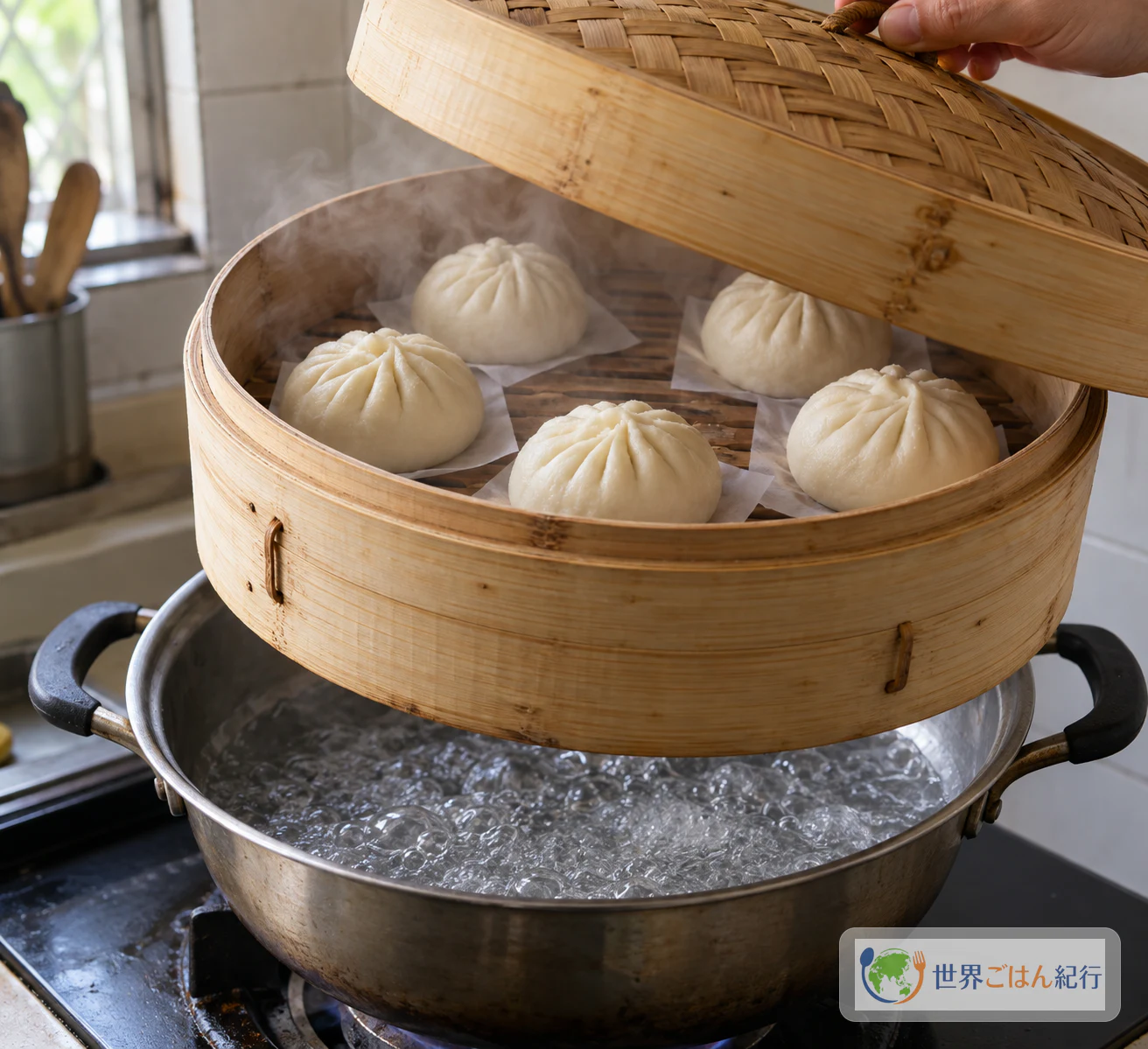
Cha Siu Bao: Soft White Dough Opening Over Glossy Roast Pork
Soft, pale dough that cracks open naturally on top during steaming, and a filling of already-cooked, diced char siu folded into a thick, sweet-savory sauce. The dough rises in two stages: yeast at the start, baking powder only after the first rest.
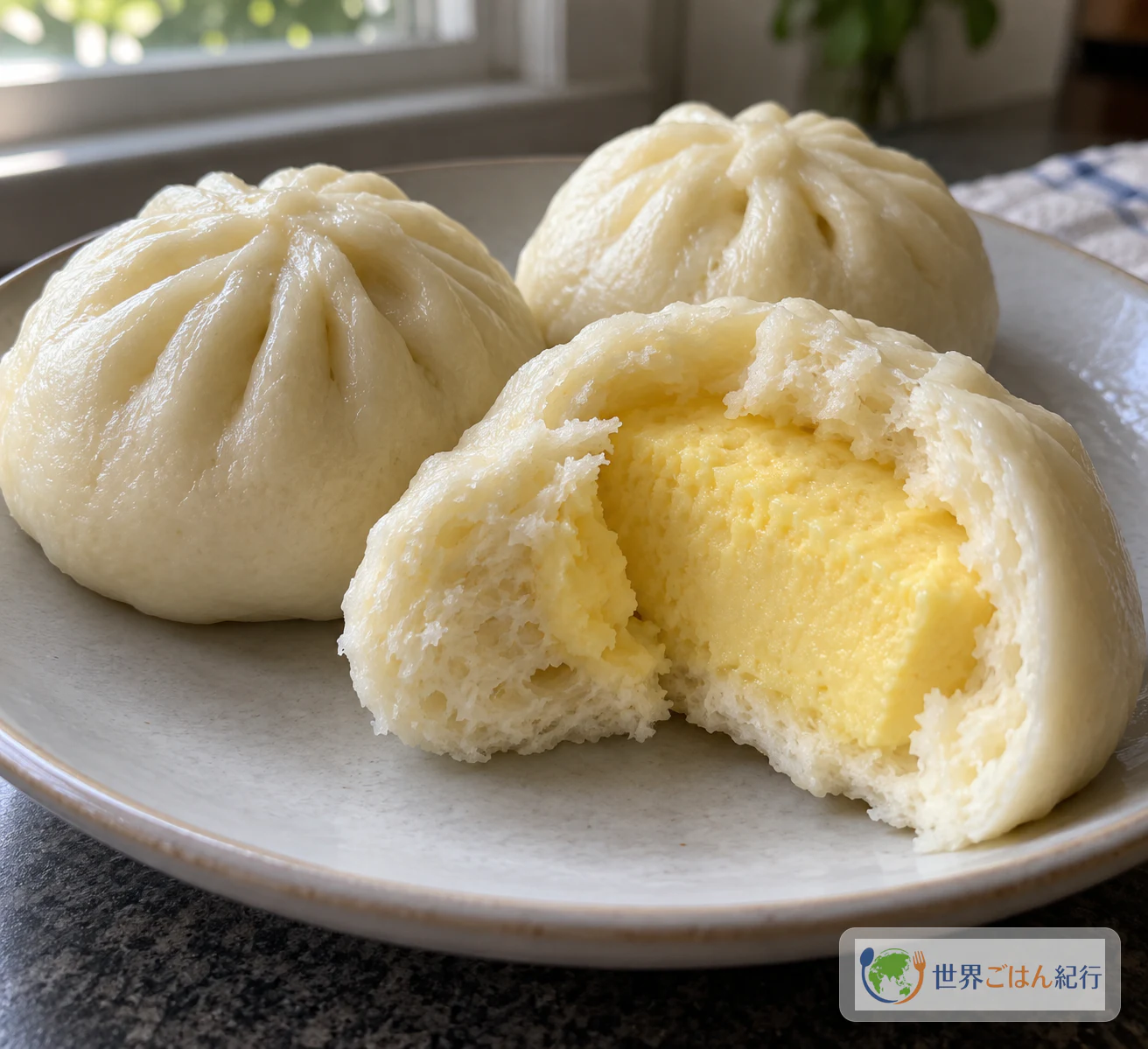
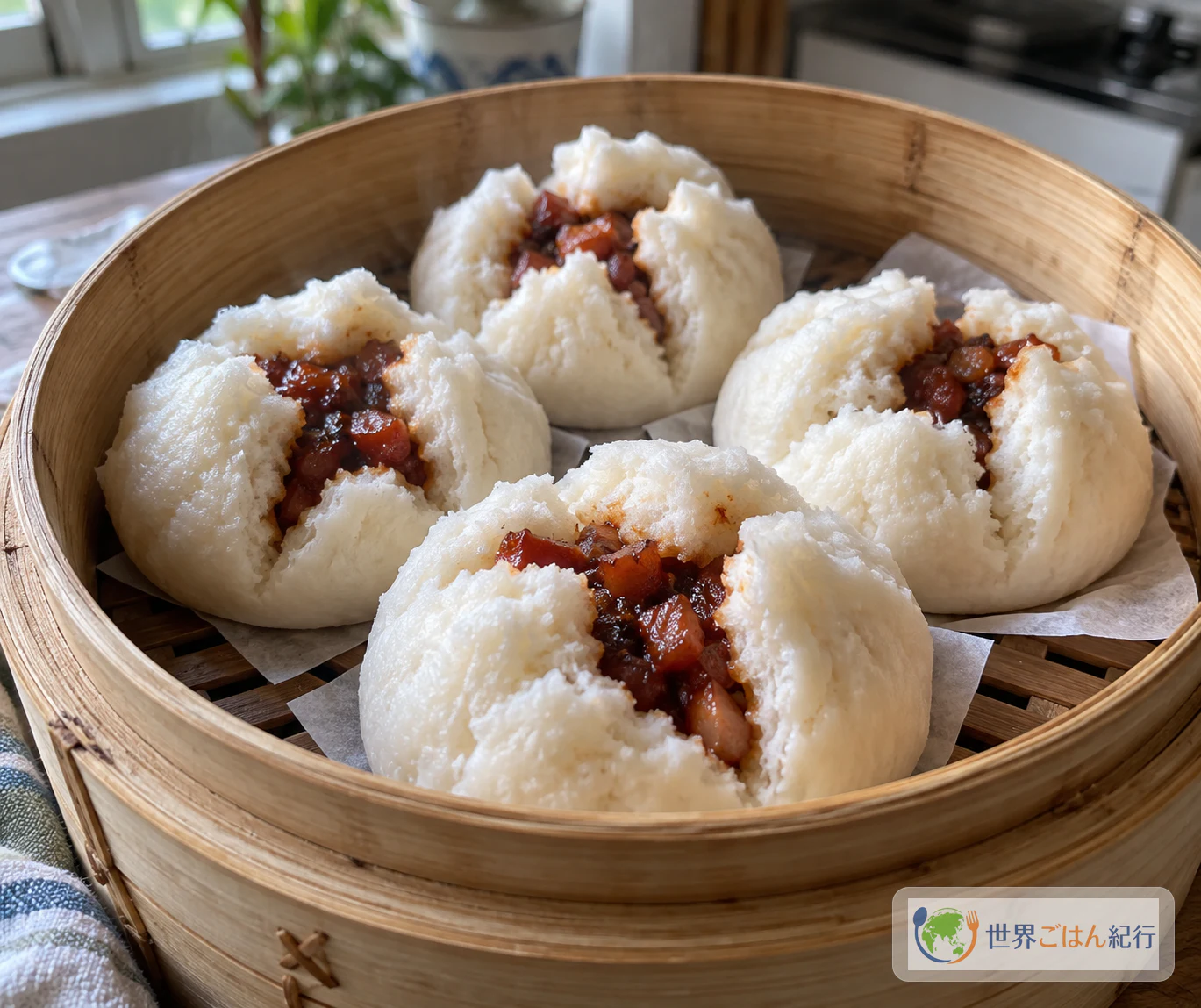
A steamed cha siu bao is easy to recognize. The dough is soft and snowy white, and the top, pleated closed before steaming, parts open in the steamer to show diced red-brown roast pork held in a thick, glossy sauce. Judy of The Woks of Life describes steamed BBQ pork buns as a favorite of the dim sum table, and that steamed, cracked-open crown is the look this recipe aims for.
This is the steamed version, making 10 buns, based on Judy's recipe at The Woks of Life. The recipe card lists 3 hours of prep, 30 minutes of cooking and 3 hours 30 minutes in total, and most of that time is the dough's first two-hour rest. The pork goes into the filling already cooked: you can buy ready-made Chinese roast pork or make char siu separately beforehand. Chinese bakeries also sell baked char siu buns, but that is a different form of bun, and this article stays with the steamed one.
The 10-bun yield is the recipe's own stated yield. Sekai Gohan has not kitchen-tested this version separately.
A Dim Sum Bun Filled With Cantonese Roast Pork
Cha siu bao is a bun (bao) wrapped around char siu, Cantonese barbecued roast pork. You will see it spelled both "cha siu bao" and "char siu bao"; these are transliteration variants of the same dish. Omnivore's Cookbook, which publishes its own separate steamed version, also presents it as a dim sum dish and prints the simplified Chinese name 叉烧包 in its title.
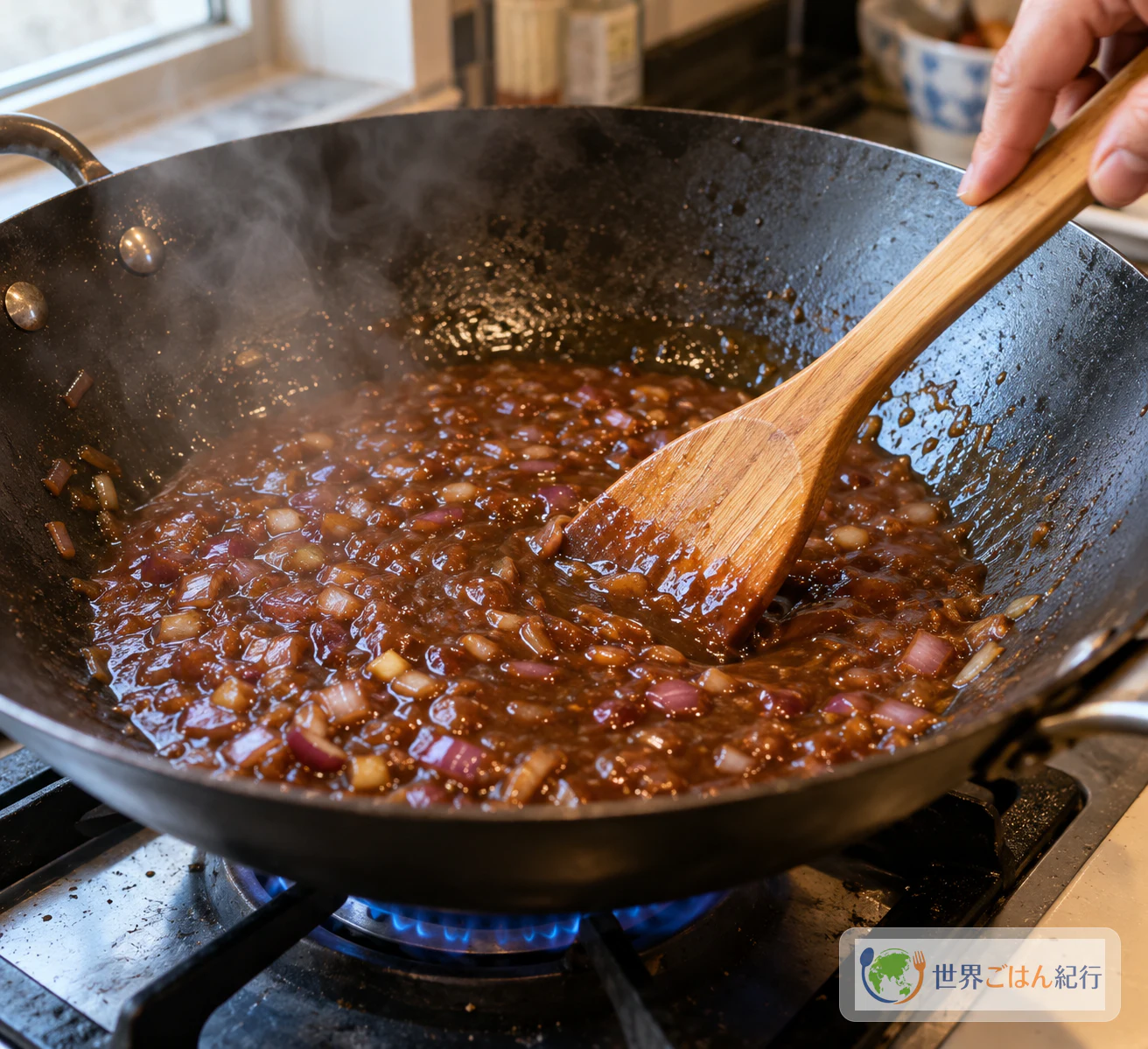
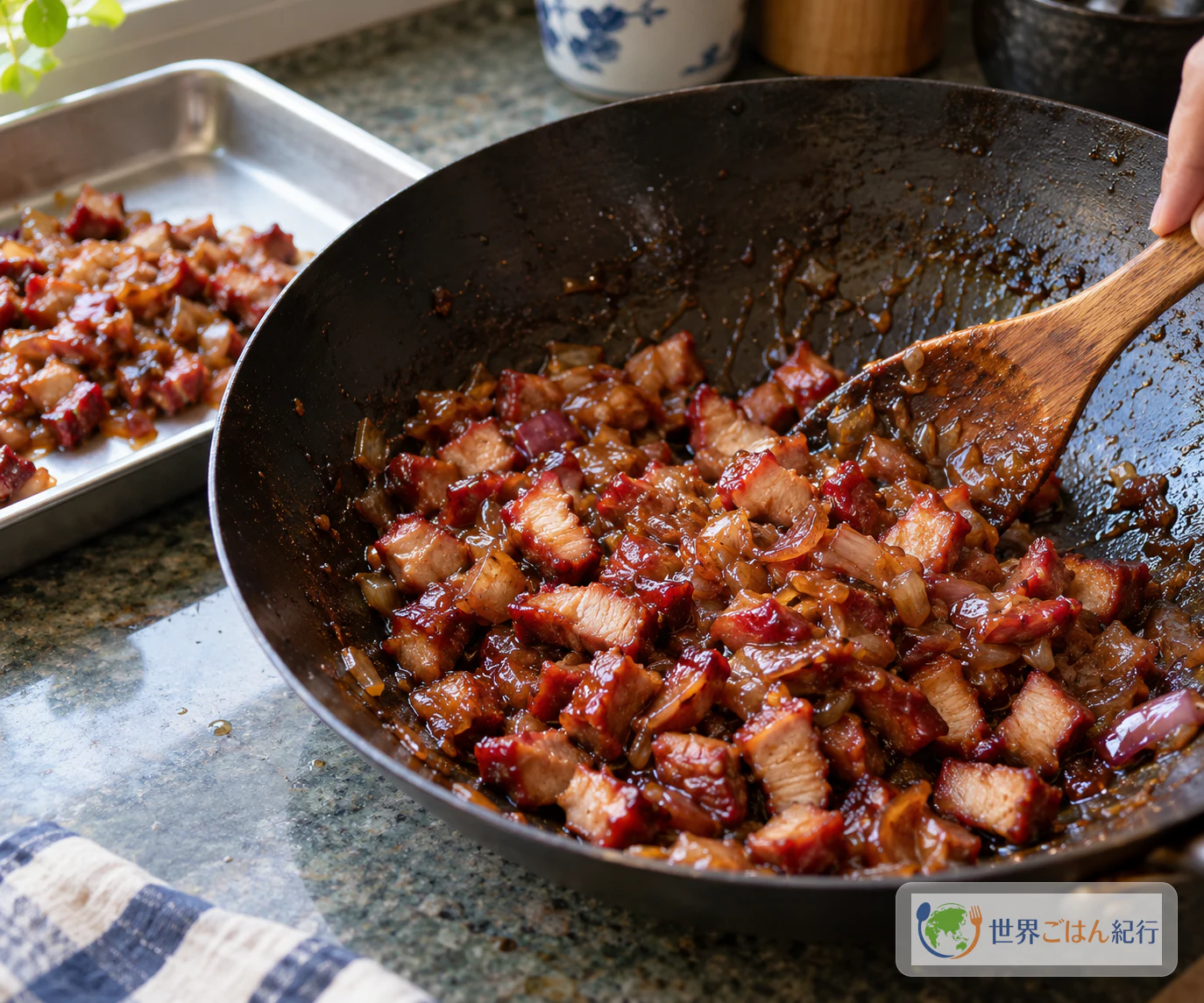
What sets this bun apart from other filled buns is the order in which the filling is built. The pork is roasted first, as char siu. Then it is diced and folded into a sauce that has been cooked separately and thickened, and the whole filling is cooled before it is wrapped. That is why using purchased, fully cooked char siu is a valid shortcut rather than a compromise: the bun recipe begins with a finished roast pork component, not with raw meat.
Judy's recipe sets the steamed bun found at dim sum alongside the baked buns found in Chinese bakeries. Both exist; neither is the only correct form. Here the dough, the method and the photos are all for the steamed bun. For more dishes from the same country, see China.
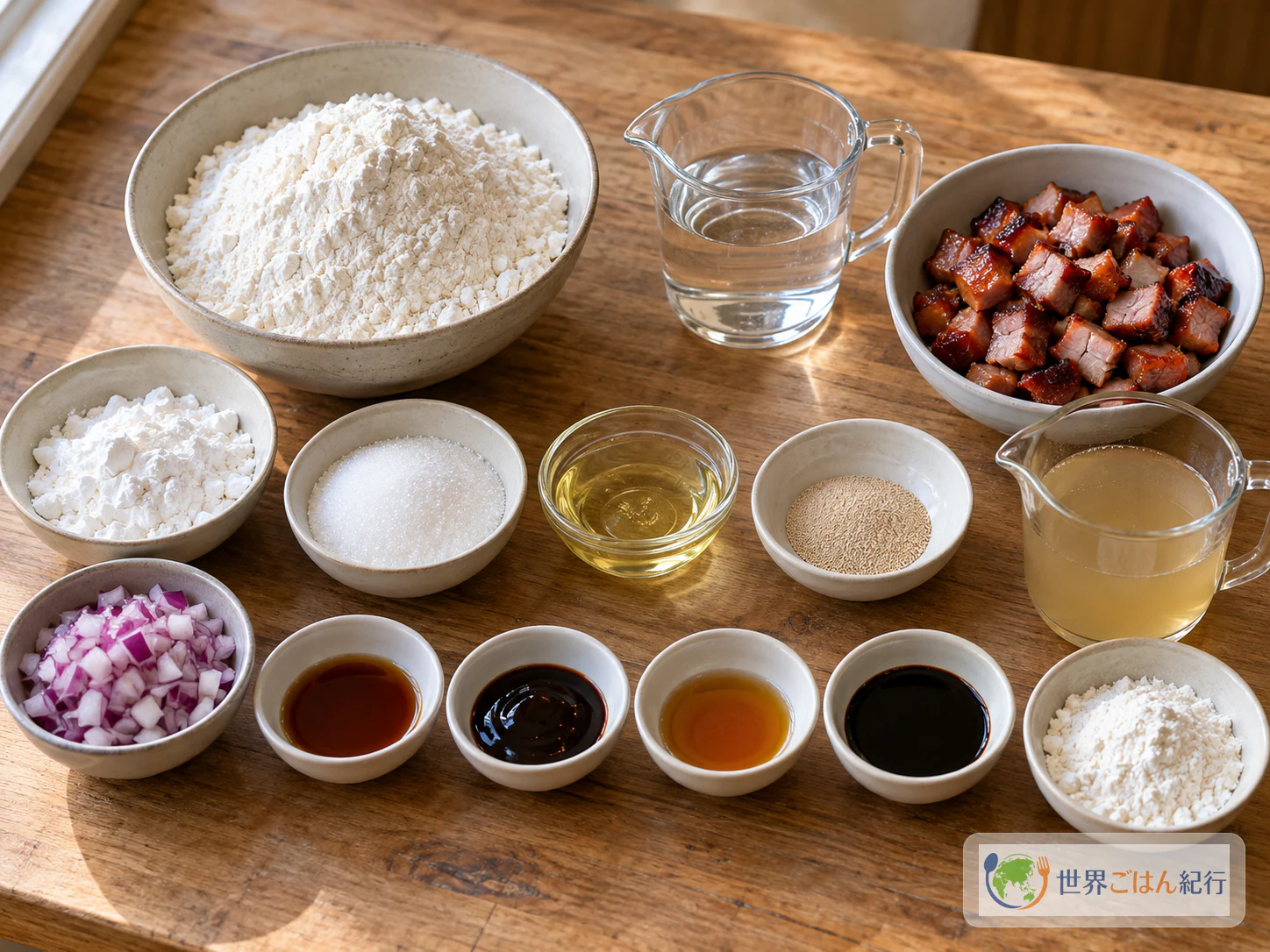
Ingredients for 10 Buns: Dough and Char Siu Filling
Equipment
- Mixing bowl, plus a stand mixer with a dough hook if you prefer not to knead by hand
- Sieve for sifting the flour and cornstarch
- Clean kitchen cloth, dampened, to cover the dough
- Wok or skillet for the filling
- Shallow tray or container for cooling the filling
- Ten 4×4-inch squares of parchment paper
- Steamer, such as a bamboo steamer, set over a pot of boiling water
Choosing the Char Siu, Flour and Oil
The pork must be fully cooked Chinese roast pork. Look for ready-made Cantonese-style char siu from a Chinese deli, a Cantonese restaurant that sells roast meats, or a Chinese grocery, or make char siu at home as a separate recipe before you start the buns. Japanese-style simmered chashu is a different preparation; choose the sweet-savory roasted Chinese kind. Never dice raw pork into this filling as though it were char siu.
Keep the flours as listed. The dough is all-purpose flour with cornstarch. Do not swap in a specialty bao flour, cake flour or low-gluten flour for this formula. The same all-purpose flour is used for the dough (2 cups) and to thicken the filling (2 tablespoons); keep the two amounts separate.
Yeast and baking powder both go in, at different times. Baking powder is not a replacement for the yeast. Have it measured out at the start, but keep it aside until after the first rest.
Onion and oil. Red onion and vegetable oil are used throughout; shallots can take the place of the red onion and canola oil the place of the vegetable oil in the dough. Use chicken stock for the filling rather than switching to another stock.
These buns contain wheat (gluten) in both the dough and the filling, soy (light and dark soy sauce), oyster sauce (shellfish), sesame oil and onion. Check the labels of purchased char siu and sauces as well.
Method: Rest the Dough, Make the Filling, Then Shape and Steam
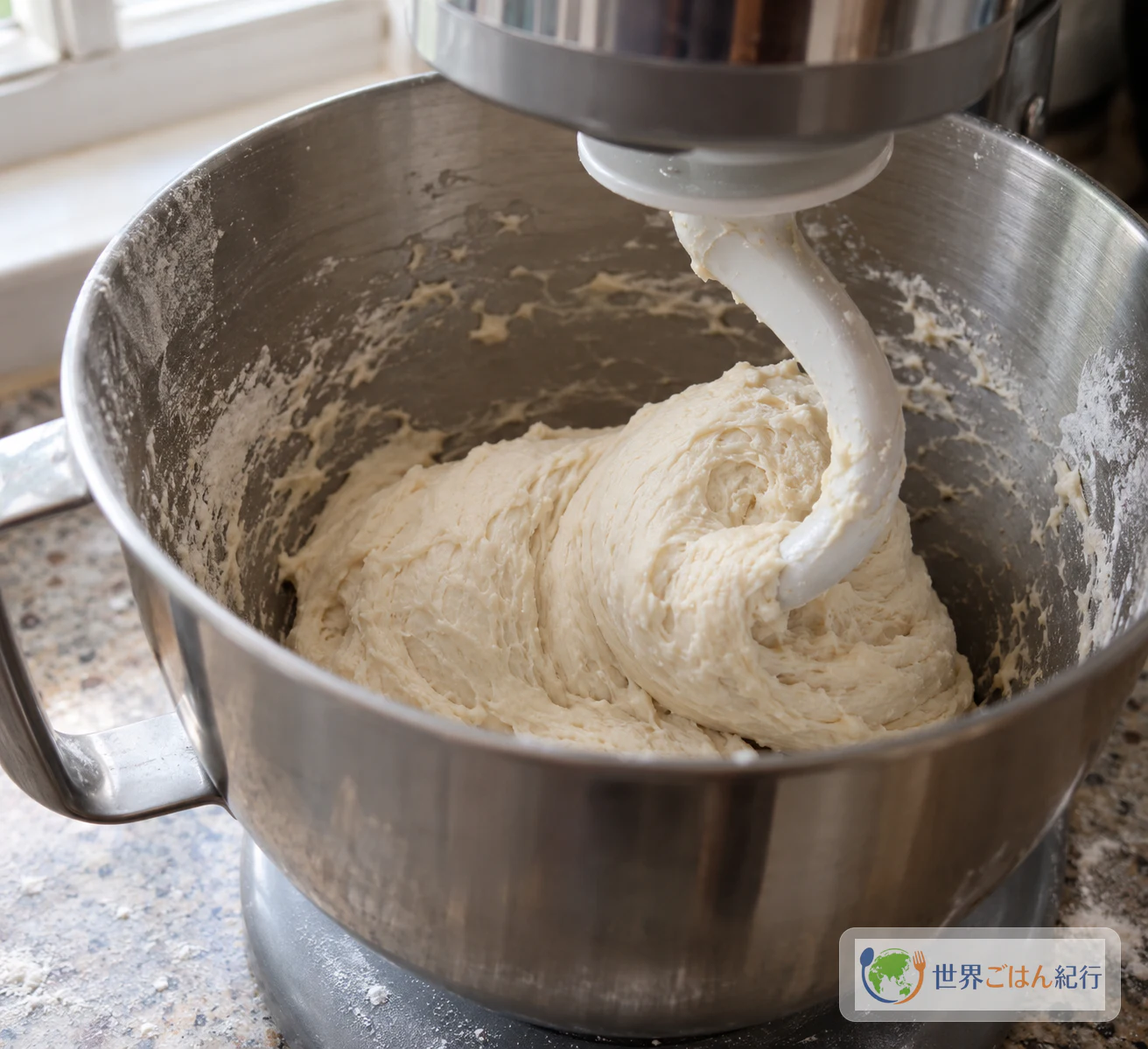
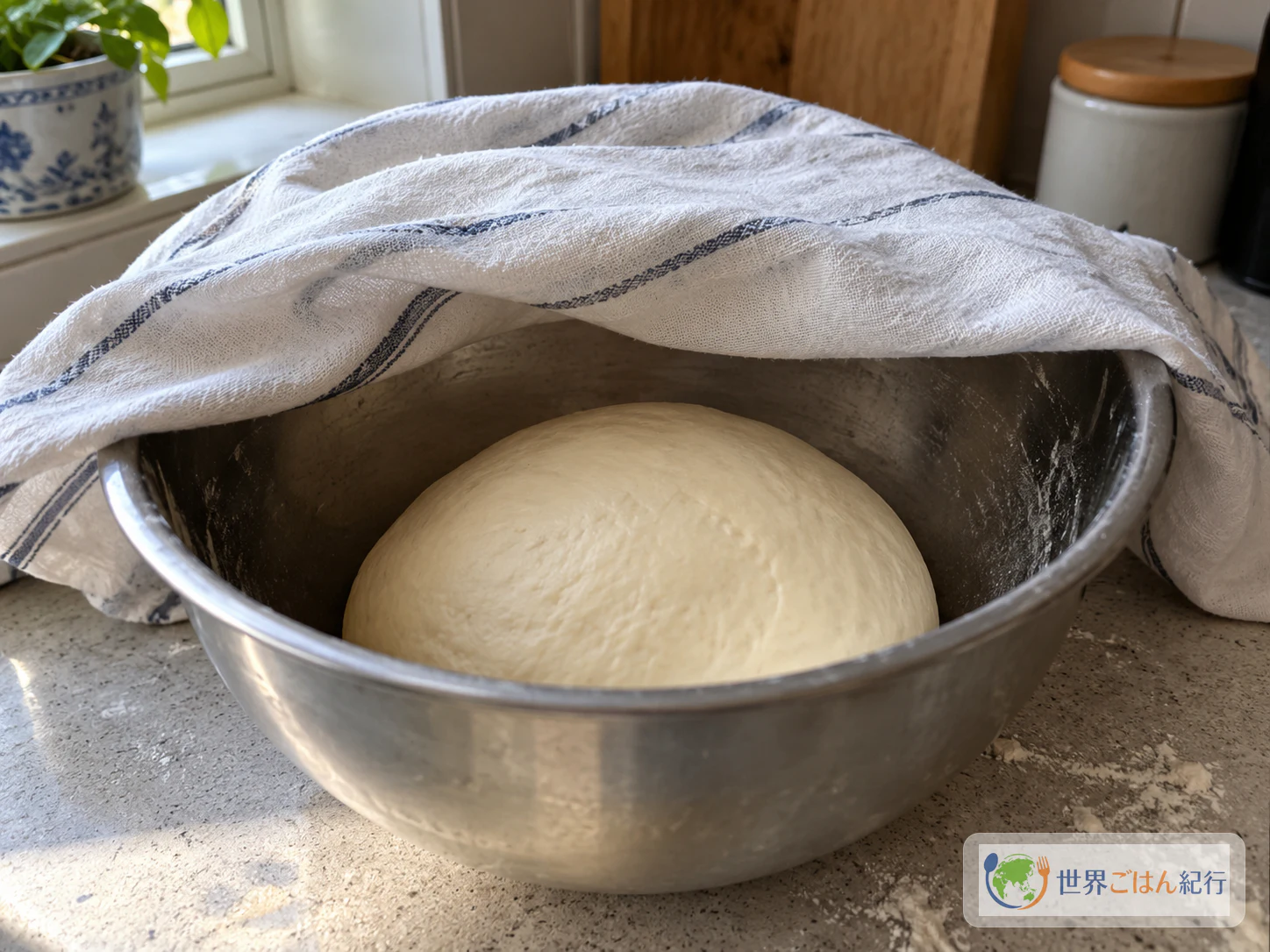
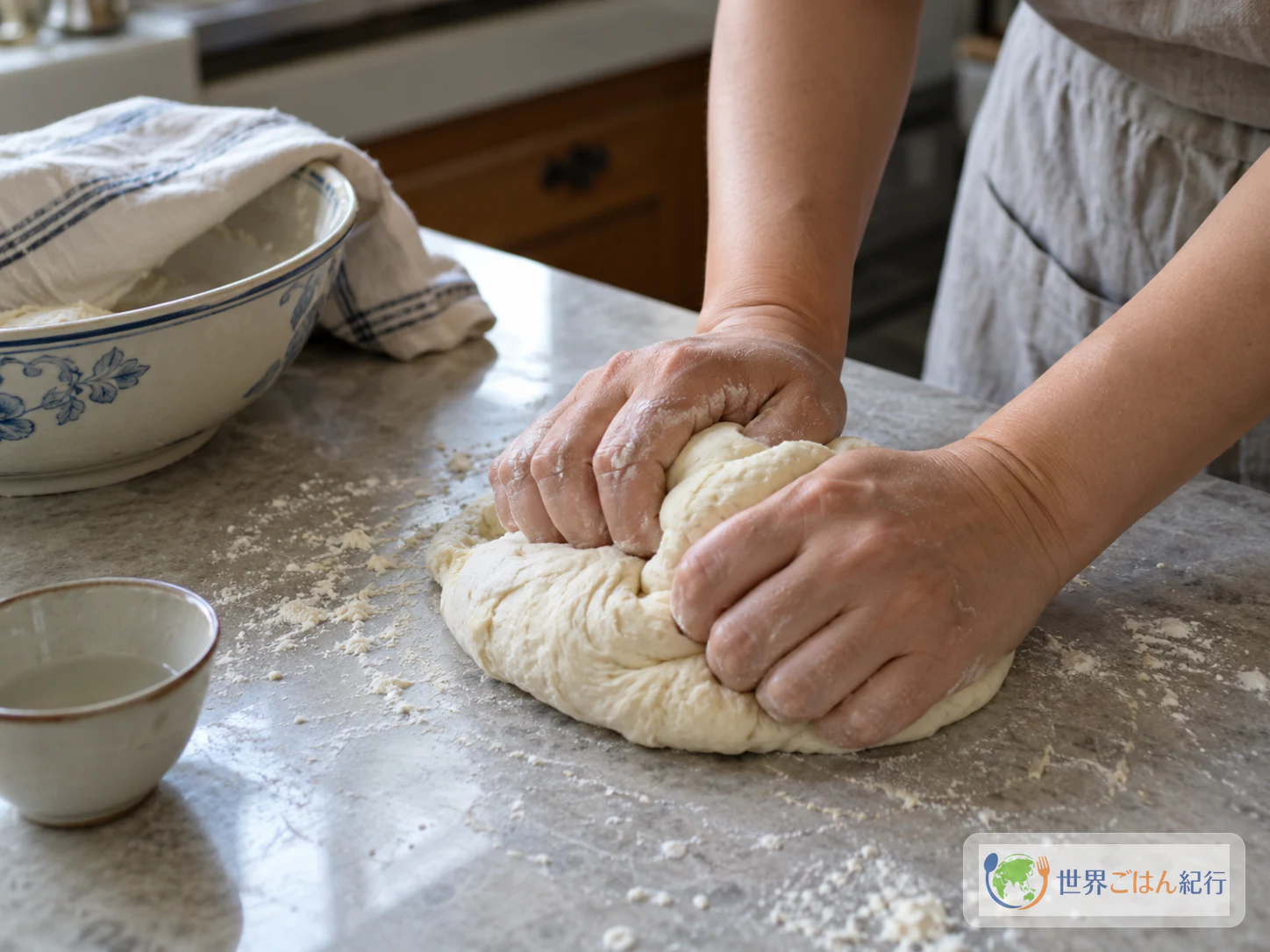
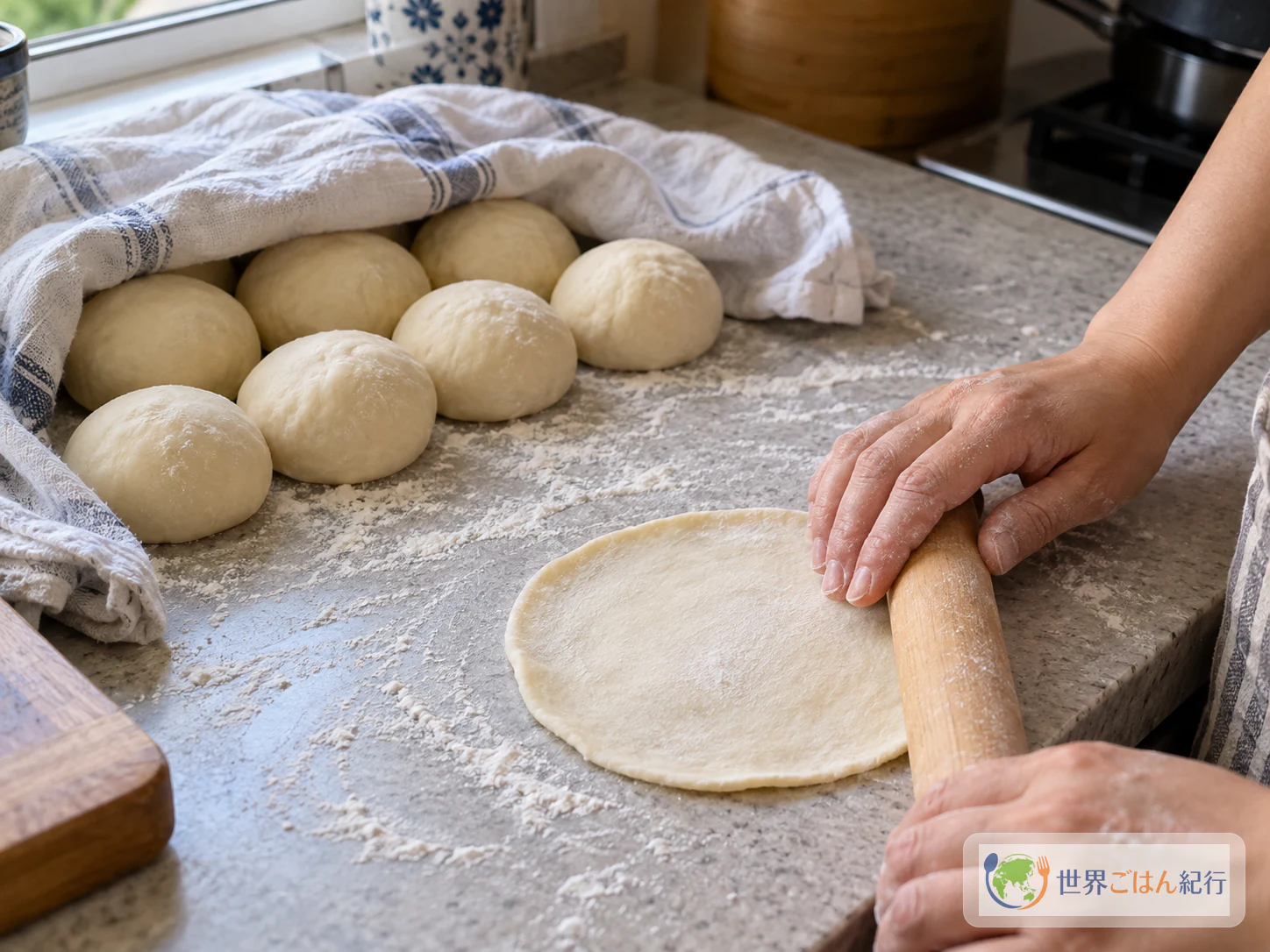
Yeast dough first and a 2-hour rest. Make the filling during that rest and let it cool. Baking powder goes into the dough only after the rest, followed by a 15-minute rest, then shaping and steaming.
Serving: Lift Them Straight From the Steamer
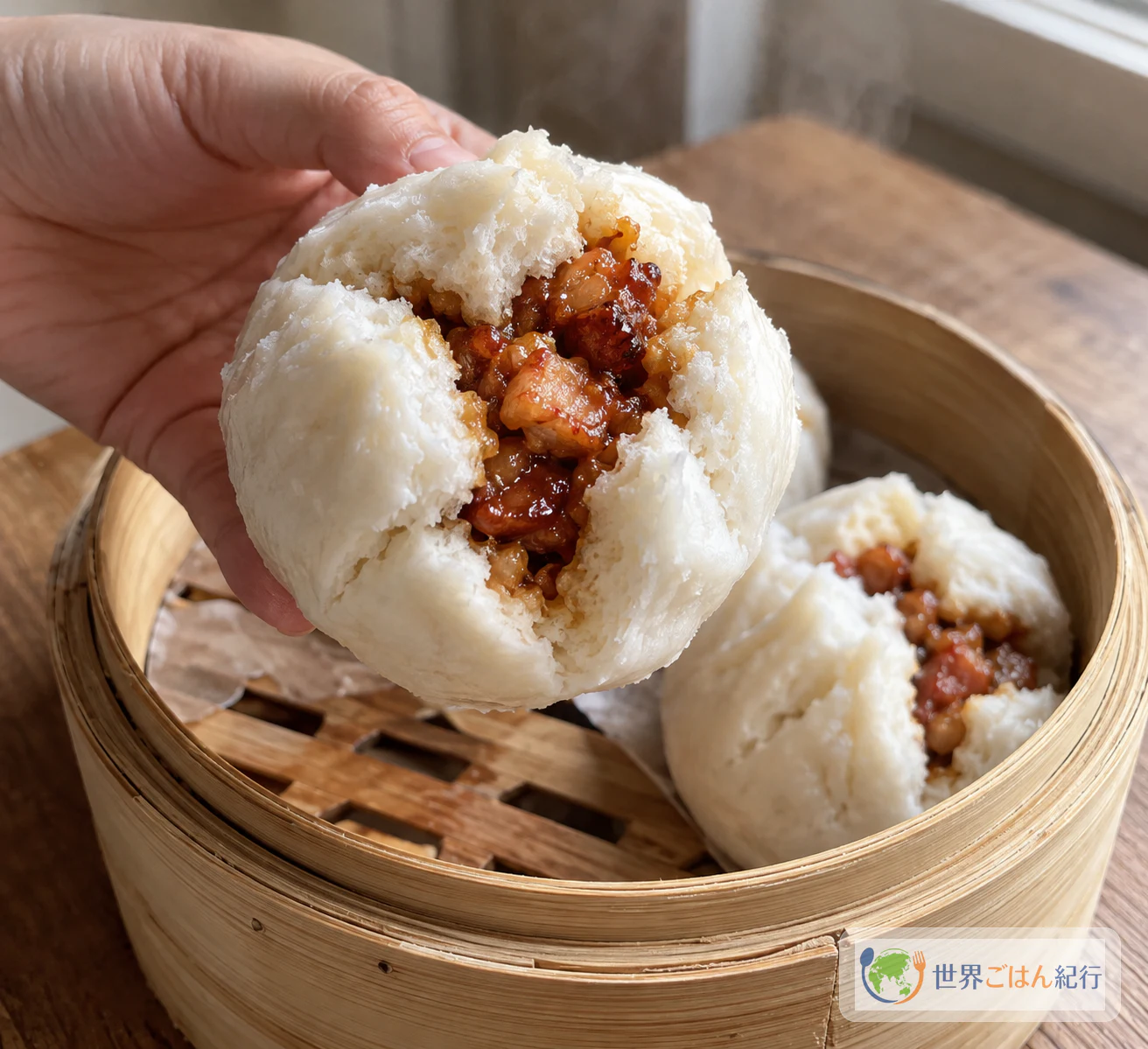
Bring the buns to the table hot, still on their parchment squares. The pleats you pinched closed have now parted, and the diced roast pork in its thick sauce shows through the top. There is no need to cut them open or add a garnish; the open crown is the finish.
When Things Go Wrong: Dough, Filling and Steaming
| Condition | Likely cause | What to do |
|---|---|---|
| The dough looks dry or the baking powder won't work in | Dough is a little stiff after the long rest | Add 1–2 teaspoons water, a little at a time, and knead on low until smooth |
| The filling is loose and runny | The sauce wasn't cooked until thick before the pork went in | Next time, cook the sauce with the stock and flour a little longer, until clearly thick, before taking it off the heat |
| The filling is hard to wrap and the dough tears | The filling was still warm | Let the filling cool fully before shaping |
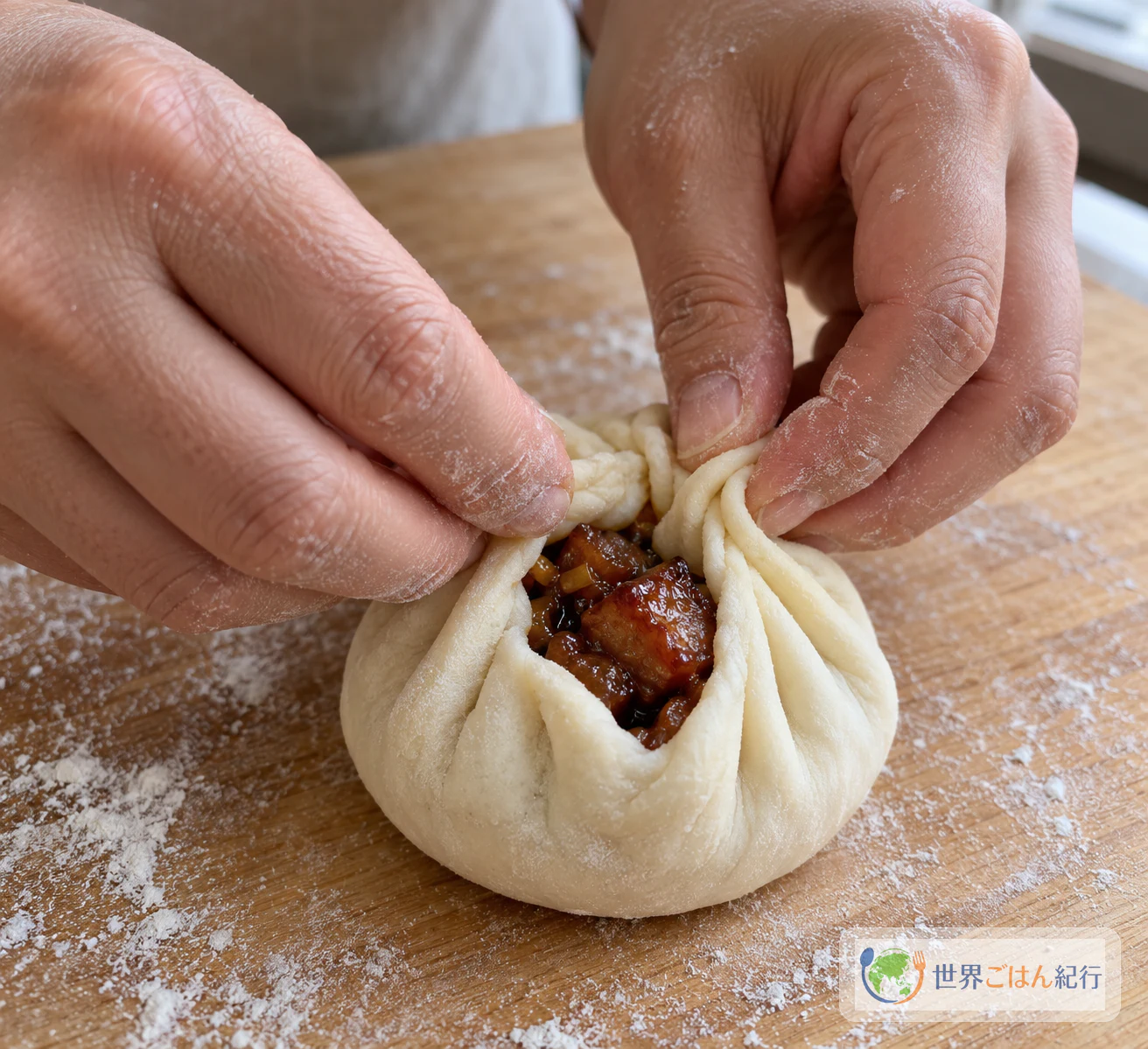
| A bun opens at the pleats before steaming | The top wasn't pinched fully closed | Pinch the pleats together firmly at the top before setting the bun on its paper |
| The bottoms of the buns are soggy | Boiling water reached the buns | Keep the water below the steamer basket so it never touches the buns |
| The tops stay closed after steaming | Baking powder missing or not worked in evenly | Baking powder is what helps the tops crack; knead it in fully after the first rest |
How Other Versions Differ
Baked char siu buns. Judy's recipe notes that baked char siu buns are sold at Chinese bakeries, while the steamed bun belongs to the dim sum table. This article gives only the steamed recipe; the baked bun is a different formula and is not covered here.
A different steamed formula. Omnivore's Cookbook, by Maggie Zhu, publishes its own steamed char siu bao. It also uses cooked char siu and both yeast and baking powder, but its dough is made with low-gluten flour or cake flour and shortening, its filling sauce is different, it makes 16 buns, it wraps them with a loose cross-fold that opens during steaming, and it steams them for 10 minutes after a second rise. It shows how widely dough, folding and timing can vary for the same dish, but none of its ingredients or times should be mixed into the recipe above.
Homemade char siu. Judy's recipe allows ready-made Chinese roast pork or her separate Chinese BBQ pork recipe. Roasting your own char siu is its own project, with its own marinade and roasting time, and those steps are not part of the bun recipe or its timing.
Making the Filling Ahead and Handling Leftovers
The filling can be made ahead: cool it, cover it and refrigerate it. For the filling and for leftover buns, refrigerate within 2 hours of cooking, or within 1 hour if the air temperature is above 90°F (32°C). Use shallow containers so they cool quickly. Use cooked leftovers within 4 days, and reheat them to 165°F (74°C).
Frequently Asked Questions
Can I use any cooked pork as the char siu?
Use Chinese roast pork (char siu), already cooked. Judy's recipe explicitly allows ready-made roast pork, for example from a Cantonese restaurant or Chinese grocery, or her own separate char siu recipe. Japanese simmered chashu is a different preparation, and raw pork should never go into this filling, because the bun recipe assumes the pork is already cooked.
Why does the baking powder go in only after the first rest?
That is the order of this recipe: the yeast works through the 2-hour rest, then the baking powder is kneaded in, followed by a 15-minute rest. Judy writes that baking powder helps the tops crack open during steaming. This is the method for this particular formula, not a rule for every bao dough, and baking powder does not replace the yeast.
Can I convert the cups to grams?
The recipe gives only US cups, tablespoons and teaspoons, with no weights, so no gram amounts are given here. A cup of flour, a cup of cornstarch and a cup of water do not weigh the same, and a US cup is not the same as a Japanese 200 ml cup. Measure with US measures as written.
How many buns go in each batch?
Judy steams the buns in two batches but does not say how many go in each. Arrange them to suit the size of your steamer, each on its parchment square, and steam each batch for 12 minutes over high heat.
Does 12 minutes of steaming make the buns food-safe?
The 12 minutes is the cooking time for the buns; the recipe does not report measuring the internal temperature after steaming. The pork goes in already cooked. For leftovers and filling made ahead, follow FoodSafety.gov's guidance: chill within 2 hours (1 hour above 90°F / 32°C), use within 4 days, and reheat to 165°F (74°C).
Can I use cake flour or shortening, like some other recipes?
Those belong to a different formula, such as the one from Omnivore's Cookbook. This recipe is built on all-purpose flour, cornstarch and vegetable or canola oil. Mixing ingredients from one formula into another changes the dough, so stay with one recipe from start to finish.
Sources
- Judy, The Woks of Life, "Steamed BBQ Pork Buns (Char Siu Bao) Recipe." The adopted recipe: ingredients and amounts, the 10-bun yield, the listed prep, cook and total times, the yeast-first and baking-powder-later dough, the filling, shaping, steaming in batches for 12 minutes over high heat, the use of ready-made roast pork, and the dim sum and bakery distinction. https://thewoksoflife.com/steamed-bbq-pork-buns-char-siu-bao/
- Maggie Zhu, Omnivore's Cookbook, "Char Siu Bao (Steamed BBQ Pork Buns) 叉烧包." A separate steamed recipe used only for comparison, for the dim sum context and for the simplified Chinese name 叉烧包; its formula is not combined with the recipe above. https://omnivorescookbook.com/steamed-char-siu-bao/
- FoodSafety.gov (U.S. Department of Health and Human Services), "People at Risk of Food Poisoning — Store Your Leftovers Safely." Guidance on chilling cooked food within 2 hours (1 hour above 90°F / 32°C), using shallow containers, using leftovers within 4 days and reheating to 165°F (74°C). https://www.foodsafety.gov/people-at-risk