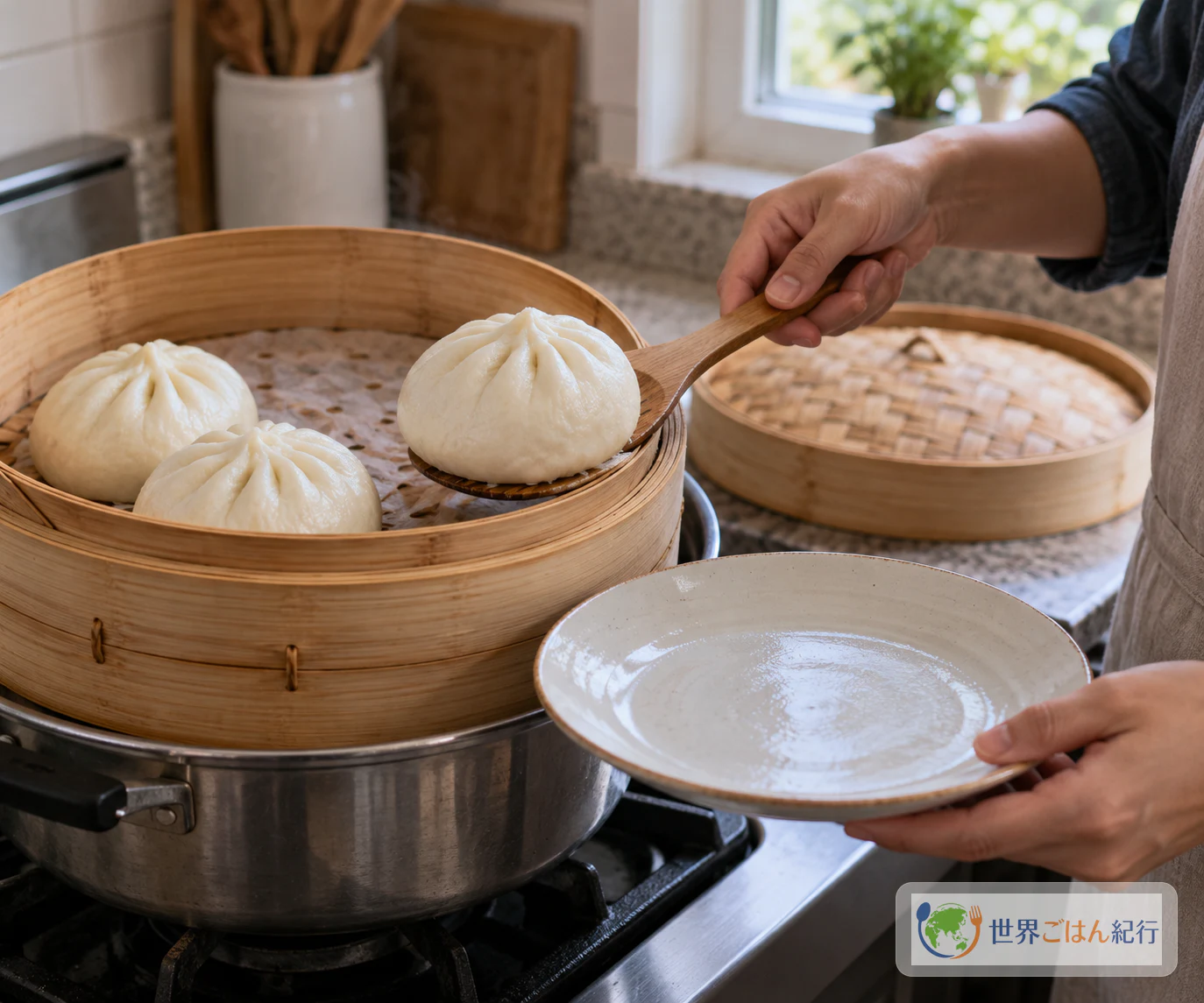
Nai Wong Bao: A Soft White Bun Around a Thick Custard
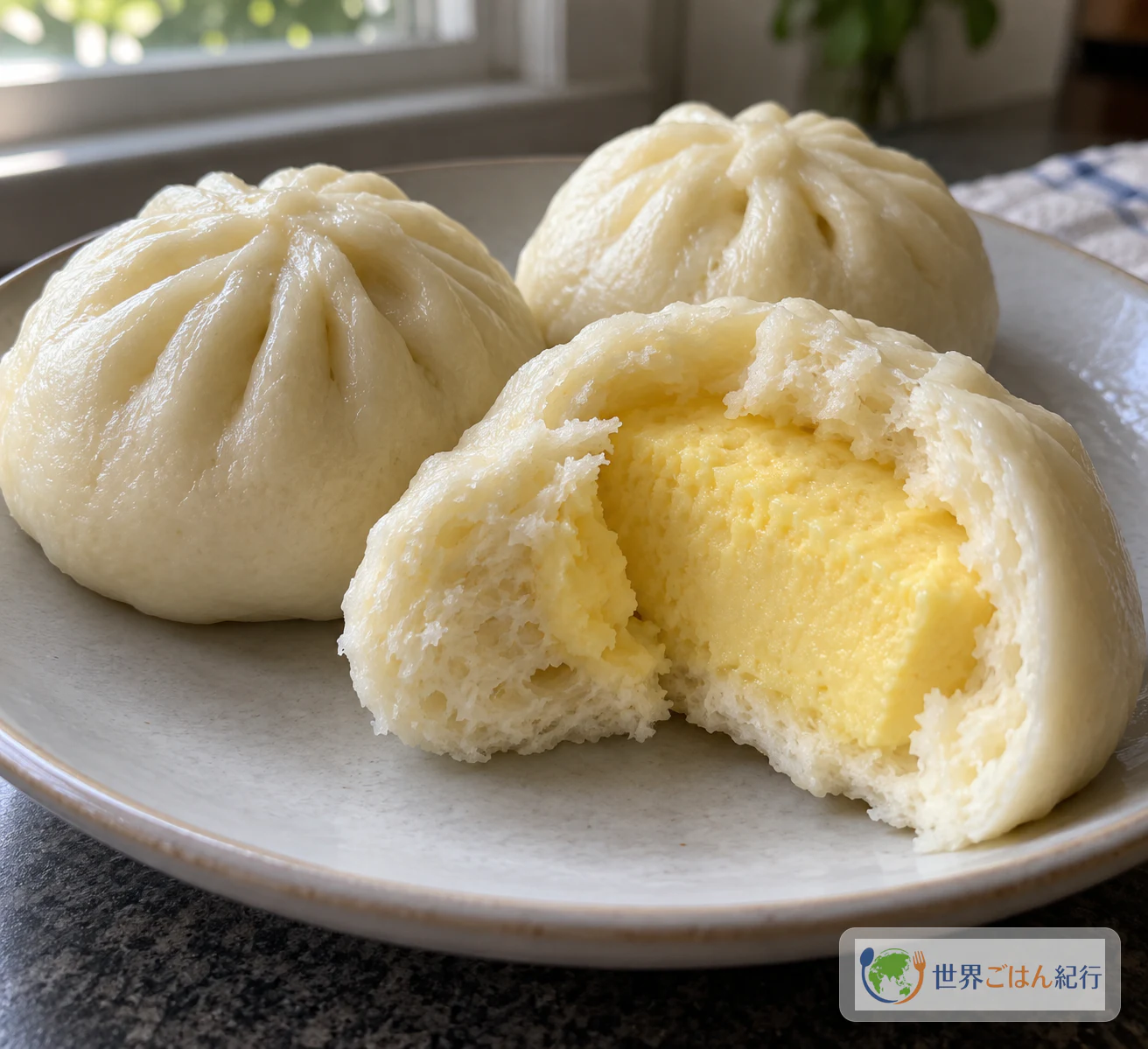
A smooth, lightly sweet white dough on the outside, and a custard inside that has been cooked until thick, cooled completely and rolled into a ball. The filling holds its shape. It is not a runny center.
Tear open a warm, white steamed bun and you find a pale yellow custard inside. That custard is made from eggs, milk and cream that have been thickened with flour, starch and milk powder. Nai wong bao are Cantonese steamed custard buns. Judy of The Woks of Life calls them a Cantonese classic and a favorite from the dim sum cart.
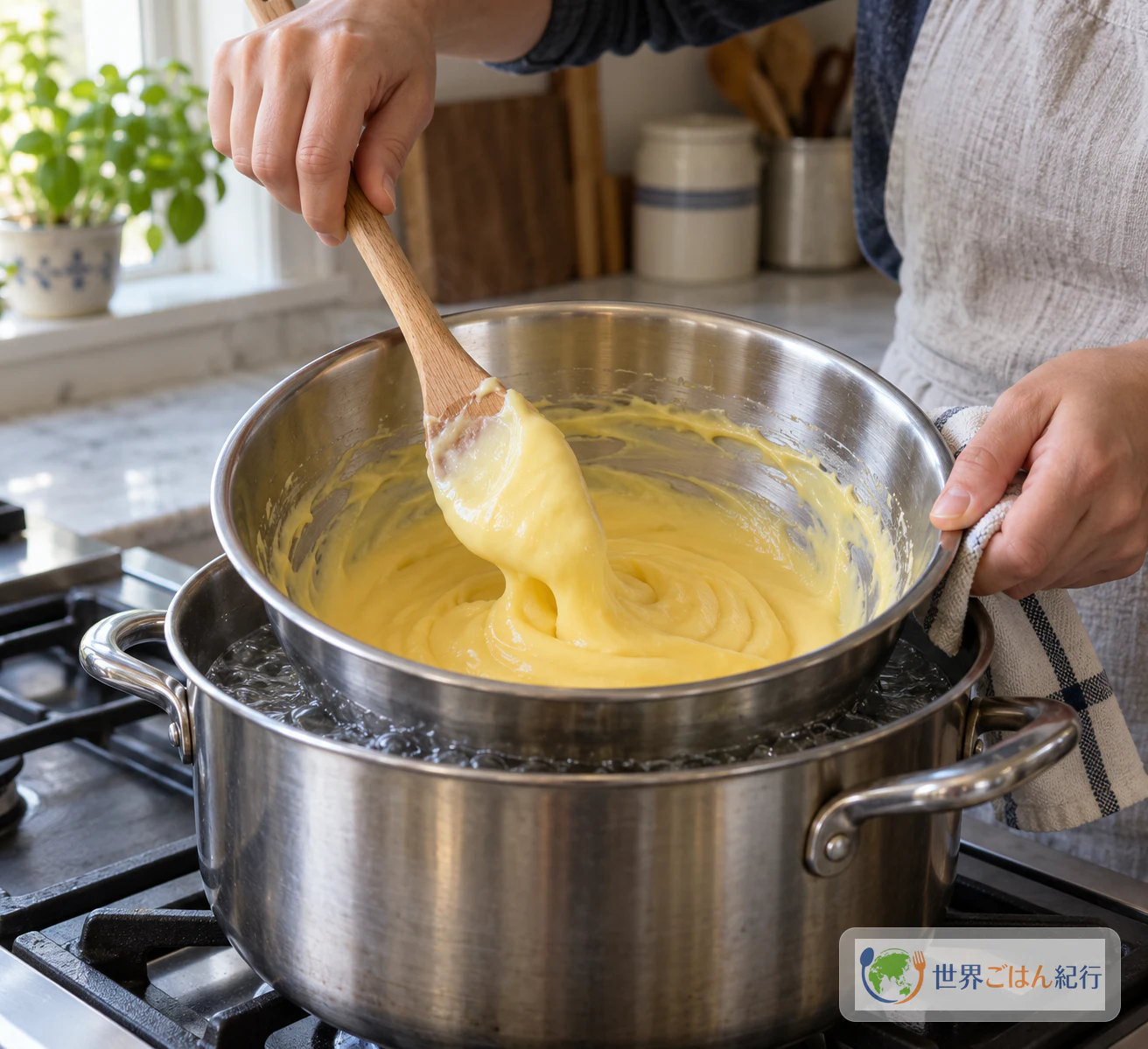
Two points matter most in this recipe. The first is the custard. It is stirred over a simmering water bath until thick, then cooled completely before it is divided into 12 balls. The second is the dough. Its milk goes in one tablespoon at a time, because the amount you need changes with humidity. The rest of the method is careful portioning, wrapping and a steaming routine that is timed from when you switch on the heat.
This article follows Judy's 12-bun recipe as she published it and does not combine it with other authors' formulas. This recipe has not been kitchen-tested by Sekai Gohan. The amounts, times and cues below come from her written method.
Ingredients: Filling and Dough for 12 Buns, Measured Separately
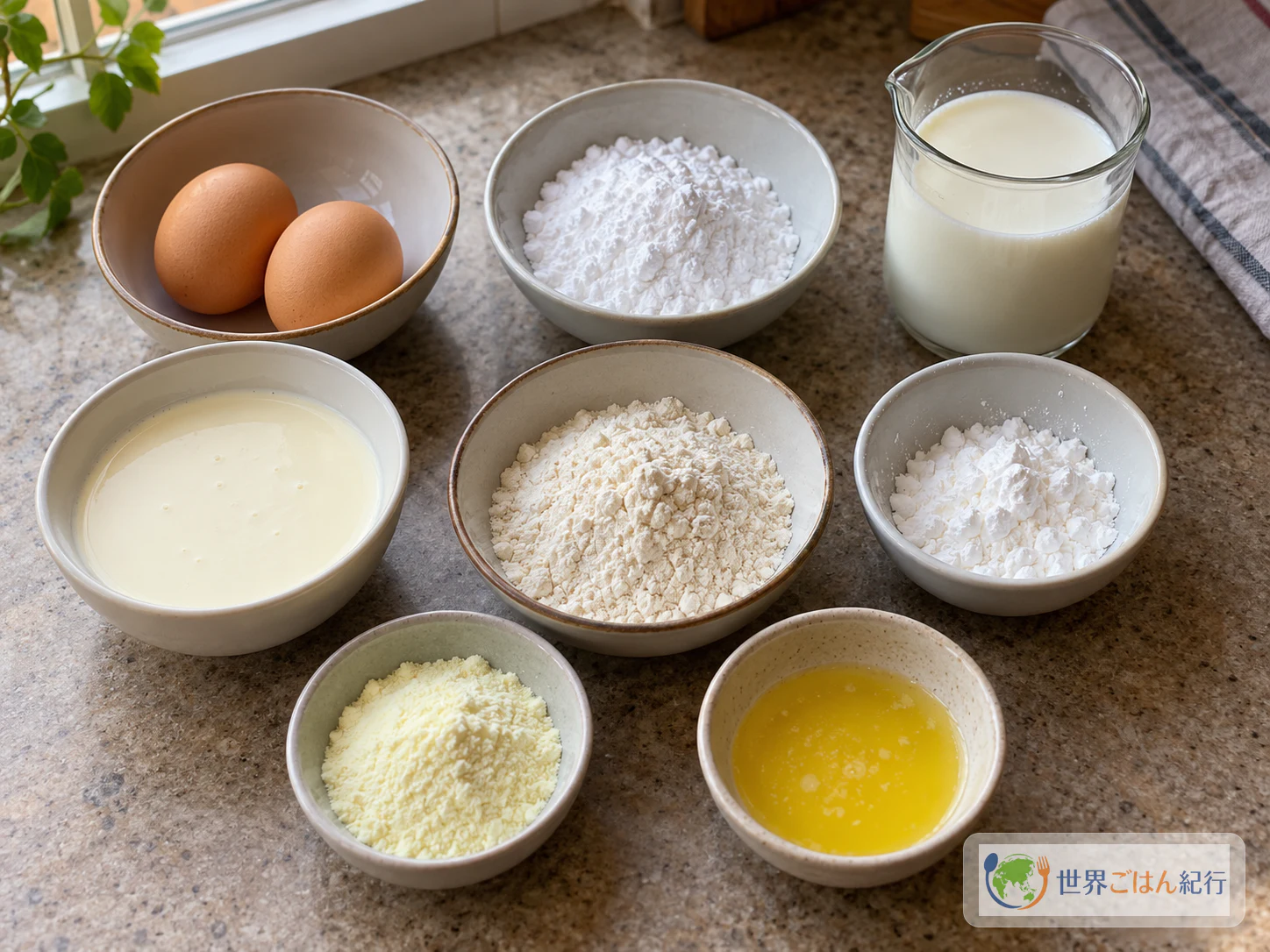
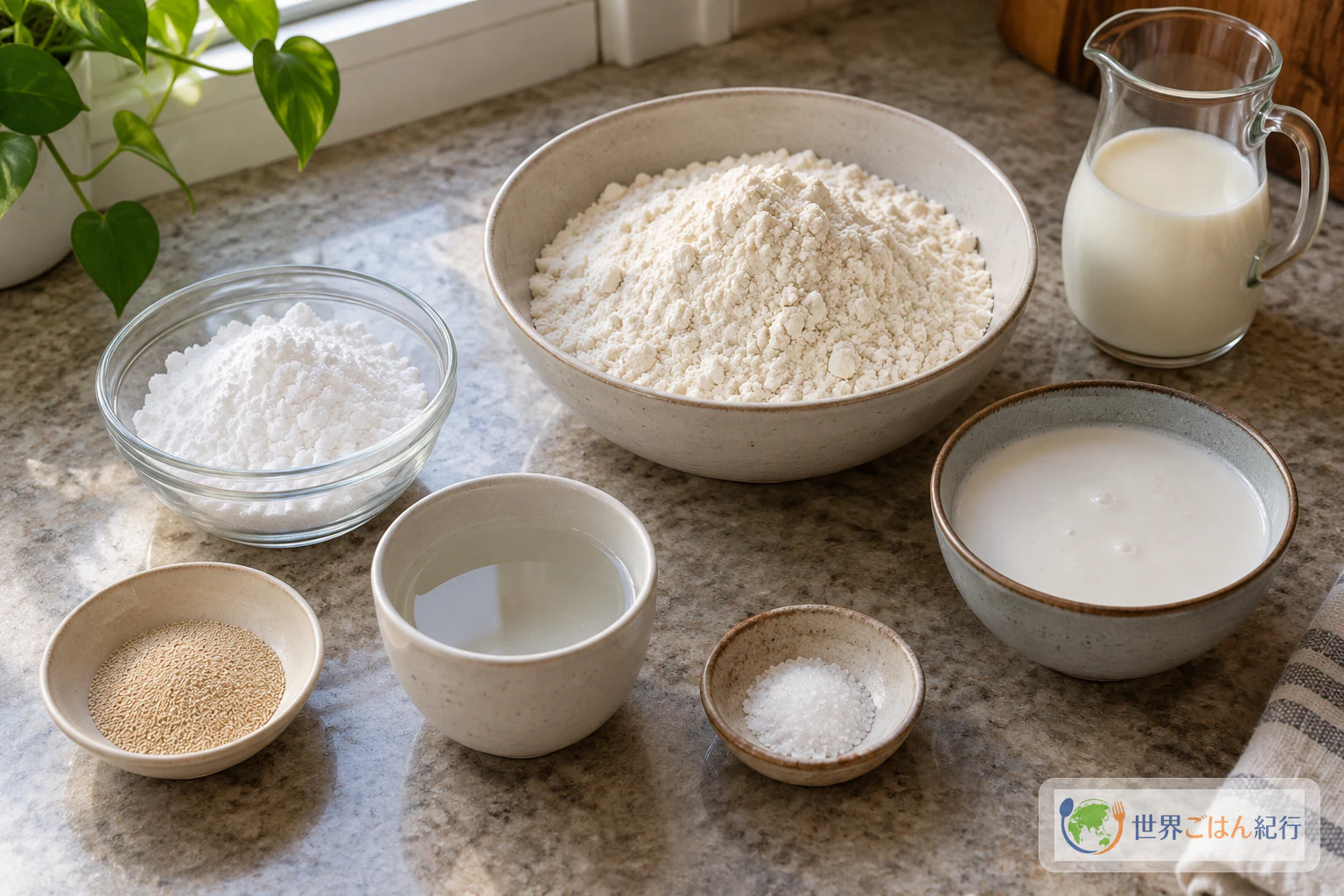
Powdered sugar, milk and all-purpose flour each appear in both the filling and the dough, in different amounts. Weigh them out as two separate sets so that the filling's portions don't end up in the dough, or the reverse.
You will also need water for the water bath and for the steamer, plus a little flour to dust the work surface, as needed.
Equipment
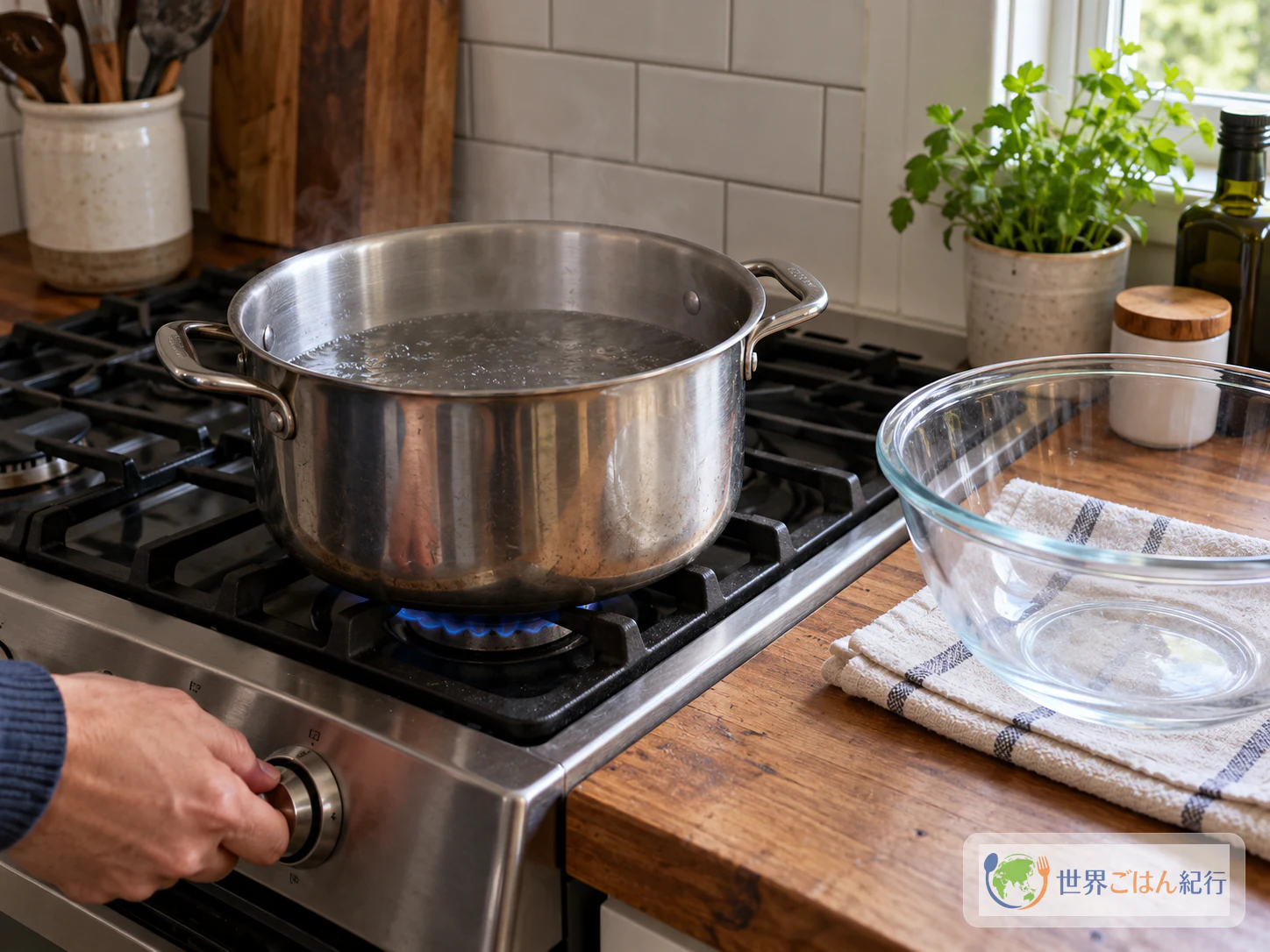
- A medium-to-large deep pot for the water bath
- A heatproof mixing bowl that fits in the pot (such as a stainless steel bowl)
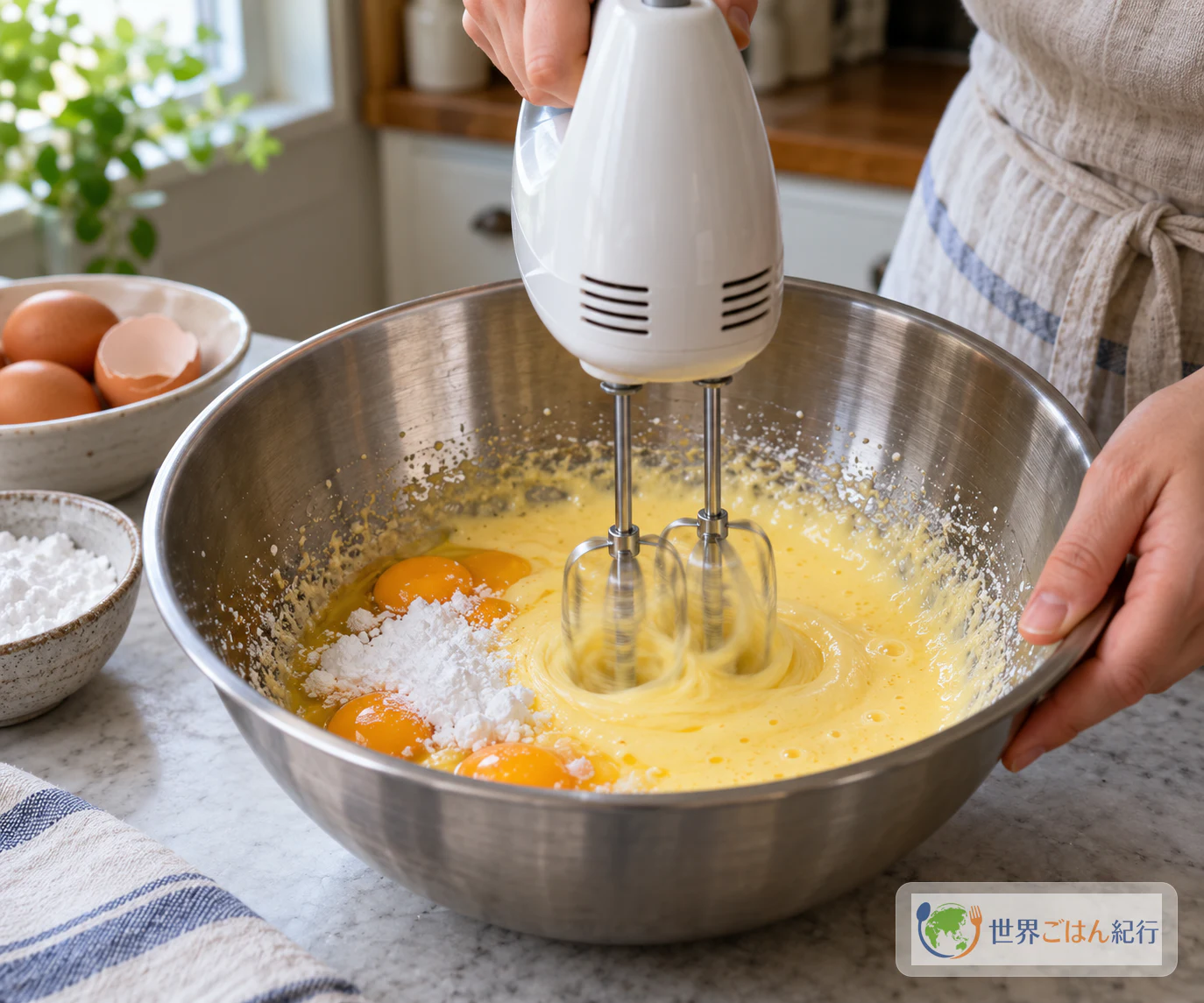
- A hand mixer or stand mixer for the custard (or mix it by hand)
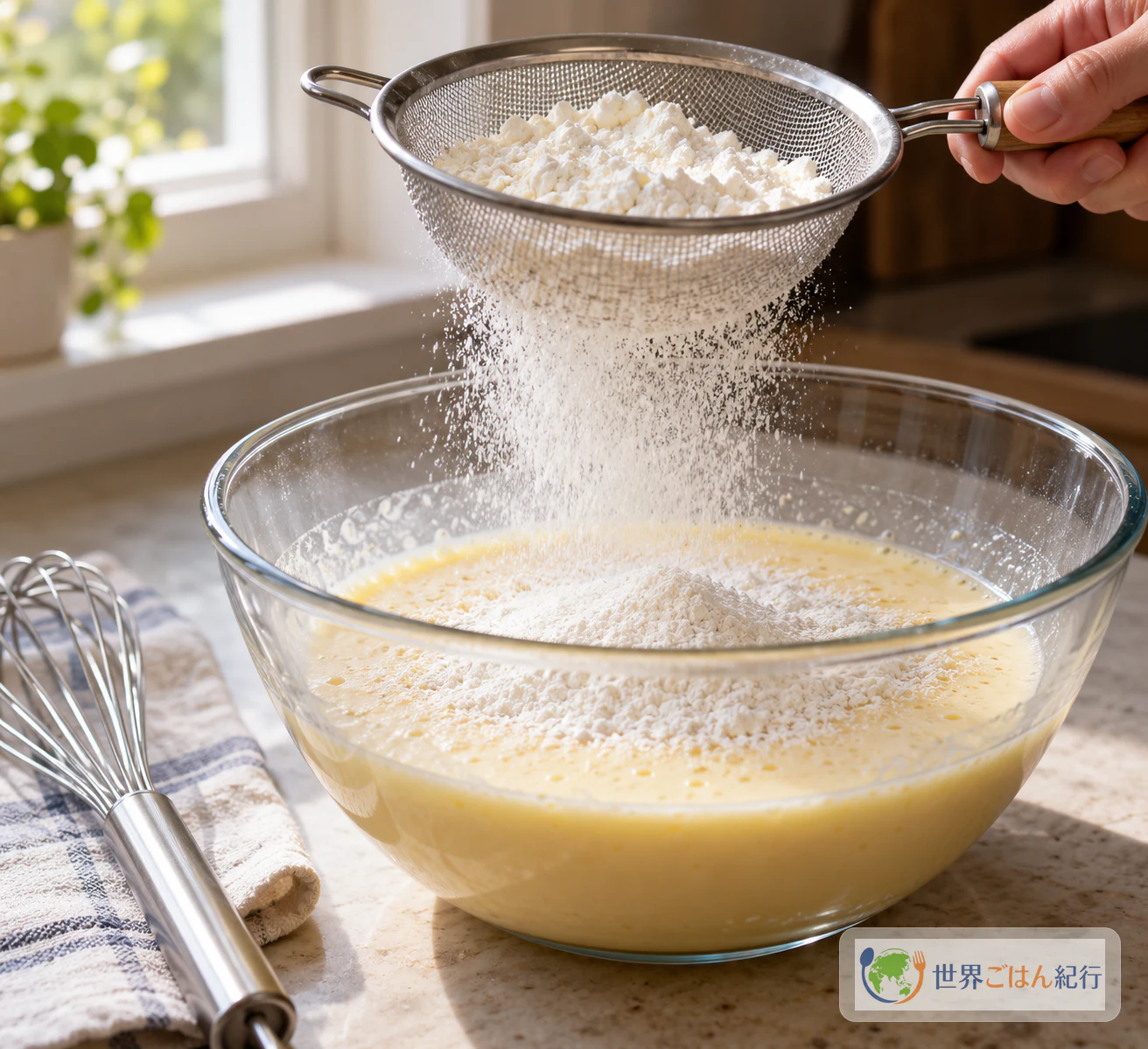
- A sieve for sifting the custard's dry ingredients
- A stand mixer with a dough hook
- A dry kitchen towel
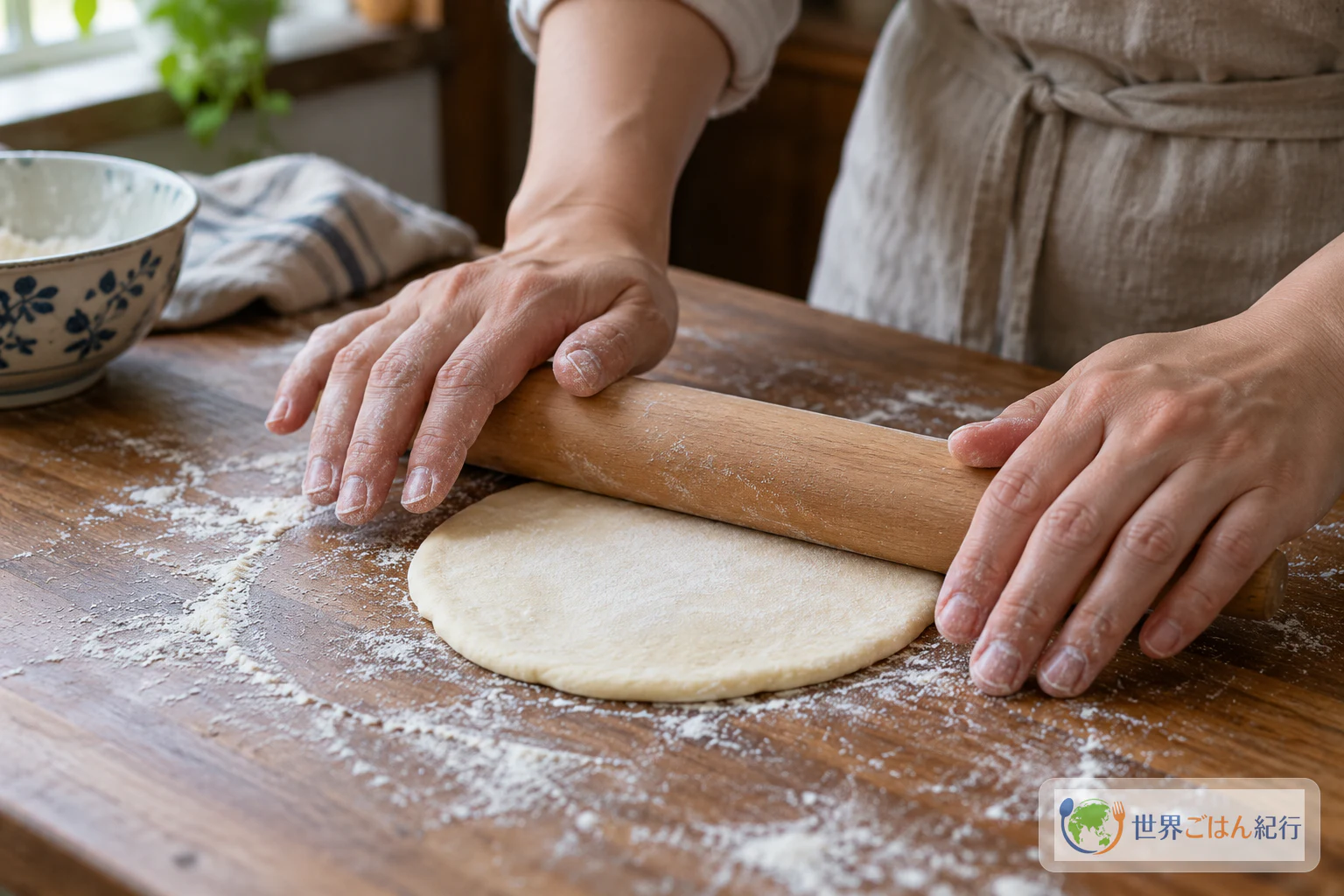
- A rolling pin
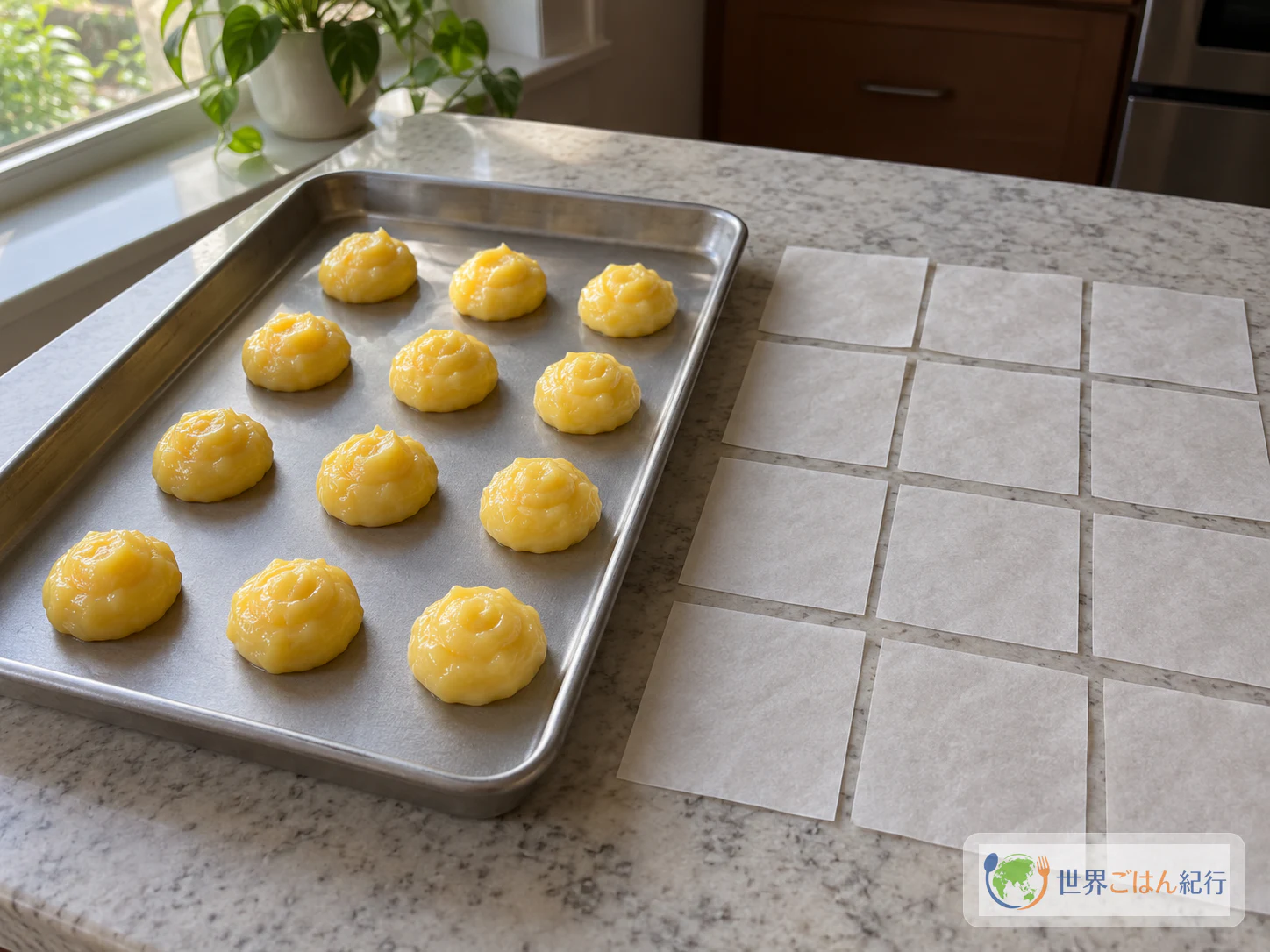
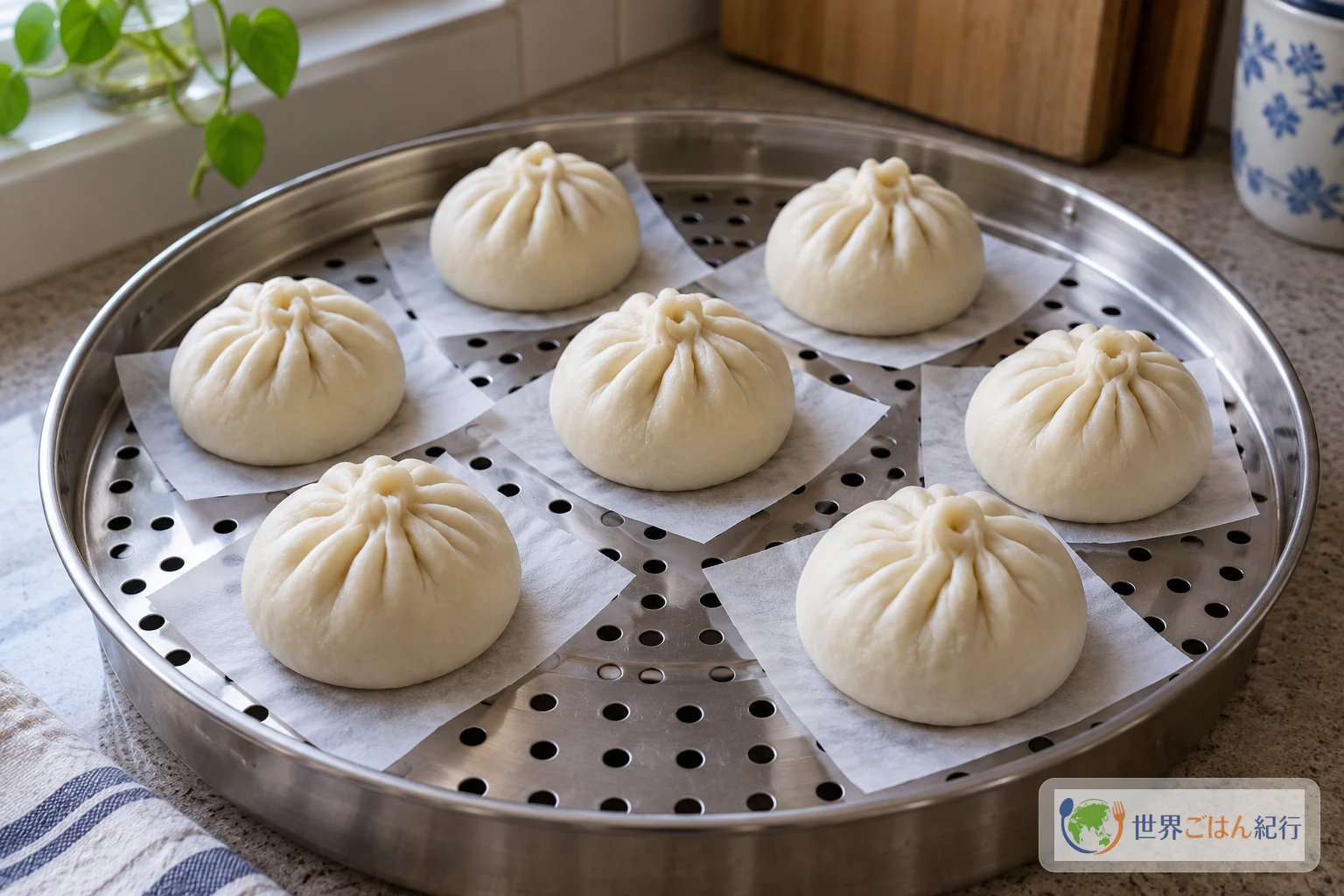
- 12 squares of parchment paper, each 4 × 4 inches
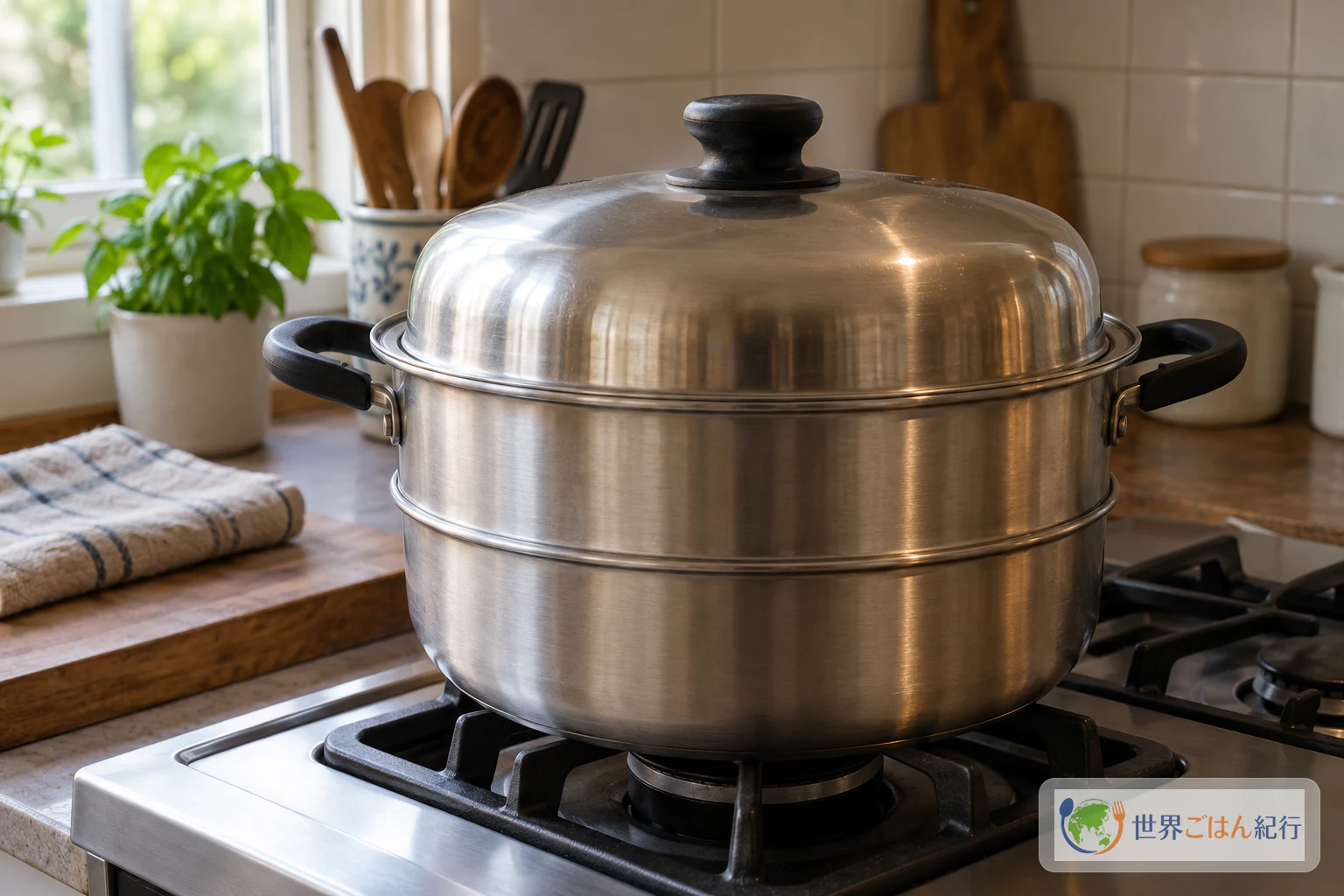
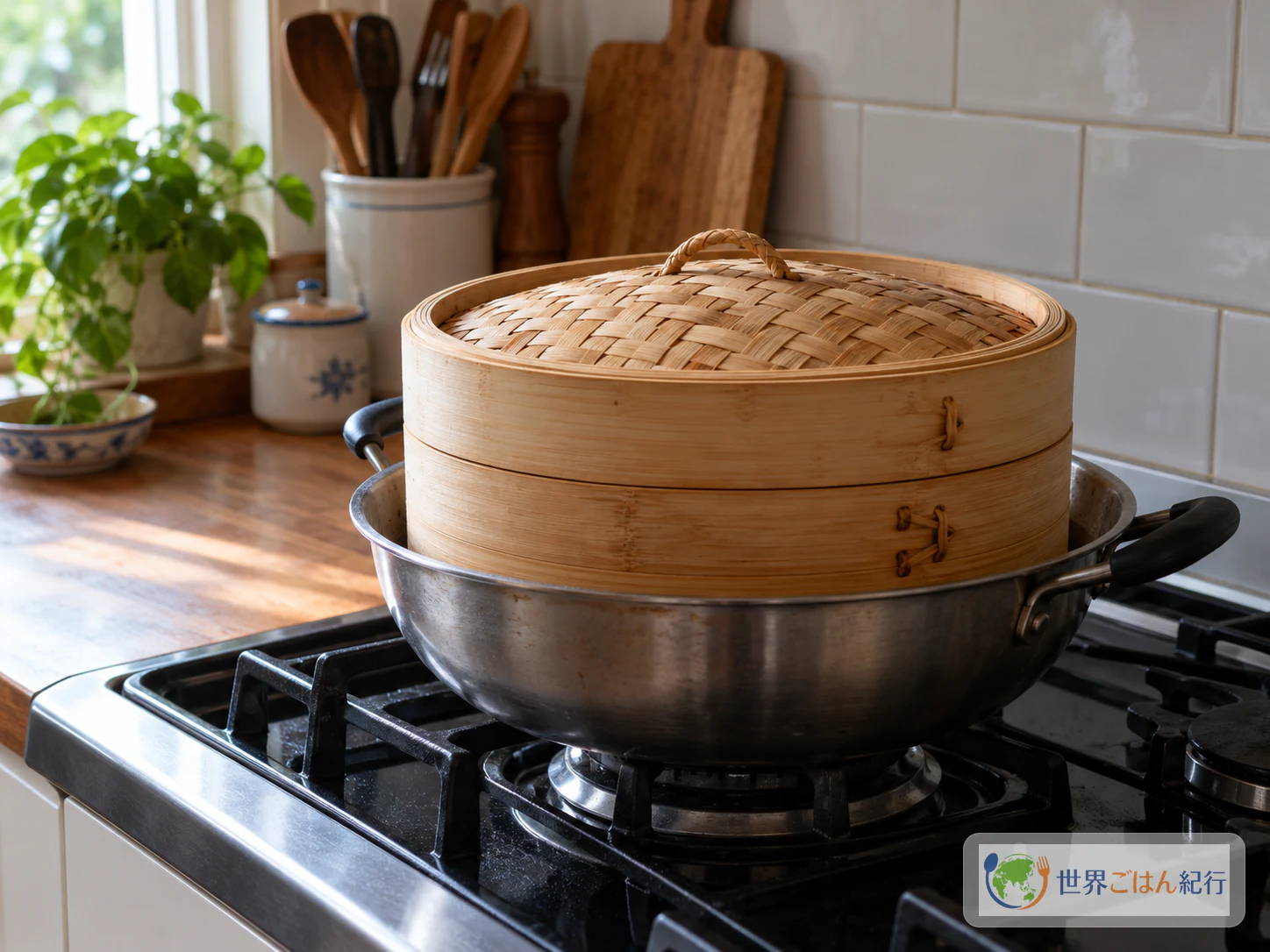
- A steamer with a lid and a rack
Choosing Flour, Starch and Dairy
Flour. Use bleached all-purpose flour for a soft, white dough; unbleached all-purpose flour can also be used. Other flours, or flours sold under other names in other countries, may not give the same result.
Starch. The filling takes cornstarch or wheat starch. This version uses 30 g of cornstarch. Use one starch only. Don't add both.
Dairy and butter. Use ordinary milk, cream, dry milk powder, butter and coconut milk, and keep the amounts as listed.
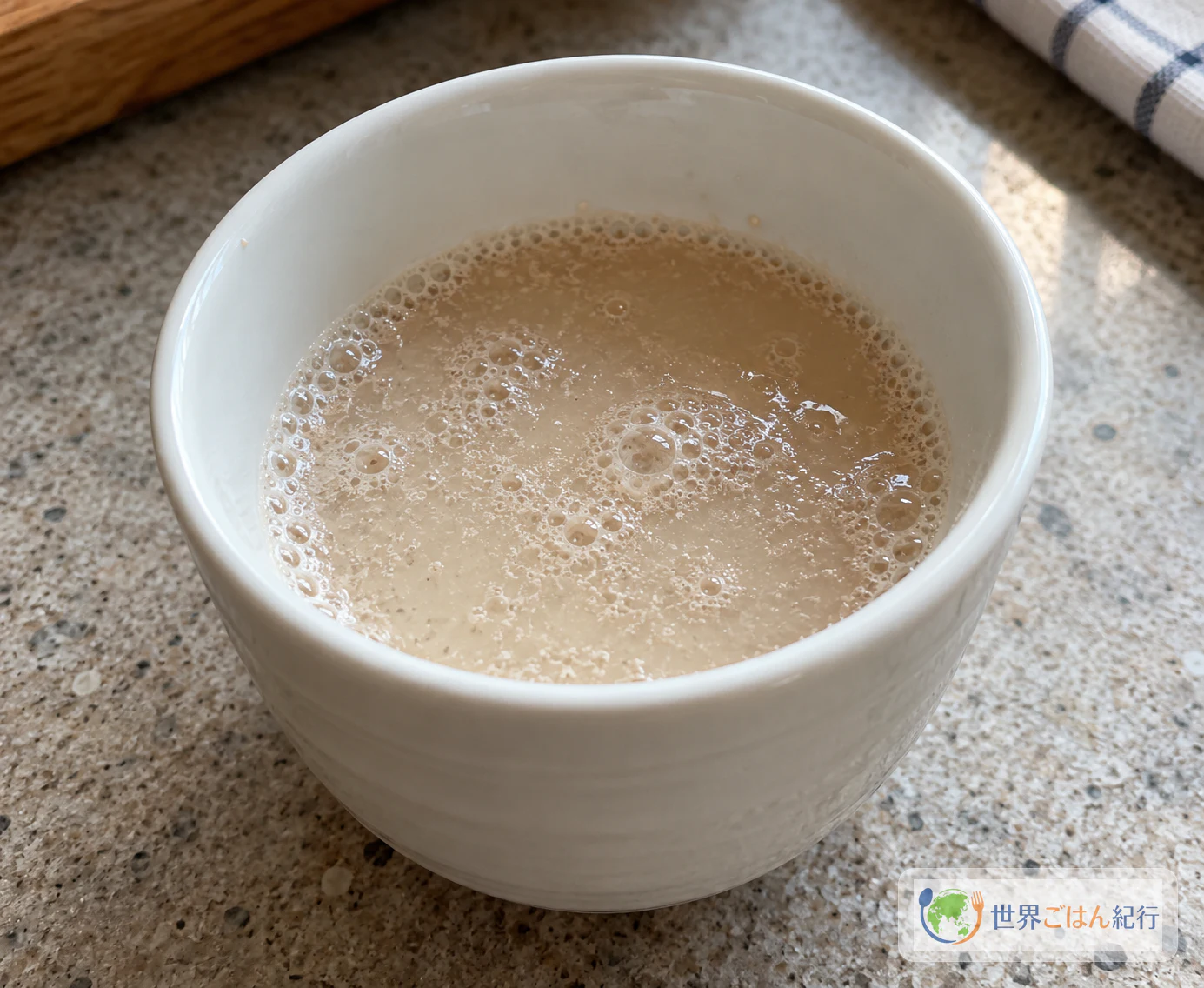
Yeast and water. Dissolve the yeast in 1/4 cup of warm water. The cue to watch for is bubbles on the surface after the yeast has rested.
Method: Make the Custard First, Cool It, Then Wrap
The custard is cooked and cooled first (steps 1–7). The dough is made next and proofs for an hour (steps 8–10). During that hour you portion the cooled custard (step 11). The buns are then shaped, given a second proof in the steamer and steamed (steps 12–20).
A Thick Custard, Not a Runny Center
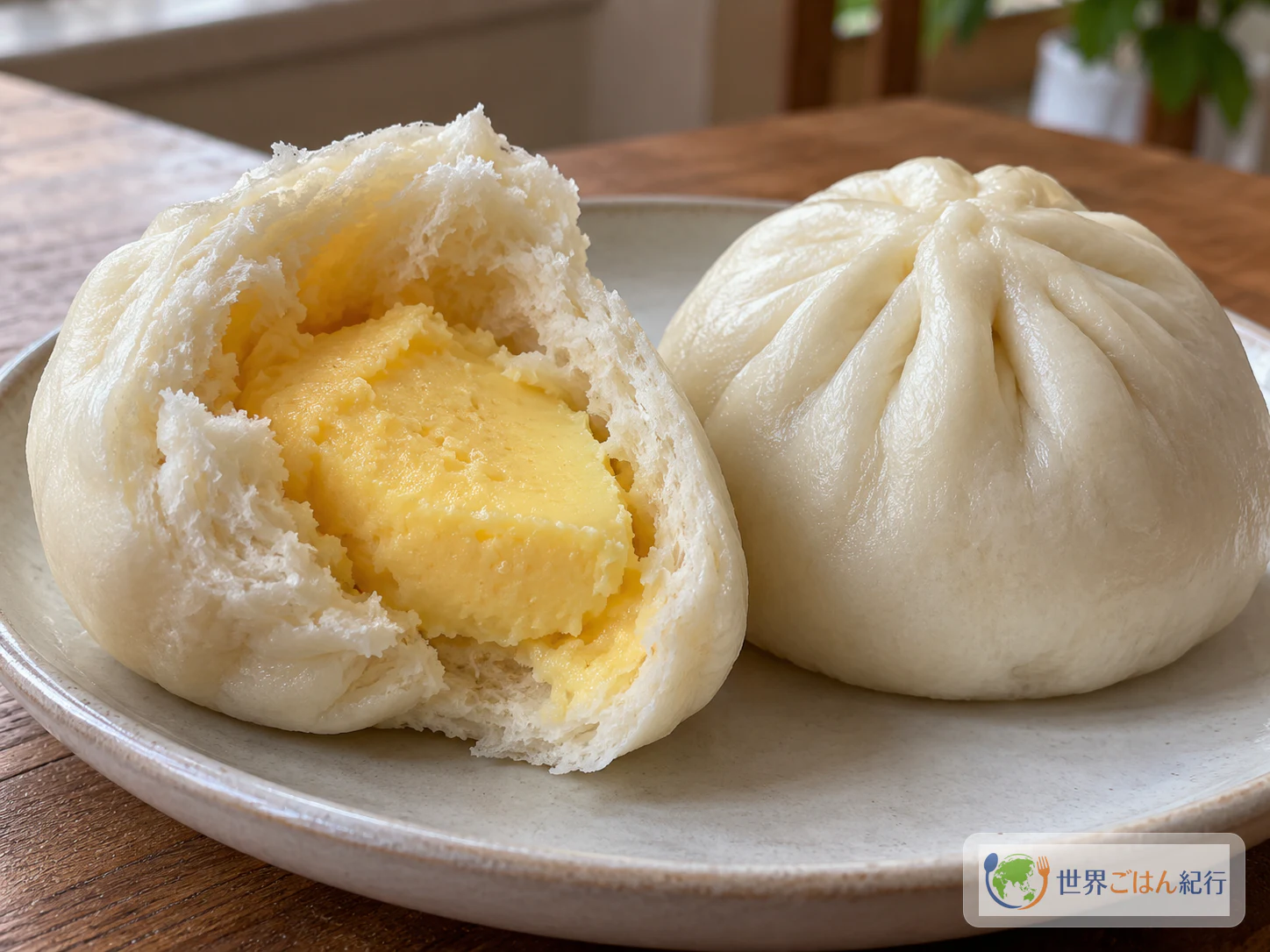
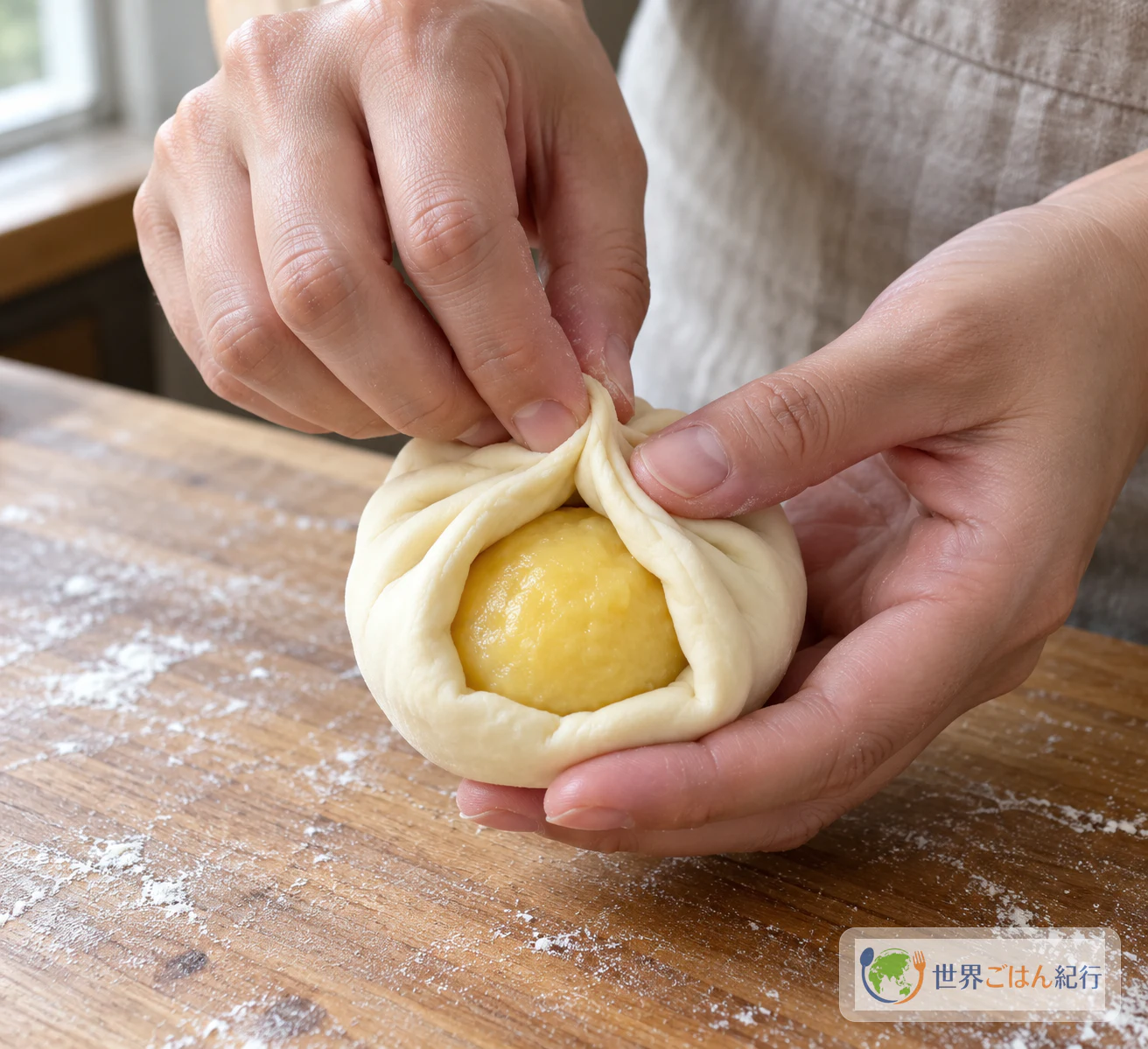
In this version the custard is cooked until thick over the water bath, cooled completely and rolled into 12 balls before it ever meets the dough. That order is what lets you center a neat ball of filling on each disk and pleat the dough around it. Don't mistake these for buns with a flowing liu sha center or a salted egg yolk filling. Those are different styles.
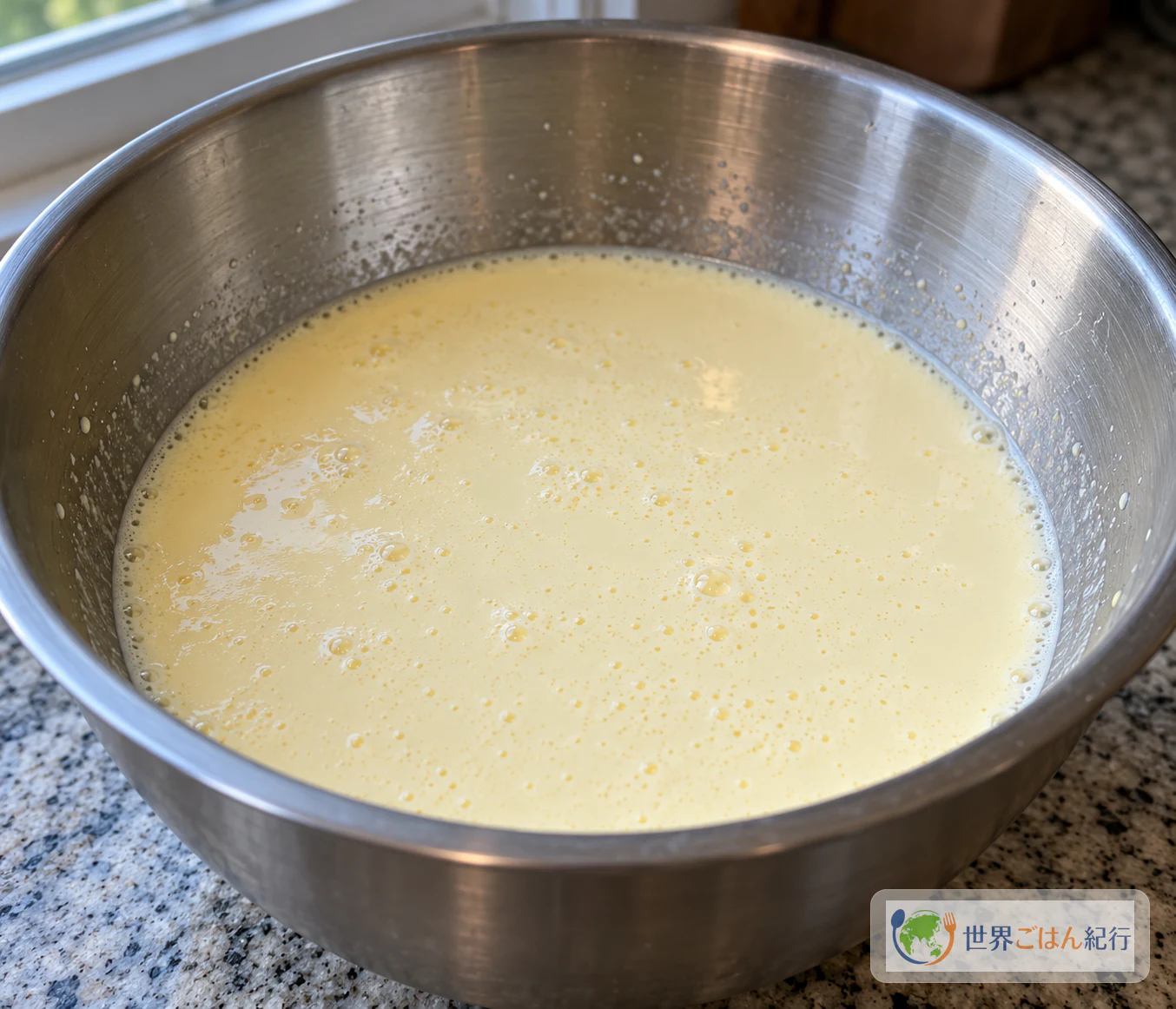
The one-minute thickening time is Judy's figure for her stainless steel bowl, and she points out that thicker bowls can take longer. Watch for a thick custard and keep stirring until you get there.
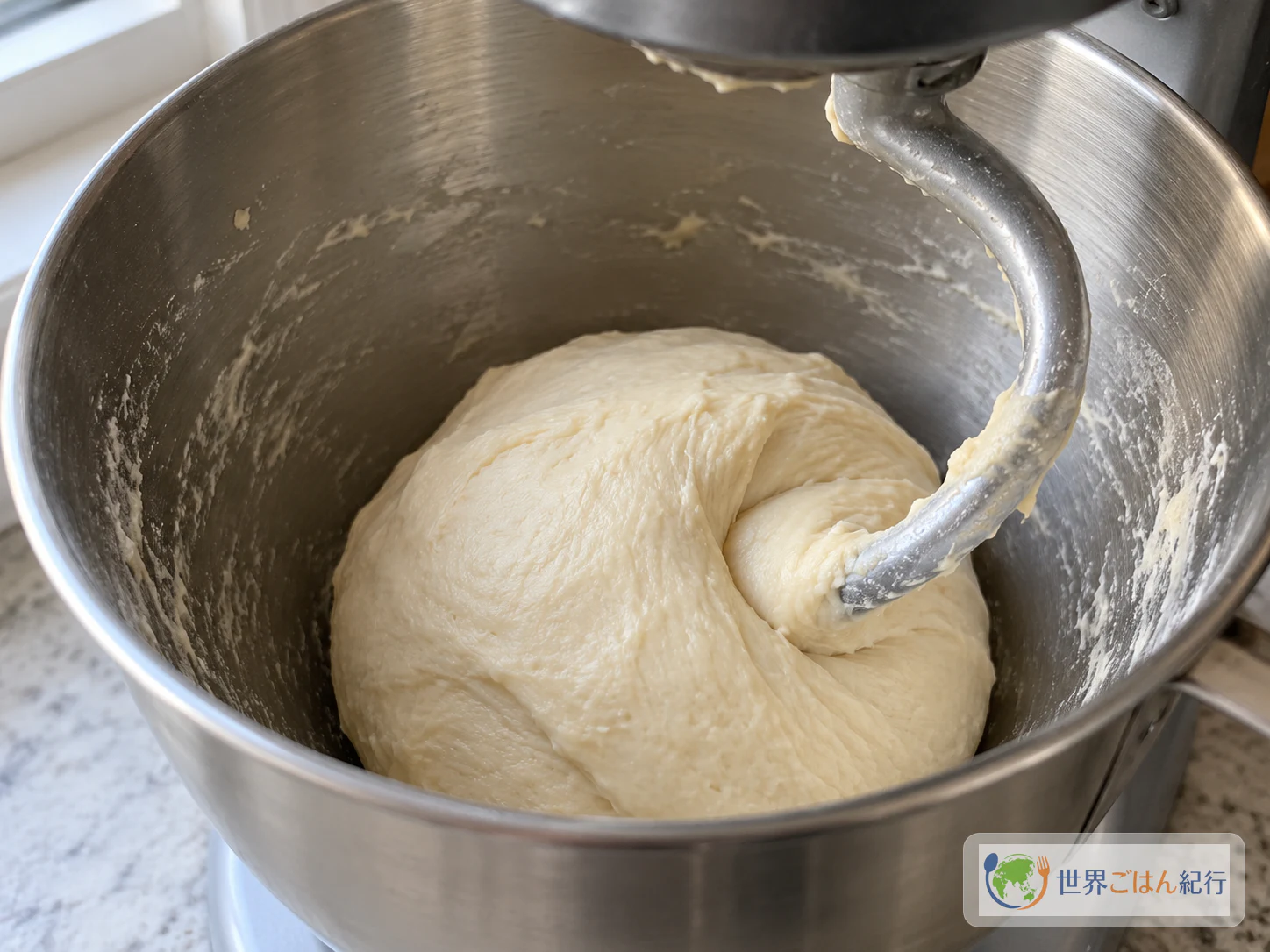
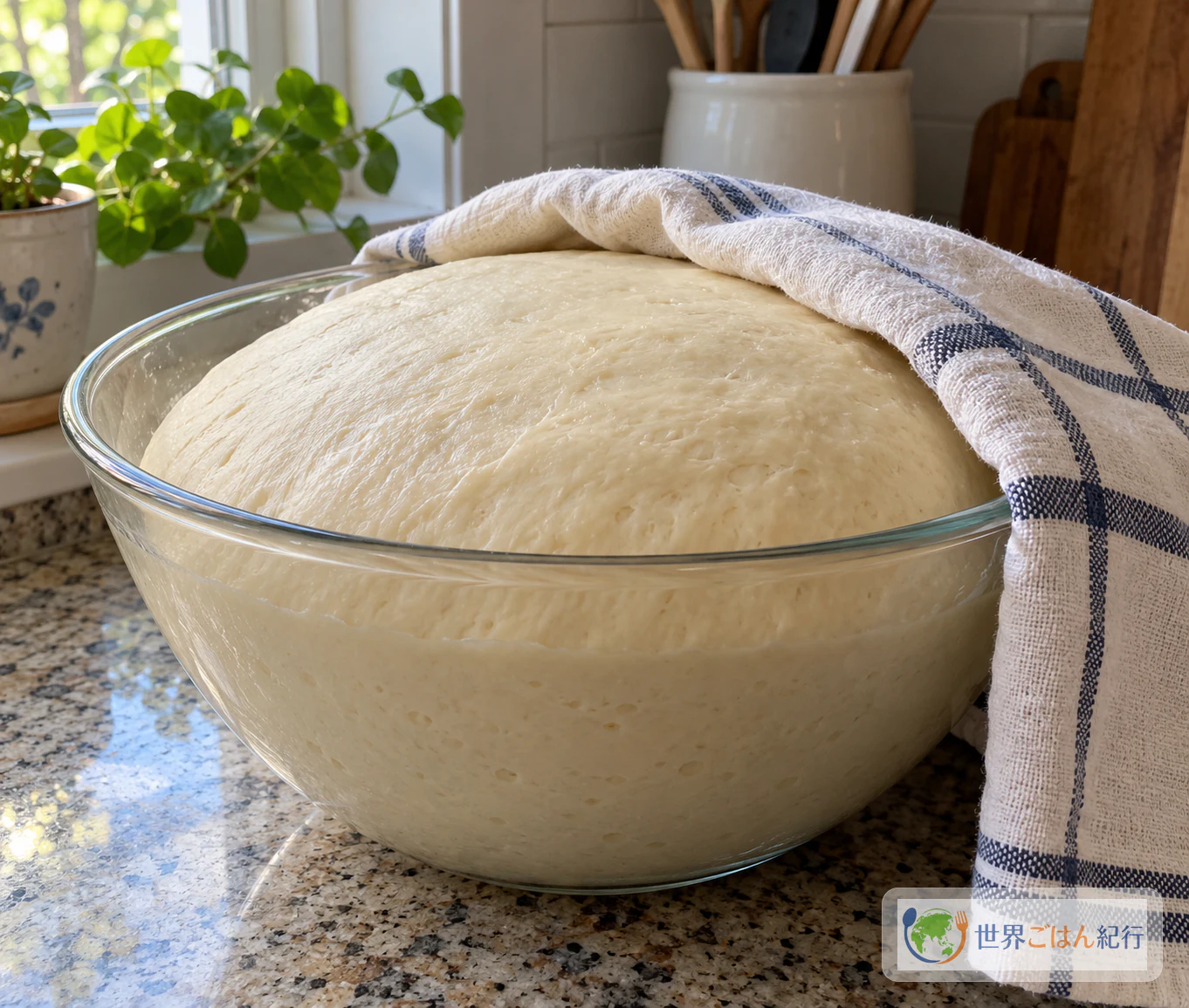
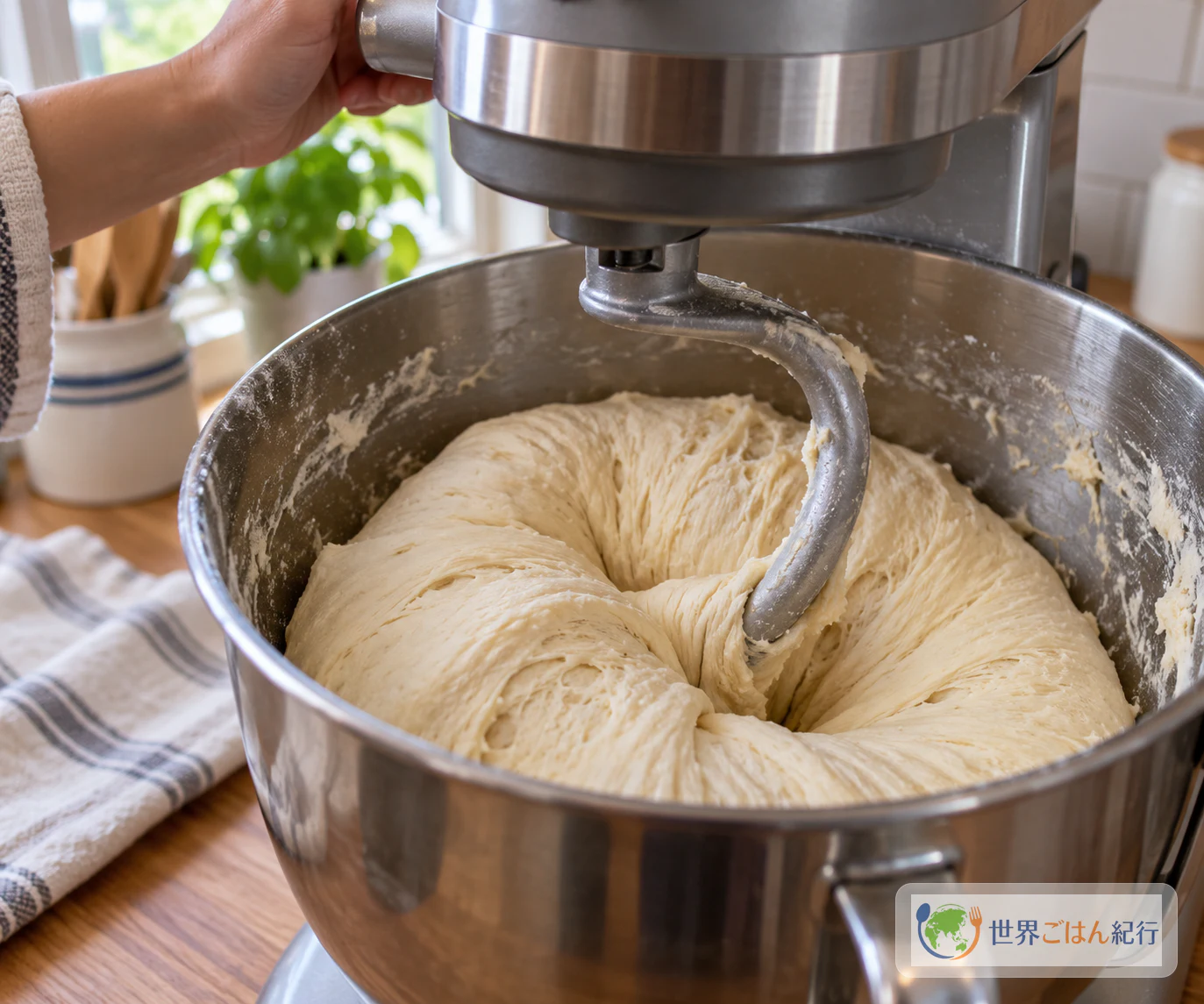
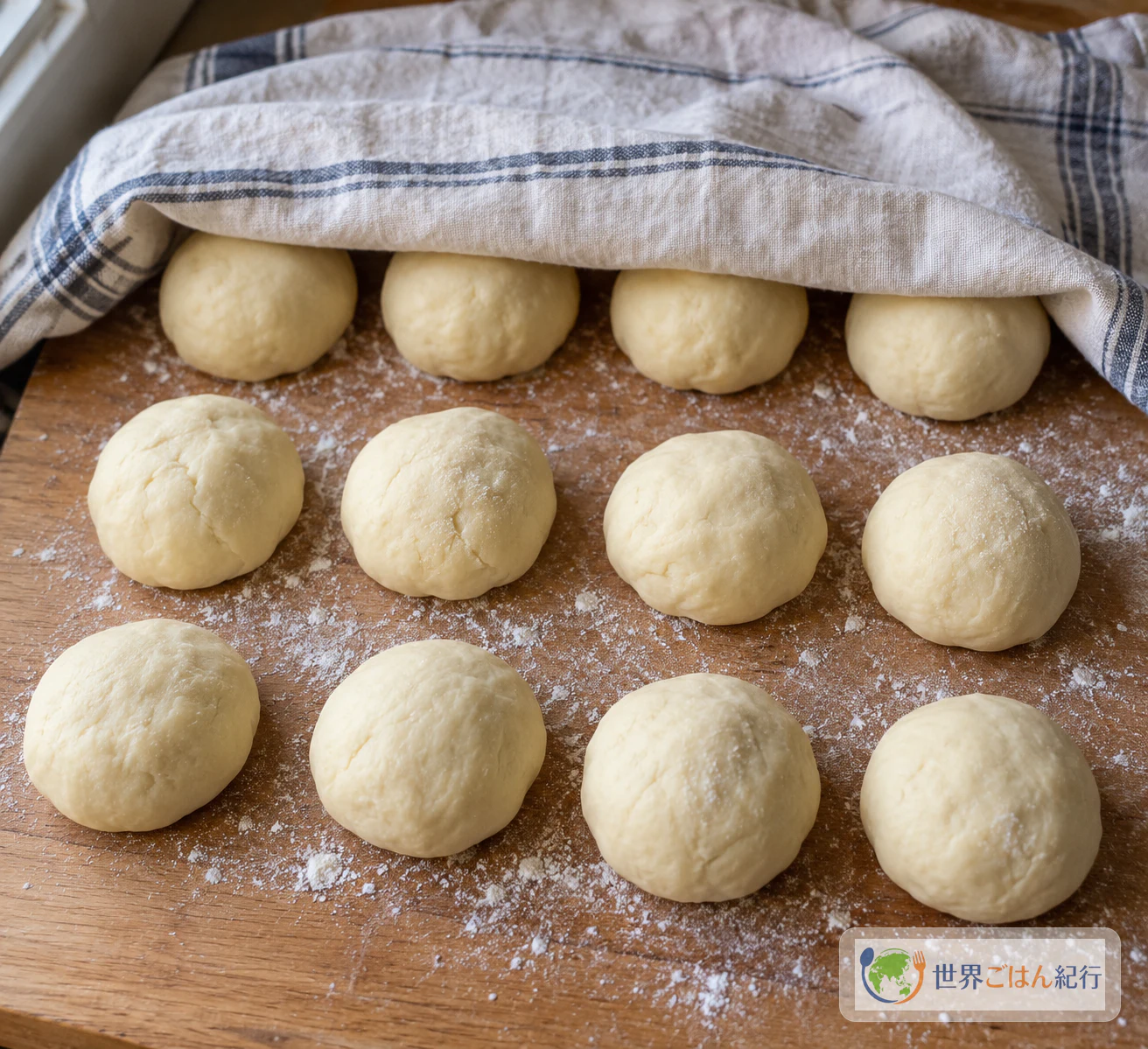
The dough has two size cues from the source. Before proofing, it should be smooth and not stick to your hands or the bowl. After 1 hour under the towel, it should be about 2.5 to 3 times its original size. Both the custard and the dough are divided into 12. The recipe gives no weight for each portion and no pleat count.
Steaming Time: The Recipe Card Versus the Written Method
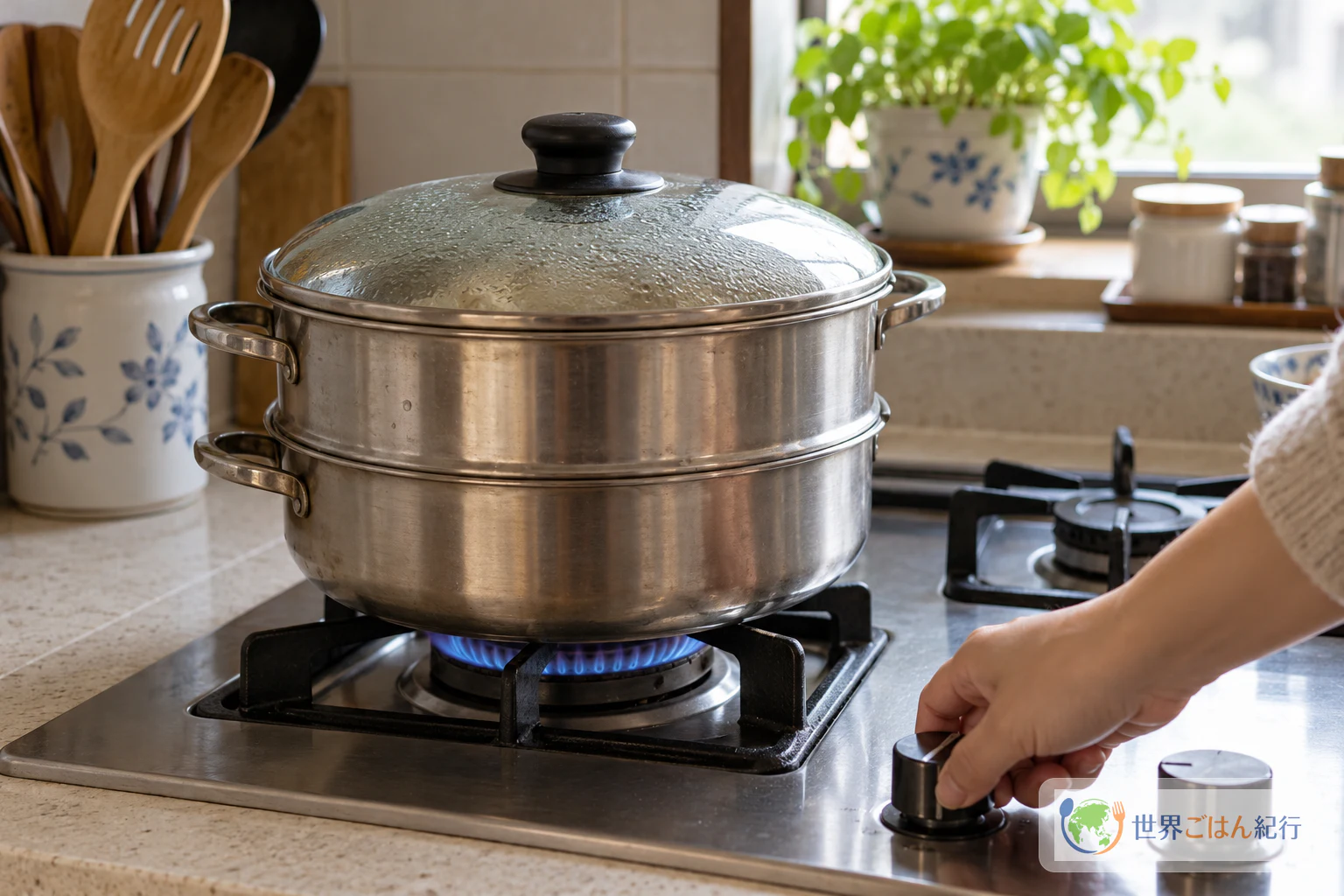
Follow the written method: 12 minutes on medium heat counted from switch-on, then 5 minutes covered with the heat off.
Judy's recipe card prints prep 3 hours, cook 15 minutes and total 3 hours 15 minutes. Those are the card's own figures.
The written method is different. It says to steam on medium heat for 12 minutes, timed from the moment the heat goes on and including the warm-up. Then you turn off the heat and leave the lid closed for 5 minutes. The card's cook time and the written steps don't match, so this article reports the card values as printed and uses the written steps for the method.
The page also differs on the steamer water. An earlier preparation paragraph mentions cold water. The final assembly instructions call for warm water, with the heat off and the lid on for the 30-minute second proof. The steps above follow the final assembly instructions. The source gives no water temperature or amount for the steamer.
What to Check When Something Seems Off
| What you notice | What to check | What to do, within the recipe |
|---|---|---|
| The custard is still loose after about a minute | Your bowl may be thicker than Judy's stainless steel bowl | Keep stirring quickly and continuously over the simmering water until it is thick |
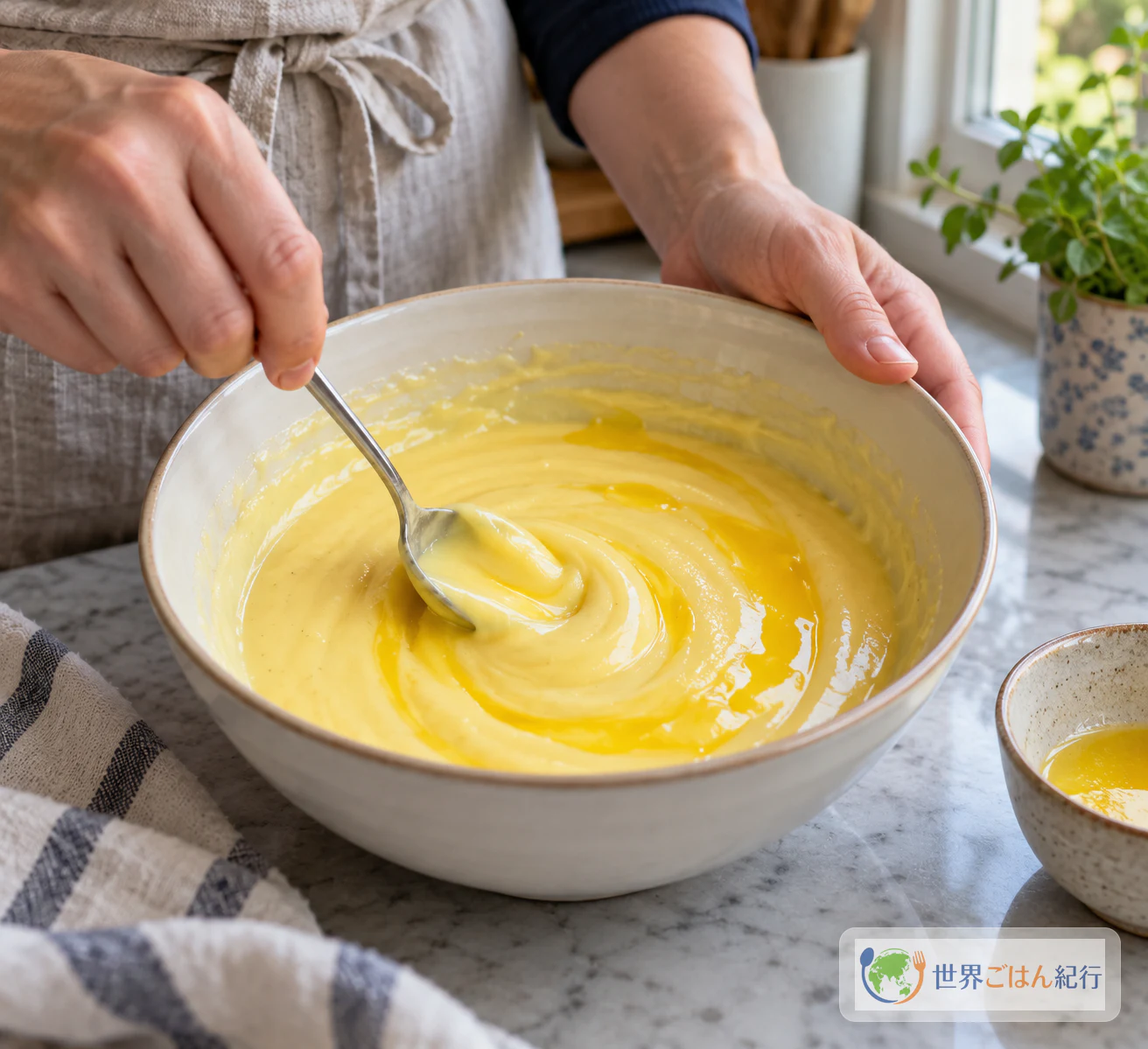
| The custard is lumpy before cooking | Whether the powders were sifted and mixed in fully | In step 4, mix until no lumps remain before adding the butter |
| No bubbles on the yeast mixture | Whether 10–15 minutes have passed | Look for surface bubbles before moving on to the dough |
| The dough is sticky | How much milk has gone in | Add milk only 1 tablespoon at a time and stop at smooth and non-sticky. You may not need the full 45 ml |
| The dough feels dry and won't come together | Whether you stopped adding milk too early | Continue adding milk 1 tablespoon at a time; about 45 ml is the reference amount |
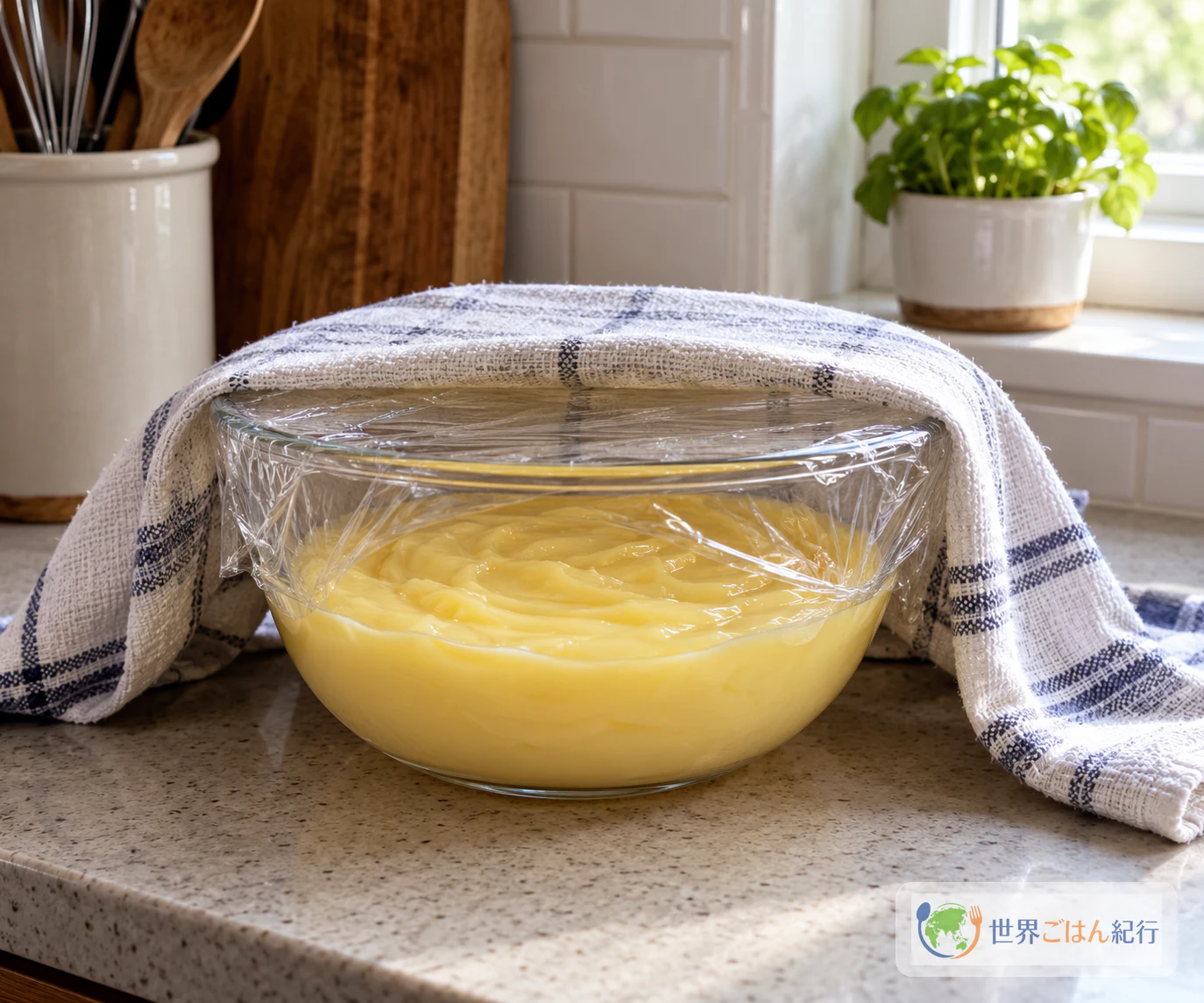
| The custard is hard to shape into balls | Whether it has cooled completely | Portion it only once it is fully cool. Keep it covered so the surface doesn't dry |
| Unsure when to start the 12 minutes | The source's timing rule | Start timing when you turn the heat on, not when the water boils |
Variations the Author Mentions
Judy's page names a few alternatives. These are her options. This article's main recipe stays with bleached all-purpose flour, cornstarch and parchment.
- Starch: Cornstarch or wheat starch in the filling. Choose one. Don't use both.
- Flour: Unbleached all-purpose flour can be used instead of bleached.
- Whole wheat: Up to one third of the flour can be replaced with whole wheat. She says an all-whole-wheat dough would be too dense.
- Mixing the custard: A hand mixer or stand mixer helps, but the custard can be mixed by hand. This applies to the custard only. The dough method uses the dough hook.
- Liners: Flattened cupcake liners can stand in for the 4 × 4-inch parchment squares. Prepare 12 of one kind.
- Proofing spot: She also mentions an optional proofing setup inside a microwave with a mug of just-boiled water. It isn't part of the method above.
Other published custard bun recipes take different routes. Some use egg yolks and vanilla in the custard and shortening in the dough, and some change the yield or the way the buns are set on the rack. Those are separate recipes, and none of their ingredients, amounts or steps are mixed into this one.
Nai Wong Bao at the Dim Sum Table
Judy titles her recipe "Cantonese Steamed Custard Buns (Nai Wong Bao)" and writes the name as 奶黄包 in simplified characters. This article uses the traditional form 奶黃包. She presents the buns as a Cantonese classic and a favorite from the dim sum cart. Omnivore's Cookbook also presents steamed custard buns as a dim sum dish.
The sources used here don't cover the dish's origin, date, inventor or how it is eaten at home or at festivals, so this article doesn't make claims about its history. What the recipe itself shows is a contrast between two parts. One is a lightly sweet white dough made with a little sugar and coconut milk. The other is a custard of eggs, milk, cream and powders that is thickened over a water bath before it is wrapped. For more dishes from the same country, see China.
Frequently Asked Questions
Does the custard flow out when you break the bun open?
Not in this version. The custard is cooked until thick, cooled completely and rolled into 12 balls before wrapping. Buns with a flowing center are a different style.
Do I need all 45 ml of milk in the dough?
Not necessarily. The card prints 45 ml, but Judy notes that the amount depends on humidity. Add it 1 tablespoon at a time and stop when the dough is smooth and doesn't stick to your hands or the bowl.
Should I use cornstarch and wheat starch together?
No. The source gives them as alternatives. This version uses 30 g of cornstarch only.
Does the steamer start with cold water or warm water?
The page mentions cold water in an earlier preparation paragraph. The final assembly instructions call for warm water, with the heat off and the lid on, for a 30-minute second proof. This article follows the final instructions. No water temperature is given.
Is the steaming time 15 minutes or 12 minutes?
The recipe card prints a cook time of 15 minutes. The written method says 12 minutes on medium heat, timed from when the heat goes on, followed by 5 minutes covered with the heat off. The steps here follow the written method.
Sources
- Judy, "Cantonese Steamed Custard Buns (Nai Wong Bao)," The Woks of Life. Primary recipe: the dish name and the author's description of it as a Cantonese classic and dim-sum-cart favorite; the 12-bun yield; all filling and dough amounts; the starch, flour and liner options; the water-bath custard method and cooling; the dough, proofing, portioning, shaping and steaming method; and the printed recipe-card times. https://thewoksoflife.com/nai-wong-bao-custard-buns/
- Maggie Zhu, "Chinese Steamed Custard Buns (nai wong bao, 奶黄包)," Omnivore's Cookbook. Comparison only: a separate recipe that presents the buns as a dim sum dish and uses shortening in the dough and egg yolks and vanilla in the custard. None of its amounts or steps are used here. https://omnivorescookbook.com/steamed-custard-buns/
- Jessica Gavin, "Chinese Steamed Custard Buns." Comparison only: an independent recipe with an egg-yolk and vanilla custard, a shortening dough and a different way of setting the buns. None of its ingredients, amounts, yield or steps are used here. https://www.jessicagavin.com/chinese-steamed-custard-bun-recipe/