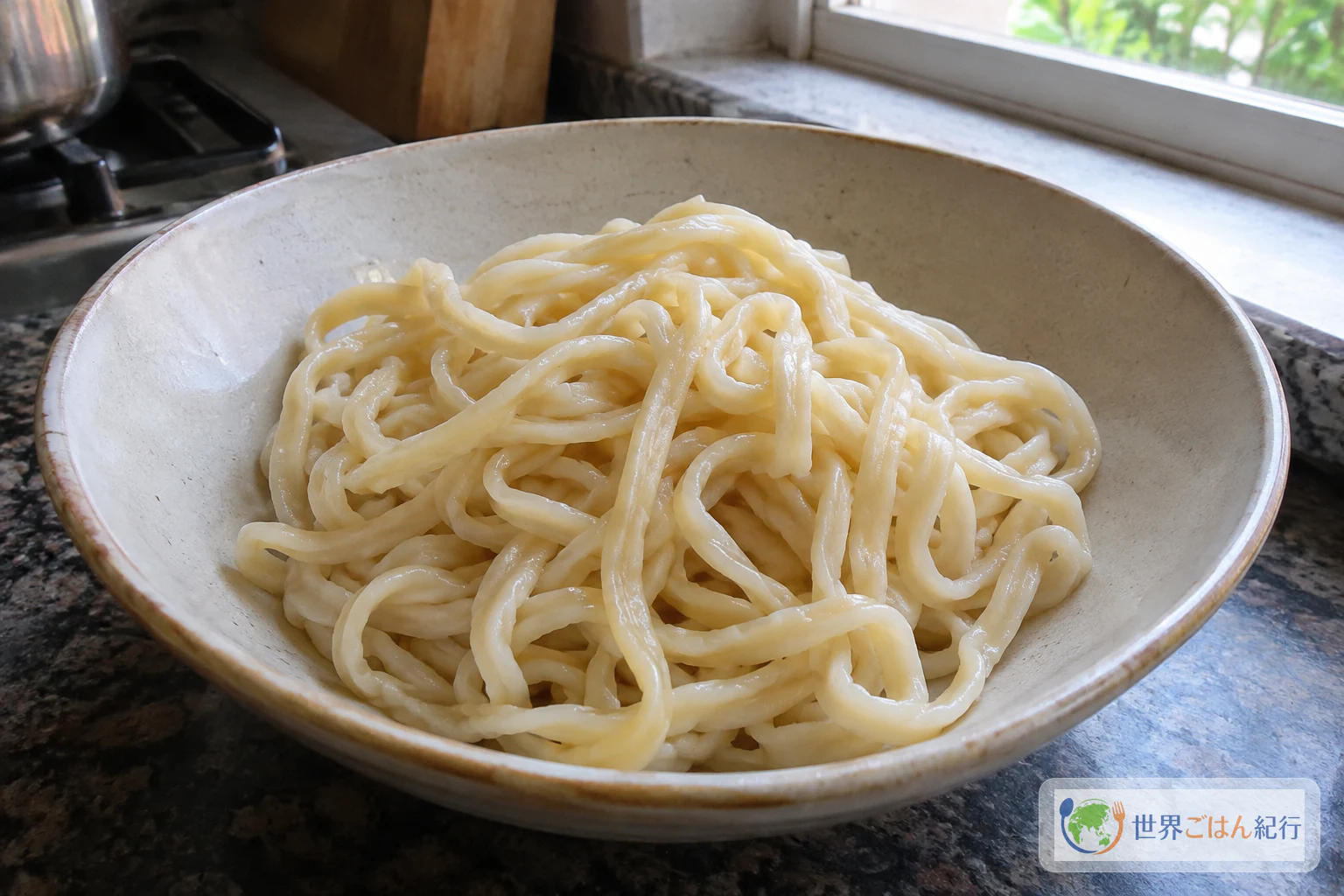
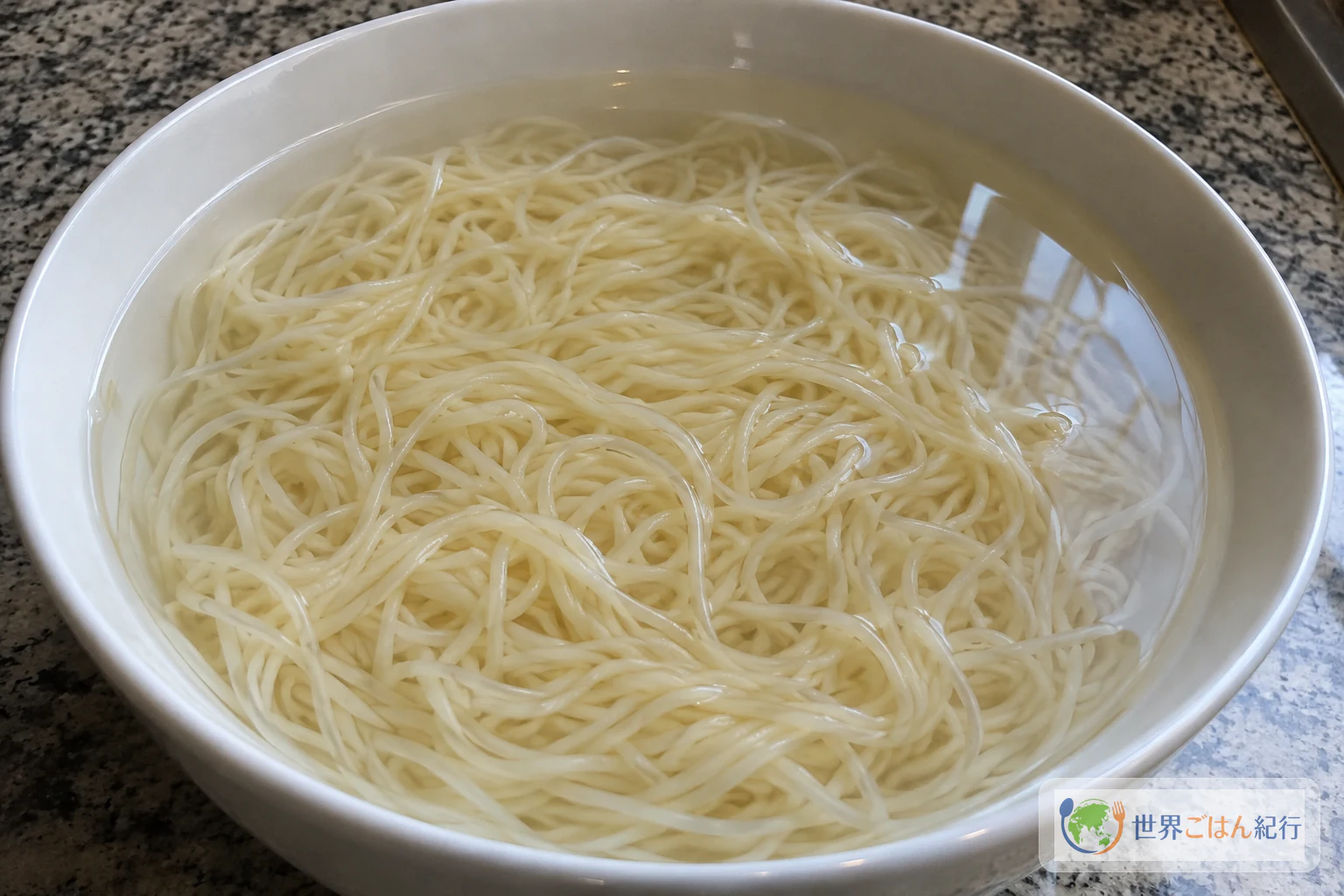
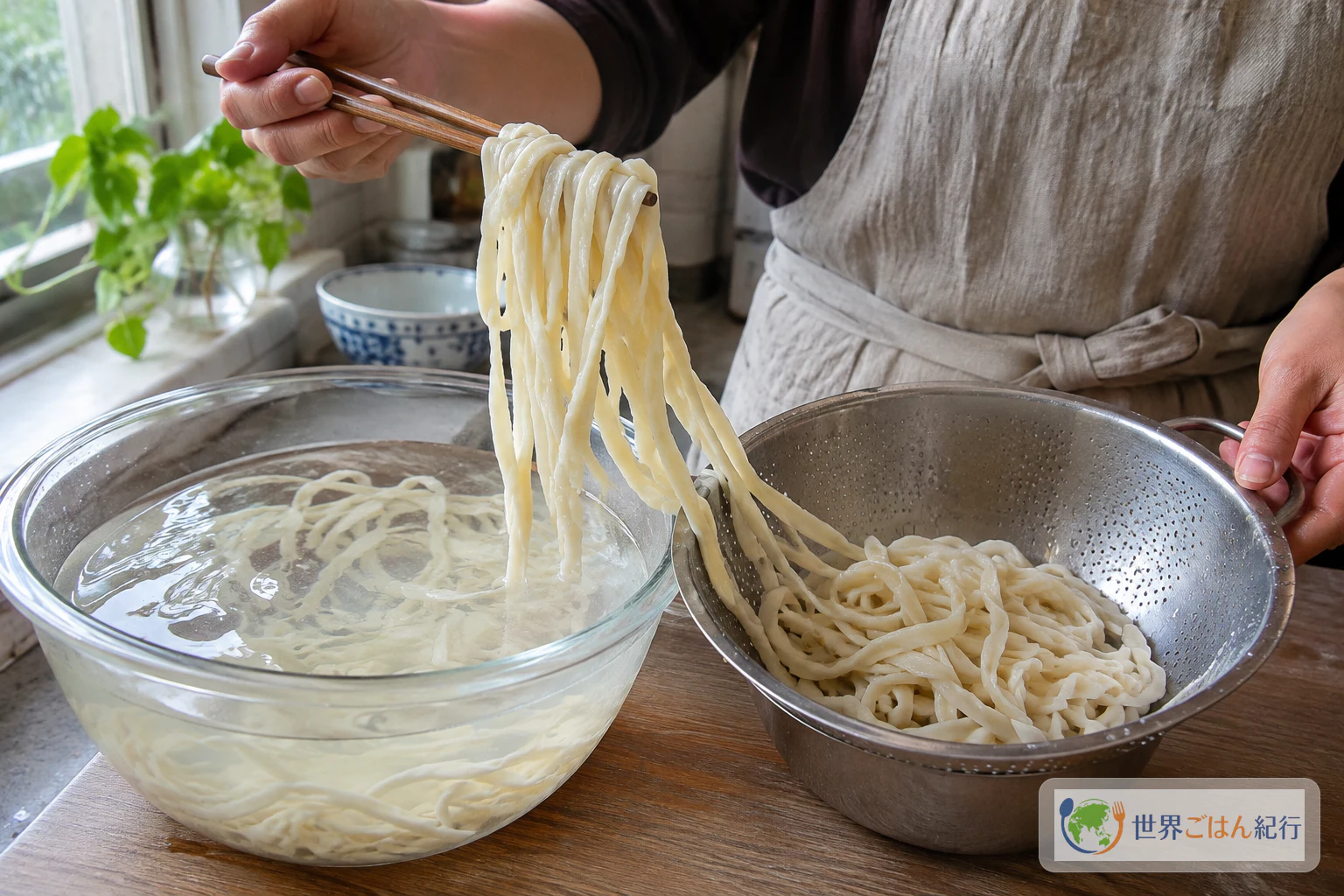
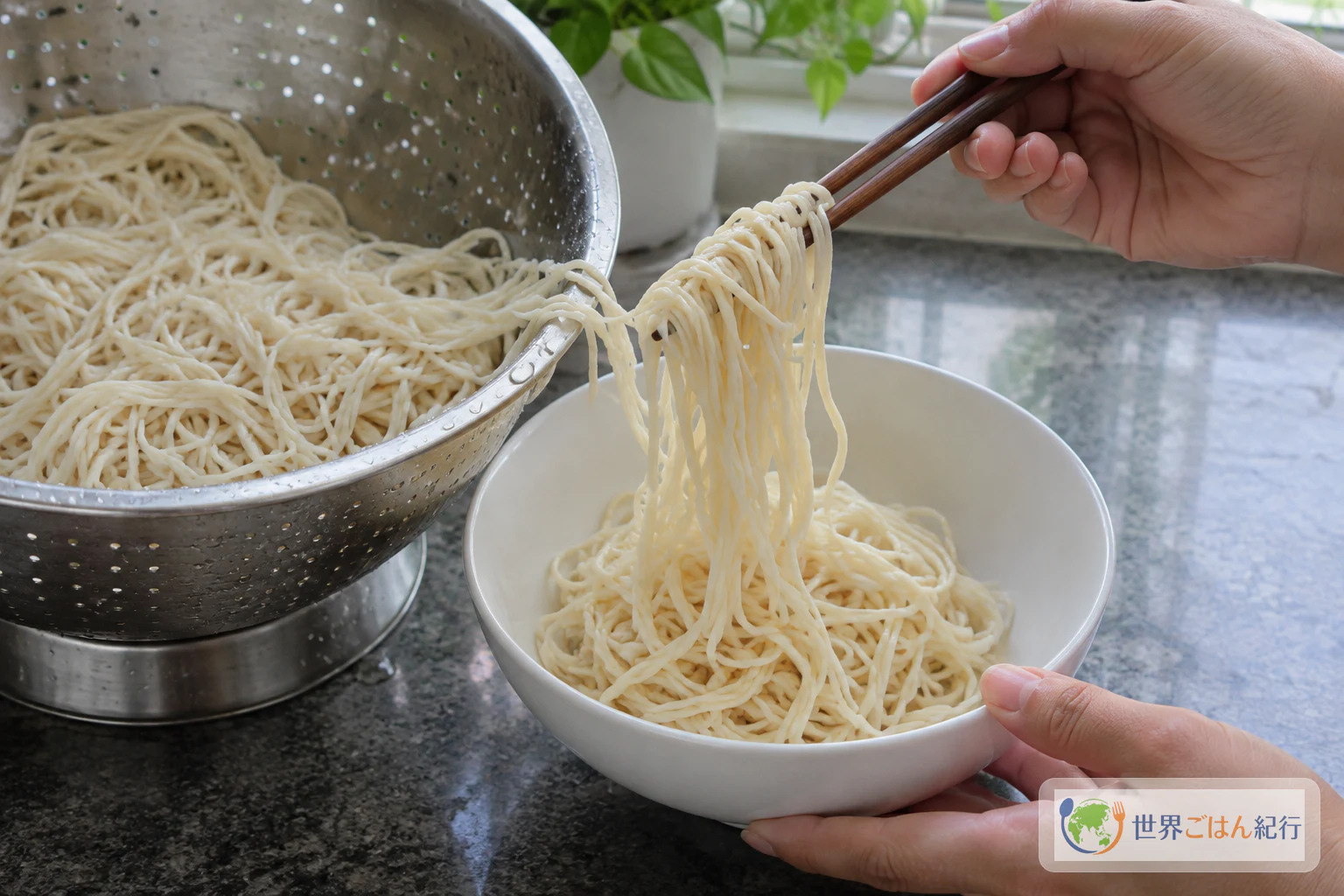
Lamian: One Rope of Dough, Pulled Toward 32 Strands
This is a recipe for the noodles alone: mix, rest, stretch, pull, boil and cool. It is not a recipe for Lanzhou beef noodle soup, and it includes no broth, sauce or toppings.
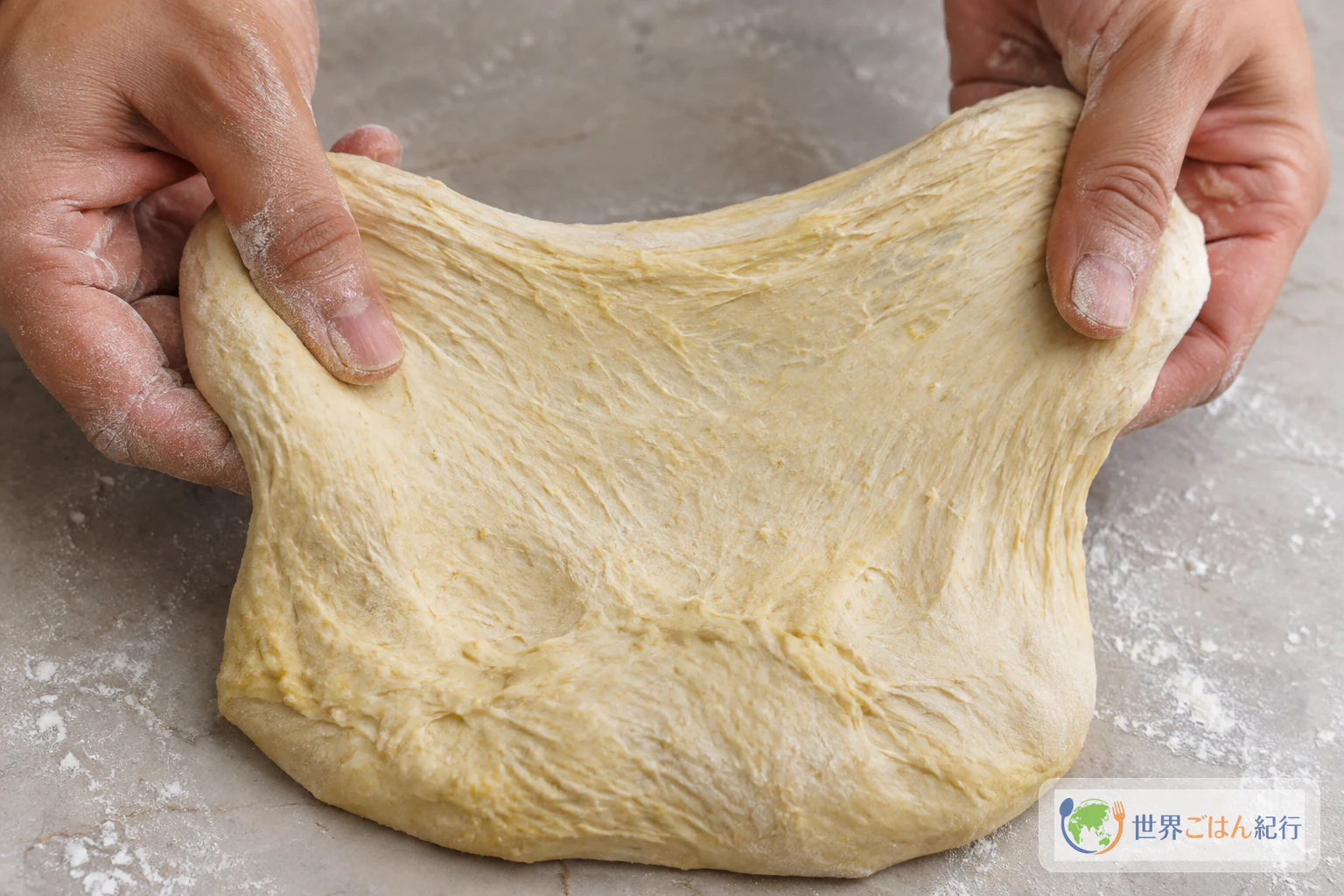
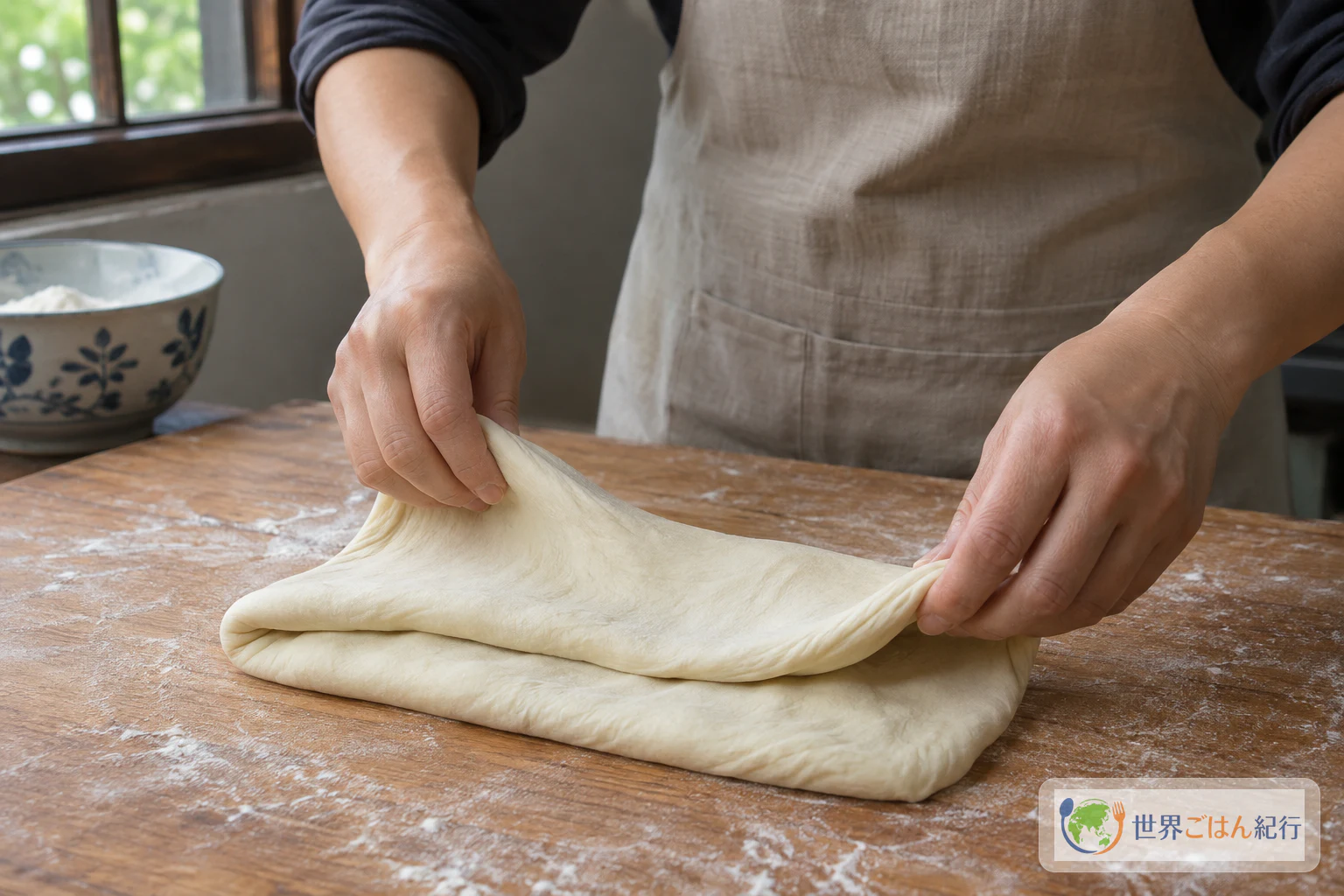
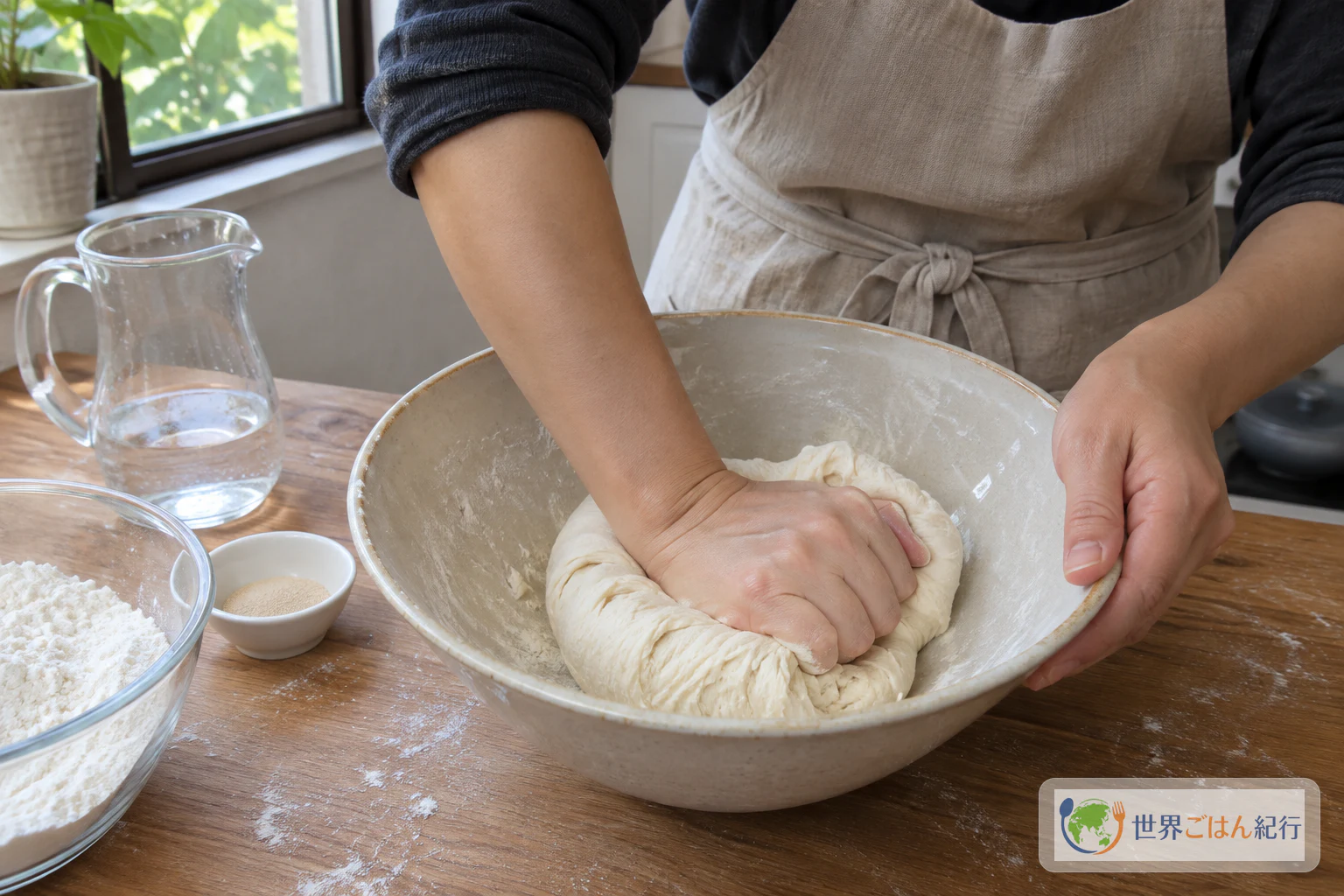
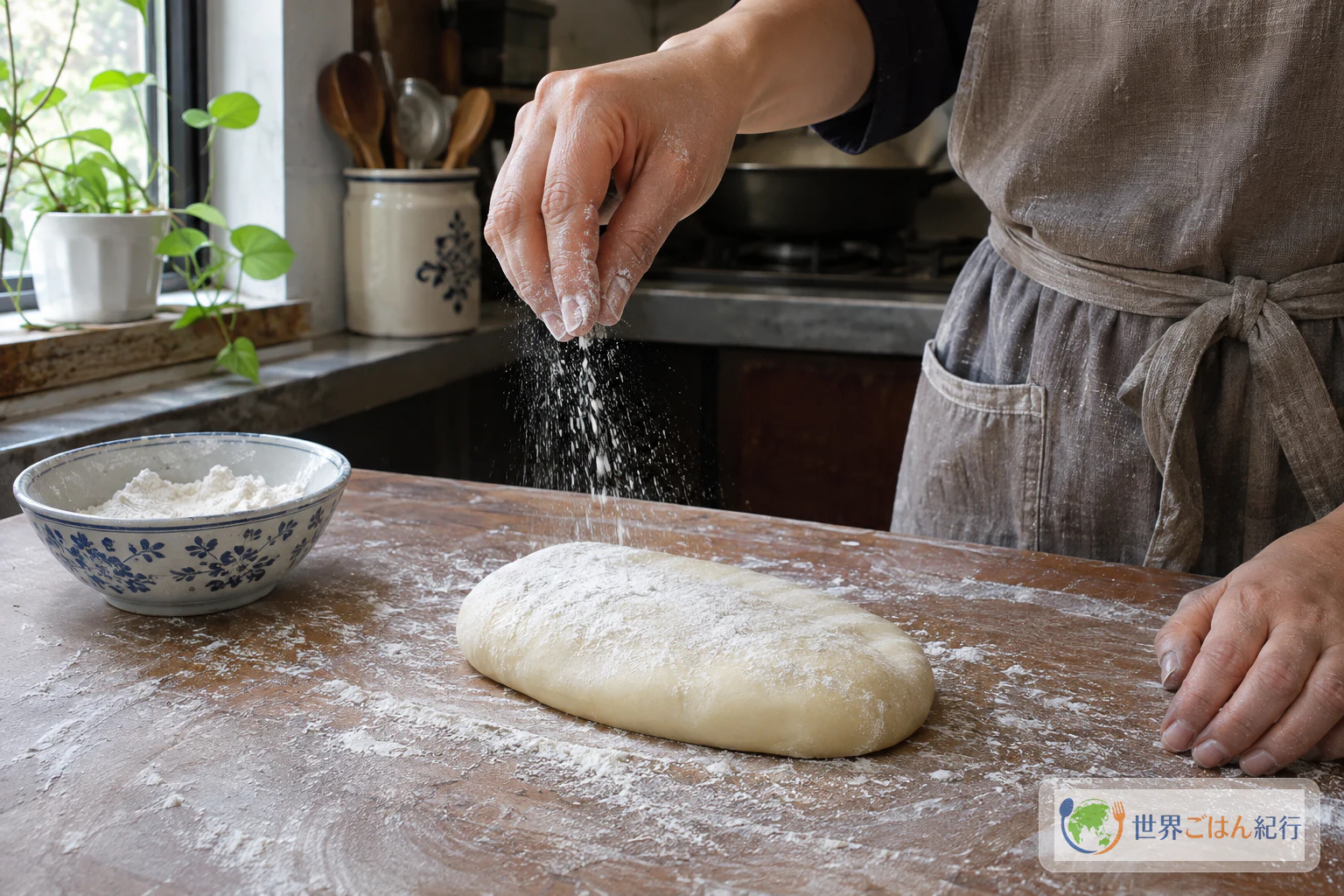
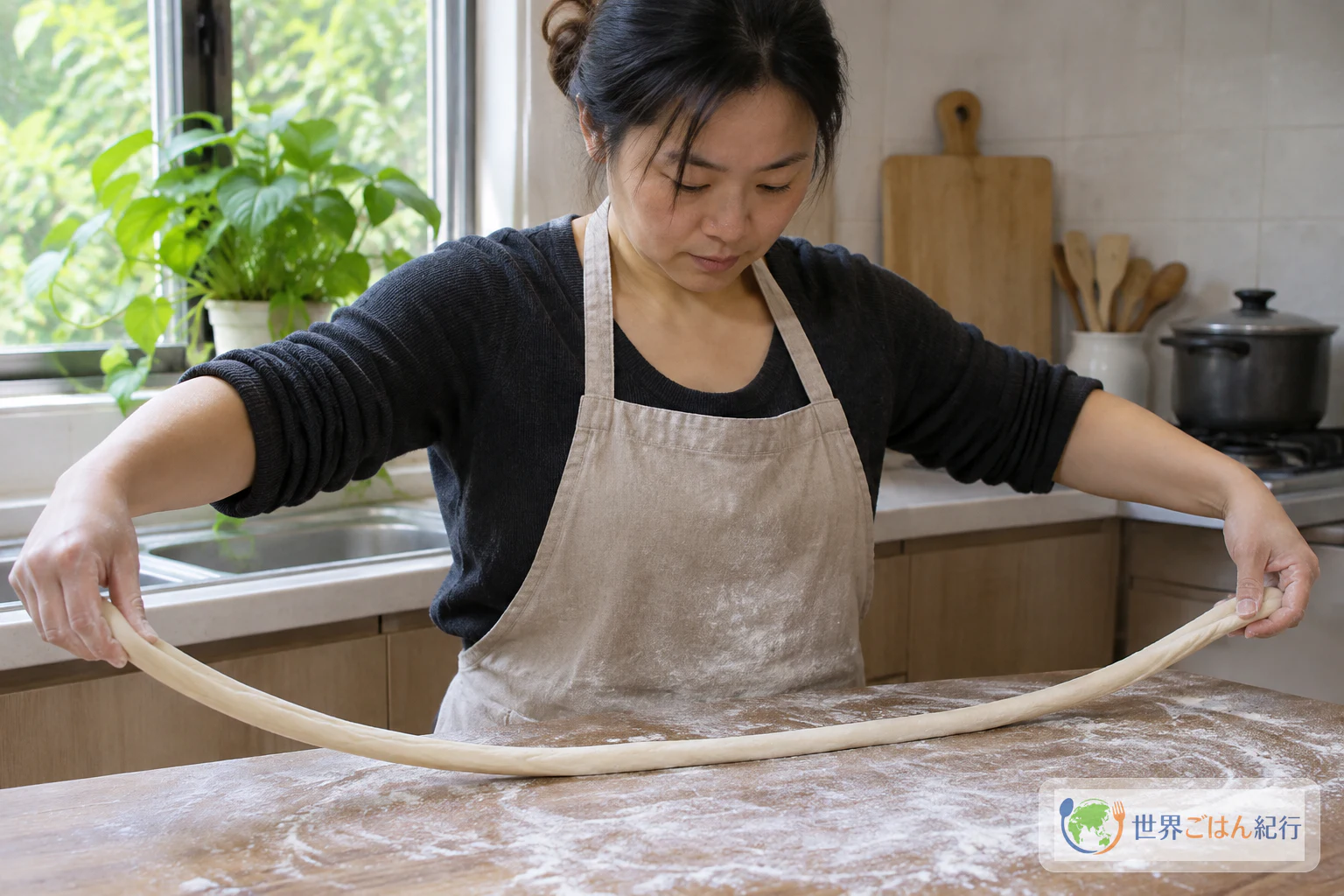
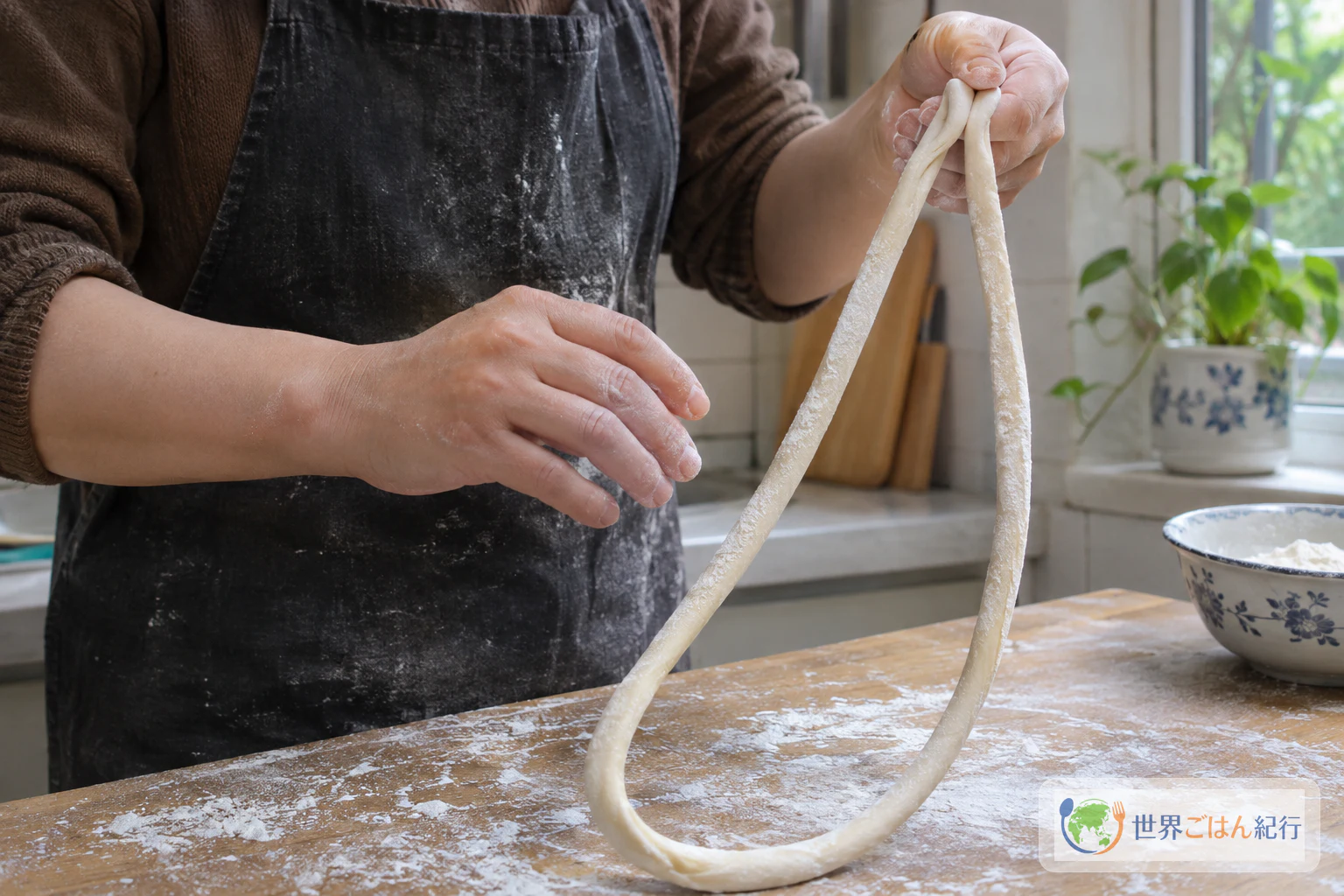
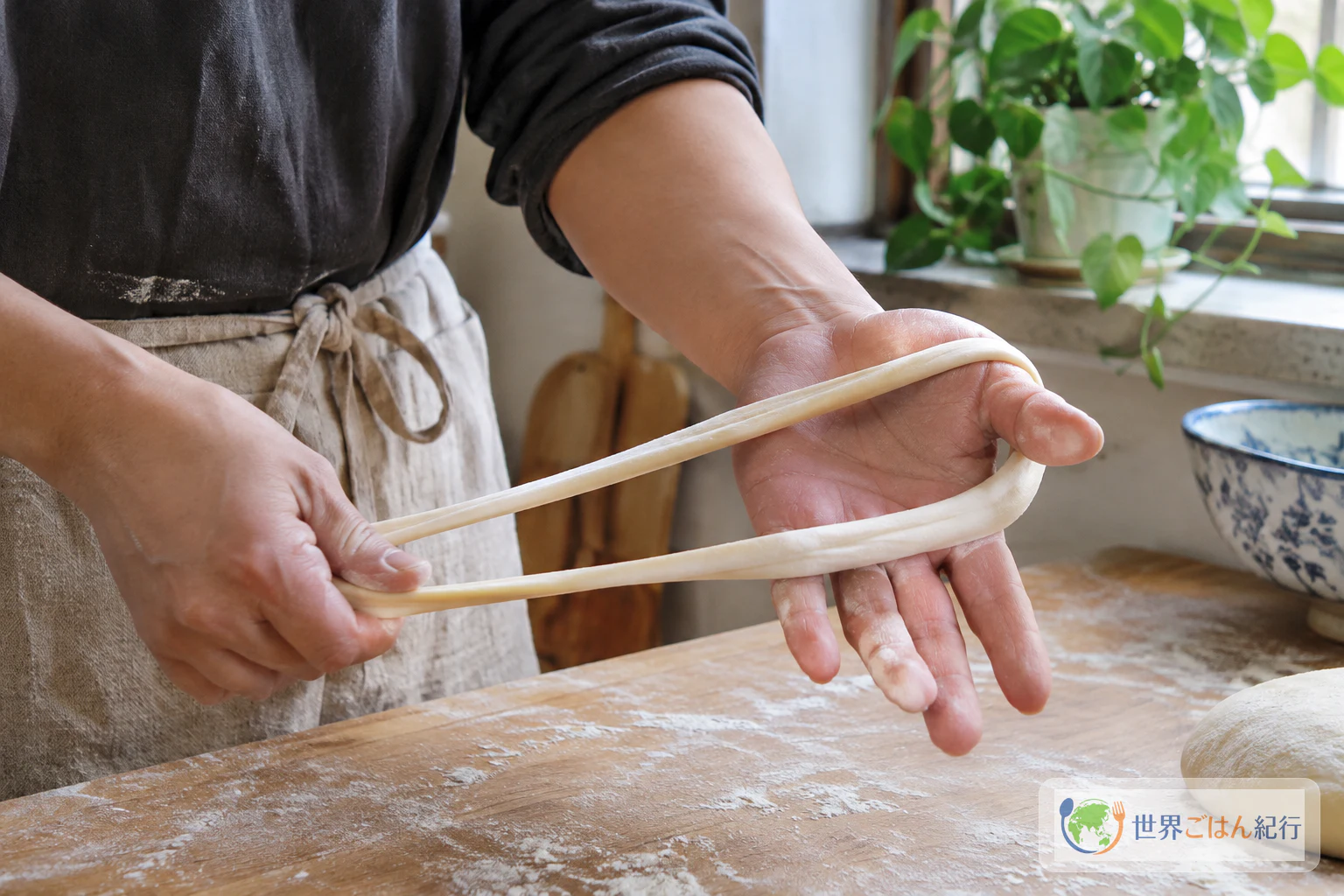
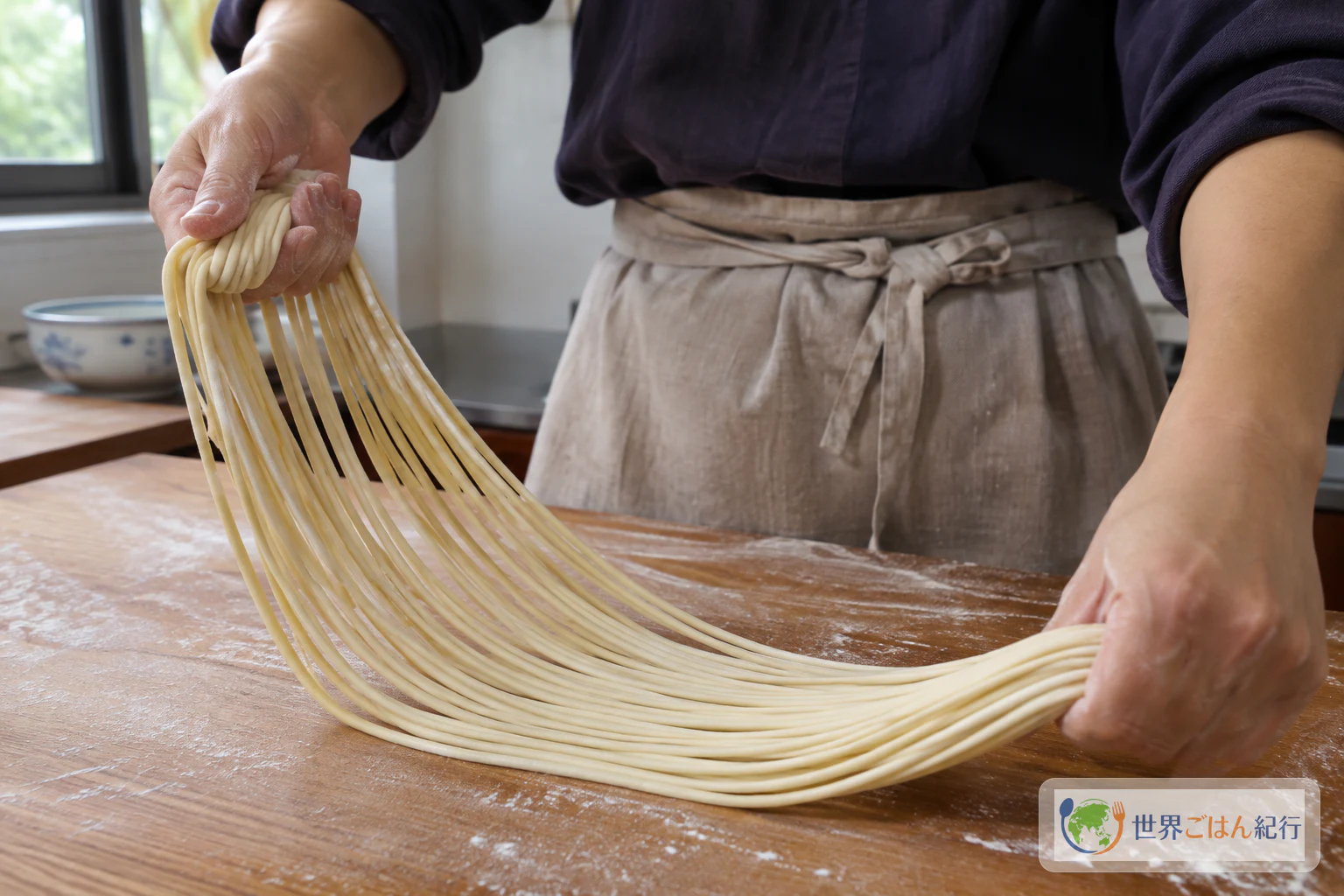
A rope of floured dough is stretched long and its two ends are brought together in the left hand. The right hand goes into the middle of the loop and draws the dough out into two lengths. Then the pull and fold are repeated, with 32 strands as the goal. That sequence comes from the hand-pulled noodle recipe credited to Peter Looi and published by the Museum of Chinese in America (MOCA), and it is the recipe followed here.
Lamian (拉麺 / 拉面, lāmiàn) is a name for noodles made by stretching dough by hand. Many doughs and methods fall under it, so this is one home-style version rather than the definition of the dish. Despite the similar-looking word, don't assume it is the same thing as Japanese ramen.
Explore more dishes from China.
Sekai Gohan has not kitchen-tested this recipe as a whole.
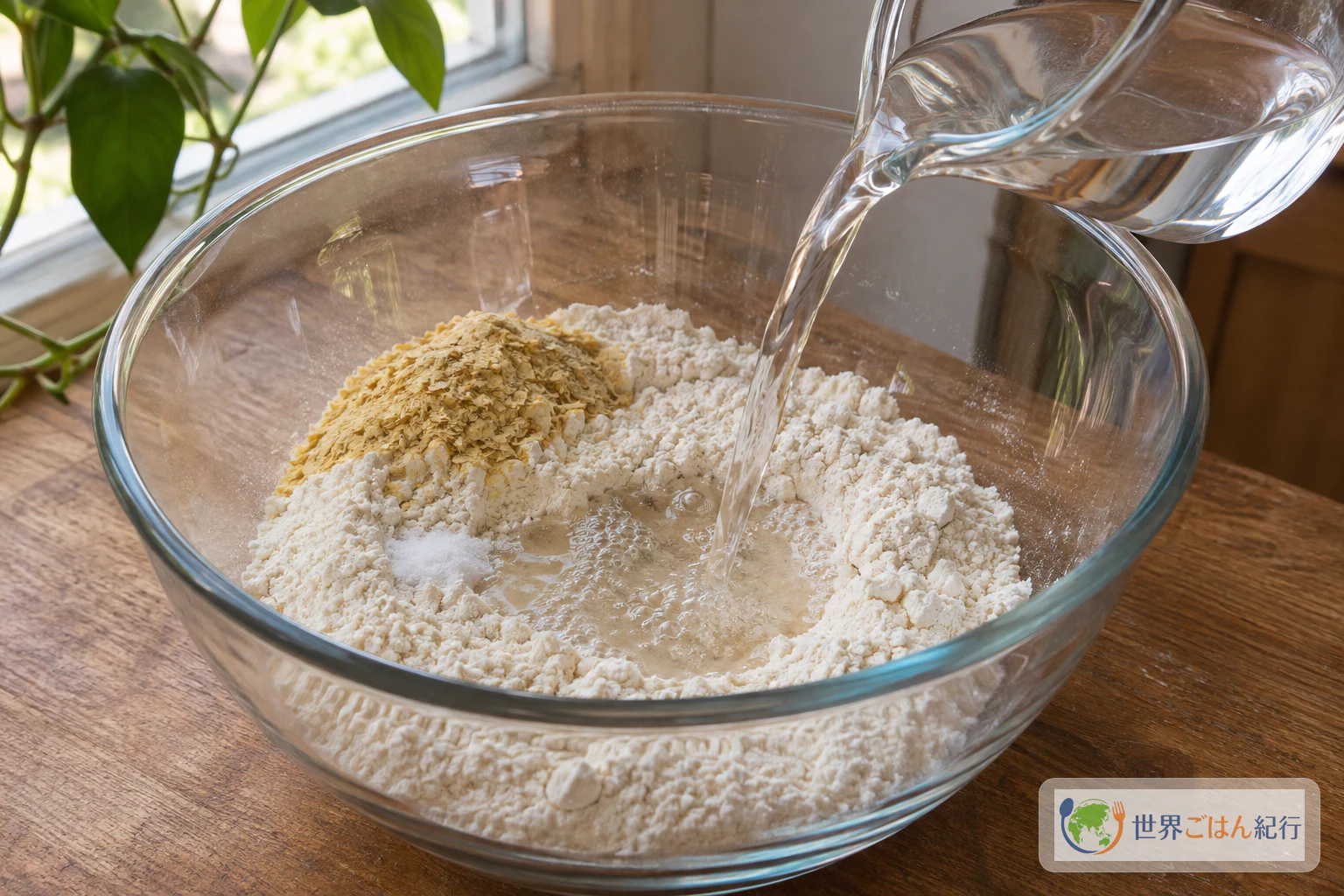
Ingredients for Hand-Pulled Noodles
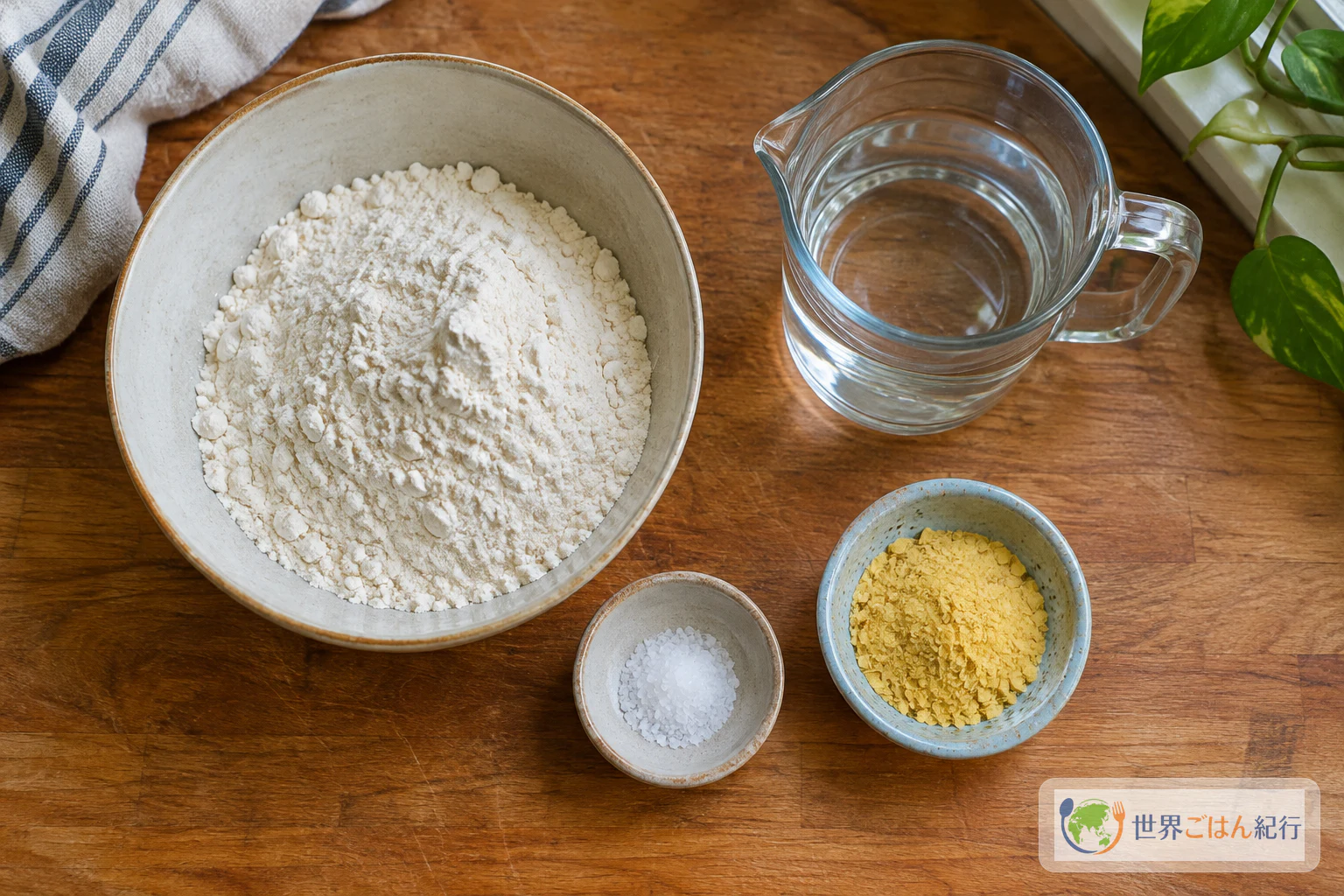
Choosing and Substituting
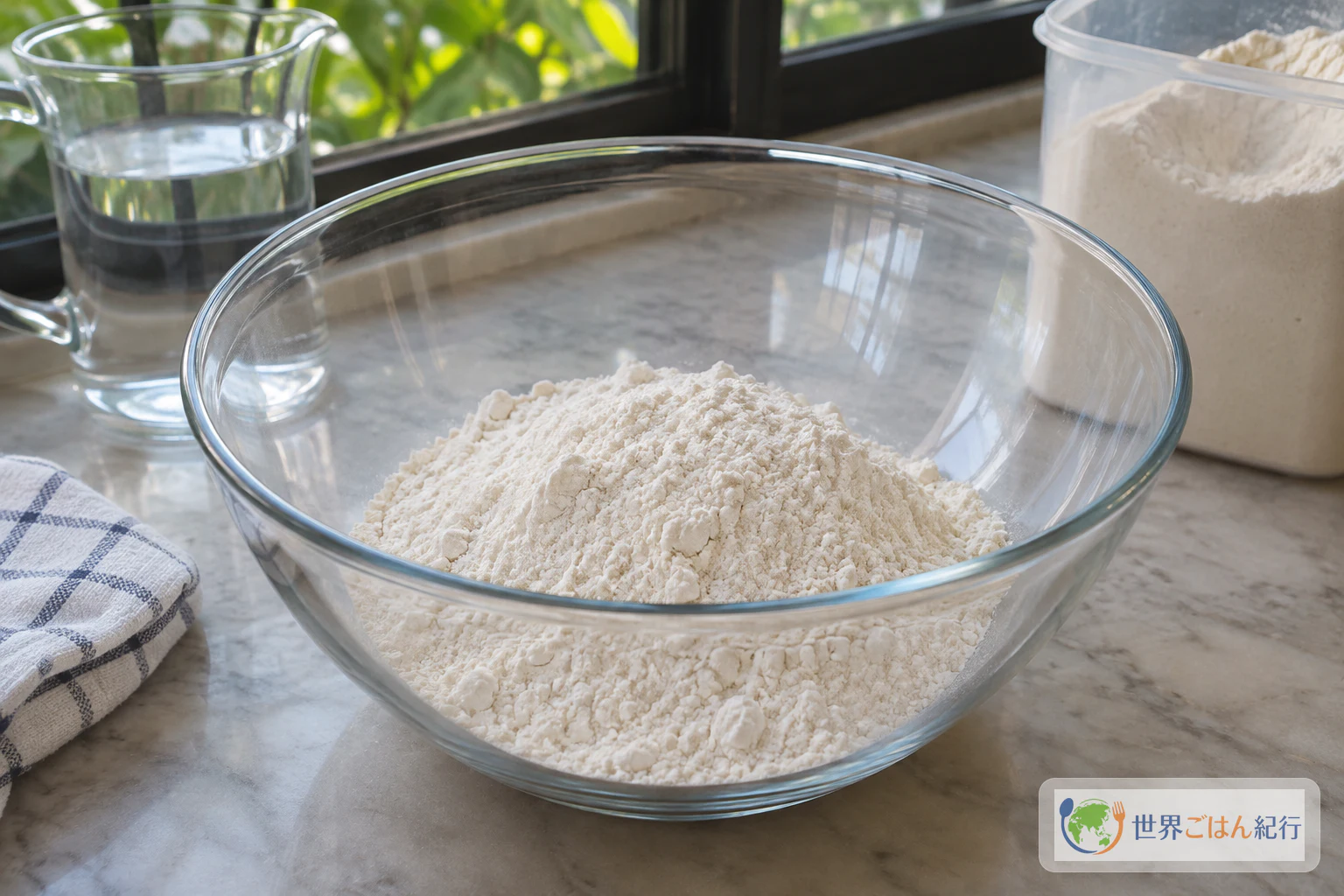
- Flour: Use all-purpose flour. In Japan, medium-protein flour (chūrikiko) is an approximate substitute to try; its protein content and water absorption may differ. Swapping in bread flour is untested, so we don't offer it as a set option.
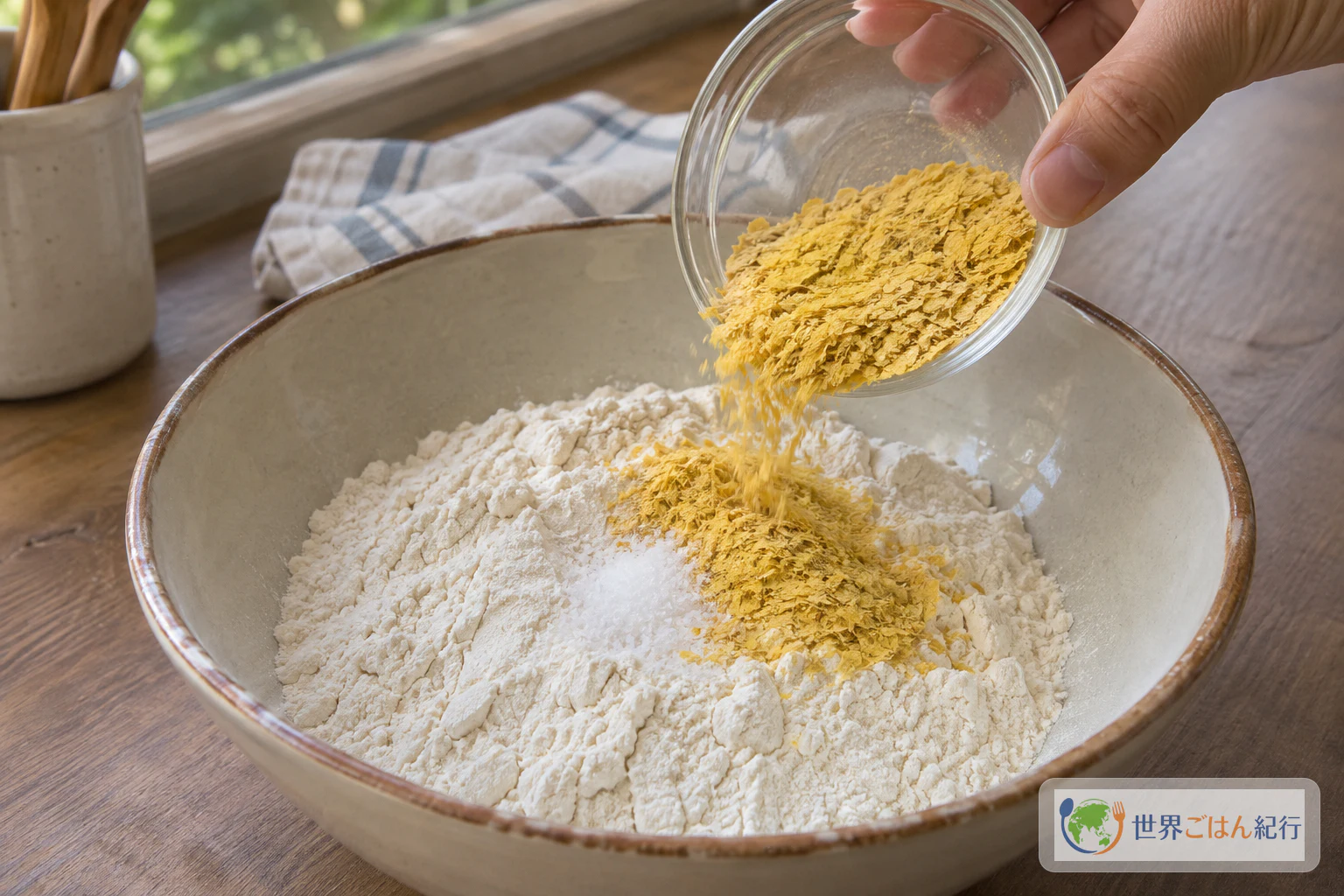
- Nutritional yeast: Look for a product sold as nutritional yeast. Use non-leavening nutritional yeast, without substituting dry baking yeast or brewer's yeast.
- Dusting flour: Use a little, separately from the 250g in the dough.
- Allergens: These noodles contain wheat. Check the label on your nutritional yeast. If you have a yeast allergy or other concern, go by the product's own information.
Equipment
- Kitchen scale
- Timer
- Large mixing bowl
- Clean cloth or other cover
- Wide-mouthed pot
- Noodle strainer, tongs or long chopsticks
- Separate clean bowl for cooling
- Colander
- Clean serving bowl
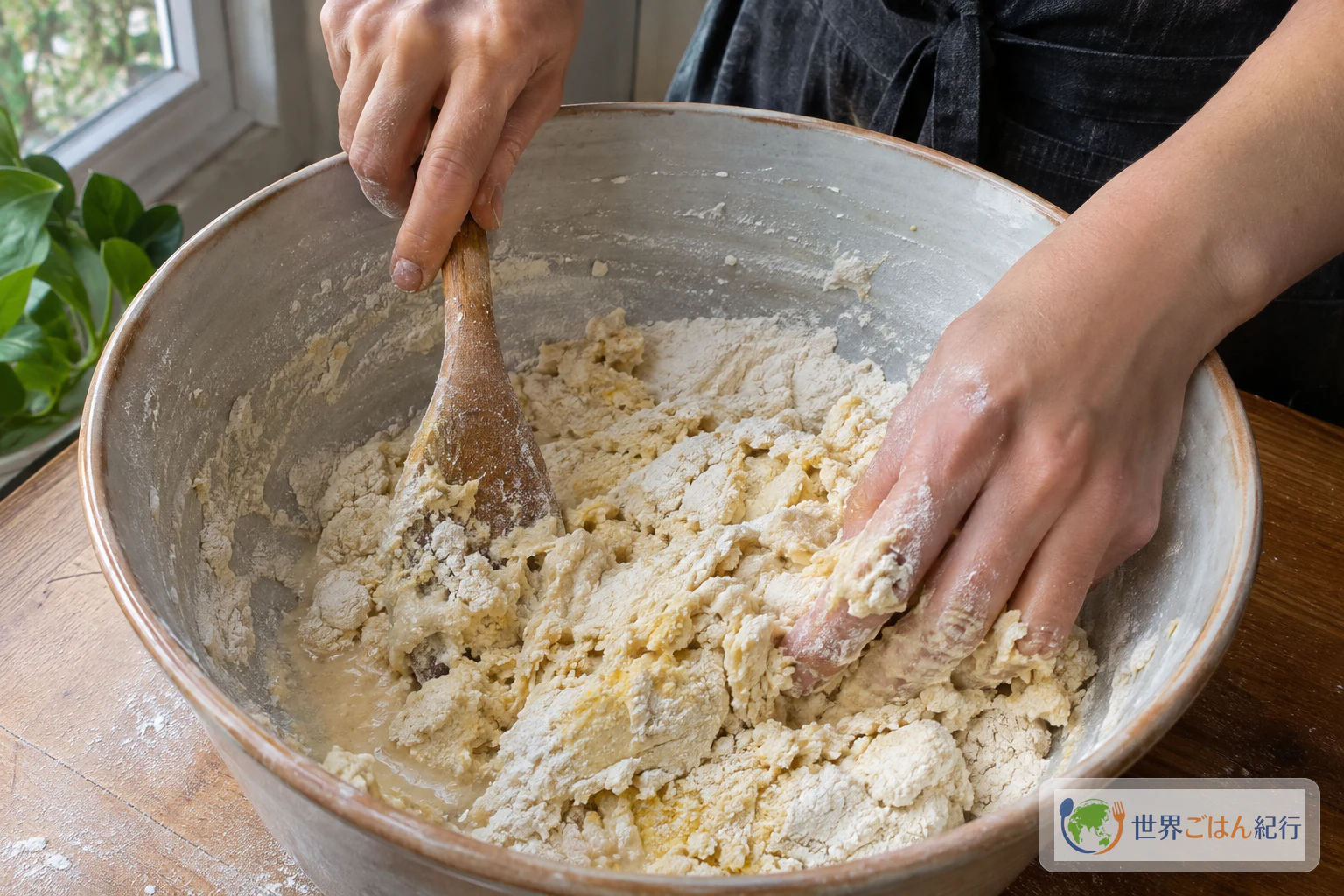
How to Make Lamian
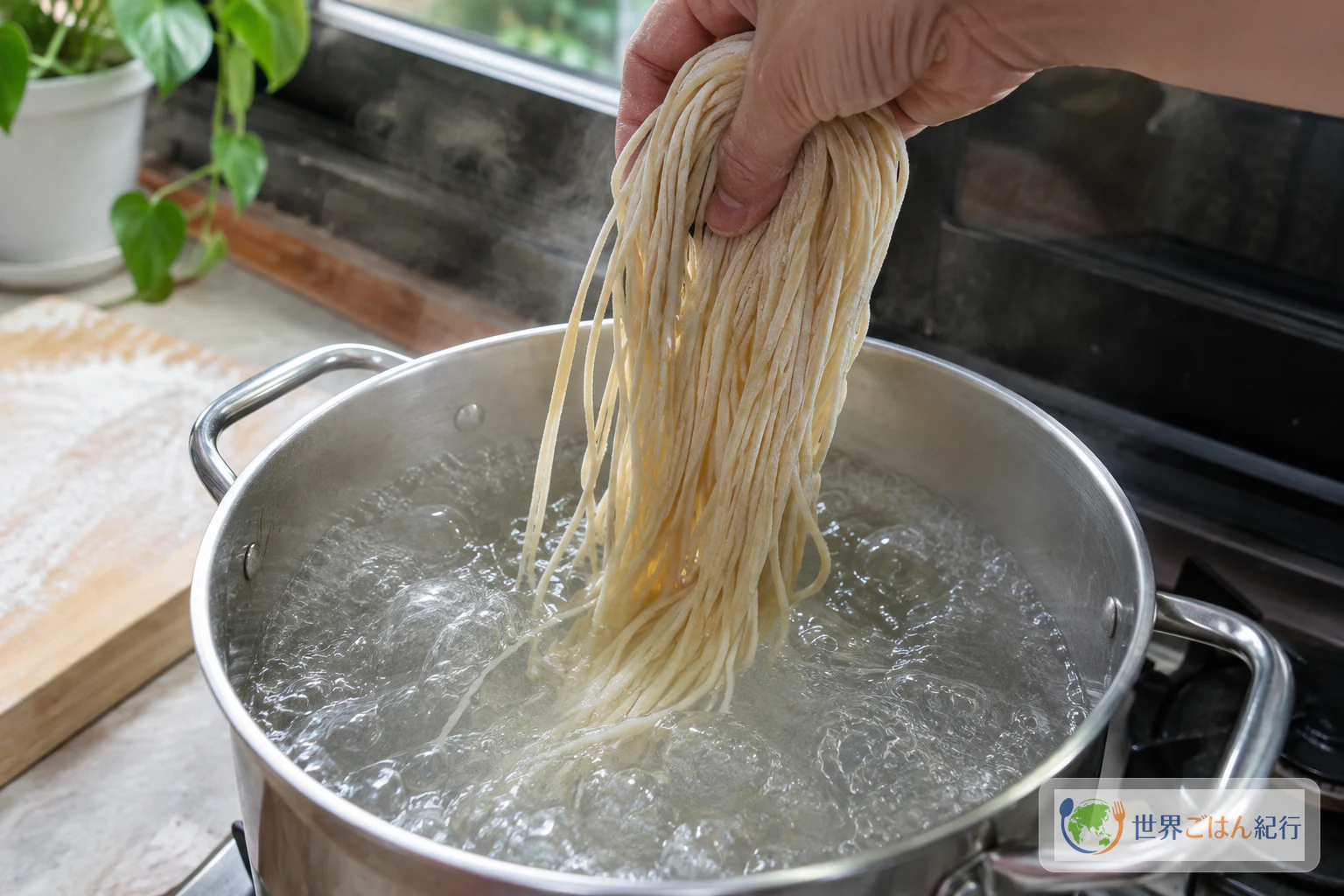
Don't taste raw flour or raw dough, and always cook it first. Keep raw flour and dough away from ready-to-eat food, and wash your hands and utensils after handling them. The 30-second boil belongs to this recipe's fine noodles. It is not a general safety guarantee for noodles of any thickness, and a photo's strand count, color or timing doesn't prove a noodle is safe to eat.
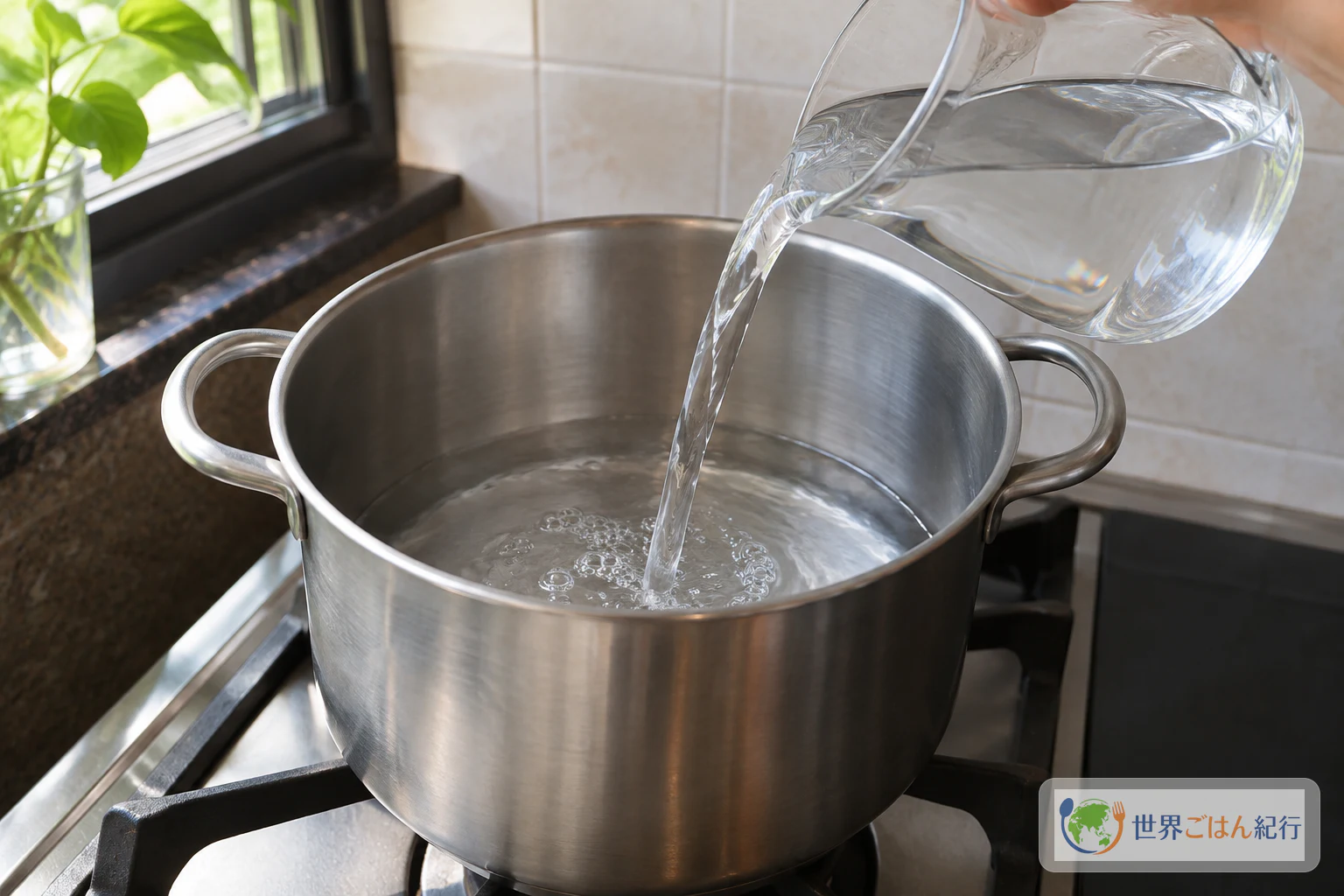
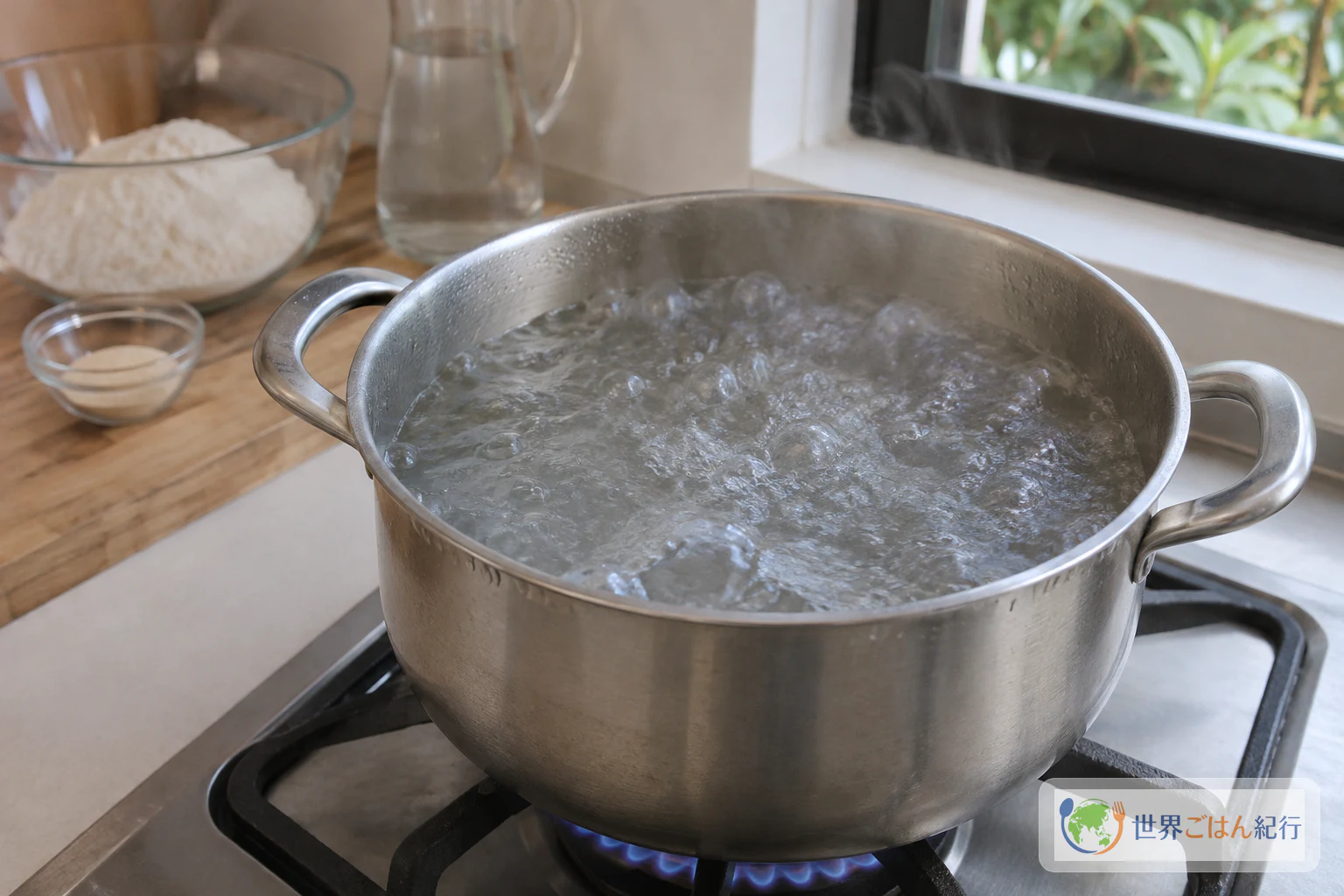
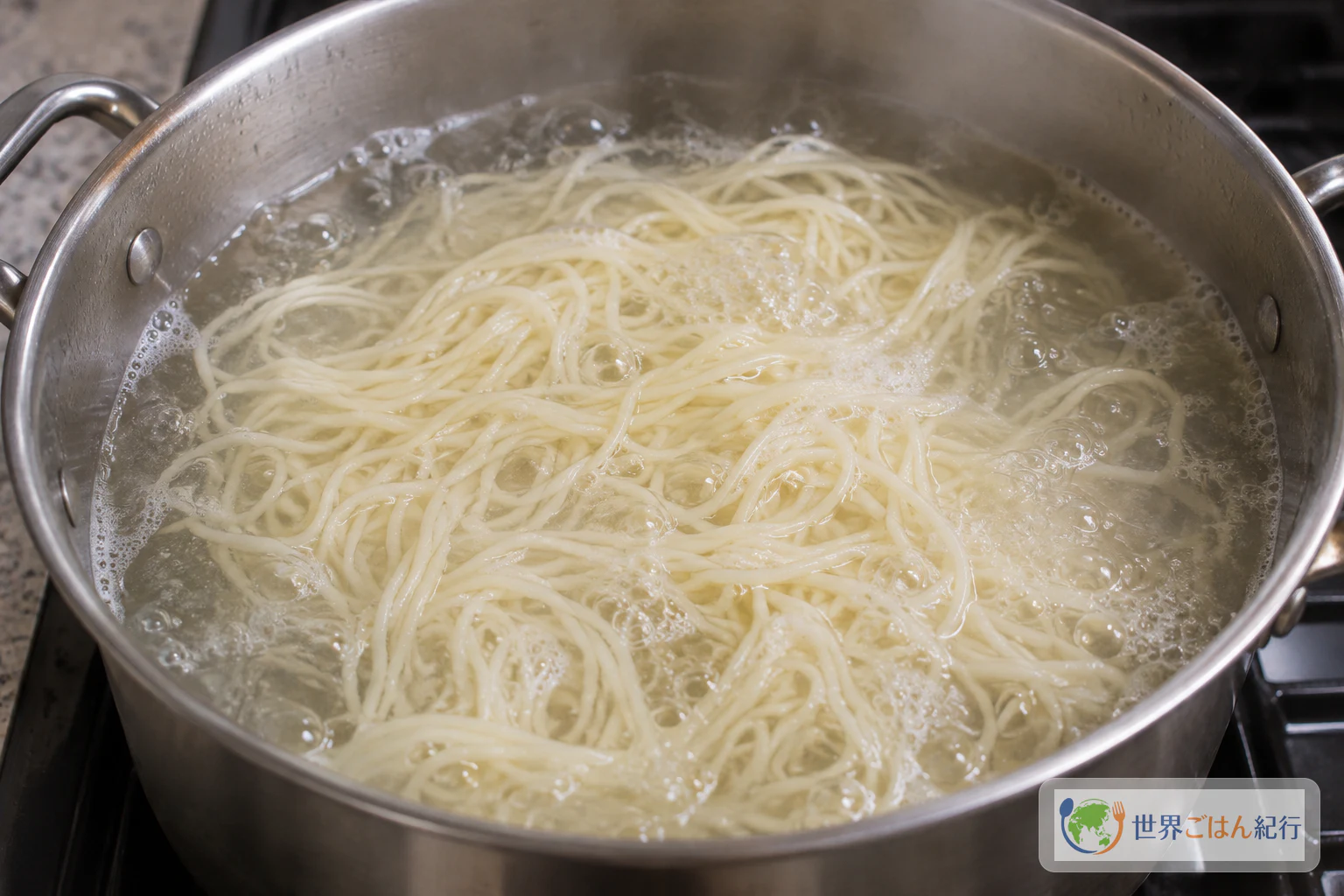
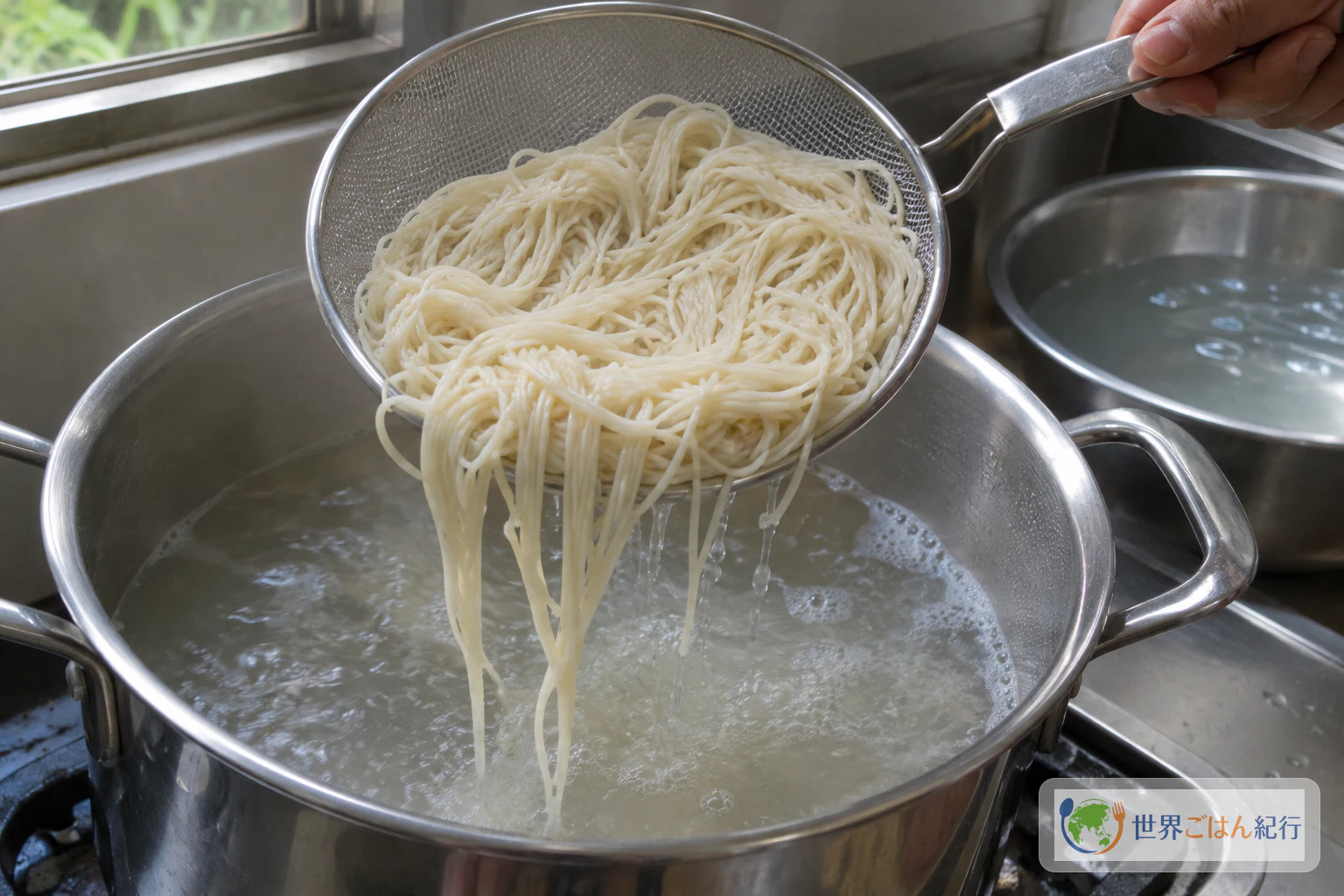
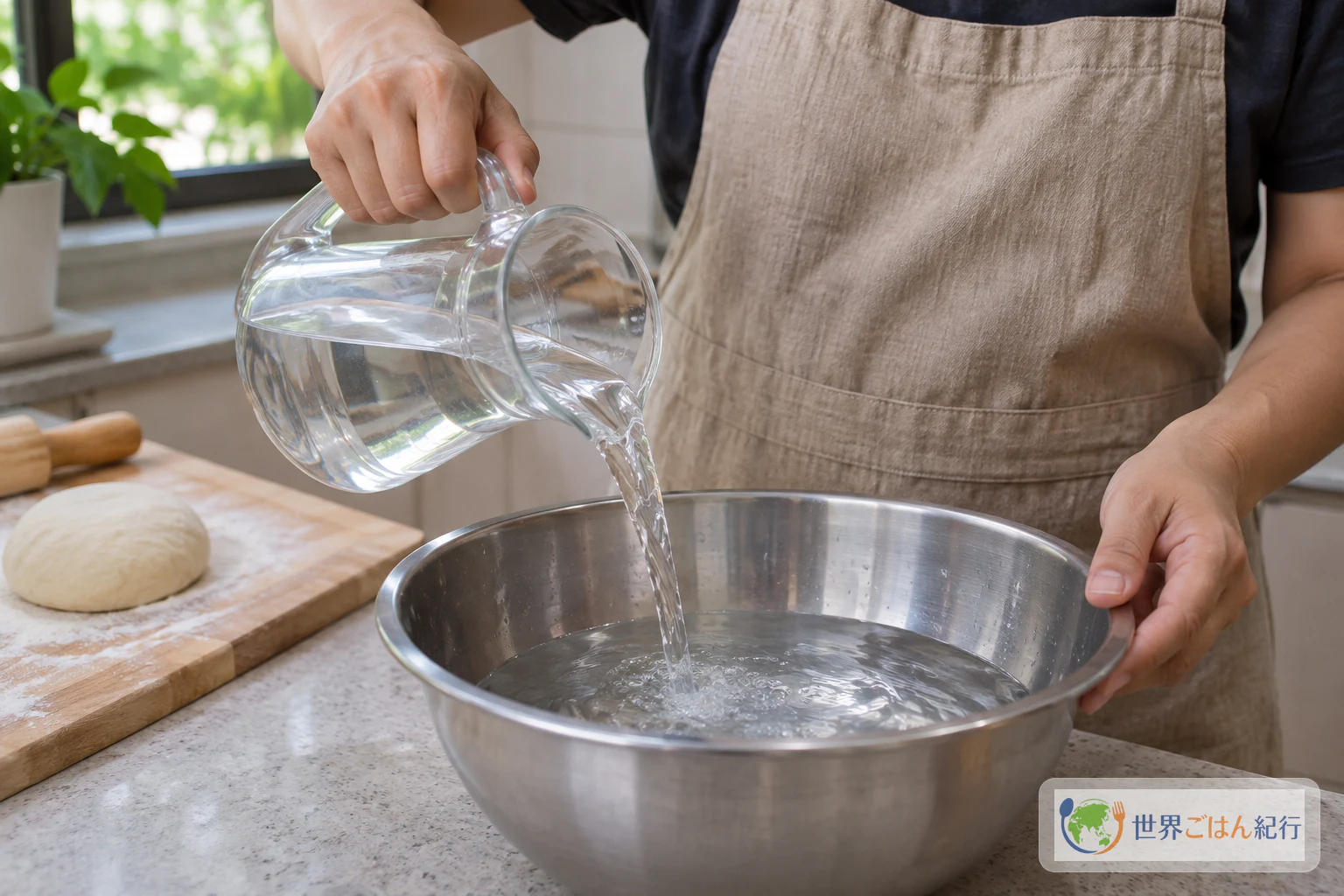
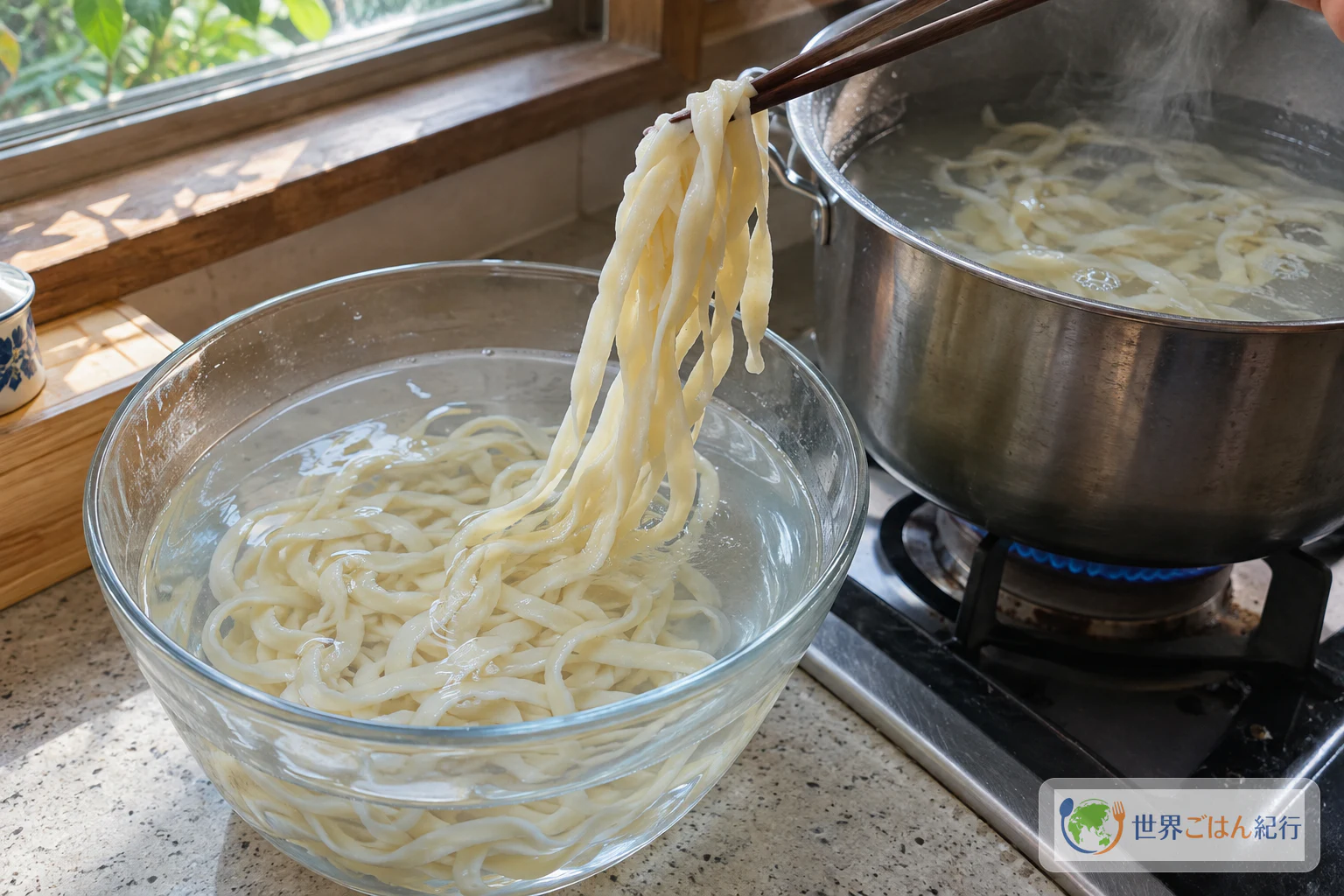
The noodles go into the boiling water as soon as they are pulled, and they go from the pot straight to cold water. Read steps 17, 18 and 22 first, then get the pot boiling and the cold water poured by the time you finish step 16.
If the Dough or Noodles Misbehave
The only rescue the recipe itself provides is the water adjustment for stiff dough. The other rows below apply the same recipe's flour coat and the safety guidance above.
| Problem | What to do | Limits |
|---|---|---|
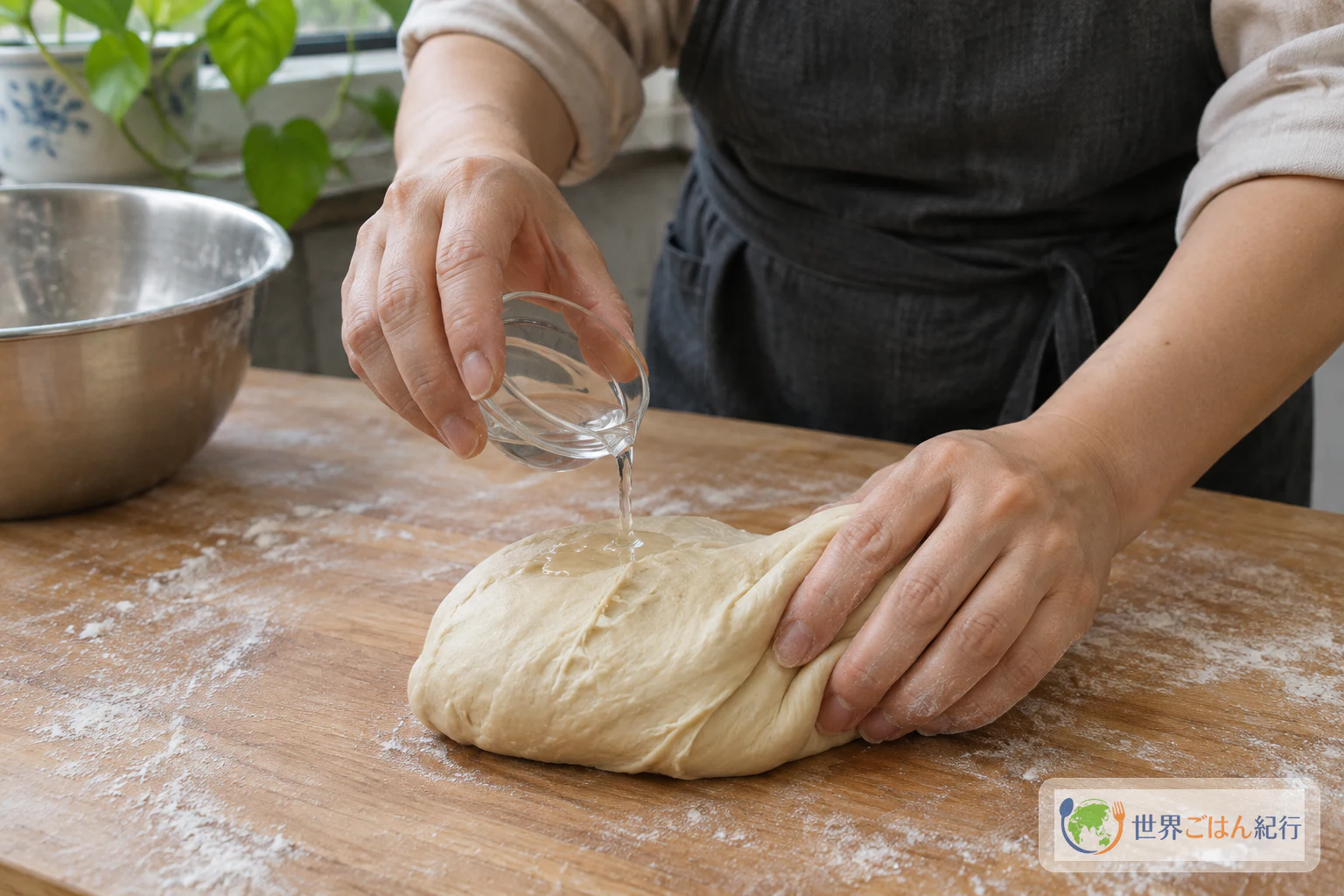
| The dough isn't stretchy enough at 5 minutes | Work in 10g water and restart the 15 minutes | Added water isn't guaranteed to fix it |
| It still isn't stretchy enough | Repeat the same adjustment | The recipe says to repeat but sets no maximum number of rounds or total water, so stop adding water once the dough stretches |
| The dough sticks while you pull | Make sure the surface has a light coat of flour | No dusting amount is given, so use only a little |
| Your strands came out thicker than planned | Keep boiling until they are cooked through, then cool them | We have no tested time for thicker noodles, and 30 seconds shouldn't be assumed to be enough |
How This Recipe Was Put Together
The ingredients, amounts and core method come from Peter Looi's recipe as published by MOCA. It doesn't state a yield, servings, resting temperature, teaspoon standard or dusting amount, and it gives no numerical test for "stretchy enough." We've left those open rather than guessing. We also can't offer a tested yield.
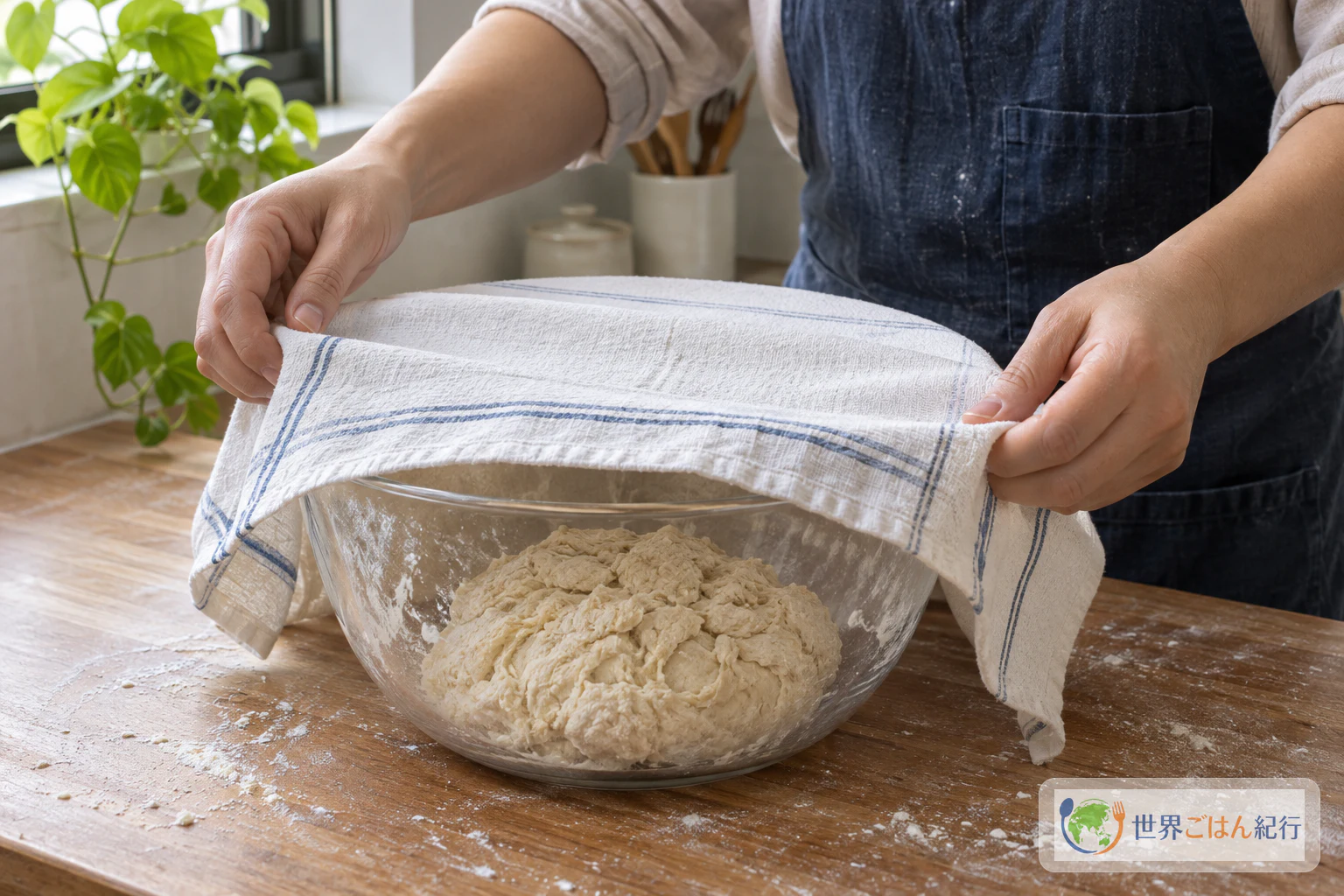
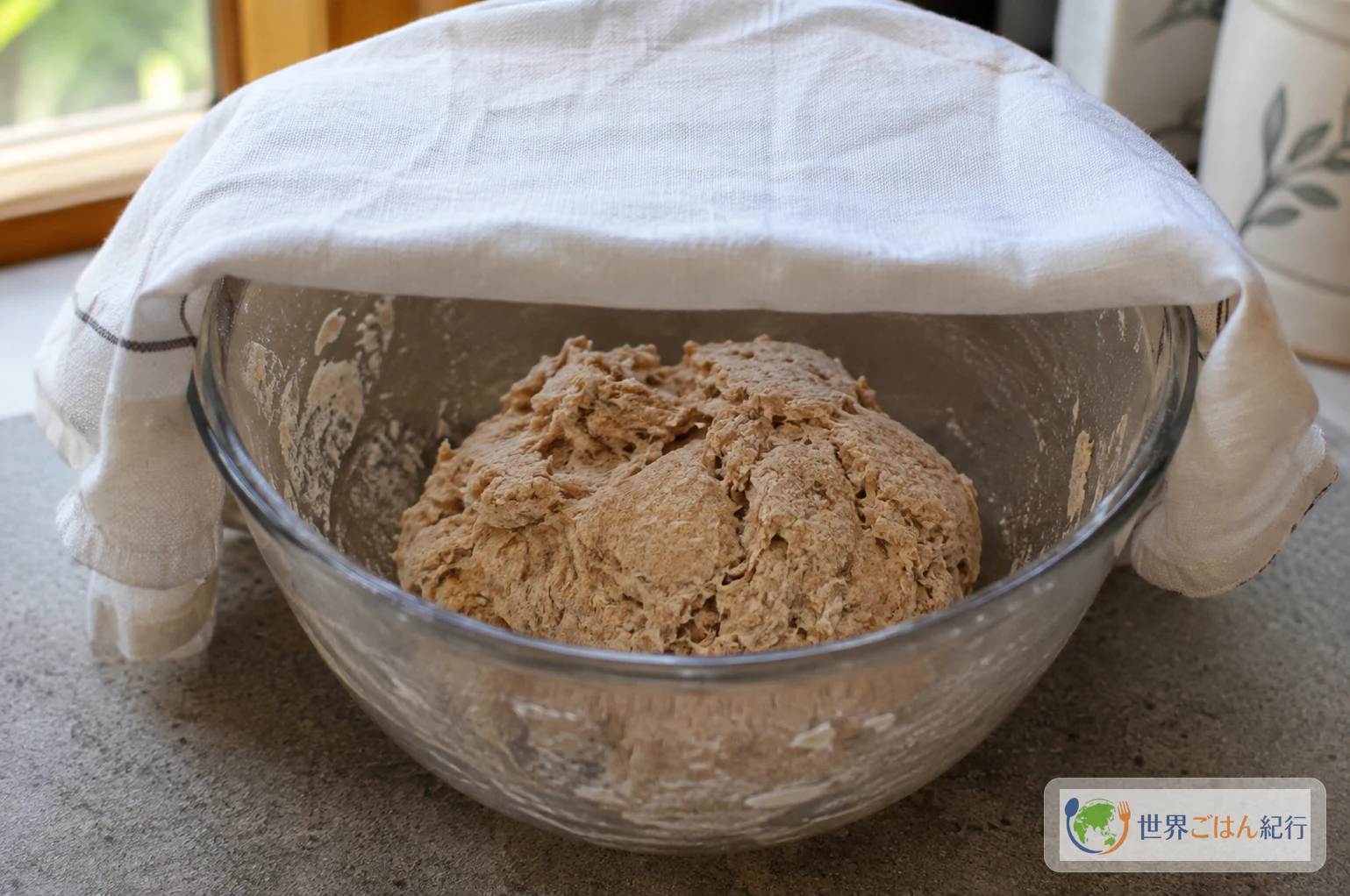
A few practical points are our own additions: covering the dough during the rest, using clean drinking water for cooling, draining and serving the noodles, and serving them fresh on the same day. The hygiene notes draw on FDA guidance for raw flour.
Ways to Build on the Noodles
Each option below would need its own complete recipe, so none of them is given here.
| Direction | Status |
|---|---|
| Serve with a clear Lanzhou-style beef broth | The soup would need a separate, complete recipe |
| Eat cold with a dipping or dressing sauce | The sauce would need a separate, reliable recipe |
| Pull thicker or thinner noodles | We have no supported strand count or boiling time for these |
| Use bread flour, alkaline water (kansui) or penghui ash | This is a different type of formula, not a tweak to this one |
| Knead in egg, oil or aromatics | Nothing supports this change, so we don't suggest it |
Lamian and Lanzhou Beef Noodles
Lanzhou beef noodles are one regional soup associated with hand-pulled noodles rather than the definition of all lamian. China Daily's reporting from Lanzhou describes clear broth, radish, chili oil, cilantro and scallion, and yellow noodles. The noodle work it describes includes resting and kneading the dough, shaping strips, repeatedly folding and stretching, dusting and boiling.
That reporting gives useful context, but none of its noodle formula or timing is used here. Other home recipes also vary. LaHohwa Workshop's version uses 400g bread flour, 200g all-purpose flour, 300g water and 4g salt, with a 20-minute rest and lightly oiled dough stretched directly into boiling water. It is a separate recipe, so its amounts and steps shouldn't be mixed with these. We also looked at an anonymous, user-submitted Lanzhou formula on lanzhoulamian.com, but its ingredients and steps didn't line up, so we didn't use it.
Frequently Asked Questions
Is lamian the same as Japanese ramen?
The similar-looking words don't make them the same dish. This article is about hand-pulled wheat noodles, and it doesn't cover Japanese ramen.
Is this a Lanzhou beef noodle recipe?
No. Lanzhou beef noodles appear here as cultural background, while this recipe makes plain noodles with no soup.
Is lamian the same as lagman?
No. Lagman is a Central Asian dish, and despite the similar name, it is a separate dish made a different way.
Can I use dry yeast instead of nutritional yeast?
No. The recipe specifies non-leavening yeast, and nothing supports the swap. The 2-to-3-hour rest isn't a fermentation stage either.
Do I always need the extra 10g of water?
No. It is only for dough that isn't stretchy enough at the 5-minute check, and it is never part of the initial 160g.
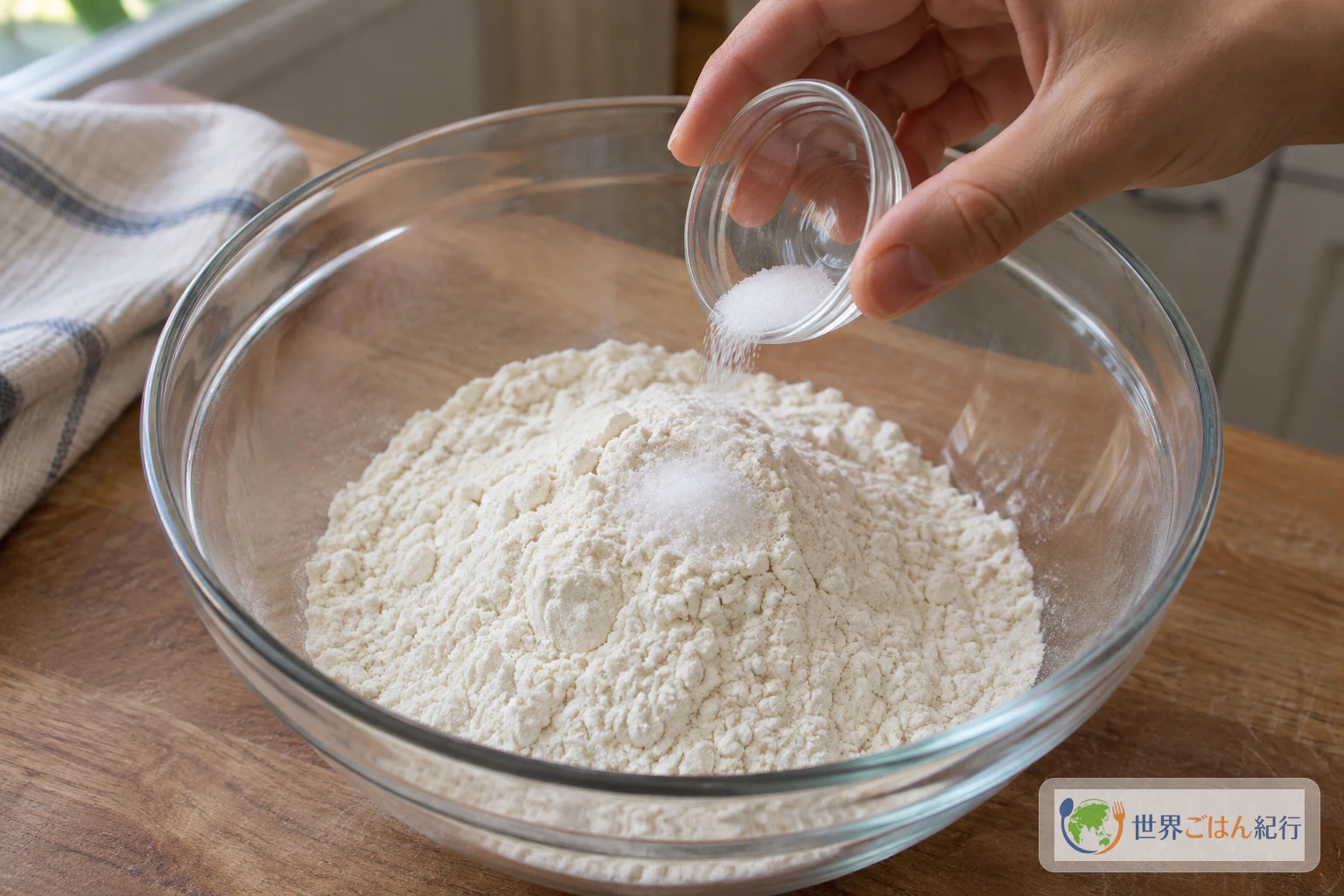
How many grams is 1/4 tsp of salt?
The recipe gives no weight and doesn't define its teaspoon, so we don't convert it.
How many servings does this make?
The recipe doesn't say, and we have no tested yield to offer.
Can I store or reheat the noodles?
We have no storage or reheating guidance for this recipe, so we can't give a safe holding time. Serve the noodles right after cooling, on the day you make them.
Sources
- Museum of Chinese in America (recipe credited to Peter Looi), "Peter Looi's Hand Pulled Noodles." The ingredients, amounts, rest, stretch-and-fold, conditional water adjustment, 32-strand target, 30-second boil and cold-water cooling. https://www.mocanyc.org/wp-content/uploads/2021/02/Peter-Loois-Hand-Pulled-Noodles-Recipe.pdf
- U.S. Food and Drug Administration, "Handling Flour Safely: What You Need to Know." General guidance on not tasting raw flour or dough, cooking it, avoiding cross-contamination, and washing hands and utensils. It doesn't verify this recipe's 30-second boil. https://www.fda.gov/food/buy-store-serve-safe-food/handling-flour-safely-what-you-need-know
- China Daily Hong Kong Edition (reporting by Ma Jingna in Lanzhou), "Behind the Lanzhou Beef Noodles: Hand-Pulled Perfection." Regional and process context for Lanzhou beef noodles only. https://www.chinadailyasia.com/upload/main/pdf/2024/06/24/9c3476eb64d786cb192215c97ea91777.pdf
- LaHohwa Workshop, "拉麵 Hand Pulled Noodle." A separate home-style formula, used for comparison only. https://lahohwa.net/recipes/hand-pulled-noodle/
- 兰州拉面 website, "兰州牛肉拉面技术配方." An anonymous, user-submitted page describing the Lanzhou beef noodle presentation and hand-pulling. None of its quantities or steps are used. https://www.lanzhoulamian.com/lamian/media/2020/03/19/1657987809915.html