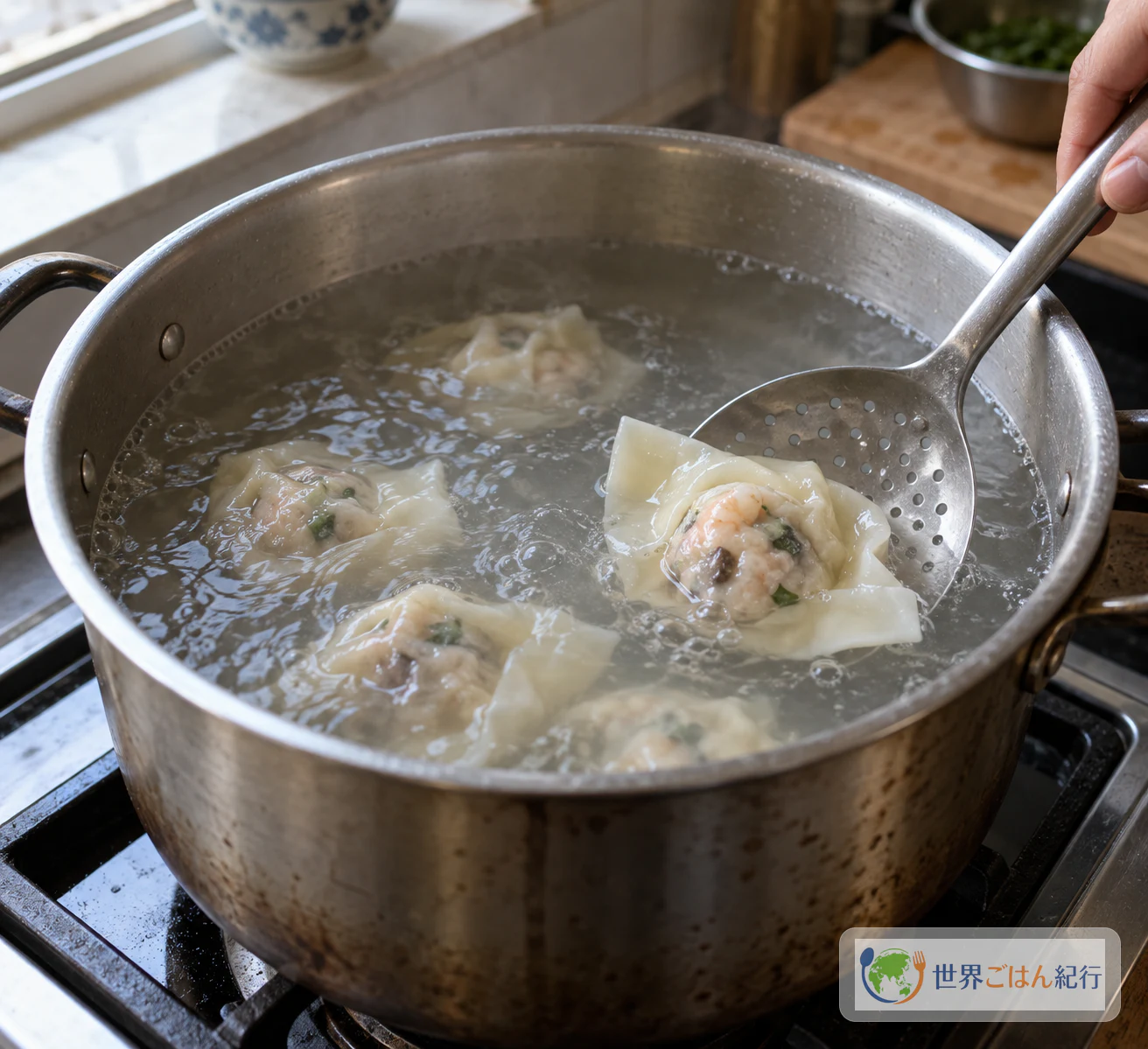
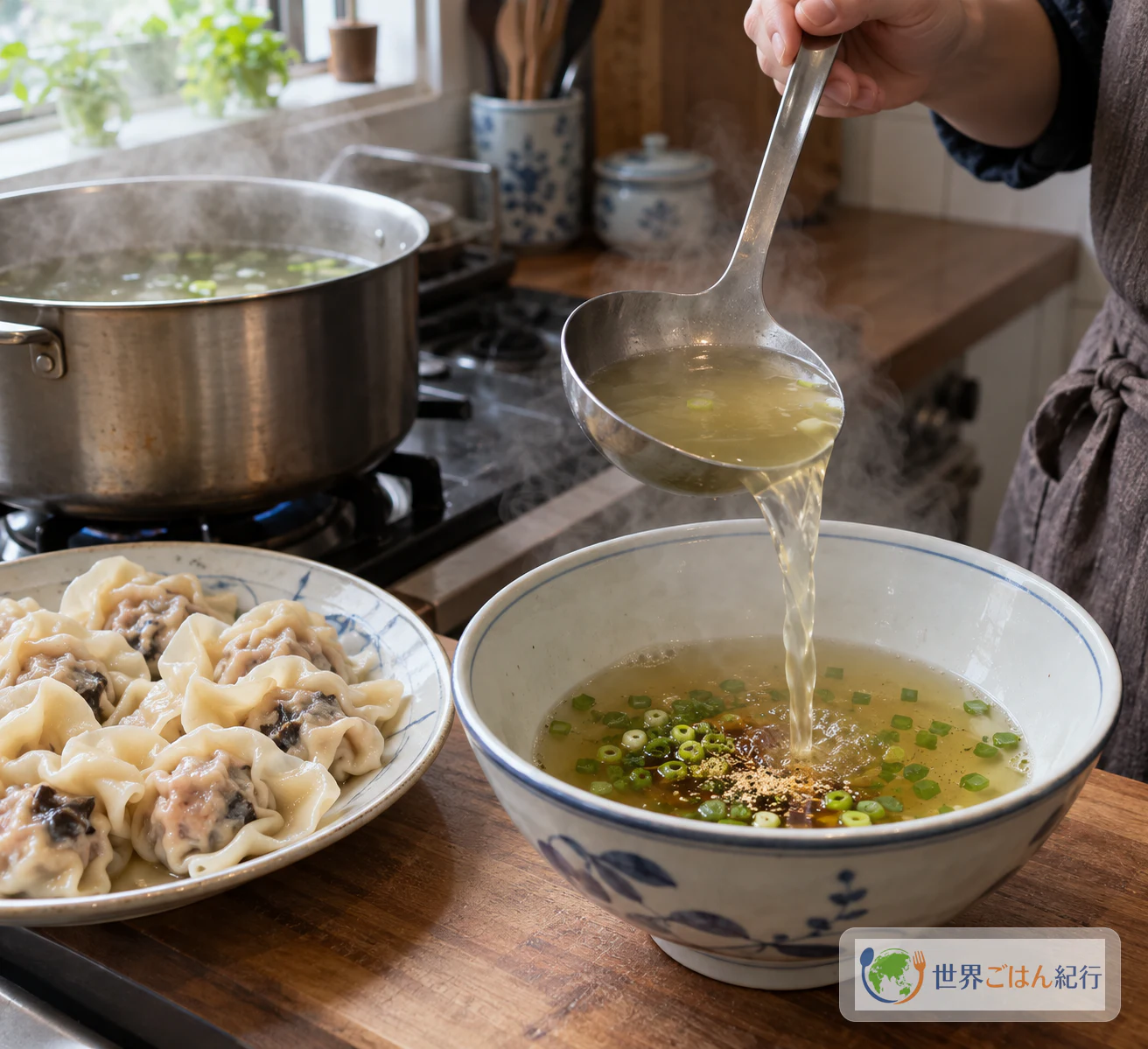
Húntun: Thin Wrappers Softening in a Steaming Bowl
A thin wrapper that turns soft and silky in the broth, and a small, springy filling of shrimp, pork and chicken. The broth stays simple: the seasoning goes into the bowl first, and the wontons and hot stock go on top.
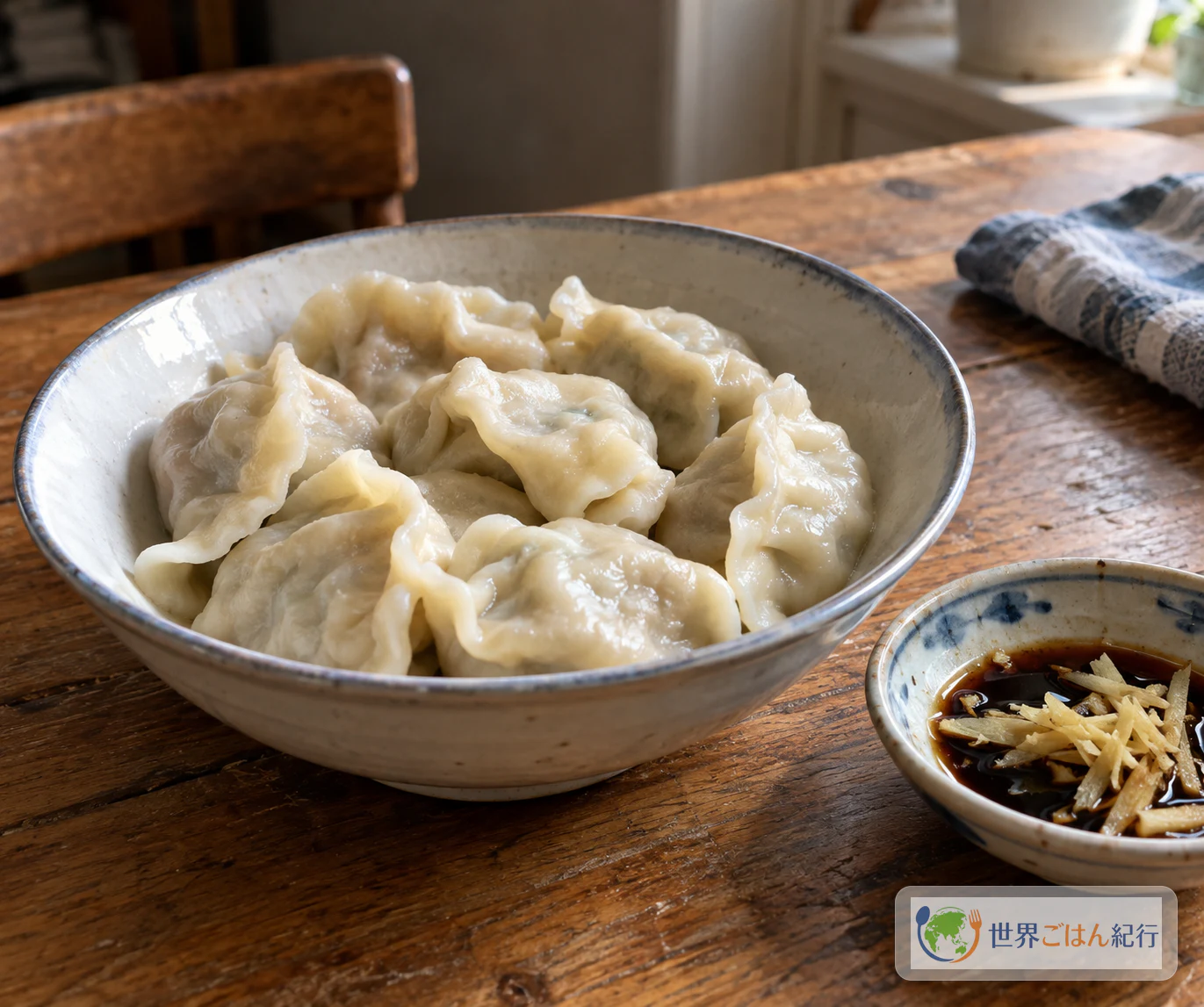
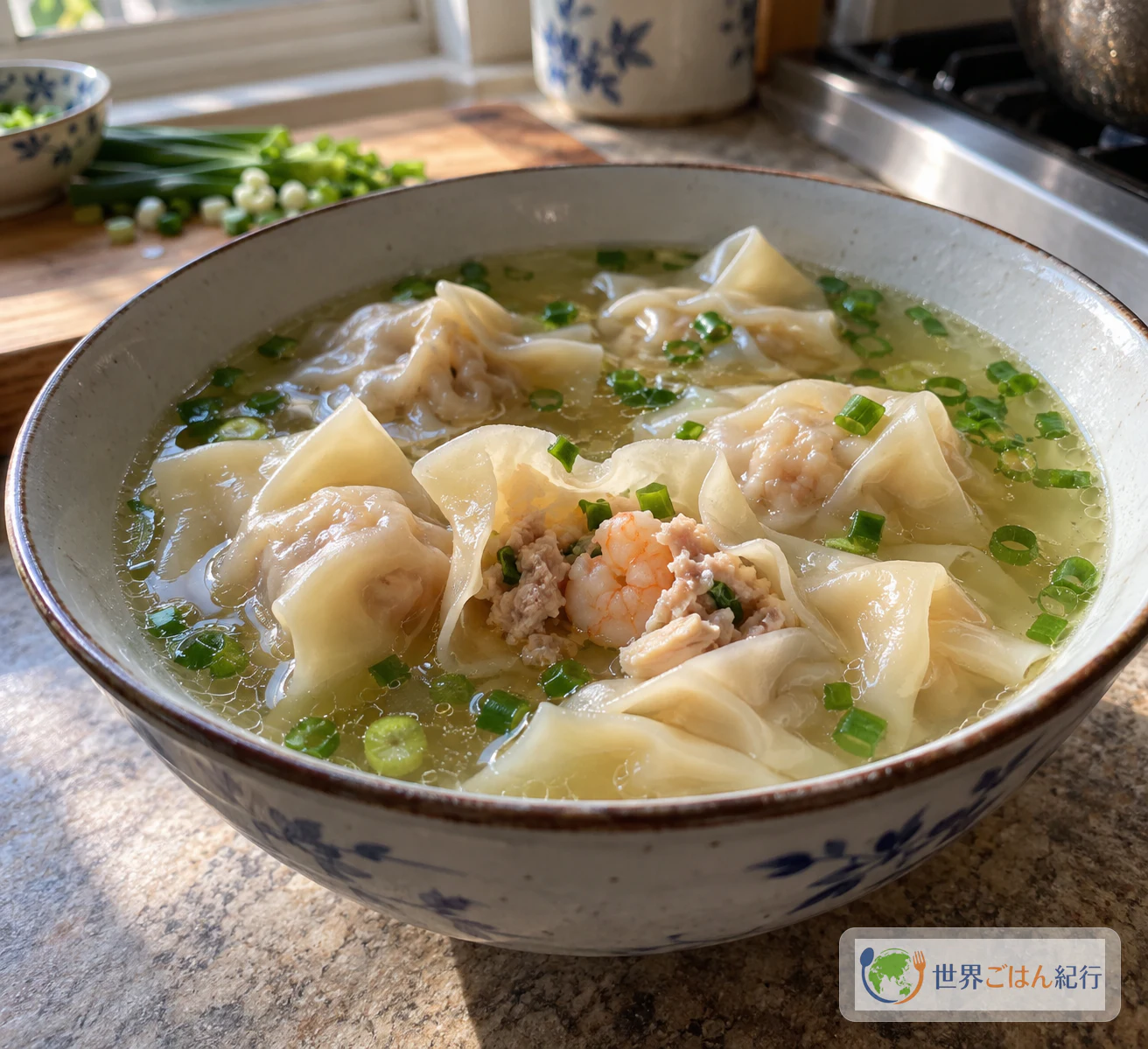
A bowl of broth arrives at the table still steaming. The square wrappers have gone soft and slightly translucent, their loose edges drifting in the liquid, and a spoonful lifts one wonton with its compact filling of shrimp and meat. A little light soy sauce, sesame oil, white pepper and chopped scallion waiting at the bottom of the bowl is all the seasoning the broth needs.
Húntun (馄饨) is a general Chinese name for these filled wheat-wrapper parcels, and across China the filling, the wrapper and the way they are served change from place to place. This recipe follows one specific home recipe: san xian wontons, filled with shrimp, pork and chicken, from The Woks of Life. It is one example of a soup-style húntun, not the standard form for all of China, and not the same recipe as Shanghai's pork-and-greens wontons, Cantonese wonton noodles or Sichuan chaoshou.
In simplified Chinese the dish is written 馄饨, in traditional characters 餛飩, and in Mandarin it is pronounced húntun. In Cantonese, the name is written 云吞 / 雲吞 (wàhn tān). These are not simply the same sound or the same regional name, so this article uses húntun for the Chinese dish in general.
Ingredients for San Xian Wontons: Filling, Wrappers and Broth
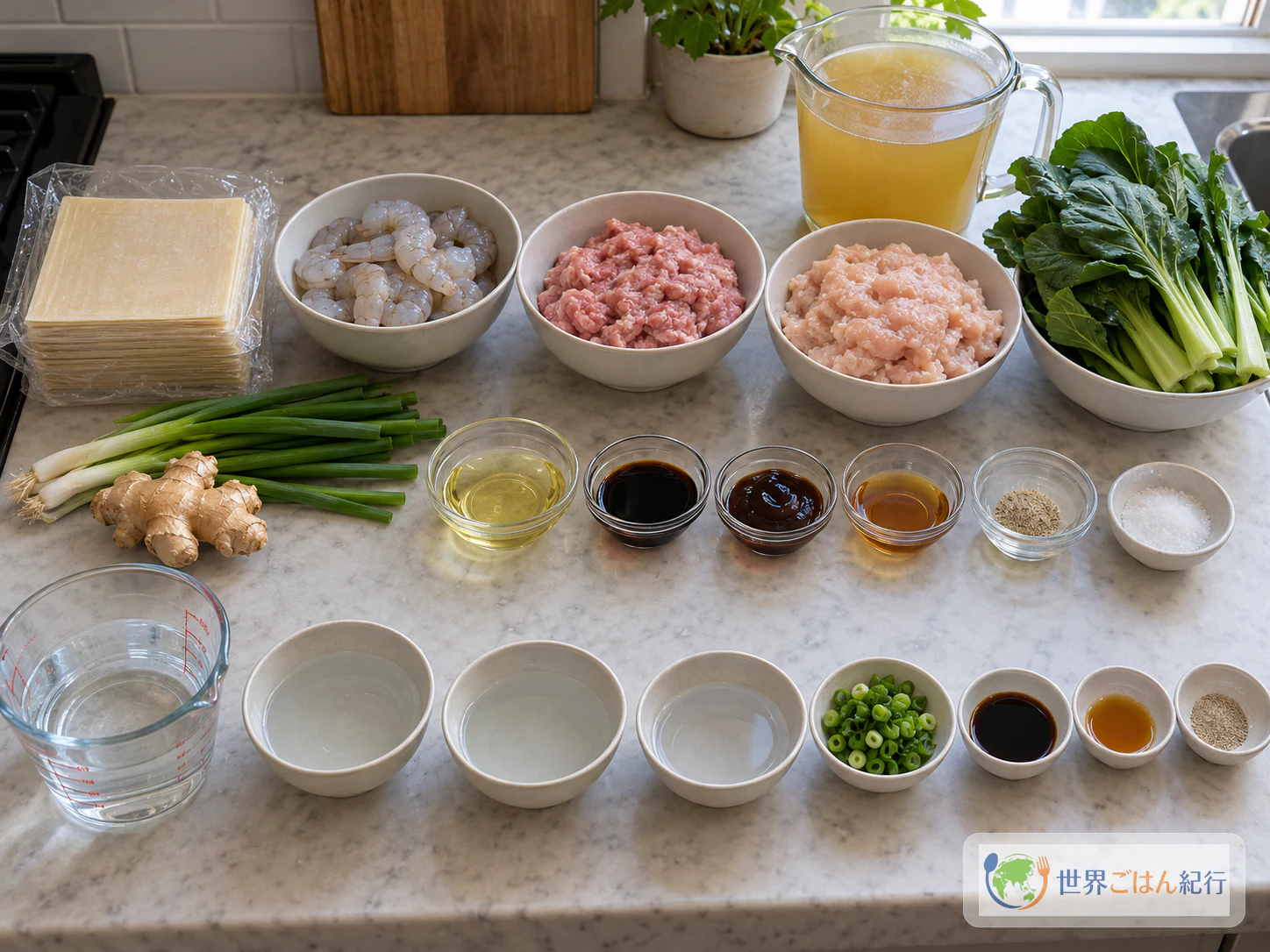
The filling amounts follow the original recipe, which uses US measures. The 8 oz of shrimp, pork and chicken are each about 227g by weight. The scallion is measured by volume in the original, so it is given here only as 1/4 cup. The original lists Serves 12 and about 7 dozen (around 84) wontons. Those are two different units, people and pieces, so they do not contradict each other. Both are the source's guide, not a measured yield, and they do not tell you how many wrappers are in 2 packages.
Equipment
- A large mixing bowl
- A rubber spatula or similar, for mixing the filling
- A teaspoon, for portioning the filling
- A small bowl for the sealing water
- A tray or plate for the wrapped wontons
- A large pot
- A slotted spoon
- A ladle
- A food thermometer
- Serving bowls
- Separate cutting boards, utensils and plates for raw meat and shrimp and for cooked wontons
Choosing and Swapping: Soy Sauce, Oyster Sauce, Greens and Wrappers
Light soy sauce (生抽) is the Chinese soy sauce used in both the filling and the bowls. If you can't find it, an all-purpose soy sauce can stand in, but start with a smaller amount and adjust, since color and saltiness differ. Japanese usukuchi ("light-colored") soy sauce is not the same product as Chinese light soy sauce, and Chinese dark soy sauce (老抽) should not be treated as a match for Japanese koikuchi either.
Oyster sauce varies by product, and some contain oysters. Check the ingredient and allergen labeling before buying.
Sesame oil smells different depending on how deeply the seeds were roasted. The bowls call for toasted sesame oil.
Leafy greens: the original simply calls for leafy greens. This recipe uses komatsuna; another leafy green you can blanch quickly works in the same role.
Wrappers: use square wonton wrappers. Package sizes differ, so don't assume a fixed count of wrappers or finished wontons.
This dish contains shrimp, pork, chicken, wheat (wrappers), soy (soy sauce), sesame (sesame oil), and in many oyster sauces, shellfish. Allergens differ by product, so check the actual packaging of wrappers, sauces and broth.
Method: Mixing, Wrapping and Cooking San Xian Wontons
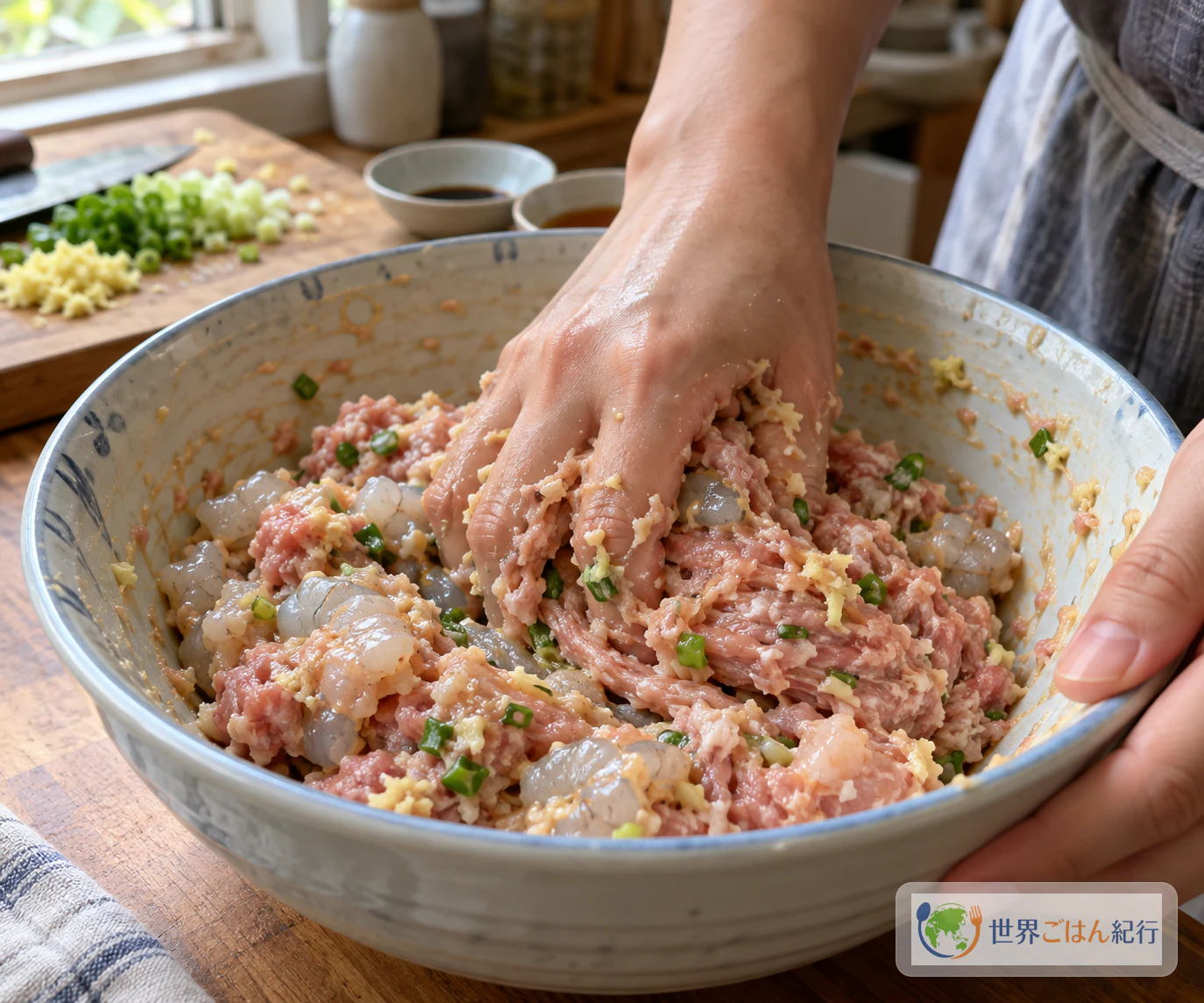
The original recipe's cooking time and the moment the wontons float are useful cues, but they do not on their own confirm that raw pork, chicken and shrimp are fully cooked. Use a food thermometer to check the center of the filling.
At the Table: A Simple Bowl with Greens on the Side
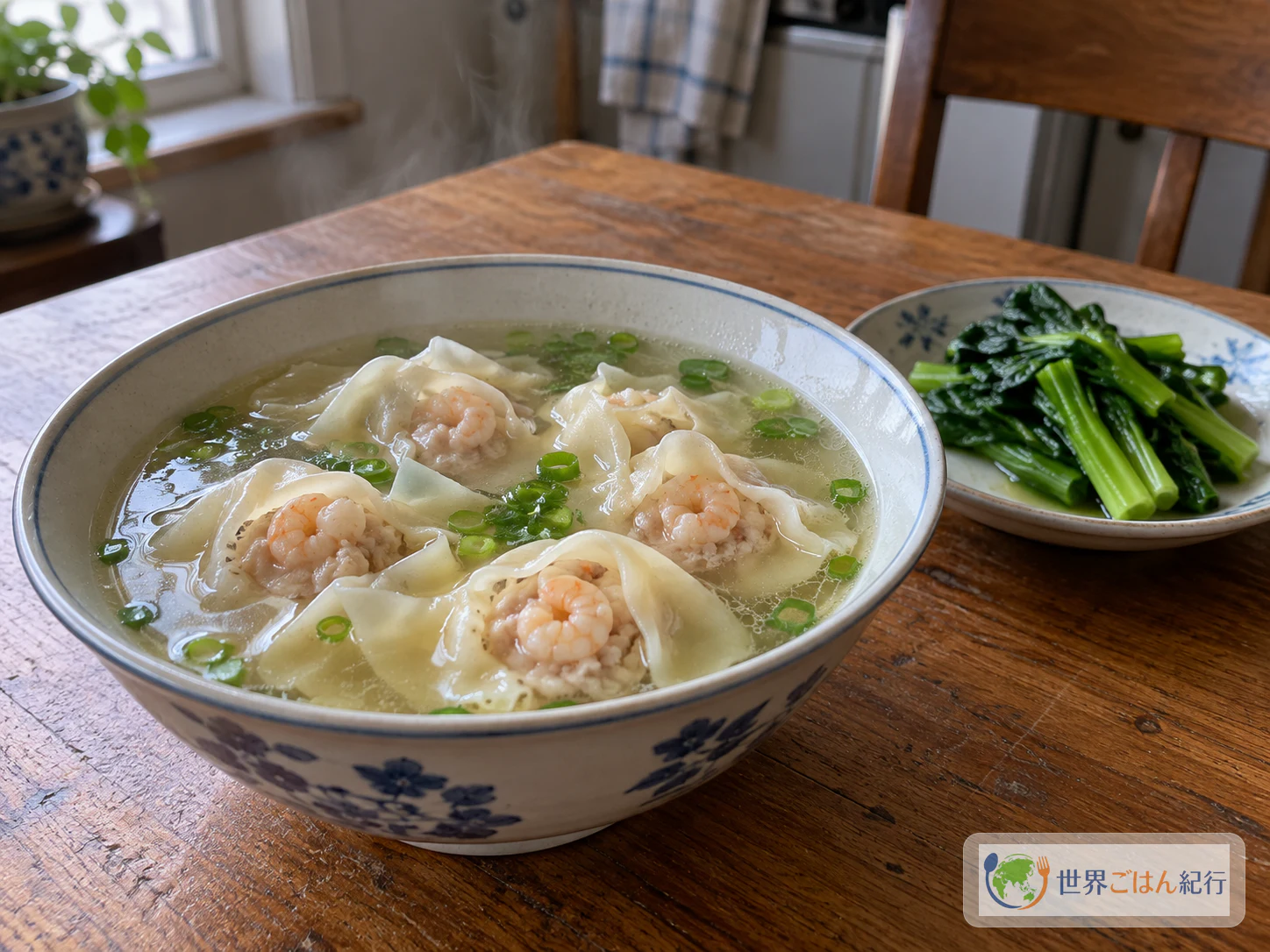
The bowl stays plain: clear broth, the soft wrappers and the small three-part filling, with scallion on top. The greens are served as a side rather than mixed into the filling, which keeps this recipe distinct from the pork-and-greens wontons of Shanghai.
If you want to freeze wontons, the original freezes them spread apart so they don't touch, then moves them to a bag once they are firm. Don't leave them uncovered in the freezer for more than 12 hours, to keep the wrappers from cracking. This is not a guide to how long wontons can sit out at room temperature. For cooked leftovers, the Ministry of Health, Labour and Welfare's home guideline is to divide them into shallow portions to cool, and to reheat to 75°C or higher. No storage period is given here.
Keeping the Wrappers Intact: Common Problems and Fixes
Most wrapper problems come back to three points from the original recipe: about a teaspoon of filling, moistened edges, and water moved gently rather than churned.
| Problem | What to look at | What to do |
|---|---|---|
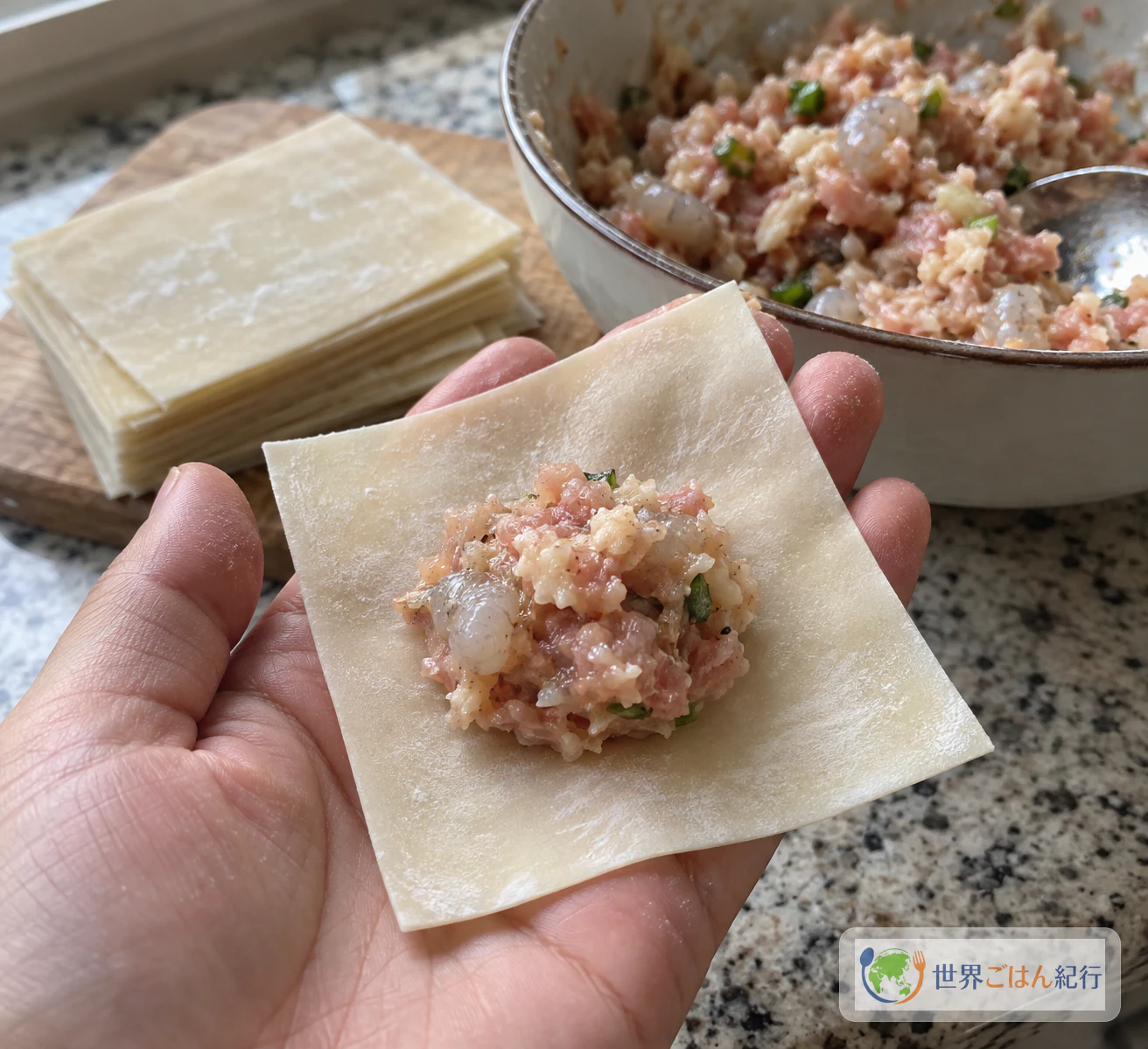
| The wrapper tears while folding | Too much filling | Keep to about 1 teaspoon per wrapper, leaving clean edges |
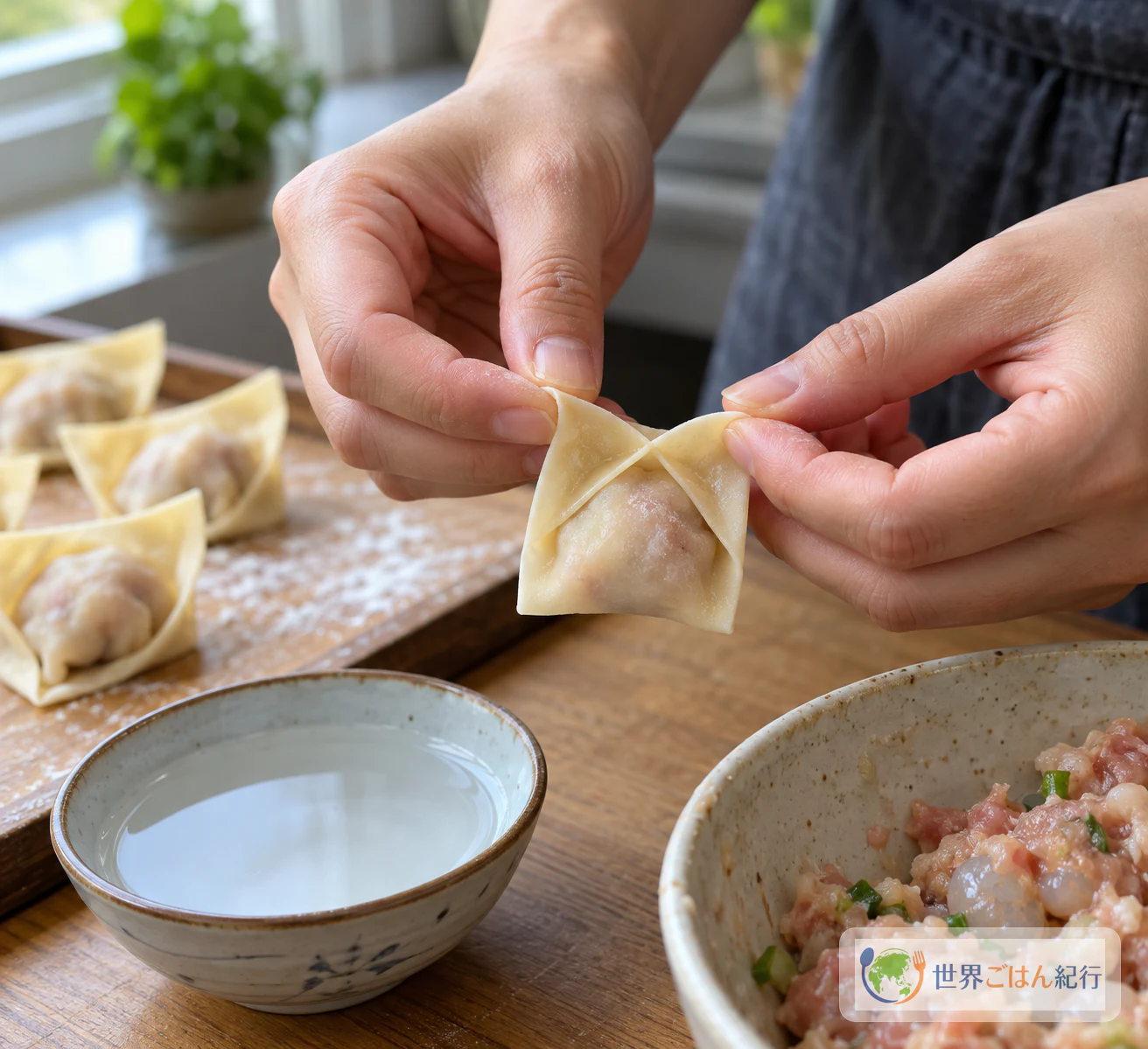
| The wonton opens in the pot | Edges or corners not sealed | Moisten one side and the filling-side corner with water, and press the seams firmly |
| Wontons stick to the bottom | Not moved after going in | Gently move the water right after adding them |
| The water is boiling too hard | Heat too high | Add the 1/2 cup cold top-up water and keep the heat at medium |
| Not sure they're cooked through | Relying on floating or time alone | Check the center of the thickest filling with a food thermometer: 75°C or higher for at least 1 minute |
| Seasoning feels off | Filling not tasted | Cook 2 test wontons thoroughly first, taste, then adjust the remaining filling |
| Frozen wrappers crack | Left uncovered too long | Move frozen wontons to a bag once firm |
When cooking frozen wontons, avoid crowding the pot, so the water can move around them, and still check the center temperature.
Regional Variations: Shanghai, Cantonese and Sichuan Wontons
Húntun can't be pinned to a single filling or a single way of eating. The Shanghai Municipal People's Government's food guide gives a few contrasting examples. These are regional examples from that page, not fixed definitions for every shop or household.
| Style | Filling and wrapper | How it's served |
|---|---|---|
| Shanghai cài ròu húntun (菜肉馄饨) | Pork combined with leafy greens or shepherd's purse (荠菜) | A Shanghai pork-and-vegetable wonton |
| Cantonese wontons | Often thin wrappers, a smaller filling, and shrimp | Often served with noodles |
| Sichuan chaoshou (抄手) | — | Often seasoned with chili oil and Sichuan pepper |
| This recipe: san xian | Shrimp, pork and chicken in square wrappers | In warm chicken broth, greens on the side |
This san xian recipe is one example and is not the representative recipe for Shanghai's cài ròu húntun or for Cantonese wonton noodles. Wonton noodles from Hong Kong, Macau and elsewhere combine wontons with noodles and are treated as separate dishes; this article does not include noodles.
Culture and History: An Old Name with a Complicated Story
The National Museum of China's explanation of jiaozi, dim sum and food utensils draws on ancient texts and excavated materials, including dumplings found at Turpan. It explains how the food name 馄饨 appears around the end of the Han dynasty in relation to what we now think of as jiaozi, and gives the Ming dynasty as a period when a dedicated name for jiaozi appears, with húntun, jiaozi and shaomai being distinguished. That material is about the history of dumplings and dim sum, so it doesn't prove a single origin for today's húntun. What it does show is that the names and shapes of these foods did not change in a simple, straight line.
In Shanghai, wontons are also an everyday food, and the city's guide describes chái pán húntun (柴爿馄饨) stalls: mobile vendors who carried their tools and small stoves on bamboo poles. The same page presents a widely held account that people from Anhui spread these stalls, and mentions newspaper advertisements from the 1930s and 1940s. These are presented here as the city's page describes them, not as independently verified history.
For more dishes from across the country, see China.
Frequently Asked Questions
Whatever you change, keep the two checks from the method: cook the 2 test wontons thoroughly before tasting, and confirm the center of the filling reaches 75°C or higher for at least 1 minute.
Can I eat these without soup?
This recipe is built around a warm soup, and it doesn't include a separate dressing for serving them dry. Dry or sauced styles exist across regions and households, such as Sichuan chaoshou with chili oil, but this article doesn't set a recipe for them.
Is this the same as Shanghai's pork-and-vegetable wontons?
No. Shanghai's cài ròu húntun combines pork with leafy greens or shepherd's purse. This recipe uses shrimp, pork and chicken, with greens served on the side rather than in the filling.
Is this the same as Hong Kong wonton noodles?
No. Wonton noodles pair wontons with noodles and are a separate dish. This article covers wontons in broth without noodles.
Do frozen wontons need thawing?
The original recipe adds them to the pot frozen, without thawing. Don't overcrowd the pot, move the water gently so they don't stick, and confirm with a thermometer that the center of the filling reaches 75°C or higher for at least 1 minute.
How many wontons does this make?
The original gives Serves 12 and about 7 dozen (around 84) wontons. These are the source's guide, not a measured yield, and the actual count depends on your wrapper size and how many wrappers your 2 packages contain.
Can I use Japanese soy sauce instead of Chinese light soy sauce?
An all-purpose soy sauce can stand in if you start with a smaller amount and adjust, since color and saltiness differ. Japanese usukuchi soy sauce is not the same as Chinese light soy sauce.
Sources
- The Woks of Life (recipe by Judy Leung), "San Xian Wontons (Shrimp, Pork & Chicken Wontons)." The filling amounts and method, mixing in one direction for 5–10 minutes, filling square wrappers with about a teaspoon and overlapping the corners, test-cooking 2 wontons, boiling uncovered over medium heat for about 3–5 minutes until floating and plump, the cold-water top-up, broth or cooking-water soup, bowl seasonings, leafy greens, freezing, and the Serves 12 / about 7 dozen guide. https://thewoksoflife.com/san-xian-wontons/
- Shanghai Municipal People's Government, "Pork and vegetable wontons." Shanghai's pork-and-greens wontons, the comparison with Cantonese and Sichuan styles, chái pán húntun mobile stalls, the widely held account of their spread, and the mention of 1930s–40s newspaper advertisements. https://english.shanghai.gov.cn/en-GlobalTasteinShanghai2026-LocalFlavors/20260605/81483538821d4e7ebfb82b5c8267c946.html
- National Museum of China, "饺子、点心及食具" (Jiaozi, Dim Sum and Food Utensils). The museum's explanation of ancient texts and excavated materials on dumplings, the old food name 馄饨, and Ming-dynasty distinctions among húntun, jiaozi and shaomai. Not used as proof of a single origin for modern wontons. https://www.chnmuseum.cn/zp/zpml/kgfjp/202111/t20211116_252187.shtml
- Ministry of Health, Labour and Welfare (Japan), "家庭での食中毒予防" (Preventing Food Poisoning at Home). The home guideline of heating the center to 75°C for at least 1 minute, preventing cross-contamination from raw meat and seafood, not leaving food at room temperature for long, cooling leftovers in shallow portions, and reheating to 75°C or higher. https://www.mhlw.go.jp/stf/seisakunitsuite/bunya/kenkou_iryou/shokuhin/syokuchu/01_00008.html