Lotus Paste, a Salted Yolk, and a Crust That Needs Time to Settle
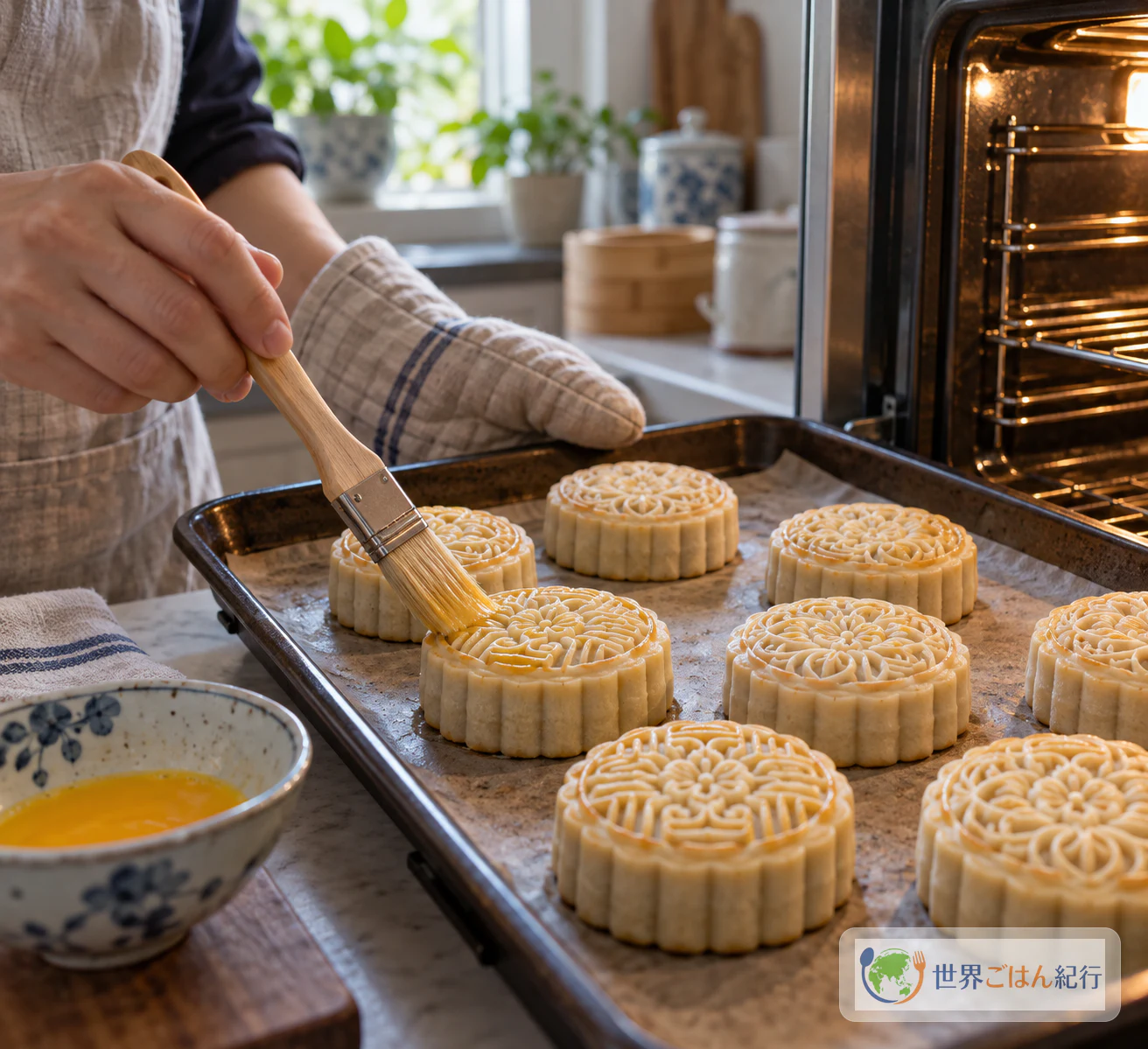
Cook the lotus paste until it is soft but holds its shape, wrap it in a thin, even skin, and press a clear pattern. After the baked cakes cool completely, refrigerate them in an airtight container; the source describes a one-to-two-day rest for the crust to regain its sheen.
On the night of the Mid-Autumn Festival in Beijing, families set out mooncakes as offerings to the moon, then gather to look up at it while enjoying the cakes with tea. That is how Beijing's city government describes the custom in its guide to local festival traditions. It is a Beijing custom, and it is worth reading as one place's way of celebrating rather than a single practice shared across all of China.
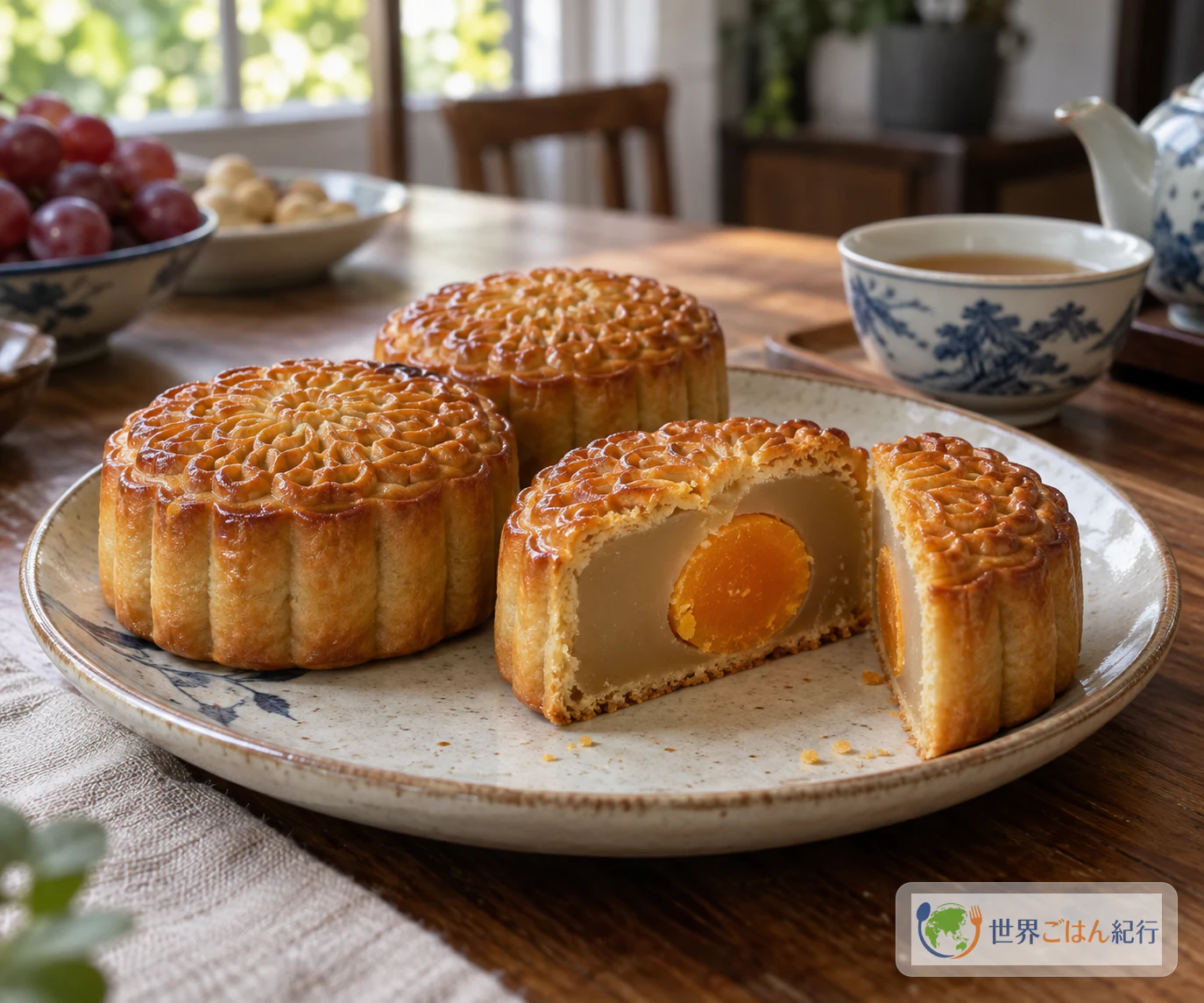
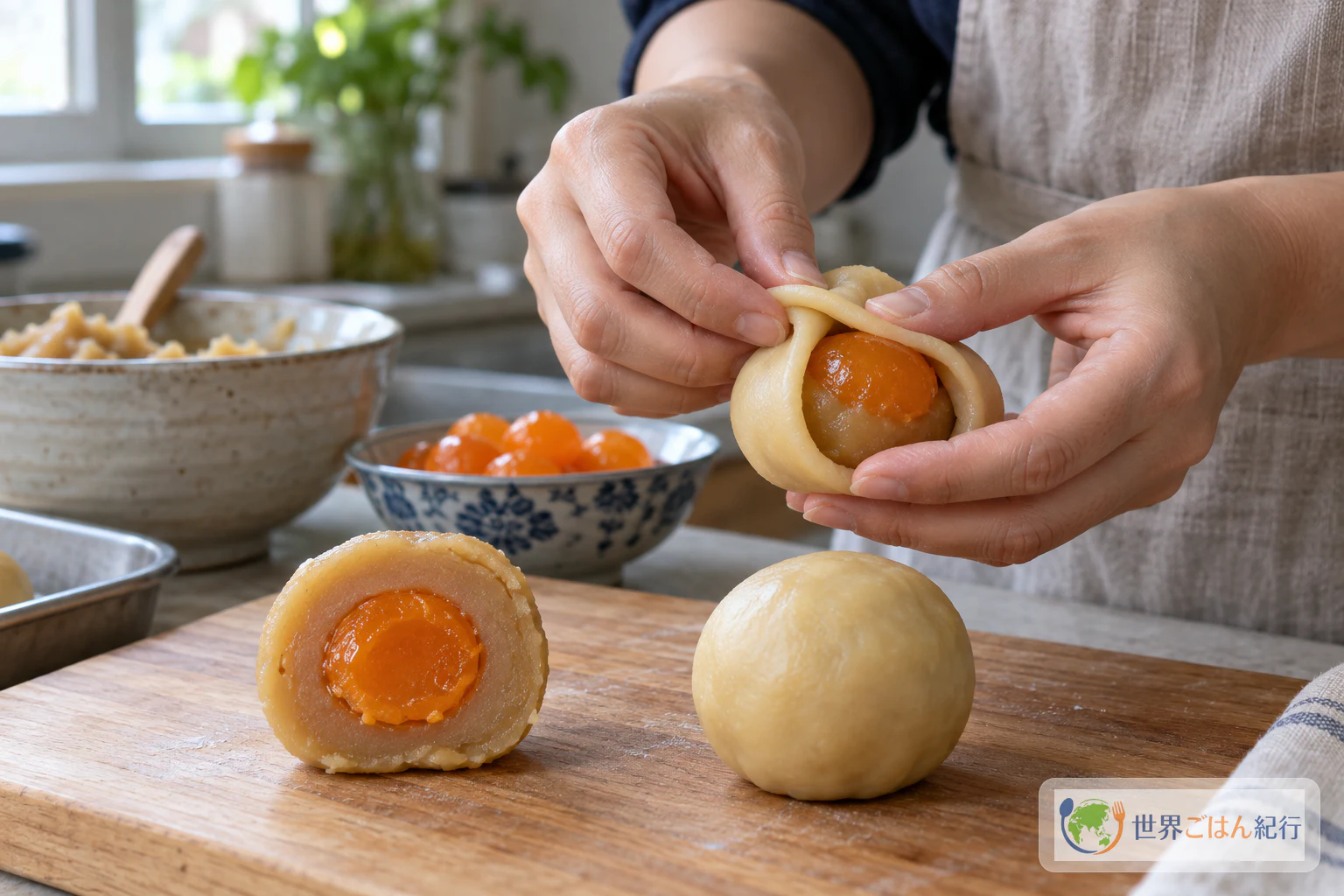
The mooncakes in this recipe come from a different part of that wide picture: the Cantonese style, where a thin baked skin is wrapped around a dense filling and pressed into a patterned mold. Here the filling is lotus seed paste (lianrong), and twelve of the eighteen cakes hide a salted duck egg yolk in the center. One detail of the source recipe shapes the whole rhythm of the work: straight out of the oven the crust looks dry, and only after cooling and resting in a sealed container for one to two days does it take on its sheen.
This article does not cover every kind of mooncake. It follows one Cantonese lotus-and-yolk recipe to make 18 cakes: 12 with salted egg yolk and 6 with lotus paste only. Plan to start the night before, when the lotus seeds go into water, and note that the patterned version shown here needs a mooncake mold (a hand-shaped alternative is described below).
Mooncake is 月饼 in simplified Chinese and 月餅 in traditional Chinese, read yuèbǐng in Mandarin pinyin.
Mooncakes Differ by Region in Shape and Filling
"Mooncake" is an umbrella name, not one fixed recipe. Skins and fillings vary from place to place. Beijing's festival guide itself distinguishes the red mooncakes, white mooncakes and tuanyuan bing (團圓餅, "reunion cakes") eaten in old Beijing from the Cantonese-style mooncake. The cakes made here belong to the Cantonese baked type: a thin skin made with golden syrup, a molded pattern, and a two-stage bake.
Many stories circulate about where mooncakes came from, but the sources used for this article do not confirm any origin date or legend, so none is asserted here. What can be said with confidence is the scene the Beijing guide describes: offerings to the moon, a family table, moon viewing and tea.
Even within the Cantonese style, home recipes differ. A Cantonese-language SBS cooking feature, for example, presents a traditional Cantonese mooncake with red bean paste and salted egg yolk, made with low-gluten flour, inverted syrup, corn oil and lye water, in different amounts and with a different number of cakes. It is a separate recipe, and nothing from it is mixed into the method below.
Lotus Paste and Salted Yolk: How the Work Is Laid Out
The flavor rests on a contrast of ingredients: a sweet, smooth lotus seed paste around a salty, crumbly salted duck egg yolk. The six cakes without yolk give a pure lotus version from the same batch.
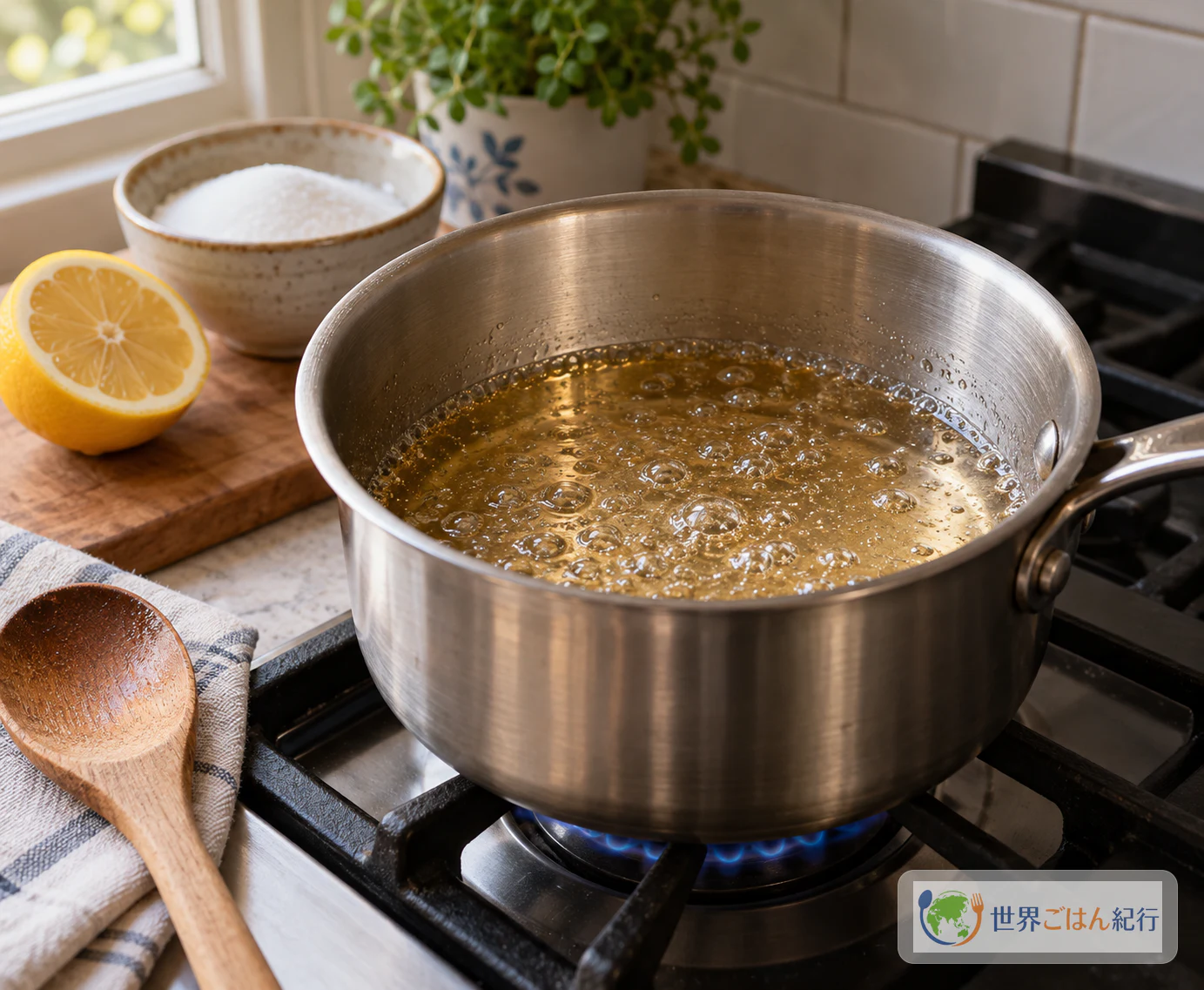
The work splits naturally across two days. Ahead of time: make the golden syrup and cook the lotus paste so both can cool completely. On baking day: prepare the yolks, make and rest the dough, divide, wrap, press and bake. The source recipe lists a total of about 14 hours, including the overnight soak of the lotus seeds; actual time will vary with your equipment, cooling time and how quickly you shape.
The source recipe is built around a 100g mooncake mold, with 25g of dough per cake, 58g of lotus paste plus a salted yolk of about 22g for the yolk cakes, and 70g of lotus paste for the plain ones. Treat the "100g" in the mold's name as a size guide, not a promise that each finished cake weighs exactly 100g. If you have no mold, the source suggests shaping the cakes by hand into discs about 3 inches across and about 1 inch high; they will not carry a pattern, and they will look different from the photos here.
Ingredients for 18 Mooncakes (12 with Yolk, 6 Without)
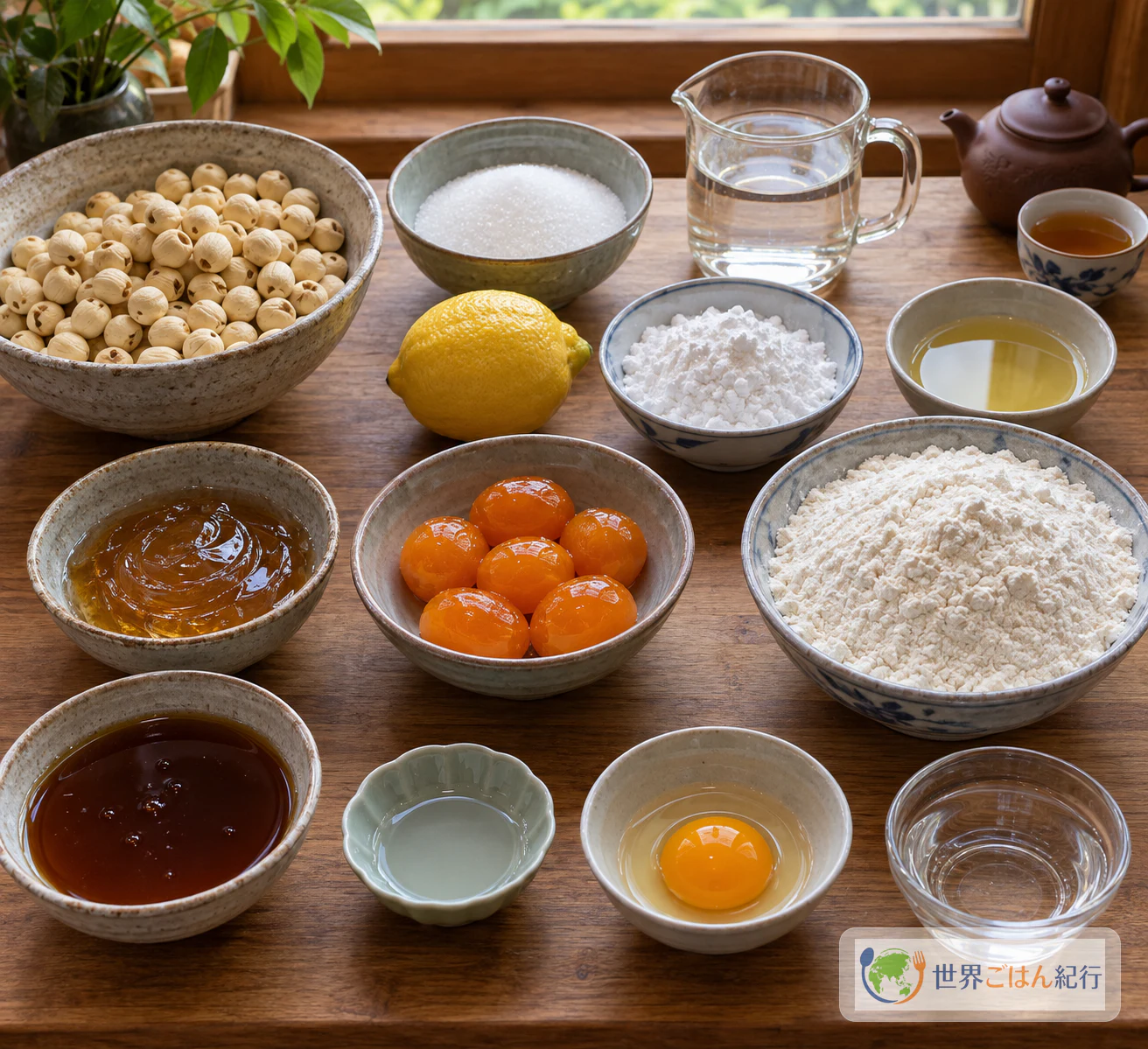
Amounts follow the source recipe card in its own units. Some lines are given by weight and others in cups and spoons; they are kept as written and not converted.
The main recipe contains no salt, and none is added here.
Equipment
- Saucepan for the syrup
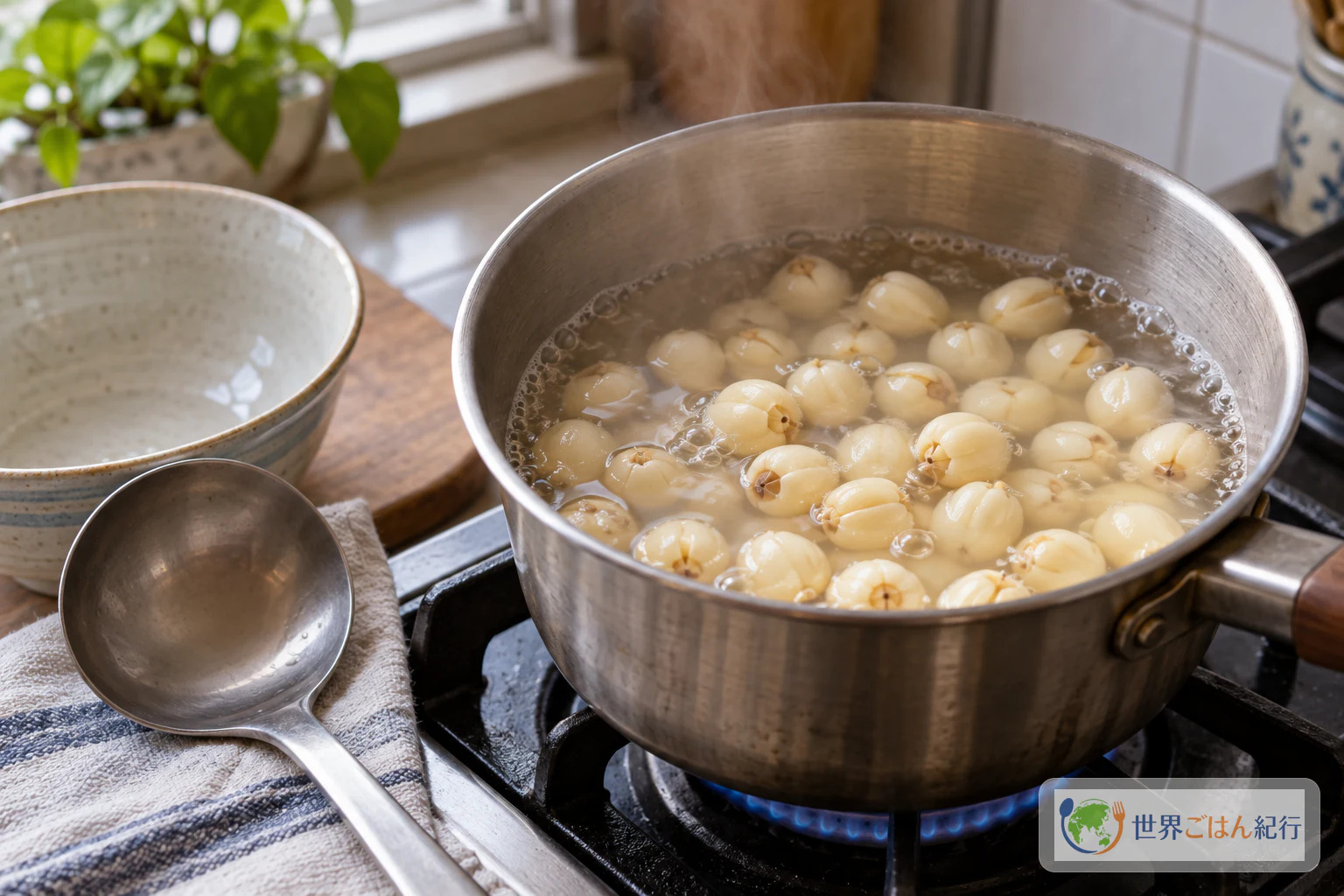
- Pot for boiling the lotus seeds, plus a bowl to reserve the cooking liquid
- Food processor, for puréeing the lotus seeds smoothly
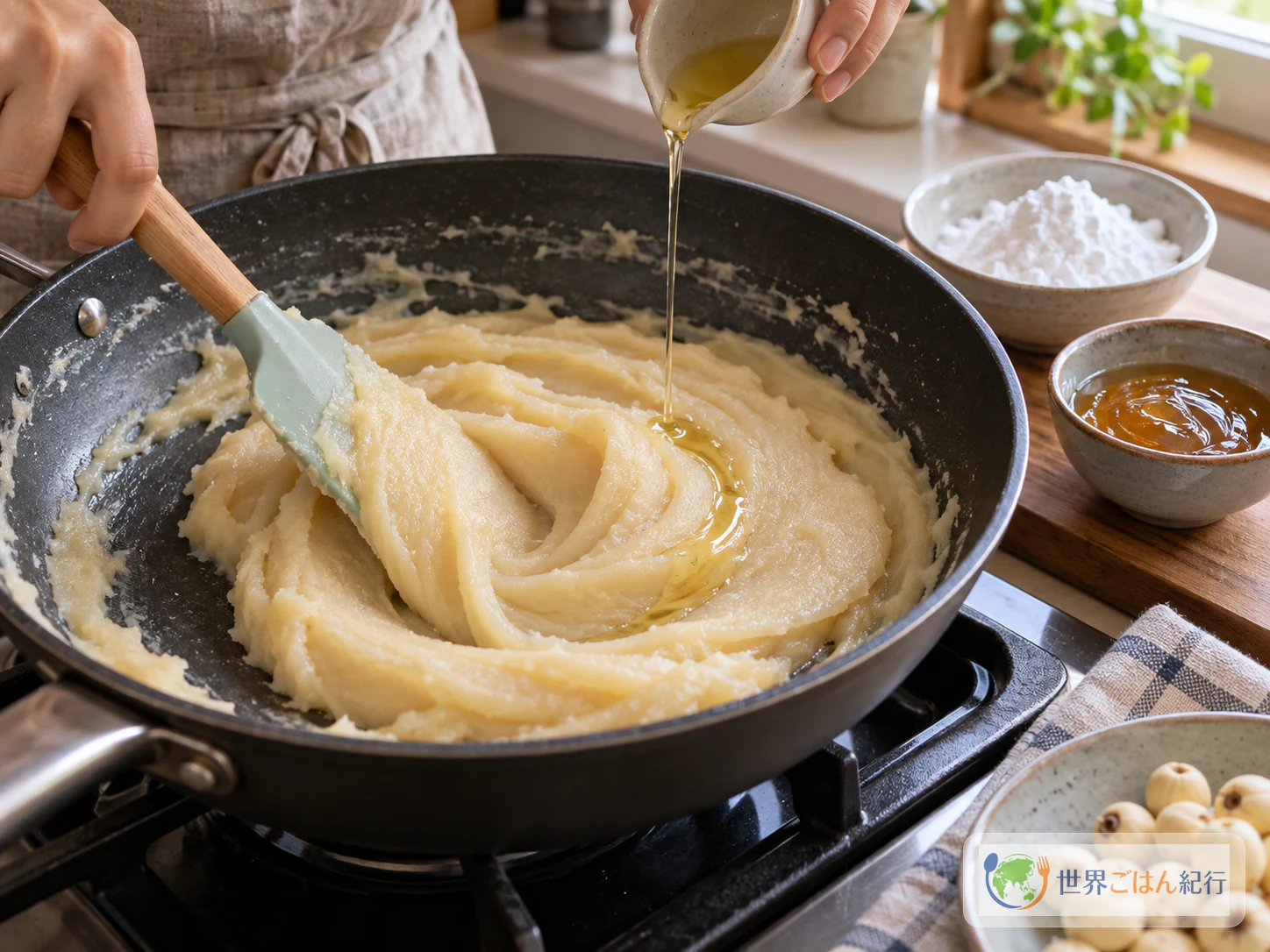
- Wide pan and a silicone spatula, for turning the paste constantly from the bottom
- Digital scale, for dividing 25g, 58g and 70g portions
- Mixing bowl and rubber spatula for the dough
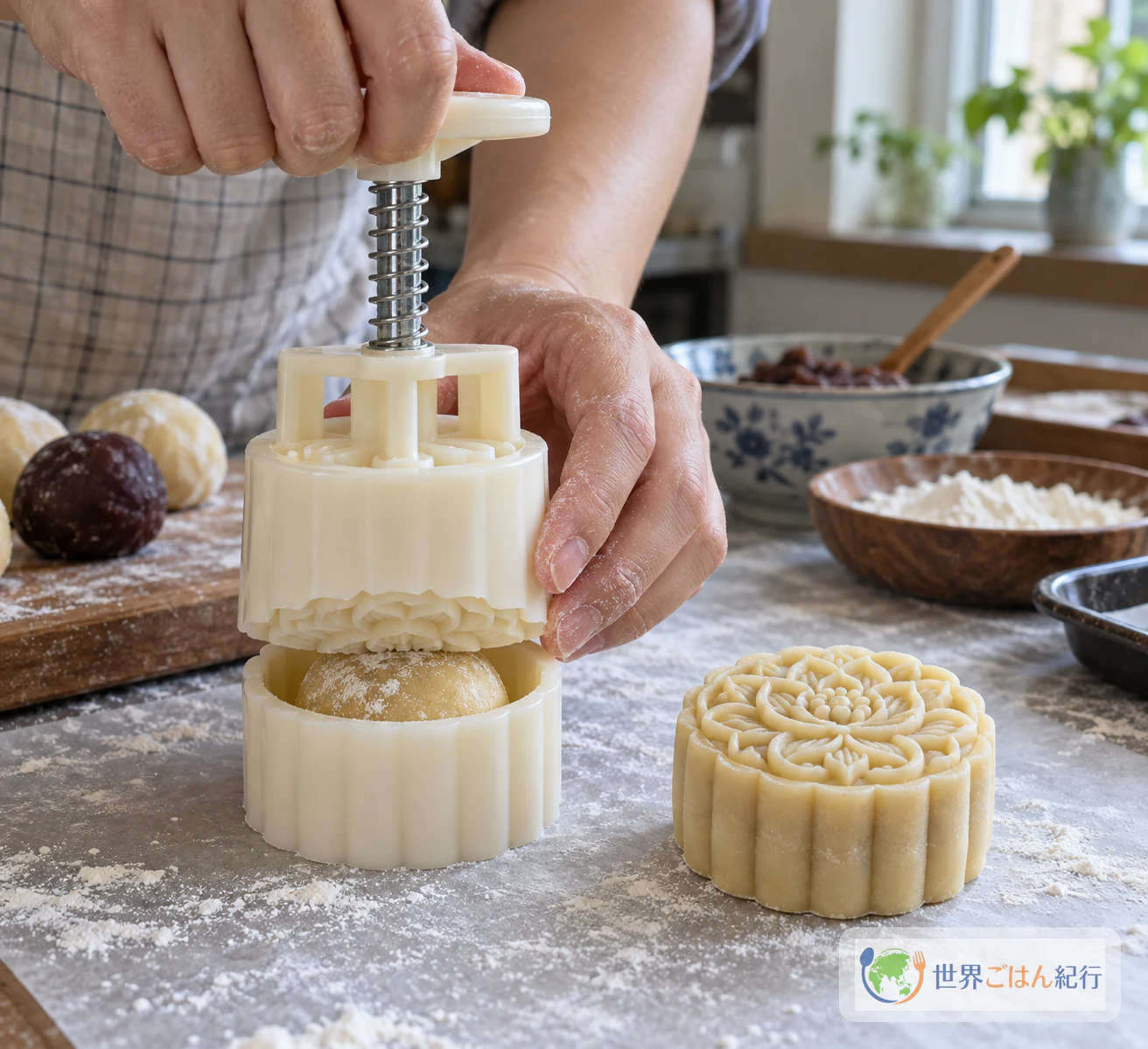
- 100g mooncake mold (or shape by hand as described above)
- Spray bottle for misting, or just your fingertips
- Pastry brush for the egg wash (the source recommends a natural-bristle brush)
- Baking tray and oven mitts
- Oven thermometer, to check your oven against its dial
Choosing Ingredients and Substitutions
The written method and recipe card on the source page do not fully agree, and this recipe makes a fixed choice. The written method on the source page gives the dough flour as 1 2/3 cups (about 250g), while the recipe card says 1 3/4 cups. This recipe follows the card's 1 3/4 cups and does not convert it to grams. Likewise, the card lists 4 cups of water for the lotus seeds while the written method says 4 to 4 1/2 cups: start with 4 cups and make sure the seeds sit below the surface of the water.
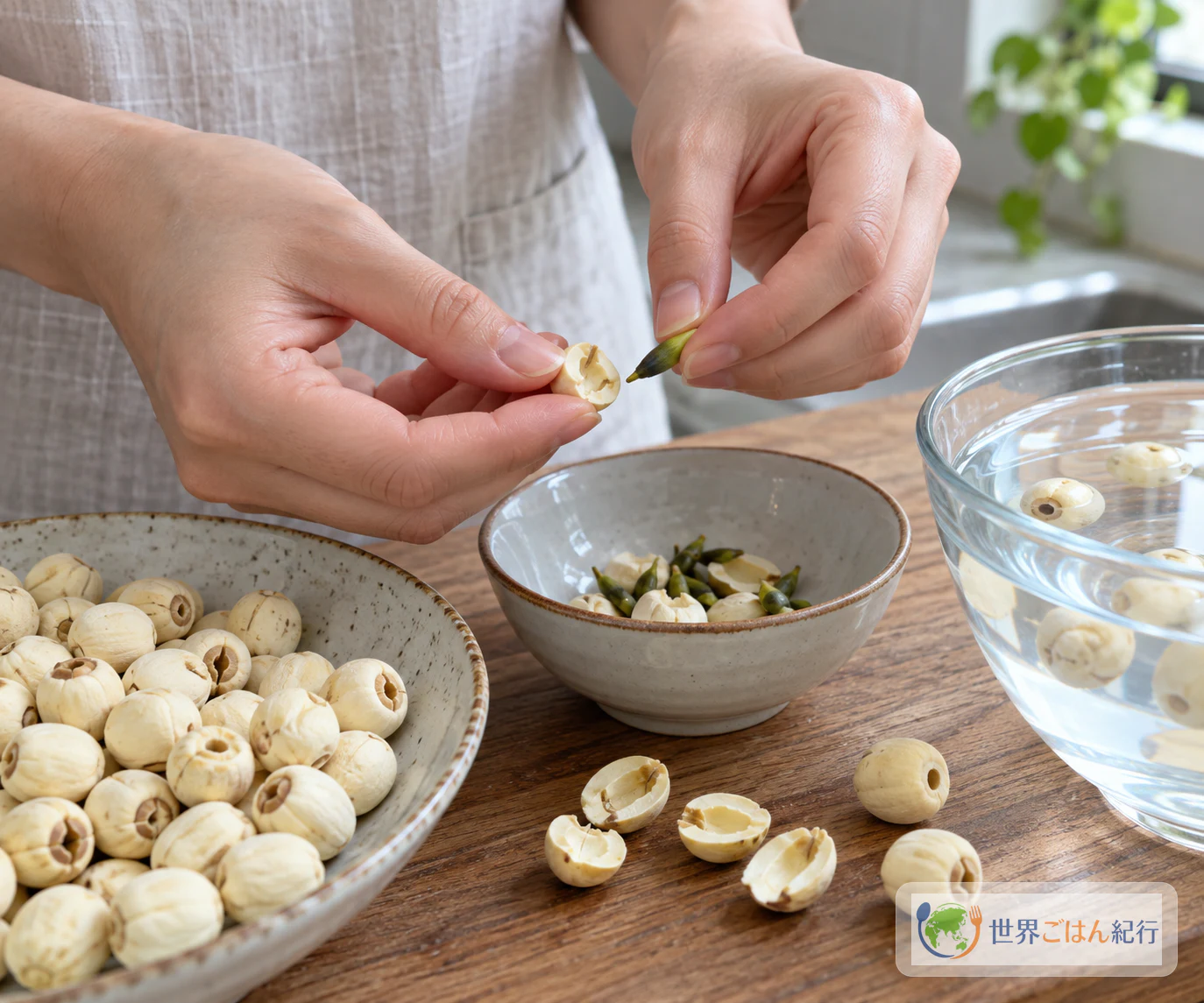
- Lotus seeds: look for dried lotus seeds at Chinese grocers or online. Split, germ-removed seeds shorten the prep. Swapping in white beans or red beans makes a different paste; the lotus aroma is lost, and it is no longer lianrong.
- Powdered sugar: keep powdered sugar for the paste. Granulated sugar has a different grain and is not part of this formula.
- Oil: peanut oil and corn oil are both options in the source. Corn oil avoids peanut. An ordinary neutral vegetable oil is a possible editorial alternative at the same volume, but the aroma will differ and this swap is untested.
- Maltose: sold as maltose at Chinese grocers. Other thick glucose syrups vary by product and are not the same thing; if you use one, the paste may set softer or firmer.
- Lye water: use a product labeled as food-grade alkaline water (kansui / lye water), and use only the small amount given. Do not substitute baking soda dissolved in water at the same amount.
- Salted duck egg yolks: check whether the product is raw or cooked before you buy. The main method uses cooked individual yolks. Never assume a product of unknown status is ready to eat.
- Store-bought lotus paste: it usually already contains sugar and oil, so it cannot simply replace the 12 oz of dried lotus seeds in this formula. Check the label for how much is lotus seed versus other ingredients.
This recipe contains wheat and egg (chicken egg in the wash, duck egg in the salted yolks), and peanut if you choose peanut oil. Corn oil is an option in the source. Check product labels on lye water, maltose, salted yolks and any prepared items for allergens and shared-facility statements, and watch for cross-contact on shared equipment.
Method: From Golden Syrup to the Rested Crust
Steps 1 to 3 can be done the day before so the syrup and paste are fully cool. Steps 4 to 9 happen on baking day.
Troubleshooting: Sticky Paste, Torn Skins, Blurry Patterns
| Problem | What to look at | What to do |
|---|---|---|
| The paste sticks to your hands | It wasn't cooked long enough to hold its shape | Return it to the pan and keep turning it until it holds its shape. Judge by texture, not by the 30-minute guide; drying time depends on your heat |
| The skin tears or the filling shows | Uneven dough thickness, or trapped air | Spread the dough evenly around the filling and press out the air as you seal. Patch small tears with the extra dough |
| The pattern is blurry or the cake won't release | Not enough flour in the mold, or dough stuck in the details | Dust the inside of the mold every time and tap off the excess. Clean the details before pressing again |
| The surface cracks while baking | The cakes went in dry | Mist with water before the first bake, as in step 8. Don't raise the temperature on your own |
| The baked cakes look dull | They are freshly baked | Cool completely, refrigerate in an airtight container, and allow 1–2 days for the sheen the source describes |
Variations
These are kept separate from the main method above.
- Lotus paste only: the six 70g cakes without yolk are already part of the standard batch. If you want more of them, remember that the paste amount per cake changes from 58g to 70g, so the yolk/no-yolk split of this formula no longer works as written.
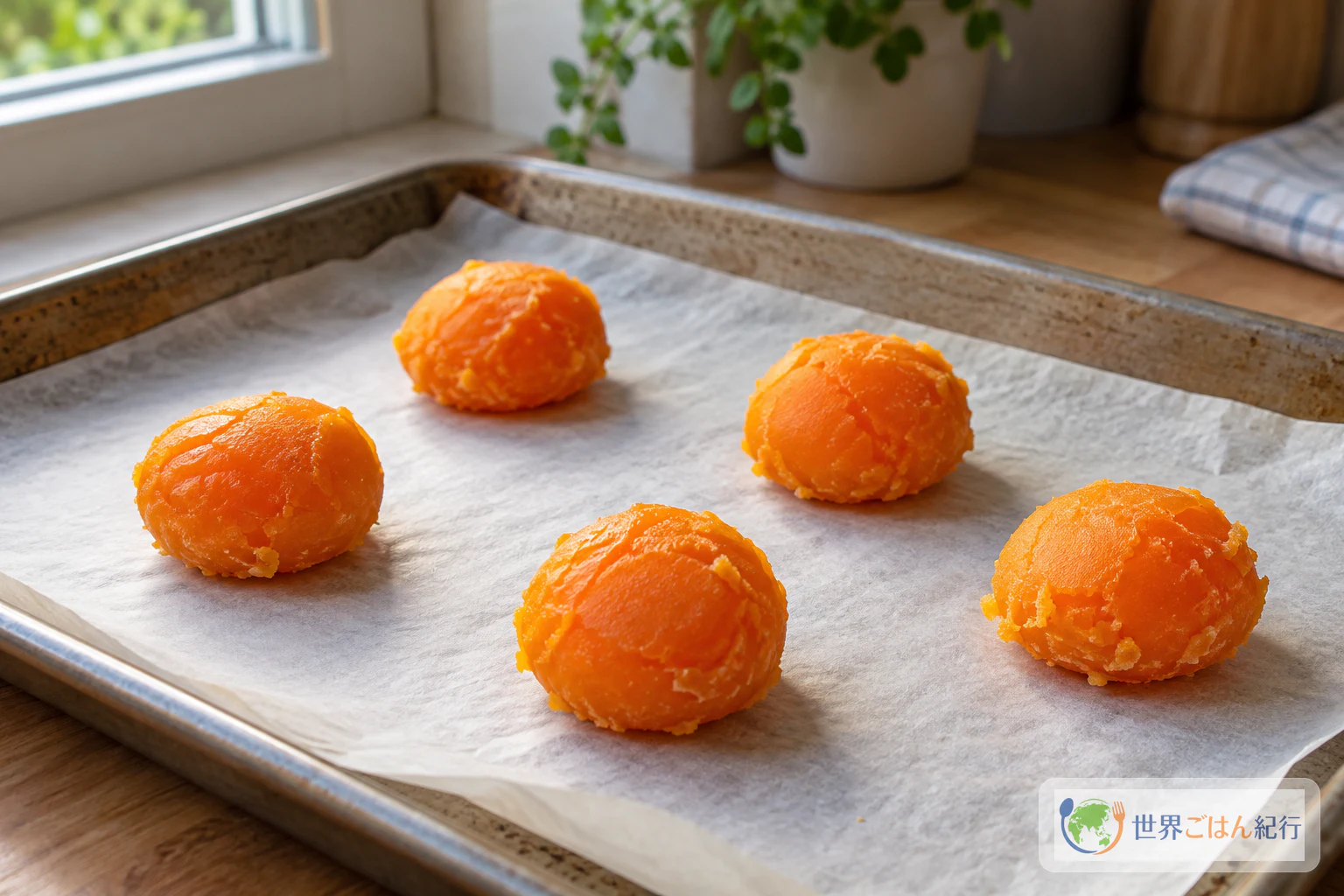
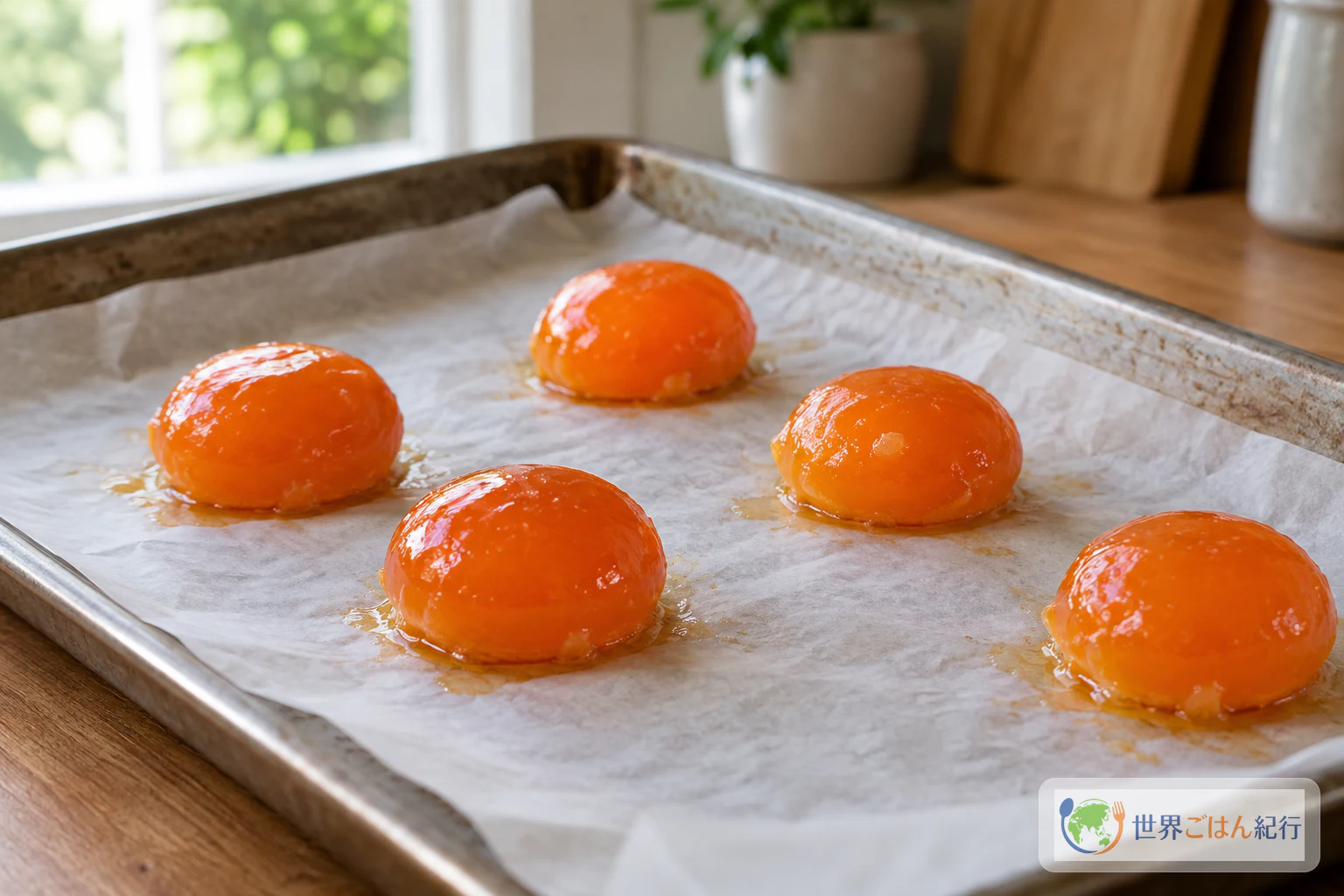
- Raw salted yolks: for yolks taken from uncooked salted duck eggs, the source rinses off the egg white, optionally coats the yolks lightly with baijiu (Chinese spirit) for aroma, bakes them at 175°C for 8–10 minutes and cools them completely. The baijiu is for aroma only; it is not a food-safety step.
- Yolks from fully cooked whole salted eggs: according to the source, yolks taken out of whole salted eggs that are already fully cooked do not need further baking.
- Corn oil instead of peanut oil: an option in the source for both the paste and the dough. Expect a difference in aroma.
- Store-bought lotus paste: sweetness and firmness depend on how much sugar and oil the product already contains, so no substitute amount is given here.
- Red bean paste: the SBS recipe makes Cantonese mooncakes with red bean paste, but its skin, amounts and baking are different. Treat it as its own recipe rather than mixing it into this one.
When to Eat Them: The Crust After Resting
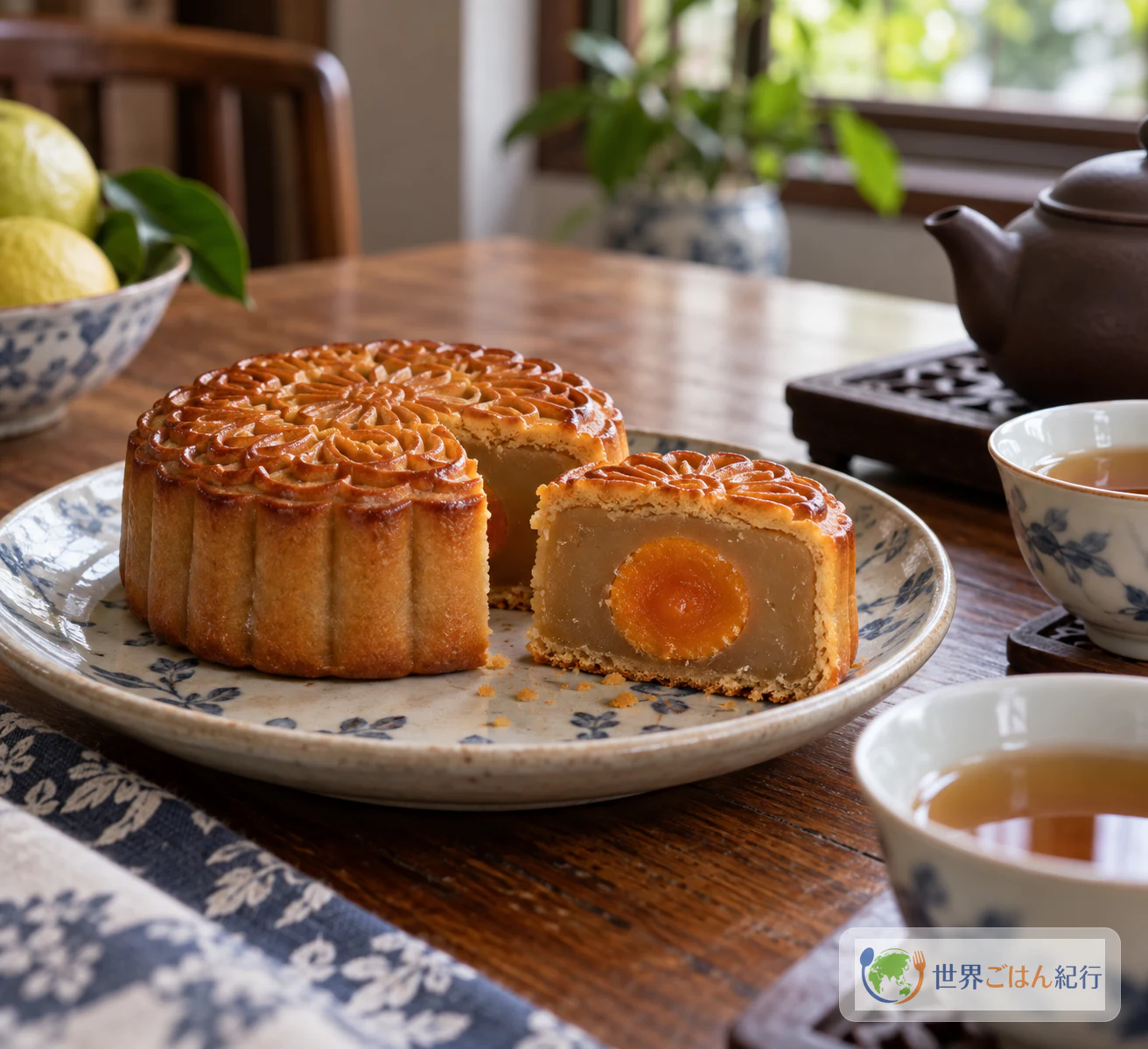
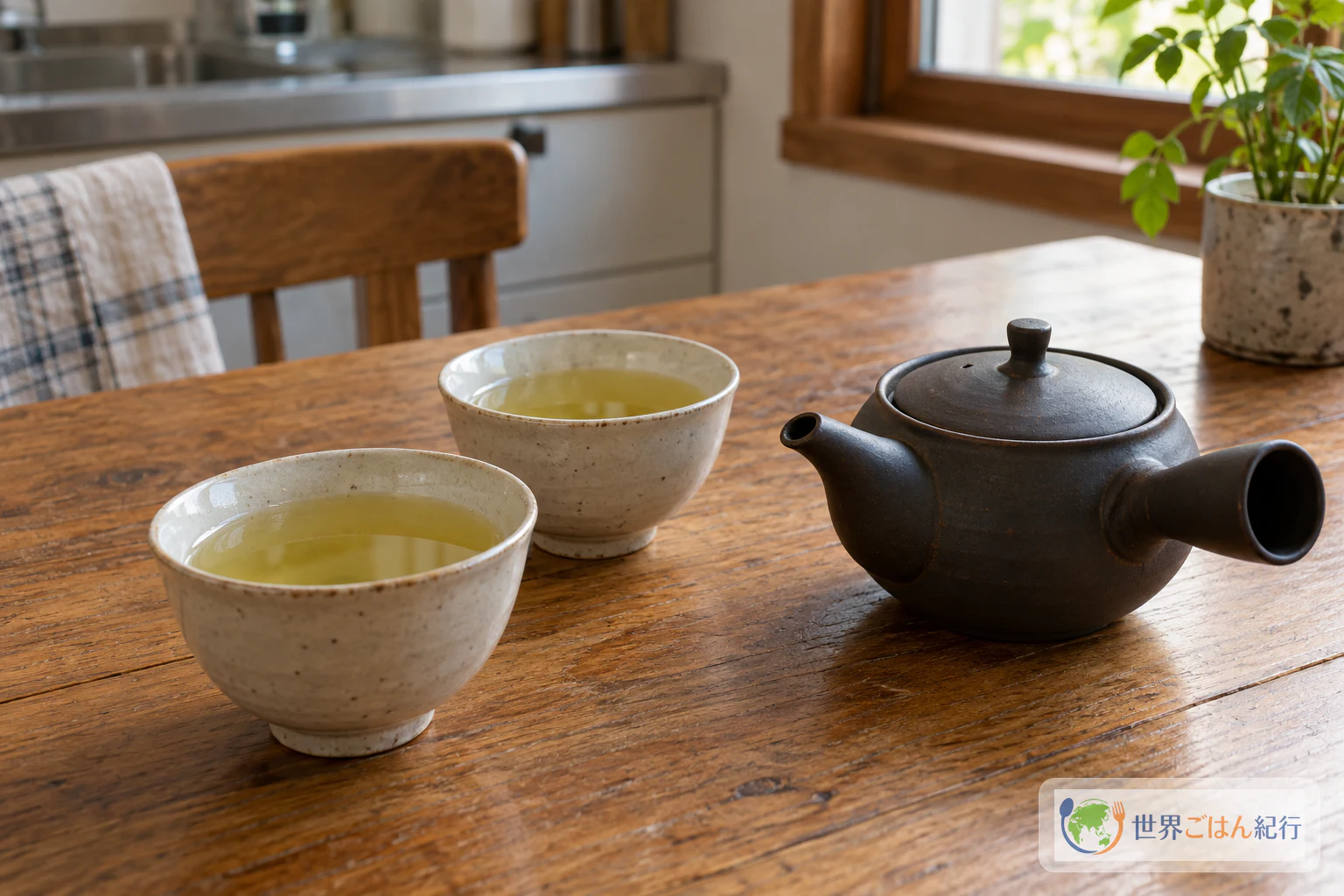
In the Beijing custom, families pair mooncakes with moon viewing and tea. That is one city's tradition, not a description of every household in China, but it suggests a natural way to serve them: sliced into wedges and shared, with tea.
The timing of the cakes themselves comes from the recipe. After the one-to-two-day rest, the crust that looked dry from the oven has settled and taken on its sheen, framing the smooth lotus paste and the salty yolk at the center. Making them and sharing them happen on different days, and the wait between is part of the recipe.
Frequently Asked Questions
Are all mooncakes filled with lotus paste?
No. Beijing's festival guide distinguishes old Beijing's red and white mooncakes and reunion cakes from the Cantonese style, and even Cantonese home recipes differ; the SBS recipe uses red bean paste. This article covers one Cantonese lotus-and-yolk recipe.
Can I replace the lotus seeds with store-bought lotus paste?
Not one-for-one. Store-bought paste usually already contains sugar and oil, so the sugar and oil here would need separate adjustment, and the 12 oz of dried lotus seeds can't simply be swapped. Check the label to see whether the paste is mainly lotus seed.
Can I leave out the salted yolk?
Yes. The same recipe already includes six cakes without yolk, using 70g of lotus paste instead of 58g. Changing the number of each type means adjusting how you divide the paste.
What if I don't have a mooncake mold?
The source suggests shaping the cakes by hand into discs about 3 inches across and about 1 inch high. They won't have the pressed pattern, but it is the source's own alternative.
Why do the baked mooncakes look dry?
According to the source, that is normal straight from the oven. The source describes the crust regaining its sheen after a 1–2-day rest. After cooling completely, keep these cakes refrigerated in an airtight container as directed in step 9. Results can vary in different home conditions.
Sources
- The Woks of Life (Judy Leung et al.), "Lotus Mooncakes with Salted Egg Yolks." The main recipe: ingredients and amounts, the 18-cake batch of 12 with yolk and 6 without, dough and filling weights for a 100g mold, lotus seed preparation, cooking the paste, the salted yolk options, resting the dough, wrapping and molding, the hand-shaped alternative, the two-stage bake at 160°C and 150°C, and resting and refrigerated storage after baking. https://thewoksoflife.com/lotus-mooncakes-egg-yolks/
- Beijing Municipal Government, "Customs Related to the Mid-Autumn Festival." The Beijing custom of offering mooncakes to the moon and enjoying them with tea while moon viewing as a family, and the red mooncakes, white mooncakes and reunion cakes of old Beijing as distinct from Cantonese mooncakes. https://english.beijing.gov.cn/beijinginfo/culture/beijingfolklore/festivals/202110/t20211018_2514762.html
- SBS Cantonese / Gourmet Express, "懷舊應節之傳統廣式月餅." A separate home recipe for traditional Cantonese mooncakes with red bean paste and salted egg yolk, used here only for comparison. https://www.sbs.com.au/language/chinese/zh-hant/podcast-episode/traditional-moon-cake/ffbpj4zg3