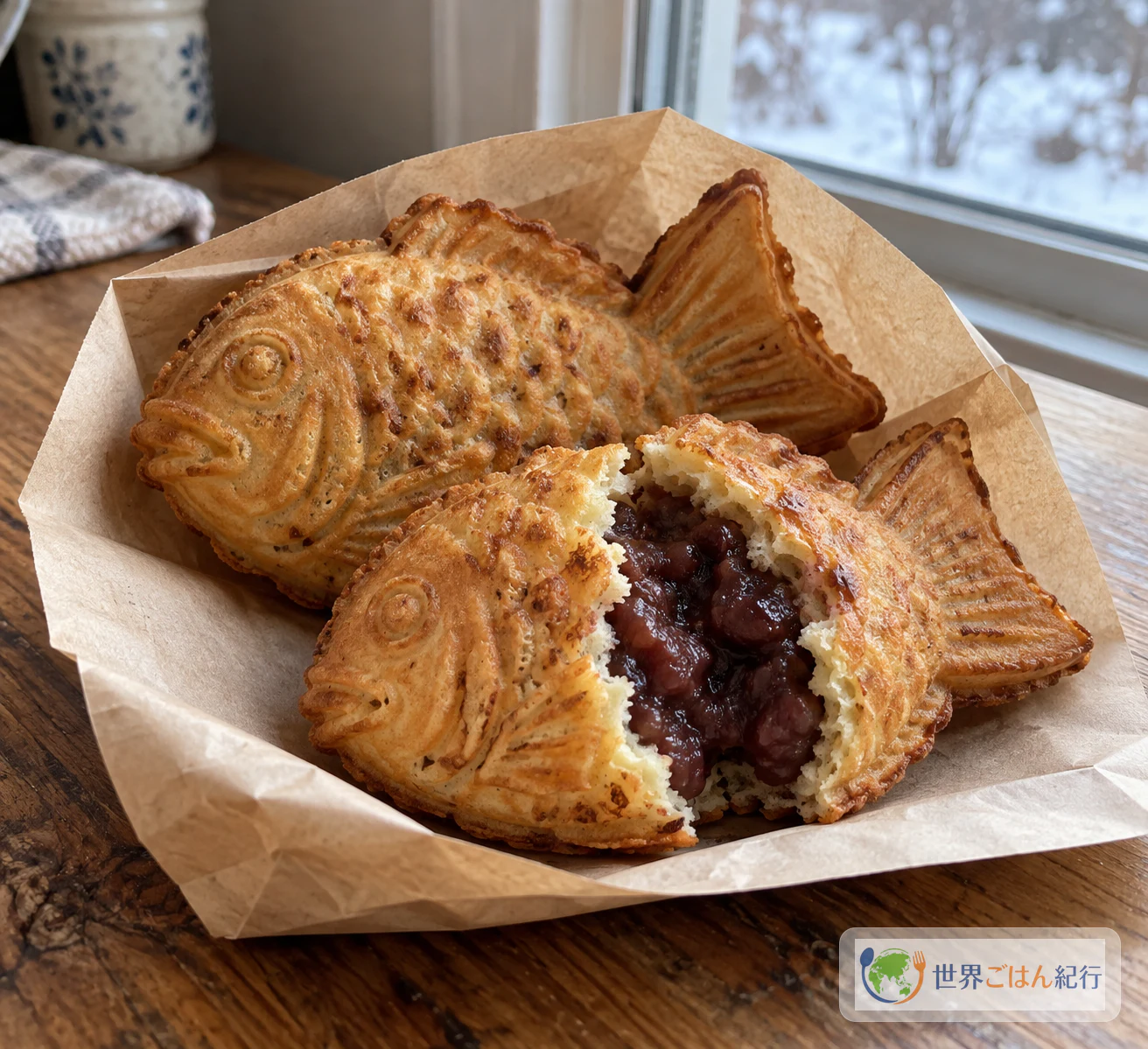
Bungeoppang: A Crisp Little Fish with Warm Red Beans Inside
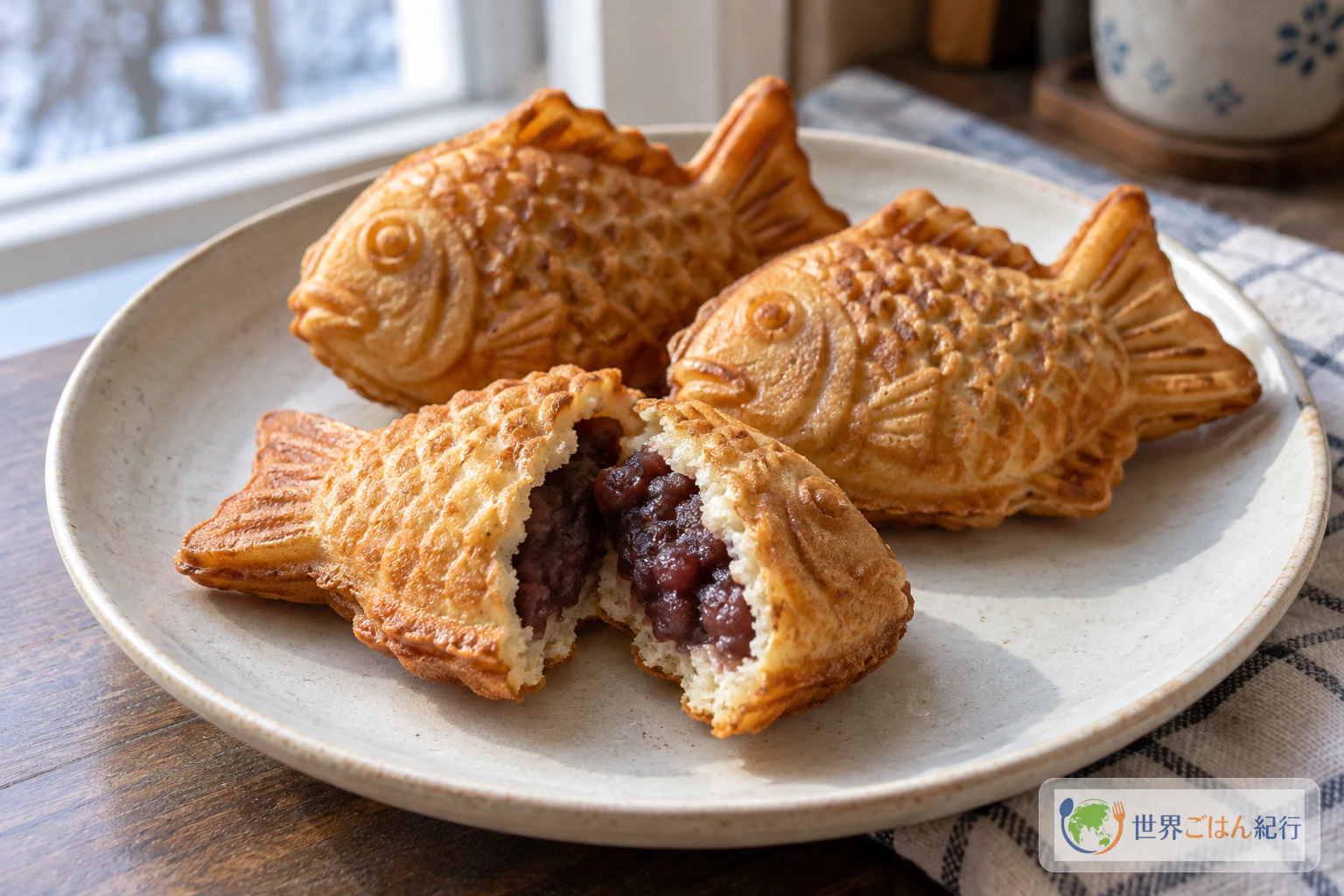
A thin, lightly crisp shell in the shape of a fish, a soft and fluffy (not spongy) inside, and a center of sweet red beans. The batter is only flour, water, a little sugar, salt and baking soda; the oil goes on the mold, not into the batter.
Bungeoppang (붕어빵) is a Korean street snack: a small pastry baked in a fish-shaped mold, with a crisp outside and sweet red beans tucked into its warm middle. The name puts it plainly. Bungeo (붕어) is the crucian carp, a freshwater fish, and ppang (빵) means bread. Despite the name, there is no fish in it at all; the fish is only the shape.
Korea's Ministry of Culture, Sports and Tourism and Korea.net both present it as a winter street snack, one of several warm treats people reach for in the cold months. For more Korean dishes, see our South Korea page.
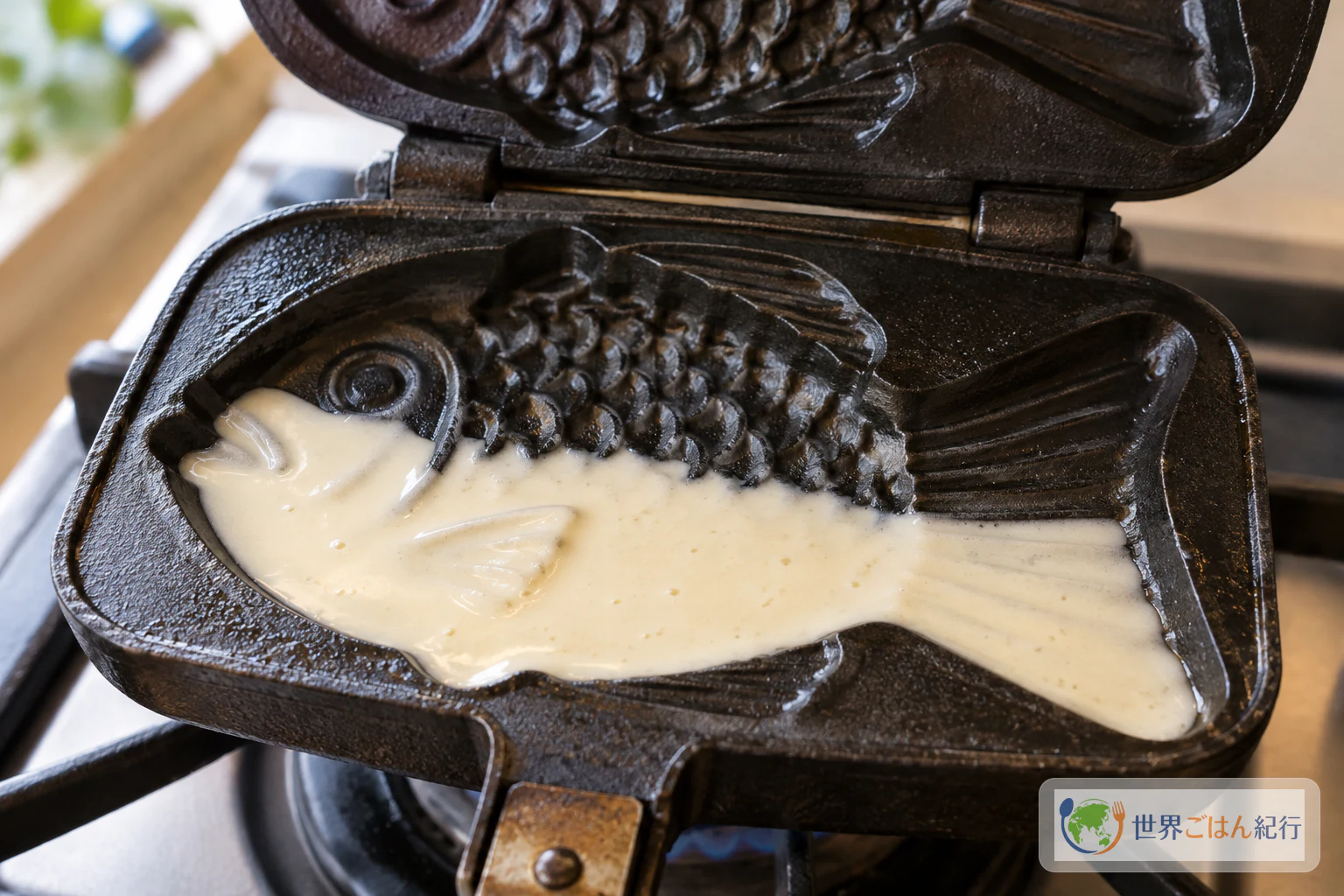
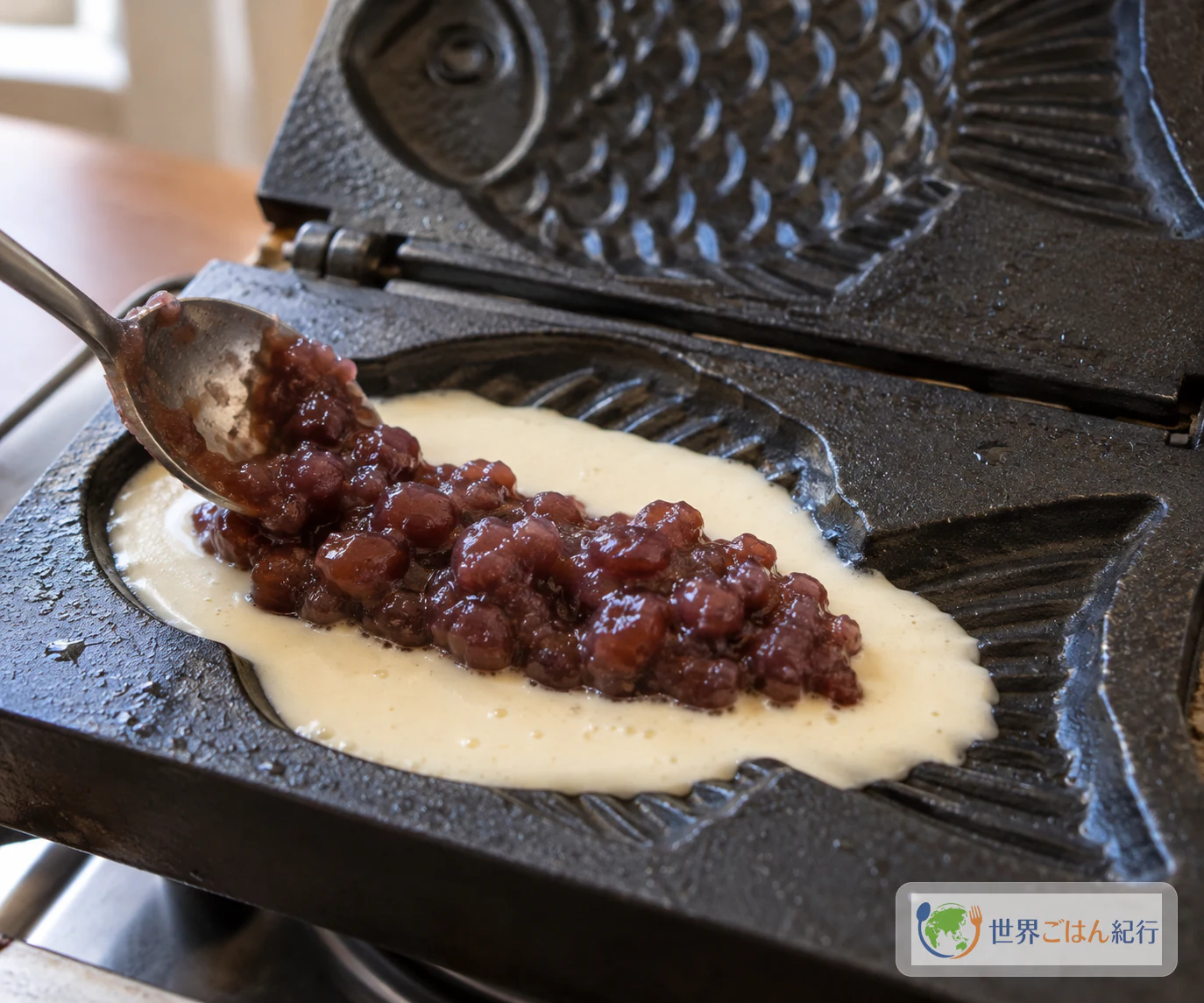
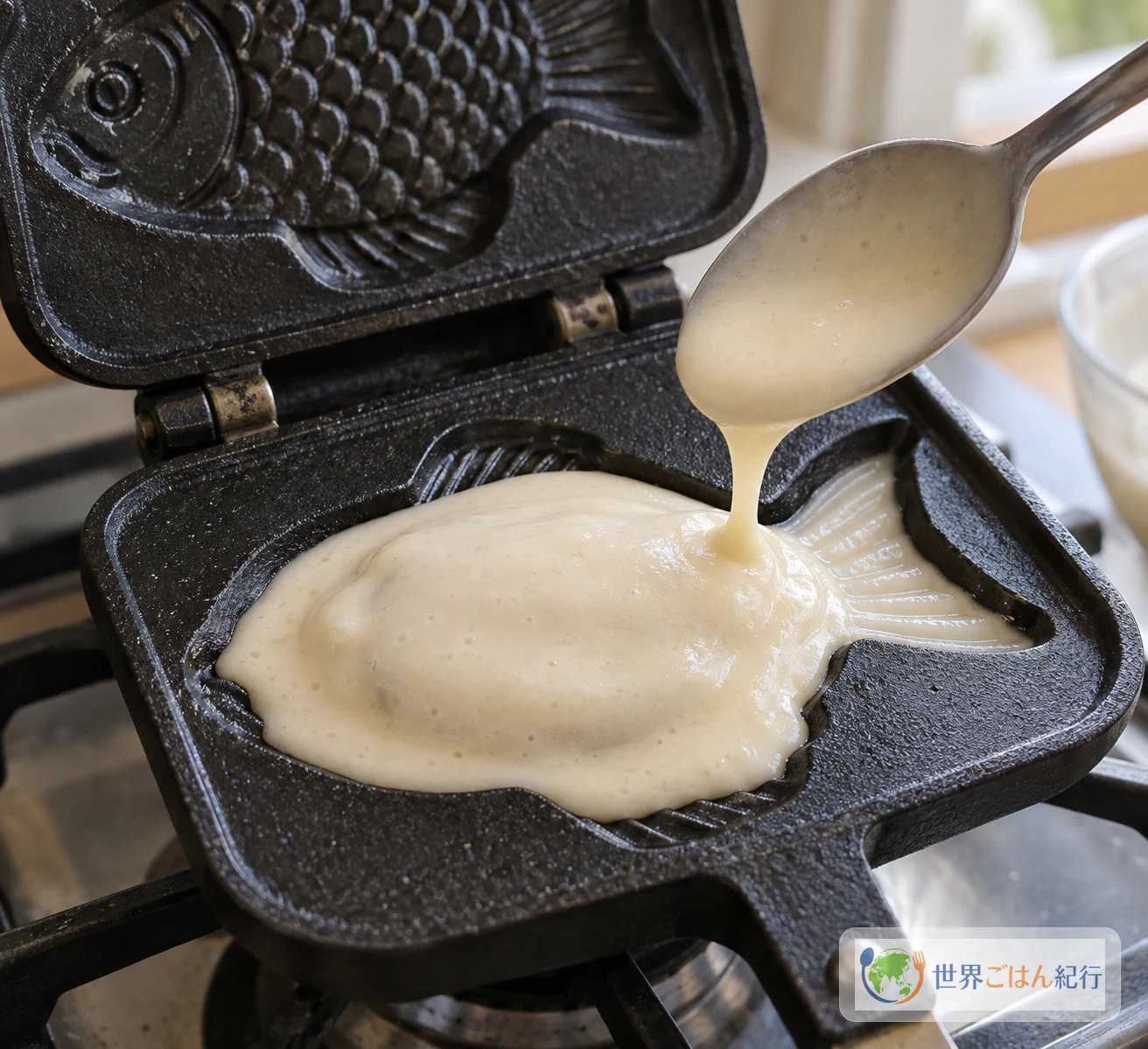
This recipe follows the six-piece version published by Maangchi: a simple water-based batter, strained until silky, poured into a greased fish mold over low heat, filled with a tablespoon of sweet red beans, and turned while it bakes. It is not a version with egg, milk or cornstarch, and those are not mixed in here. The recipe has not been kitchen-tested by us, so treat the times below as the source's guide and watch the color of your own pan.
Ingredients for 6 Pieces
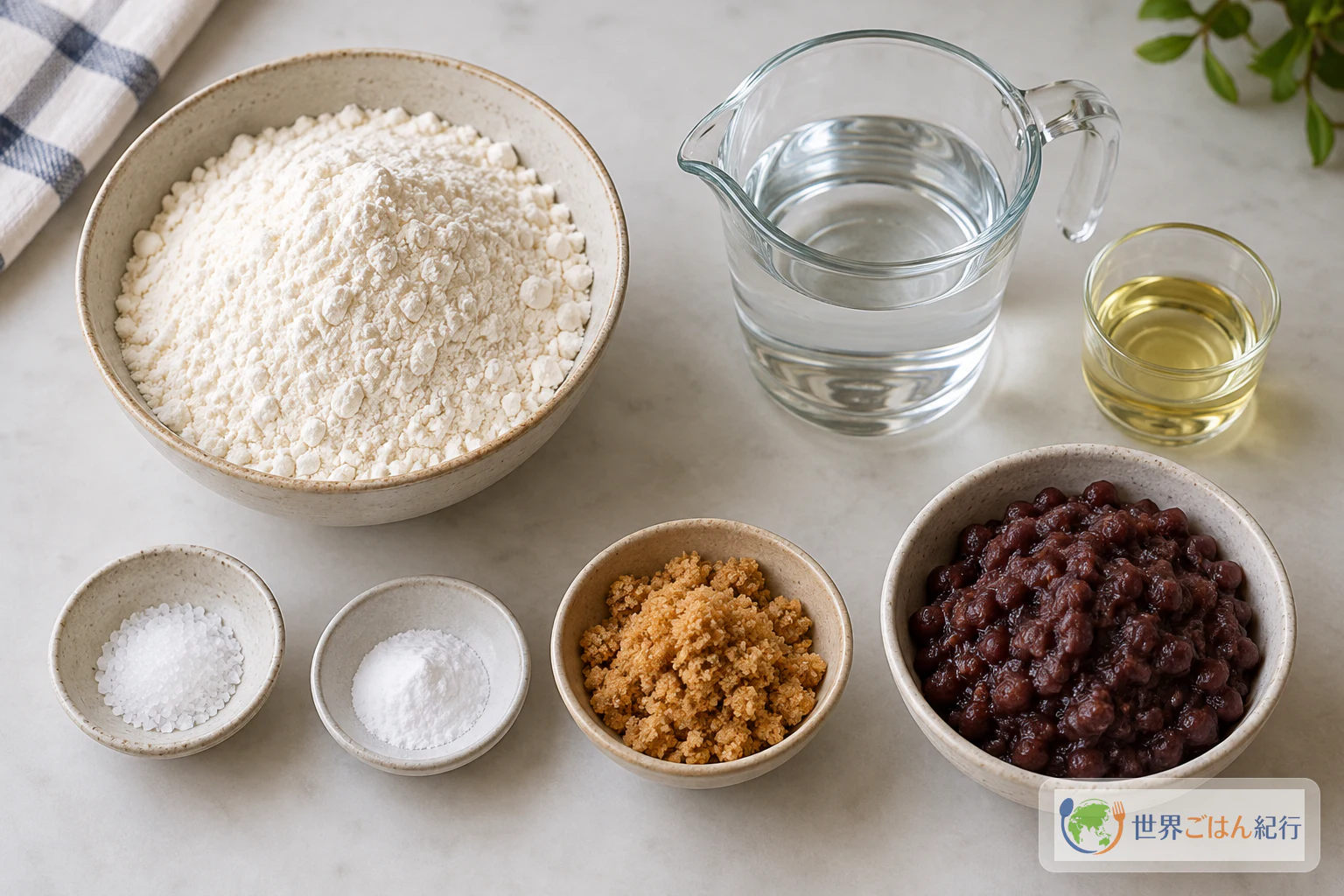
The amounts are given in the source's own cup, tablespoon and teaspoon measures. The source does not give gram weights, so none are added here.
Choosing and Substituting Ingredients
- Flour: The source specifies all-purpose flour. Stick with it rather than swapping in a different flour type.
- Salt: Kosher salt grains differ in size from table salt and other salts, so the same volume can carry a different amount of saltiness. If you use another salt, don't assume 1/2 tsp is equivalent; there is no precise conversion given in the source.
- Baking soda: Use baking soda as listed. Baking powder is not a stand-in in this recipe.
- Sugar: Brown or white sugar are both given as options in the source. Brown sugar is simply one of the two choices, not a requirement.
- Sweet red beans: The source calls for sweet red beans, either canned or homemade, without specifying whether they should be chunky or smooth or how sweet they are. A ready-made sweetened red bean paste, chunky or smooth, fits that description. Keep the sugar in the batter separate from the sweetness of the filling; they are different ingredients.
- Oil: The listed 1 tbsp of vegetable oil is the oil for the mold. You don't need a second, separate amount of oil. How much goes on for each round is not specified; just a light film on both halves.
- What not to add: Eggs, milk, cornstarch and cornflour belong to other versions of bungeoppang batter and are not part of this one.
Equipment
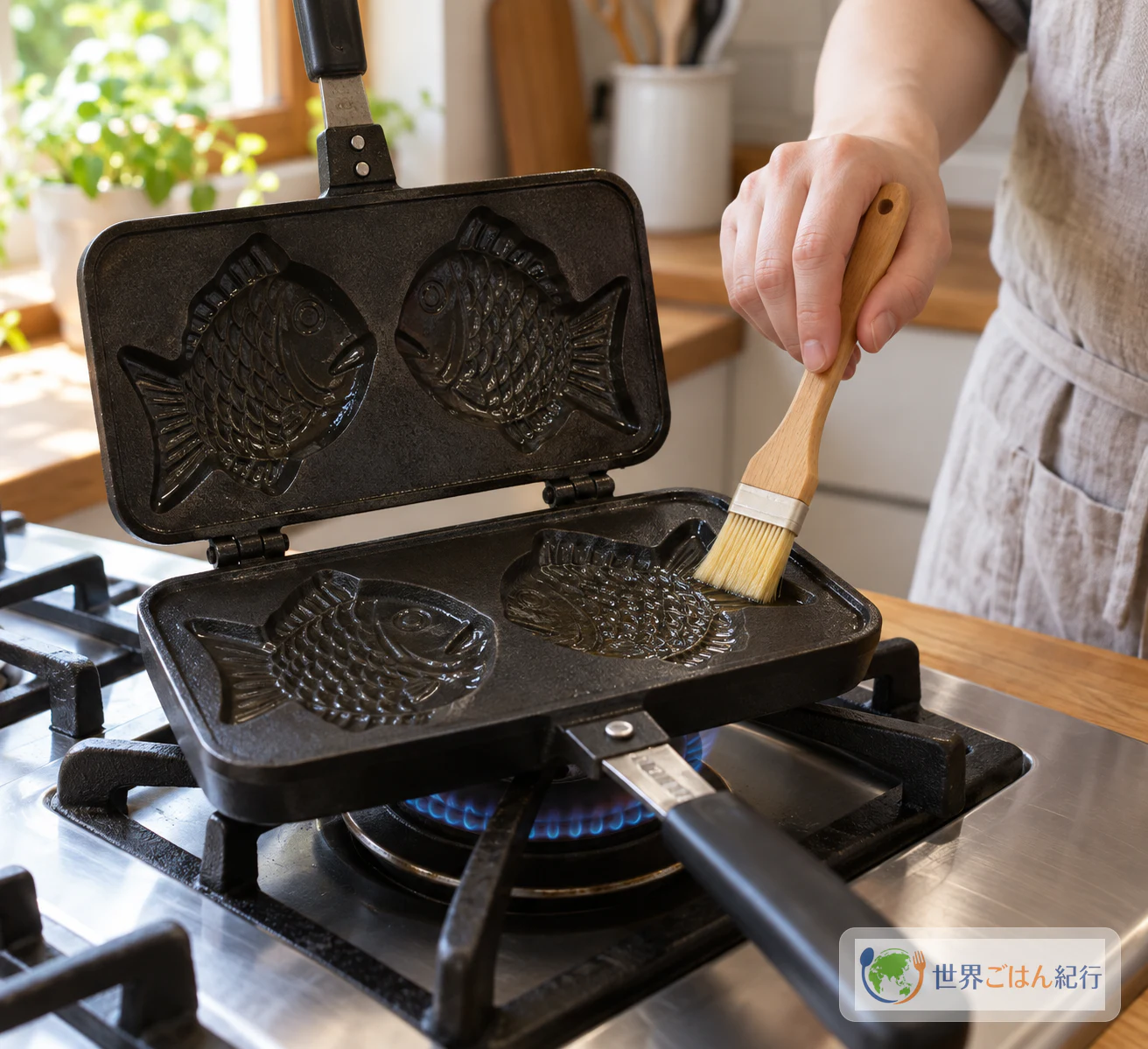
- A fish-shaped bungeoppang pan (a hinged mold with an upper and lower half)
- Measuring cups and measuring spoons
- A mixing bowl and a second bowl to strain into
- A whisk
- A fine-mesh strainer
- A pastry brush or similar, for spreading a thin film of oil in the mold
- A spoon for the batter and the filling
A Japanese taiyaki pan is also a fish-shaped mold and may be usable, but its size and shape are not necessarily the same, so the same baking times are not guaranteed. The source does not say how many pieces a pan holds at once, and pans differ, so follow your pan's instructions for safe use and heating.
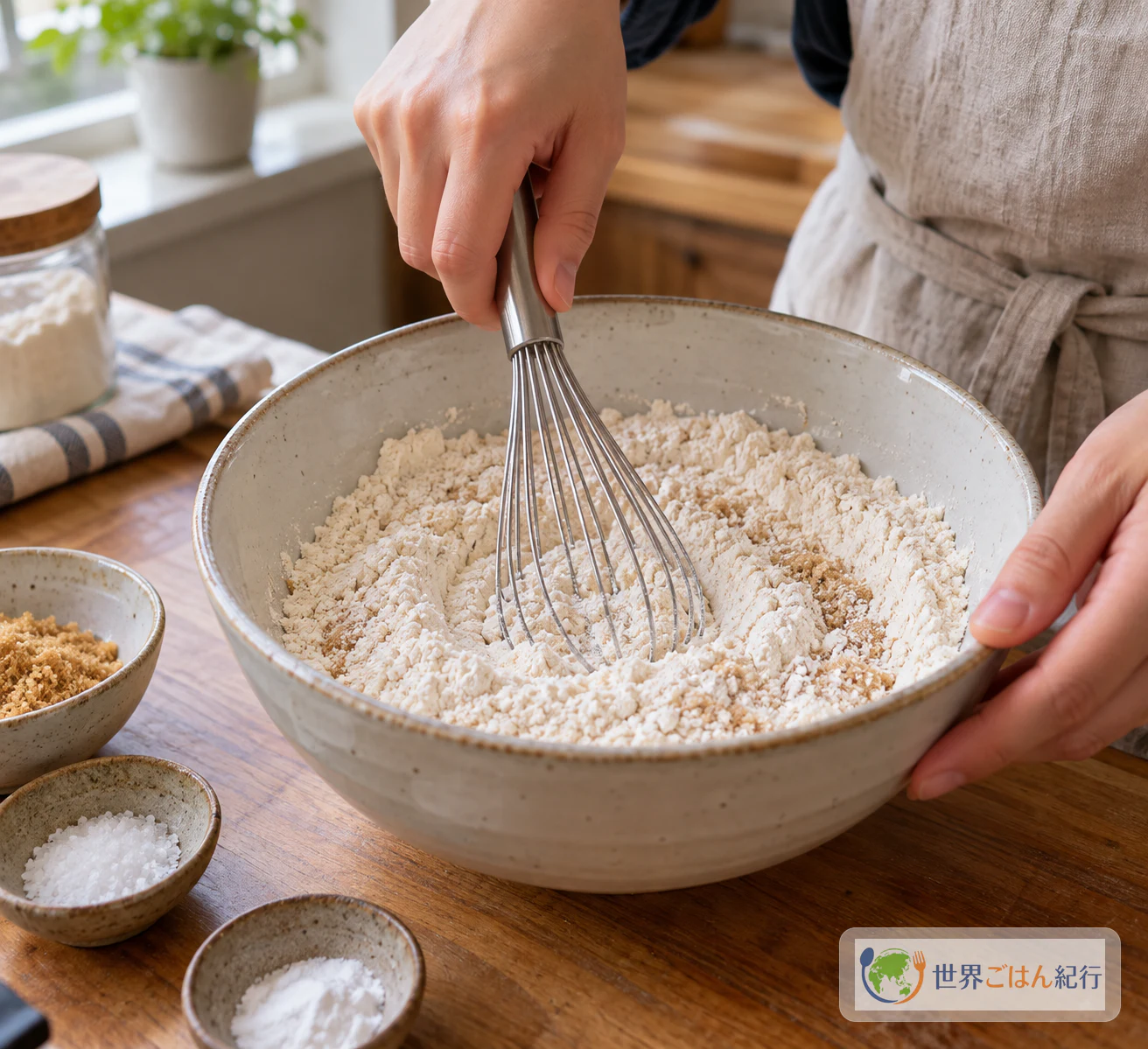
Method: Strain the Batter, Wrap the Beans, Turn Over Low Heat
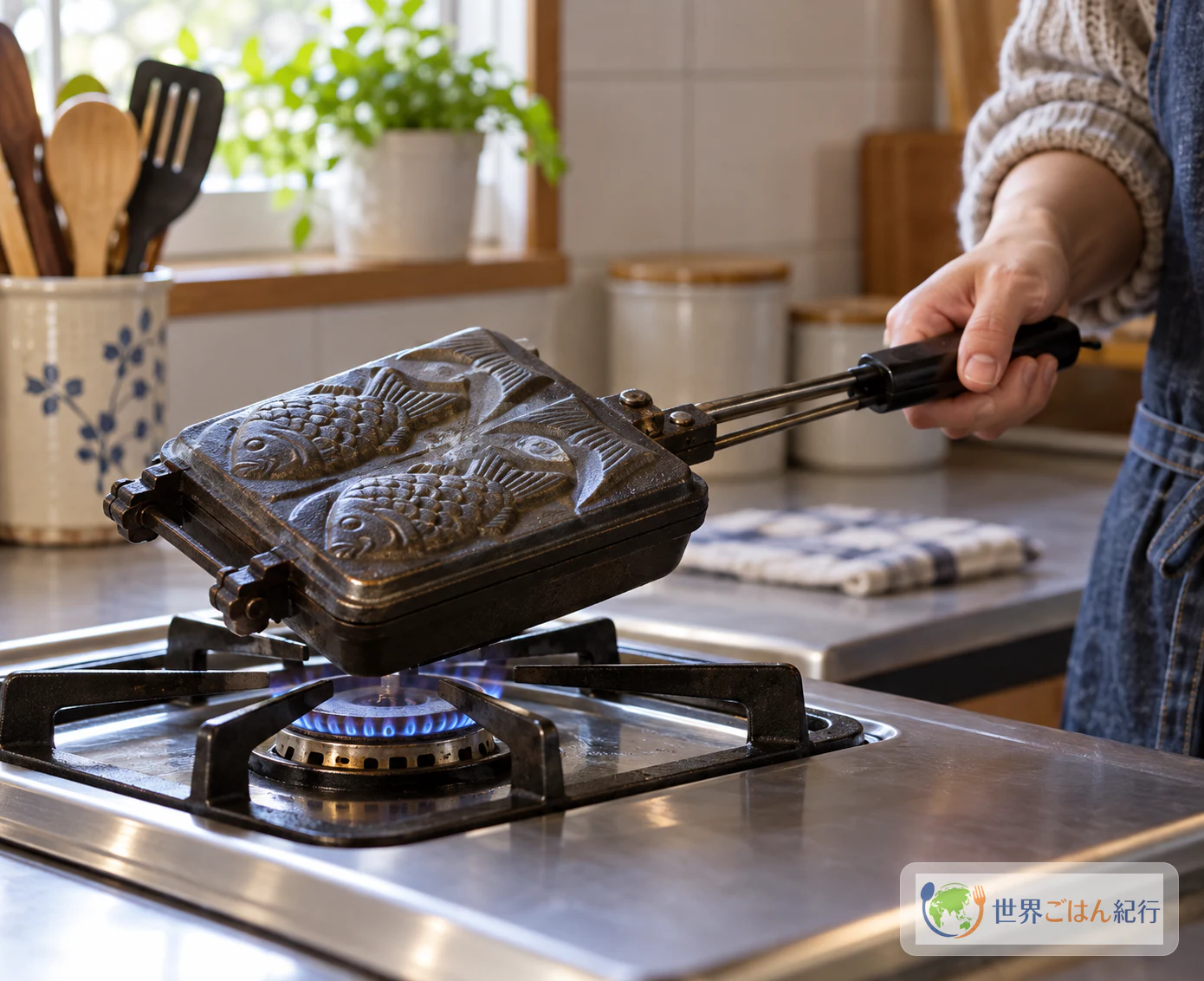
Once the pan is hot, the source has you lower the heat and keep it low through baking. The times below are guides; judge by the golden color on your own pan.
The source makes 6 pieces. Your pan may hold one fish or several, so work through the batter and filling in as many rounds as your pan needs.
Troubleshooting
The metal mold stays very hot throughout. Handle it only by its handles and follow your pan's instructions. The red bean filling is very hot straight from the pan; give it a moment before eating.
| What you see | Likely reason | What to try |
|---|---|---|
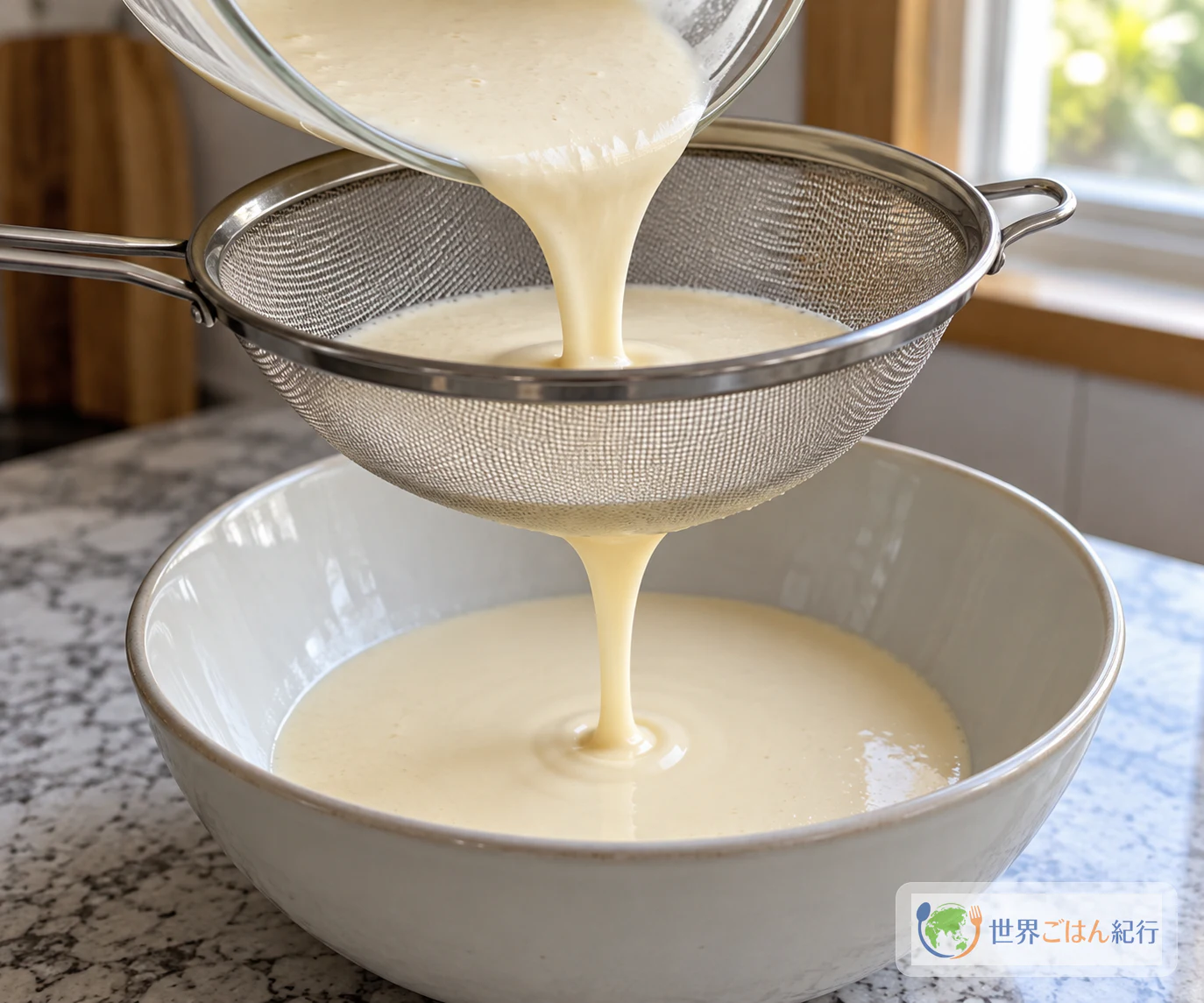
| Lumps in the batter | Flour not fully mixed in | Strain the batter through a fine-mesh strainer before baking |
| The pastry sticks to the mold | Too little oil on one of the halves | Lightly grease both the upper and lower molds before each round |
| Red beans showing or leaking at the seam | Filling placed near the edge, or not fully covered | Keep the filling in the center and cover it completely with batter before closing |
| The outside isn't crisp | The final short bake was skipped | After the second 3 minutes, open, turn again and give it about 30 seconds more |
| Too dark, or too pale, at the given times | Pans and heat sources differ | Keep the heat low and adjust the time by the color you see on your pan |
| The texture is heavy or spongy | A batter different from the one here | Keep to the water-based batter as listed; the source aims for soft and fluffy with some crispness |
Variations: Fillings Beyond Red Beans
Sweet red beans are the filling in this recipe and in the classic description of the dish. Korean cultural sources also report newer fillings at street stalls: the Ministry of Culture, Sports and Tourism mentions custard, cheese, pizza and kimchi, and Korea.net lists custard cream, sweet potato mousse and pizza as examples. Those fillings are not given as recipes here, and they are not mixed into the red bean version above.
Within this recipe, the meaningful choices are small ones: brown or white sugar in the batter, and chunky or smooth sweet red beans, both of which fit what the source calls for.
Culture and History: Bungeoppang and Korean Winter
Bungeoppang is presented in Korean government cultural features as a winter street snack. Korea's Ministry of Culture, Sports and Tourism describes it as a fish-shaped pastry with red bean filling, crisp outside and warm and soft inside, and calls it the warm heart of Korean winter. Korea.net describes it as a winter street snack of flour batter and red bean paste in a fish shape, and places it among several popular Korean winter snacks. These are broad cultural descriptions; they don't mean every region, stall or household makes it the same way, or that it appears only in winter.
The Ministry's feature also gives a history that begins in the early 1930s, with wider popularity after the Korean War. That is the account of that article; it has not been independently confirmed, so it is noted here as the Ministry's telling rather than settled fact.
Bungeoppang is often compared with Japanese taiyaki, and the resemblance is real: both are pastries baked in a fish-shaped mold. But the fish in the name differs (bungeoppang is named for the crucian carp), and the cultural context is its own. They are similar fish-shaped sweets, not simply two names for the same dish.
Frequently Asked Questions
Is there fish in bungeoppang?
No. The name means "crucian carp bread" because of the shape of the mold. The pastry itself is flour batter and sweet red beans.
Can I use baking powder instead of baking soda?
The source calls for baking soda, and this recipe keeps it. Baking powder is not given as a substitute.
Does the oil go into the batter?
No. The 1 tbsp of vegetable oil is for lightly greasing the upper and lower halves of the mold. The batter is flour, salt, baking soda, sugar and water only.
Can I use a taiyaki pan?
It is also a fish-shaped mold and may be usable, but its size and shape aren't necessarily the same as a bungeoppang pan, so the 3 minutes, 3 minutes and 30 seconds may not match. Keep the heat low and judge by color.
Why are there no gram weights?
The source gives cup, tablespoon and teaspoon measures and no weights, so the amounts are kept exactly as given rather than converted.
Can I make them ahead?
The source advises serving bungeoppang immediately and gives no storage guidance, so none is offered here.
Sources
- Maangchi, "Fish-shaped bread with sweet red bean filling (Bungeoppang)." The six-piece recipe and its cup/tablespoon/teaspoon amounts; mixing the dry ingredients, adding water and straining; heating the pan, lowering the heat and greasing both molds; filling one third, adding 1 tbsp red beans and covering; baking about 3 minutes, turning for about 3 minutes and a final 30 seconds; serving immediately and the warning that the filling is very hot; the meaning of bungeo and ppang and the intended texture. https://www.maangchi.com/recipe/bungeoppang
- Ministry of Culture, Sports and Tourism of the Republic of Korea / Korea Here & Now, "Bungeo-ppang: The warm heart of Korean winter." Bungeo-ppang as a Korean winter street snack with red bean filling; custard, cheese, pizza and kimchi as newer fillings; the article's own account of a history beginning in the early 1930s, which is not independently confirmed. https://mcst.go.kr/english/policy/kocis/newsView.jsp?pSeq=303
- Korea.net, Ministry of Culture, Sports and Tourism, "5 Korea.net staff pick their favorite winter snacks in Korea." Bungeoppang as a fish-shaped winter street snack of flour batter and red bean paste; custard cream, sweet potato mousse and pizza as example fillings; its place among popular Korean winter snacks. https://www.korea.net/NewsFocus/Society/view?articleId=207784