Hong Kong-Style Milk Tea: Dark, Strong Tea Made Smooth with Evaporated Milk
Brew the tea strong and dark, strain it until it runs smooth, and let evaporated milk carry the body. Keep the sweetened condensed milk small, just enough to round out the cup.
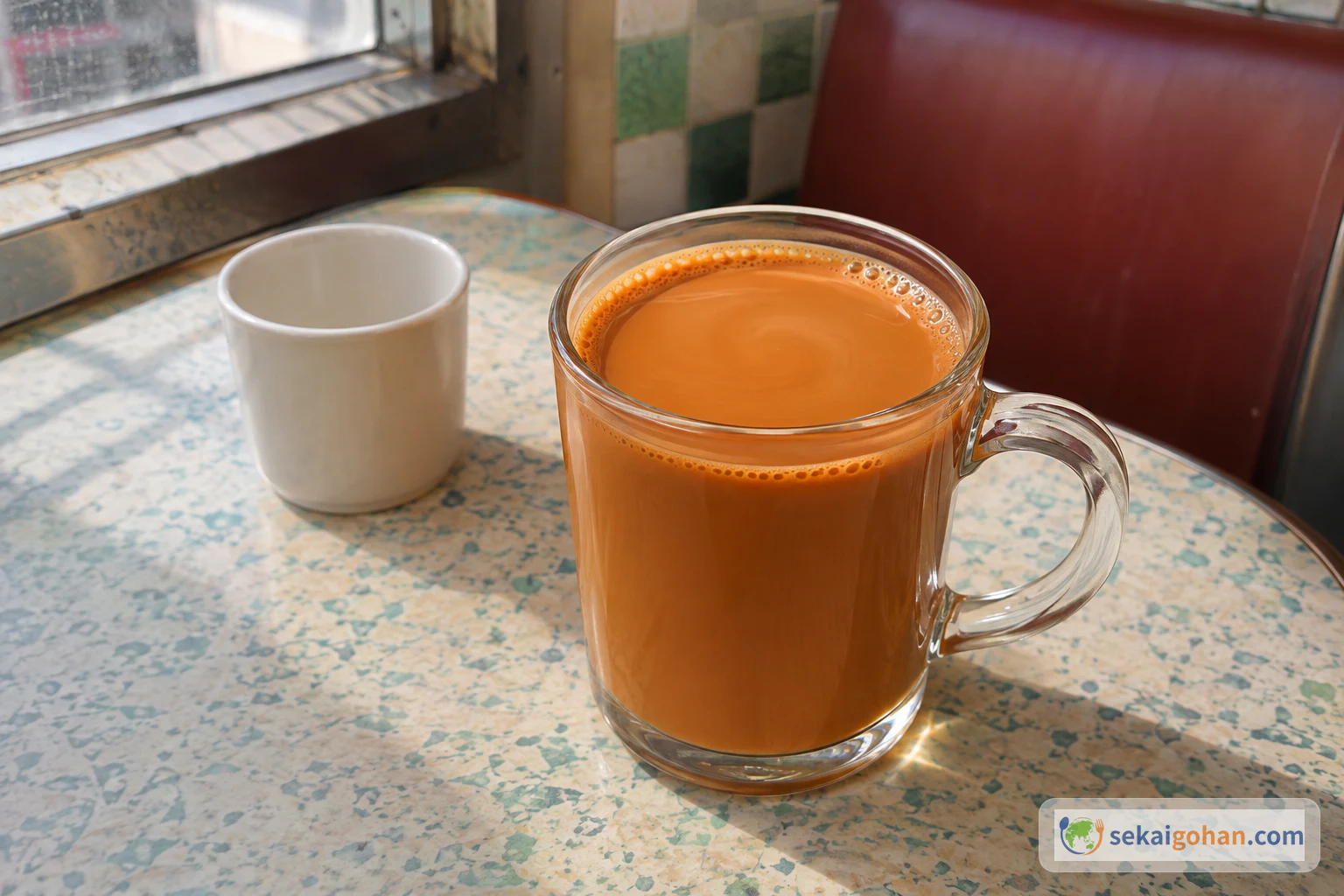
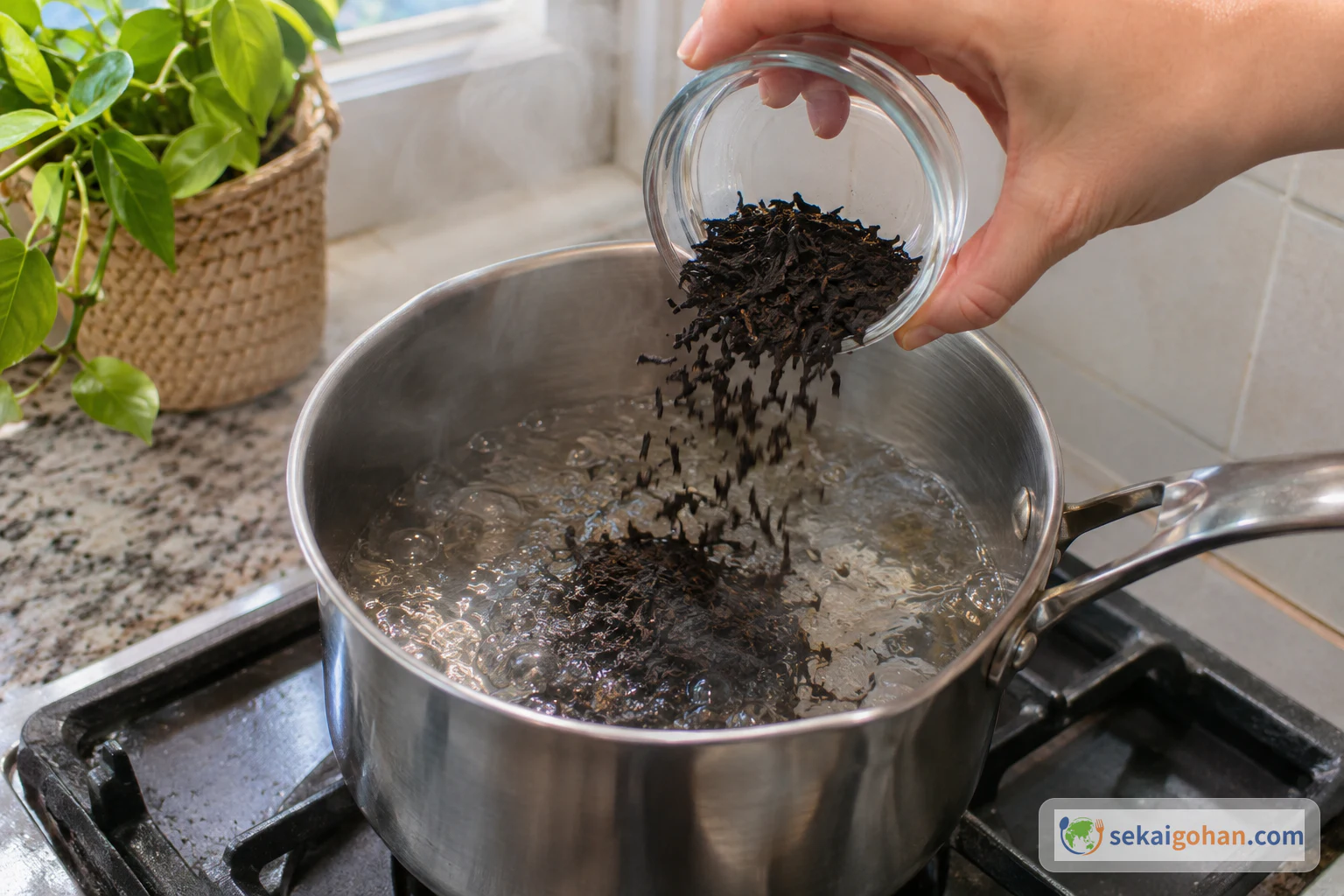
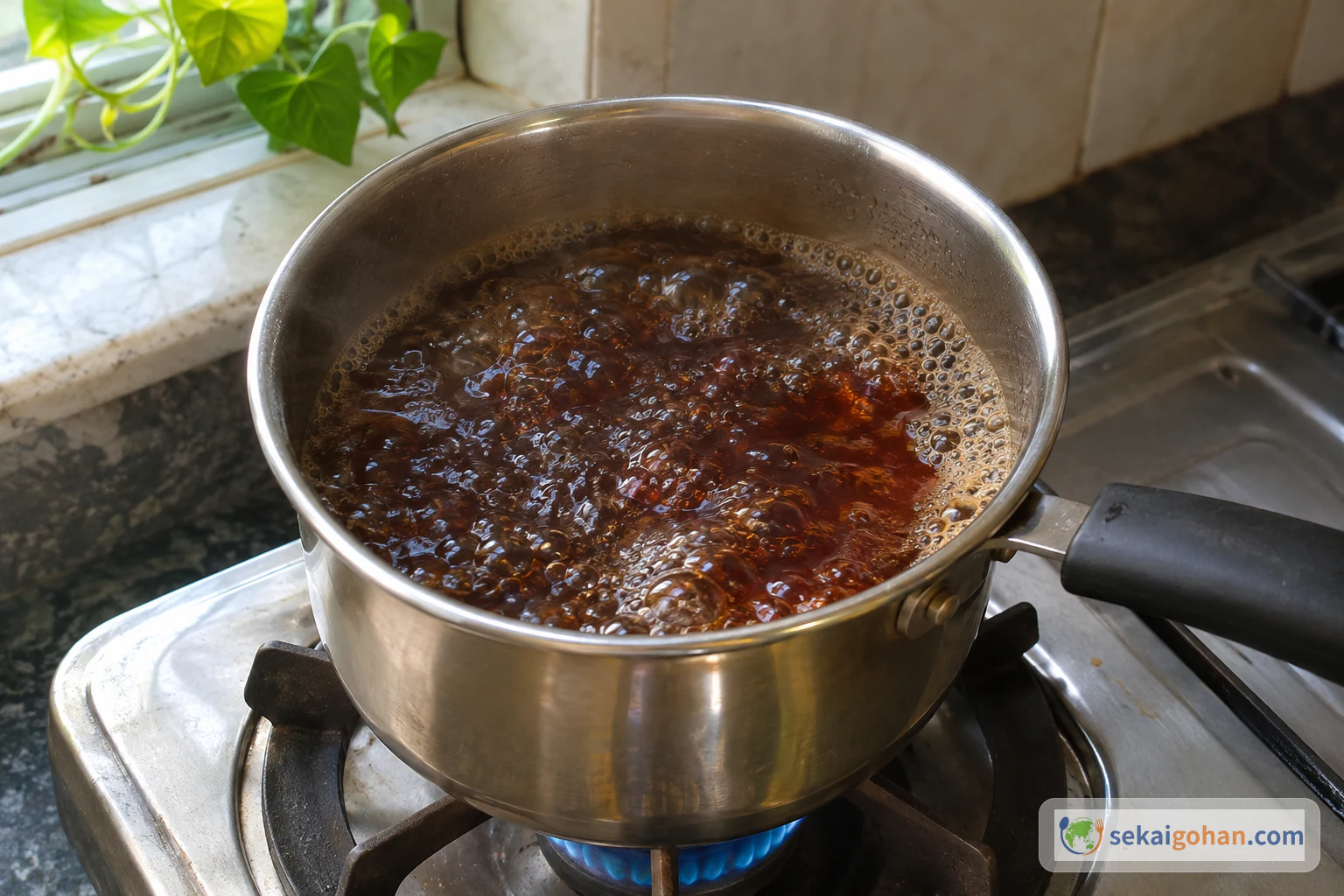
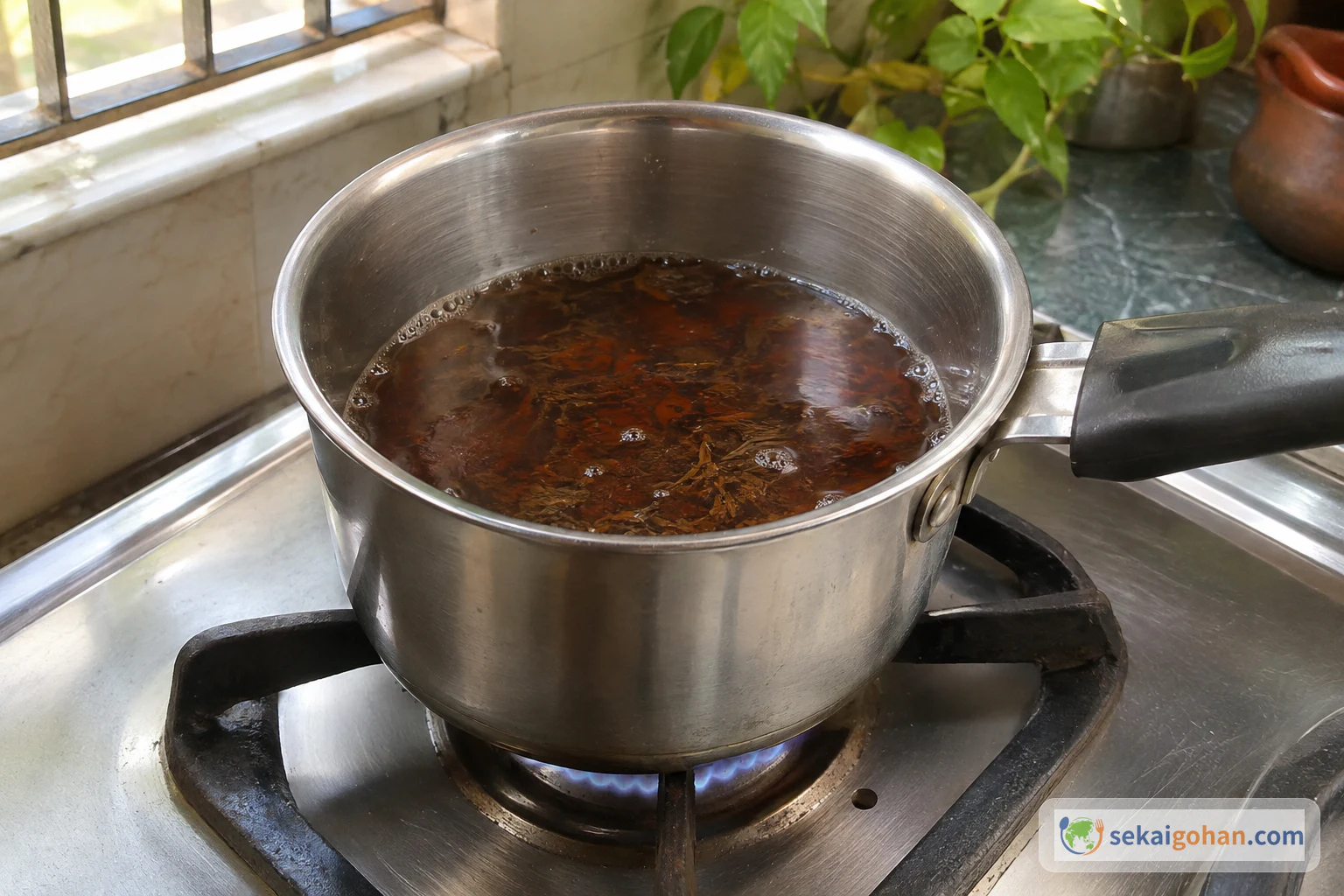
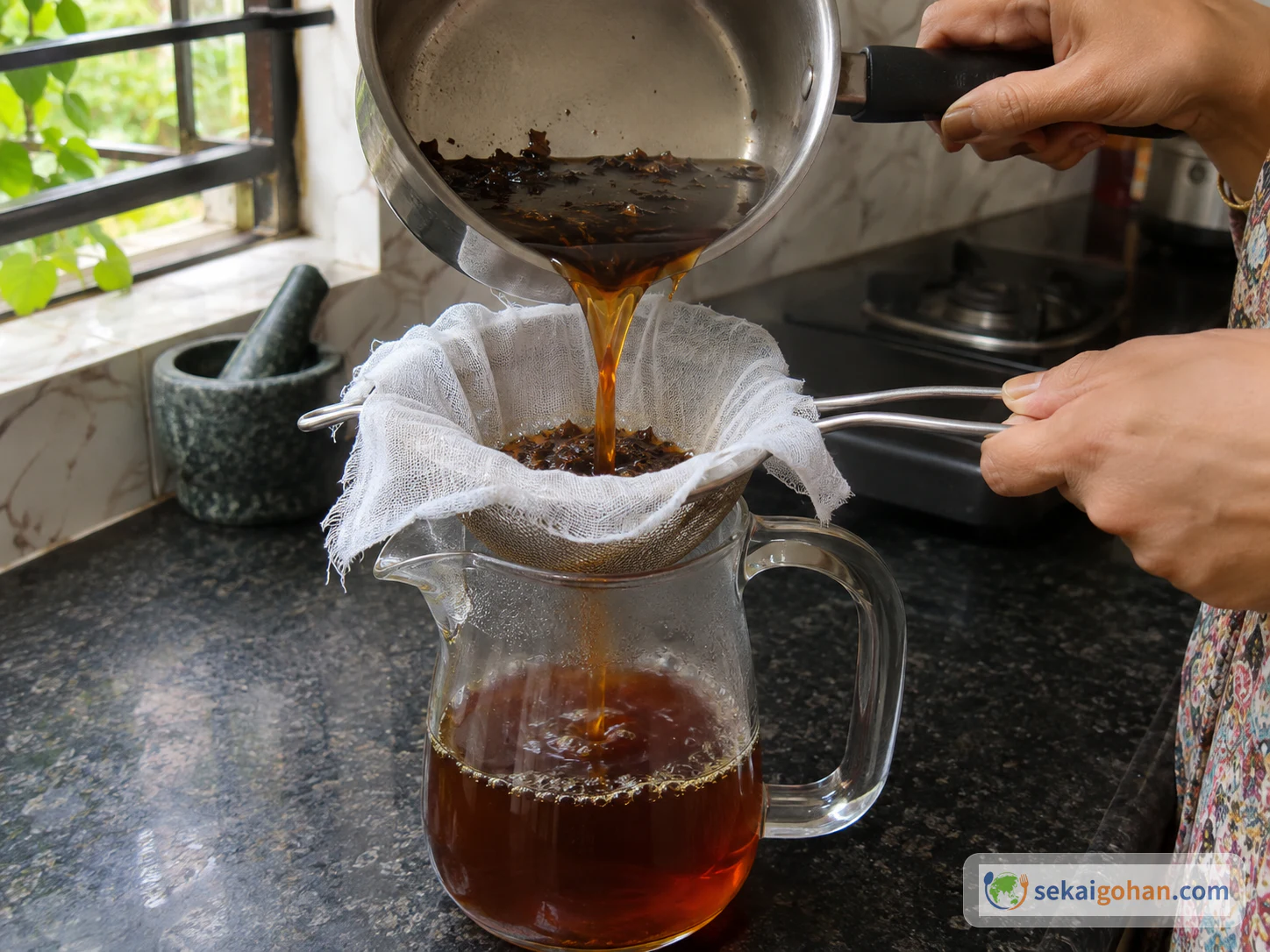
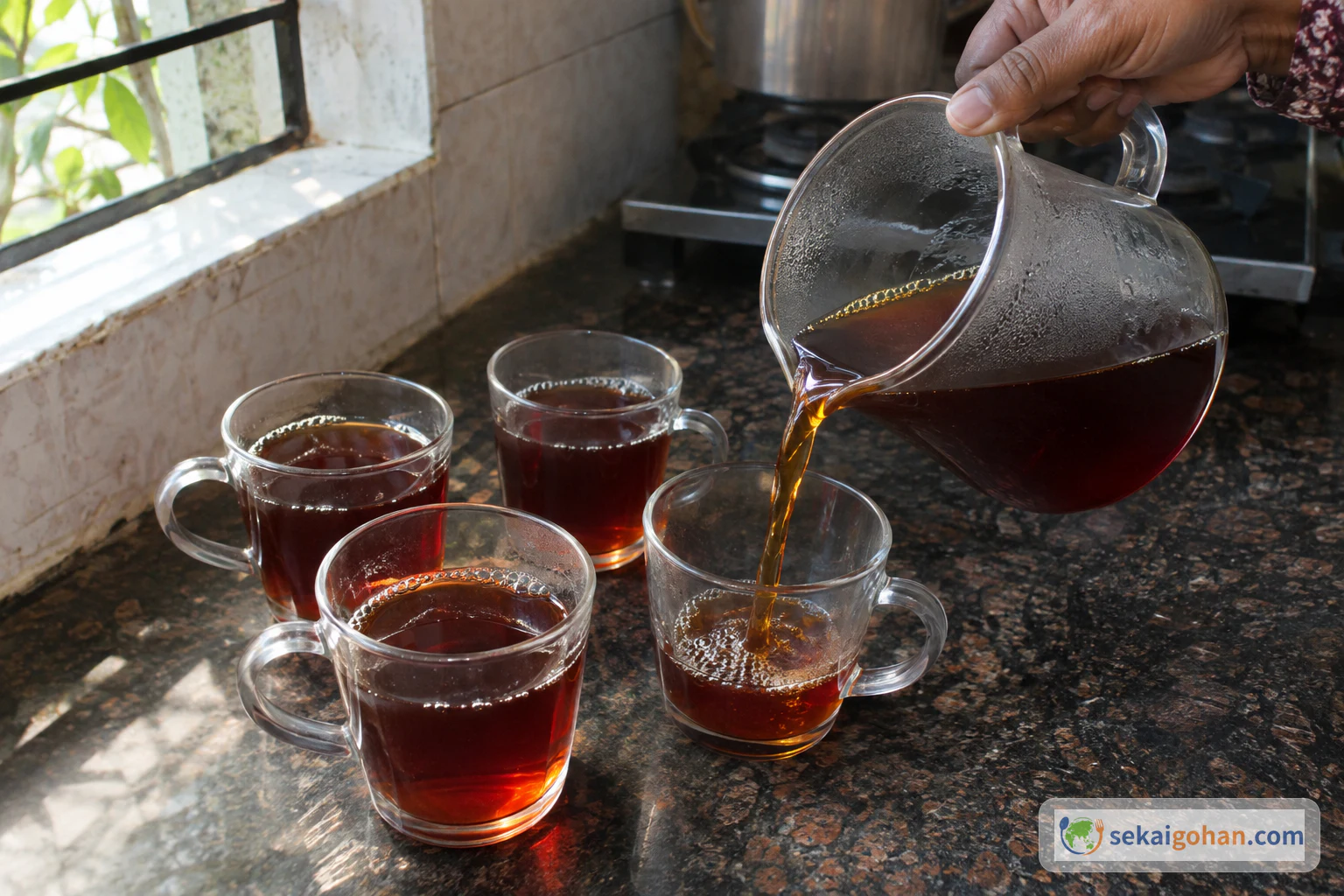
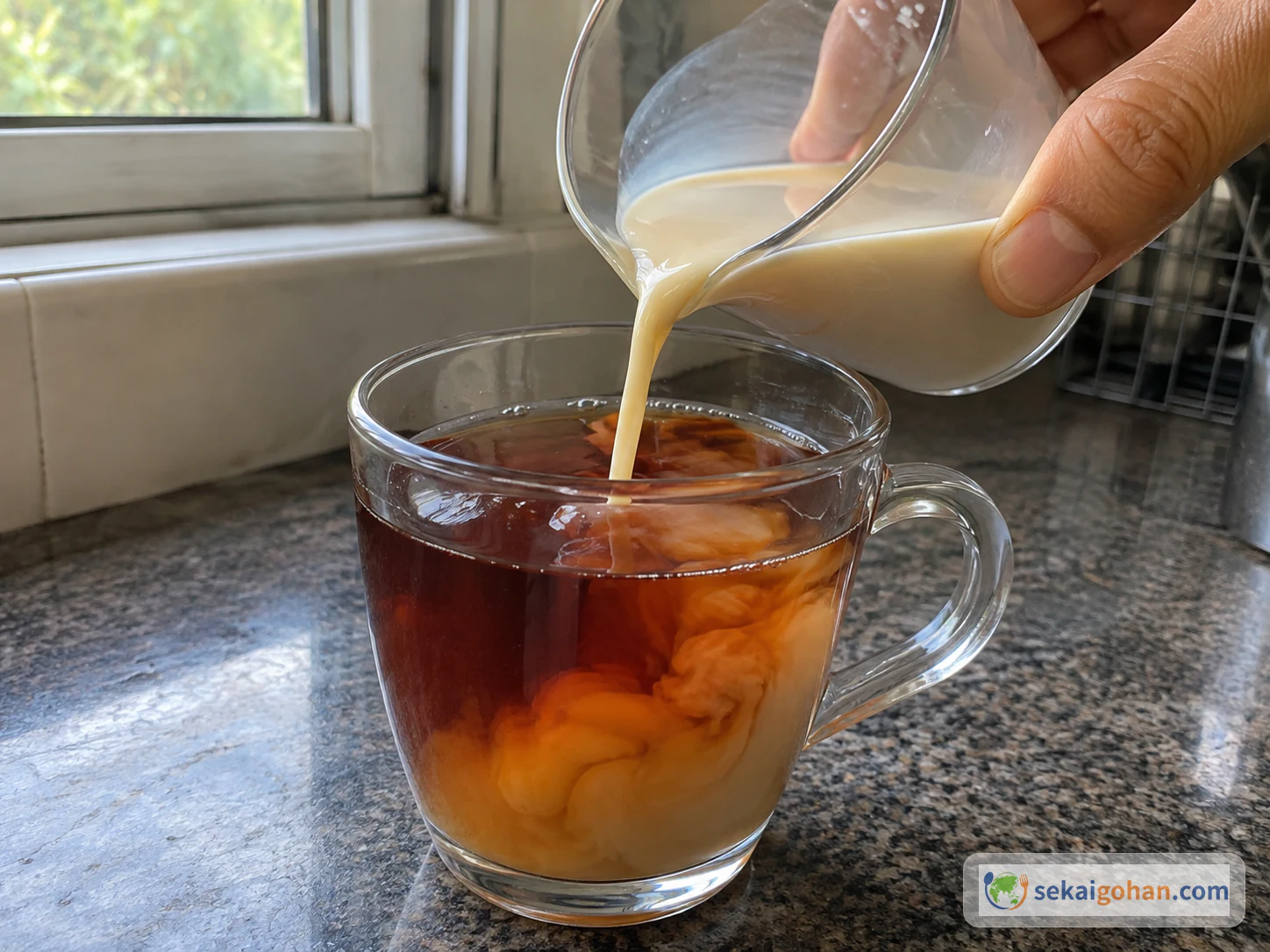
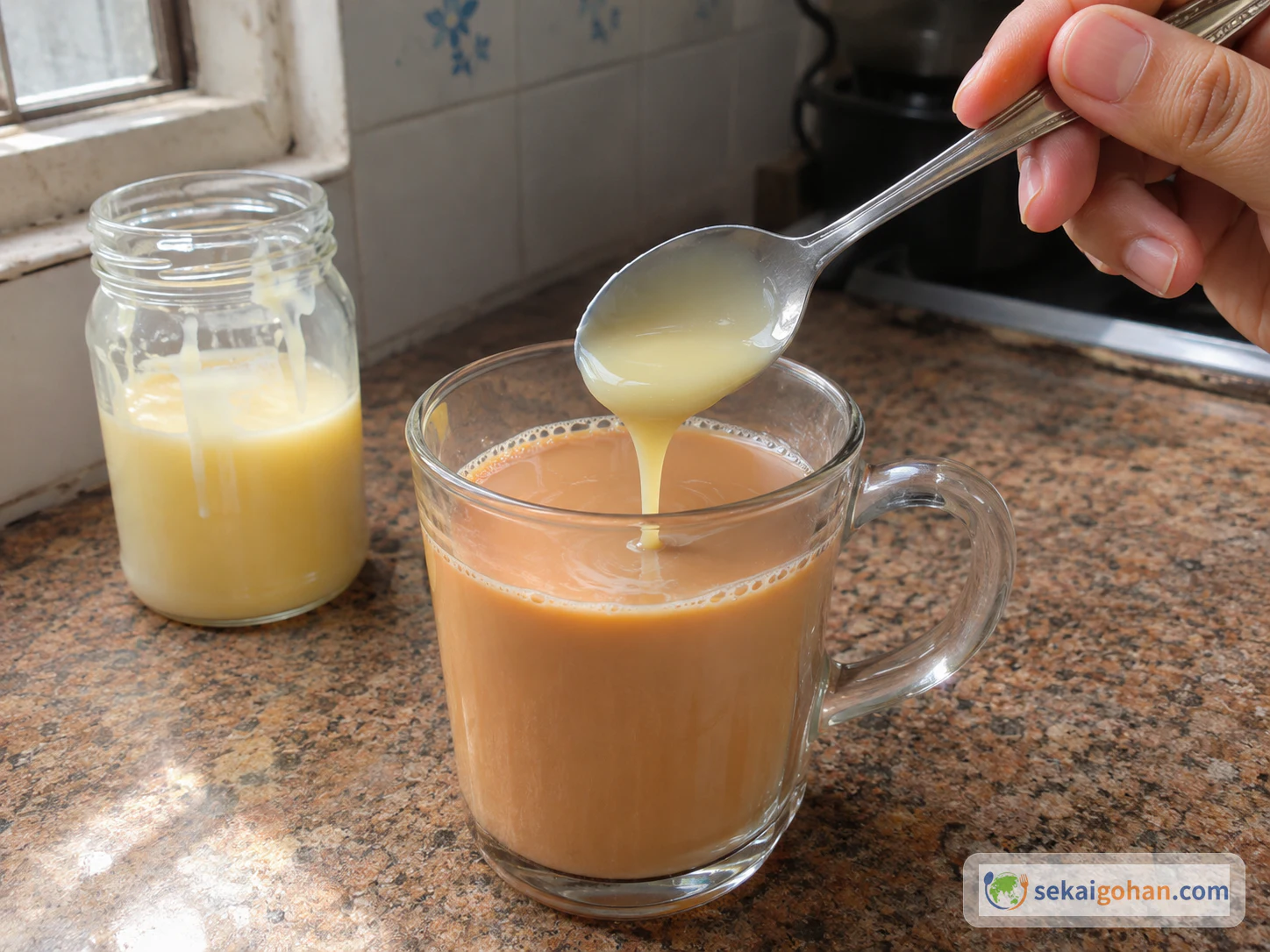
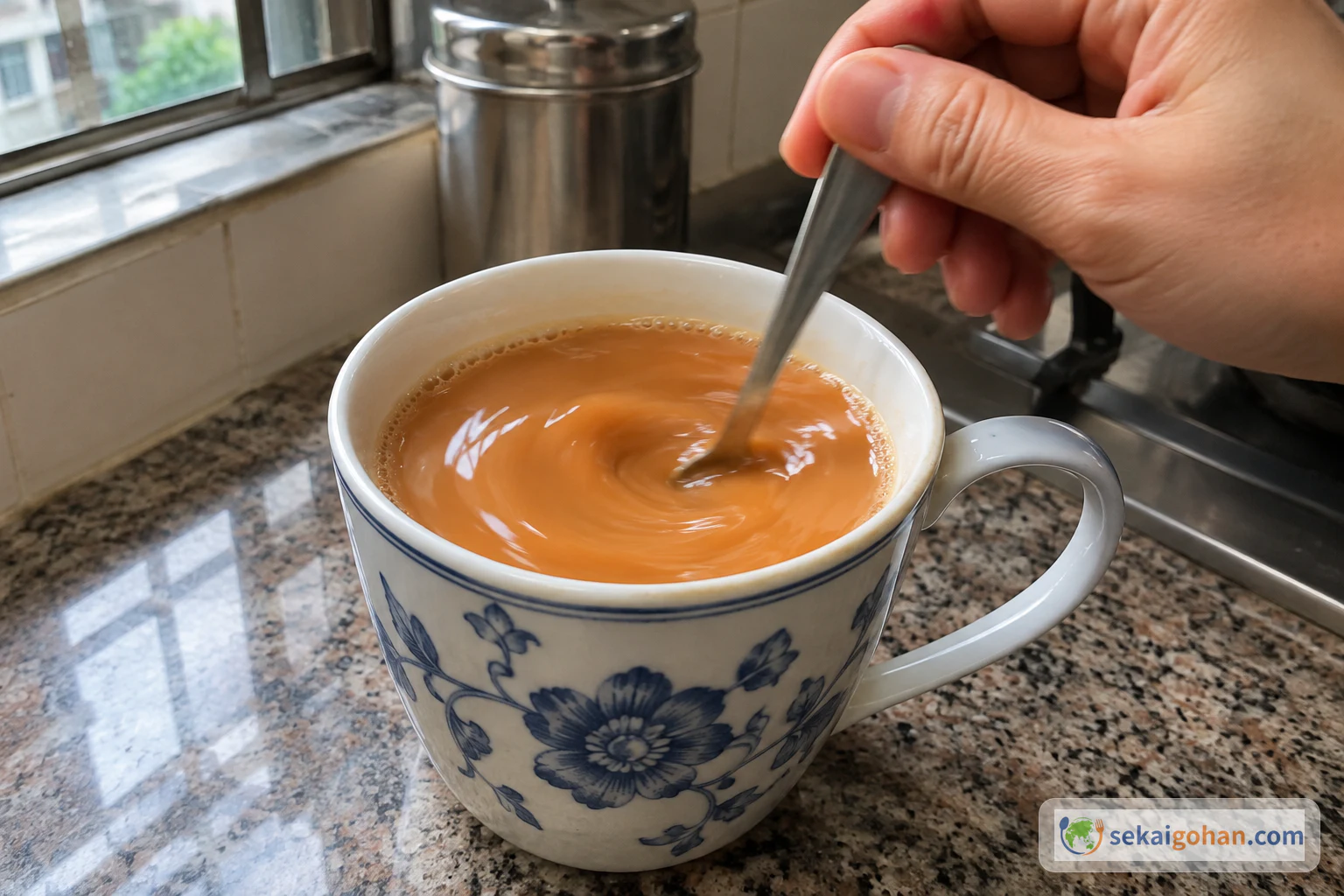
Black tea leaves go into a pot of very hot water and come up to a boil. The heat drops, and the tea simmers for a full 15 minutes until it turns a deep, dark brown. It then runs through a strainer lined with white cotton cloth, gets split into cups, and is finished with evaporated milk and a spoonful of sweetened condensed milk. That is Hong Kong-style milk tea: a drink built on strength and smoothness rather than on a light tea with a splash of fresh milk.
This is not the same as an ordinary cup of milk tea. Three choices separate it. The tea is extracted much harder, by boiling and simmering. It is filtered through cloth. And the dairy is unsweetened evaporated milk, with sweetened condensed milk for sweetness, instead of fresh milk and sugar.
This is a stovetop method built for a home pot and an ordinary strainer, and it is one well-made way to make the drink in a home kitchen. Hong Kong's professional milk tea masters use a different, more elaborate technique, described further down.
The drink is often called "silk stocking milk tea" (絲襪奶茶). No stocking is involved. The name comes from the fine white cotton cloth strainer, which gradually stains brown with use and comes to look like a silk stocking.
What Is Hong Kong-Style Milk Tea?
Hong Kong-style milk tea is a fixture of the cha chaan teng, the casual Hong Kong café where Eastern and Western food cultures meet. At cha chaan tengs such as Lan Fong Yuen, silk stocking milk tea is strained through a cloth bag, sweetened with condensed milk, and served hot or cold.
The tea is brewed very strong and passed through a cloth filter, and that cloth gives the drink its nickname. In the traditional craft, masters blend tea leaves of different sizes, brew them in a cloth bag, pour the tea through the bag from a height several times, and reheat it briefly before it meets the milk. The technique is known as "Hong Kong Style Milk Tea Making Technique" (item 5.36). The method repeatedly pours hot water through a cloth strainer, then pours the hot tea into evaporated milk.
The home version below does not try to recreate that full craft. It aims for the same kind of cup with a saucepan, a fine-mesh strainer and a clean cotton cloth. The strong brew, the cloth straining and the evaporated milk stay, while the high pouring stays in the cafés.
Ingredients: 4 Servings, in US Measures
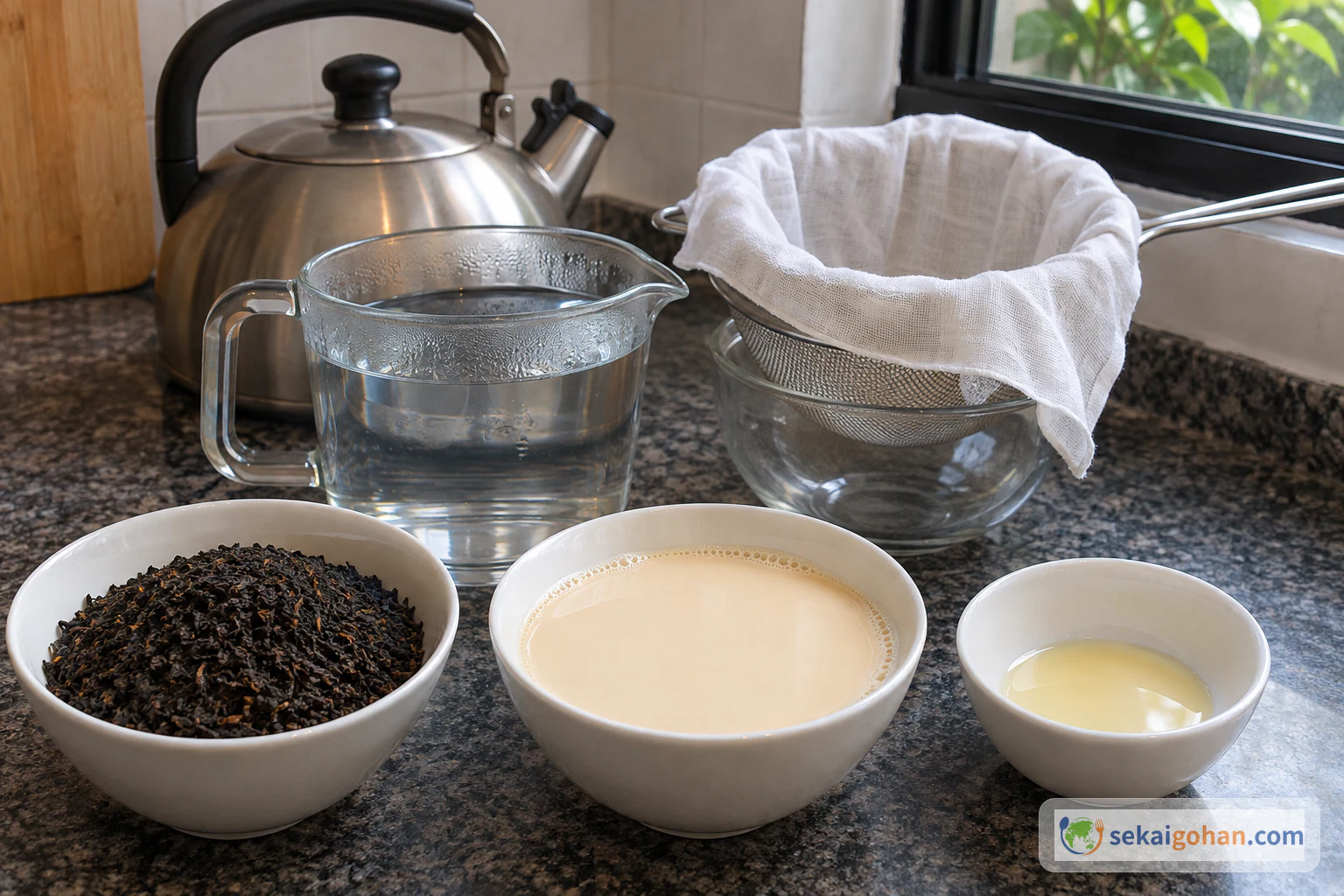
The amount of tea you end up with depends on your pot, your heat and how much liquid the leaves soak up, so treat about 4½ US cups as a guide. The drink contains milk. Do not serve it to anyone with a milk allergy.
Equipment
- A saucepan large enough for 6 US cups of water
- A stovetop burner
- A fine-mesh strainer
- Clean food-grade cotton cloth or cotton cheesecloth to line the strainer
- A stable heatproof pitcher or bowl to strain into
- Four heatproof cups
- US measuring cups, tablespoons and teaspoons
- A spoon for stirring
You do not need any equipment for high pouring.
Choosing Tea, Milk and Cloth
Tea. Ceylon Orange Pekoe, Lipton Black Tea and Earl Grey are options for the tea blend. No single brand is required. Ceylon black tea or a fine-cut black tea is a good starting point. Leaf size affects how tea extracts. Fine fannings and larger leaves will give different strength and astringency even at the same 10 tablespoons. If you change the tea, keep the amount the same and judge the cup by its strength.
Evaporated milk. Look for unsweetened evaporated milk. Regular milk is a different product with different concentration, fat and flavor. It will not give the same cup, so don't use it as a swap.
Sweetened condensed milk. This is a different product from evaporated milk, even though the cans look alike. Evaporated milk is unsweetened. Condensed milk is sweetened and much thicker. Check the label so you don't add condensed milk where evaporated milk belongs.
Cloth. Line a fine-mesh metal strainer with clean food-grade cotton cloth or cotton cheesecloth. This home double layer is not the same as the long cloth bag used in cafés, but it serves the same purpose of catching fine tea particles. Use only cloth made for food. Never use actual stockings or other non-food fabric. The cloth lining is optional, but the cloth filter is part of what makes this "silk stocking" milk tea.
How to Make Hong Kong-Style Milk Tea
You are working with boiling tea and steam. Keep the pot steady on the burner. Set the strainer over a stable heatproof vessel and pour at a low height. The wet cloth will be hot, so handle it with care.
Getting the Balance Right: Fixing a Weak, Bitter or Too-Sweet Cup
| Problem | Where to look | What to do |
|---|---|---|
| The tea tastes thin under the milk | How hard the tea was brewed and the size of the leaves | Make sure the tea came to a full boil and simmered for the full 15 minutes. Larger leaves extract differently from fine fannings, so a finer black tea may suit the drink better next time |
| It tastes harsh or bitter | Extraction | Brewing for too long makes tea bitter. Simmer gently rather than boiling hard, and keep to the 15 minutes instead of leaving it on the heat longer |
| Gritty or cloudy with fine particles | Straining | Line the strainer with cloth, or use a finer cloth, so the small tea particles are caught |
| Too sweet | Condensed milk | Start with about 1 teaspoon per cup and add more only after tasting. Sweetness can be added but not taken out |
| Not sweet enough | Condensed milk | Add condensed milk a little at a time. Granulated sugar is not part of this recipe |
| Not rich or smooth enough | The type of milk | Check that you used unsweetened evaporated milk. Fresh milk gives a lighter, different drink |
Variations Within the Same Recipe
These adjustments stay inside the same amounts and method. They are not separate recipes.
- Sweetness. Start each cup at about 1 teaspoon of condensed milk and adjust from there. People who like it less sweet can stop there.
- Tea type. Try Ceylon Orange Pekoe against a fine-cut fanning tea at the same 10 tablespoons and notice how strength and astringency change with leaf size.
- Straining. A fine-mesh metal strainer lined with cotton cloth is the home stand-in for the café cloth bag. The café bag is longer and is used with repeated pouring, so the home version is simpler.
- Iced milk tea. Cha chaan tengs serve the drink cold as well as hot. This recipe is for a hot cup, drunk straight away. It does not cover an iced version with its own ratios and amount of ice.
Cha Chaan Tengs and Silk Stocking Milk Tea
Milk tea first came to Hong Kong as a Western-style drink during the colonial period. After the war, a stronger, local style took hold in places like bing sutt (cold drink cafés) and dai pai dong (open-air food stalls), and the drink's history is tied to these everyday eating places. Today's cha chaan tengs are where Eastern and Western food culture meet, with milk tea as one of the drinks served there. To explore more of the city's food, visit our Hong Kong country page.
The professional technique is a craft in its own right. Masters blend large, medium and small tea leaves, put them into a cloth bag, pour hot water through and brew for a few minutes, then pour the tea from a height through the bag at least three times. The tea is then reheated for one to two minutes and kept over low heat. Some pour tea into milk, others the reverse. The technique is item 5.36.
The high, repeated "pulling" pour is part of that professional craft. It is not part of the home recipe above. Pouring boiling liquid from a height is dangerous in a home kitchen, so this recipe keeps every pour low and steady.
Frequently Asked Questions
How is this different from ordinary milk tea?
The tea is brewed much harder, boiled and then simmered for 15 minutes. It is strained through cloth, and it is finished with unsweetened evaporated milk and a little sweetened condensed milk instead of fresh milk and sugar. The café style also relies on blended leaf sizes and careful extraction. Together these choices give a darker, smoother and richer cup.
Is it really made with a stocking?
No. "Silk stocking" is a nickname. The fine white cotton cloth strainer turns brown with use and comes to look like a stocking. Use only clean food-grade cotton cloth or cheesecloth, never real stockings or non-food fabric.
Do I need to do the high "pulling" pour?
No. Pouring from a height several times is a traditional technique of Hong Kong's milk tea masters. It is not part of the household method used here, which brews in a pot and strains once. Keep pours low and steady at home.
What is the difference between evaporated milk and condensed milk?
Evaporated milk is unsweetened concentrated milk and provides the body of the drink. Sweetened condensed milk is sweetened and thick, and is used in small amounts for sweetness. The recipe uses both, each for its own job. One is not a substitute for the other.
How many cups does this make, and can I keep leftovers?
It makes 4 servings. After simmering and straining you should have about 4½ US cups of tea, a little over 1 cup per serving. Stir and drink it right away.
Sources
- The Woks of Life (Kaitlin), "Hong Kong Milk Tea: An Authentic Recipe." The household recipe used in this article: ingredients, amounts in US measures, 4 servings, boiling and then simmering the tea for 15 minutes, straining through a fine-mesh strainer with optional cotton cheesecloth, about ⅓ cup evaporated milk and about 1 teaspoon sweetened condensed milk per cup, and the tea suggestions including Ceylon Orange Pekoe. https://thewoksoflife.com/hong-kong-milk-tea/
- Hong Kong Memory (Hong Kong Public Libraries / Leisure and Cultural Services Department), "Ingredients, Utensils and Brewing Process." The traditional professional technique: blending leaf sizes, brewing in a cloth bag, pouring from a height at least three times, brief reheating, differences between masters including the order of tea and milk, and how leaf size and brewing time affect extraction and bitterness. https://www.hkmemory.hk/en/collections-ichhk_ii-hong_kong_style_milk_tea_making_technique-ingredients_utensils_and_brewing_process.html
- Hong Kong Memory (Hong Kong Public Libraries / Leisure and Cultural Services Department), "The History of Hong Kong-style Milk Tea." The origin of the name "silk stocking milk tea" from the brown-stained white cotton strainer, and the drink's history from Western-style milk tea to its postwar localization in bing sutt and dai pai dong. https://www.hkmemory.hk/en/collections-ichhk_ii-hong_kong_style_milk_tea_making_technique-history_hong_kong_style_milk_tea.html
- Hong Kong Tourism Board, "7 Must-Visit Cha Chaan Tengs in Hong Kong." Cha chaan tengs as a meeting point of Eastern and Western food culture, and Lan Fong Yuen's silk stocking milk tea strained through a cloth bag, sweetened with condensed milk and served hot or cold. https://www.discoverhongkong.com/eng/food-and-drink/must-visit-cha-chaan-tengs.html
- Intangible Cultural Heritage Office, Hong Kong, "ICH Inventory of Hong Kong (Updated version of December 2024)," item 5.36. The listing of Hong Kong Style Milk Tea Making Technique, described as repeatedly pouring hot water through a cloth strainer and pouring the hot tea into evaporated milk. https://www.icho.hk/documents/Intangible-Cultural-Heritage-Inventory/2024/ich_inventory_2024_en.pdf