Gopchang Jeongol: One Pot of Spicy Broth, Offal and Greens
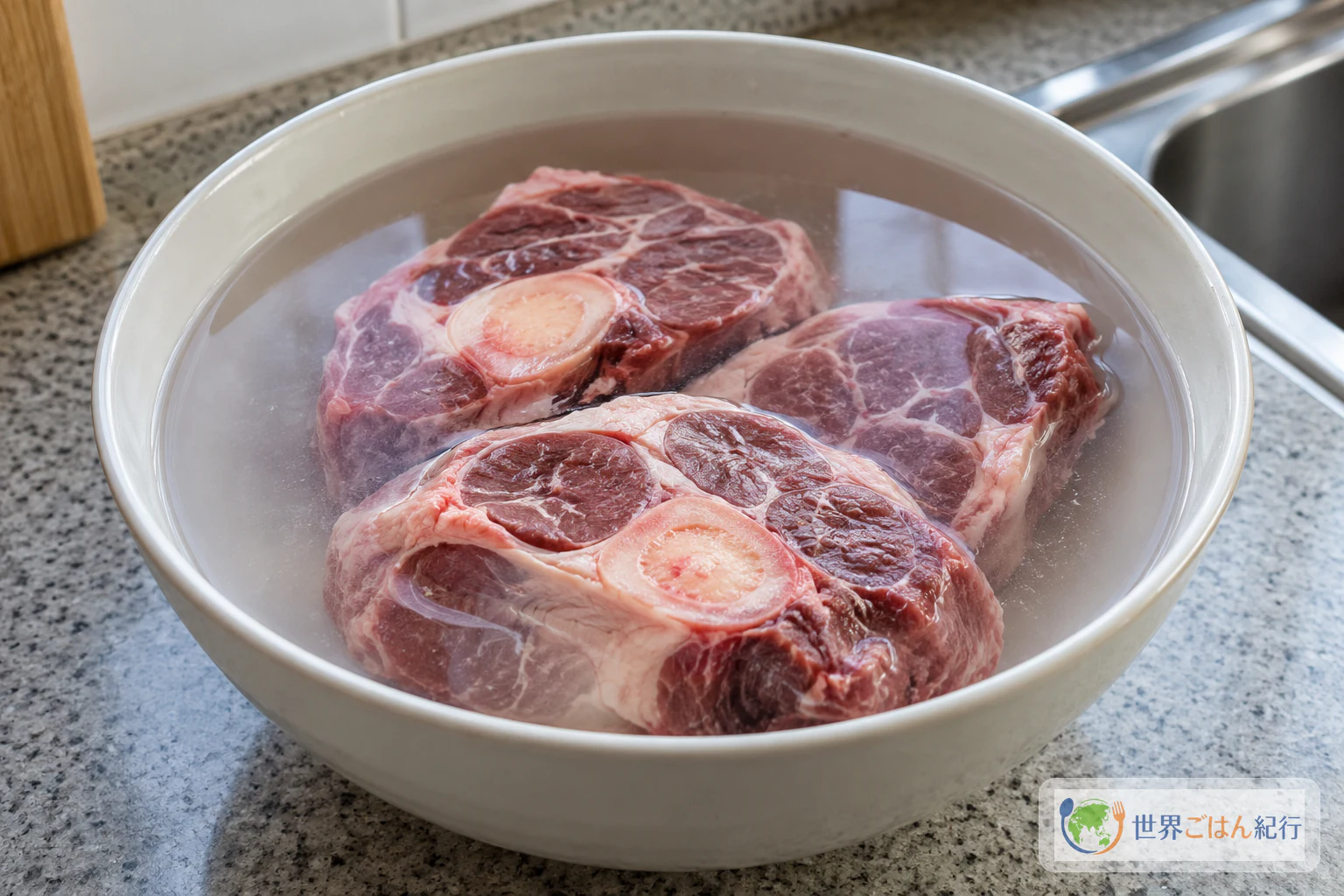
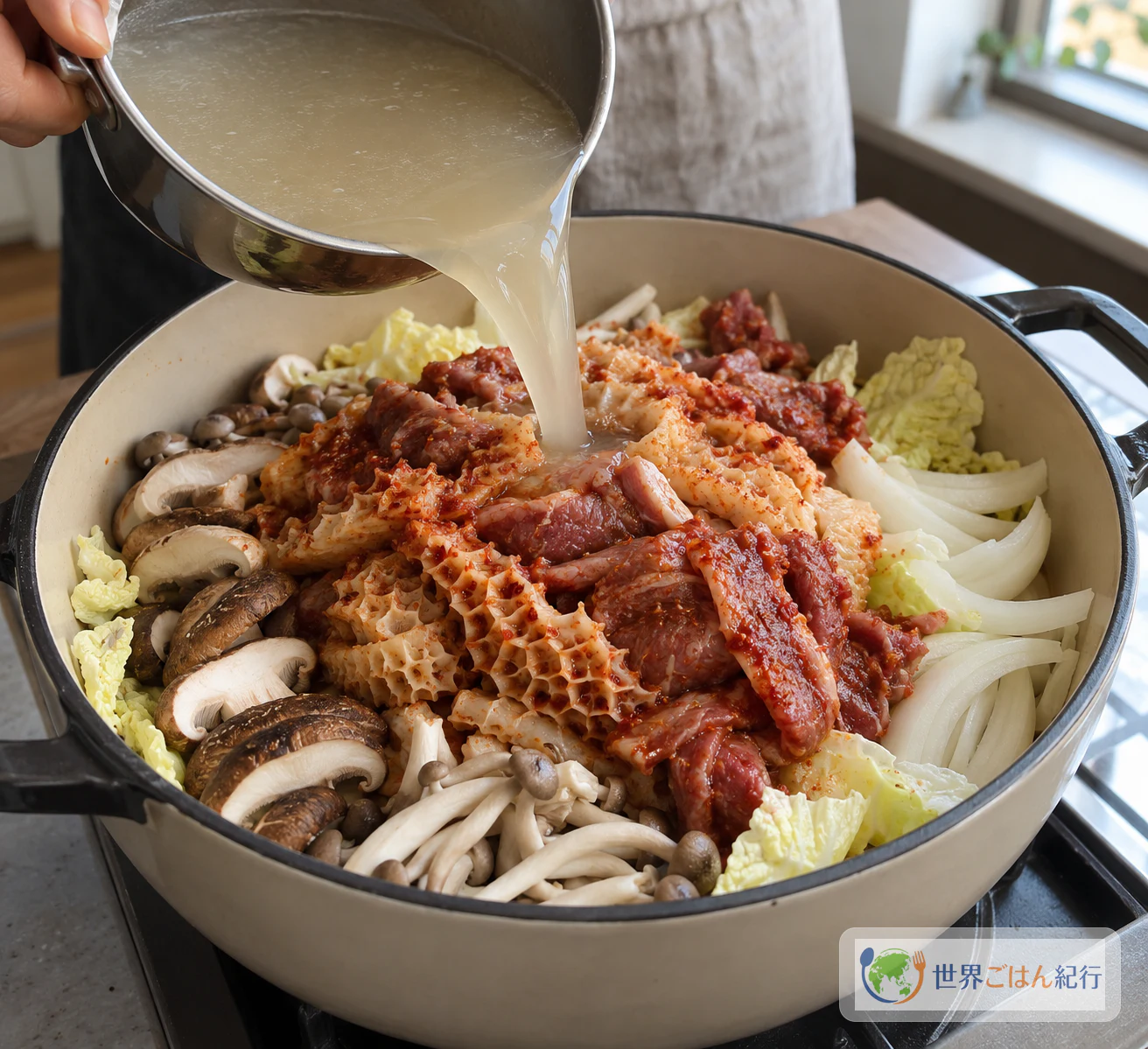
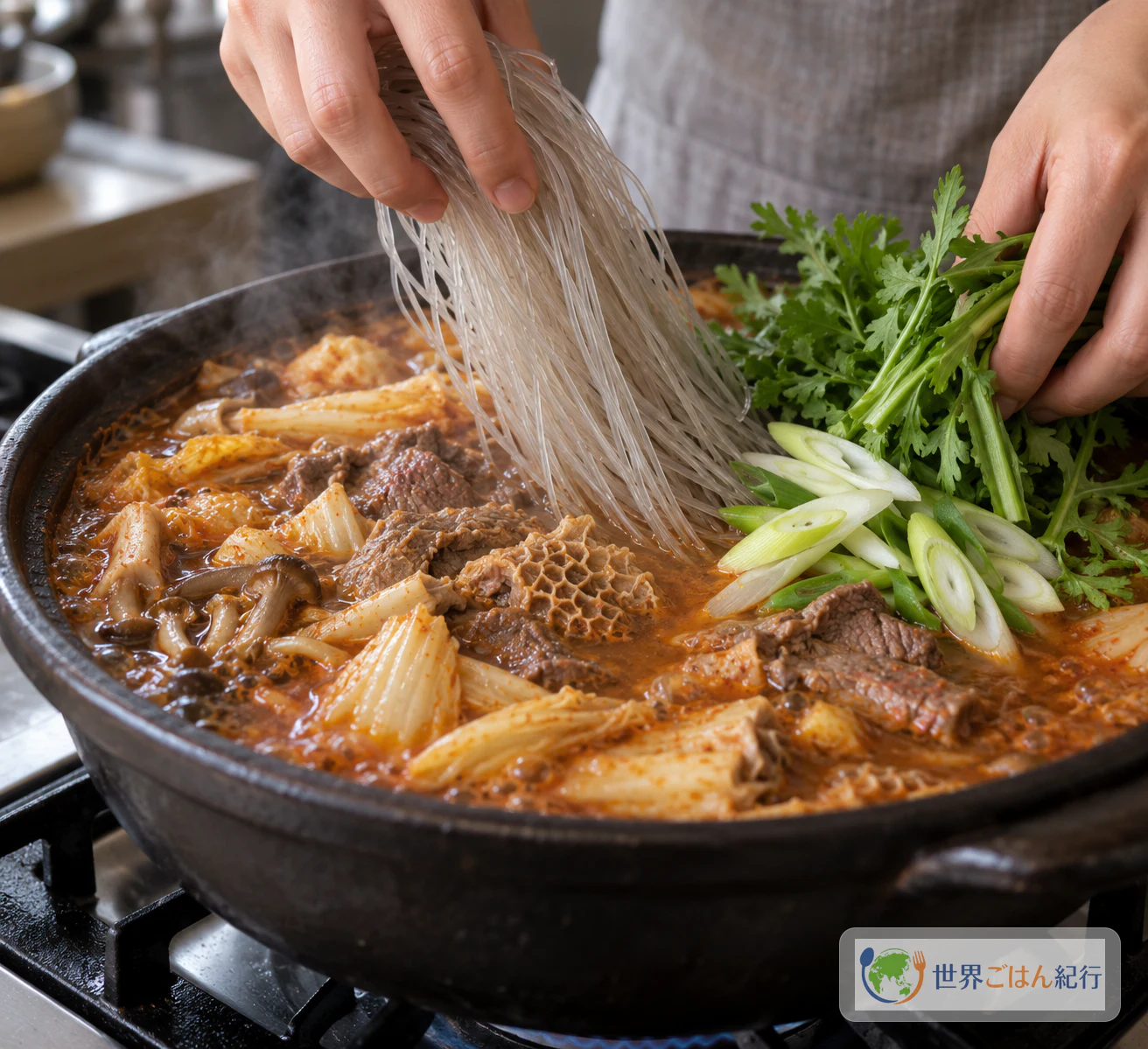
The offal goes in already parboiled, while the beef shank starts raw and is soaked first. Everything else depends on the order of the pot: vegetables on the bottom, seasoned meat on top, then greens and dry noodles at the very end.
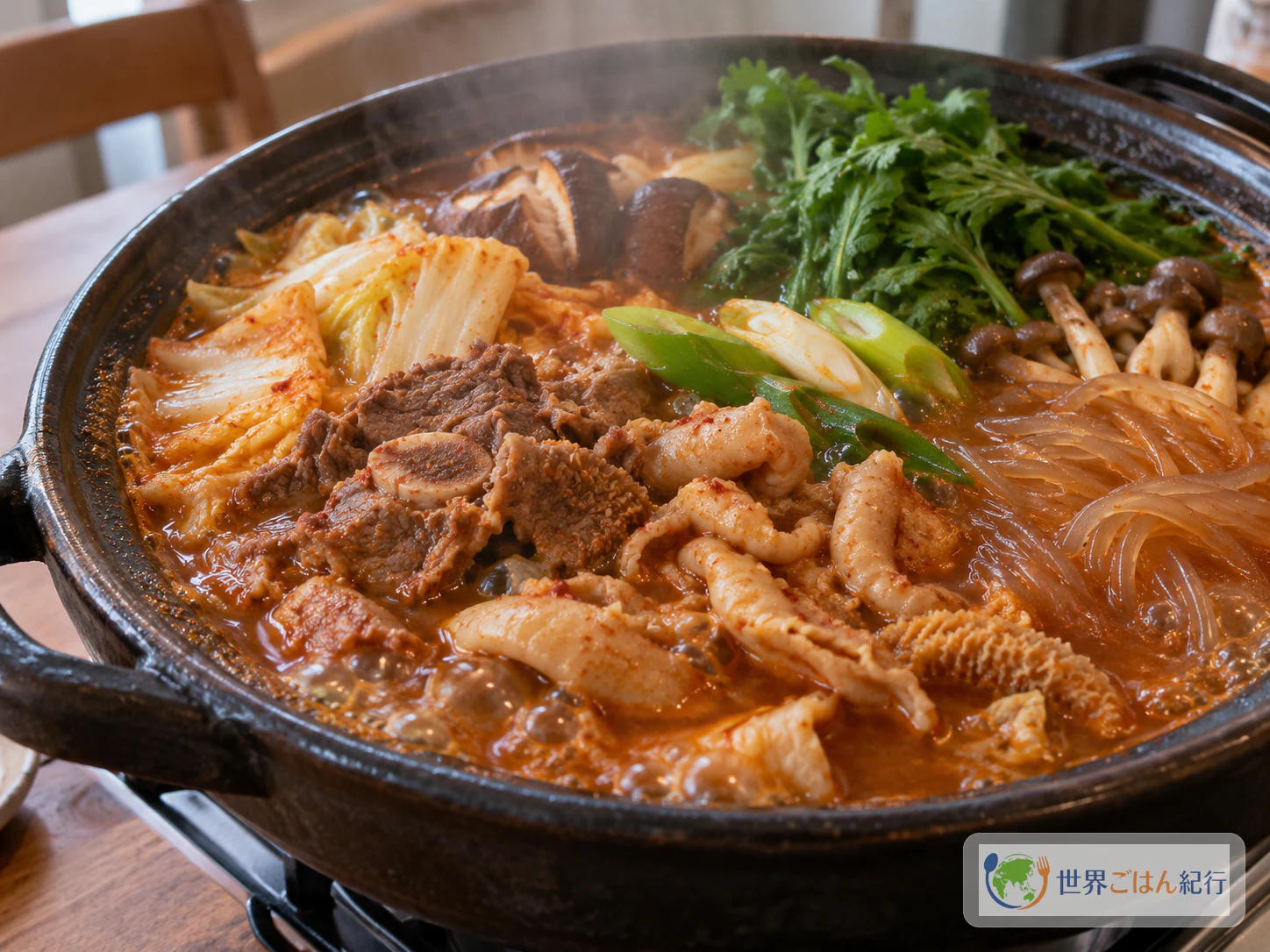
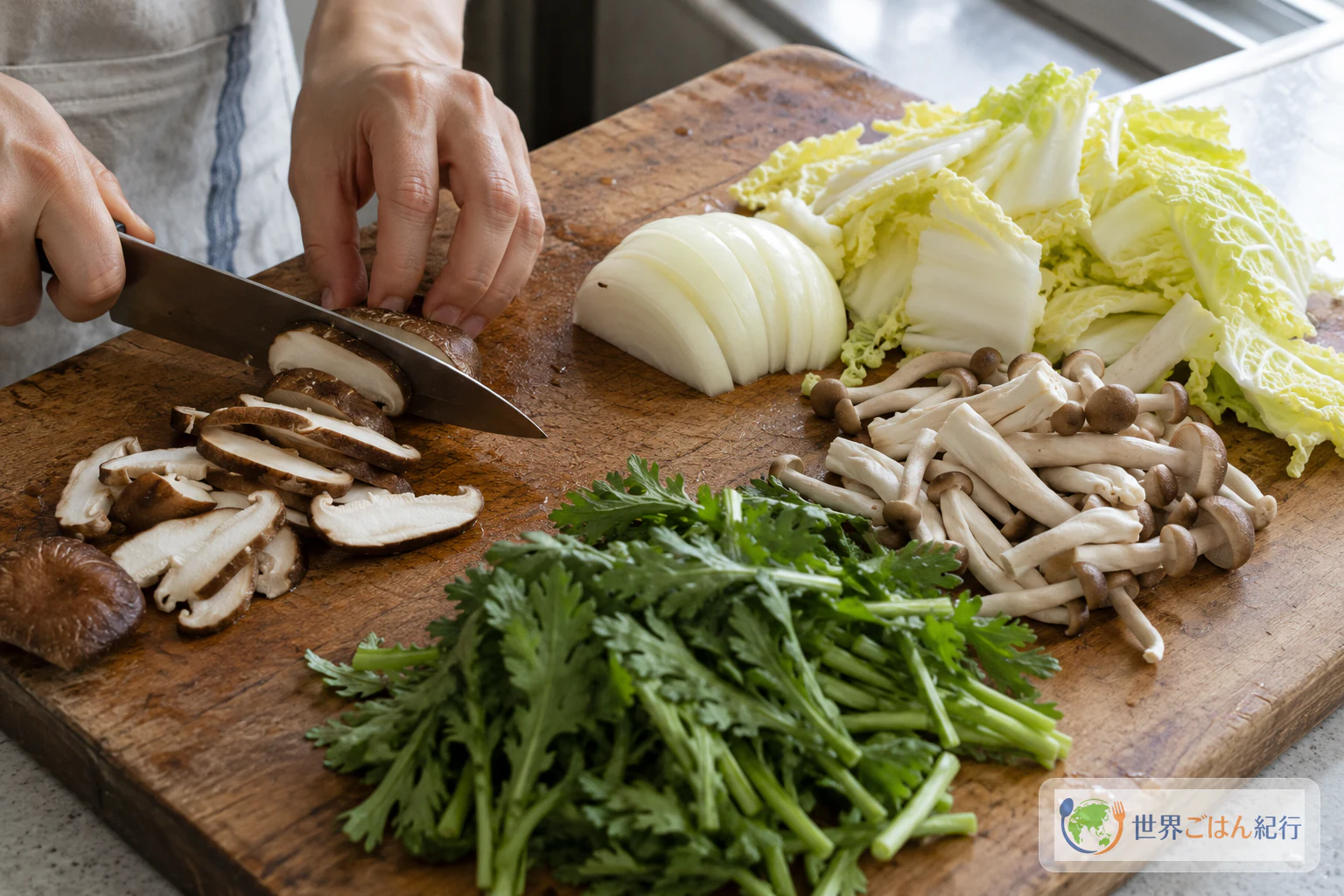
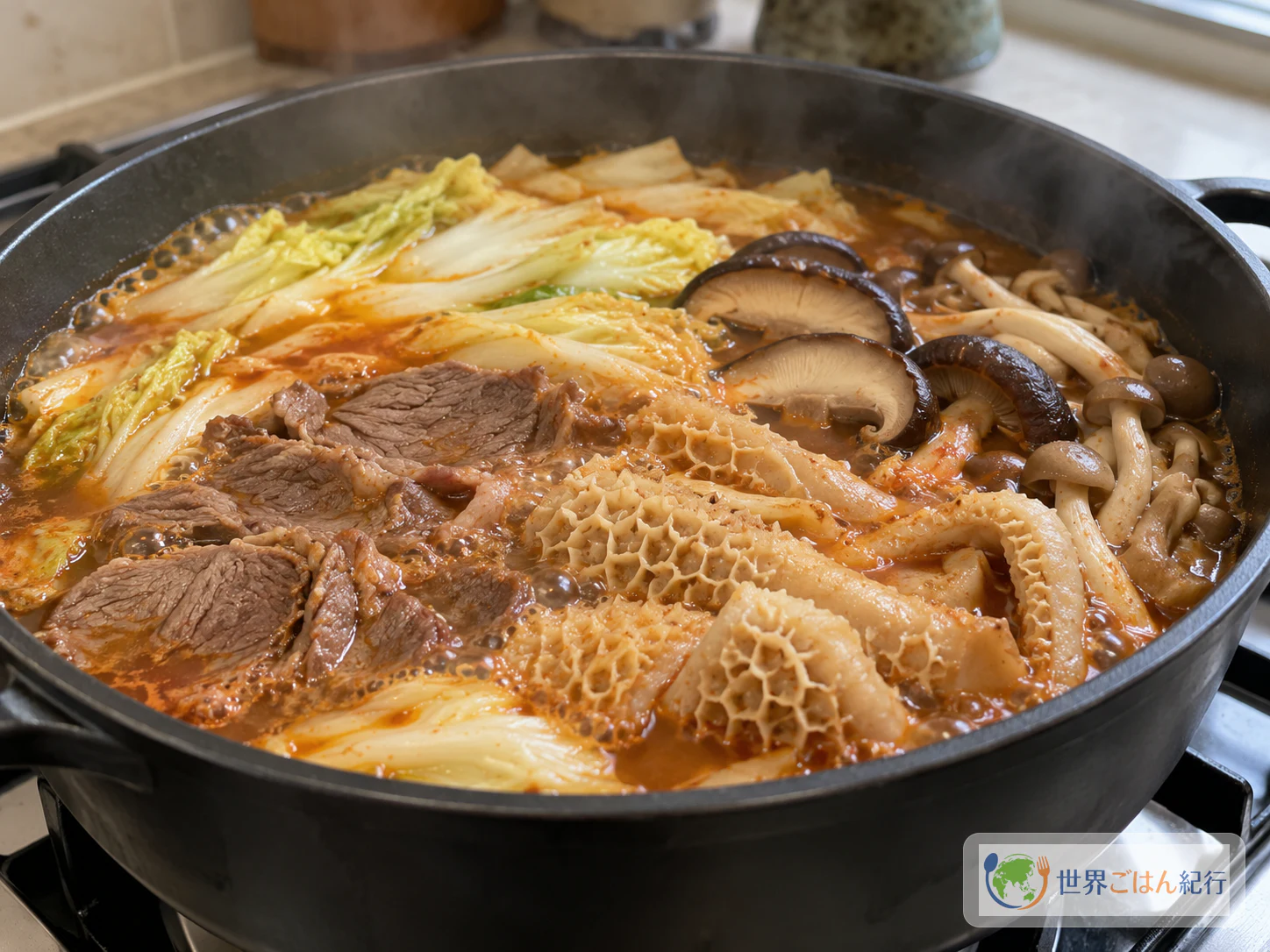
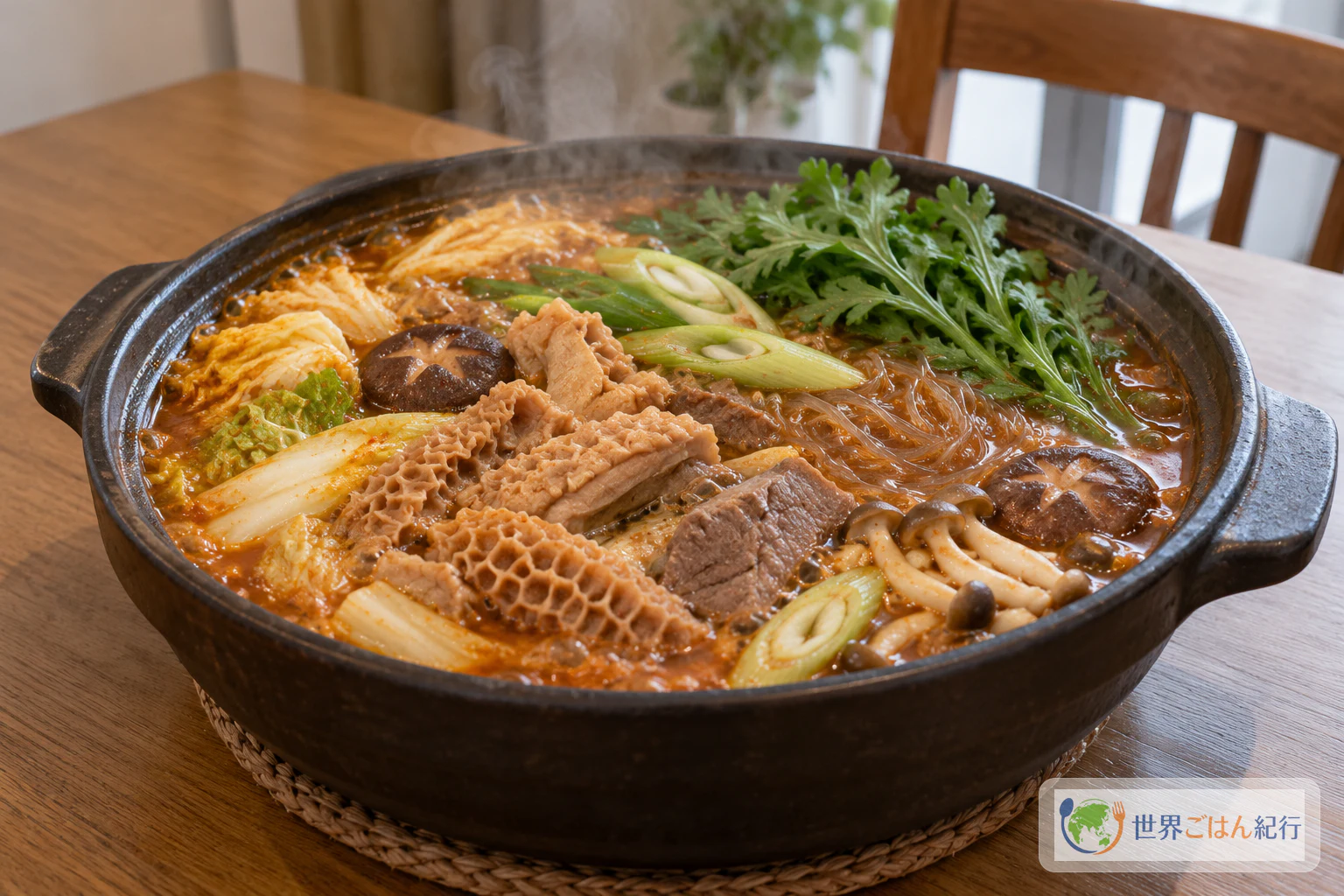
Steam rises from a red-brown broth. Beneath the surface, beef tripe and shank rest on napa cabbage, shiitake and shimeji, and at the last moment chrysanthemum greens, green onion and glass noodles go in and soften in the bubbling soup. This is gopchang jeongol (곱창전골), a Korean hot pot that the Korea Tourism Organization describes as prepared tripe, small intestine and brisket simmered in a spicy sauce and broth with vegetables such as perilla leaves and mushrooms.
The recipe here is one home-style version: "Beef Tripe Hot Pot / Gopchang-jeongol" from page 98 of The Korean K-Drama Cookbook by Choi Heejae, published by Tuttle. It is not the only way to make the dish, and it is not a formula shared by every restaurant.
A few plain notes on how this article uses that recipe:
- Where the text comes from. The recipe text was read in a third-party PDF copy of the full book hosted by Kanata College, not on a publisher's page. Tuttle's own page confirms the book's details and the author's background, but it does not show page 98.
- Units. The book prints paired measures that do not convert exactly, so this article uses its printed gram and milliliter values and does not recalculate them.
- Time. The book prints a preparation time of 40 minutes, yet its first step alone is a 1-hour soak. For that reason no total time appears here, only the 1-hour soak and the simmer of about 15 minutes after the boil.
- Testing. This recipe has not been kitchen-tested by Sekai Gohan. We organize a published recipe and have not cooked it ourselves.
Ingredients for 4 Servings
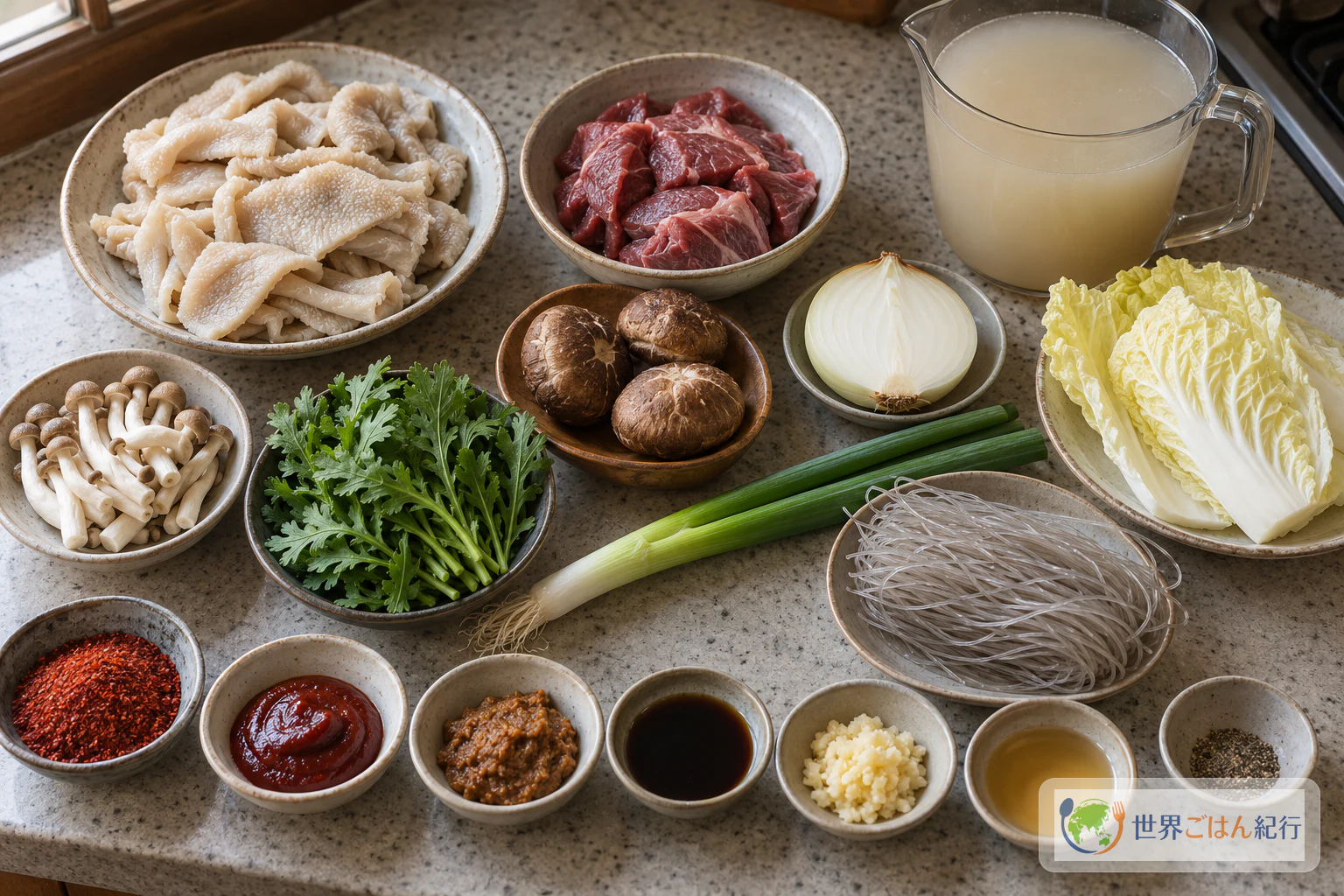
Nothing else goes into the main pot: no salt, extra water or oil. Rice, sesame oil and udon are only for the leftover broth, so they are not part of this list.
Choosing the Offal, Broth and Pastes
Offal. Look for a pack labeled as parboiled, and check which part it contains. If the label names no part, don't assume it is small intestine. Raw intestine is not a direct swap, because the method here has no step for pre-cooking offal.
Beef bone soup. You need 800 ml of finished soup. A purchased prepared beef bone broth is a time-saving choice, and the FAQ explains how it relates to the homemade version.
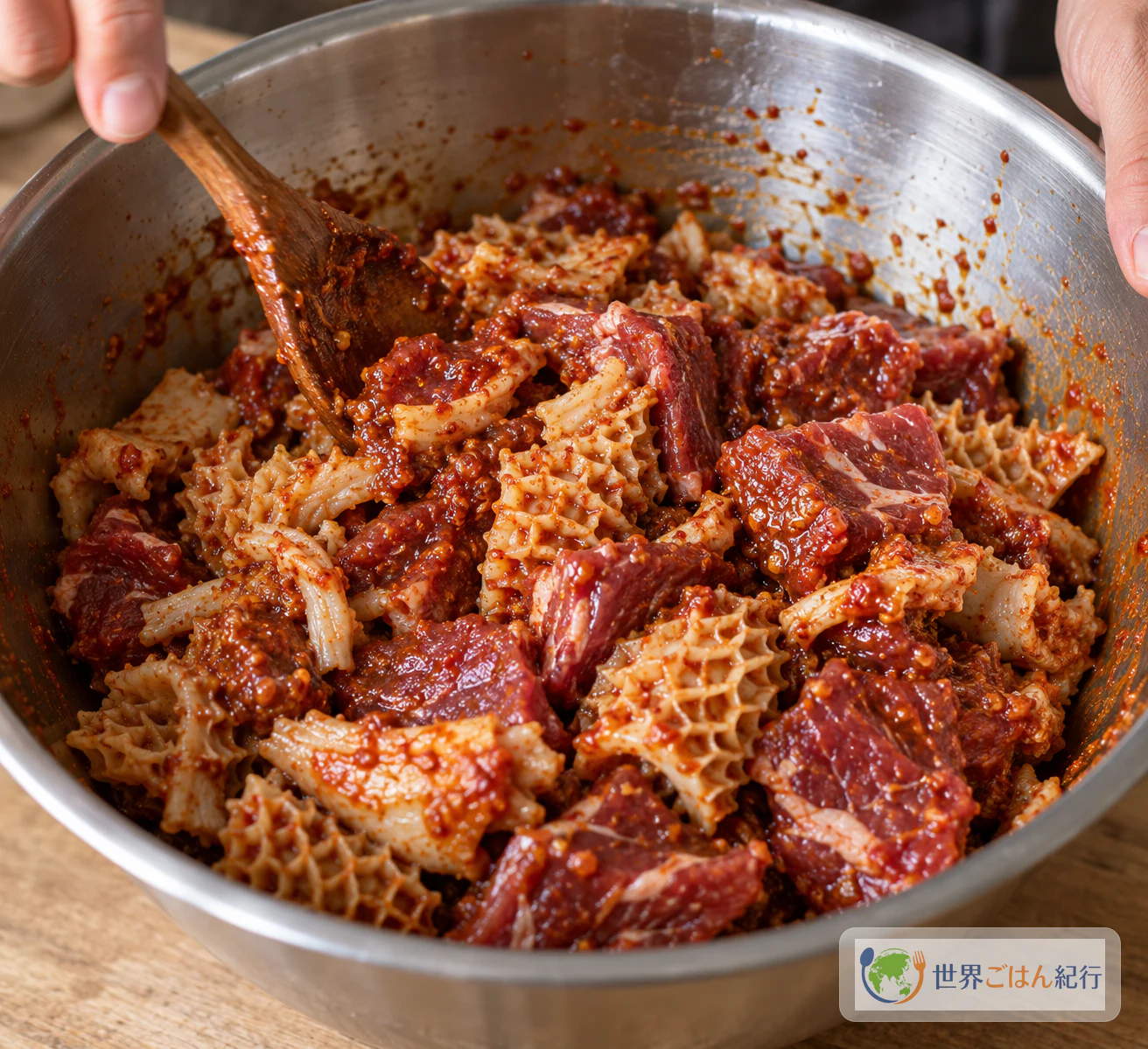
Doenjang or red miso. Either can go in the seasoning mix, but they do not taste the same. Red miso will change the aroma and saltiness of the pot.
Equipment
- A pot large enough for the layers and 800 ml of soup
- A bowl for soaking the shank
- A mixing bowl
- Two cutting boards and knives, or one set washed between the raw shank and the vegetables
Method: Soak, Mix, Layer, Simmer
Read through the order before you start. The shank needs its hour in the water first, and the noodles go in dry at the end.
Japan's Ministry of Health, Labour and Welfare warns that raw or undercooked meat and organ meats carry a risk of foodborne illness and advises thorough cooking. Its general guideline for meat is 75°C at the center for at least 1 minute. That figure is general guidance and is not part of the cookbook's method. The simmer of about 15 minutes does not prove that any particular internal temperature has been reached. The same ministry advises keeping meat juices from reaching other foods in the refrigerator. The notes on washing vegetables and separating boards and tools are our own general hygiene additions.
After the Pot: Rice or Udon in the Leftover Broth
The main pot is finished with its glass noodles, but the leftover broth has two documented uses, and each comes from a different source:
- Rice and sesame oil. A note in the cookbook suggests mixing them into the remaining broth.
- Udon. The Korea Tourism Organization describes adding udon to the broth left in the pot after the meal.
Both come after the main meal, so neither replaces the glass noodles.
Troubleshooting: Decisions Before and During the Simmer
| Situation | What to do |
|---|---|
| The shop only has raw intestine | Don't swap it in with this method, which has no pre-cooking step for raw offal. Look for a pack labeled as parboiled |
| The label says "offal" but names no part | Follow the label and don't call it small intestine. Either tripe or offal fits the ingredient list |
| The noodles are still firm after they go in | Keep simmering until they are soft. Softness is the signal here, not a set number of minutes |
| You are tempted to soak the noodles first | Add them dry at step 6, because they soften in the broth |
| You are tempted to brown the meat or vegetables | Skip it. Nothing is fried or grilled in this version, so the meat goes straight onto the vegetables |
| You have no doenjang | Use red miso in the same amount, and expect a different flavor |
Variations Within This Recipe
The options below are the ones the cookbook or the other sources support. Heat-level changes, tofu, chives, radish, chili garnishes and pre-boiling raw offal are not variations of this version, so they are not covered here.
| Choice | Options | What to keep in mind |
|---|---|---|
| Offal | Parboiled beef tripe or parboiled beef offal | Both must be parboiled, and the amount stays 350 g |
| Paste | Doenjang or red miso | The flavor differs |
| Sweet seasoning | Mirim or mirin | Both are listed by the cookbook at 1 tbsp |
| Soup | The cookbook's beef bone soup or a purchased prepared broth | The purchased route is our own convenience suggestion |
| After the meal | Rice with sesame oil, or udon | Both go in the leftover broth, outside the main ingredient list |
The images on this page follow one path through these choices: tripe, doenjang, mirim and dried glass noodles. Some of the tripe shown has a honeycomb texture, which USDA terminology places within the wider beef-tripe category. It is one natural example, and the cookbook does not require it.
Simmered, Not Grilled: Where This Dish Sits in Korean Cooking
Jeongol (전골) here means a pot simmered in broth. Gopchang-gui (곱창구이) is a different dish, in which small intestine is grilled on a grate or griddle. Its formula and method do not carry over to this pot, so if you came looking for charred, grilled intestine, this is not that recipe.
Published versions of gopchang jeongol differ widely, which is why the choice of offal matters when you shop:
| Version | Main meat and offal | Other details |
|---|---|---|
| The cookbook, used here | 350 g parboiled tripe or offal, 110 g beef shank | 800 ml prepared beef bone soup, glass noodles |
| Korea Tourism Organization description | Tripe, small intestine, brisket | Vegetables such as perilla leaves and mushrooms, with udon after the meal |
| Korean Traditional Knowledge Portal record | 200 g cow intestines, 50 g brisket | 400 ml water, thick noodles, rinsing with salt and flour, and a long boil with no stated time |
| The Korea Herald recipe | 200 g boiled tripe, 200 g boiled first stomach, 100 g beef | Its own broth and seasoning list |
These are comparisons only, and none of their amounts or steps are blended into the recipe above. The Traditional Knowledge Portal record, based on data from Korea's Rural Development Administration, lists Gyeonggi-do as its area. One record like that does not establish where the dish began or show that the region owns it. The materials behind this article also do not confirm an origin story or a seasonal custom, so we make no claim about either.
To compare with other Korean pots and soups, try the fermented flavors and broth of kimchi jjigae, the spicy sundubu jjigae, or the meat-and-soup bowl dwaeji gukbap. You can also browse more dishes from Korea.
Frequently Asked Questions
Can I use raw beef small intestine?
Not as a direct swap. The cookbook calls for parboiled tripe or offal and gives no instructions for preparing raw intestine. The Traditional Knowledge Portal record does start from raw intestines, but its long boil has no stated time, so it can't fill that gap here.
Which part is the "offal"?
The cookbook says only "beef tripe or beef offal" and does not name a specific organ, so it can't be identified as small intestine. Go by what the label on your pack says.
Is red miso the same as doenjang?
No. The cookbook lists red miso as an option, so you can use it, but the flavor will be different.
Do I need to make the beef bone soup from scratch?
The cookbook has a separate beef bone soup recipe on page 27 and uses 800 ml of the finished soup here. It doesn't say that page 27 yields exactly 800 ml, so don't assume the whole batch goes into this pot. Purchased prepared broth is our own suggestion for saving time and is not a substitute named in the book.
What kind of chili powder should I use?
The cookbook says "chili pepper powder" and specifies no type, grind or heat level. Korean chili powder is a natural choice to look for, but that is our suggestion and not a requirement of the recipe.
Should I soak the glass noodles first, or put udon in the pot?
The cookbook adds the noodles dry near the end and simmers them until soft, with no soaking step or set time. Udon is a separate option, described by the Korea Tourism Organization as an addition to the leftover broth after the meal.
How long does this take?
The stated times are the 1-hour soak and about 15 minutes of simmering after the boil. The time for the noodles to soften is not given, and the book's printed 40-minute preparation time conflicts with the soak, so we give no total.
How long can I keep leftovers, and how do I reheat them?
Neither the cookbook nor the other sources behind this article give a storage period or reheating time, so we don't offer one. The only related guidance is the Japanese ministry's general advice to keep meat juices away from other foods in the refrigerator.
Sources
- Choi Heejae, "Beef Tripe Hot Pot / Gopchang-jeongol 곱창전골," The Korean K-Drama Cookbook, Tuttle Publishing, 2023, p. 98. The recipe's 4-serving amounts and method, and the note on using leftover broth. Text read in a third-party PDF copy of the full book hosted by Kanata College, which is not a publisher page. https://kanata.edu.vn/wp-content/uploads/2022/10/The-Korean-K-Drama-Cookbook-Make-the-Dishes-Seen-in-Your-Favorite-TV-Shows.pdf
- Tuttle Publishing, "The Korean K-Drama Cookbook (9780804855556)." Book details and the author's background in traditional Korean food culture, restaurant work and cooking instruction. It does not show the text of p. 98. https://www.tuttlepublishing.com/korea/the-korean-k-drama-cookbook-9780804855556
- Korea Tourism Organization / VISITKOREA, "Beef Small Intestine Hot Pot (곱창전골 / Gopchangjeongol)." The description of the dish and the option of adding udon to the leftover broth. https://english.visitkorea.or.kr/svc/contents/contentsView.do?vcontsId=178252
- Korean Traditional Knowledge Portal, "Gub chang Jeongol (Beef Intestines Stew)," with data from the Rural Development Administration of Korea. A separate regional formula listing Gyeonggi-do as its area, used for comparison only. https://koreantk.com/ktkp2014/food/food-view.view?foodCd=TF10001483
- Hong Yoo, "Gopchang jeongol, spicy beef tripe hot pot," The Korea Herald. A separate recipe, used for comparison only. https://www.koreaherald.com/article/10595192
- Ministry of Health, Labour and Welfare (Japan), "食中毒予防:お肉はよく加熱して食べよう." General guidance on the risks of raw or undercooked meat and organ meats, the 75°C for 1 minute guideline for meat, and keeping meat juices from other foods in the refrigerator. https://www.mhlw.go.jp/stf/web_magazine/closeup/08.html
- USDA Agricultural Marketing Service, "Livestock, Poultry and Grain Meat Terms." Honeycomb tripe as stomach reticulum within the beef-tripe category. https://www.ams.usda.gov/market-news/livestock-poultry-and-grain-meat-terms