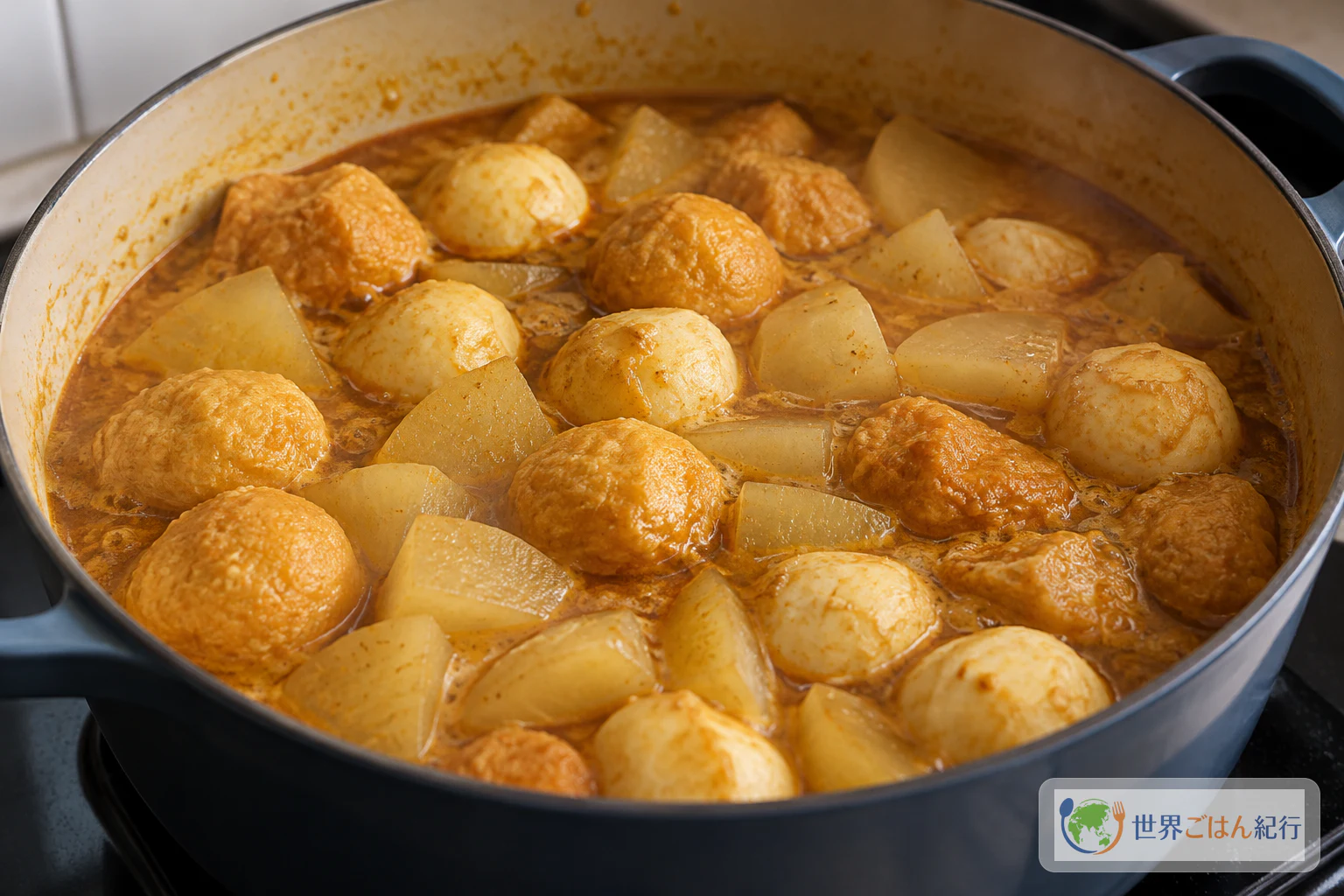
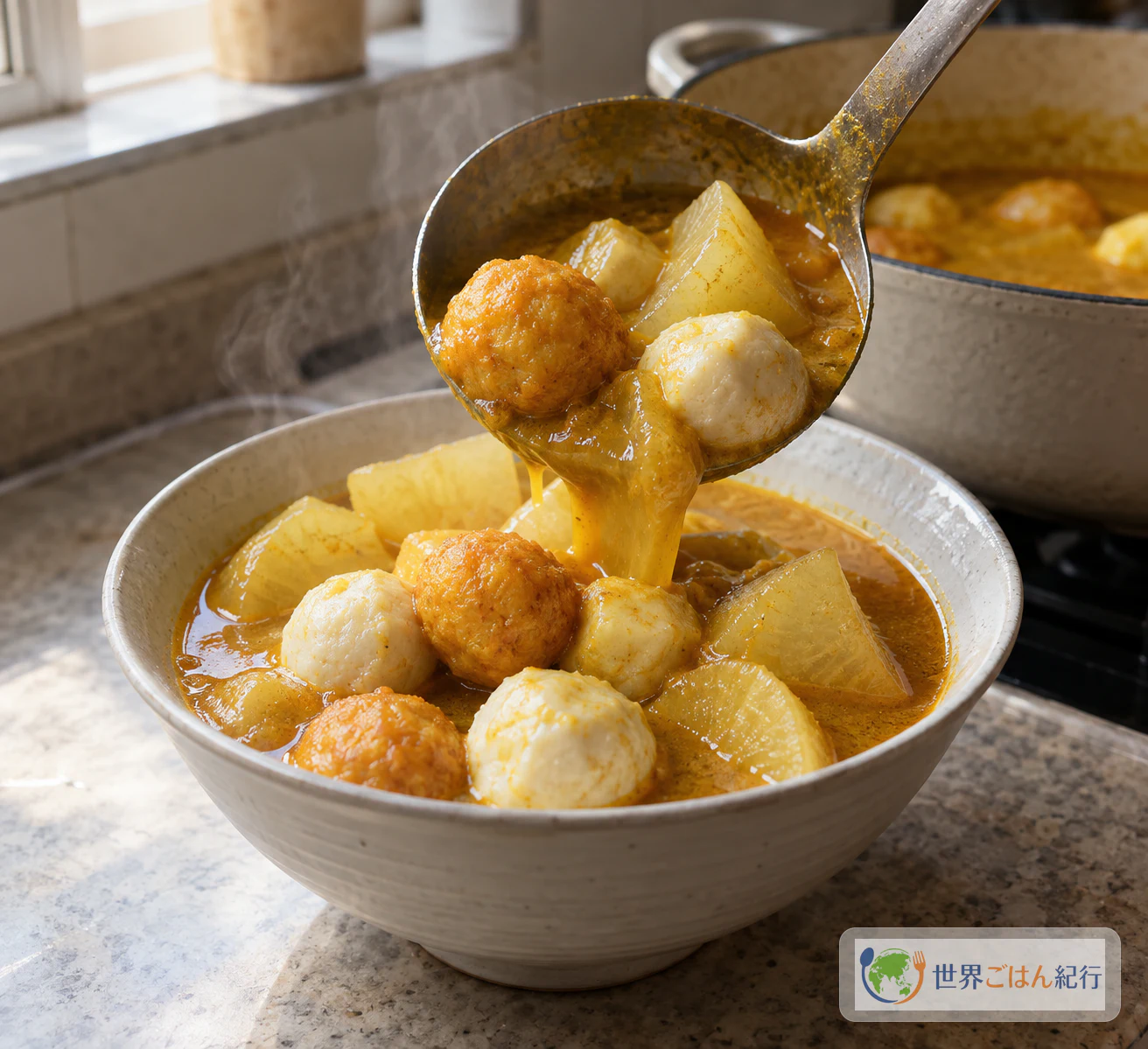
Curry Fish Balls with Radish: One Author's Home Pot
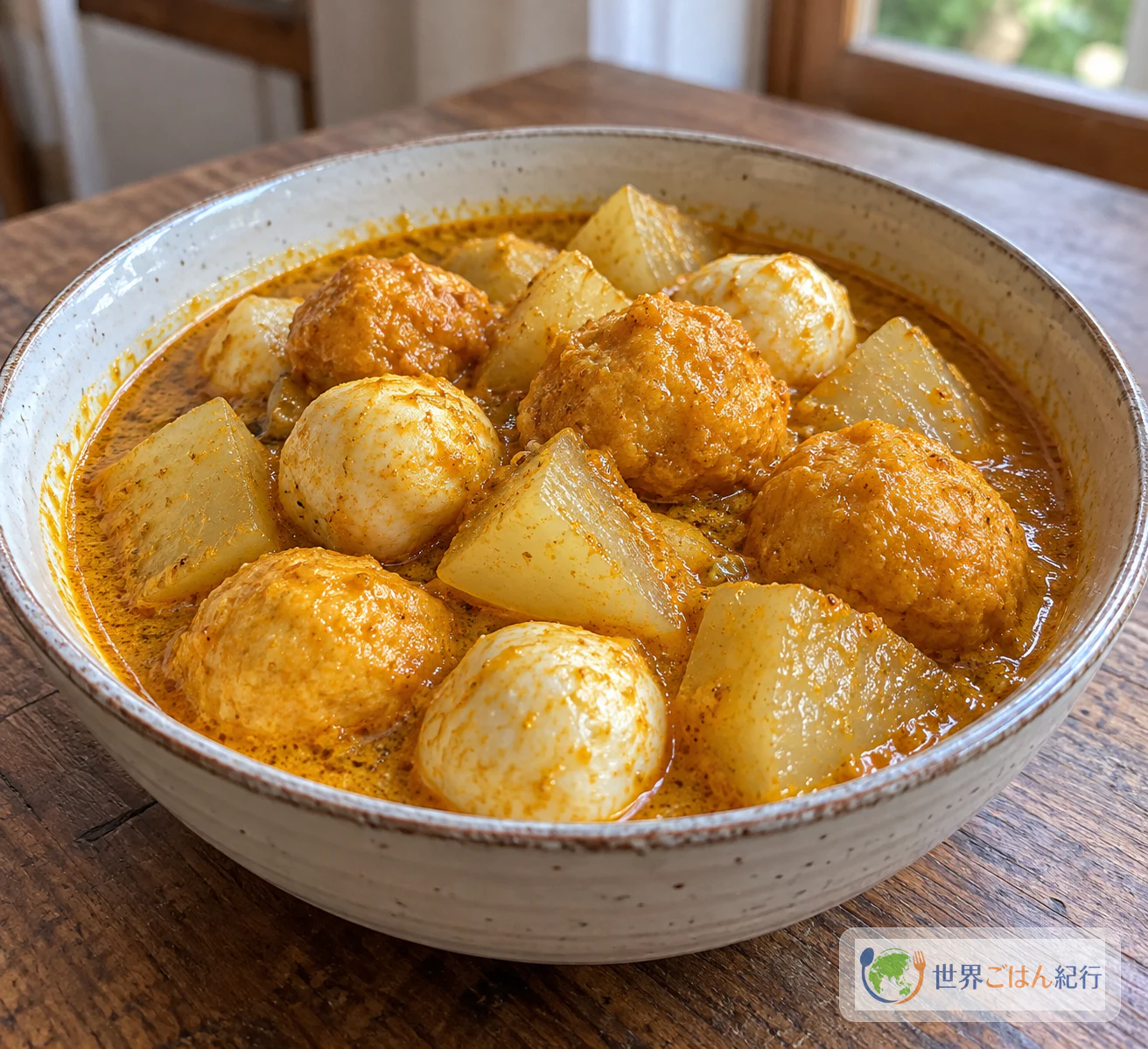
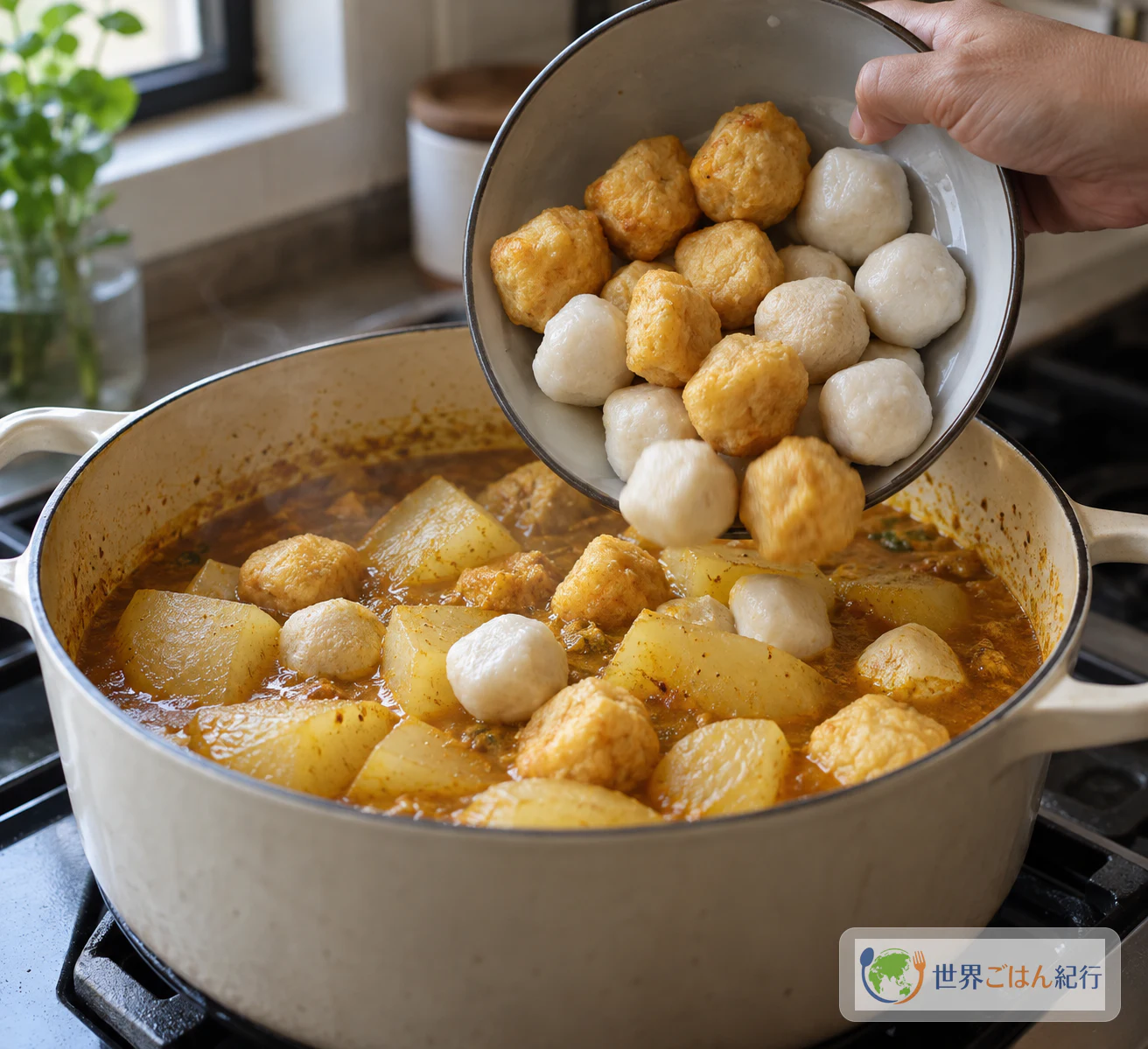
Two kinds of prepared fish balls, fried yellow and boiled white, 200 g of each, simmered with 520 g of peeled, roughly chopped radish in a sauce built on curry paste. The radish is part of the dish, not a garnish.
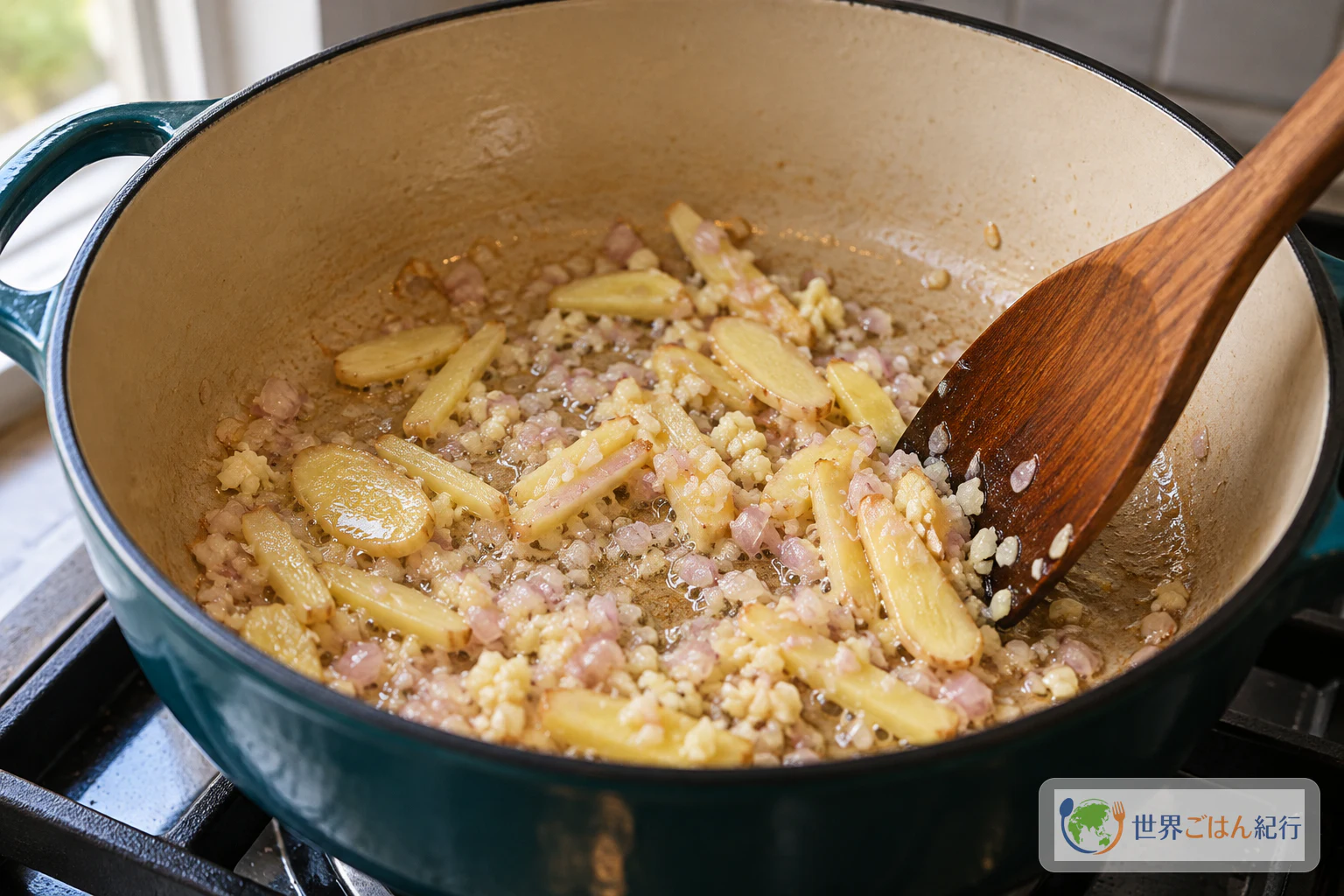
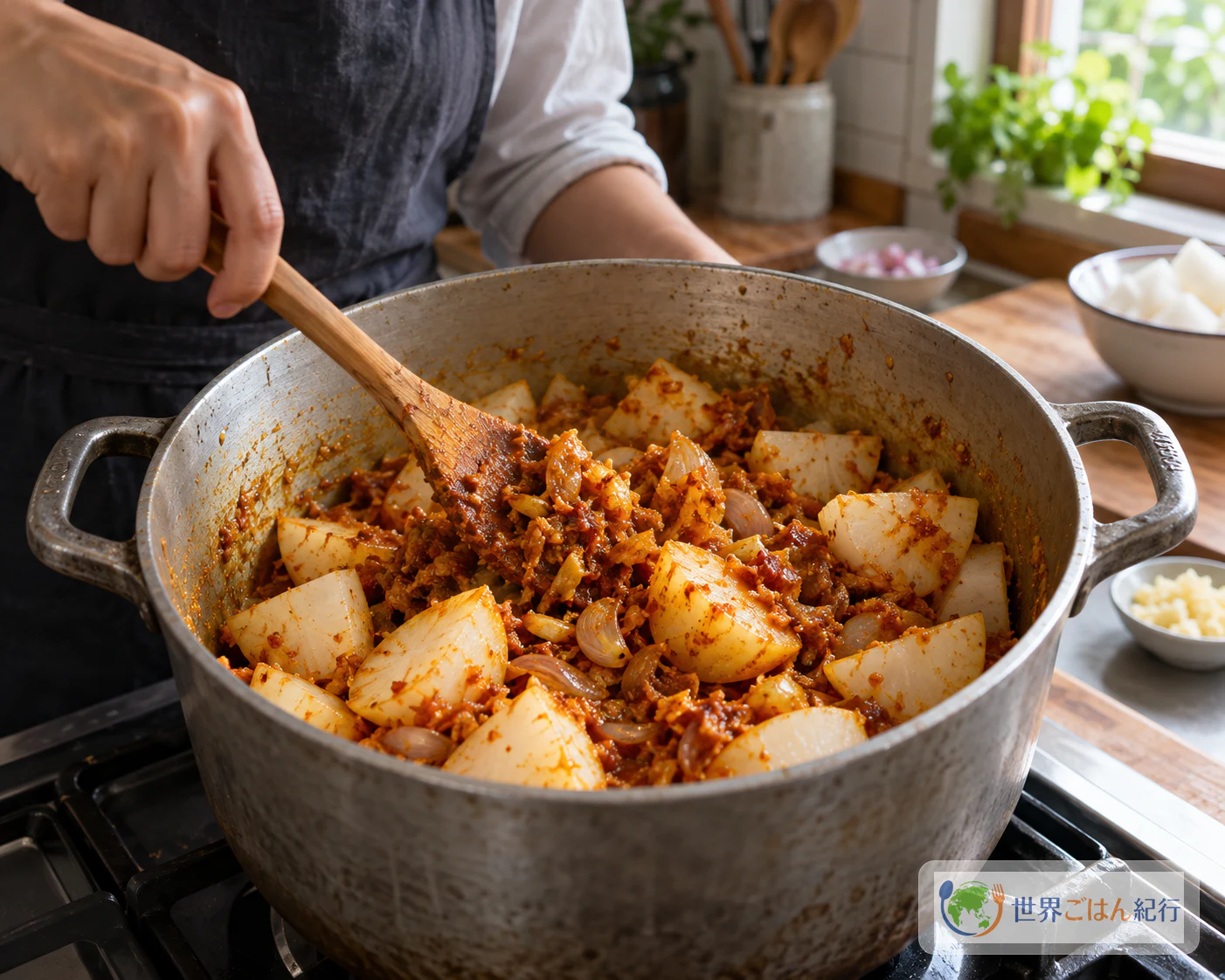
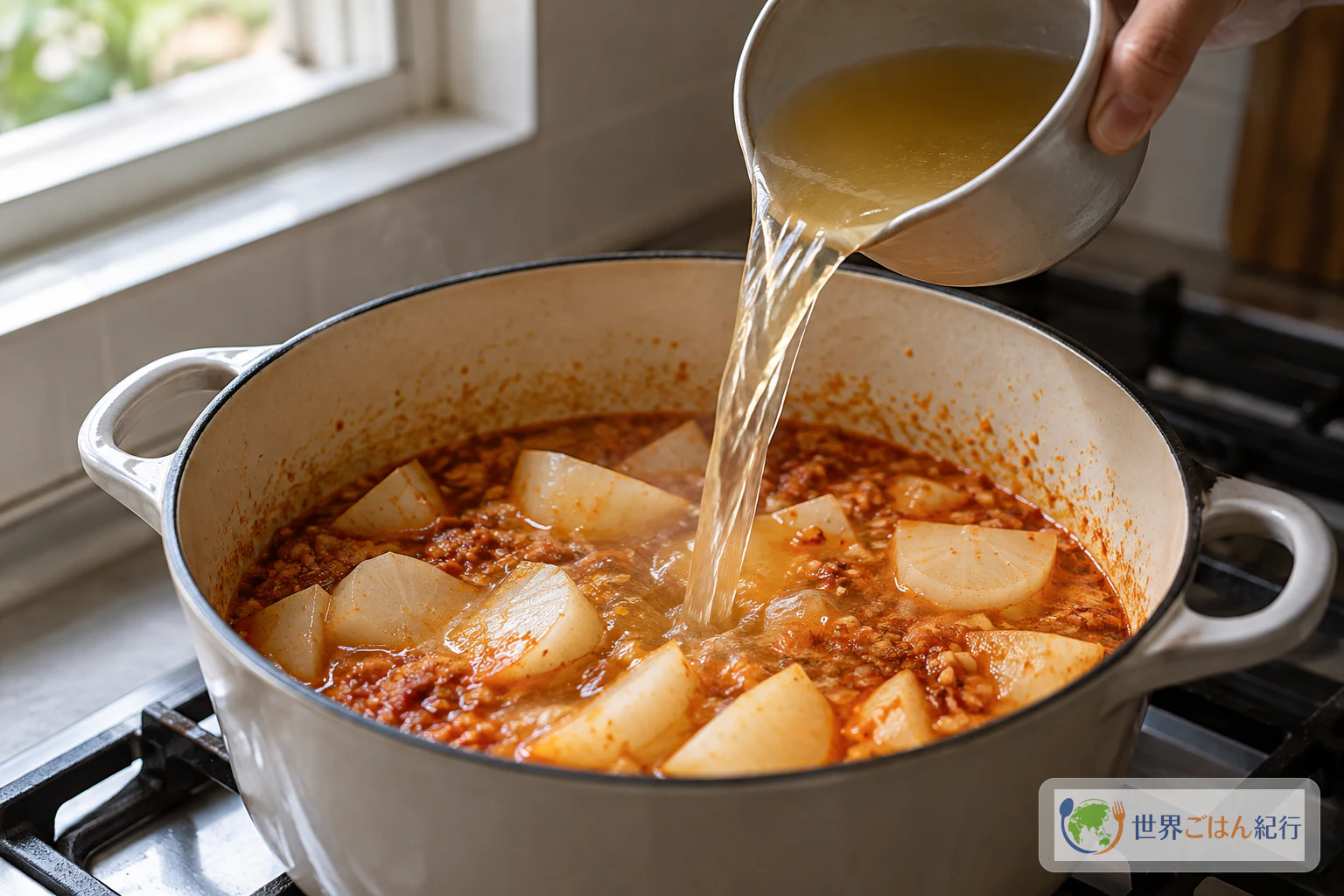
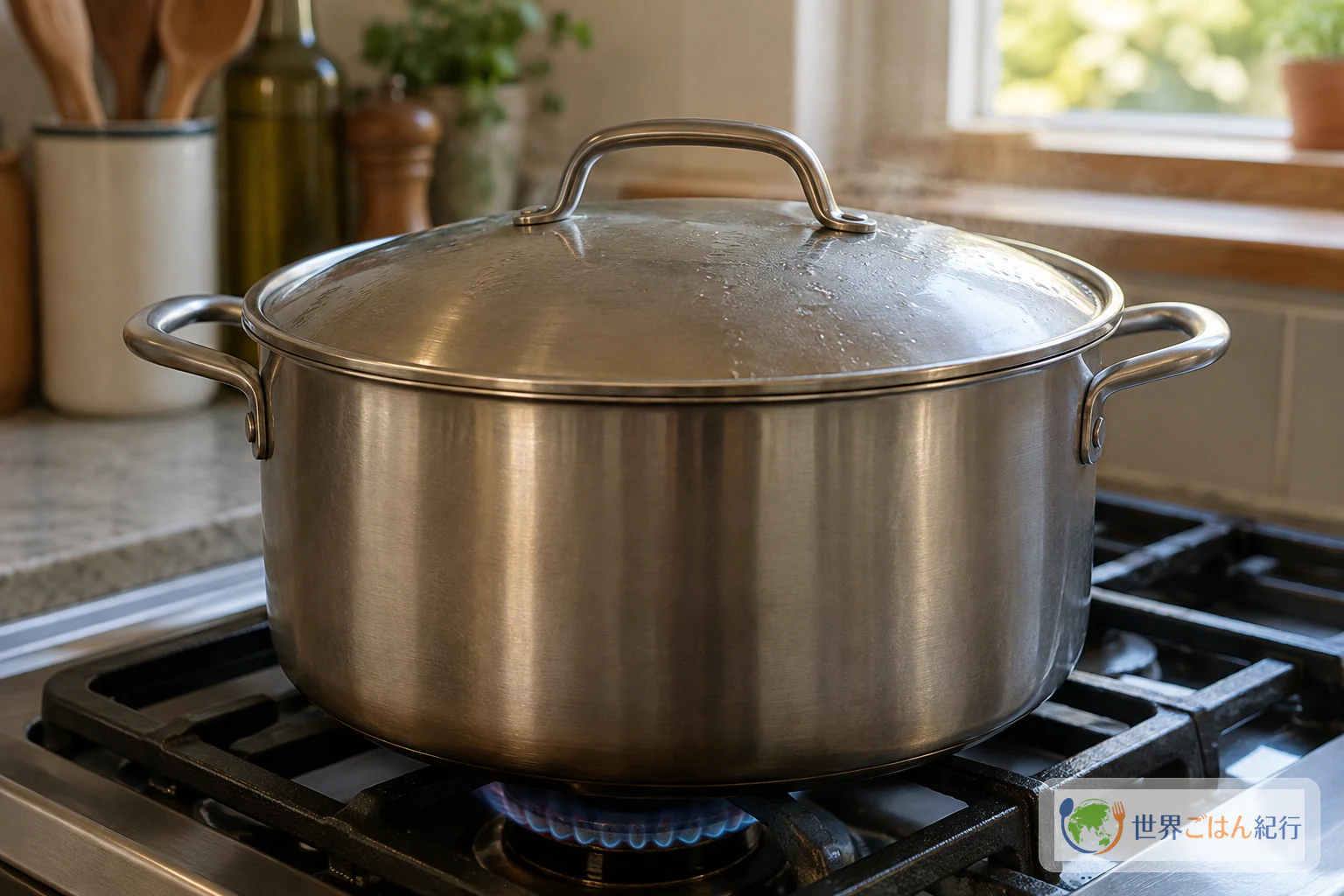
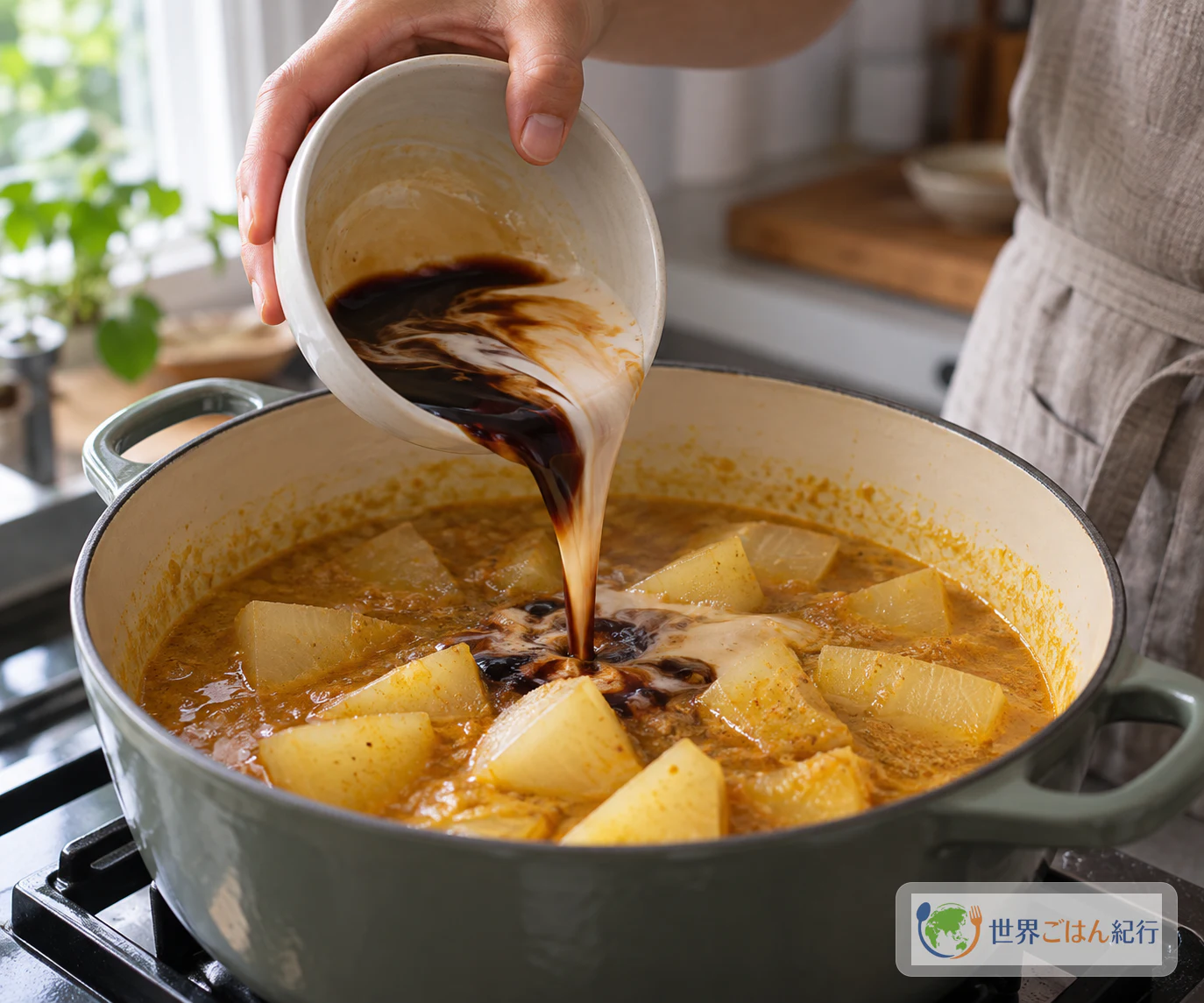
This article follows one specific recipe: Christine Ho's "Curry Fish Balls with Radish (咖哩蘿蔔魚蛋)," published on her site Christine's Recipes. Ginger, shallot and garlic go into a large pot first, then curry paste and radish, then chicken stock and water. After a covered simmer, oyster sauce, light and dark soy sauce, coconut milk and raw sugar go in, and only then the fish balls.
Curry fish balls are made in many ways in Hong Kong, and this is not presented as the standard street-stall formula or the only correct version. It is Christine Ho's radish-inclusive home recipe, and the title says so because the radish is a full ingredient here: 520 g of it, against 200 g of each kind of fish ball.
We have not kitchen-tested this recipe. The amounts and the order of the steps below follow Christine Ho's published recipe. Where that recipe does not specify something, such as the heat for the final cooking stage, this article does not fill it in.
A Childhood Street Snack Made for a Family Gathering
Christine Ho describes curry fish balls with radish as a street-food favorite from her childhood in Hong Kong. She also writes that she made this particular pot for a family gathering. Both are her own account. They show where the dish sits in one cook's memory, not that every Hong Kong version contains radish or uses her sauce. Her page files the recipe as a snack, with Chinese cuisine as its category.
For wider context, the Hong Kong Tourism Board groups curry fish balls among the street-food bites of Hong Kong. It notes that fish balls appear in noodle shops as well as being popular as street food. That is the extent of the background this article draws on. It does not settle a date of origin or a single standard recipe. For more dishes from the city, see the Hong Kong country page.
Other recipes take different routes
Other authors have published Hong Kong curry fish balls that work quite differently. ET Food Voyage's street-food-style recipe uses frozen fish balls, curry powder, hoisin sauce, oyster sauce, oil and water, and its notes cover cooking from frozen or after defrosting. Auntie Emily's Kitchen presents a broader medley with fish balls and several other foods and proteins, a curry base made from several pastes and sauces, blanching, broth and a cornstarch slurry.
Those are separate recipes by separate cooks. None of their ingredients, amounts or steps are mixed into the version below. If you want frozen fish balls, curry powder or a thickened sauce, follow those authors' own recipes rather than adapting this one.
Dark sauce or dark soy sauce, and the curry paste
Christine Ho's ingredient list says "dark sauce," and her method says "dark soy sauce." This article keeps both names on the same ingredient line rather than deciding between them. She writes that she used Tean's Gourmet chicken curry paste and that another brand can be used instead. The brand is her example, not a requirement.
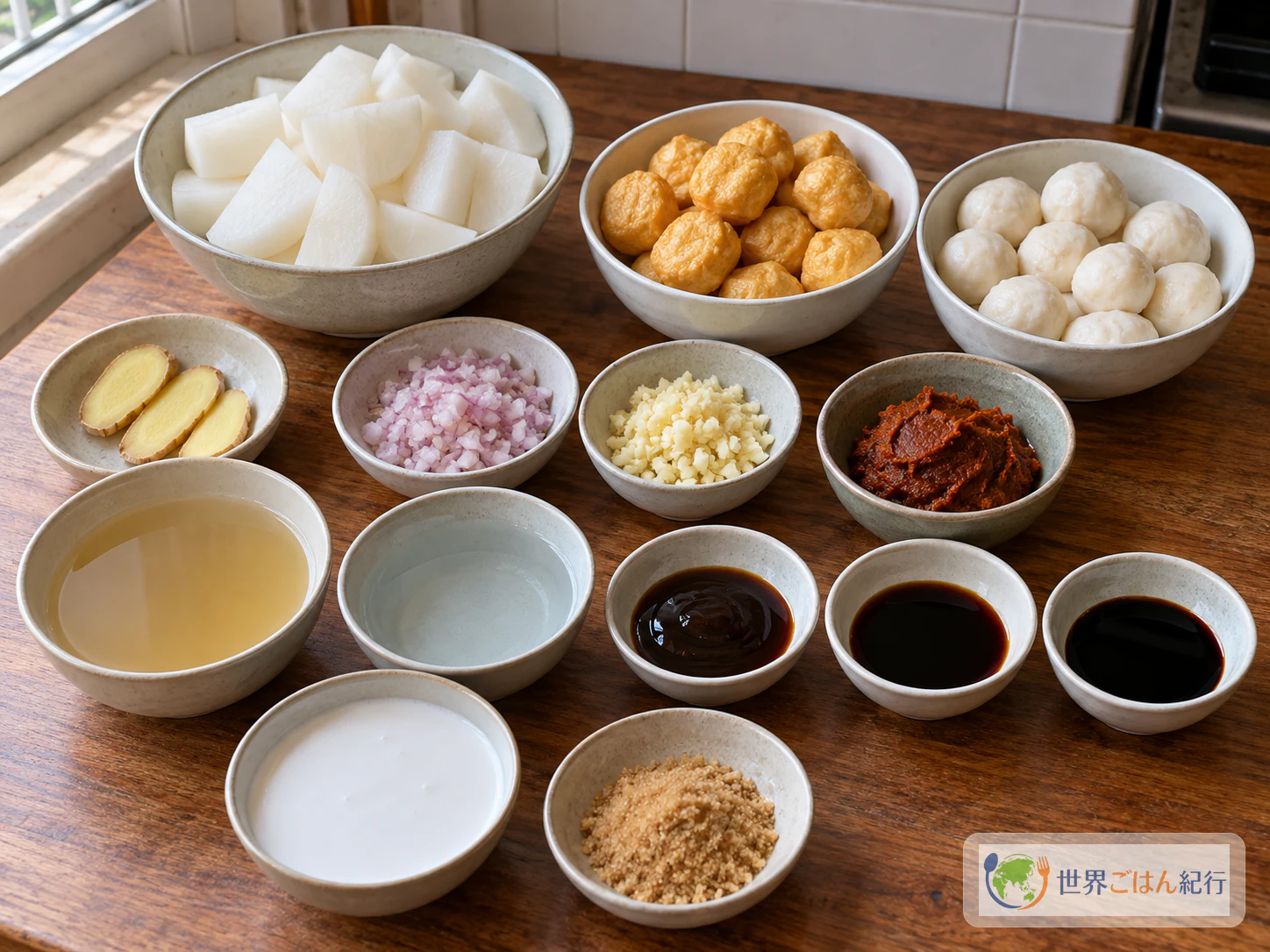
Ingredients
Equipment
- Large pot with a lid
- Knife and cutting board
- Peeler or knife for peeling the radish
- Spoon or spatula for stirring
- Ladle and serving bowls
Choosing the Fish Balls, Curry Paste and Seasonings
Both fish-ball types are prepared, ready-made balls: one fried and yellow, one boiled and white. Use 200 g of each.
- Fish balls: use both the fried yellow and the boiled white kind, already prepared. Keep both types rather than switching to one.
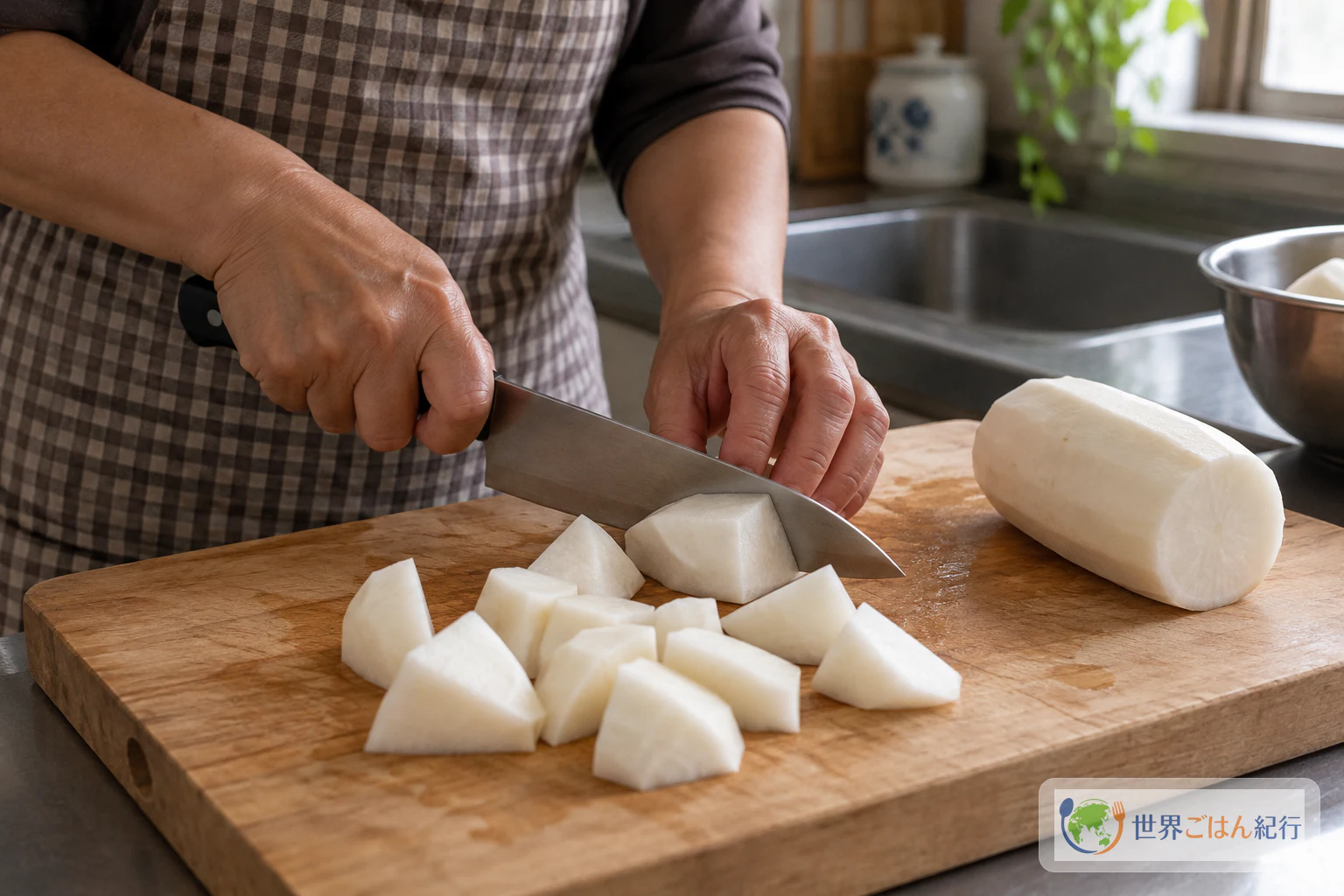
- Radish: peel it and chop it roughly.
- Curry paste: use a curry paste, not curry powder. Any brand you like works.
- Light and dark soy sauce: use Chinese-style light and dark soy sauce. Japanese light (usukuchi) and dark (koikuchi) soy sauces are not automatically the same thing.
- Raw sugar: use raw sugar, and don't assume another sugar is an exact equivalent.
- Chicken stock: homemade, or a salt-reduced store-bought stock.
Method: Aromatics, Radish, a Covered Simmer, Then the Fish Balls
The fish balls go in last, after the radish has simmered covered for 15 minutes and the seasonings have been added. Cooking the fish balls for 10 minutes and serving them are two separate steps.
Common Mix-Ups and How to Avoid Them
Christine Ho's recipe is short, so most problems come from blending it with other versions rather than from the technique. These are the points that most easily drift.
| Mix-up | What happens | What to do instead |
|---|---|---|
| Using curry powder instead of curry paste | You move toward a different recipe | Use curry paste. Any brand works |
| Adding the fish balls with the stock | The fish balls cook longer than intended | Add them after the seasonings, then cook 10 minutes |
| Leaving out the radish | It becomes a different dish | Keep the 520 g radish |
| Using only one type of fish ball | It becomes a different dish | Use 200 g fried yellow and 200 g boiled white |
| Using a 15 ml tablespoon | The curry paste and coconut milk come out short | Measure 1 Tbsp as 20 ml |
| Adding slurry, chili powder or garnish from another recipe | The dish mixes two recipes | Keep to the ingredients listed above |
Times, Yield and What the Recipe Doesn't Say
Christine Ho's recipe card shows a preparation time of 10 minutes and a cooking time of 30 minutes. These are the card's displayed values, not timings we have measured, and they are not a guarantee of how long the whole process will take in your kitchen.
The card also says "Makes 32" without naming a unit. It could refer to pieces, portions or something else, so this article does not convert it into servings, a number of fish balls or a split between the two types. The page does not give the number or size of the fish balls of each type.
A few other things are not specified in the recipe and are left open here:
- No cooking oil and no amount of oil appear in the ingredients. The aromatics are simply sautéed over medium-high heat. Nothing says the pan must be dry, either.
- The heat level and whether the pot is covered during the final 10 minutes are not given. The lid is specified only for the 15-minute stage.
- The radish piece size is given only as "roughly chopped."
- The curry paste is named as an ingredient, with no breakdown of what is in it.
Frequently Asked Questions
Most questions come down to the same point: this is Christine Ho's radish version with two kinds of prepared fish balls, cooked in the order above.
Should I add oil to sauté the aromatics?
Christine Ho's ingredient list contains no cooking oil. Her method says to sauté the ginger, shallot and garlic over medium-high heat in a large pot, with no oil amount and no dry-pan instruction. This article doesn't add an oil quantity and doesn't require a dry pan either.
Can I use frozen or raw fish balls?
This recipe is written for prepared fried and boiled fish balls and has no instructions for frozen balls, thawing or raw fish paste. ET Food Voyage's separate recipe does discuss frozen fish balls, so follow that recipe if that is what you have.
Do I need to blanch the fried fish balls first?
Christine Ho notes that the fried yellow fish balls may be blanched briefly first to remove excess oil, as an option. That optional step is not part of the method in this article.
Why are there two kinds of fish balls?
Christine Ho explains that she added the white boiled fish balls for variety alongside the yellow fried ones. This article keeps her mixed version of 200 g of each.
Where can I find them?
Christine Ho says both types are available at Asian grocers. In a reply to a reader's comment, she mentioned that the fried fish balls she used were Hakka fish balls from an Asian store near her. That was a one-off detail, not a required brand or type.
Is "dark sauce" different from "dark soy sauce"?
The ingredient list says "dark sauce" and the method says "dark soy sauce," and the page doesn't explain the difference. This article lists the ingredient under both names at 1/2 tsp.
Which curry paste should I buy?
Christine Ho used Tean's Gourmet chicken curry paste and says another brand can be used. Choose a curry paste you like; curry powder is a different ingredient.
How many people does it serve?
The recipe card says "Makes 32" with no unit, so this article gives no serving count.
Sources
- Christine Ho, "Curry Fish Balls with Radish (咖哩蘿蔔魚蛋)," Christine's Recipes. The sole recipe source for this article: title, ingredient names and amounts, method order and times, the card's displayed preparation time (10 minutes), cooking time (30 minutes) and the unit-less "Makes 32" label, the fried yellow and boiled white fish balls, the curry-paste brand note, the optional blanching note, the site's measurement standard (1 cup = 250 ml, 1 Tbsp = 20 ml, 1 tsp = 5 ml), and the author's childhood memory and family-gathering account. The page's byline currently shows 2026-07-19, while the URL path contains 2016/03 and the comments begin in 2016; the original publication date is not established. https://en.christinesrecipes.com/2016/03/curry-fish-balls-with-radish.html
- ET Food Voyage, "Hong Kong Street Food Style Curry Fish Balls Recipe." A separately authored recipe, cited only to show that it uses frozen fish balls, curry powder, hoisin sauce, oyster sauce, oil and water, with a different method. Nothing from it is used in the recipe above. https://www.etfoodvoyage.com/curry-fish-balls-recipe/
- Auntie Emily's Kitchen, "Hong Kong Curry Fish Balls 街邊咖哩魚蛋." A separately authored medley recipe, cited only to show that it includes other foods and proteins, several pastes and sauces, blanching, broth and a cornstarch slurry. Nothing from it is used in the recipe above. https://auntieemily.com/hong-kong-curry-fish-balls/
- Hong Kong Tourism Board, "Must-Try Street Food in Hong Kong." Cited only for the broad context that curry fish balls are among Hong Kong's street-food bites and that fish balls appear in noodle shops as well as being popular street food. Not a recipe or history source. https://www.discoverhongkong.com/eng/food-and-drink/must-try-street-food-in-hong-kong.html