Hatto-jiru: One Soft Dough, Torn Thin into a Simmering Pot
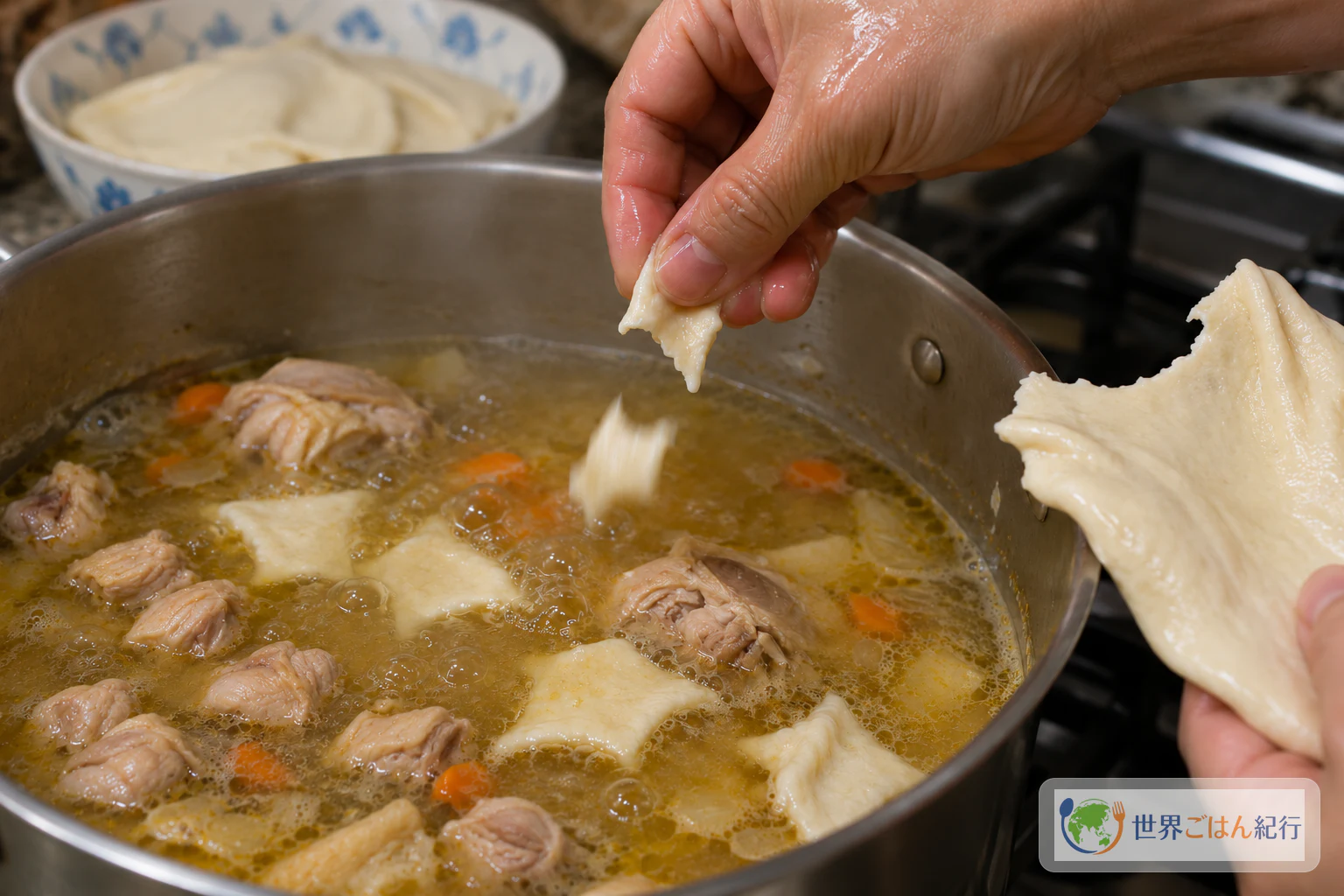
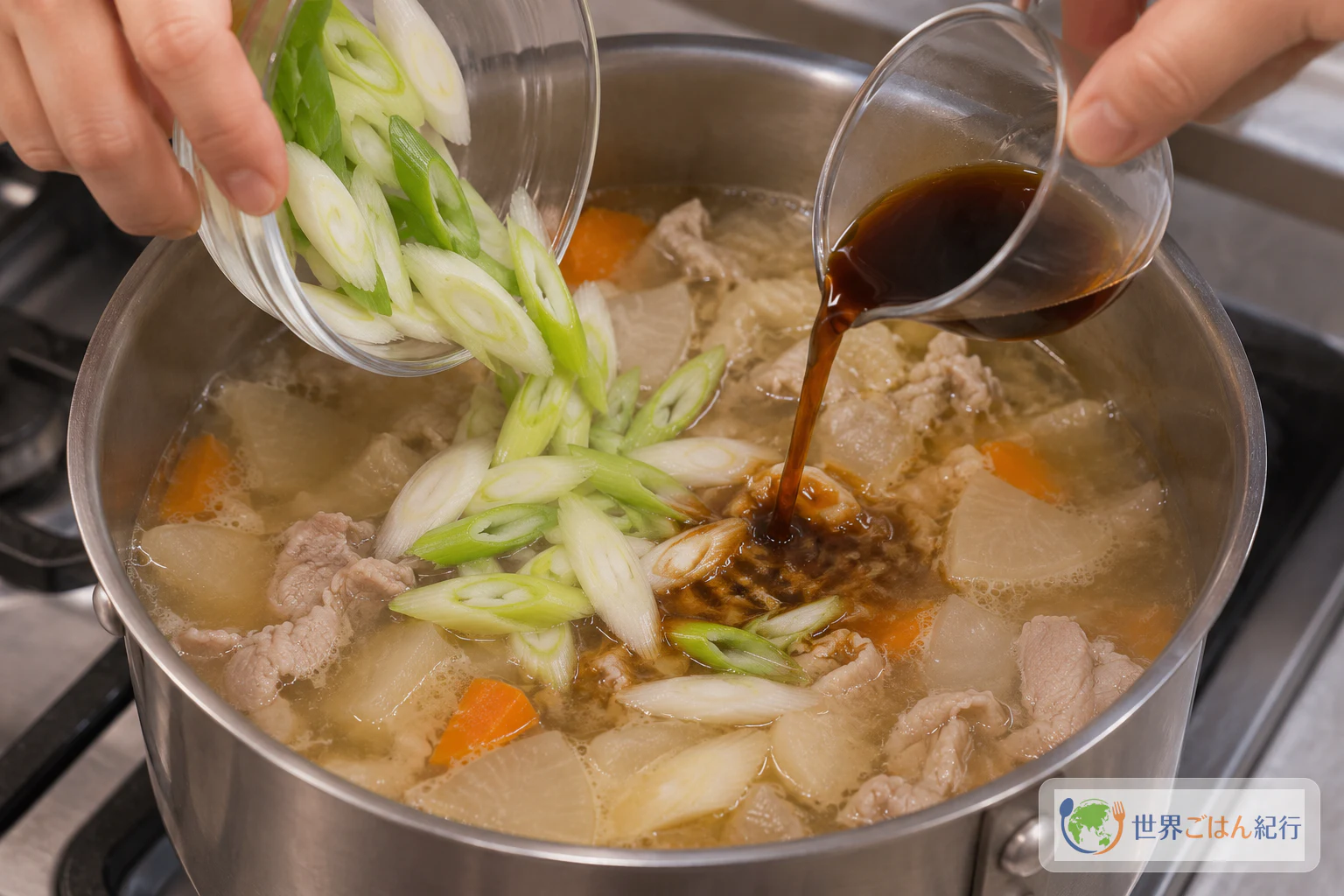
Stretch the dough thin and tear it by hand into uneven pieces. Cook until their surfaces turn translucent and they float. Add the long onion and soy sauce only at the very end.
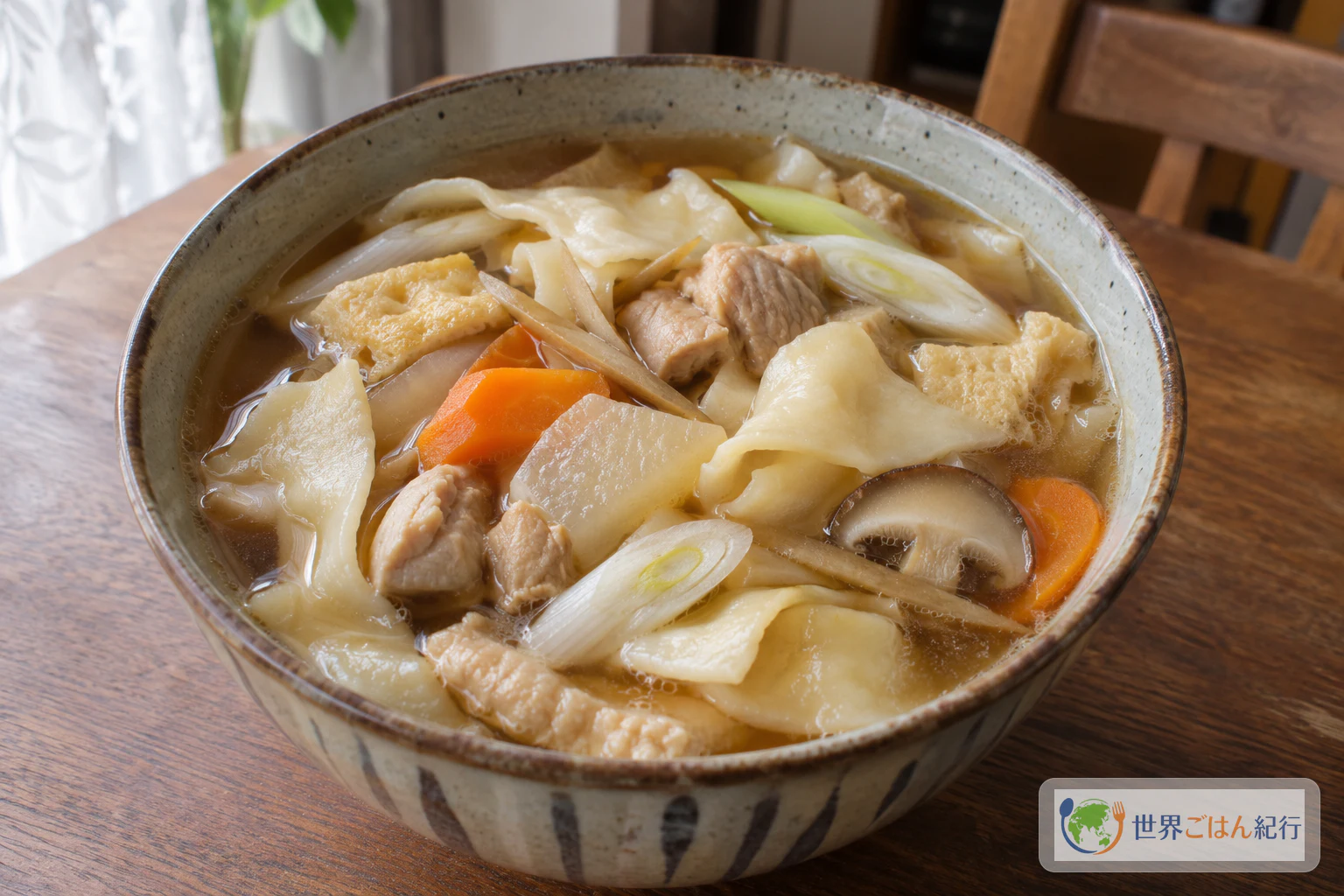
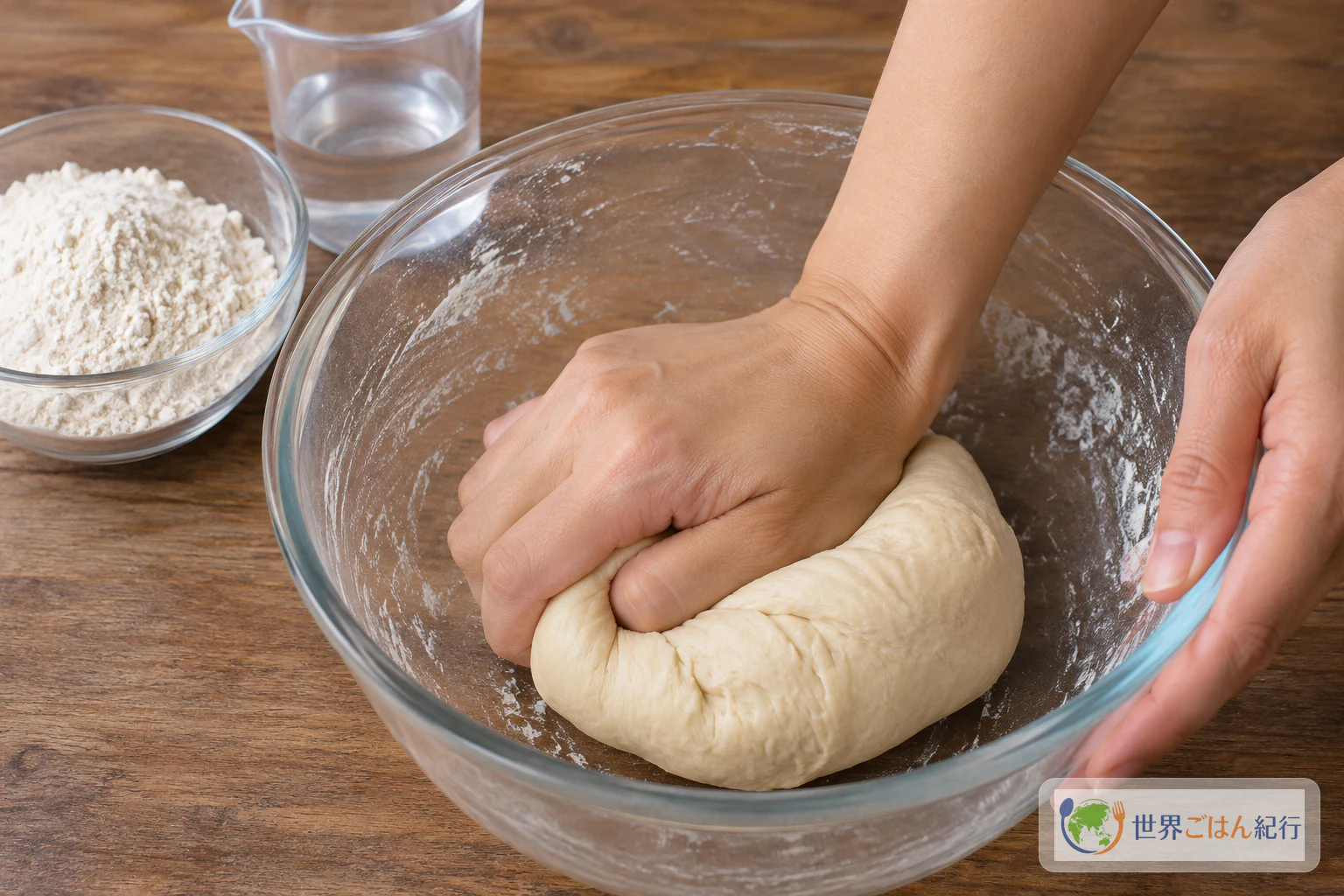
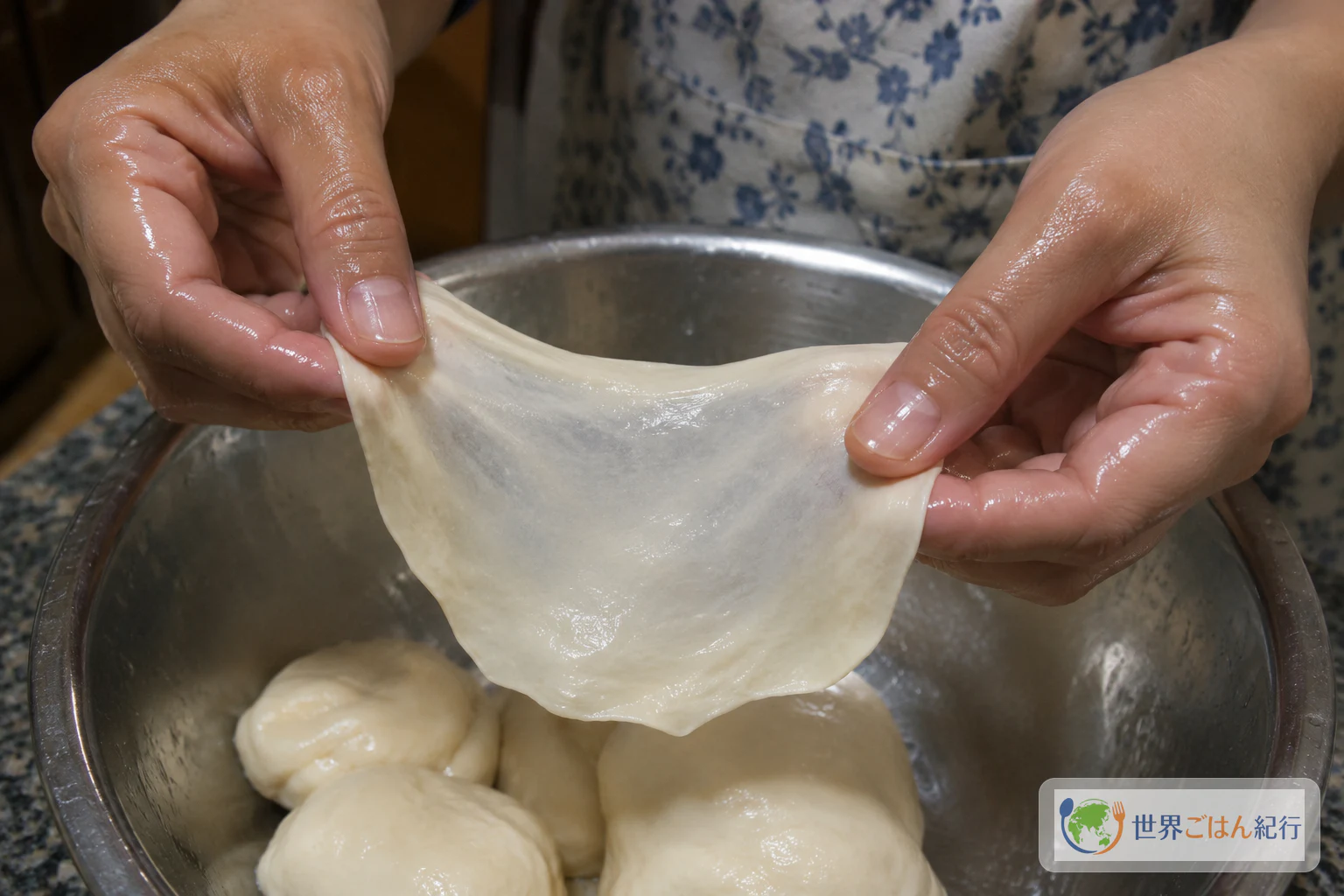
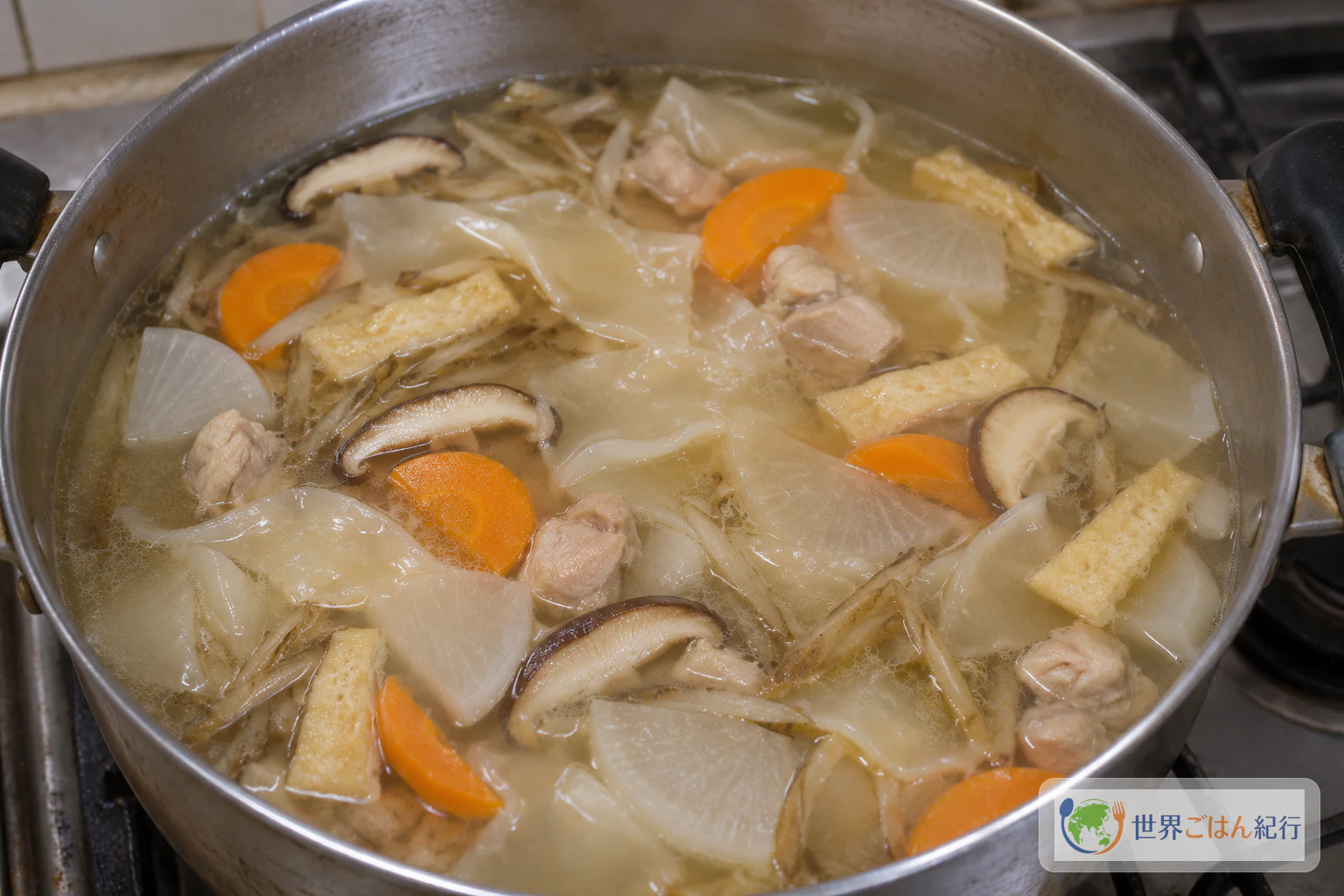
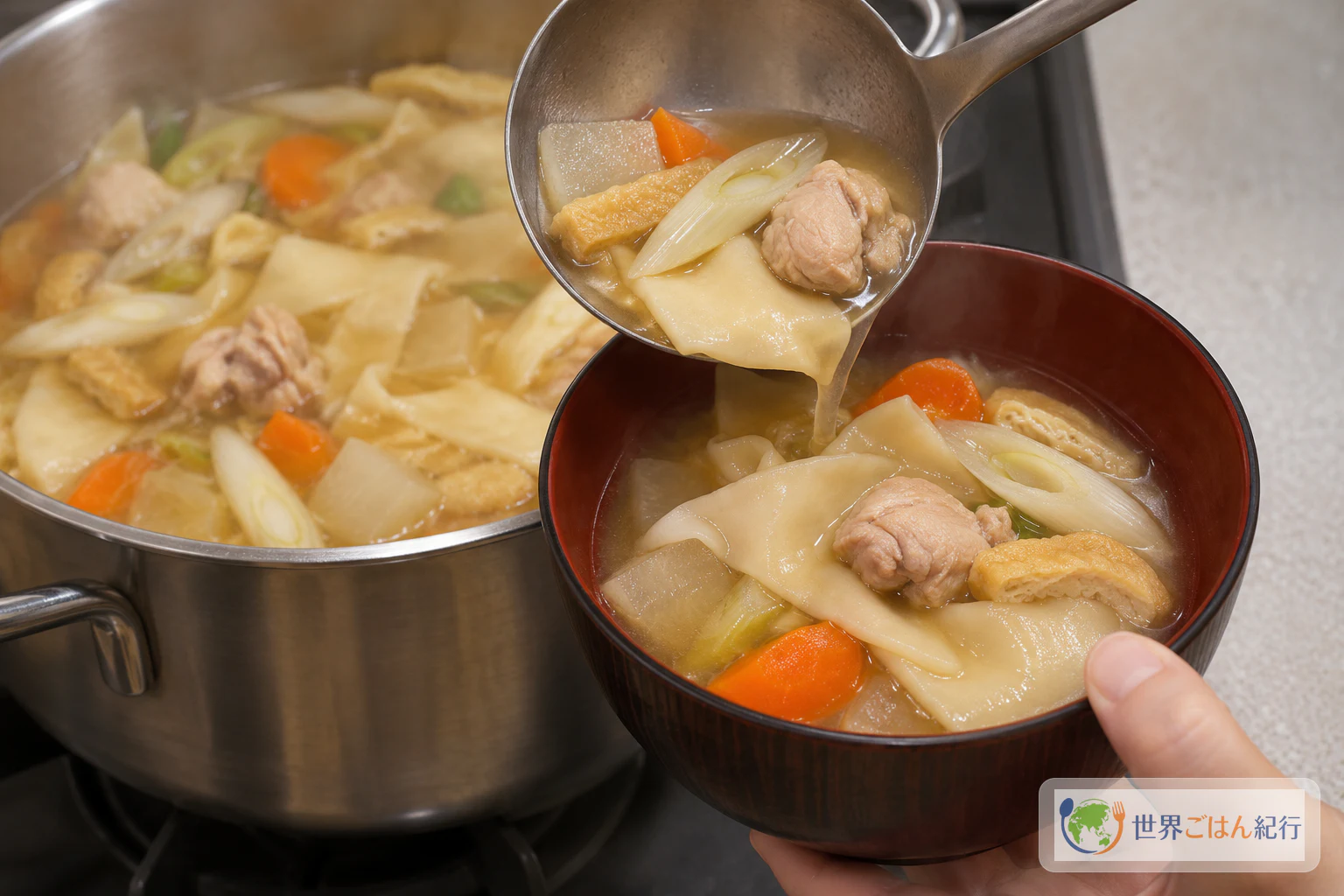
A single ball of soft wheat dough, rested and then stretched thin with wet hands, is torn piece by piece straight into a pot of simmering broth. The pieces come out uneven and ragged at the edges, and as they cook their surfaces turn translucent and they rise to float among the chicken, burdock, daikon and carrot. This is hatto-jiru, the savory soup form of hatto, a wheat-dough food from the Tome area of Miyagi Prefecture in northeastern Japan.
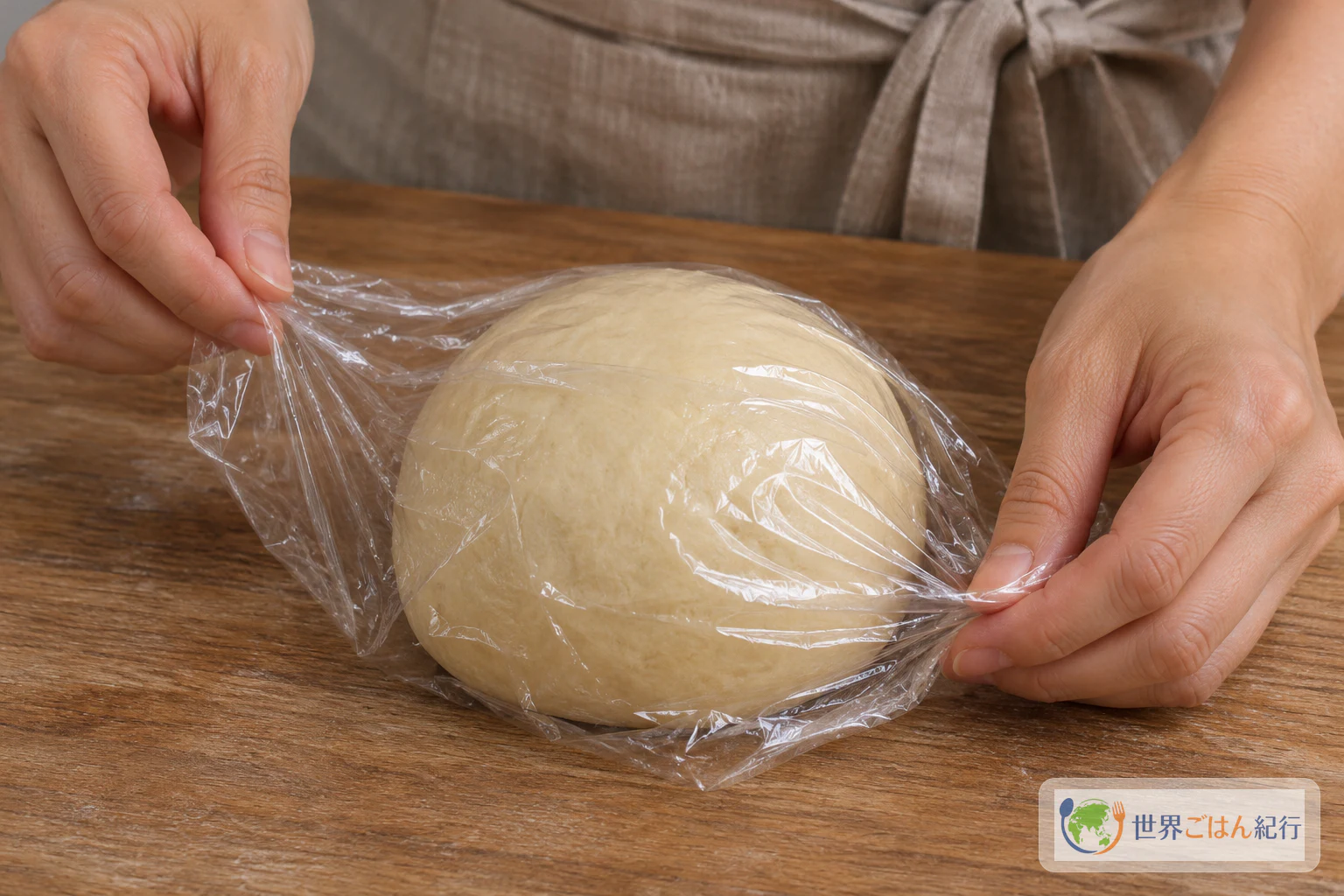
The recipe on this page follows one published four-serving version from the Japanese seasoning maker Shimaya, using chicken thigh, fresh shiitake, aburaage (thin fried tofu) and granulated iriko (dried sardine) stock. It is one reproducible home version, not a formula shared by every household in Tome. Shimaya lists a cooking time of about 25 minutes; that figure does not include the dough's rest of about 30 minutes, so plan for the rest separately. This recipe has not been kitchen-tested by Sekai Gohan.
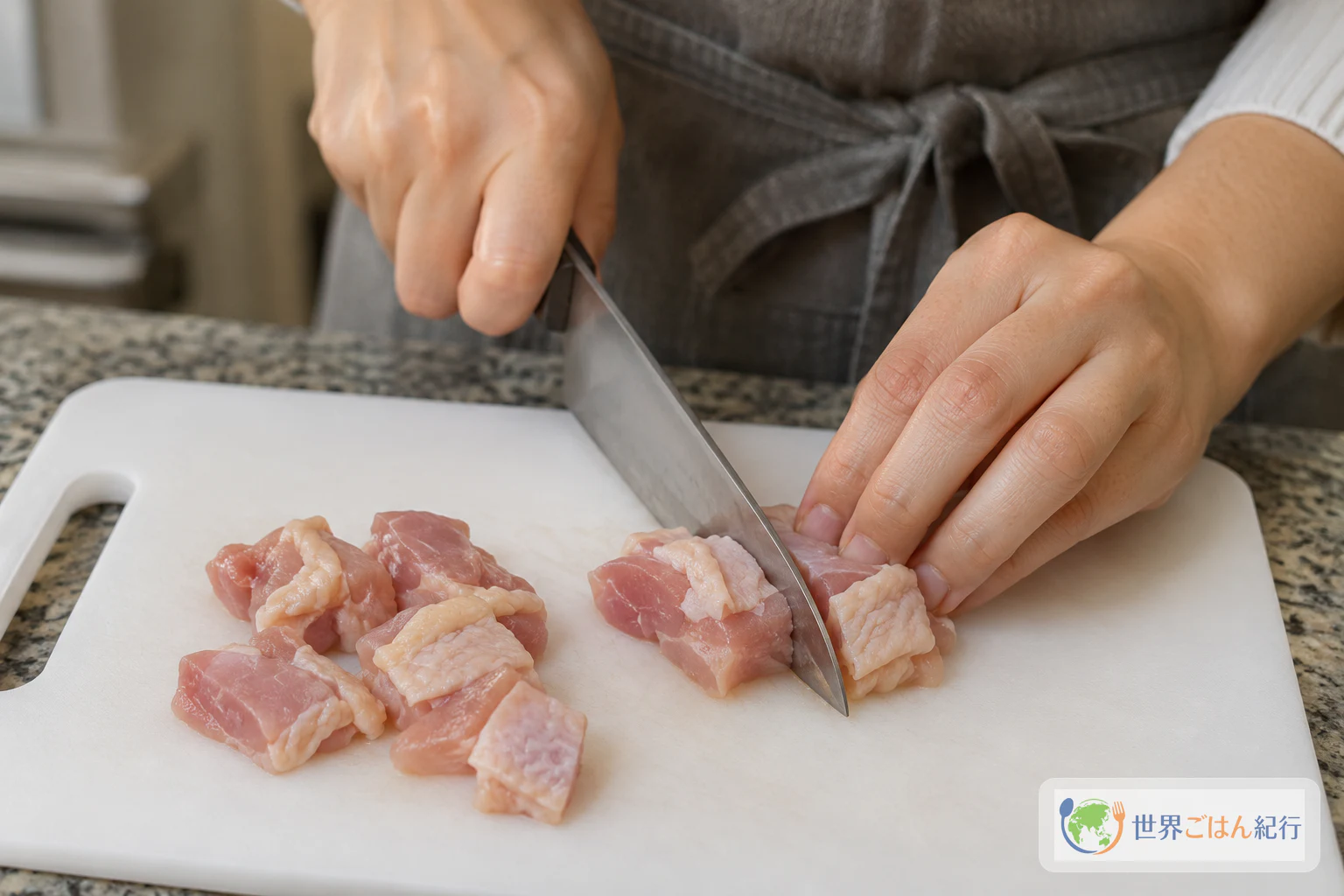
One safety point sits outside that recipe. The translucent, floating dough tells you the dough is cooked; it does not tell you the chicken is. Following guidance from Japan's Ministry of Agriculture, Forestry and Fisheries (MAFF), this page adds a separate check that the chicken's center reaches at least 75°C for at least 1 minute. For more dishes from the same country, see the Japan recipe collection.
What Hatto Is: A Wheat Food Handed Down in Tome
Hatto is a wheat dough that is kneaded, rested, stretched thin and cooked. MAFF's guide to traditional Japanese foods describes it as a local food of Tome and the surrounding area, cooked in soup or boiled and served with sweet toppings, with a texture it calls chewy and smooth. Miyagi Prefecture likewise introduces hatto as a local dish of the Tome region, served in a soy-seasoned soup or boiled and eaten with azuki beans, zunda (sweet mashed edamame) or egoma (perilla seed). The Japan Tourism Agency's multilingual description of Tome's local specialties also speaks of small, thinly stretched pieces of wheat dough in soup, alongside a sweet zunda version. This page covers only the soup.
Both MAFF and Miyagi Prefecture stress that there is no single fixed pot. Broth, vegetables, mushrooms, meat and seasoning change from one household and locality to the next, and similar wheat-dough foods go by other names in neighboring areas. The name "hatto" and the recipes cooked under it belong to this particular region, so it is worth treating hatto-jiru as its own dish rather than as a generic dumpling soup.
MAFF places hatto in the context of wheat foods eaten in place of rice. It also records a story about the name: that "hatto" comes from gohatto (御法度), a word meaning a prohibition. MAFF presents this as something that is said to be the case, not as established history, and that is how it should be read here too.
Ingredients for 4 Servings
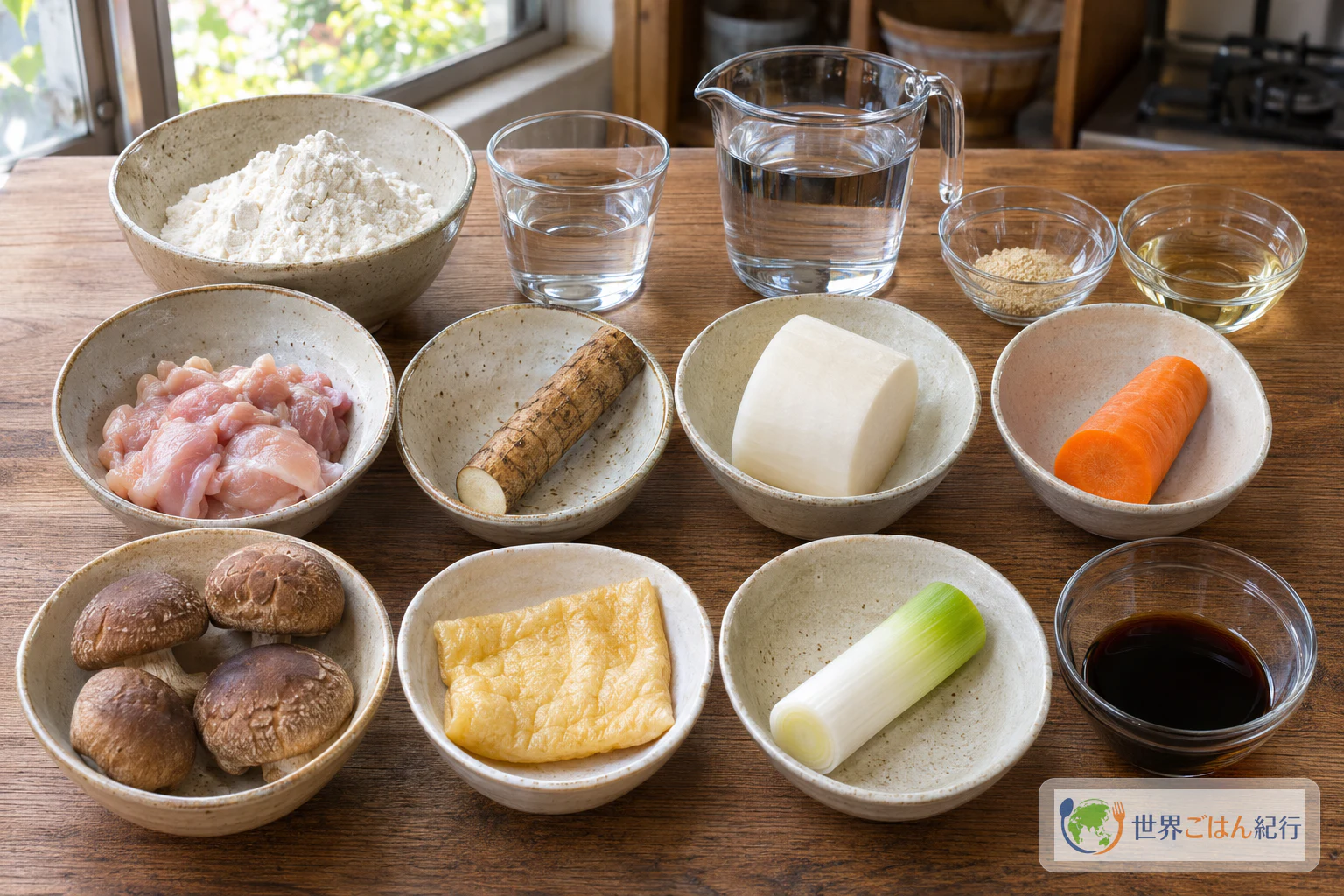
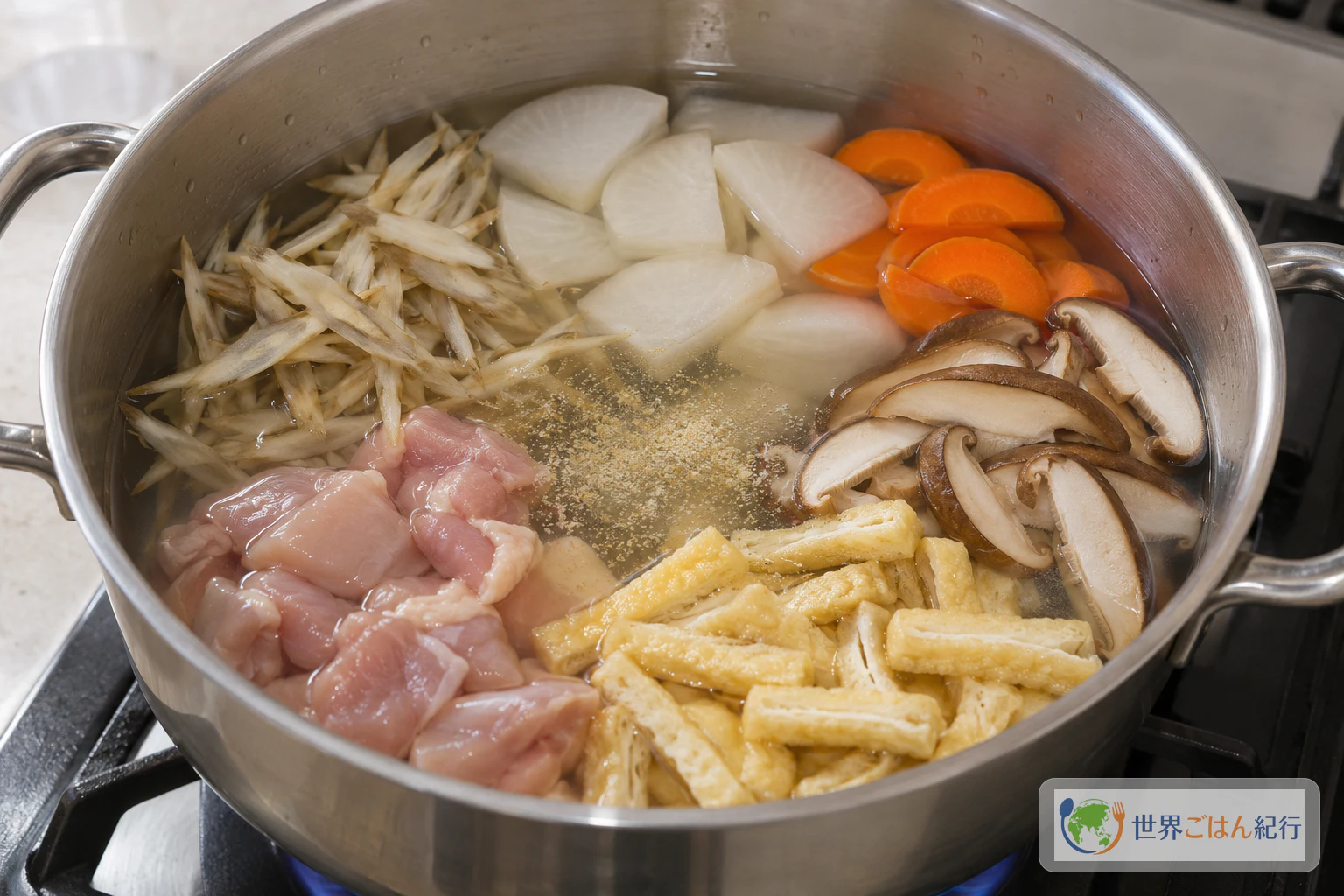
The flour and lukewarm water go only into the dough. Everything else, apart from the long onion and soy sauce, goes into the pot together at the start.
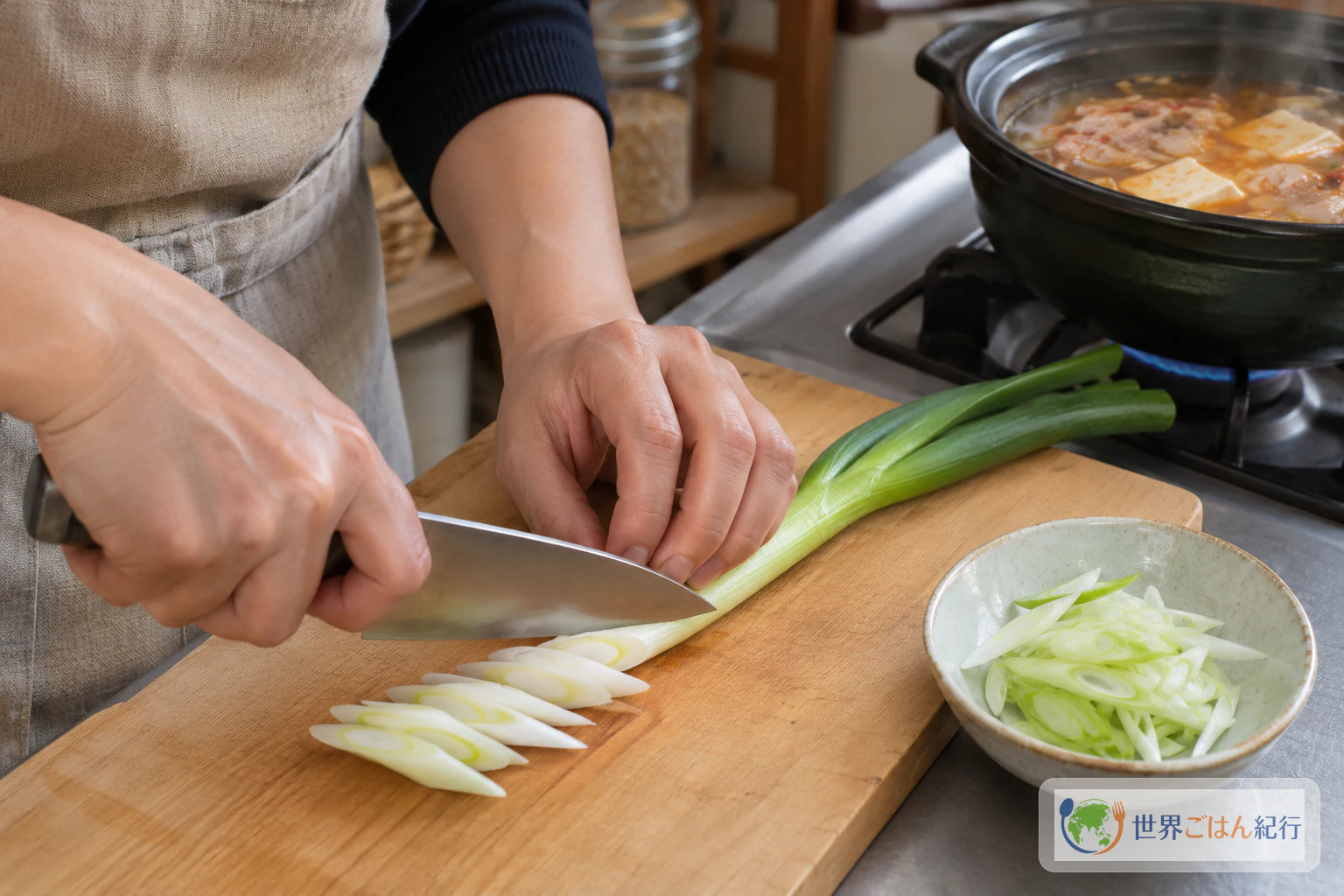
Use fresh shiitake, not dried. Keep the long onion and soy sauce aside until the dough is cooked.
Choosing the Stock and Other Ingredients
Granulated iriko stock is a powdered stock made from dried sardines. If you cannot find that exact product, a granulated niboshi (dried sardine) stock is the closest ordinary substitute; use 8 g only when the package shows it is the same kind of granulated stock. Concentration and saltiness differ from product to product, so a different stock will change the flavor of the soup. Taste before adding the full amount of soy sauce. Concentrated liquid tsuyu and dried-shiitake stock are not equivalents and push the soup toward a different dish.
Flour: ordinary supermarket wheat flour is the practical choice, but no flour has been tested against another here.
Aburaage: use ordinary Japanese aburaage. The oil-fu (deep-fried wheat gluten) of the Tome area belongs to other versions of hatto-jiru and is described under variations below; it is not part of this recipe.
Soy sauce: use regular Japanese soy sauce, not light (usukuchi) soy sauce.
This soup contains wheat (the dough) and soy (soy sauce and aburaage). The iriko stock is made from fish. Check the allergen labels on the stock, soy sauce and aburaage you buy, since products and their labeling differ.
Equipment
- Mixing bowl for the dough
- Kitchen film (plastic wrap)
- Cutting board and knife, with a separate board for the raw chicken
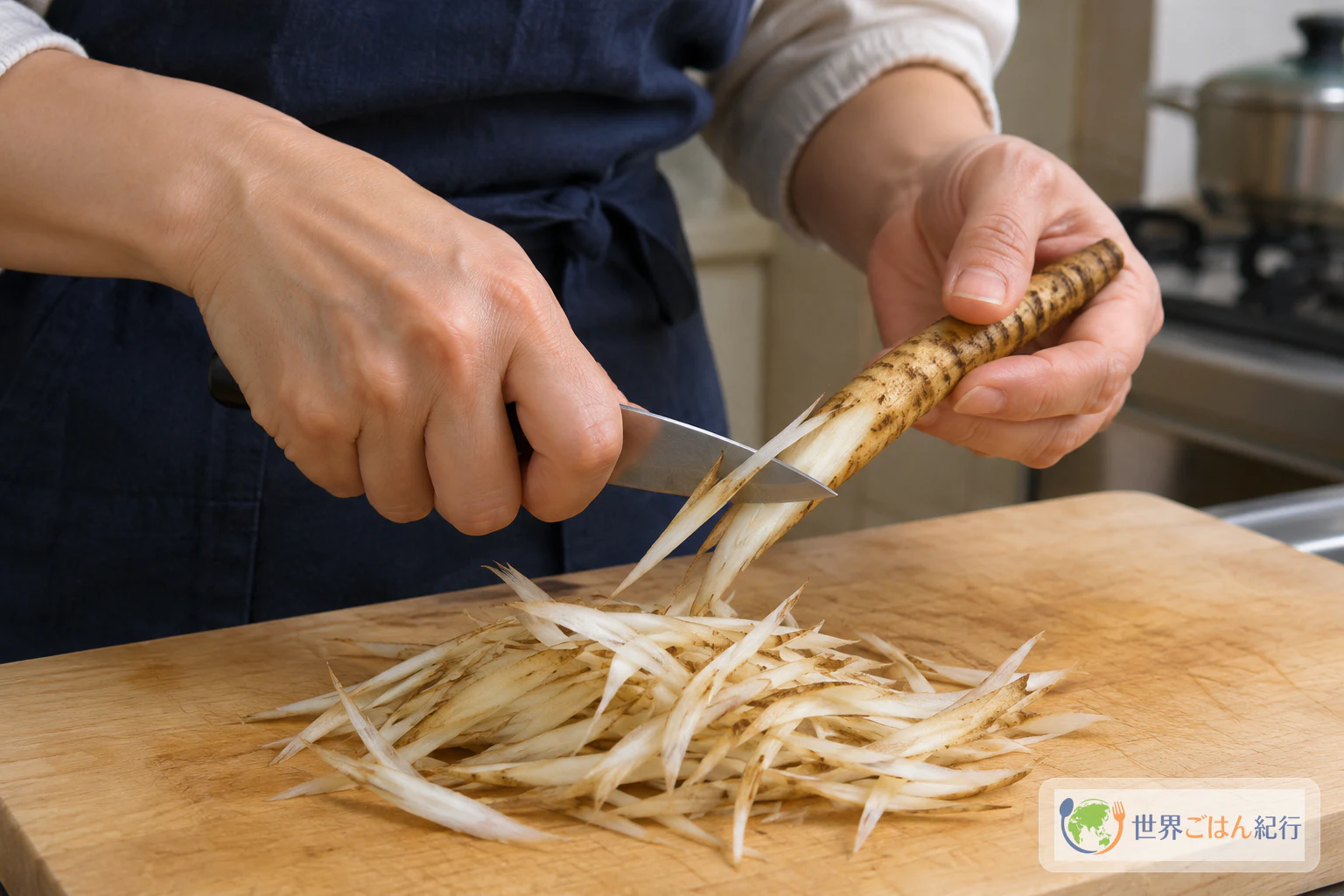
- Peeler or knife for shaving the burdock (a sasagaki peeler is handy but not required)
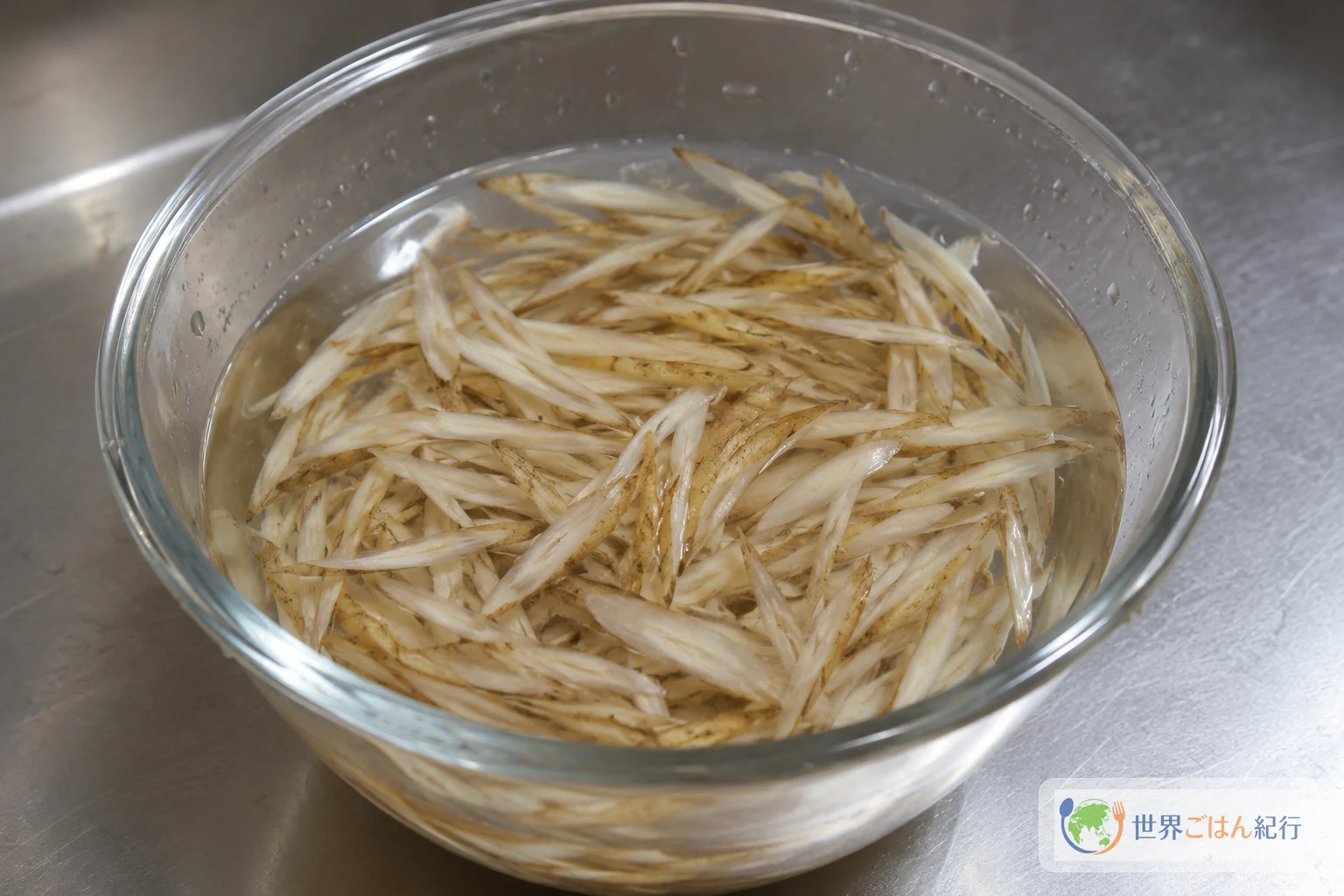
- Small bowl of water for soaking the burdock
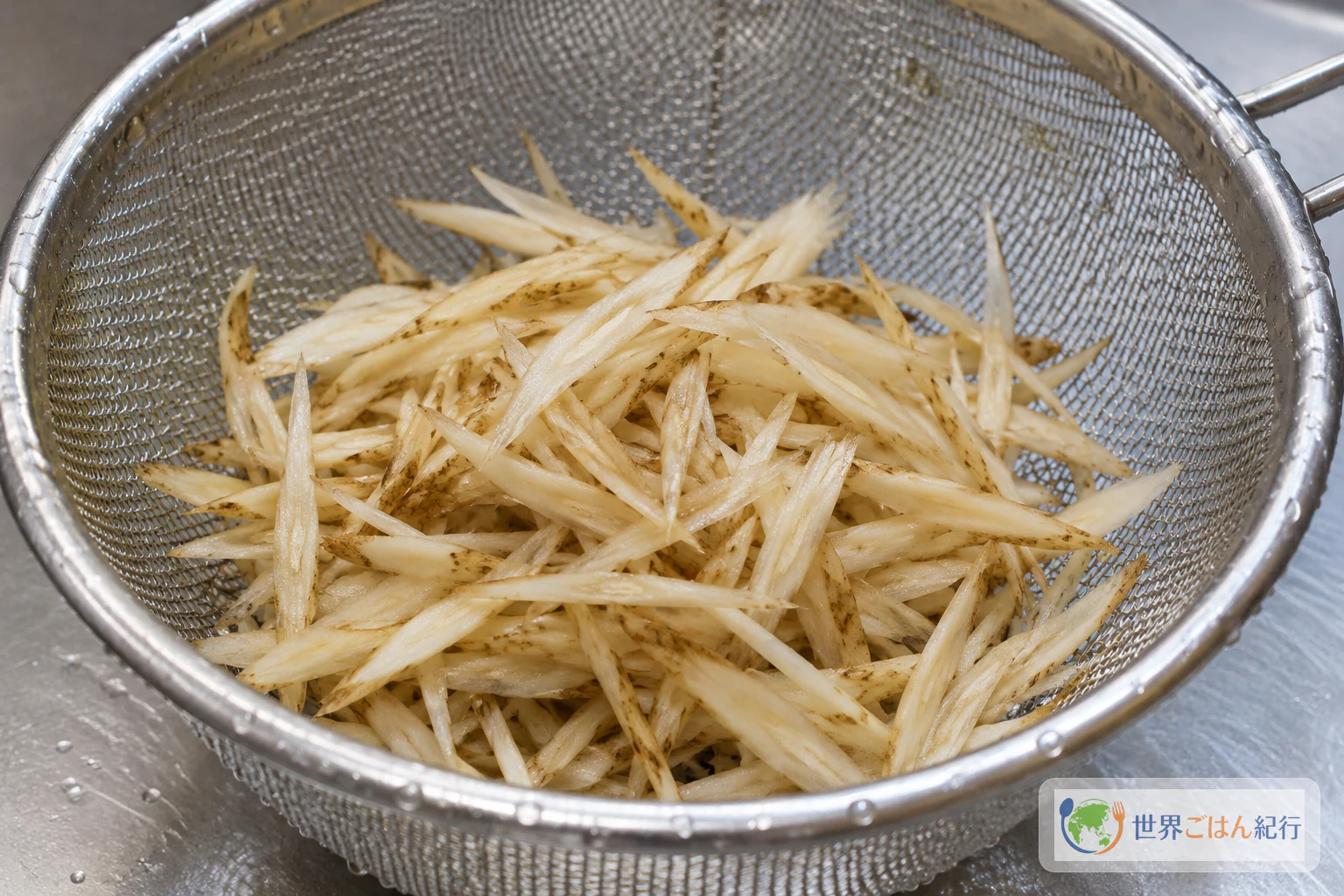
- Colander
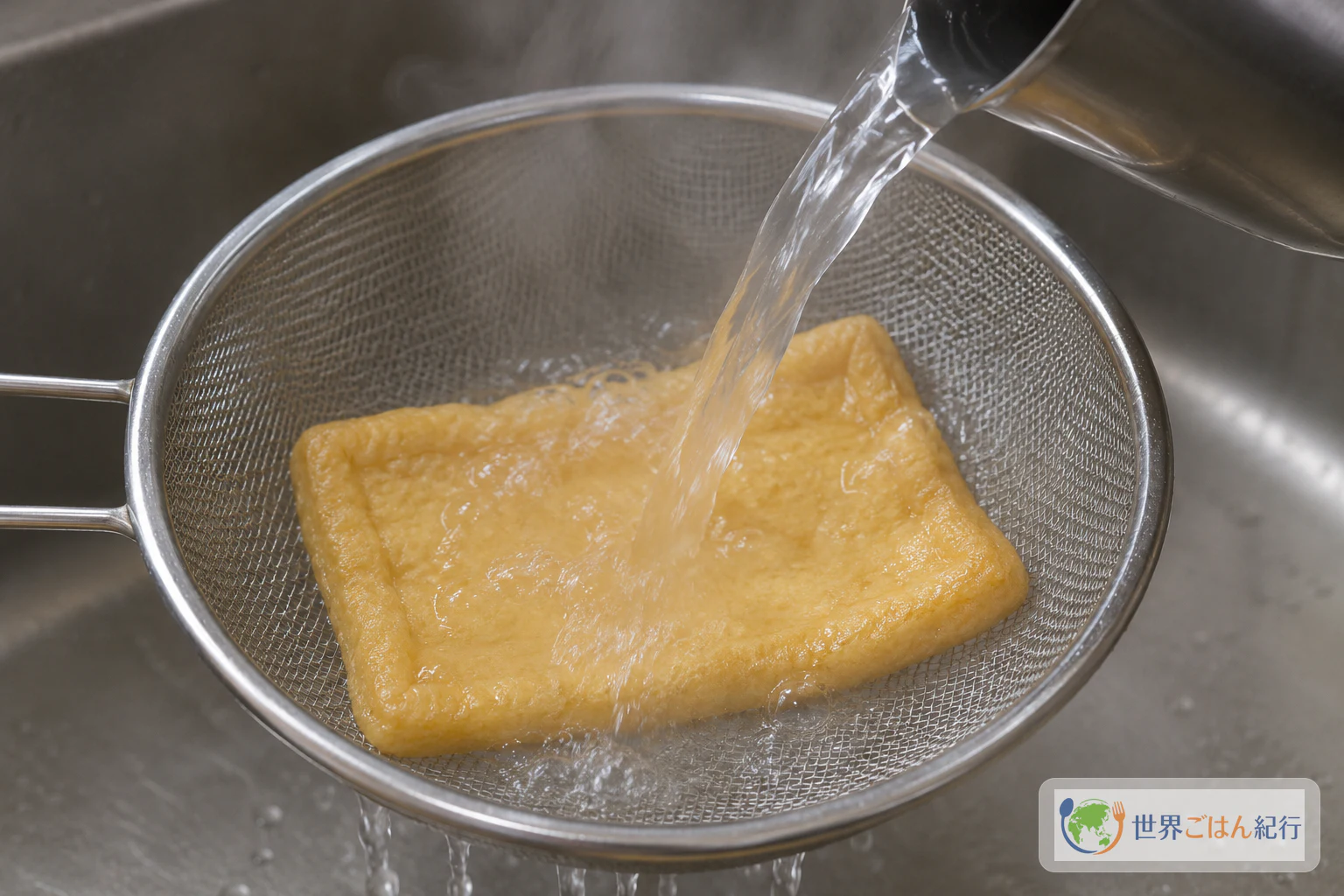
- Heat-safe strainer and kettle for pouring boiling water over the aburaage
- Large pot
- Measuring spoons and a measuring jug
- Clean food thermometer
- Ladle and soup bowls
Method: From One Dough to Thin, Floating Pieces
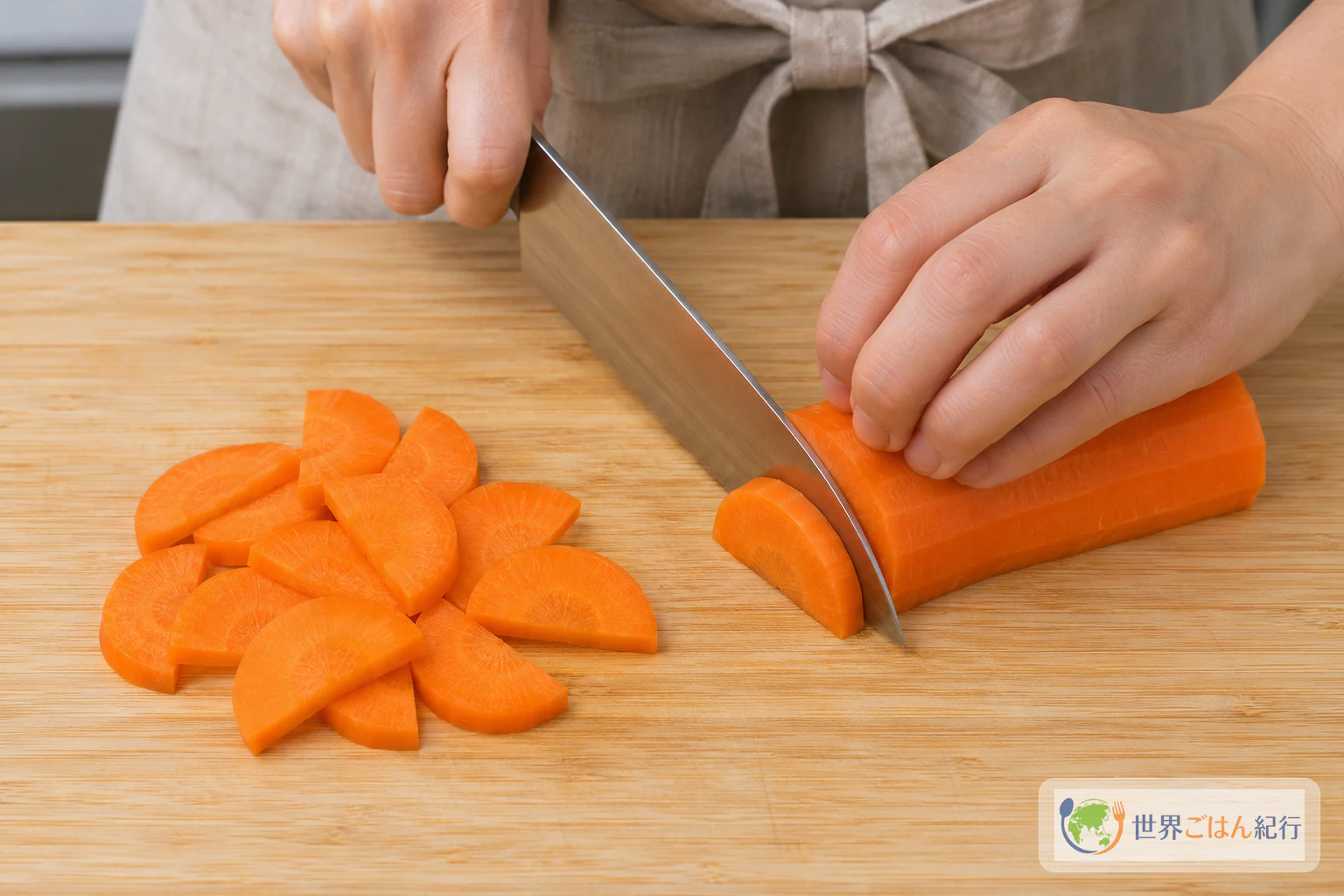
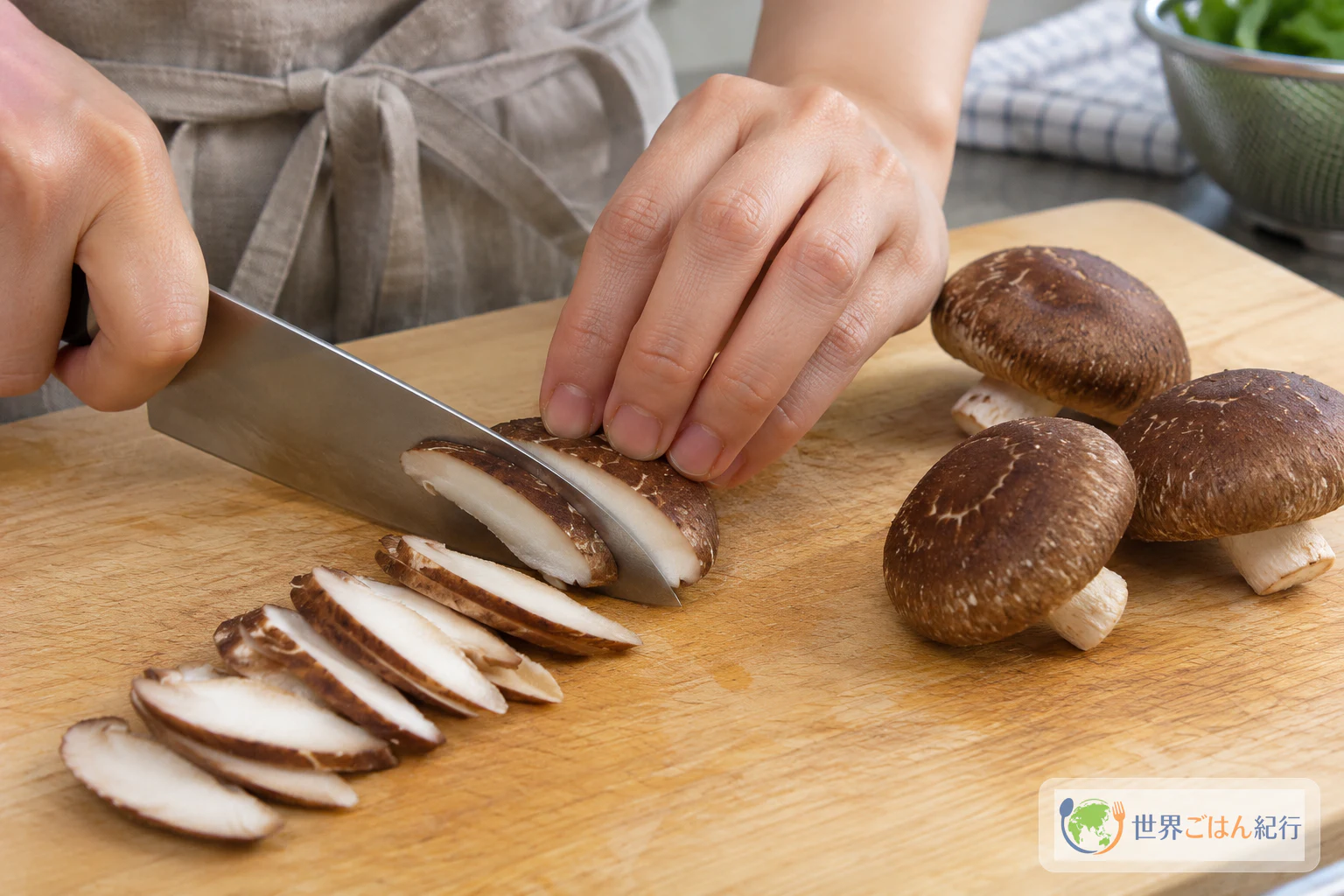
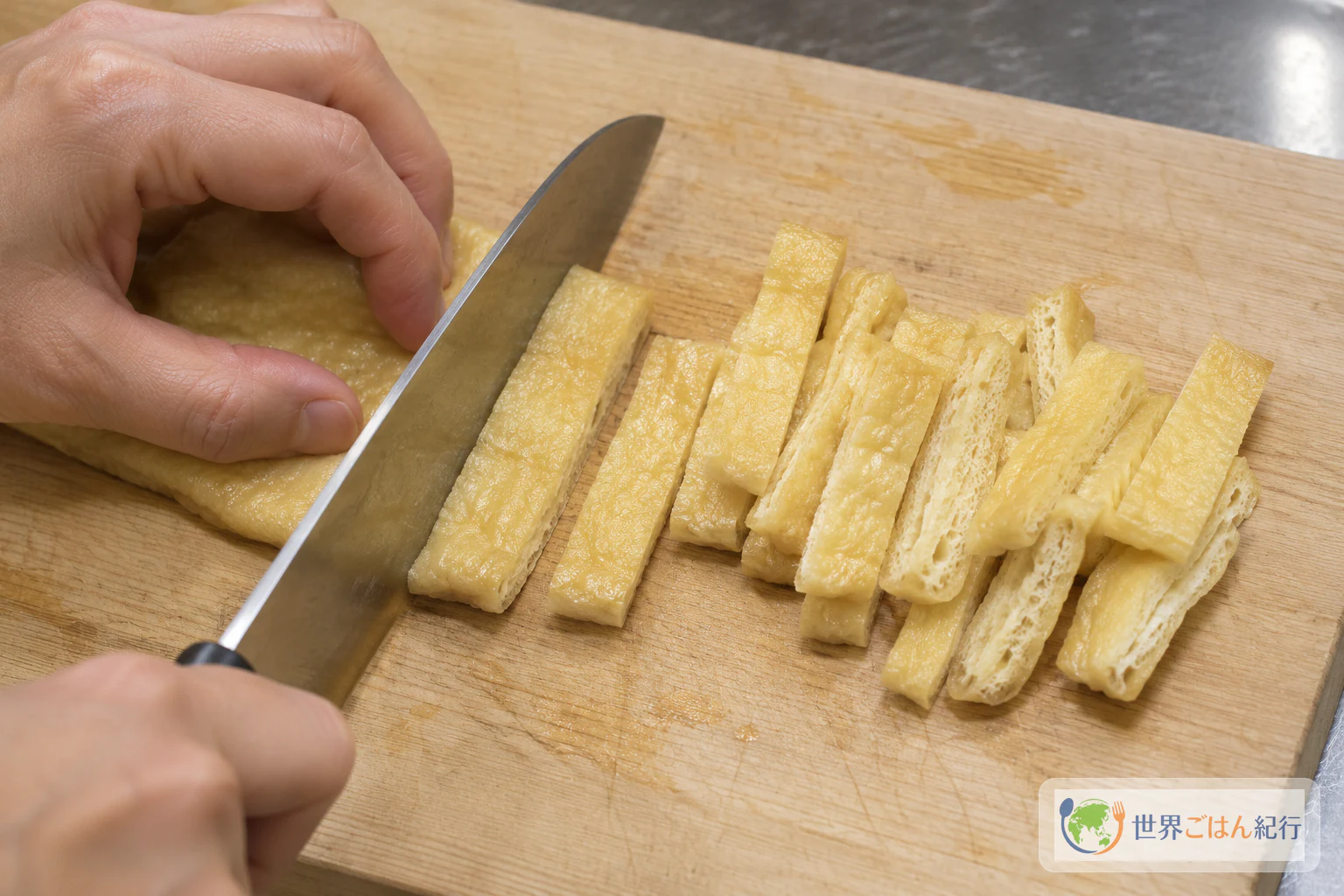
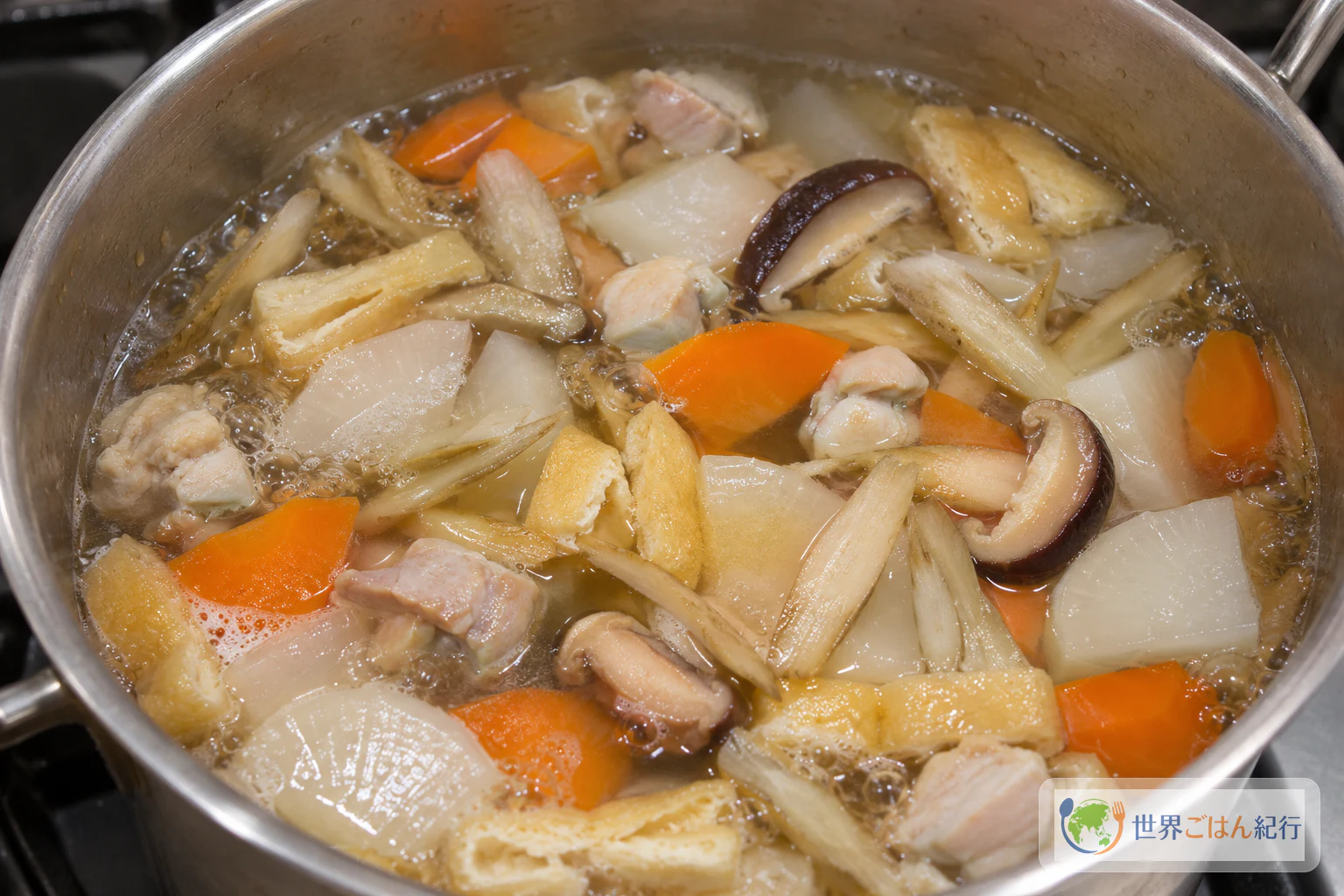
Make the dough first so it can rest while you prepare the chicken and vegetables. The dough goes into the pot only after the broth has simmered about 10 minutes.
Sticky, Thick or Clumped: Fixing the Common Problems
| What happens | Likely cause | What to do |
|---|---|---|
| The dough sticks to your hands | The water went in too fast | Add the water a little at a time and keep kneading until the dough no longer sticks. Adding extra flour changes the recipe, so treat that as your own adjustment |
| The pieces are thick and doughy in the middle | The dough was not stretched thin enough | Stretch each portion thinner with wet hands before tearing |
| The pieces stuck together in one lump | Too much dough went in at once, or the pot stopped simmering | Keep a steady simmer and tear the dough in in several batches |
| The pieces look like noodles or neat balls | The dough was rolled, cut or shaped | Stretch and tear by hand; irregular, ragged pieces are the point |
| The soup was stopped right after the first simmer | The 10-minute simmer was taken as the end | That stage is only for the vegetables. Add the dough, cook until it is translucent and floats, and check the chicken's center temperature |
| The soup is saltier or weaker than expected | A different stock product was used | Taste before adding all the soy sauce; stock products differ in concentration and saltiness |
Household Variations: Kept Apart from This Recipe
Everything below describes how hatto-jiru changes from home to home. None of it is part of the recipe above, and none of it has been tested here.
MAFF and Miyagi Prefecture both note that hatto-jiru varies widely by household and locality. The main axes they describe:
| Axis | Documented range | What changes |
|---|---|---|
| Seasoning | Soy sauce or miso | Miso makes a different-tasting soup from the soy-based one here |
| Stock | Niboshi (dried sardine) or bonito | A different stock base changes the flavor of the broth |
| Vegetables and mushrooms | Seasonal vegetables and various mushrooms | The broth takes on whatever goes into the pot |
| Meat | Chicken or pork | Pork is a documented household alternative to chicken |
| Tome oil-fu | Deep-fried wheat gluten, a regional specialty | Miyagi Prefecture and the Japan Tourism Agency associate it with Tome; it is not used in this recipe |
Other published recipes differ in method as well as ingredients. JA Miyagi Tome, the local agricultural cooperative, publishes a version with oil-fu in which the dough rests for about half a day, with a different broth and seasoning. A Miyagi hatto-jiru recipe on MAFF's regional-recipe site rests the dough for two hours under a damp cloth, boils the dough separately before it goes into the soup, and uses dried shiitake and niboshi stock. Each is a coherent recipe of its own, which is why this page does not mix their steps into the Shimaya version.
Hatto also has a sweet serving form: the dough is boiled and topped with azuki beans, walnut, zunda or egoma, as described by MAFF and Miyagi Prefecture. That is a separate way of eating hatto, not a variation of this soup.
Frequently Asked Questions
What is hatto?
According to MAFF, hatto is a wheat dough that is kneaded, rested, stretched thin and cooked, associated with Tome and the surrounding area of Miyagi Prefecture. It is eaten in soup or boiled and served with sweet toppings, and its texture is described as chewy and smooth.
Is hatto the same as suiton?
They are related: both are wheat dough cooked in liquid, and MAFF notes that similar foods go by other names in nearby areas. Hatto, though, is the name rooted in Tome, and its recipes vary by household there. Treat it as its own regional dish rather than a renamed generic dumpling.
Does the dough go straight into the soup?
In the Shimaya version used here, yes: the dough is torn directly into the pot after the broth and vegetables have simmered for about 10 minutes. The Miyagi recipe on MAFF's regional-recipe site boils the dough separately first; that is a different method and is not mixed into this recipe.
Why does the dough rest, and for how long?
MAFF describes resting as part of how hatto dough is made, and published recipes differ in how long. This recipe rests the dough for about 30 minutes. The other recipes mentioned above rest it for two hours or about half a day; those longer rests belong to those recipes.
How long does it take?
Shimaya lists a cooking time of about 25 minutes. That does not include the dough's rest of about 30 minutes, which you need to allow for separately.
Why check the chicken with a thermometer if the dough is already floating?
The translucent, floating dough is the recipe's sign that the dough is cooked. It says nothing about the inside of the chicken. MAFF advises heating chicken until its center reaches at least 75°C for at least 1 minute, and keeping raw chicken away from other foods. MAFF's kitchen food-safety guidance also notes that a food thermometer can check internal temperature, and that the required heating conditions depend on the food and how it is cooked. The thermometer check is a safety step added to this page, not part of the Shimaya recipe, and no photograph on this page shows the chicken's temperature.
Can I make it vegetarian?
Removing the chicken, and replacing the sardine-based stock, would make a different recipe from this one. Any such version would be your own adaptation and has not been tested here.
Has this recipe been tested?
No. This recipe has not been kitchen-tested by Sekai Gohan. The amounts and steps follow Shimaya's published four-serving recipe; the chicken-safety and hygiene steps are added from MAFF guidance.
Sources
- Shimaya Co., Ltd., "はっと汁" (Hatto-jiru). The four-serving recipe followed on this page: all ingredient amounts, the order of preparation and cooking, the dough rest of about 30 minutes, the simmer of about 10 minutes, the translucent-and-floating dough cue, and the cooking time of about 25 minutes, which excludes the rest. https://www.shimaya.co.jp/recipe/all/908.html
- Ministry of Agriculture, Forestry and Fisheries (MAFF), "はっと|にっぽん伝統食図鑑" (Hatto, from the guide to traditional Japanese foods). Hatto as a wheat-dough food of Tome and the surrounding area, its chewy and smooth texture, regional names, the wheat-food background, the told story of the name gohatto, soup and sweet serving forms, and household variation. https://www.maff.go.jp/j/keikaku/syokubunka/traditional-foods/menu/hatto.html
- Miyagi Prefecture, "「はっと」とは" (What is hatto?). Hatto as a Tome-region local dish, soy-seasoned soup and sweet boiled forms, household and local variation in broth and ingredients, and oil-fu and aburaage as regional ingredients. https://www.pref.miyagi.jp/site/hatto-top/hattonani.html
- Japan Tourism Agency, multilingual commentary database, "地元の名物: はっとと油麩" (Local specialties: hatto and oil-fu). Tome hatto as small, thinly stretched wheat dough in soup, the sweet zunda version, and the regional association with oil-fu. https://www.mlit.go.jp/tagengo-db/R6-00310.html
- MAFF, "はっと汁 宮城県|うちの郷土料理" (Hatto-jiru, Miyagi; recipe provided by Miyagi no Shoku wo Tsutaeru Kai). A different regional recipe with a two-hour rest under a damp cloth, separately boiled dough, and dried shiitake and niboshi stock; used here only to describe variation. https://www.maff.go.jp/j/keikaku/syokubunka/k_ryouri/search_menu/menu/hatto_jiru_miyagi.html
- JA Miyagi Tome, "はっと汁|おすすめクッキング" (Hatto-jiru). A separate Tome-area recipe with oil-fu, a rest of about half a day, and a different broth and seasoning; used here only to describe variation. https://www.miyagitome.or.jp/product/cooking/detail/hattoziru
- MAFF, "鶏料理を楽しむために~カンピロバクターによる食中毒にご注意を!!~" (Enjoying chicken dishes: beware of Campylobacter food poisoning). Heating chicken until the center reaches at least 75°C for at least 1 minute, and keeping raw chicken away from other foods. https://www.maff.go.jp/j/fs/campylobacter.html
- MAFF, "調理器具・調理編:家庭で実践!食中毒予防策" (Food-poisoning prevention at home: utensils and cooking). Using a food thermometer to check internal temperature, and that required heating conditions depend on the food and method. https://www.maff.go.jp/j/pr/aff/2212/spe1_02.html