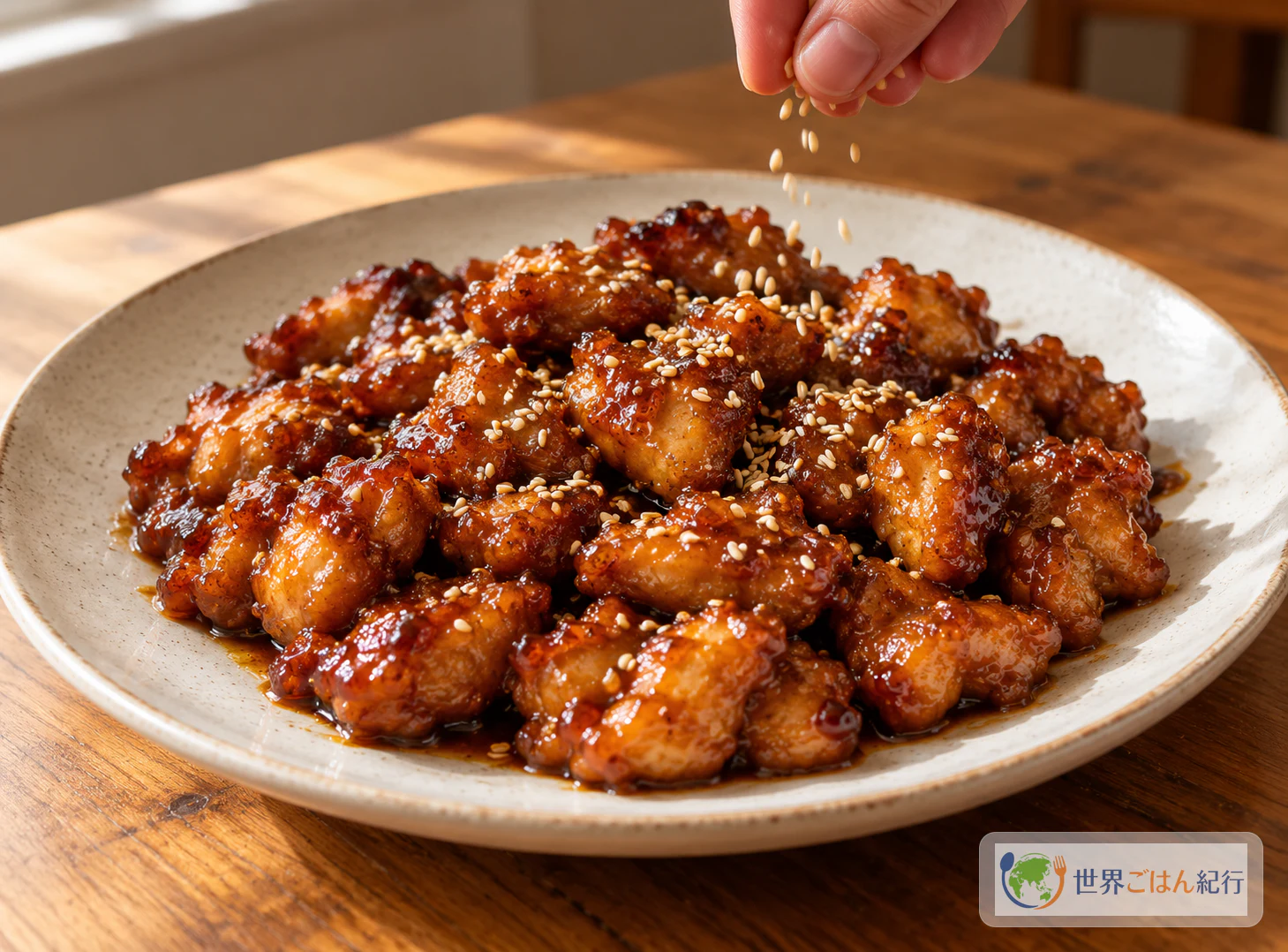
Sesame Chicken: Bite-Size Fried Chicken in a Glossy Sauce
Keep the crisp coating from two fries, a sauce that is sweet but balanced with vinegar, and a light scattering of toasted sesame seeds. Don't add anything else to the plate.
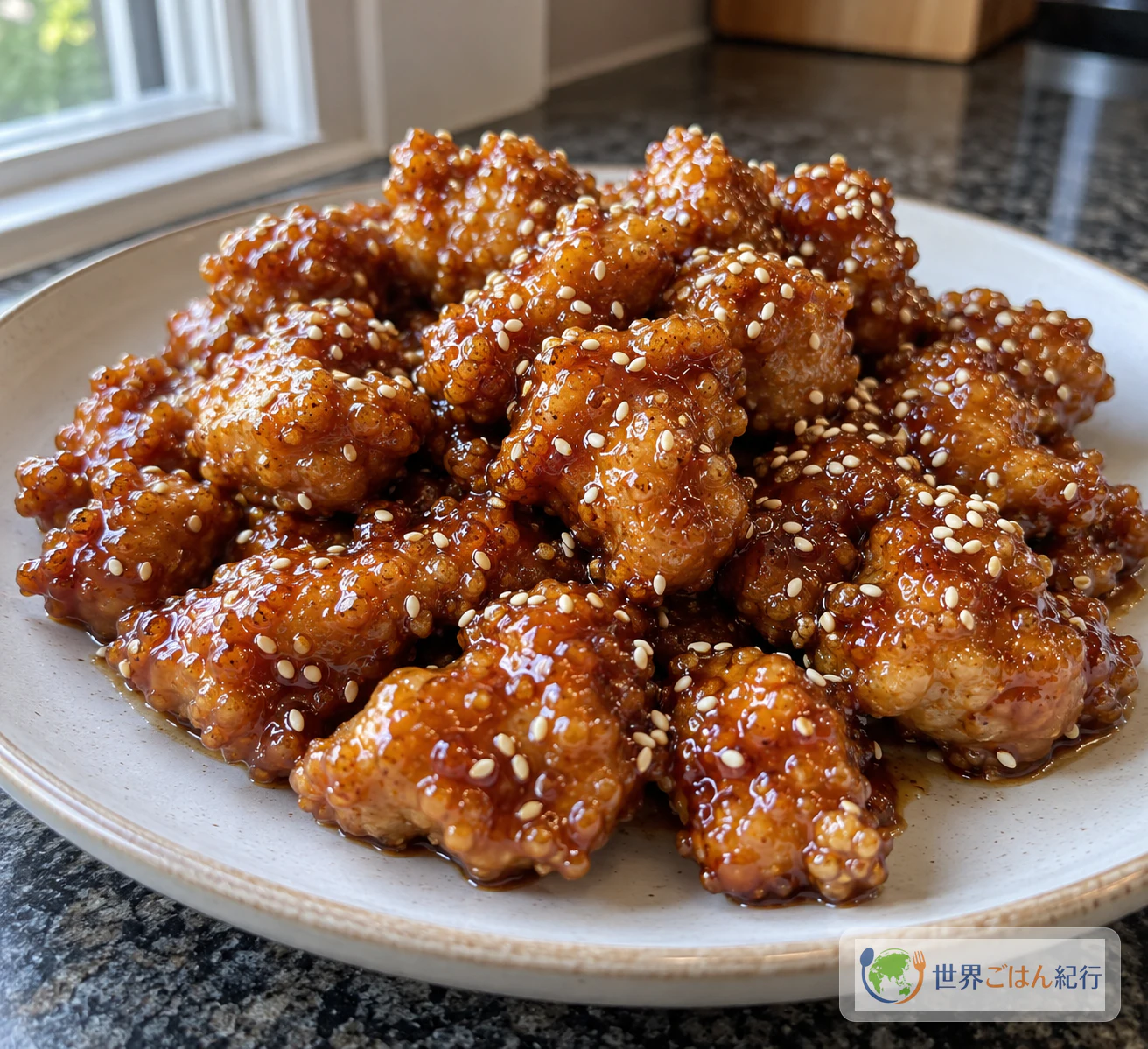
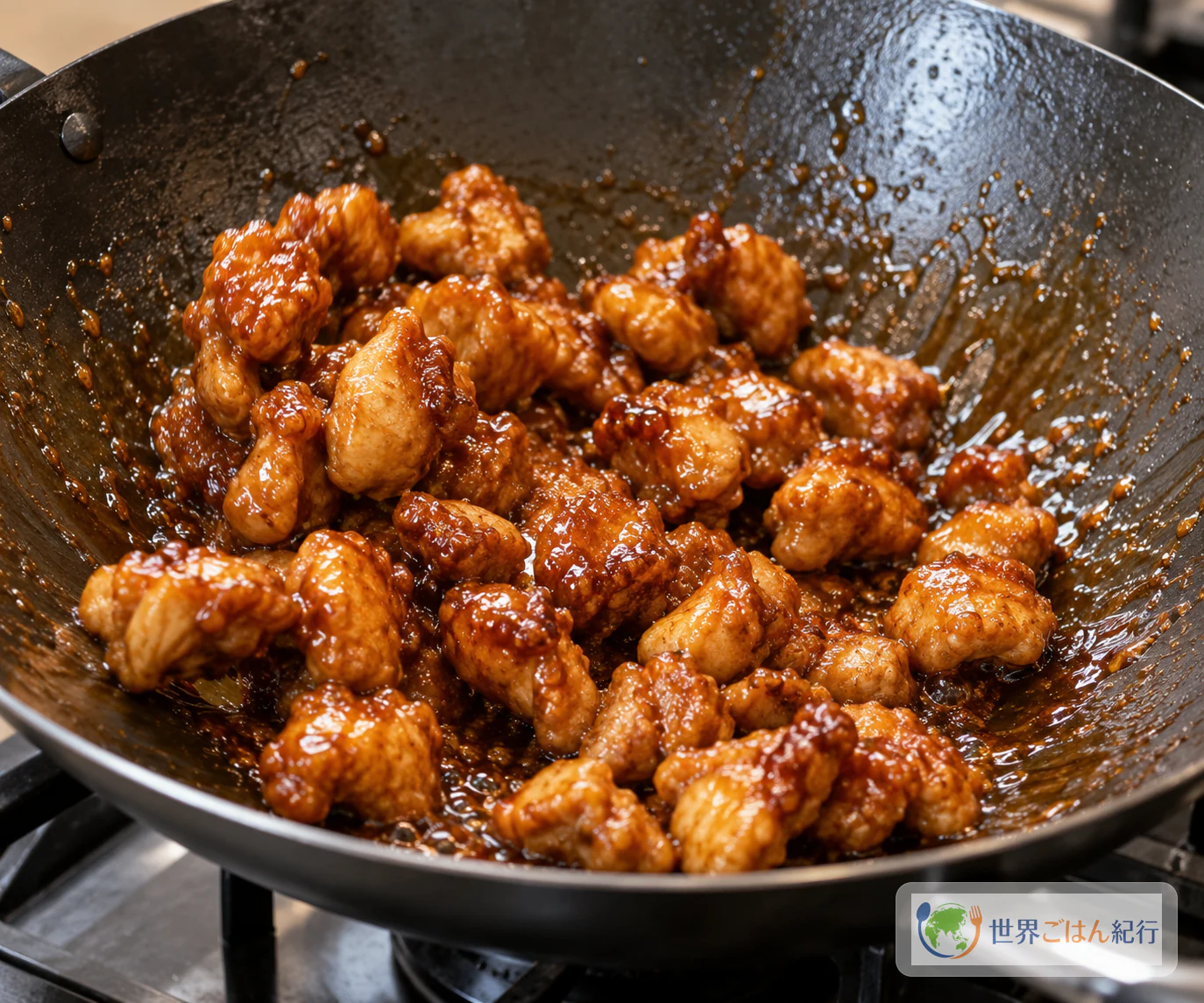
Picture the lid coming off a takeout container. Inside are bite-size pieces of fried chicken, each one coated in an amber-brown sauce that shines under the light, with small toasted sesame seeds caught in the glaze. The Woks of Life describes sesame chicken as a dish that is popular at Chinese takeout restaurants and buffets in America. The site also describes it as sweeter than General Tso's chicken, with vinegar added for balance. Its sauce does not use ketchup.
In English the dish is usually called Sesame Chicken. Its Wikidata catalog entry is labeled "Chicken with sesame" and describes it as "one of the most popular Chinese-American dishes." That entry lists both China and the United States as countries of origin, but neither statement carries a reference, so it does not settle where the dish came from. Sekai Gohan files this dish under China for cataloging purposes only. This article treats sesame chicken as a Chinese-American takeout dish, not as a traditional dish of mainland China, and does not give it a Chinese name.
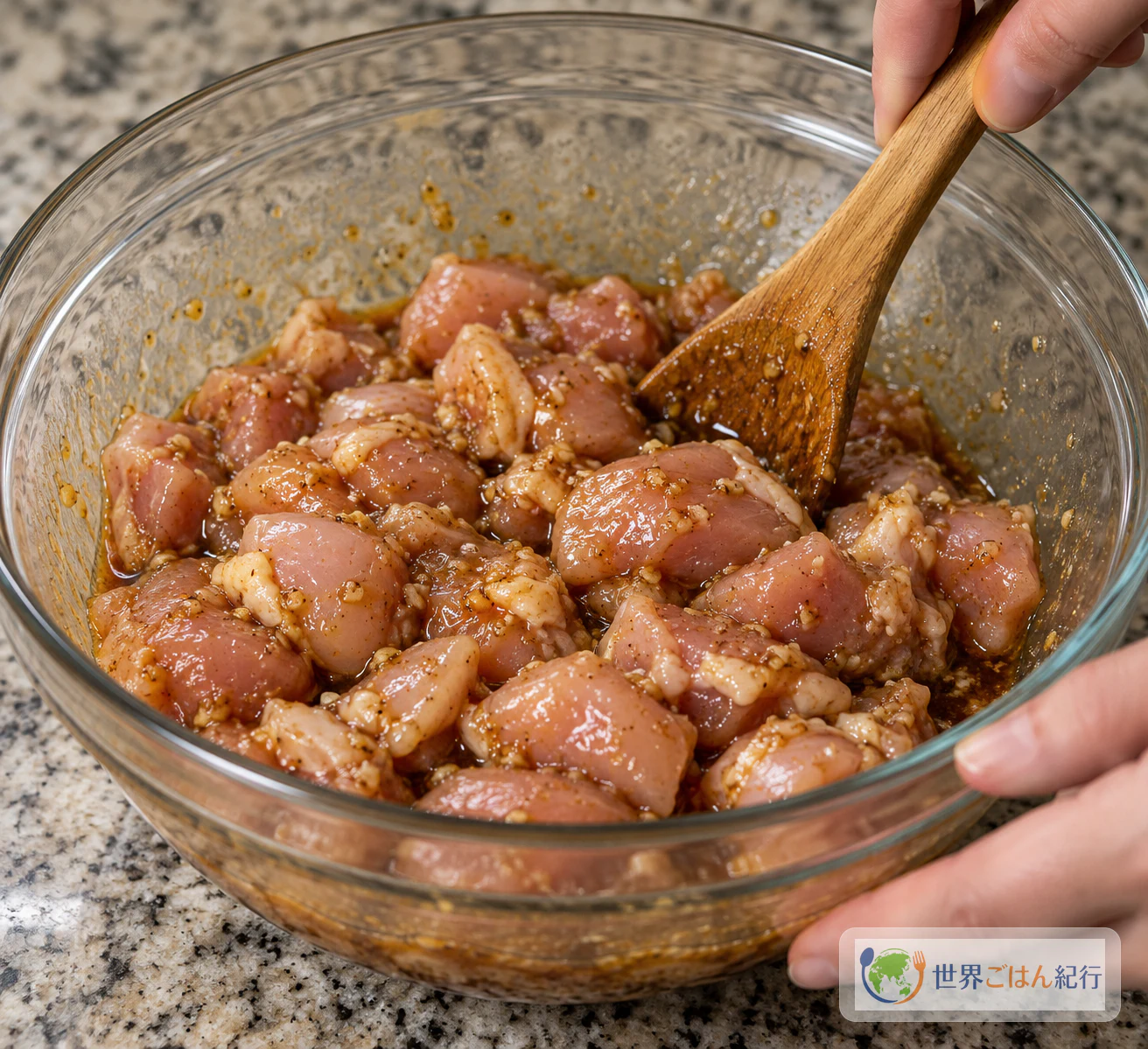
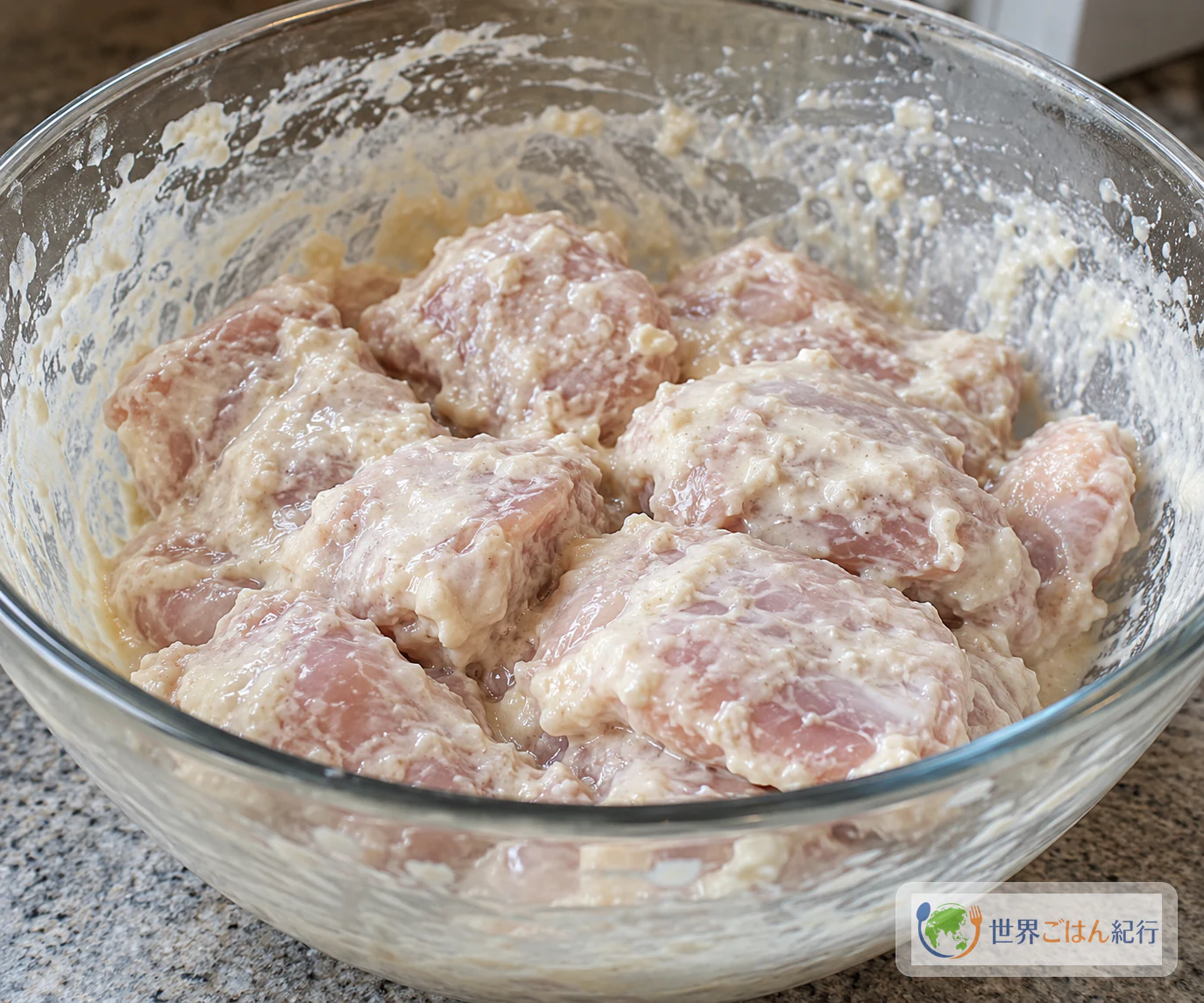
The sources consulted for this article do not establish who created sesame chicken, when, or in which city. What follows is one specific version: the four-serving recipe by Bill Leung published on The Woks of Life. That site says this version is nearly the same as the one in the family's cookbook, The Woks of Life: Recipes to Know & Love from a Chinese American Family. Where the recipe offers choices, this article follows one path: boneless, skinless thighs, hot water for the sauce, no MSG, and Shaoxing wine in both the marinade and the sauce. The other options are covered in their own section and are not meant to be used at the same time.
This recipe has not been kitchen-tested by Sekai Gohan. The amounts and steps follow the published recipe, and the safety guidance comes from public food-safety agencies.
Ingredients for 4 Servings
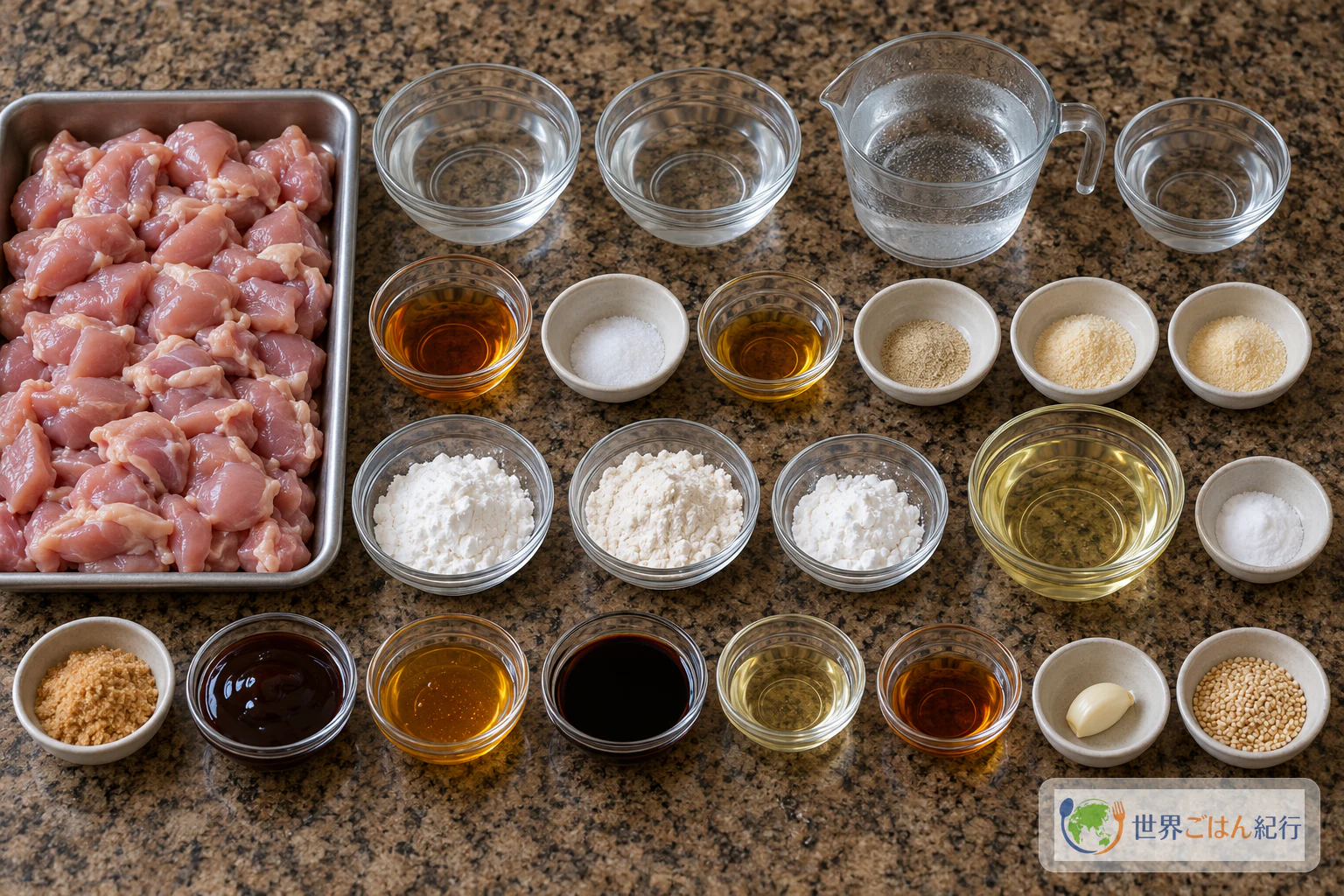
The ingredients are grouped by stage. Measure the water for the marinade and for the batter separately, so it does not all go in at once. The sesame oil in the marinade and the toasted sesame oil in the sauce are separate amounts.
This dish contains sesame (sesame oil, toasted sesame oil, sesame seeds), wheat (all-purpose flour, and often soy sauce), soy (soy sauce), and shellfish-derived ingredients (oyster sauce). Check the labels on store-bought sauces and wines for allergens and shared-facility statements.
Equipment
- Cutting board and knife for raw chicken only
- Mixing bowl for marinating and battering
- Small bowls for the sauce and the slurry
- Wok or medium-deep pot for frying
- Deep-fry thermometer
- Instant-read thermometer for checking the chicken
- Wire rack or paper towels
- A second clean wok or pan for the sauce
- Slotted spoon or spider, and a spoon for judging the sauce
Choosing and Substituting: One Path at a Time
Each option below replaces the matching item in the table. Pick one per line and don't combine them.
| Item | Used above | Alternative | Note |
|---|---|---|---|
| Chicken | Boneless, skinless thighs | Boneless, skinless chicken breast | Thighs are preferred for their fat and flavor. Breast also works, at the same 1 lb and 1-inch cut |
| Sauce liquid | Hot water, 3/4 cup | Hot chicken stock, 3/4 cup | Use one or the other, not both |
| Wine in the sauce | Shaoxing wine, 1 tbsp | Clear rice wine, 1 tbsp | Applies to the sauce only |
| Shaoxing wine | Shaoxing wine | Dry cooking sherry | The only replacement for Shaoxing wine |
| MSG | Not used | MSG, 1/4 tsp, in the marinade | Optional |
Use all-purpose flour. Don't assume another flour, such as Japanese cake flour (hakurikiko), is the same thing. Sake, potato starch, ketchup, scallions, vegetables and rice are not part of this recipe.
Method: Marinate, Batter, Fry Twice, Then Glaze
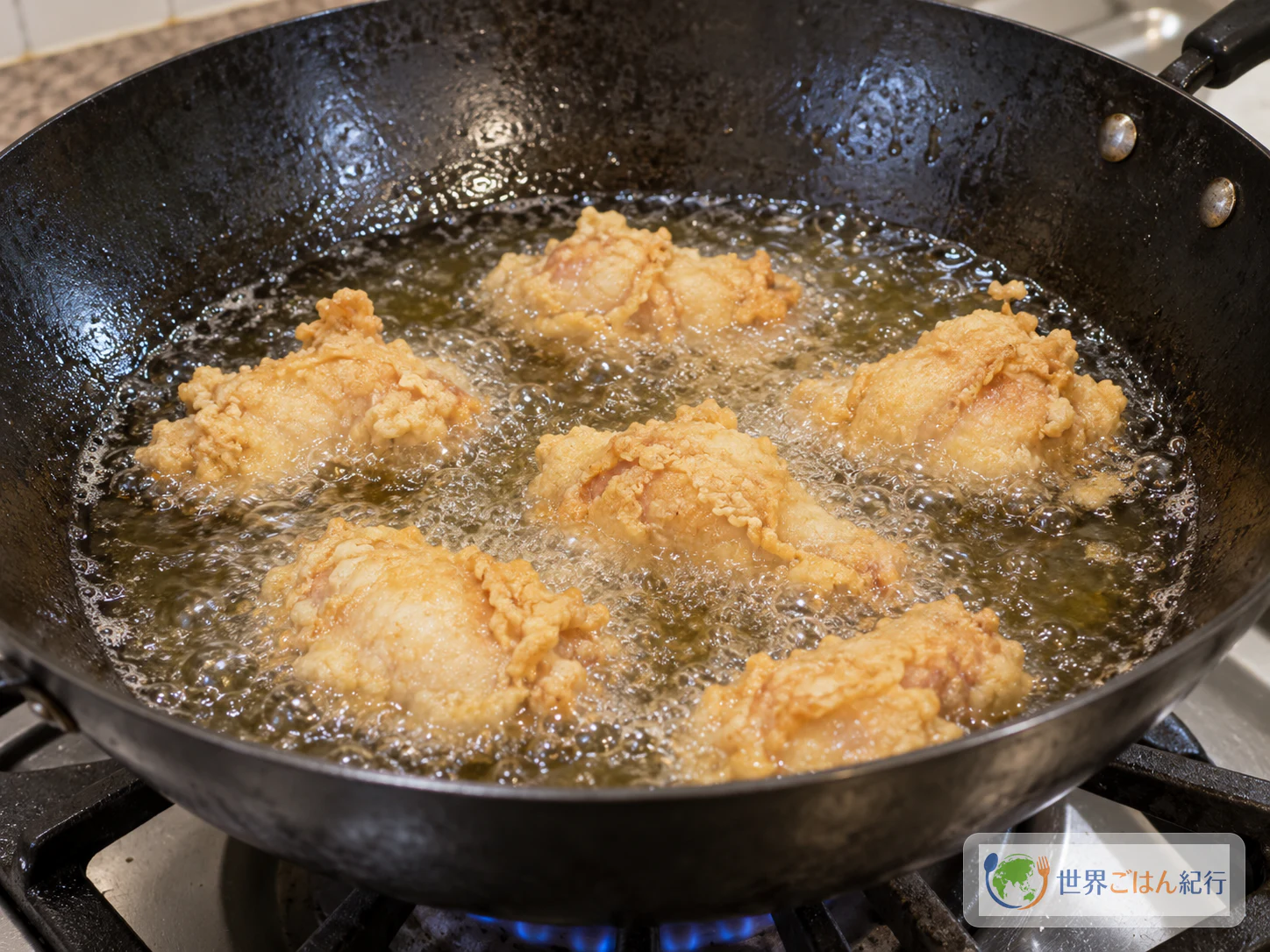
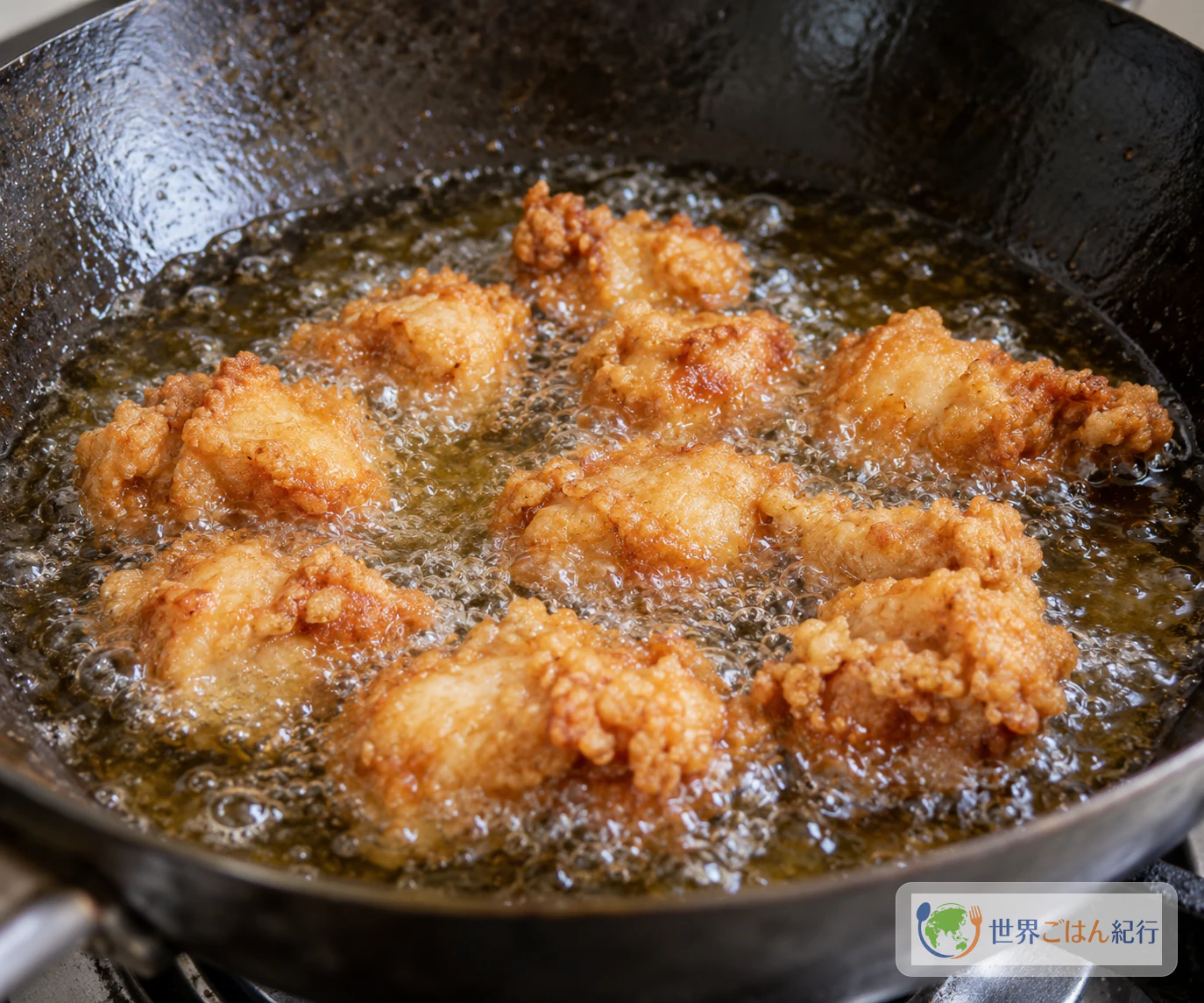
Both fries are done at 335°F/170°C. The second fry does not use hotter oil. Fry temperature and time shape the coating. They do not prove that the chicken is cooked through, so check the inside separately.
When Things Go Wrong: Coating, Oil and Sauce
| Problem | Likely cause | What to do |
|---|---|---|
| The oil temperature dropped sharply | Too much chicken went in at once | Fry in at least 2 batches for the first fry, and adjust the heat to bring the oil back to 335°F/170°C before the next batch |
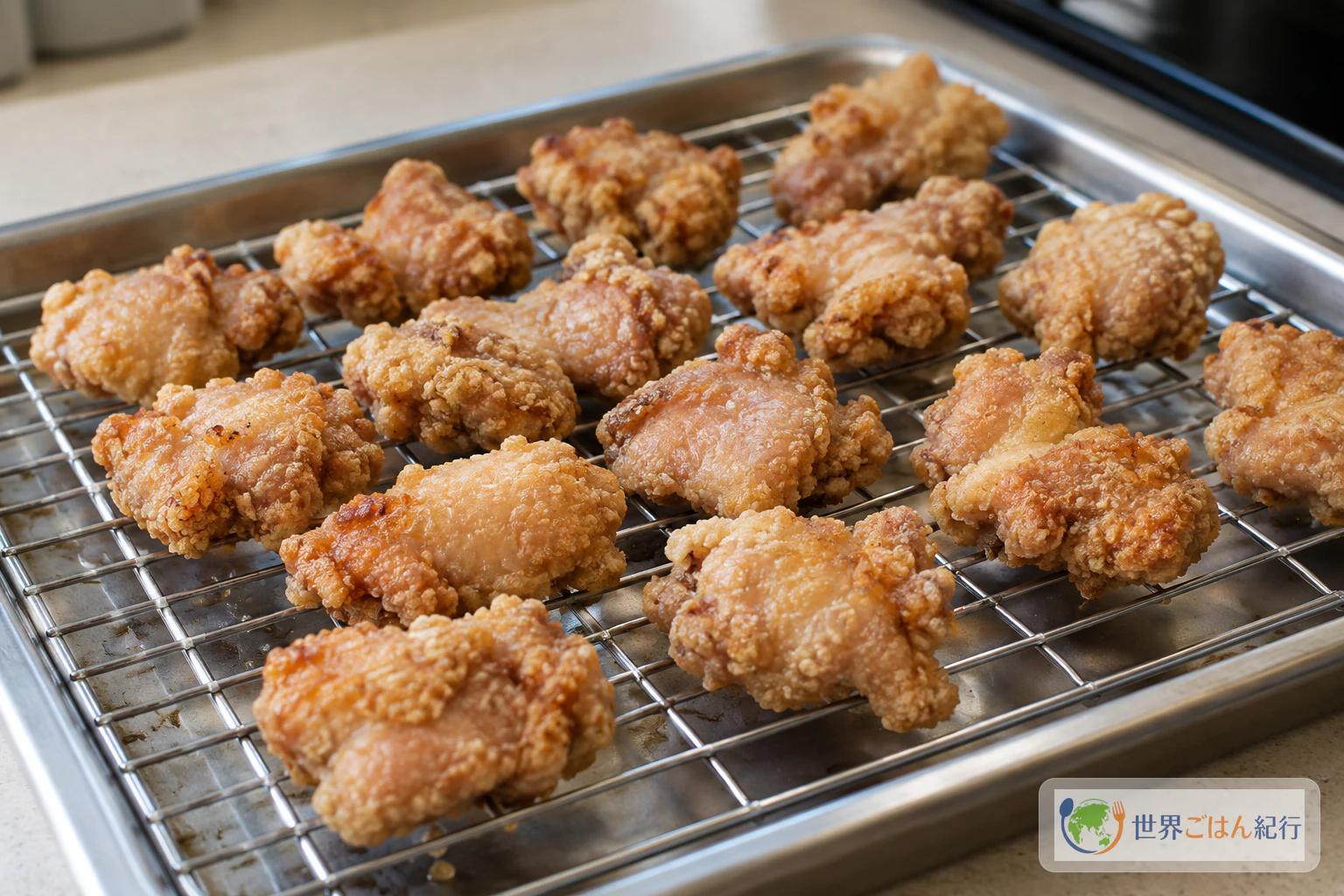
| The coating isn't crisp | The second fry was skipped or cut short | Rest the chicken for 5–10 minutes, then fry again at 170°C for 2–3 minutes. Don't raise the oil temperature |
| The coating looks done but you're unsure about the inside | Color and oil temperature can't show what's happening in the center | Check the thickest piece with a thermometer: at least 75°C for at least 1 minute |
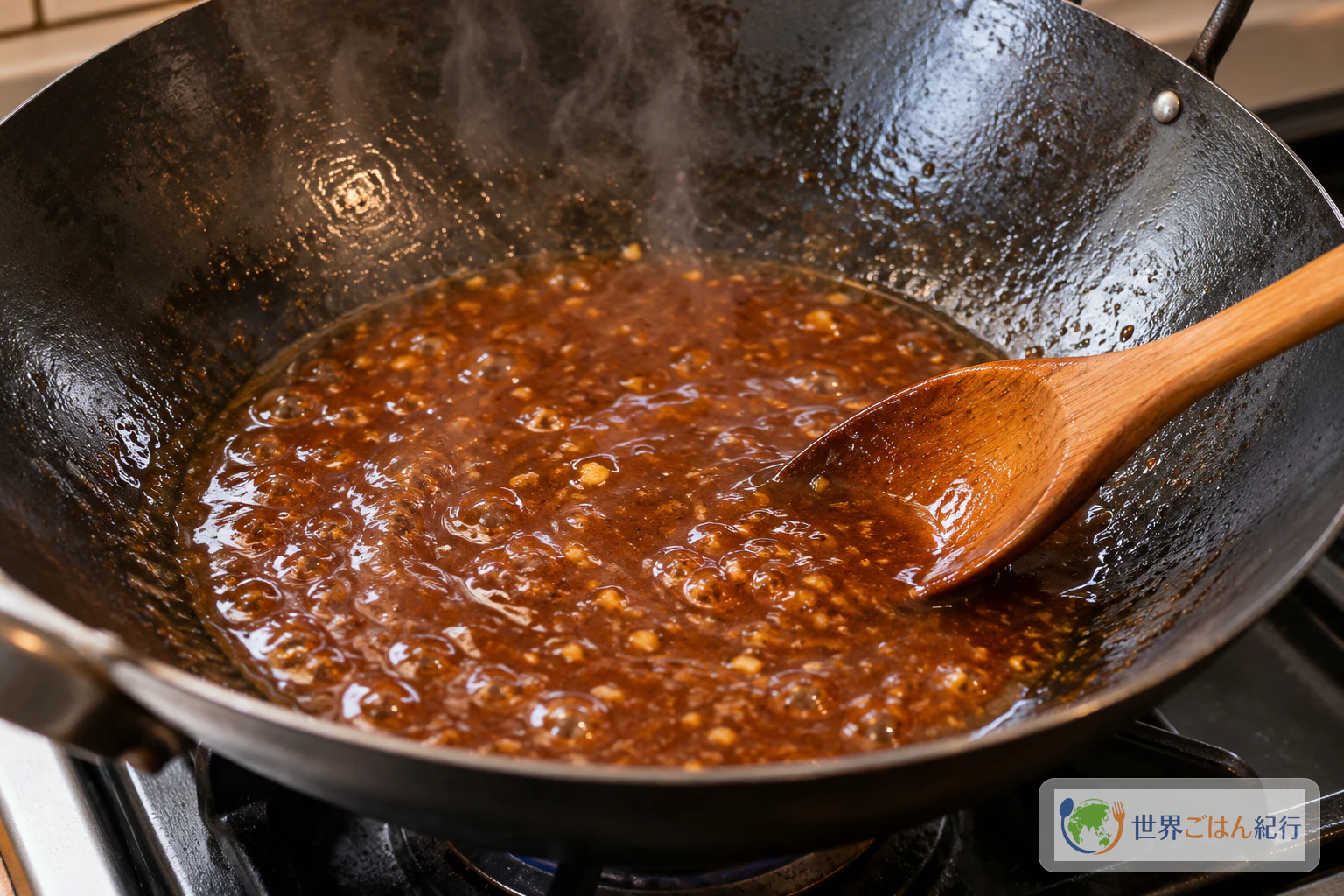
| The sauce is too thin | Not enough slurry yet | Keep adding the stirred slurry a little at a time while stirring, until the sauce coats a spoon |
| The sauce is thicker than a spoon-coating consistency | More slurry went in than needed | Next time add it gradually and stop as soon as it coats a spoon |
| The sauce tastes too sweet | The sauce is meant to be sweet, with vinegar for balance | Check that the 1 1/2 tsp rice vinegar went in. It balances the sugar and honey, so keep it in the sauce |
Handling Raw Chicken Safely
The 335°F/170°C oil and the fry times are recipe settings for the coating. They don't guarantee the chicken is safe. Japan's Ministry of Agriculture, Forestry and Fisheries advises heating chicken until the center reaches at least 75°C for at least 1 minute. Use a thermometer in the thickest piece.
The same ministry advises not washing raw chicken, because the splashing water can contaminate nearby food and surfaces. Keep raw chicken and the board, knife and bowls used for it away from ready-to-eat food. Clean those utensils and wash your hands after handling raw chicken. Use a clean wok for the sauce, as the recipe directs. Marinating in the refrigerator follows the U.S. Food and Drug Administration's food-handling guidance. It is not part of the published recipe's own instructions.
A Chinese-American Family Records the Takeout Table
This section describes the family behind this recipe. It is not a history of who invented sesame chicken.
The Woks of Life is a family food site. In a 2022 interview on NPR's All Things Considered, published by WUNC, Sarah and Kaitlin Leung described how the family started it in 2013. The blog became a way to document the food they grew up with and their experience as a Chinese-American family. That record runs from home cooking to the dishes of American Chinese restaurants. The site's author profile for Bill Leung, who wrote this sesame chicken recipe, describes his Cantonese family-cooking background. It says he specializes in Cantonese recipes and in American Chinese takeout.
In the same interview, the sisters said that Bill's parents opened a Chinese takeout restaurant in the 1980s. There, they proudly cooked dishes such as General Tso's chicken, beef lo mein, and beef and broccoli. The sisters described those dishes as part of their Chinese-American family experience, not as something apart from "real" Chinese food. Their account offers a way to read this recipe: takeout dishes that immigrant families cooked and served in America belong to a living food culture with its own history.
That account has limits. The interview does not say that sesame chicken was on the Leung family restaurant's menu. It does not say who first made the dish, when, or where. It is also not a single history of Chinese-American food as a whole. What can be said with confidence is narrower. This recipe comes from a Chinese-American family that has written down its takeout cooking. The family's site says the recipe is nearly the same as the one in their cookbook. The dish is presented as a takeout and buffet favorite, sweeter than General Tso's chicken, with vinegar for balance.
Frequently Asked Questions
Is sesame chicken a traditional dish from mainland China?
The sources used here present it as a Chinese-American dish that is popular at takeout restaurants and buffets in America. Wikidata lists both China and the United States as origins, but without references. None of the sources establishes a mainland Chinese origin, an inventor or a date. Sekai Gohan files it under China for cataloging only.
Can I use chicken breast instead of thighs?
Yes. Bill Leung's recipe calls for boneless, skinless thighs or breast. Thighs are preferred for their fat and flavor. Use the same 1 lb, cut into 1-inch/2.5 cm pieces.
Why is the second fry done at the same temperature as the first?
The recipe uses 335°F/170°C for both fries, with a 5–10 minute rest in between. The second fry, of 2–3 minutes, crisps the coating. This article doesn't suggest a hotter second fry because the recipe doesn't call for one.
Does the recipe say to marinate in the refrigerator?
The recipe gives a 30-minute marinade. Doing it in the refrigerator follows separate food-handling guidance from the U.S. Food and Drug Administration, which advises marinating food in the refrigerator.
Is MSG necessary?
No. It is optional in the marinade, at 1/4 tsp. This version leaves it out.
What can I use instead of Shaoxing wine?
The Woks of Life offers dry cooking sherry as the replacement for Shaoxing wine. In the sauce only, clear rice wine is also an option. Other replacements, such as sake, are not part of this recipe.
Can I add scallions, vegetables, or serve it over rice?
This recipe finishes the chicken only with toasted sesame seeds, so scallions, vegetables and rice are not included here. Ketchup and sesame paste are not part of the sauce either.
Sources
- The Woks of Life (recipe by Bill Leung), "Sesame Chicken." The recipe followed in this article: four servings, ingredients and their options, order of steps, oil depth and temperature, and the times for marinating, frying and resting. Also the site's description of the dish as popular at American Chinese takeout restaurants and buffets, its note that the recipe is nearly the cookbook version, its preference for thighs, and its comparison with General Tso's chicken. https://thewoksoflife.com/sesame-chicken-recipe/
- The Woks of Life, "Bill." Identifies Bill Leung as the recipe author and describes his Cantonese family-cooking background and his focus on Cantonese recipes and American Chinese takeout. https://thewoksoflife.com/author/bleung/
- WUNC / NPR, "The Woks of Life celebrates a Chinese American family's history through recipes" (All Things Considered interview). Sarah and Kaitlin Leung on starting the blog in 2013, and on Bill Leung's parents opening a Chinese takeout restaurant in the 1980s. Not a history of sesame chicken's origin. https://www.wunc.org/2022-12-24/the-woks-of-life-celebrates-a-chinese-american-familys-history-through-recipes
- Ministry of Agriculture, Forestry and Fisheries of Japan, "鶏料理を楽しむために~カンピロバクターによる食中毒にご注意を!!~" (Enjoying chicken dishes safely: beware of Campylobacter food poisoning). Not washing raw chicken, keeping raw poultry and utensils separate from ready-to-eat food, and heating the center to at least 75°C for at least 1 minute. https://www.maff.go.jp/j/fs/campylobacter.html
- U.S. Food and Drug Administration, "Safe Food Handling." Marinating food in the refrigerator. https://www.fda.gov/food/buy-store-serve-safe-food/safe-food-handling
- Wikidata, "Chicken with sesame" (Q138413396). The catalog label, its description as a Chinese-American dish, and the unreferenced listing of China and the United States as origins. Used for identification only, not as proof of origin. http://www.wikidata.org/entity/Q138413396