Building a thick curry from the color of the onions
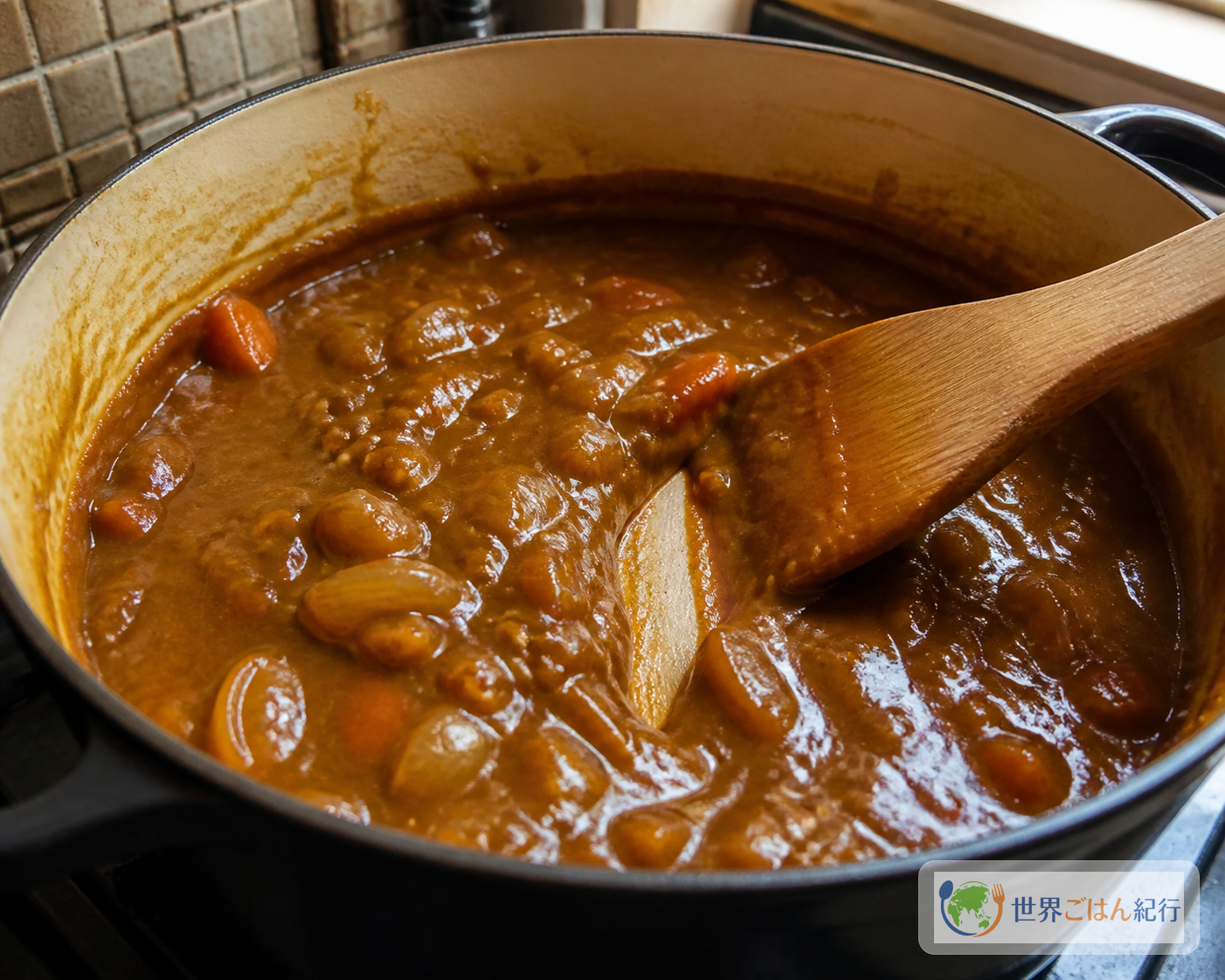
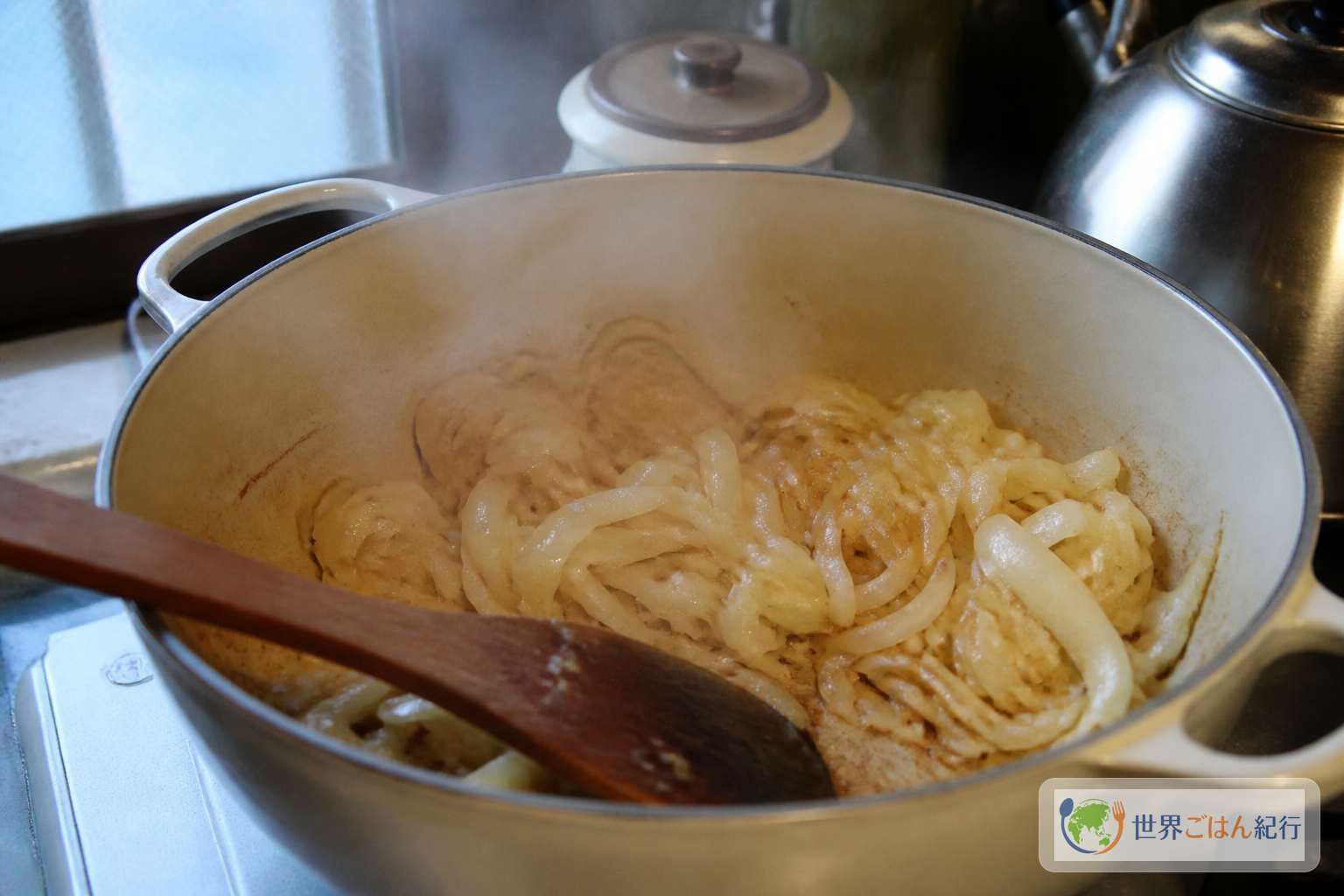
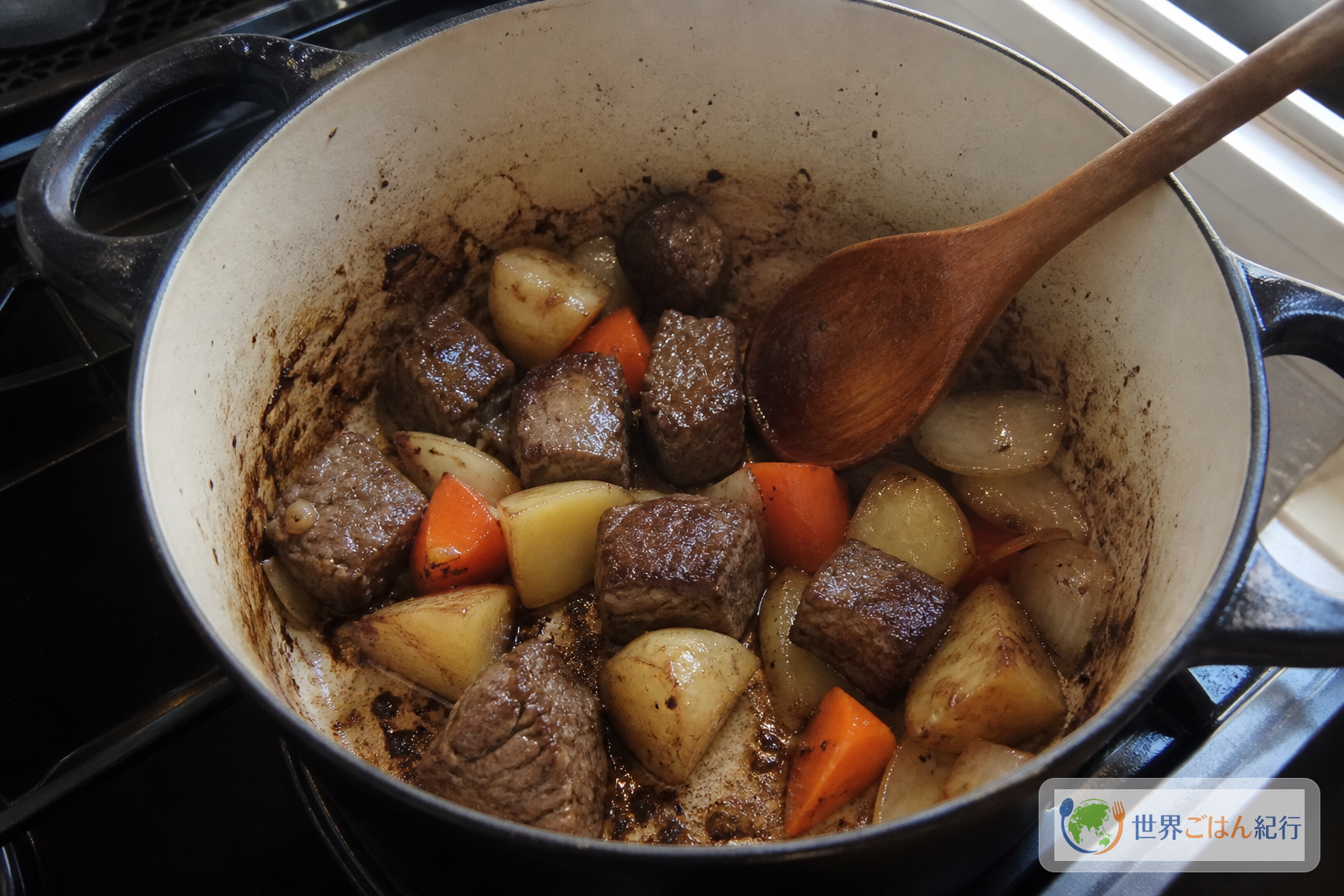
Spread the onions in the pot and at first they make a light, watery sound. As you keep them moving over medium-low heat the sound quiets, and when only the edges have turned light brown, layering in the meat and vegetables leaves a sweet smell on the bottom of the pot even before the curry powder goes in.
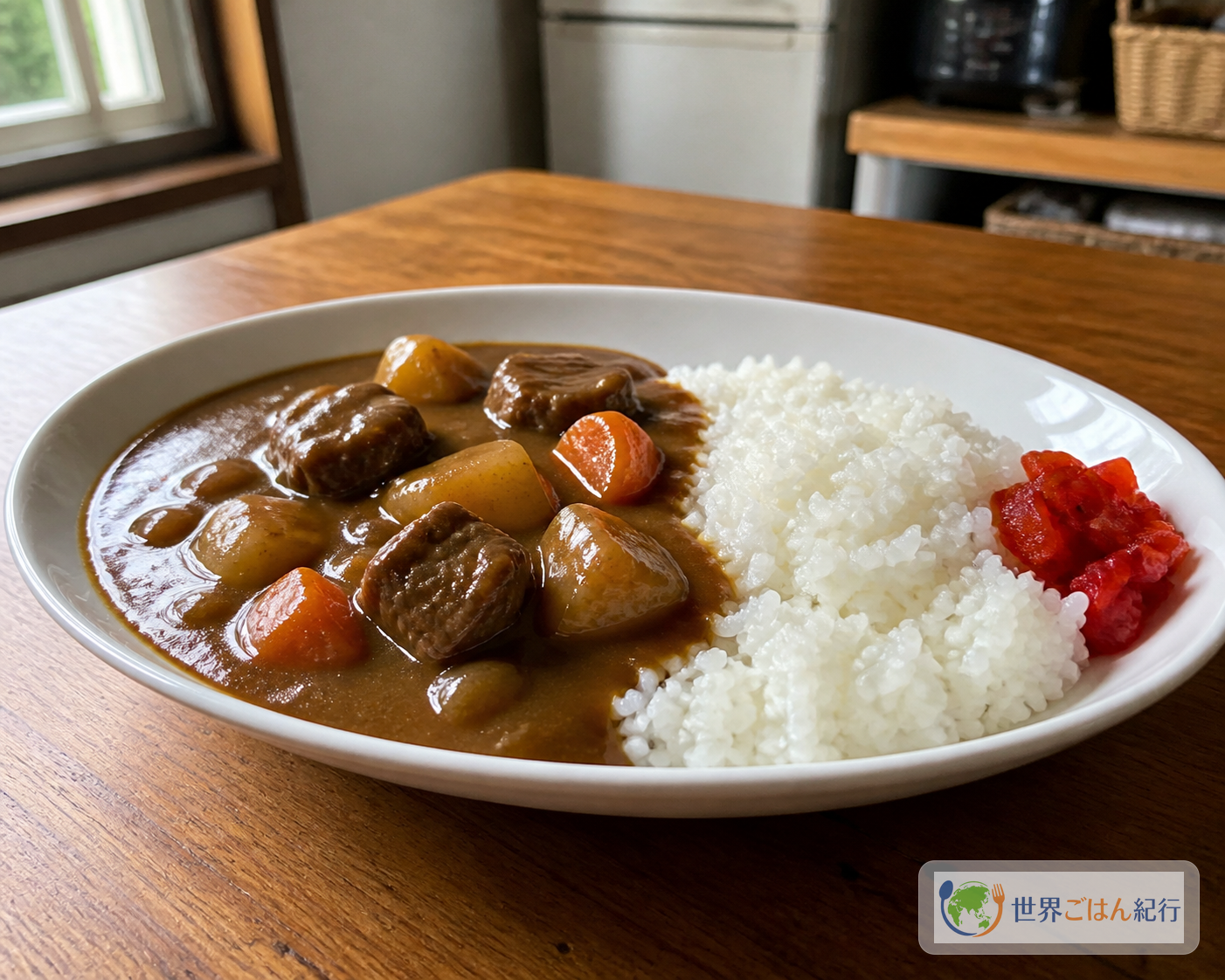
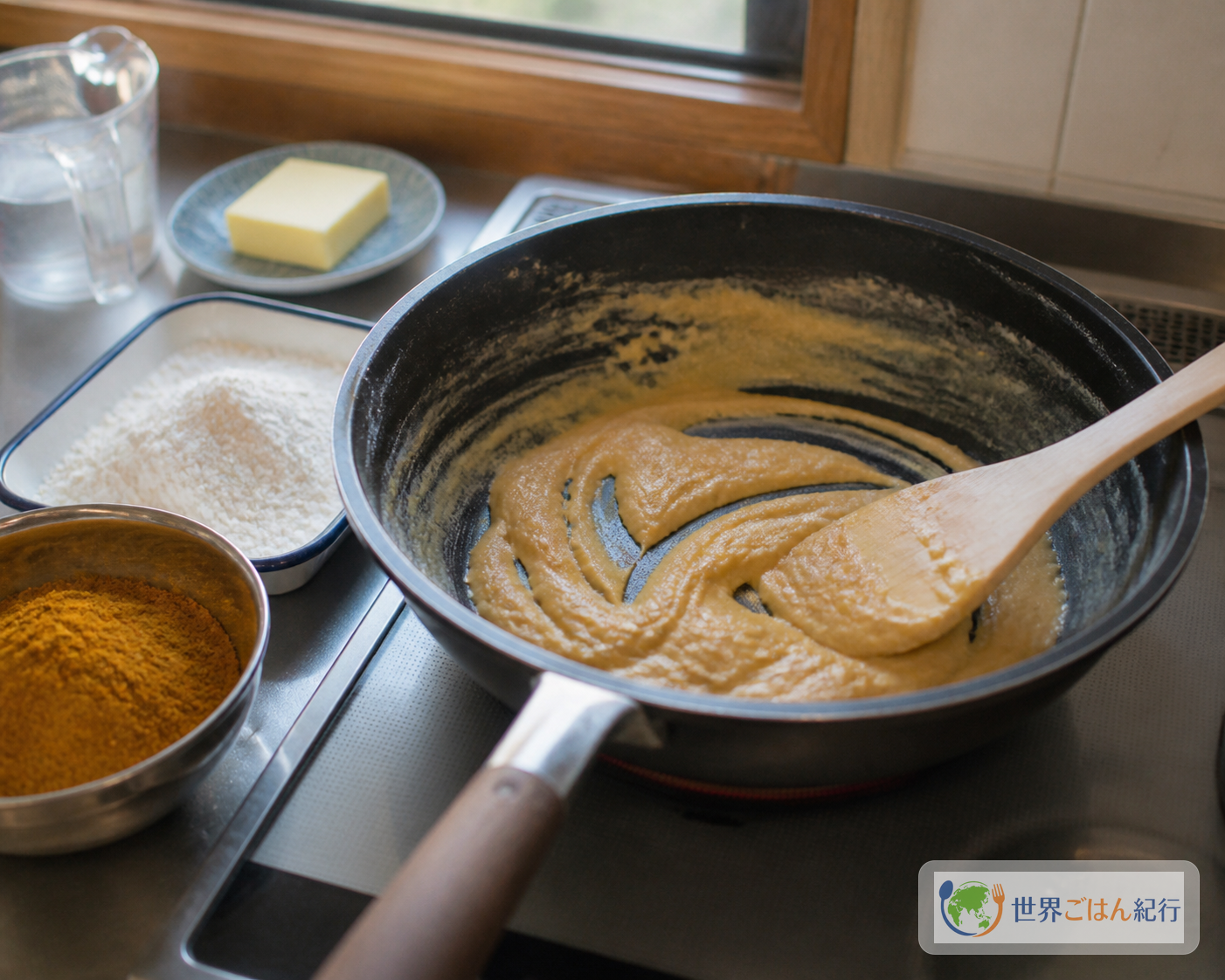
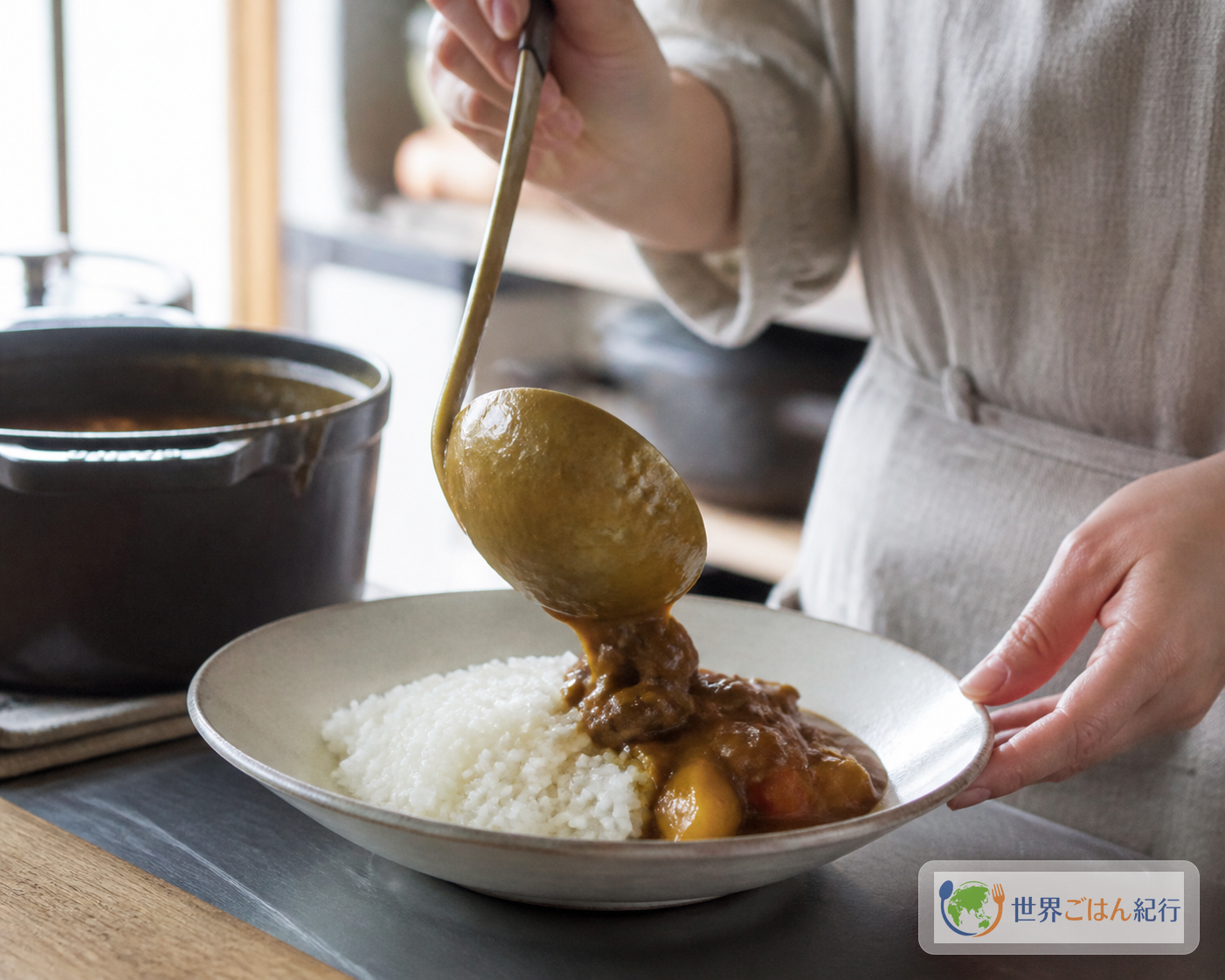
Curry rice made in Japanese homes is not a dish where spices are simply dissolved into the cooking liquid. Flour is cooked in fat, curry powder is combined with it, and liquid is joined in a little at a time. That roux carries the juices of the meat and vegetables and is adjusted to a thickness that doesn't run too far over cooked rice.
What defines this plate is less the amount of curry powder than the order of cooking the flour in fat and then bringing it into the liquid. Sweeten the onions without scorching, brown the surface of the fillings and combine the roux last, and you get a rounded flavor that doesn't rely on heat alone.
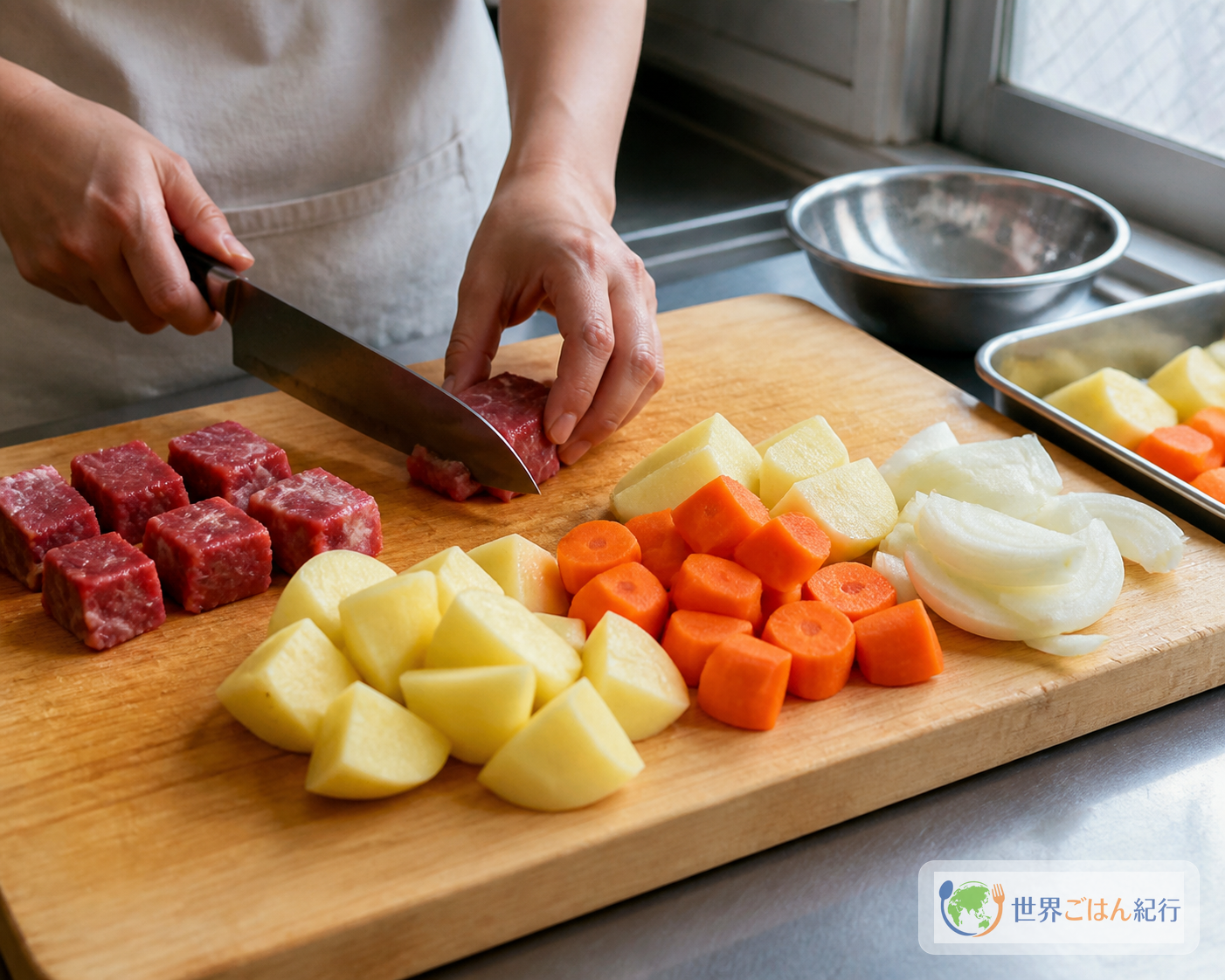
The fillings are beef, potatoes and carrots, and pork shoulder or chicken thigh can replace the beef. It differs in method from a dish such as India's murgh makhani, which builds the sauce on spices and dairy; Japanese curry is easiest to think of around a thickness that sits alongside rice.
From the navy's pot to the home plate: why curry rice changed in Japan
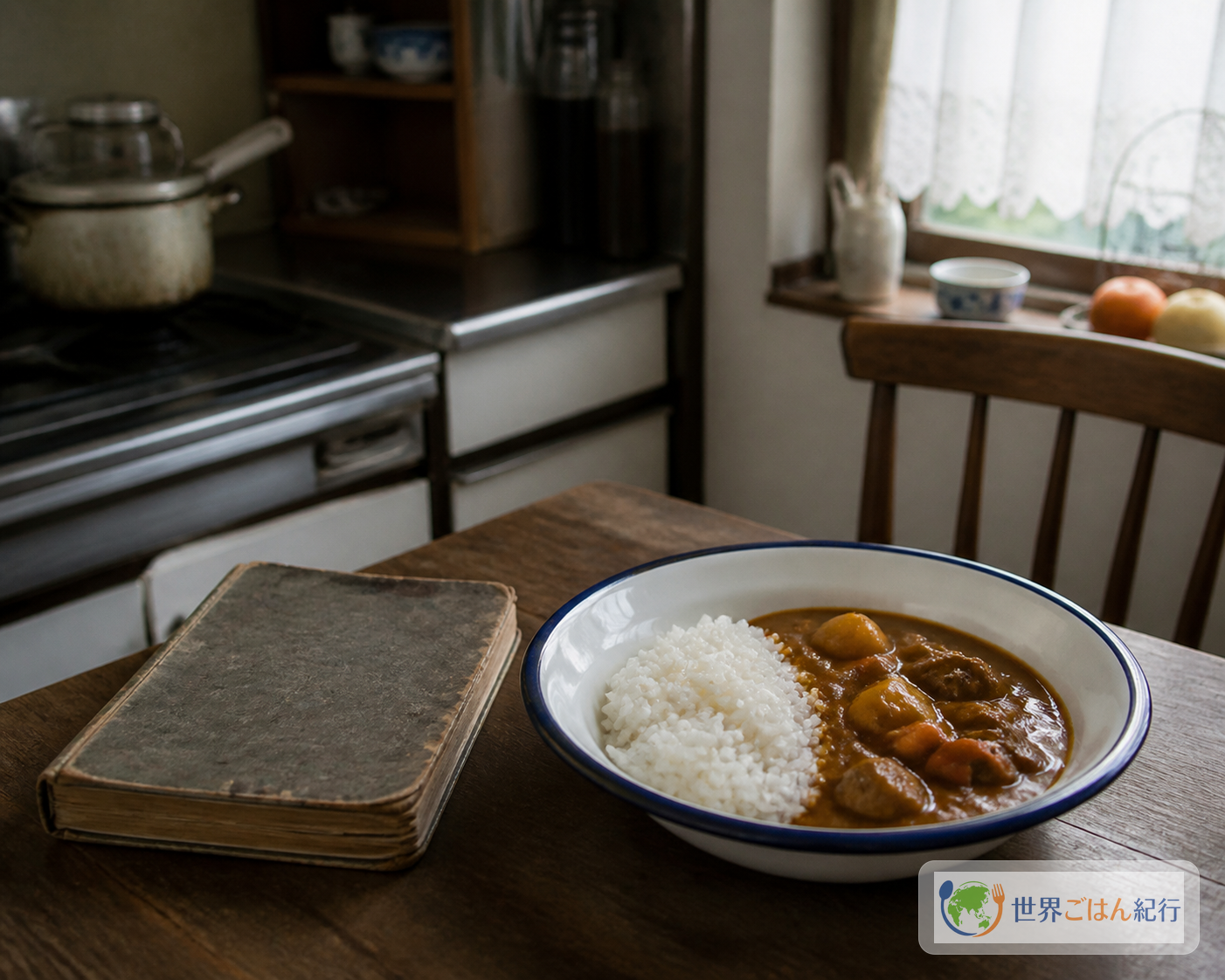
Curry was not born in Japan, but by the time it settled in Japan, the way of eating it and the design of the pot had changed. S&B's food culture material explains that curry powder was born in Britain at the end of the 18th century and came to Japan in the Meiji era as a Western dish. A cookbook of 1872 included curry dishes, and in the Meiji kitchen it was introduced as a stew with a Western name.
In a chronology in Japan Maritime Self-Defense Force material, a word for curry was introduced in a work by Fukuzawa Yukichi in 1860, and in 1871 Yamakawa Kenjiro is said to have encountered curry on a ship. Following the 1872 cookbook, the 1908 Navy Cooking Reference (Kaigun Kappojutsu Sankosho) included a recipe for "curry rice" (written "kareiraisu"). This is not a source that shows today's commercial roux as it is, but a clue to how the navy of the time put together a Western-style stew for eating with rice.
According to the description of Yokosuka Navy curry in the Ministry of Agriculture, Forestry and Fisheries (MAFF) regional cuisine material, against the background of navy meals built around white rice and nutritional concerns, a curry-flavored stew of British Navy origin was thickened with flour to suit rice. The design of getting thickness from flour was also tied to the convenience of keeping the liquid alongside rice on a ship's table. The flow in which retired servicemen returned to various places and the flavor they had learned spread to homes and local eateries is also presented as a reason curry rice did not stay in one place but became a dish of many regions.
However, today's "Yokosuka Navy curry" is not a plate that reproduces Meiji sources as they are. It took shape as a town-revitalization dish in Yokosuka in 1999, a regional brand arranged to be easy for today's shops and homes to eat. When making Japanese curry rice, not equating historical navy food, Yokosuka's modern regional dish and the commercial roux of the home, and viewing the relation of each a little apart, makes the differences in flavor easier to explain.
How curry changes by region: Yokosuka, Kanazawa and Sapporo
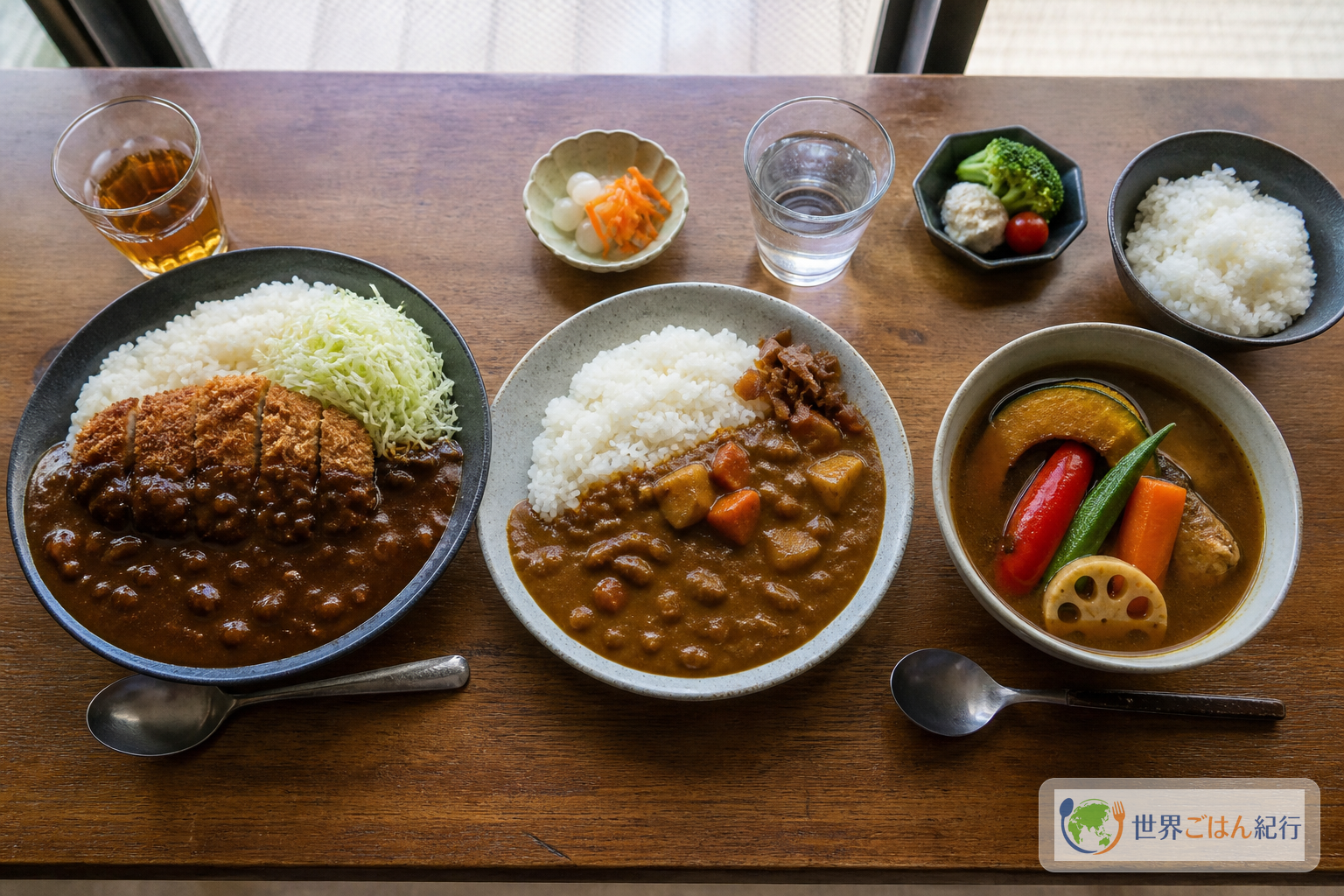
Even for the same "Japanese curry," the memory of the dish that remained differs by region. Yokosuka is known for a form centered on navy food, using beef or chicken, onions, carrots and potatoes, thickened with flour and combined with rice. At certified restaurants it is sometimes presented as a meal combining salad, milk, chutney and the like. It becomes a regional dish including not only what is in the pot but what is added to make a meal.
Kanazawa curry is a regional style that the Kanazawa city tourism site presents as a dark, thick-bodied roux with shredded cabbage and a pork cutlet. Spreading the roux on the rice, setting the cutlet on it and placing cabbage elsewhere creates a different order of eating from a home braise. It doesn't mean every shop in Kanazawa serves the same plate; it is right to take it as an easily recognized form shared in the region.
Sapporo's soup curry, according to the Sapporo tourism site, is a dish that arose about 50 years ago, centered on large-cut colorful vegetables, a thin soup and spices or stock that differ by shop. Though it belongs to the same Japanese curry culture as the roux-coated-rice curry here, the role of the liquid is reversed. To make the Sapporo form, you need to leave out flour and float separately grilled fillings in a light soup.
| Regional style | What distinguishes the plate | If you adopt it at home |
|---|---|---|
| Yokosuka navy curry | Thickened with flour, rice and sides combined into one meal | Pay attention to the thickness of the roux and the combination of sides |
| Kanazawa curry | Dark roux, shredded cabbage, cutlet presentation | Keep the braise as in this recipe and change only the plating |
| Sapporo soup curry | Large vegetables and a flowing soup served alongside rice | Leave out the flour roux and make it as a soup in a separate pot |
To recreate it elsewhere, first make a thickness that doesn't break down beside rice, and borrow regional elements from plating and sides, and you fail less. Even with the same dish name, if the amount of liquid in the mouth and the size of the fillings differ, the heat needed differs too.
Ingredients (serves 4)
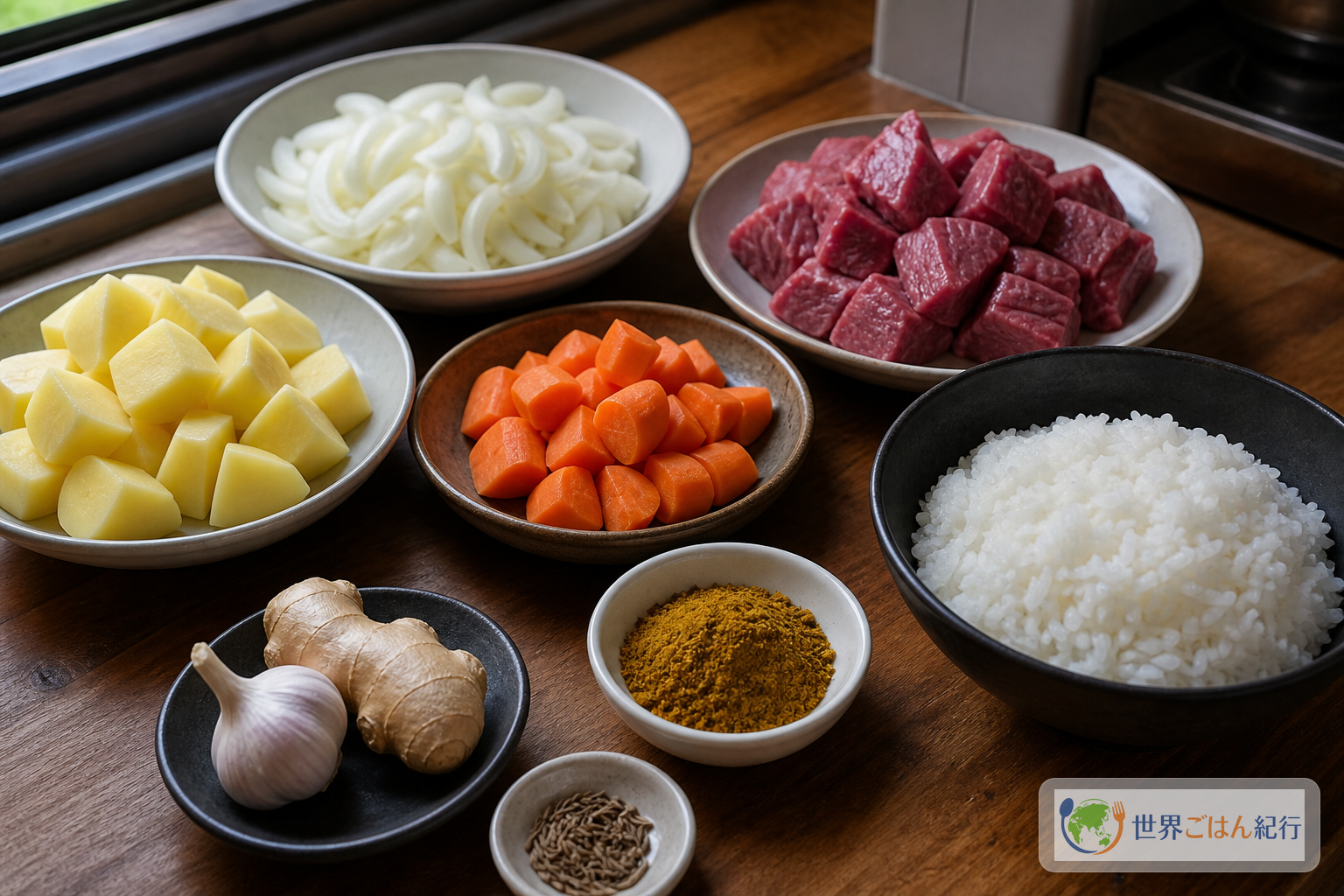
Ingredient table
The quantities are a home formula for about 150 g cooked rice per person and about 250 g of curry each. Flavor changes with the cut of meat, the salt in the curry powder and how much liquid evaporates, so don't put in all the salt at once; decide by tasting at the end. Large potatoes tend to leave the center firm, and small ones melt into the roux. If you want them to keep their shape, keep to 3 cm cubes.
Deciding what to buy extra
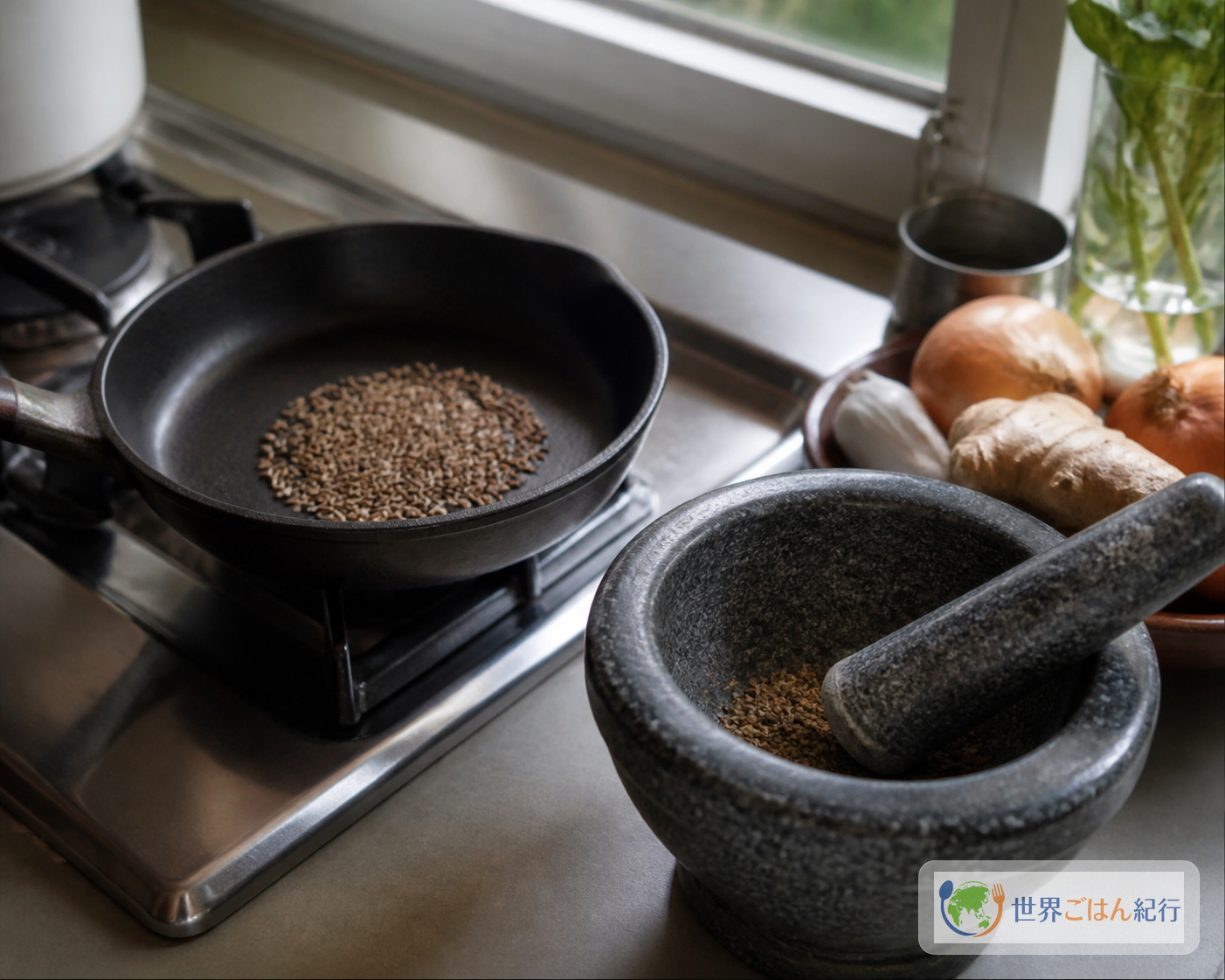
Curry powder, beef, root vegetables and rice can all be gathered at a nearby supermarket. What is worth seeking elsewhere is cumin, if you want to add with a small amount an aroma that powder alone struggles to give. A set of whole spices lets you try a few in small amounts without being left with a large bag of only cumin. If you already have cumin seeds, or want a milder aroma, you needn't buy more.
Instructions: fillings first, roux joined afterward
Make the roux in a small skillet and move it to the stew pot. Because the flour is not sprinkled straight onto the bottom of the pot, it is easier to isolate the cause if lumps form. Start cooking the rice at the same time as step 1, and let it steam about 10 minutes before serving.
If using cumin seeds, a small dry skillet and a mortar are useful. If you do buy one, choose a mortar and pestle whose material and contents you can check and which has no cracks or chips. If you make it with curry powder alone, already own a mortar, or are making it only this once, it is more sensible not to buy more and instead lightly crush the cumin with your fingers or skip step 2.
Three states to look at before turning off the heat
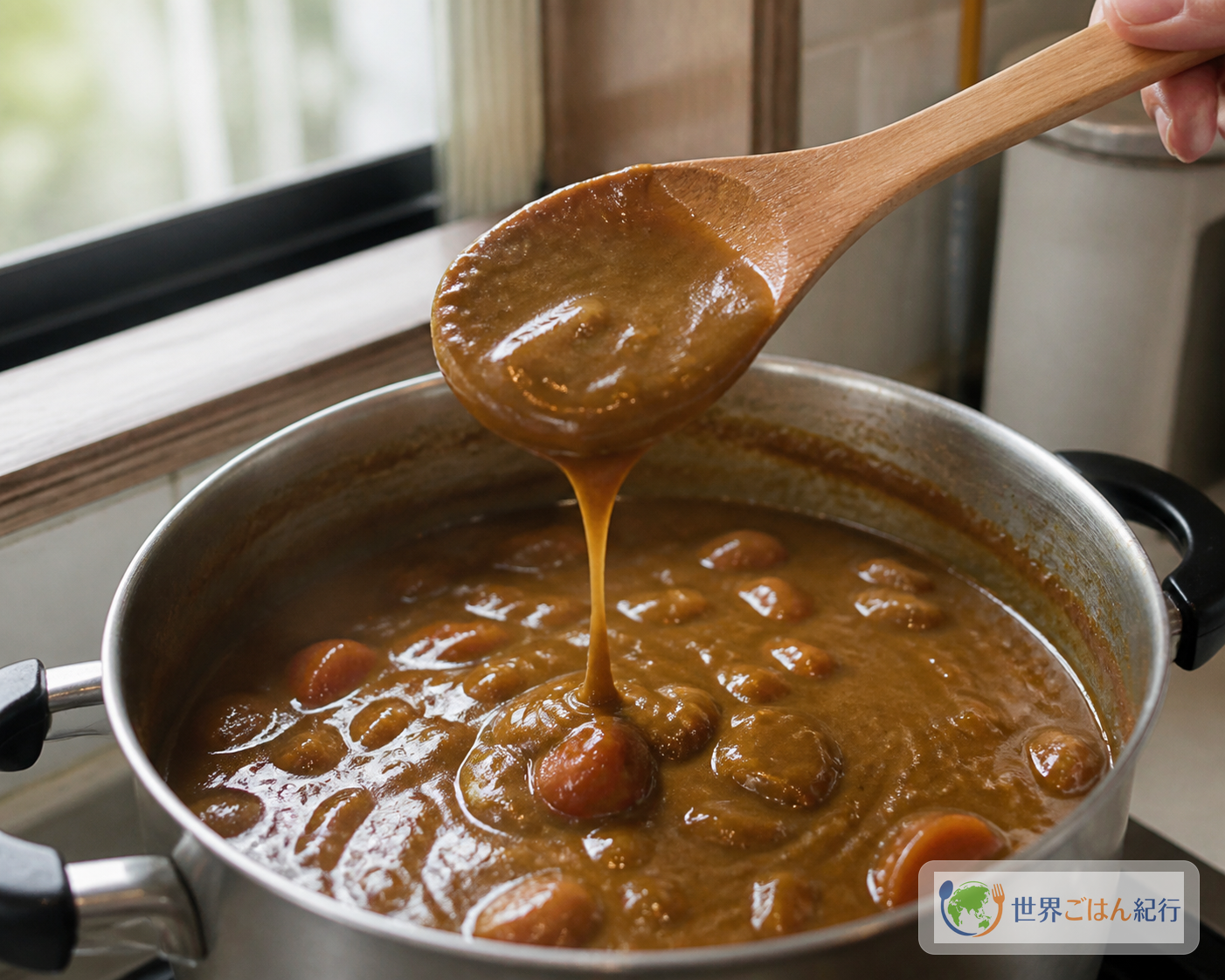
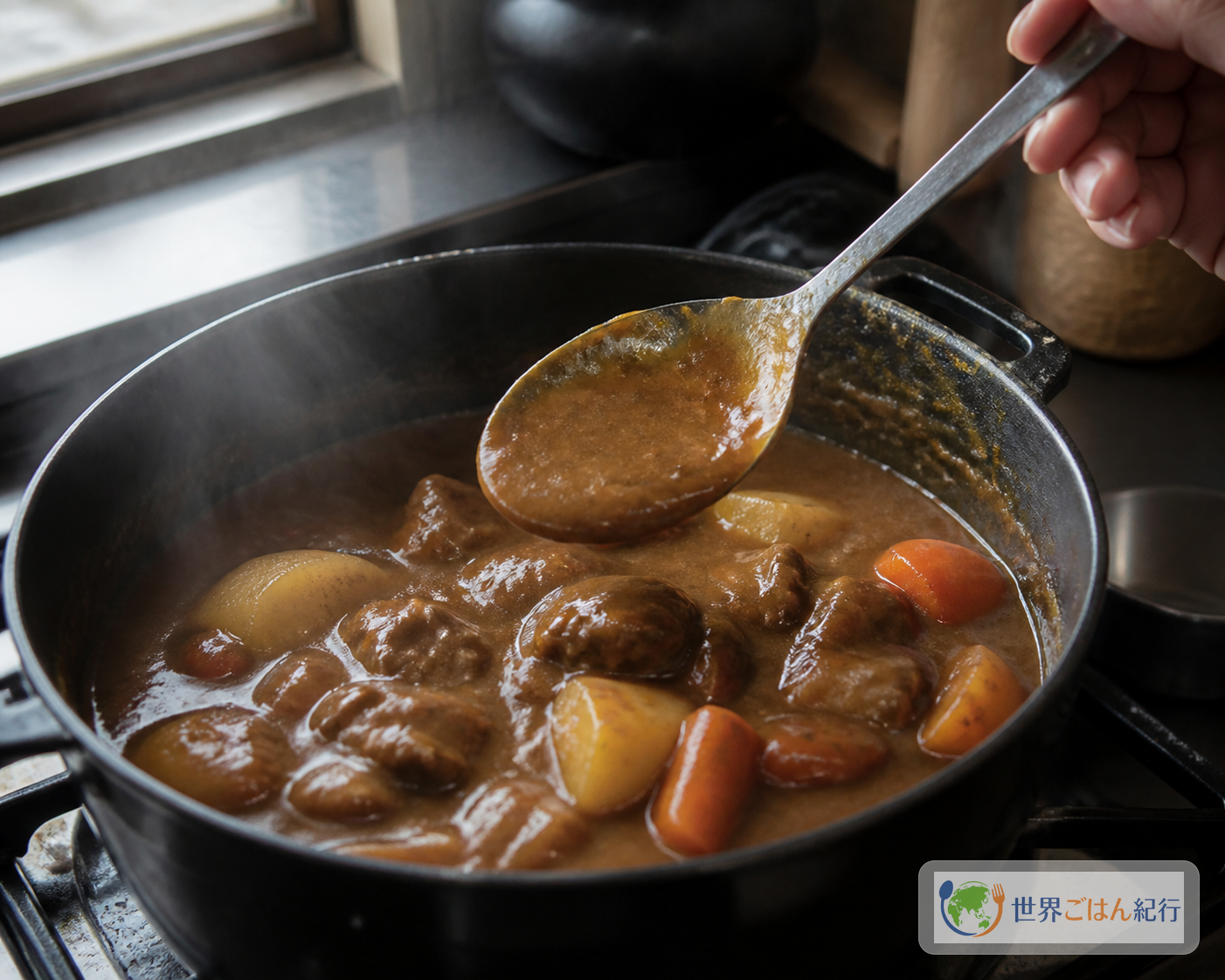
Curry is not decided by "how many minutes it simmered" alone. By looking at the color of the onions, the temperature of the roux and the center of the potatoes, you can recover differences between pots even with the same quantities.
Borrowing regional plates to widen home curry
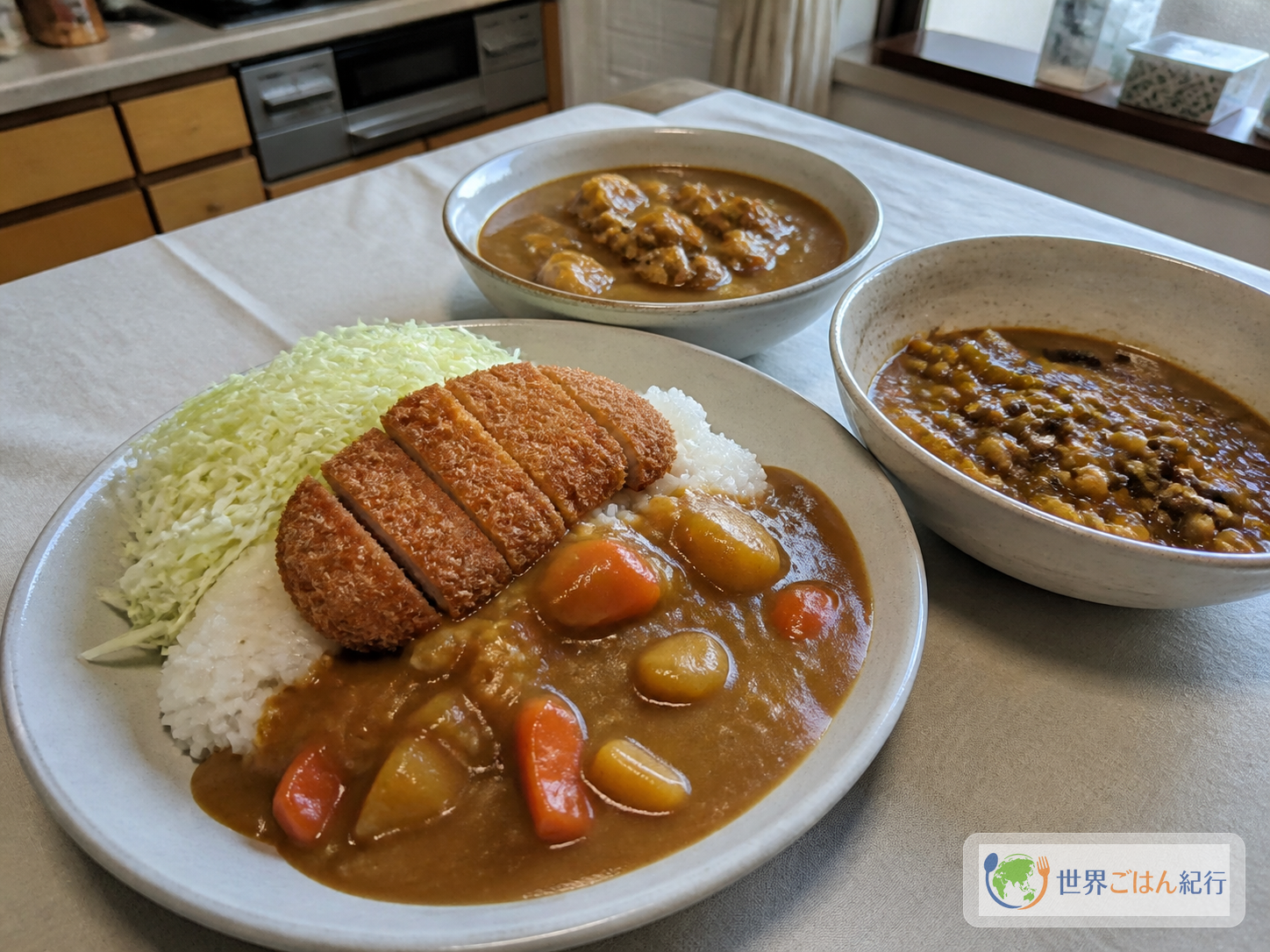
From the same pot, you can widen into other ways of eating by changing plating and the choice of fillings. When borrowing a regional name, though, state clearly that it is not "a complete reproduction of that place" but an element taken into a home plate.
Adding cutlet to approach Kanazawa's plate
Finish the braise a little thicker, set shredded cabbage beside the rice, and top with a separately fried pork cutlet. Simmering the cutlet loosens the coating, so set it on just before serving. Don't cover the whole rice with roux; leave a place where you can alternate with the cabbage, and the texture doesn't turn monotonous.
Approaching a thinner Sapporo style
To make Sapporo-style soup curry, leave out the flour and butter of this recipe and increase the water to 900 ml. Grill root vegetables and green peppers separately, open the curry powder in a little oil before adding it to the soup, and serve it in a separate bowl from the rice. Merely diluting this thick curry with water blurs the aroma and saltiness, so build it as a different dish.
Pork shoulder for sweet fat
Replacing the beef with pork shoulder layers the sweetness of the onions with fat. Browning the surface should be the same 8–10 minutes as for beef, and check that the center is cooked at the end of the simmer. If a lot of fat floats on the surface, skimming a little before finishing keeps it from feeling heavy beside the rice.
Chicken thigh for a shorter simmer
Cut chicken thigh into 3 cm cubes, brown only the surface in step 4, and shorten the simmer in step 6 to 15–18 minutes. Give priority to a skewer going through the potatoes and the chicken being cooked through at the center, rather than fixing the time. Removing the skin lightens the fat and keeps it from firming when cold.
Mushrooms and beans without meat
If you leave out the beef, add 250 g shimeji or king oyster mushrooms and 150 g chickpeas. Cook the mushrooms in step 4 until their water cooks off, and add the beans in the second half of step 6. Vegetables alone give little body to the liquid, so increase the diced tomato to 200 g and decide the salt last.
A table around curry isn't finished with the pot alone
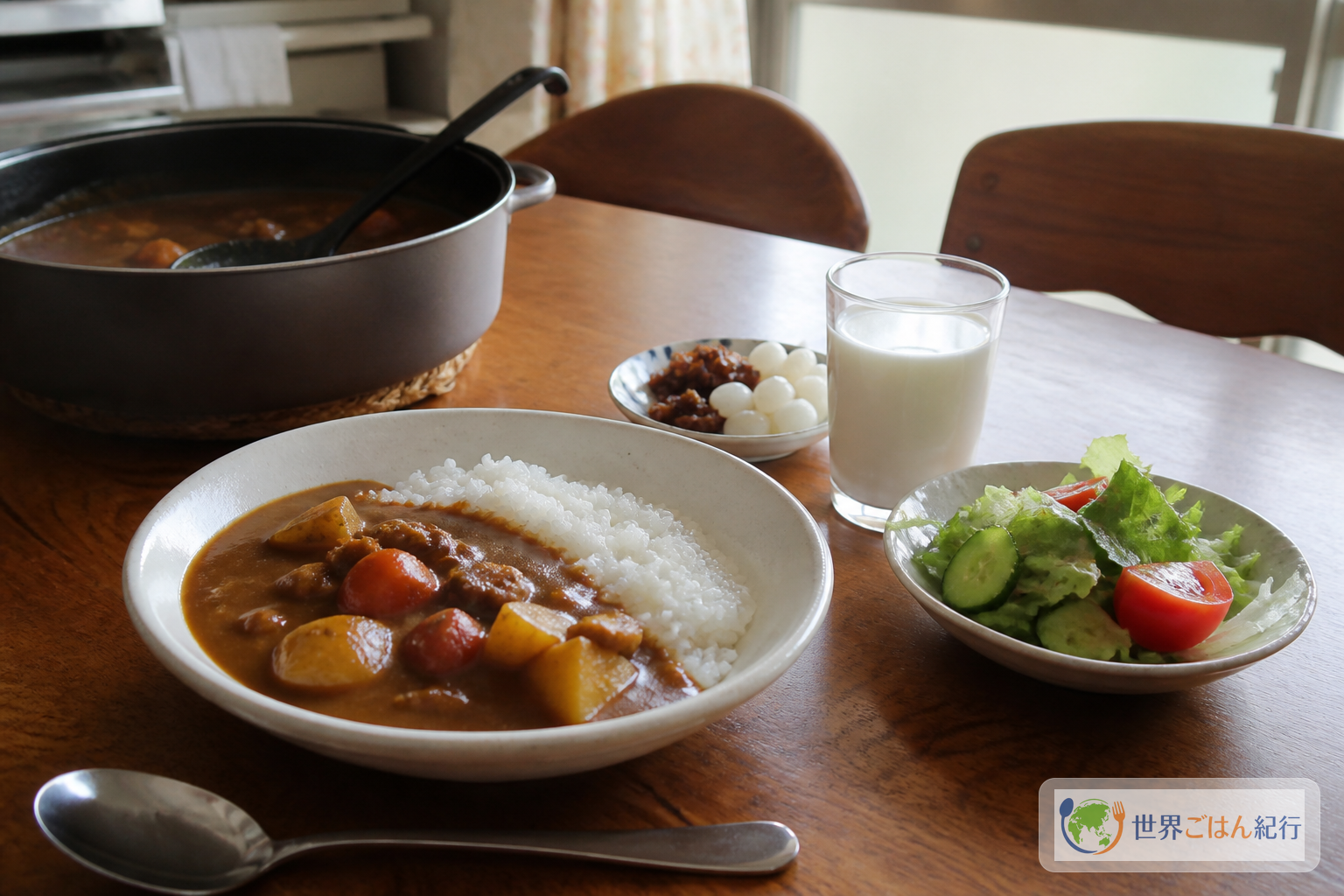
When navy-style curry is spoken of as a modern regional dish, salad and milk and the like are set beside the plate. MAFF's Yokosuka Navy curry material also shows a menu form of combining rice and sides rather than the curry alone. This is not the claim that "a navy plate always comes with this item," fixed onto home cooking; it means the idea of building a stew into a single meal remains.
The Friday curry that the Maritime Self-Defense Force material introduces is also known as a meal for keeping a sense of the day of the week before the weekend. Life on board is not the same as a family dinner, but when days of the week or family gatherings are tied to a dish, the taste stays in memory more than the recipe. Some days the time of cooking onions becomes time for family conversation, and other days vegetables cut the day before go into the pot and reach the table quickly.
The reason Japanese curry rice spread is not only that it was a spicy dish. Rice, root vegetables and meat were brought together in one pot, and because saltiness and thickness could be adjusted at the end, each household could change the fillings and still call it by the same name. Differences such as adding fukujinzuke or rakkyo, setting out cabbage or adding a salad also build regional and household flavor outside the pot.
When cold the roux firms, so if eating it the next day, warm one portion at a time and add a little boiling water to restore the thickness. Keeping the whole pot over low heat tends to scorch only the bottom, and warming only the portion you take out is easier for both flavor and food safety.
Storage and frequently asked questions
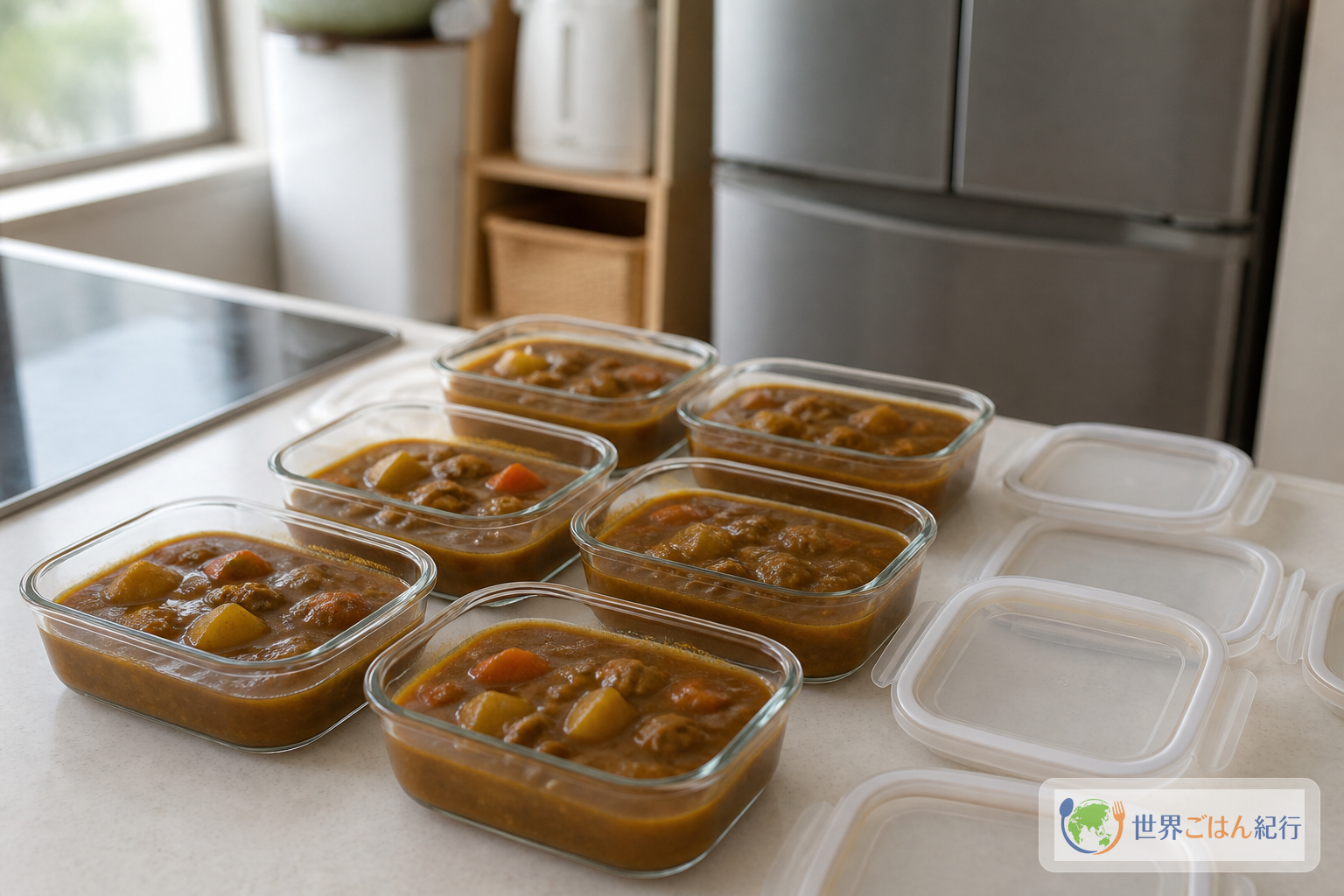
How should I store leftover curry?
When you finish eating, don't leave it in the pot at room temperature; divide it into clean shallow containers one portion at a time, cool it quickly in ice water or similar and refrigerate. Japan's Ministry of Health, Labour and Welfare advises that curry and stew left in a large pot at room temperature let Clostridium perfringens multiply easily, and that for storage you should divide into portions and refrigerate, and when reheating, stir well and heat thoroughly. Don't store reheated food again; warm only what you will eat. If you have the slightest worry about smell, appearance or the condition of the container, discard it without eating.
What do I do if the roux is watery?
Remove the lid and reduce over low heat for 5–8 minutes, driving off water until it clings thinly to the back of a spoon. Reducing while the saltiness is still short concentrates the flavor, so fix the thickness first and add salt a pinch at a time at the end. Dissolving flour in water and adding it later tends to bring a floury taste and lumps, so loosening with boiling water is easier to recover.
Can I eat it if the potatoes have broken down?
If they are cooked to the center and there is no scorching or off smell, you can. Broken-down potato mixes into the roux and creates a natural thickness. If you want the shape kept, cut 3 cm cubes and simmer over low heat without keeping it boiling. If you use a variety that breaks down easily from the start, add it in the second half of step 6.
Can I make it with commercial block roux?
You can, but block roux already contains flour, fat, salt and spices. Adding the 30 g flour, 30 g butter and 25 g curry powder of this table as they are would make it too strong, so replace them with the amount for 4 servings on the box of block roux. You can keep the order of cooking the onions, browning meat and vegetables, and tenderizing the fillings in the liquid.
Are cumin seeds and a mortar essential?
Not essential. With curry powder alone you can skip step 2. Crushing a little of the cumin grains and adding them brings up the aroma in the mouth, but if you are making it only once, the flat of a knife or a small mortar can substitute. What is worth buying is for those who will keep cooking with whole spices and who can decide where to keep them after checking material and contents.
How far should the meat be cooked?
Cook beef, pork and chicken to the center. The guide in Japan's Ministry of Health, Labour and Welfare's home-use material is a core temperature of 75°C (167°F) for at least 1 minute. In step 6, simmer over low heat after boiling and check that no red remains at the center of the meat and the juices run clear. It is also important not to use the same spoon for serving that touched raw meat.
Sources
- Ministry of Agriculture, Forestry and Fisheries of Japan, "Yokosuka Navy Curry" https://www.maff.go.jp/e/policies/market/k_ryouri/search_menu/1089/index.html (accessed and checked 27 August 2026)
- Japan Maritime Self-Defense Force, "Secrets of Maritime Self-Defense Force Curry" (in Japanese) https://www.mod.go.jp/msdf/kanmeshi/tip2.html (accessed and checked 27 August 2026)
- Sapporo tourism official site, "Soup Curry" https://visit.sapporo.travel/discover/cuisine/soup-curry/ (accessed and checked 27 August 2026)
- Kanazawa city tourism official site, "Kanazawa Curry" https://visitkanazawa.jp/en/feature/detail_239.html (accessed and checked 27 August 2026)
- S&B Foods, "History of Curry" (in Japanese) https://www.sbfoods.co.jp/sbsoken/washoku/curry.html (accessed and checked 27 August 2026)
- Ministry of Health, Labour and Welfare of Japan, "Key points of hygiene management in children's cafeterias" (in Japanese) https://www.mhlw.go.jp/stf/newpage_00381.html (accessed and checked 27 August 2026)
- Food Safety Commission of Japan, "Q&A from the Food Safety Dial (biological agents)" (in Japanese) https://www.fsc.go.jp/dial/dialqa20170608_4.html (accessed and checked 27 August 2026)