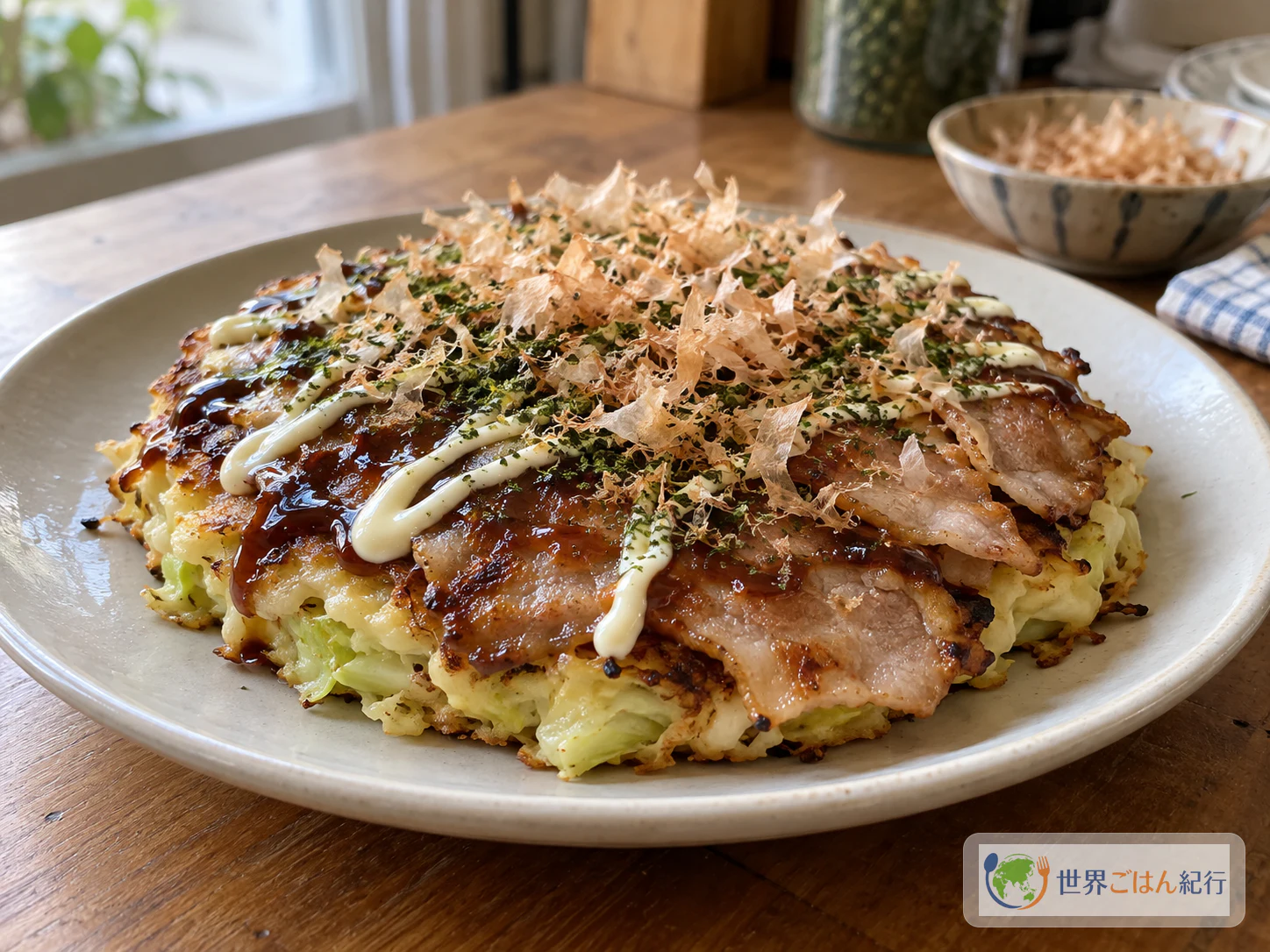
Okonomiyaki: Cabbage Held Loosely in Batter, Browned on Both Sides
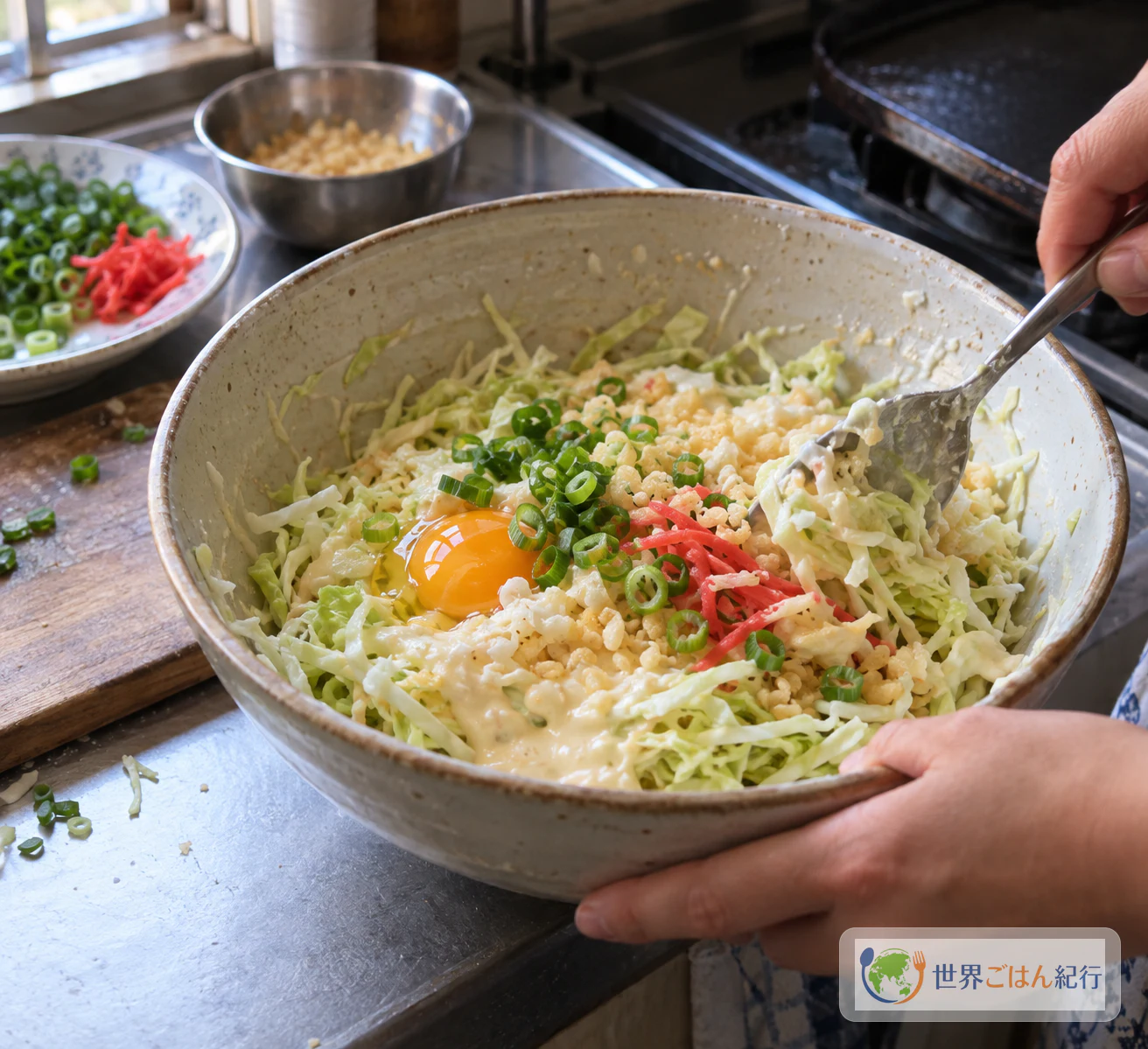
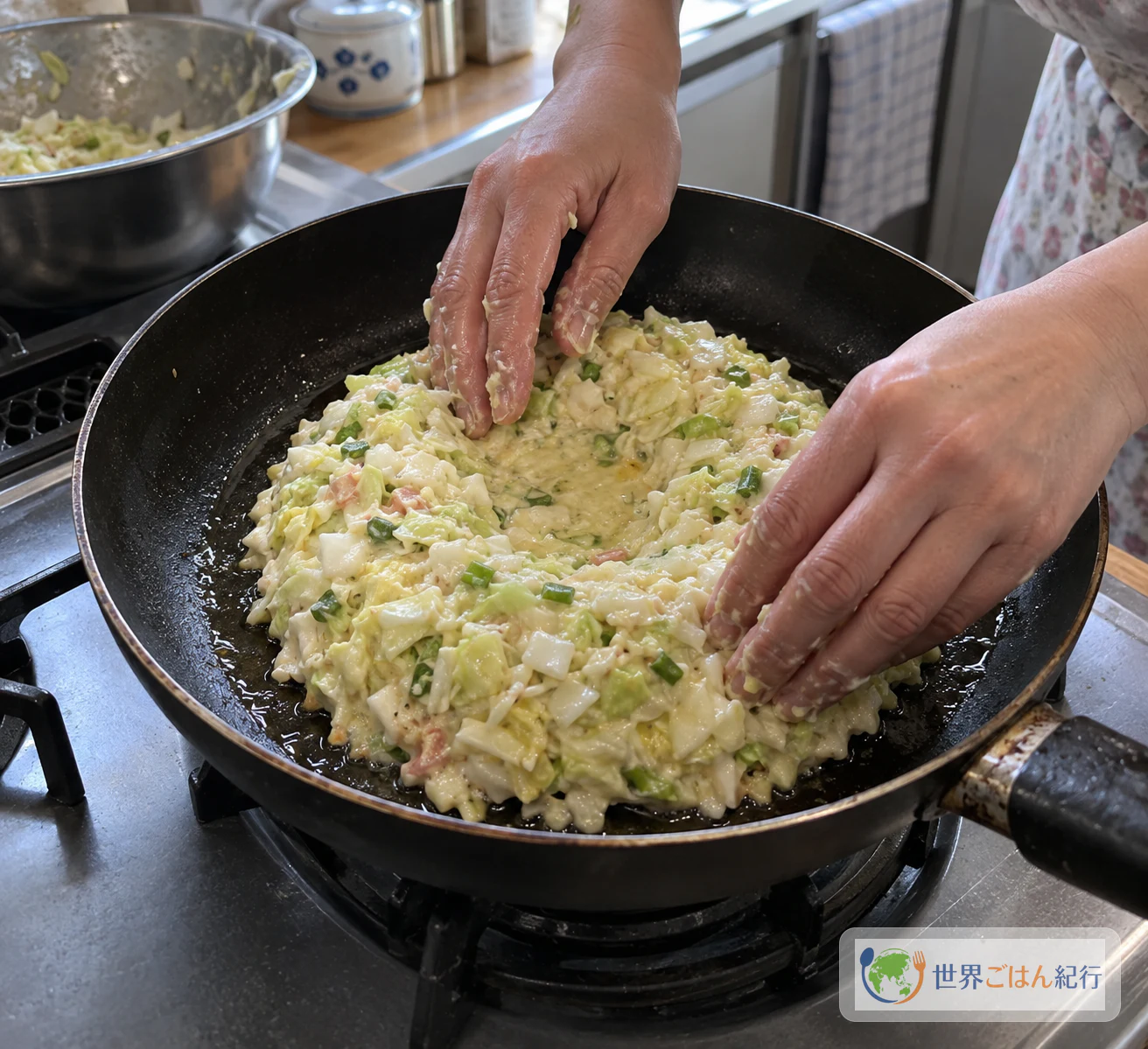
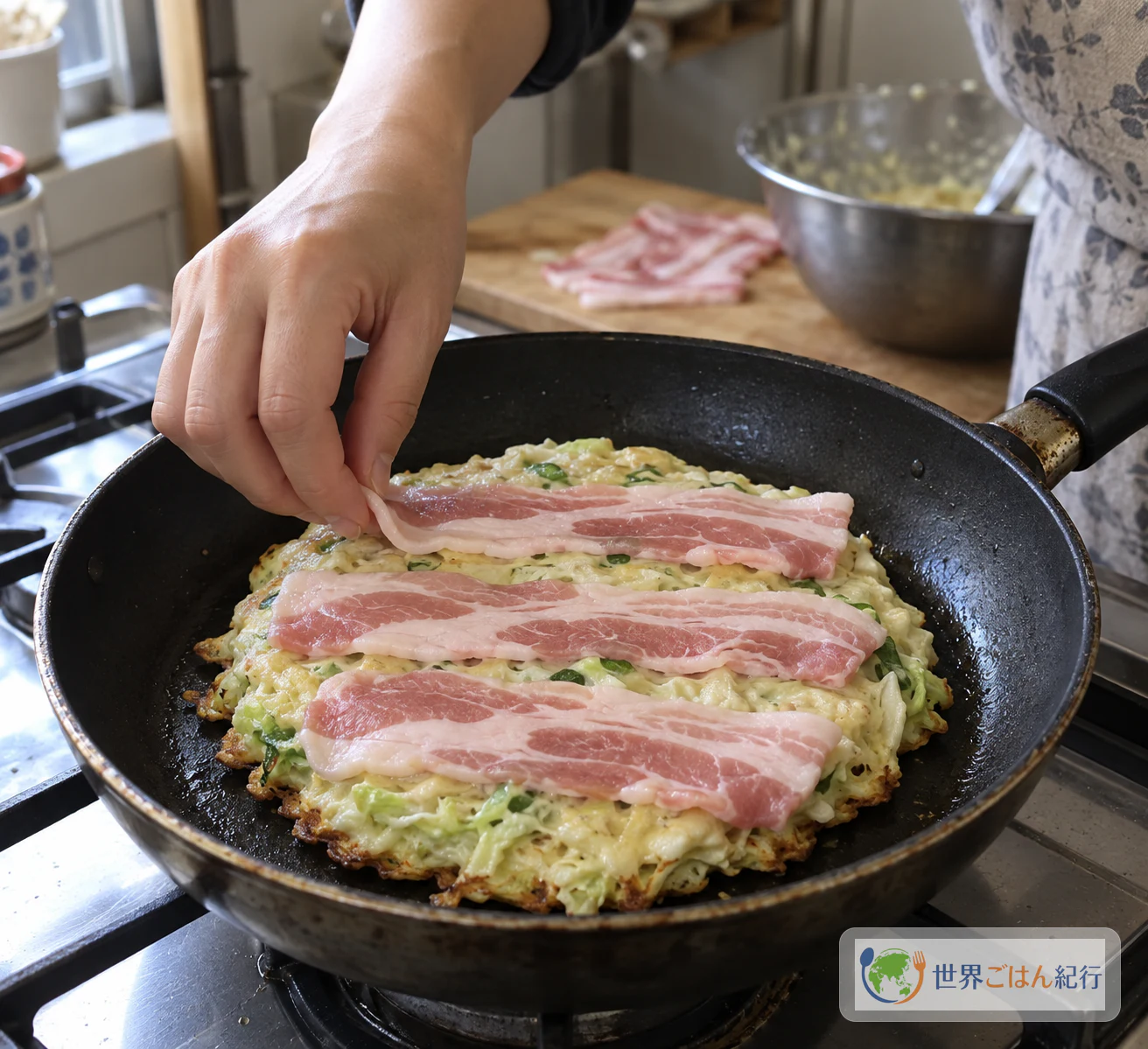
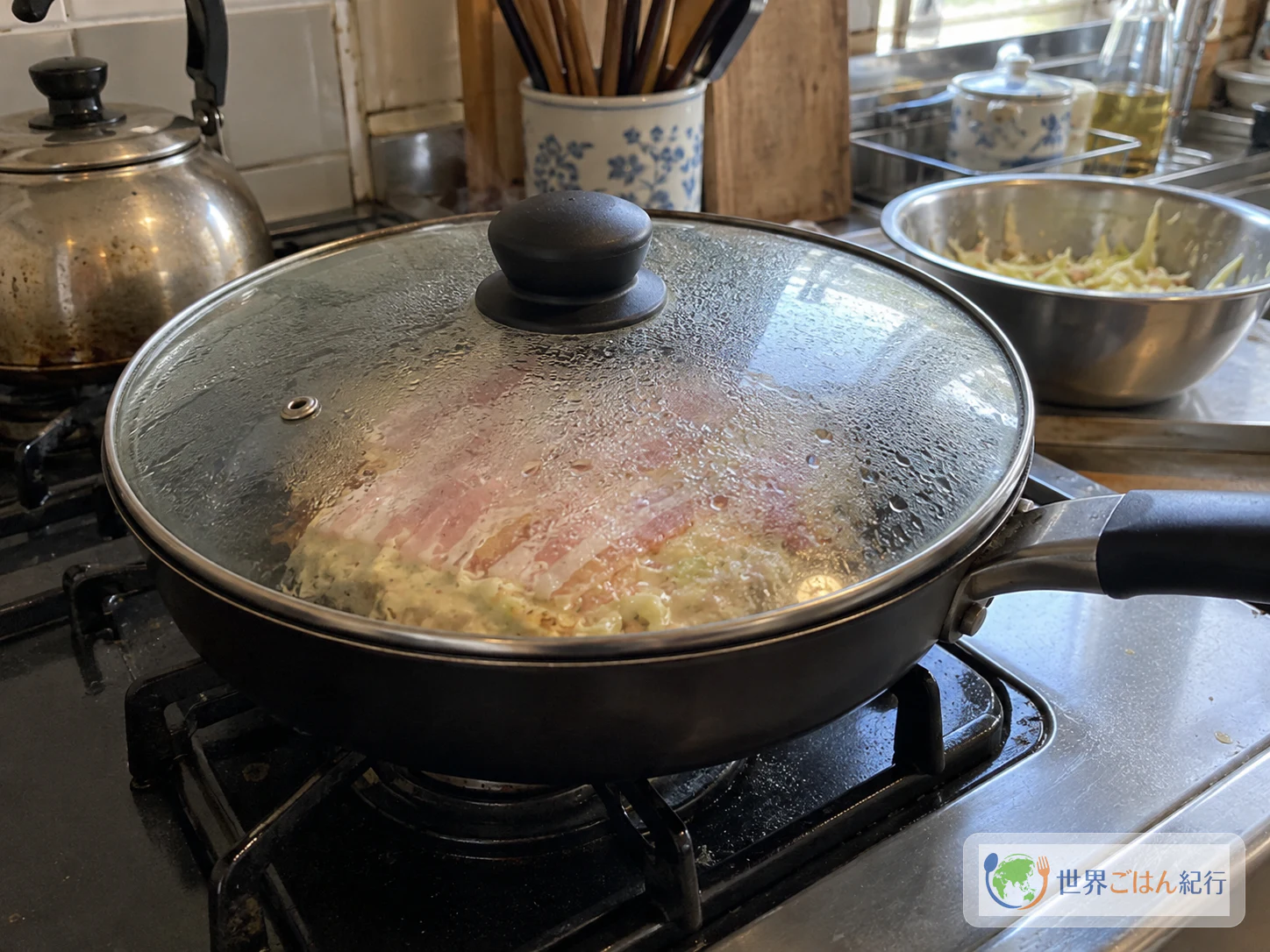
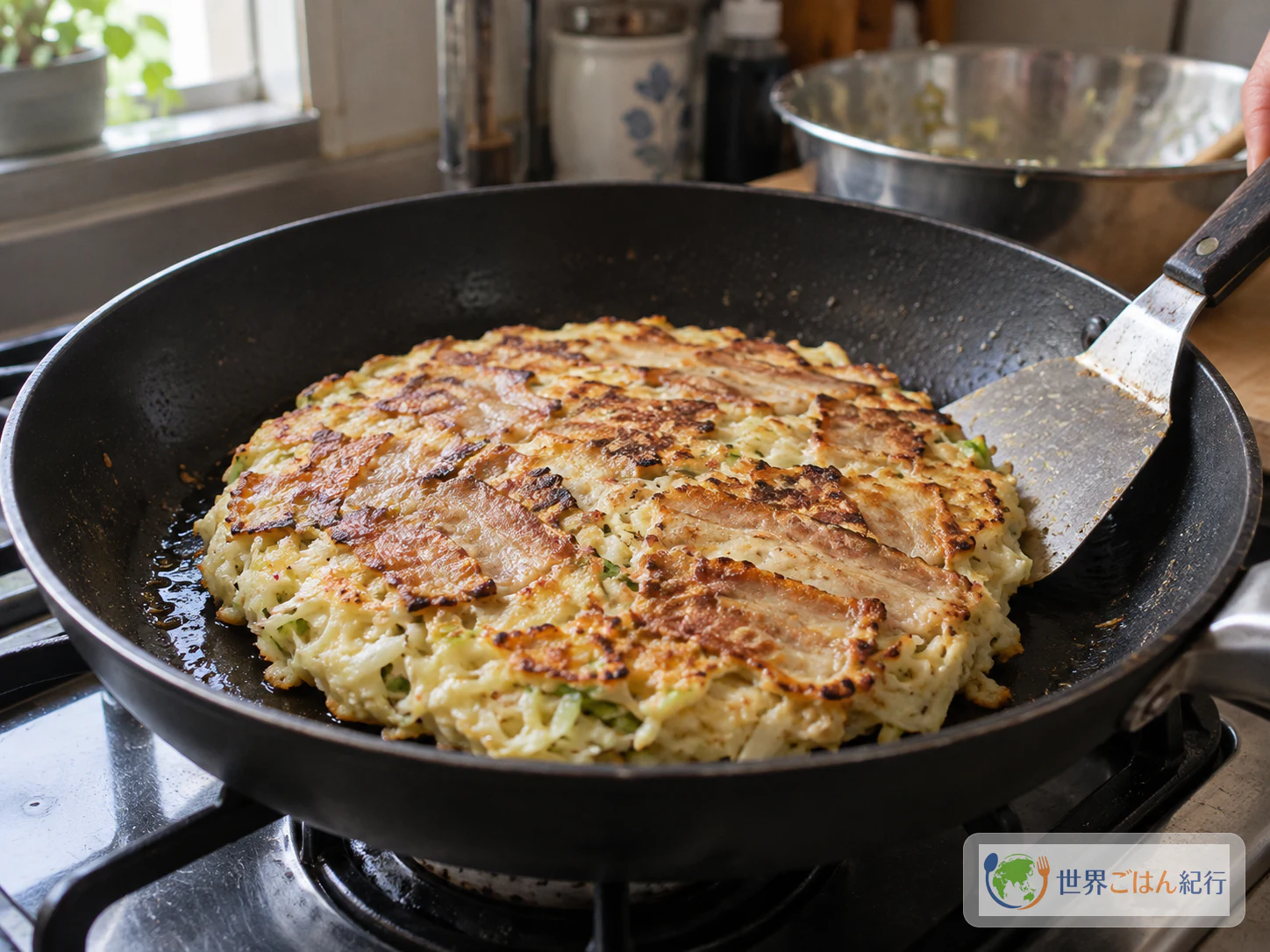
Fold the cabbage into the batter only briefly, just before it goes into the pan. Wait for the underside to brown before turning it, and use a lid so the center cooks through without scorching the outside.
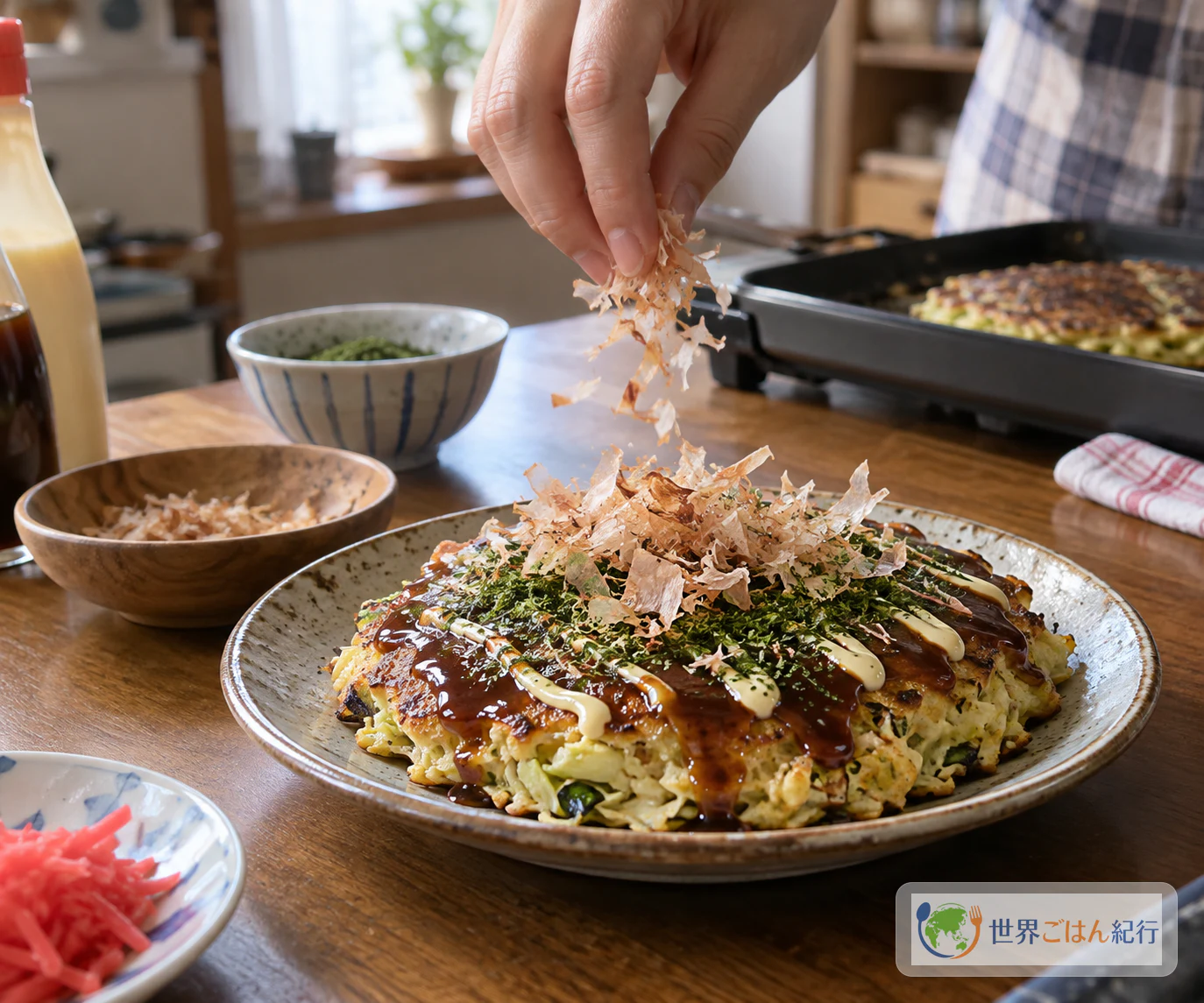
At an okonomiyaki restaurant in Osaka, Japan, the pancake often reaches you on a hot griddle set into the table. Diners use small metal spatulas to cut it into bite-size pieces and eat straight from the griddle while the sauce sizzles at the edges. Japan's national tourism organization describes this way of eating as part of the okonomiyaki experience.
Okonomiyaki is just as much a home dish. Japan's Ministry of Agriculture, Forestry and Fisheries (MAFF) presents it as a regional dish of all of Osaka Prefecture and a leading example of the area's konamon (flour-based food) culture, eaten all year round both at home and in restaurants. This article follows the recipe MAFF publishes, provided by the Japan Konamon Association. It makes two pancakes in an ordinary frying pan with a lid.
The style here is Osaka, or Kansai, style. The cabbage and other ingredients are mixed into the batter before cooking. That process is different from Hiroshima style, where the layers are built up in the pan, so the two are not combined in this recipe.
What Makes It Osaka Style: Mixed First, Then Cooked on Both Sides
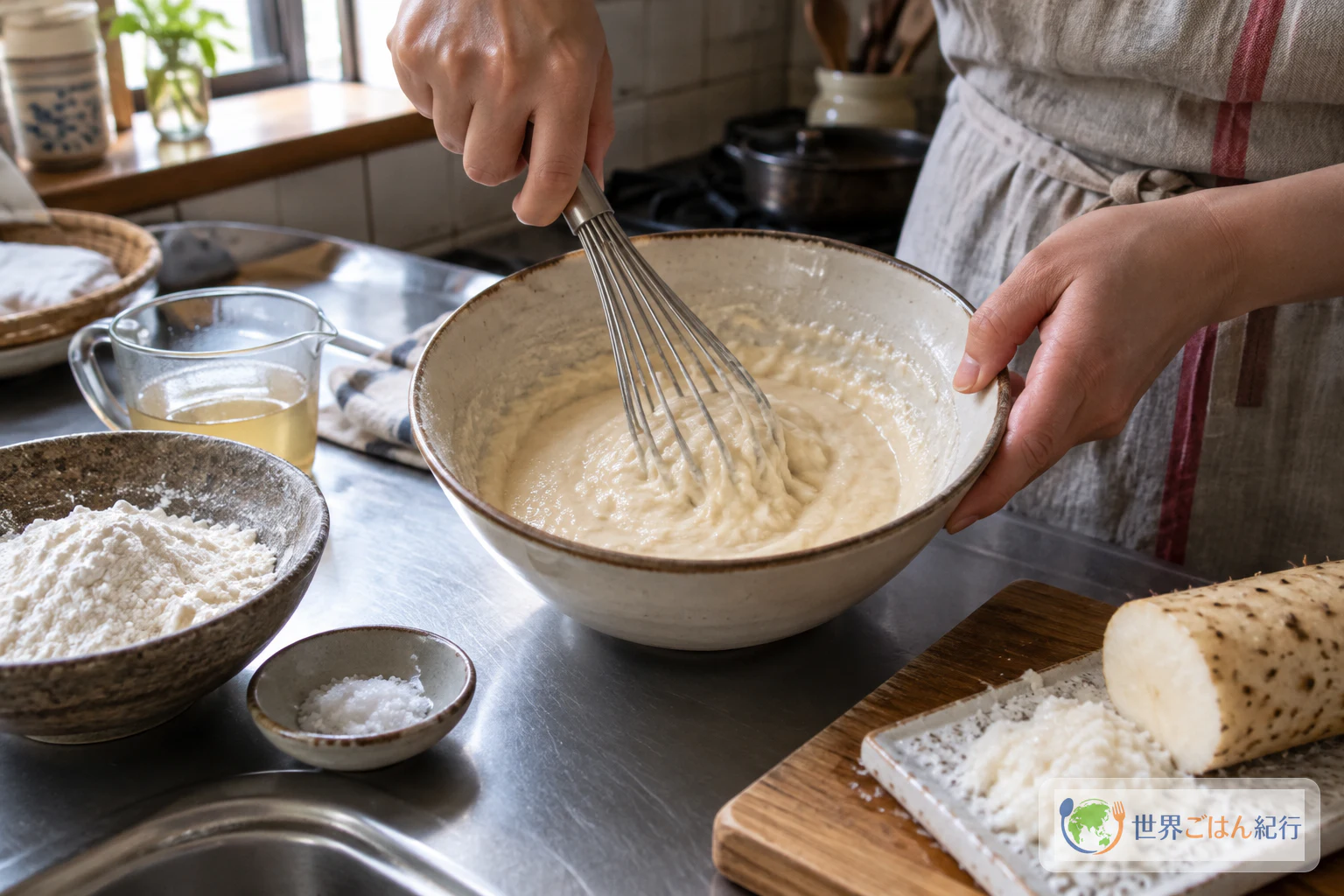
In Osaka-style okonomiyaki, the cabbage and other fillings are mixed into the batter, and the pancake is then cooked on both sides. The batter is made with dashi, and cabbage makes up most of the pancake. Pork belly is a popular choice. Grated mountain yam (here, nagaimo) is used for a fluffy texture, and tenkasu, green onion and beni shoga (red pickled ginger) are common additions.
Hiroshima style is built differently. The ingredients are layered rather than mixed, and it often includes noodles such as yakisoba or udon along with an egg. Neither style is more "correct" than the other. They are two separate ways of making the dish, and the Osaka method below does not include noodles.
The name is often explained as meaning something like "grilled as you like it." Restaurants and households each have their own mix of fillings and toppings. For example, one Osaka restaurant featured by the tourism organization uses a lot of cabbage and comparatively little batter. That is one shop's approach, not a standard ratio.
Where it comes from
There is no single, settled origin story. MAFF notes that its roots are said to trace back to older flour-based dishes such as fu-no-yaki. The Osaka Convention & Tourism Bureau presents several origin theories side by side and explains that the present-day style took shape after the Second World War. According to the bureau, cabbage made the dish more substantial, and the grated yam made it fluffy. The bureau also notes that eating okonomiyaki with rice is familiar in Osaka, while it surprises people from other places. That is an Osaka table habit, not a custom shared across Japan.
Ingredients for 2 Pancakes (Serves 2)
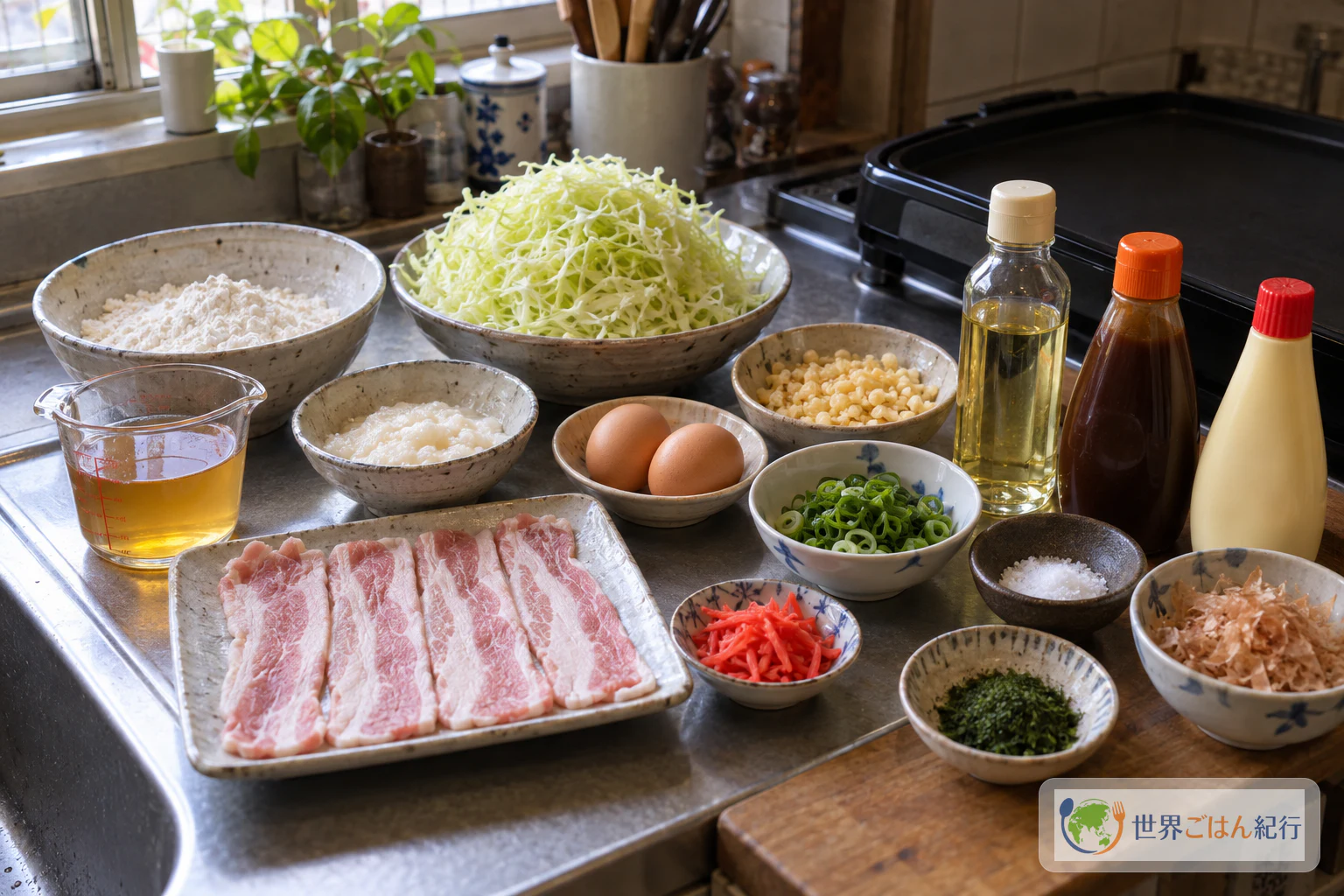
The amounts below are the original recipe for 2 servings, which makes two pancakes about 15–16 cm across. Spoon measures and "a pinch" are kept exactly as given in the original.
Equipment
- Frying pan with a lid (or a tabletop hot plate)
- Mixing bowl for the batter
- Bowl and spoon for mixing each pancake
- Spatula (turner) for flipping
- Separate cutting board and utensils for the raw pork
Choosing and Substituting
Nagaimo. The original recipe uses it. You can leave it out, but expect the pancake to feel less light and hold less moisture. There is no substitute that gives the same result.
Dashi, tenkasu and the sauce. Ordinary Japanese products are fine. Okonomiyaki sauce is sold as its own product in Japanese and Asian grocery stores.
Cabbage. Cut it about 5 mm wide so it keeps its shape in the batter rather than turning into mush.
This recipe contains wheat, egg and pork. Depending on the product, dashi, tenkasu, okonomiyaki sauce and mayonnaise may also contain fish or seafood, soy, egg or other allergens, so check each label. Japan's Ministry of Health, Labour and Welfare advises keeping utensils for raw meat separate from those used for other foods. Use a separate board and utensils for the pork belly, or wash them before using them for anything else.
Method: Fold Briefly, Wait for Color, Cover to Cook Through
The times below are guides from the original recipe. They can run shorter or longer depending on your pan and heat source. Judge each stage by the underside color, how firm the pancake is, and whether the center is cooked through.
Make the batter for both pancakes first. Then mix and cook one pancake at a time, combining its cabbage with batter only when you are ready to put it in the pan.
Fluffy, Not Heavy: Fixing Common Problems
The fixes below follow from how each step works. They are not guarantees.
| Problem | Likely cause | What to do |
|---|---|---|
| The pancake is heavy and wet | The cabbage sat in the batter, or it was mixed too much | Mix one pancake at a time, only about 5–6 turns, and put it straight into the pan |
| It breaks when you flip it | It was turned before the underside had set | Lift an edge with the spatula and check the color and firmness first. Keep the round to 15–16 cm so it isn't too wide to turn |
| The outside burns, but the center is raw | The heat was too high, or the pan wasn't covered | After the first flip, cover and cook on low. Adjust the time for your pan's thickness and heat source |
| The pork is pale or still raw | The final stage was too short | Cook the pork side a little longer on moderate heat until the center is fully cooked |
Leftovers
The original recipe gives no storage guidance, so this article doesn't give a number of days. Okonomiyaki is best eaten fresh from the pan. If you do keep leftovers, follow general home food-safety practice: cool them quickly in a shallow container, refrigerate them, and reheat them thoroughly before eating.
Variations and the Table Around It
The variations below are changes to the base recipe. They are not part of the original recipe, so make the base recipe first.
- Shrimp or squid. Replace part of the pork with seafood. Pat it dry before adding it so it doesn't make the batter watery.
- Mochi or cheese. These are examples of extra fillings offered at okonomiyaki restaurants. They add saltiness and a chewy or melting texture.
- Hiroshima style. This is a separate layered dish, often made with noodles. Don't fold noodles into this batter. Treat Hiroshima style as its own recipe.
In Osaka, okonomiyaki is cooked by restaurant staff for diners, cooked by the diners themselves at the table, and made at home. Some people in Osaka eat it as a side to rice, while others see it as a meal in itself. At home, cooking it in a pan and moving it to a plate works just as well as a tabletop griddle.
Frequently Asked Questions
What is the difference between Osaka style and Hiroshima style?
In Osaka (Kansai) style, the fillings are mixed into the batter before cooking. In Hiroshima style, the ingredients are layered and often include noodles and an egg.
Can I make it without nagaimo?
The original recipe uses nagaimo, but you can leave it out. Expect a less light, less moist texture than the original.
Do I need a griddle?
No. The original recipe is written for a frying pan over medium heat. A hot plate also works, set to 200–220°C.
Can I mix the cabbage and batter ahead of time?
It's better not to. The cabbage releases water and the batter gets heavy, so mix each pancake just before it goes into the pan.
Is it normal to eat okonomiyaki with rice?
The Osaka tourism bureau describes it as familiar in Osaka and surprising to people from elsewhere. It varies by person and region, so it isn't a rule.
Sources
- Ministry of Agriculture, Forestry and Fisheries (Japan), "Okonomiyaki | Our Regional Cuisines" (recipe provider: Japan Konamon Association). Source for the recipe amounts, method, timings and pan/hot plate heat. Also the source for okonomiyaki as a regional dish of Osaka Prefecture, its place in konamon culture, and its year-round place at home and in restaurants. Origins are presented as "said to trace" to earlier dishes. https://www.maff.go.jp/e/policies/market/k_ryouri/search_menu/5798/index.html
- Osaka Convention & Tourism Bureau (OSAKA-INFO), "A comprehensive guide to Osaka okonomiyaki!" Source for the Osaka food-culture context, the essential role of cabbage and the popularity of pork, the dashi batter, and mountain yam for fluffiness. Also the source for the multiple origin theories, the present style taking shape after the war, and the rice pairing familiar in Osaka. https://osaka-info.jp/en/gourmet/gastronomy-okonomiyaki/
- Japan National Tourism Organization (JNTO), "The Original Have It Your Way!" Source for the comparison of mixed Osaka/Kansai style with layered Hiroshima style, common ingredients, eating from a tabletop griddle with spatulas, and restaurant examples of fillings. https://www.japan.travel/en/gastronomy/article-the-original-have-it-your-way/
- Ministry of Health, Labour and Welfare (Japan), "家庭でできる食中毒予防の6つのポイント" (Six points for preventing food poisoning at home; in Japanese). Source for the general guidance on heating food to 75°C at the center for at least 1 minute, keeping utensils separate, and cooling in shallow containers and reheating. https://www.mhlw.go.jp/stf/seisakunitsuite/bunya/kenkou_iryou/shokuhin/syokuchu/01_00006.html