Zaru Soba: Cold Noodles, a Small Cup of Sauce, and One Bite at a Time
The noodles should be cold, loose and free of surface sliminess, and the dipping sauce should be fully cooled before the noodles go into the pot. The flavor of the buckwheat is the point, so the plate stays simple.
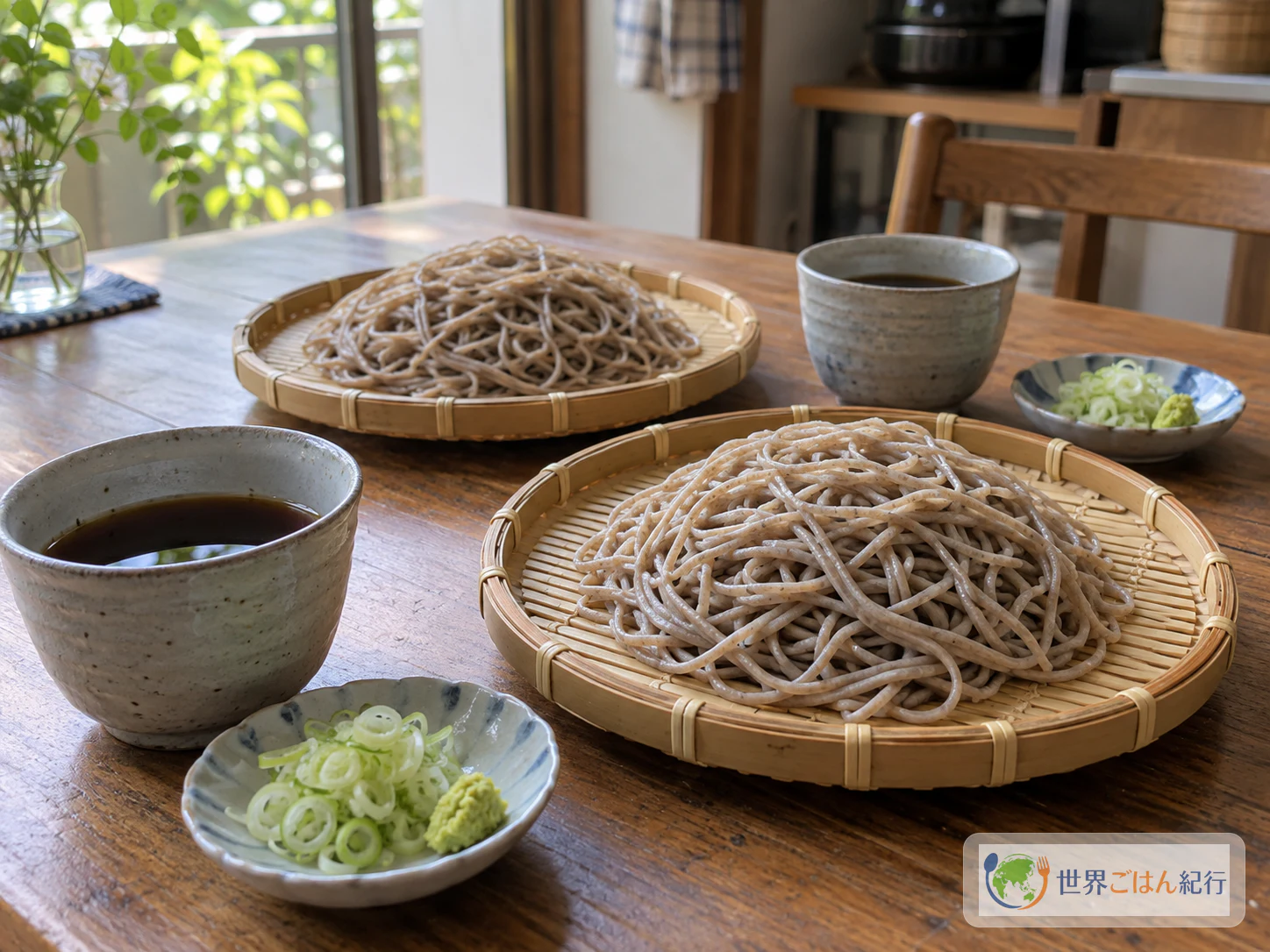
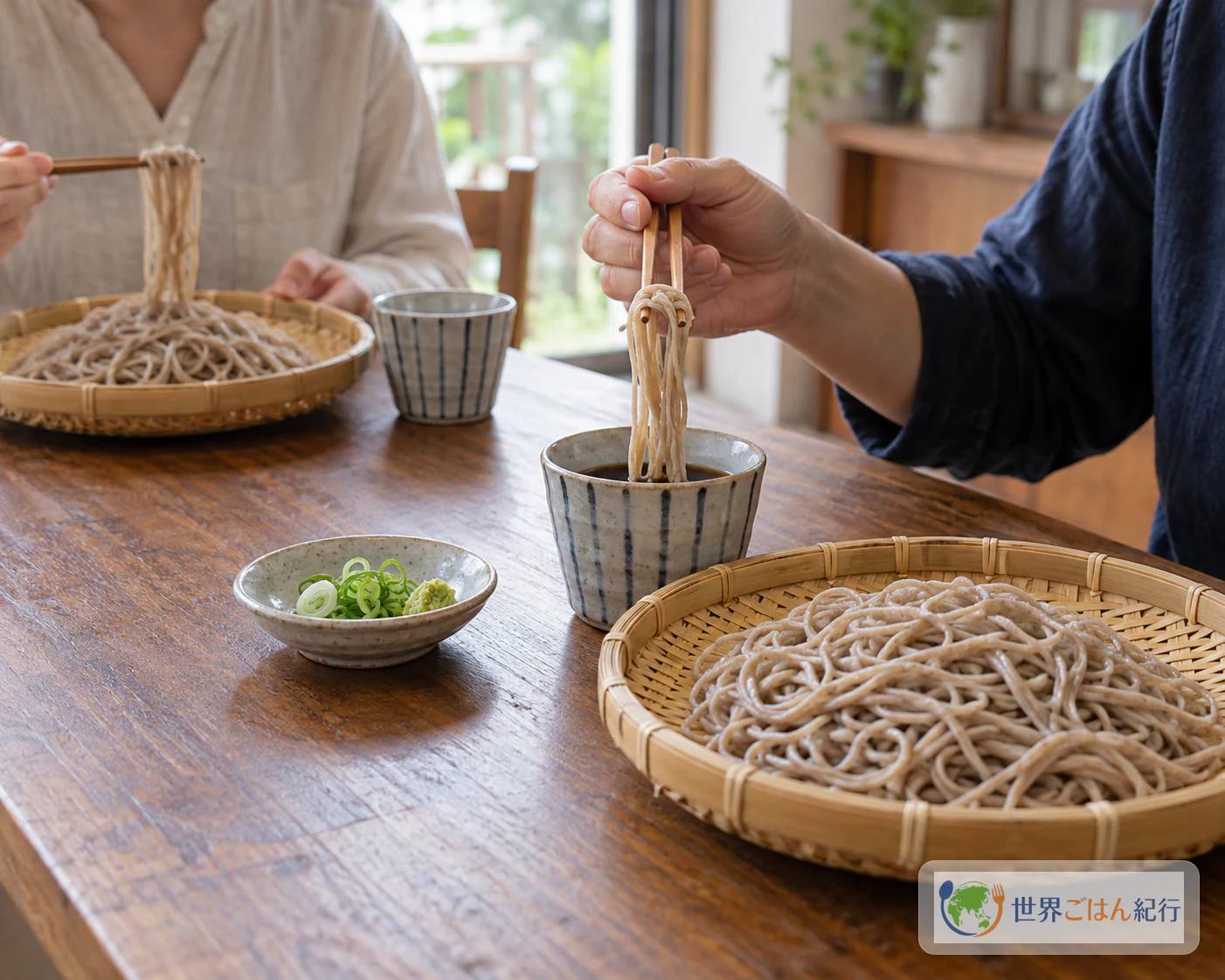
A heap of grey-brown noodles sits on a bamboo tray, still cool from the water they were rinsed in. Beside it is a small cup of dark dipping sauce, a little thinly sliced green onion and a dab of wasabi. You lift a few strands with chopsticks, dip them into the cup, and eat. That is zaru soba: chilled buckwheat noodles served on a zaru and dipped into tsuyu, a plain way of eating that lets the aroma of the soba come through.
This recipe uses dried soba noodles, which you can find well beyond Japan, and a dipping sauce made from bonito flakes, soy sauce, mirin and sugar. It is a home version for two, not a guide to making noodles by hand. If you want to explore more dishes from the same country, start from the Japan page.
What Zaru Soba Is: Chilled Noodles, Dipping Sauce, Condiments
Zaru soba has four parts: soba noodles that have been boiled and then thoroughly chilled, a cold dipping sauce served in a small cup, a few condiments, and the zaru itself. Japan's Kids Web Japan cookbook describes the zaru as a slatted bamboo tray, and explains that for zaru soba, dried noodles are boiled, well chilled and eaten by dipping them into the sauce.
Soba noodles are made mainly from buckwheat flour, but not every product is buckwheat alone. Some soba noodles also contain wheat flour or egg. The blend varies from package to package, so reading the ingredient list is the first real decision you make for this dish, both for flavor and for allergies.
This article works with dried noodles because the amounts and steps are easy to reproduce in a home kitchen. That is a practical choice for this recipe, not a claim that dried noodles are better than handmade soba.
Ingredients: Serves 2, With a Dipping Sauce Made From Scratch
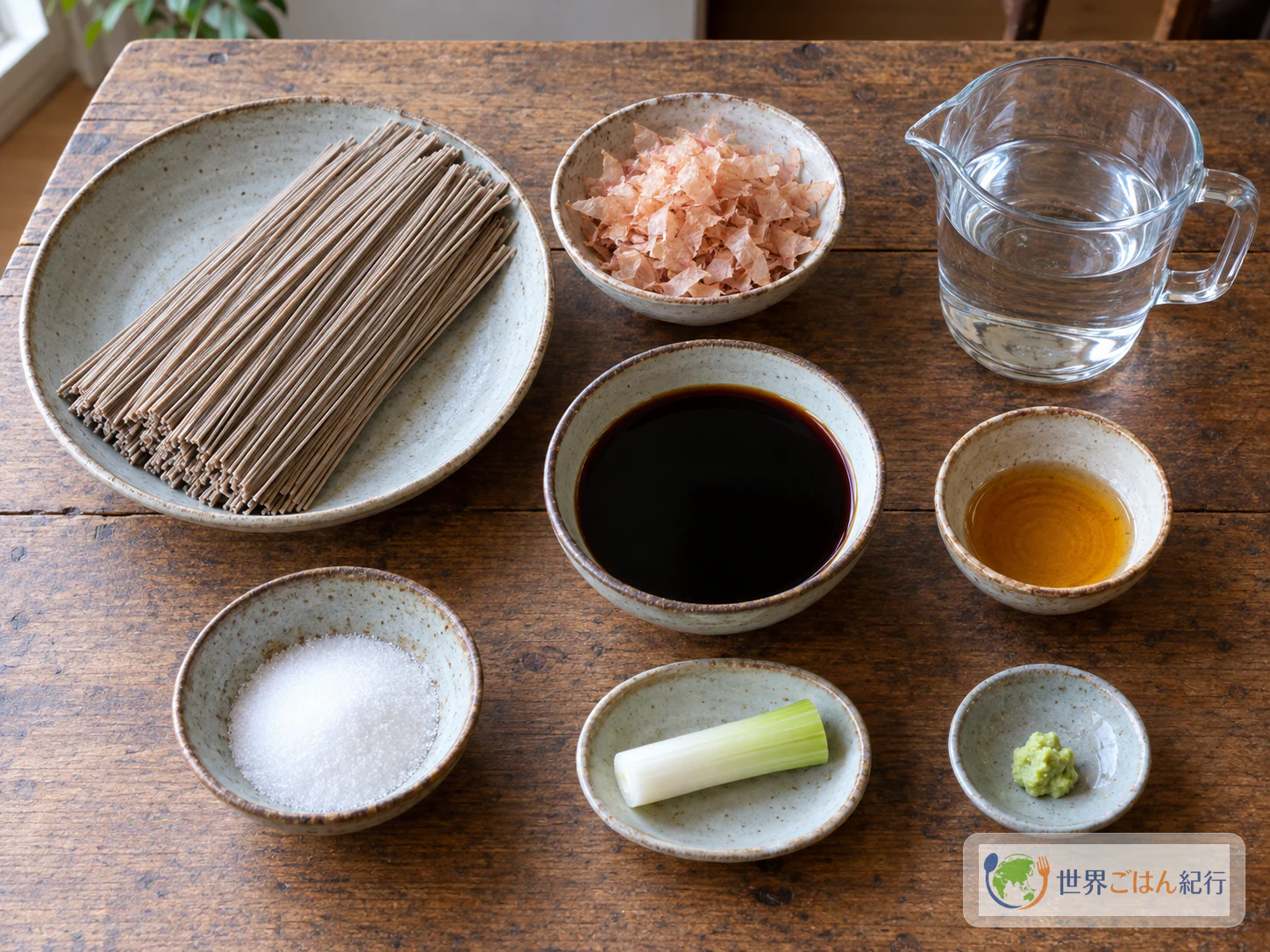
These amounts follow Kikkoman's zaru soba recipe for 2 servings using 200g of dried noodles. Cook the noodles for the time printed on the package, since cooking times differ between products.
The 200ml of water above is for the dipping sauce alone. Separately, you will need a generous amount of water for boiling the noodles, cold running water for chilling and rinsing them, and a little water for soaking the sliced green onion. Don't reuse the sauce water for any of these. The source recipe gives the finished dipping sauce as about 280ml; the bonito flakes absorb some of the liquid, and no water is added back after straining.
Buckwheat allergy can cause severe reactions. Do not serve soba noodles to anyone with a buckwheat allergy. Check the package for wheat content and for information about shared production lines. Bonito flakes come from fish, and soy sauce usually contains wheat and soy, so check the labeling on each product you use.
Choosing and Substituting
Each swap below changes the result a little, so treat them as conscious choices rather than equivalents.
| Ingredient | What this recipe assumes | If you change it |
|---|---|---|
| Dried soba | An ordinary dried soba from the supermarket or an Asian grocer | Compare the ingredient lists: the ratio of buckwheat to wheat flour, whether salt is added, and the allergen labeling |
| Bonito flakes | Shaved bonito flakes for making dashi | Powdered dashi is a shortcut, not the same recipe; the aroma and saltiness change |
| Soy sauce | Ordinary Japanese dark soy sauce (koikuchi) | Light soy sauce or reduced-salt soy sauce changes the color and saltiness |
| Mirin | True mirin (hon-mirin) | Mirin-style seasonings differ in alcohol and sweetness, so the result is not the same |
| Sugar | Plain white sugar | If you adjust the sweetness, note it as your own change to the recipe |
| Japanese long green onion | Naga-negi | Scallions can stand in, but the aroma and bite are different |
| Wasabi | Fresh wasabi or pre-grated wasabi from a tube | The two differ in heat and aroma |
Some other zaru soba recipes add shredded nori, white sesame or shichimi pepper. They are not part of this recipe; if you like them, see the variations further down.
Equipment
- Small saucepan for the dipping sauce
- Fine-mesh strainer and a bowl for straining the sauce
- Large pot for boiling the noodles in plenty of water
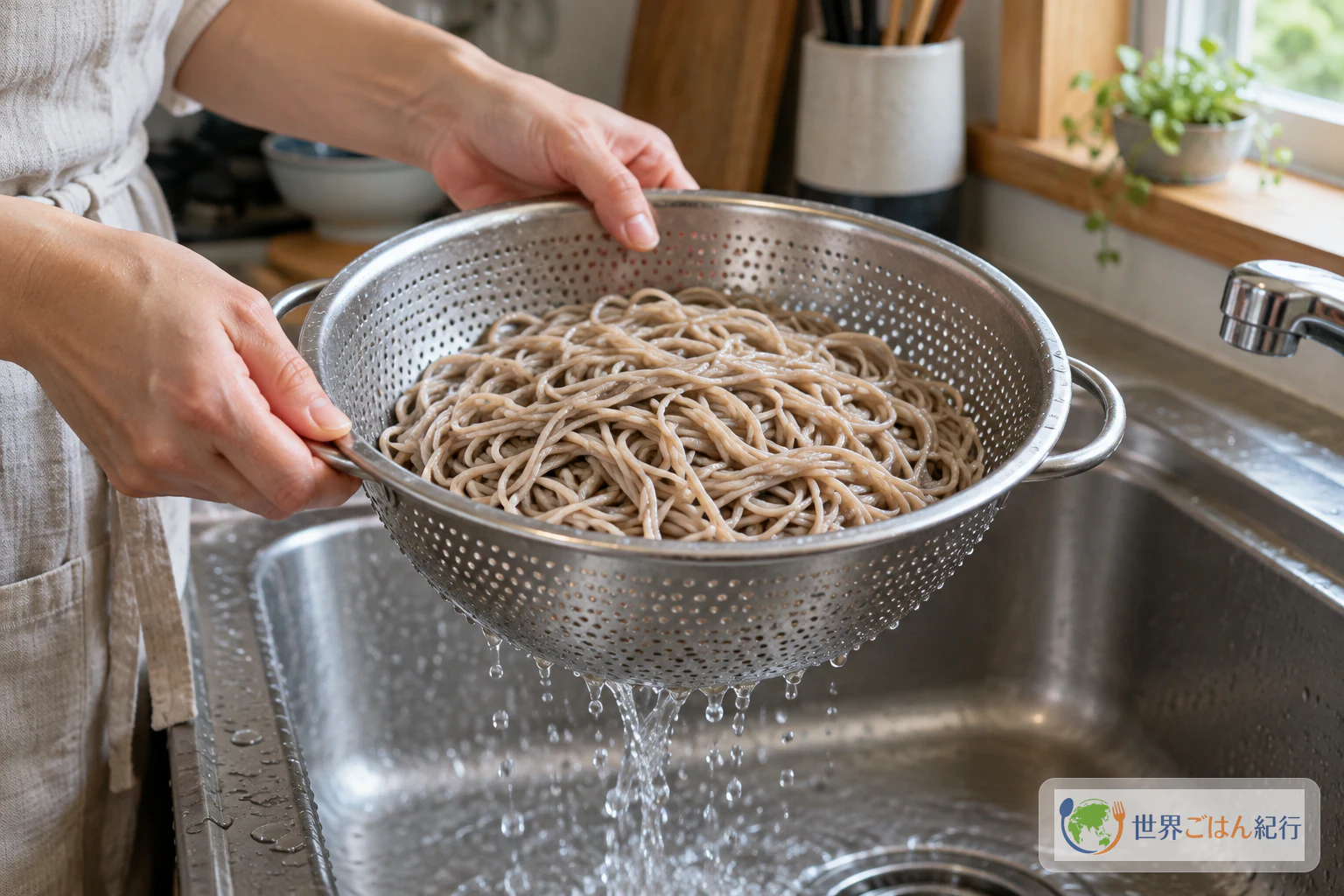
- Colander for draining and rinsing the noodles
- Bamboo zaru or an ordinary plate for serving
- Small cups or bowls for the dipping sauce
- Knife and cutting board for the green onion
A bamboo zaru is not essential. A colander for draining and a flat plate for serving will do the job.
Method: Cool Sauce First, Then Quick Noodles
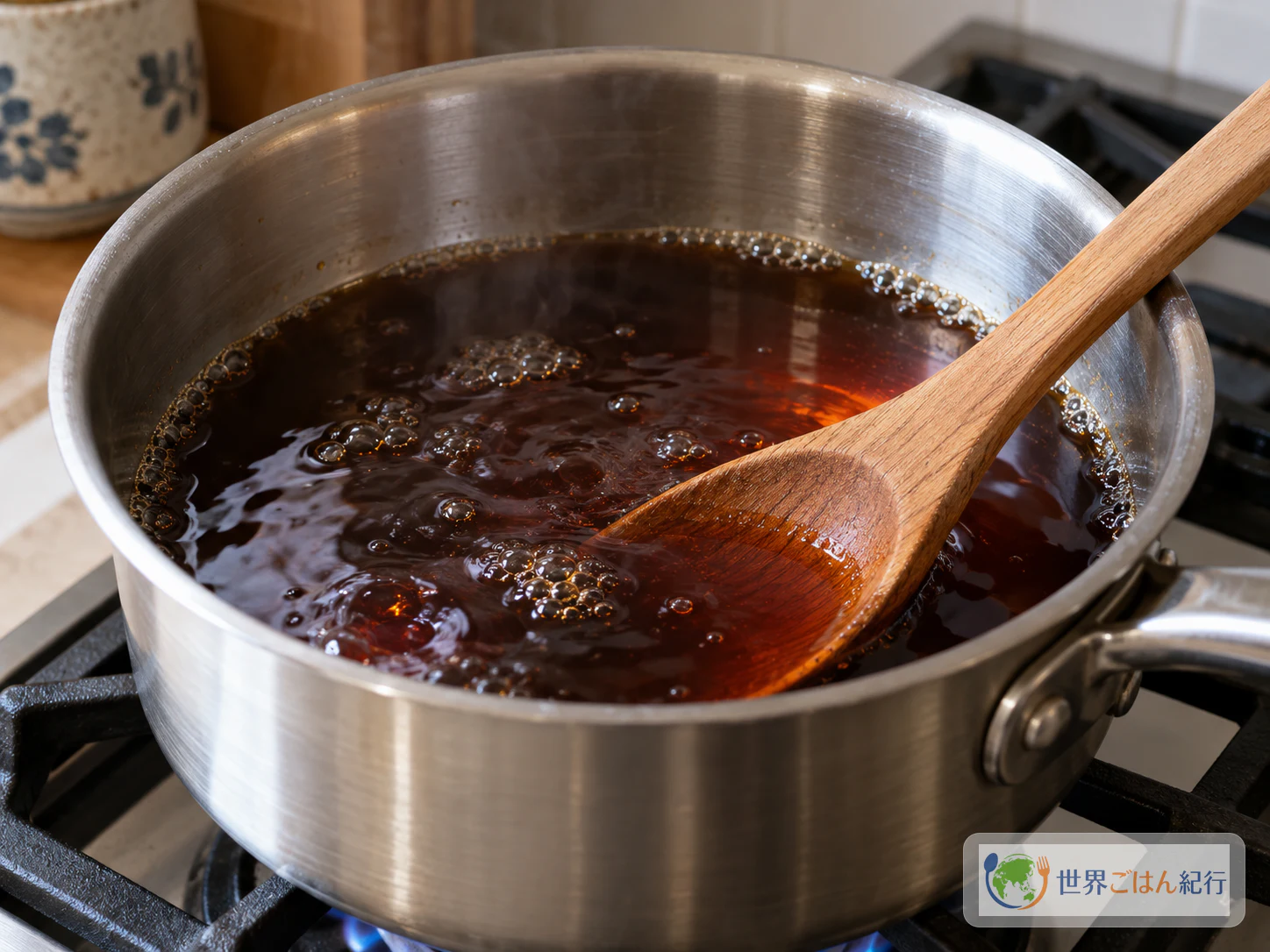
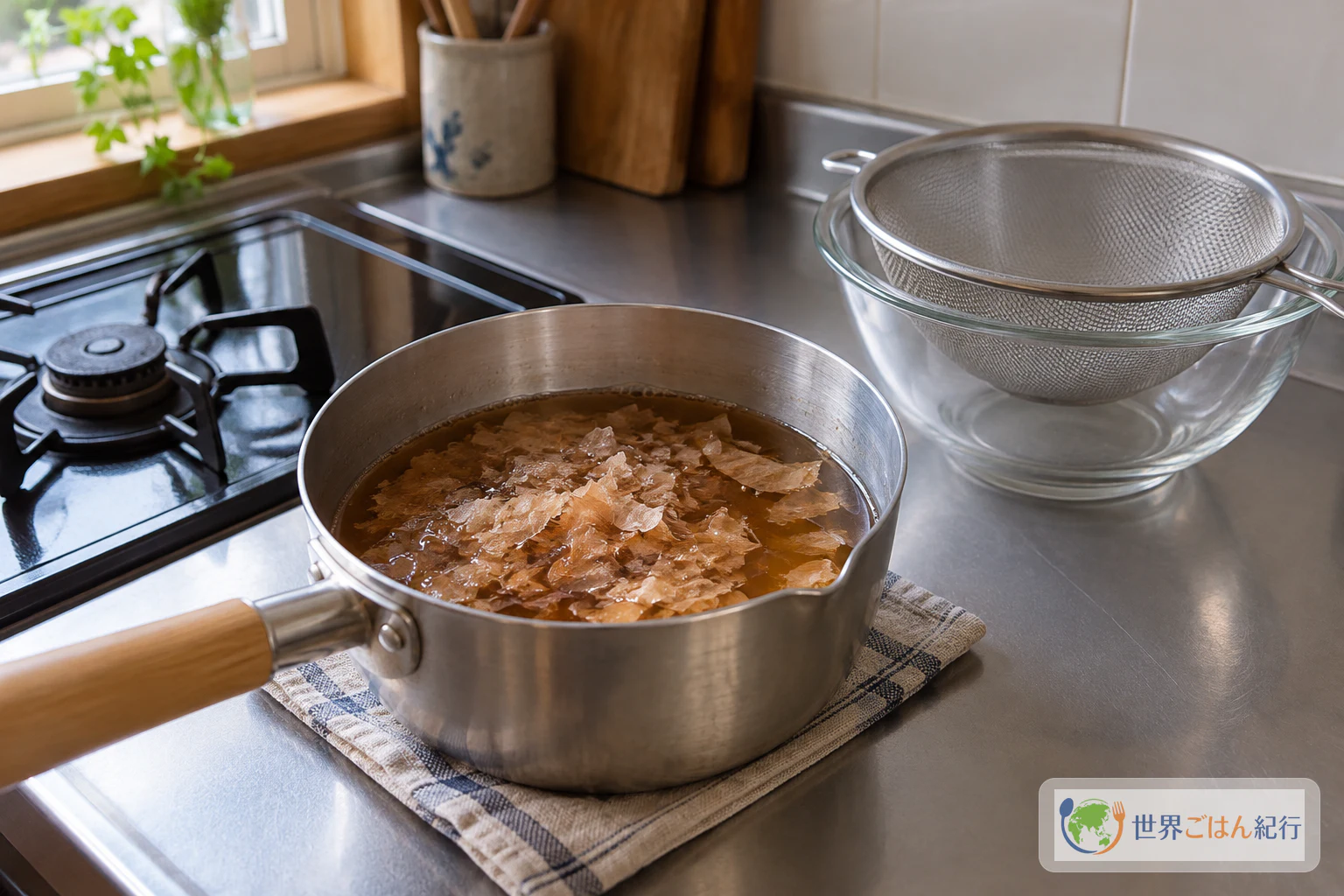
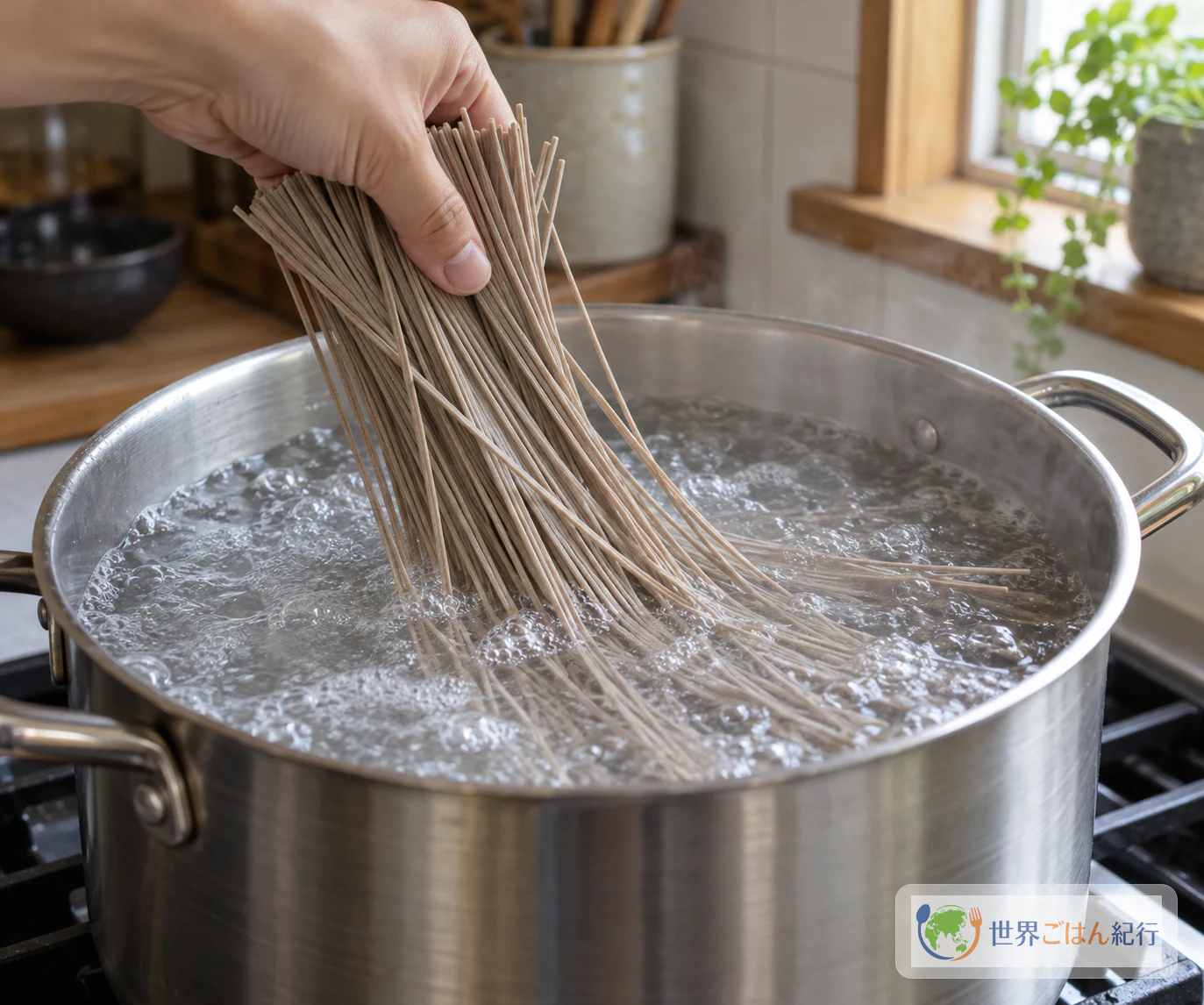
The dipping sauce needs time to cool, so start it before anything else. The source recipe lists a cooking time of 20 minutes or more, and that figure does not include bringing water to a boil or cooling the sauce.
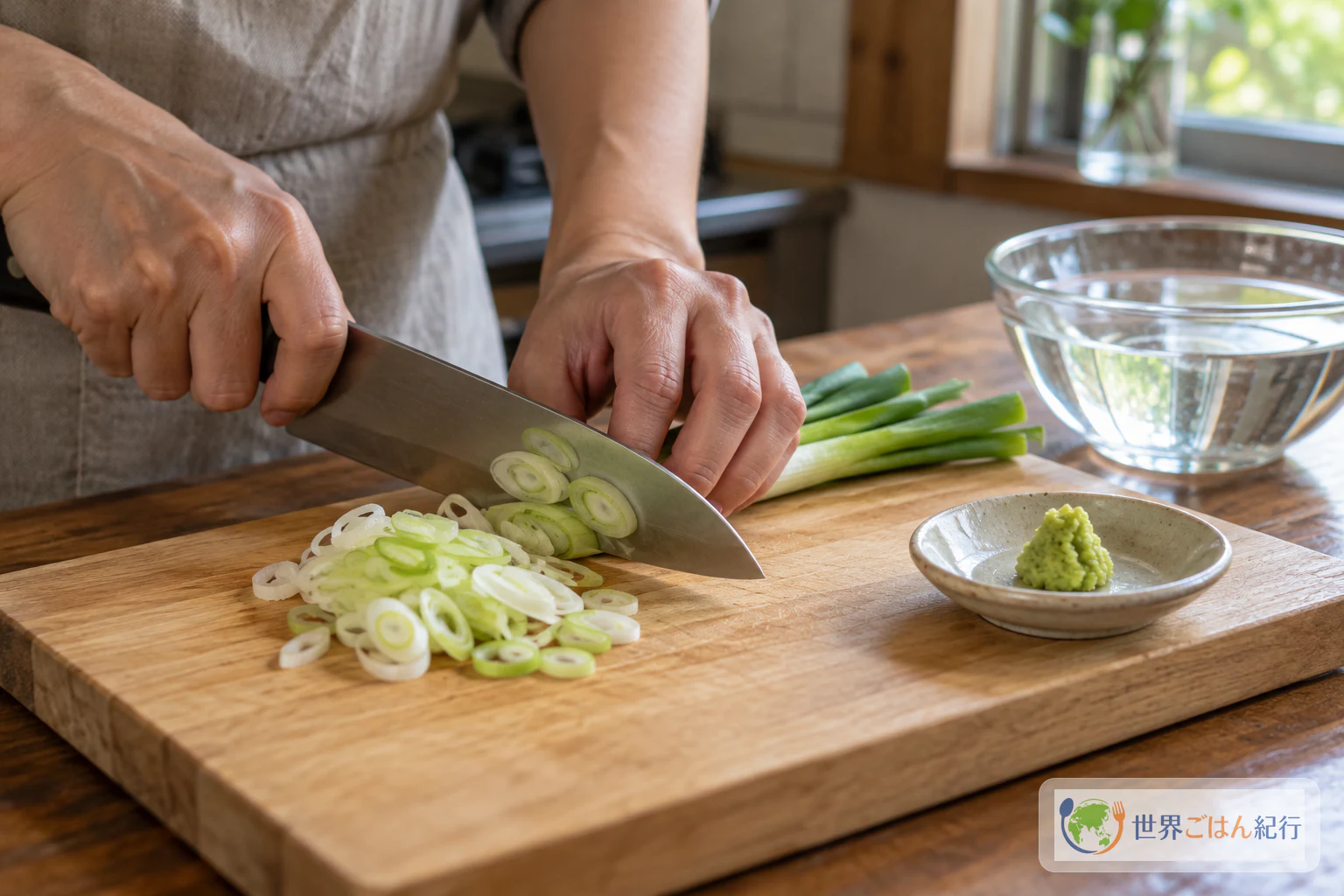
Once the sauce is cooling, the rest moves quickly: condiments, noodles, a cold rinse, and straight to the table.
Sticky, Broken, Lukewarm: Fixing Common Problems
| Problem | Likely cause | What to do |
|---|---|---|
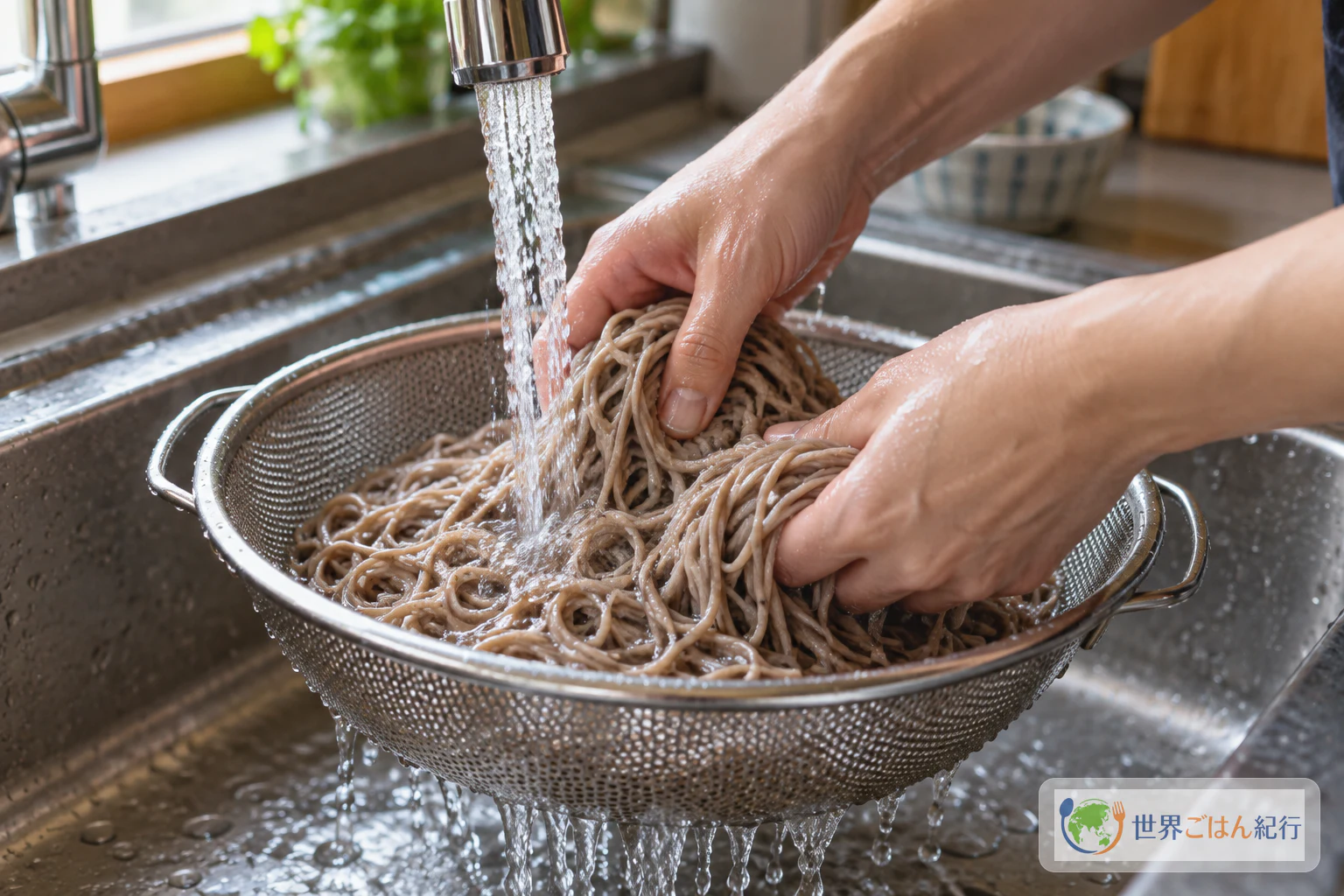
| The noodles stick together or feel slimy | The surface starch was not fully rinsed off | Rinse gently under cold running water, rubbing lightly, until the slickness is gone, then drain thoroughly |
| The noodles break | They were rubbed or pulled too hard after boiling | Handle them gently; press and wash them with your palms rather than squeezing, and loosen tangles with your fingertips |
| The dipping sauce is still warm | It was started too late | Make the sauce first. If you want it colder, refrigerate it once it has cooled |
| The noodles are soft or firm in the wrong way | The cooking time did not match the product | Follow the time on the package for the specific noodles you bought |
For the sauce strength, this recipe keeps to the amounts above and does not dilute the sauce as a standard step. If you switch to a store-bought concentrated sauce, follow that product's label.
The sauce contains fish-based dashi. If you keep any, store it in a clean container in the refrigerator and use it up soon. The noodles are best eaten right after rinsing and draining.
Variations That Change the Dish in a Meaningful Way
- Store-bought concentrated noodle sauce (mentsuyu): A shortcut. Check whether the product is ready to use (straight) or concentrated, and dilute it exactly as the label says. Treat it as a separate version rather than mixing it with the homemade sauce.
- Adding nori: Some zaru soba recipes include shredded nori. It is not part of this recipe, so add it as an optional extra condiment.
- Hot soba (kake soba): Here the noodles stay cold and are dipped into the sauce. In hot soba, the noodles go into a hot broth instead. The broth and the way the noodles are served change, so don't simply reuse the steps or the sauce from this recipe.
Soba Across Japan: Regional Styles and a Little History
The same word, soba, covers more than one style. Japan's Ministry of Agriculture, Forestry and Fisheries (MAFF) introduces Nagano Prefecture as a place where buckwheat is grown in cool highlands, where rice and wheat do not grow easily. Within Nagano alone there are names tied to places, such as Shinshu soba, Togakushi soba and Kaida soba, and the way soba is eaten differs from area to area; dipping sauce, green onion and wasabi are presented as a common combination there. This is Nagano's regional picture, not the single model for soba across Japan.
In Tokamachi, Niigata Prefecture, there is hegi soba. According to the Japan Tourism Agency, its dough uses funori, a seaweed that was used in textile work in the area, and a hegi is a flat, box-like wooden vessel. Funori is not part of the dried-noodle zaru soba in this recipe, and hegi soba is a different noodle.
Okinawa soba also carries the word "soba" in its name, but it is not the buckwheat noodle dish described here. The name is the only overlap that matters for this recipe.
On history, MAFF's overview of traditional grain foods explains that the origin of noodles is unknown, while a cookery text from the Edo period describes how to make soba-kiri, soba cut into noodles. Keep these two ideas apart: the record and spread of soba-kiri is documented, but that does not mean noodles were invented at that moment. The same overview also mentions tsunagi, the binder used alongside buckwheat flour, and terms such as nihachi and juwari that describe how the flour is blended, as well as soba named after places.
Frequently Asked Questions
Most questions come back to two things: what is printed on the noodle package, and whether the noodles were chilled and rinsed thoroughly.
Is it only soba if it is 100% buckwheat?
No. Soba is made mainly from buckwheat flour, but some products also contain wheat flour or egg. Check the ingredient list on the package to see what the noodles contain, especially if anyone at the table has allergies.
How many minutes should I boil dried soba?
It depends on the product. Follow the cooking time on the package of the noodles you bought.
Can I use store-bought dipping sauce?
Yes. Dilute it according to the product's label. It is a different version from the homemade sauce in this recipe, so don't combine the two.
Can I eat this hot?
Hot soba (kake soba) is its own way of eating soba, with the noodles served in a hot broth. Because the broth and the serving method change, the steps in this zaru soba recipe don't carry over directly.
Do I need a bamboo zaru?
No. A colander for draining and an ordinary flat plate for serving work fine.
Sources
- Kikkoman Corporation, "Zaru Soba (Chilled Buckwheat Noodles)_Washoku Lesson." The recipe followed here: 200g dried soba for 2 servings; dipping sauce of 15g bonito flakes, 200ml water, 100ml soy sauce, 30ml mirin and 20g sugar; 5cm green onion and wasabi; making and cooling the sauce, cooking the noodles by the package, rinsing under running water and draining; the finished sauce amount and the stated cooking time with its exclusions. https://www.kikkoman.com/en/cookbook/recipe/00058306.html
- Web Japan, "Soba (Zaru Soba) - Soba and Udon - Cookbook - Kids Web Japan." That soba is made mainly from buckwheat flour but some products add wheat flour or egg; that dried noodles are boiled, chilled and dipped into sauce; and that a zaru is a slatted bamboo tray. https://web-japan.org/kidsweb/cook/soba/soba02.html
- Ministry of Agriculture, Forestry and Fisheries (Japan), "Teuchi soba | Our Regional Cuisines." Buckwheat grown in Nagano's cool highlands; Shinshu, Togakushi and Kaida soba; regional ways of eating with dipping sauce, green onion and wasabi. https://www.maff.go.jp/e/policies/market/k_ryouri/search_menu/1848/index.html
- Japan Tourism Agency, Ministry of Land, Infrastructure, Transport and Tourism, "Hegi Soba." Tokamachi's hegi soba, the use of funori seaweed linked to textile work, and the hegi vessel. https://www.mlit.go.jp/tagengo-db/en/R1-02196.html
- Ministry of Agriculture, Forestry and Fisheries (Japan), "Grain products | Traditional Foods in Japan." That the origin of noodles is unknown, that an Edo-period text describes making soba-kiri, and the terms tsunagi, nihachi and juwari along with place-named soba. https://www.maff.go.jp/e/policies/market/dento_syoku/bunrui/kokurui.html