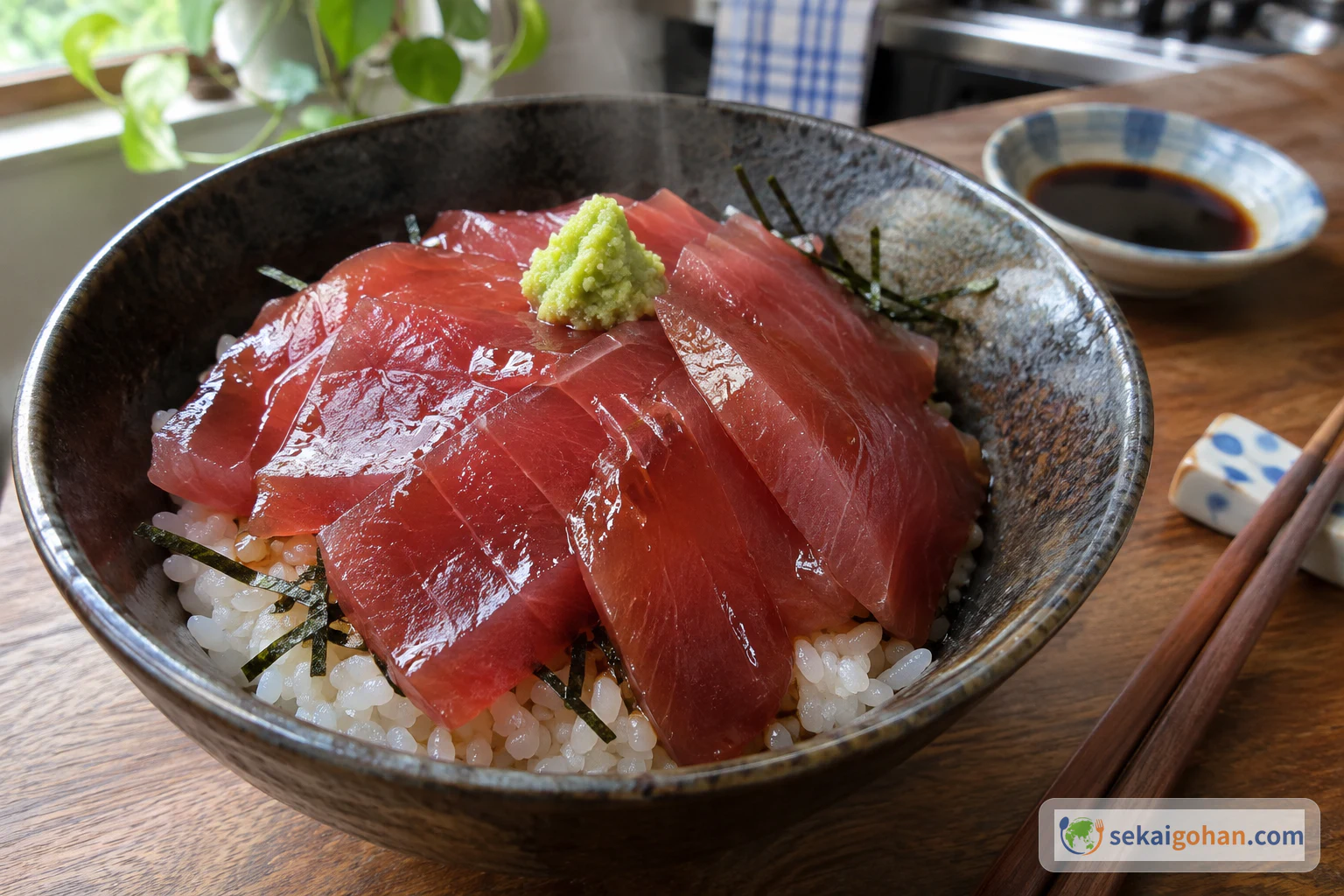
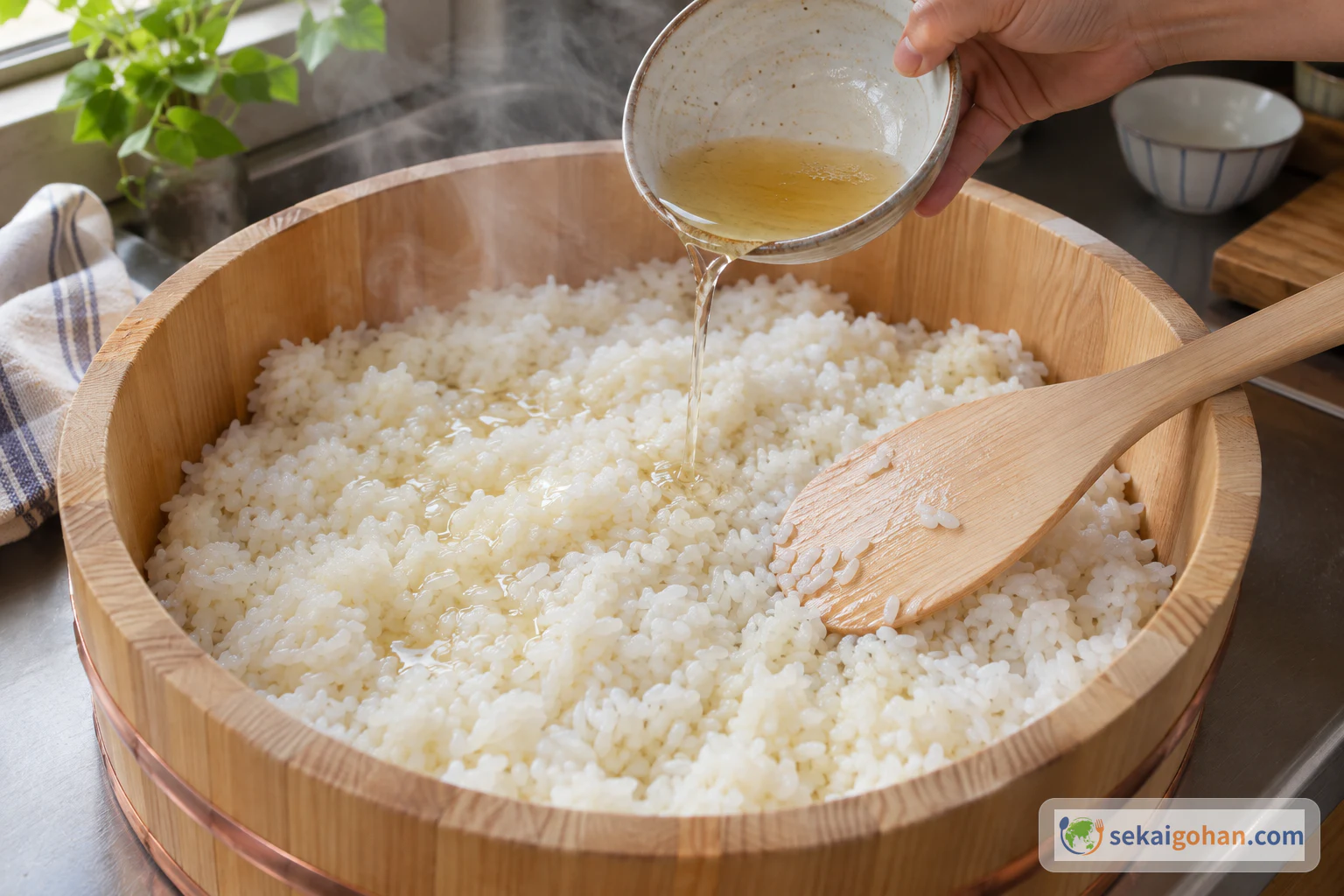
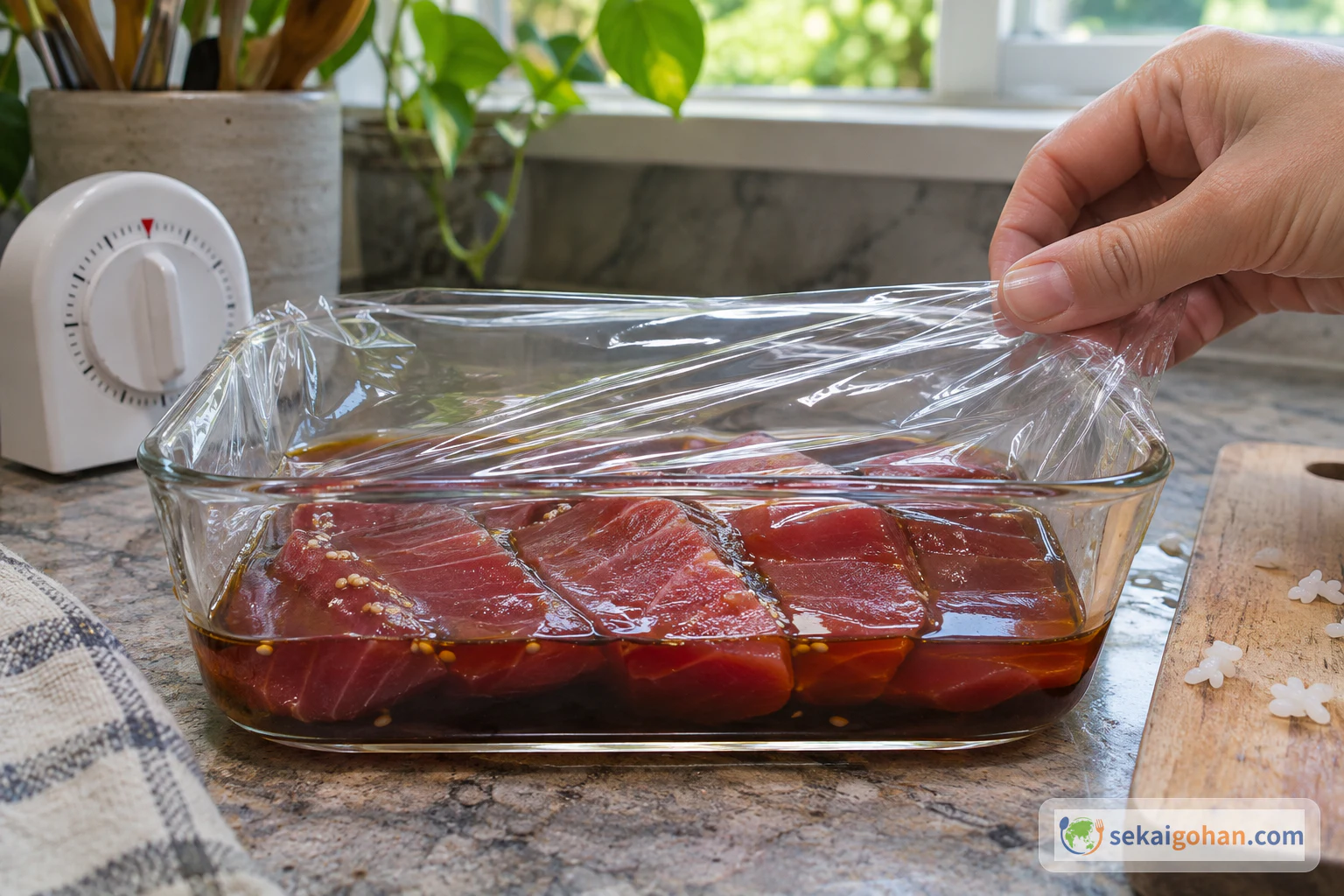
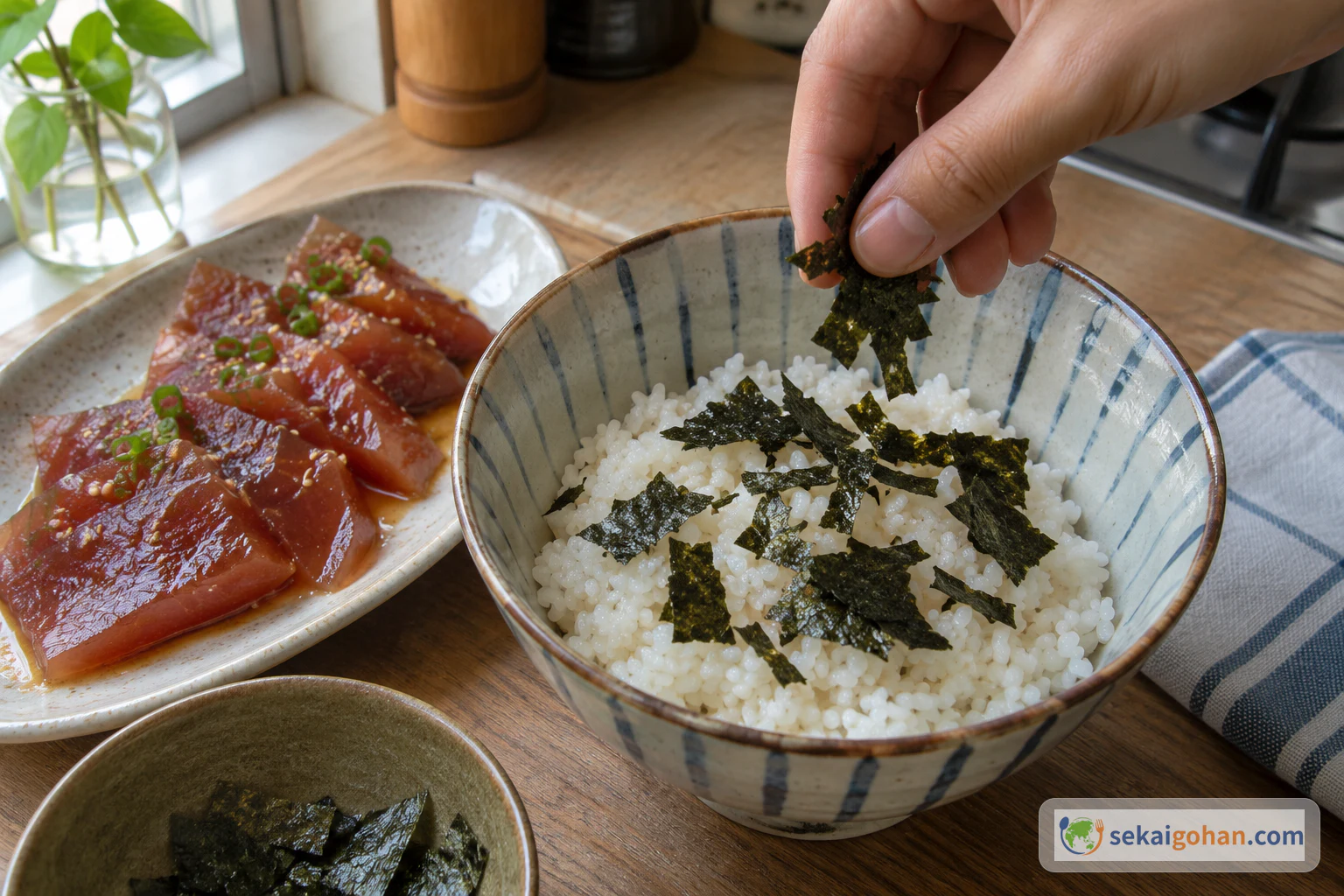
The moment the sushi vinegar hits the just-cooked rice, a sharp, sweet-sour steam comes up off the tub, and the paddle starts slicing through grains that turn glossy as they drink it in. Ten minutes later the tuna comes out of the fridge darker and shinier than it went in, soft enough to cling to the chopsticks. Tekkadon lays that lean red tuna, marinated briefly in soy sauce, mirin and sake, over vinegared rice with a dab of wasabi on top. In Japan it is mainly a sushi-shop bowl, and at home it is what one block of sashimi tuna becomes. It tastes of salty-sweet fish against bright, faintly sweet rice, with nori and a little marinade tucked into the middle so the last mouthfuls are as good as the first.
Red Iron and Red Tuna: Where Tekkadon Belongs
Tekka (鉄火) means red-hot iron, the glow of metal in a fire and the sparks that fly off it. The name is usually traced to the color of lean tuna, a vivid red that someone once compared to heated iron. Tekka maki, the tuna roll, and tekka miso are explained by the same image. Exactly when and where the name first landed on the rice bowl is not settled.
On a menu in Japan you will often find tekkadon and maguro-don side by side, and they are two different bowls. Tekkadon is sushi rice with lean red tuna, the akami, and in sushi shops that akami is usually marinated first. Maguro-don sits on plain white rice and takes any cut: akami, fatty chutoro and otoro, or minced negitoro. The garnishes barely change between them. Scallion, nori and sesame turn up on both, so the difference you taste is the vinegar in the rice and the clean, lean fish on top.
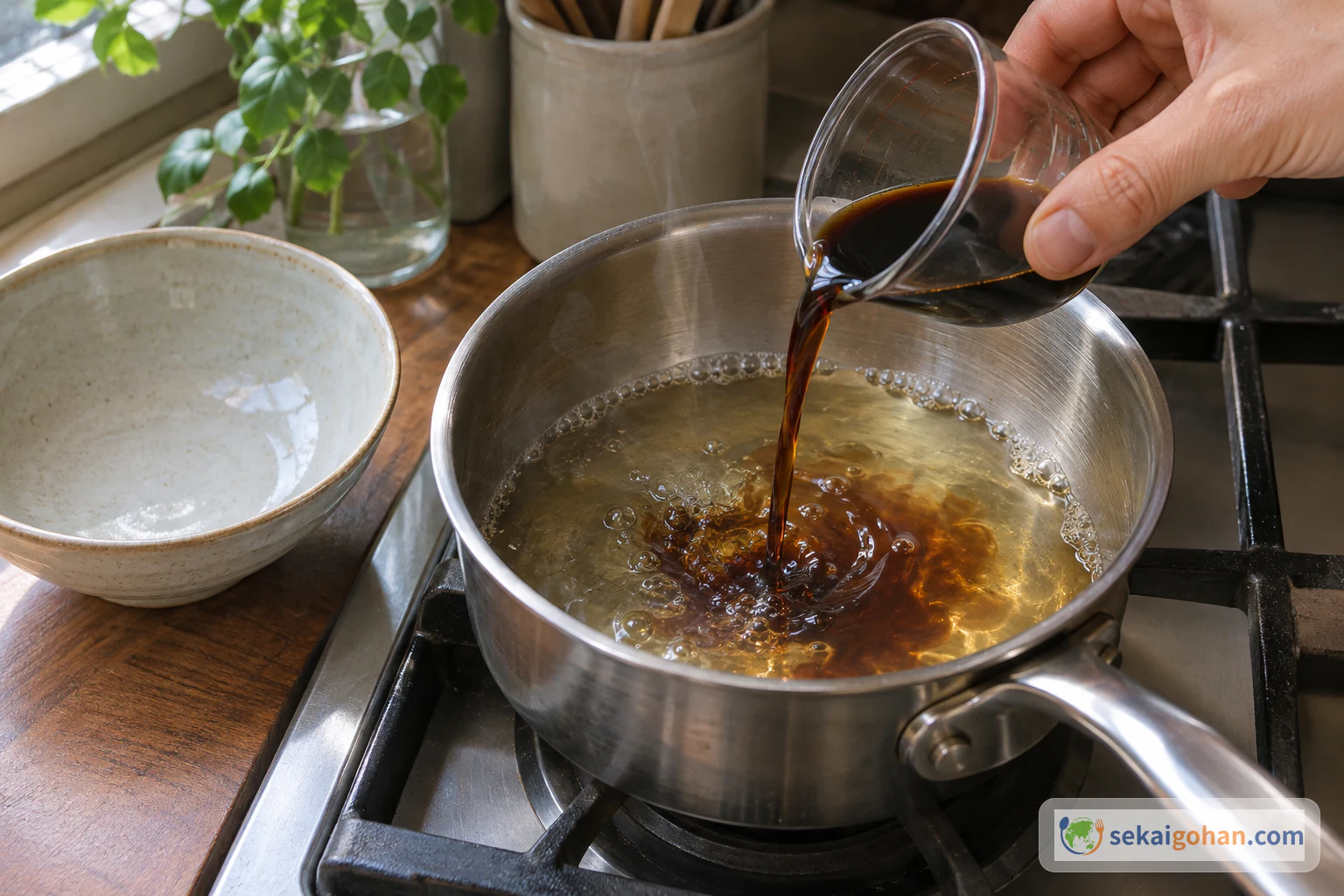
The usual telling of how Edo, today's Tokyo, came to eat raw tuna starts with soy sauce. Dark koikuchi soy sauce began to be brewed in the Kanto region in the Edo period, and eating tuna as sashimi spread alongside it. Tekkadon still tastes of that pairing. The marinade is mostly soy sauce, softened with mirin and sake that have been boiled down to lose their alcohol edge, and it seasons the fish in about 10 minutes.
How the bowl changes from counter to kitchen
Sushi shops agree on the base of vinegared rice, marinated akami, wasabi and nori, and part ways on the nori. Some lay it on the bottom of the bowl, some scatter it over the top, and the version here hides it in a middle layer between two beds of rice. At home, people often season the rice with bottled sushi vinegar to save time, or skip the marinade and lay the tuna on raw. Outside Japan, a simpler bowl puts marinated tuna over plain steamed rice. Whether the rice is vinegared is the line between tekkadon and a tuna rice bowl.
Raw fish in a marinade turns up far from Japan, in Peru's ceviche and the Philippines' kinilaw, both built on acid. Tekkadon puts the acid in the rice instead and keeps the fish in soy, so the tuna stays silky and deep red rather than turning opaque.
Ingredients (serves 2)
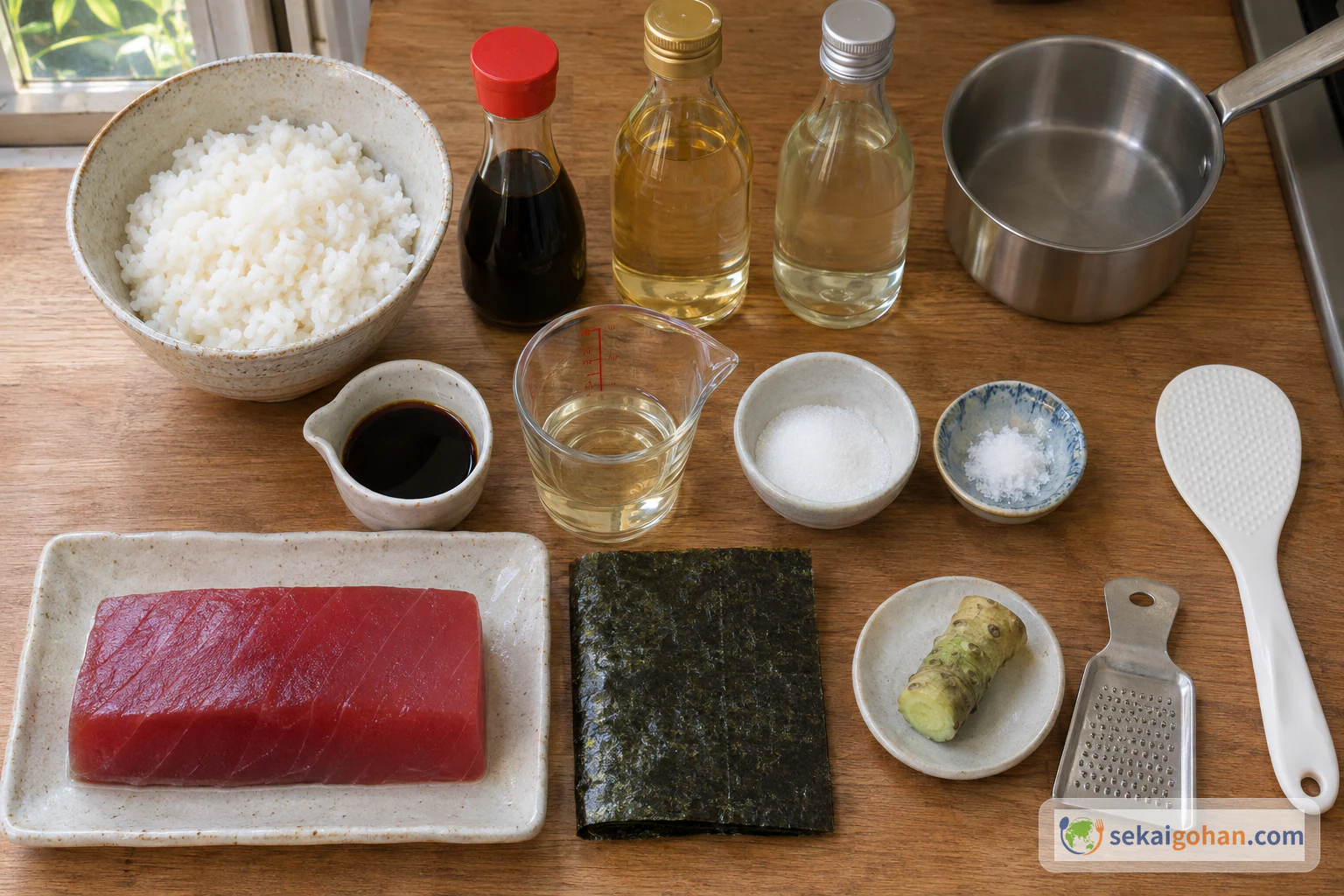
Tuna is a fish. Soy sauce contains soy and wheat. Mirin and sake contain alcohol, and boiling them drives off the sharp edge, though some may remain. Check the labels on nori and on tube wasabi for other ingredients.
Equipment
- Small saucepan
- Shallow glass or ceramic dish for marinating
- Hangiri (wooden sushi tub), or a large bowl or wide tray
- Rice paddle (shamoji)
- Uchiwa or any flat fan
- Cutting board
- Sashimi knife or a sharp ordinary knife
- Plastic wrap
- 2 donburi bowls
Choosing the Tuna, Rice and Seasonings
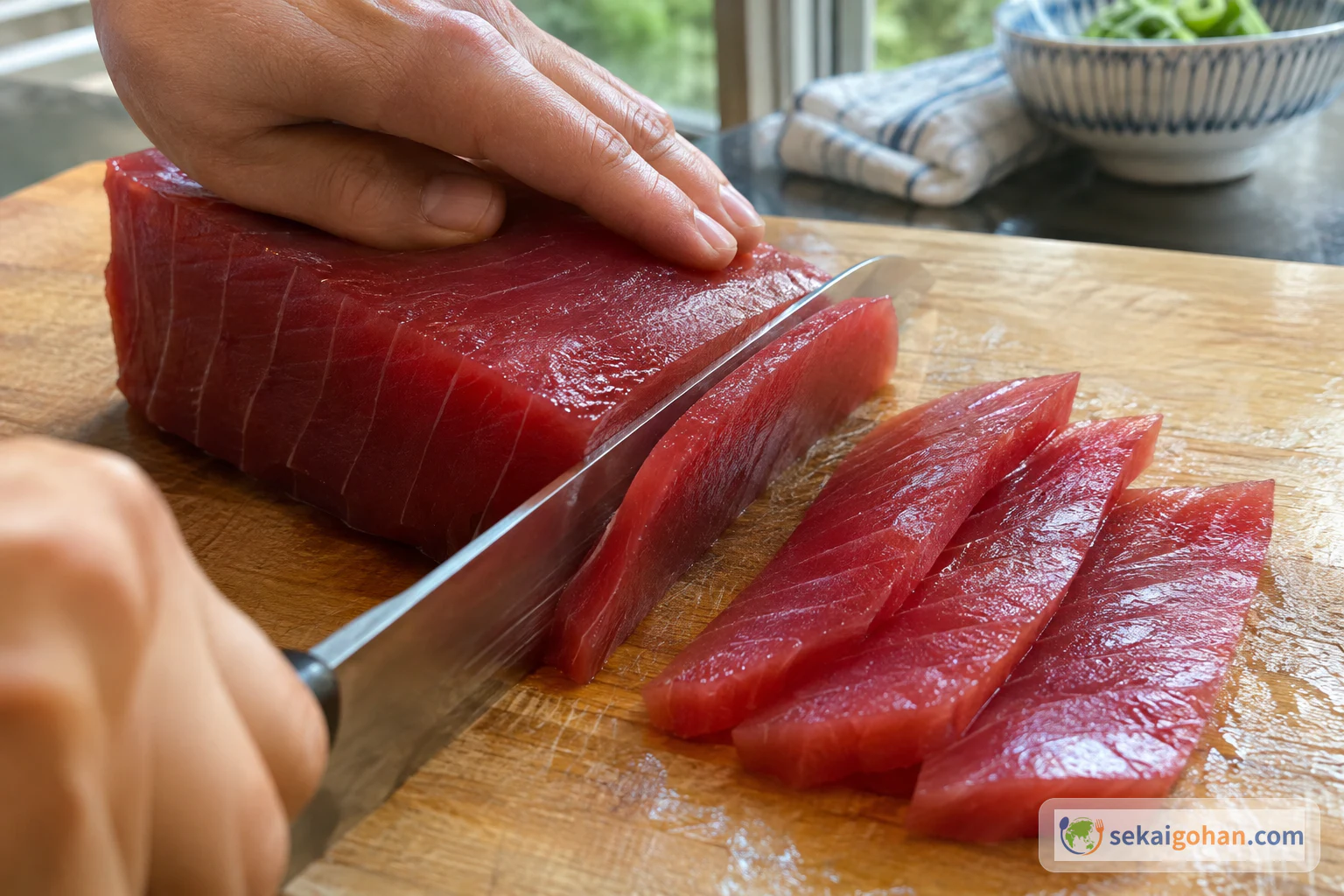
Buy lean red tuna sold for sashimi. Any kind works as long as it is akami. A block cut for sashimi gives the neatest slices, and a ready-cut sashimi fillet from the supermarket works too. Chutoro or otoro will taste richer, but their fat stays heavy through the marinade and pulls the bowl away from the soft, clean texture of marinated akami.
Buy tuna sold for eating raw, or from a fishmonger you trust, and never use tuna sold for cooking in the raw bowl. Keep it cold until it goes into the marinade, look over the cut surfaces before marinating, and eat the bowl the same day. Use a clean board and knife kept apart from other food. Vinegar, salt, soy sauce and wasabi do not kill anisakis, a parasite of saltwater fish, so the 10-minute soak is for flavor alone. Anisakis dies when fish is frozen at −4°F (−20°C) or colder for at least 24 hours (in a home freezer, on the strongest setting, counted from when the fish is frozen solid), or cooked until the center reaches 140°F (60°C) for at least 1 minute. People who are pregnant, elderly, very young or have weakened immunity should skip the raw bowl and make the cooked zuke-yaki version below.
Use true mirin (hon-mirin), the sweet rice wine, not "mirin-style seasoning". The imitation has a different alcohol and sugar make-up, and the marinade comes out with a thinner sweetness. Cooking sake can stand in for drinking sake with little change. Dark, all-purpose soy sauce is the default. Light (usukuchi) soy sauce gives the fish a weaker, less defined flavor.
For the vinegar, rice vinegar is the gentle choice. Grain vinegar works and gives a sharper sour edge to the rice. The rice itself should be Japanese-style short-grain white rice. A gō is the Japanese rice measure, the small cup that comes with a Japanese rice cooker. Brown rice or mixed grains take up the vinegar differently and change the feel of the bowl. Tear a full sheet of nori by hand, or use ready-shredded nori. Fresh wasabi grated at the table and tube wasabi both belong here.
Akami is what the marinade is made for. Ten minutes in soy turns its surface glossy and its texture soft and clinging, which is the whole point of tekkadon. Save the fatty cuts for a plain sashimi plate.
Method
Start with the marinade, because it has to cool completely before the fish touches it. Make the sushi rice while it cools, then slice the tuna while the rice settles to skin temperature. The 10 minutes in the fridge are the only hands-off stretch, and by the time they are up, the rice is ready to build the bowls.
A marinade with any warmth left in it turns the surface of the tuna pale and makes it shrink. Wait until the dish feels like room temperature against the back of your hand before the first slice goes in.
A donburi holds a lot of rice. The nori and a drop of marinade halfway down keep the bottom half seasoned, so the bowl tastes as lively at the end as at the start.
When It Goes Wrong
| What you see | Why | What to do |
|---|---|---|
| Sushi rice is sticky and mushy | The vinegar went in after the rice cooled, or the rice was stirred while fanning | Dress the rice while it steams, cut it in with slicing strokes, and fan only after the vinegar has soaked in |
| Tuna slices look torn and cloudy at the cut | The knife sawed back and forth | Start each slice at the heel and pull through in one stroke |
| Tuna turns pale and tight in the marinade | The marinade was still warm | Let it cool fully to room temperature before the fish goes in |
| Tuna tastes too salty | It sat in the marinade too long | Keep the soak to 10 minutes and lift the slices out on time |
| The bottom half of the bowl tastes flat | All the seasoning sits on top | Add the nori and a little marinade in the middle layer next time |
Serving, Variations and Storage
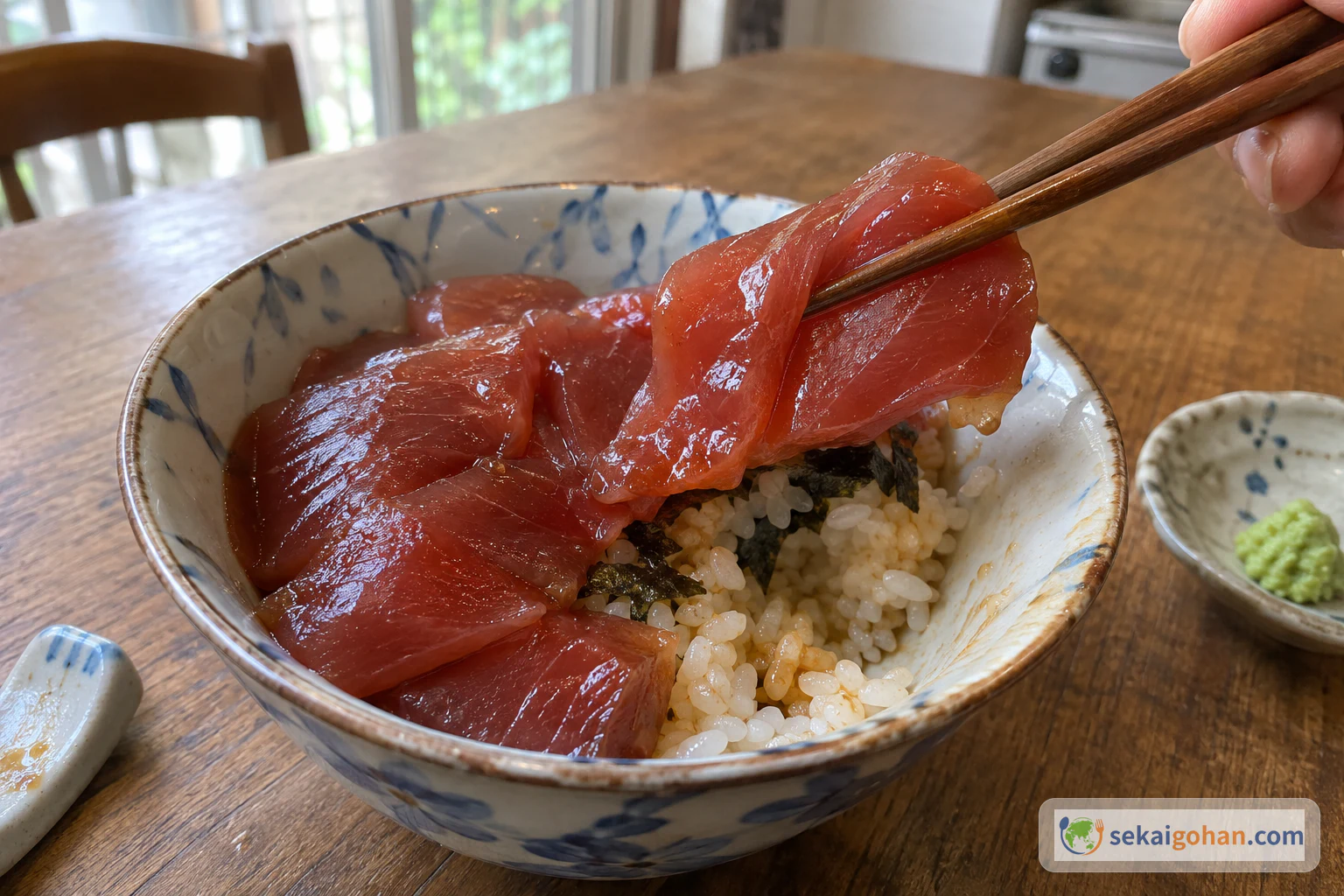
Eat tekkadon right after you build it, while the rice is still a little warm under the cold fish. Take a bit of wasabi onto each slice rather than stirring it into the bowl, and dig down through the layers so you reach the nori.
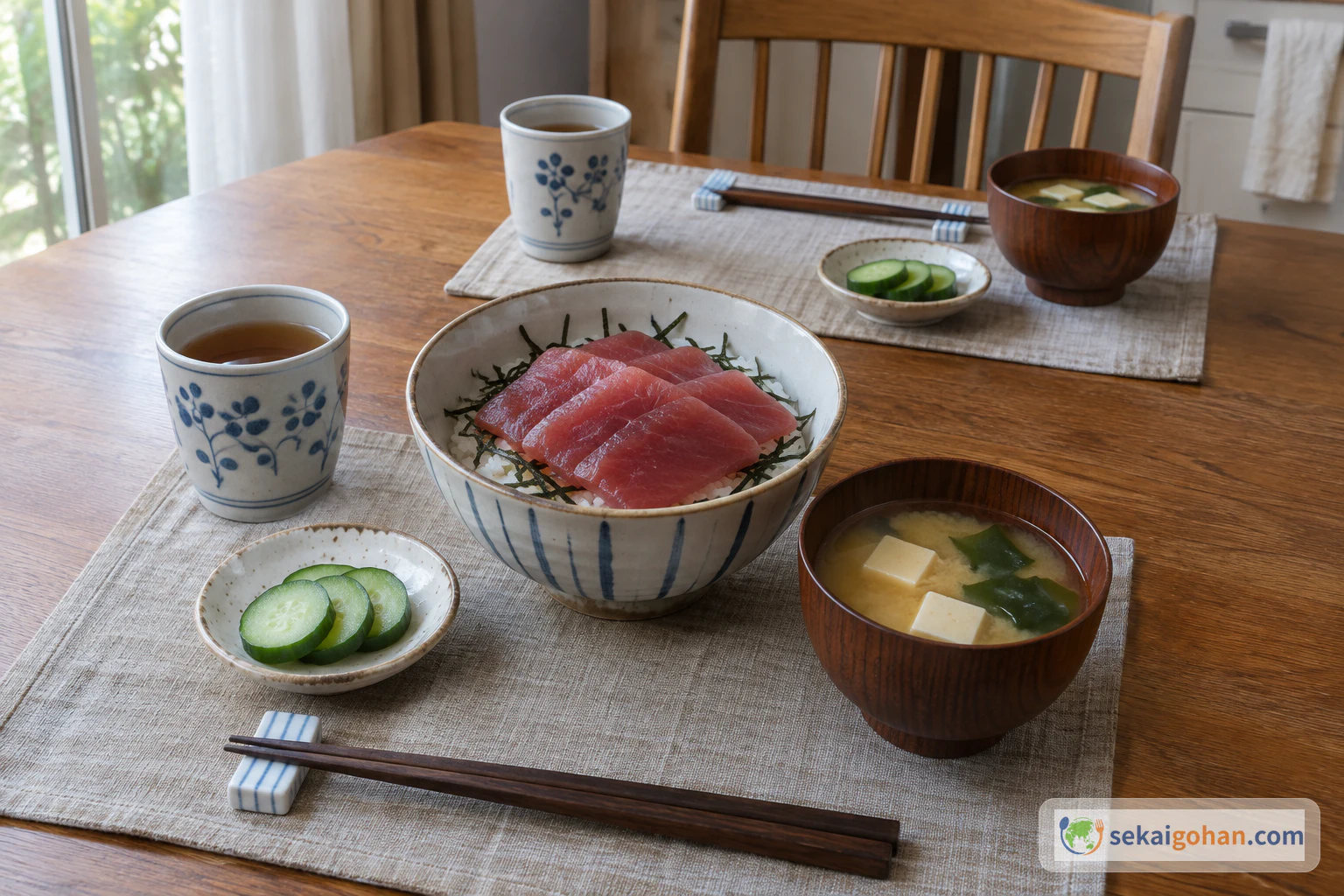
At sushi shops it is a lunch bowl. At home it suits the day you bring back a block of sashimi tuna and want more than a plate of slices. Miso soup and a dish of pickles are good optional sides, with green tea.
Variations
- Zuke-yaki don (cooked): sear the marinated tuna in a frying pan on both sides until the center reaches 140°F (60°C) for at least 1 minute, then lay it on the rice. The fish turns firm and savory, and this is the bowl to make for anyone who should not eat raw fish.
- Aburi tekkadon: pass a kitchen torch over the surface of the marinated slices only. The toasty edge against the cool, raw center is the appeal, and the inside stays raw, so the raw-tuna precautions still apply.
- Shiso and white sesame: scatter shredded shiso leaves and white sesame over the nori in the middle layer. The bowl gets a fresh, herbal lift and a little crunch.
- Sesame oil and scallion: finish with a few drops of sesame oil and thinly sliced scallion. It leans nutty and homey, closer to the bowls people throw together at home.
Storage
Make only what you will eat that day, and eat the tuna the same day, marinated or not. Cool leftover sushi rice, then refrigerate it promptly in a covered container, and heat it through thoroughly before eating. Throw away any leftover marinade, since it has touched raw fish.
Frequently asked questions
Can I use bottled sushi vinegar?
Yes, it is a common home shortcut. The balance of sour, sweet and salt varies by brand, so add it a little at a time and taste the rice as you go. Pour it over the rice while it is hot, just as you would with your own mix.
Isn't 2 gō a lot of rice for two bowls?
It is generous, and a donburi holds more rice than it looks. If you want lighter bowls, cook less rice and cut the vinegar, salt and sugar down in the same proportion so the seasoning stays balanced. Keep the full amount of tuna and marinade for the two bowls.
Do I need a sashimi knife?
A sharp ordinary kitchen knife works. What matters is a long enough blade to finish each slice in one pull from heel to tip. Wipe the blade clean between slices so the cut faces stay glossy.
Why does the soy sauce go in after the heat is off?
Boiling the mirin and sake drives off the raw alcohol edge. Adding the soy sauce off the heat keeps its aroma fresh instead of cooking it down. It also means the marinade starts cooling right away.