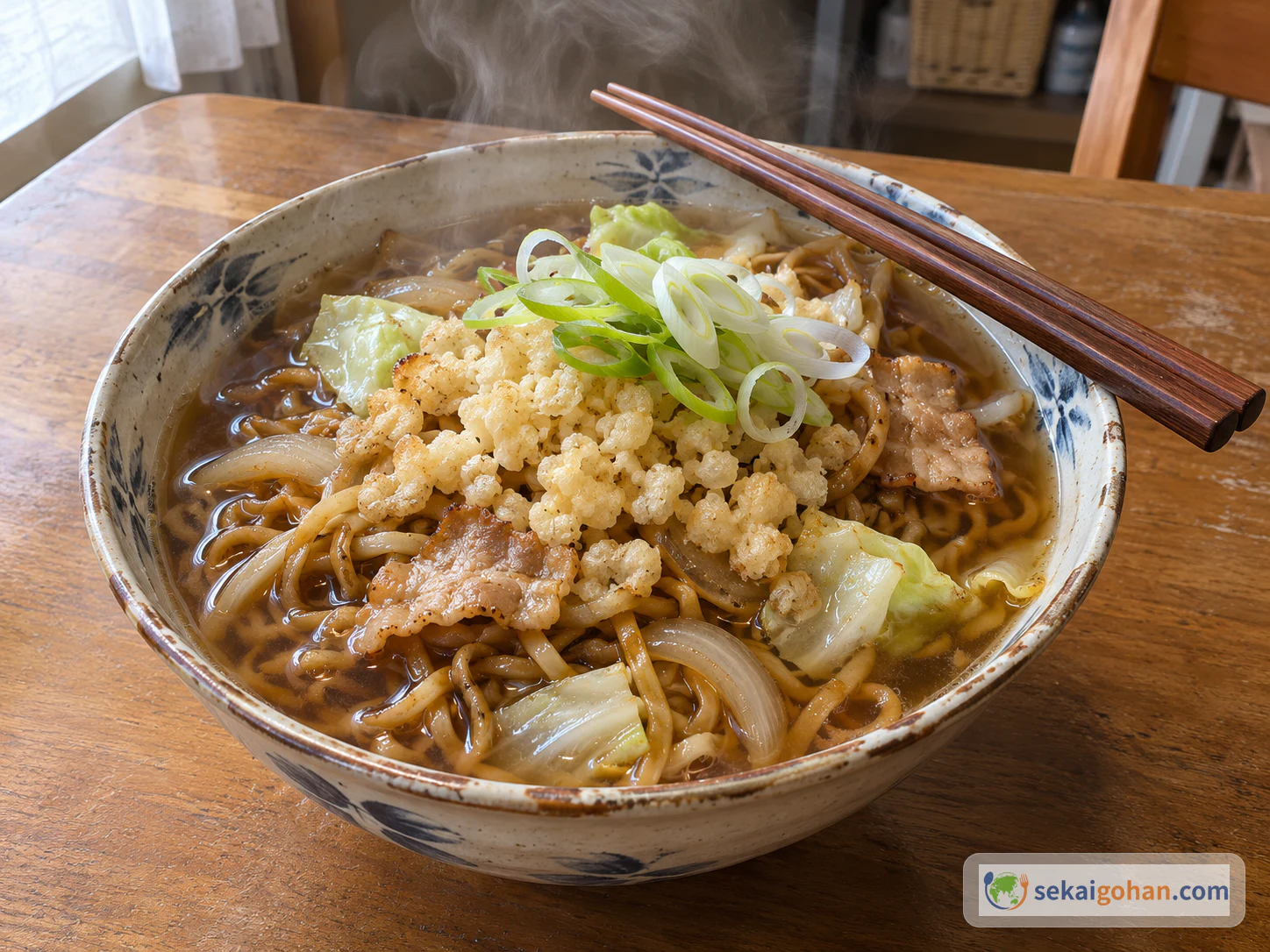
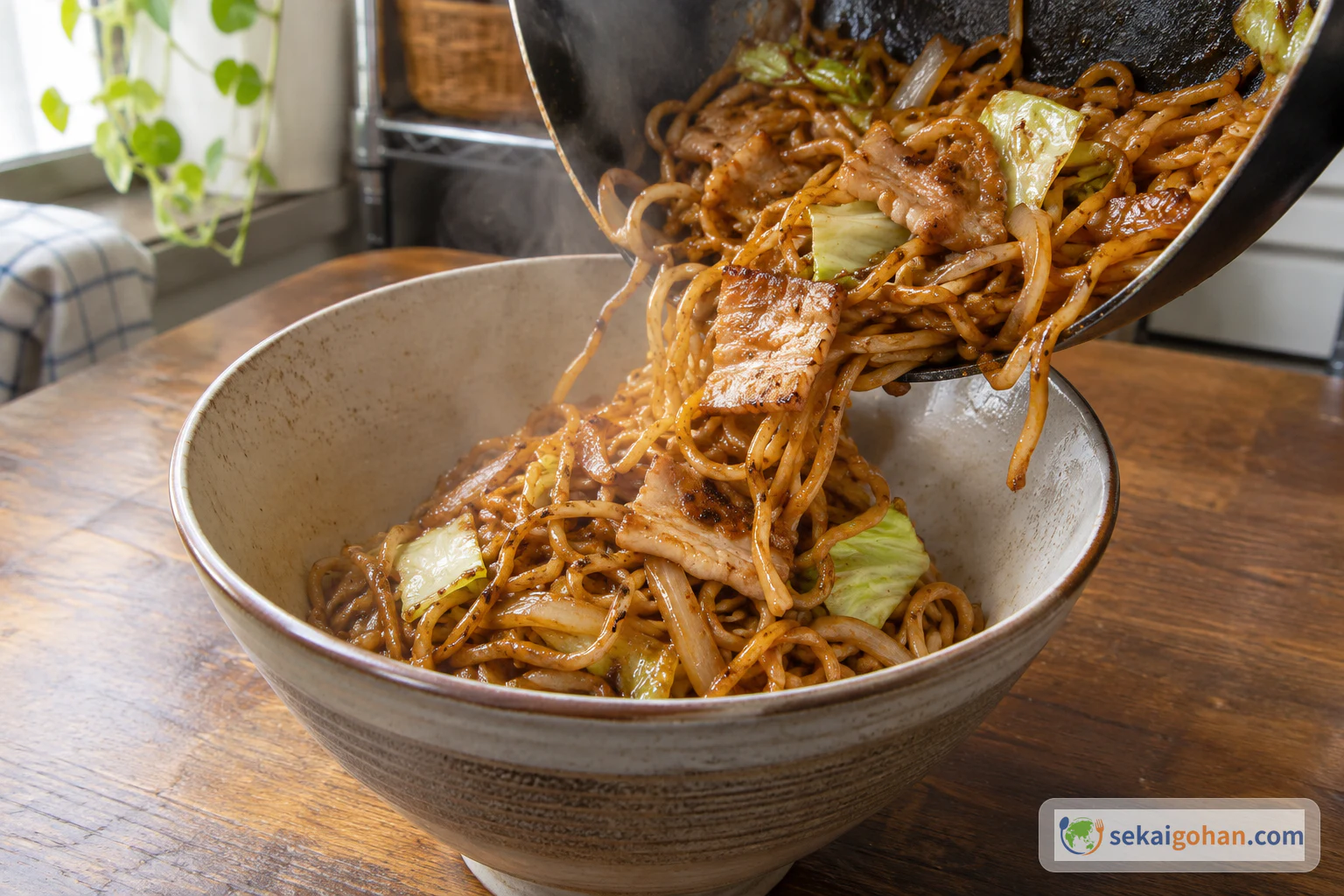
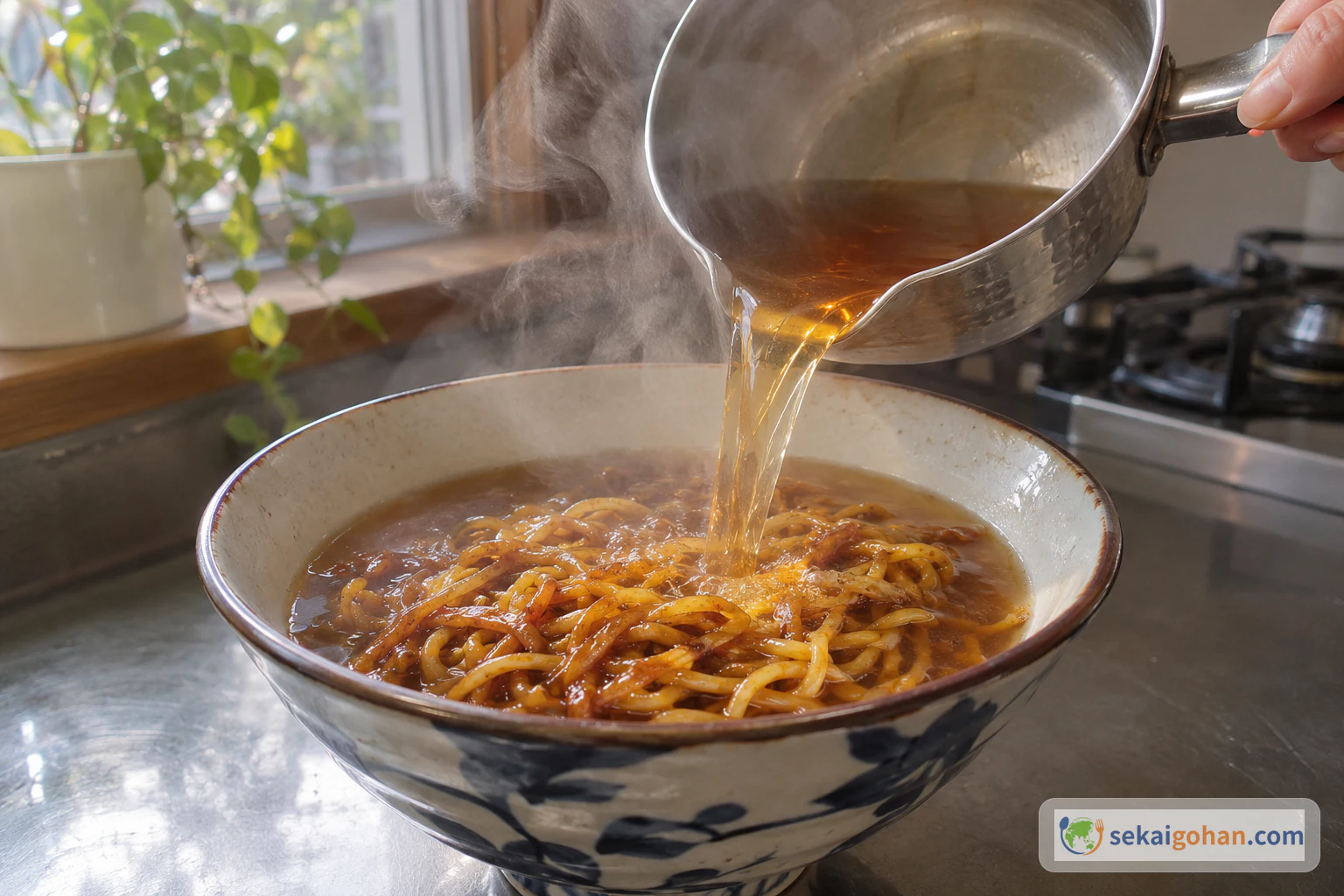
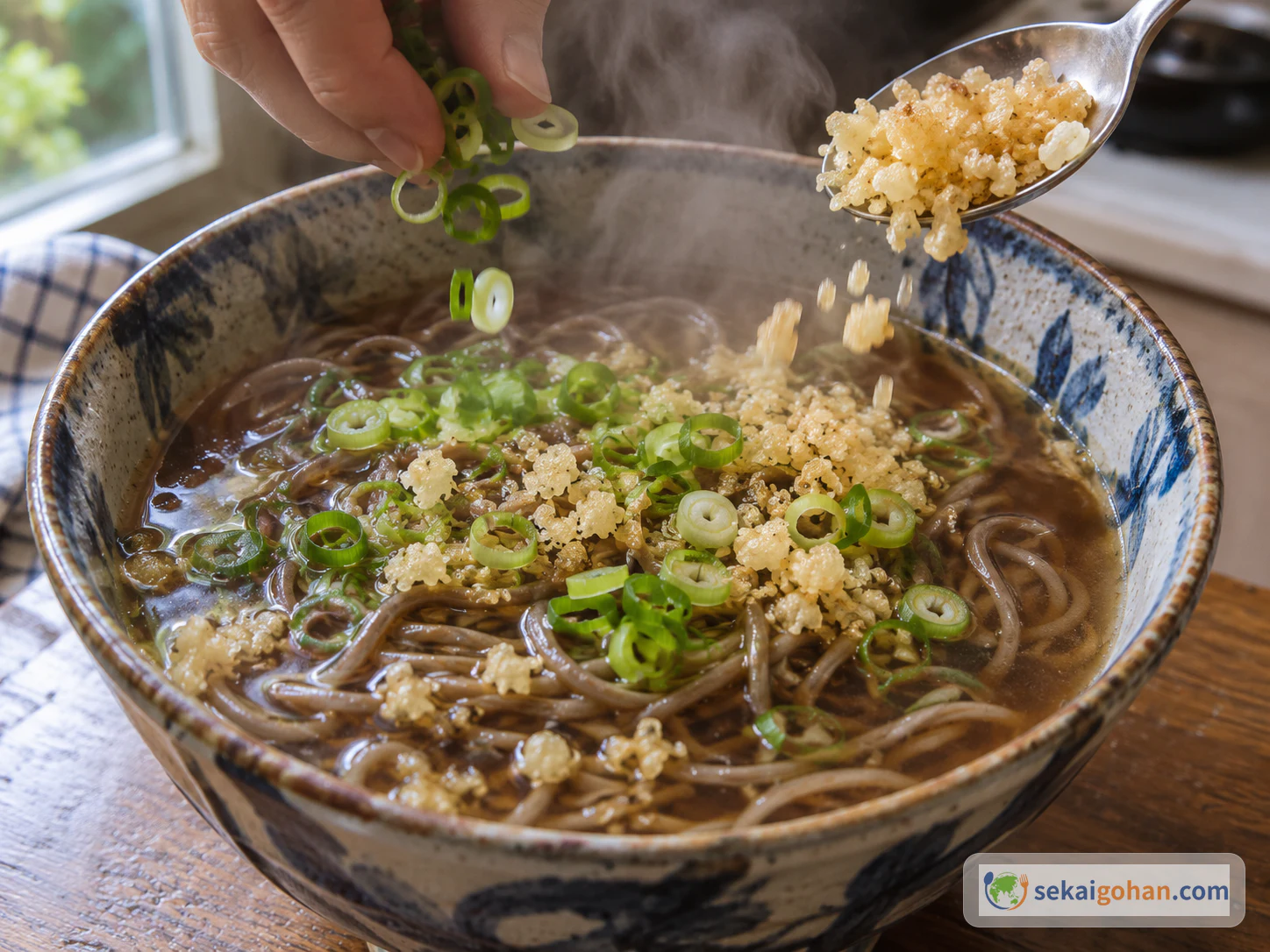
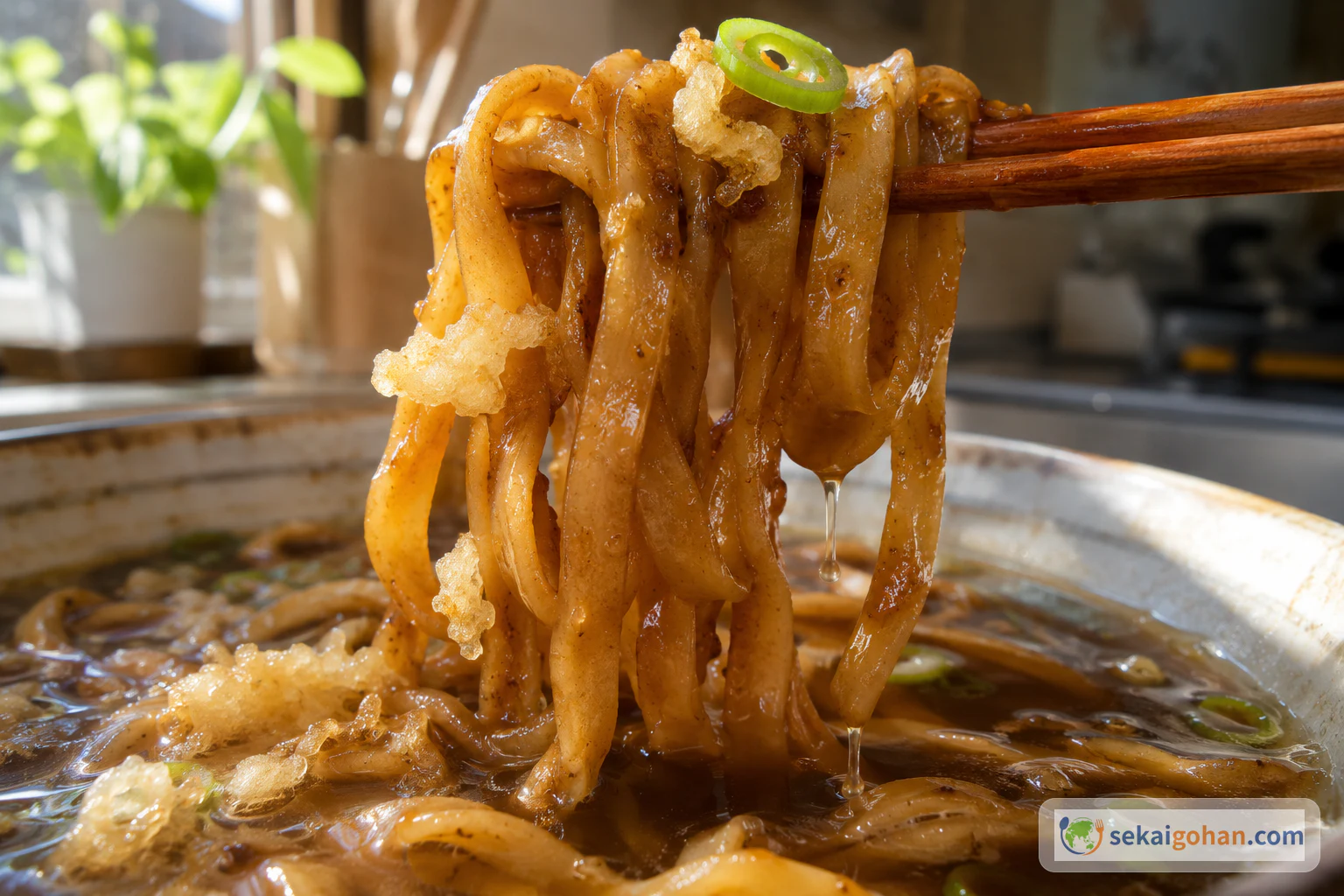
The broth goes in last. It comes straight off the boil and pours over a bowl of noodles already dark with Worcestershire sauce. For a moment the sauce clouds into the liquid and steam rolls off the rim. Then a spoonful of tempura crumbs lands on top, floats, and starts to soak up the broth. Tsuyu-yakisoba comes from Kuroishi, a town in Aomori Prefecture in the north of Japan. Each mouthful tastes of sweet, tangy fried noodles and of savoury soba-style broth, the two layered in the bowl and never quite merged.
From an After-School Snack to Kuroishi's Own Bowl
Flat noodles cut on a dried-noodle blade
The story starts with the noodle. After the war, a noodle maker in Kuroishi learned to make Chinese-style noodles from someone from China. The dough was cut on the thick blade normally used for dried noodles. The wide, flat strands that came off it held sauce so well that dry yakisoba made with them, futohira-men or "thick flat noodles", became Kuroishi yakisoba. By around 1955 it was sold to children as a snack in 10-yen portions. Thick flat noodles and a sweet, tangy sauce still define it.
Warm broth for the walk home
Tsuyu-yakisoba is usually traced to the early 1960s and a small eatery called Mimasu, which stood in front of the old Nakago Junior High School. The children coming home from school got yakisoba that had gone cold, and the shop poured warm soba broth over it. Other stories go around too. One says the broth was added to yakisoba made ahead; another says noodles alone did not fill a child up. None of them is settled. What is certain is that the "tsuyu soba" born near that school later turned up all over town.
Tsuyu is the seasoned broth used for soba and udon. The name says exactly what is in the bowl: yakisoba with tsuyu poured over it. The full name, Kuroishi tsuyu-yakisoba, adds the name of the town.
Lost, brought back, and spread across town
Mimasu eventually closed. The owner of another shop, Suzunoya, had eaten the dish since childhood and brought the taste back. In 2008 they took it to the B-1 Grand Prix, the national local-food contest, held that year in Kurume, Fukuoka. A year earlier, in 2007, the town had formed a yakisoba association, joined the league that runs the B-1 Grand Prix and printed a yakisoba map. Kuroishi yakisoba was calculated to have brought about 1 billion yen into the local economy in 2008. Today about 70 shops in Kuroishi serve yakisoba, more per head of population than Fujinomiya, Japan's other famous yakisoba town. A group of about 40 members works to keep tsuyu-yakisoba known. In Kuroishi it is still cheap, everyday food.
One town, many broths
Every shop makes the bowl its own way. A soba-style broth built on Japanese dashi from bonito and kelp is the base, but some shops pour ramen soup, pork-bone soup, udon broth or a salt-based broth. Some add tempura or an egg on top. One shop serves bake-yakisoba, "changing yakisoba": you eat half the plate as plain yakisoba and then pour the broth over the rest, so one and a half portions of noodles give you both dishes. Halfway through the bowl, a little ichimi chili sharpens the broth. Ramen noodles are cooked in their soup. Tsuyu-yakisoba noodles are fried in sauce first, and the broth comes afterwards. The soup yakisoba of Nasu-Shiobara in Tochigi is a separate dish from another region.
People who make it in Kuroishi have a simple rule. If the yakisoba flavour is gone, it is not tsuyu-yakisoba. The sauce has to be tasted through the broth.
Ingredients (serves 2)
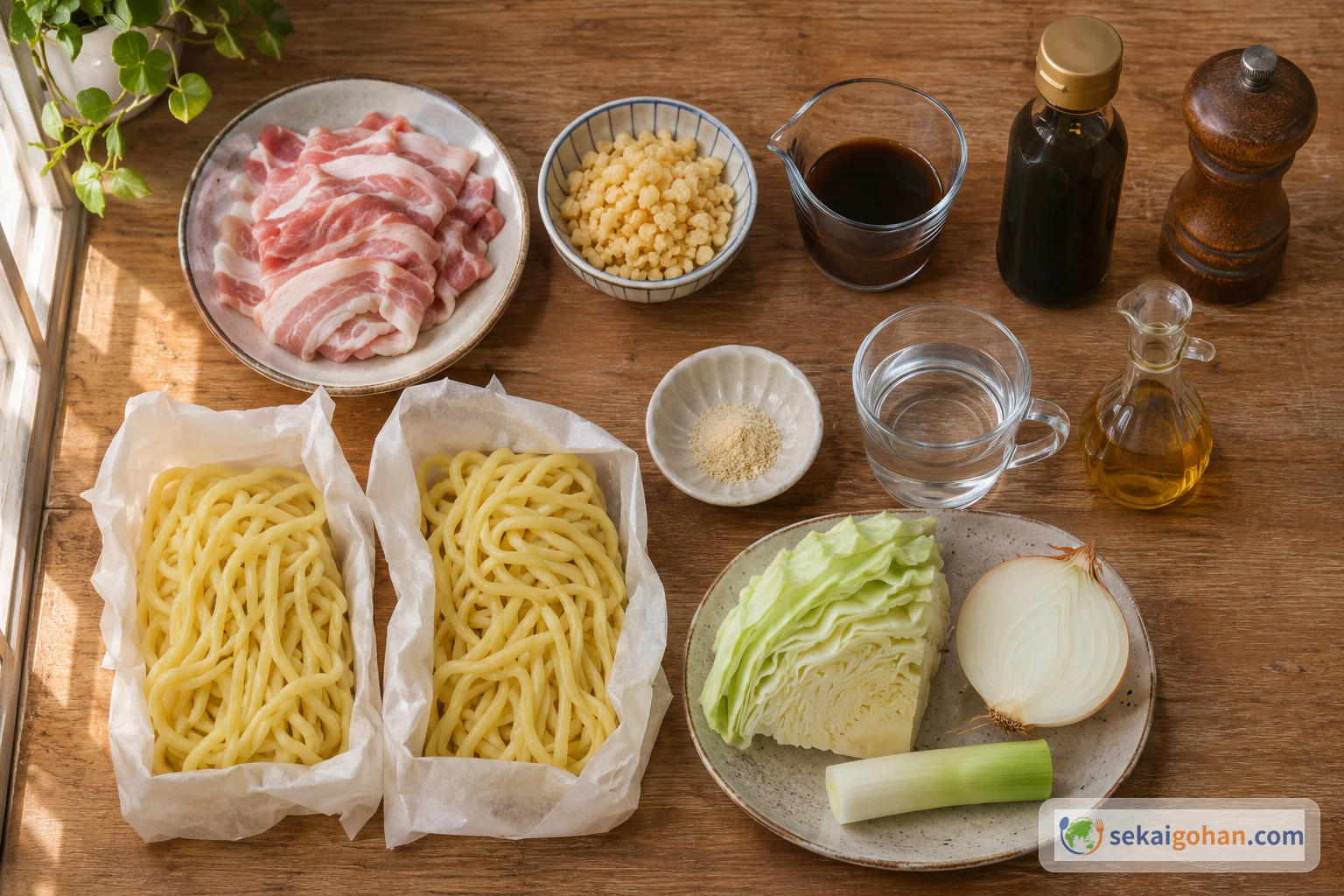
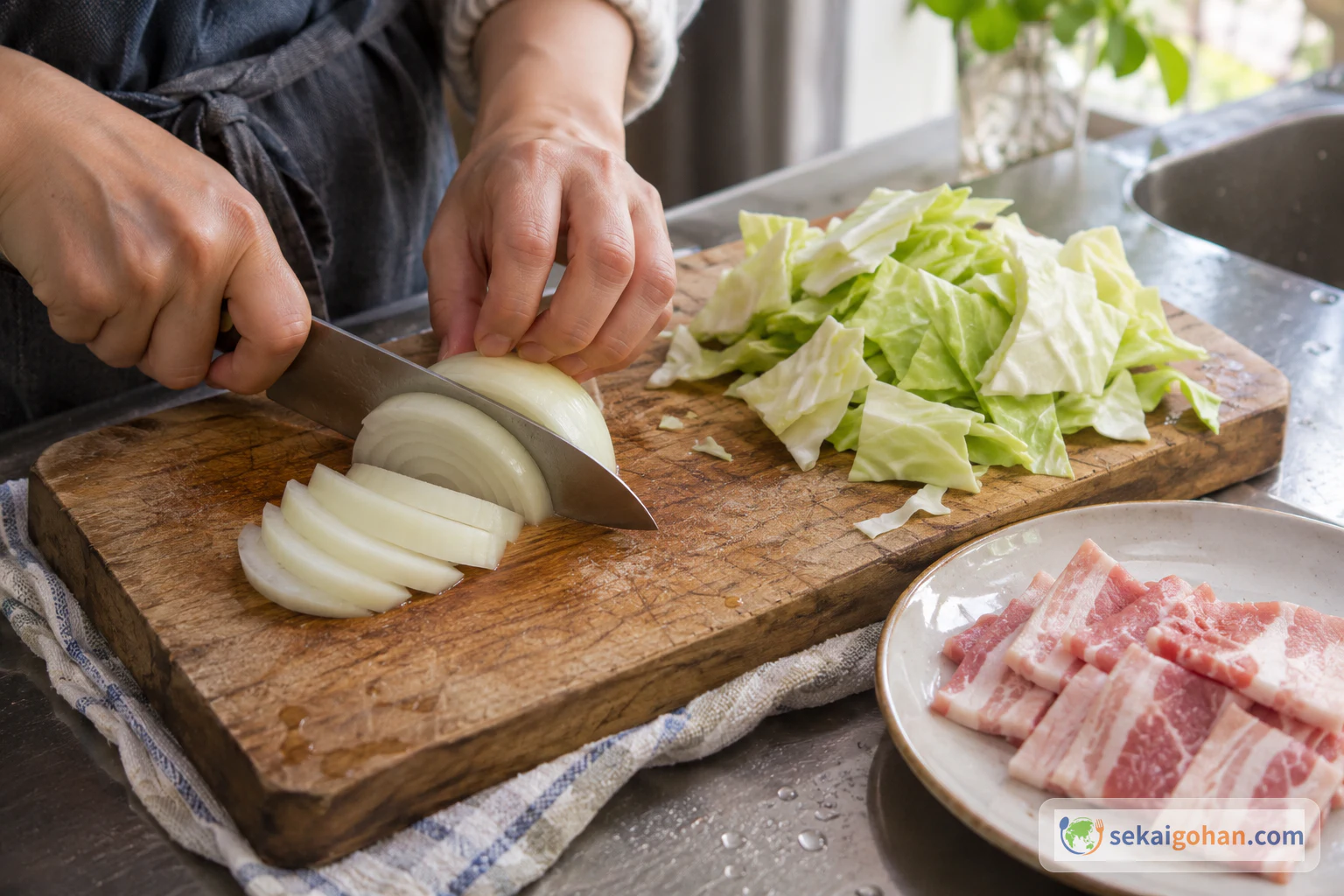
The pan side of the bowl is pork belly, cabbage, onion and Worcestershire sauce. The broth is three-times-concentrated mentsuyu, chicken stock powder and water. There is no salt in the recipe, because the sauce, the mentsuyu and the stock powder carry all the seasoning.
Mentsuyu comes in different strengths. These amounts are for 3× concentrate. A 2× or 4× bottle used spoon for spoon makes the broth too weak or too salty, so scale it until the broth reaches the same strength.
The noodles, Worcestershire sauce and mentsuyu contain wheat and soy. The stock powder contains chicken, and the oil is sesame. Tempura crumbs differ by product and can contain shrimp, squid or other ingredients, so read the label before you buy.
Equipment
- Knife and cutting board
- Frying pan
- Small saucepan for the broth
- 2 deep, thick-walled donburi bowls
- 2 pairs of cooking chopsticks: one for raw pork, one for serving
- Measuring spoons and a measuring cup
Choosing Noodles, Sauce and Broth
Real futohira-men comes from Kuroishi's noodle makers and is hard to find elsewhere. Supermarket steamed yakisoba noodles, as thick and flat as you can find, make a good bowl. Futohira-men is wider and chewier and holds more sauce. Standard noodles are slimmer, so they soak up broth faster and turn soft sooner, and that is one more reason to eat the bowl right away.
Buy plain Worcestershire sauce, the thin, tangy kind, rather than a thick sweet sauce. Mentsuyu, chicken stock powder and tempura crumbs are sold at Japanese grocers and online. Tempura crumbs are often sold as tenkasu or agedama.
| Keep these for a Kuroishi taste | These can change |
|---|---|
| Fry the noodles in Worcestershire sauce before any broth touches them | Futohira-men → supermarket steamed yakisoba noodles (softer, slimmer) |
| Broth poured hot, straight from the boil | Chicken stock powder → Japanese dashi powder (see Variations) |
| Green onion and tempura crumbs on top | Bowl size, as long as it is deep |
Method
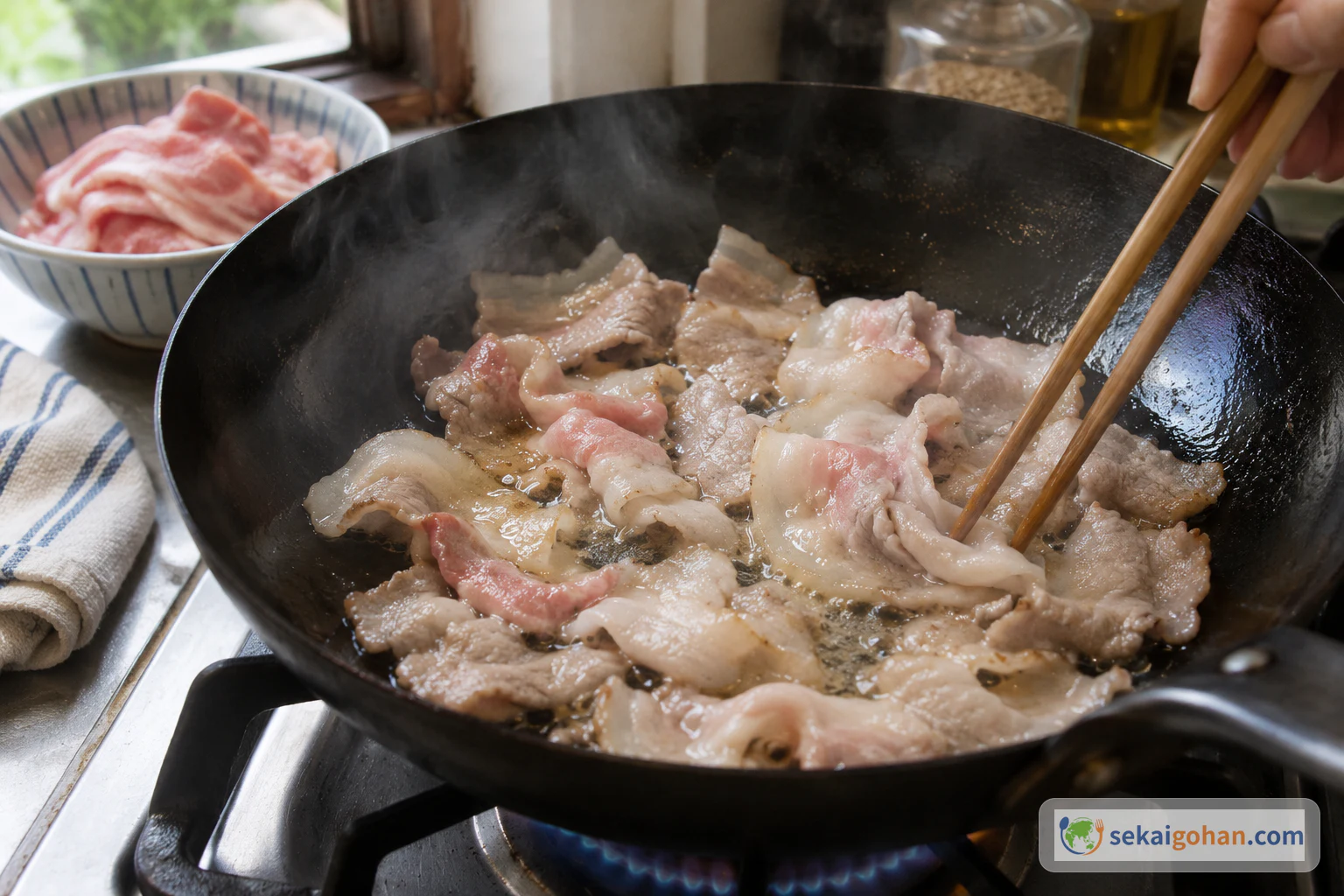
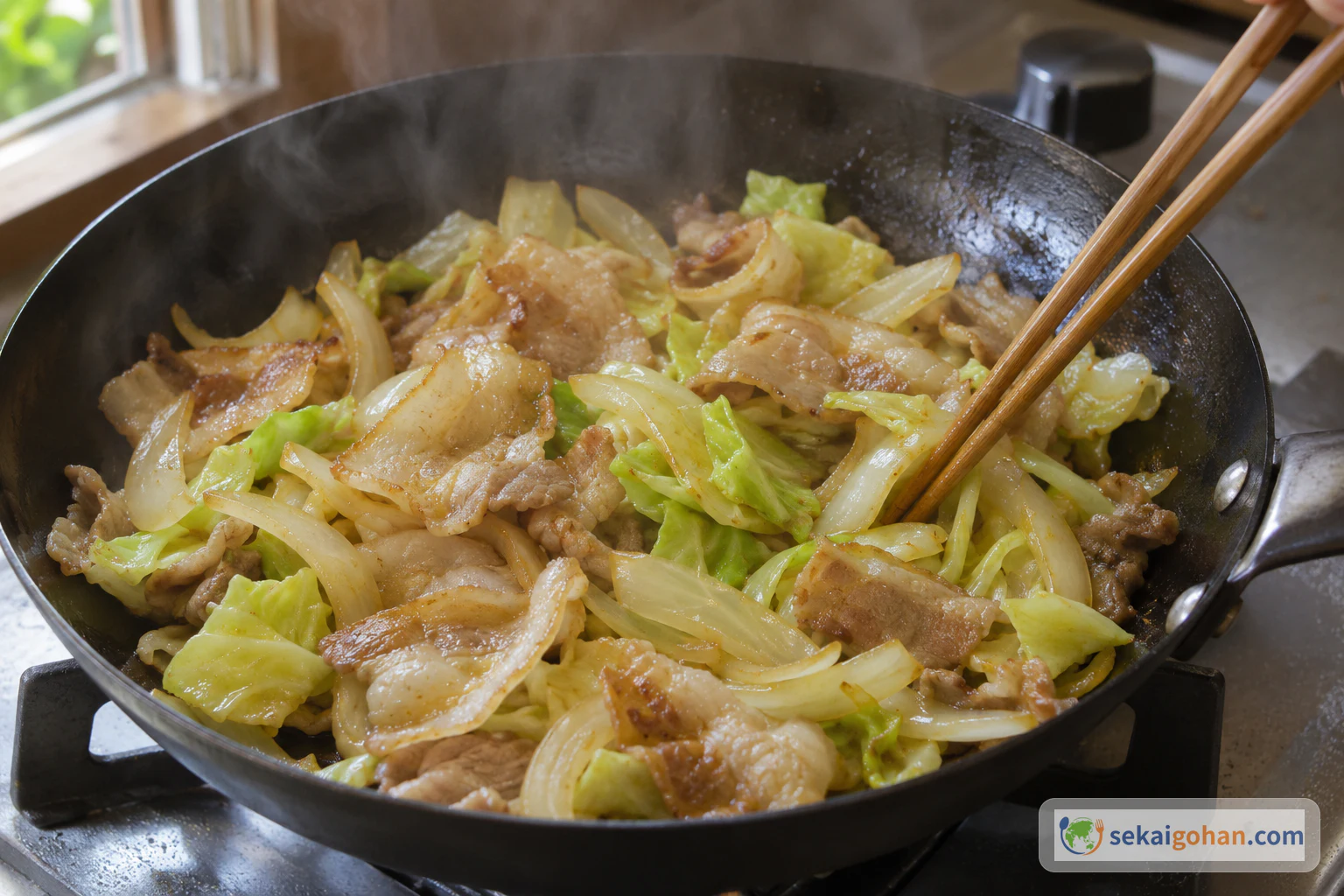
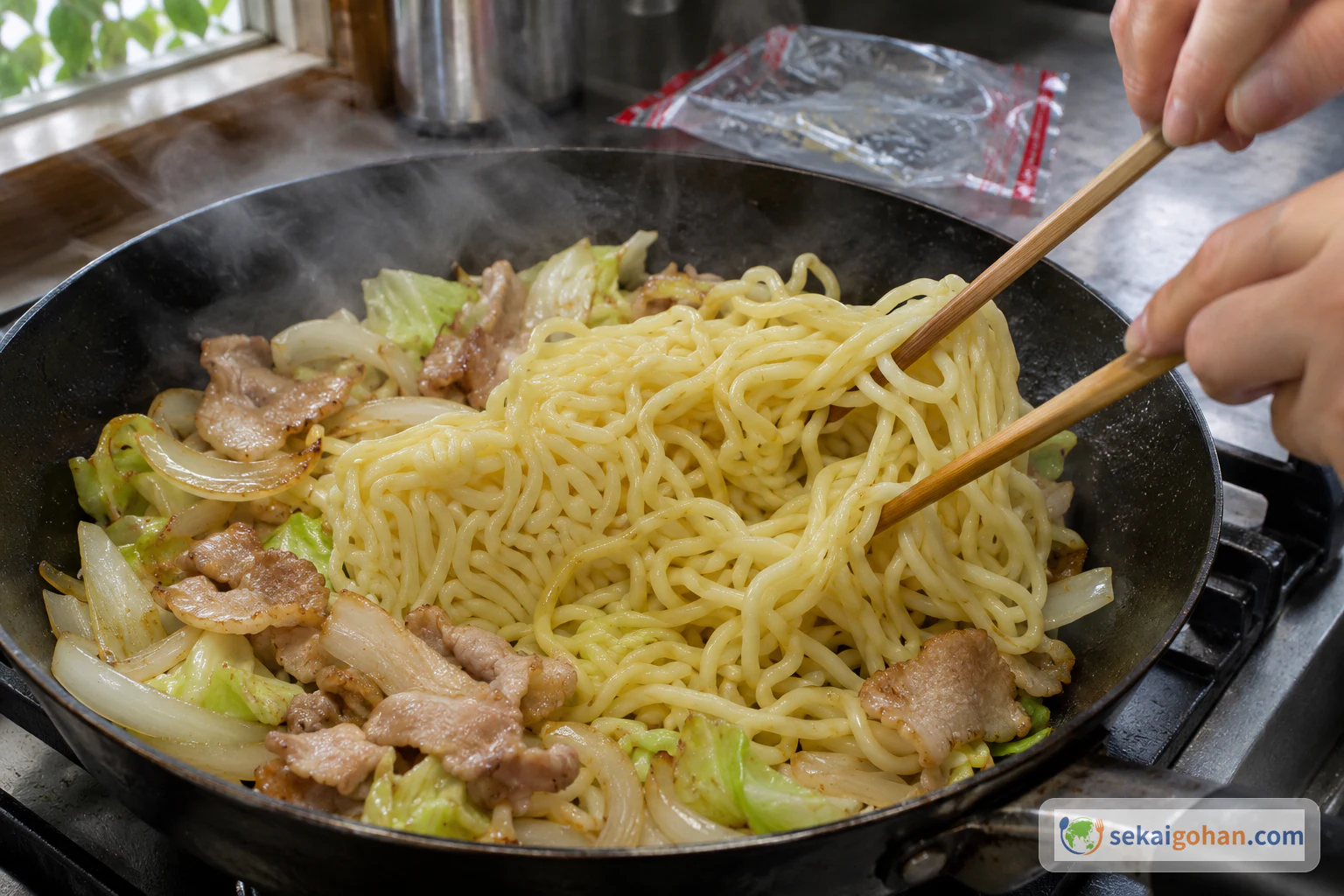
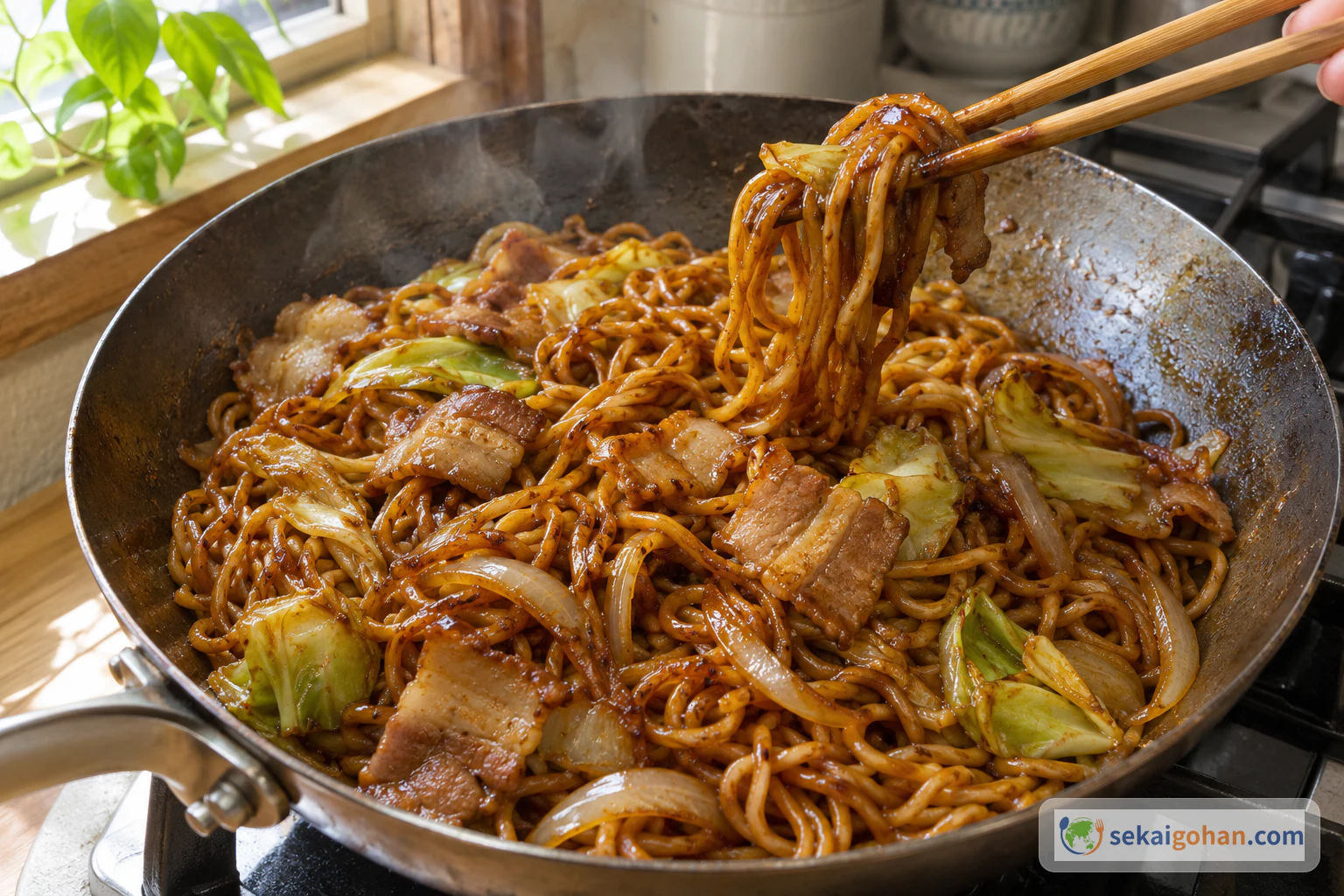
Cut everything before the pan goes on, because once the pork is in, the frying moves without a break. The order is pork, then vegetables, then noodles, then sauce, then into the bowls. Only then does the broth go on to boil. Nothing simmers unattended, and the whole cook happens at the stove.
Measure the mentsuyu, stock powder, pepper and water into the small saucepan before you start frying. When the noodles are in the bowls, all you do is turn on the heat, and the yakisoba waits only as long as the broth takes to boil.
Cook the pork until no pink or red remains, right through the centre. Pork is never eaten raw. Keep one pair of chopsticks for the raw meat and a separate clean pair for plating and serving. The broth goes into the bowls at a boil, so use deep, heavy bowls and set them on a folded cloth.
When It Goes Wrong
| What you see | Why | What to do |
|---|---|---|
| The broth tastes thin and only the sauce comes through | The broth was not brought to a full boil, or it cooled before pouring | Bring it to a rolling boil and taste before you change any amounts |
| Too salty | Worcestershire, mentsuyu and stock powder all add salt | Pour less broth and taste as you go. Next time, cut back on the mentsuyu |
| Noodles soft and swollen | The bowl sat after the broth went in | Eat as soon as the toppings land. Supermarket noodles soak up broth faster than futohira-men |
| Sauce will not cling, and liquid gathers in the pan | The pan was not hot enough when the vegetables went in | Heat the pan well first and keep the vegetables moving |
| Pork still pink inside | It was moved on too early | Keep frying until no pink remains at the centre, and check before the noodles go in |
| The bowl is too hot to hold | Thin bowl with boiling broth | Use a thick-walled donburi on a folded cloth |
Serving, Variations and Storage
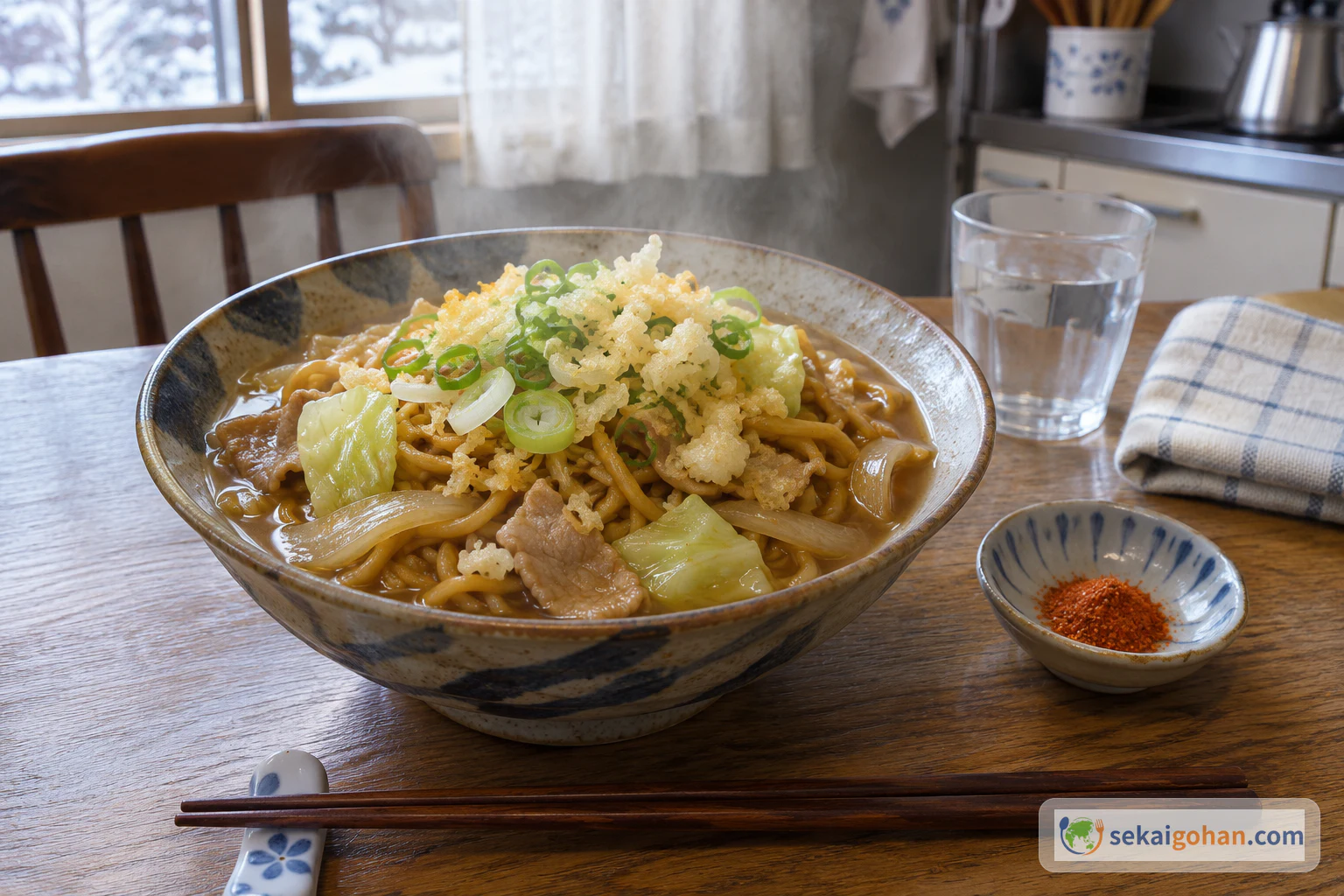
At the table
Serve each bowl the moment it is topped, with chopsticks and a small dish of ichimi chili on the side. Eat the first half as it comes. Then shake on a little ichimi, and the heat tightens the broth's sweetness for the second half. This is a quick, everyday meal, a bowl that began as an after-school dish in Kuroishi.
Variations
- Dashi broth. Swap the chicken stock powder for Japanese dashi powder. The broth loses its Western-style roundness and tastes of bonito and kelp, closer to the dashi broths of Kuroishi shops.
- Egg on top. Slip a poached or soft-cooked egg onto the finished bowl. The yolk mellows the broth and rounds off the salt. Pregnant women, older people, young children and anyone with a weak immune system should use a fully cooked egg.
- Kakiage instead of crumbs. Top with a small mixed-vegetable tempura fritter. It brings more oil, and the broth tastes richer.
- Half and half. Plate the yakisoba, eat half as it is, and then pour the boiling broth over the rest, the way bake-yakisoba is served. You taste the sauce clean first and then the dish it becomes.
Try one change at a time so you can tell what each does.
Storage and reheating
Store the noodles and the broth separately. Let them cool, then refrigerate promptly in covered, airtight containers. To reheat, warm the noodles and vegetables in the frying pan. Bring the broth back to a full boil before pouring. The microwave makes the noodles soft. Never leave broth standing at room temperature. Broth left over in the saucepan can season your next batch of yakisoba, or throw it away.
Frequently asked questions
Can I use thick sweet "chuno" sauce instead of Worcestershire?
You can, but it is thicker and sweeter. The noodles come out stickier and the sweetness takes over from the tang. For the Kuroishi flavour, stay with Worcestershire.
Can I use pork loin instead of pork belly?
Yes. Thin-sliced loin brings less fat, so the broth comes out lighter and the sweet-tangy sauce stands out more. Cook it the same way, until no pink remains in the centre.
What if I need to avoid sesame?
Fry in a neutral vegetable oil instead. You lose the toasted aroma that sesame oil gives the pork and vegetables, but the method stays the same. Check the labels on the tempura crumbs and the other packaged ingredients as well.
Can I add more cabbage?
A little more is fine, but a lot of extra cabbage releases water in the pan. The sauce then struggles to cling and its aroma fades. If you add more, fry in a hotter pan and keep it moving.