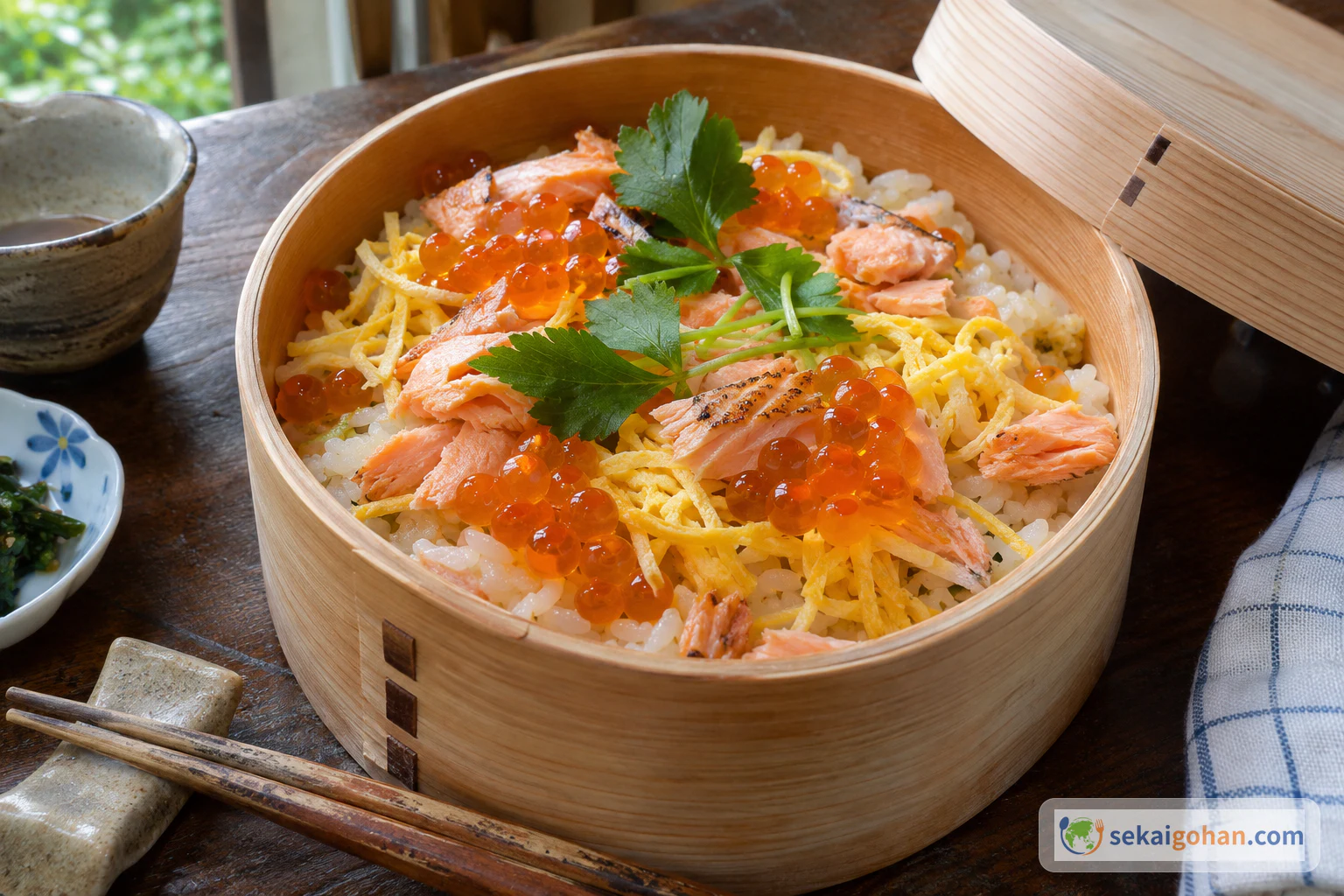
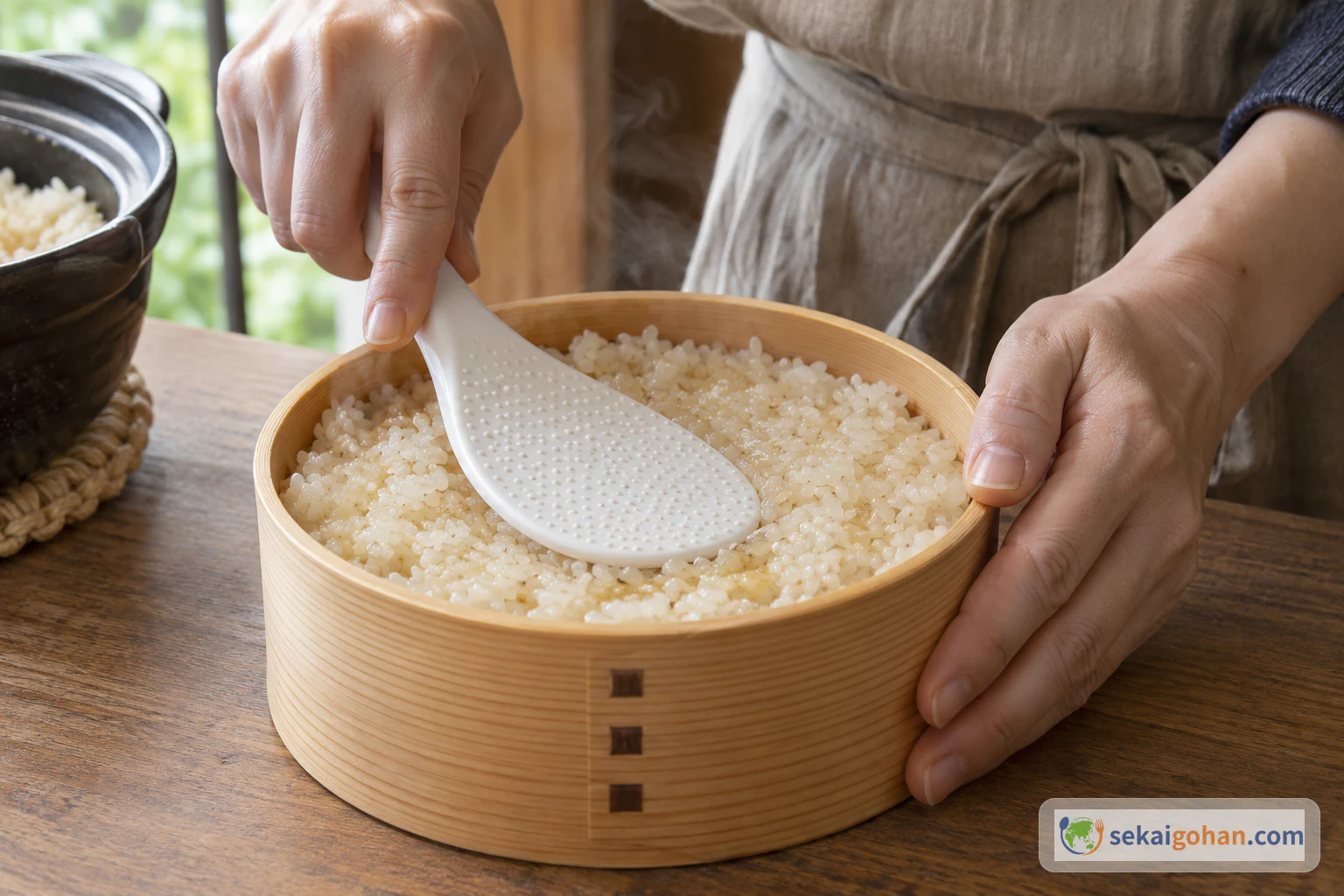
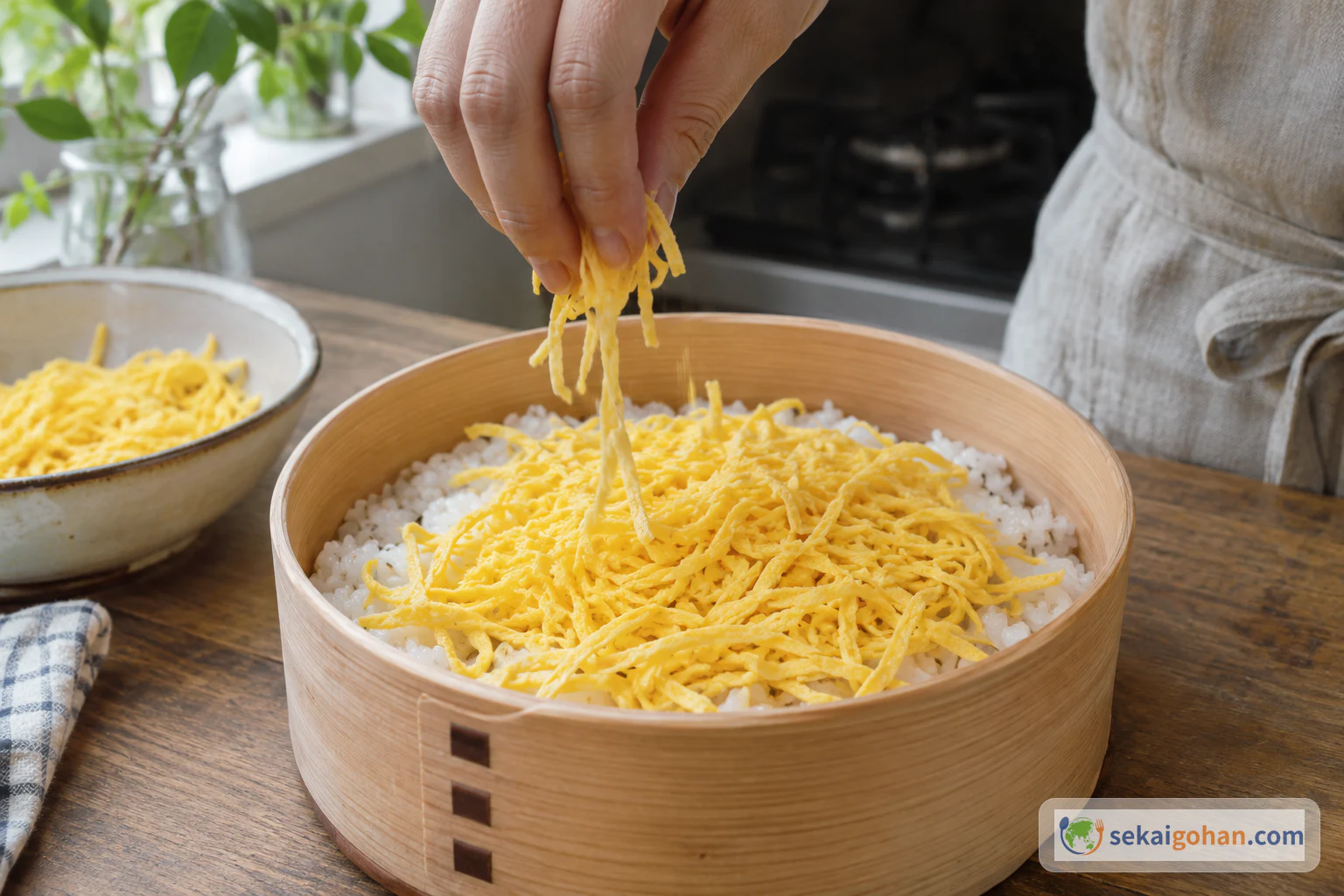
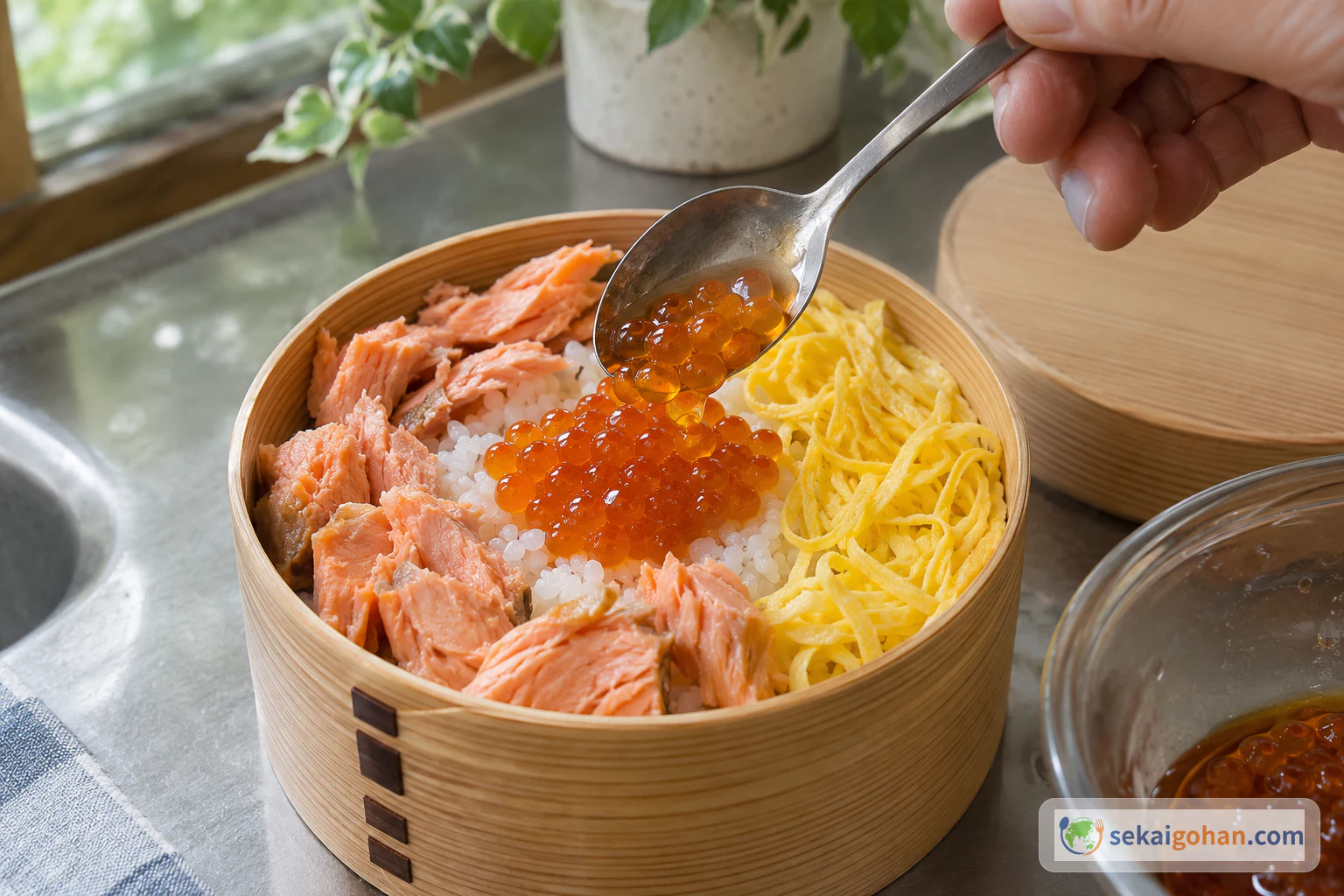
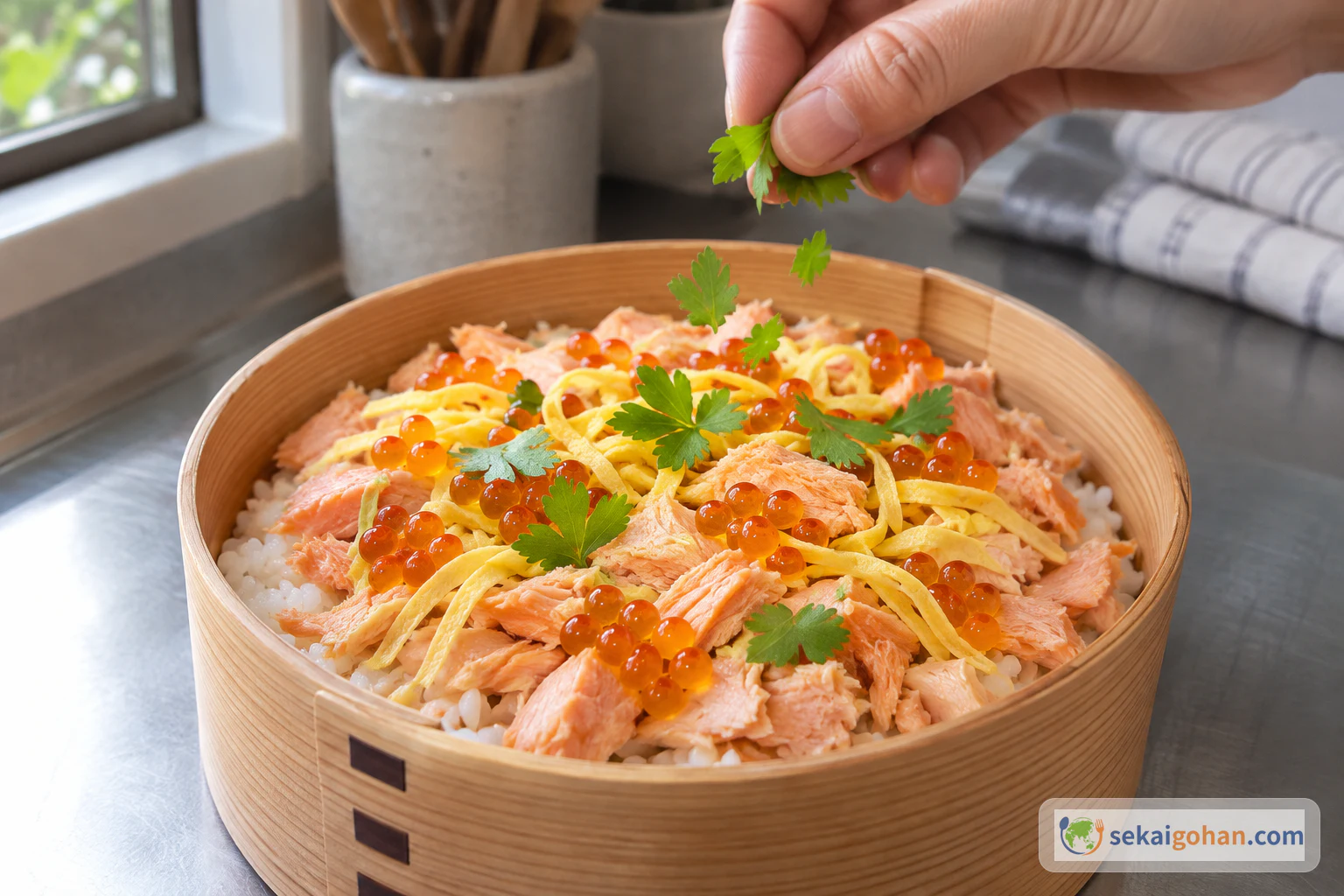
Lift the rice paddle out of the bentwood box and the smell of cedar rises with the steam, faint and clean, under the warmer smell of dashi. On top sit pale flakes of salmon, thin yellow ribbons of egg, a spoonful of glossy orange ikura in the middle and a few leaves of mitsuba. Wappameshi is rice seasoned lightly with dashi, packed into a round box bent from thin wood and crowned with whatever the sea or the mountains are giving that season. This is the Niigata way, with salmon and soy-marinated salmon roe. It tastes gentle and savoury, with the roe bursting salty-sweet against soft rice that carries a little of the wood.
Rice in a Bent Wooden Box, from Niigata's Old Streets
A wappa is a cylinder made by bending a thin sheet of wood into a ring. The first wappa were lunchboxes, and they still serve as everyday lunchboxes because they are light and easy to carry. The wood does real work. When the air is humid, the wood takes up moisture, and when it is dry, the wood gives it back, so the rice inside stays soft and plump and still tastes good after it has cooled. The box is part of the dish.
In Niigata, on the Sea of Japan coast, the box is cedar and the rice is cooked in dashi. The toppings come from the sea: salmon, ikura, snow crab, nodoguro (blackthroat seaperch), oysters. The ikura goes on last, marinated in soy sauce. In restaurants the whole box is steamed at once, which keeps the flavour in, takes away any fishy edge, and lets the cedar scent move into the rice. One well-known version pairs salted salmon with Koshihikari rice cooked in a stock of katsuobushi and kombu, with soy-marinated ikura set in the centre. Salmon, chicken and crab are everyday choices. Nodoguro comes in small numbers, and oysters appear from October to March.
The dish is usually traced to Inakaya, a restaurant on Furumachi-dori in Niigata city, in the mid-1950s. The exact year is not settled. The founder is remembered as having trained at a Ginza sushi house before coming home to Niigata. Kitaoji Rosanjin is credited with steering the seasoning toward a light, kombu-based taste, on the reasoning that a heavy flavour soon tires the eater.
Niigata and Aizu, two boxes
Inland, in the Aizu region of Fukushima, there is a wappameshi of its own, also written 輪箱飯. It is a different dish. The box is hinoki cypress, the rice is plain white rice, and the toppings come from the mountains: wild greens and mushrooms, with salmon or crab on some days. Part of the pleasure is the scent of the hinoki mixing with the toppings.
| Niigata (this recipe) | Aizu | |
|---|---|---|
| Box | Cedar | Hinoki cypress |
| Rice | Cooked lightly seasoned with dashi | Plain white rice |
| Toppings | Salmon, ikura, crab, nodoguro, oysters | Wild greens, mushrooms, sometimes salmon or crab |
| Finish | Soy-marinated ikura | The scent of the toppings and the hinoki |
Like bibimbap, wappameshi is rice and toppings served in their own vessel. The difference is that here the vessel changes the rice itself. For more dishes from across the country, see Japanese cooking.
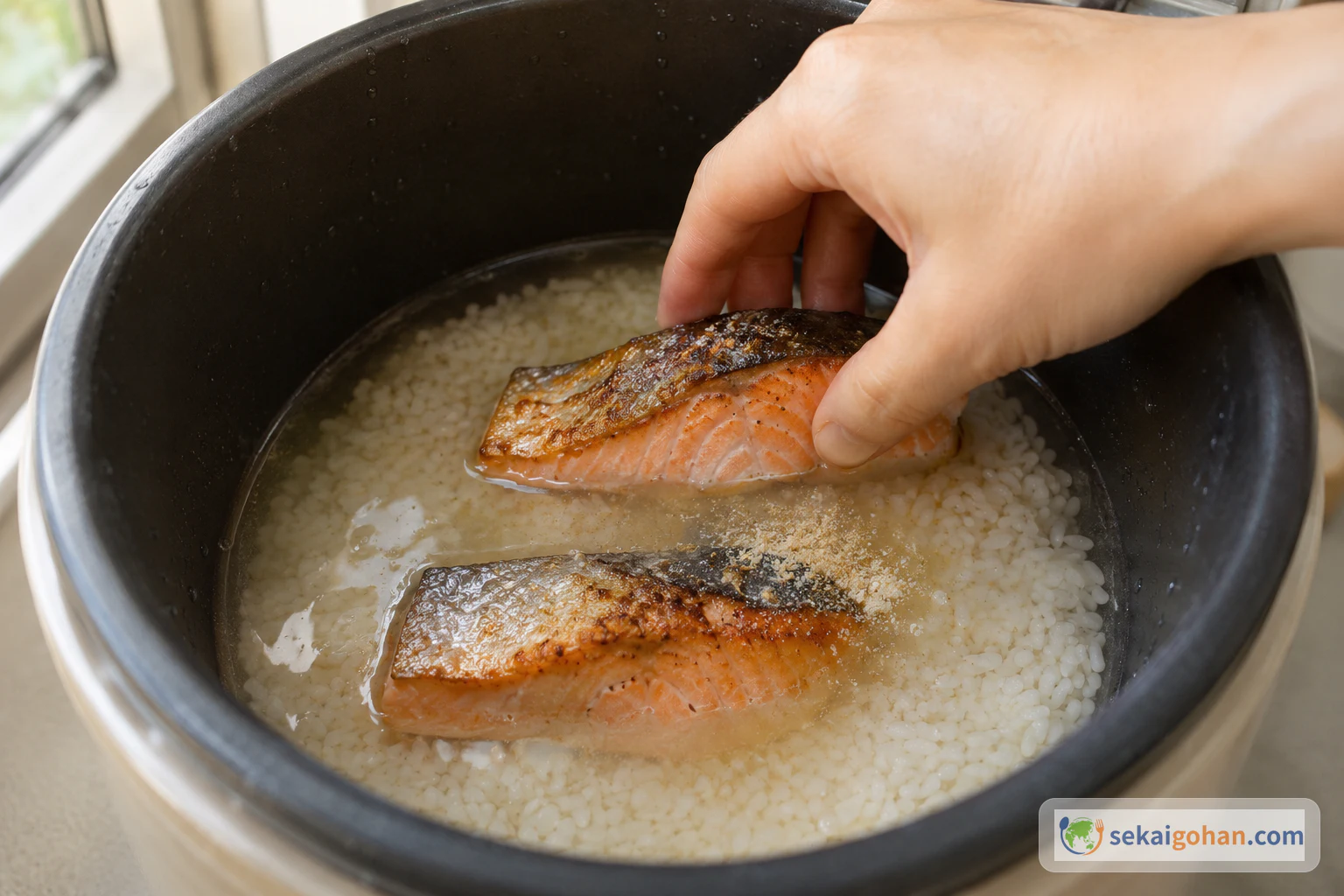
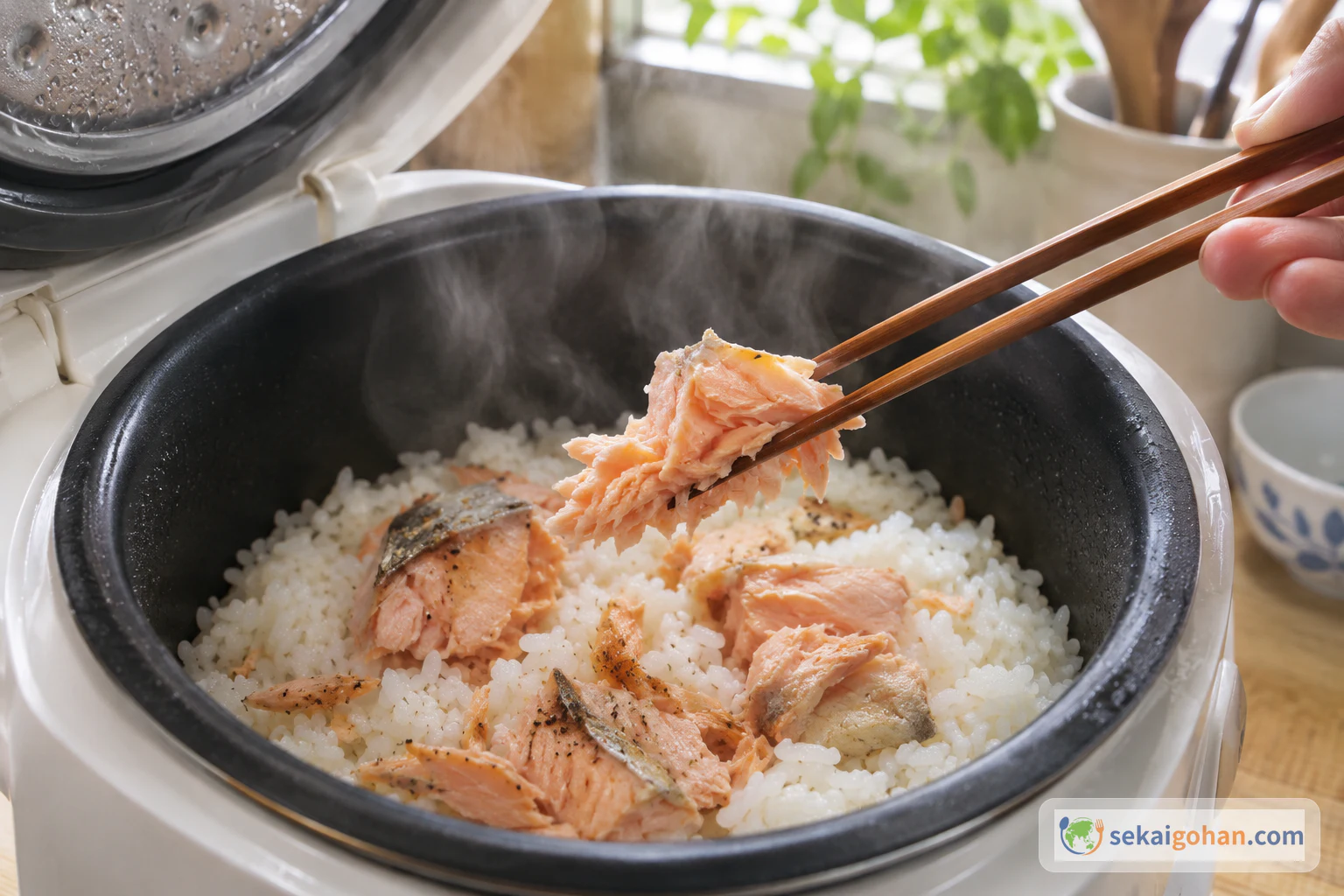
Restaurants cook the rice in a katsuobushi-and-kombu stock and steam the filled box. The home version cooks the rice with granulated dashi, sake and salt in a rice cooker, with the salmon cooking on top. It is a lighter, quicker relative of the restaurant box, not a copy of it.
Ingredients (serves 1–2)
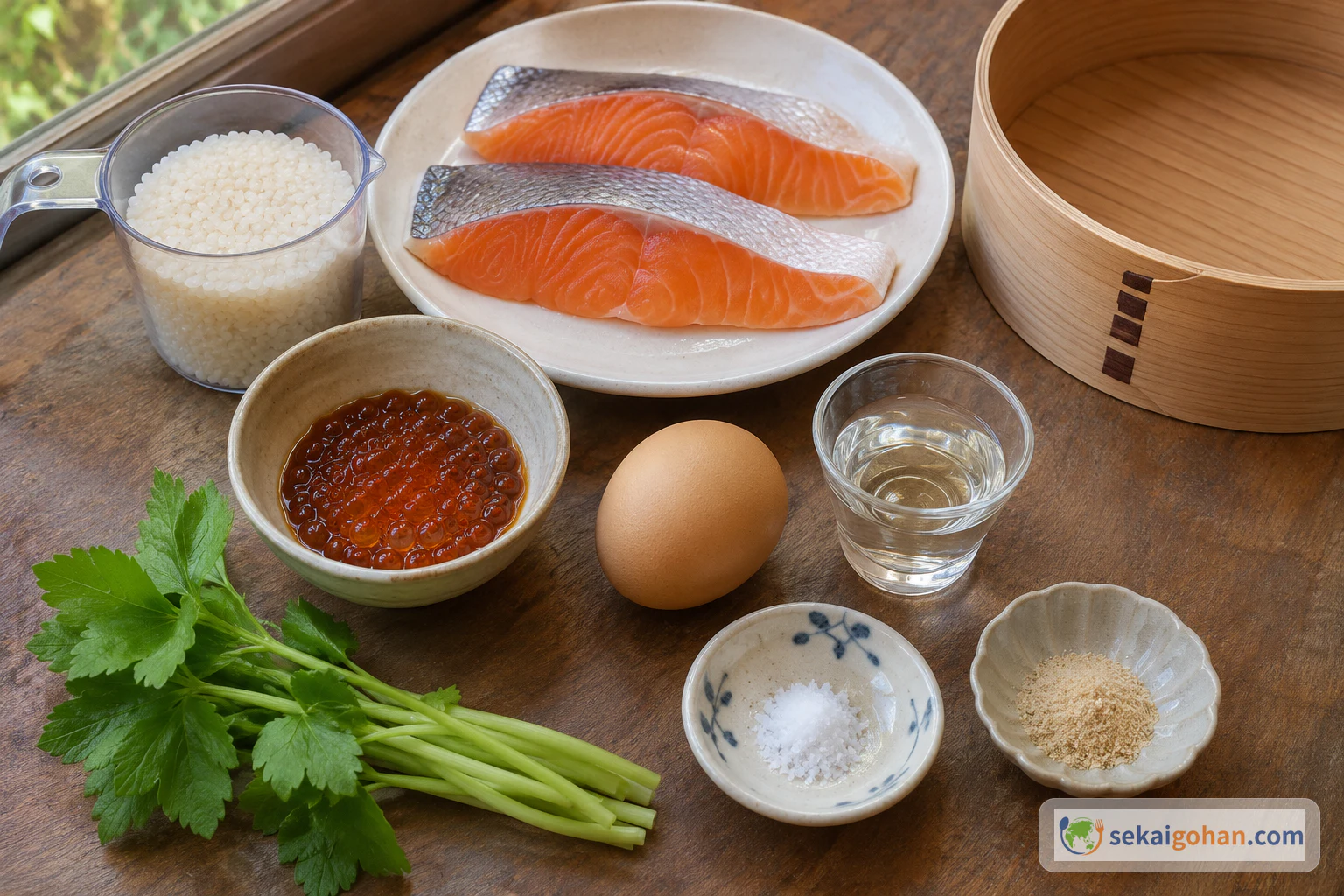
This dish contains fish (salmon), fish roe (ikura) and egg. Read the labels on the ikura and the granulated dashi for anything else they contain.
Ikura no shoyu-zuke is an uncooked fish-roe product. Buy a ready-made pack that has been produced under hygienic control, and follow the storage instructions and dates on the label. Do not make it at home from raw sujiko (unseparated roe).
Equipment
- Rice cooker
- Frying pan
- Knife and cutting board
- Bowl for rinsing the rice
- Measuring cup and measuring spoons
- Rice paddle
- Chopsticks
- Cedar bentwood box (magewappa), or a heatproof container
Choosing the Box, the Roe and the Salmon
The cedar box is what makes this wappameshi. It gives the scent and keeps the rice soft. Look for a cedar magewappa bento box at Japanese homeware shops or online. A heatproof container holds the rice and toppings just as well, but you lose the wood's moisture balance and its scent. Heat tolerance differs from box to box depending on the material. Check yours before you use it with anything hot or put it in a steamer.
Buy ikura shoyu-zuke chilled or frozen from a Japanese grocer or fishmonger. Thaw and keep it as the pack says. Mitsuba, sake and granulated dashi are on the same shelves. Kinshi tamago is sold ready-cut, which saves you a pan.
For the salmon, an ordinary fresh fillet suits the pinch of salt in the rice. Restaurants use salted salmon. If you do the same, the rice gets saltier, so cut back the pinch of salt, or leave it out.
The rice should taste of dashi in the background, never like seasoned rice that stands on its own. Measure the granulated dashi rather than adding by eye. The salmon and the soy-marinated roe bring the rest of the salt.
Method
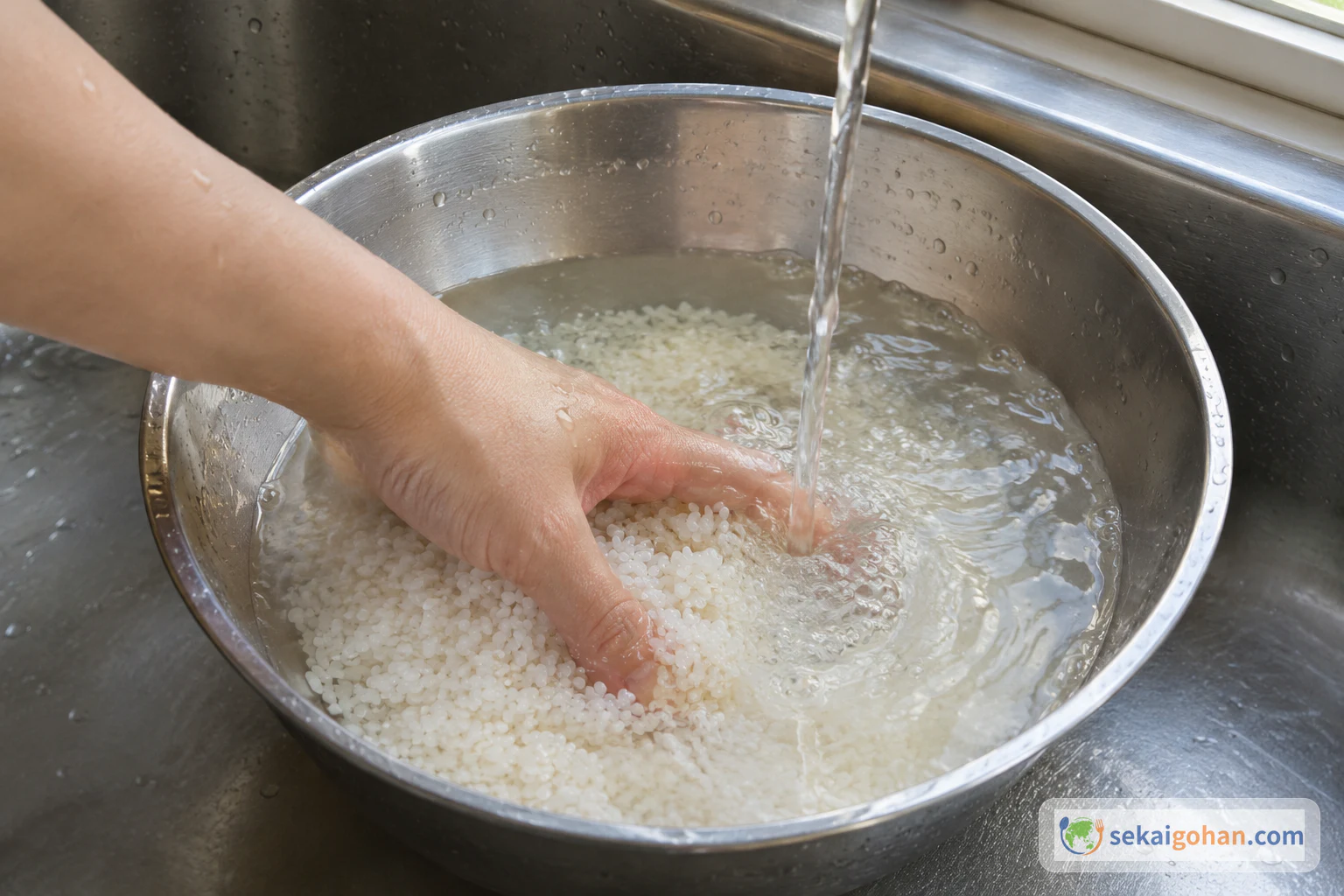
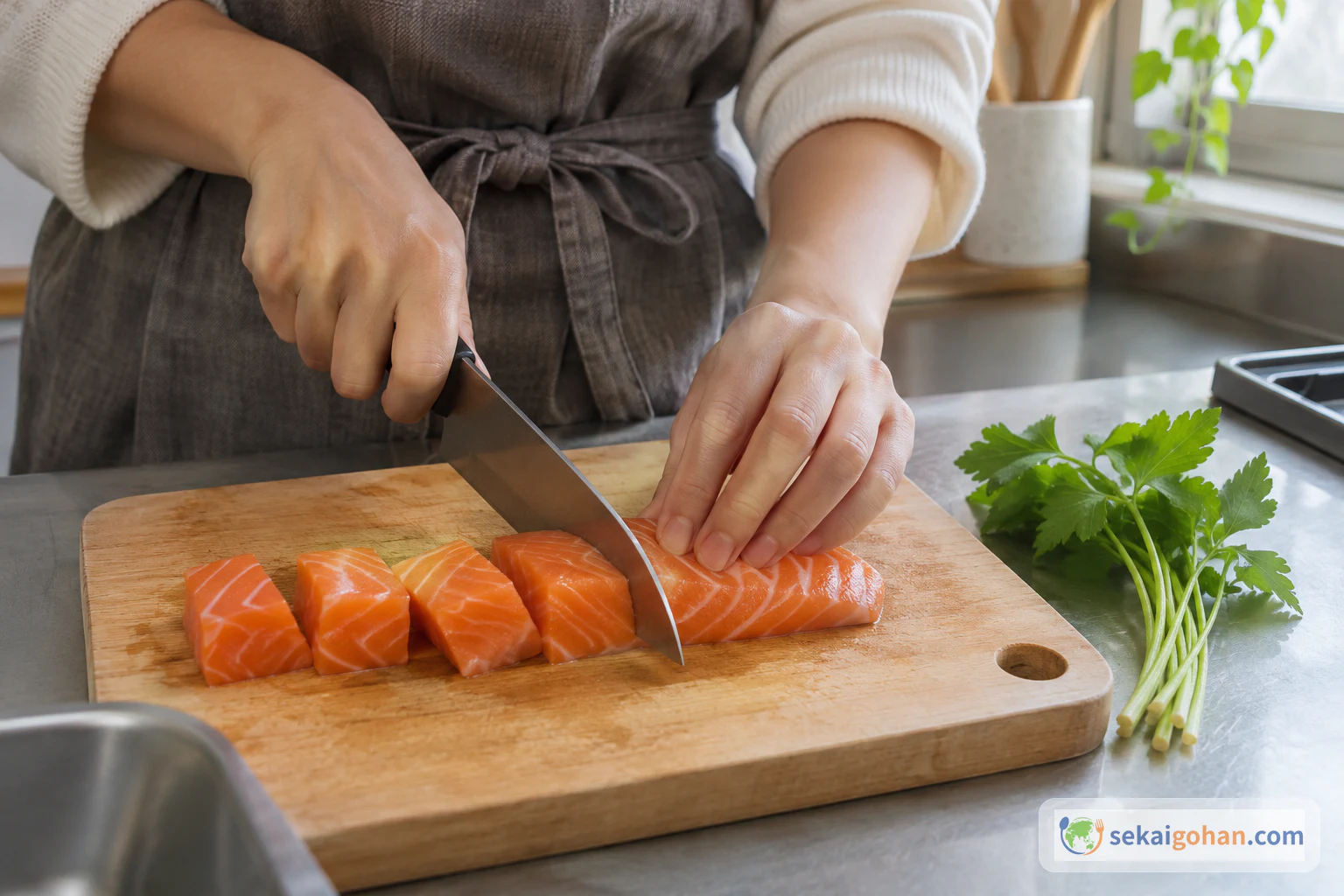
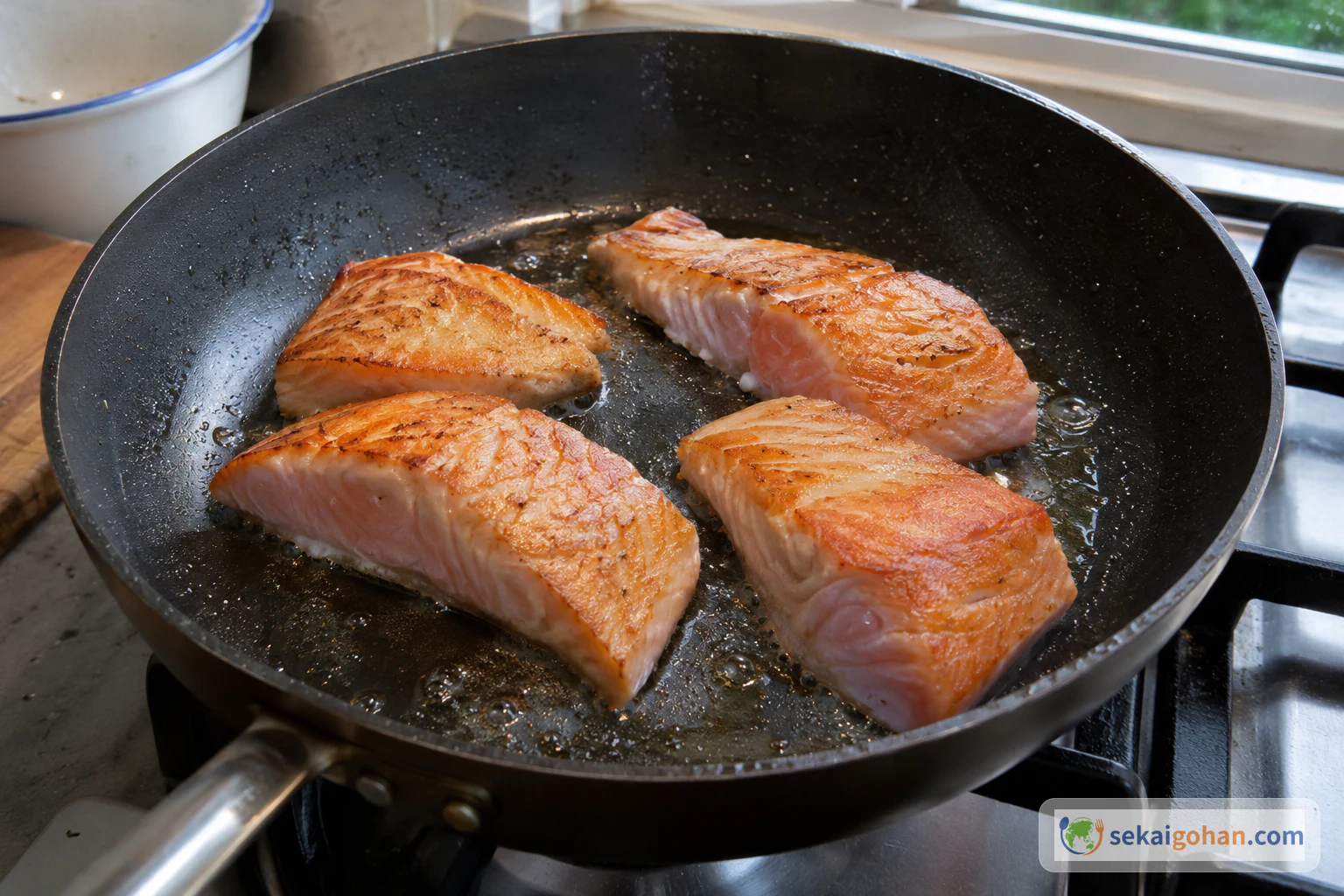
The only hands-off stretch comes early. While the rice soaks, cut the salmon and mitsuba and sear the salmon, so both are ready when the soaking ends. After that, the rice cooker does the work, and the box is filled in a few quick layers while the rice is still steaming. Have the kinshi tamago, ikura and mitsuba on the counter before the cooker finishes.
Pack the rice into the wappa as soon as it comes out of the cooker. The warm rice releases moisture that the wood takes up, and this is when the cedar scent starts moving into the rice.
When It Goes Wrong
| What you see | Why | What to do |
|---|---|---|
| The salmon is still raw in the middle after the rice is cooked | The pieces were thick or piled together | Return them to the hot rice under the lid until cooked through. Next time cut them more evenly and spread them out |
| The rice is sticky and pasty in the box | It was stirred hard or pressed down | Turn it with a cutting motion and level it lightly. Do not pack it down |
| The ikura is crushed and cloudy | Pressed with the spoon, or it touched something very hot for too long | Spoon it on last and set it down gently, straight from the cold pack |
| The rice is too salty | Salted salmon was used with the full pinch of salt | Cut back or leave out the salt when you use salted salmon |
| The rice turns hard after it cools | It was held in a plastic or glass container | Pack it in the cedar wappa, which keeps the rice soft as it cools |
Serving, Variations and Care
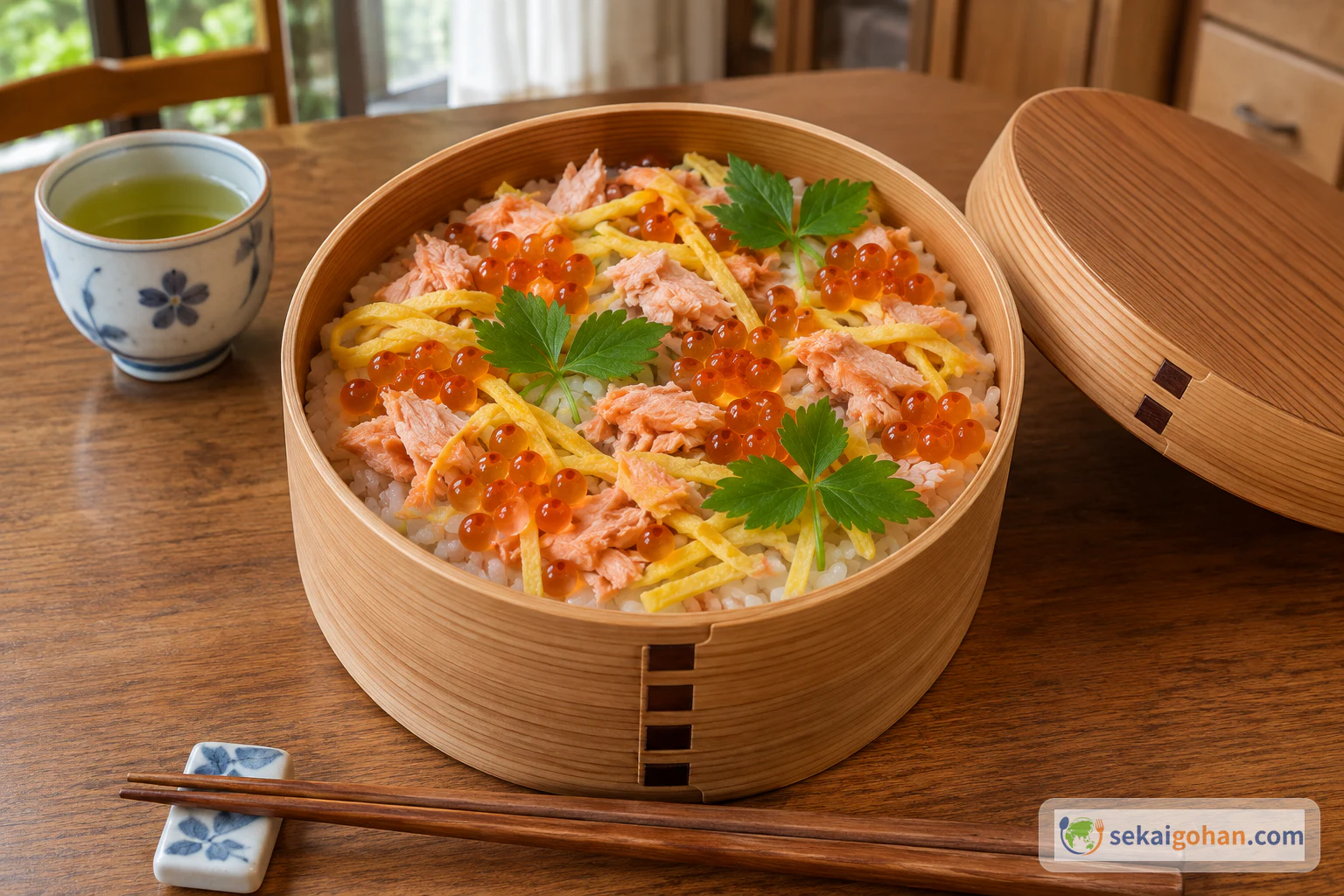
At the table
Bring the box to the table and eat straight from it with chopsticks, with a cup of tea alongside. It is good hot, and it is still good after it cools, because the wood keeps the rice soft. That is why a box can be packed for lunch. Each mouthful should catch a little of everything: dashi rice, salmon, egg, a few beads of roe and a leaf of mitsuba.
Variations
- Steamer finish. Put the cooked rice (cooked without salmon) in the wappa or a heatproof container. Top with kinshi tamago and raw salmon pieces, and steam until the salmon is cooked through. Then add the ikura and mitsuba. Because the salmon goes in raw, break a piece open and check that it is cooked through at the centre before you take it out. Check first that your box can stand the heat.
- Other Niigata toppings. Crab, nodoguro or, in season, oysters in place of the salmon. Each changes the box completely. Use one topping per box rather than mixing them.
- Salted salmon. Deeper, saltier fish, closer to the restaurant box. Reduce the salt in the rice.
- Aizu style. Plain white rice with wild greens and mushrooms, in a hinoki box. This is a different dish, so do not carry over the dashi-rice seasoning from this recipe.
Looking after the wappa and keeping leftovers
The wappa is natural wood. Keep it away from detergent and the dishwasher. Wash it with hot water and a soft sponge, then stand it on its side to dry. For leftovers, take the rice out of the box. Let it cool down, put it in a covered container, refrigerate it and eat it soon.
Frequently Asked Questions
Should I warm the ikura before it goes on?
No. Spoon it on cold, as it comes from the pack. It is an uncooked product, so keep it chilled as the label says until the moment you use it. The heat of the rice beneath is all the warmth it gets.
Can I put mitsuba in the rice cooker with the salmon?
Keep it out until the end. It goes on raw, which is why you wash it well. Its fresh, slightly sharp scent is the last layer of the box and would be lost in the cooker.
Did wappameshi begin in Niigata or in Aizu?
Both regions have their own long-established version. The Niigata box is usually traced to Inakaya in the mid-1950s, though some accounts place the dish's beginnings in Aizu. Either way, the cedar box of seafood and the hinoki box of mountain food grew up as separate dishes.
Can I take wappameshi to work or school in the box?
Yes. The wappa started out as a lunchbox, and it is light and easy to carry. The wood keeps the rice soft as it cools, which suits a packed lunch. Keep the box chilled, since it carries raw roe, and wash and dry the box as described above when you get home.