Galbitang: Whole Short Ribs in a Strained, Skimmed Broth
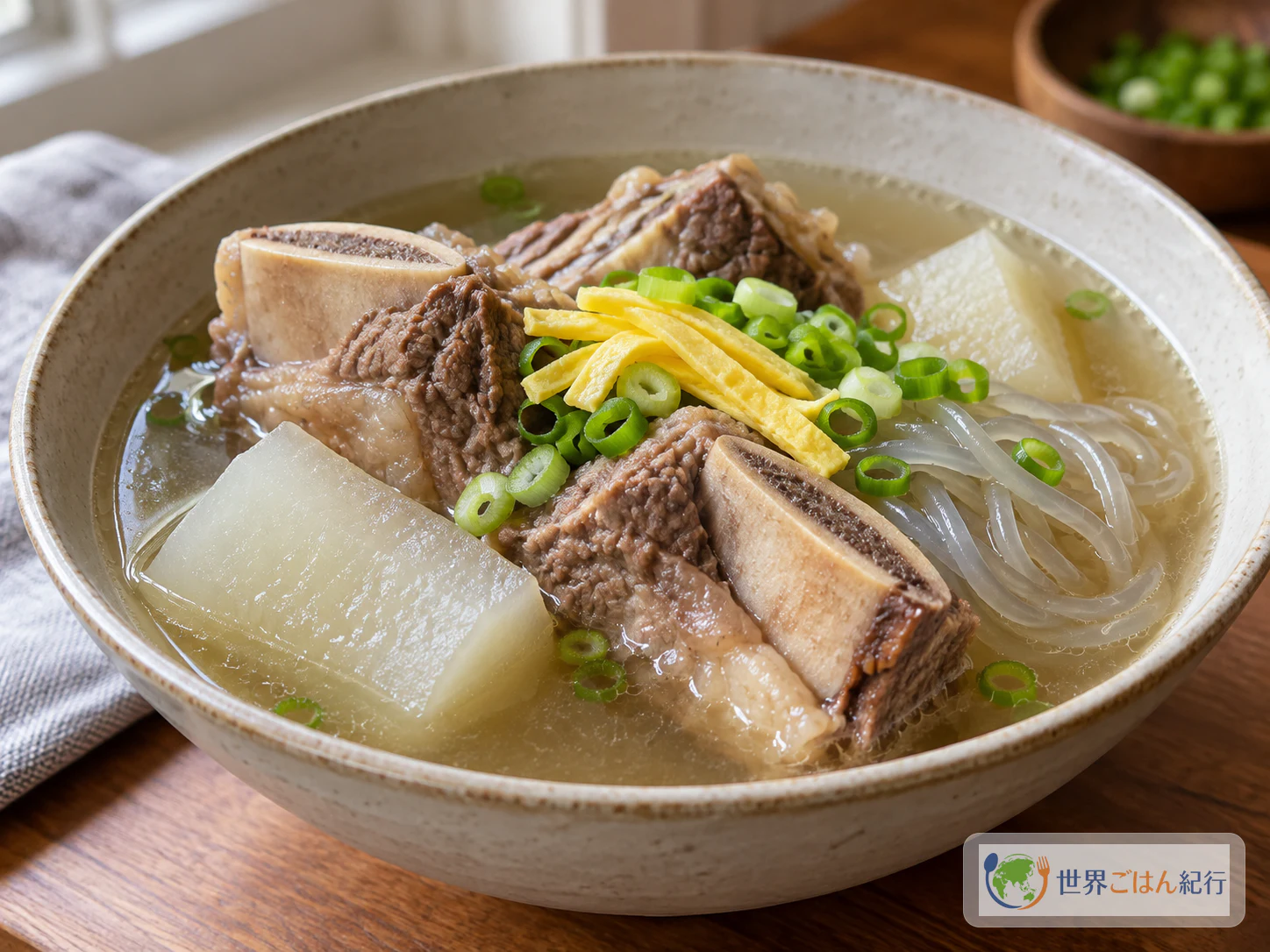
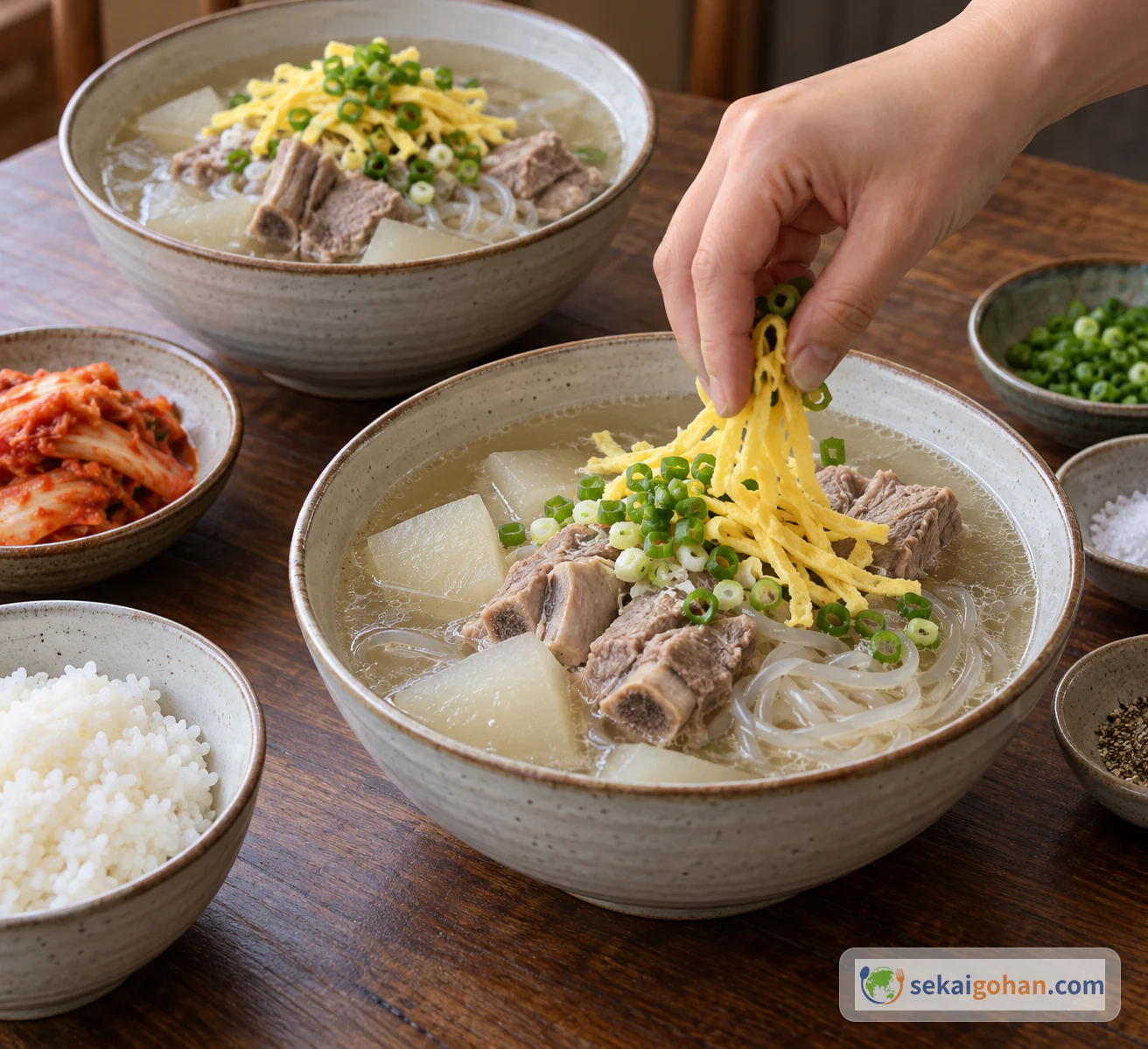
The ribs stay whole on the bone. Radish goes under them in the bowl, and the strained, skimmed broth and noodles are poured over last.
Bone-in short ribs and pieces of radish sit in a wide, shallow bowl, covered with clear broth and starch noodles. Thin strips of egg yolk and chopped green onion go on top. Korea's Basic Korean Dictionary defines galbitang (갈비탕) simply: a soup made by boiling beef short ribs for a long time.
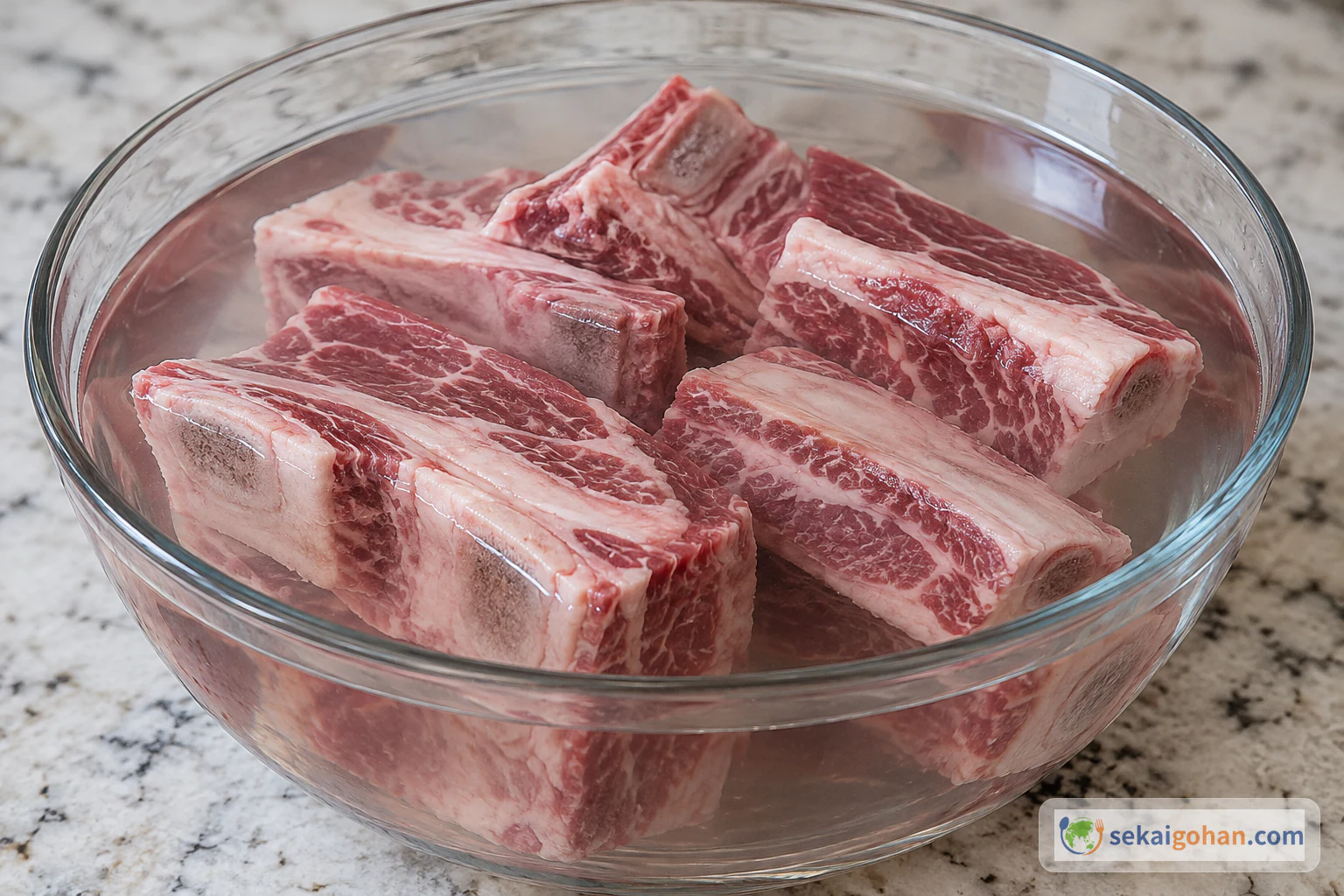
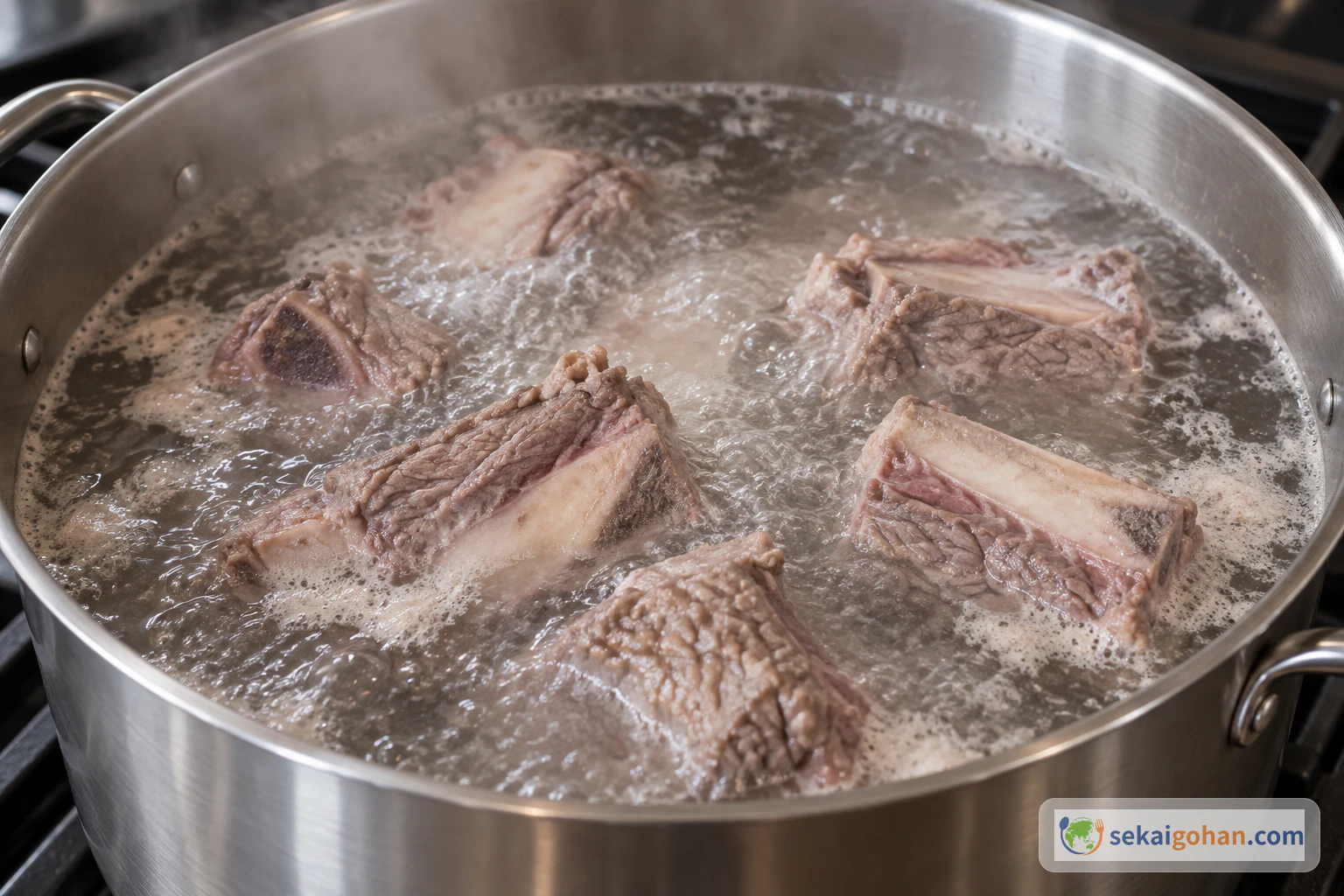
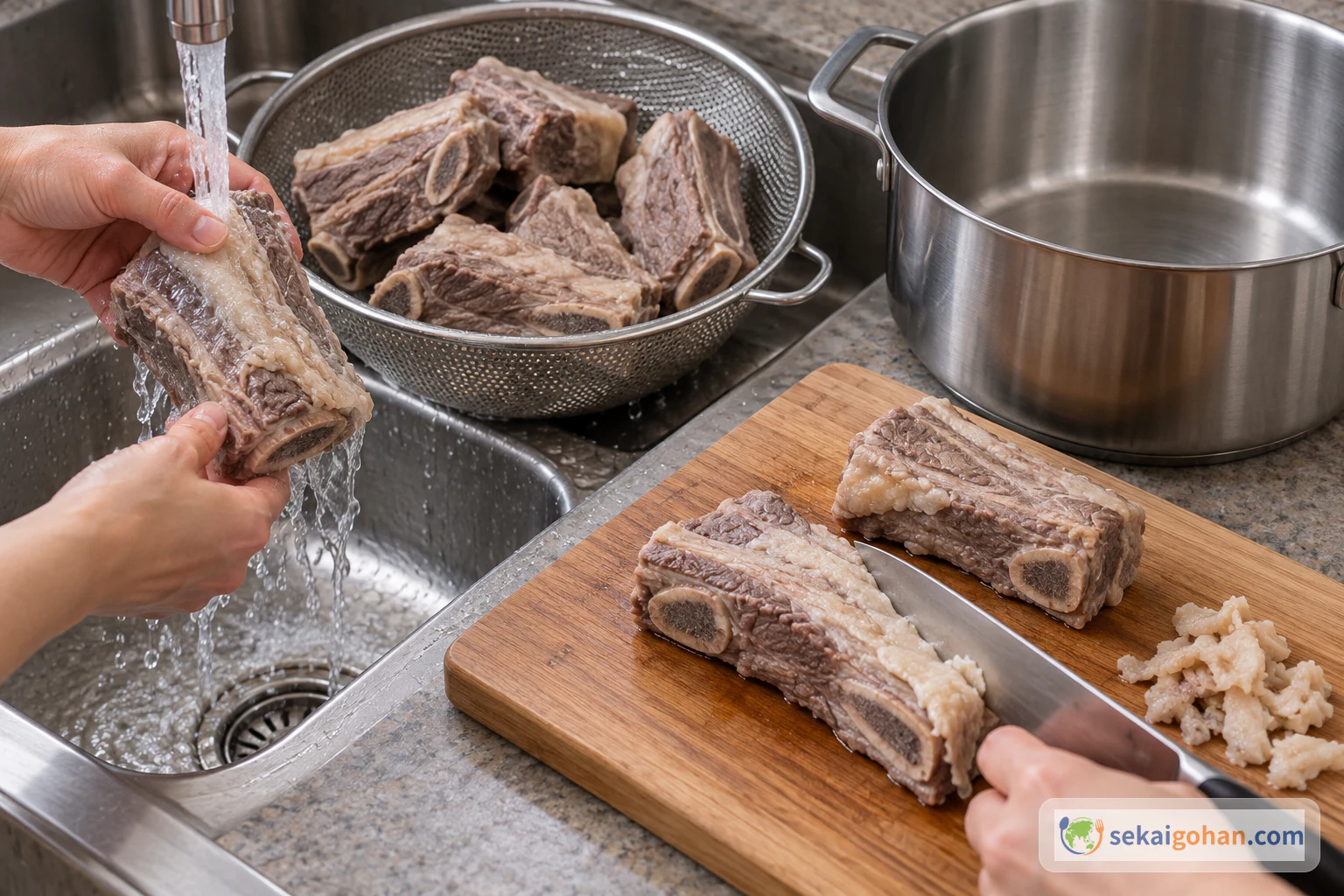
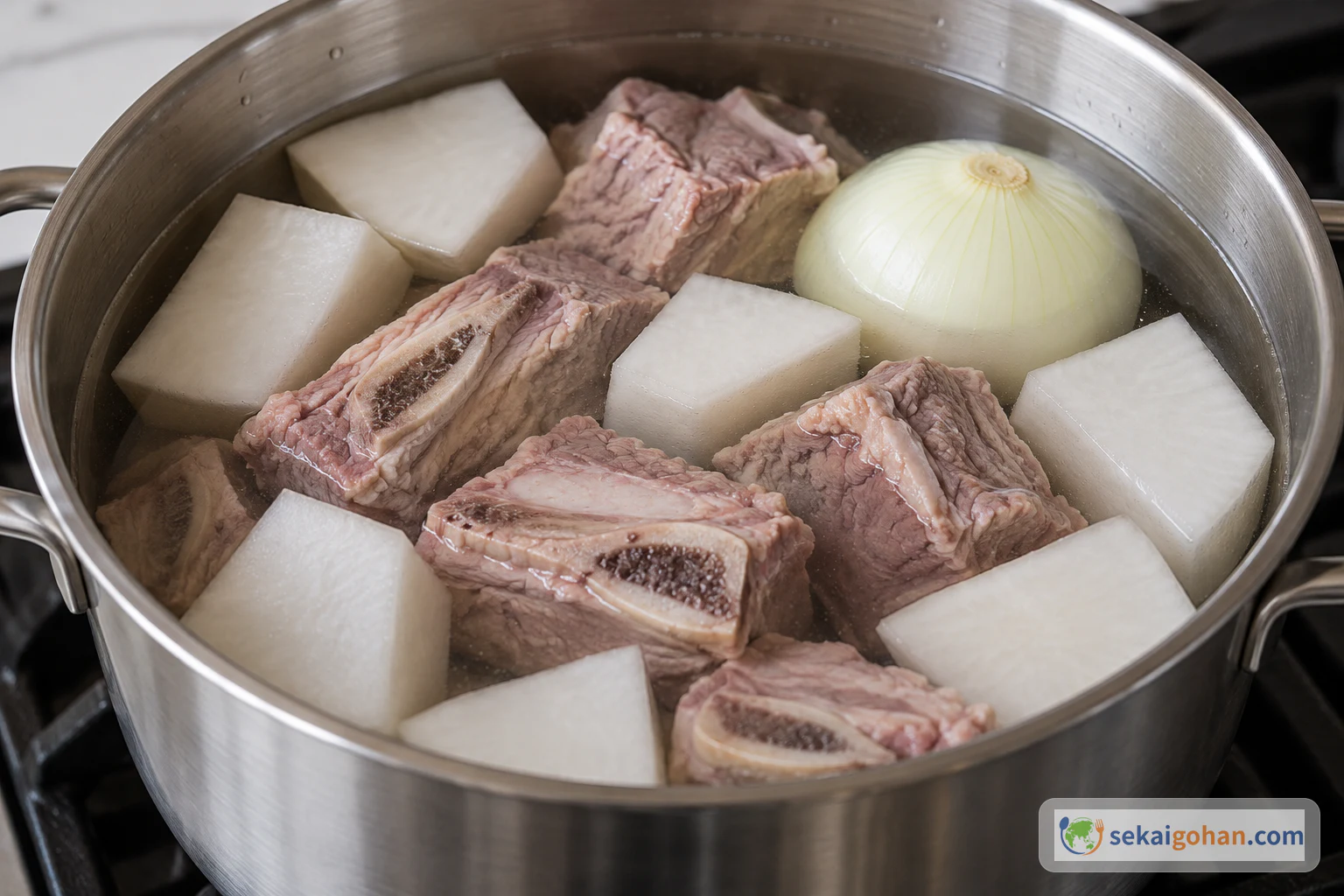
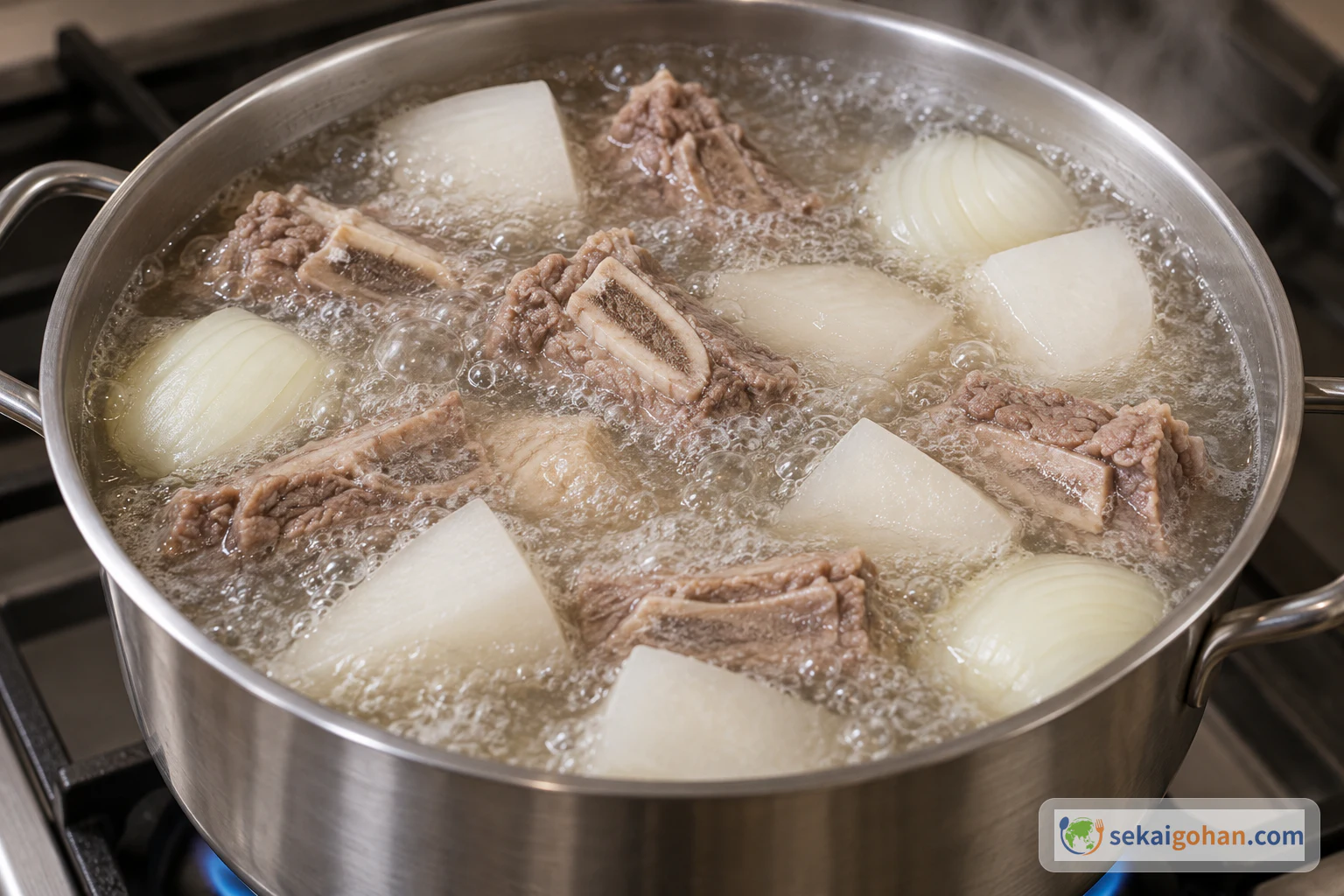
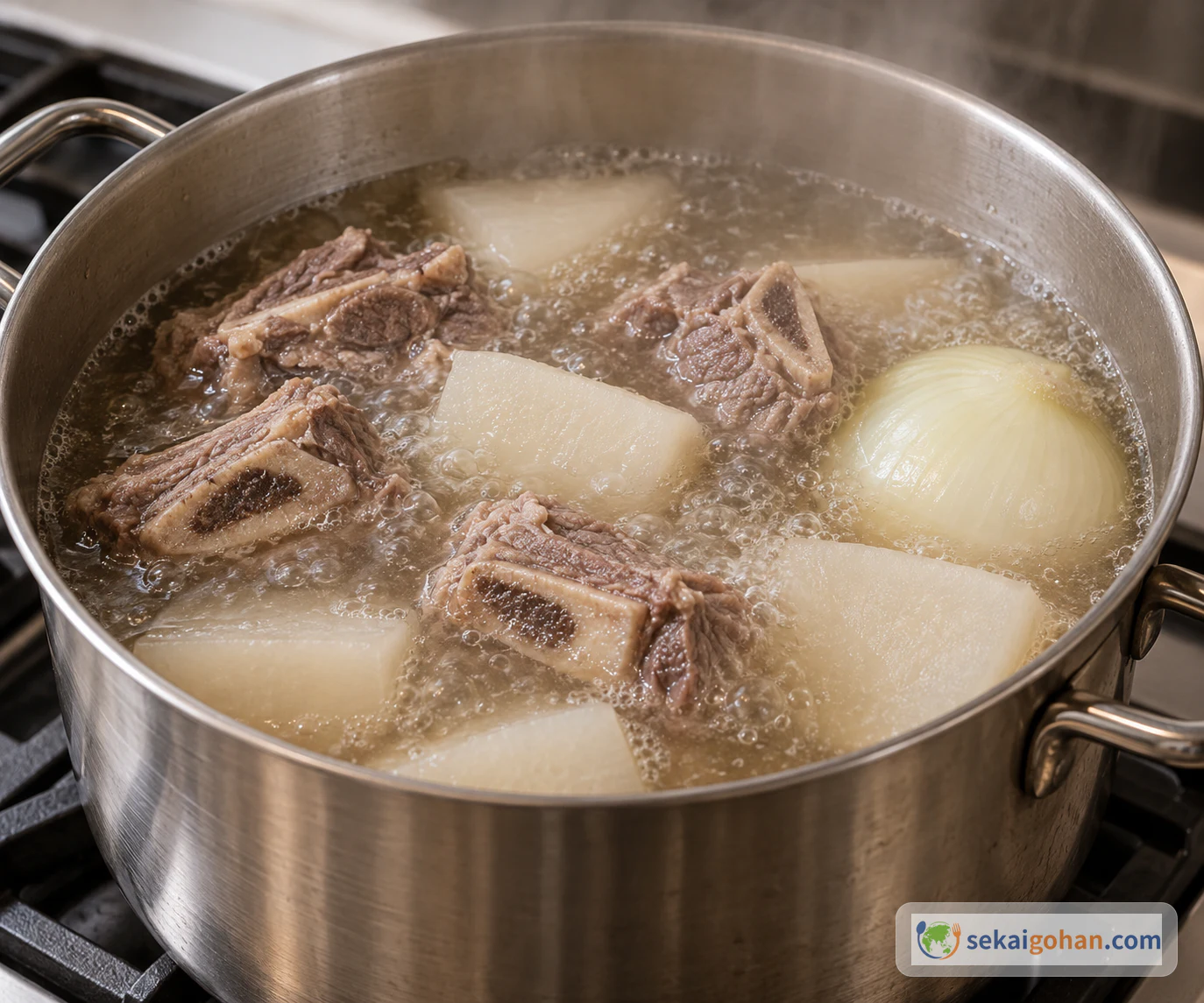
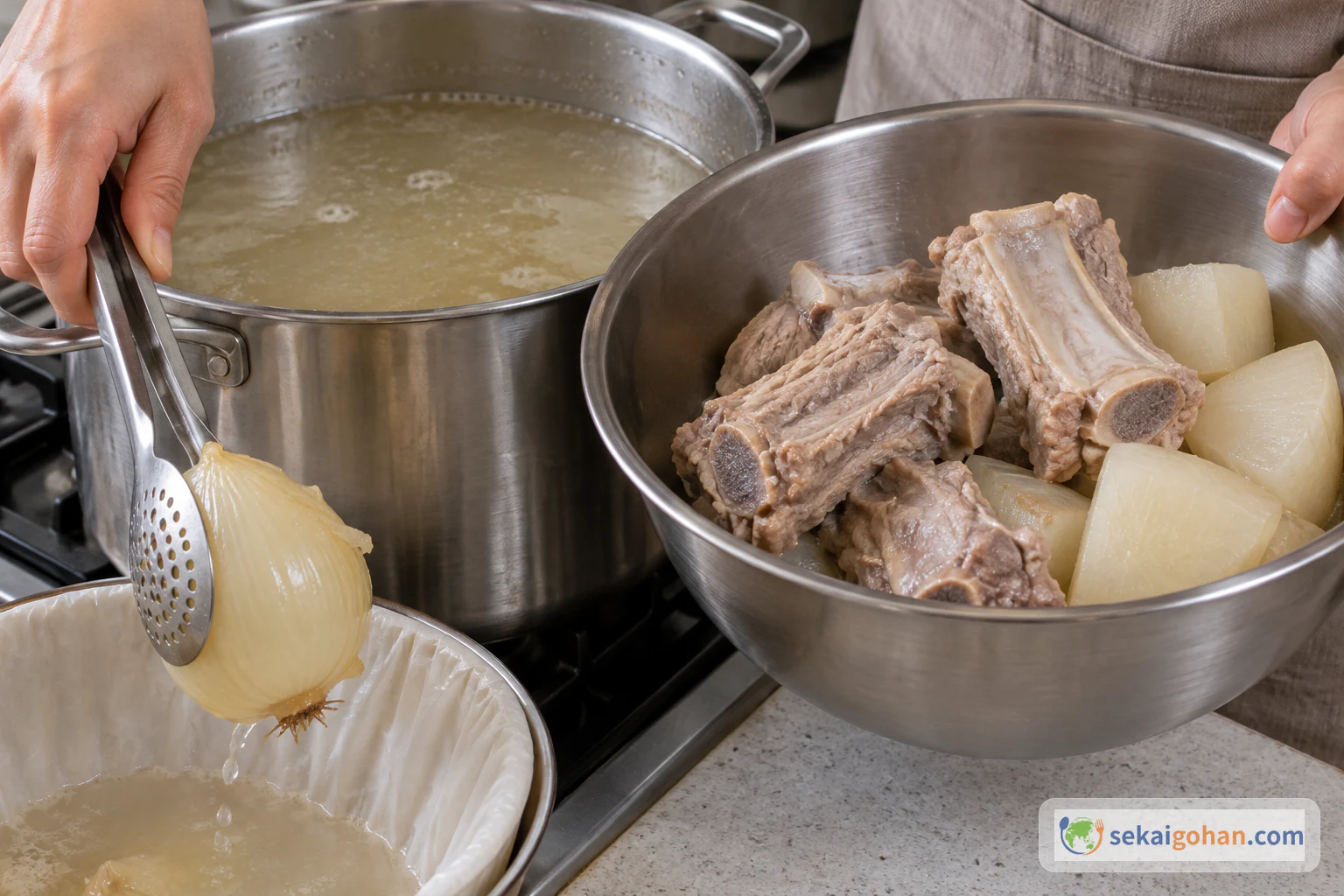
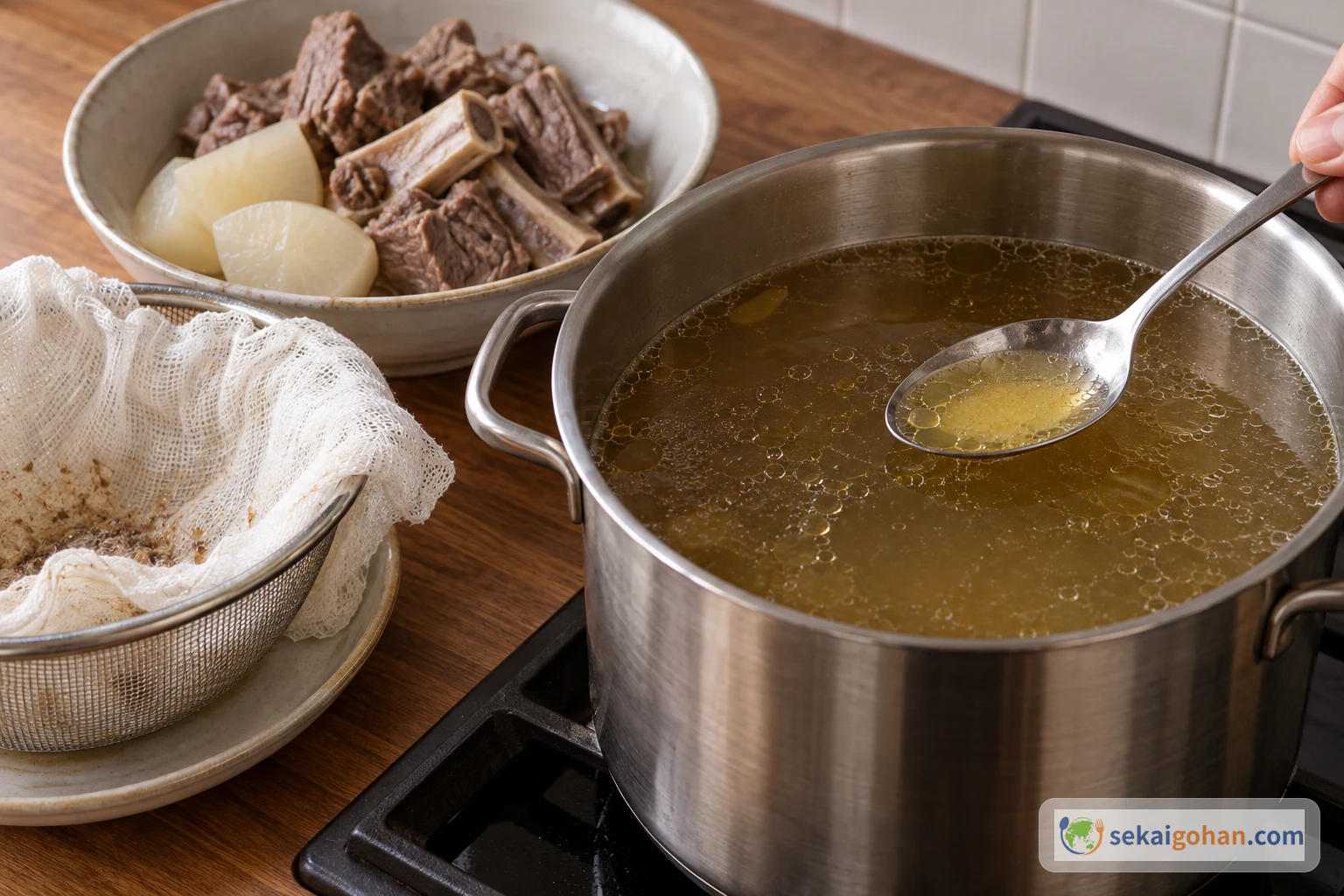
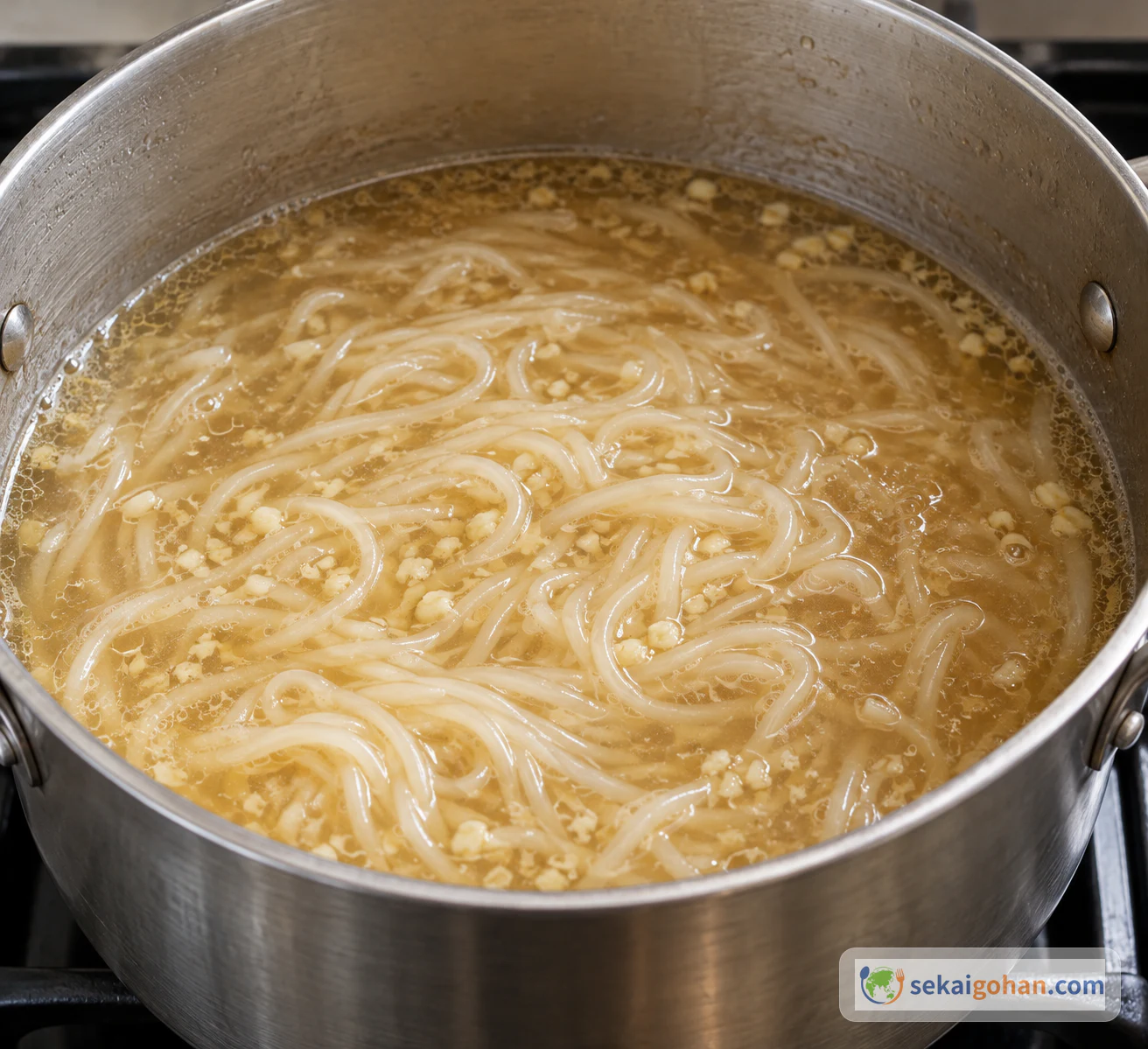
This article follows one written recipe, Maangchi's "Beef short ribs soup (Galbitang)," which Maangchi first posted in 2013 and updated in 2023. We have not test-cooked this recipe. Its method has a clear order: soak and blanch the ribs, boil them twice with radish and onion, strain and skim the broth, then cook noodles and garlic in it. The bowls are built at the very end. Maangchi describes the nonspicy version as the typical one and also gives a spicy finish, and both appear below.
Galbitang is not the same dish as galbi-jjim, the braised short rib dish, or galbi, the grilled ribs. Dak-galbi is a chicken dish and is also unrelated. For other dishes from the same table, see our Korean recipes.
What Kind of Soup Is Galbitang?
The Encyclopedia of Korean Culture, published by the Academy of Korean Studies, defines galbitang as a soup cooked with cut beef ribs and notes the names garitang and gal-itang. It says the dish appears in royal banquet menus from the 1890s. It treats the idea that ribs were eaten earlier, from the late Goryeo period, as a presumption rather than an established fact, so no firm origin date can be given.
A 1936 cookbook, Joseonmussangshinsikyorkjaebeop by Yi Yong-gi, also has a passage on the dish, reproduced by the Korea Traditional Knowledge Portal. That version seasons the cooked ribs separately before returning them to the broth. It is a different preparation and is mentioned here only as a historical record. Nothing from it is used in the recipe below.
Maangchi's notes also carry a personal memory: eating spicy galbitang for breakfast at a friend's home in Mokpo during college, at a table of seafood side dishes. Maangchi pairs kimchi with this heavy soup too. These are Maangchi's own experience and way of eating, not a rule for every Korean household.
How other descriptions differ
VISITKOREA, the Korea Tourism Organization's site, describes a different general sequence. It shows that galbitang has more than one form, but its times and aromatics are not part of this recipe.
| Point | Maangchi's written recipe (used here) | VISITKOREA's general description |
|---|---|---|
| Cold-water soak | Soak, with no time given | 2 to 3 hours |
| After blanching | Boil with radish and onion | Cook with radish and aromatics such as green onion and garlic |
| Boiling time | 1 hour at medium-high, then 1 hour at medium | 30 minutes to 1 hour |
| At the table | Ribs, radish, broth and noodles in the bowl, with rice and kimchi alongside | Eat the ribs first, then mix rice into the remaining soup; glass noodles are mentioned as an add-on |
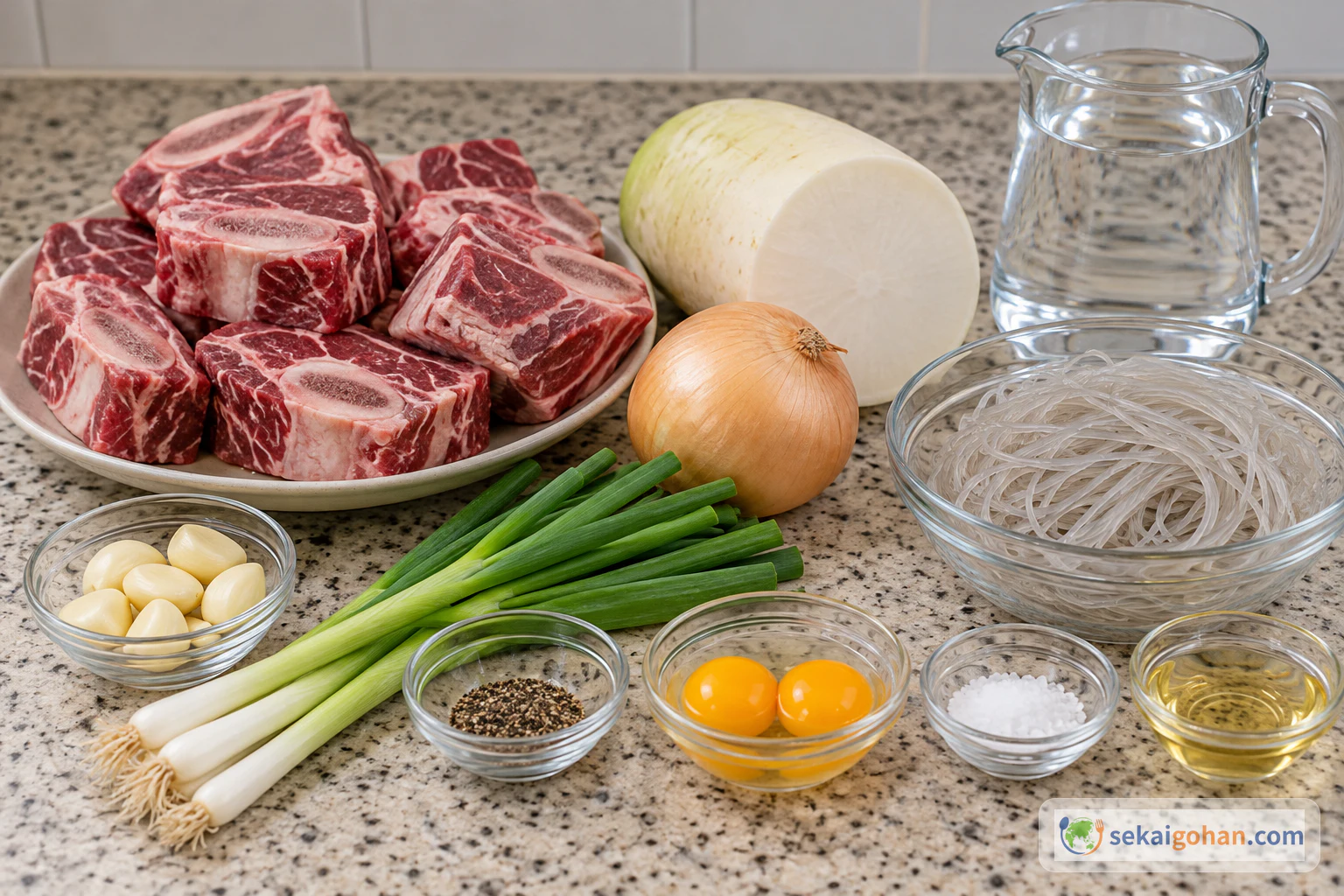
Ingredients for 2 Servings
Equipment
- Large pot
- Strainer
- Cheesecloth
- Stainless-steel bowl
- Spoon for skimming
- Knife, with a cutting board for the cooked radish
- Separate cutting board and utensils for raw meat
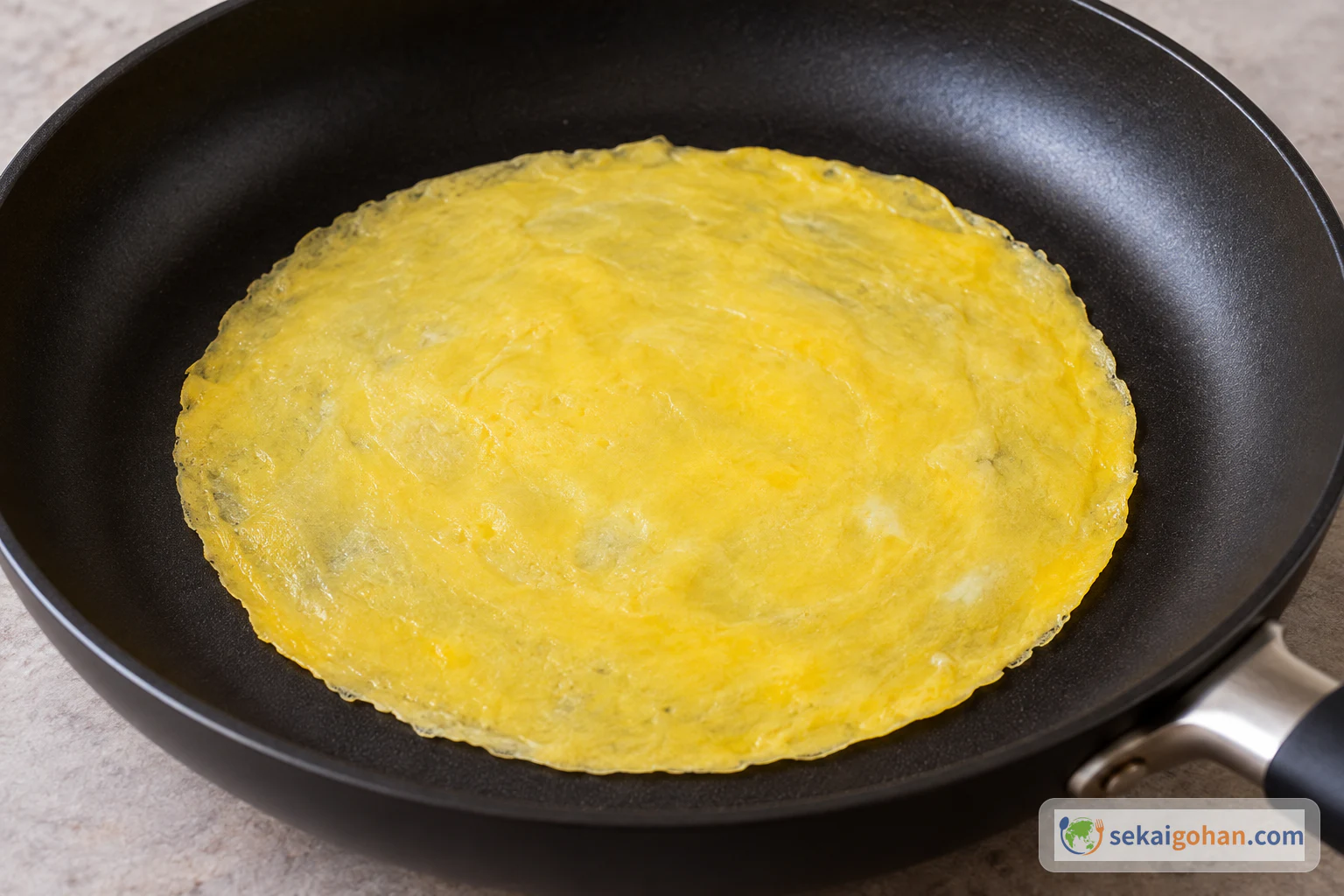
- Nonstick pan, for the optional egg garnish
- 2 large shallow bowls
Choosing the Radish, Ribs and Noodles
- Radish: Use Korean radish or daikon.
- Ribs: Look for bone-in beef short ribs.
- Noodles: Choose starch noodles and judge them by texture: soft yet firm, with no hard center.
Rinsing raw meat can splash germs onto nearby food, the sink and the counter, so keep splashing to a minimum and keep raw meat and its tools away from other food. For the egg garnish, cook the yolk until it is firm throughout, as step 10 requires. The garnish is optional and can be left out.
Fixes at the Stove
| What you notice | What to do |
|---|---|
| The noodles still have a hard center | Keep boiling until they are soft yet firm all the way through |
| Fat is still floating on the broth | Keep spooning it off before adding the noodles |
| The yolk sheet isn't firm after resting on the hot pan | Return it to low heat and keep cooking until firm throughout, or leave out the garnish |
| The broth has cooled by the time the bowls are ready | Reheat the broth and noodles in the pot before pouring |
| The bowl tastes too mild | Add salt, chopped green onion and pepper at the table |
Variations: Spicy Bowls, Egg and Noodles
Spicy or nonspicy: Maangchi calls the nonspicy version typical but doesn't present it as a national rule. The spicy seasoning is mixed in each bowl, so the pot of broth stays the same for both and you can make one bowl of each.
Egg garnish: The yolk strips belong to the nonspicy bowl and are optional. Without them, the bowl is still finished with green onion.
At the table: VISITKOREA mentions eating the ribs first and then mixing rice into the remaining soup, and it notes glass noodles as an add-on. These are general descriptions rather than part of Maangchi's recipe, but they show other ways people enjoy the soup.
Frequently Asked Questions
Are galbitang and galbi-jjim the same dish?
No. Galbitang is a soup, while galbi-jjim is a separate braised dish. Their ingredients and methods shouldn't be swapped.
Can I use regular daikon instead of Korean radish?
Yes. Maangchi lists Korean radish or daikon.
Are the noodles required?
Maangchi's ingredient list calls starch noodles optional, but the directions add about 1 cup and serve the soup with noodles. No noodle-free method is given, so this article doesn't guess at changes to the water or cooking.
How long should the ribs soak?
Maangchi says to soak them in cold water but gives no time. VISITKOREA's general description says 2 to 3 hours, but that belongs to a different method, so it isn't carried over into this recipe.
Why does the beef amount read "1 kg (about 3 pounds)"?
That is how Maangchi lists it, and the two figures don't match as a conversion. Both are kept as published because nothing in the recipe shows which one was intended.
Is rinsing the raw ribs safe?
Maangchi's method includes rinsing and soaking, and this article keeps those steps with added handling precautions: limit splashing, wash the sink, tools and your hands afterward, and keep separate boards and utensils for raw meat. The CDC's warning about washing is worded for raw chicken and is applied here as a general precaution. The ribs then go through the 10-minute blanch and the two one-hour boils, but this article makes no safety guarantee based on those times.
Is about 1 minute per side on residual heat enough for the yolk?
The minute per side is Maangchi's description, not a verified food-safety standard. Use firmness as the condition instead: the FDA advises cooking eggs until yolk and white are firm, so return the pan to low heat if the yolk isn't firm throughout. You can also leave the garnish out.
Can I make it ahead or keep leftovers?
Maangchi mentions refrigerating a large batch overnight so the fat solidifies and can be removed, and the serving directions say to reheat the soup. That is a preparation method, not validated leftovers guidance. This article gives no safe storage period, cooling procedure, storage temperature or reheating temperature because the sources don't establish them.
How long does the whole recipe take?
No total time is given. The stated times are the 10-minute blanch, two one-hour boils, a few minutes for the noodles and about 1 minute per side for the egg garnish. The soak has no stated time.
Sources
- Maangchi, "Beef short ribs soup (Galbitang)." The only source for this recipe's ingredients, amounts, method, spicy finish and egg garnish, and for the author's notes on the typical version, the Mokpo memory, kimchi and overnight chilling. The written recipe was used, not the video. https://www.maangchi.com/recipe/galbitang
- Korea Tourism Organization / VISITKOREA, "Galbi Soup (갈비탕 / Galbitang)." Used only to compare a general preparation and ways of eating. https://english.visitkorea.or.kr/svc/contents/contentsView.do?vcontsId=182500
- Academy of Korean Studies, "갈비탕," Encyclopedia of Korean Culture. Used for the definition, alternative names, 1890s banquet records and the presumed earlier consumption of ribs. https://encykorea.aks.ac.kr/Article/E0000651
- Korea Traditional Knowledge Portal, "Galbitang." Used only for the record of a distinct passage in a 1936 cookbook. https://koreantk.com/ktkp2014/kfood/kfood-view.view?foodCd=105051
- National Institute of Korean Language, "갈비탕," Basic Korean Dictionary. Used for the dish name, romanization and definition. https://krdict.korean.go.kr/eng/dicSearch/SearchView?ParaWordNo=14871&blockCount=10¤tPage=1&exaType=&mainSearchWord=%EC%83%88&nation=eng&nationCode=6&proverbType=&searchType=E&sort=W&viewType=A&wordMatchFlag=N
- U.S. Centers for Disease Control and Prevention, "Food Safety (prevention)." Used for keeping raw meat separate and for the risk of spreading germs by washing. The washing wording concerns chicken and is applied here only as a general precaution. https://www.cdc.gov/food-safety/prevention/index.html
- U.S. Food and Drug Administration, "What You Need to Know About Egg Safety." Used for cooking eggs until yolk and white are firm. It gives no guidance on residual heat for a thin yolk sheet. https://www.fda.gov/food/buy-store-serve-safe-food/what-you-need-know-about-egg-safety