Hyeonmi-cha: A Tea Made from Toasted Brown Rice and Water
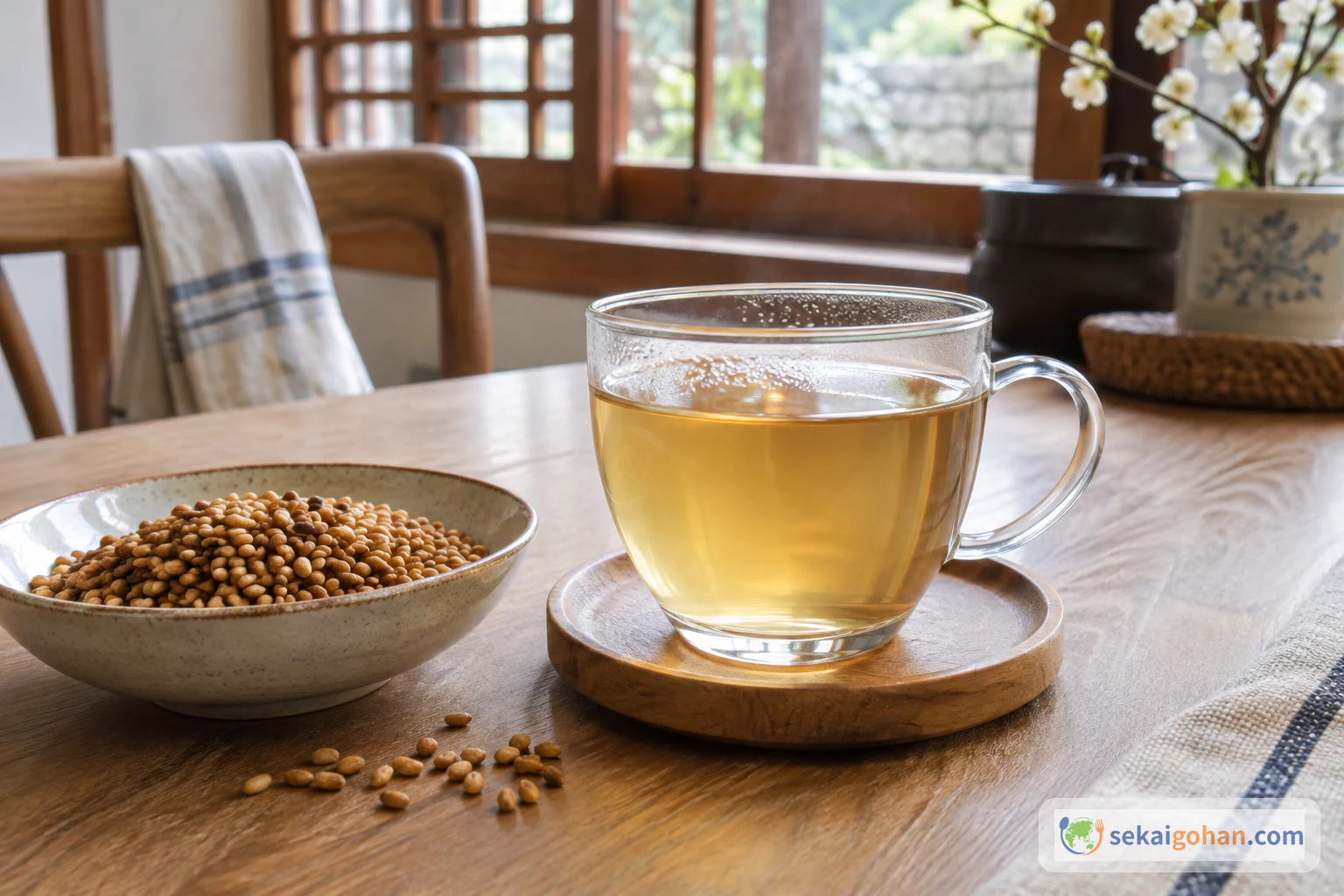
Only roasted brown rice and water go into this tea, with no tea leaves, oil or sugar. Toast the grains until they are fragrant and slightly puffy, then simmer them only briefly.
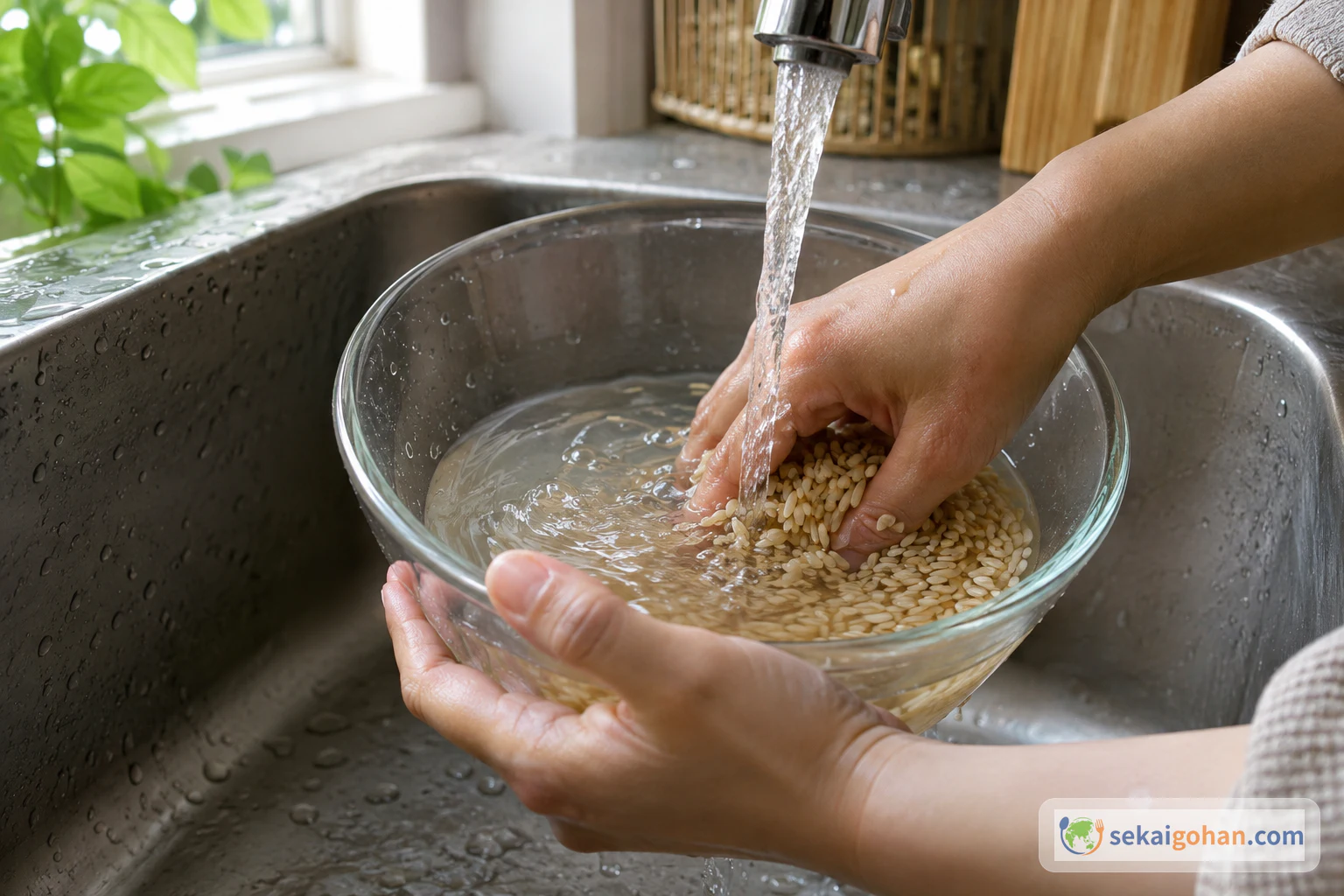
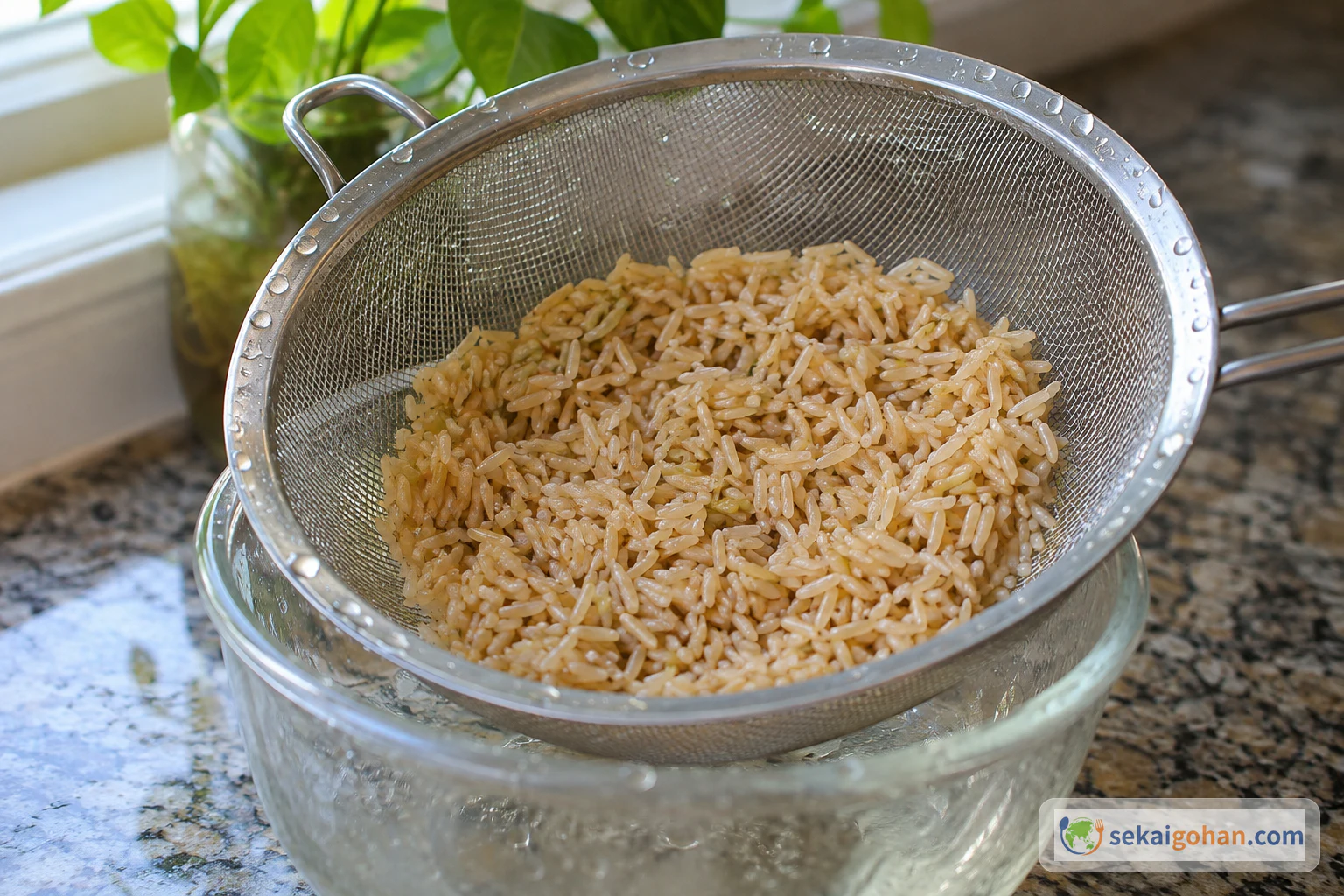
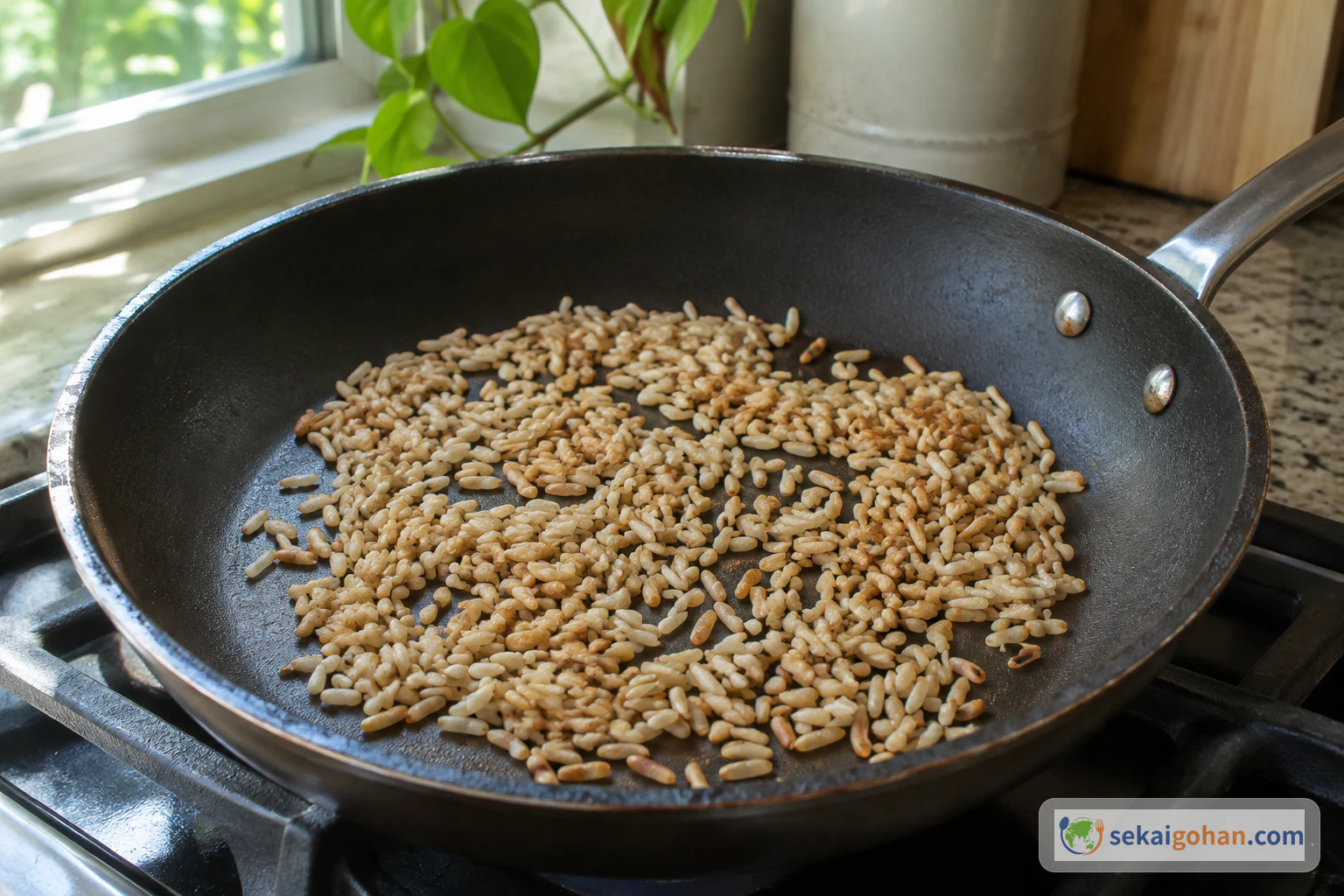
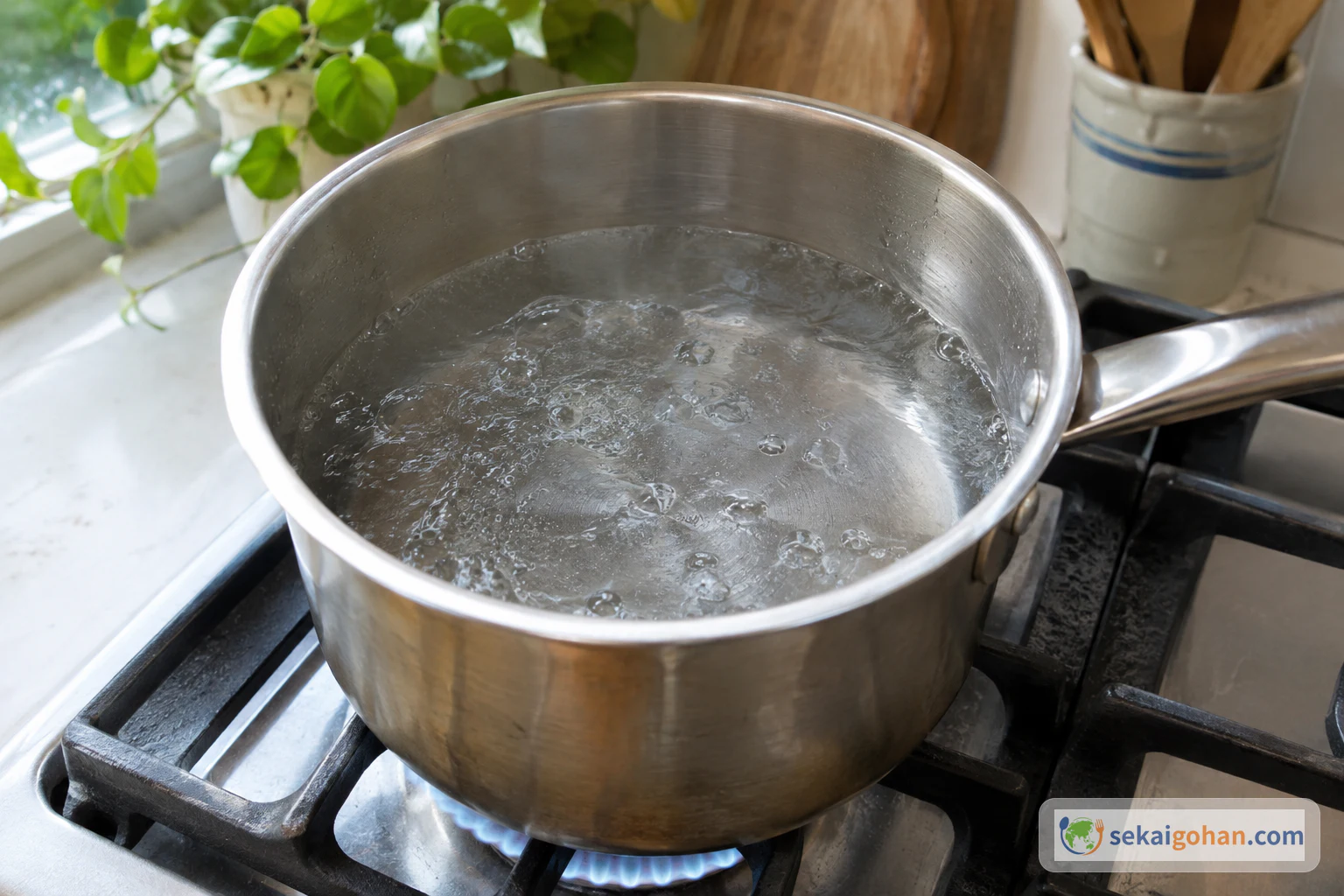
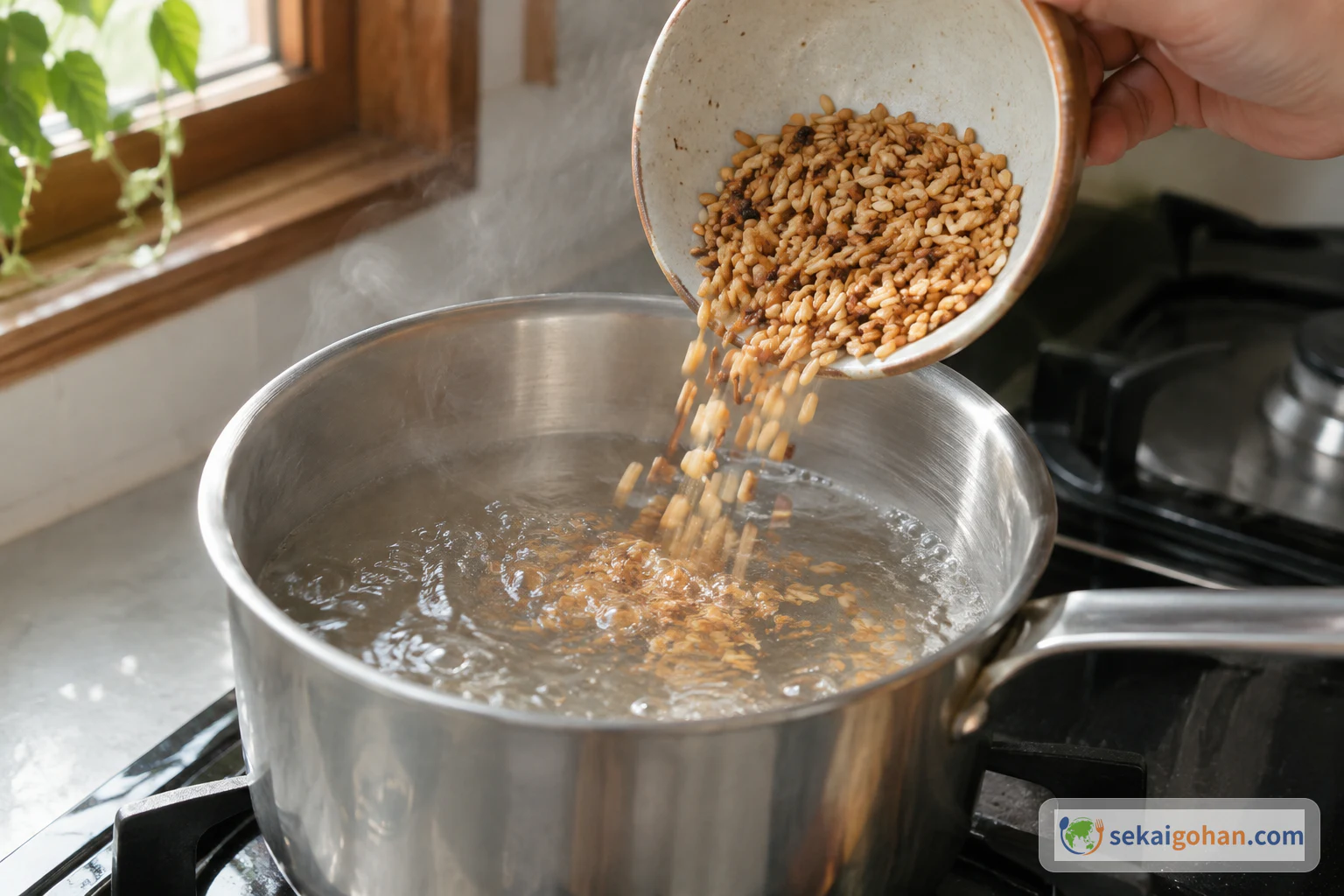
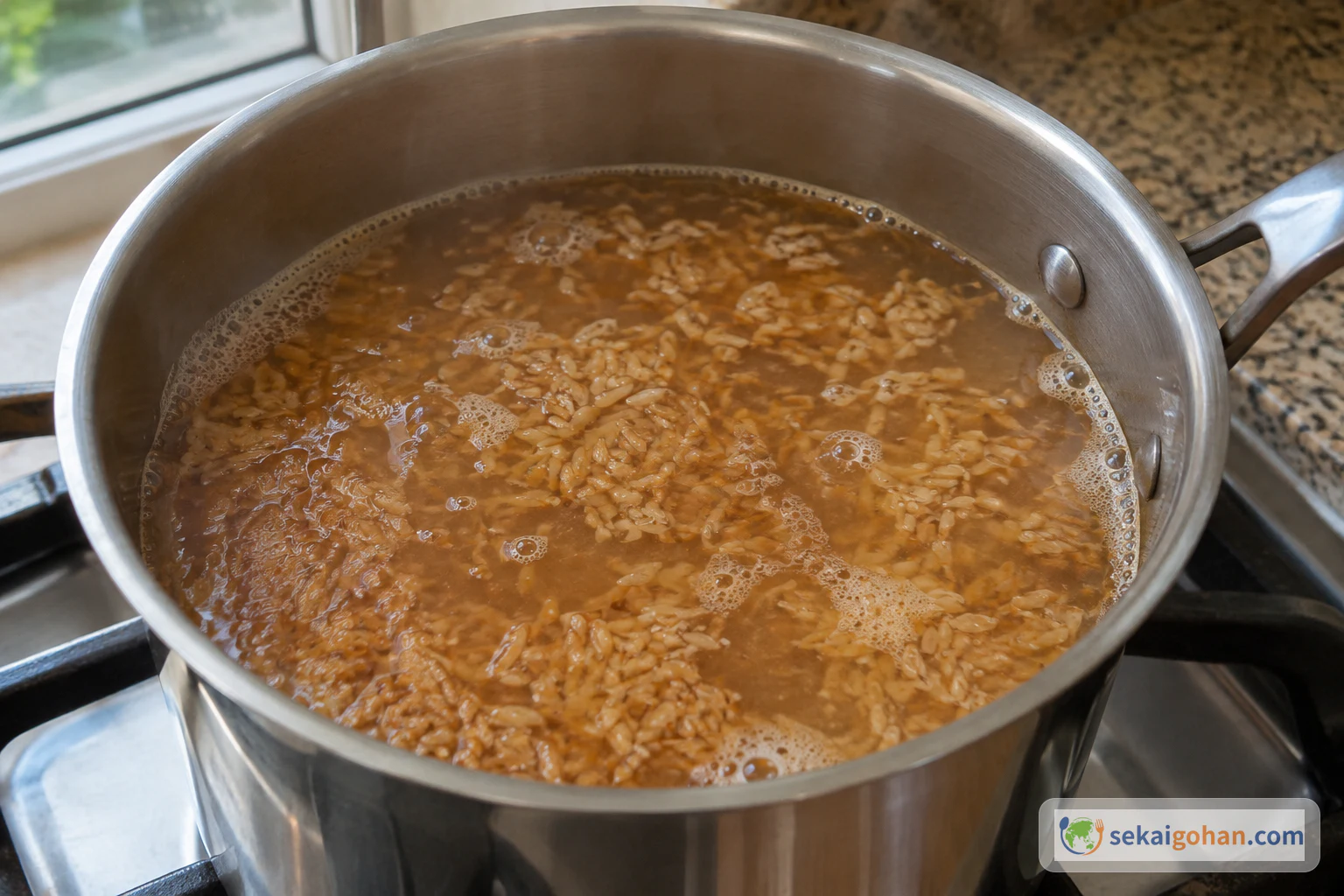
Washed brown rice goes into a dry pan with no oil. As it heats, the grains dry out, take on a toasted look and puff slightly. A spoonful or two then goes into a pot of boiling water and simmers for a few minutes.
This is hyeonmi-cha (현미차), a Korean drink made by extracting the flavor of roasted brown rice in hot water. This recipe follows the home method in Kimchimari's "14 Everyday Korean Teas": about 2 Tbsp of roasted rice simmered for a few minutes in 5 cups of water. The author describes the taste as nutty and roasted, and personally likens it to nurungji, the scorched rice from the bottom of a pot. That comparison is one cook's impression rather than a fixed standard, but it gives you an idea of the flavor to expect. Sekai Gohan has not kitchen-tested this recipe.
If you know Japanese genmaicha, the toasted rice aroma offers a useful point of reference, but the two aren't the same recipe. Genmaicha is a ready-made blend of tea leaves and roasted rice, while this tea uses rice alone. For more Korean dishes, visit our Korea page.
Ingredients: Brown Rice and Water
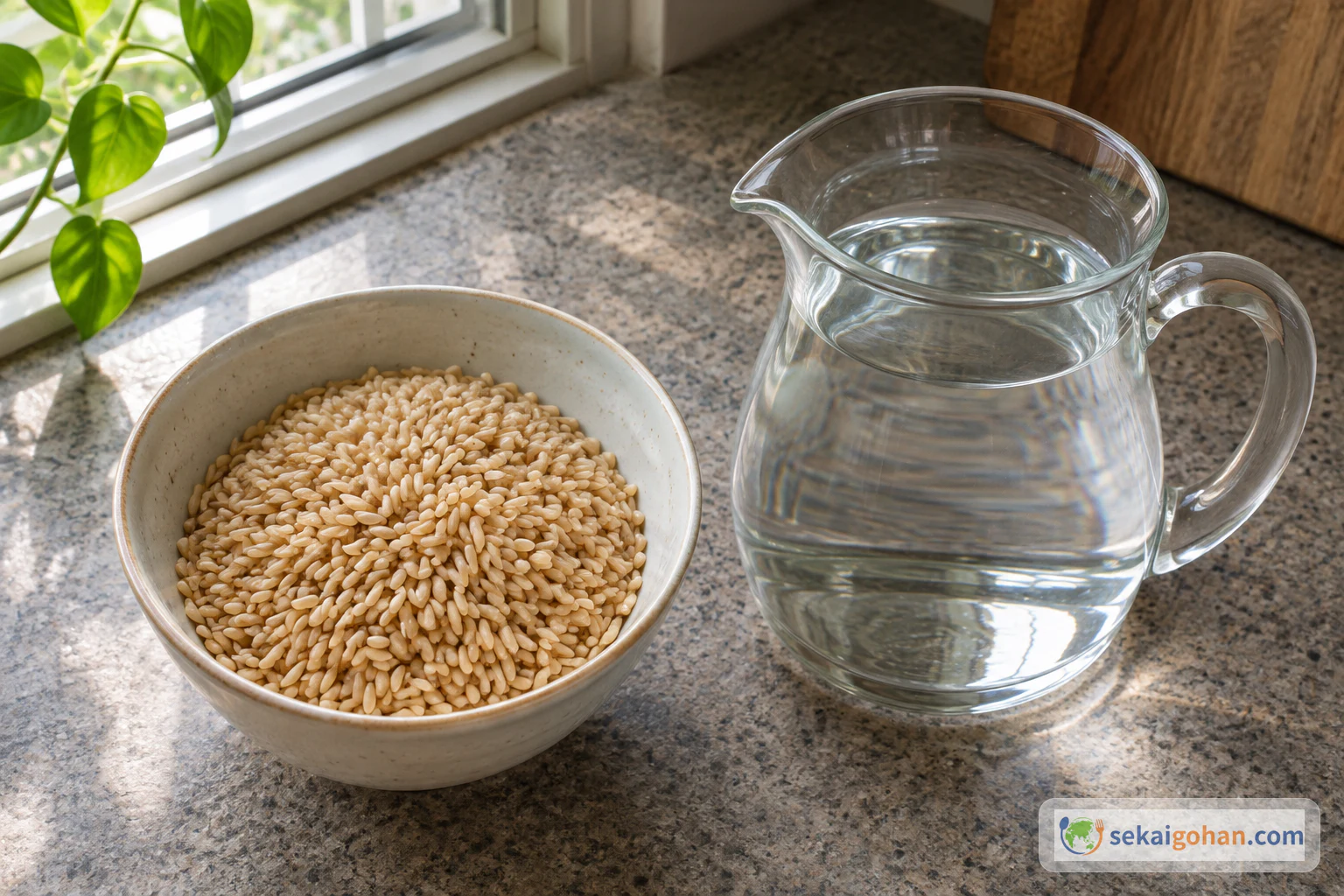
The 2 Tbsp measure applies to the roasted grains, not the raw rice. Roast enough raw rice to give you that amount, then measure it after roasting. No salt, sugar, oil or tea leaves are added.
Equipment
- Bowl, for washing the rice
- Fine-mesh sieve, for draining
- Skillet or frying pan, used dry
- Small saucepan
- Tea strainer
- Tablespoon and cup measures
- Cups for serving
Choosing the Rice
Use ordinary uncooked brown rice from the supermarket. Don't replace it with sticky rice, cooked rice or ready-made genmaicha leaves, as each would make a different drink. No special equipment or brand is needed.
Method: From Raw Rice to a Warm Cup
Wash your hands and tools before handling the rice. The pot and tea are very hot in the later steps, so handle the saucepan carefully when you add the grains and strain the tea.
Troubleshooting
| Problem | What to check | What to do |
|---|---|---|
| The rice smells burnt | The grains went past toasted and slightly puffy | Stop earlier next time, and roast a fresh portion if the burnt smell is strong |
| The grains have swollen in the pot | The tea simmered for too long | Strain it now, and keep the simmer shorter next time |
| You aren't sure how much raw rice to roast | The 2 Tbsp measure applies only after roasting | Measure the grains after roasting, and roast a little more if you come up short |
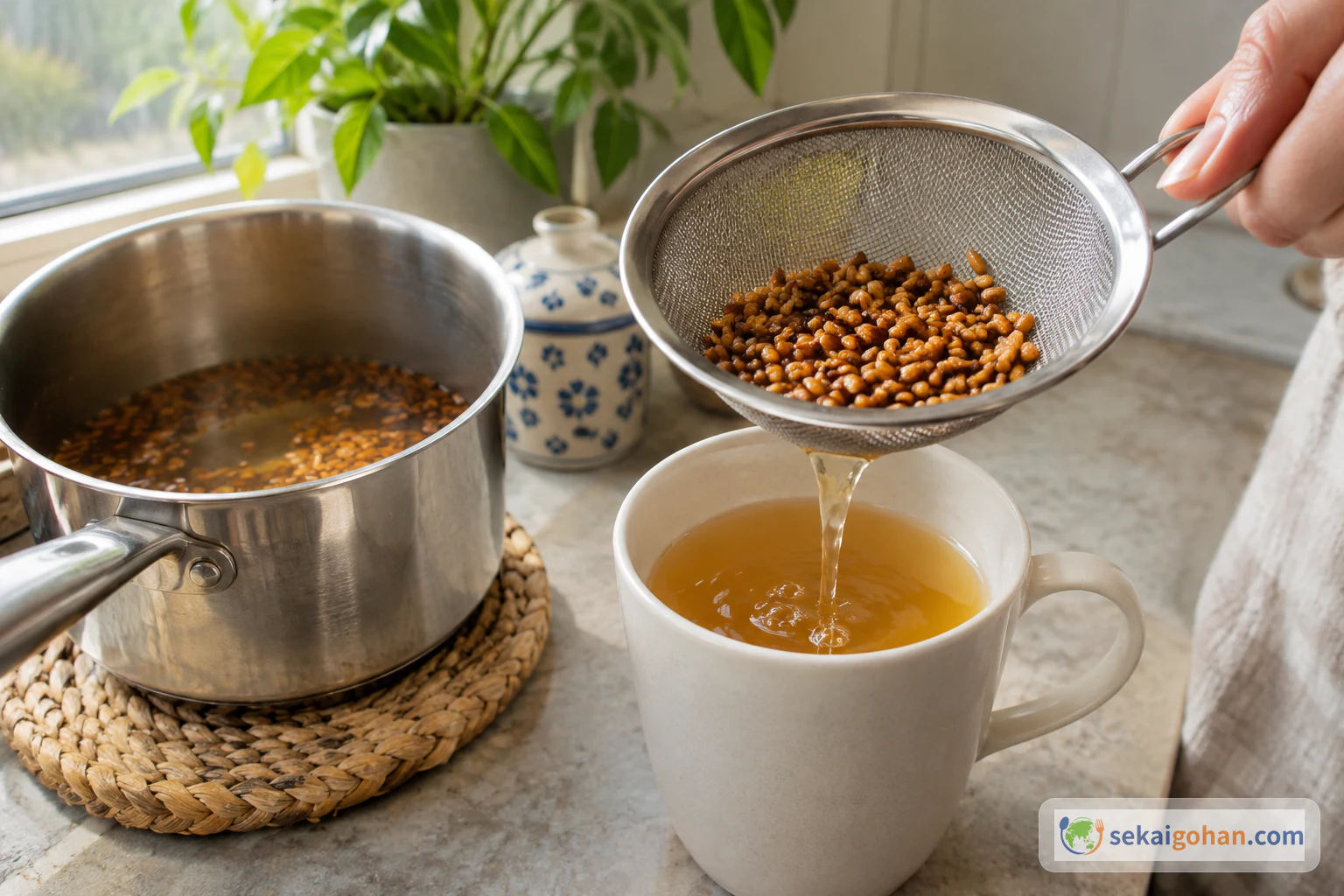
| Grains are getting into the cup | The strainer may be too coarse, or you may be pouring too quickly | Use a finer strainer and pour slowly |
Simmered, Steeped, Blended: How the Versions Differ
Kimchimari gives two ways to brew roasted rice. This recipe uses the first, simmering. The second is to pour hot water over the roasted rice and let it steep for a short while. The page doesn't give a temperature or time for steeping, so treat it as a separate, simpler method rather than a shorter version of the steps above.
The name also changes with the ingredients. According to Kimchimari, adding green tea leaves makes 현미녹차, or brown rice green tea, rather than 현미차. Hankook Tea's product of that name lists roasted brown rice and green tea as its ingredients. Other recipes may also use different amounts and equipment. Hurom's manual for its tea machine, for instance, has its own settings for grain tea.
| Version | Ingredients | How it is brewed |
|---|---|---|
| Hyeonmi-cha, simmered (this recipe) | About 2 Tbsp roasted brown rice, 5 cups water | Boil the water, add the rice and simmer for a few minutes |
| Hyeonmi-cha, steeped | Roasted brown rice, hot water | Pour hot water over the rice and let it steep for a short while |
| Brown rice green tea (현미녹차) | Roasted brown rice, green tea | A separate blend made with tea leaves |
| Hurom tea machine | 1200 ml water, 30 g roasted barley or roasted brown rice | Boil the water in the machine, then brew the grains in its tea basket on a 30-minute program |
The Hurom settings apply only to that machine, so they shouldn't be mixed with, or scaled against, the stovetop amounts here.
What We Know About This Tea
Hyeonmi-cha's appeal is simple: toasting brings out the aroma of the rice, and hot water carries it into the cup. Kimchimari's home recipe is the main basis for this article. It's one home cook's account rather than an official standard, so it shouldn't be read as the only way the tea is made in Korea.
The sources behind this article don't establish the tea's origins, regional differences or a nationwide custom of drinking it, so we make no claims about them. This article also makes no health claims.
Frequently Asked Questions
Is hyeonmi-cha the same as genmaicha?
No. Japanese genmaicha is a blend of tea leaves and roasted rice, while this hyeonmi-cha uses only roasted brown rice and water. They share a toasted rice aroma, but they are made differently.
How long should I simmer it?
Kimchimari says only "a few minutes" and gives no exact time, so we don't add one. The author prefers not to simmer the tea until the grains swell, finding it harder to drink that way.
How many grams of rice is 2 Tbsp?
The recipe gives only a volume of about 2 Tbsp of roasted rice, with no weight, and we have no reliable basis for converting it to grams. It also isn't a measure of raw rice.
What size cup should I use for the water?
Kimchimari writes "5 cups" without naming a cup standard, so we keep the amount as written and don't convert it to milliliters.
Do I have to strain it?
Kimchimari doesn't specify a strainer. Straining is our own serving step, included so that the grains stay out of the cup.
Can I add green tea leaves?
You can, but you'll be making a different drink: 현미녹차, or brown rice green tea. This recipe uses no tea leaves.
Does it contain caffeine?
Kimchimari's author describes the rice-only tea as caffeine-free. That is the author's description rather than a tested result, and a version with green tea leaves may differ.
Can I make it ahead?
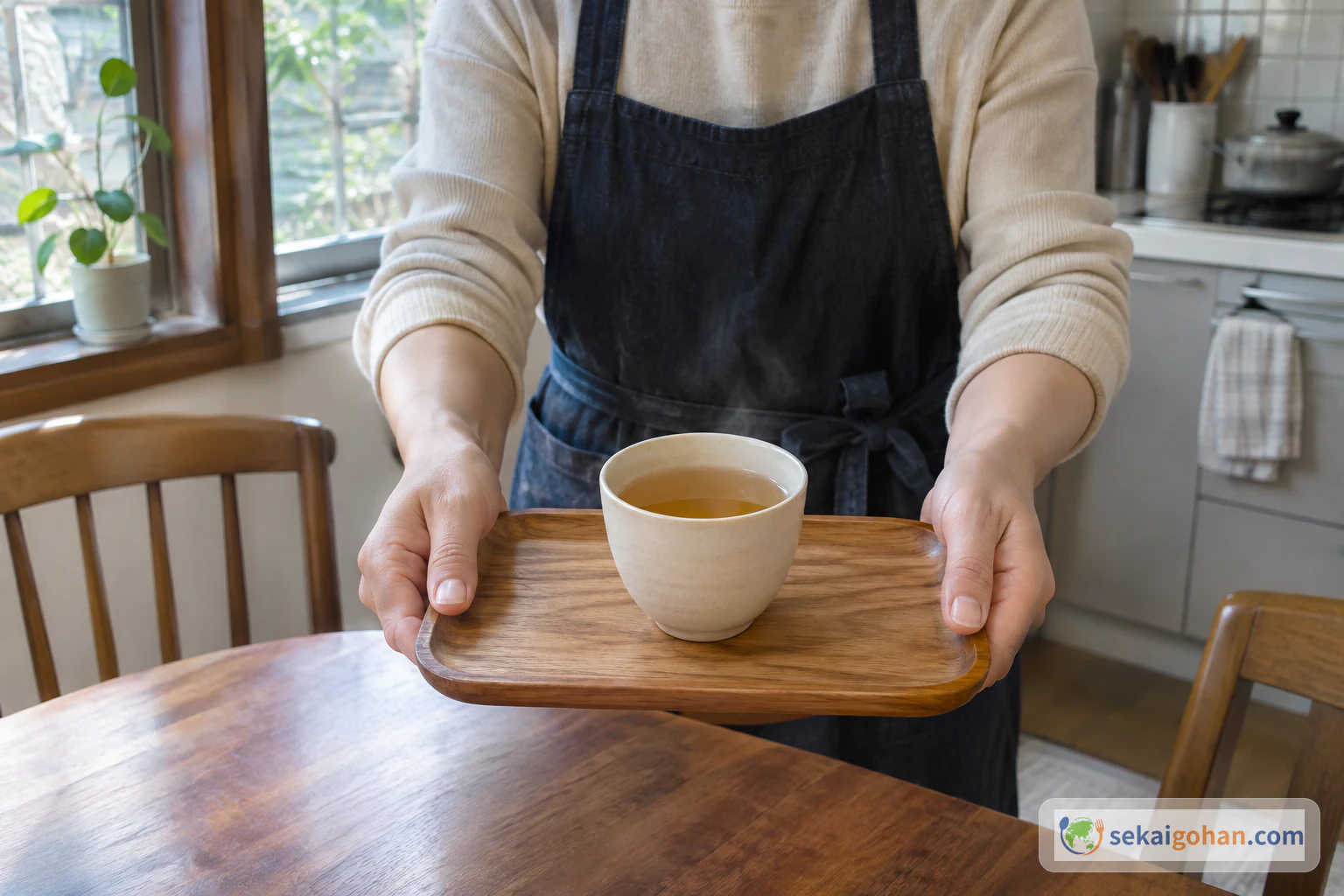
Kimchimari gives no storage guidance for the roasted rice or the brewed tea, and no reheating instructions, so we can't offer a keeping time. The straightforward approach is to brew it when you plan to drink it and serve it warm.
Sources
- Kimchimari, "14 Everyday Korean Teas." Main recipe: washing, draining and dry-roasting the rice, the amounts of roasted rice and water, the simmering and steeping methods, the difference between 현미차 and 현미녹차, and the author's descriptions of flavor and caffeine. https://kimchimari.com/everyday-korean-teas/
- Hurom, "티마스터 사용설명서 (보리/현미차)." The device-specific amounts and 30-minute program, used for comparison only. https://m.hurom.co.kr/data/productmanual/TM-HB1FWF%20사용설명서.pdf
- Hankook Tea, "Brown Rice Green Tea [loose leaves]." An example of 현미녹차 listing roasted brown rice and green tea as its ingredients. https://www.hankooktea.com/products/brown-rice-green-tea
- FoodSafety.gov, "4 Steps to Food Safety." General guidance on clean hands and utensils; not specific to this tea. https://www.foodsafety.gov/keep-food-safe/4-steps-to-food-safety