Hojicha Ochazuke: A Bowl of Rice Under a Roasted-Tea Broth
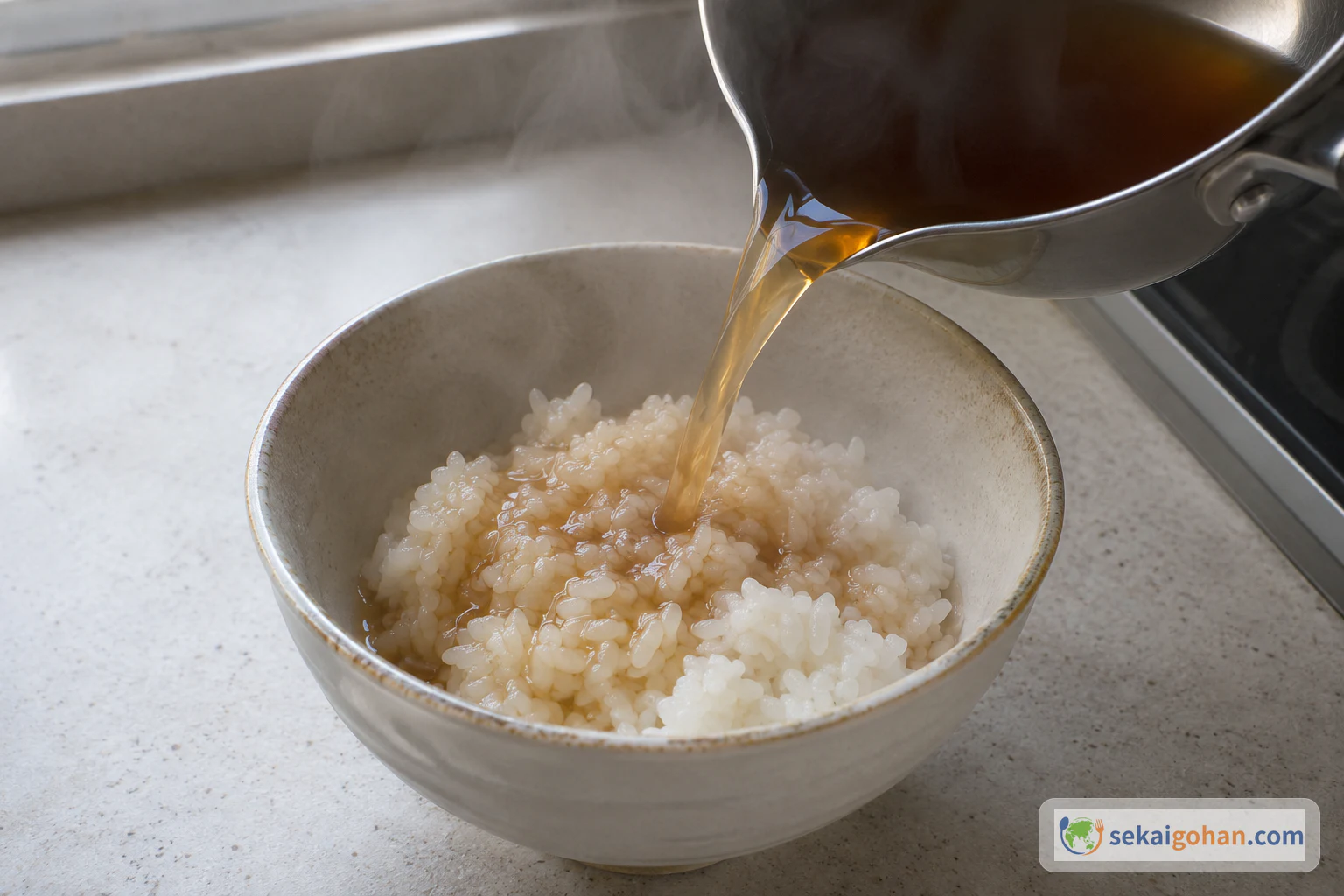
Four ingredients, one small saucepan, one bowl. Warm the tea with dashi and soy sauce, turn off the heat as soon as it boils, and pour it over warm rice.
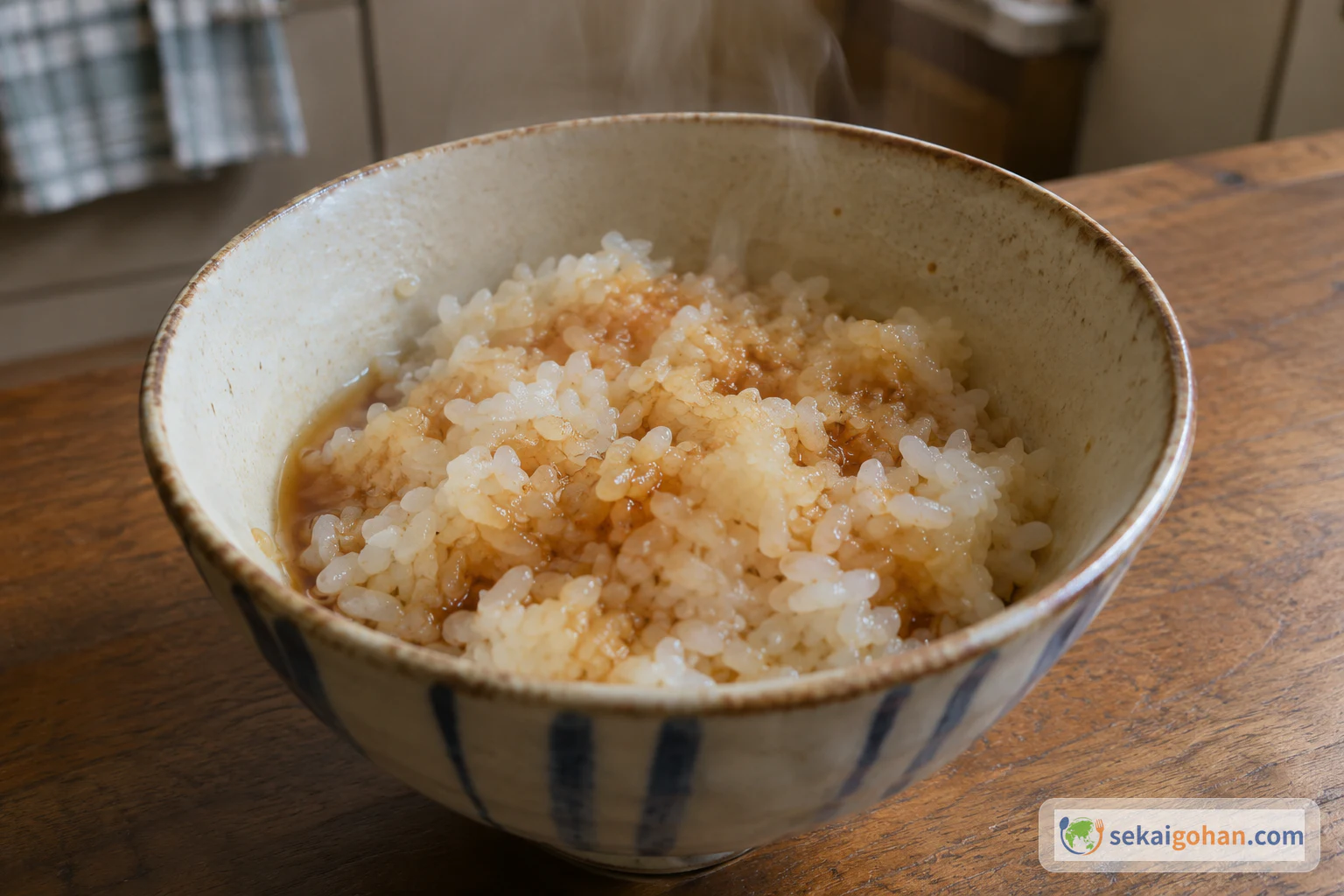
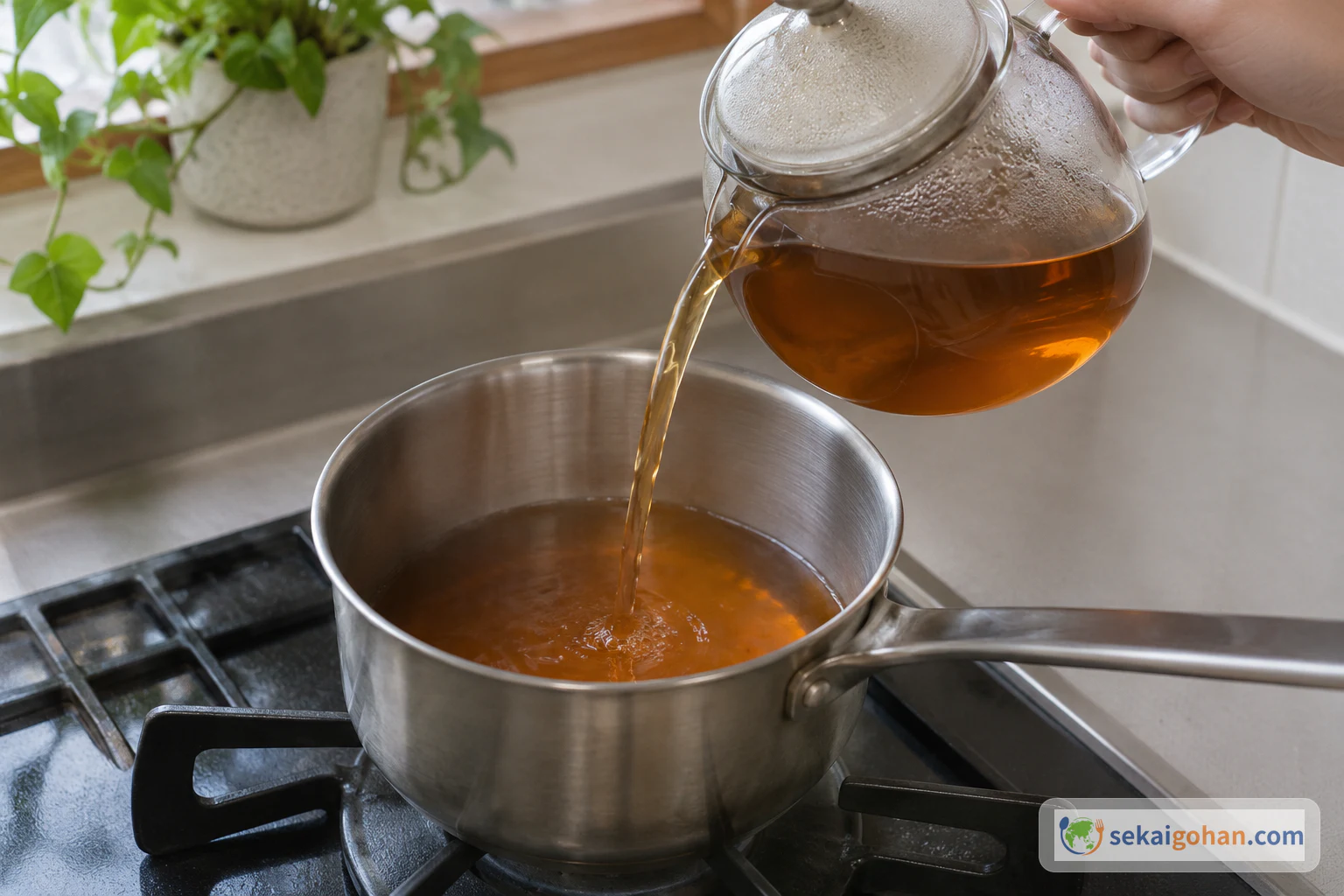
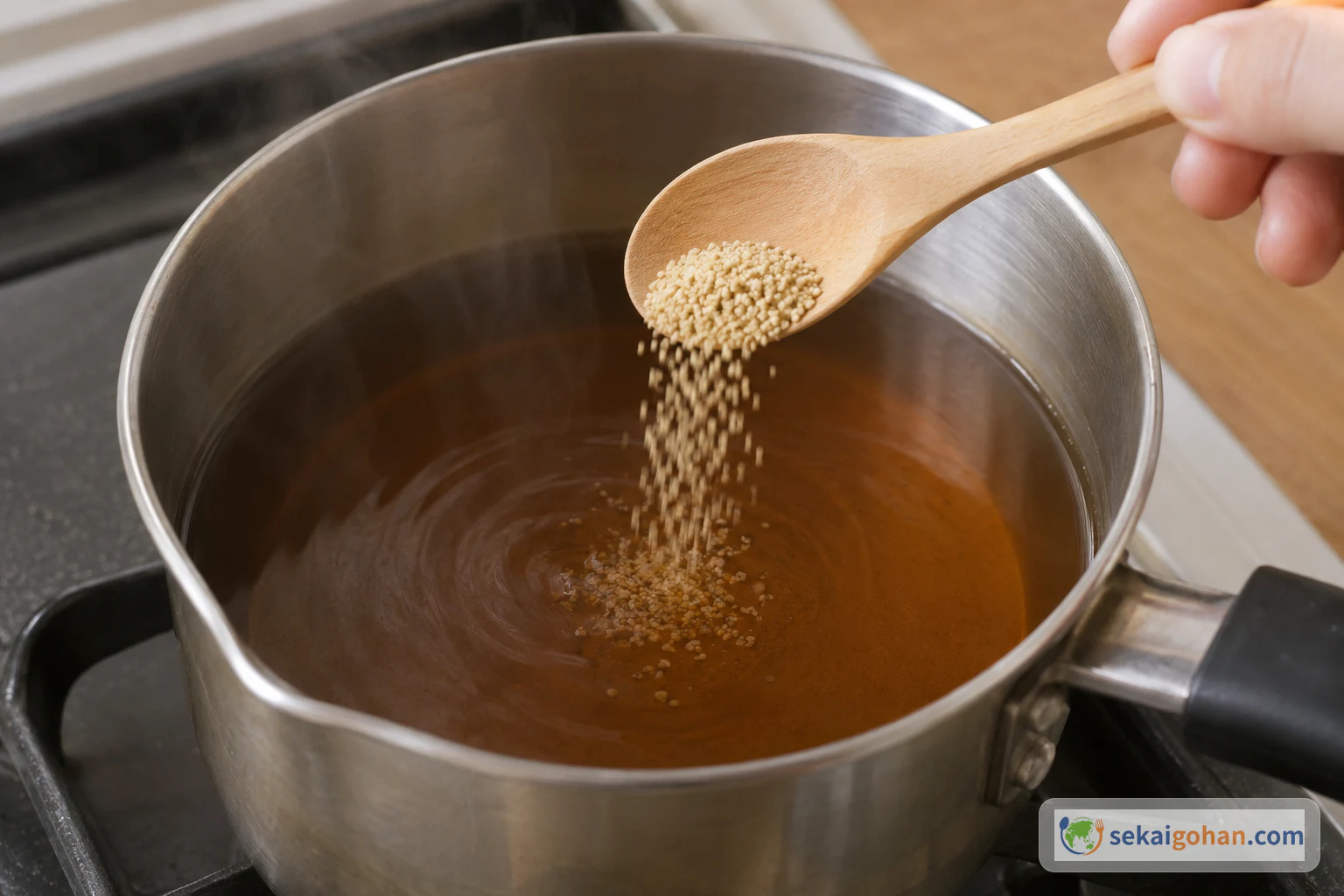
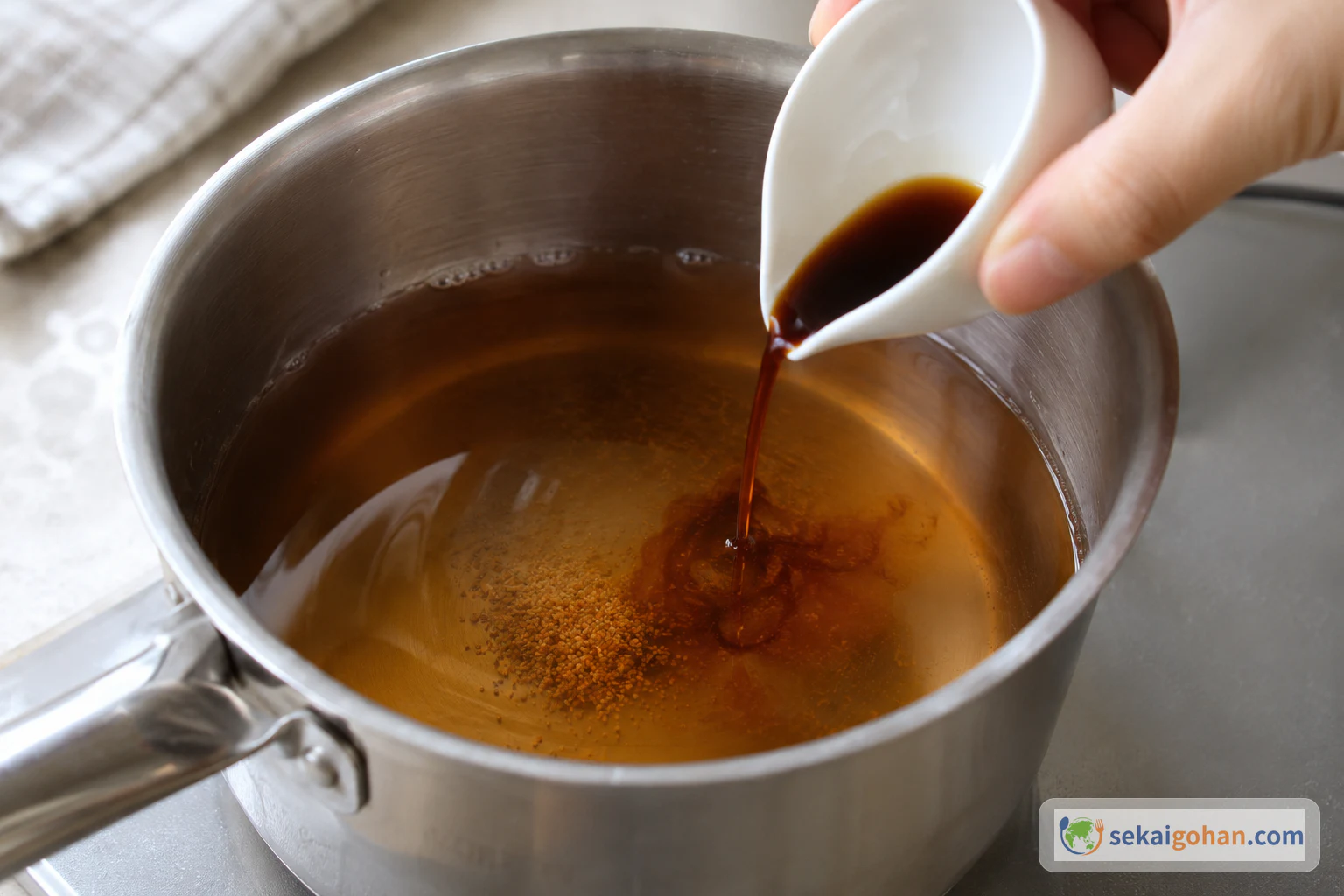
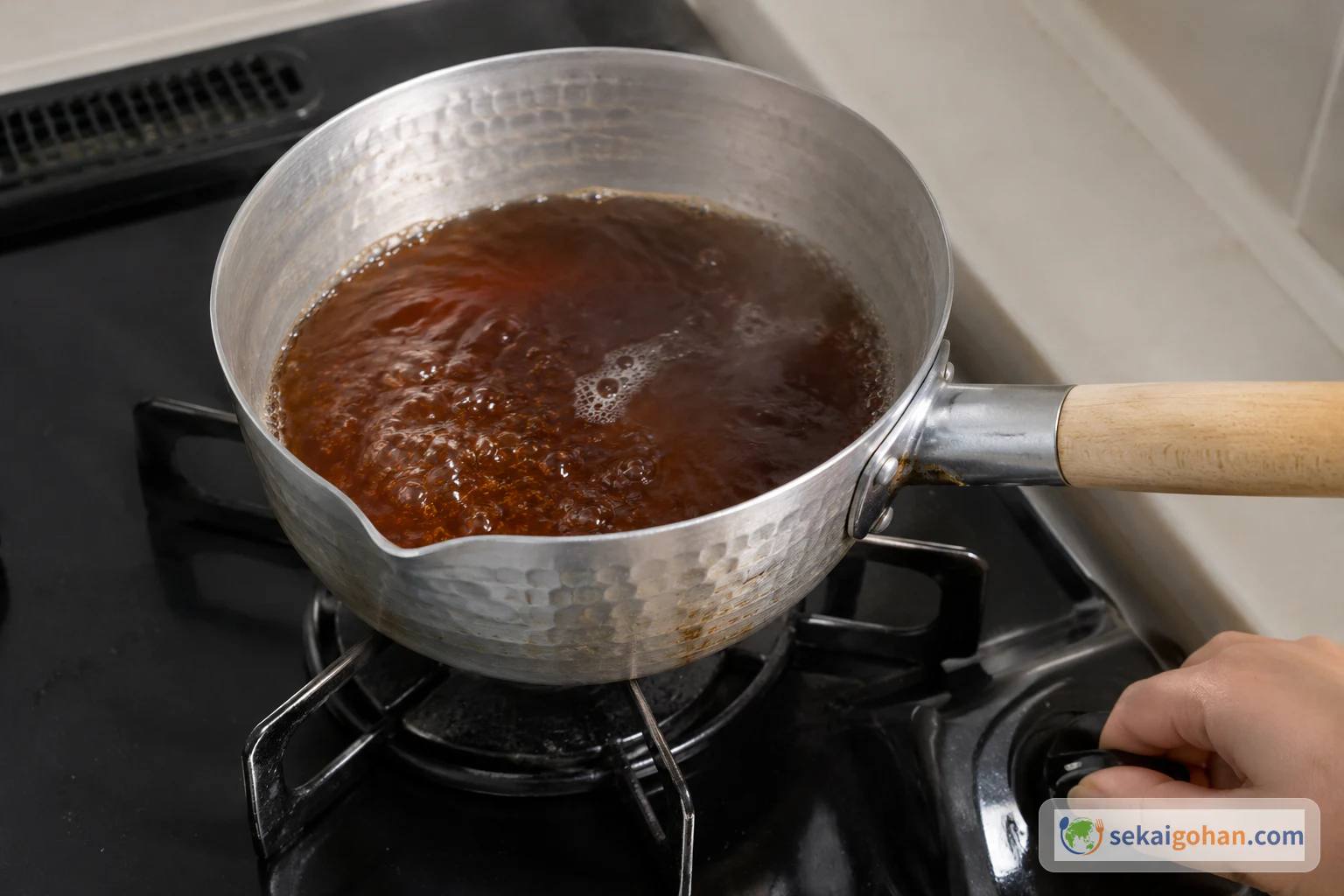
Brown, roasted-smelling tea warms in a small pan, picks up a little granular dashi and a few drops of soy sauce, and then goes straight over a bowl of warm rice. That is the whole of this ochazuke (お茶漬け): rice with a hot liquid poured over it, eaten as one simple bowl.
The version here is the one-serving hojicha ochazuke published by Japan's Ministry of Agriculture, Forestry and Fisheries (MAFF) in its tea recipes. It starts from rice that is already cooked and hojicha that is already brewed, so the cooking itself is only a matter of combining, heating and pouring. The MAFF page also shows optional toppings such as salmon flakes and mitsuba; this article keeps to the plain four-ingredient bowl and does not add them.
This is one form of ochazuke, not the single standard for all of Japan. Ochazuke changes with the liquid poured over it and what goes on top, and the sections below explain that range before getting to the recipe.
Tea, Hot Water or Dashi: The Range Behind Ochazuke
Ochazuke is generally understood as rice with something poured over it, but what that "something" is has varied. In a research presentation abstract for the annual meeting of the Japan Society of Cookery Science, Emi Ishikawa, Sachiko Sato and Hiroko Okubo discuss the custom of pouring hot water or water over cooked rice, and chazuke made by pouring sencha over rice. The authors describe how this spread after sencha came into wider use, discuss its popularity in the Edo period, and note that today, versions made with dashi broth are also called chazuke. These points are the authors' own review of the literature; the original historical documents they cite are not examined here, and this article does not assert a single origin or a nationwide history.
Recipe collections show how wide the modern range has become. Kikkoman's dashi chazuke recipe feature, for example, gathers separate recipes with ume, salmon or sea bream, versions made with shiro dashi (white dashi), and cold versions. Those are different recipes with their own ingredients and proportions, and none of them are mixed into the bowl here.
The MAFF hojicha version sits between tea and dashi: the liquid is hojicha, seasoned with granular dashi and soy sauce. For more dishes from the same country, see the Japan page.
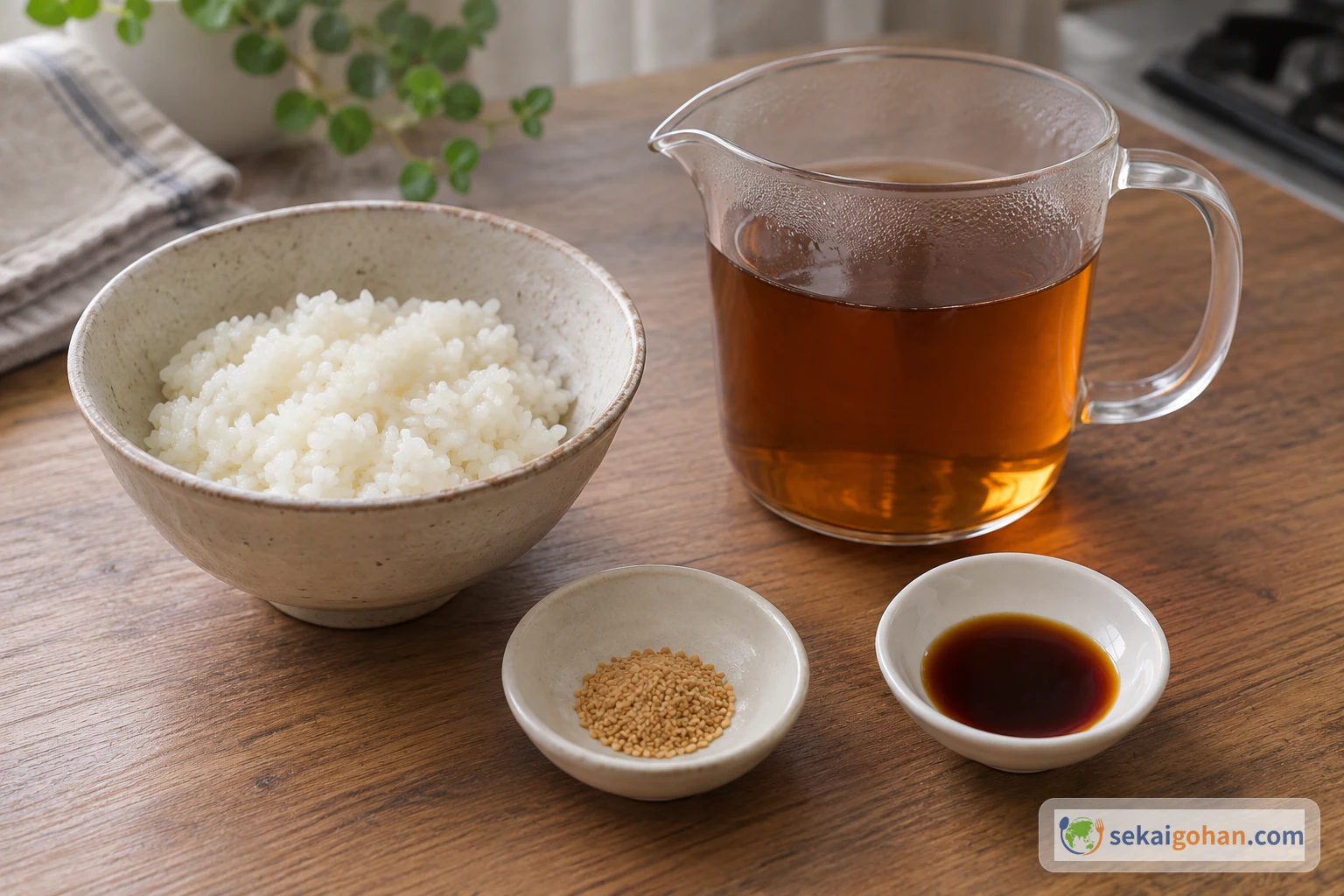
Ingredients for 1 Serving
Equipment
- Small saucepan
- Measuring spoon (1/2 tsp)
- Rice bowl
- Stove
Choosing Tea and Dashi, and What Not to Swap
Hojicha. Use prepared warm hojicha. Brew it following the directions on the tea you buy.
Granular dashi. Use 1/2 tsp granular Japanese-style dashi. Products differ in saltiness. Do not replace it with the same amount of liquid dashi.
Soy sauce. Use 1/2 tsp soy sauce.
Other teas. Sencha or bancha will give a different flavor. That is a separate idea, not this recipe.
Granular dashi and soy sauce are processed products. Check each product's label for allergens before you cook.
Method
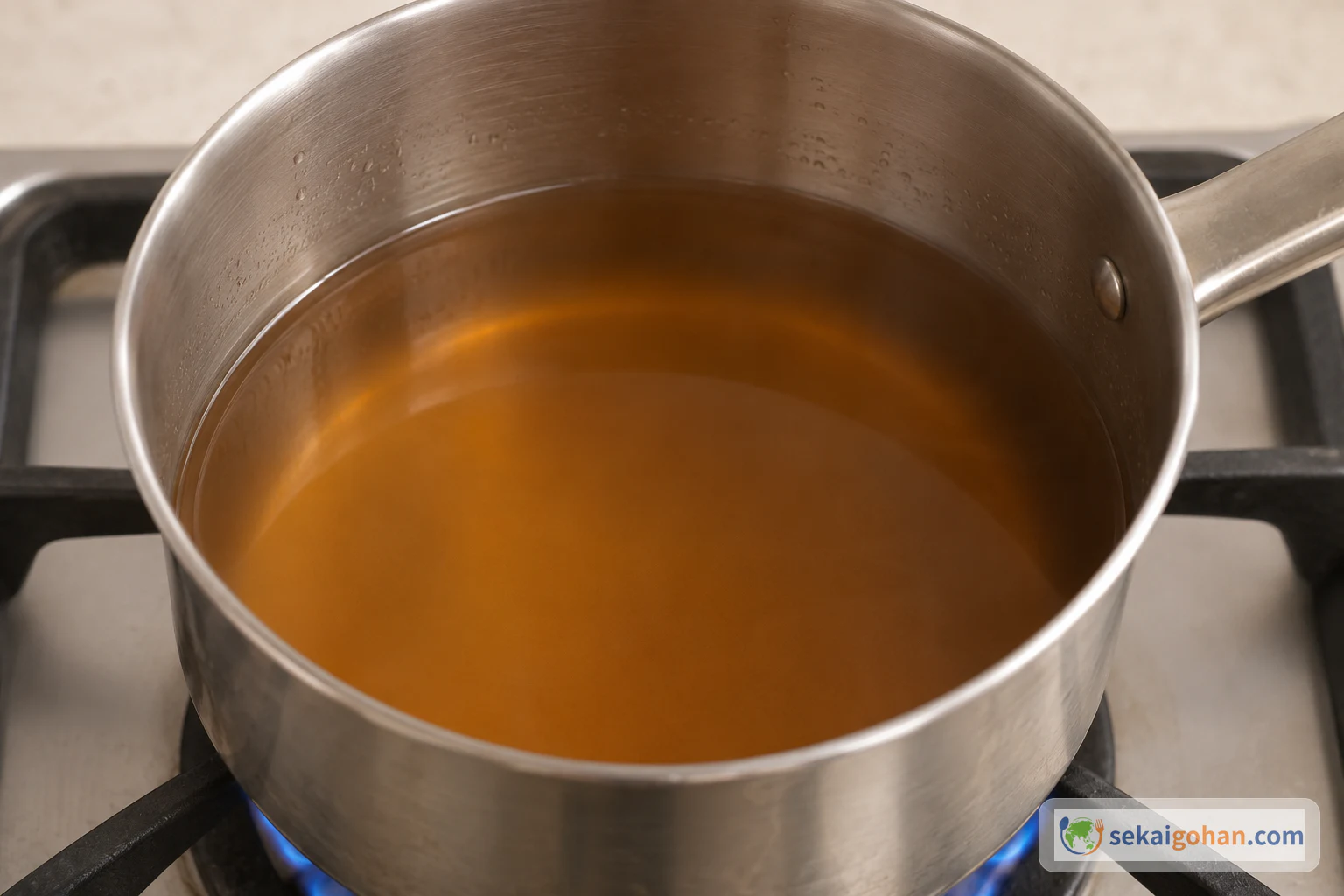
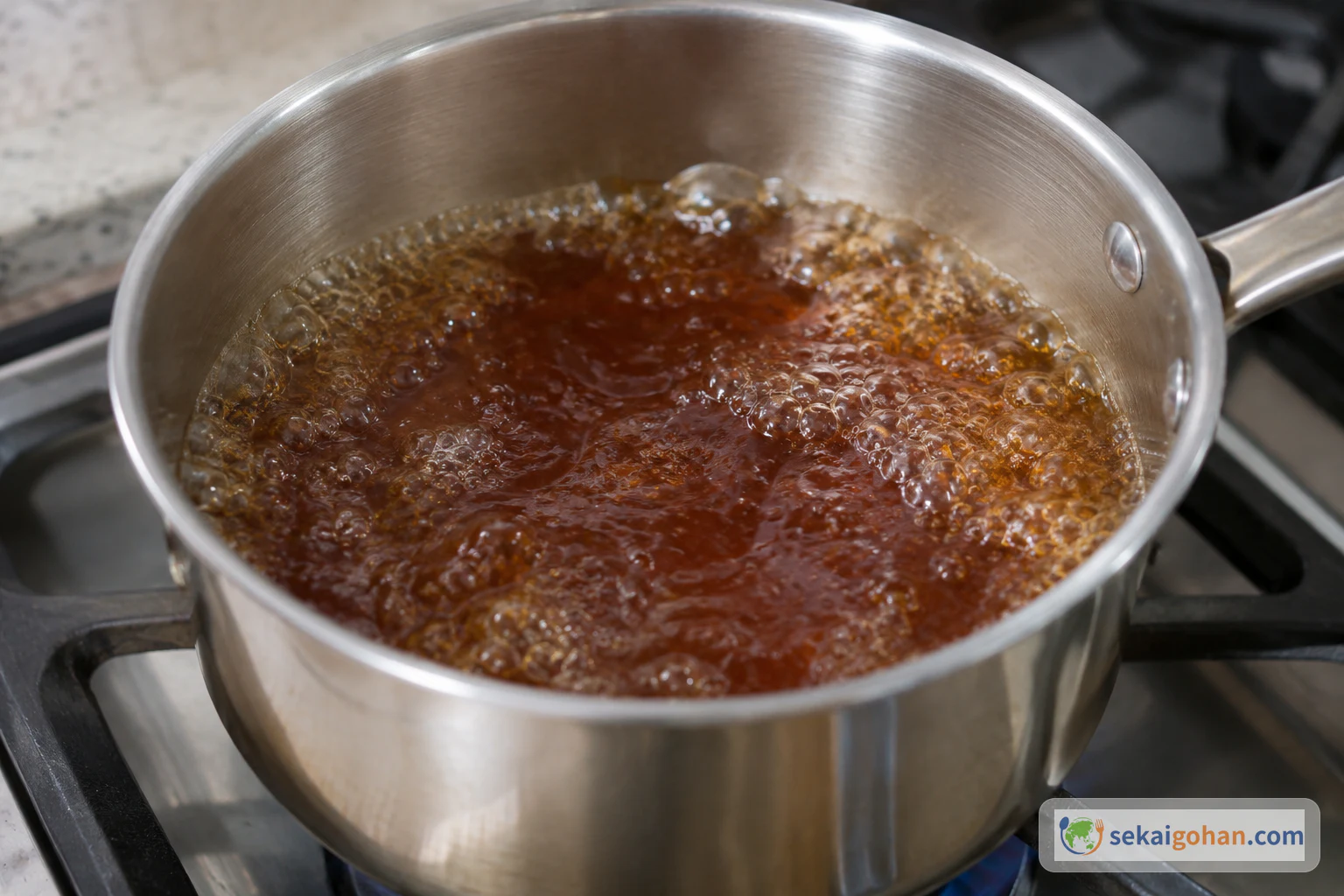
There are no times or temperatures to watch. The signal is the boil: once the liquid boils, turn off the heat.
How It Tastes, and When It Doesn't Come Out Right
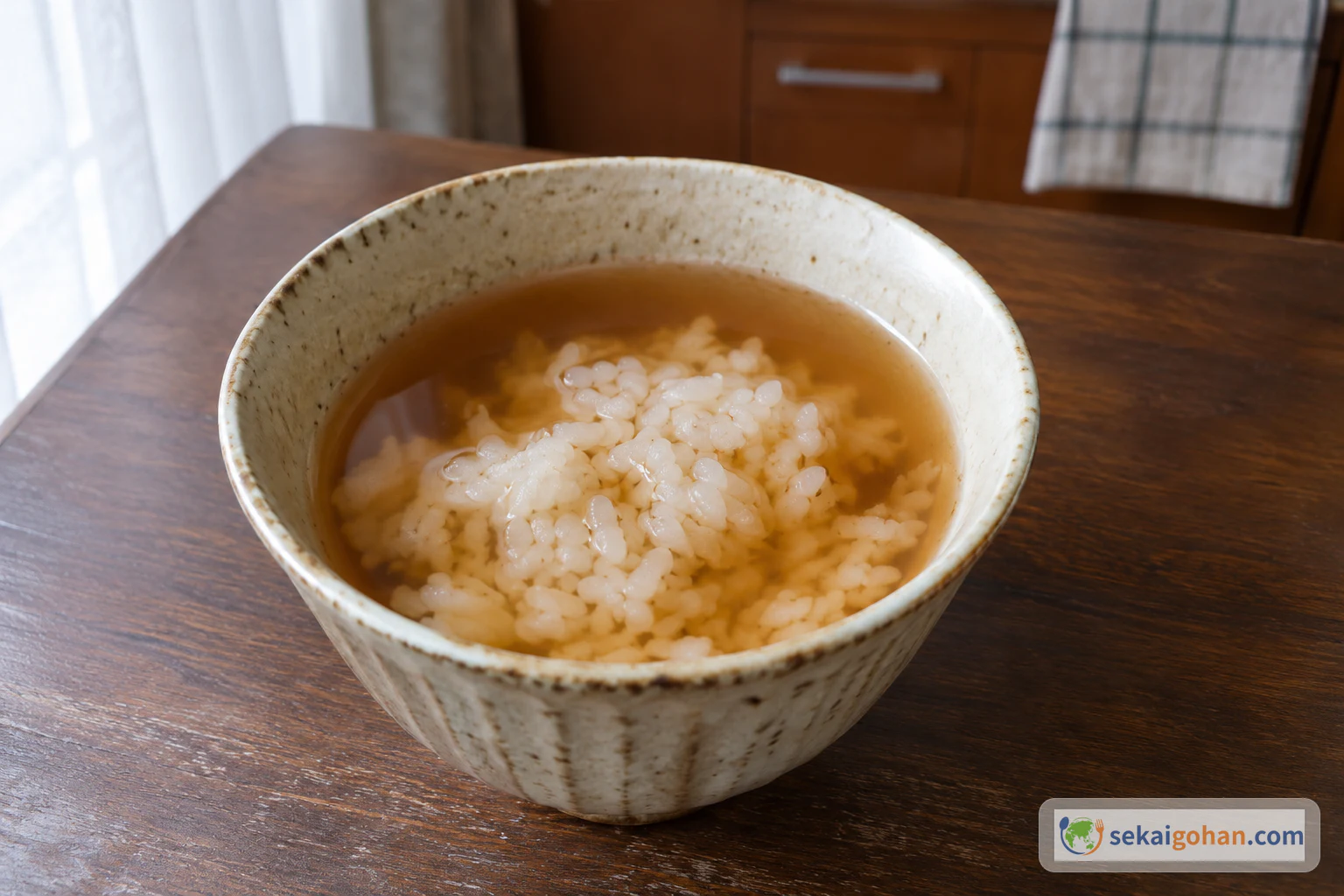
From its ingredients, you can expect the roasted aroma of hojicha, the savory taste of the granular dashi and the saltiness of soy sauce, all carried by plain warm rice. How strong each one is depends on how the tea was brewed and which dashi product you use, and neither of those is fixed by the recipe.
| What you notice | Likely reason | What to do |
|---|---|---|
| The tea flavor is faint | The hojicha was brewed weak | Next time, brew the tea following the product's directions before you start |
| Saltier or milder than expected | Granular dashi and soy sauce products differ | Start from the listed amounts and adjust to taste next time |
| Leaves or stems in the bowl | The tea was not strained | Use hojicha that is fully brewed and strained before it goes in the pan |
| The bowl is not warm | Cold rice or tea at the start | Begin with rice and tea that are already warm |
Variations Beyond This Bowl
The MAFF page shows salmon flakes and mitsuba as optional toppings, and recipe collections such as Kikkoman's dashi chazuke feature use ume, salmon, sea bream, shiro dashi and cold liquids. Each of those is a different recipe with its own amounts. If you want to explore them, follow those recipes as written rather than adding their ingredients to this one. The base here is meant to stand on its own: four ingredients, poured and eaten.
Frequently Asked Questions
Do I cook the rice from raw for this?
No. The MAFF recipe starts from rice that is already cooked and warm, and it does not include a rice-cooking step. Cook your rice in whatever way you usually do, then begin with step 1.
How much tea leaf should I use for the hojicha?
The recipe calls for about 200ml of prepared warm hojicha but does not give a leaf amount or brewing method. Brewing according to the directions on your tea is a sensible starting point.
How is this different from dashi chazuke?
Dashi chazuke usually means rice with dashi broth poured over it, and Kikkoman's feature collects many such recipes. The researchers behind the Japan Society of Cookery Science abstract note that dashi-based versions are also called chazuke today. This bowl uses hojicha as the liquid, with granular dashi and soy sauce for seasoning.
Does it need toppings?
Not for this version. The MAFF page suggests optional toppings, but the basic bowl here is rice and the seasoned hojicha only.
Can I keep leftovers?
The recipe makes one bowl to pour and eat, and it gives no storage or reheating guidance, so none is offered here.
Sekai Gohan has not kitchen-tested this recipe as a whole.
Sources
- Ministry of Agriculture, Forestry and Fisheries of Japan (MAFF), Agricultural Production Bureau, Fruit and Tea Group, "ほうじ茶のお茶漬け" (Hojicha ochazuke). The one-serving ingredients and amounts (warm rice 150g, warm hojicha about 200ml, granular Japanese dashi 1/2 tsp, soy sauce 1/2 tsp) and the method of combining them in a pan, heating over medium heat, turning off the heat at the boil and pouring over warm rice; also the optional topping examples, which are not used here. https://www.maff.go.jp/j/seisan/tokusan/cha/cha2024_recipe04.html
- Emi Ishikawa, Sachiko Sato and Hiroko Okubo, "飯に汁をかける食法の発展と展開" (The development of eating rice with poured liquid), research presentation abstract, Annual Meeting of the Japan Society of Cookery Science (J-STAGE). The authors' discussion of pouring hot water or water over rice, chazuke made with sencha, its spread and Edo-period popularity, and dashi-based versions also being called chazuke today. https://www.jstage.jst.go.jp/article/ajscs/25/0/25_171/_pdf/-char/ja
- Kikkoman Home Cooking, "だし茶漬けレシピ特集" (Dashi chazuke recipe feature). Separate recipes using ume, salmon, sea bream, shiro dashi and cold versions, cited only to show the range of ochazuke. https://www.kikkoman.co.jp/homecook/theme/popular/dashichadzuke.html