Injo-gogi-bap: Rice in a Soy Wrapper, Under a Red Chili Paste
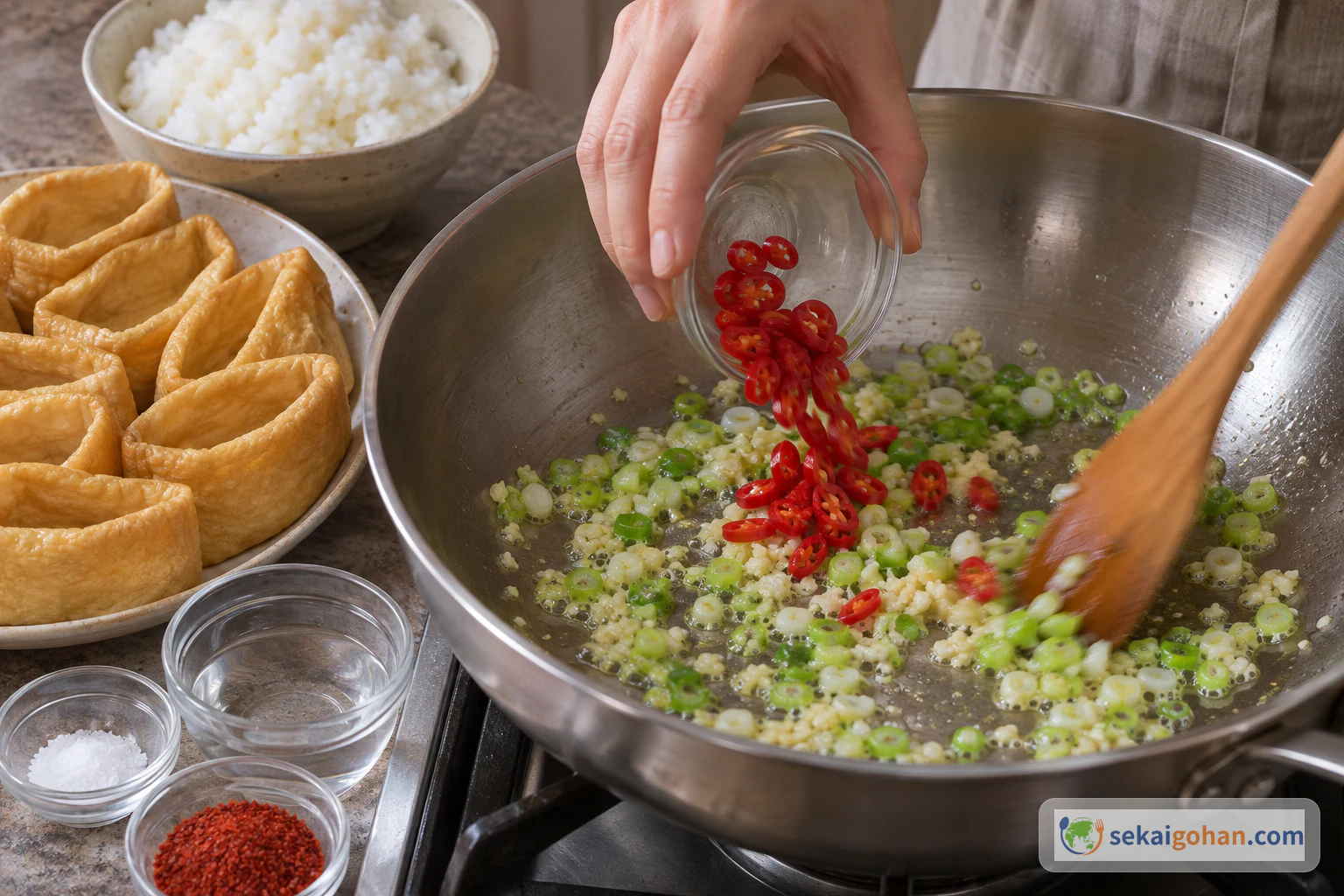
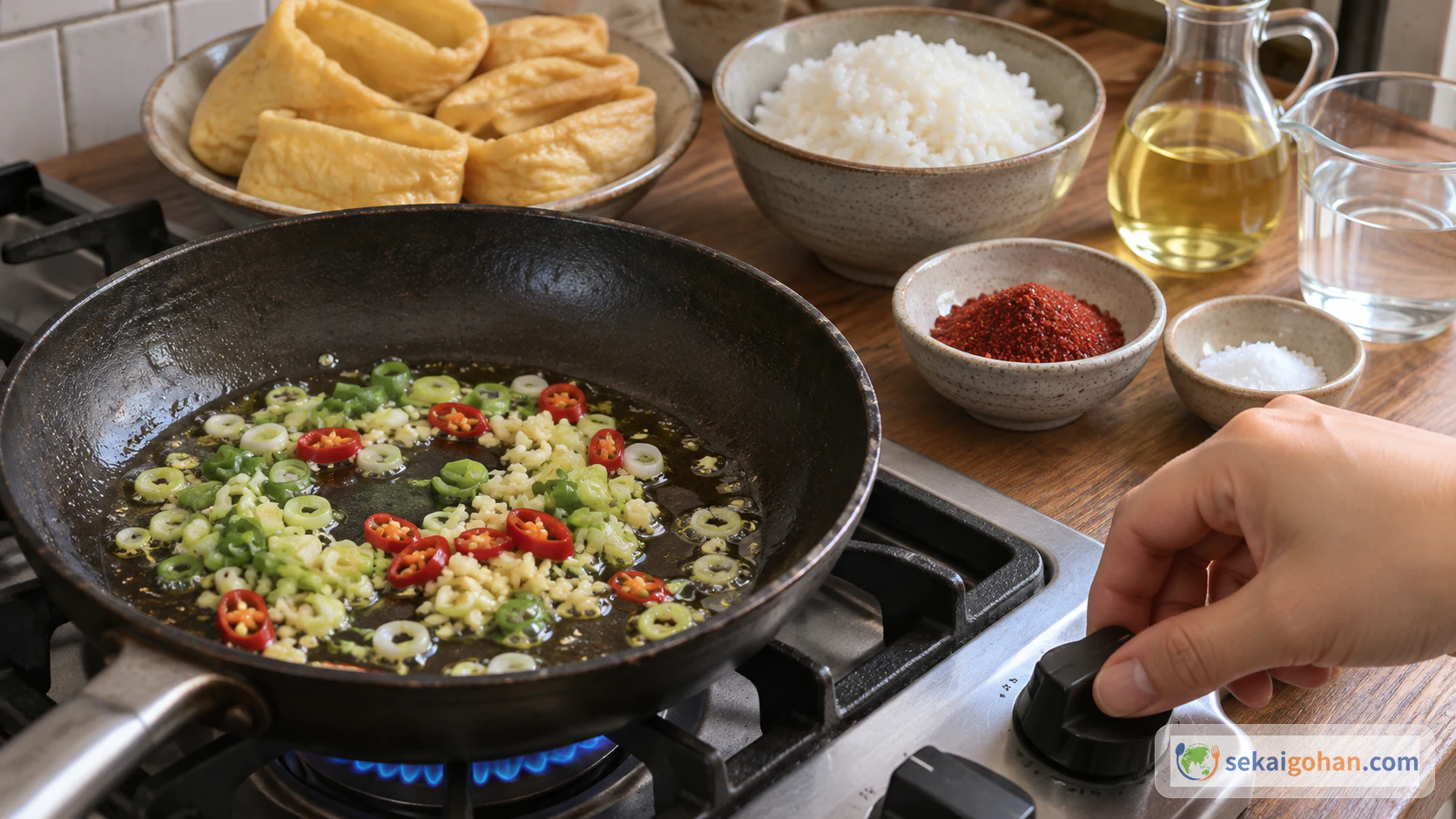
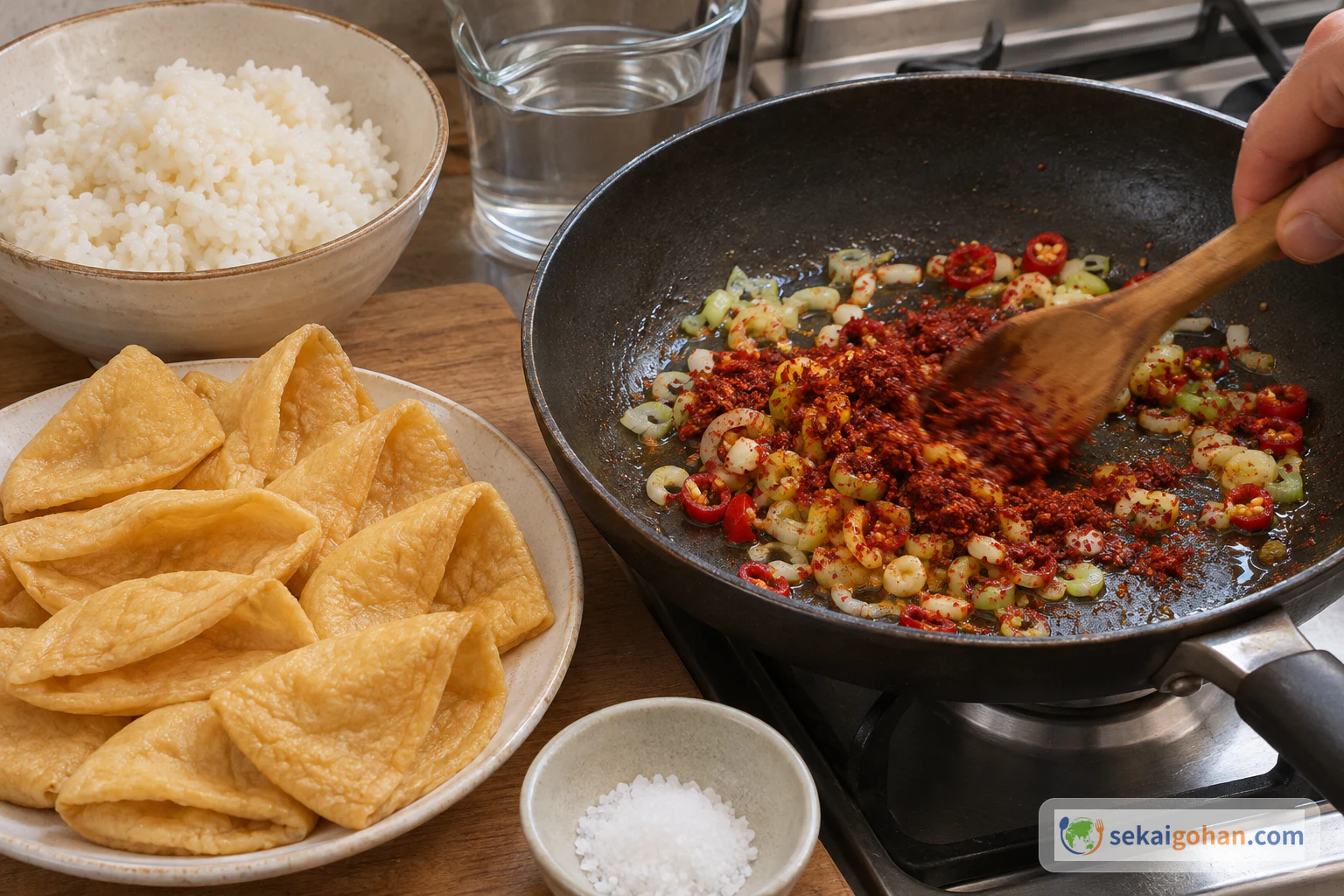
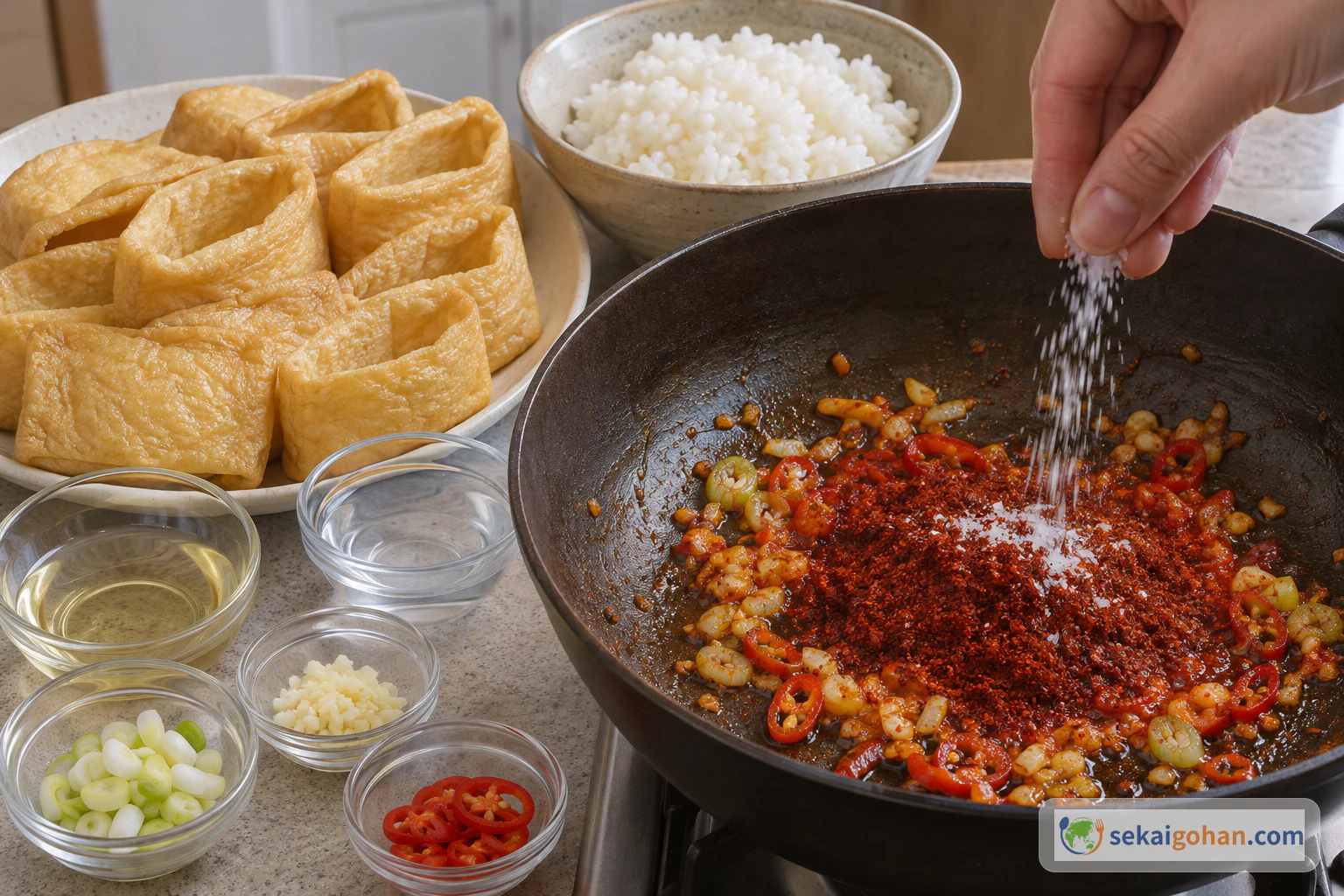
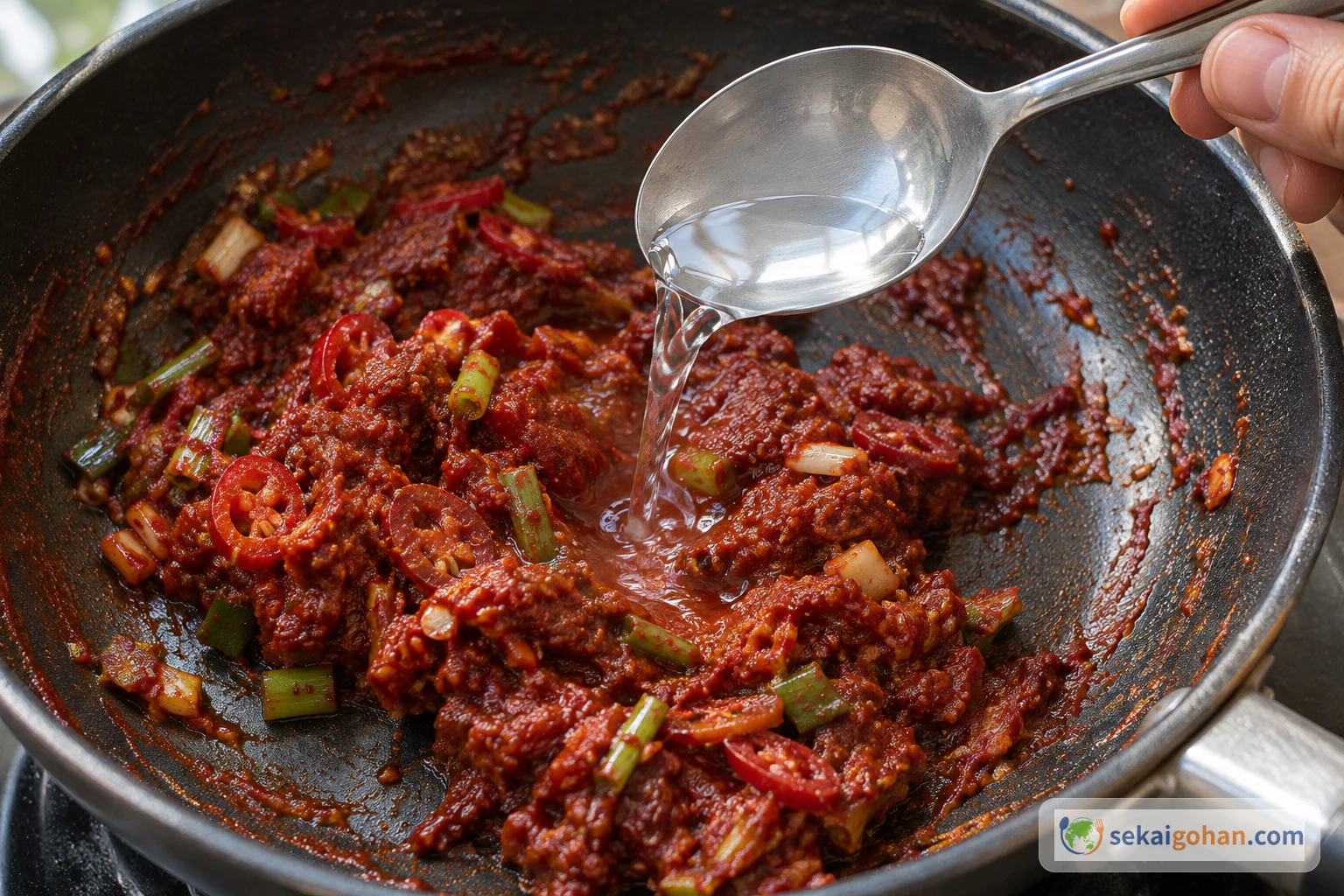
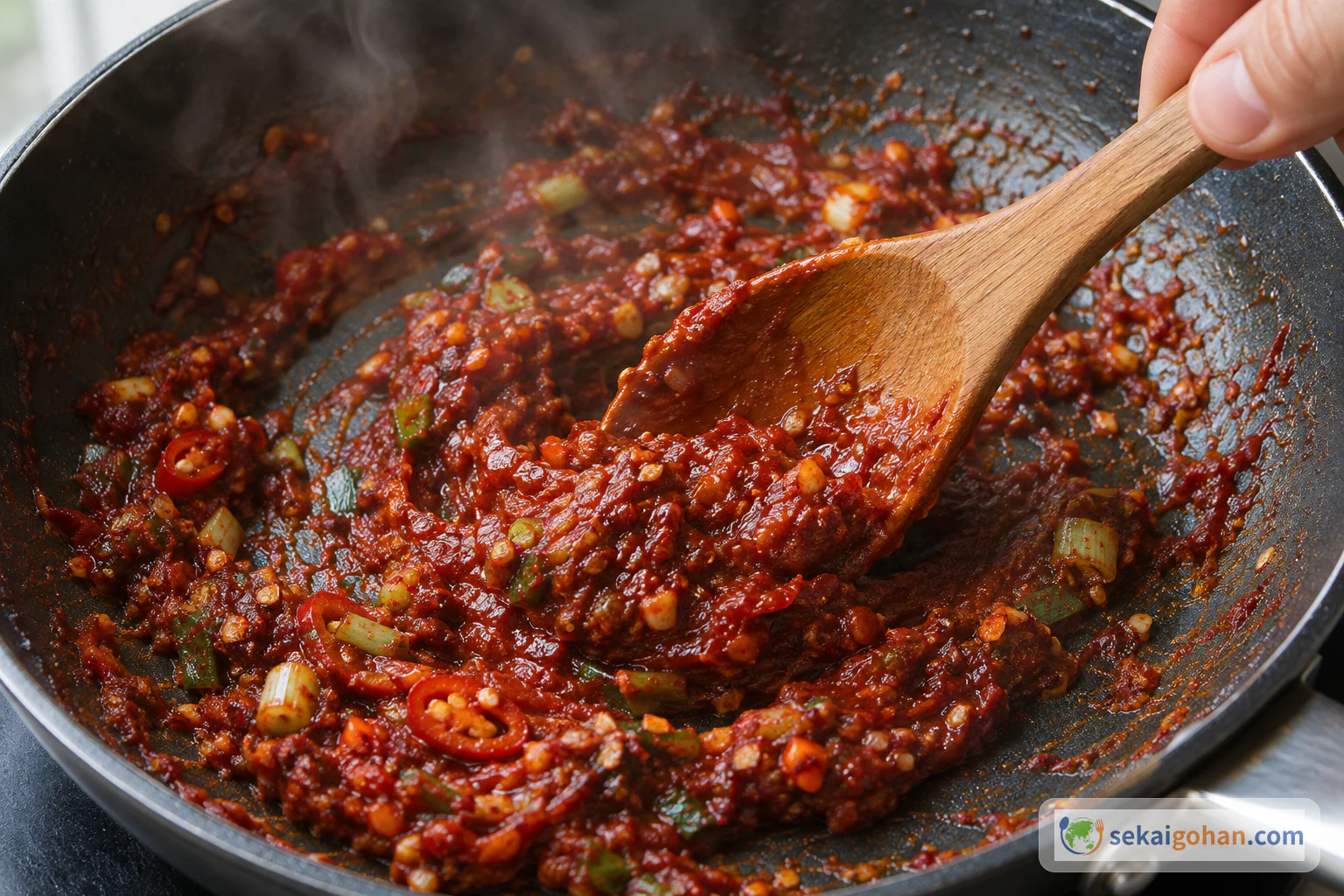
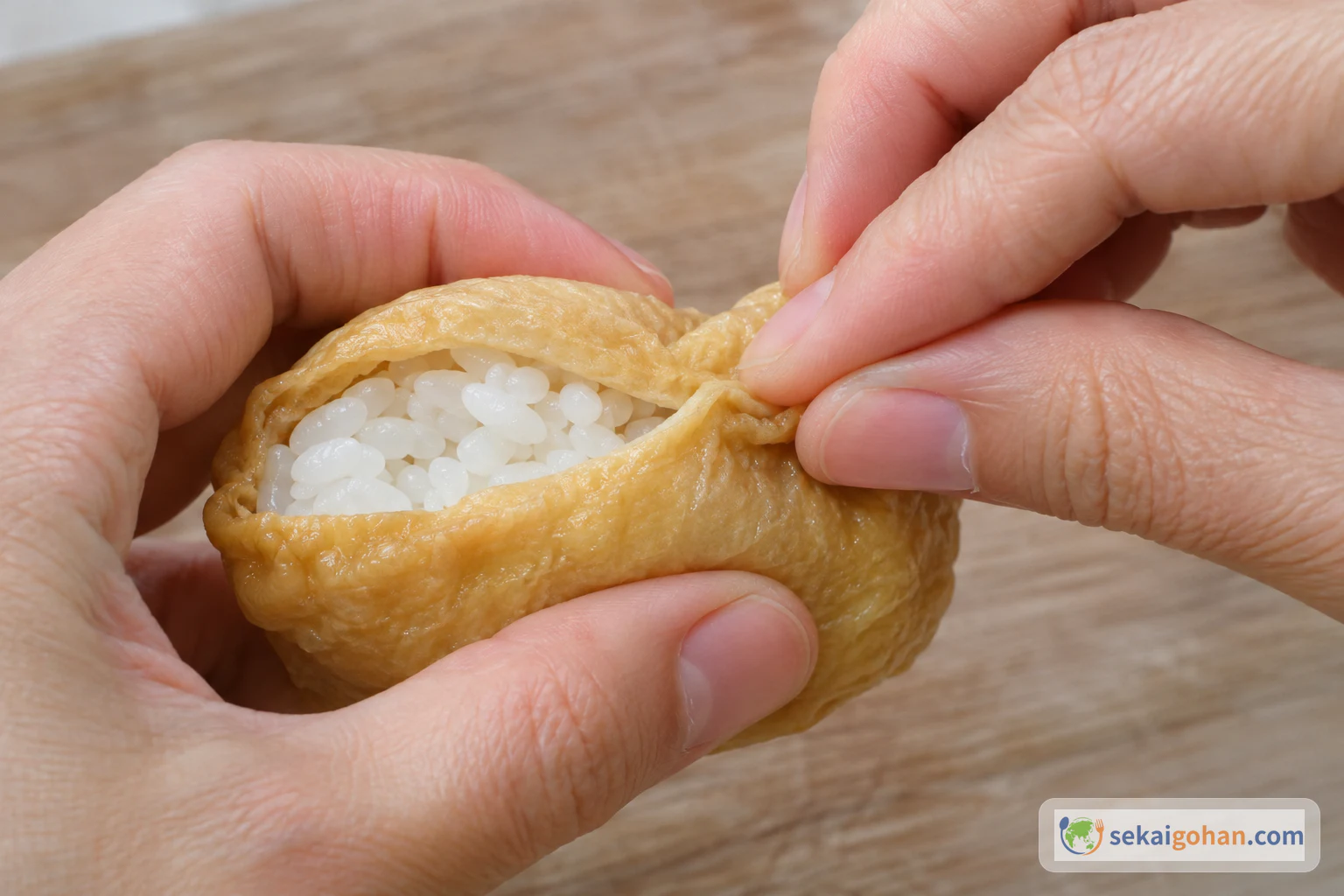
Keep the rice plain, handle the wrapper gently, and cook the chili paste until any added liquid is gone. The paste carries the seasoning, so nothing else needs to go in.
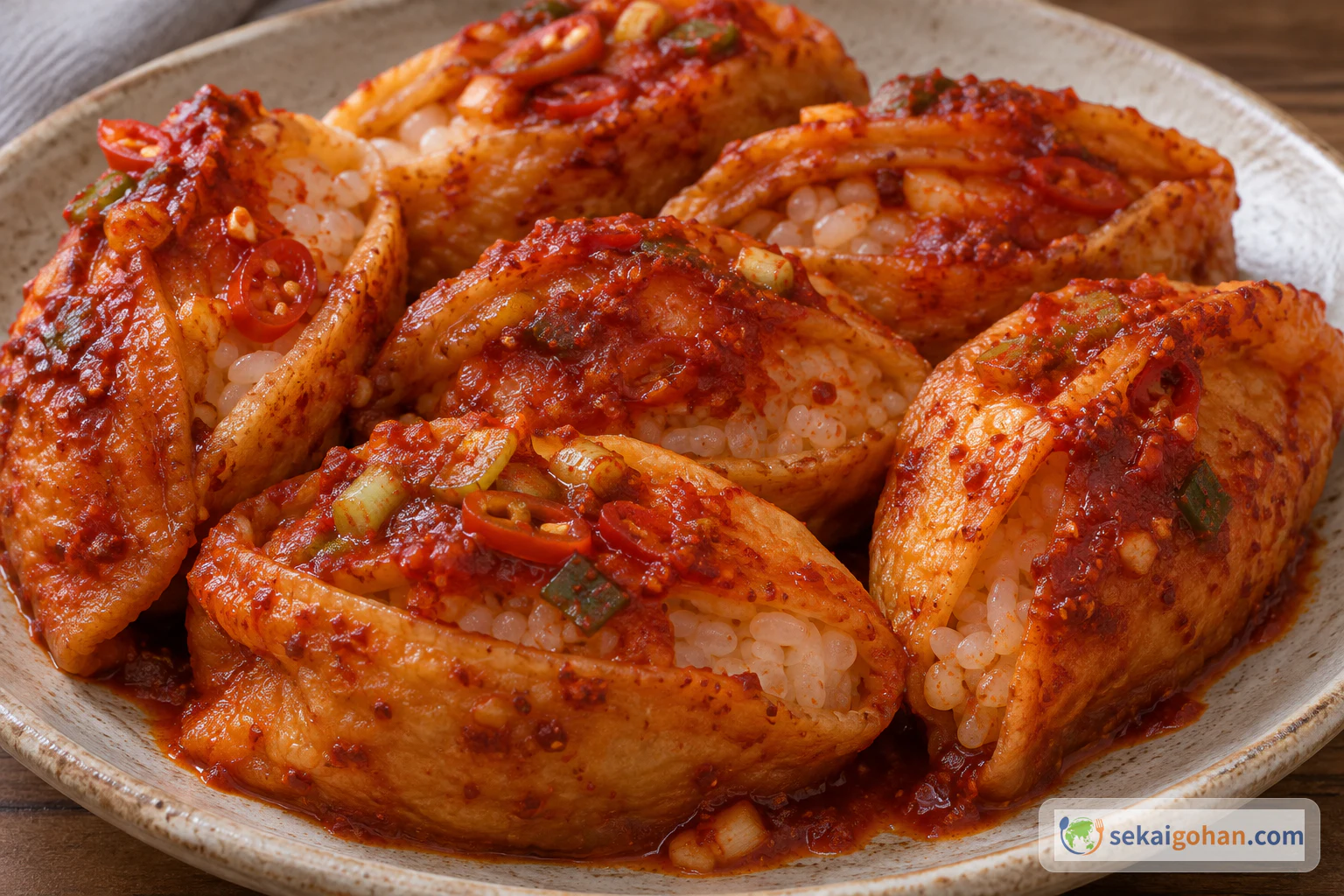
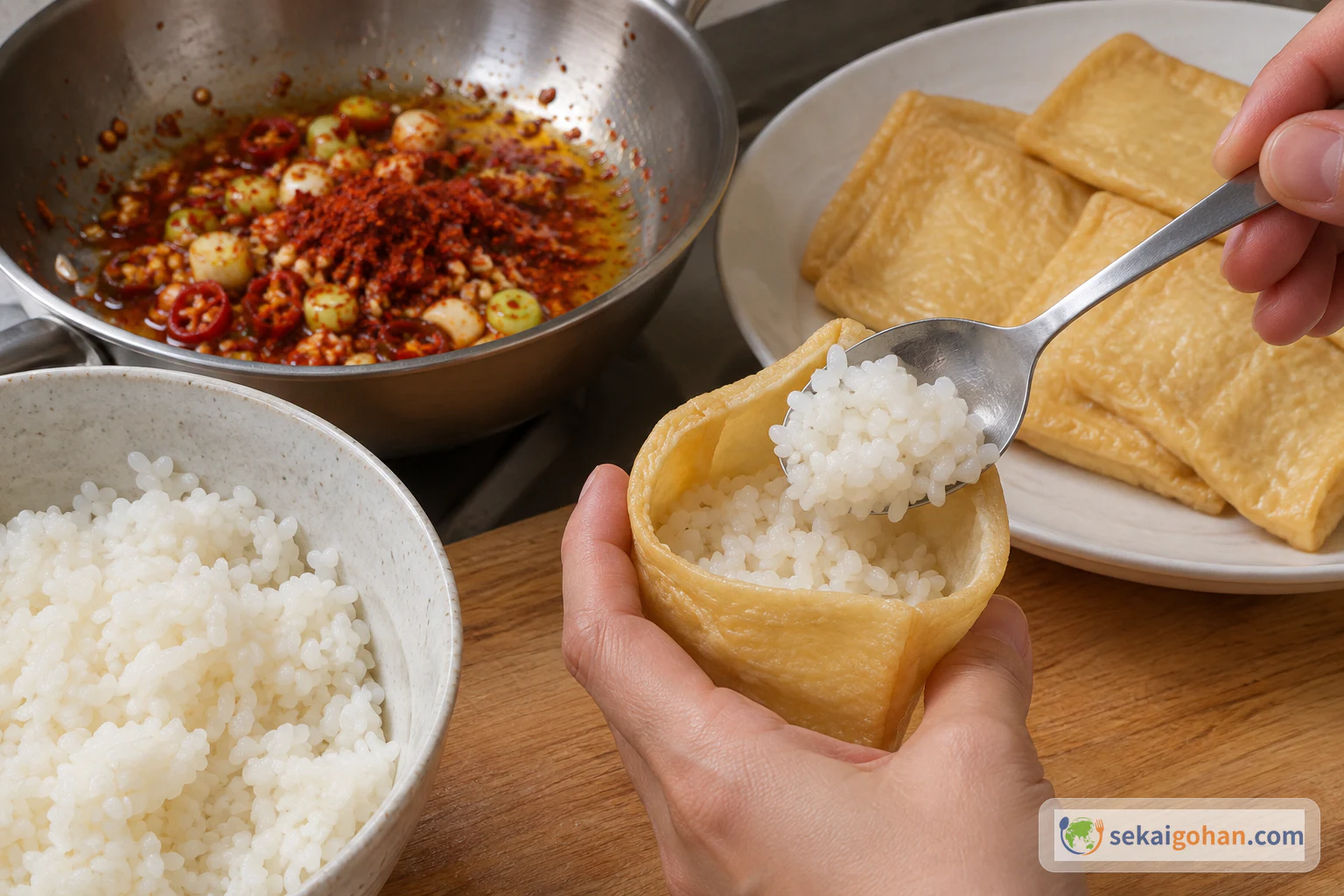
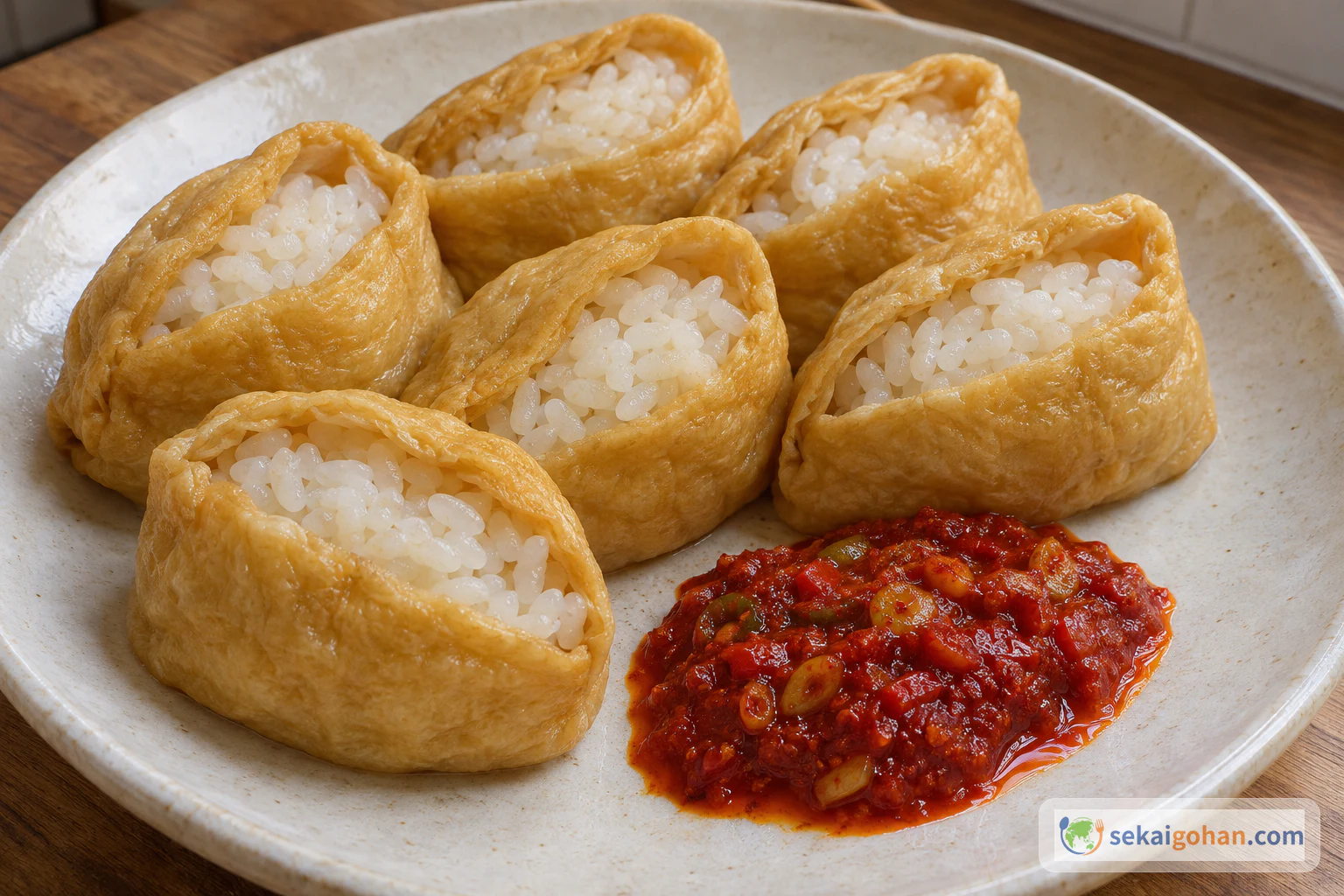
A pale soy wrapper is packed with rice, closed and spread with red chili paste. Reports from North Korea describe small rice-stuffed pouches of this kind sold at stalls as food to carry. The name, 인조고기밥, can suggest a meat dish, because injo gogi means "artificial meat." The wrapper is actually made from what remains after oil is pressed from soybeans.
Injo-gogi-bap is a North Korean dish. You will find it in our Korea section, but that placement says nothing about where it began, and we do not present it as a South Korean regional dish. It is also not a bowl of rice topped with soy meat. The wrapper around the rice is the heart of it.
Where this recipe comes from
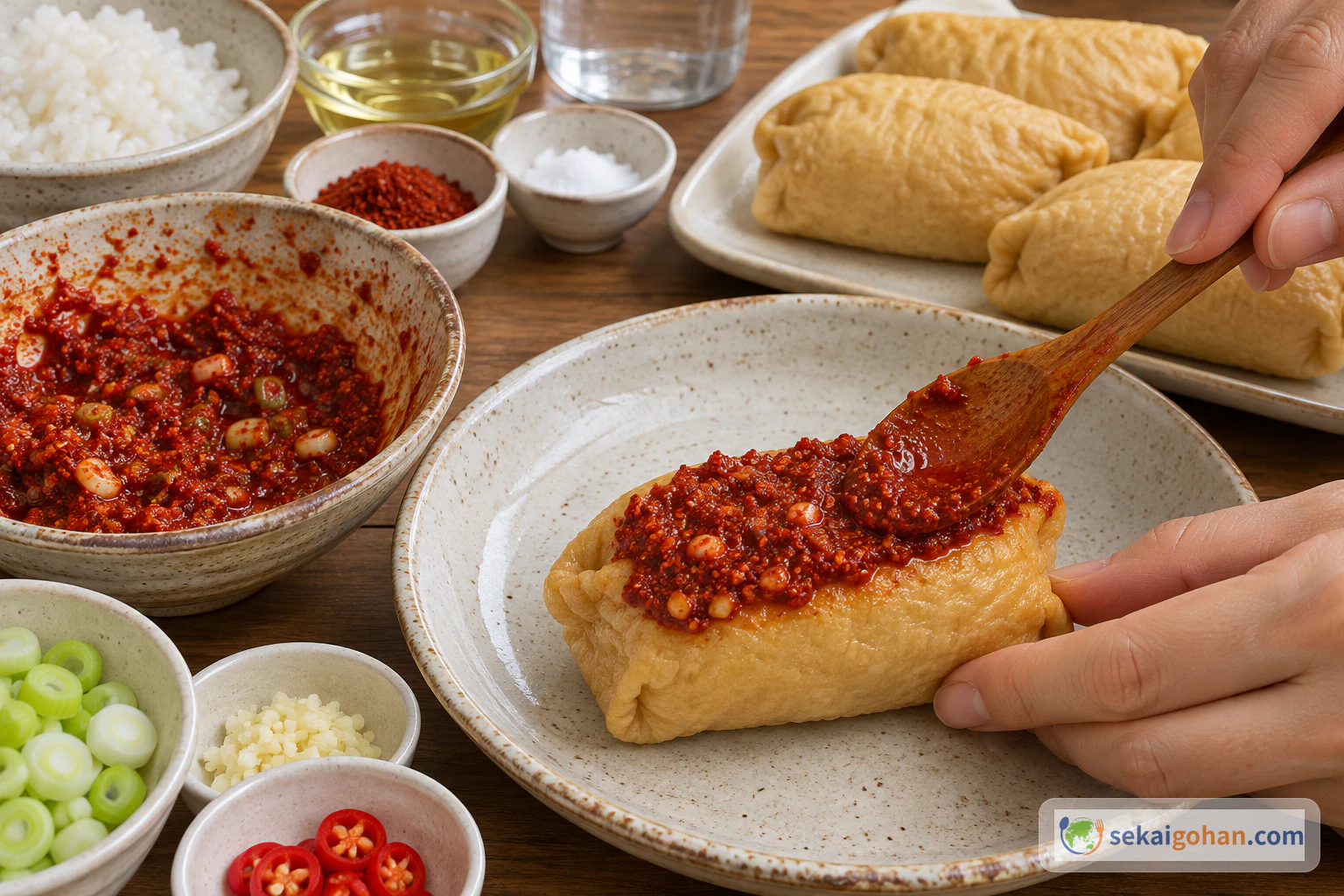
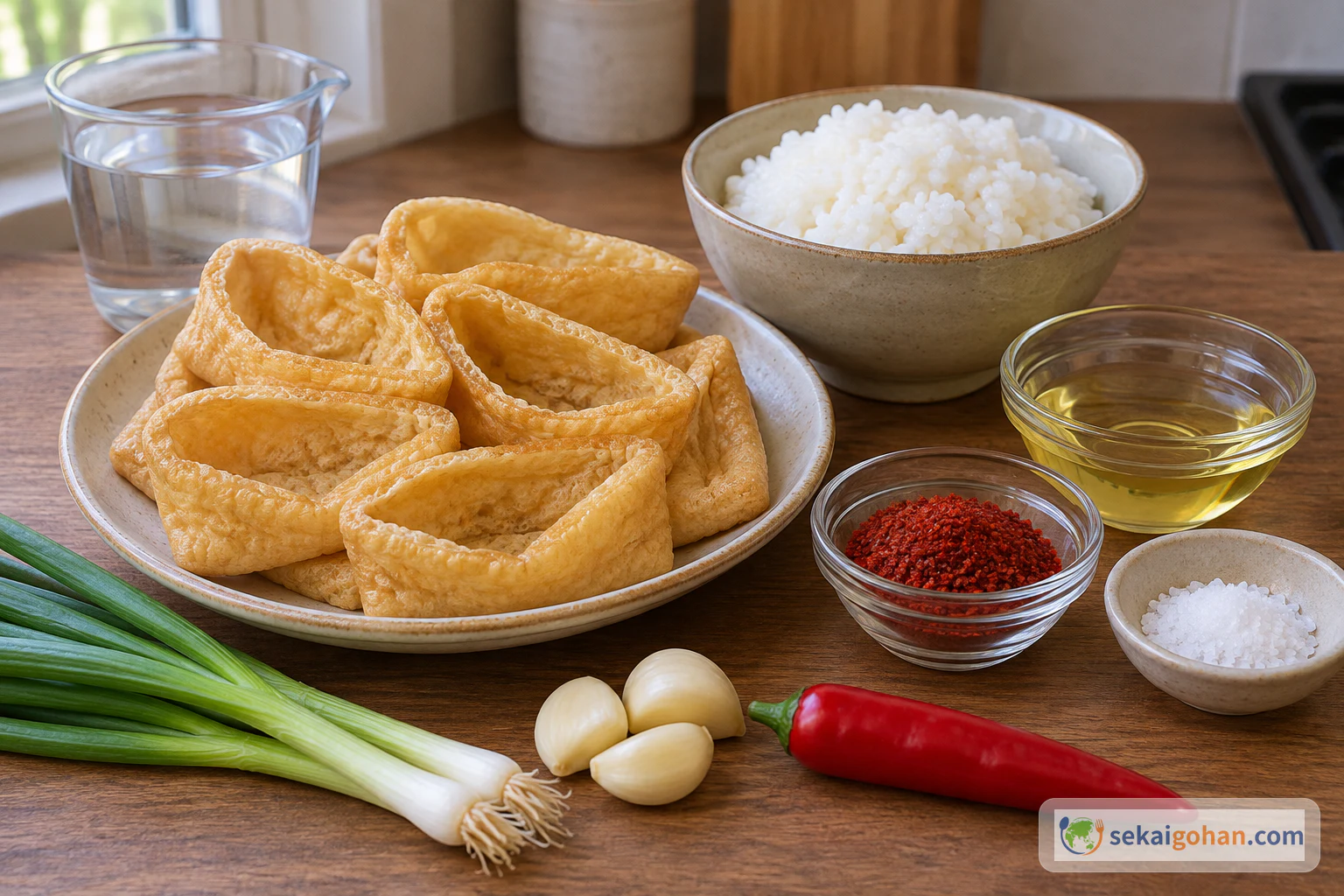
The method and the paste come from one published recipe: the injogogibab in the Artist's Notes for Hello by Olivia Hyunsin Kim / ddanddarakim, published by Sophiensaele. It is a real recipe printed in a performance program, not a professional cooking standard. It names injogogi as the wrapper and offers yubu (tofu pockets) from an Asian grocer because injogogi is hard to get in Europe. This article follows that yubu option, and the images show that version. It is a stand-in, so expect a different wrapper and texture from native injogogi.
Two things needed an editorial decision:
- Rice and wrapper amounts. The recipe gives none, and we found no reliable measured recipe for this dish. We borrowed a filling ratio from a similarly shaped dish: the aburage-zushi / inari-zushi recipe published by Japan's Ministry of Agriculture, Forestry and Fisheries, which uses 480g of rice, 8 sheets of fried tofu and 16 portions. That is a different dish. We took only the ratio, not its simmering liquid or vinegared rice.
- The 3 tablespoons of water. The recipe lists this water with the paste ingredients, while the method says only to add a little if the paste clumps. The paste has no other step that uses water, so we read 3 tablespoons as the upper limit. This is our interpretation.
We also don't state a number of servings.
Choosing the Wrapper, Oil and Chili
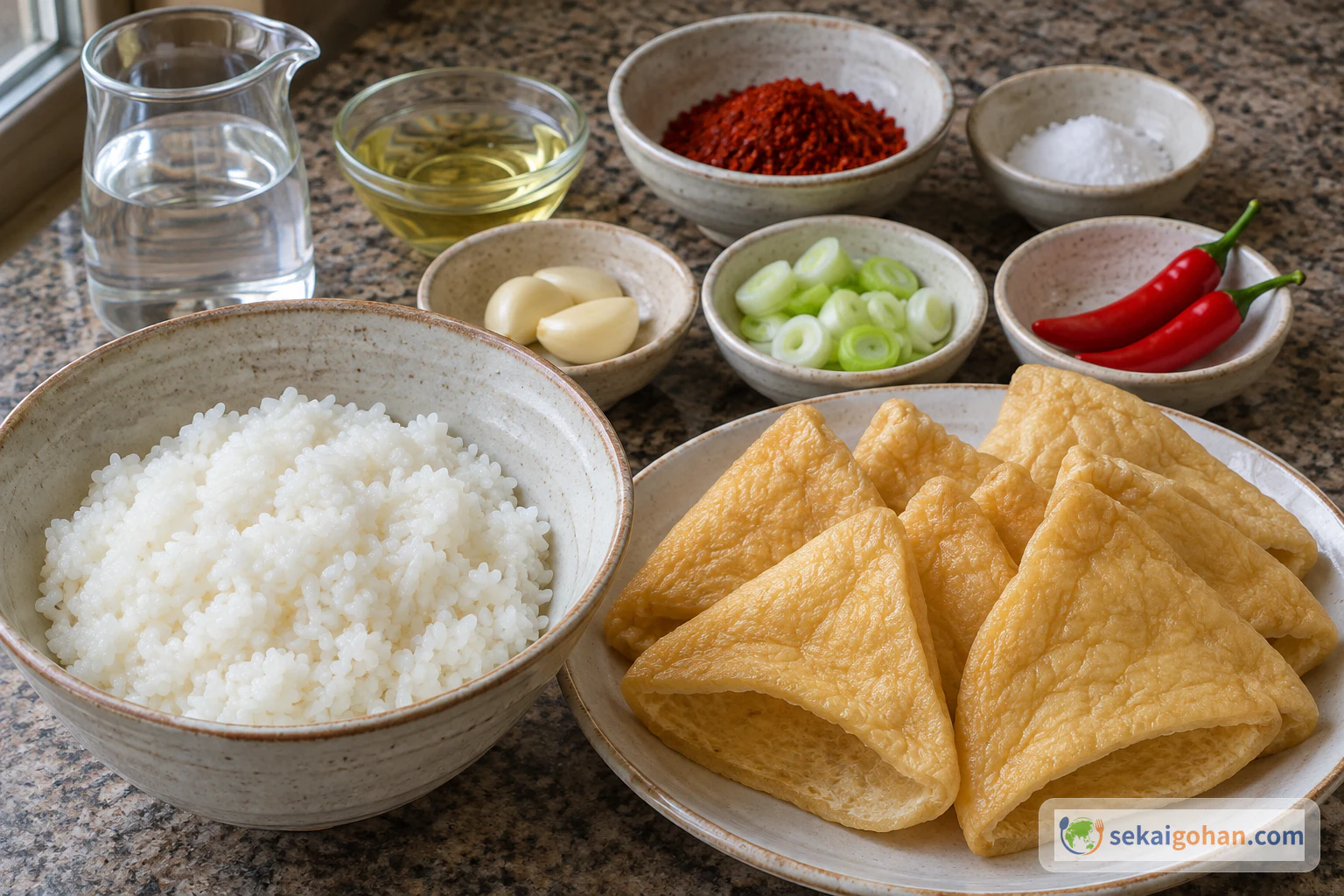
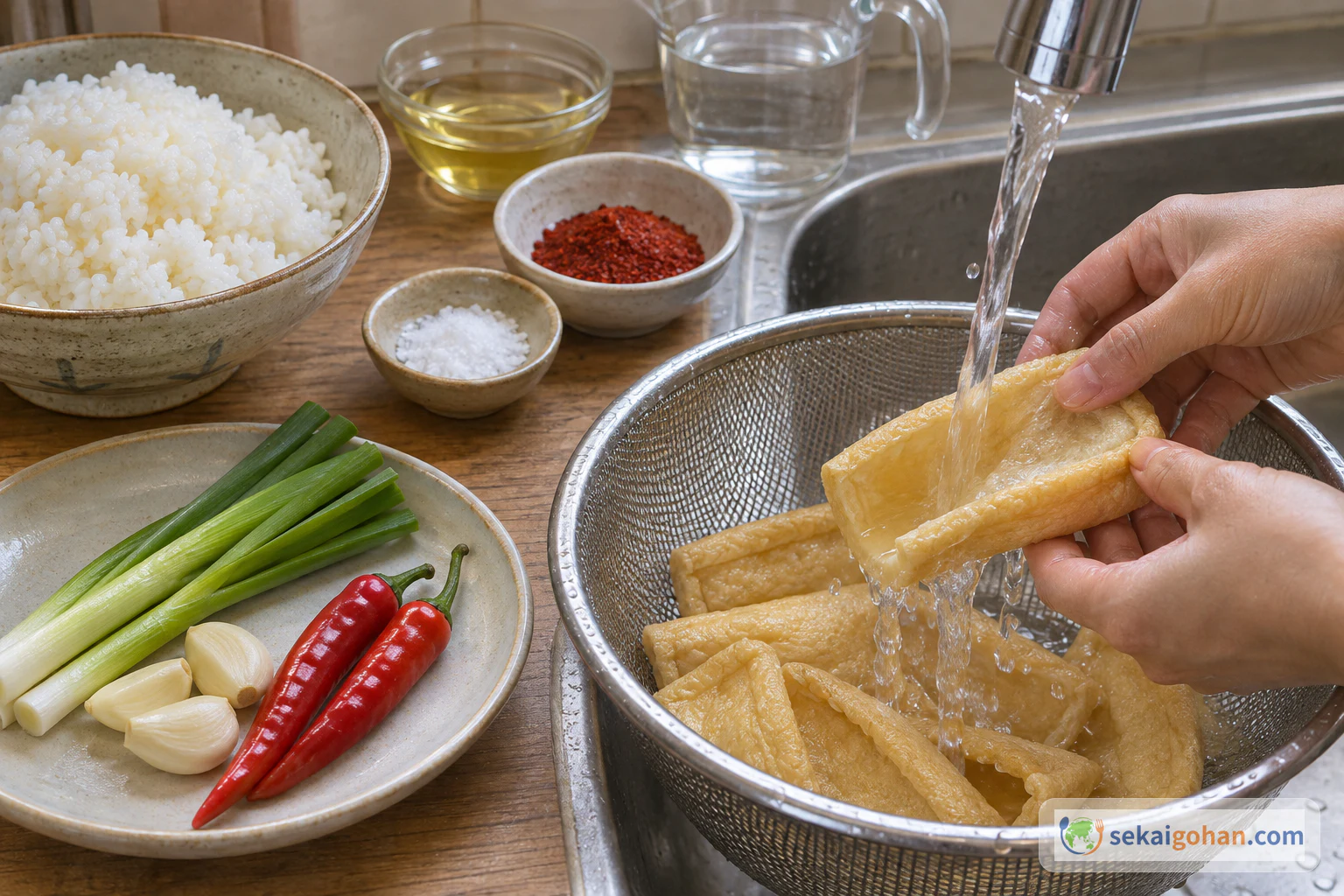
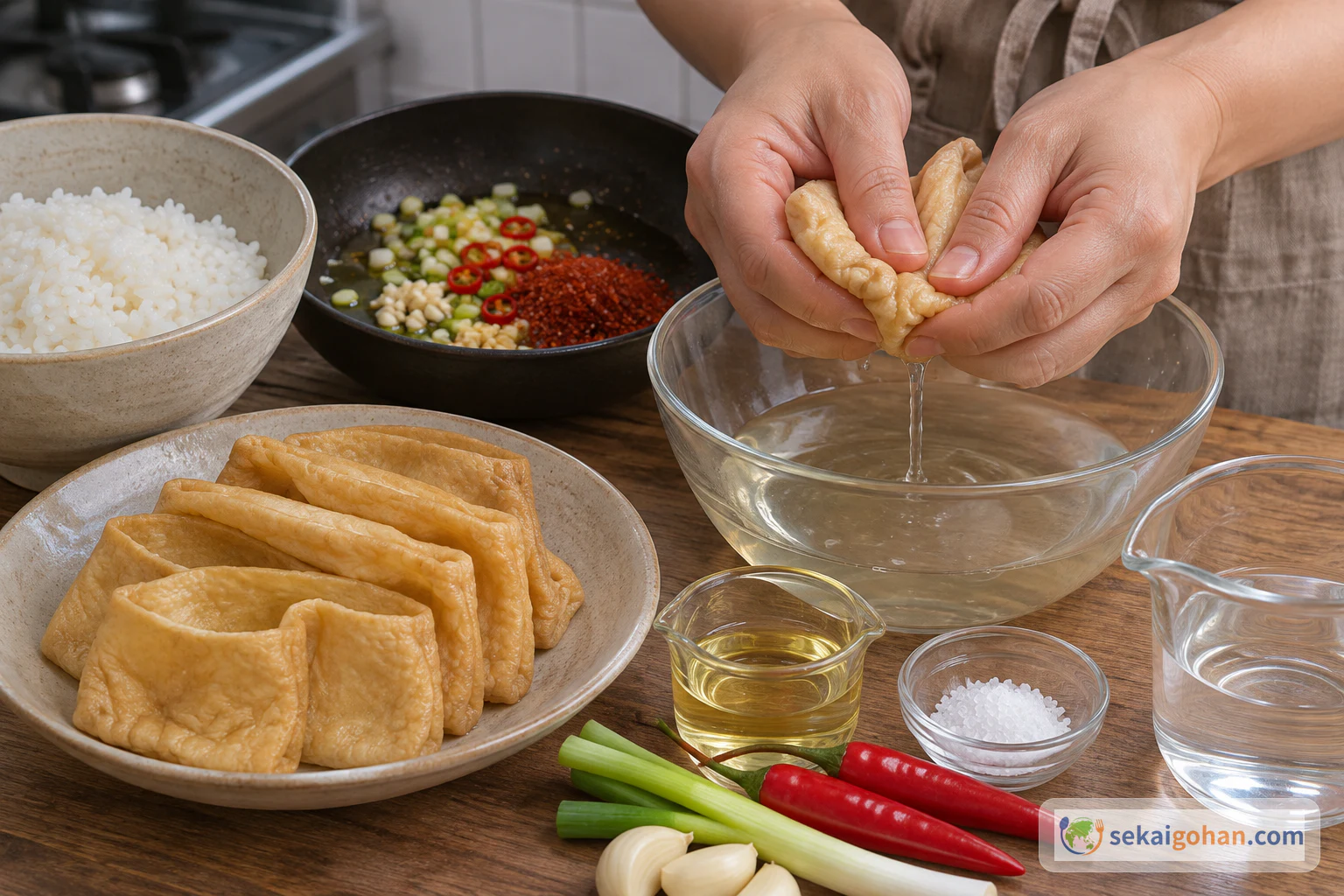
Wrapper. Use injogogi if you can find it, since it is the wrapper this dish is built around. We don't know how many sheets the amounts here would need, so the recipe below uses tofu pockets. Choose plain, unseasoned pockets. Pockets sold already seasoned would change the flavor of the dish.
Oil. Look for a label that says soybean oil. A neutral vegetable oil will work as an editorial substitute, but you lose the soy aroma. Don't switch to sesame oil.
Chili. Look for Korean chili powder (gochugaru). Heat varies with the type of chili, so taste yours before you start. For the fresh chili, a Korean hot red chili (Maeun Gochu) is the first choice. Another red chili is an editorial substitute with a different heat and aroma. Don't replace the fresh chili with extra powder.
Allergens. Injogogi, yubu, fried tofu and soybean oil are all soy products. Check the labels on anything you buy.
Ingredients for About 16 Yubu Pockets
Equipment
- Pot for blanching
- Colander or bowl for rinsing
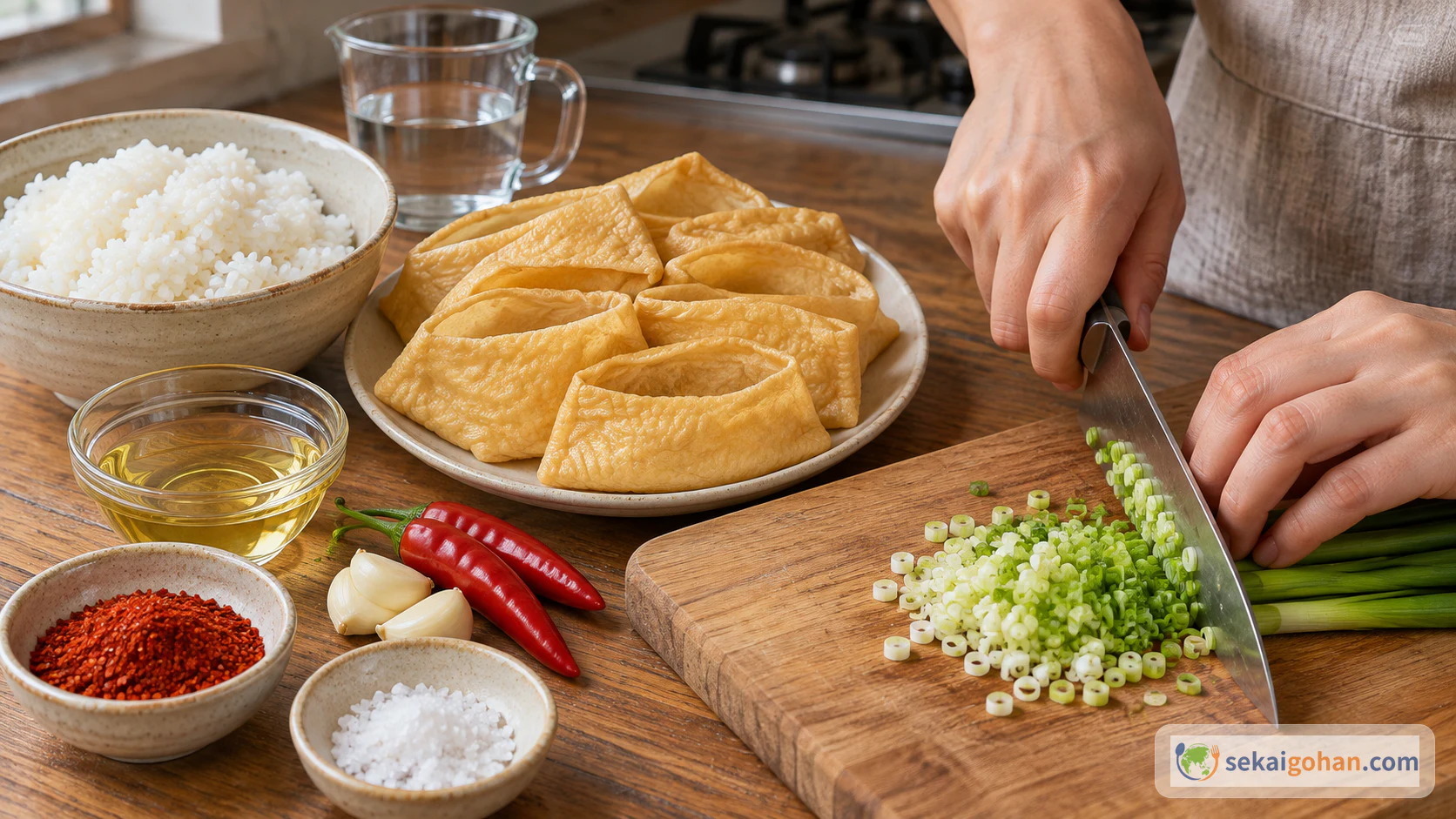
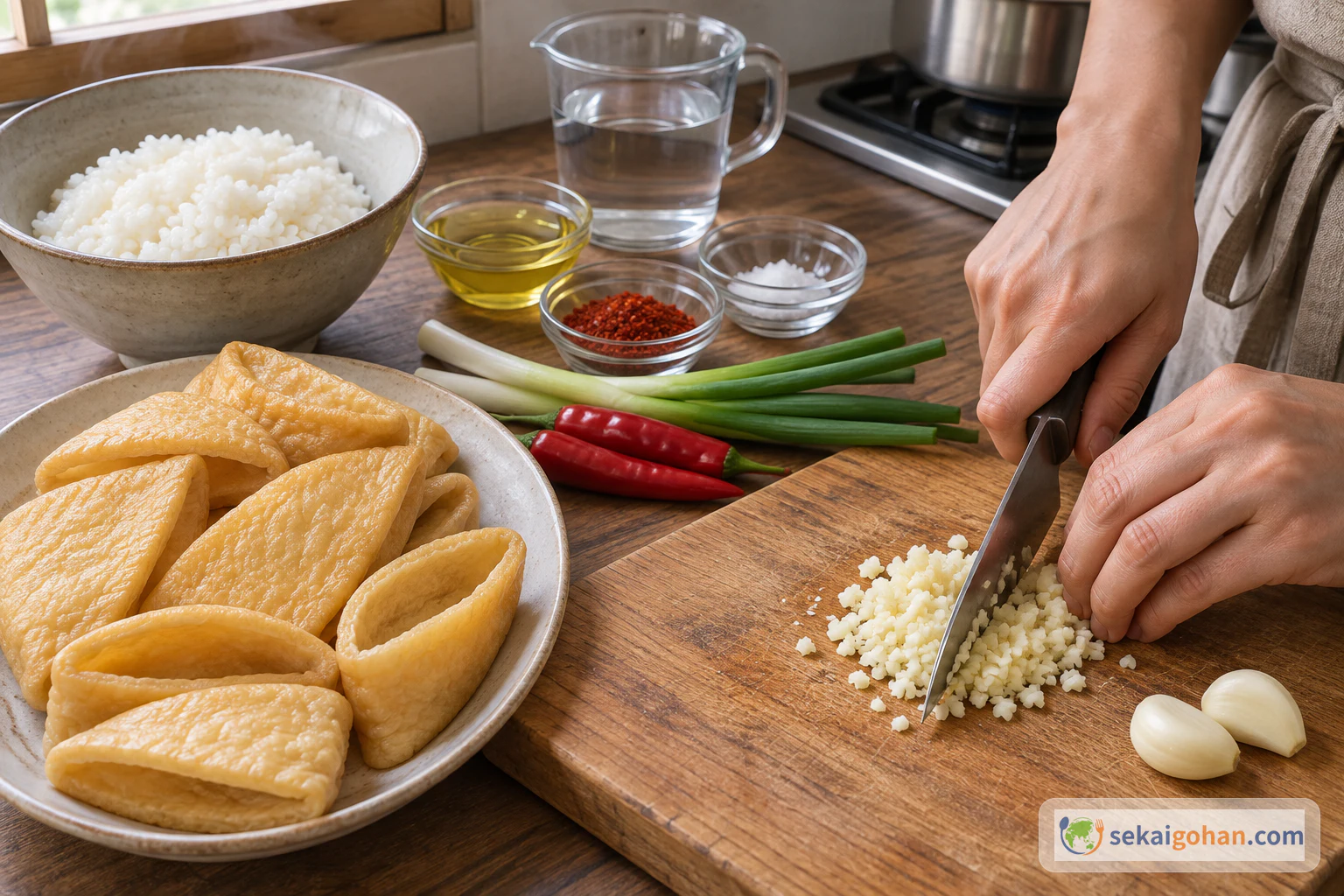
- Knife and cutting board
- Frying pan
- Spoon or spatula for stirring
- Spoon for filling the pockets
- Kitchen scale and measuring spoons
Troubleshooting
| Problem | What to check | What to do |
|---|---|---|
| The pocket tears | Squeezing too hard | Press gently, supporting the whole pocket with your hands |
| The rice doesn't fit | Pocket size varies | Use more or less rice per pocket |
| The paste clumps | Too little moisture in the pan | Add water a little at a time, up to 3 tbsp, then stir until the liquid has cooked off |
| The paste still looks wet | Added water hasn't cooked off | Keep stirring over the lowered heat |
| The gochugaru is close to scorching | Heat too high | Keep the heat low and keep stirring. Next time, lower the heat before adding the powder |
| The paste tastes too hot | Your chili powder or fresh chili is strong | Spread less on each pocket |
Variations
These are alternatives to read about or try separately.
| Variation | What changes | Keep in mind |
|---|---|---|
| Native injogogi | The closest texture and soy character | We don't know how many sheets you would need, and the 30g filling portion applies only to the tofu pockets |
| Other soy wrappers, such as dried yuba or soy sheets | Availability | An editorial idea only. Thickness, shape and tendency to tear will differ, so read the product description and expect to experiment |
| Less gochugaru | A milder paste | An editorial adjustment that moves away from the base recipe |
| A different sauce | A different flavor | The sauce described in the next section uses other ingredients. Treat it as a separate preparation, not an addition to this paste |
Background: From Soybean Residue to Market Food
The wrapper. The Los Angeles Times and ASIAPRESS both describe injogogi as a food made from what is left after soybeans are pressed for oil. ASIAPRESS's Rimjin-gang report, by a reporter from North Korea, describes residue that hardens, is formed as a hollow tube, then pressed into strips and rolled for sale. Injogogi should not be confused with soy protein products in general.
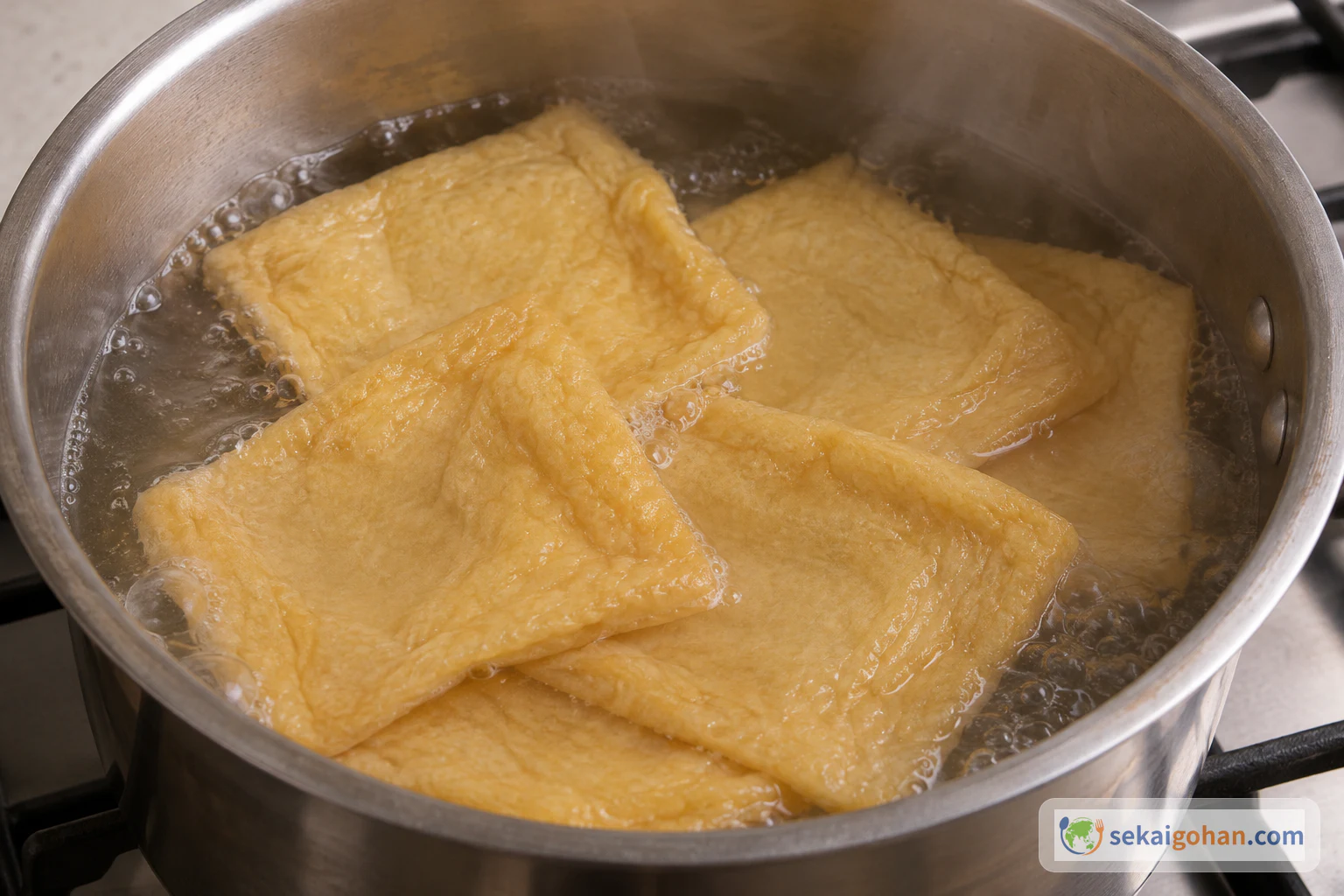
Preparing it. Sources differ here. The Los Angeles Times describes hard injogogi being softened in water and squeezed, and ASIAPRESS describes soaking the dried product for at least about 30 minutes. The Sophiensaele recipe uses a short blanch instead. These are different ways of handling the wrapper, and we have not combined them in the recipe above.
Its history. Sophiensaele, The Guardian / NK News and ASIAPRESS connect injogogi with hard times for food in North Korea, including the crisis of the 1990s and the reuse of food in those years. They do not settle a single origin. The ASIAPRESS reporter says outright that the origin is unclear, so we give no founding date or birthplace.
Everyday street food. Hardship is only part of the story. The Guardian / NK News piece, by writer Kim Yoo-sung, names injo-gogi-bap as a well-known North Korean street food, eaten with rice and a spicy sauce. Sophiensaele also places it in markets and stalls, and ASIAPRESS reports rice-stuffed pouches sold at stalls as portable food.
A cooking class in Seoul. The Los Angeles Times reported on Jessie Kim, a cook from North Korea who teaches home dishes at a cooking class in Seoul, including this one. The red sauce in that report is made differently: scallions fried in vegetable oil, then chili powder, sugar, soy sauce, green chili, perilla leaf, garlic, ginger and salt. The report gives no measured recipe, and we have not mixed it with the paste here. It does show that the sauce is not one fixed formula.
A neighboring dish. Dubu-bap (두부밥), which appears in the same report, stuffs rice into tofu. It is a related North Korean street food, but a different dish.
Storage and Food Safety
Eat the pockets soon after filling. Don't leave the cooked rice or the filled pockets at room temperature for long, and make only as many as you will eat. We give no storage period for filled pockets. If too much time has passed, throw them out.
Store leftover paste in a clean, shallow container in the refrigerator at 10°C or below. Throw it away after 4 days. The FAQ explains how we arrived at that limit.
Frequently Asked Questions
Is injogogi meat?
No. Despite the name "artificial meat," the Los Angeles Times and ASIAPRESS describe it as a food made from the soybean residue left after pressing for oil.
Where is this dish from?
We treat it as a North Korean market and home food. It sits in our Korea section for site organization, and that placement isn't evidence of a South Korean origin.
Can I use yubu instead of injogogi?
Yes. The Sophiensaele recipe offers yubu as its stand-in, but it is not the same wrapper or texture. Fried tofu sheets are an accessible way to make the dish, not a claim of equivalence.
How much rice do I need, and how many people does it serve?
The Sophiensaele recipe gives no rice amount, wrapper count or yield. We used the 480g of rice, 8 sheets and 16 portions from the Japanese ministry's inari-zushi recipe as a guide.
Do I have to use all 3 tablespoons of water?
No. The recipe lists 3 tablespoons, while its method says to add a little if the paste clumps. We read that as an upper limit, which is an editorial interpretation. If the paste doesn't clump, you can leave the water out.
Can I make it less spicy?
Spreading less paste is the simplest way, and it leaves the paste itself unchanged. Using less gochugaru is possible too, but that is our editorial adjustment to the stated 3 heaped tablespoons, and it will change the dish.
Why throw out leftover paste after 4 days?
The Sophiensaele recipe gives no storage guidance. The US CDC advises refrigerating homemade oils made with garlic or herbs and throwing them away after 4 days.
Why the caution about rice at room temperature?
Japan's health ministry advises against leaving cooked food at room temperature for long. A Japanese agriculture ministry sheet on Bacillus cereus gives the same warning, along with advice to make only what you can eat. Its examples are fried rice and pilaf rather than stuffed rice, and we apply the same caution here.