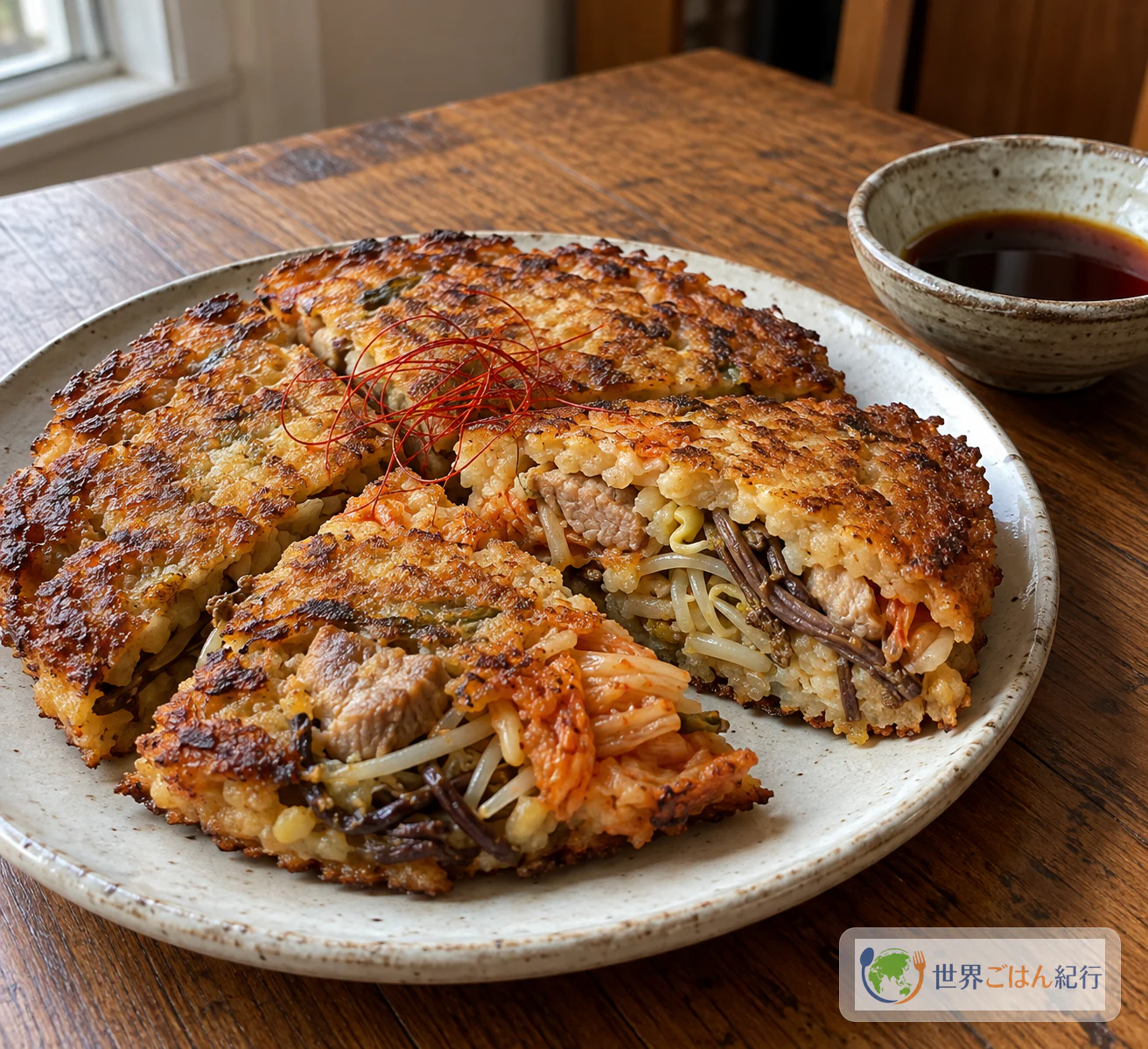
Bindaetteok: A Thick Mung Bean Batter That Sizzles in Oil
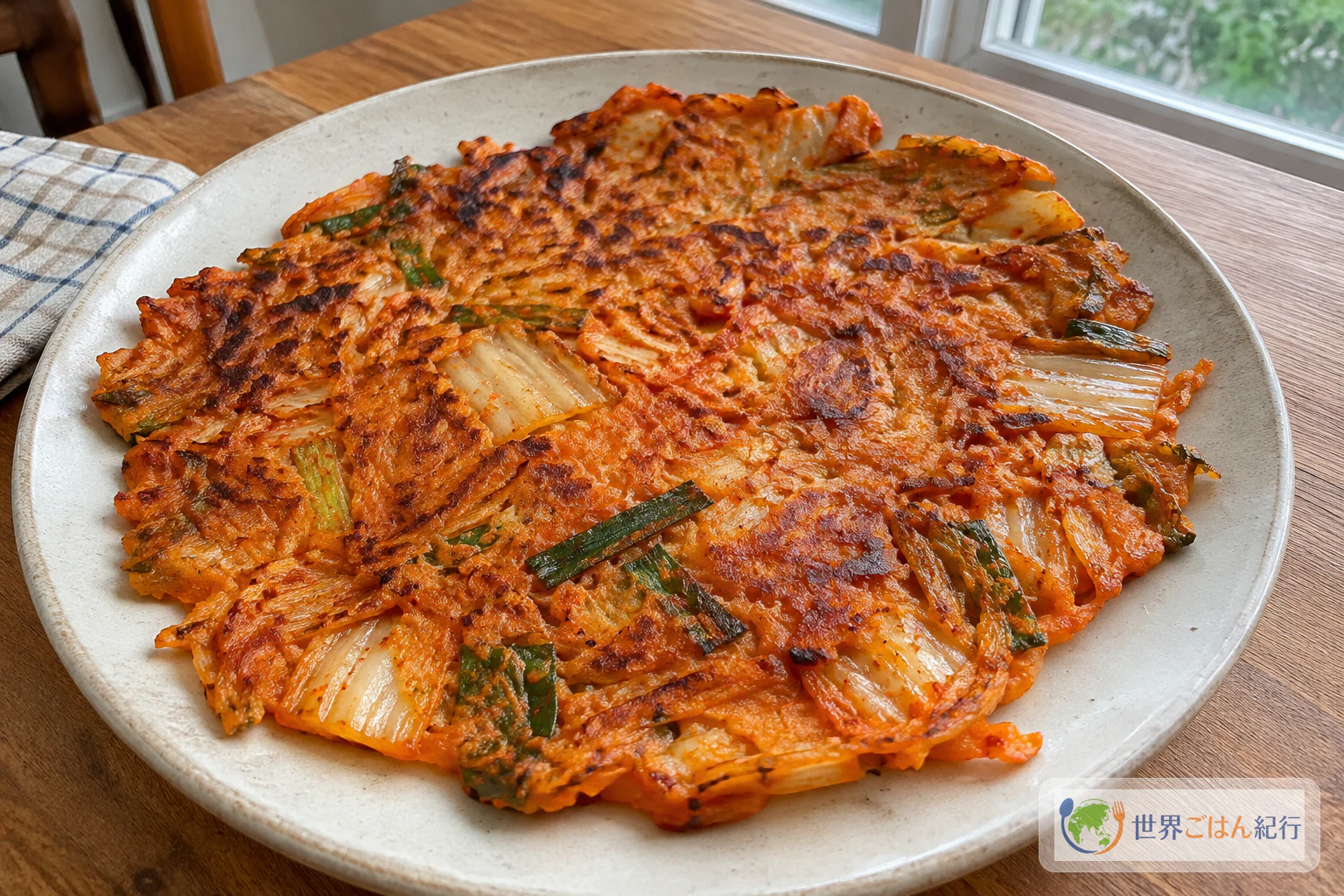
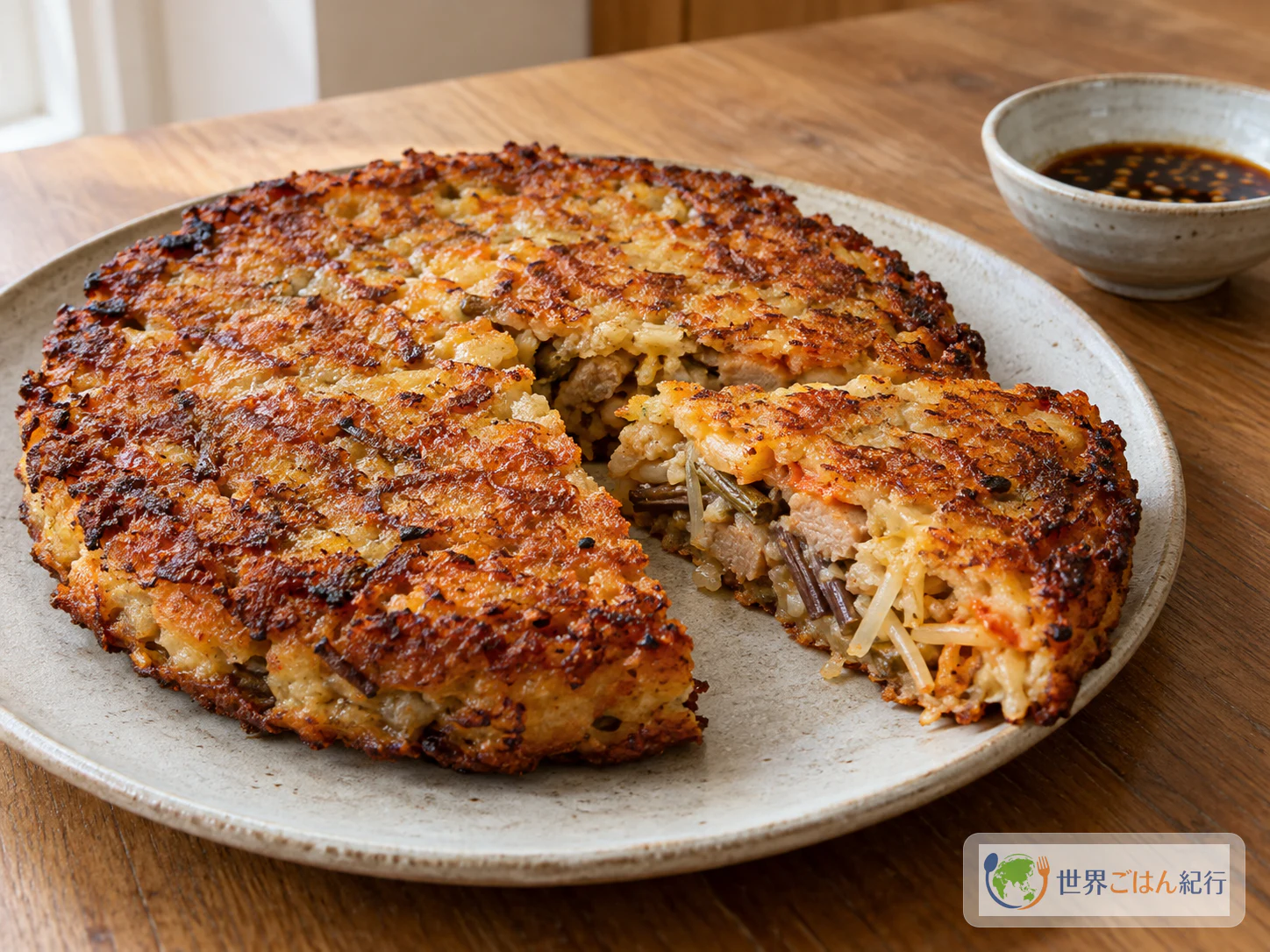
A batter made from whole soaked mung beans and sweet rice, ground thick, carrying pork, kimchi, fernbrake and sprouts. Fry it until the outside is golden and crisp and the pork inside is cooked through.
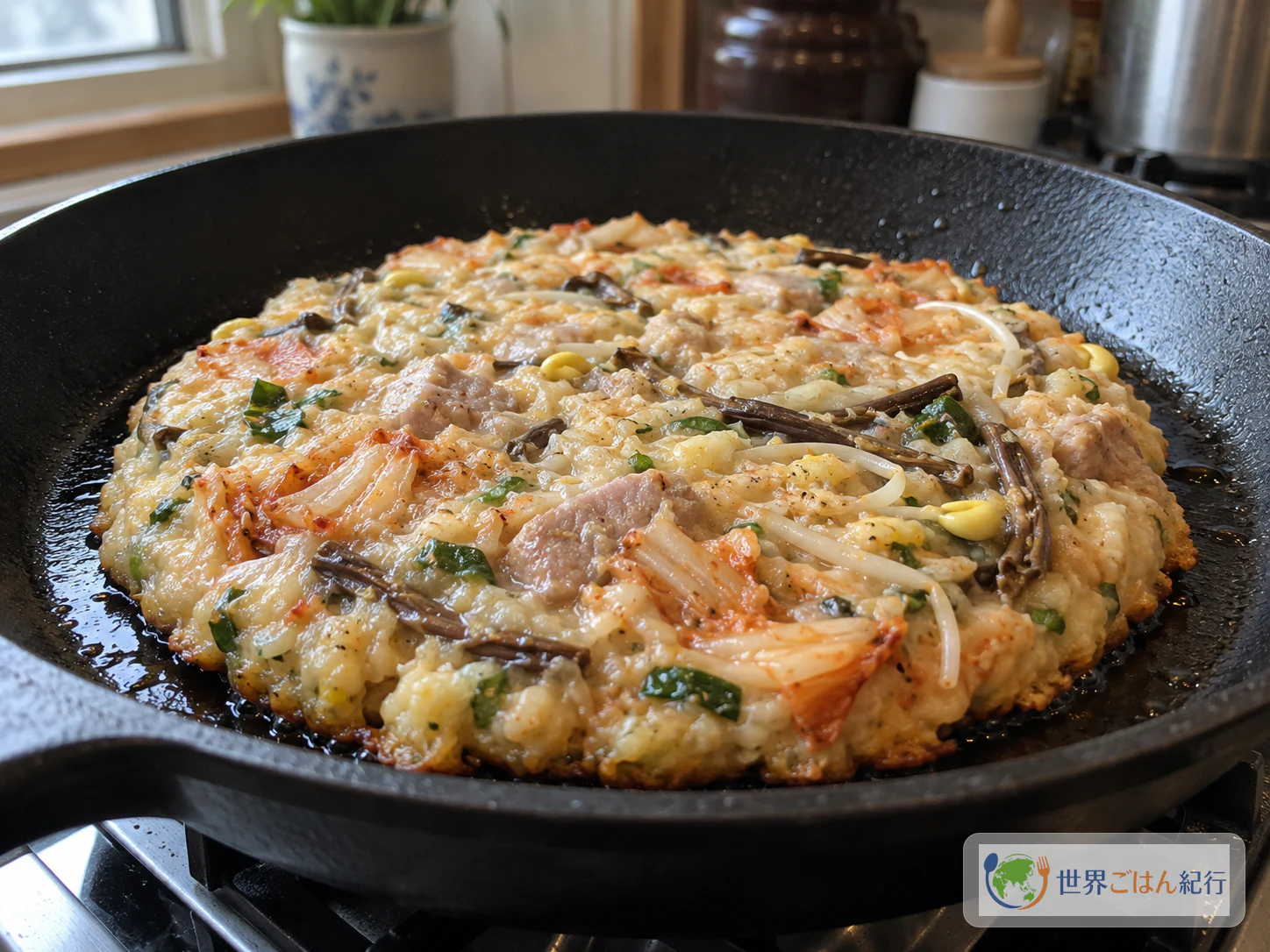
A spoonful of thick, pale batter lands in hot oil, and the pan answers with a steady crackle. Korea.net describes bindaetteok (빈대떡) as a dish for feasts and as a favorite on rainy days, when the sizzle of batter frying in oil is often likened to the sound of rain. It is a common association in Korea rather than a single story, and it says something about how familiar this pancake is.
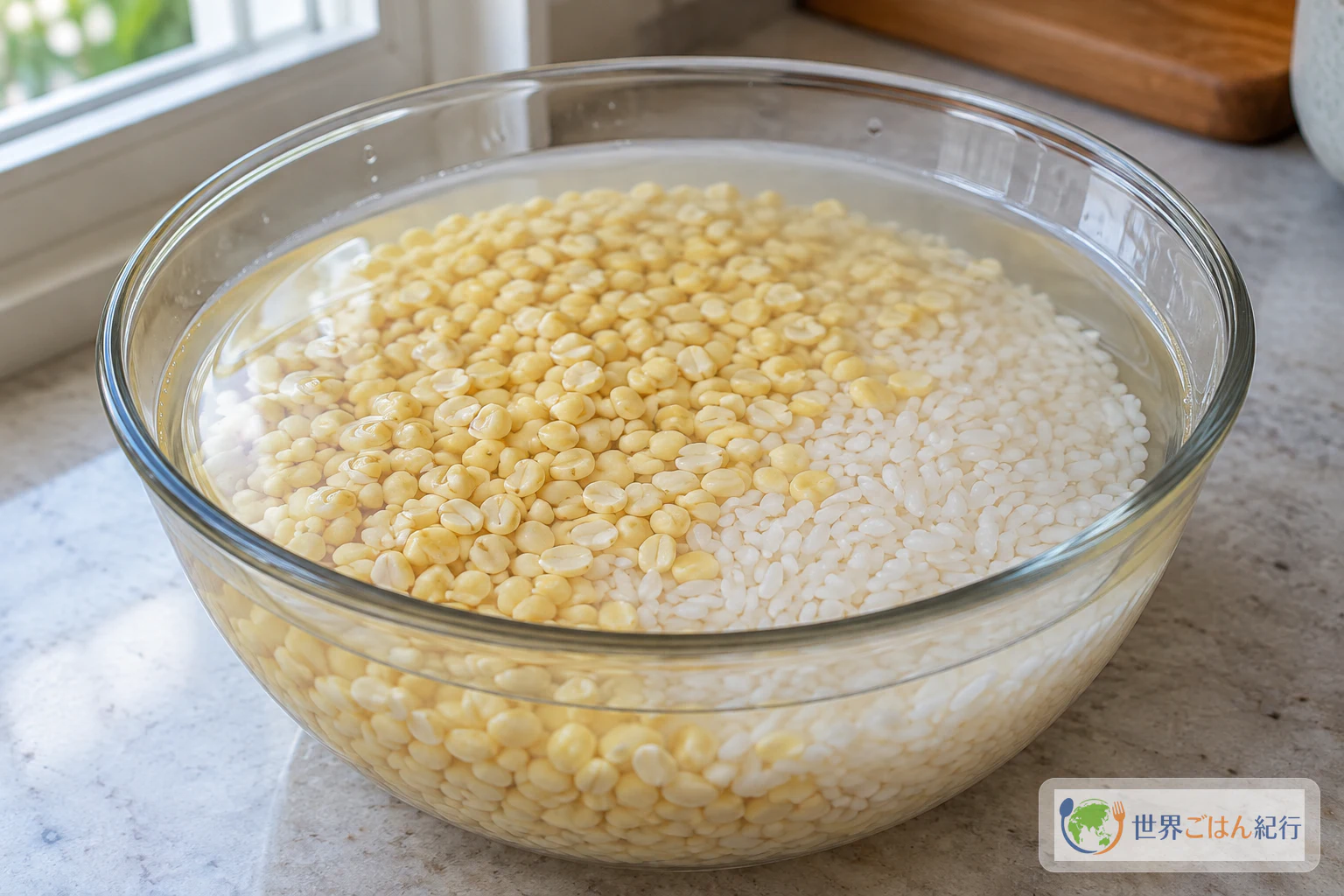
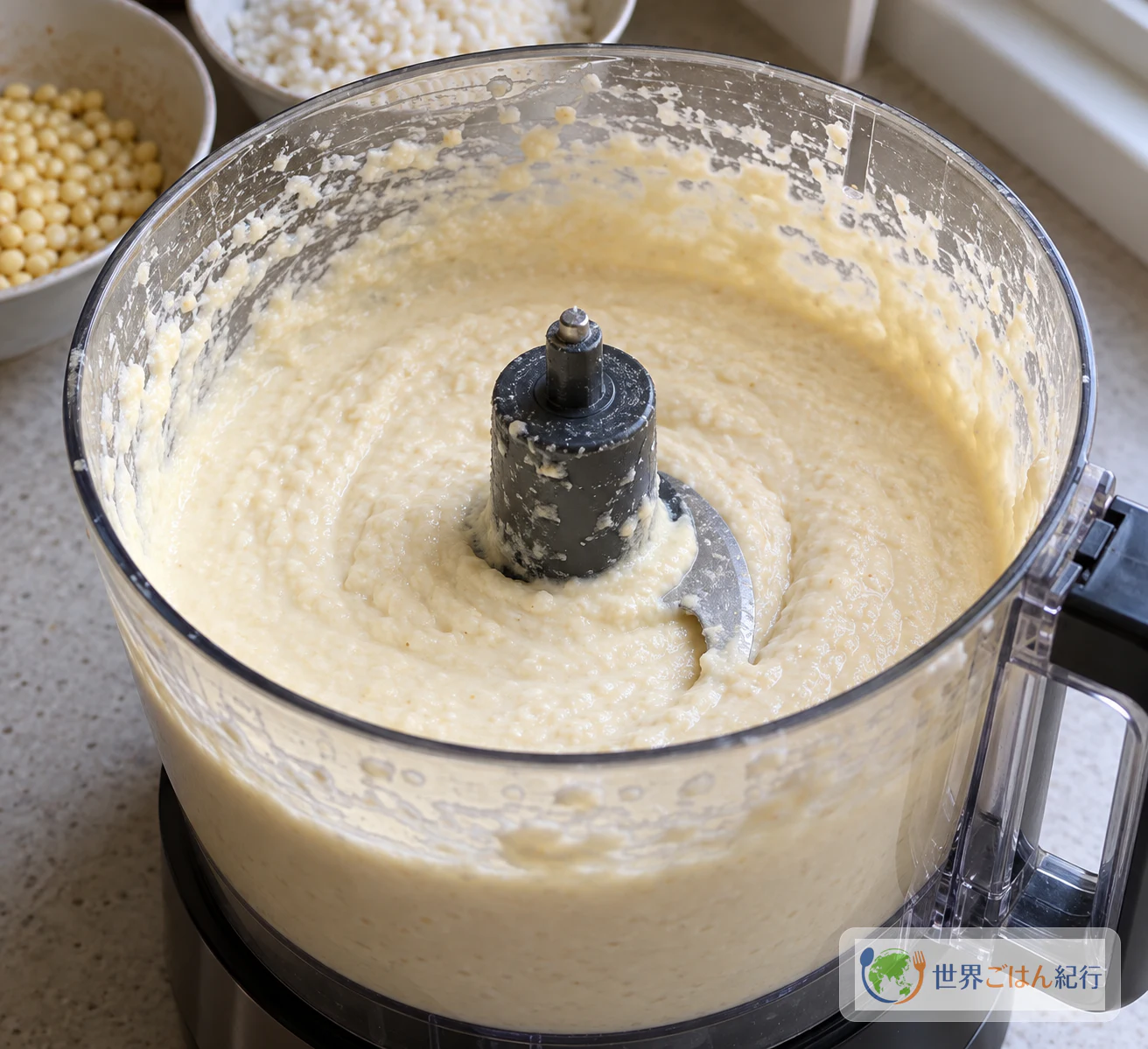
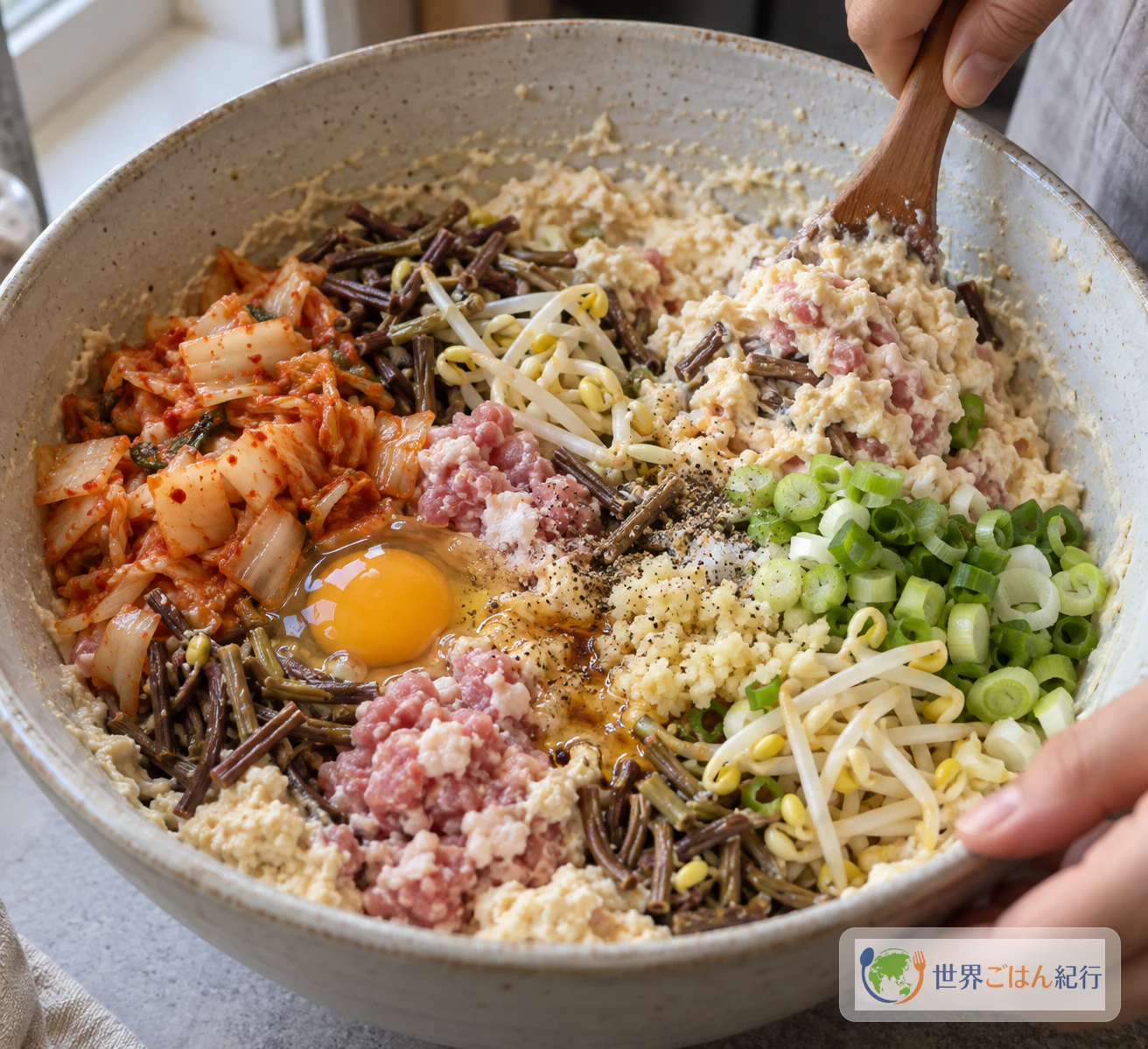
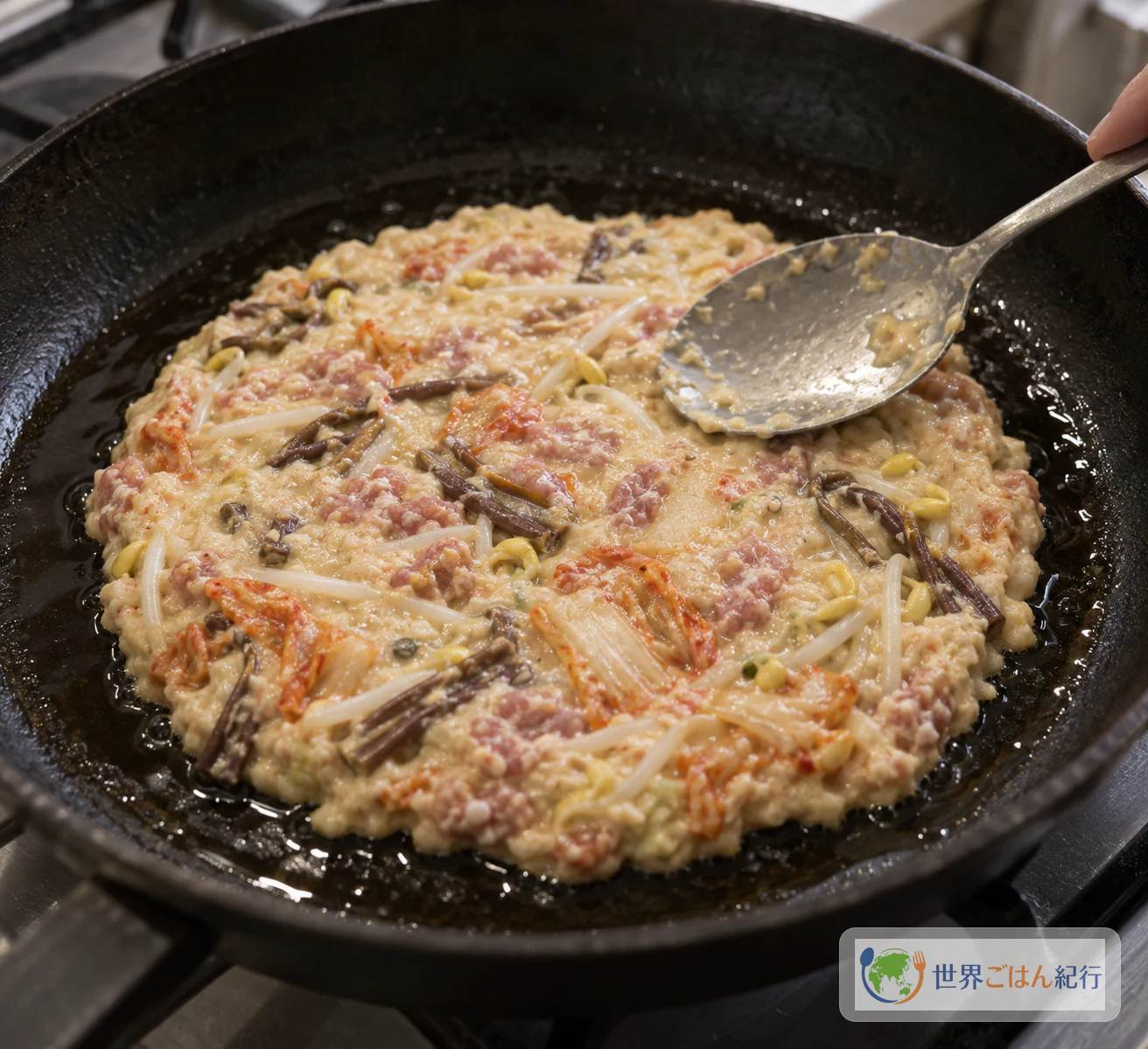
Bindaetteok is not made from a ready-mixed flour batter. Dried, skinned mung beans and a little sweet rice are soaked for 8 hours, then ground into a thick batter, and ground pork, well-fermented napa cabbage kimchi, fernbrake (gosari) and mung bean sprouts are folded in.
The version here follows the recipe published by Maangchi, who credits it to a Korean friend whose in-laws were born in North Korea. It makes 6 pancakes, each about 6 inches across, and keeps Maangchi's US cup, ounce and spoon measures as given. Sekai Gohan has not kitchen-tested this recipe; amounts and times follow Maangchi's version and should be read as guides.
In Korean it is 빈대떡 (bindaetteok). Maangchi also gives 녹두전 (nokdujeon), "mung bean jeon," as a related name. Searching with both helps when looking for ingredients and background.
What Bindaetteok Is: A Tteok That Is Not a Rice Cake
The name ends in -tteok, the word usually used for rice cakes, but bindaetteok is not a rice cake. Korea.net and the Korea Tourism Organization both present it as a pan-fried pancake of ground mung beans, part of the family of Korean dishes called jeon (전). The Korea Tourism Organization's overview names mung beans, pork, sprouts and bracken as its ingredients, the same outline as the version on this page.
The Korea Tourism Organization describes the pancake as a specialty of Pyeongan-do, a northern province now in North Korea. That regional link fits the family history behind Maangchi's recipe, but this page does not present it as the one authentic Pyeongan-do formula; it is one home version with northern roots.
Korea.net also reports that a 17th-century cookbook records a dish called binjyabeop. That is worth knowing as an old written record, but the dish's origin is not settled, and this record alone does not prove where bindaetteok began.
From North to South: Refugees, Markets and Makgeolli
Koreana, the Korea Foundation's magazine, describes how bindaetteok moved south from the northern provinces with refugees after the Korean War, and how it became a dish of Seoul's markets and eating alleys. Koreana names Gwangjang Market and Euljiro as places in Seoul known for bindaetteok, where it is often eaten with makgeolli, the milky Korean rice wine. Koreana also describes cooks there varying the fillings, for example with oysters or octopus.
The recipe on this page belongs to that same movement of people and memory, carried in one family's kitchen rather than a market stall. For more dishes from the same table, see the South Korea country page.
Ingredients: 6 Pancakes, About 6 Inches Each
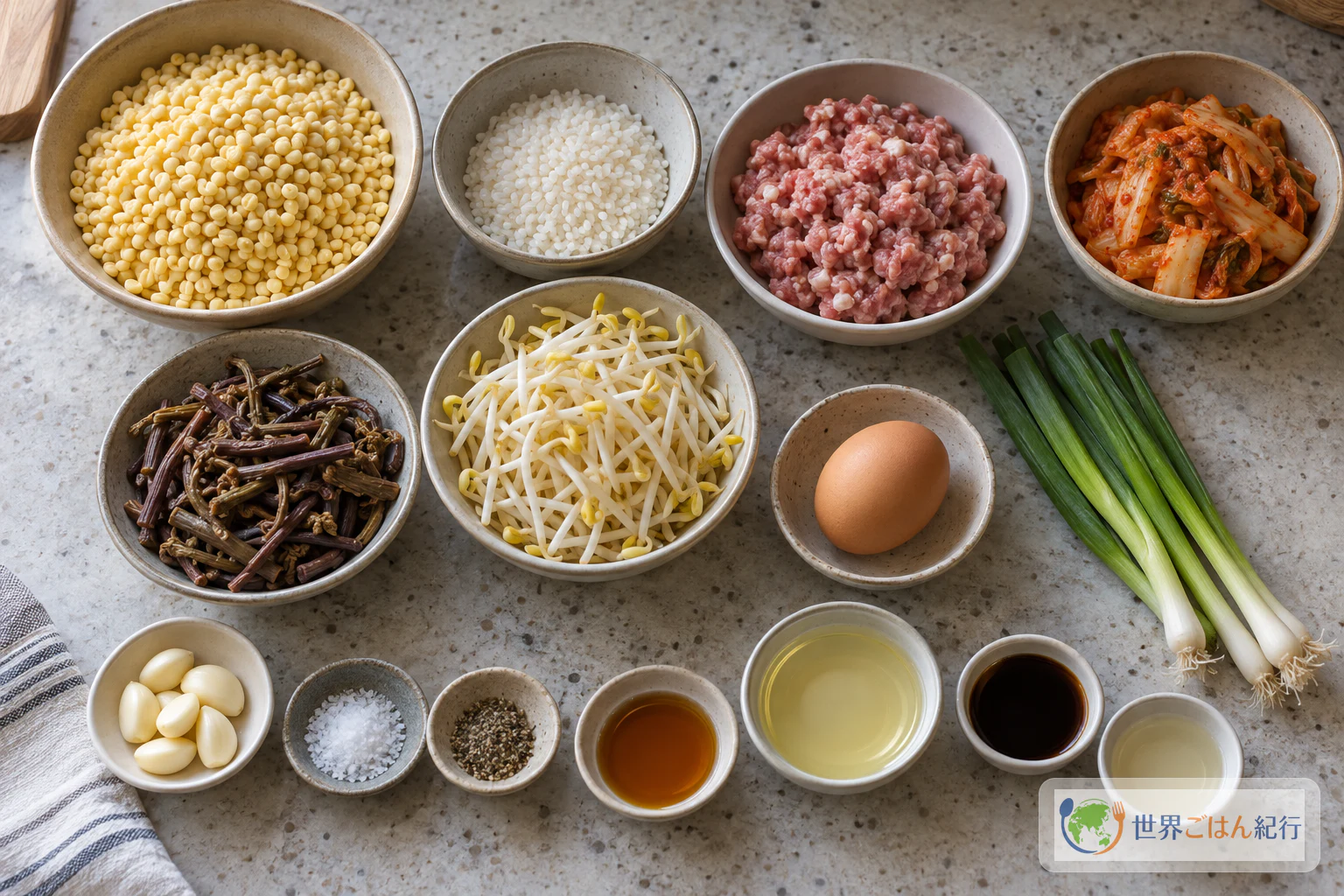
Makes 6 pancakes, each about 6 inches across.
Choosing and Substituting: Beans, Rice and Gosari
Mung beans and sweet rice are the heart of the dish. Look for dried skinned mung beans and for sweet rice, also called glutinous rice, at Korean grocers or online. Ordinary rice or rice flour is not a like-for-like swap for sweet rice in this batter.
Mung bean flour makes a different pancake. Swapping the soaked beans and rice for mung bean flour changes both the texture and the proportions, so it is not part of this recipe.
Gosari can be left out. Gosari adds an earthy flavor, and the pancakes can be made without it if you can't find it. Without it, they lose some of that earthy aroma and chew. Use it fresh, or rehydrated and drained.
Kimchi should be well fermented. Use well-fermented napa cabbage kimchi, chopped.
Leaving out the pork is a different dish, not a substitution. Pork adds savoriness and helps hold the pancake together; a pork-free version would need its own testing.
The batter contains raw pork and raw egg: do not taste it before cooking, and cook every pancake until the pork in the center is fully cooked. Soy sauce contains soy and usually wheat, and kimchi may contain fish or shellfish products; check the labels of everything you buy.
Equipment
- Food processor
- Large mixing bowl
- Bowl for soaking
- Large skillet or frying pan
- Spoon or ladle
- Wide spatula
- Small bowl for the dipping sauce
Method: Soak, Grind, Mix and Fry
The beans and rice need 8 hours in water before you can grind them, so start the night before or in the morning for an evening meal.
Fixing Problems at the Stove
| What you see | What to do |
|---|---|
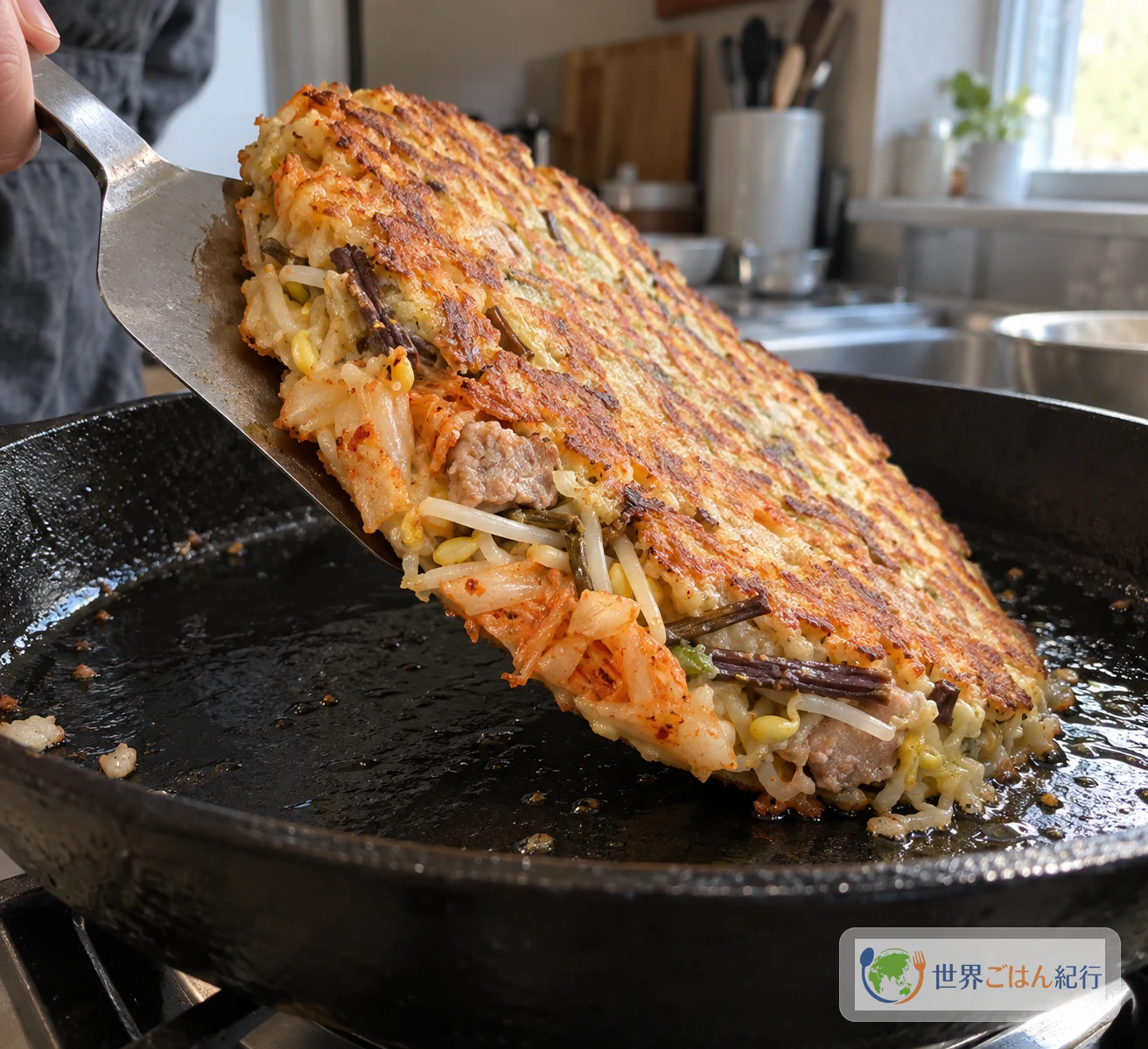
| The bottom browns before the edges set | Turn the heat down slightly and keep cooking; don't flip before the bottom is golden and crisp |
| The pan looks dry after a pancake or two | Add a little more vegetable oil before the next pancake |
| The outside is done but the center looks raw | Keep cooking on both sides until the pork in the center is fully cooked; the minutes are only a guide |
| The pancake is hard to turn in one piece | Use a wide spatula, or make smaller pancakes next time (see Variations) |
Freezing and Reheating
Maangchi suggests freezing the cooked pancakes. No freezing time, thawing or reheating method is given here.
Variations
| Variation | What changes |
|---|---|
| Without gosari | Easier to shop for; less earthy aroma and chew. Maangchi notes it may be omitted |
| Without silgochu | No added color or heat; it is optional garnish |
| Smaller pancakes | Easier to turn. Cooking times are not guaranteed to stay the same, so judge by color and by checking that the pork is cooked through |
| Without pork | A separate version, not a substitution: savoriness and binding change, and it has not been tested here |
| With oysters or octopus | Koreana describes market cooks using fillings like these. Moisture and cooking would need to be worked out separately, so they are not mixed into this recipe |
Frequently Asked Questions
Can I use mung bean flour instead of soaking whole beans?
That makes a different pancake. The batter here depends on soaked skinned mung beans and sweet rice ground with water, which gives a different texture and different proportions from a flour batter.
What if I can't find gosari?
Leave it out. Maangchi says it may be omitted; you lose some earthy flavor and chew, but the rest of the recipe stays the same.
Why soak for 8 hours?
The dried beans and rice need to soak for 8 hours before they can be ground into the thick batter. Plan the soak backward from when you want to cook.
How many does this make, and how big are they?
Maangchi's recipe makes 6 pancakes, each spread to about 6 inches across from about 1 cup of batter. No number of servings is given.
Can I make them ahead?
Maangchi suggests freezing cooked pancakes. No storage time, thawing or reheating method is given here.
What should I serve with bindaetteok?
The soy sauce and vinegar dipping sauce. Maangchi and Koreana both mention makgeolli as a pairing; it is an optional companion, not part of the recipe.
Is bindaetteok a kind of rice cake?
No. Despite -tteok in its name, it is a pan-fried mung bean pancake, a type of jeon.
Sources
- Maangchi, "Mung bean pancakes (Bindaetteok)." The recipe followed on this page: all ingredients and US measures, six pancakes, the 8-hour soak, grinding, mixing, frying and dipping sauce; the credit to a Korean friend whose in-laws were born in North Korea; omitting gosari; the makgeolli pairing; and freezing cooked pancakes. https://www.maangchi.com/recipe/bindaetteok/comment-page-1
- Korea.net / Ministry of Culture, Sports and Tourism, Republic of Korea, "Korean recipes: Bindaetteok savory pancake (빈대떡)." Bindaetteok as a mung bean jeon despite tteok in its name; its place at feasts and on rainy days; a 17th-century cookbook record of binjyabeop. Its own recipe is not used here, and the origin of the dish is not treated as settled. https://www.korea.net/NewsFocus/Culture/view?articleId=133760
- Korea Tourism Organization / VISITKOREA, "Mung Bean Pancake (빈대떡 / Bindaetteok)." The pancake as a specialty of Pyeongan-do, and an overview of its ingredients: mung beans, pork, sprouts and bracken. https://english.visitkorea.or.kr/svc/contents/contentsView.do?vcontsId=178984
- Koreana / Korea Foundation, "K-uisine: Bindaetteok." The dish's movement from the northern provinces to the South with refugees after the Korean War; Gwangjang Market and Euljiro in Seoul; filling variations and the makgeolli pairing. Treated as an editorial historical account, not the sole authority on origin. https://www.koreana.or.kr/koreana/na/ntt/selectNttInfo.do?bbsId=1116&nttSn=122402