










Osambulgogi: Squid and Pork Belly in One Red, Glossy Pan
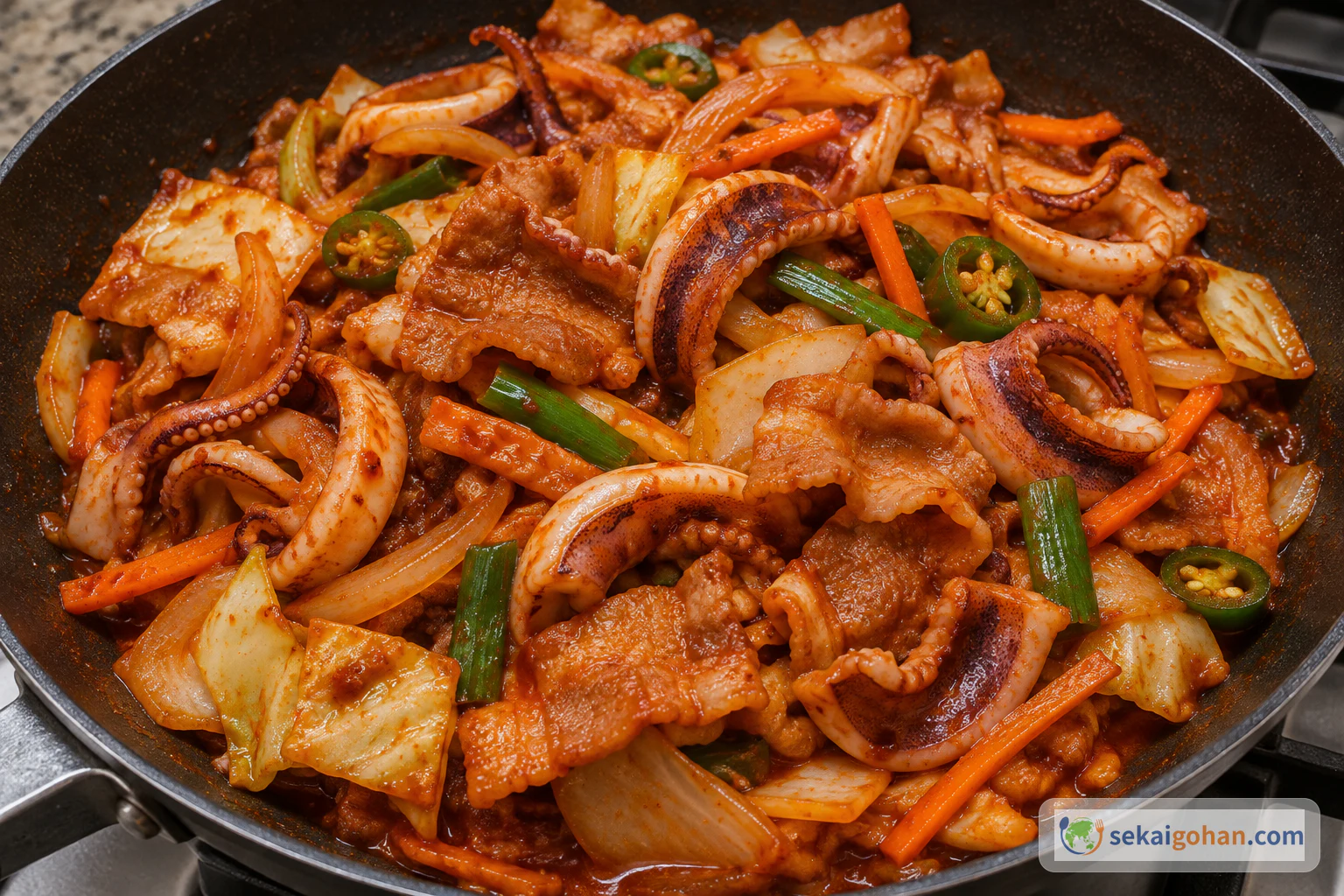
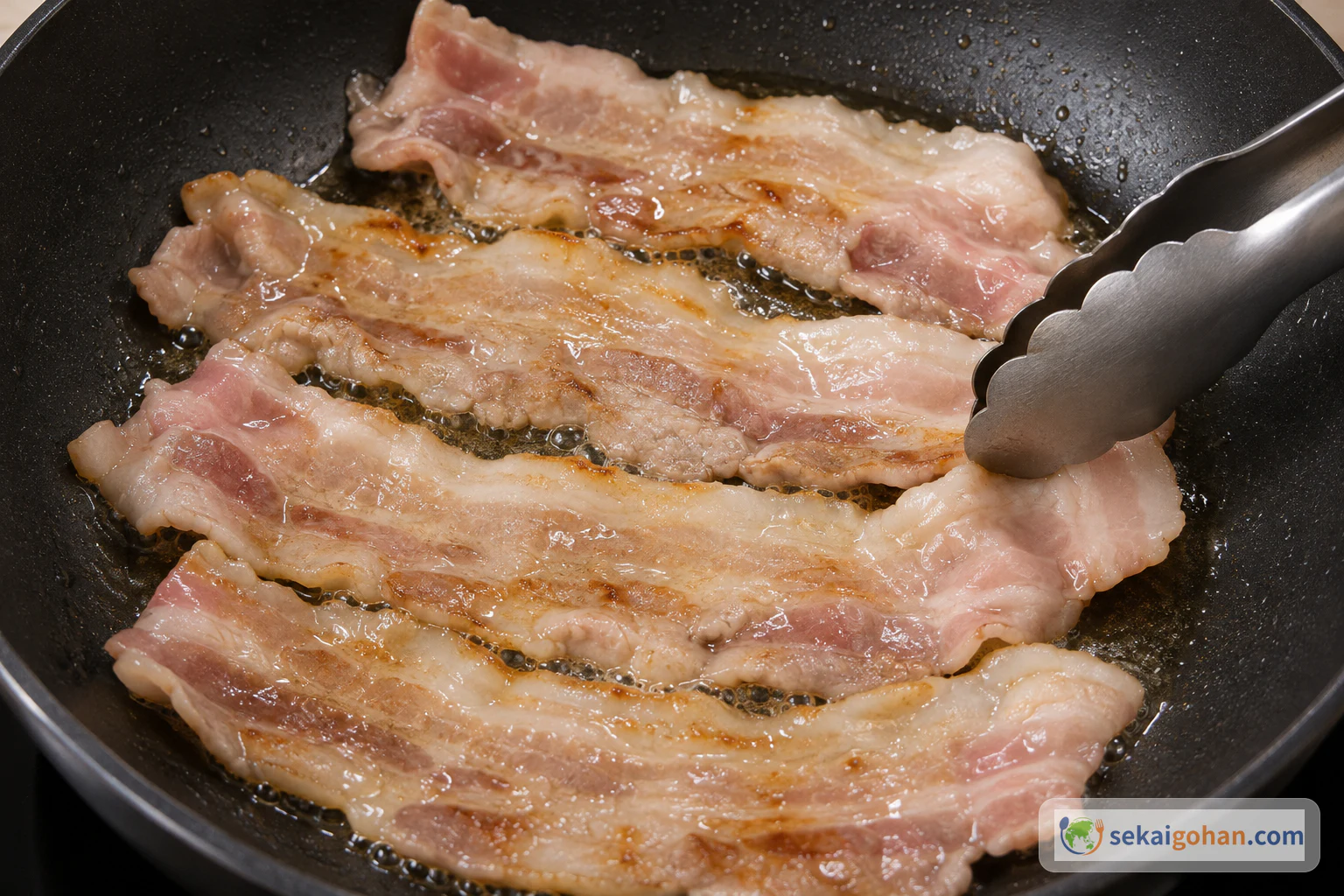
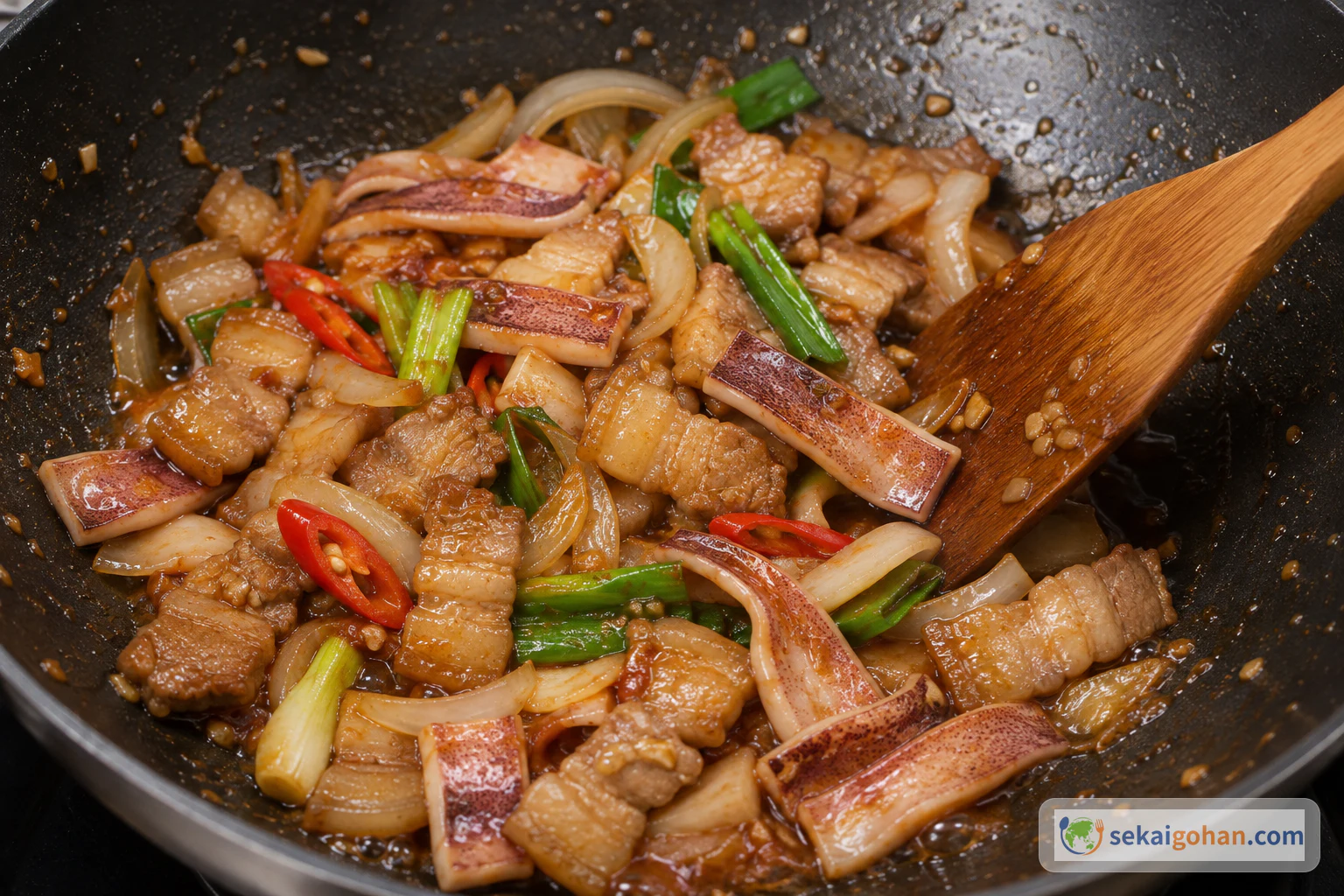
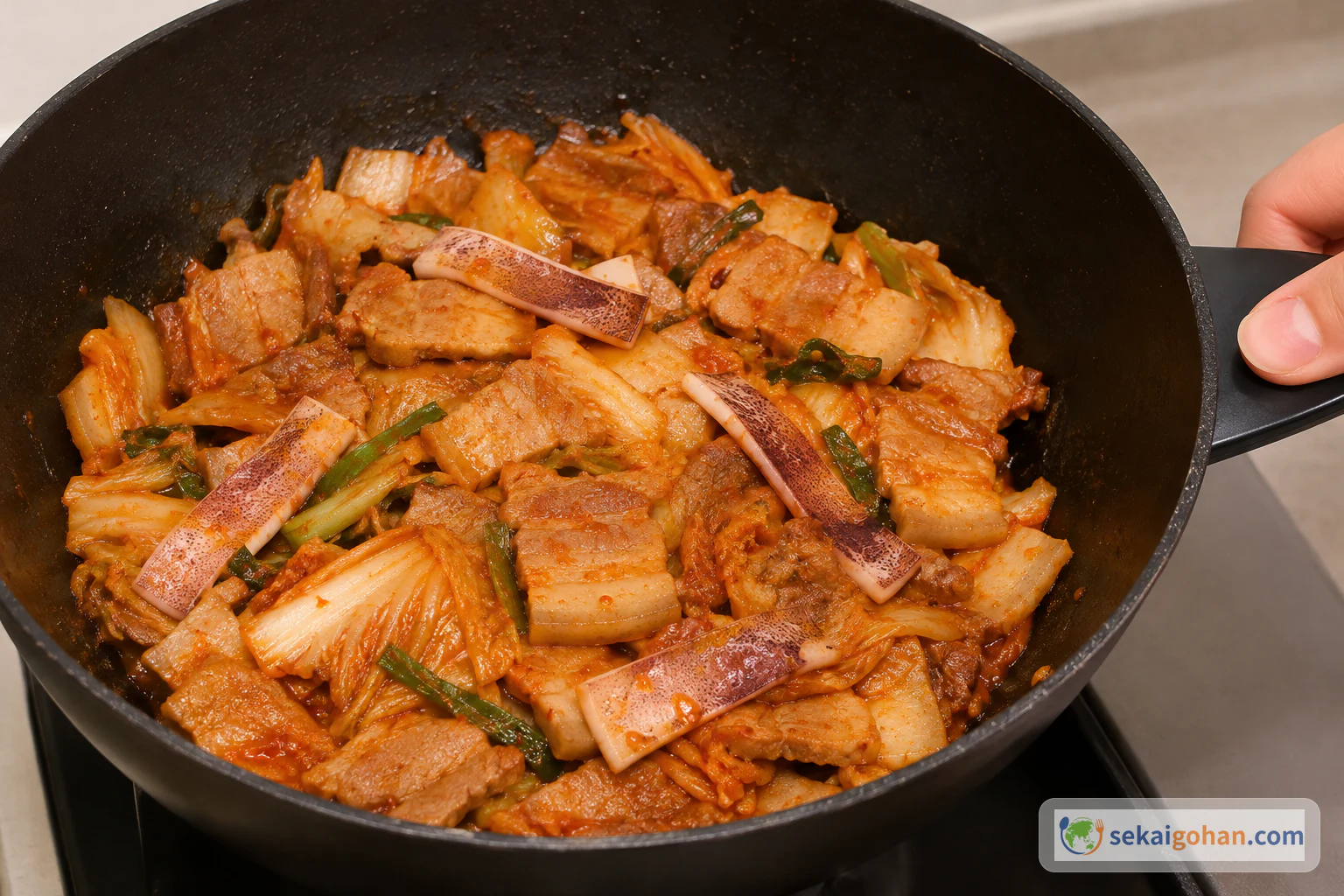
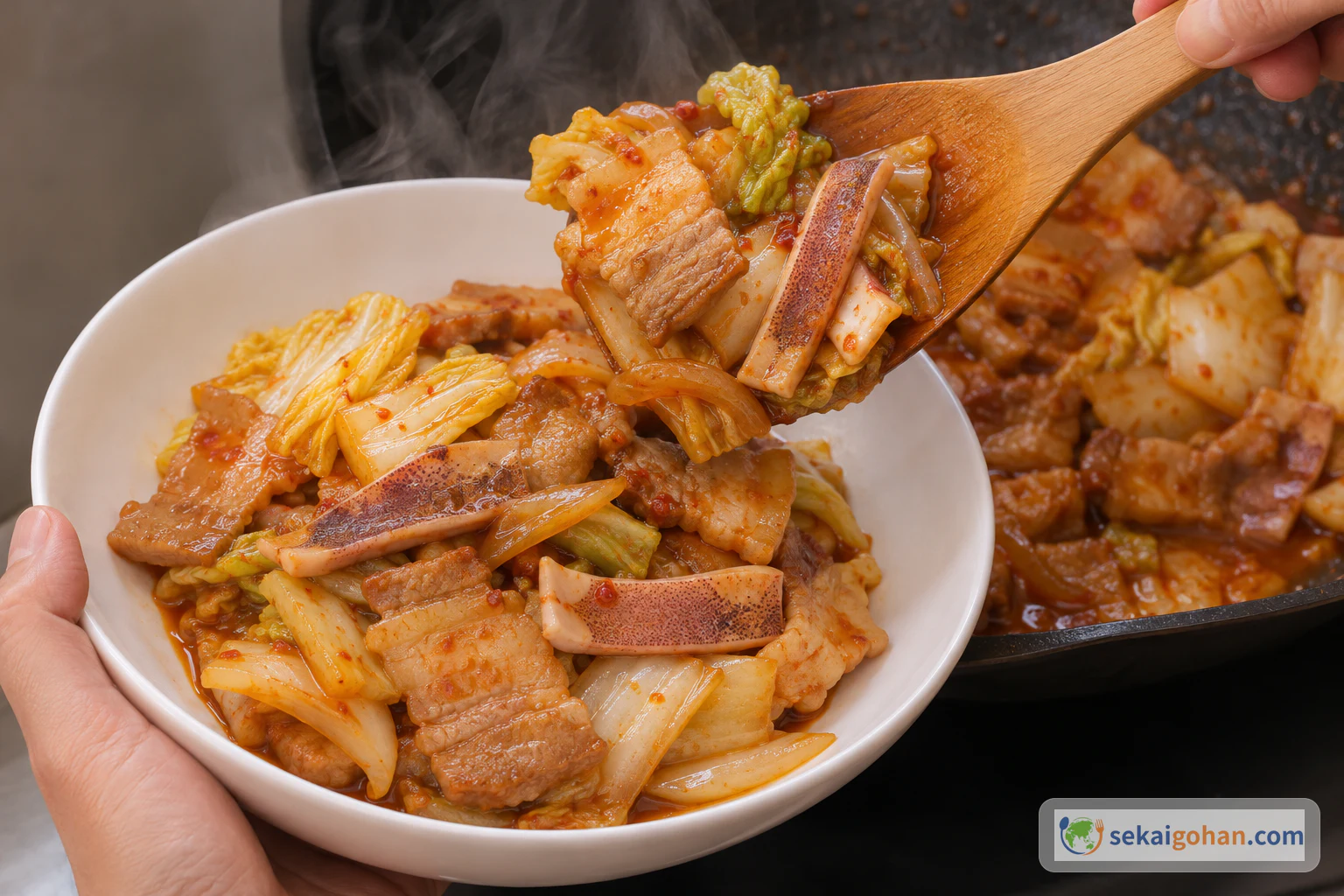
The squid stays in long, flat strips with its skin on. The pork belly goes into the pan first and cooks in its own fat. At the end the sauce has reduced to a glossy coating, and the pork and squid are cooked all the way through.
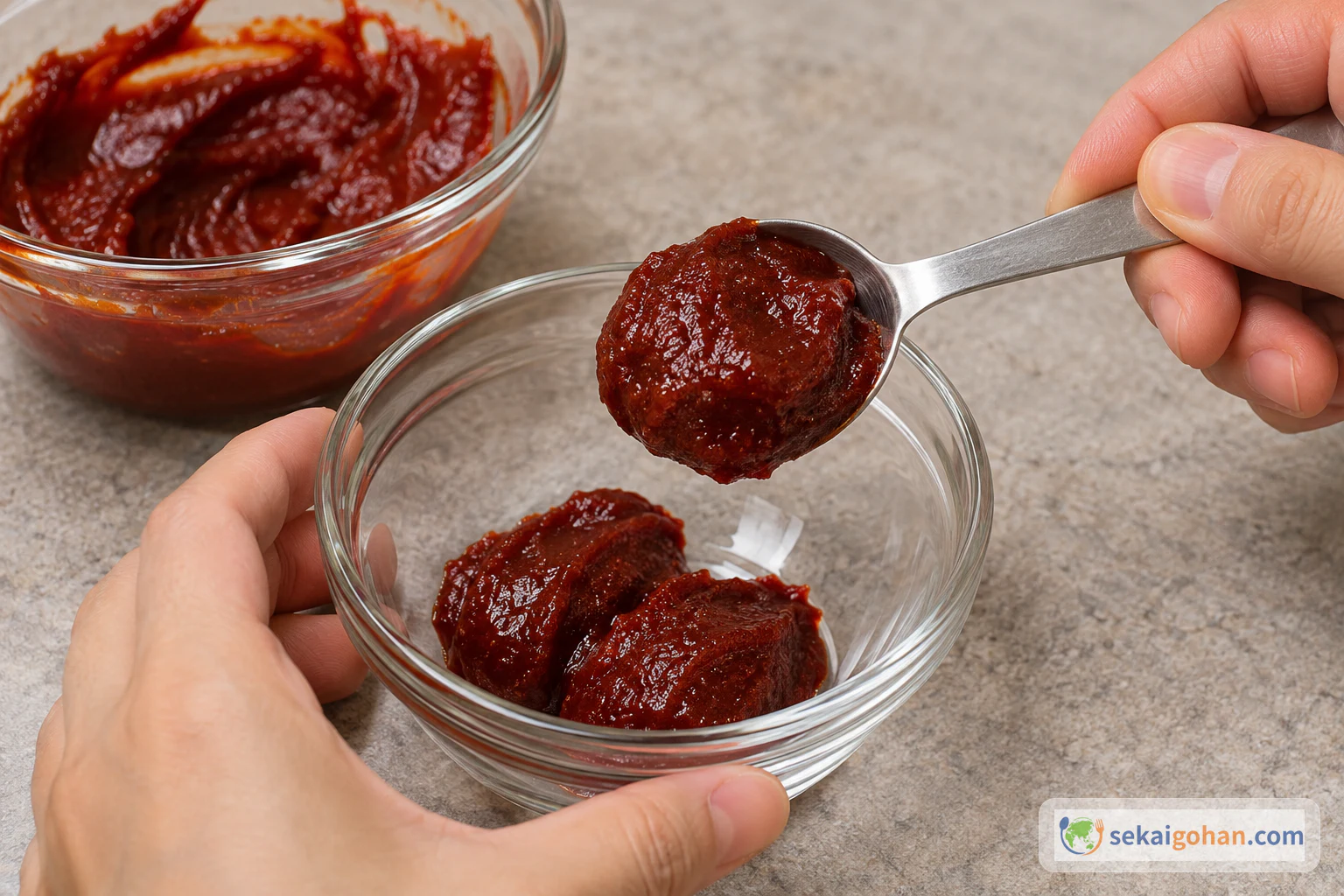
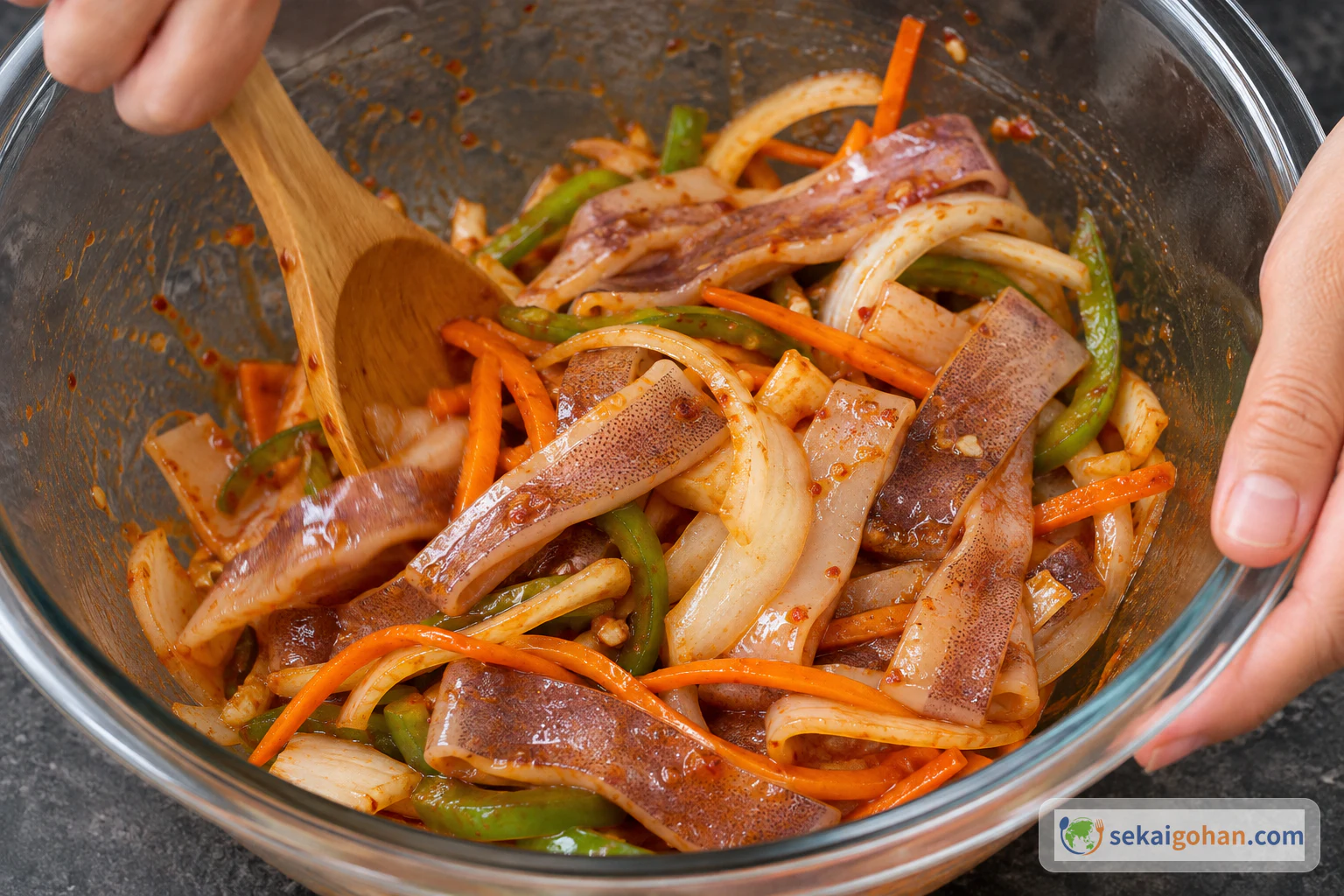
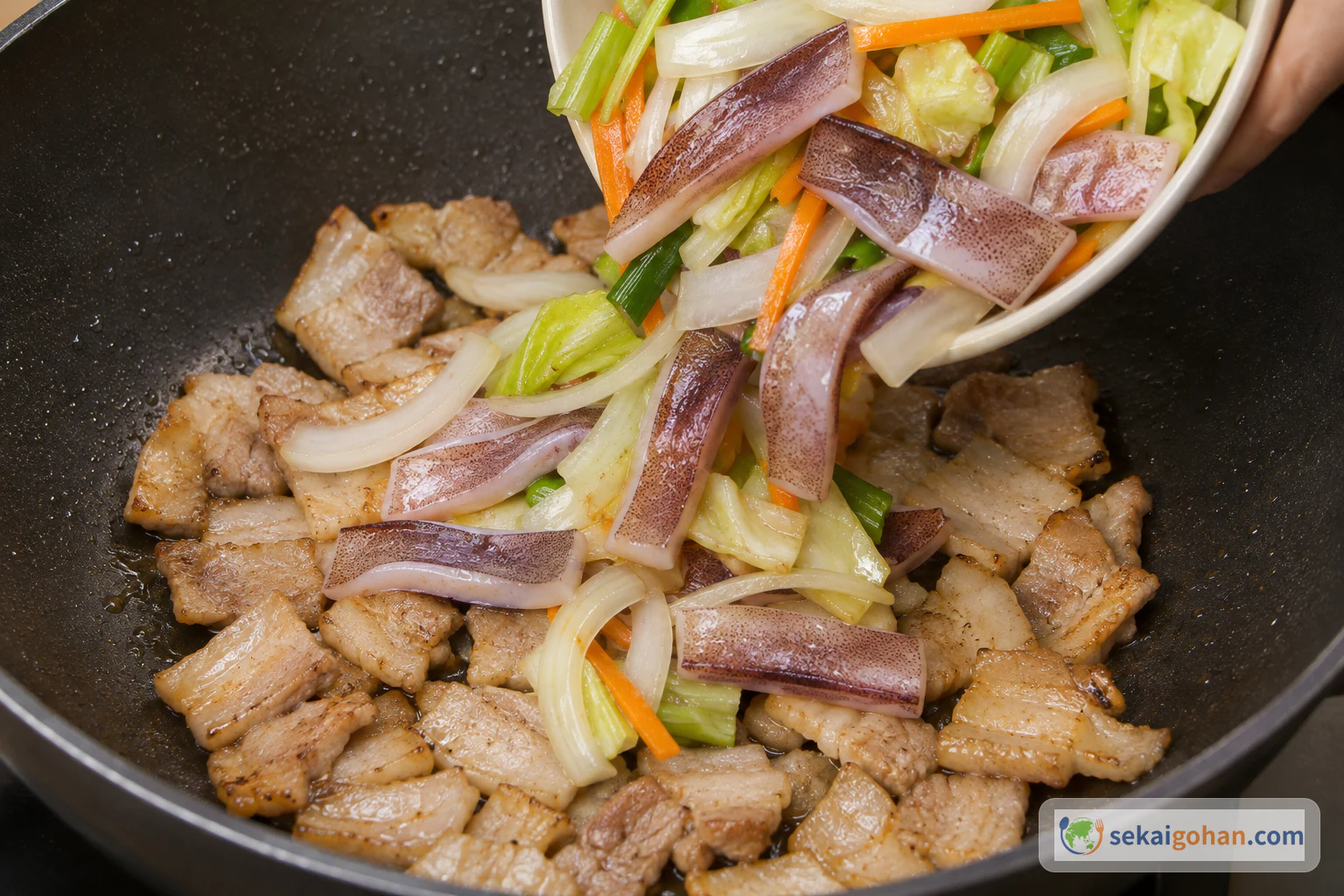
Strips of squid, still mottled with their skin, meet pork belly that has already started to cook in its own fat, and everything turns over together in a sauce of gochugaru and gochujang. Onion, carrot, cabbage, green onion and jalapeño cook down in the same pan, and the sauce shrinks until it clings to every piece. This is osambulgogi (오삼불고기), a Korean stir-fry of squid and pork belly.
This article follows the four-serving recipe by JinJoo Lee of Kimchimari. This recipe as a whole has not been kitchen-tested by Sekai Gohan. She estimates 30 minutes of prep, 10 minutes of cooking and 40 minutes in total; treat those as her estimates, not guarantees. The cooking in this version is judged by the food, not by the clock.
About this version
A few choices were needed to turn her recipe into one clear set of steps, and they are listed here so you know what changed and why:
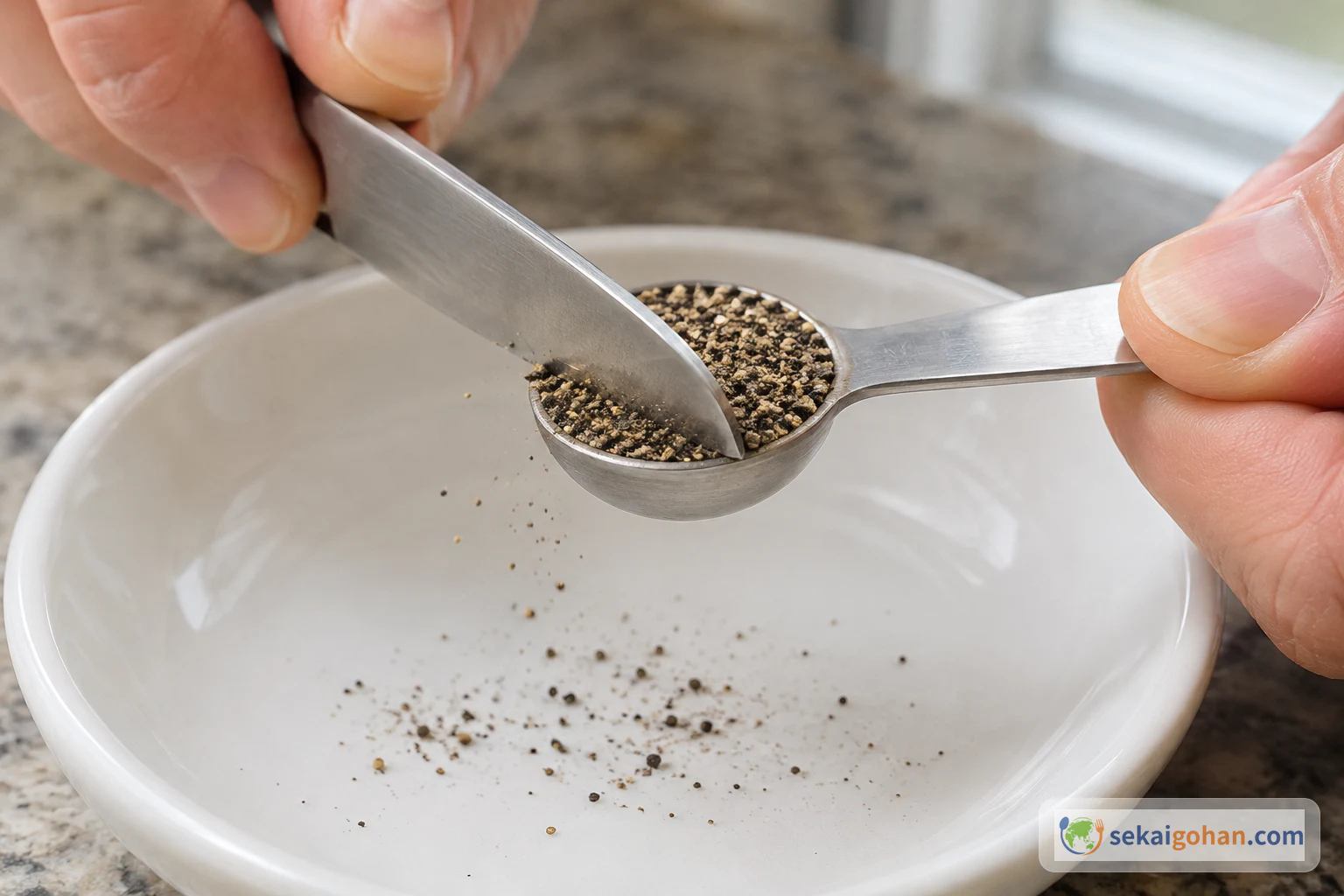
- Black pepper goes into the sauce. Her ingredient card lists 1/8 tsp black pepper, but her mixing instruction does not name it. Here it is measured and mixed into the sauce with everything else.
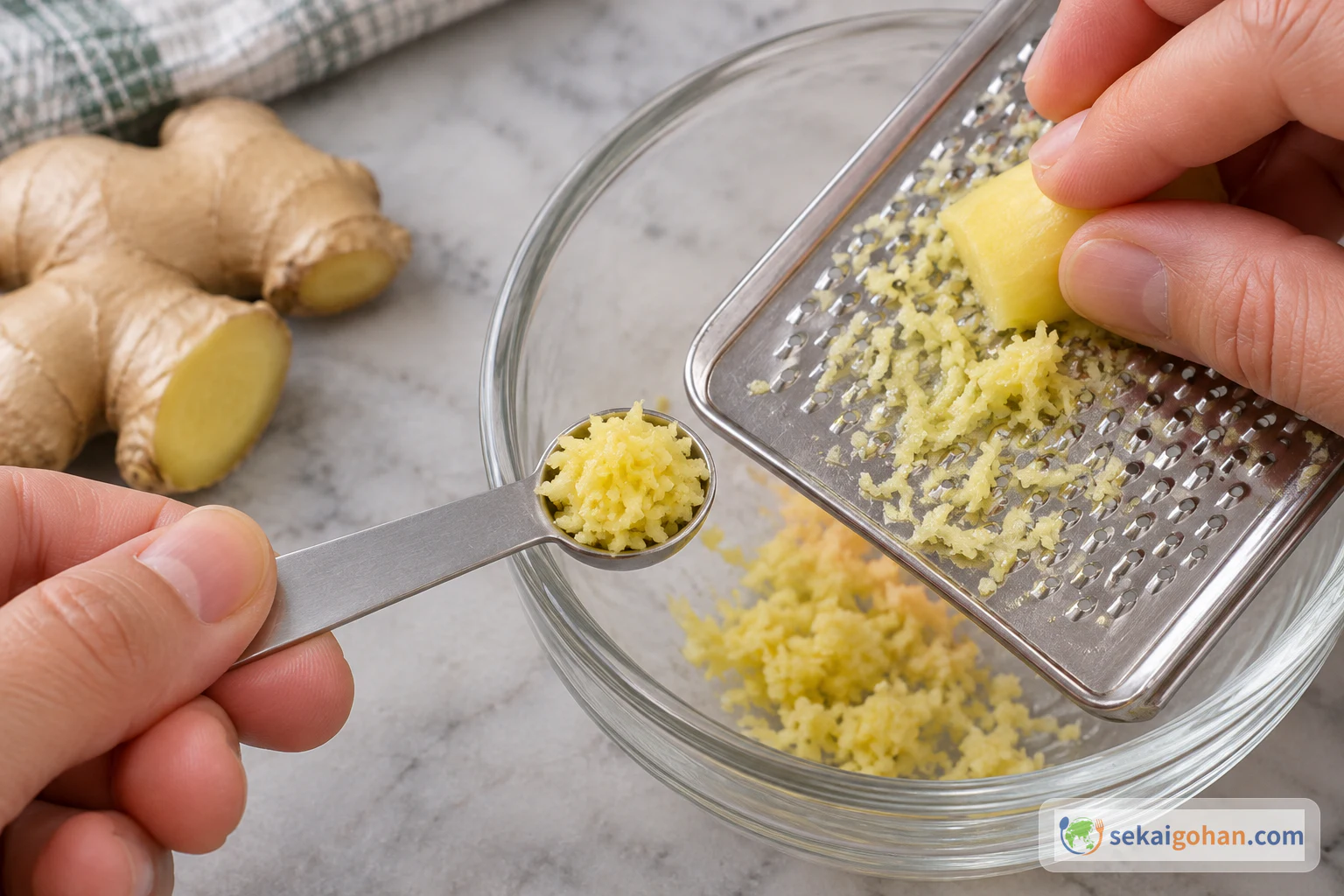
- Grated ginger. Her ingredient card says grated ginger, while her written text says chopped. This version uses fresh grated ginger.
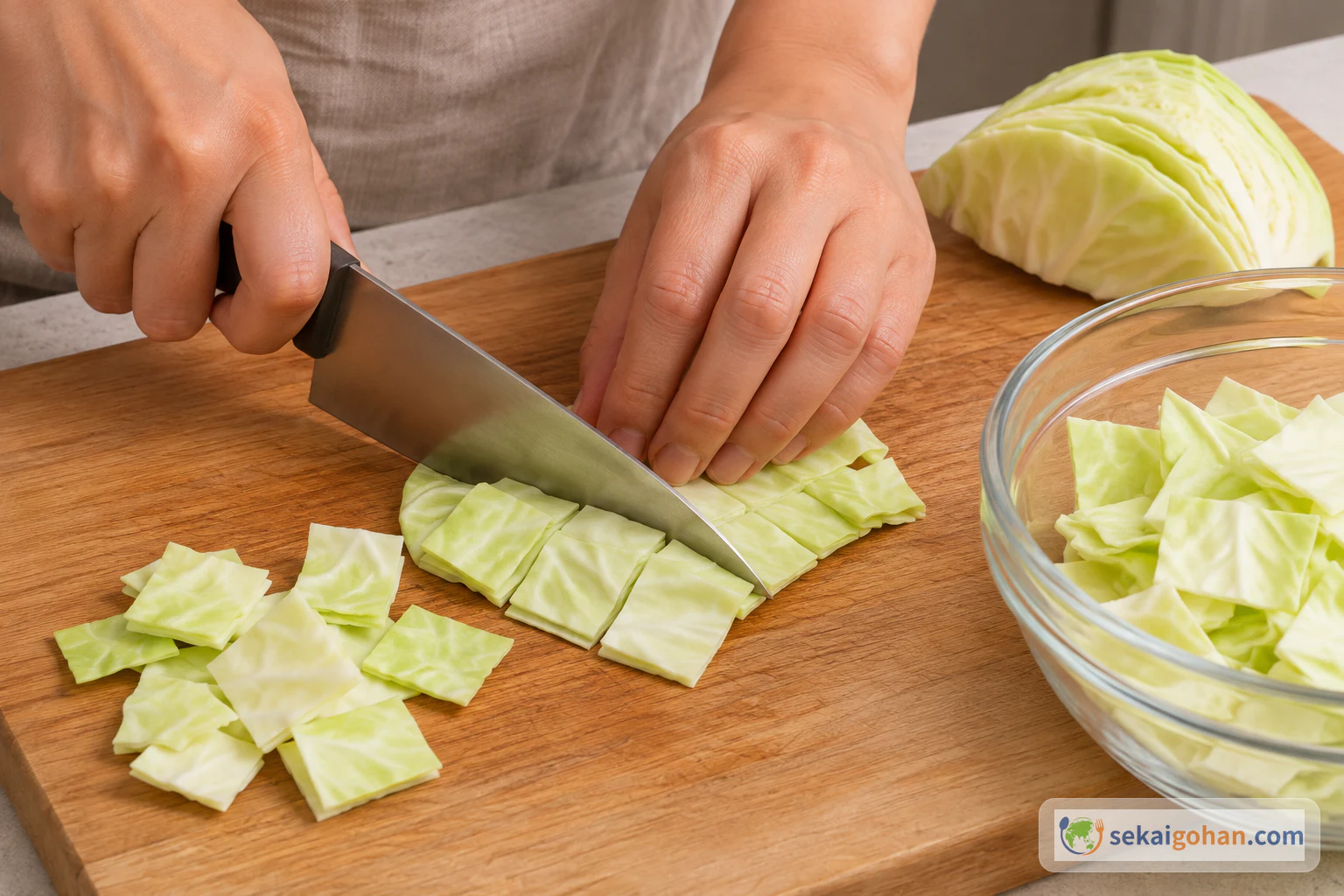
- Cabbage in squares. Her text and ingredient card cut the cabbage into squares; her method card mentions long strips. This version uses squares.
- Skin-on squid. Peeling the squid is optional in her recipe. Here the skin stays on.
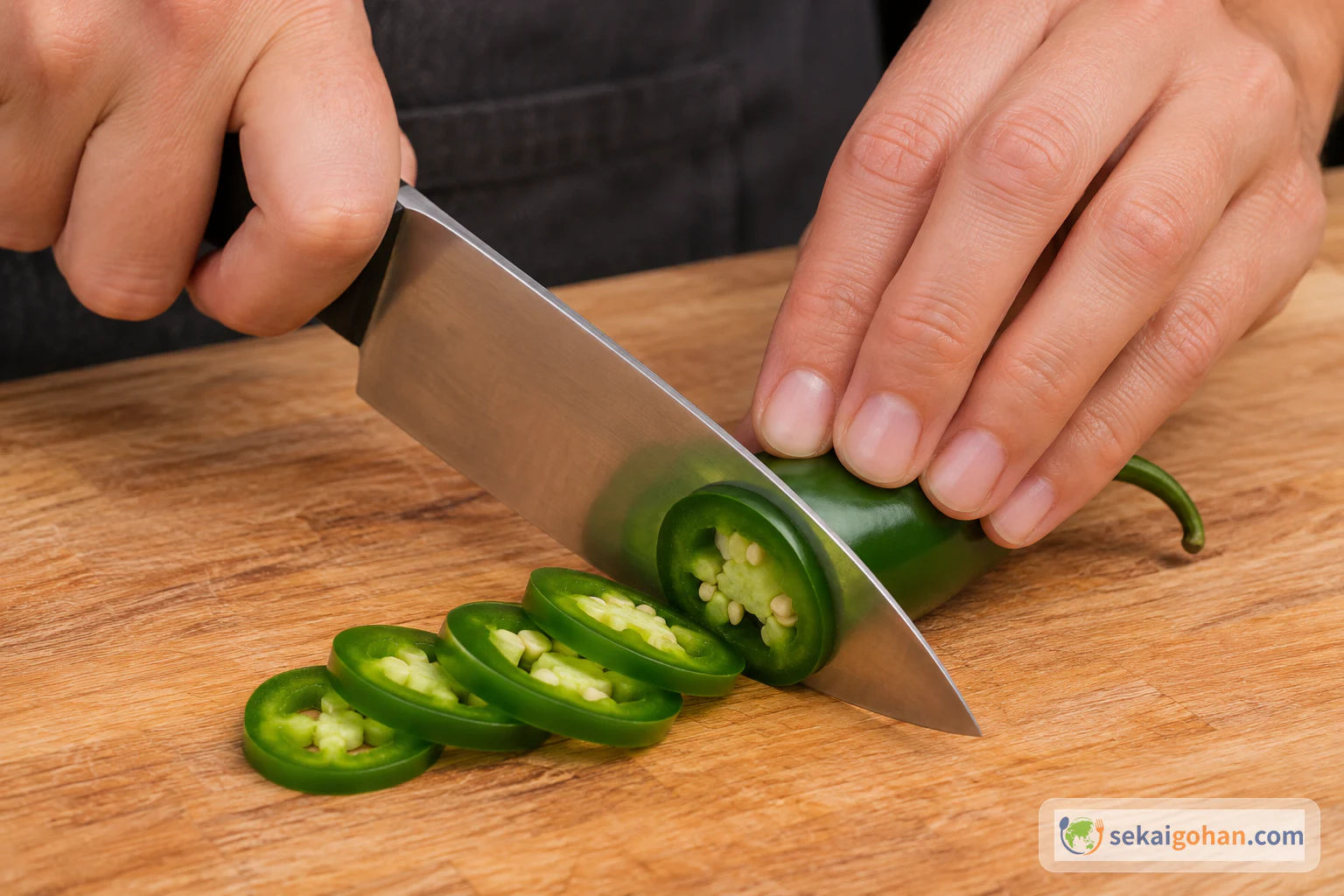
- One jalapeño. She allows a jalapeño or a Korean green chili; this version uses one jalapeño.
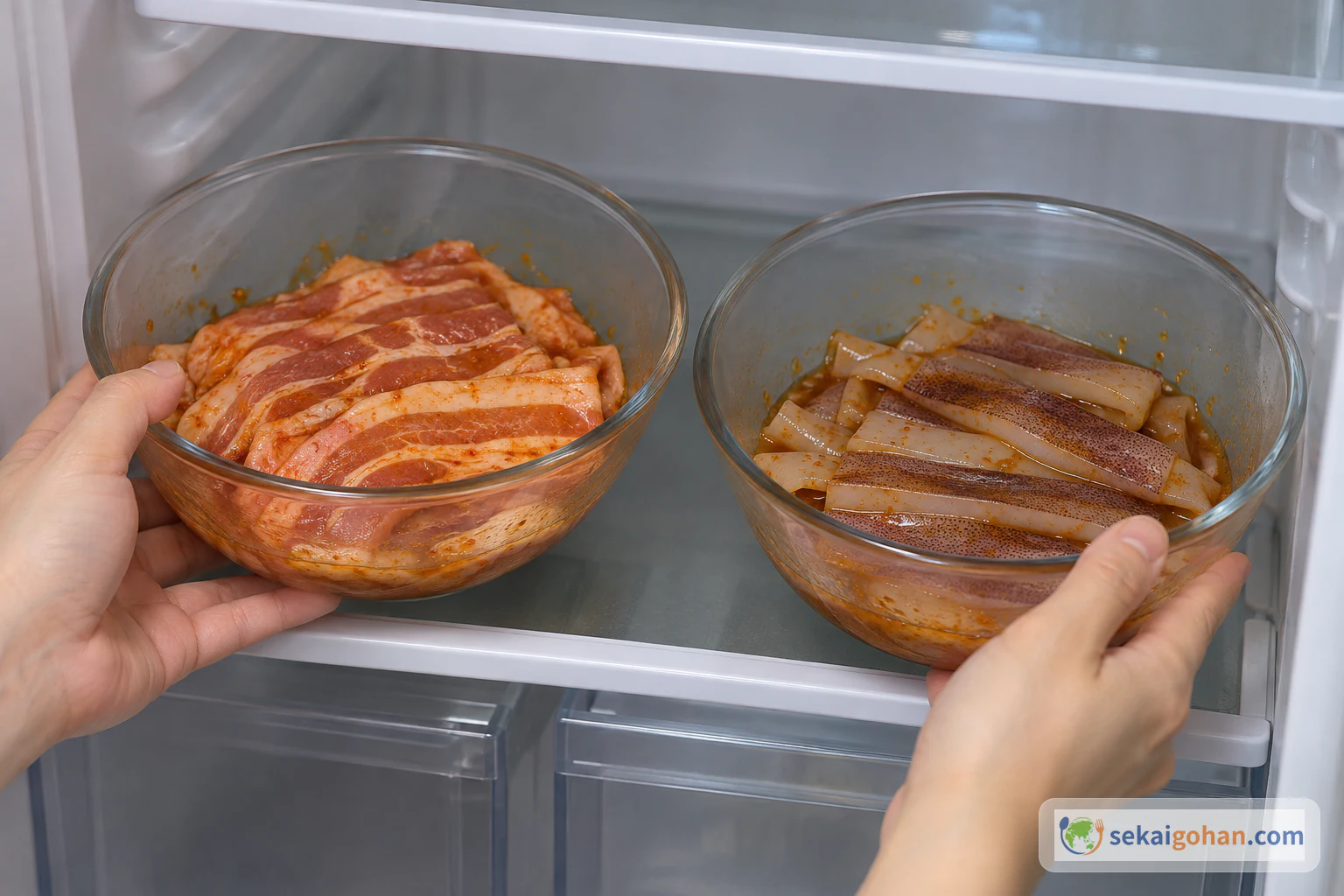
- Refrigerated marinating. The pork and squid each marinate in their own bowl for at least 15 minutes. Keeping both bowls in the refrigerator during that time is a food-safety addition made here.
- No extras. Her optional finishing greens and herbs (such as minari, perilla leaves, extra green onion and sprouts) and serving ideas such as rice, lettuce wraps (ssam), side dishes and fried rice afterward are all left out. Nothing is fried in extra oil; the pork belly supplies the fat.
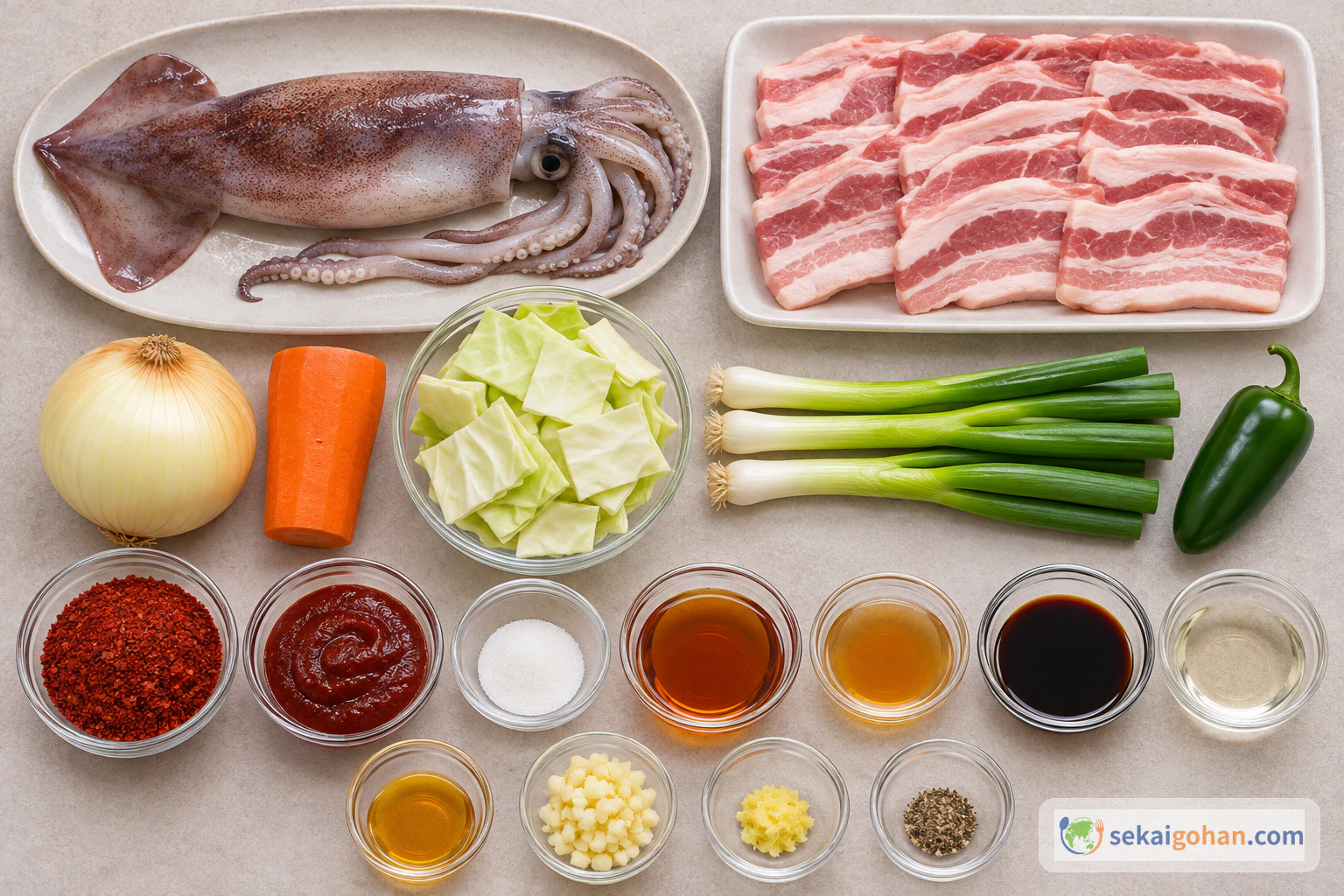
Ingredients (4 servings)
Equipment
- Knife and cutting board; keep a board just for the raw squid and pork
- Vegetable peeler
- Measuring spoons and a measuring cup
- One bowl for mixing the sauce, plus two bowls for marinating
- Whisk or spoon for mixing
- Wide nonstick frying pan
- Tongs or a spatula for turning the pork
- Kitchen scissors
- A clean serving dish
Choosing and Swapping
Squid. Choose a fresh whole squid of about 300 g. If you can only get frozen squid, thaw it in the refrigerator overnight. If you are short on time, seal it in a leak-proof bag and submerge it in cold water, changing the water every 30 minutes. Do not thaw it at room temperature.
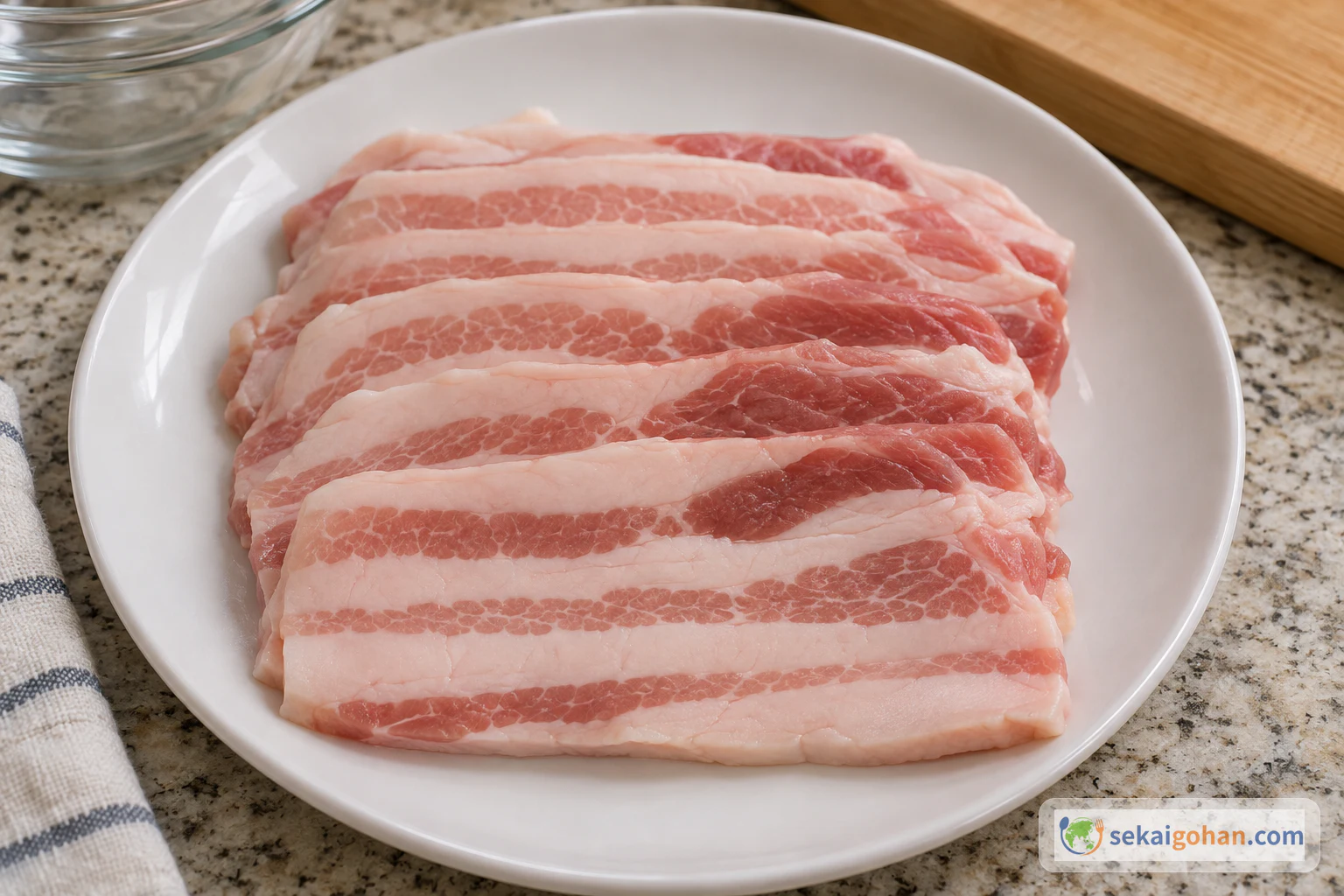
Pork. Use presliced pork belly about 1/4 inch thick. Lean cuts such as shoulder do not suit this method: the pork cooks first in a dry pan, and the belly fat is what keeps it from needing added oil.
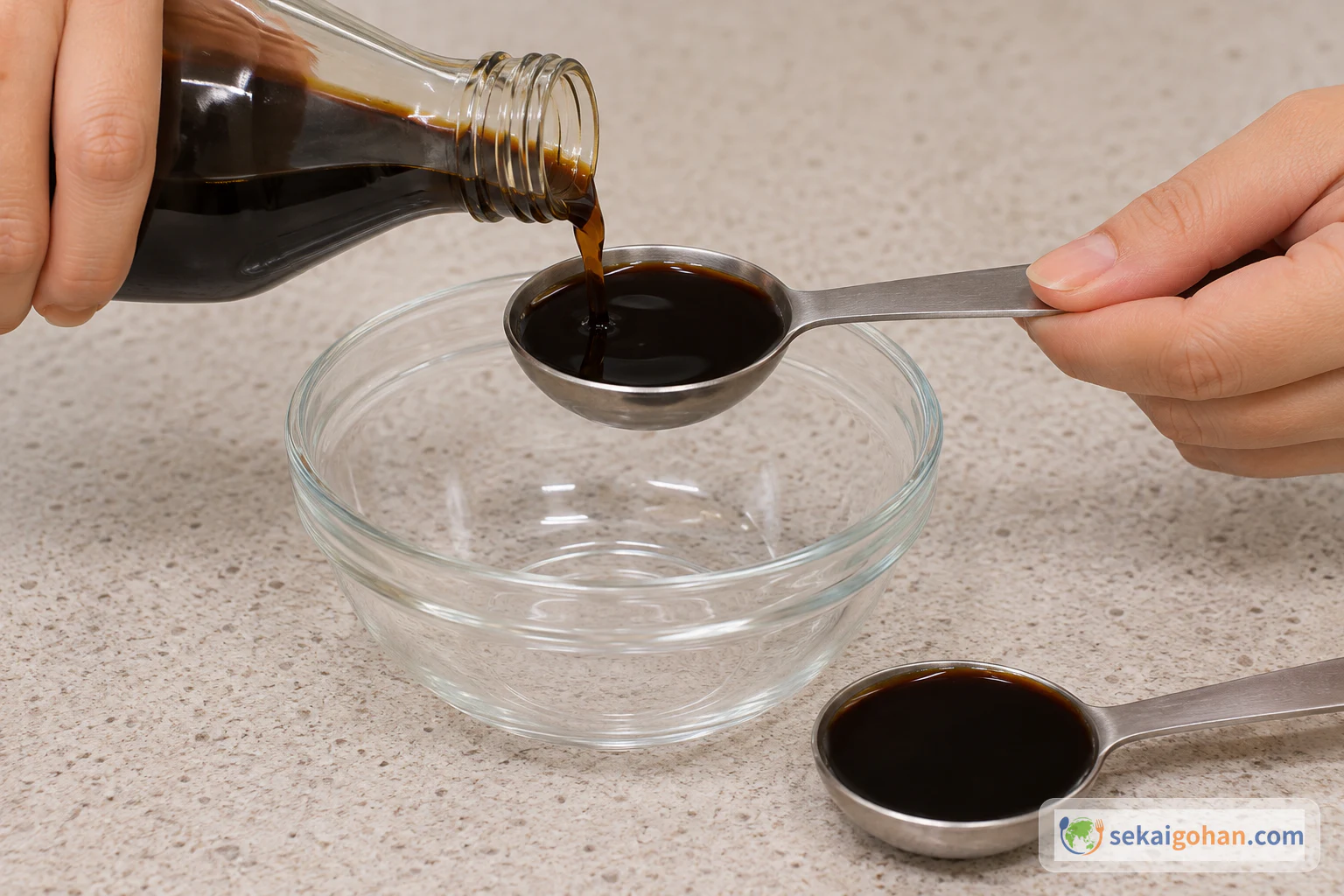
Maesil syrup. Use a commercial, ready-to-eat maesil syrup, not a homemade one.
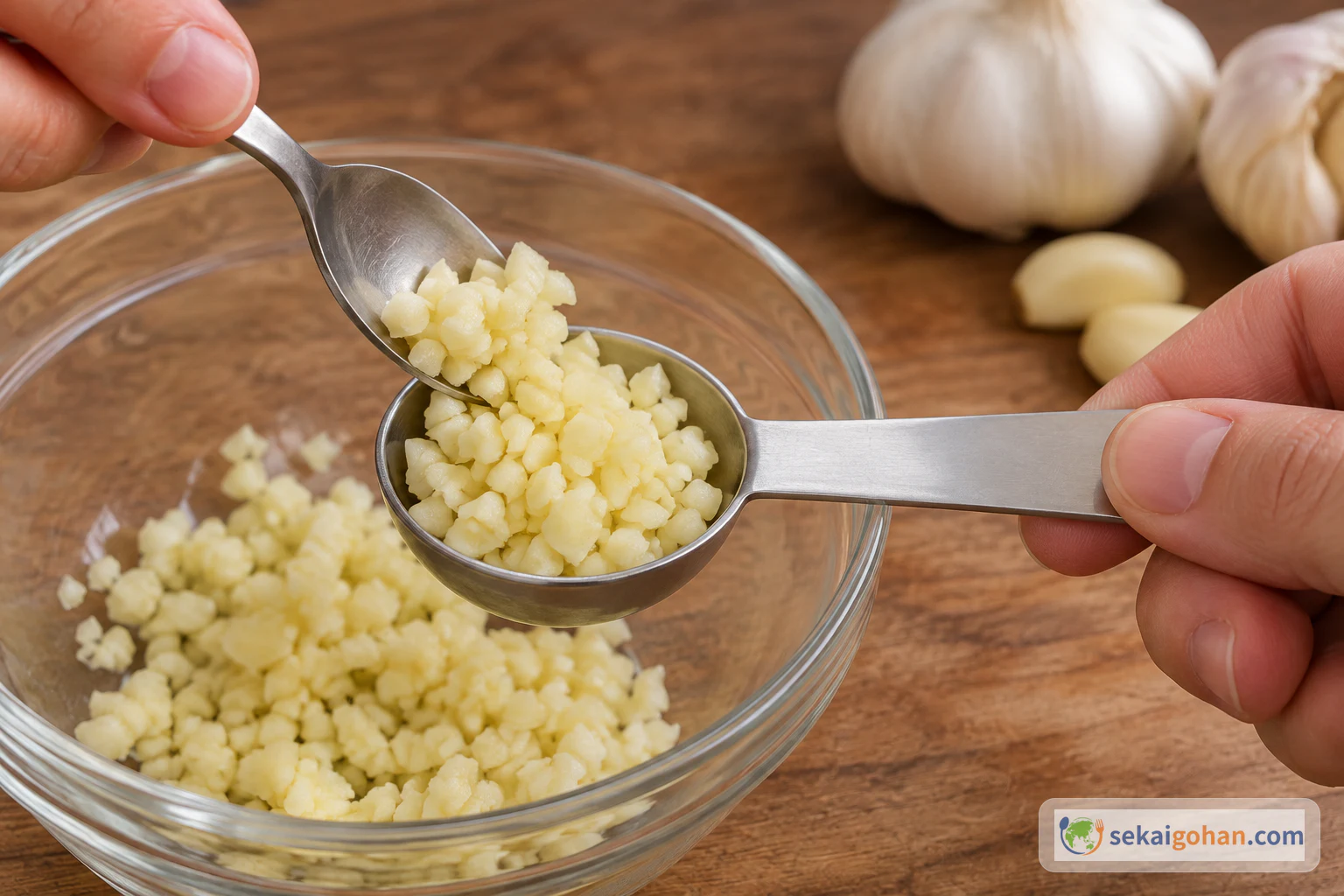
Ginger and garlic. Use fresh ginger grated on a fine grater and fresh garlic chopped with a knife.
Chili. A Korean green chili can take the place of the jalapeño.
Raw seafood and raw meat stay apart until they meet in the hot pan. Wash your hands, knife and cutting board after handling raw squid or pork, and keep the cooked dish away from anything that touched them raw. For seafood in general, the safe internal temperature is 145°F (63°C). That figure applies to seafood only; it is not a rule for the pork. Cook both the squid and the pork all the way through. The minutes in the steps are a guide, not proof that the food is done.
Method: Clean, Marinate Separately, Then Pork First
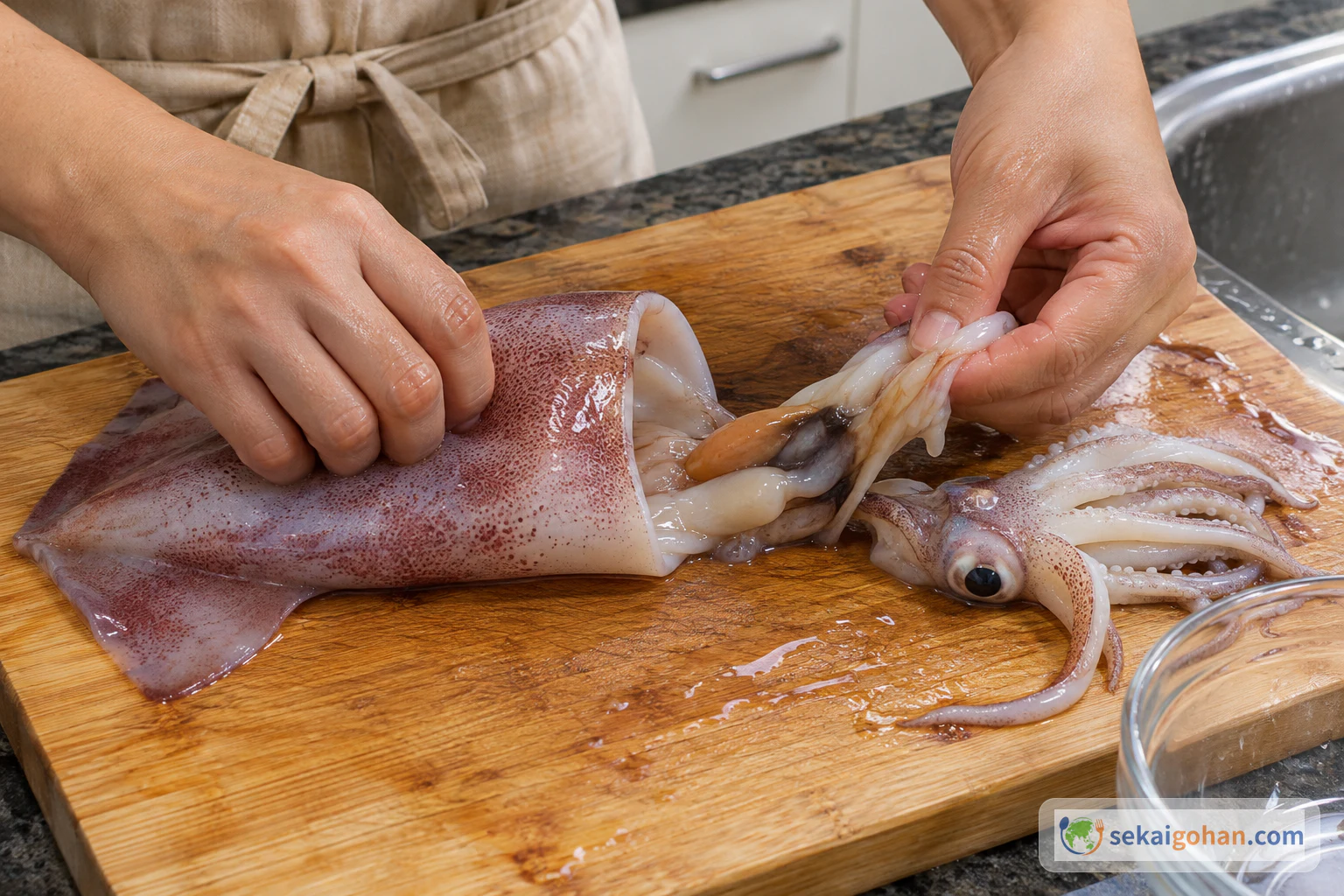
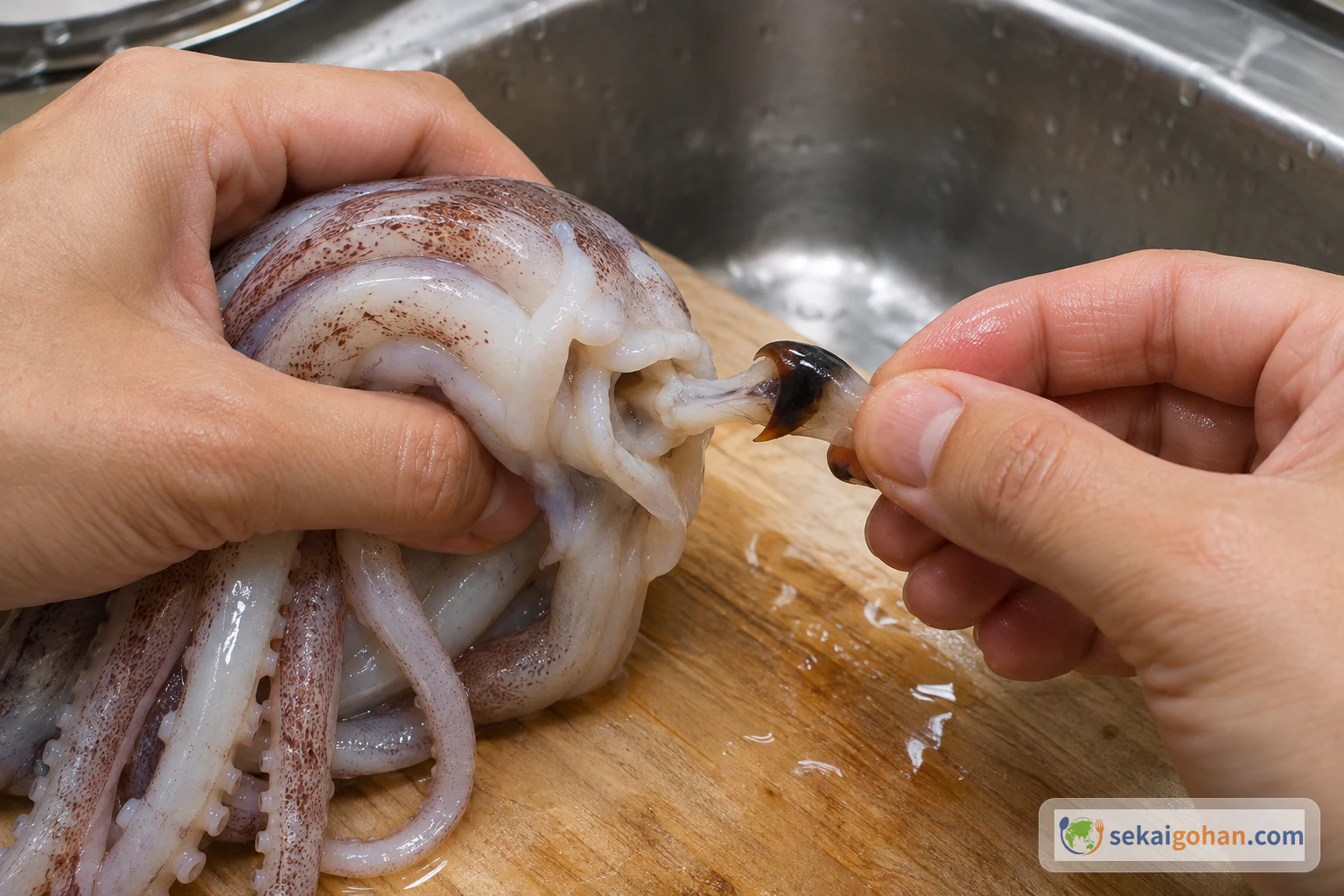
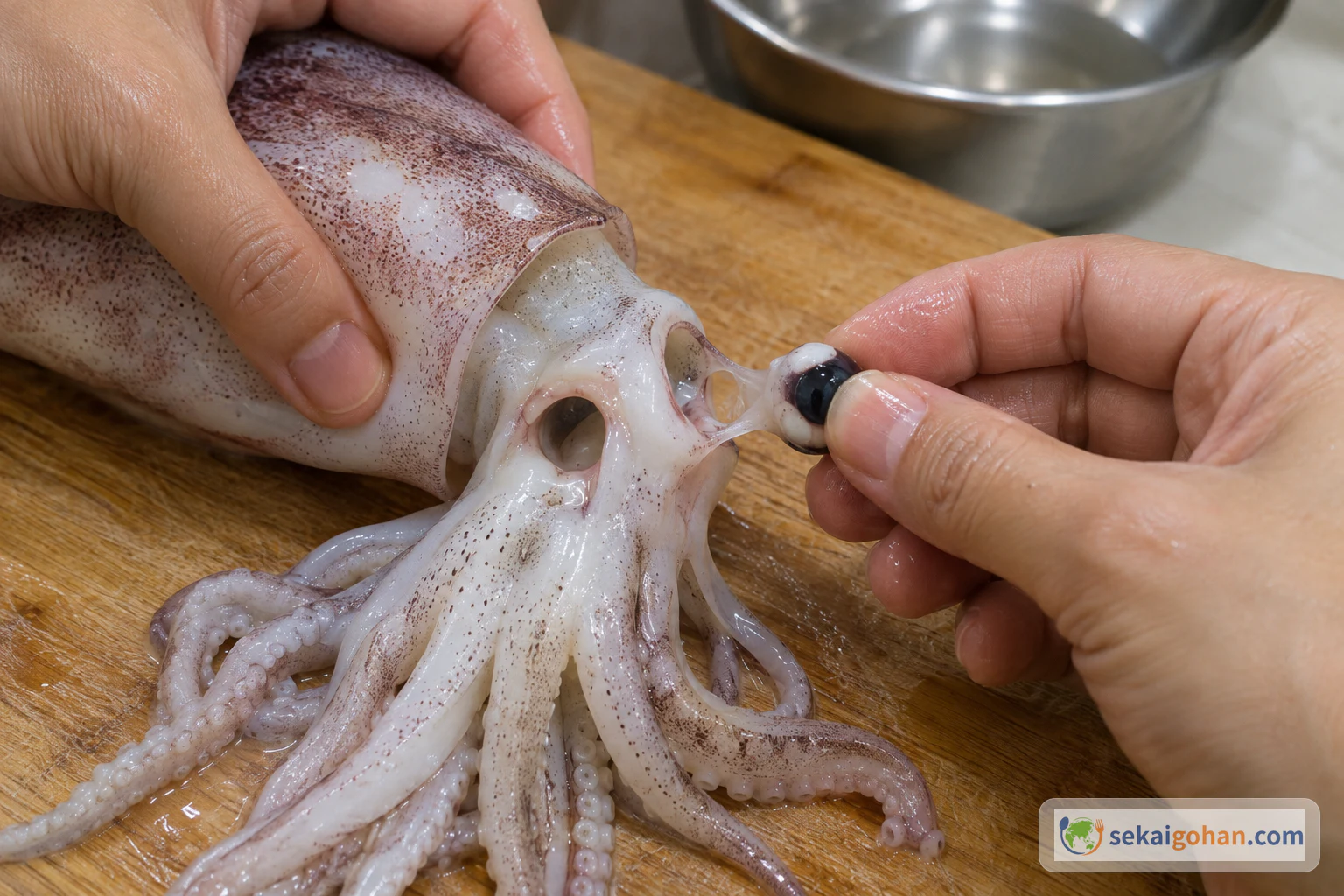
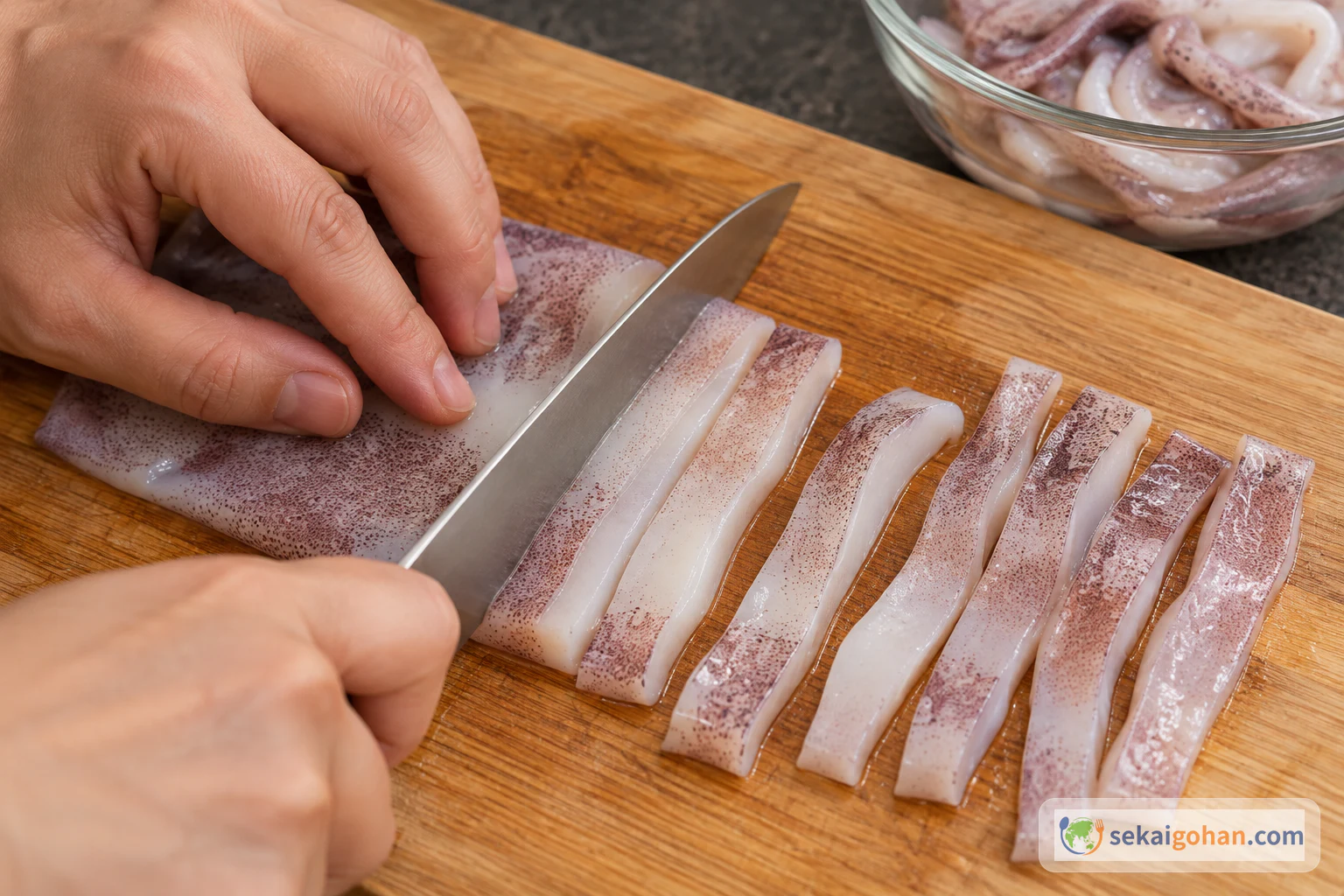
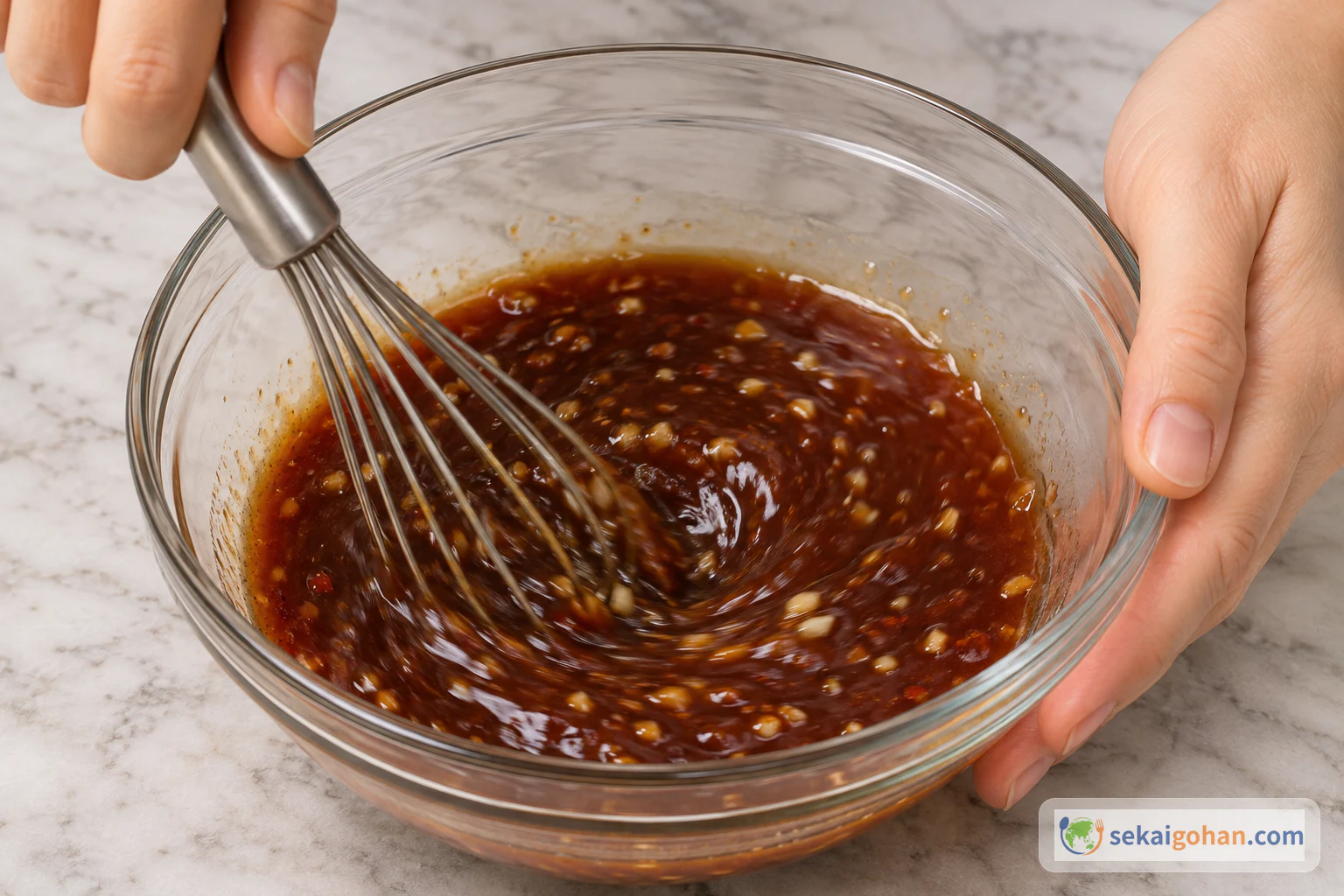
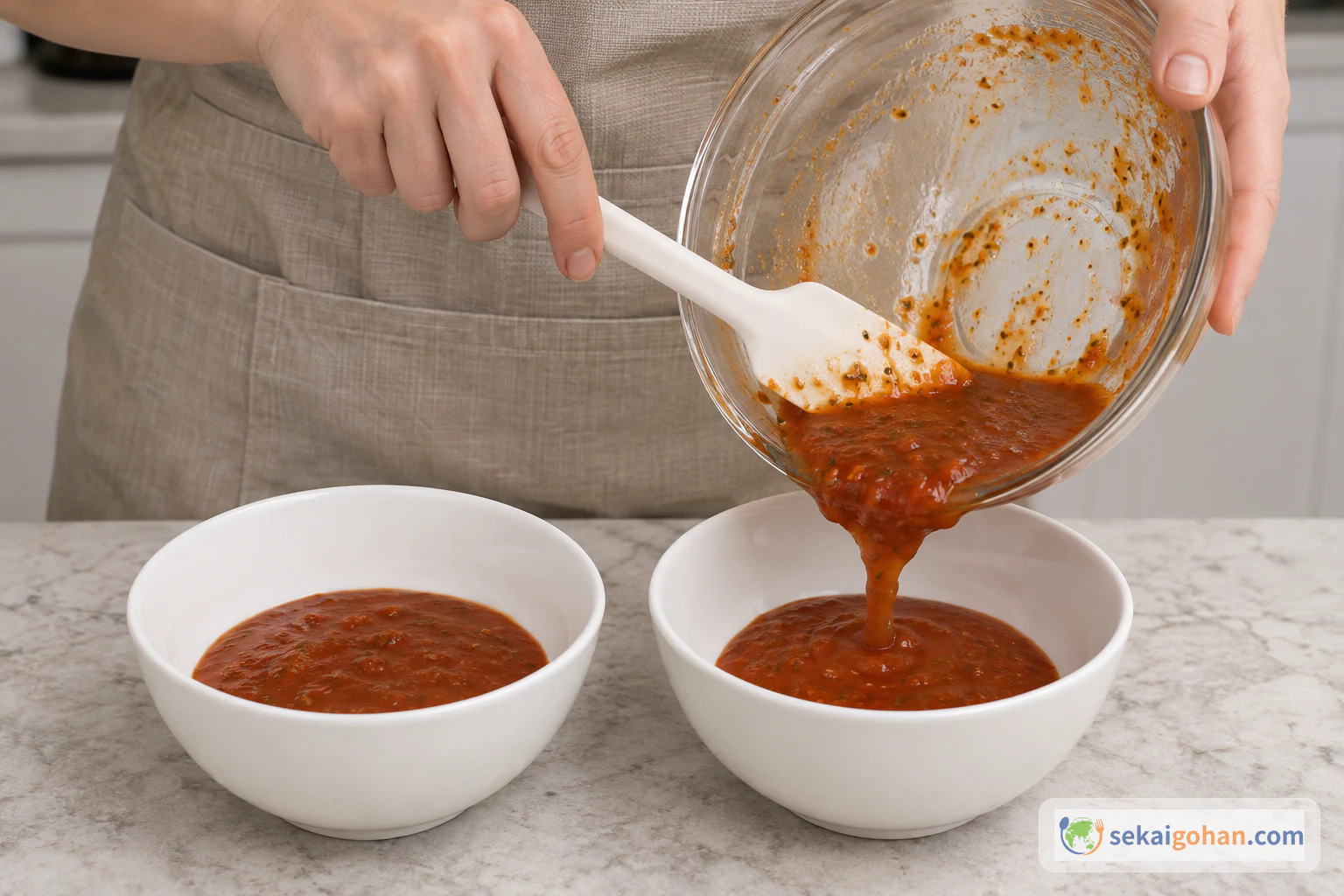
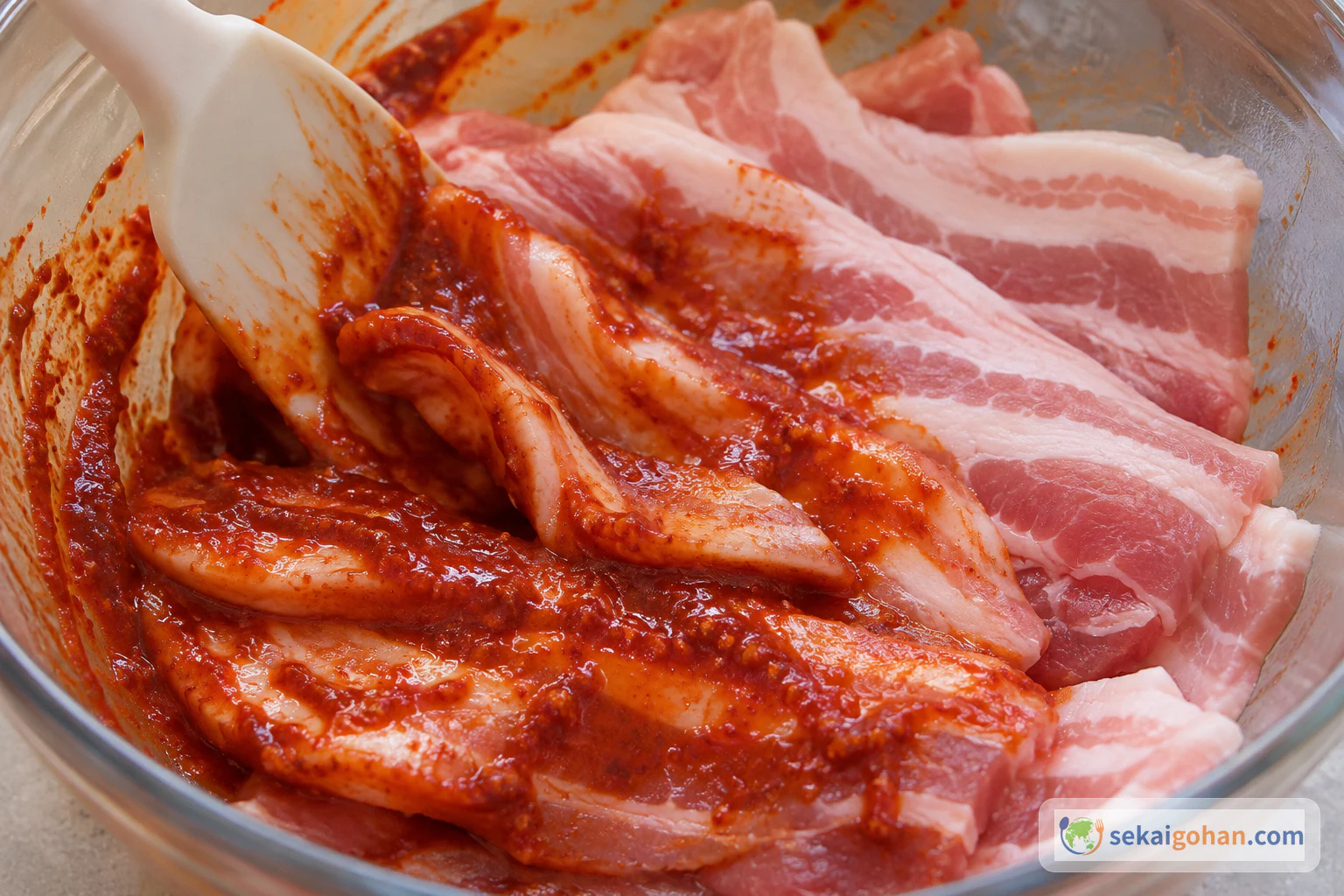
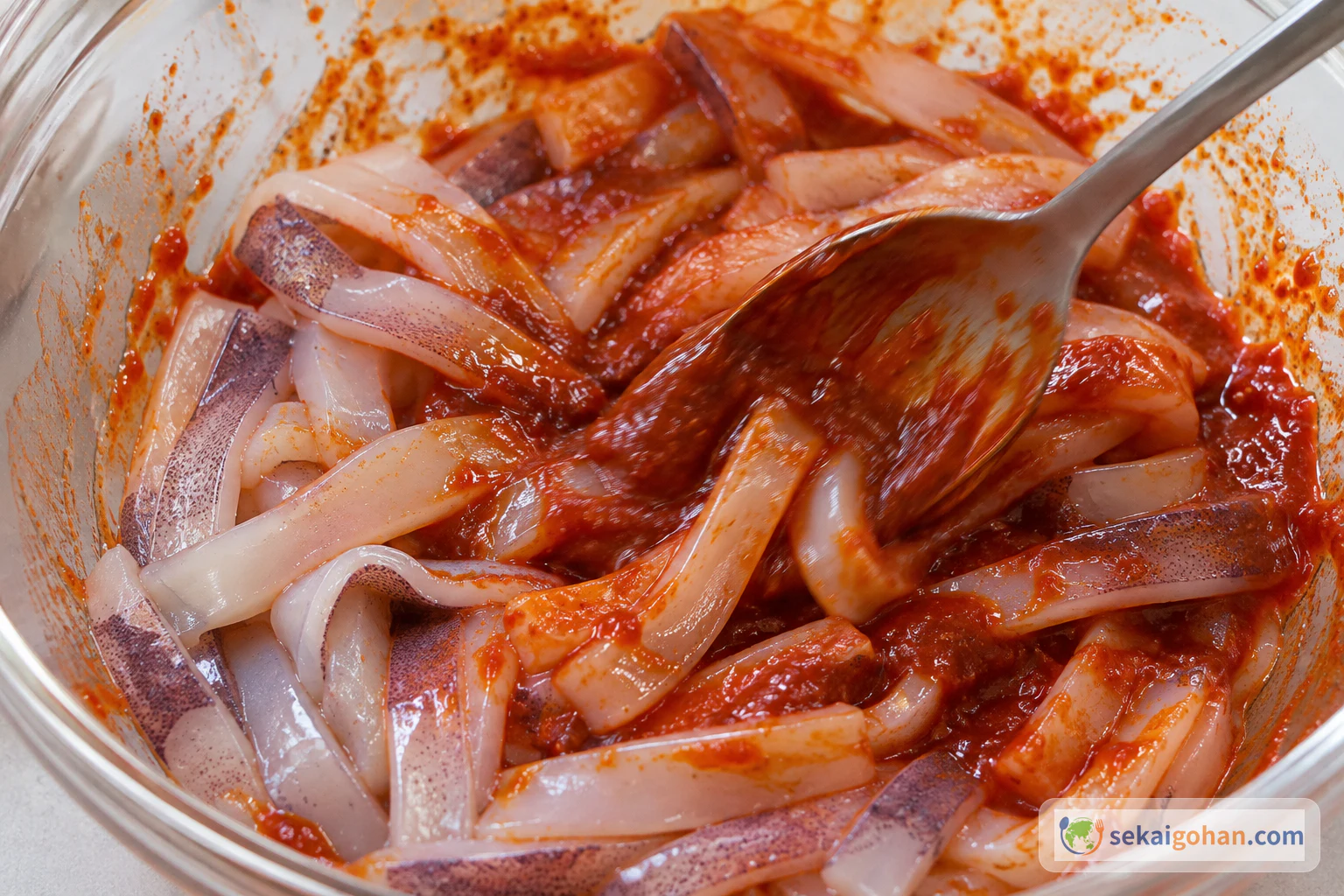
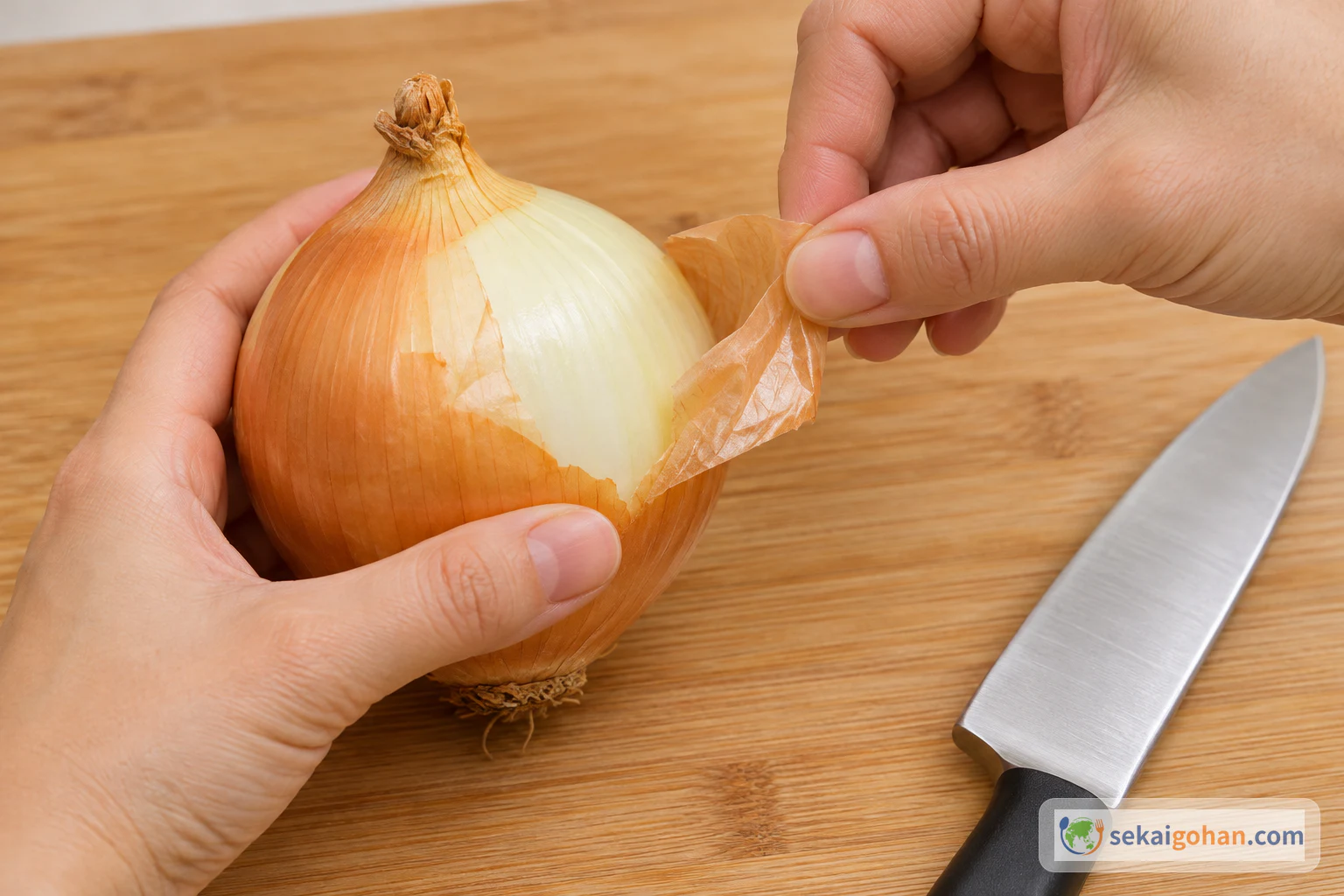
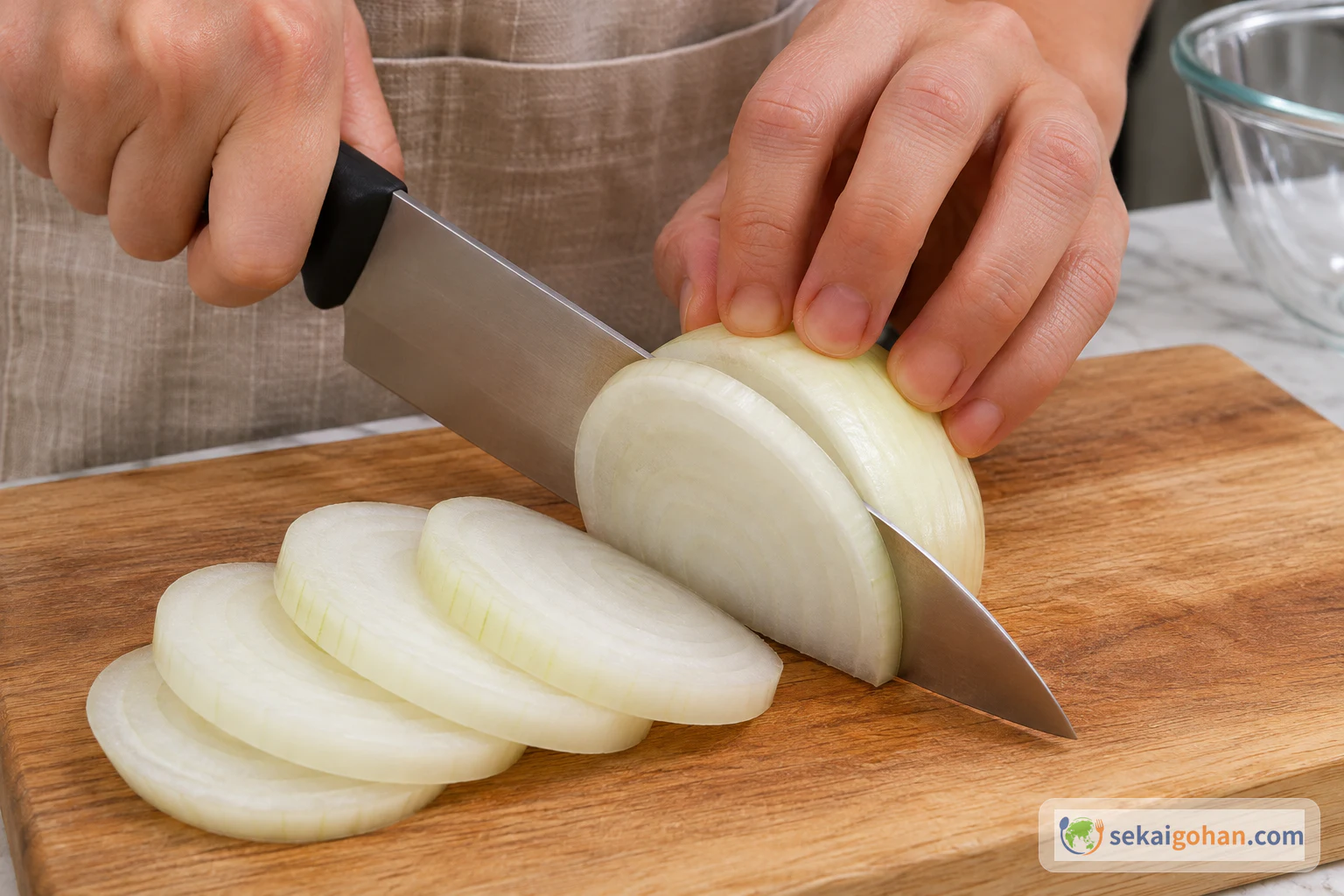
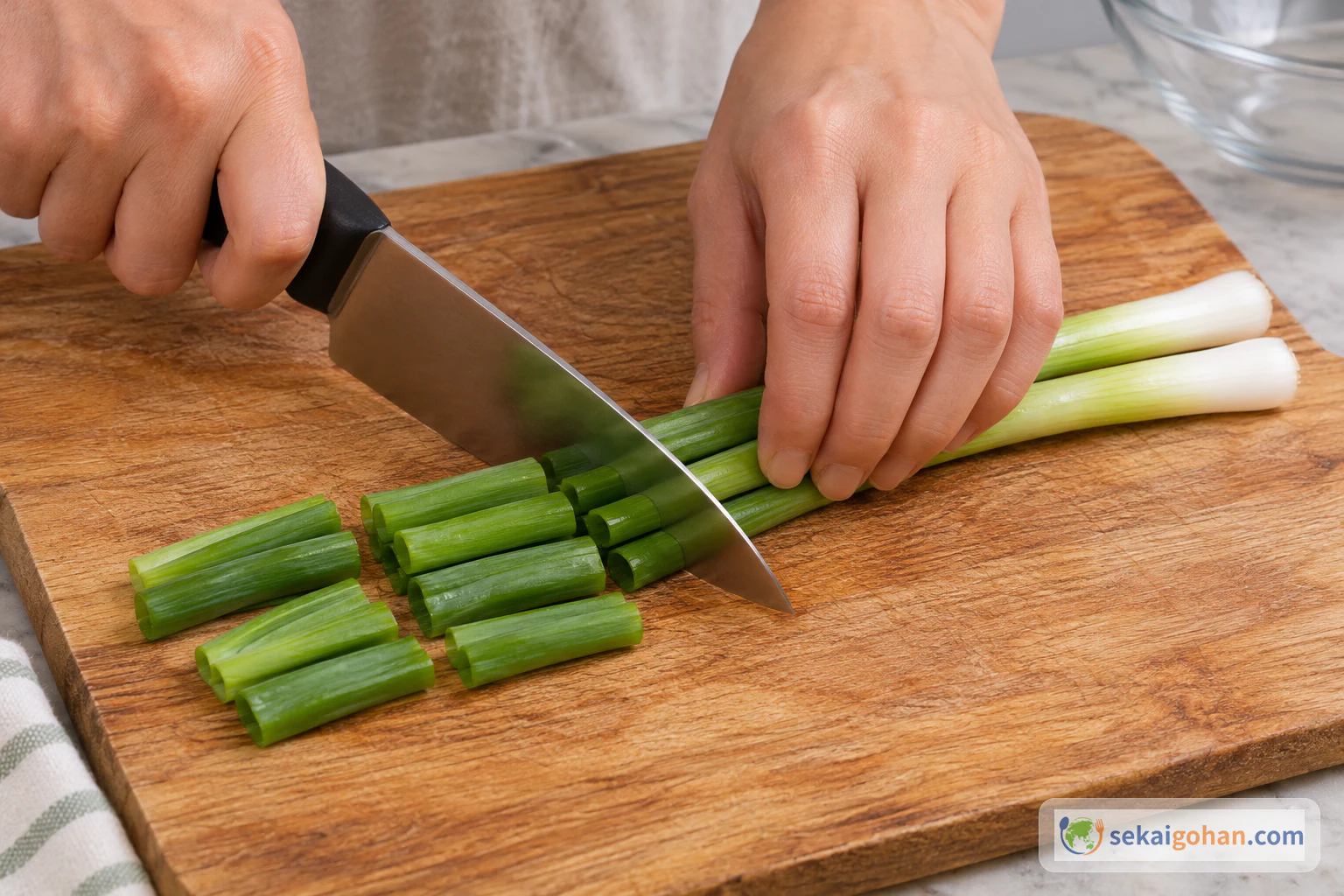
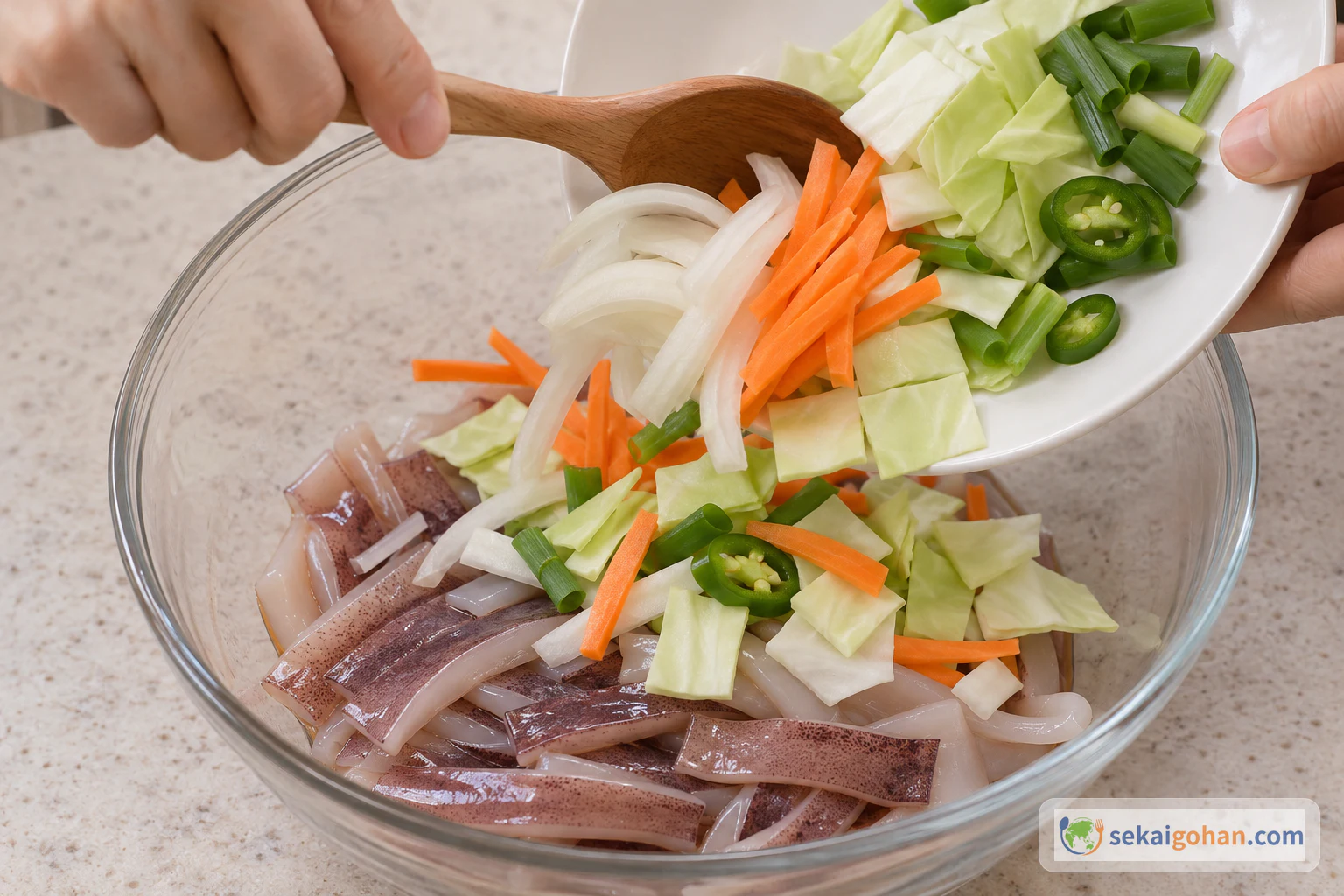
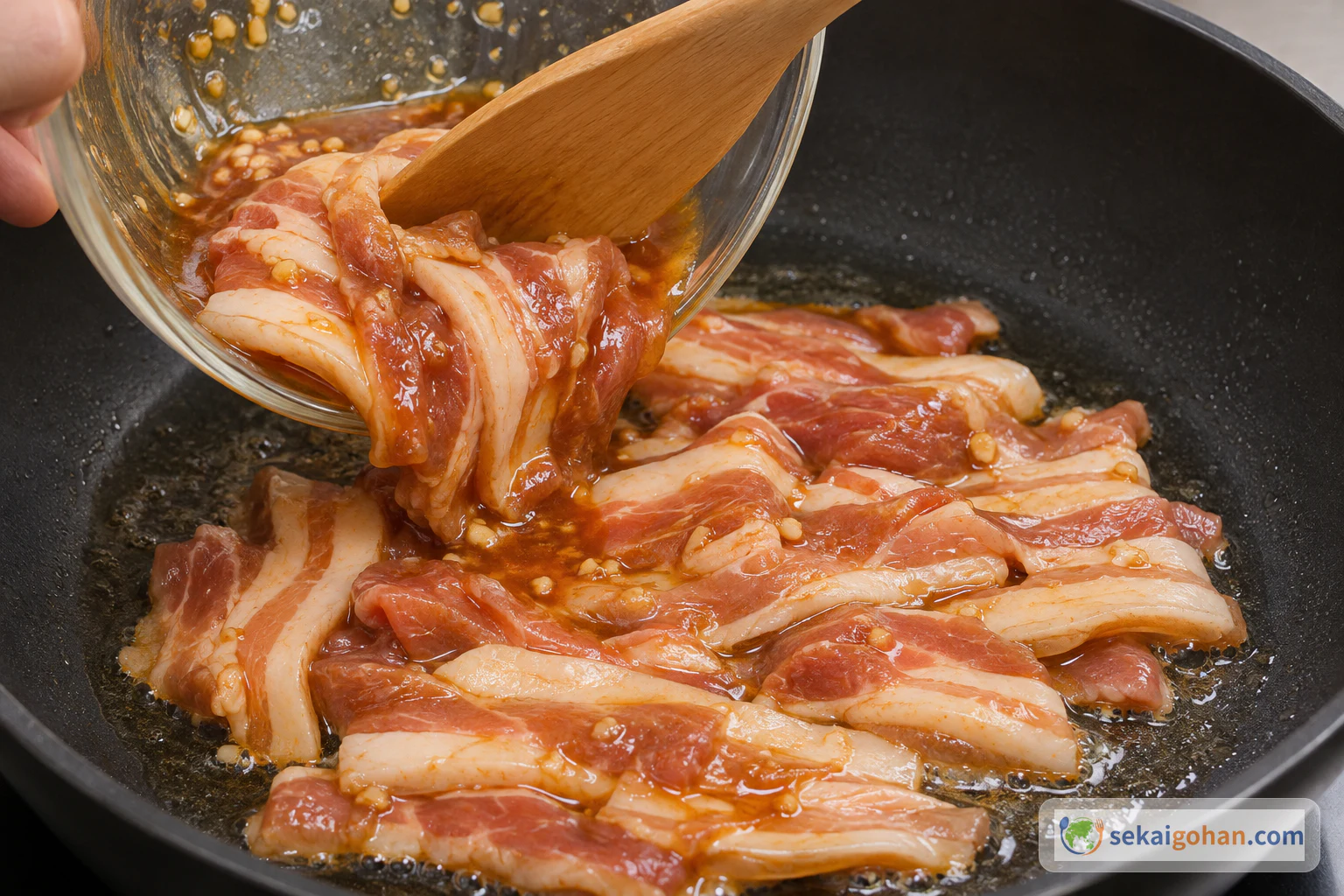
Prepare the squid and pork, mix one batch of sauce, and split it between two bowls so the pork and squid marinate separately. While they chill, cut the vegetables and add them to the squid. The pork goes into the pan first, then the squid and vegetables. The photos show each action; they do not show exact amounts, times or doneness.
Fixing Common Problems
| Problem | Likely reason | What to do |
|---|---|---|
| The sauce is still loose and watery | The pan came off the heat too soon | Keep stir-frying over medium heat until the sauce reduces and the squid and pork are cooked through |
| The pork looks underdone when you cut it | This is expected at that stage | The pork is only mostly cooked when you cut it. It finishes cooking with the squid and vegetables |
| The squid came out in rings | The mantle was cut as a tube | Next time, open the mantle flat before cutting so you get long strips |
| The squid is still frozen when you start | Not enough thawing time | Finish thawing in the refrigerator, or in a sealed bag in cold water with the water changed every 30 minutes. Do not leave it at room temperature |
| You want to add oil to the pan | Habit from other stir-fries | Leave it out. The pork belly goes in first and cooks in its own fat |
Other Ways Osambulgogi Is Made
Osambulgogi is not a single fixed formula. Other recipes take the same pairing of squid and pork belly in different directions. None of their ingredients or steps are mixed into the recipe above.
JinJoo Lee's optional extras. Her own recipe suggests optional greens and herbs such as minari, perilla leaves, extra green onion and sprouts, and serving ideas such as rice, lettuce wraps (ssam), side dishes and fried rice made in the pan afterward. This version leaves all of them out to keep the steps focused on the stir-fry itself.
A stone-plate version. ILOVEKFOOD (한식사랑), a commercial Korean food portal, publishes a version provided by KoreanFoodMasters in which the vegetables and sauce are arranged on a stone plate. It includes mushrooms, sprouts, broth and starch, offers ramyeon as an option, and gives no quantities.
A one-bowl, high-heat version. Seonkyoung Longest's recipe is a separate approach. Everything marinates together in one bowl, the sauce uses fish sauce and mirin, cooking happens over high heat with added oil, and it brings in bean sprouts, raw green onion, finishing at the table and fried rice at the end.
The Name and Where It Comes From
The name is a contraction. Osam (오삼) joins ojingeo (오징어, squid) and samgyeopsal (삼겹살, pork belly), and bulgogi (불고기) names the dish of seasoned meat cooked over heat. Both Kimchimari and ILOVEKFOOD use the name this way.
JinJoo Lee connects the dish with Gangneung and Korea's east coast. That is her account; the materials here do not establish the dish's origin, so treat it as one cook's explanation rather than settled history.
For more dishes from the same table, see our Korean recipes.
Frequently Asked Questions
Why is the squid skin left on?
In JinJoo Lee's recipe, peeling the squid is optional. This version skips it and keeps the skin on. Remove the innards, beak and eyes as in steps 1–3.
Can I use frozen squid?
This version uses fresh squid. If yours is frozen, thaw it in the refrigerator overnight, or seal it in a bag and submerge it in cold water, changing the water every 30 minutes. FoodSafety.gov advises against thawing at room temperature.
Why marinate the pork and squid in separate bowls?
They go into the pan at different times. The pork cooks first and is cut in the pan, and then the squid and vegetables join it. Keeping them in separate bowls makes that order possible.
How long does it take?
JinJoo Lee estimates 30 minutes of prep, 10 minutes of cooking and 40 minutes in total for 4 servings. These are her estimates, not guarantees. The refrigerated marinating in step 21 lasts at least 15 minutes. Finish cooking based on the food: everything cooked through and the sauce reduced.
What do the minutes in the cooking steps mean for safety?
They are guides, not a safety check. FoodSafety.gov gives 145°F (63°C) as the internal temperature for seafood in general. That figure is for seafood only; it does not set a rule for the pork or confirm the times in this recipe. Cook both the pork and the squid all the way through.
Why are there differences from the Kimchimari recipe card?
Her card and her written text differ in a few places. For the cabbage, this version follows her text and ingredient card (squares) rather than her method card (long strips). For the ginger, it follows her ingredient card (grated) rather than her text (chopped). The black pepper on her ingredient card is added to the sauce, since her mixing instruction does not name it.
Sources
- JinJoo Lee, Kimchimari, "Spicy Squid and Pork Stir-Fry (Osam Bulgogi 오삼불고기)." The four-serving recipe this article follows: ingredient amounts, squid and pork cuts, sauce, vegetables, the order of cooking pork first and then the separately marinated squid and vegetables, her time estimates, the meaning of the name, and her account of the Gangneung and east-coast connection. https://kimchimari.com/osam-bulgogi/
- 한식사랑 / ILOVEKFOOD, "오삼불고기." A commercial Korean food portal, not a government source, with a version provided by KoreanFoodMasters. Used for the use of the name for squid and pork belly, and as a comparison of the stone-plate style. Its ingredients and steps are not used in this recipe. https://ilovekfood.com/kfood/content/content_view.asp?idx=802104&key_idx=0&mcat=1
- Seonkyoung Longest, "Osam Bulgogi Recipe & Video." A separate version used only as a comparison: one-bowl marinating, a bed of sprouts, finishing at the table and fried rice afterward. Its ingredients, amounts and steps are not used in this recipe. https://seonkyounglongest.com/osam-bulgogi/
- FoodSafety.gov, "Safe Selection and Handling of Fish and Shellfish." General guidance on thawing seafood in the refrigerator or in cold water, avoiding cross-contamination, and the 145°F (63°C) internal temperature for seafood. It does not set this recipe's times. https://akaprod-www.foodsafety.gov/blog/safe-selection-and-handling-fish-and-shellfish