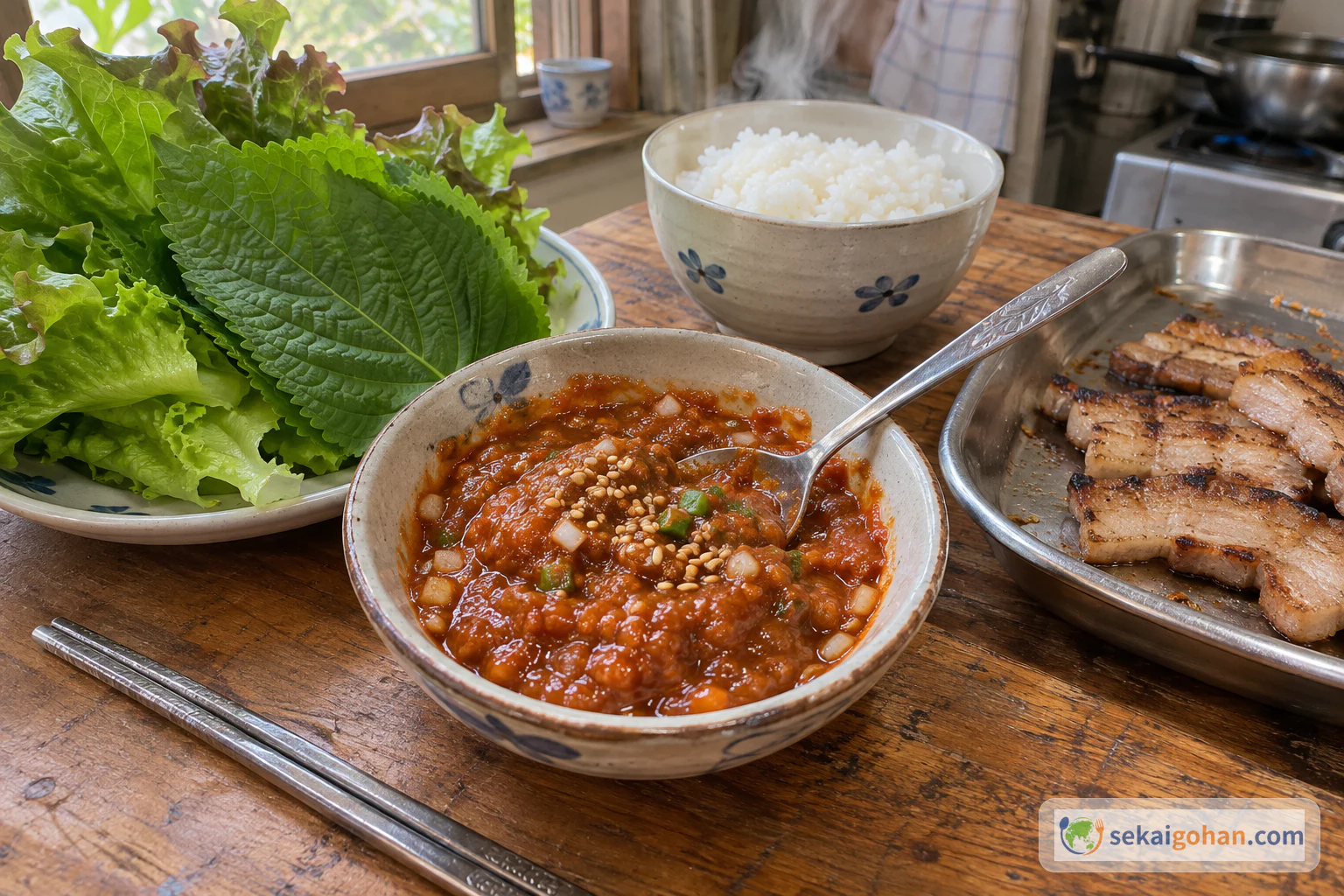
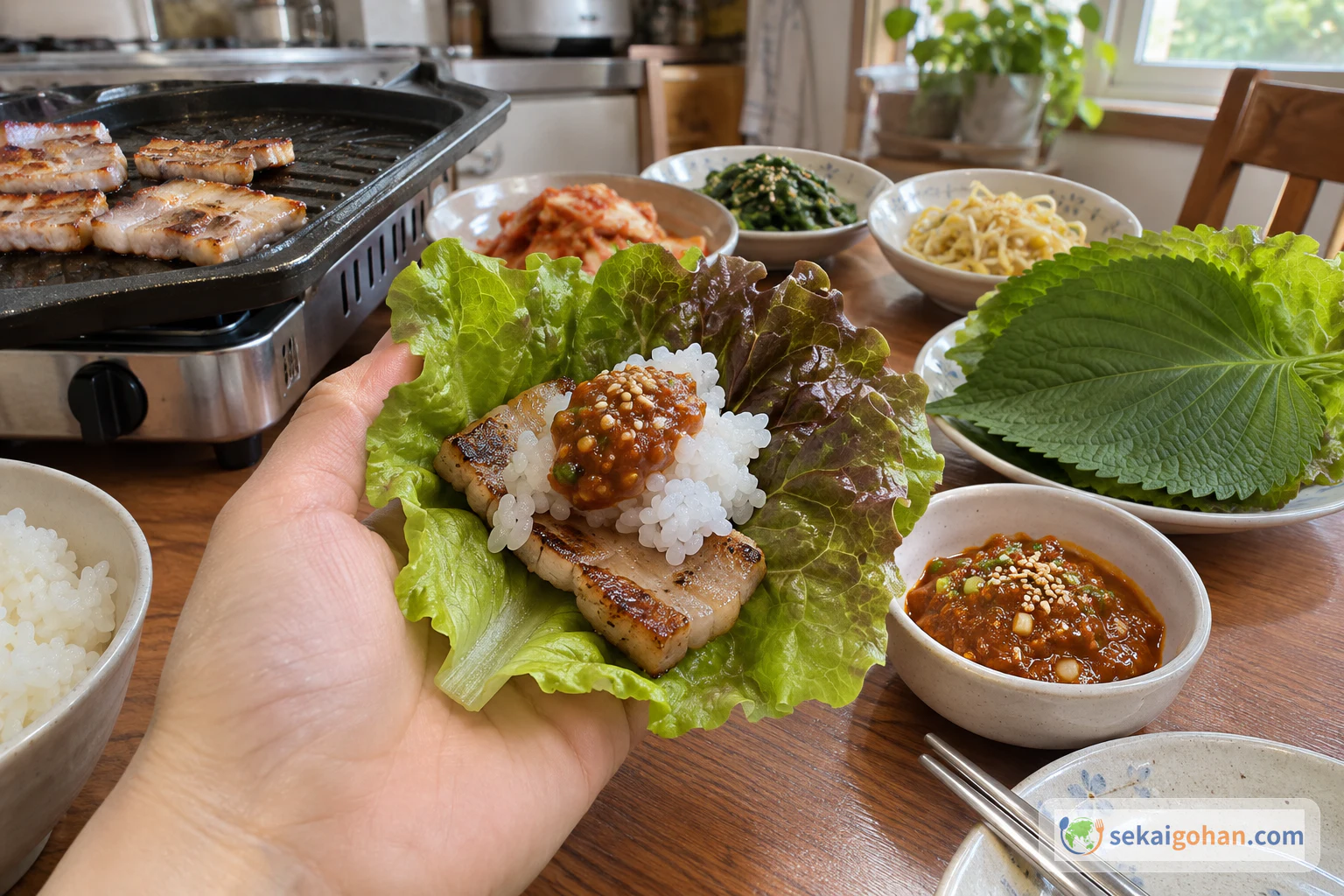
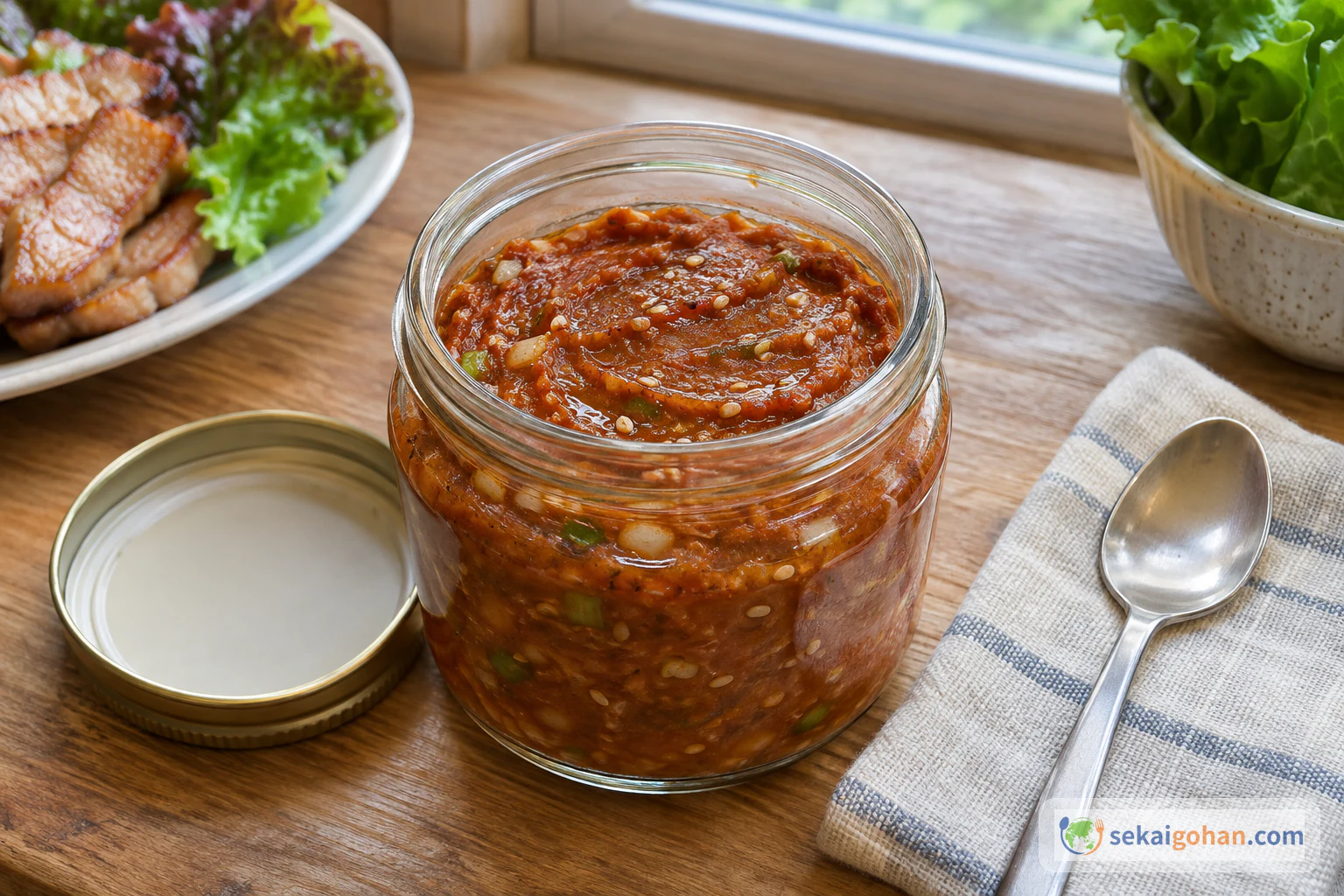
A lettuce leaf lies open in your palm. A slice of pork belly comes straight off the grill and goes on it, then a spoonful of rice, then a dab of thick reddish-brown paste before the leaf is folded shut and eaten in one bite. That dab is ssamjang (쌈장), the paste Koreans put on the table whenever food is going to be wrapped. It tastes deep and salty from fermented soybean paste, sweet and hot from chili paste, and it carries the toasted smell of sesame and a sharp edge of raw garlic. It is a condiment, made in minutes in a small bowl, and it is a fixture at Korean pork-belly barbecue.
A Jang Made for Wrapping
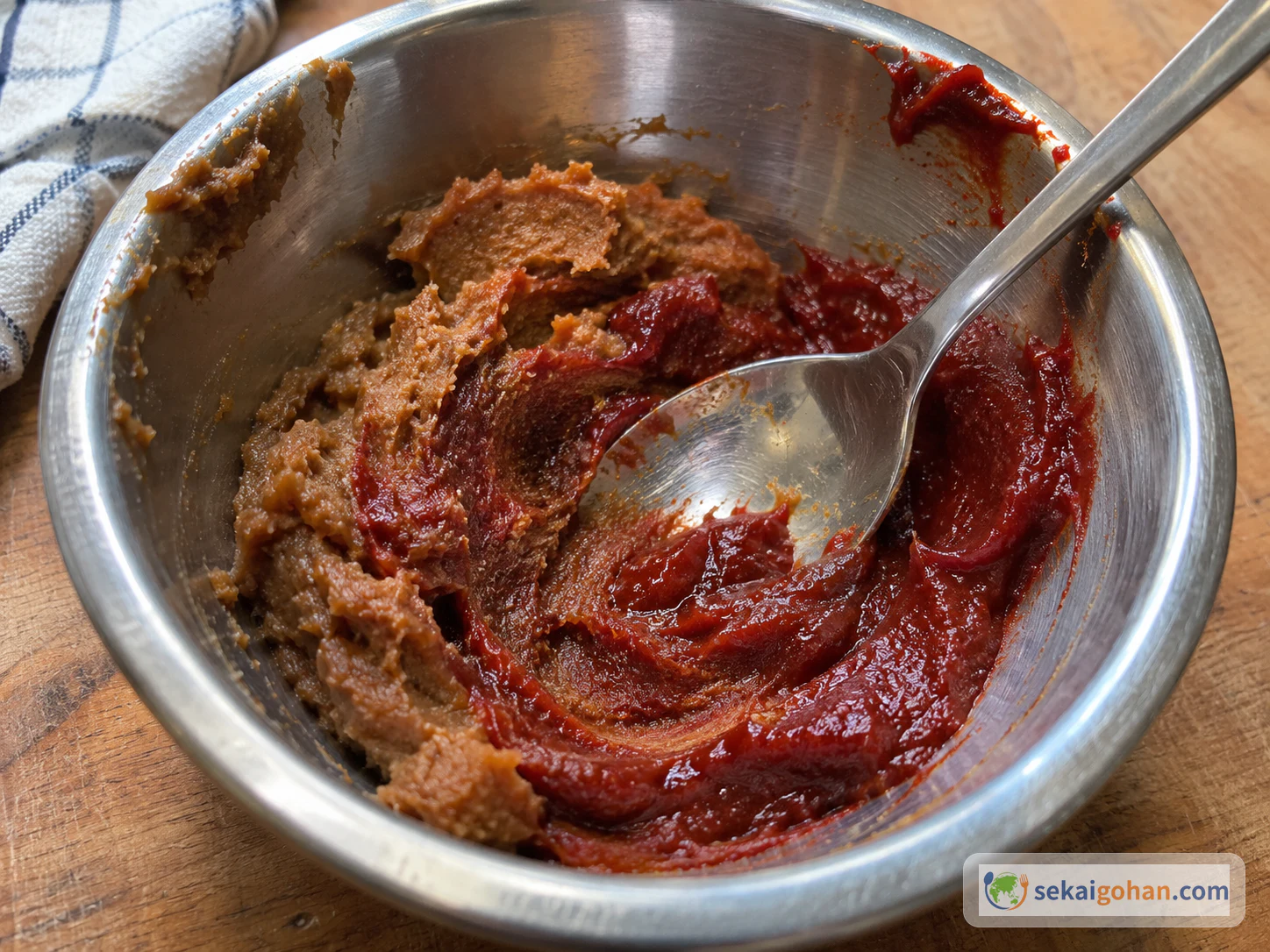
The name explains the job. Ssam (쌈) means wrapping, or food wrapped in a leaf, and jang (장) is the word for the whole family of fermented Korean seasonings: doenjang (soybean paste), gochujang (chili paste) and ganjang (soy sauce). Ssamjang is the jang for wraps. It mixes doenjang and gochujang and finishes them with garlic, sesame oil, sesame seeds and a little sweetness.
At the table, nobody hands you a finished wrap. Each person builds their own, choosing the leaf, the meat, the rice and how much paste goes in. Lettuce is the usual leaf, but perilla, bean leaves, zucchini leaves, crown daisy, cabbage, mini napa cabbage, blanched pumpkin leaves, blanched butterbur leaves and seaweed such as wakame all turn up, and which ones are used depends on the region. Wrapped food was once thought to bring good fortune, and a wrap is also the easiest way to eat a pile of raw greens with a meal. Ssamjang goes beside raw fish too, and with plain rice wrapped in a leaf it makes a meal on its own. More dishes from the same tables are collected on the Korea page.
Jang is pronounced "chang" at the start of a word and "jang" in the middle, which is why the seasoning on its own sounds like "chang" while ssamjang ends in a soft "jang." Ssamjang is often translated as "wrapping paste" or "sauce for wrapped rice."
Doenjang, gochujang and ssamjang
The three are easy to mix up. Doenjang is the soybean paste, gochujang is the sweet-hot chili paste, and ssamjang is the blend of the two with aromatics stirred in. Gangdoenjang (강된장) also appears beside wraps, but it is doenjang cooked down into a thick dipping paste, a different thing. Japanese miso and Chinese sweet bean sauce are separate seasonings with their own makeup.
Every household mixes its own. Two parts doenjang to one part gochujang balances savory depth against heat, and most homes stay somewhere between 2:1 and 3:1; some go heavier on doenjang still. Sweetness comes from sugar, honey, rice syrup or plum syrup, or starch syrup with mirin, and some cooks in Korea even add clear soda (saida). Garlic, sesame oil, sesame seeds and scallion are the constants; chili powder, fresh green chili and onion come and go.
Where the pastes come from
Doenjang starts as meju, blocks of boiled and mashed soybeans that are hung up to dry and then set in earthenware jars with brine. The liquid that forms becomes ganjang, and the solids left behind become doenjang. The oldest written mention of jang in Korea is usually dated to 683, in a list of betrothal gifts for a queen, and methods for making it appear in many later texts.
Japanese-style soy sauce and miso works opened across the peninsula in the first half of the 20th century, factory jang spread through the 1970s and 80s, and by the 1980s and 90s factory products had replaced most homemade jang. Among all the Korean sauces, ssamjang was one of the first to be sold ready-made, which says a great deal about how much wrapped food Koreans eat. Store-bought ssamjang is a blended, fermented product with vegetables and sesame in it. The version below is the home kind: measured, stirred and on the table in minutes.
Ingredients (serves 4)
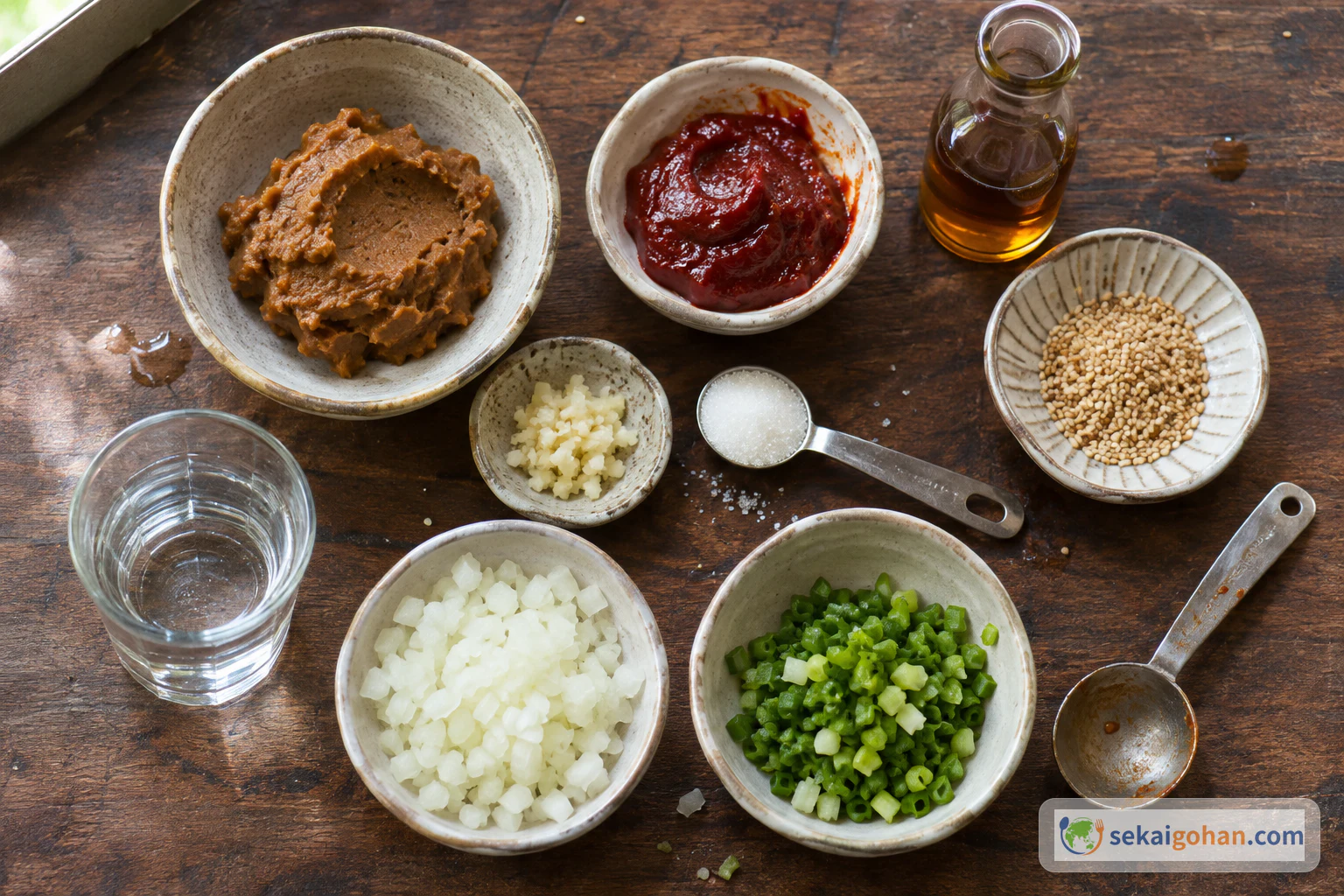
Choose sugar, honey or oligodang and use just one in the ½ tbsp. Each sweetens differently, and doubling up pushes the paste toward sweet and away from salty-savory.
Doenjang and gochujang contain soy, and some brands also contain wheat; sesame oil and seeds add sesame. Some store-bought ssamjang contains perilla seed powder. The tuna version below contains fish, and the nut version contains tree nuts or peanuts. Read the ingredient labels on every paste you buy. This paste is eaten raw, with raw garlic, onion and scallion, so wash all wrapping leaves and vegetables well before they go on the table. It is a very salty condiment: serve a little and taste before adding more. One store-bought ssamjang lists 760 mg of sodium in a 1.4 oz (40 g) serving, which shows how quickly the salt adds up.
Equipment
- A small bowl
- Measuring spoons that measure ½ tbsp and 1 tsp
- A small spoon or a small silicone spatula
- A small serving dish
- A small glass or ceramic container with a tight lid, for leftovers
Choosing and Substituting
Doenjang is the one ingredient that decides whether this tastes Korean. Korean-made doenjang and gochujang give the truest flavor. Red or mixed Japanese miso gets you close, but the salt level, the depth of fermentation and the texture all change, so never swap miso in at the same amount. Start with less, stir in more a little at a time and taste as you go. Even then, the result is a cousin of ssamjang rather than the paste itself.
Gochujang has no real stand-in. Miso mixed with chili powder gives heat without the sweetness, stickiness and color that hold the paste together. The rest bends more easily:
- Garlic: jarred minced garlic works; the aroma is flatter than fresh.
- Sweetener: sugar gives the cleanest result; honey and oligodang are rounder. Plum syrup adds a light sourness.
- Sesame oil: it must be toasted. Neutral vegetable oil gives smoothness but none of the aroma.
- Sesame seeds: ground sesame can go in at the same amount; its smell is stronger.
- Rice wine: mirin works in its place but adds sweetness, so go easy on the sugar. Plain water is fine.
- Scallion: the green part of a Japanese long onion (negi) or a thick Asian green onion fits well.
Store-bought ssamjang is the shortcut when you want it now. It is a different, factory-fermented product, and its shelf life, storage and salt are whatever its label says.
Method
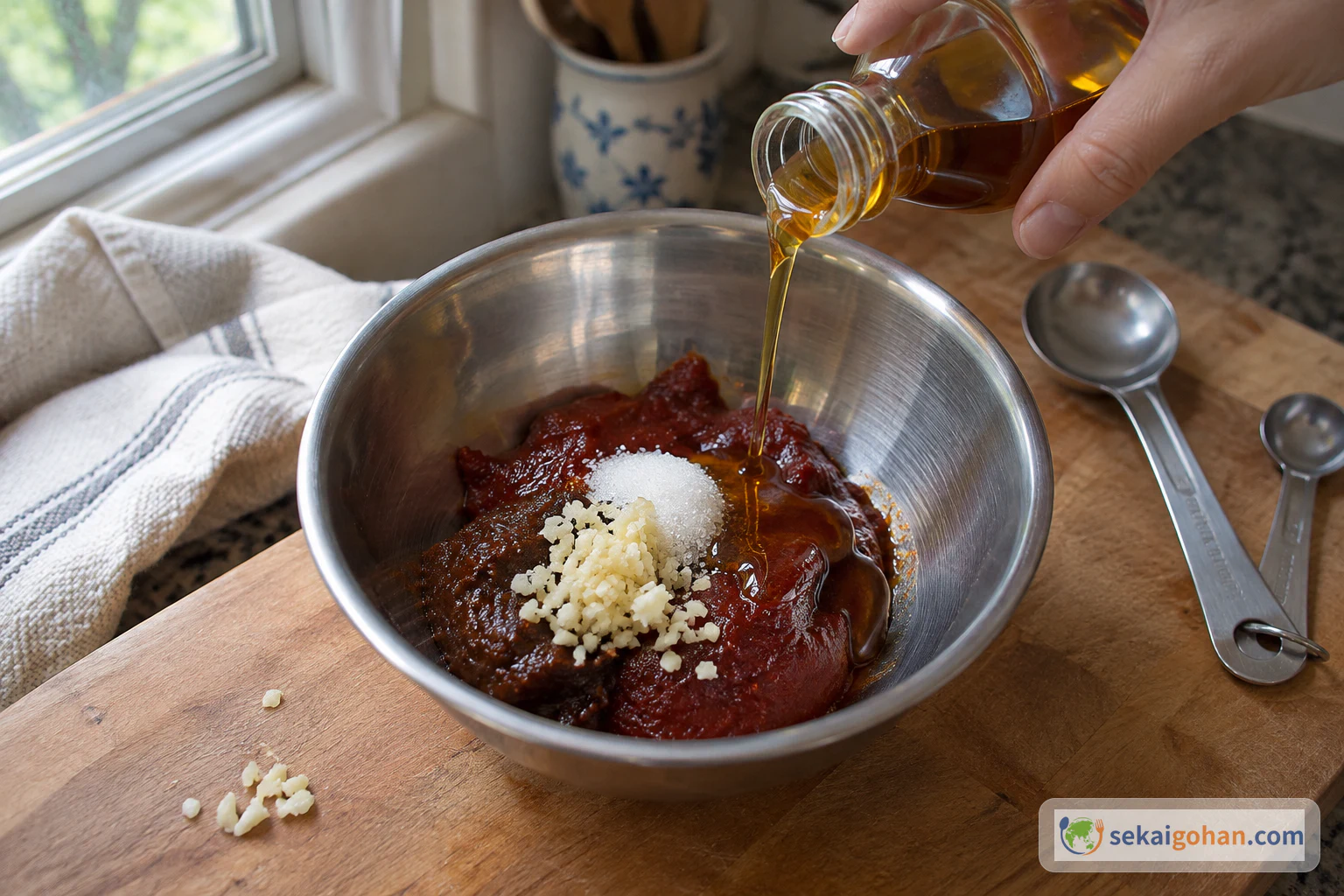
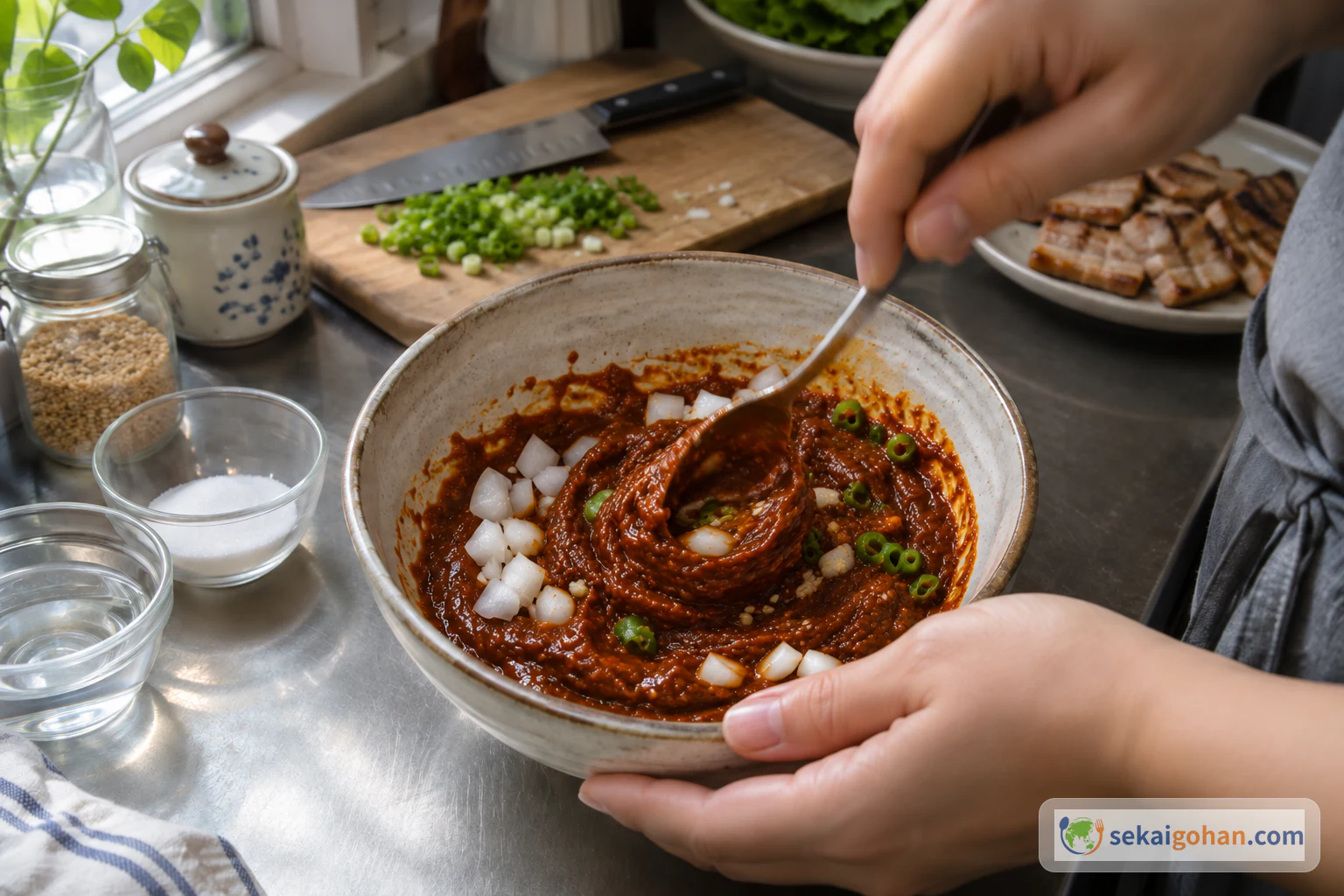
Nothing in the main recipe is cooked. Chop the onion, scallion and garlic first and set every measured ingredient beside the bowl, because once the pastes are in, the mixing goes in one run. Everything could be stirred together at once; the order below is our own arrangement to keep the paste smooth and stop it splitting once the wet ingredients go in.
Step 1 decides the texture. Doenjang and gochujang that are fully mashed together before any liquid goes in stay smooth; paste that gets water first turns grainy and separates.
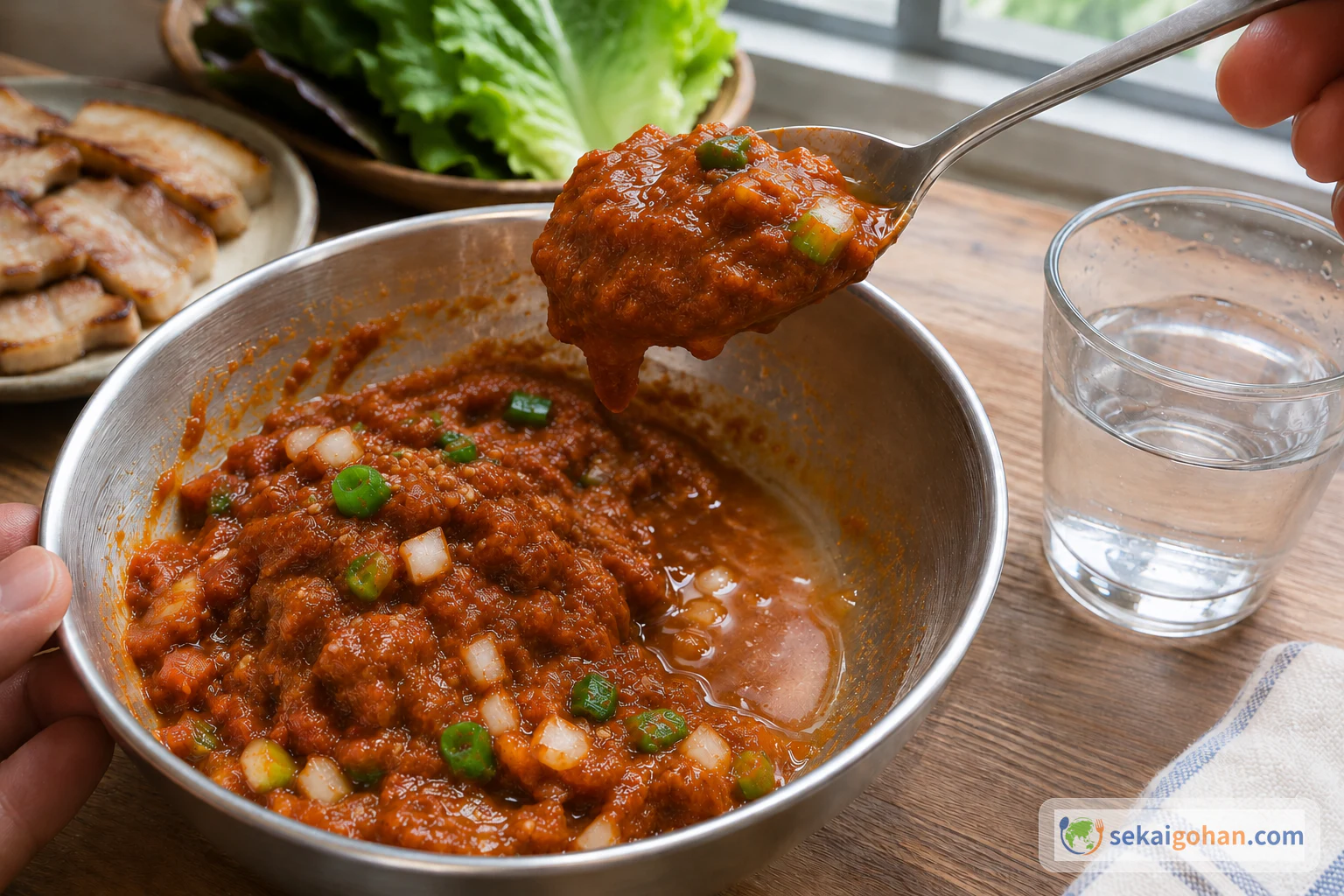
After the first tablespoon, add water only 1 tsp at a time. The onion keeps releasing juice as the paste sits, so a paste that looks a touch stiff in the bowl is right by the time it reaches the table.
When It Goes Wrong
| What you see | Why | What to do |
|---|---|---|
| Too salty | Strong doenjang, or too little gochujang and sweetener against it | Stretch it with water or rice wine 1 tsp at a time and add a little more chopped onion. Do not add soy sauce |
| Too stiff to spread on a leaf | Not enough liquid | Add water or rice wine 1 tsp at a time, stirring between each, never all at once |
| Grainy, or liquid separating out | The two pastes were not mashed together before the wet ingredients went in | Push the paste to one side, mash it smooth against the bowl, then work the liquid back in; next time follow step 1 fully |
| Watery, running in the dish | Onion juice plus too much added water | Stir in a little more doenjang and gochujang at 2:1; next time start with half the water and add the rest only if needed |
| Very dark color | Some doenjang is naturally darker | Nothing is wrong with the recipe; the color follows the paste you bought |
Serving, Variations and Storage
At the table
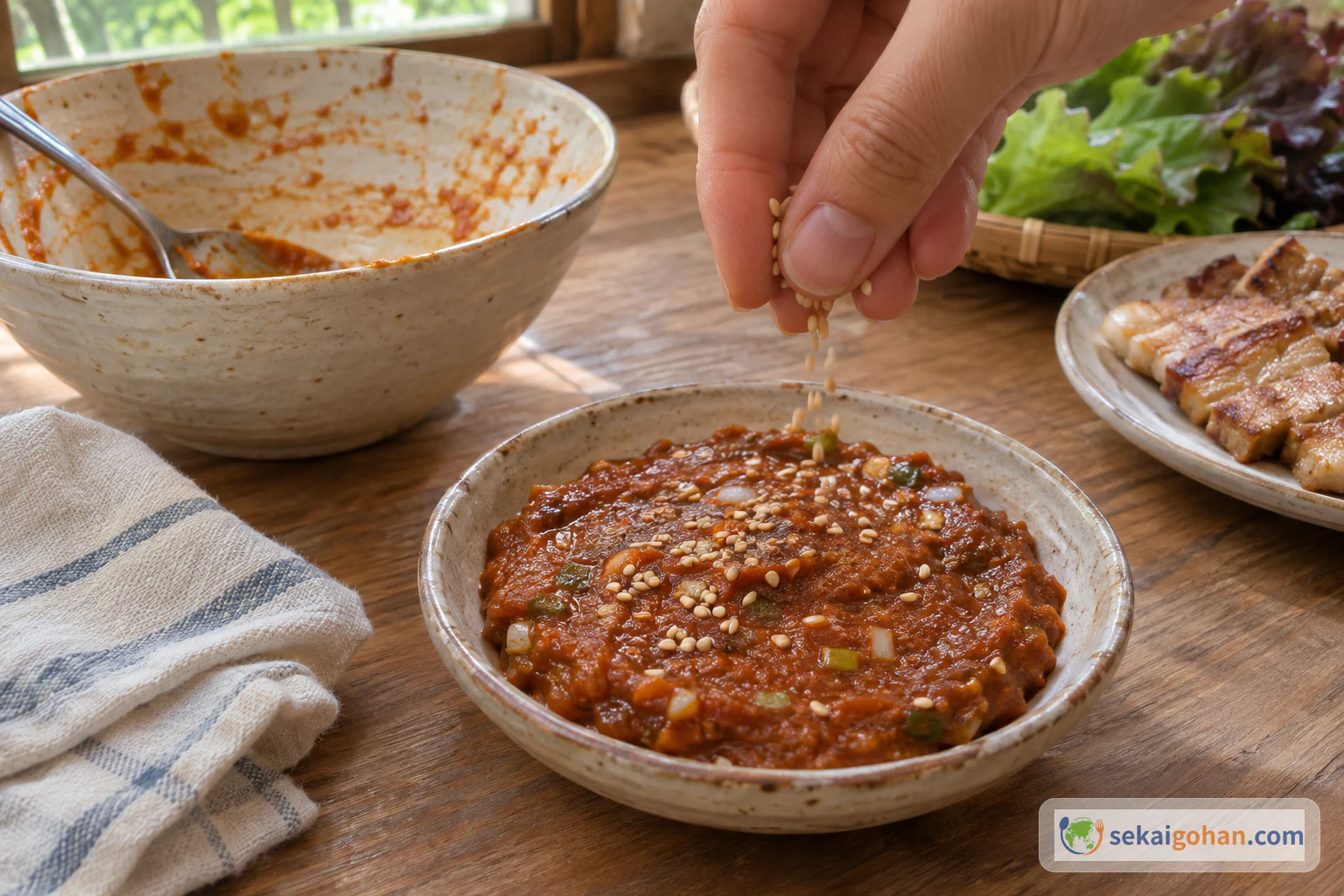
Put ssamjang in the middle with a pile of washed leaves, a bowl of rice, the grilled meat and the side dishes, and let everyone build their own wraps. A small dab is enough for each wrap, and the paste goes on last, on top of the meat and rice, so it hits the tongue first. Grilled pork belly is the classic partner, but any grilled meat, raw fish or plain rice in a leaf works.
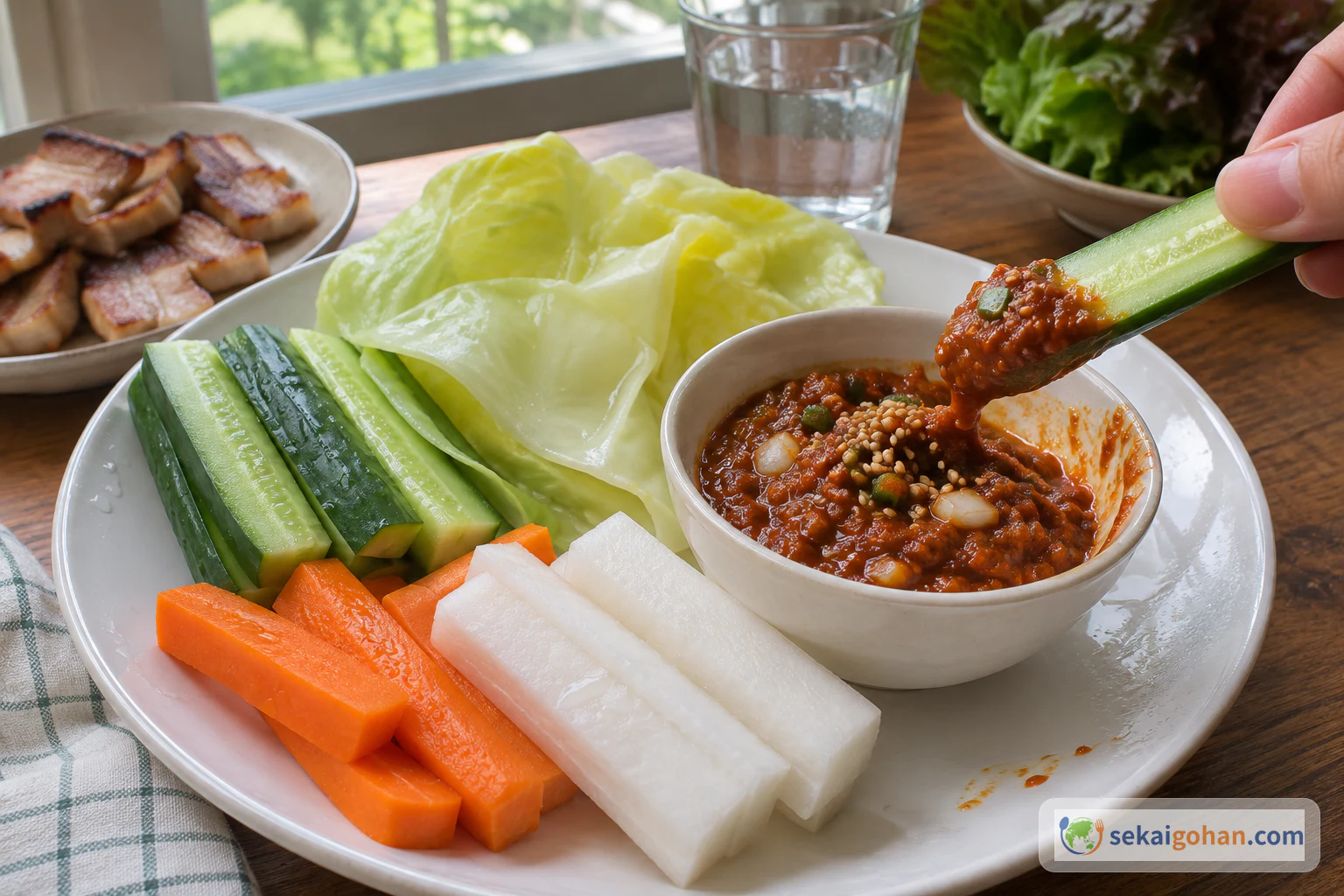
Away from the grill it is a dip. Thick sticks of cucumber, carrot and daikon and soft blanched cabbage leaves all take it well, and a bowl of it with raw vegetables makes an easy snack.
Variations
Heavier on doenjang. Move from 2:1 toward 3:1 or beyond. The paste turns browner, more savory and less hot, and leans further from sweet.
Chilies and nuts. Stir in ½ tbsp chopped green chili and ½ tbsp chopped red chili for a sharper, fresher heat and flecks of color. Or add 2 tbsp roughly chopped nuts, such as walnuts, almonds, peanuts or pine nuts, for a toasty crunch.
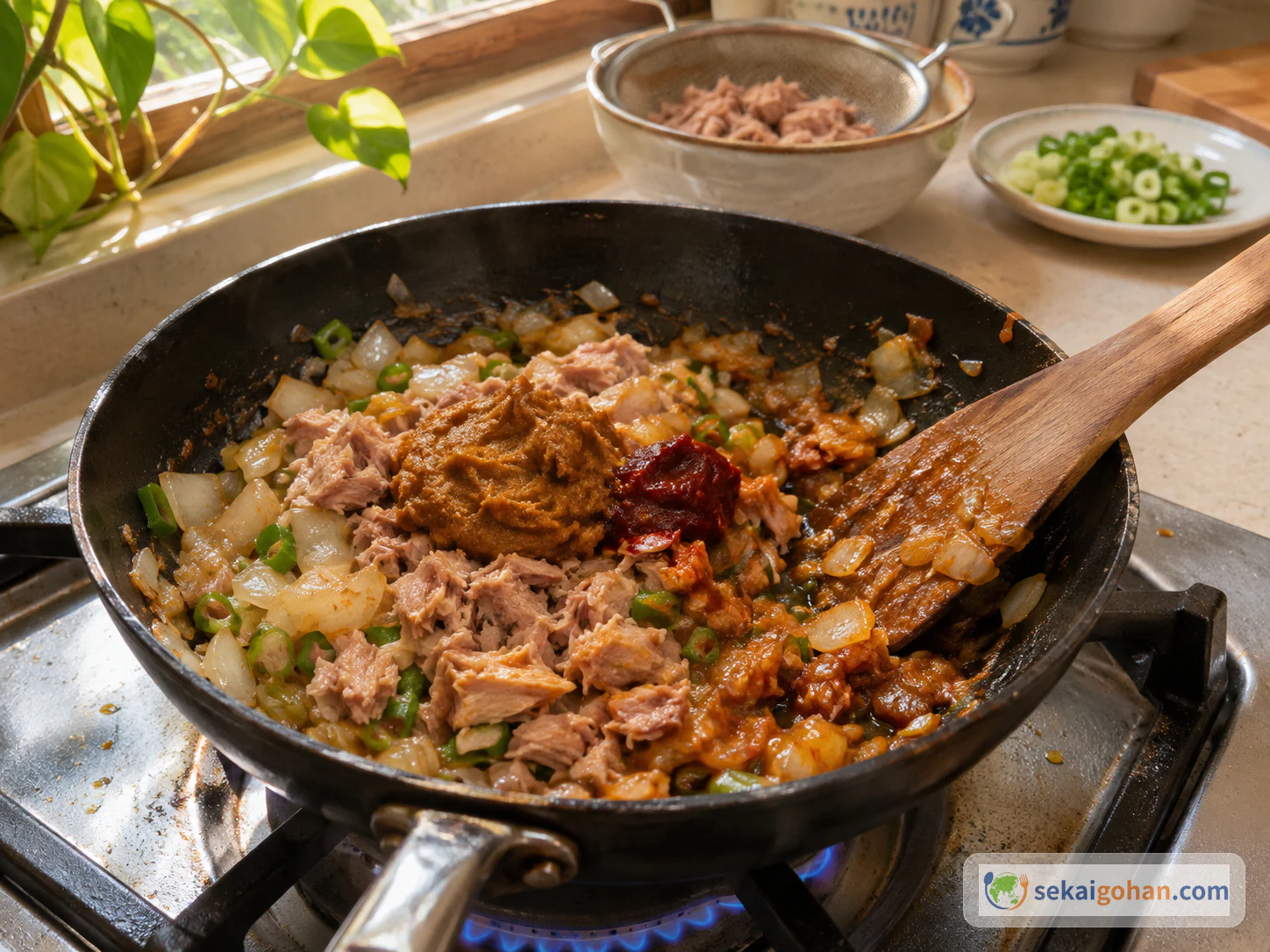
Cooked tuna ssamjang (참치쌈장). This version turns the condiment into a side dish with a milder, rounder saltiness. Heat 1 tbsp vegetable oil in a frying pan and sauté 2 tbsp chopped onion, 2 tbsp chopped scallion and 2 tsp minced garlic until soft. Add 1 can of tuna (about 5 oz, 140 g), drained, with 2 tbsp doenjang, 1 tbsp gochujang, 1 tbsp sugar, 1 tbsp sesame oil and 2 tsp sesame seeds, and stir-fry for a few minutes until it comes together. If it looks dry, add 2–3 tbsp water or rice wine. Other canned fish, ground meat or crumbled tofu can take the tuna's place.
Stir-fried onion ssamjang. Finely chop 2 onions and cook them in a frying pan with half their volume of doenjang for about 7 minutes, adding nuts if you like. The cooking drives off the onion's bite and brings out its sweetness, so the paste turns mellow and jammy. This is a separate recipe with its own proportions.
Storage
Make a small batch rather than a big one. Spoon leftovers into a small glass or ceramic container, press the surface flat and close the lid tightly, because the garlic, scallion and sesame smell spreads through a refrigerator. Refrigerate it, always scoop it out with a clean spoon, and use it up soon: the raw onion and scallion make homemade ssamjang spoil faster than plain pastes. Sesame oil loses its aroma as it sits, so when you make the paste ahead, hold back part of the oil and stir it in just before serving.
Frequently Asked Questions
Can I leave out the onion and scallion?
Yes. The seven other ingredients make a complete paste. Without the onion it is stiffer and saltier-tasting, so watch the water in step 4 and add a little more if it is too stiff.
How do I make it milder for people who avoid heat?
Cut the gochujang back by a teaspoon or more and add a little extra sugar or honey to keep the balance. Leave out any fresh chili. The paste turns browner and more savory as the gochujang goes down.
Should it sit before serving?
It is ready to eat as soon as it is mixed. As it rests, the raw onion's bite turns sweet and the garlic softens, so by the next day the paste tastes rounder. Serve it right away when you want the sharper, fresher edge.
What else can I use it for besides wraps?
It works as a seasoning in cooking: a spoonful in a stir-fry or a stew adds salt, savor and heat in one go. It is also good spooned onto a bowl of rice.