Jaga Butter: A Whole Potato, a Cross Cut and a Pat of Butter
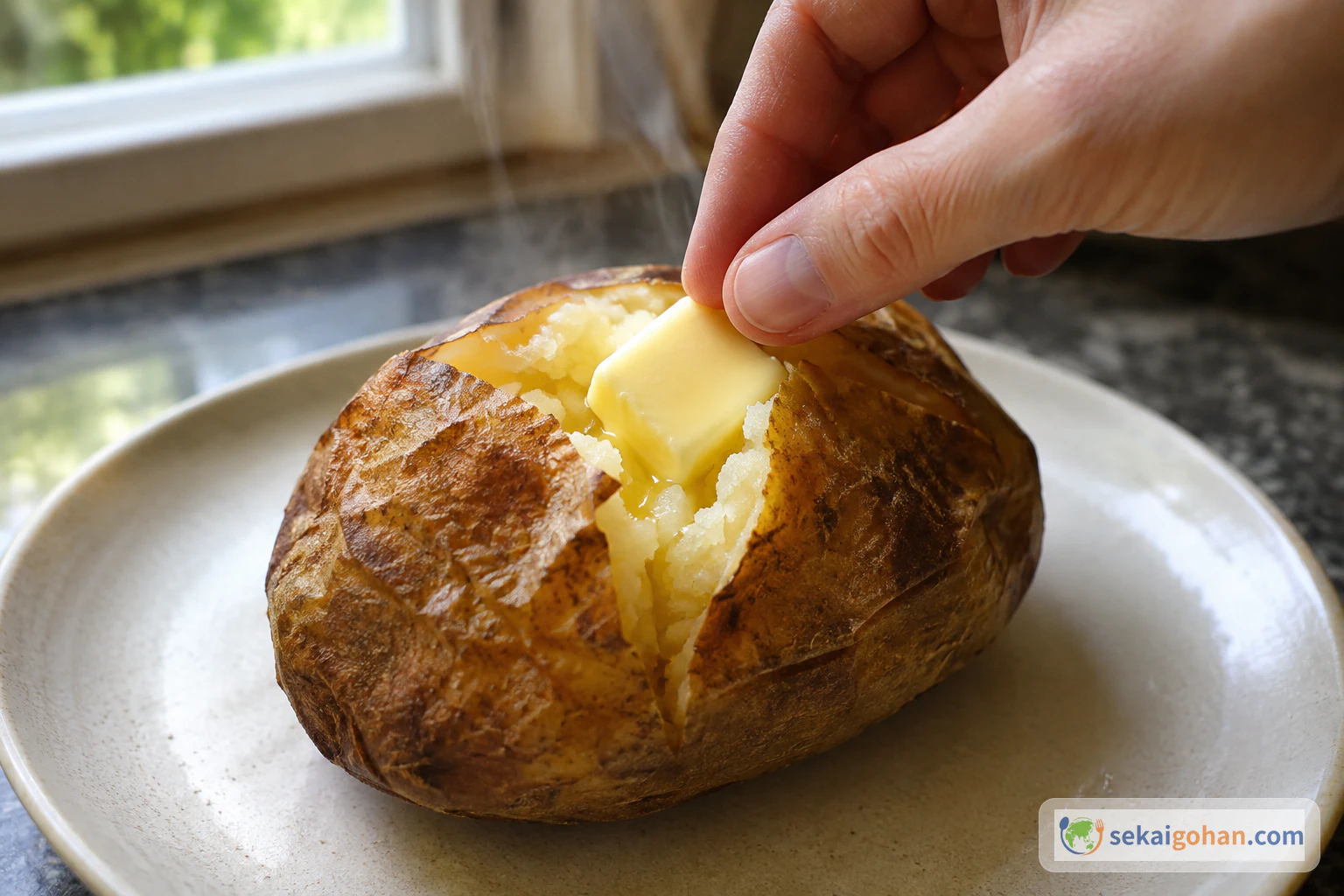
The potato is the star. Cook it in its skin until it is soft all the way through, open it along a cross cut, and let the butter melt into the hot flesh. Nothing more is needed.
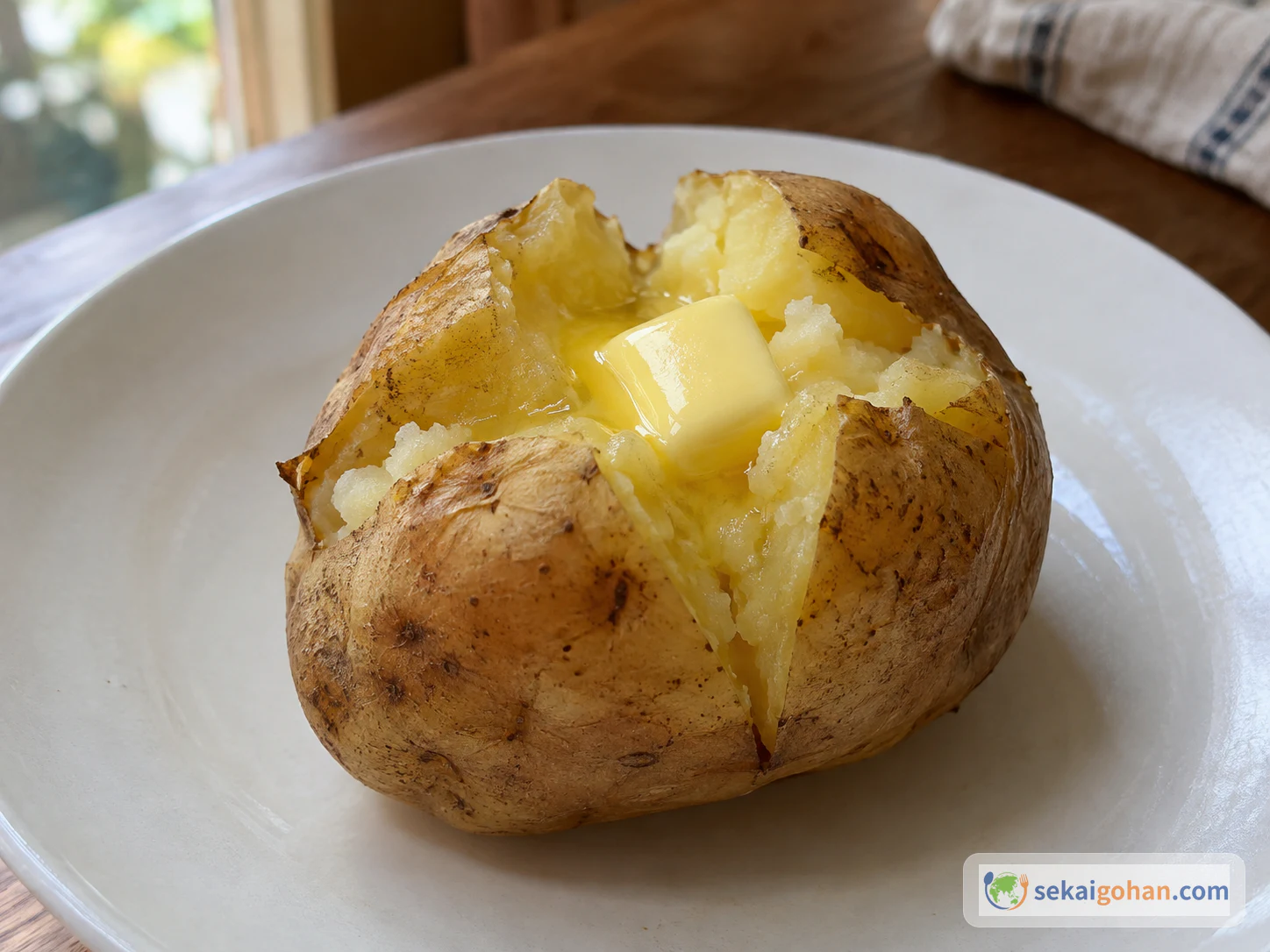
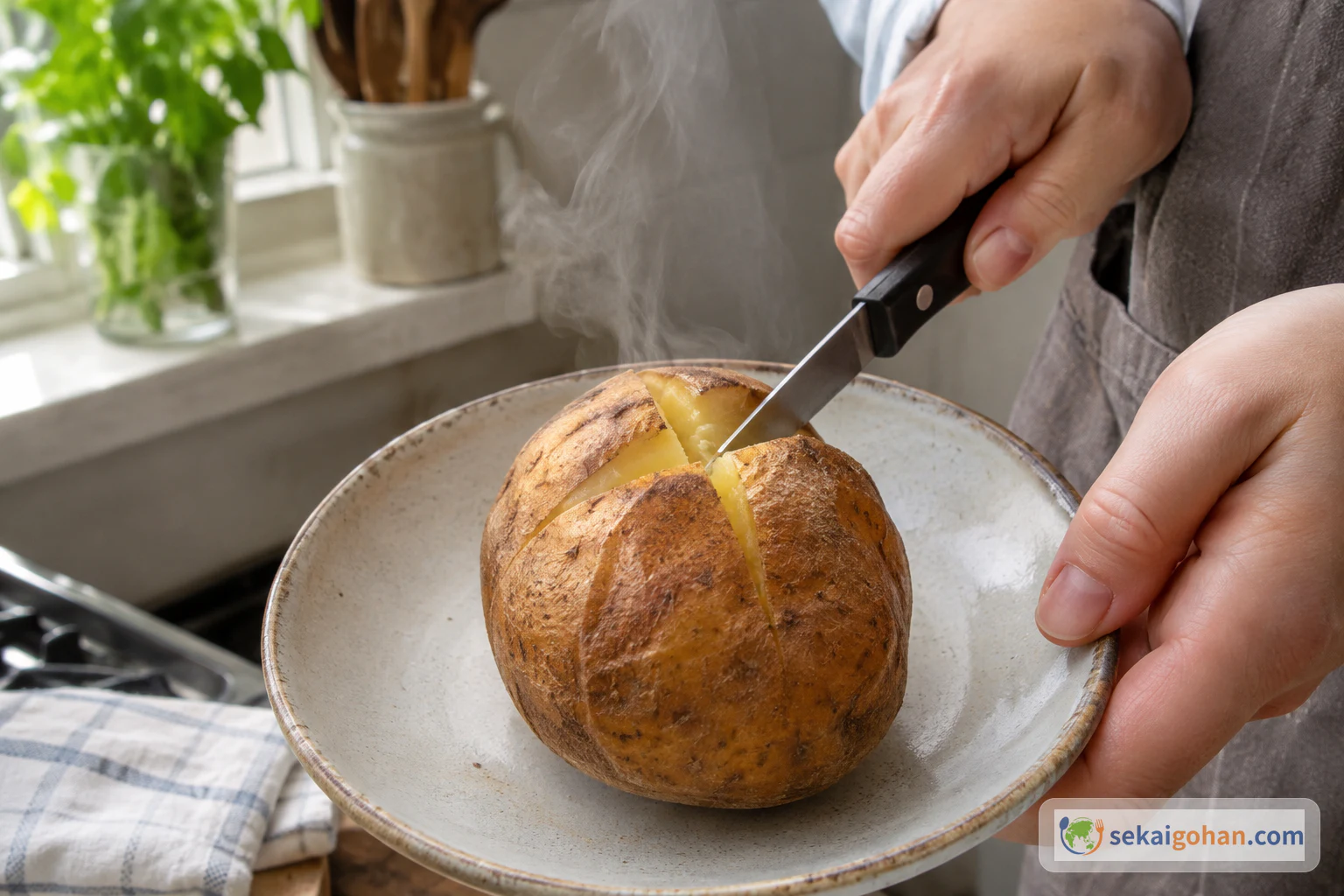
Jaga butter (じゃがバター) is about as simple as Japanese home cooking gets. You cook a whole potato in its skin, cut a cross into the top, and set butter into the opening so it melts into the steaming flesh. The appeal is the contrast between the fluffy potato and the rich butter.
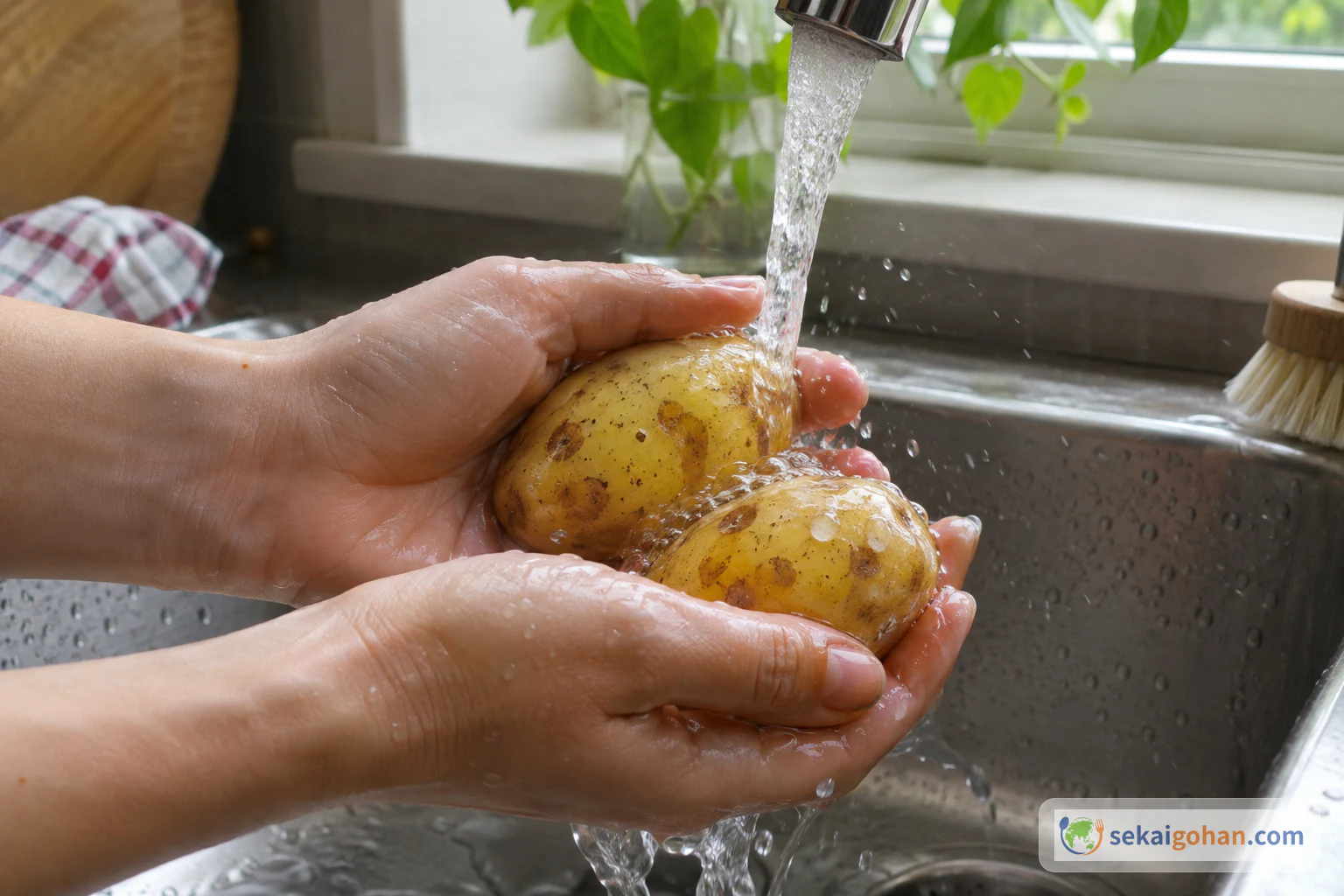
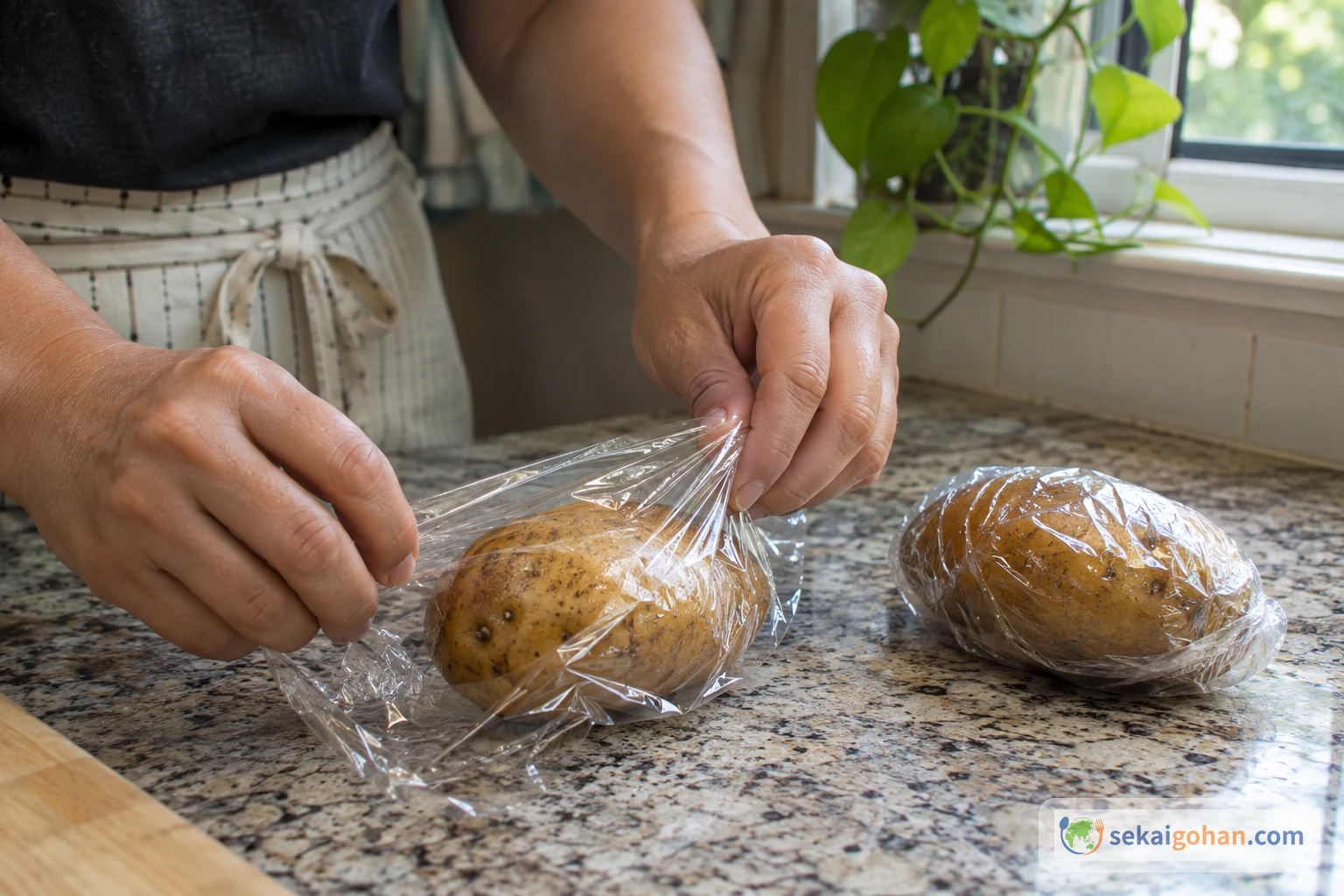
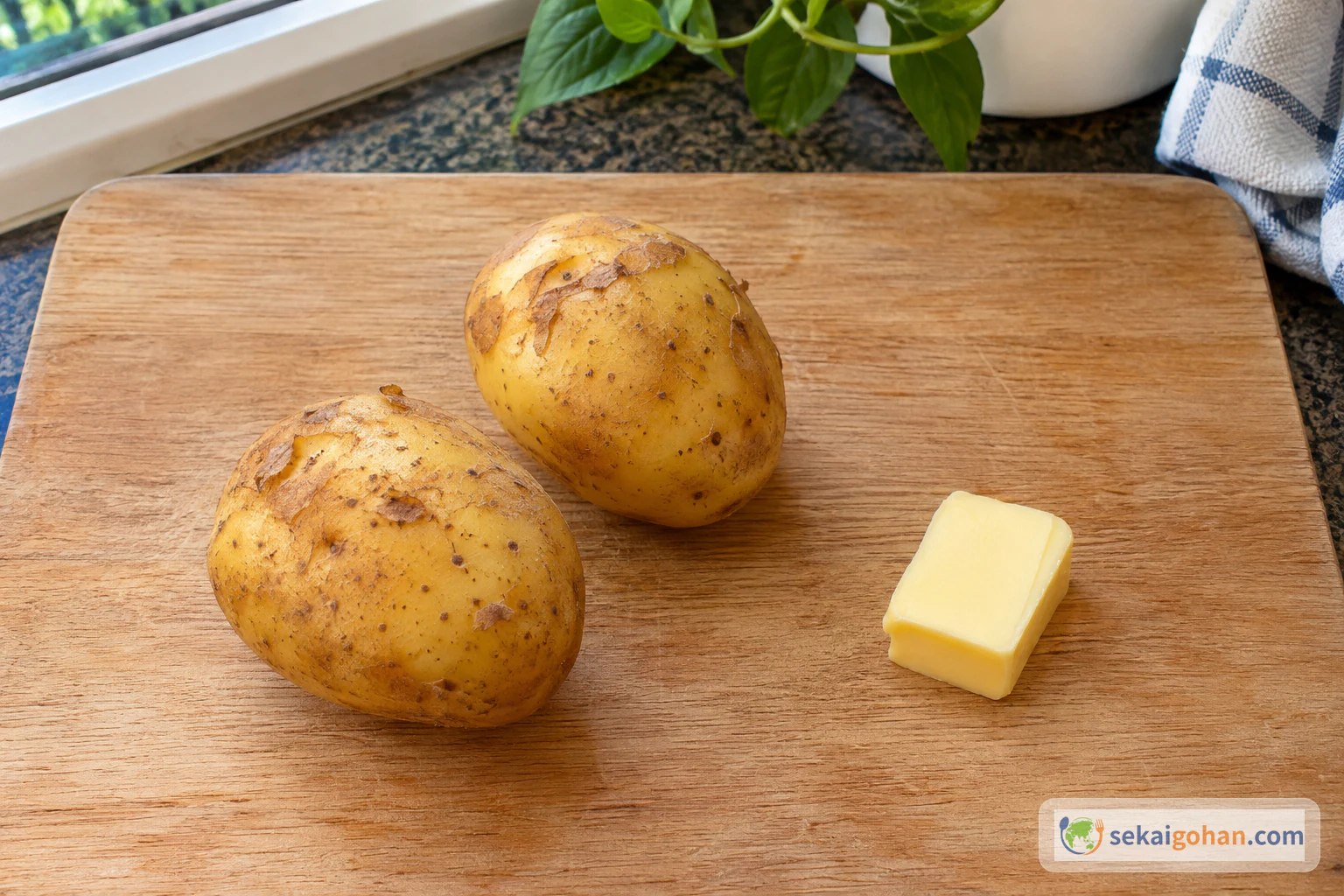
Households make it in different ways. Some steam the potatoes and some boil them. This page covers one version only: the microwave method published by JA Kagoshima (the Kagoshima Prefecture federation of agricultural cooperatives). You wash two new potatoes, wrap each one separately while still wet, and microwave them at 600W until soft. Then you cut a cross into each and top them with butter. Steamer and pot methods are separate styles, and their times are not used here.
The amounts are the ones JA Kagoshima lists for two servings. Sekai Gohan has not kitchen-tested this recipe as a whole. Potatoes vary in size, and microwaves vary from model to model. Treat the heating time as a guide, and judge doneness by how soft the potato is.
What Jaga Butter Is: Potato First, and a Close Tie to Hokkaido's Danshaku
The dish is often linked with Hokkaido, Japan's northern island. A booklet on Hokkaido food culture from the Hokkaido Regional Agricultural Administration Office of Japan's Ministry of Agriculture, Forestry and Fisheries (MAFF) describes the Danshaku potato (男爵いも). The booklet says Danshaku was introduced to Hokkaido in 1908 and was selected as a recommended variety under the Danshaku name in 1928. It describes the potato as fluffy and well-flavored, which makes it a good choice for eating whole, and it names jaga butter as a recommended dish.
The booklet tells the story of the potato, not of the dish. The available sources do not establish where jaga butter was first made, when, or by whom, so no origin story is given here. What can be said is that a floury Hokkaido potato and butter suit each other well, and that pairing is a good place to start. You can read more about the country's food on the Japan page.
Ingredients (Serves 2)
Equipment
- Microwave with a 600W setting
- Microwave-safe plastic wrap
- Microwave-safe heatproof plate
- Bamboo skewer
- Small kitchen knife
- Oven mitts or a heat-resistant cloth, and tongs
Choosing Potatoes and Butter
Choose floury varieties such as Danshaku (男爵薯) and Kitaakari (キタアカリ) for a fluffier texture. If your store labels varieties, either one is a good choice. If it does not, ordinary potatoes from the produce section are fine. Larger or smaller potatoes will need a different amount of time in the microwave, so rely on the softness check in step 4.
Use salted or unsalted butter, whichever you normally keep. No extra salt is needed.
Follow these precautions for potatoes:
- Do not buy potatoes that have sprouted or turned green.
- Cut out any sprouts together with their bases, and remove any green parts.
- Do not eat immature potatoes from a home garden with their skins on. Because this recipe is cooked and eaten skin-on, it is not suited to them.
- If a potato tastes bitter or makes your throat feel harsh, stop eating it.
- Do not count on ordinary cooking to reduce the natural toxins in potatoes.
Skin-on potatoes in photos stand for sound, store-bought new potatoes. A photo cannot show that a potato is safe.
Butter contains milk. Check the labels on your butter, and on your plastic wrap for microwave use, before you cook.
Method: Wash, Wrap, Microwave, Cut, Butter
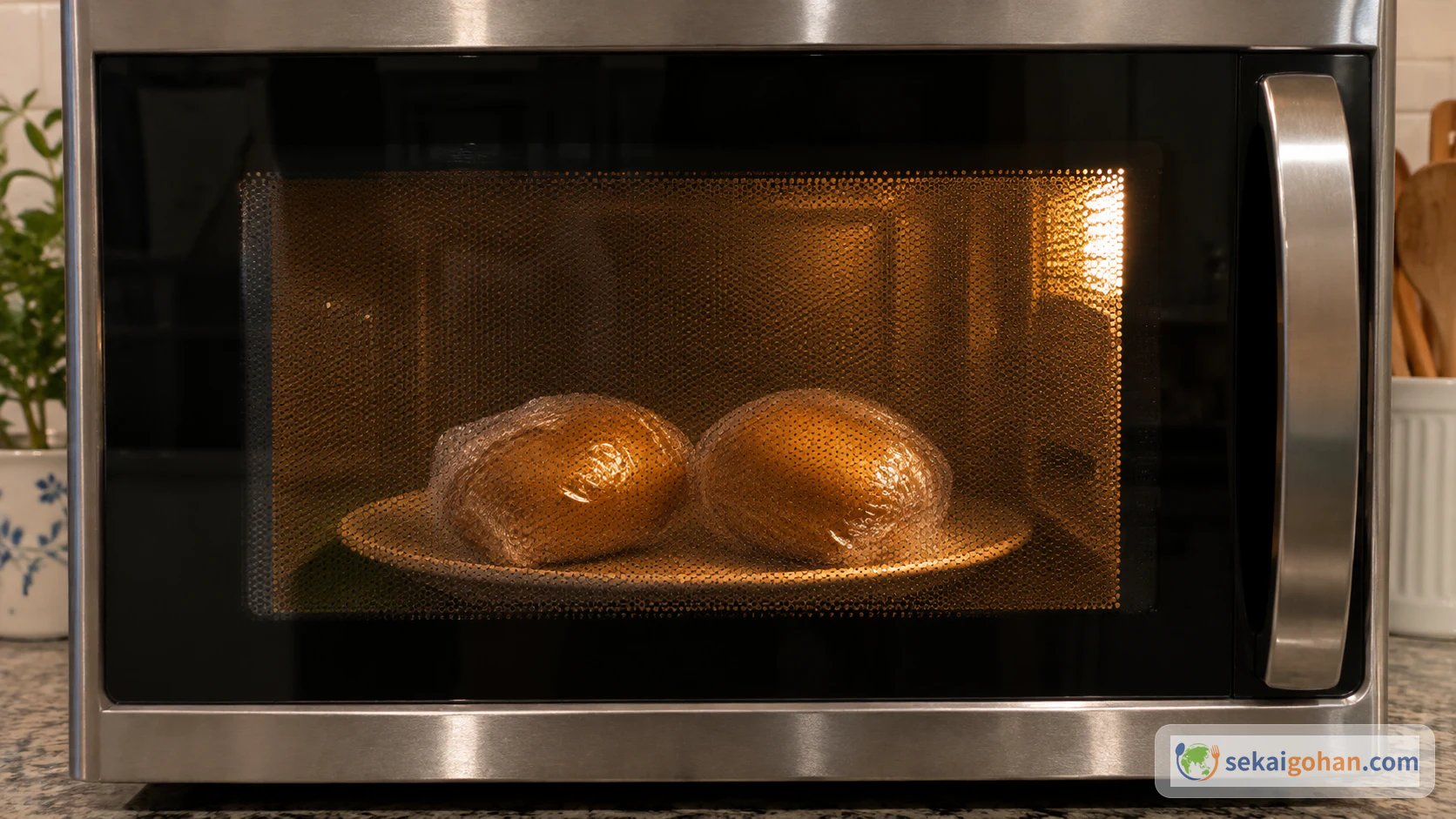
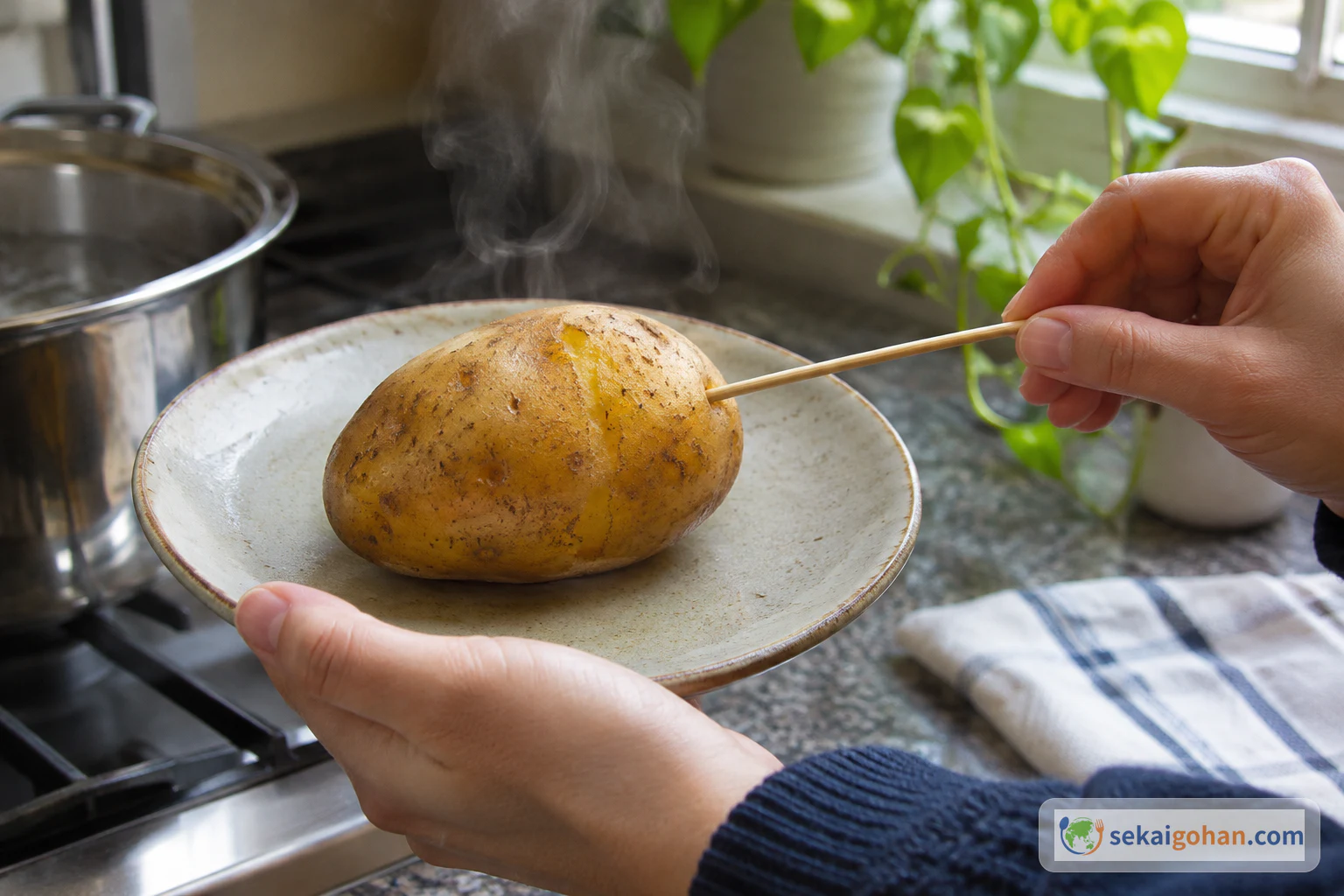
The two wrapped potatoes go into the microwave together for about 6–8 minutes at 600W. That is a guide, not a fixed number, because potato size and microwave models differ. The potatoes are done when a skewer slides easily into the center.
Getting It Fluffy: Fixing Common Problems
Done right, the potato is soft throughout, the flesh breaks apart when you open the cut, and the butter starts to melt from the heat.
| Problem | Likely cause | What to do |
|---|---|---|
| The center is still firm | Large potatoes, or a microwave that runs cooler | Heat a little longer at 600W and check again with a skewer. The extra time depends on size and microwave, so check rather than guess |
| The butter barely melts | The potato has cooled | Cut and butter the potatoes as soon as they are soft, and serve them straight away |
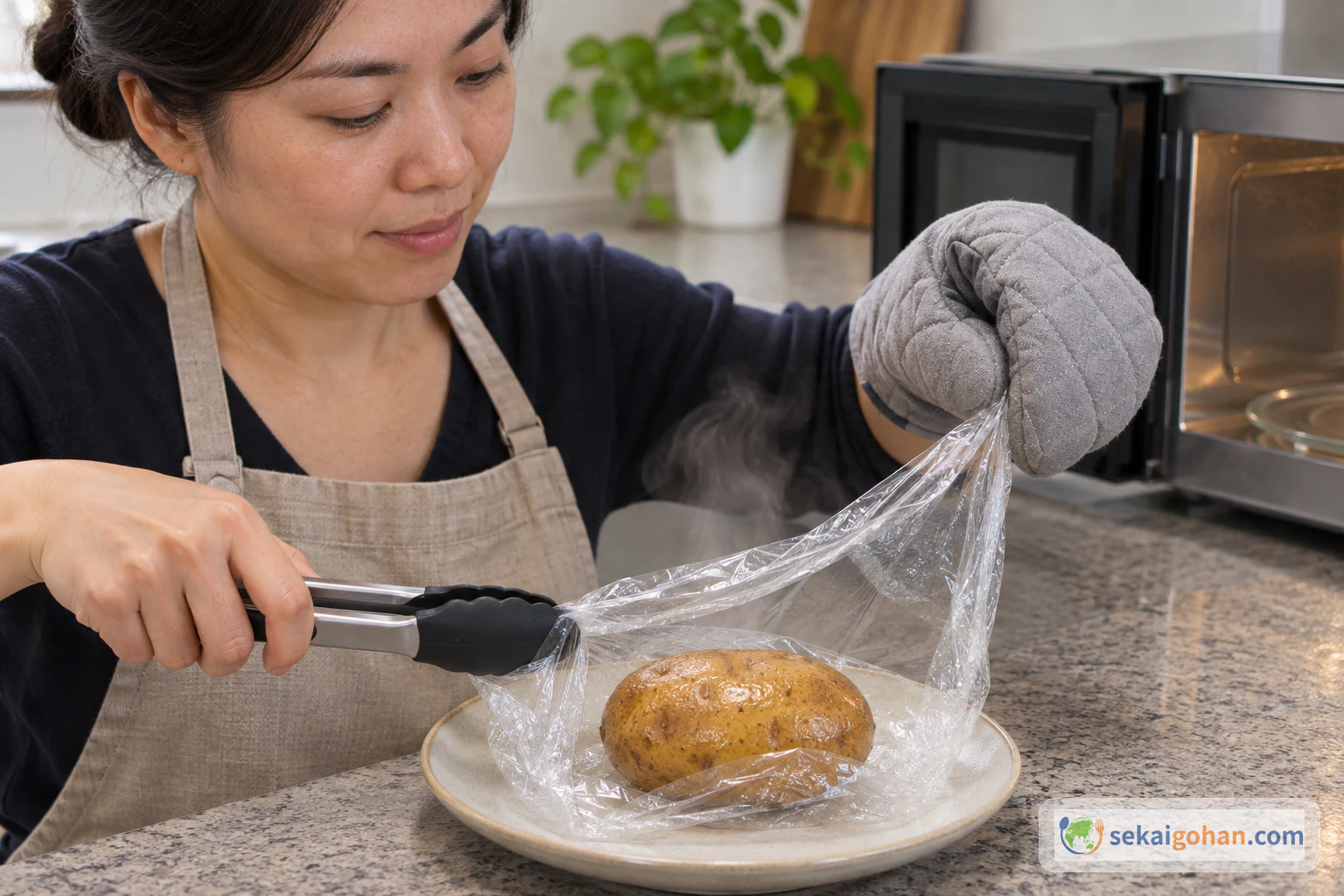
| A rush of steam when opening | Steam trapped in the wrap | Open the wrap away from your face and hands, using mitts and tongs |
| The potato tastes bitter or makes your throat feel harsh | A possible sign of natural toxins | Stop eating it (see the potato safety note above) |
Toppings and the Table
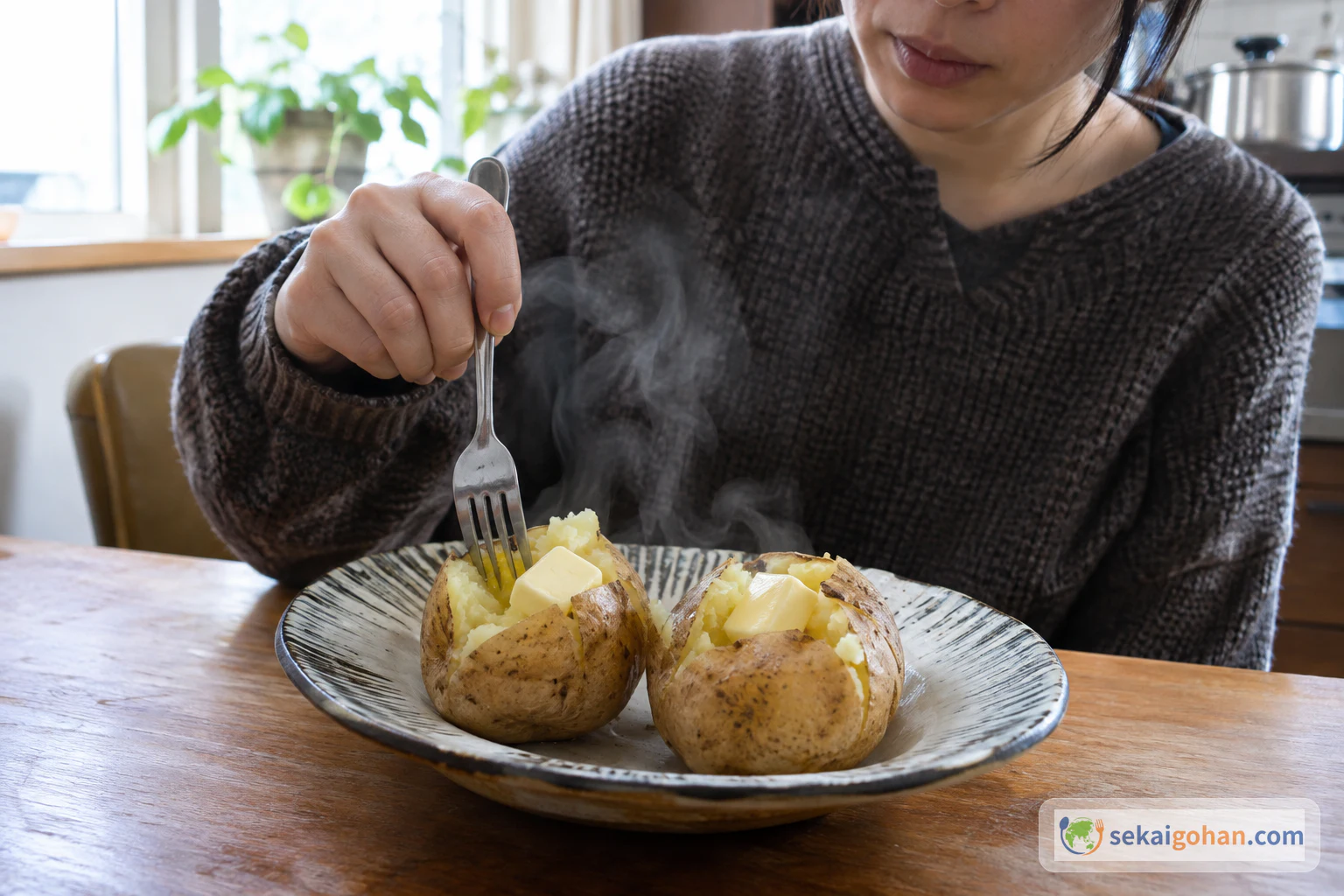
The base recipe is just potatoes and butter. Choose either of these two optional toppings, served on the side or spooned on in small amounts. Neither is part of the basic recipe.
| Variation | What it adds |
|---|---|
| Ika no shiokara (salted fermented squid, いかの塩辛) | Salt and savory depth |
| Hakusai kimchi (napa cabbage kimchi, 白菜キムチ) | Heat and sourness |
| Danshaku potatoes | A floury, fluffy texture |
| Kitaakari potatoes | Another floury variety to choose |
Steaming and boiling are other home styles of jaga butter. Their times and amounts differ, and none are given here.
Storage
Jaga butter is meant to be eaten hot, as soon as it is made. This recipe gives no storage period and no reheating guidance, so it is best to make only what you will eat.
Frequently Asked Questions
How long should I microwave the potatoes?
Microwave the two wrapped potatoes together at 600W for about 6–8 minutes, until soft. The time is a guide. Size and microwave model change it, so always finish with the skewer check.
Is that 6–8 minutes for each potato?
No. Each potato is wrapped separately, but both go into the microwave together for the 6–8 minutes. The recipe does not give a time for a different number of potatoes, so if you cook more or fewer, judge by softness.
Which potato variety is best?
The JA Kagoshima recipe does not specify one. Kagome recommends floury varieties such as Danshaku and Kitaakari. MAFF's Hokkaido office describes Danshaku as fluffy and good for eating whole, and names jaga butter as a dish to make with it.
Is the salted squid required?
No. Ika no shiokara and napa cabbage kimchi are optional toppings suggested by JA Kagoshima. The basic dish is only potatoes and butter.
Can I use a steamer instead?
Steaming is another way households make jaga butter, but this recipe covers only the microwave method. Steaming times are not given here.
Can I make it ahead?
This recipe is for eating freshly made and hot. No storage time is given.
Sources
- JA Kagoshima Prefecture Economic Federation (Vegetable Promotion Section), "じゃがバター" (Jaga butter). The recipe used on this page: 2 new potatoes and 10g butter for 2 servings; washing the skins, wrapping each potato separately while wet, microwaving at 600W for 6–8 minutes until soft and adjusting to conditions, cutting a cross, topping with butter; ika no shiokara and napa cabbage kimchi as optional toppings. https://www.karen-ja.or.jp/recipe/7716/
- Kagome Co., Ltd. VEGEDAY, "じゃがバターの作り方!レンジで簡単、ホクホクに仕上がるレシピ" (How to make jaga butter in the microwave). A republication of the JA Kagoshima recipe that credits JA as its source, so not an independent second recipe. Used for the suggestion of floury varieties (Danshaku, Kitaakari) and for the caution about hot potatoes. https://www.kagome.co.jp/vegeday/eat/202602/15282/
- Hokkaido Regional Agricultural Administration Office, Ministry of Agriculture, Forestry and Fisheries, "受け継ぎたい北海道の食 vol.2 野菜・果樹編" (Hokkaido Foods to Pass Down, vol. 2: Vegetables and Fruit), Danshaku potato entry. Danshaku's introduction to Hokkaido in 1908, its selection under the Danshaku name in 1928, its suitability for eating whole, and jaga butter as a recommended dish. It is not evidence for the origin of jaga butter itself. https://www.maff.go.jp/hokkaido/jigyou_shien/syokubunka/attach/pdf/recipebook-2.pdf
- AEON Hokkaido e-shop, "見るポイントやじゃがいもの種類も おいしいじゃがいもの選び方とは?" (How to choose good potatoes). Used only for checking doneness by whether a bamboo skewer passes through a microwaved potato. Its separate heating time is not used. https://es.aeon-hokkaido.jp/eshop/usefulinfo/detail?hny=2023080204
- Ministry of Agriculture, Forestry and Fisheries, "じゃがいもによる食中毒を予防するために" (Preventing food poisoning from potatoes). Removing sprouts with their bases and green parts; not buying green or sprouted potatoes; caution with eating immature home-garden potatoes skin-on; stopping if a potato tastes bitter or harsh; not counting on ordinary cooking to reduce the toxins. https://www.maff.go.jp/j/syouan/seisaku/foodpoisoning/naturaltoxin/potato.html