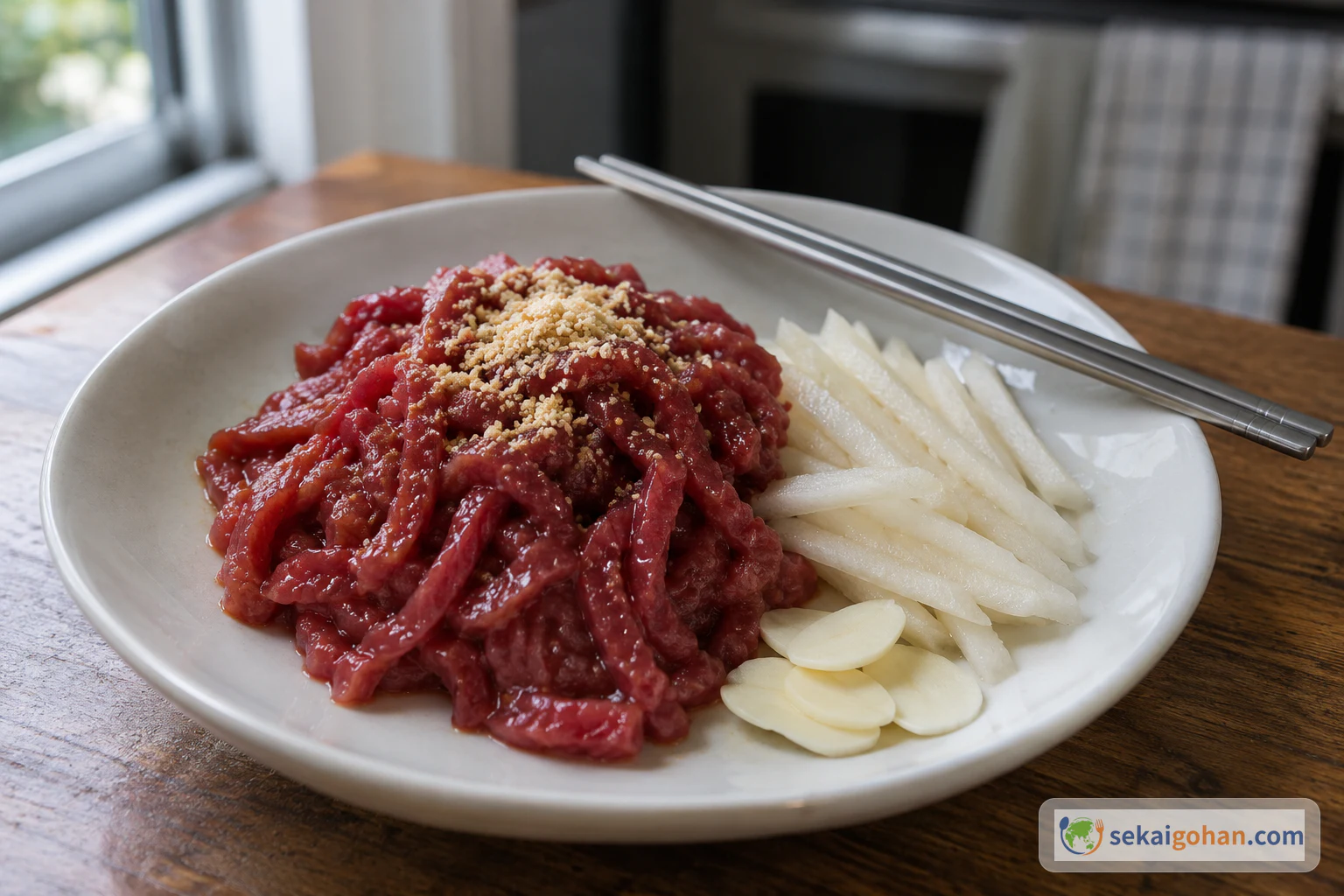
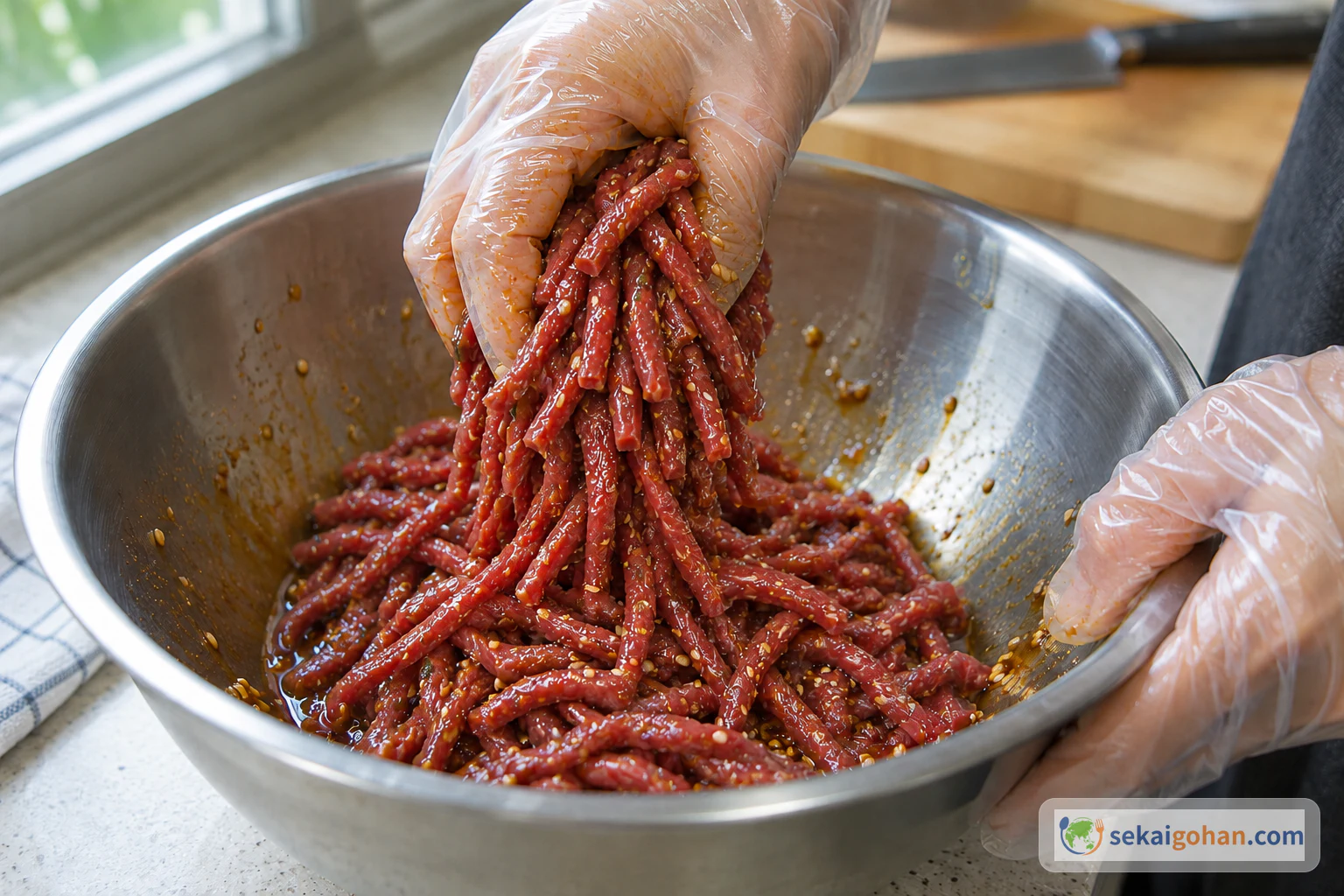
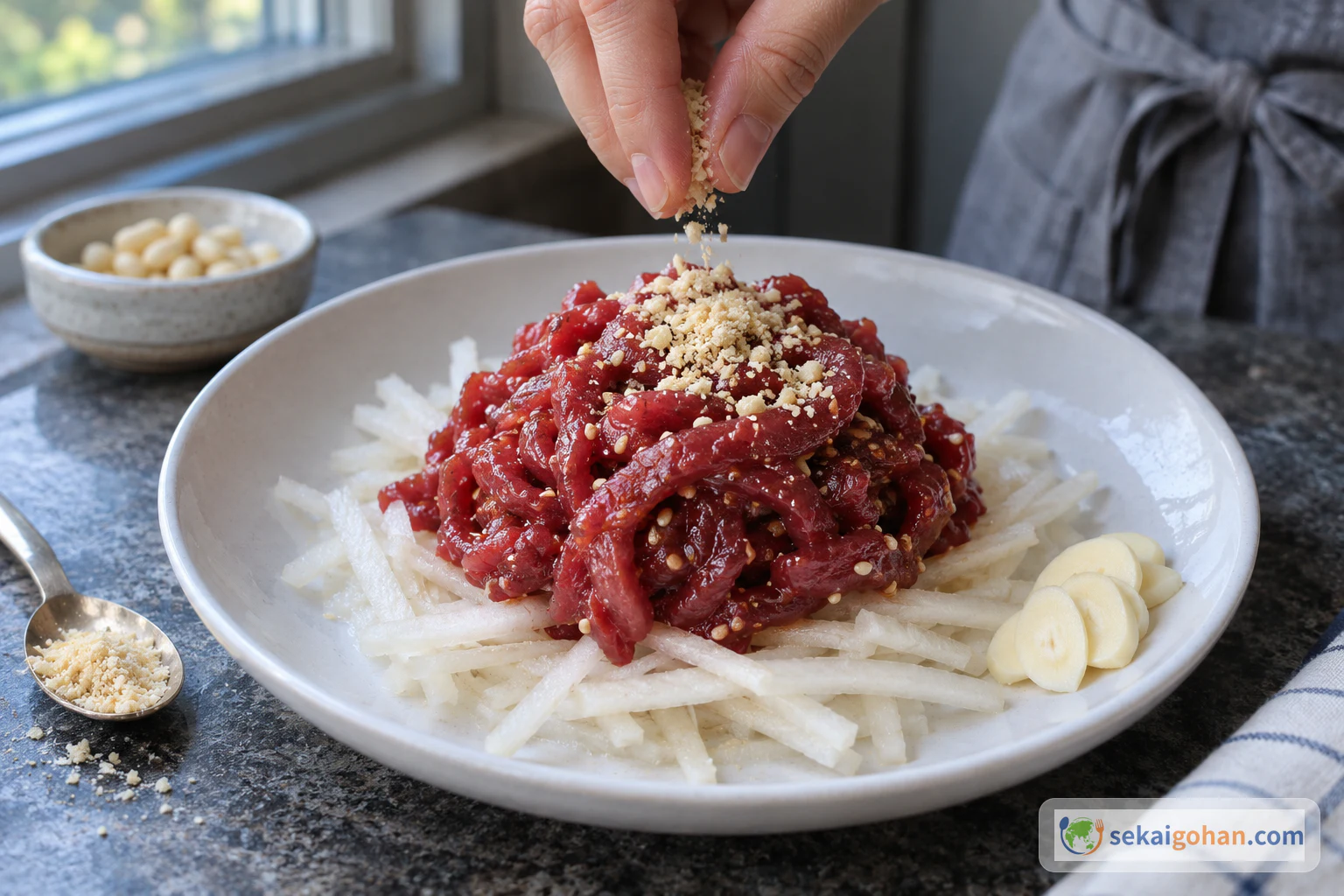
The plate comes to the table as a dark red mound of beef cut fine as noodles, a pale ring of julienned pear underneath, a dusting of ground pine nuts on top and a few slices of raw garlic at the side. Before anyone eats, chopsticks go in and toss everything together, so each bite carries cold beef, crisp sweet pear and the toasty smell of sesame oil. That is yukhoe (육회), Korea's raw beef dish: lean beef cut into thin sticks and dressed in a soy-based seasoning, eaten as a drinking snack or piled onto rice. The taste is salty-sweet and nutty, with a clean mineral edge from the beef and a cool juiciness from the pear.
Raw Meat Under a Fish Word
The name is two syllables. Yuk is meat; hoe is the same word Koreans use for raw fish. Putting beef under the fish word says where the dish sits: alongside sashimi-style hoe, a plate of something raw, cut fine and seasoned at the last moment. In hanja the dish is written 肉膾.
Older Korean writing split hoe by character, 鱠 for fish and 膾 for meat. Another old definition of 膾 is simply "meat cut fine", which is still the whole technique of yukhoe.
A long argument about eating it raw
Where yukhoe began is not settled. Some trace raw meat eating in Korea to the Three Kingdoms period; others to the late Goryeo period and contact with the Mongols. What is clear is that Koreans were known for it, and teased for it. During the Imjin War in the 1590s, when Ming troops were stationed in Korea, the soldiers watched Koreans eating hoe and spat in disgust. A Korean scholar answered them with the Analects: Confucius himself never refused finely cut hoe. A Korean writer in 1614 noted the other side of the gap, that in China even dried meat was cooked before eating.
By the late Joseon period the method looked close to today's. Tender beef with no fat was sliced thin, soaked in water to draw out the blood and wrung dry in cloth, then rubbed with scallion, garlic, pepper, toasted sesame, oil and honey, with plenty of ground pine nuts mixed in. Honey carried the sweetness then; sugar and pear carry it now. At royal banquets the court served gaphoe, a hoe of organ meats, in two- and three-kind assortments.
How it reached ordinary tables
Fresh beef was the limit. In the early twentieth century, Seoul and Jinju were among the first places in Korea to have slaughterhouses, and with a steady supply of fresh beef, yukhoe went into the bibimbap of both cities. Jinju's bibimbap with raw beef on top grew out of that.
Across written Korean recipes from 1766 to 2008, yukhoe appears 59 times, and organ-meat versions (20) outnumber the lean-beef ones (17), with 5 mixing the two. The lean versions settle into a recognisable shape: pear and garlic alongside, pine nut powder scattered on top, a soy-based seasoning, and sometimes a dip of mustard or chogochujang on the side.
The same idea, cut differently
In Jeolla Province, cattle-raising country, people eat saenggogi: raw beef left undressed and dipped in sesame oil with salt, or in chogochujang. A dressing of salt, sugar, honey, sesame oil and pepper with no soy at all is a second line of yukhoe, pale and round where the soy version is darker and sharper. Gaphoe takes tripe, liver, kidney and top round, dresses them with sesame oil, salt and whole sesame, and finishes them with pine nuts. Jeju's dwaeji saekki hoe shares the hoe name but is young pork, boiled, then dressed hot-sweet and served cold. For the wider table this sits on, see Korea.
Korean cooks often credit the pear's enzymes with tenderising the beef; how much that happens on the plate is not settled. Its sure work is sweetness, juice and crunch against the soft beef.
Raw Beef: When to Make It and Who Should Skip It
This dish is uncooked beef, and the decision about whether to make it raw comes before any shopping. In April 2011 a widespread outbreak of enterohemorrhagic E. coli in Japan, linked to yukhoe, made more than 100 people ill and killed 5. From 1 October 2011 Japan set a standard for beef sold to be eaten raw (organ meat excluded). Under it, the meat must test negative for Enterobacteriaceae; it is processed with dedicated equipment, kept with its surface at or below 50°F (10°C), sealed and heated so the outer ⅜ inch (1 cm) holds 140°F (60°C) for at least 2 minutes, then chilled quickly to 39°F (4°C) or below. It is stored at 39°F (4°C) or below, or 5°F (−15°C) or below if frozen. Packaged raw beef must be labelled as meant for raw eating, with the slaughterhouse and the processing plant named. Restaurants must post that raw meat carries risk and that children, older people and others with low resistance should not eat it.
The same standard bans processing that spreads surface contamination inward: cutting sinew and fibres short with blades, soaking meat in seasoning, and binding scraps into shaped pieces. Yukhoe is beef cut fine and coated in seasoning, which places it awkwardly inside that standard. Buying beef labelled for raw eating does not settle that question. So the choice is two-way:
- (A) Use beef labelled for raw eating, keep it at 39°F (4°C) or below, and use it the day you buy it. Treat any top round without that label as beef for cooking.
- (B) If you cannot get labelled beef, do not make it raw. Sear the surface before dressing, or stir-fry the strips briefly. That is a different, cooked dish; serve it under its own description, not as yukhoe.
Children (especially under 10), people aged 70 and over, anyone pregnant, anyone with weakened immunity and anyone feeling unwell should not eat yukhoe. In Korea, 1,282 cases of enterohemorrhagic E. coli infection were reported from 2019 to 2024; 274 of them in 2024, 35.9% above the previous five-year average. Under-10s made up 42.3% of cases and people 70 and over 17.9%, and severe complications such as haemolytic uraemic syndrome cluster in those two groups. Among patients who had eaten beef, the share who ate it raw was about 3.5 times the previous five-year average, and the advice in Korea is to cook beef to a core of 167°F (75°C). These are Korean figures for Korea.
Do not make gaphoe with raw liver. In Japan, selling or serving raw beef liver for raw eating has been banned since July 2012: bacteria have been found inside the liver itself, and freshness makes no difference.
Ingredients (serves 4)
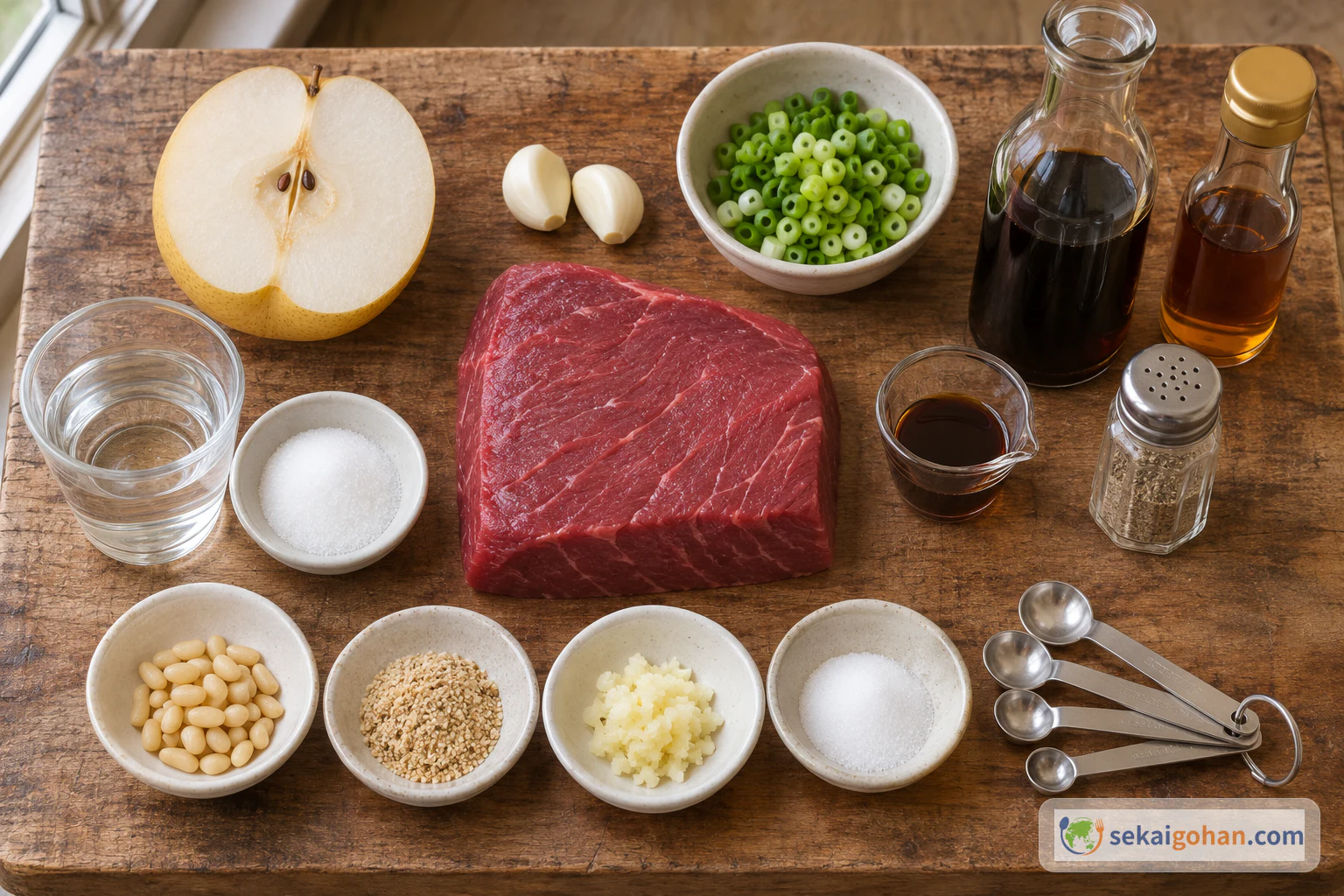
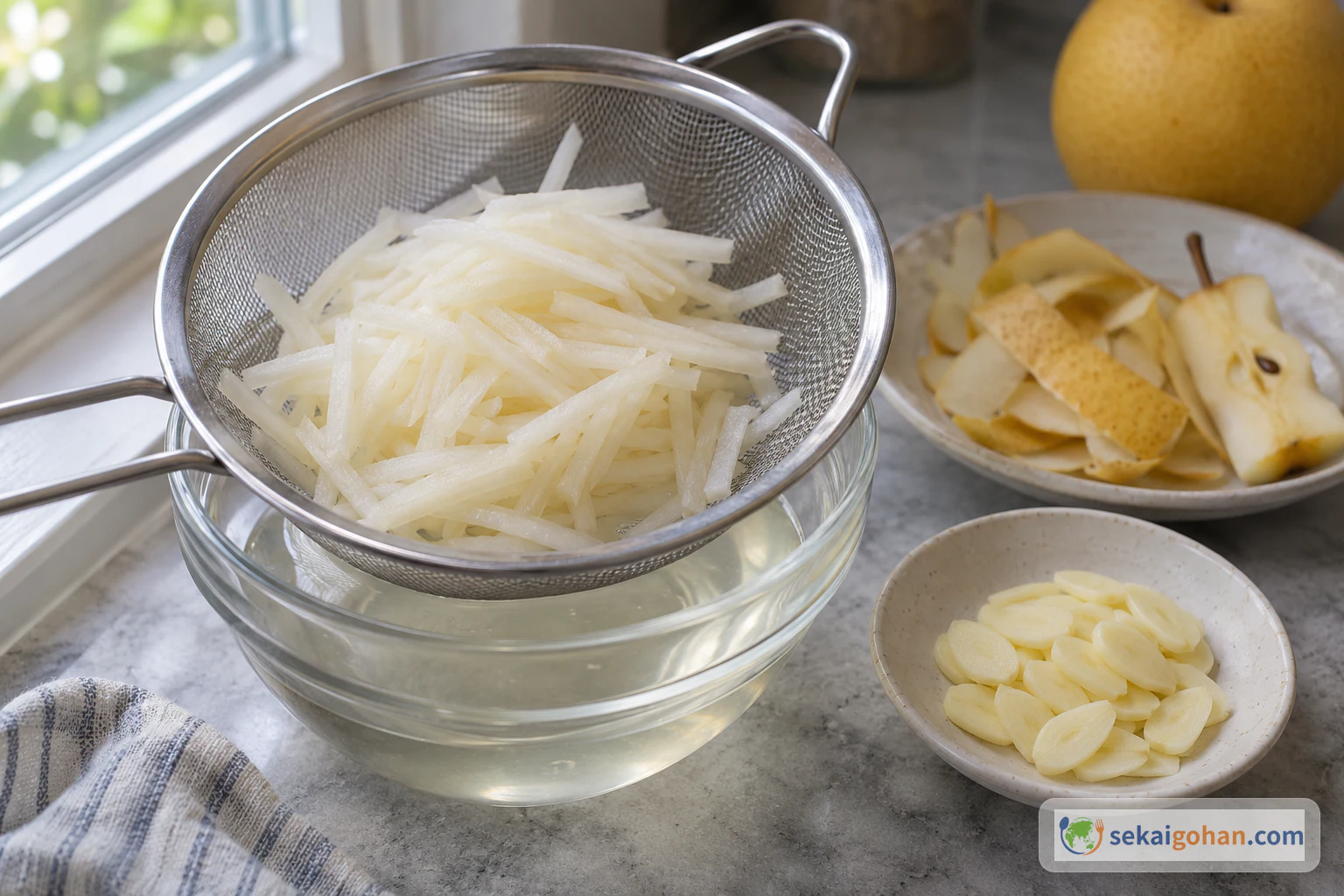
The garlic appears twice on purpose. The minced tablespoon goes into the dressing; the two sliced cloves sit raw on the plate. The sugar water touches only the pear and never goes on the beef.
Contains soy (soy sauce), sesame (oil and ground seeds) and pine nuts, which count as tree nuts for many allergy plans. Garlic and scallion are raw. If you add an egg yolk, the dish also contains raw egg.
Equipment
- A sharp, thin-bladed knife that holds a ⅛-inch (3 mm) cut
- A cutting board kept for raw meat, ideally plastic that can be bleached
- A second board or clean area for the pear and garlic
- Measuring spoons and a measuring cup
- Two bowls, one for the dressing and beef, one for the sugar water
- A small colander
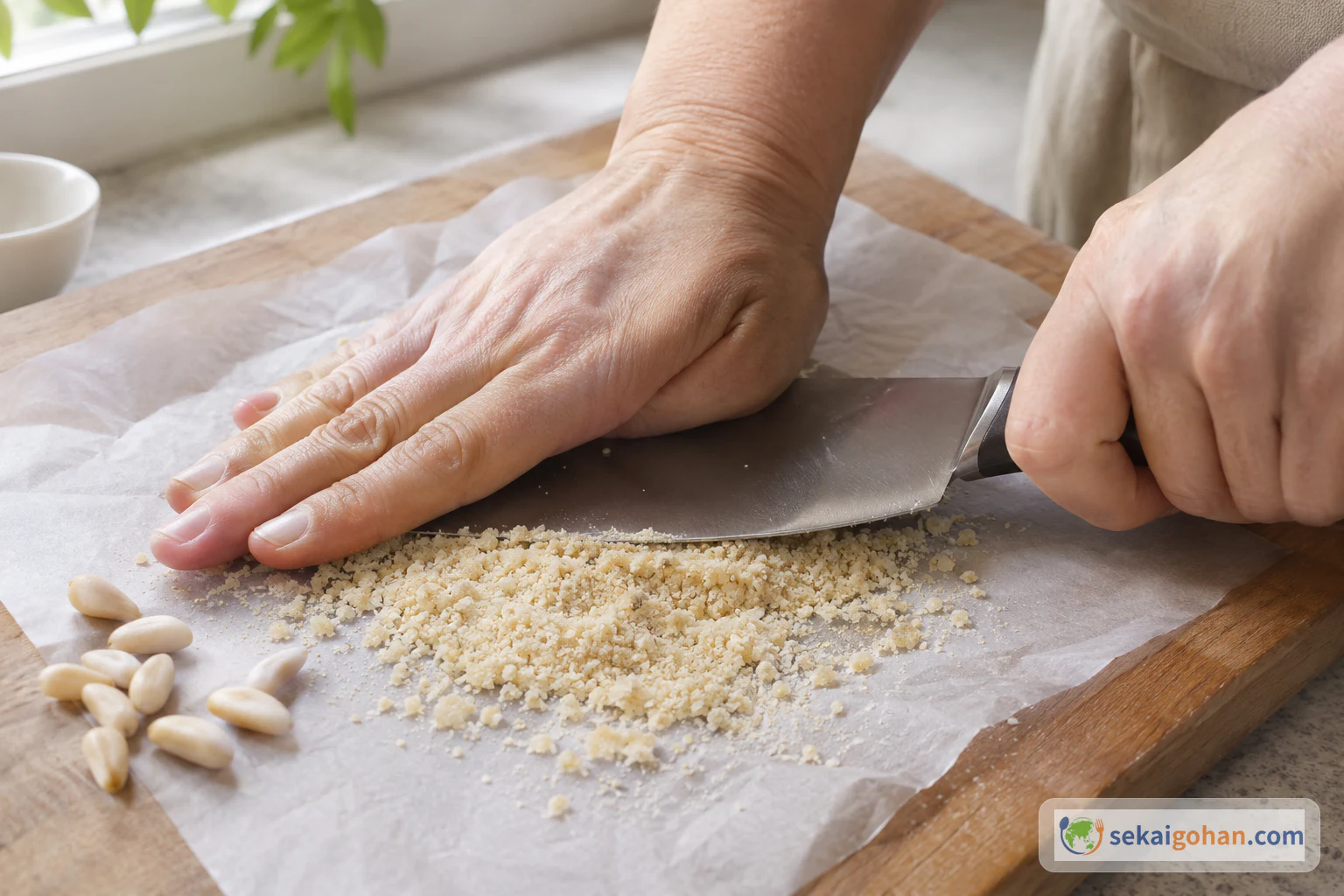
- A sheet of paper for crushing the pine nuts
- Disposable gloves
- Paper towels
- A well-chilled serving plate
Choosing the Beef, the Pear and the Pine Nuts
The cut is top round (udun). Opinion has long been split on the others: eye of round (hongdukkae) is accepted by some cooks and rejected by others as too sinewy and pale; tenderloin is soft but tastes sour to some. Under rule (A) above, the label matters more than the cut, so buy what is labelled for raw eating and buy it last on the trip home, carried in a cool bag.
| Ingredient | Where to find it | Swap | What changes |
|---|---|---|---|
| Korean pear | Korean grocers, import produce stands | Japanese nashi such as Kosui or Hosui | More fragrant but softer and juicier; cut it just before dressing |
| Pine nuts | Korean grocers, import shops; ready-ground jatgaru saves a step | Crushed toasted sesame | Toasty, but without the buttery richness of pine nut |
| Korean soy sauce (jin-ganjang) | Korean grocers, online | Regular dark soy sauce (Japanese koikuchi) | Works well; do not swap in light soy sauce, which changes both colour and salt |
| Toasted sesame oil, sesame, pepper, garlic, scallion | Any supermarket | — | Use the white part of a long scallion or leek-like green onion |
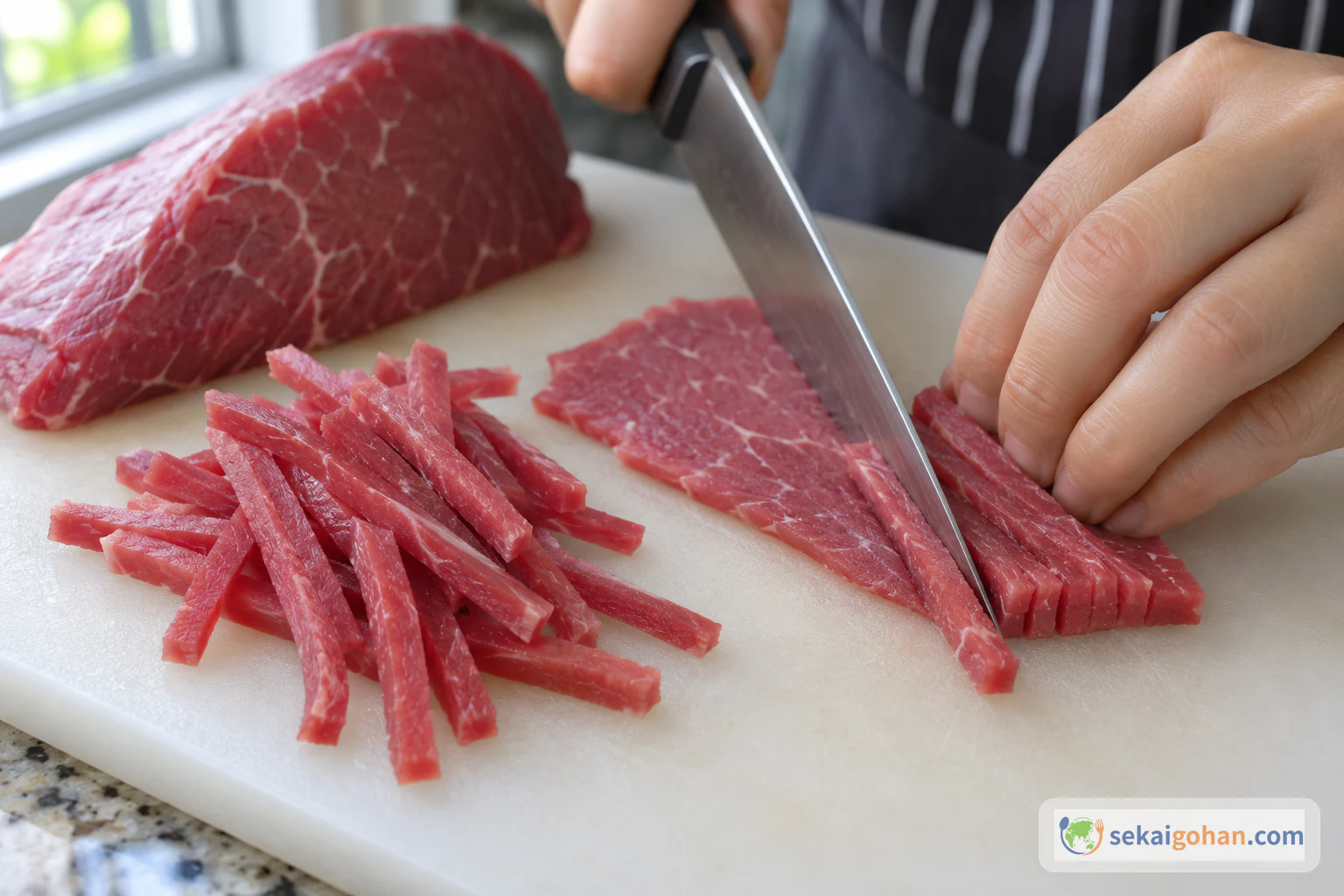
Yukhoe is soft because every strip is cut across the grain to the same ⅛ inch (3 mm). Even strips take the dressing evenly and break cleanly between the teeth; strips cut with the grain chew dry and stringy however good the beef is.
Method
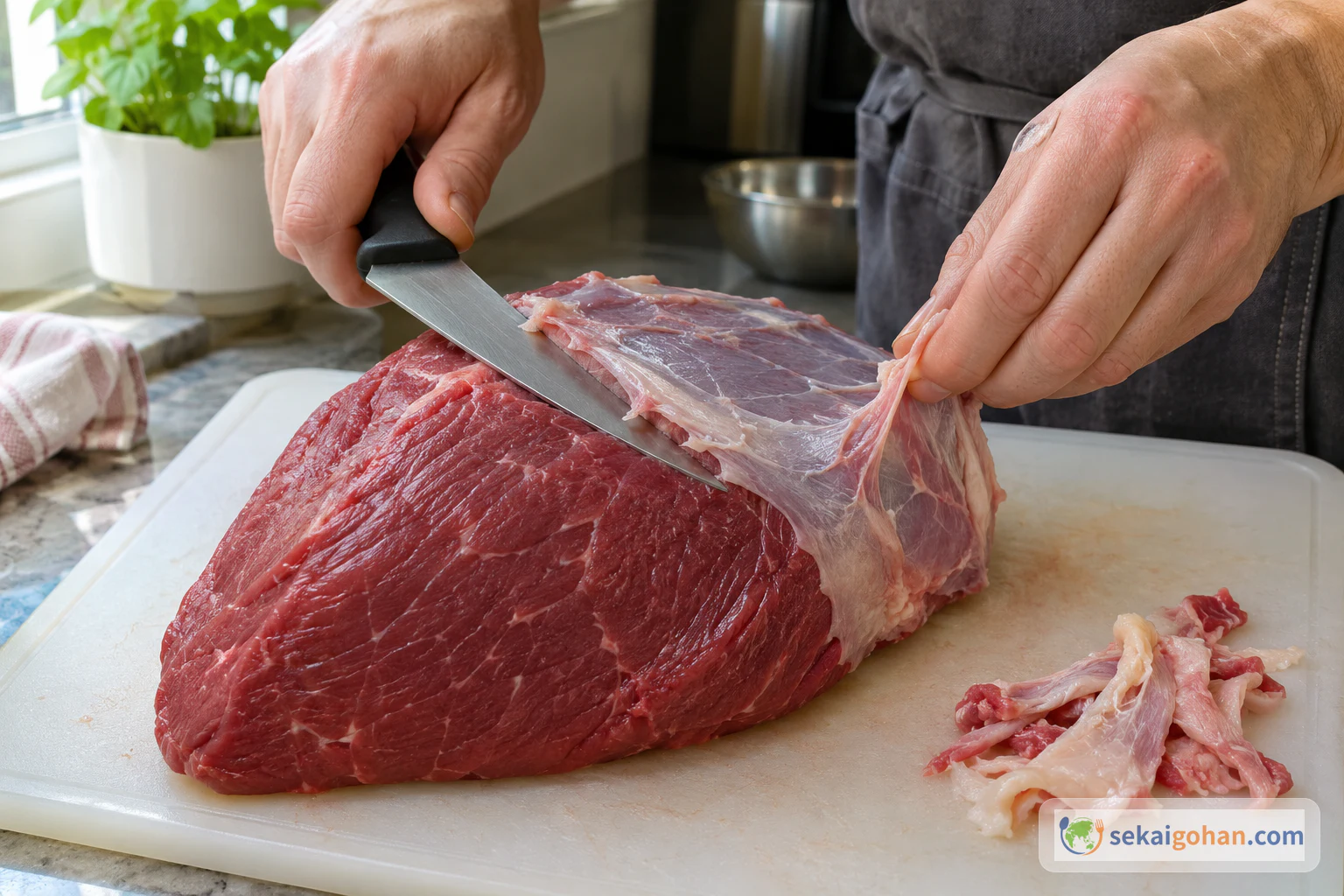
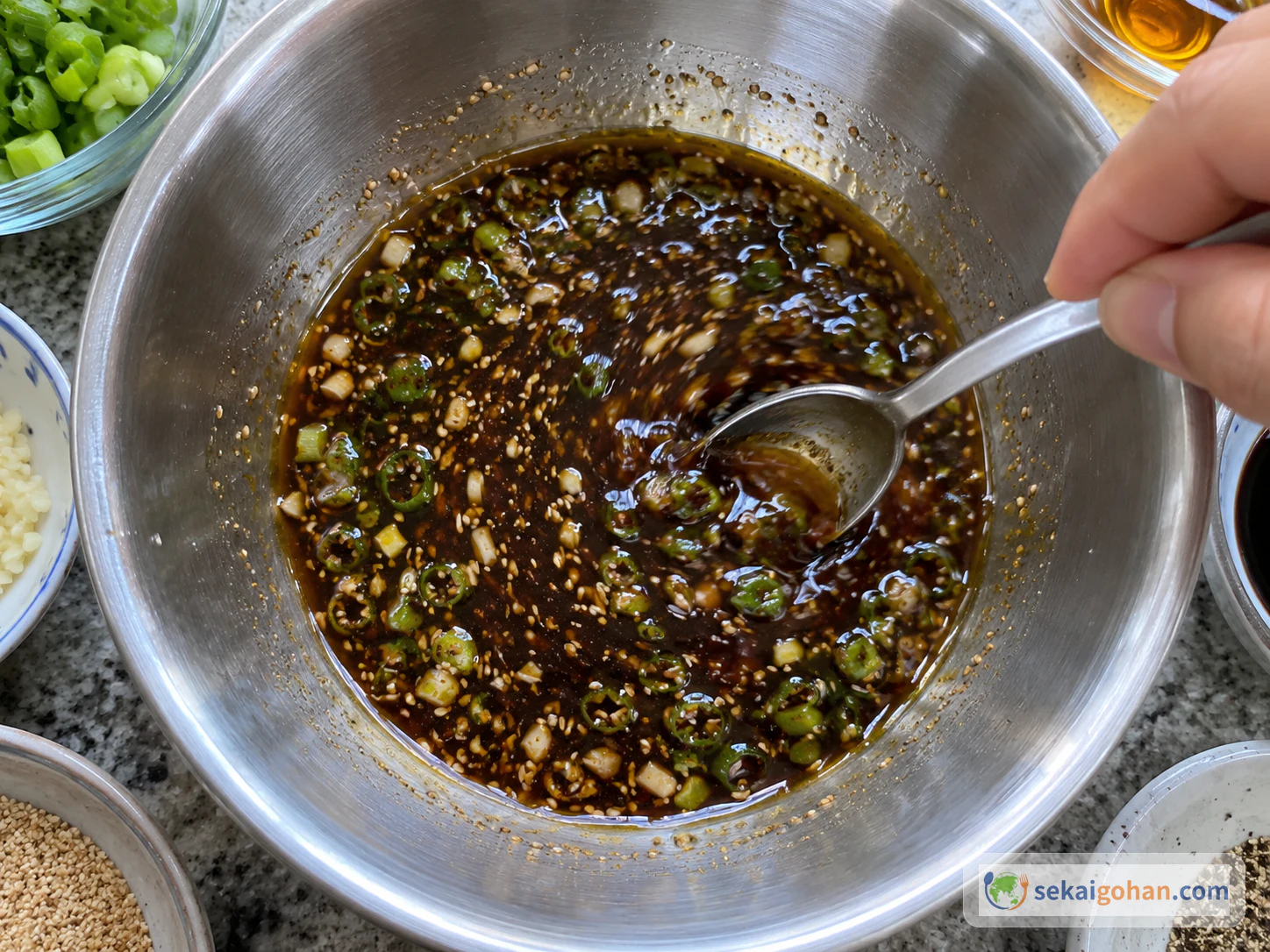
There is no heat anywhere in this dish; all the work is knife work. Trim and cut the beef first, then put it back in the refrigerator while you mix the dressing, cut the pear and grind the pine nuts. Dressing the beef is the last thing before serving, because once dressed, it goes straight to the plate.
Salt in the dressing starts drawing liquid out of the beef as soon as it touches. Dress, plate and serve in one movement, and the plate stays glossy instead of pooling.
Keep one board and knife for the raw beef only. When you finish, wash them with boiling water or a chlorine sanitiser. Wear gloves for mixing and keep the gloved hands off containers, lids and other food.
When It Goes Wrong
| What you see | Why | What to do |
|---|---|---|
| Liquid pools under the beef | It sat after dressing, or the pear was not drained | Dress right before serving; drain the pear well after the sugar water |
| The beef is dry and stringy | Cut with the grain, or cut too thick | Cut across the grain to an even ⅛ inch (3 mm) |
| The dressing tastes harsh | Too much garlic and scallion for your taste | Cut each to ½ tbsp next time |
| The flavour is flat | Light soy sauce, or sugar left undissolved | Use regular dark soy sauce; stir until the sugar is gone |
| The pear turns brown | Cut and left standing | Dip it in the sugar water; cut it close to dressing time |
| The pine nut powder forms lumps | Chopped too long, so the oil came out | Crack with the flat of the knife, chop briefly, stop while still powdery |
Serving, Variations and Leftovers
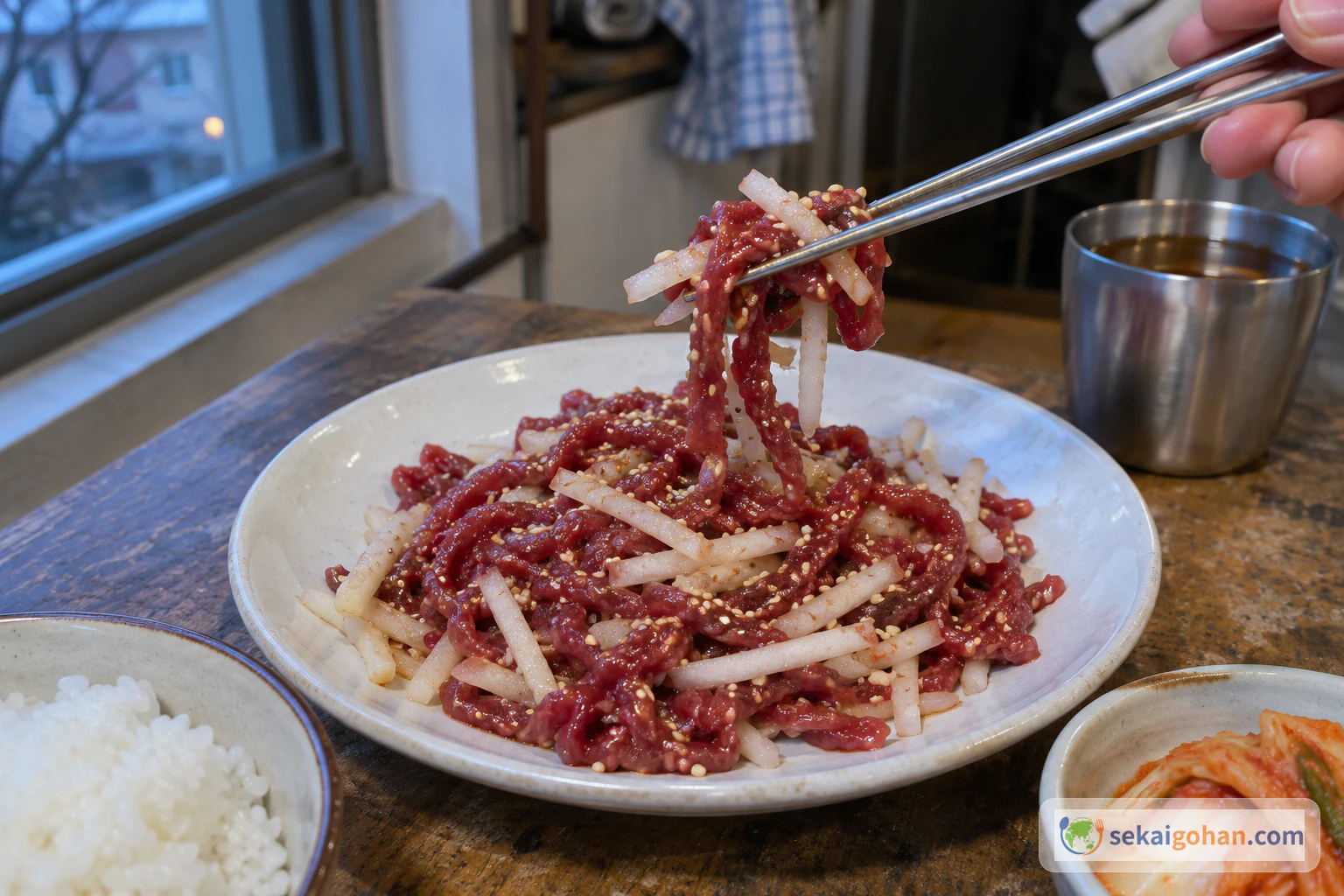
At the table, mix everything together with chopsticks before eating, so the pear, garlic and pine nuts reach every bite. Yukhoe is anju, food to drink with, and it also goes onto bibimbap. A bowl of plain rice, a dish of kimchi and barley tea make easy companions. For bibimbap at home, the same rule from the safety section holds: without beef labelled for raw eating, top the bowl with cooked beef and a soft fried egg, and keep raw beef and raw egg away from children, older people, anyone pregnant and anyone unwell.
Variations
- Salt and honey dressing: Skip the soy sauce and dress the beef with salt, sugar, honey, sesame oil and pepper. The colour stays pale and the sweetness rounder, without the edge of soy.
- Jeolla-style dip: Leave the beef undressed and dip it in ½ tsp salt mixed with 1 tbsp sesame oil. The beef's own taste comes through directly; this is saenggogi, a different way of serving raw beef.
- Chogochujang on the side: A dish of gochujang with vinegar and sugar adds a sweet-hot, sour contrast that keeps richer bites from feeling heavy. Mustard is another side sauce used for the same job.
Serve either the soy-dressed beef or the undressed beef with a dip. Adding a strong dip to already-dressed beef buries the pear and pine nuts.
Leftovers
Do not keep yukhoe. Once dressed, it is eaten. Any leftover goes back to the stove, never to the refrigerator raw: cook it through to the centre and turn it into a stir-fry or a soup garnish.
Frequently asked questions
Is yukhoe the same as steak tartare?
No. Tartare is sometimes called Western-style yukhoe, but it uses capers and other Western seasonings and a different cut and dressing. Yukhoe is built on soy, sugar, sesame, pear and pine nuts.
Should I put an egg yolk on top?
It is optional and not part of the Korean standard plate. A yolk makes the beef softer, and Korean cooks note that it also mutes yukhoe's own flavour. If you add one, the dish also contains raw egg, with the same cautions for the same groups of people.
Do I need to soak the beef to remove blood?
Not for this method, which goes straight from trimming to cutting and dressing. Older recipes soaked the beef in water and wrung it in cloth, and some cooks blot cut beef with paper towels. Either step adds handling time to raw meat, so keep the beef cold throughout if you do it.
Can I use eye of round instead of top round?
Some cooks use it; others reject it as sinewy and pale. Top round gives the most even, tender strips. Whatever the cut, rule (A) applies: it must be labelled for raw eating, or the dish is cooked instead.