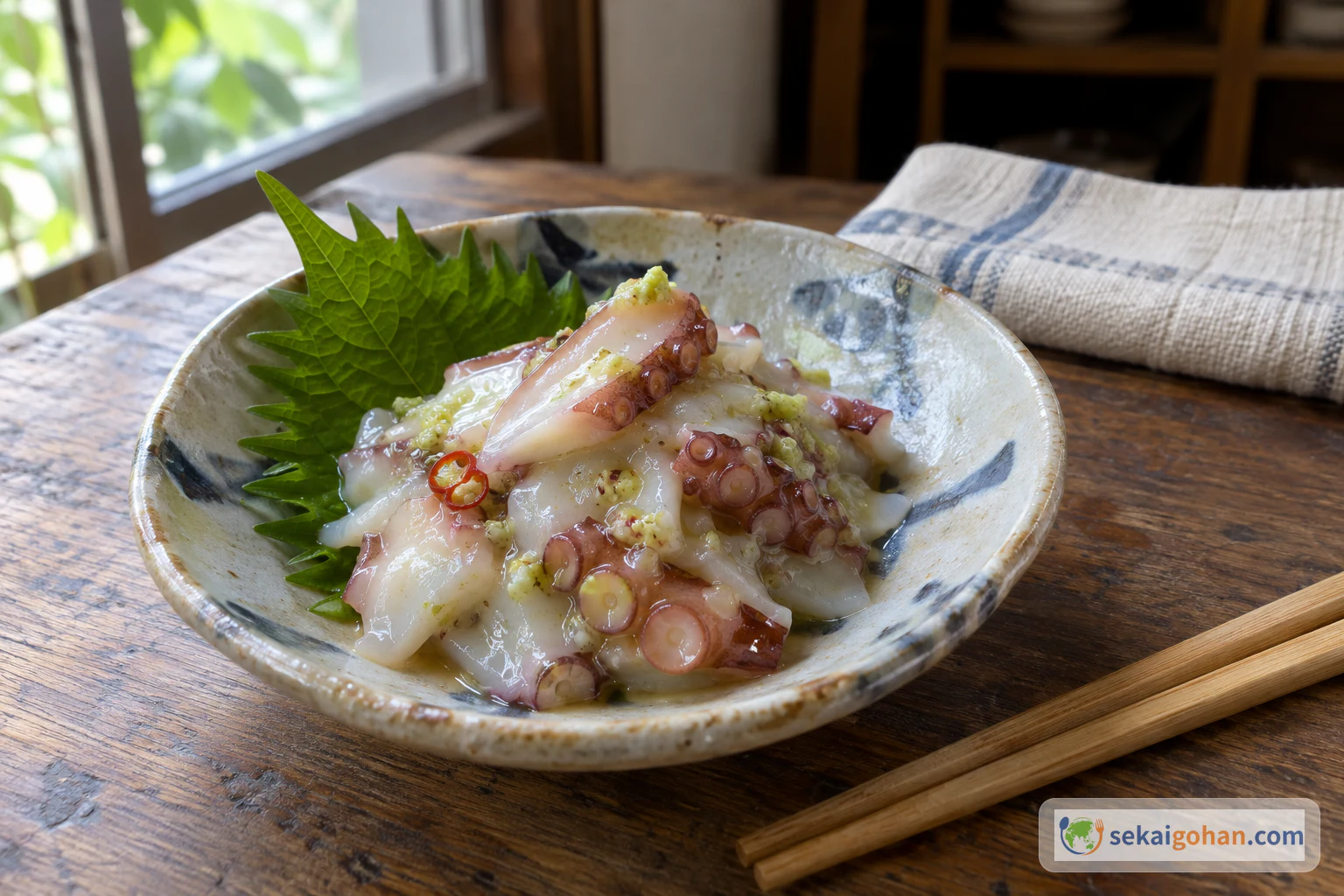
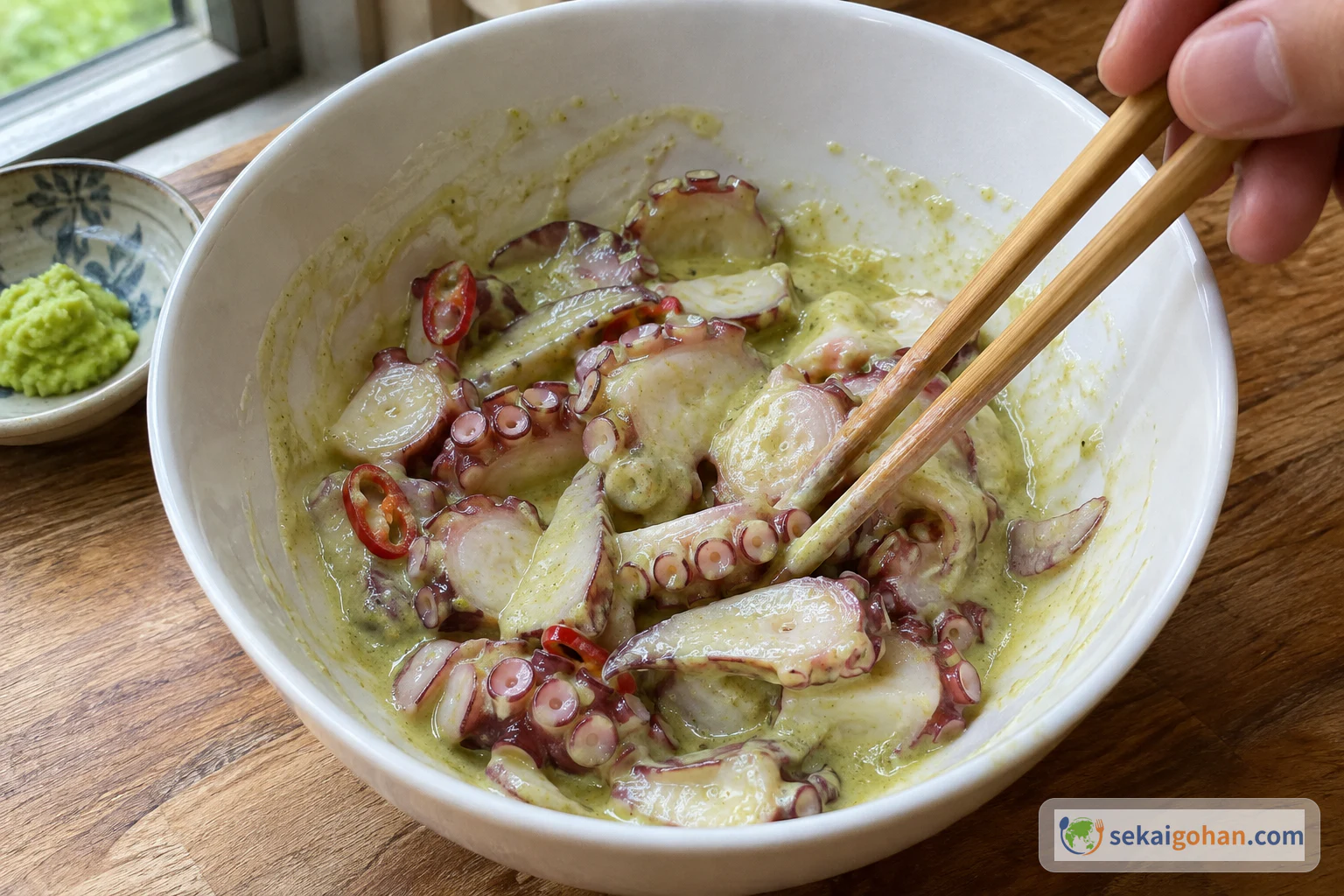
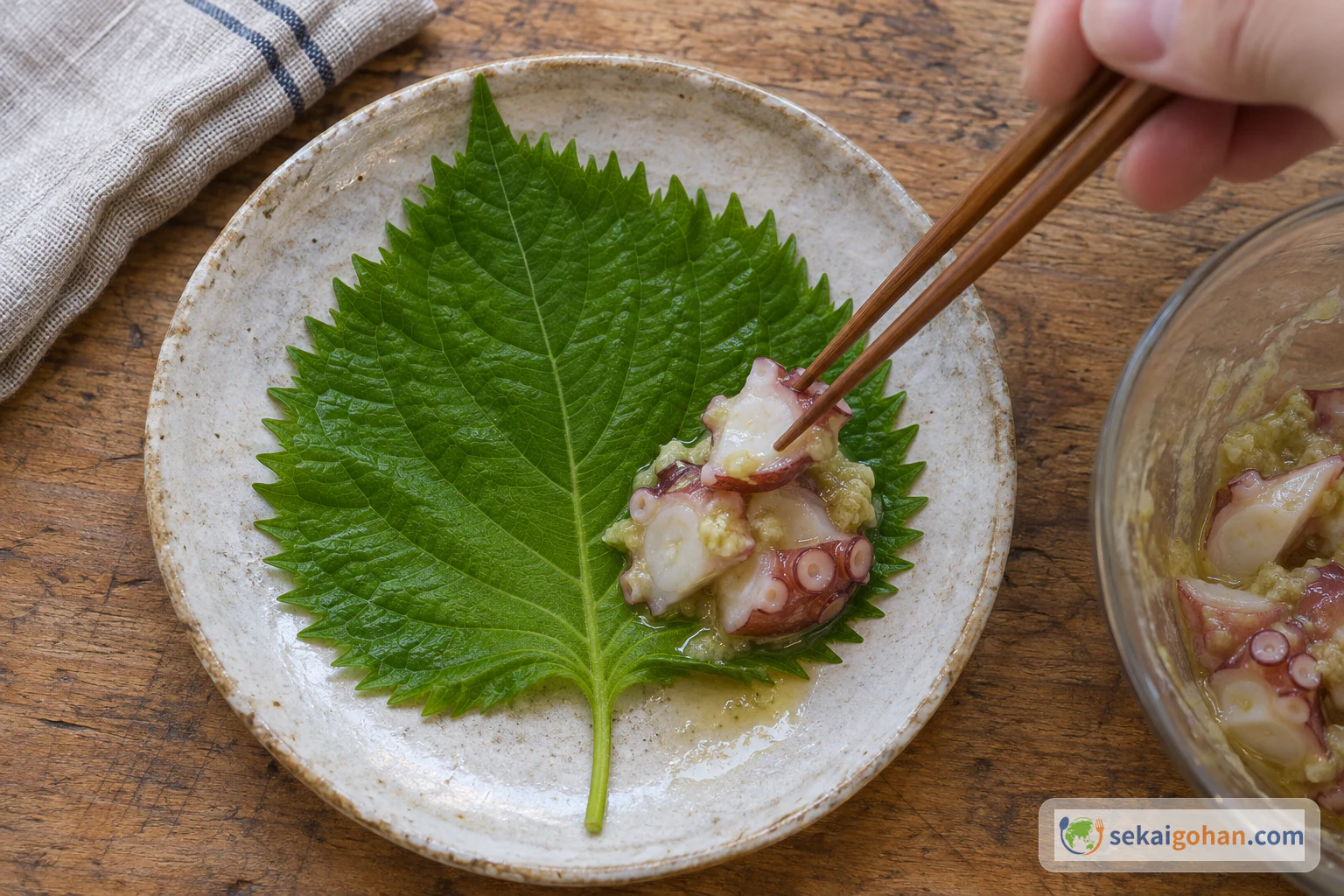
The octopus comes out of the refrigerator cold and glossy. Thin slices of leg and little round suckers sit in an ivory dressing flecked with green wasabi, with a ring or two of red chili caught between the pieces. The first bite is firm and slightly sweet from the sea, and then the wasabi rises straight up into the nose. Tako wasabi is the small cold dish that izakaya across Japan set down beside the first drinks. At home it takes a few ounces of sashimi-grade octopus, a handful of spoon measures and one hour in the refrigerator.
A Small Plate from the Izakaya Counter
Tako wasabi is a standard small plate in izakaya all over Japan, from city chains to neighborhood counters. It belongs to no single prefecture. It is the dish you order before you have decided on anything else, eaten slowly with chopsticks while the beer or sake is still cold, a piece of octopus at a time with a little of the dressing.
The dish has no cooking at all. The octopus is cleaned with salt, rinsed, dressed in a marinade of white dashi, mirin, soy sauce, chili and wasabi, and rested in the refrigerator. That puts it close to shiokara, the salted seafood, but it works differently. Shiokara is salted and left to mature. Tako wasabi is a lightly salted dressed dish that seasons in an hour, and that low salt is the reason it has to stay cold from start to finish.
Tako is octopus, and the full name simply puts octopus and wasabi side by side. At the counter it is usually shortened to takowasa. Both names mean the same dish.
How it began
The packaged tako wasabi sold across Japan today is usually traced to a food maker in Mie Prefecture in the Heisei era, which began in 1989. The idea grew from pairing shiokara with wasabi, and its makers almost did not release it because it looked unappealing. Stories about the exact year, a party-game dare and the first izakaya chain to put it on the menu are widely told, but the full story is not settled.
The dish has kept growing since then. In June 2025, a tako wasabi made with Hokkaido giant octopus (mizudako) and Japanese wasabi stems won the grand prize at the Japan Food Selection. It uses large pieces of octopus in a wasabi sauce and is meant to be eaten like sashimi. Making it at home follows the same idea on a smaller scale: clean, cold octopus, a sharp dressing and nothing that hides the taste of the sea.
Ingredients (serves 2)
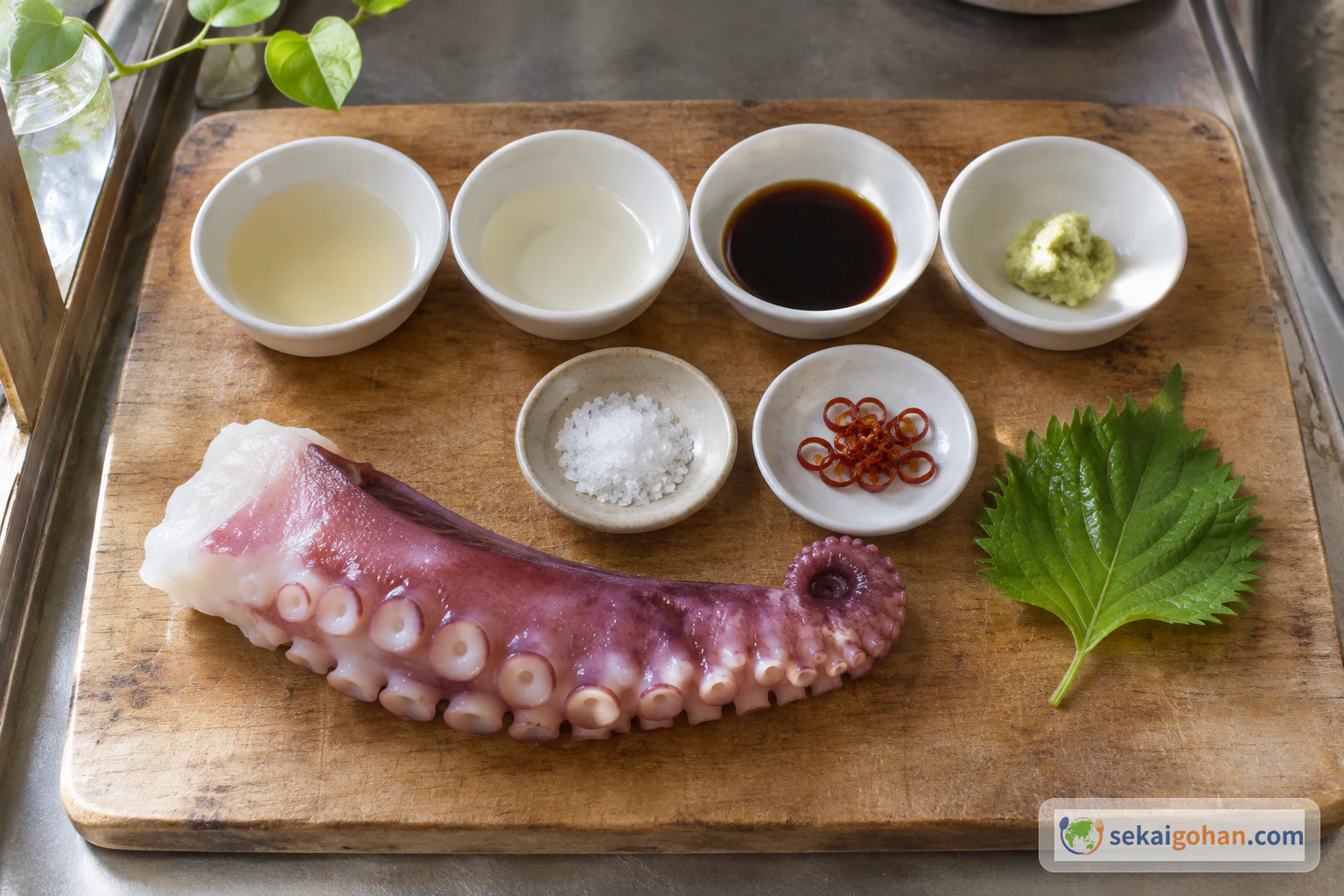
The 2 tsp of white dashi is measured for a 10× concentrate. Products differ in strength and flavor, so check the label: with a different concentration, follow the amount on the bottle rather than the spoon measure here.
Octopus is a mollusk. Soy sauce and white dashi are soy-based seasonings; check their labels for wheat, fish and other allergens before serving.
Equipment
- Sharp kitchen knife and cutting board
- Small saucepan, for the mirin
- Two bowls, one for salting the octopus and one for the marinade (stainless steel works well)
- Colander
- Paper towels
- Chopsticks or a spoon for mixing
- Plastic wrap
- Small airtight container, if any is left after serving
Choosing Octopus, Dashi and Wasabi
The one purchase that matters is the octopus. Buy only octopus whose label clearly says for raw eating (sashimi grade). Leg or pre-cut pieces both work. Octopus sold without that label, including plain cut pieces and cleaned octopus, is not for this recipe in its raw form. Read the label for three things: raw or boiled, sashimi use, and the kind of octopus.
Boiled octopus works well too. It has less slime and a softer bite, and it needs only a light salt rub. It is also the choice when anyone at the table should avoid raw seafood.
White dashi (shiro dashi) is a pale, concentrated seasoning of dashi and light soy sauce, sold in Japanese and Asian grocers and online. A weaker product makes the dish watery, and a stronger one makes it salty. Use the amount printed on the bottle and do not try to convert between strengths.
Wasabi in a tube is the easy choice, and its heat is steady from one tube to the next. Freshly grated wasabi has more aroma. Leaf wasabi and flower wasabi are good too, each with a greener, more vegetal edge. The chili rings can be left out. Without them, all the heat comes from the wasabi alone.
Method
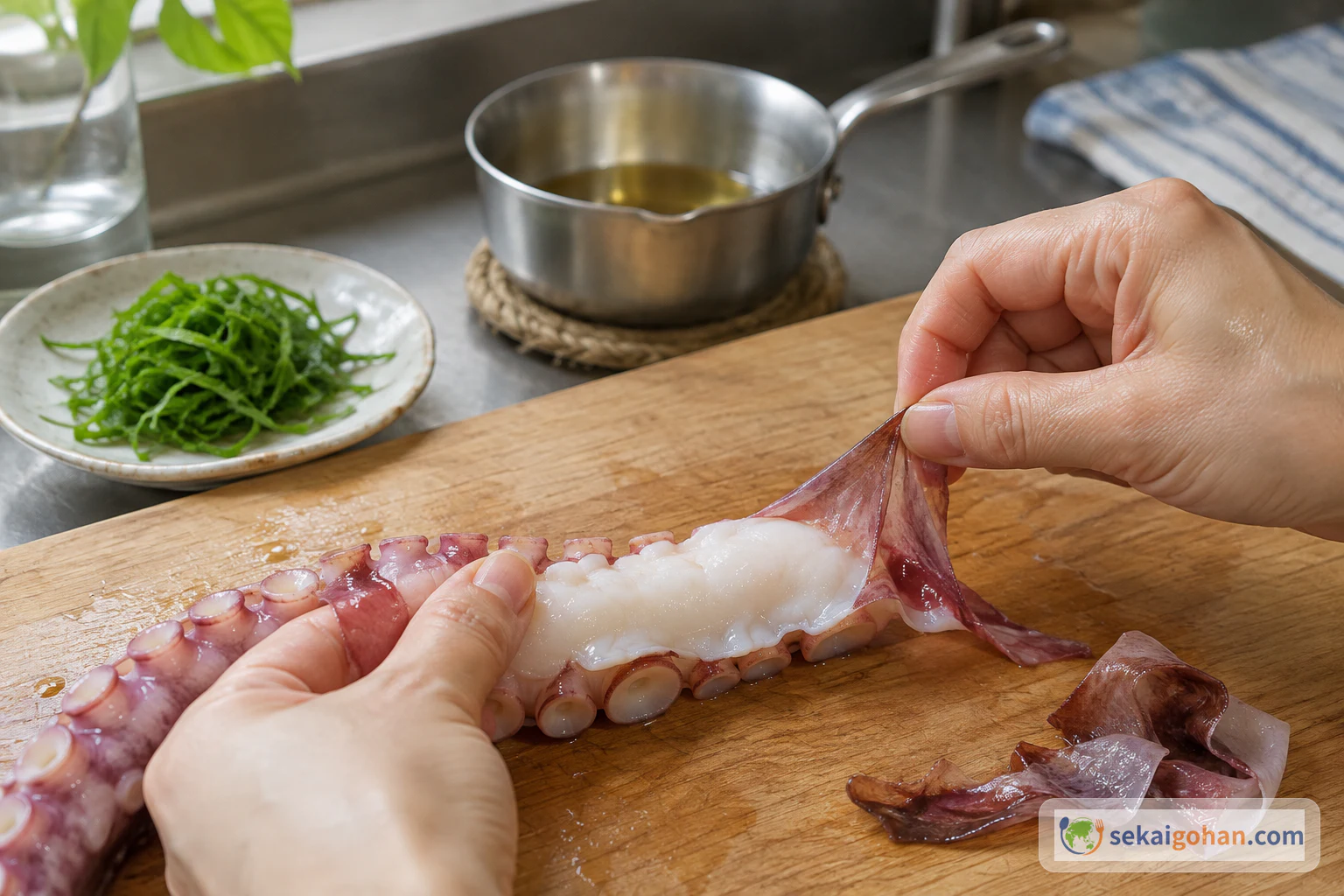
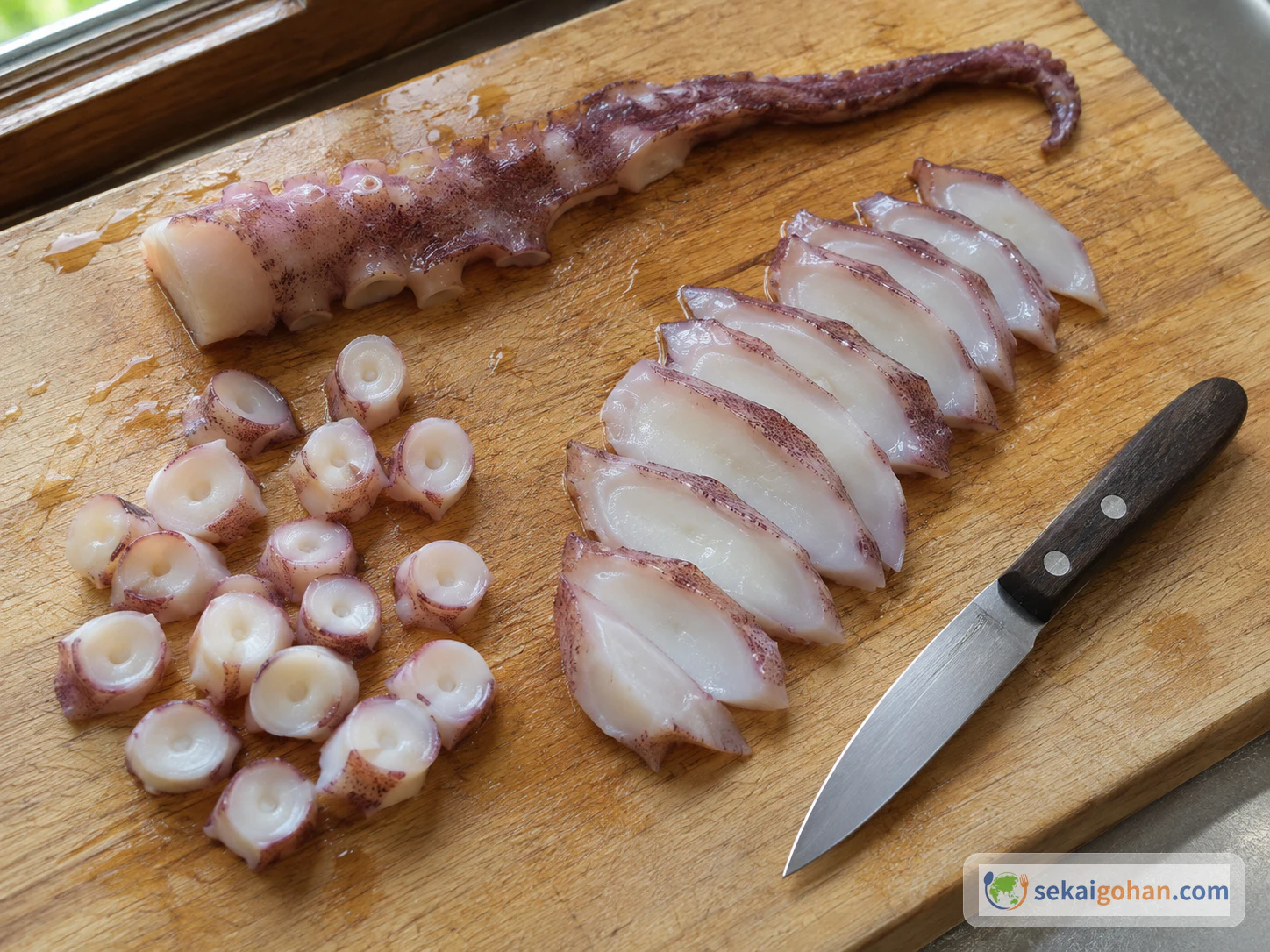
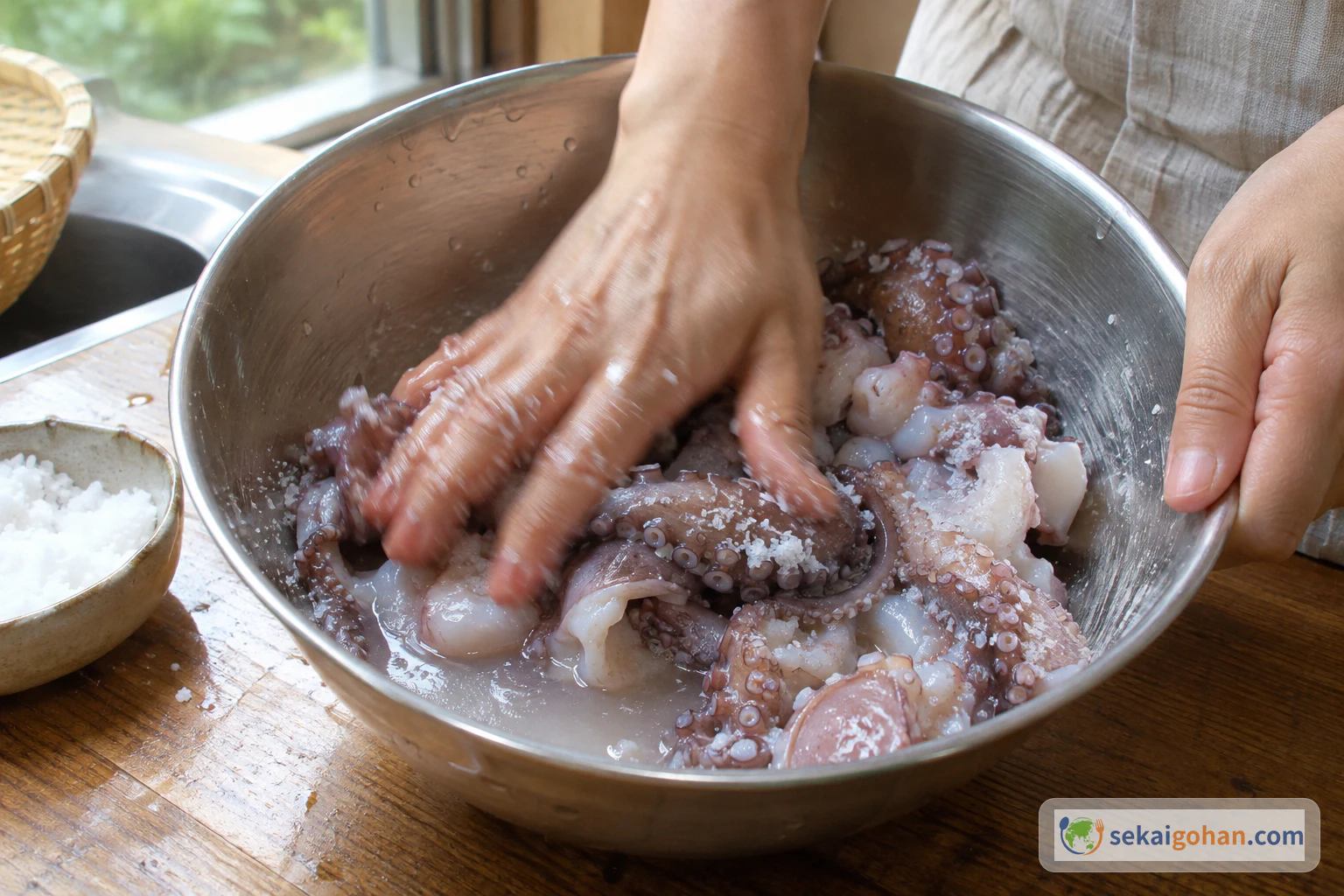
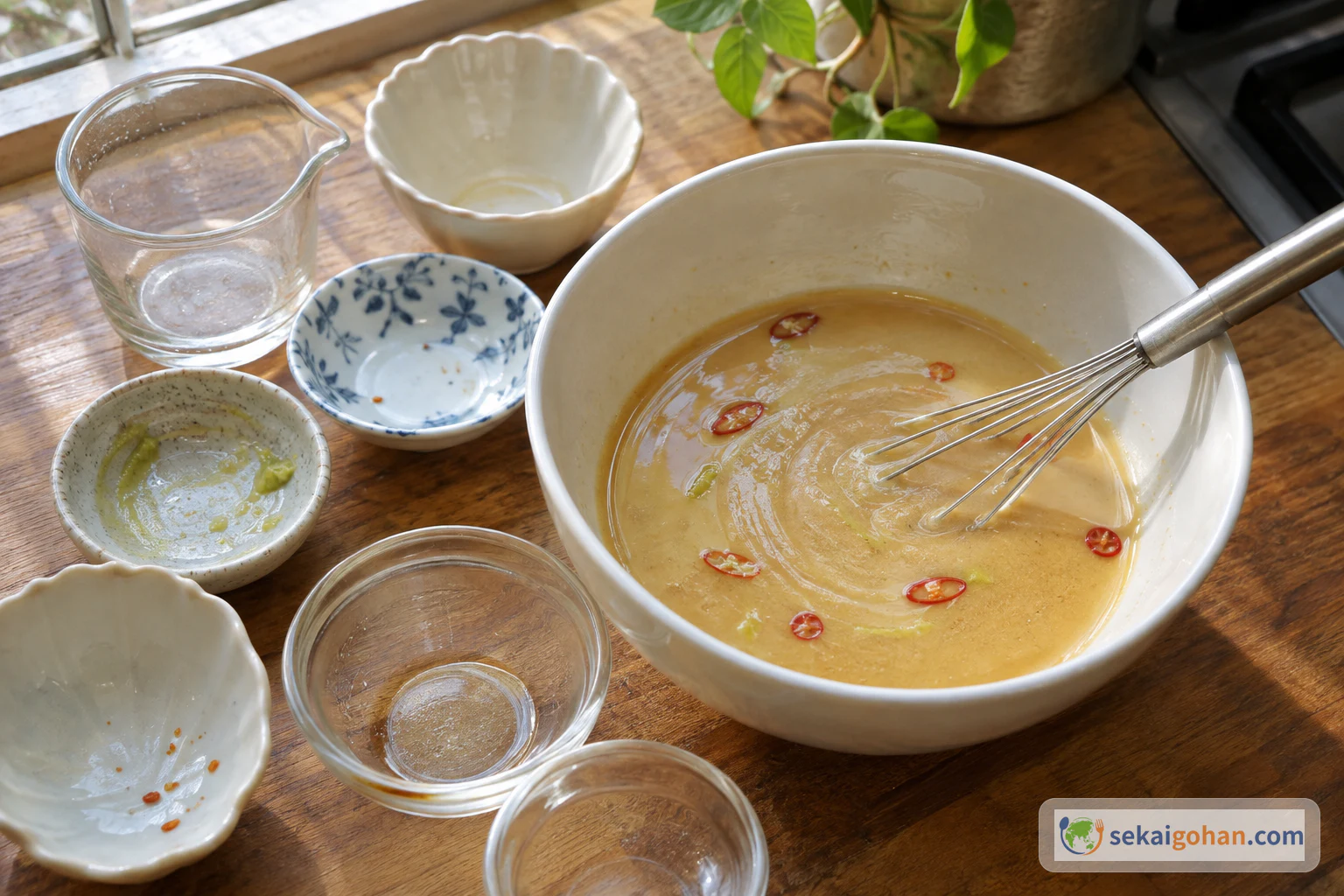
The work happens in one short burst at the board and the bowls. Cook the mirin first so it has time to cool while you peel and cut the octopus. Then clean the octopus with salt and fresh water and mix the marinade in a second bowl. The hour in the refrigerator is completely hands-off, so finish everything else then and take the bowl out only when everyone is ready to eat.
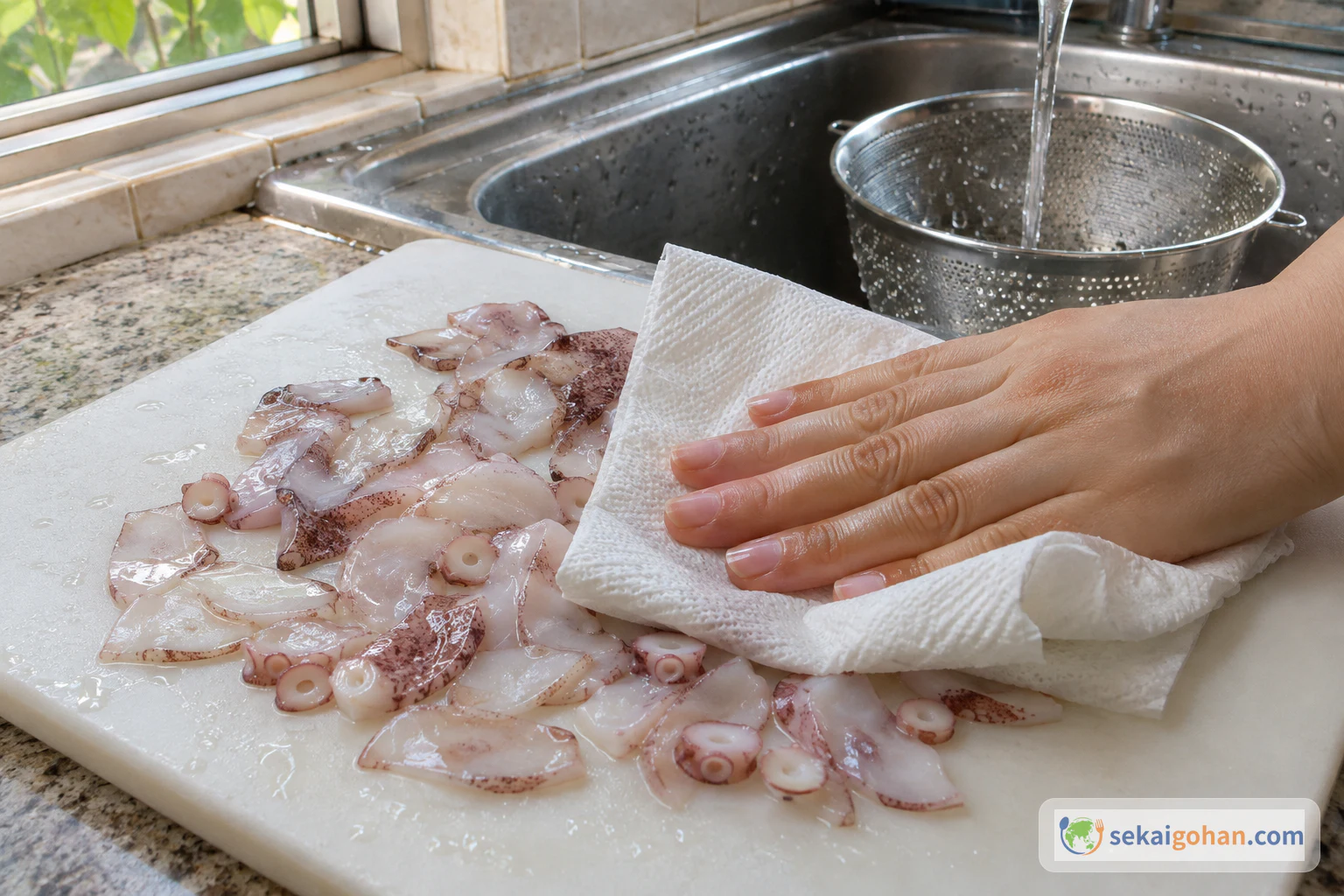
Any water left on the octopus thins the marinade and dulls the wasabi. If the pieces still feel wet after rinsing, blot them again right before they go into the bowl.
When It Goes Wrong
| What you see | Why | What to do |
|---|---|---|
| The dish is watery | Water stayed on the octopus after rinsing | Next time, blot the pieces again with paper towels just before tossing |
| The heat is overwhelming | Wasabi strength varies widely between products | Use less wasabi, and taste the marinade before adding the octopus |
| It tastes too salty | The white dashi is stronger than a 10× concentrate | Check the label and use the amount it gives |
| The octopus still feels slimy | Not enough salt rubbing or rinsing | Rub with a little more salt, then rinse again under running fresh water |
| It smells of alcohol | The mirin went in uncooked | Cook the mirin first and let it cool before mixing |
| The octopus is tough | The slices are too thick, or the octopus itself is firm | Slice thinner, or switch to boiled octopus |
Keeping a Raw Dish Safe
Nothing in this recipe is cooked, so the cleaning, the cold and the timing do the work that heat does in other dishes. Get these few points right and the dish is simple.
Start with octopus labeled for raw eating. Unlabeled cut pieces and cleaned octopus are not eaten raw.
Rinse with fresh water, never salt water. Vibrio parahaemolyticus, a bacterium that causes food poisoning from raw seafood, lives in seawater along coasts and river mouths. It thrives in salt and is weak in fresh water. That is why the rubbing salt is washed off under the tap, and why rinsing in salted water does not do the same job. Near body temperature, around 99°F (37°C), it doubles in about 10 minutes. At 39°F (4°C) or below, it barely grows.
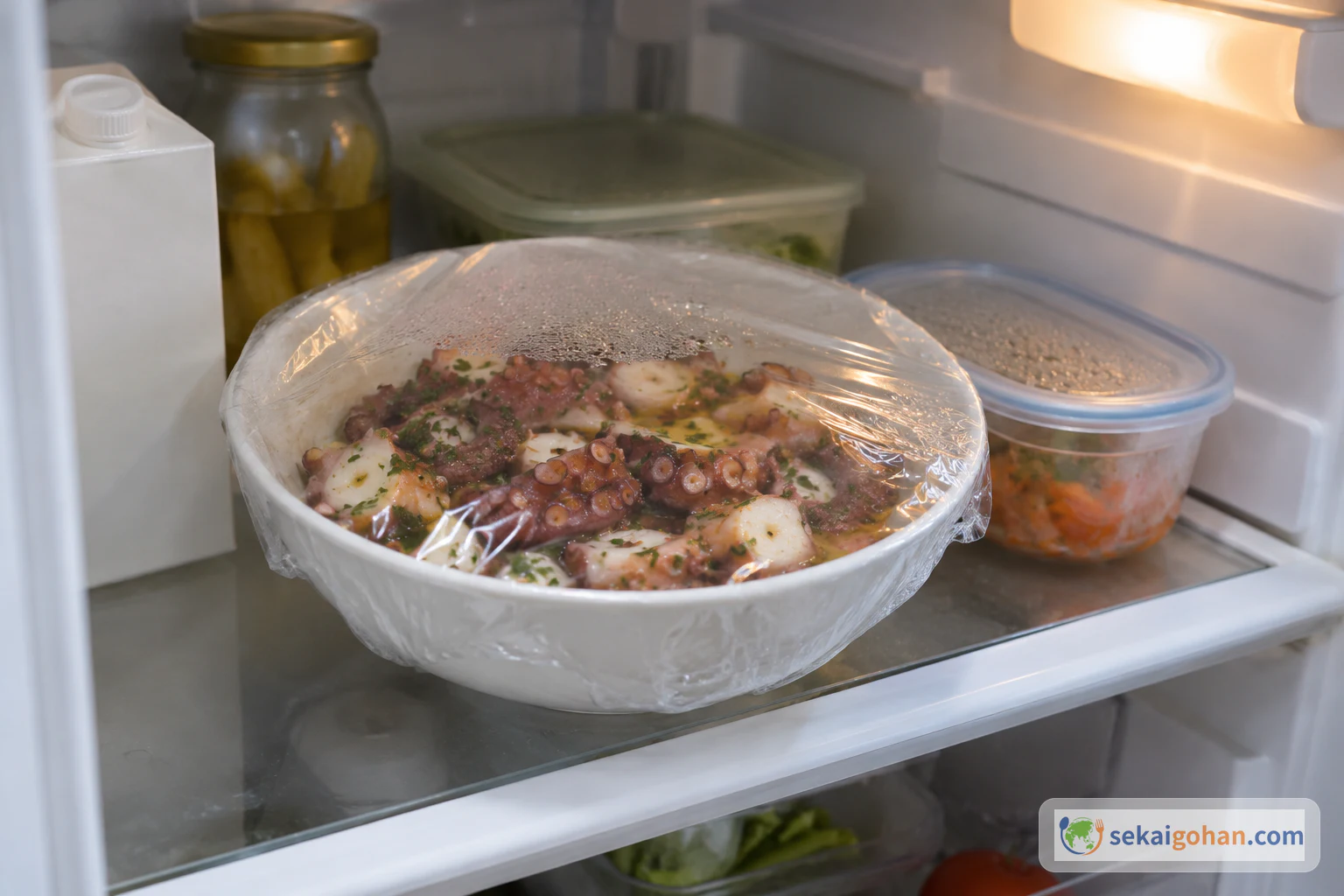
Keep it cold the whole time. Once dressed, the octopus goes into the refrigerator under plastic wrap and stays there until serving. In Japan, raw seafood for sashimi must be kept at 50°F (10°C) or below by businesses that sell it. At home, aim for a refrigerator at 39°F (4°C) or below. After the bowl comes out of the refrigerator, eat it within 2 hours. Wash your hands, the knife, the board and the bowls after handling the raw octopus.
Low salt is the reason the cold matters. In Japan, low-salt shiokara with around 4% salt cannot be relied on to hold back these bacteria and must be kept at 50°F (10°C) or below from production to the table. In 2007, low-salt squid shiokara caused a widespread Vibrio parahaemolyticus outbreak with 595 patients. That case involved squid shiokara, not tako wasabi. Tako wasabi is a lightly salted dish of the same kind, though, and it needs the same steady cold.
Children, older adults, pregnant people and anyone with a weakened immune system should avoid raw seafood and choose the boiled octopus version below. This is a kitchen precaution, not medical advice.
Leftovers: keep any remaining octopus in a small airtight container with plastic wrap pressed onto the surface so the pieces stay under the marinade. Refrigerate it promptly and finish it the same day.
Serving and Variations
Tako wasabi is a drinking dish first. Serve it in small portions in small bowls, with cold beer, sake or shochu, at the start of an evening of several small plates. The shiso goes on at the last moment so it stays bright.
Boiled octopus in five minutes
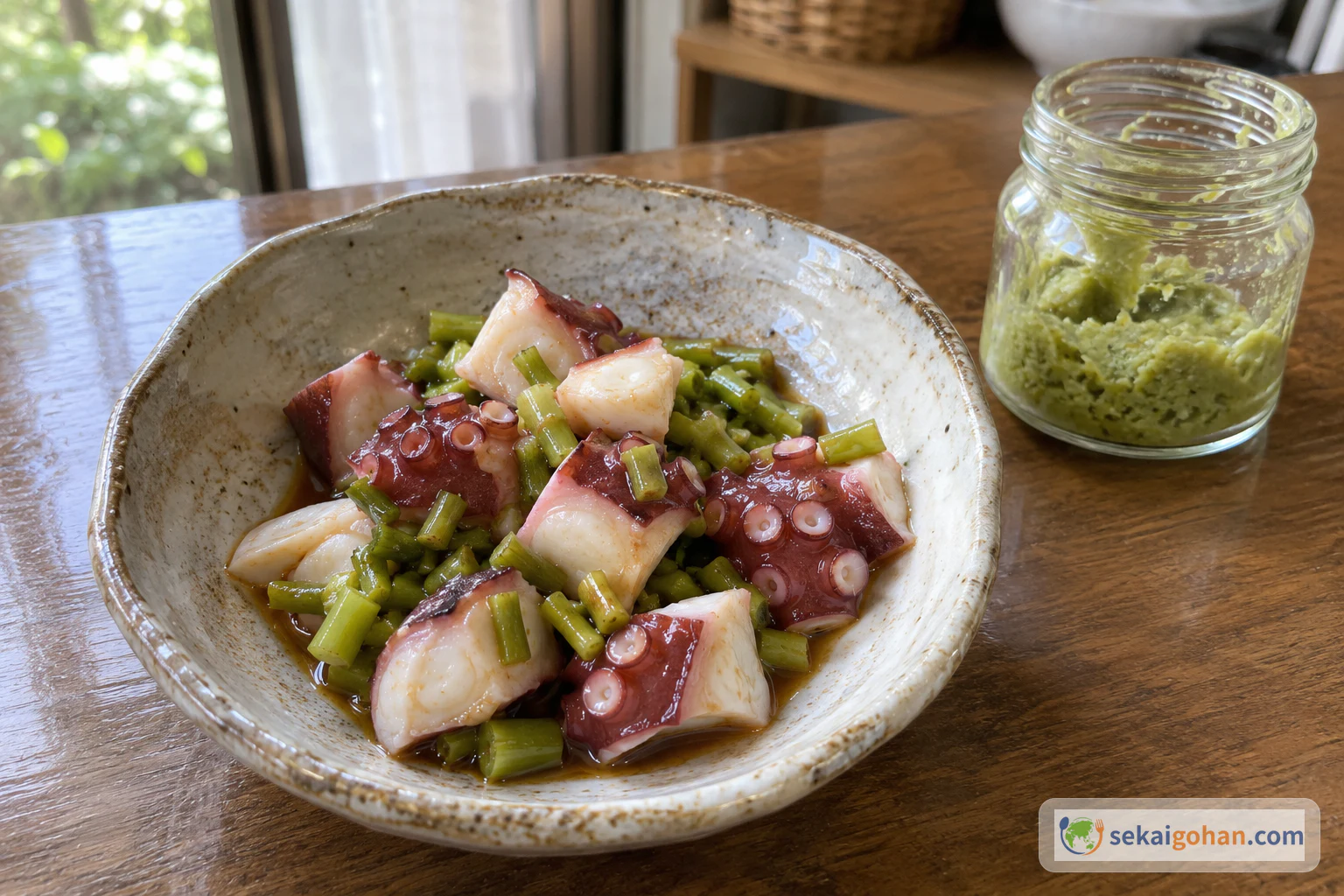
This is a separate, simpler recipe for 2, made in 5 minutes. Cut 5 oz (150 g) boiled octopus into rough chunks of about ¾ inch (2 cm). In a bowl, mix 2 tsp chopped wasabi (kizami wasabi) with 2 tsp ponzu soy sauce, add the octopus, toss and serve. Adjust the chopped wasabi to your taste. Keep the two recipes apart: the ponzu version uses no salt rub, white dashi, mirin or chili. The citrus in the ponzu makes it brighter and lighter than the creamy raw version, and the boiled octopus is tender rather than firm.
Changing the heat or the herb
Leave out the chili and the wasabi carries the heat alone, cleaner and more nose-forward. For more herb, shred a little extra shiso and fold some into the marinade with the octopus. It adds a cool, minty aroma in every bite.
With packaged tako wasabi
Store-bought tako wasabi, the kind sold in tubs, is used in other dishes at home. Spoon it over chilled tofu, or onto a spoonful of cream cheese. Toss it with avocado, paprika and mayonnaise. Fold it into pasta with mushrooms, garlic and chili. For tako wasabi chazuke, set it on rice with shiso and nori and pour dashi over the top. These ideas are for the packaged product. Homemade tako wasabi is eaten the same day.
Frequently Asked Questions
Can I remove the slime without salt?
Yes. Grated daikon also takes the slime off octopus. Rub the pieces with it the same way you would with salt, then rinse thoroughly under running fresh water and dry them well.
Can I make it the day before?
No. Homemade tako wasabi is eaten the same day it is made. Plan to dress the octopus about an hour before you sit down, so it comes out of the refrigerator just as the drinks are poured.
How do I make it milder for children?
Cut the wasabi well down and leave out the chili. For young children, make the boiled octopus version instead of the raw one.
Is ika wasabi the same recipe with squid?
Ika wasabi is a separate dish built on squid, though it belongs to the same family of wasabi-dressed drinking snacks. Squid needs its own preparation, so do not swap it into this recipe one-for-one.