Chanasan Makh: Bone-In Lamb, Water, Salt and Patience
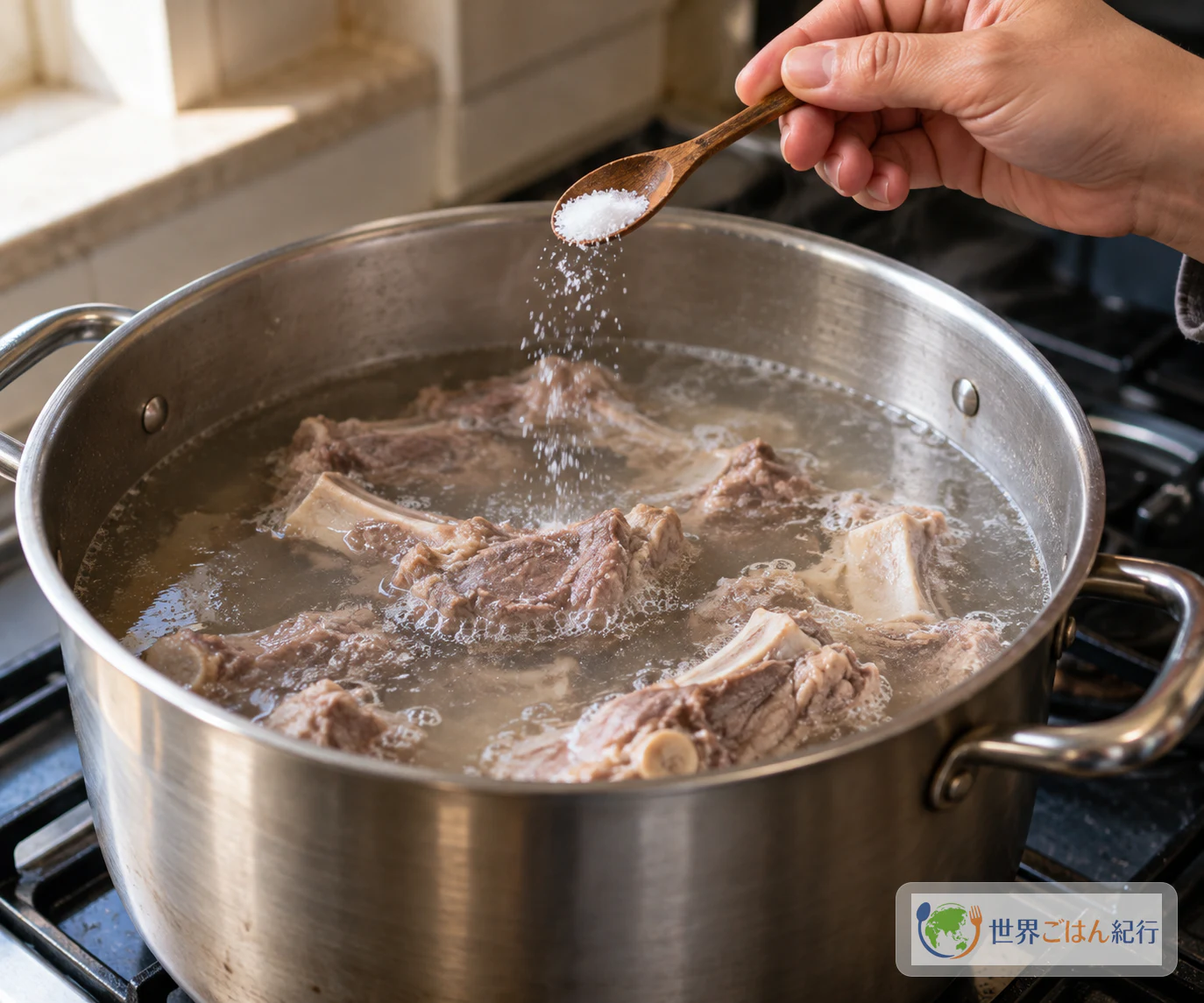
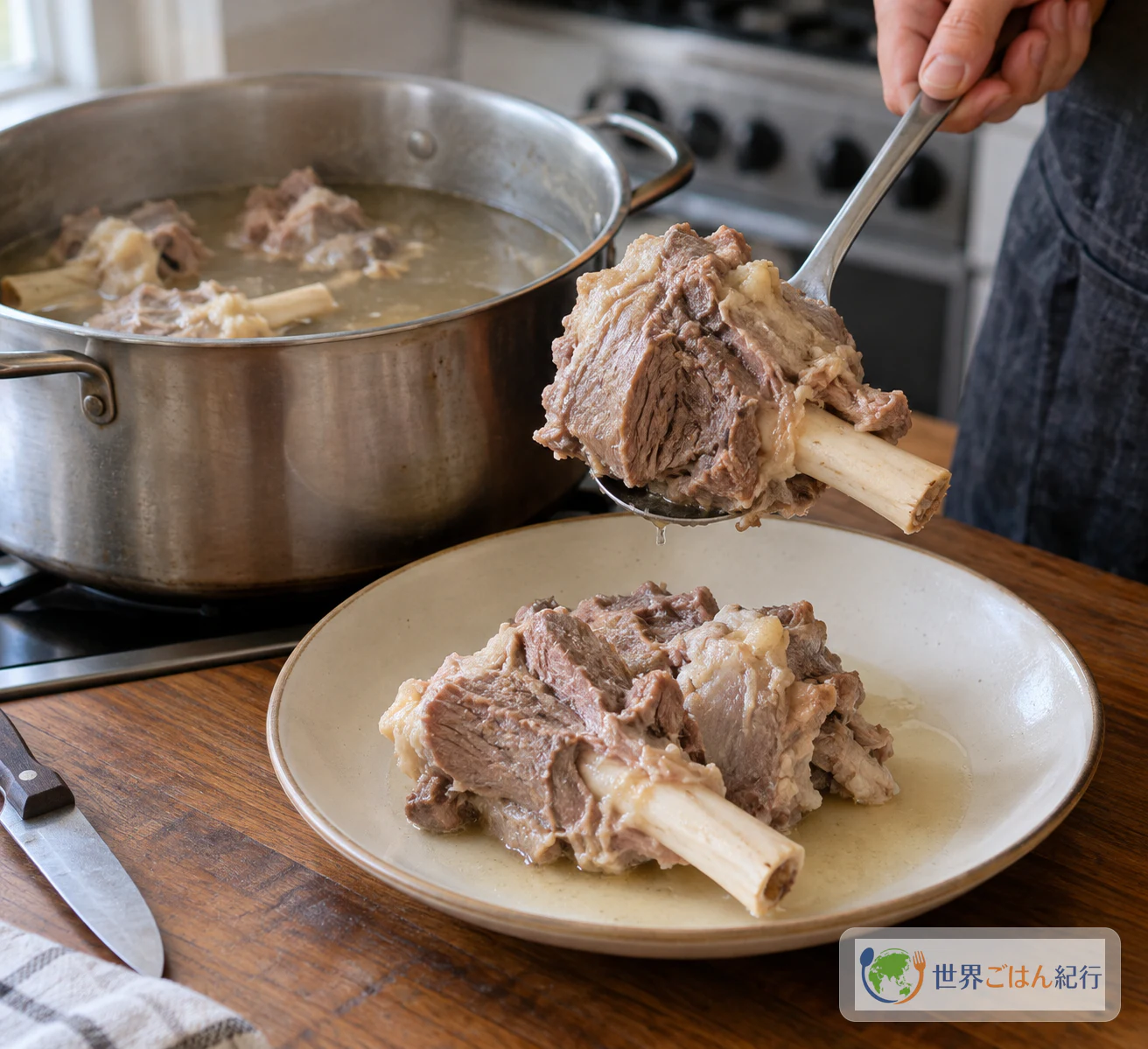
Three ingredients and a quiet simmer. Keep the surface of the water moving gently, add the salt in three parts, and finish when the meat around the bone is cooked through and tender, not when a timer rings.
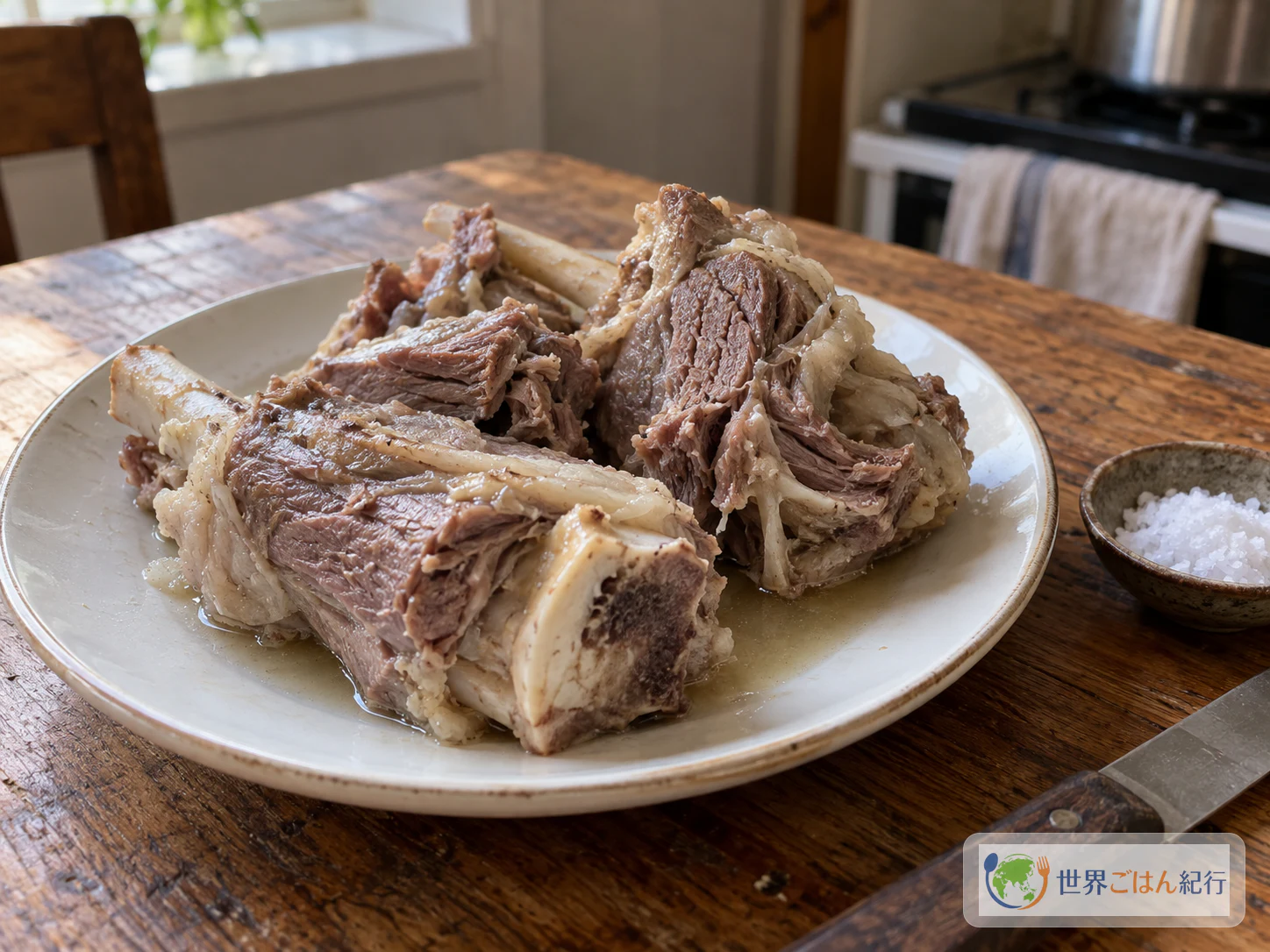
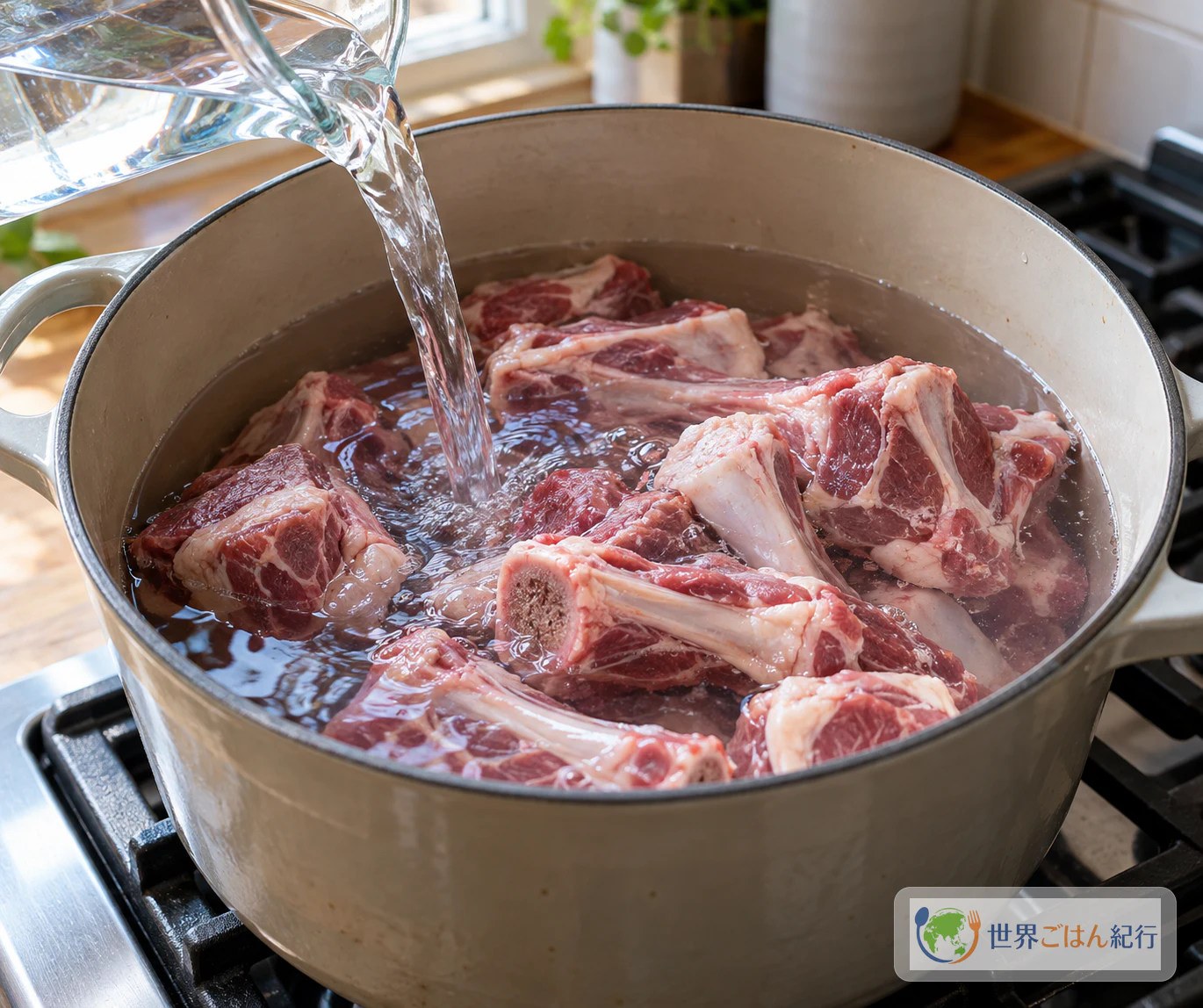
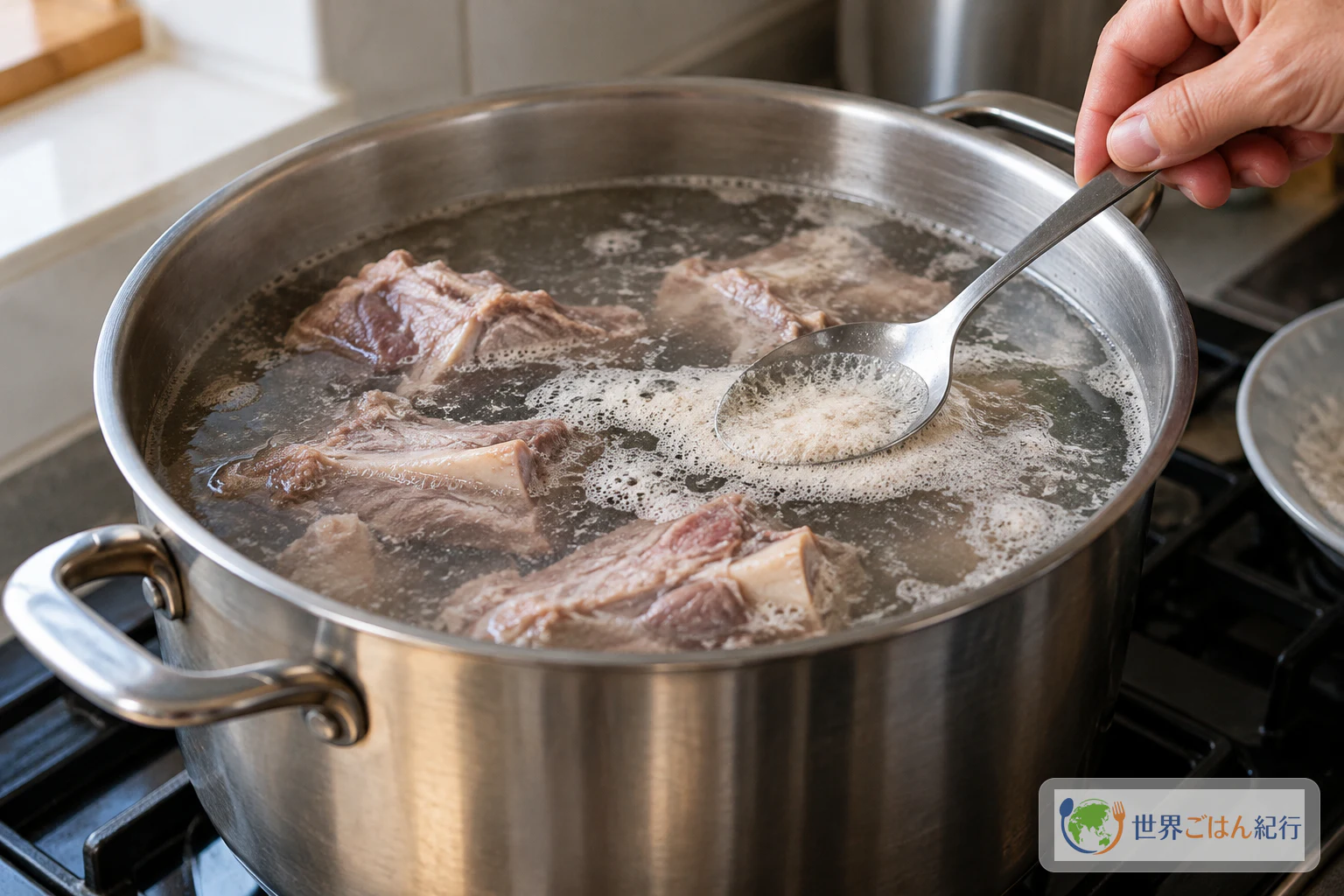
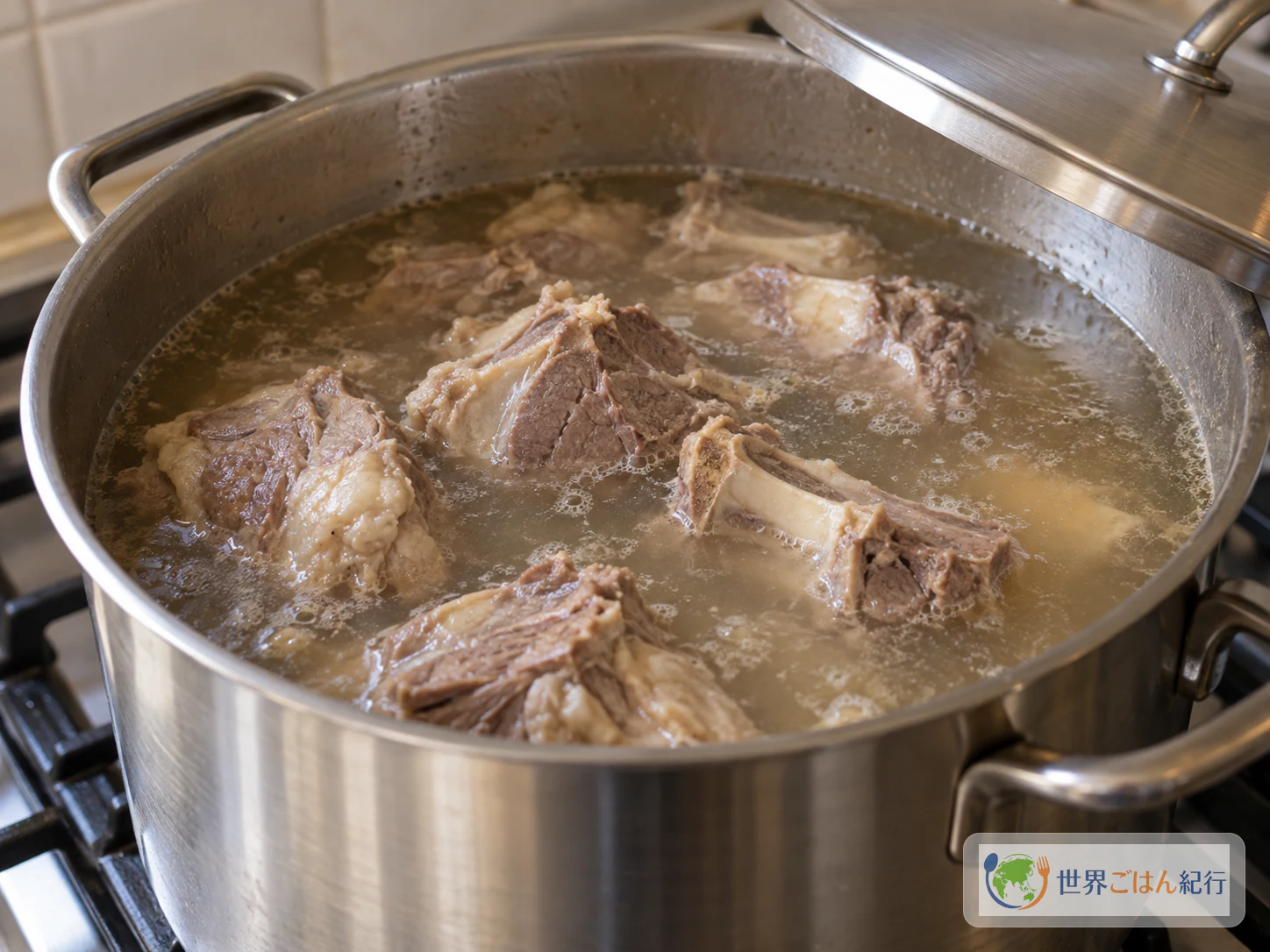
A large pot, a kilo of bone-in lamb, three liters of water and a small bowl of salt. As the pot warms, grey foam rises and is lifted away with a spoon; the heat is turned down until the surface barely trembles, and the salt goes in a little at a time. That is the whole of chanasan makh (чанасан мах) in the version on this page: bone-in lamb boiled with water and salt.
The name translates roughly as "boiled meat." Recipes published under this name share that core of bone-in meat cooked in water or salted water, but their amounts and additions differ from author to author. Rather than blend them, this article follows one complete, bylined home recipe by Shinnosuke Namikata, head of the Japanese lamb shop Namikata Yoniku-ten. He describes it as a method he learned while staying in a ger in Mongolia, arranged for home kitchens. It is his version, not a claim about the single correct way the dish is made across Mongolia.
In Mongolian Cyrillic the dish is written чанасан мах. In English you will see Chanasan makh, and sometimes Chanasan mah; Japanese-language recipes also transliterate it in slightly different ways. These are spelling differences, not different dishes.
Ingredients: Bone-In Lamb, Water and Salt
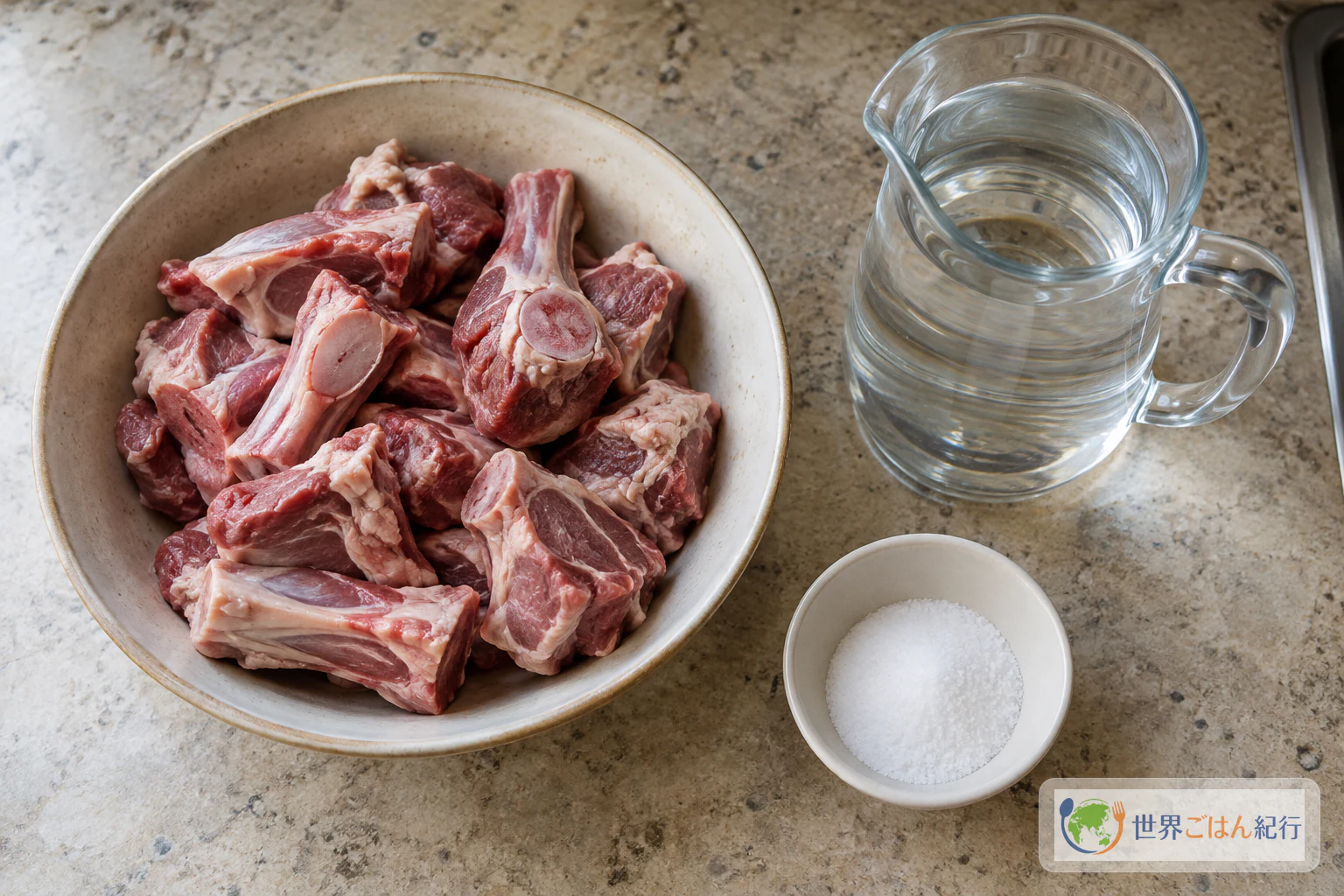
These are the amounts given in the source recipe, which it lists as about 3–4 servings. The author's ingredient list also includes long onion and ginger as additions, but he says the dish is basically lamb, water and salt and that those two can be left out. This version leaves them out.
Equipment
- A large pot that holds about 1kg of bone-in lamb with 3L of water
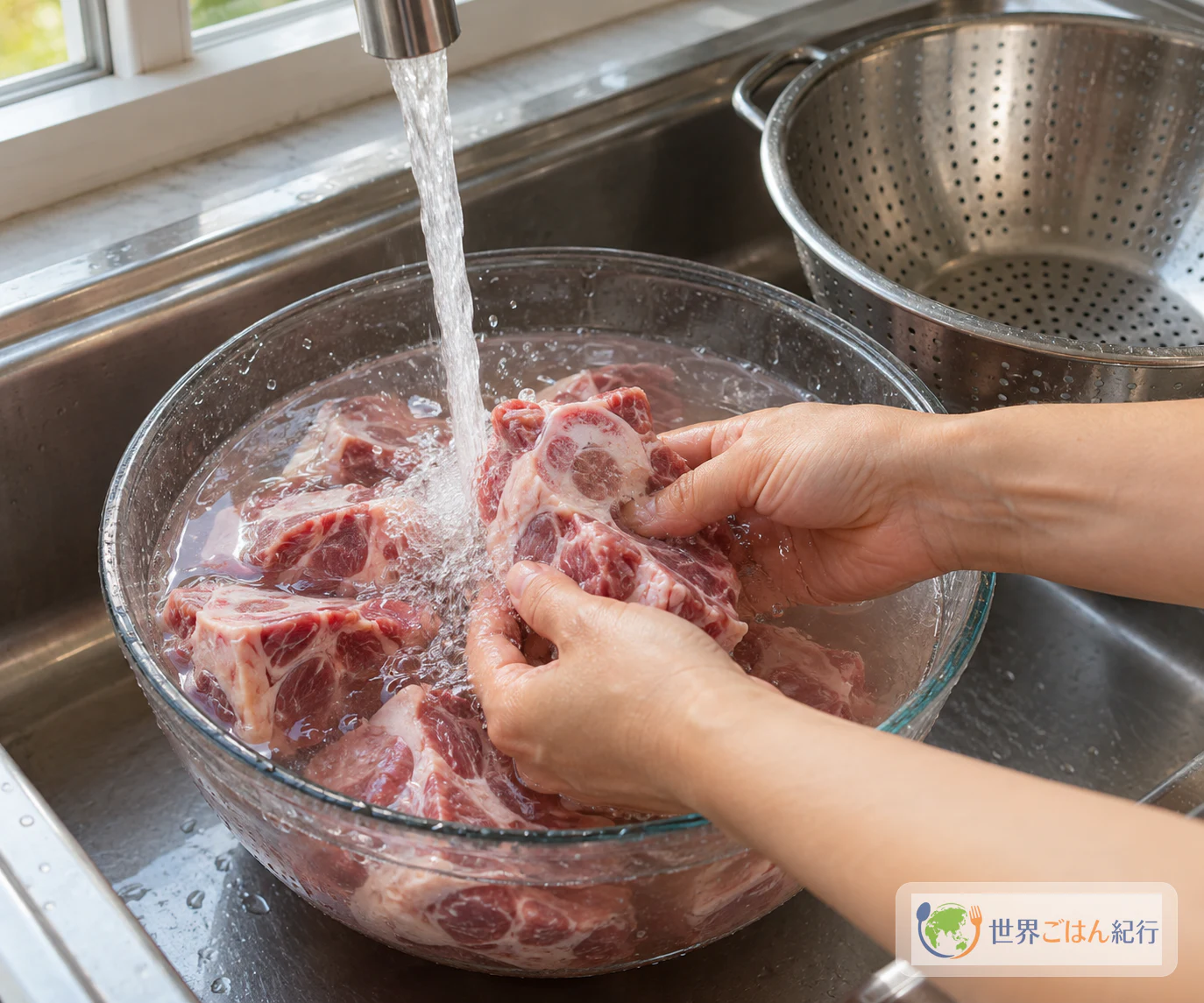
- A bowl and a colander, for washing and draining the meat
- A spoon or ladle for skimming foam
- A food thermometer, for the safety check below
- A large platter
- A knife and cutting board for cutting and sharing at the table
Choosing the Lamb and the Pot
The source recipe does not name a particular cut or a particular way the bones should be chopped, so neither does this article. When shopping, check two things: that the label says the lamb is bone-in, and that about 1kg of it will fit in your pot with 3L of water. Lamb shops may suggest specific cuts for home pots, but that is a shopping convenience, not a requirement of the dish.
This version is written for bone-in lamb only. Swapping in boneless meat or another kind of meat would make a different recipe, and the amounts and timing here would no longer apply.
If 3L of water leaves the meat largely exposed, the source recipe's advice is to change to a pot of a better size, or to adjust the water so the meat is reasonably submerged. There is no fixed amount for that adjustment; go by what you see in the pot.
Boiling times depend on the cut and the size of the pieces, so the time in this recipe is an estimate, not a safety guarantee, and the color of the meat alone does not tell you it is safe. Japan's Ministry of Health, Labour and Welfare gives a general home-cooking guideline for heated foods: cook them thoroughly, to about 75°C at the center for at least 1 minute. Use a food thermometer at the center of the thickest piece. This is a modern household safety check, separate from the traditional sign of doneness described in the steps. Keep raw meat juices away from cooked food and anything eaten raw, and wash cutting boards and knives before using them again.
Method: A Quiet Pot, Salt in Three Parts
The source gives about 1–1.5 hours as a guide, and says it changes with the cut and size of the meat. Finish when the meat around the bone is cooked through and tender; if it is still tough, keep simmering.
When the Pot Doesn't Behave
| Condition | Likely reason | What to do |
|---|---|---|
| The meat is still tough | The pieces are large, or the cut needs longer | Keep simmering gently and check again. The 1–1.5 hours is only a guide |
| The meat sits well above the water | The pot is too small or too wide for the pieces | Change to a better-sized pot, or adjust the water so the meat is reasonably submerged |
| The pot is boiling hard | The heat is too high | Turn it down until the surface only moves gently |
| Foam keeps collecting | Normal as the pot heats | Keep skimming it off |
| Unsure about the salt | All three additions are not in yet | Add the salt in parts and taste between additions instead of adding it all at once |
| The meat looks done but you're not sure | Color and appearance are not proof | Check that the center of the thickest piece has reached about 75°C for at least 1 minute |
Other Versions Under the Same Name
The source recipe lists long onion and ginger as optional additions, which the author says can be omitted; they are not used here. Mongolfood.info describes the dish as meat, usually mutton, cut into manageable bone-in pieces and boiled in salted water until cooked, and separates that older, complete meal from later habits of adding vegetables and condiments. That page does not say when or where those additions are common.
A family recipe by Altaituya Burnee, published in a Flinders University student cookbook as one passed down from her father, uses beef ribs with onion, carrot, potato and oil, and also includes a steamed dough. Because the dough's ingredients and amounts are not given, it cannot be reproduced as written, and its vegetables are not folded into this recipe.
A short Japanese recipe by Azusa Matsumoto on NDISH gives a much shorter boiling time, but the author limits it to the pre-cut pieces in her photo, and she mentions a longer time as what she was taught. Her page also suggests tasting the boiling liquid and adjusting its salt to use it as a soup. Those details belong to her version and are not combined with the amounts or timing here.
What the Sources Do and Don't Tell Us
The sources agree on a simple core: bone-in meat, water, salt and slow boiling. Beyond that, they are individual recipes from individual authors, a lamb shop owner, a recipe site and a family cookbook. They do not establish regional differences, a history of the dish, or links to particular seasons or occasions, so this article does not make those claims. If you want to see more of the country's cooking, browse the Mongolia recipes.
Frequently Asked Questions
Do I need the onion and ginger?
No. The author of the source recipe treats the dish as lamb, water and salt at its base and says the long onion and ginger can be left out. This version uses only lamb, water and salt.
Is 1–1.5 hours always enough?
Not necessarily. The source gives it as a guide that changes with the cut and size of the meat. Finish when the meat around the bone is cooked through and tender, keep simmering if it is tough, and use a thermometer for the safety check.
Which cut of lamb should I buy?
The source recipe does not specify one. Choose bone-in lamb, and make sure about 1kg fits in your pot with 3L of water.
How much salt goes in each time?
The source says to add the 30g in three parts but does not split it into fixed amounts. Add it gradually and taste the liquid between additions.
Can I use boneless lamb or another meat?
This recipe is written for bone-in lamb only. Other meats or boneless cuts would make a different recipe, and the amounts and timing here would not carry over.
What about the broth?
This recipe does not include a separate broth or soup recipe. One other published version suggests tasting the boiling liquid and adjusting the salt to serve it as a soup.
Sources
- Shinnosuke Namikata (Namikata Yoniku-ten), "How to make the Mongolian lamb dish 'chansan maha': a traditional recipe of salt-boiled bone-in meat," Namikata Yoniku-ten Magazine, 2026 (in Japanese). The recipe followed here: amounts for about 3–4 servings, the optional long onion and ginger, washing, skimming, gentle heat, salt in three additions, the 1–1.5 hour guide and the sign of doneness, and the author's account of learning the method in a ger. https://www.umai.co.jp/magazine/recipe/chansan-maha/
- Mongolfood.info, "Chanasan Makh - Чанасан Мах / Boiled Meat and Boiled Innards." Describes meat, usually mutton, cut into bone-in pieces and boiled in salted water, and distinguishes later additions of vegetables and condiments. https://www.mongolfood.info/en/recipes/chanasan-makh.html
- Azusa Matsumoto, "Chansun maha," NDISH (in Japanese). A short bone-in meat, water and salt recipe used for comparison only, including its use of the boiling liquid as a soup. https://jp.ndish.com/recipe/re00165/
- Altaituya Burnee, "Mongolian Boiled Meat (Chanasan mah)," in Our Food, Our Story Cookbook, Flinders University. A family version with beef ribs, vegetables and a steamed dough whose ingredients are not listed. https://www.flinders.edu.au/content/dam/documents/study/international/our-food-our-story-cookbook.pdf
- Ministry of Health, Labour and Welfare (Japan), "Preventing food poisoning at home" (in Japanese). General household guidance on cooking to about 75°C at the center for at least 1 minute and on preventing cross-contamination from raw meat. https://www.mhlw.go.jp/stf/seisakunitsuite/bunya/kenkou_iryou/shokuhin/syokuchu/01_00008.html