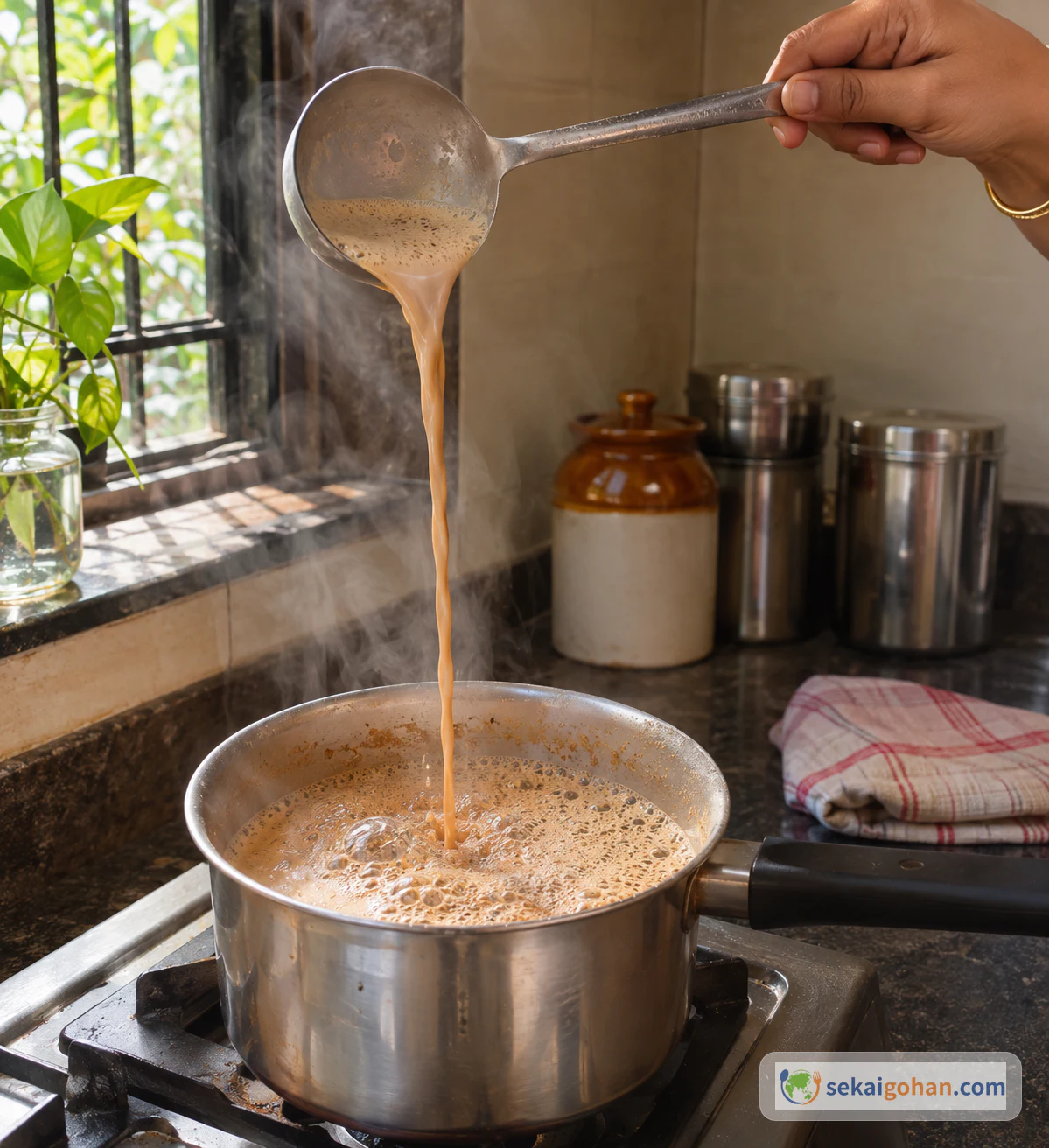
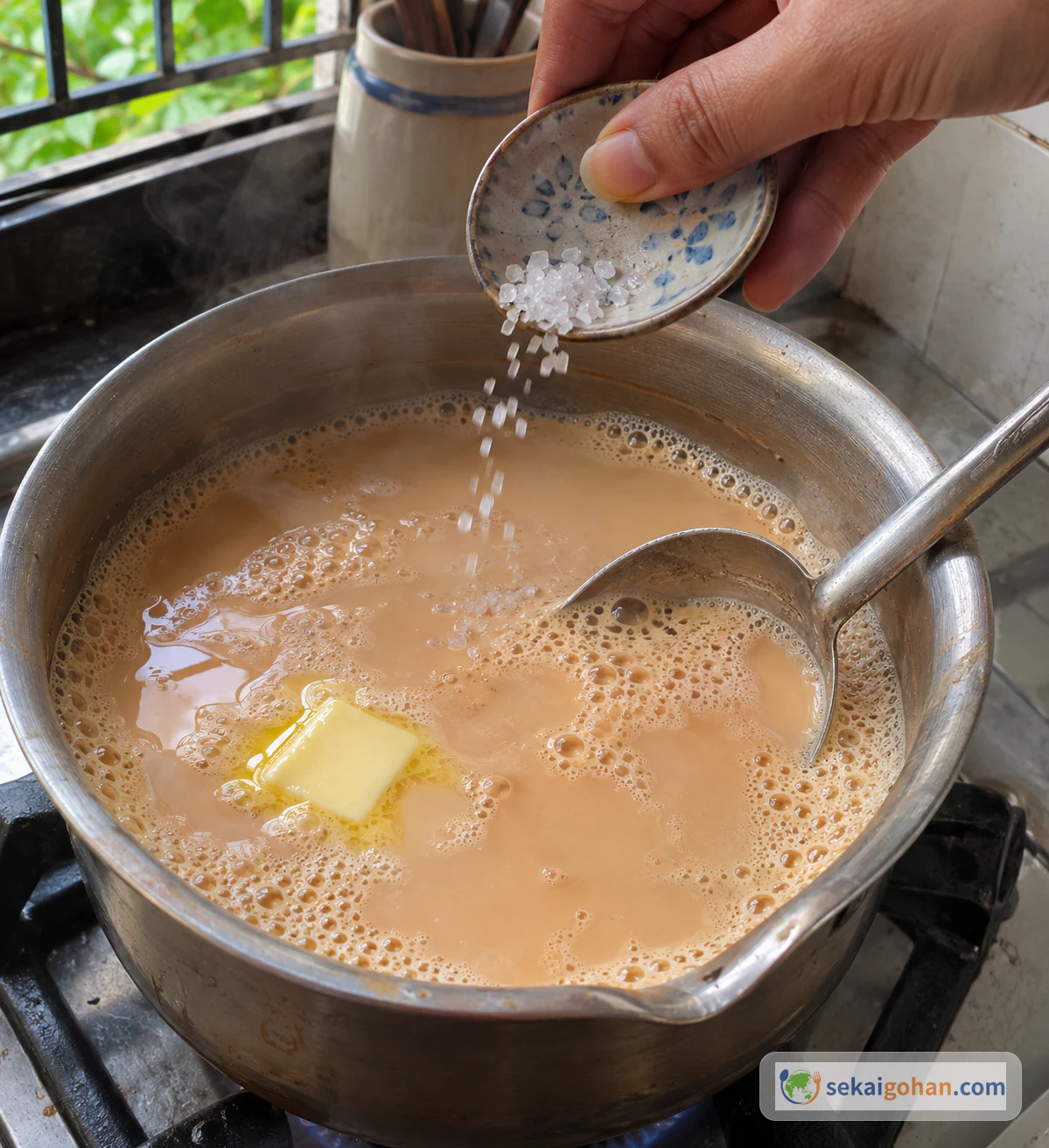
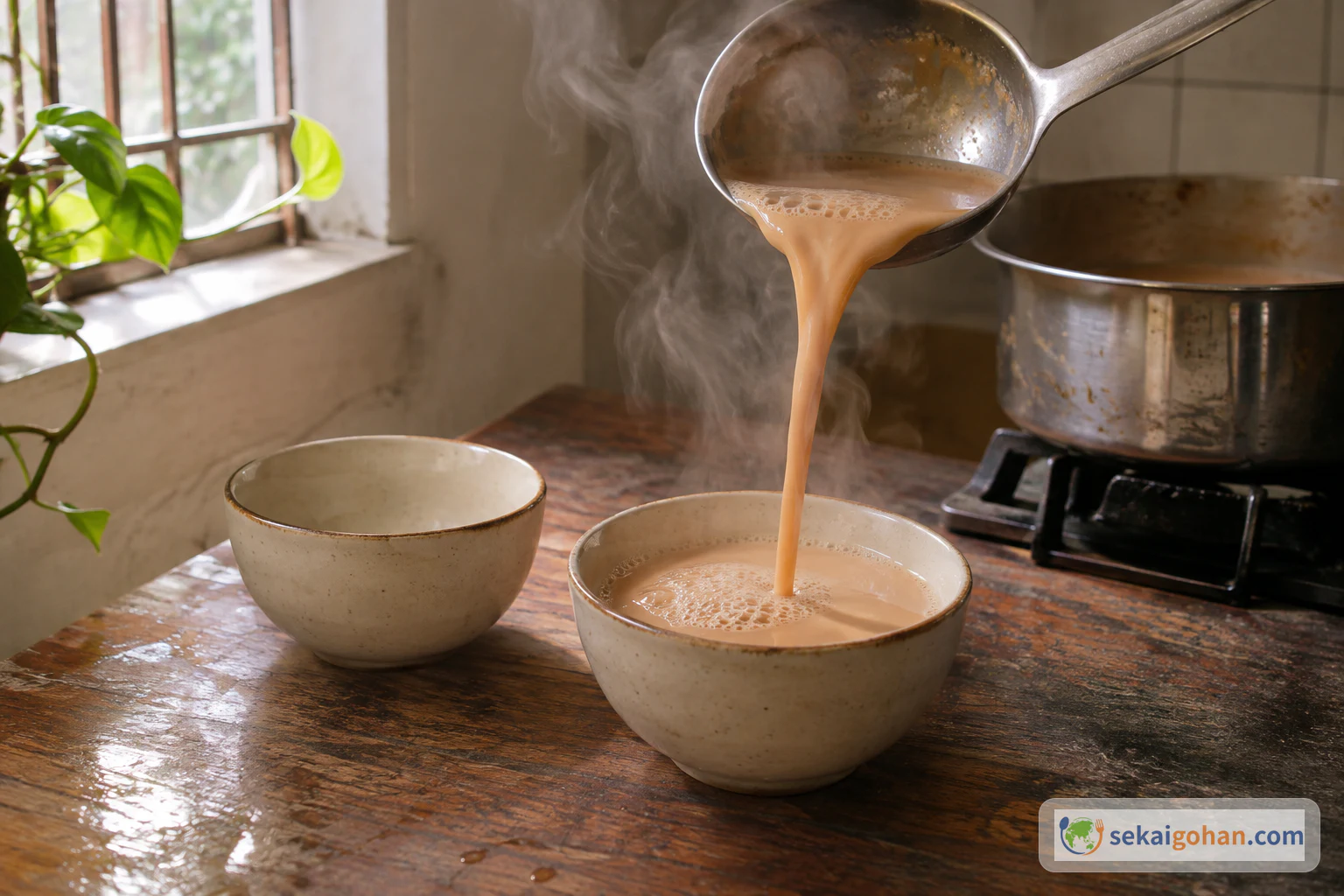
The ladle comes up full and the tea goes back into the pot from high above. A thin, pale stream hits the surface and breaks into foam, and steam rolls up past your hand. Then the salt goes in, someone tastes from a spoon, and the first bowls are poured. In a Mongolian home the first portion goes to the sky and the earth, and the next goes to the guest. Suutei tsai is Mongolia's everyday milk tea. It is tea boiled in water with an equal pour of milk, salt, and sometimes a little butter. It tastes hot, milky and savory, with the tea's light bitterness underneath, and there is no sugar in it at all.
Tea from a Country That Grows None
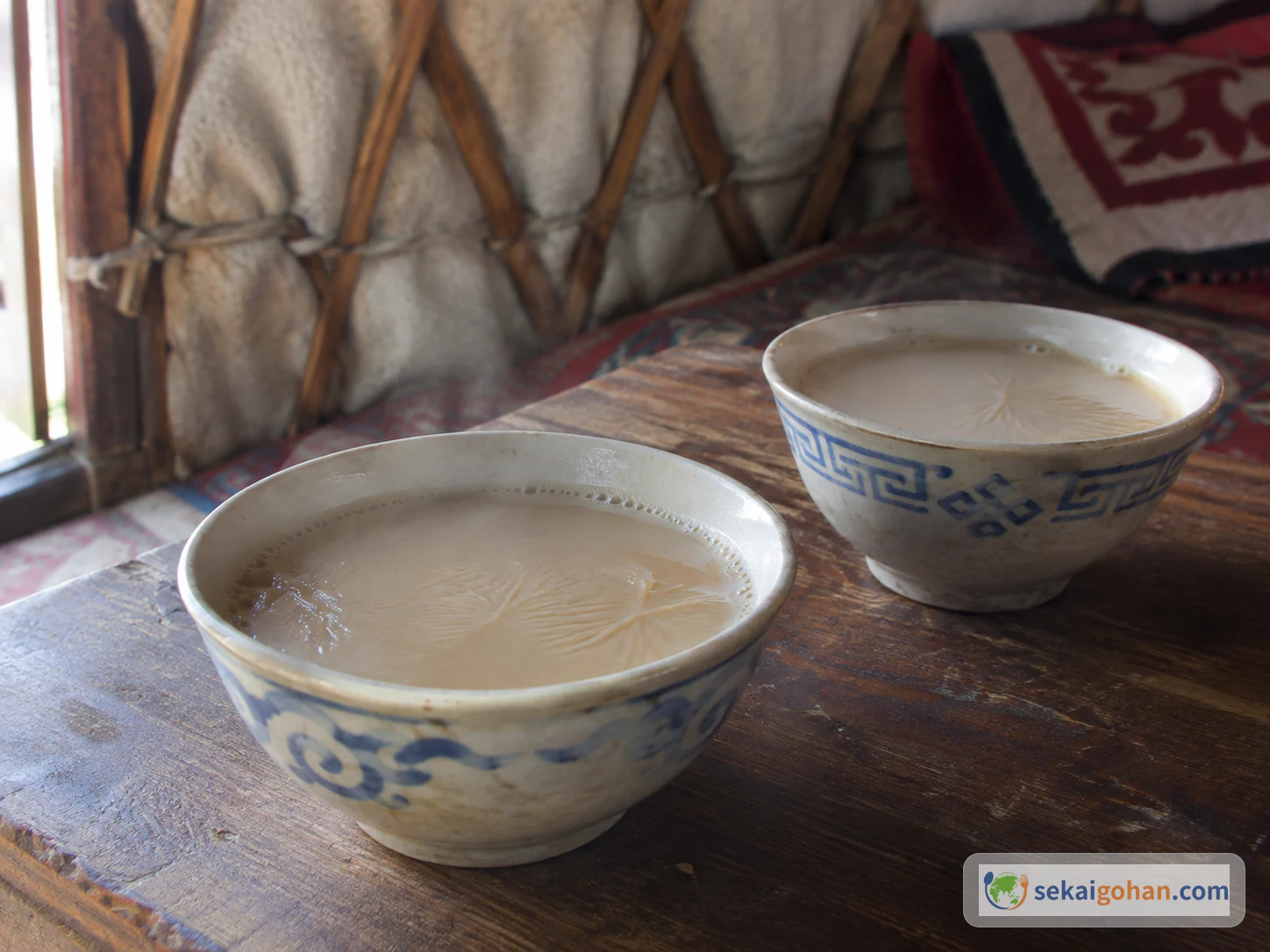
A salted tea in a bowl
If you know milk tea as a sweet drink, the first sip of suutei tsai surprises you. The salt meets the milk and makes it taste fuller and rounder, closer to a light broth than a dessert. It is the most common drink in Mongolia all year, and above all in winter. It comes in a small bowl rather than a cup, though restaurants sometimes use cups. Cow's milk is the usual choice, but goat, sheep and camel milk go into the pot too. Fresh milk in Mongolia is not drunk on its own. It is heated with the tea, and that keeps it clear of the bacteria raw milk carries.
Сүүтэй цай breaks into сүү (milk), -тэй (with) and цай (tea), so the name means "tea with milk." The same ending appears in давстай цай, salted tea, and its opposite, давсгүй цай, tea without salt. Tea made without milk is never called хар цай, "black tea." Black stands for evil, so that tea is called бор цай, "brown tea," or шалдан цай, "naked tea," and black tea is never served to a guest or used in an offering.
Mongolia grows no tea, yet tea is one of the clearest signs of daily life there. People have drunk it since the 16th century. In 1577 the Ming emperor allowed the tea trade. After the Treaty of Nerchinsk in 1689, caravans on the tea road crossed Mongolia. Tea came pressed into hard bricks, and by the 19th century a brick of tea worked like legal currency. One brick was worth one sheep. Bricks were broken into halves (тал цай), quarters (дөрвөн хуруу) and eighths (шоо) to pay smaller amounts. In the Soviet period Georgian tea came in. After 1990, Mongolian wild-herb teas came back. Today most home kitchens use Chinese tea leaves.
The first bowl of the morning
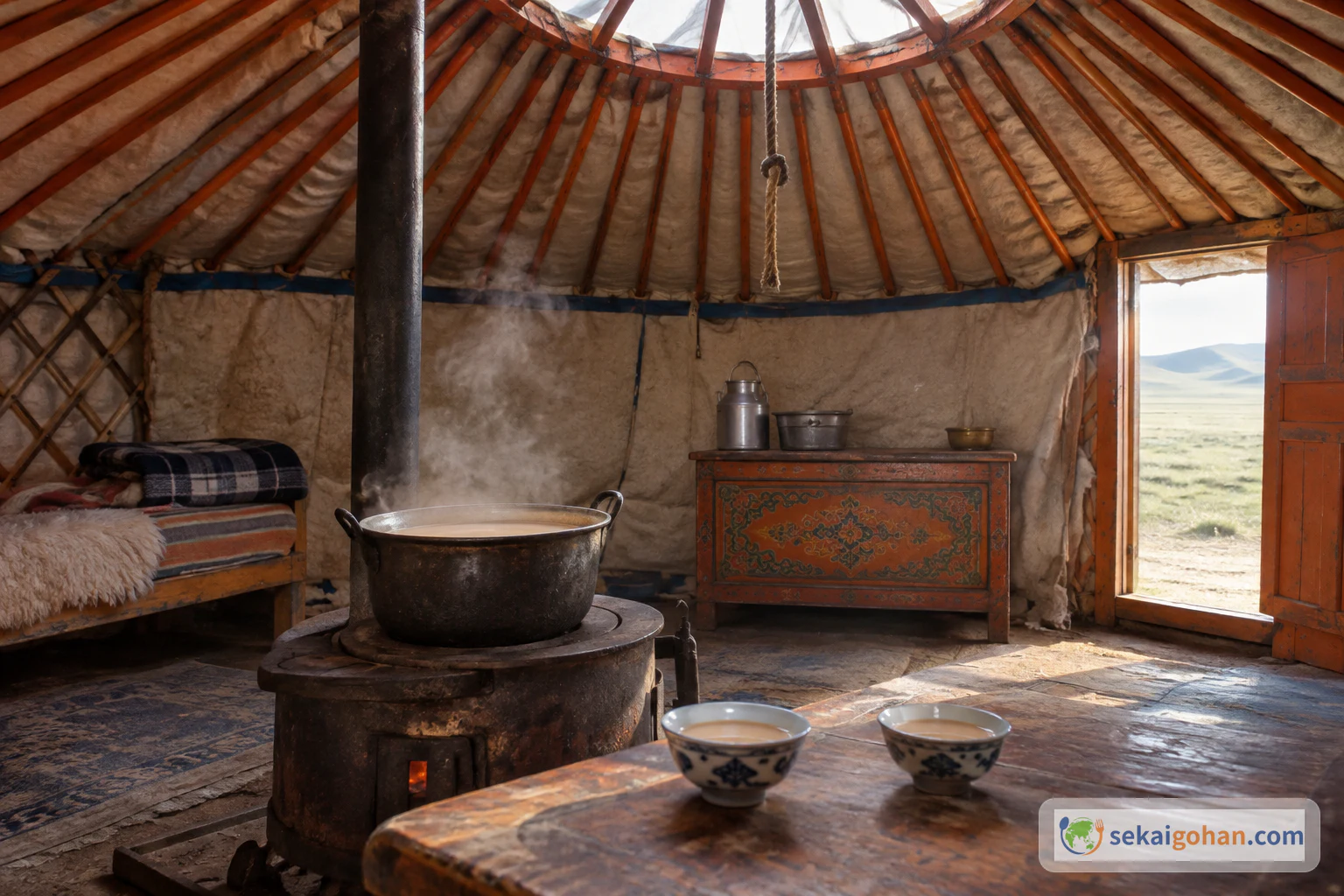
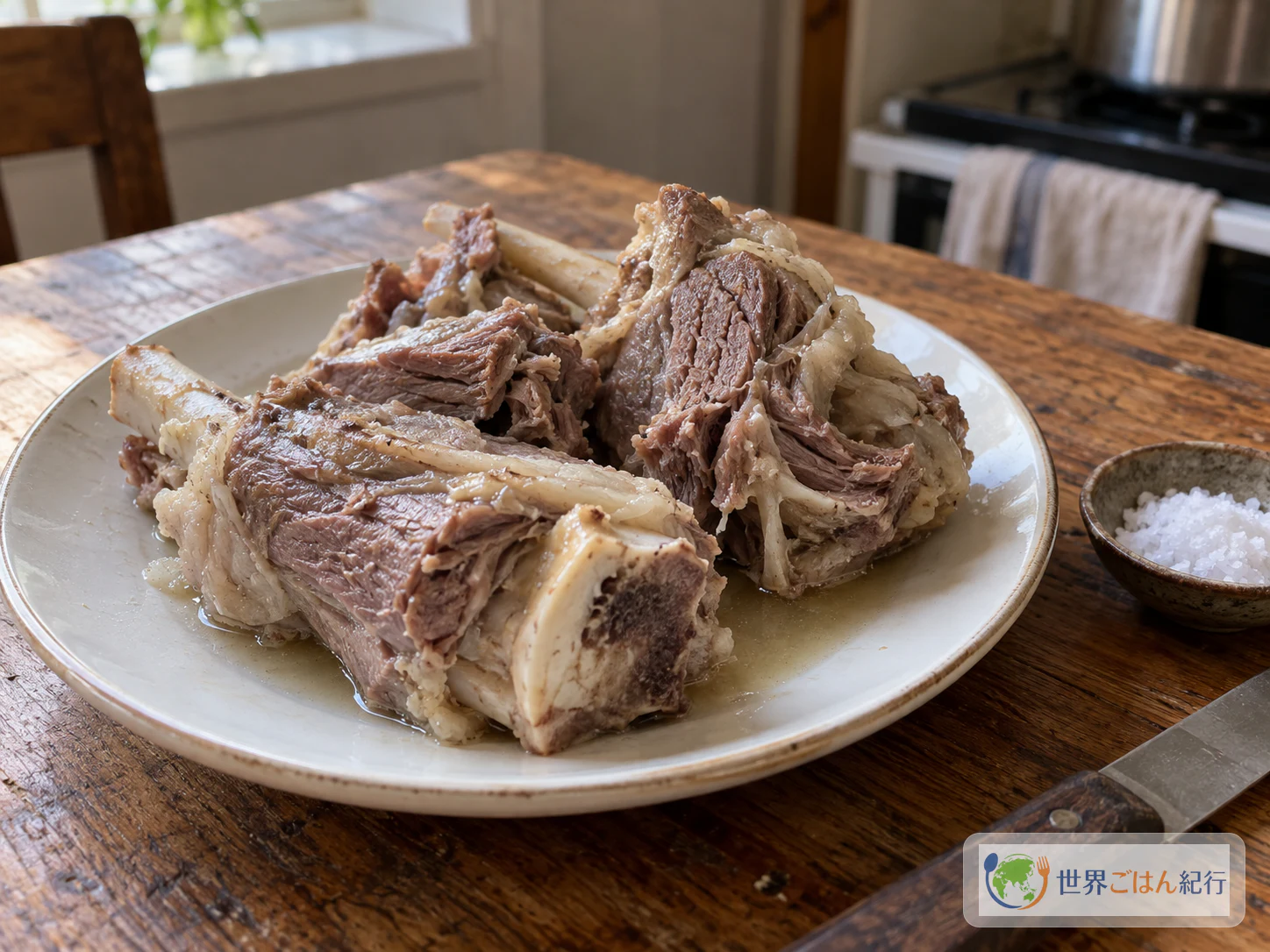
The morning tea is the housewife's work, and she gets up before the rest of the household to make it. A Mongolian saying puts it this way: "tea is a woman's face." People judge how well a home is run by the quality of its tea. The first of the fresh tea is offered to the sky and the earth (хангай дэлхий), to the deities (бурхан), to the spirits and to the departed. In the west some is also poured toward the four corners of the fire. After that, guests are served before the family. The tea goes around by age, gender and standing. The husband gets his bowl first and drinks from his own bowl. In a ger the eldest person is served first. At Tsagaan Sar, the lunar new year, milk tea is the first thing a guest is given, and it shares the table with buuz, the steamed dumplings of the holiday. Mongolian folk wisdom also says tea balances a fatty meal, and it is a natural partner for a mutton dish like khorkhog.
Salt follows the water
The amount of salt depends on the household and on the region. In the west, tea is salted (давстай цай). In the east it is left unsalted (давсгүй цай). The usual explanation is the western water, which comes from salty sources (хужиртай ус). Westerners say eastern tea tastes like water. Some regions also add хужир, a salt mineral from salt lakes, to the pot. Even the five ingredients, таван тансаг идээ, change from region to region. One list is tea leaves, water, milk, salt and butter. Another is salt, хужир, tea, milk and шар тос (ghee).
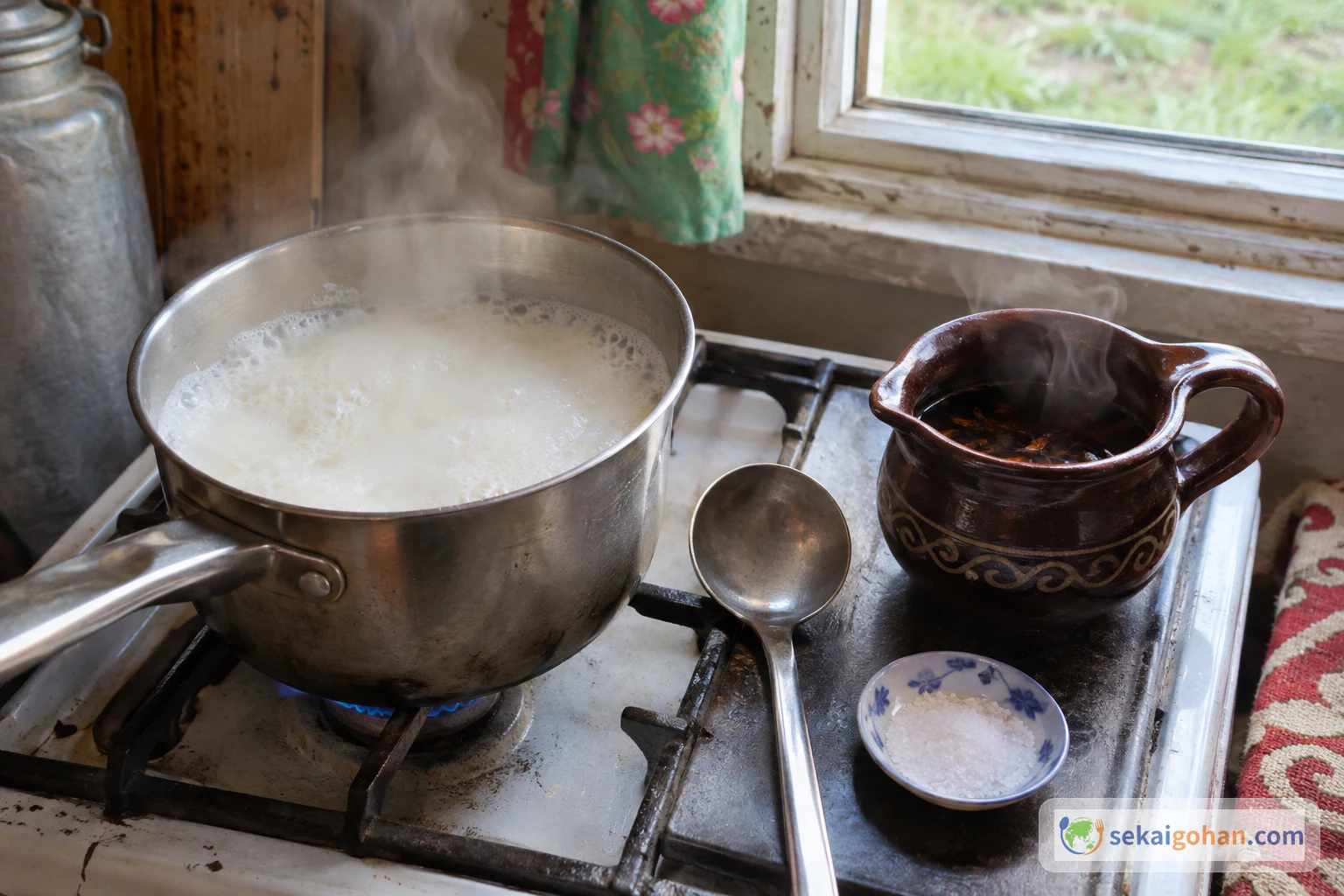
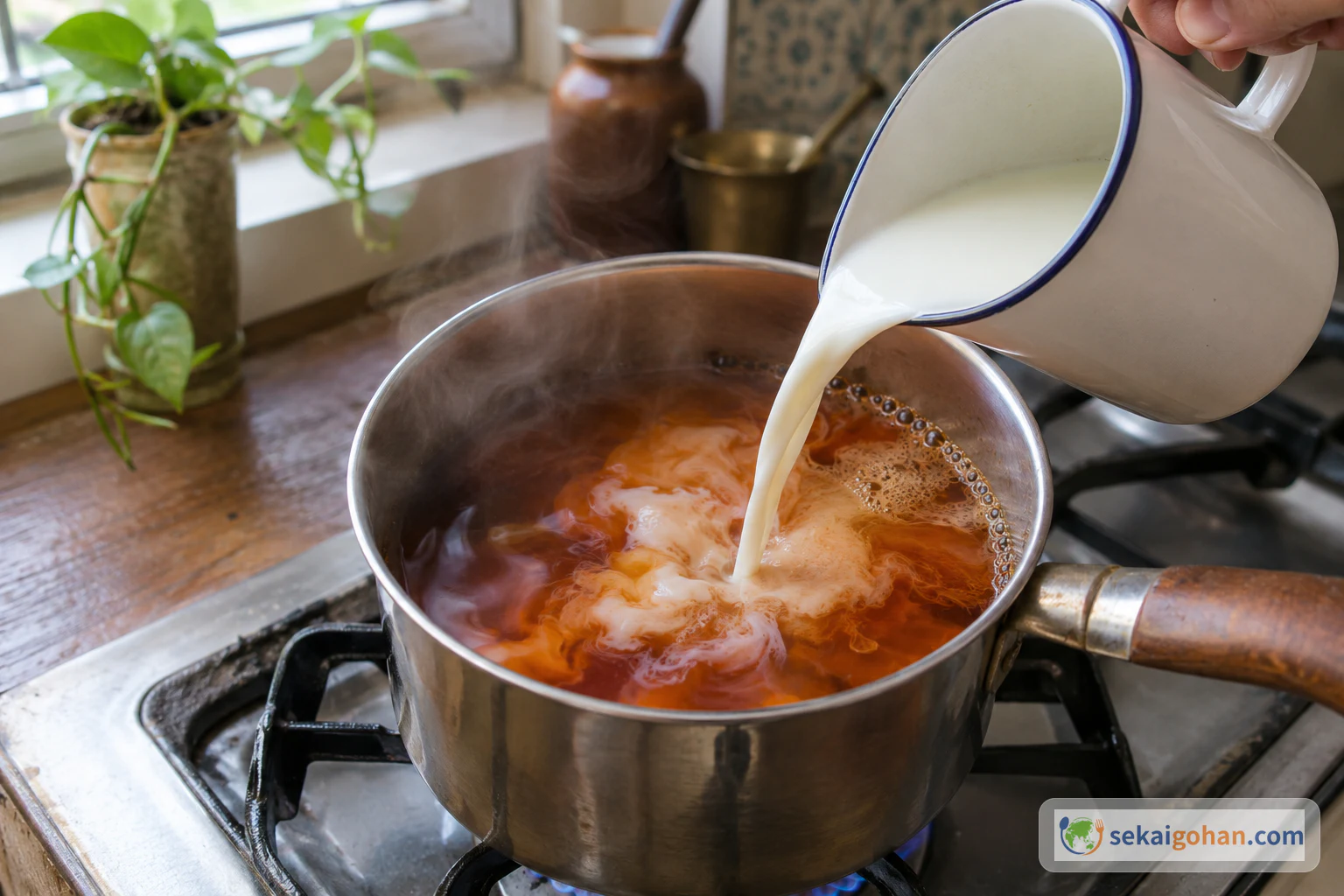
The way the pot is put together changes too. In the west, цай тавлах works like this: the cook boils tea in water, pours this water tea into another vessel and wipes the pot clean. Then the milk boils first and the water tea goes back into it. Milk is never poured on top of water, because the colors keep an order. In Khentii, in the east, цай хандлах means making a strong tea concentrate (цайны ханд) separately and boiling the milk on its own. Each drinker then mixes the two to taste. Central Khalkha cooks pour the milk straight into the water tea. The recipe below follows that simple Khalkha order. The western and eastern methods are just as correct, and every family has its own range of names and methods. You can read more about the country's cooking on the Mongolia page.
Ingredients
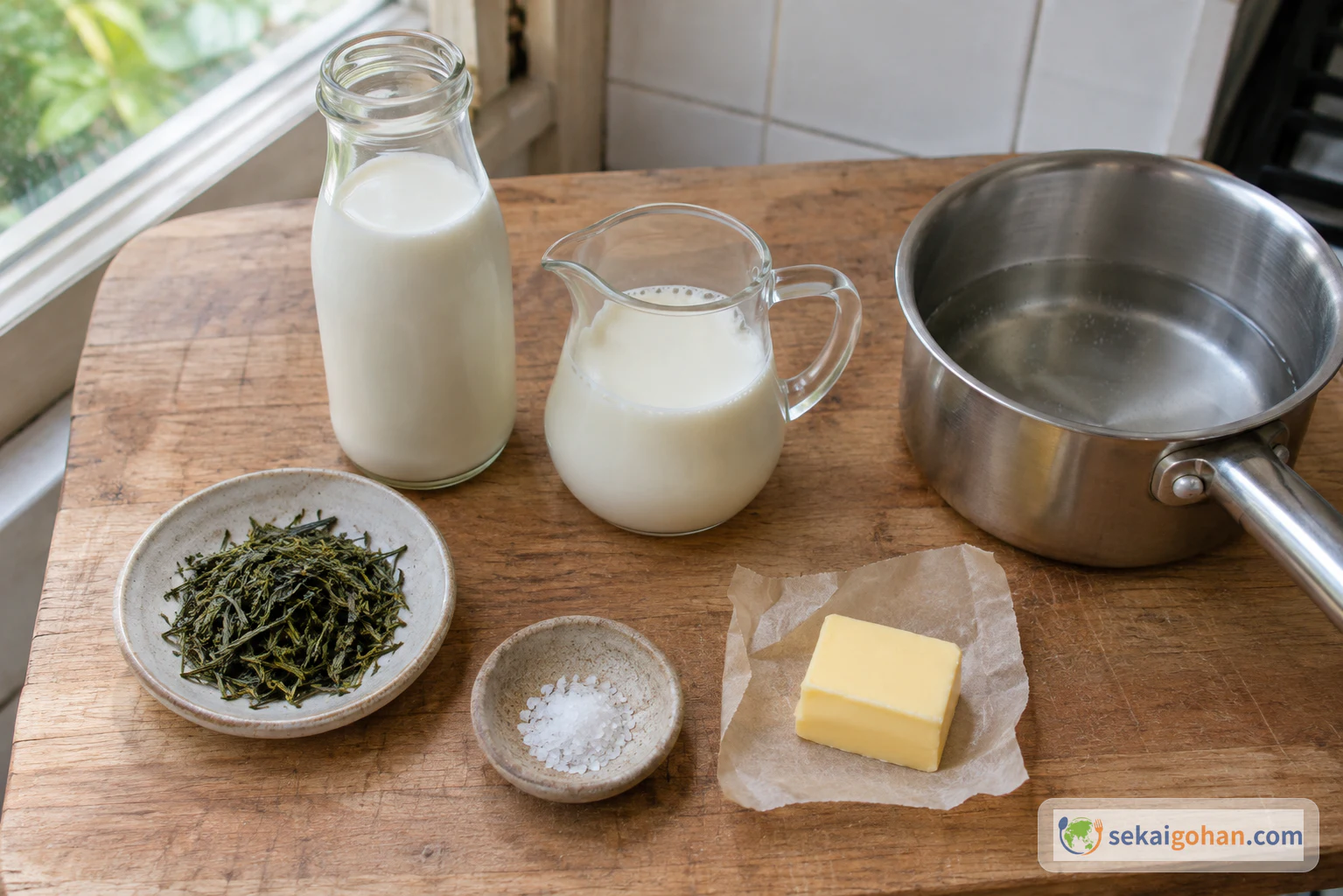
This makes about 1.9 L, enough for 6 cups of 300 ml, or around 8 in smaller bowls.
Heat, pot shape and tea leaves change the strength, so taste as you go.
Equal parts water and milk is what makes the tea taste like suutei tsai. Use whole milk, never skim. If you cut the milk, you move toward the thin tea westerners call "like water."
Contains milk, and butter if you use it. People with a milk allergy should not drink it. Use pasteurized whole milk. If you are on a low-salt diet, start with ¼ tsp of salt or leave it out. The tea leaves boil, so the brew comes out strong. Before bed, during pregnancy or for small children, make it weaker or drink less.
Equipment
- A 1½–2 quart (1.5–2 L) saucepan
- A long-handled ladle (a soup ladle works)
- A tea strainer
- Small handleless bowls or tea bowls
- A spoon for tasting
Choosing the Tea, the Milk and the Rest
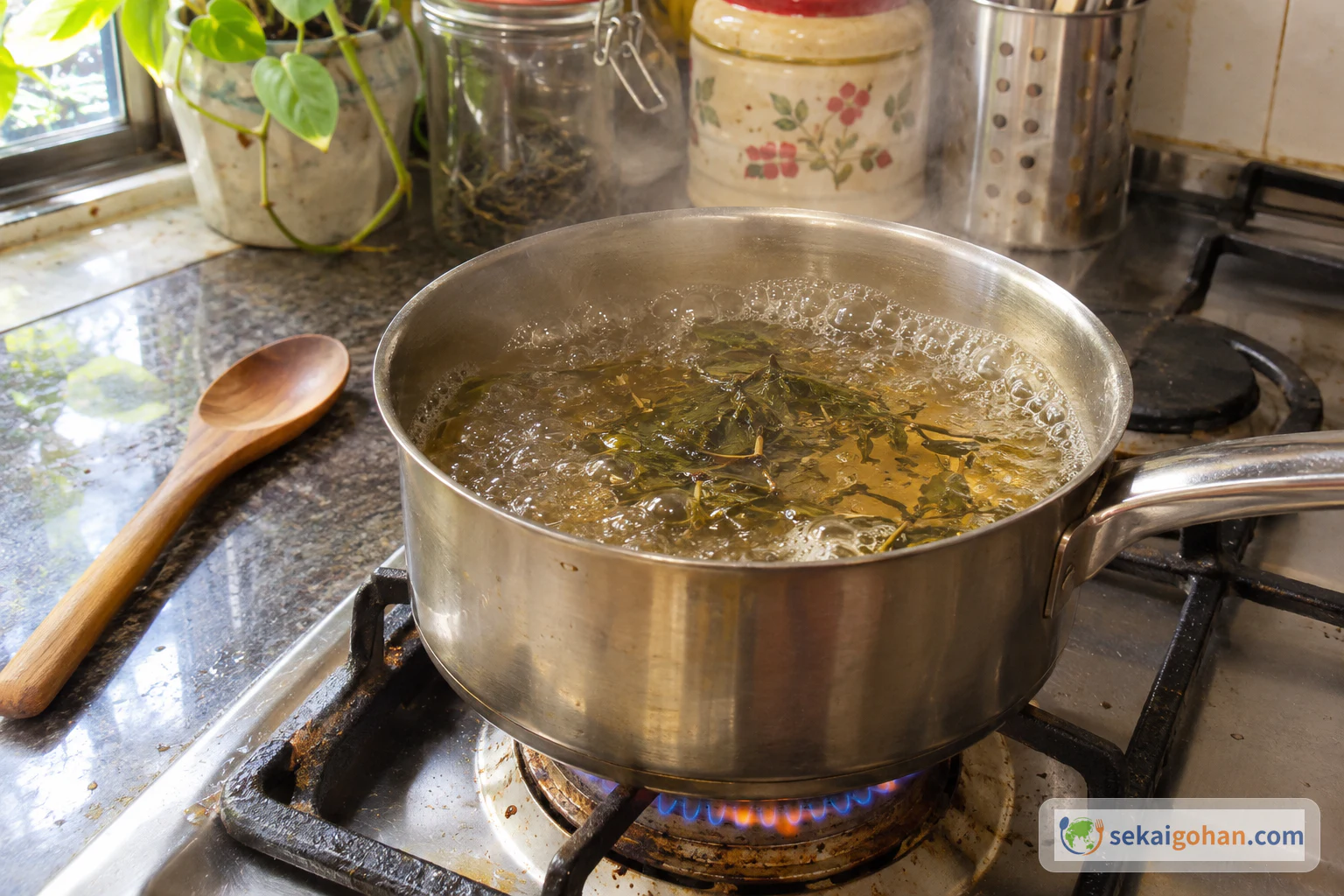
In Mongolia the tea is coarse brick tea, boiled hard. Brick tea is hard to find outside the region, and loose green or black tea both work well, so buy whichever you like to drink. The cup will taste different from a brick-tea pot, but it is still clearly suutei tsai. Good-quality green tea turns bitter if you boil it as hard as brick tea, which is why the brew in the method is short and stops at a color cue. Measure the salt with a spoon. Unsalted butter lets you control the salt. Some homes enrich the tea with mutton tail fat, but butter is the practical choice in a home kitchen.
| Keep these | You can let these go |
|---|---|
| Equal water and milk | Brick tea, replaced by loose green or black tea |
| Tea boiled in water before the milk goes in | Butter, which is optional |
| Ladling from height | Хужир and mutton fat |
| Salt added at the end, and no sugar | The exact number of ladlefuls |
Method: Boil, Pour, Ladle, Salt
The whole thing takes about fifteen minutes at one pot, and you stay at the stove the whole time. Measure everything before you start, and set the bowls and strainer near the stove. Once the milk goes in, things move quickly.
When It Goes Wrong
| What you see | Why | What to do |
|---|---|---|
| Bitter, puckering tea | The leaves boiled too long or too hard | Next time stop at deep brown and start with less tea |
| Pale, weak tea taste | Too few leaves, or the brew was cut short | Use the higher amount of tea and wait for deep brown before the milk goes in |
| Milk boils over or forms a thick skin | The pot stayed on high heat after the milk went in | Lower the heat as soon as the milk is in and keep the pot just under the boil |
| Thin, watery body | Too little milk | Keep the water and milk equal |
| Too salty | All the salt went in at once | Start with ½ tsp and taste before you add more |
| Flat, with no foam | Ladled too low or too few times | Lift the ladle higher and pour the tea back more times |
Serving and Variations
At the table
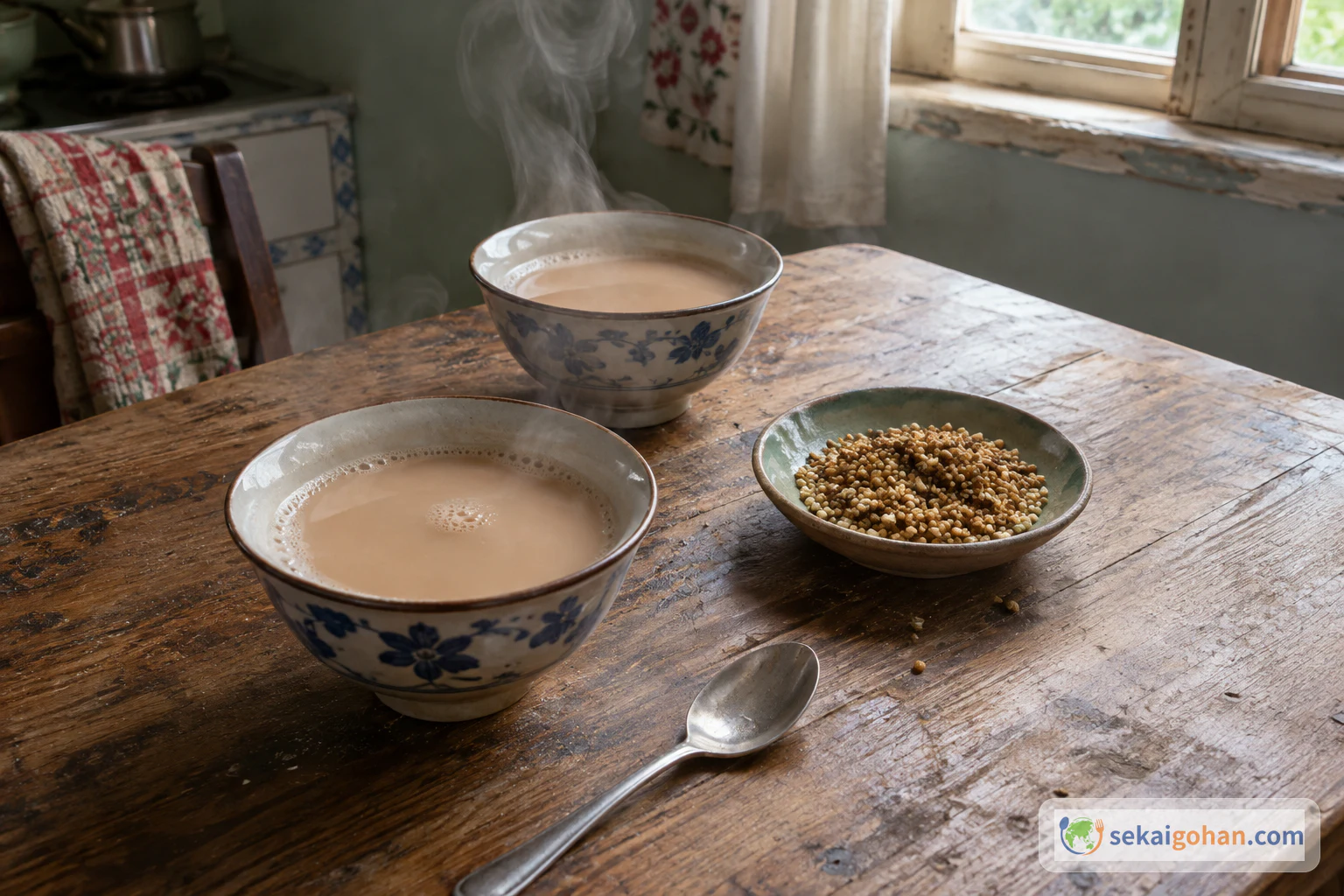
Suutei tsai starts the morning and greets every guest. Serve it hot, in bowls, guests first. A small dish of toasted millet on the side makes it more filling. At Tsagaan Sar it is the first bowl poured. Bhutan has its own salty butter tea, which comes up alongside ema datshi, and the two make an interesting comparison of salted tea in the mountains of Asia. Drink it while it is hot.
Variations
- Unsalted, eastern style (давсгүй цай): Leave out the salt. The milk's own sweetness carries the tea, and the result is lighter and softer.
- Millet tea: Toast millet in a little butter until fragrant, dust it with a little flour, stir it into the tea and simmer for about 15 minutes. Buckwheat groats are another common addition. The tea gets thicker, nuttier and filling enough to be a snack.
- Хийцтэй цай: Fry flour in ghee, pour in the brewed tea, then whisk and boil. The flour makes a thick, rich tea that drinks like a meal.
- Tea as a meal: Rice, dried meat (борц), small dumplings, a bone or mutton tail fat go into the pot. Each one turns the drink into light food, more savory and more substantial.
Frequently asked questions
Can I make a half batch?
Yes. Use 2 cups (475 ml) water, 2 cups (475 ml) whole milk, 1 tbsp tea and ¼–½ tsp salt, and follow the same steps. A smaller pot of liquid heats up faster, so watch the pot closely after the milk goes in.
Can I use tea bags?
Yes. Boil them in the water, then lift them out before the milk goes in. Judge the brew by the deep brown color, the same way you would with loose leaves.
Can I froth it with a whisk or milk frother?
Use the ladle. The tea is aerated by pouring it back from height, and that pouring also mixes the milk and tea evenly while the pot stays just under the boil. A whisk gives a different texture and skips the motion that defines the dish.
Is it related to bubble tea?
No. Bubble tea and other tapioca milk teas come from Taiwan and are sweet. Suutei tsai is a salted Mongolian tea with a separate history.
Can I use soy milk?
Soy milk makes a different drink. In Mongolia, tea without milk is its own category, brown tea (бор цай). For suutei tsai, use whole dairy milk.